
 November 2, 2007
It is an interesting discussion to have with different people throughout the health value chain. When I was 100% focused on driving generic utilization, I would hear questions about why do it. Sure, I save a little on the copayment, but some consumers saw the copayment as a discount.
- If I am paying $10 for a drug that cost $30, I am saving 66%. Not bad.
- If I am paying $25 for a drug that costs $125, I am saving 80%. Great.
People would say things like why should I save my employer or the managed care company (or the PBM) money. I don’t get it back was their perception. Unfortunately, that is sometimes true, but in general, in the long run, saving money on benefits should keep the costs down and reduce your premium increase year-to-year. In a few cases, I worked with CFOs to look at how savings could be re-allocated to create shared incentives. (For example, if we drive up generics 5 percentage points, we will save $10M. We will use $3M of that to increase our 401K match by 10%.)
On the other hand, this is what one of the executives at Express Scripts termed The Diner’s Dilemna. The concept is fairly simple. If you go to dinner with 2 other couples and know you are going to split the bill, you probably order what everyone else orders so that their is some cost parity. If you go to dinner with 10 other couples, there is always that person that gets the surf and turf and orders a bottle of really expensive wine. When cost is divided equally, some people will abuse the system. Just like health benefits. Why should I get the generic if I only really pay a portion of the higher cost. It is divided across the masses. If you went to dinner with your whole company (especially if its big), you don’t know everyone and don’t mind using more then your fair share even if you only pay the same amount.
This overallocation is fine when needed (i.e., you are allergic to chicken and order beef) but simply for personal greed is wrong. So, it puts us back to the premise…someone benefits from our actions to move to lower cost solutions. Who? And, how is that shared back so that we all have similar incentives to act in the greater good.
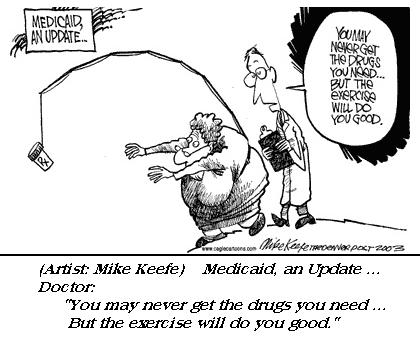
(Source)


 Enabling Healthy Decisions

No comments yet... Be the first to leave a reply!