Although I initially thought “The Patient Advocate” fit what I wanted to talk about which was advocating a patient centric marketing view of healthcare, it seems to have a lot of other meaning across healthcare. I am going to modify the title to be “Patient Centric Healthcare” which hopefully isn’t a prior space and continues to fit my perspective.
Archive | November, 2007
Several New Sites – Blogs and Other
 November 3, 2007
  1 Comment
Thanks to John Sharp for blogging about several interesting sites that I visited this morning:
- Life as a Healthcare CIO Blog (see example entry on PHRs) – this is a new blog by one of the more outspoken CIOs in the industry. Based on the initial entries, it should be an interesting blog to follow.
- eHealth Initiative Blueprint – I haven’t read the PDF yet, but it sounds like an interesting organization. Browsing the site offers lots of information and strategy level thoughts on how to improve healthcare across constituents using IT.
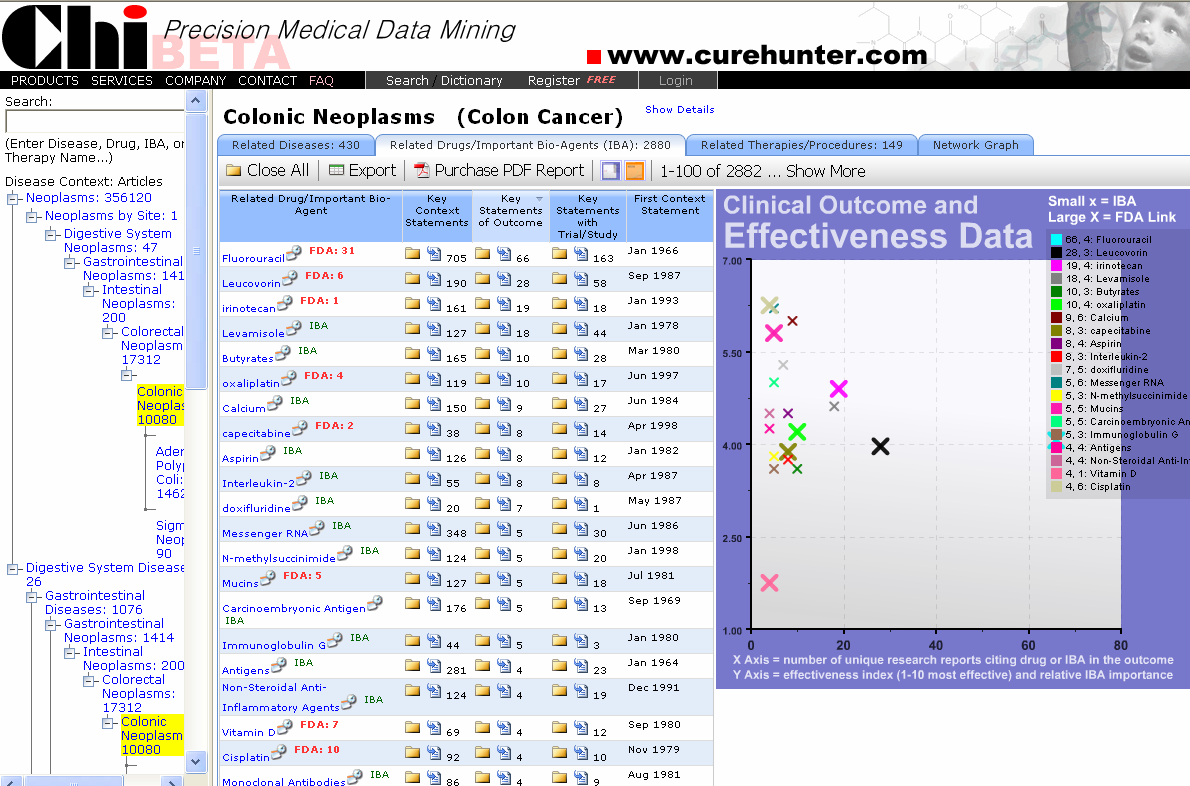
- Curehunter – a new healthcare online data mining tool for pulling up disease specific research and information. As described on their website, the uses for the application are:
- For patients we provide low-cost Summary PDF Reports with all drug evidence for all known cures or symptom improvement
- For medical professionals CureHunter on-line access delivers decision support in 10-20 seconds of real clinical time to make an evidence check as SOP as a BP or Temp
- For pharma research scientists we offer powerful data export functions that deliver over 1.5 million specific clinical outcome data points to new drug discovery software
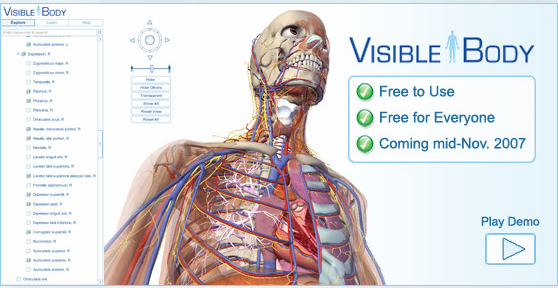
- VisibleBody – this is a 3-D model of the human anatomy which will soon be available online. The graphics that you can see look great and it seems like an interesting and fun tool. Probably a good way to teach your kids or even explain to patients what is going on inside them. From the site, here are a few things they say about using it:
- View highly detailed models of all body systems.
- Search for and locate anatomical structures by name.
- Click on anatomical structures to reveal names.
- Rotate and explore anatomy in a virtual space.
- Peel away layers to view relative placement of the components of all body systems.
- See placement of specific organs relative to other anatomical structures.
- View anatomical structures with or without surrounding anatomy.
- Investigate anatomy virtually, without the costly cadaver lab.
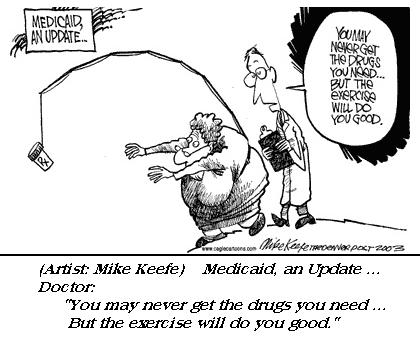
Greedy – Your Friends or Your Managed Care Company
November 2, 2007 0 Comments
It is an interesting discussion to have with different people throughout the health value chain. When I was 100% focused on driving generic utilization, I would hear questions about why do it. Sure, I save a little on the copayment, but some consumers saw the copayment as a discount.
- If I am paying $10 for a drug that cost $30, I am saving 66%. Not bad.
- If I am paying $25 for a drug that costs $125, I am saving 80%. Great.
People would say things like why should I save my employer or the managed care company (or the PBM) money. I don’t get it back was their perception. Unfortunately, that is sometimes true, but in general, in the long run, saving money on benefits should keep the costs down and reduce your premium increase year-to-year. In a few cases, I worked with CFOs to look at how savings could be re-allocated to create shared incentives. (For example, if we drive up generics 5 percentage points, we will save $10M. We will use $3M of that to increase our 401K match by 10%.)
On the other hand, this is what one of the executives at Express Scripts termed The Diner’s Dilemna. The concept is fairly simple. If you go to dinner with 2 other couples and know you are going to split the bill, you probably order what everyone else orders so that their is some cost parity. If you go to dinner with 10 other couples, there is always that person that gets the surf and turf and orders a bottle of really expensive wine. When cost is divided equally, some people will abuse the system. Just like health benefits. Why should I get the generic if I only really pay a portion of the higher cost. It is divided across the masses. If you went to dinner with your whole company (especially if its big), you don’t know everyone and don’t mind using more then your fair share even if you only pay the same amount.
This overallocation is fine when needed (i.e., you are allergic to chicken and order beef) but simply for personal greed is wrong. So, it puts us back to the premise…someone benefits from our actions to move to lower cost solutions. Who? And, how is that shared back so that we all have similar incentives to act in the greater good.
(Source)
Drive-thru Pharmacies – No Privacy
November 1, 2007 0 Comments
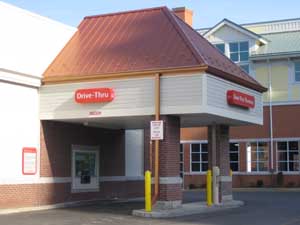
I had an opportunity to use a drive-through pharmacy today near my house. It was a double laned Walgreens. It wasn’t a big issue for me, but I realized that there is no opportunity for privacy. The car next to me (which could have been my neighbor, co-worker, kid’s friend’s parent, etc.) was asked if they had any questions. I could easily have learned what drugs they were on, their copayment, etc.
I am surprised that pharmacy privacy is not a bigger issue. I know that there are certainly some drugs which people would prefer not to known as using. We probably underplayed this benefit for mail order pharmacy. Total privacy. All your conversations are with a pharmacist or call center rep in whatever privacy you call from.
Mental Health Drugs – Edge in Golf
November 1, 2007 0 Comments
I might as well post these back-to-back. This is from a story I read in Golf Digest which surprised me. It was a clip at the end of a story on whether there was a problem with steriod use in golf. (For the money they can win, don’t tell me someone isn’t trying steriods or other solutions to go after it.)
This story by a Dr. Grant T. Liu talked about a class of drugs he called “mind enhancers” which increase focus, dampen emotional extremes and reduce anxiety.
- Beta Blockers which are blood pressure medicines sometimes used by people to deal with stage fright.
- Amphetamines which are used to treat ADD and promote alertness and focus. (He says they’re already used by students for SATs and final exams. Things have changed since we simply used no-doze to stay awake for all-nighters.)
- Antidepressants which combat stress and help people control emotions.
- Benzodiazepines which are used to treat phobias such as fear of crowds.
“If there’s no enforced drug policy, it’s hard to believe that players wouldn’t experiment with these drugs for nonmedical purposes to try and gain an advantage.”
Obviously, if a player had a legitimate medical condition, they should be allowed to take the drugs even if it had a side effect that was beneficial.
Mental Health
November 1, 2007 0 Comments
I meant to post this during Mental Health Week (Oct 7-13), but I obviously missed the window. This was from an American Airlines magazine (Hemispheres) that I read a few weeks ago.
“Many physical conditions are a result of mental issues, for instance, sleeping too much or too little and having low energy.”
Obviously, this is a sensititive issue to discuss at work. No one wants to be seen as having problems. But there are lots of treatments and many conditions such as depression and ADD/ADHD can be treated. The article goes on to mention several other things:
- An online calculator for estimating cost and productivity savings by addressing these conditions
- A starter action plan for your work environment
President Bush said “Americans must understand and send this message: Mental disability is not a scandal – it is an illness. And like physical illness, it is treatable, especially when the treatment comes early.”
- 1 in 5 adults will experience a diagnosable mental illness in any given year (and 15% of those will experience a co-occurring substance use disorder)
- Among those of working age, about 25% have a mental illness and/or substance abuse
- The cost to employers is $80-$100B/year
- More workers are absent from work because of stress and anxiety than because of physical illness or injury
- Less than 1/3 of adults with a diagnosable mental disorder receive treatment in any given year
Mental illnesses include – depression, anxiety disorders, substance abuse, bipolar disorder, eating disorders, sleep disorders, attention deficit hyperactivity disorder, and personality disorders.
If you’re interested in the diseases or solutions for addressing them, there are lots of resources online. Individuals can take tests. Companies can educate employees. Many companies off EAP (Employee Assistance Plans) from companies like Magellan to help with these issues in a confidential, third-party setting.
Some other links:
Not my typical topic, but I think these are important issues in terms of how companies spend their resources to address patients.
Share This


My LinkedIn Profile


 WSJ Health Blog
- Is a Paleo Diet Healthier Than Standard Nutritional Guidelines?
- Small Business and the Affordable Care Act: How Has Your Business Been Affected?
- HealthCare.gov Explorer: Decode the Health Law’s Subsidies
- One Reporter, Four Families, Six Scientists and the Search to Cure a Rare Disease
- Your Responses: How Has the Health Law Affected You?
- What Does the Health Law Mean for You? Your Questions Answered
- How Has the Health Law Affected You?
- Rare Diseases and the Search for a Cure: A Reddit AMA
- Robots to Cure Rare Diseases: A Reddit Ask Me Anything (AMA)
- Six Tips For Better Napping
Drug Channels
- Time to Evolve: Hubs Flex to New Demands
- Preorder Now: DCI’s 2026 Economic Report on U.S. Pharmacies and Pharmacy Benefit Managers
- Beyond DTP 2.0: How Flexible Direct-to-Patient Programs Power Best-In-Class Patient Experiences
- Drug Channels News Roundup, February 2026: Mark Cuban on FTC-ESI, What Patients Really Want, QALYs vs. MFN, 340B’s Site of Care Shift, and New Faces at DCI
- The State of Patient Access: What Industry Leaders Reveal in a New Survey About Hub Models, Technology, and the Road Ahead
- Medicare Part D Pharmacy Networks in 2026: Supermarkets Dominate as Drugstores Stall and Independents Walk Away
- The Key to a Better Patient Experience: Improved GTN
- Copay Accumulators and Maximizers in 2025: Popular, Profitable, and Problematic
- In an Uncertain 340B Environment, Kalderos Offers a Clear Path Forward
- The FTC Blows Up Express Scripts’ PBM Model—and Launches the Net Pricing Drug Channel
KevinMD Blog
- An error has occurred; the feed is probably down. Try again later.
Health Populi
- “Will Work For Health Care:” Americans Trading Off Wages For Healthcare (Again)
- Why Clorox Talks about Hygiene at Home: Health, Wellbeing, and the Home as Health Hub
- Dr. Wachter Bets on A Giant Leap for AI in Health Care
- Financial Stress and Trust in Health Care Takes Many Forms – Listening to Jarrard’s 2026 State of Play Survey
- Health Care Ads at the Big Game (Super Bowl LX) – Edgy, Entertaining, Educational
- When a Hotel Becomes Your Health Partner – Learning from Novotel and Accor
- The New (Old) Long-Term Care: Intergenerational, Together at Home
- The Healthcare Affordability Elections, 2026 and 2028 – Listening to the KFF Tracking Poll, January 2026
- Optimistic and Skeptical: How Older Americans Are Using and Seeing AI – the View from AARP
- As Adult Vaccination Levels Fall, We Must Assert the Value of Vaccines
e-Patients
- Everylife Foundation Community Congress Annual Meeting Highlights
- Collaboration is the Best Medicine: Patient-Centered Collaboration Grounded in Caritas®
- Collaboration is the Best Medicine: It’s the Heart of Caregiving
- Collaboration is the Best Medicine: How to Partner with Your Doctor for Better Care
- Collaboration is the Best Medicine: Bridging the Gap in Patient Participation
- Dealing with Medical Uncertainty, Ambiguity, and Frustration
- Collaboration is the Best Medicine: The Time for Participatory Medicine is Now
- In Memory of Nancy Finn: e-Patient, Advocate, Author, SPM Supporter
- A cure for what killed Doc Tom! Can people afford it?
- Learning Health Systems Empower Every American to Actually Make America Healthy Again Together, Part 2

Enabling Healthy Decisions Blog by www.georgevanantwerp.com is licensed under a Creative Commons Attribution-Noncommercial-No Derivative Works 3.0 United States License.
Contact Information
Contact me at gvanantwerp @ mac.com. Enabling Healthy Decisions