
 December 13, 2007
Continuing to pull some facts from the prior Outcomes conferences…
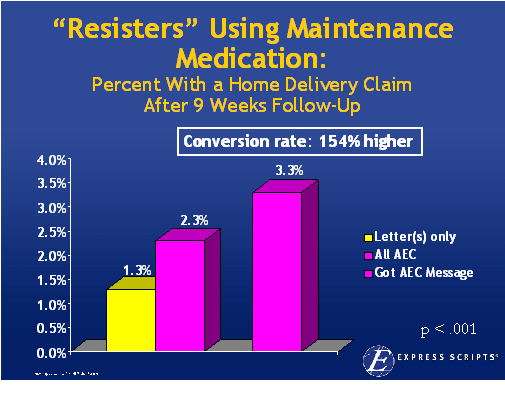
When we first began using what we called AEC (Automated Educational Calls), we did a couple of quick pilots with control groups to see how they worked and if they increased lift in our existing programs. For one of my programs (retail-to-mail), we saw a boost on top of our direct mail program not only from those people that received a generic message but especially from those people who listened to the call. Here was a quick snapshot since over the course of multiple attempts we had a 5% success rate with direct mail and in certain programs had gotten our success rate as high as 16% in direct mail while still seeing additional “lift” in the success rate by coupling calls and letters together.
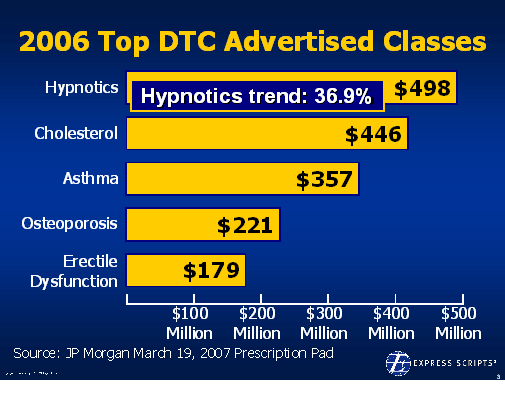
Another question answered was whether DTC (direct-to-consumer) advertising worked. Here you see that the most heavily advertised space had significant trend. In other studies, we showed that although DTC may not grow the specific drug in a 1:1 correlation it did grow the total pie for that therapy class.
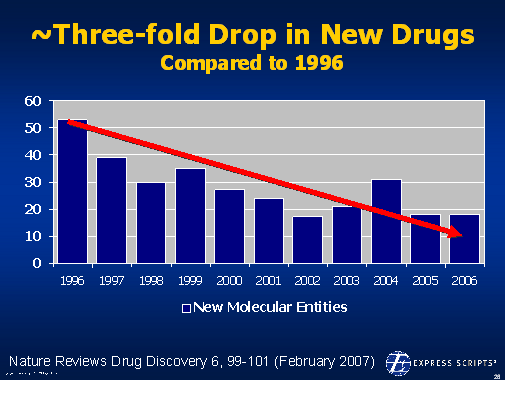
As I mentioned yesterday in the entry about big pharma, the discovery of new products has dropped dramatically as shown here.
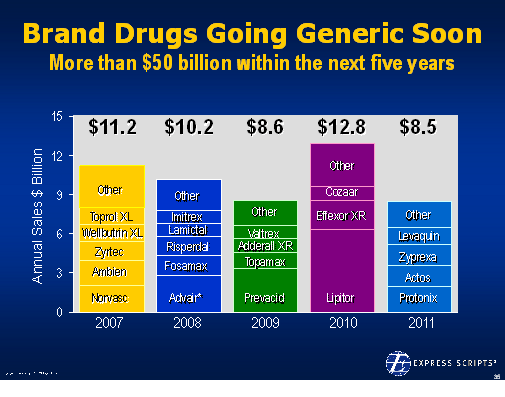
If you are focused on what’s happening from a generic drug perspective, this chart is a good picture of what’s expected over the next few years.
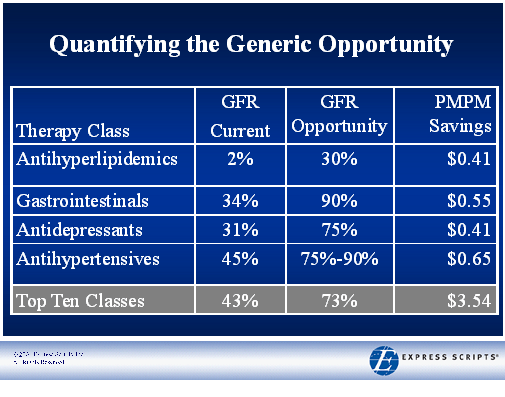
This is a little old (2004), but based on order of magnitude, it is relevant. The question is what is a theoretical maximum generic fill rate for some of the high cost therapy classes and what is this worth to a plan sponsor in terms of savings.
Another set of data that I always found interesting was the variation in use of generics by state.


 Enabling Healthy Decisions
No comments yet... Be the first to leave a reply!