
 May 4, 2011
I’d love to hear some physician perspectives on this. It’s a question that comes up every once in a while.
Let’s start with a few facts:
- Adherence is estimated to be a $290B problem. (NEHI Report)
- Poor adherence limits the effectiveness of the healthcare system. (WHO Report)
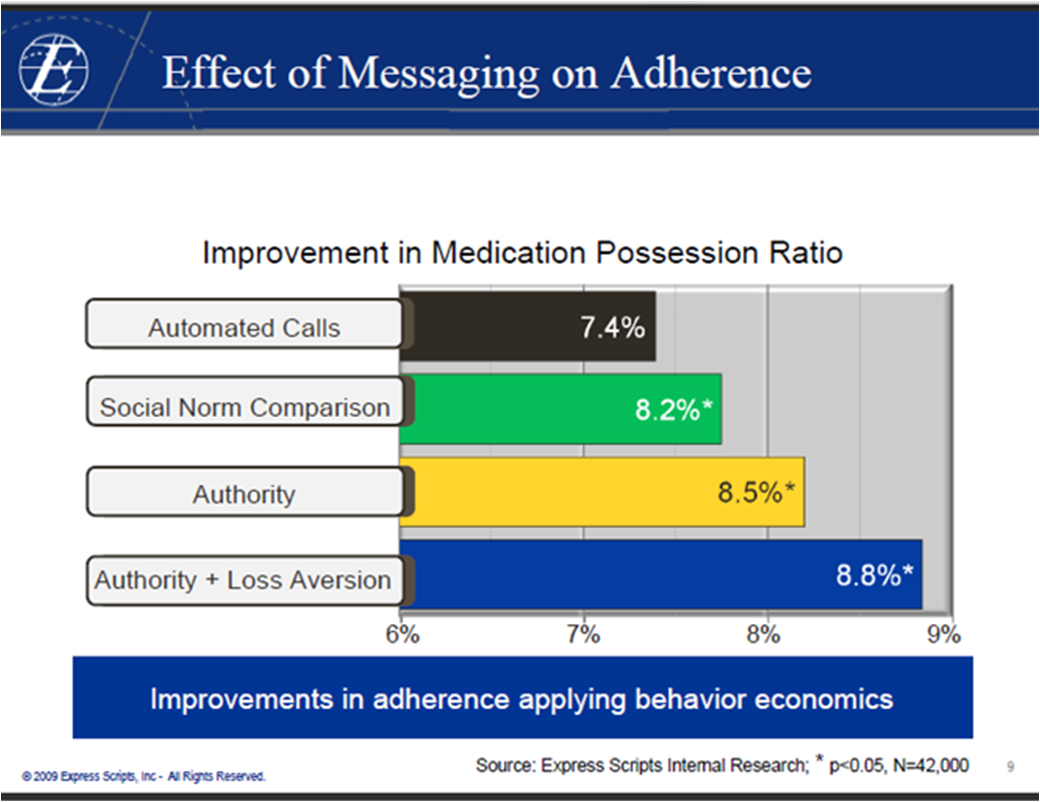
- Interventions do impact adherence. (Express Scripts presentation)
- There are lots of reasons for non-adherence. (MAPS)
- Medication adherence leads to lower healthcare costs. (CVS Caremark study)
The question of course is what to do about that. Most of the programs focus on consumer or patient interventions.
- Refill reminders
- Gaps-in-care
- Off-therapy reminders
- Auto-refill programs
- POS consultations by the pharmacist
But, interestingly, I’ve seen a few other studies recently that show that prescription programs targeting physicians can influence behavior (example here). I’ve also heard a few companies talk about paying physicians to keep patients adherent.
There are a few arguments that happen here:
- Should the physician play a role in adherence?
- Does the physician know if a patient is adherent? Should they get this data? From whom?
- If the physician asks the patient, will they tell them to truth or will it simply be a case of “white coat” adherence?
- Should this be a performance metric in a pay-for-performance environment?
- Will PCMHs and ACOs structures change this and make adherence a critical issue for discussion between the patient and physician?
In general, I think most people believe that physicians (as indicated in studies like this one) don’t see prescription adherence as a big issue that they can or should influence. Is that true? Would “incentives” change that?
Of course, the debate isn’t limited to paying physicians as multiple companies are paying consumers to be adherent. Here’s a post from last year from another blogger called “Paying Patients To Take Their Medications Is Stupid” which is similar to one of my posts from last year.


 Enabling Healthy Decisions