Archive | Marketing / Communications RSS feed for this section

Silverlink – My New Employer

After trying a few entrepreneurial things, I am excited to have accepted a job working with a consulting client of mine – Silverlink Communications. [I am also a former client of theirs from my time at Express Scripts.] The role is a good mix of entreprenerial and stability since they are a high growth, VC backed company. And, one of the most impressive things is their track record of delivery and impressive clients including lots of the big MCOs and PBMs (examples).

As I was getting ready to do an e-mail blast out to a 1,000+ people in my Outlook database, I figured that linking them to the blog and answering their predicted questions here might be a good solution. I could go with the micro-segmentation of my audience (i.e., my healthcare friends want to know something different than my consulting friends) that I started to do, but it’s turning out to be more time consuming than I would like.

So here goes. Here is more information about what I am doing and why. If you are in the healthcare space, I would encourage you to look at Silverlink and give me a call. We can leverage our technology and services to help you cut costs, grow revenue, and inprove patient satisfaction and outcomes.

Q&A:

  • Who is Silverlink and what do they do? Silverlink is a healthcare technology company that provides HIPAA compliant, targeted communications to patients [consumers] primarily using a automated voice-centric technology. This allows them [us] to push information (e.g., reminder call), collect data (e.g., surveys, COB, HRA), and qualify leads for transfer to a live agent (e.g., retail-to-mail, brand-to-generic, 30-day to 90-day). They provide consulting support, data mining, and great reporting. [and now outsourcing]

[Official PR Text] Silverlink is the leader in automated voice solutions for healthcare enterprises. Silverlink’s services enable customers to design, deploy and manage HIPAA compliant automated call programs to educate, collect information from and drive behavior of thousands of patients and members at a time. Serving six of the top ten health plans and with a customer base that collectively represents over 150 million covered lives, Silverlink drastically reduces the cost of communicating with customers while improving financial results and customer care.

  • Why did you join Silverlink? (A) Proven Value Proposition and Technology. (B) Great Team. (C) Very Impressed by Client Feedback. (D) Good Investors. (E) Great Market Demand.

We saw great results at Express Scripts. In one controlled study we ran through research, we saw our success rates improve by 30% by blending letters and calls. Additionally, access to data and flexibility were critical. We launched one new call program in under a day (either for Katrina or for a new drug warning).

Everybody is talking about consumerism and Health 2.0. Silverlink plays right into that strategy. Delivering timely information to patients. Blend their core technology with multi-modal, data mining, and experience based branding, and you have a unique opportunity to change the paradigm.

  • What are you going to do for them? I am going to be responsible for building out a business process outsourcing (BPO) and professional services group. As with any process oriented change, technology often enables step improvements. Their core technology has allowed companies to radically reduce key metrics (cycle time, response rates, collection ratios). By helping drive more of the process, introducing some new services, and leveraging our industry experts, we will help clients drive market differentiation.
  • Should I look at them as a solution provider for my business? If you are a PBM, mail order pharmacy, specialty pharmacy, medical device fulfillment company, or managed care company, they have many proven solutions to help you with. If you are a retailer, disease management company, or provider, there are numerous ways to use the technology. And, if you are a technology or services company, there are ways of embedding their technology into your solution.
  • Do consumers really like automated calls? You would be surprised. Using good voice talent with the right caller ID with the right sonic branding will get people to answer the phone. People throw away mail. We get too many e-mails. We still answer the phone and listen to voicemails. The response rates are great. On some programs, a reach rate in the 80-90% rate is not unusual.
  • (For my VC friends) Who backed them? There are several angels along with HLM (big healthcare VC firm), Kaiser Ventures, and Sigma Partners ($1.5B technology VC firm).
  • What happened to the other things you tried over the past year? Neither took off. Learned a lot about being an entrepreneur. I put a lot of my lessons learned here. No regrets since I believe everything happens for a reason.
  • Are you relocating? Not for now. We are going to try commuting. Since I will be spending time with clients and in other meetings, we are going to see how this works. Plus, the housing market is no good (at least for selling).

I am sure I could go on. But, while you are here, I would encourage you to look at the Silverlink website (PBM, MCO, Medicare, Medicaid, DM, Specialty/DME) and also at rest of my blog. If interested, register to get updates to the blog via e-mail by clicking here.
Experience Based Differentiation

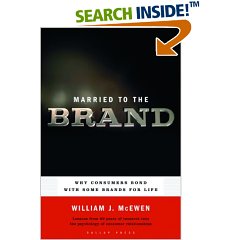
I must admit that I haven’t read the book yet, but it has been recommended to me by several people.  (Married to the BrandMarried to the Brand

Instead [of volume or profit], companies should focus on an objective that merits the diligent, even obsessive attention of the company’s managers: customer engagement, and healthy brand marriages. Every manager should be laser-focused on building and protecting the company’s most precious assets — its powerful and passionate customer relationships. These brand relationship assets determine the continued health and future success of the company.  (see more on the book content)

The reason I mention it is that in talking with an experiential branding expert I found their example of Starbucks very comparative to healthcare.   It has died down a little in the past few years, but I have often heard people talk about how hard it is to differentiate a healthcare offering.  I think Starbucks is the perfect example of a different way of thinking about this.

Coffee is coffee (with some slight modifications in taste).  People go to Starbucks and one of their sustainable differentiations is the experience.  It is difficult to replicate the experience that people have.  That should be the focus in healthcare.  How they experience the office lobby, the staff, check-in, admissions, enrollment, the call center, member materials, outbound communications, etc.?  This is what will make you different.

It is never easy to quantify loyalty and correlate that with experience.  But, let me use a simple example.  I bet that price being relatively equal no company will switch health plans, PBMs, etc. if the CEO and/or their spouse has had a great experience with the company.  There are too few great experiences.  This is your chance to step-up.

Customer Event

What a great week. I have been so busy that I haven’t had time to blog, but I will try to catch up over the next few days.

I always love to mingle with customers and talk to them about their experiences with a company. As a former client, a current consultant, and a future employee of Silverlink, I got to join their customer event this week where 40 customers talked about how they use the technology and services to lower costs, increase efficiency, and grow revenue. Talk about empowering.

Some of the key content / discussions revolved around the following:

  • JD Powers study on healthcare company satisfaction including a great non-healthcare example.
    • It showed how satisfaction with auto insurance actually went up and was higher when the company raised rates but pro-actively told the consumer versus when they lowered rates. Talk about the power of communications.
  • Lots of talk about how marketing and data analytics are going to drive healthcare and how non-healthcare companies are setting the expectations for patients very high compared to the current state.
  • How disjointed healthcare communications are – provider, pharmacy, PBM, MCO, DM companies. No consistency.
  • A great presentation by Liz Boehm from Forrester research which made a few key points:
    • She reinforced the loss avoidance point I blogged about the other day stating that savings is equal to one unit of happiness while loss is equal to two units of unhappiness. So, for many, losing money is a bigger factor than saving money.
    • She pointed out the fact that any healthcare site that quotes a price always has some disclaimer about the accuracy. Why can’t we simply guarantee a price (like any other industry)?
    • She showed that member services (IVR, web) are the 3 most important factor in chosing a carrier after price and network.
    • She showed research that consumers are generally dissatisfied with contacts across all channels from their health plan.
    • She talked about using a persona to design programs and prioritize efforts.
    • She compared channels across cost, reach, engagement, and immediacy.
    • It was obvious that we have a long way to go.
  • Heard from a few customers that talked about how they allow Customer Service Representatives (CSRs) to go “off the clock” to help patients so that they can still track average call time but allow for flexibility.
  • I talked about process innovation and how to apply that to your communication process. I also talked about business process outsourcing.
  • We heard about best practices in driving response rates. Everyone always seems so amazed when they hear about response rates of 50, 60, or 70%. Very difficult to get and/or measure that in other channels.
  • Talked about how MCOs are using the automated call technology – ANOC (Annual Notification of Change) for Medicare, Collections, Lead Management, COB, Missing Information, Wellness Program Recruitment, Reminders, Surveys, and many others.
  • We heard about calculating the ROI with a detailed methodology.
  • We talked a lot about models from other industries that could apply.
  • We talked about data mining and analytics.
  • We talked about member satisfaction, loyalty, and how to survey and capture that information.
  • An outside consultant talked about experience based branding and how sounds can be your brand – Harley‘s engine, Sprint‘s pin drop, Ford‘s door chime, AOL‘s “You’ve Got Mail”.
  • Had several clients talk about how they use Silverlink‘s technology to enhance their product suite

All of the conversations and presentations reinforced how critical successful communications are to healthcare and how big of a hill we have to climb. It was great to see how effective, timely, and personalized the Silverlink technology could make the process. It is worth looking into if you are a managed care company, a device supplier, a PBM, a pharmacy, or even a provider.

Loss Aversion vs. Reward

I have had a note to write on this for a while and then read an entry on the Medical Connectivity Consulting blog about this.   It is a key point in understanding how to drive patient behavior.

Some people respond to rewards or positive motivation.  For example, this will save you money or this activity will make you healthier and extend your life.  Other people respond to negatives (i.e., loss aversion).  For example, you just wasted $20 by choosing this prescription or don’t forget to get your annual checkup.

This is where the real difficulties of communications occur.  How do you segment and target individuals to address messaging, medium, timing, frequency, etc.?  It isn’t easy and mostly comes through experimentation.

PodCast with Silverlink CEO (from HC Blog)

I have not advanced my blogging as much as Matthew Holt has on the Healthcare Blog so I am going to “re-purpose” one of his interviews.  One of my consulting clients is a company called Silverlink (which was also a vendor of mine at Express Scripts).  I continue to be impressed with the technology and the ability to find more opportunities to use their voice technology to replace letters and increase response rates to communication programs.

In a meeting today with JD Powers, they revealed that almost 30% of the satisfaction scores for healthplans is attributed to communications.  That should make you research what you do and how to improve it.

So, if you are interested in a dialogue about Silverlink and what they do, read Matthew Holt’s interview with Stan Nowak (CEO of Silverlink).

for our flu shot reminder we’ll have a client tell us that it was as effective as using humans and saved them 65% of the cost. For health risk assessments it was two times as effective as their alternative mode of delivering those health risk assessments and it was 50% less cost”

BAH Interview of David Cordani (Cigna)

Booz Allen Hamilton has been writing good pieces on healthcare and the trends. Here are a few items from their interview back in March of David Cordani (president of Cigna Healthcare).

CORDANI: “The industry’s winners will be those that differentiate by engaging, educating, and enabling their members to navigate the health-care system independently. We define consumerism broadly and have identified four critical elements that will make it work: financing vehicles, which incorporate new health plans; choice and convenience, which will be the key to making services easier to access through a variety of channels, whether it is online, through mini-clinics, or otherwise; member engagement, which is the linchpin of consumerism; and, last, information transparency around the quality and cost of services. These give consumers the insight into the market forces that they need to make informed decisions.”

I think this is a great quote on what consumerism is – financing, choice / convenience, member engagement, and transparency.

The article also talks about Cigna’s segmentation of patients and their mapping of 264 different touchpoints that they have with the consumer. A great first step.

Assured planners represent about 34 percent of the population. They are relatively thoughtful and make sure they have what they need. Price isn’t a driver for them; what matters are comfort, security, and even status. They are also the most affluent.

Enlightened shoppers make up about 16 percent of the population. They do their own research online, read Consumer Reports, and figure out exactly what they want. They then spend time and energy finding the best deal. They’re also likely to experiment with alternative medicine, as well as other new products and services.

Steady contenders make up 28 percent of the population, and they tend to be content with what they have and would prefer to stick with it. They need a very compelling reason to change.

Cavaliers want nothing to do with health care. They’re the most likely to smoke and are in the worst physical condition. Cavaliers account for a little more than a fifth of the population.

If you are an analyst or strategist in the healthcare space, they have a few must reads that I will highlight here for you.

Research Discussion on Wellness Incentives

Here is a blog entry from the research site on wellness incentives.  It is a good piece.

Perhaps targeting on how to drive wellness needs an atribute of the segmentation model to be career path or industry…food for thought.

Convenience – Good or Bad

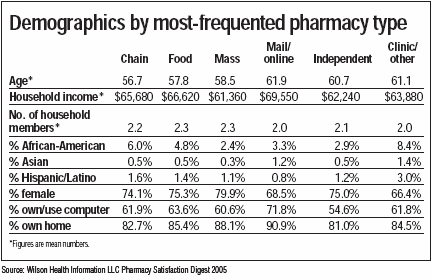
Anyone with prescriptions knows there are different pharmacy types – independent, online, mail order, grocery, and chains (e.g., Walgreens).  Each have different attributes.  The biggest question is always why one choses one over the other, whether there is a difference, and who is the most probable to chose one over the other.  In February 2005, Drug Store News put out what is probably one of the best studies on this.  It shows segmentation, reasons people chose one pharmacy over another, and other good data.  The graphical version is available as a PDF for $5 here.  Otherwise, you can read the plain text version.  One of the central points is that as consumers want convenience and chains implement drive-throughs then they are playing into the mail order trend.  They are disintermediating the pharmacist-patient relationship.

“In general, one of the things we’re seeing is that consumers are spending less time overall interacting inside the store,” Wilson said. “Not only is mail pulling them away, but [as] these drive-throughs increase dramatically … customer interaction seems to be shifting away from a more personalized approach to more time-saving and convenience methods.”

Abroad (from what I understand), the pharmacist and pharmacy play a more central care role with regards to the patient.  I think pharmacists that have time try to do that today, but the model is not set up for that.  This might be a model that CVS pursues with the blending of Caremark and MinuteClinic.  The study said that only 11% of people know the first name of their pharmacists.  Do you?  Mine are Renee and Mark.  I know them both well.

Here is one of the charts you will find that shows some variance across pharmacy type.  It didn’t show any statistical values so I don’t know if the differences are meaningful.

WilsonRx Pharmacy Segmentation

Calls vs. Letters

The more I learn about automated call technology the more I wonder why people don’t use it as much as letters.  Obviously, there are telemarketing laws.  And, I think many people think of calls as only being done by humans and being expensive.

But, imagine the following differences and benefits:

  1. Lower cost then letters
  2. Able to customize the messaging (think e-mail personalization)
  3. Able to change your campaign real-time (i.e., our response rate is lower than expected, let’s change the messaging to say this)
  4. Able to track lots of data – who picks up, when they pick up, how much of the message they listen to
  5. Able to collect data immediately
  6. Able to interact with the participant (e.g., give me your BMI…that is 10% higher than last time…are you following your diet)

Obviously, e-mail is the cheapest medium, but our culture is rapidly becoming overwhelmed with e-mail.  You have some of the same benefits, but you can’t modify during the interaction.  And, in healthcare, there is limited information you can push to a patient.  In most cases, you are asking them to click through a link to go to a secure website to receive information.  With letters, you assume it is secure since it is addressed to them.  With automated calls, you have them verify who they are based on a few points of reference (name, DOB, member ID).

Cultural Communications

In the spirit of advocating for the patient, I think one of the key things missing at many companies is culturally specific communications.  The simplest solution here is multi-lingual.  Now that nearly 1 in 10 counties in the US have a majority of minorities, this is important (USA Today 8/9/07).

Of course, I always hear the question back of how do I track this.  Will people self-identify into a cultural group?  It depends.  Do you have anything to offer them?  Can you articulate value to them?

If I speak a different language as my primary language and you offer me communications in my native tongue, I would likely be happy to request it.  Can you track it when I request it?  Aquent appears to be a company focused on this within the healthcare space.

This can also manifest itself in color selection.  For different cultures, a certain color can mean different things which might affect your brochure creation.  (see article)   Of course, you need to be able to do mass customization of your brochure rather than print 7M in one run.

With hispanics expected to represent 21% of the US population by 2020, it will be important to understand this segment and how to communicate with them.  Here is a good article on this.  I have seen studies that show they respond at a higher rate than other segments to both letters and direct calls.  Shouldn’t that be important?

The point here is that if you really care about the patient and their health wouldn’t you want to push information to them in a language they care about; using colors that evoke action and emotion; and using words and frameworks that they understand.

New Agency Role – White Paper

“One of the great communications tragedies is to watch an organization go through a careful planning exercise, step by step, complete with charts and graphs and then turn the strategy over to the ‘creatives’ for execution. They, in turn, apply their skills and the strategy disappears in a cloud of technique, never to be recognized again.”
—from Positioning: The Battle for your Mind by Jack Trout & Al Ries, 1981

An acquaintance of mine just put out a white paper on the role of agencies. I thought it made some great points:

  1. Organizations aren’t getting the strategic support they need.
  2. There is a weak link between strategy and execution.
  3. People want a new approach that links these two and increases effectiveness.

Since this is exactly the conversations that one of my clients (Silverlink) has been having in the healthcare space with PBMs, MCOs, and providers, I found this paper a good reinforcement of their value proposition.

Communication Accountability

You can tell I am on the road since I am reading USToday. But, it always has some great pieces.

Yesterday (7/25/07) there is an article titled “Communication is now part of the cure” by Erin Donaghue. It has several great points:

  1. It talks about a true patient advocacy organization called Bedside Advocates. They help guide patients through the system. (much needed)
  2. It talks about the fact that many people are afraid to ask their doctor questions. I think this is much more prevalent in the 65+ age group where they were taught to respect doctors versus younger generations that are more willing to challenge those in a position of authority.
  3. It talks about the National Institute for Patient Rights and a book called 3 Secrets Hospitals Don’t Want You to Know: How to Empower Patients.
  4. The fact that CMS is linking a portion of funding to patient satisfaction scores as part of the Hospital Consumer Assessment of Health Providers and Systems which will begin to make them accountable for communications. (For example…”During this hospital stay, how often did doctors listen carefully to you?”)

This all seems like a good first step. Communications are a challenge in any industry, but healthcare has lots of people providing you with carefully reviewed information as to avoid lawsuits. Navigating that requires information and lots of questions. This is where the industry will begin to change, but it is both systemic and cultural. Neither are simple.