
Here’s a slide presentation from the Text4Baby team that they presented yesterday. This has been one of the biggest SMS programs in the country and has gotten a lot of press. They did a survey of people about their plans to get flu shots and also share some other data and plans.
Archive | Press RSS feed for this section
Reprint: Getting Aligned For Consumer Engagement
 November 17, 2011
  0 Comments
(This just appeared in the publication by Frost & Sullivan and McKesson called “Mastering the Art and Science of Patient Adherence“. It was written by me so I’m sharing it here also for those of you that don’t get that publication.)
According to the 15th Annual NBGH/Towers Watson Health Survey, employees’ poor health habits are the number one issue for maintaining affordable benefits. Since studies have shown that 50-to-70 percent of healthcare costs are attributed to consumer choices and adherence is one of those issues, the topic of how to engage consumers isn’t going away.
The challenge is getting the healthcare industry to use analytics and technology tools when engaging the consumer in a way that works for each individual and builds on their proven success in other industries. Healthcare has an enormous amount of consumer data ranging from demographics to claims and behavior data. Consequently, there is great opportunity to use this data to engage consumers in their health to improve clinical outcomes. While on the one hand, it’s like motivating consumers to buy a good, the reality is that healthcare is both personal and local which complicates the standard segmentation models.
This is a dynamic time where people are experimenting with different strategies for engagement. For instance, in medication adherence, people are trying everything from teaming those who have chronic conditions with community pharmacists to make sure they are taking their medications correctly to technology that monitors when the pill actually enters your body. But, there are still fundamental gaps in the process which can be addressed using interactive technology to complement the pharmacist interventions.
Consumer engagement in healthcare is increasingly moving to new channels with 59 percent of adults in the U.S. looking for health information online and 9 percent using mobile health applications according to Pew Research Center. Additionally, there is more and more participation in social media or peer-to-peer healthcare applications. Modes like SMS, which companies are starting to leverage in programs like Text4Baby or the diabetes reminder program recently launched by Aetna, are gaining popularity. Companies like Walgreens have also begun exploring the use of SMS and Quick Response (QR) codes for medication refills.
At the end of the day, consumers want preference-based marketing where they can elect how to best engage them, but that doesn’t mean that’s the most likely channel to get them to take action.They want you to learn from their past responses to improve your future outreach, but they are also skeptic about how their data is used. You have to put yourself in their shoes to create the optimal consumer experience. You have to deliver the right message to the right consumer at the right time using the right sequence and combination of channels.This is not easy.
So, if you’re going to optimize your resources and build the best consumer experience, you need an approach which is dynamic and personalizes each experience. For example, we found that creating the right sequence and timing around direct mail and automated calls improved results by as much as 100 percent in a pharmacy program. Or, in another case, at Silverlink Communications, we found that using a male voice in an automated call to Latinos got an 89 percent better engagement rate around colonoscopies. We also know that using a peer pressure message does not work in motivating seniors to take action in both a retail-to-mail program and a cancer screening program, but does work for those younger than 55-years-old?
You have to make simple messaging relevant to them—why should I get a vaccination, why is medication adherence important, how can you address my barriers? Only an ongoing test and learn approach to consumer insights will suffice, and those that figure this out will become critical in the ongoing fight for mindshare and trust. But, this isn’t a stand-alone opportunity. We have to partner with providers to improve engagement, adherence, and ultimately outcomes in different forms. We have to offer them a platform for engagement that is built upon consumer insights and provides a unique consumer experience to them based on their disease, their demographic attributes, and their plan design. All of these factor into their behavior and are important in “nudging” them towards healthcare engagement and ultimately, better health.
Sustained Patient Engagement Around Hypertension: Silverlink and Aetna
November 15, 2011 0 Comments
At Silverlink, we had a great opportunity to work with one of our clients and publicize it. This morning, Aetna released a joint press release with us about our hypertension program.
As companies continue to look at new ways to use technology to engage patients around chronic diseases, solutions like this offer companies a unique way to blend multiple channels into an overall consumer experience that improves engagement and outcomes.
From the press release:
The program also achieved high levels of engagement, with nearly 60 percent of participants continuing to actively monitor their blood pressure by using a free blood pressure monitor and submitting readings on a monthly basis. The frequency of participants’ cholesterol (low-density lipoprotein (LDL) cholesterol) screening also improved 5 percent.
“By helping our Medicare members manage their high blood pressure, we are hoping to help prevent heart disease, strokes and even deaths,” says Randall Krakauer, MD, FACP, FACR, Aetna’s national Medicare medical director. “Our nurse case managers work closely with our members and do a tremendous job providing them with the information, tools and support they need to help them control and improve various chronic conditions, including hypertension. The results of our program with Silverlink demonstrate that an automated program can further support and engage members in managing their own health conditions.”
Highlights From the Takeda / PBMI 2011-2012 Prescription Drug Report
November 7, 2011 0 Comments
PBMI puts this out each year with funding support from Takeda. It is another one of those great annual reports full of lots of trend data for you to digest. Let me pull out a few of the things that stood out to me, but I recommend you read the entire thing yourself:
- Use of 4-tier plans grew by 25% in 2011.
- Specialty copays increased by 37% (to $84).
- Plans continue to offer 90-day mail at a lower copay multiple than 90-day retail.
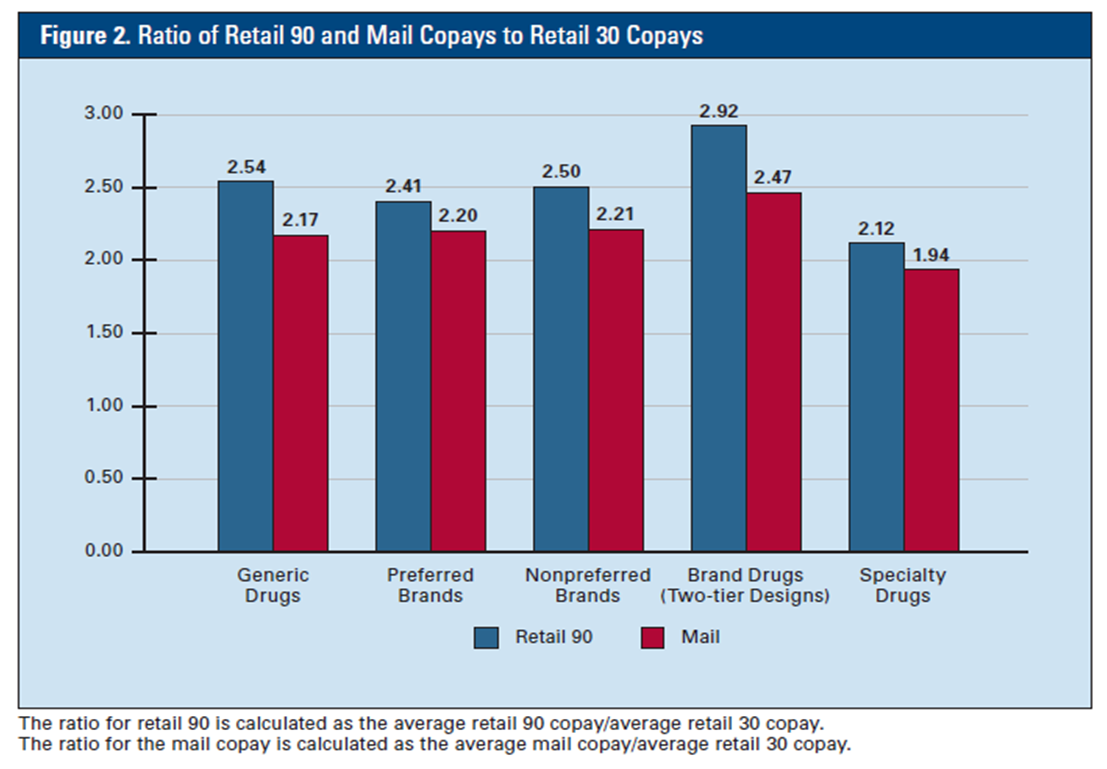
- Nearly 60% of plans allow 90-day retail prescriptions. [Wow! This was a shocker to me.]
- 30% of respondents require specialty medications to be filled by their PBM. [Which seemed low to me.]

- Only 5% of respondents said they give their PBM responsibility for plan design.
- 18% of plans have mandatory mail (although the statistic is 26% for respondents who have pharmacy provided as a carve-out).
- 21% of plans have a limited retail network.
- 36% of plans have copay waivers.
- 7% of plans cover some form of genetic testing.
- In general, there was an equal view of all the forces impacting benefit plans.

- 64% of plans are focusing on member education to help them control costs. [exactly what we do at Silverlink everyday!]
Here’s a key chart on average copays for 3-tier plan designs.
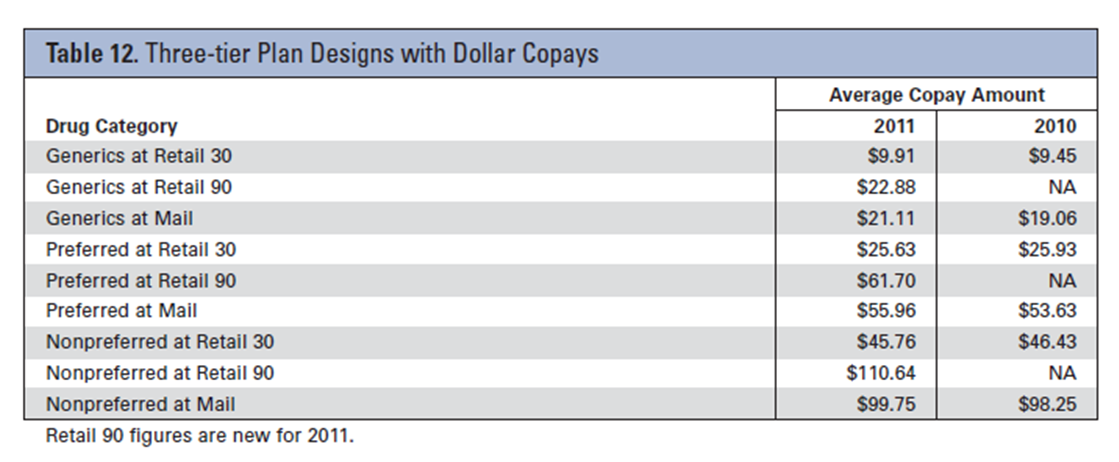
Another summary they show from some external research is below:

Adam Fein recently pointed this out, but the use of MAC pricing at mail is pitifully low at 18% versus 42% for 30-day retail. (More from Adam on the report.)
I’m always interested in the overall use of programs by plans which is summarized here. Interestingly, there were three areas which carve-in did much less than carve-out – outbound phone calls, retro DUR, and therapeutic substitution.

They also include a summary of several research studies on adherence with a quote from me:
“In working with healthcare companies around adherence, our focus is always on how to best use data and technology to personalize interventions in a scalable way,” said George Van Antwerp, 2011-2012 Prescription Drug Benefit Cost and Plan Design Report Advisory Board member. “Medication adherence is a multi-faceted issue. While there is no silver bullet, technology can help deliver different messages to consumers based on the complexity of their condition, specific medications, and their plan design (for example). But, while technology can provide the initial nudge, the care team has to work together to address health literacy and build an understanding of the condition, the medication, and value of adherence.”
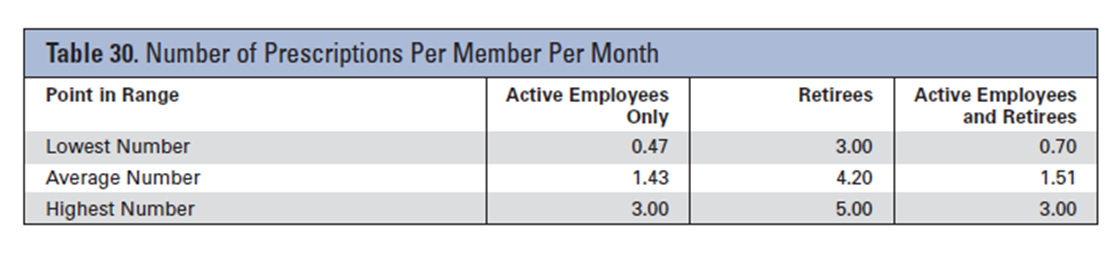
Another data point that I often use from here is the average number of Rxs PMPM:
Engaging The Un-Engaged
August 17, 2011 0 Comments
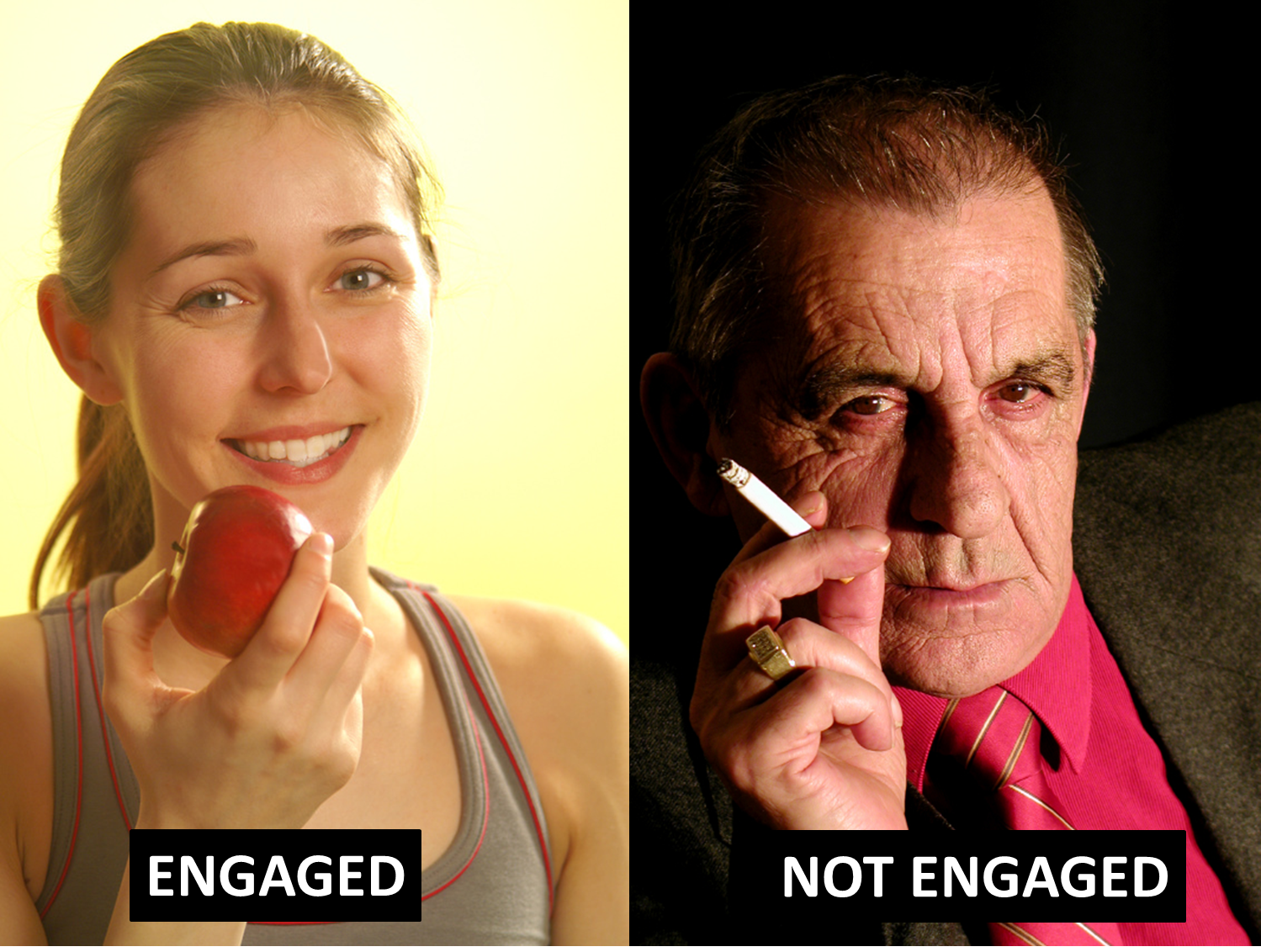
One of the hot topics in a lot of healthcare conversations these days is engagement. There’s the “easy” engagement for the e-patients that are actively involved in their healthcare. Then there’s the much harder engagement of those that aren’t engaged. And, finally, there’s the issue of chronic engagement. I can easily get someone to engage a few times with an incentive or some other “trick”, but how do I get them to stay engaged over time. It’s not easy.
This is one of the topics that will be discussed at the upcoming Forum 11 in San Francisco. If you’re coming, look me up. I’m presenting on Friday.

Press Hits, Presentations, Writing YTD
August 10, 2011 1 Comment
I wanted to put together a quick summary of brand awareness so far in 2011. It’s been a banner year already exceeding 2010 press hits (21).
- Drug Benefit News article in January around predictions for the industry
- Whitepaper on the future of the PBM/pharmacy industry
- Mention of my whitepaper in Adam Fein’s blog
- Barclays PBM Expert Call on 2/8/11
- Drug Benefit News article on Lipitor in February
- Managed Care Magazine on Lipitor
- Drug Benefit News article on coalition in February
- Drug Benefit News article on Walgreens PBM sale in March
- AIS Webinar on Copay Cards
- Drug Benefit News on Copay Cards
- Pharmacy Times on Mail Order
- Silverlink eBook we put out on healthcare communications
- AJPB July/August 2011 From the Editor
- Health Plan Weekly (8/1/11) on OptumRx moving away from Medco
- Pharmacy Technology Podcast in July
- Ten different appearances in the PCMA SmartBrief
- Five references on RxRoundtable.org
- A blog citation about extreme couponing
- Some discussion of my AIS webinar by David Williams
- A guest post on KevinMD about paying physicians for adherence
- Grand Rounds
- Drug Channels News Roundup
- A mention in DigiPharm
- HealthLeaders on Medco sale to Express Scripts
- HR Online about limited networks
- Drug Channels review of the Express Scripts Drug Trend Report
And, I have 5 things that I’ve actively provided comment and content to including my upcoming presentation at the Care Continuum Alliance on engaging the hard to engage with one of our clients – Aetna.
Copay Cards: Don’t Throw The Baby Out With The Bathwater
July 13, 2011 2 Comments

Prescription Copay Cards continues to be a hot topic (see list of articles at the end here), but I see a lot of FUD (fear, uncertainty, and doubt) versus a lot of facts. At the end of the day, there are certainly a few stories about cases where costs have jumped up due to copay cards overcoming formulary positioning.
But, no one knows the total market impact. I’ve spoken with six different organizations that would be well positioned to know, but they don’t. It’s not tracked or easily available in the data. Reasonable estimates from Dr. Adam Fein over at DrugChannels put the market at about 100-125M Rxs which is about 3% of the total Rx market (assuming 3.3B Rxs/year) or 12% of the total brand market (assuming 75% GFR). [I validated those numbers with a specialty pharmacy that shared that they were seeing 13% of their claims come in with a copay card.] Certainly, the market has grown as IMS estimated in one recent article.
The question of course is whether these are good or bad and whether their use is malicious or not. My conclusions are based on talking with about 30 people in preparation for my AIS webinar on this topic today. What I concluded was:
- There is a win-win. Copay cards can improve adherence. Adherence can reduce total healthcare costs. There is a point at which the increased cost curve crosses the savings curve and is something to be considered.

- Today’s approach is a shotgun approach by which cards are available online (e.g., www.internetdrugcoupons.com) and by physicians. They’re not focused on patients with need or on patients with adherence barriers. They play into the misperception that cost is the primary barrier to adherence WHICH IT IS NOT. [Cost is an issue in <20% of the cases according to multiple barrier surveys.]
- Copay cards are really a CRM Trojan Horse for pharma to build a 1:1 patient relationship (or should be if they’re not thinking that way). Due to HIPAA, pharma doesn’t typically know who uses their drugs. If I were a brand manager, I would gladly trade some copay relief in return for increased adherence and the contact information for my patients.

I think there are several ways that industry (especially pharmacies) should collaborate with pharma on how to leverage these copay cards at the POS with patients [call me to discuss]. But, to do that, I think the broader industry is going to require some type of rules which I am sharing shortly as a proposed “pledge”.
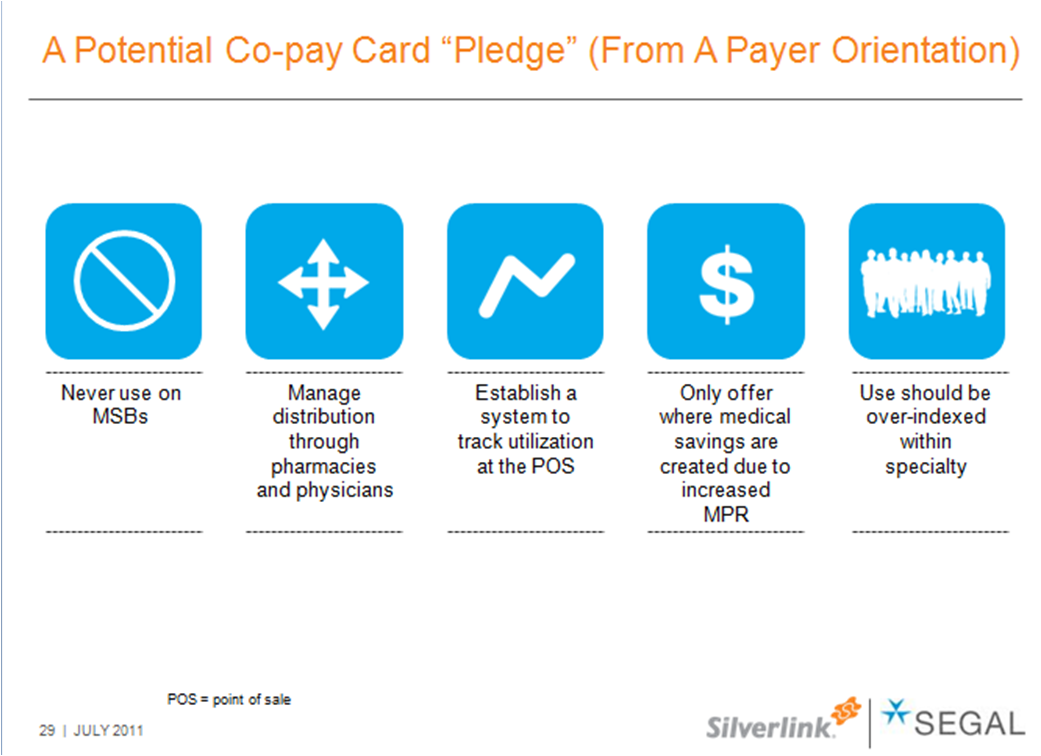
The other thing longer-term to watch is will this further change the PBM-Pharma relationship. I think yes. If the PBMs push for legislation on this marketing tactic or the manufacturers figure out that this is a better use of their spend than rebates, this will change the relationship.
Additional Reading:
Medco Follow-up On Questions RE: 2011 Drug Trend Report
June 7, 2011 0 Comments
In my post a few weeks ago, I had four questions which my initial read of Medco’s Drug Trend Report had generated. I just got the answers to them…
Q: ADHD trend continues to increase. With the new DSM-5 proposal, it looks like there will be more teens and adults diagnosed with adult ADD. Do you see this accelerating the trend in this category even more?
A: The proposed changes to the diagnostic criteria for ADHD / ADD in the DSM-V include changing the age of onset limit (on or before age 12, instead of age 7) and lowering the required number of symptoms which effectively will “loosen” the criteria and permit doctors to more easily diagnose the condition. If this indeed takes place, we would expect some further acceleration of the ongoing upward trend in ADHD drug use.
Q: As generics get closer to 80%, the remaining brand drugs will have to try new strategies to sustain utilization. One of the growing tactics is copay coupons or cards. Do you see this as an issue? Are there tactics that you intend to use to address these through POS programs or other programs?
A: Medco believes the best way to manage costs for both patients and payors is through the use of clinical and managed care programs that incentify the use of lower cost alternatives when clinically appropriate.
Q: You talk about clients spending less PMPM on members age 0-18 which seems to run counter to the focus from last year on more, younger patients using maintenance drugs. What do you attribute that drop in spending to?
A: Because the prevalence in the pediatric category is so much lower than that of the adult population utilization/prevalence can trend higher than adults, but spend could be down, especially since there is much heavier use of specialty medications in the adult population. It’s a trend versus spend look.
Q: You bring up biologics. It’s unlikely that biologics will generate large price drops as we’ve seen from generics. What do you estimate will be the savings associated with biologics and will we see therapeutic interchange programs or will you manage the biologics more like a step therapy program?
A: The industry is awaiting the final FDA guidance for approval and possible interchangeability of biosimilars. The estimates are that biosimilar will be priced in the range of 15% to 30% of branded product pricing. And as with generics, it is anticipated as biosimilars become increasing more accepted and completion begins within the biosimilar market itself, saving may increase overtime.
PBM Mobile Applications – CVS, Humana, Medco, Express, Catalyst, Prescription Solutions
May 21, 2011 4 Comments
This week, Medco released their mobile application that they’ve been working with Verizon on. Not a big secret in my mind since I’ve been hearing about it since last Fall. I’ve talked about CVS Caremark’s application (CVS mobile), Humana’s application, and CatalystRx’s application. So, this made me wonder why I hadn’t heard about one from Express Scripts. It seems unlikely that they wouldn’t have one.
There doesn’t seem to have been a lot of fanfare, but they launched one in March. Here’s a quick summary of it:
The new Express Rx mobile app works across multiple platforms, and is now available for a free download at both the Apple iPhone App Store and at the Android Market (simply search ‘Express Rx’). In addition, members using a Blackberry or other smartphone device with web browsing capability can access our mobile optimized website at http://m.esrx.com.
With our new mobile app and mobile optimized website, Express Scripts members will be able to securely access the following functions:
- Start Home Delivery – transfer available maintenance medications to the Express Scripts Pharmacy
- Order Refills – select and schedule prescriptions to be refilled from the Express Scripts Pharmacy
- Check Order Status – check to see if an Express Scripts Pharmacy order has shipped, the ship date and by what method
- Find a Pharmacy – locate a nearby retail pharmacy using the GPS technology built into a smartphone
- Drug Information – access Drug Digest database to look up drug information, common uses and possible side effects
So, what does the Medco mobile application offer:
The app consists of three features: My Rx Choices, which delivers on-demand, personalized out-of-pocket costs, interactions and other information for any prescription drug; My Medicine Cabinet, which allows patients to view the medications they’re on, including prescription and over-the-counter drugs, and set reminders for themselves; and Prescription ID Card, which allows convenient access to a member’s prescription drug card.
Of course, Walgreens also has a mobile application as does Walmart. Neither of them are PBMs, but they are both critical players in the pharmacy space.
Next on my list to check out is Prescription Solutions. They also have a mobile application which does:
- Refill mail service pharmacy prescriptions
- View your prescription history
- Set up text message medication reminders
- Check the status of and track orders
- Locate a pharmacy by ZIP Code
- Search your formulary by generic or brand name drug, status, or class
As one might expect, mobile web or mobile apps are quickly becoming the norm. The key to look at is what is the functionality. Is it simply putting their websites on a phone or are they developing other technologies that take advantage of the mobile environment (e.g., location based services or enhanced reality). I’ll share some thoughts on those in another post.
Interview With Dr. Victor Strecher (Founder of HealthMedia) From #WHCC11
April 19, 2011 1 Comment
While I didn’t get to meet Victor at the World Healthcare Congress in DC, I got a chance to do a phone interview with him last week. For those of you that don’t know who he is, here’s a quick bio:
| Victor J. Strecher, PhD, MPH Professor, Health Behavior & Health Education; Director, Health Media Research Laboratory; Director, Cancer Prevention and Control, University of Michigan School of Public Health; Chairman & Founder, HealthMedia, Inc. |
| Dr. Victor J. Strecher graduated in 1983 with an M.P.H. and Ph.D. in Health Behavior & Health Education from the University of Michigan. After positions as Assistant and Associate Professor in the School of Public Health at the University of North Carolina, Dr. Strecher moved back to the University of Michigan, where he became Professor of Health Behavior & Health Education and Director of Cancer Prevention and Control in the University of Michigan’s Comprehensive Cancer Center.
Dr. Strecher also founded the University of Michigan’s Center for Health Communications Research (CHCR): a multidisciplinary team of behavioral scientists, physicians, computer engineers, instructional designers, graphic artists, and students from a wide variety of disciplines. For over a decade, Dr. Strecher’s center has conducted research studies and demonstration projects of computer-tailoring and interactive multimedia programs. In 1998, Dr. Strecher founded HealthMedia, Inc.– a company designed to create interactive health communications solutions for medical care, employer, pharmaceutical, and government settings. The intention of HealthMedia, Inc. is to bring the highest quality science, operational capabilities and creativity to the marketplace. |
My key takeaways from the conversation were:
- We have to focus on intrinsic motivators in healthcare.
- A little help at the right time is a lot better than a lot of help at the wrong time.
- Selecting physicians based on organic chemistry scores without weighing empathy may be a issue.
- You have to listen to the patient, assess their needs, and provide them with tailored information.
- Social media has to embrace “collaborative filtering”.
- Most behavior change companies are hitchhikers while some like PBMs are tollbooths. It’s better to be a tollbooth.
- Choice has to expand over time.
Intrigued? You should be. Dr. Strecher was a fascinating person to talk with (see some of his insights). We only spent 30 minutes together, but I could easily imagine sitting with him in at my alma mater (University of Michigan) and talking for hours about healthcare communications and how this can impact the country and our outcomes.
We started off by talking about the shift in focus to the consumer over the past decade and how even while this has happened we (healthcare companies) have been guilty of seeing the patient from our perspective not from their perspective. This took us down the path of talking about motivation and what gets people to take action. We focused on the fact that health (in and of itself) isn’t a big motivator, but being healthy to see your kids or grandkids certainly is. We talked about how financial rewards aren’t the right (or only answer) and how there is a need to really understand and articulate intrinsic motives (see write-up on Drive by Daniel Pink).
We talked about his company HealthMedia (owned by Johnson & Johnson) and what they do to collect information on motivation. We talked about the use of stories (a topic that keeps coming up) and providing the right amount of help at the right time. He talked about how HealthMedia monitors consumers, provides them with coaching, and continuously evaluates their goals. He also talked about how they use online technology and mobile technology to get the right connection at the right time.
This led us into a discussion about how important behavior is in health outcomes. He mentioned that 70% of cancers are related to behavior – scary. But, at the same time, we don’t chose candidates for medical school based on their abilities to engage patients or show empathy. We choose them based on their organic chemistry scores. (As a physician, he could say that while I’d probably get tomatoes thrown at me for that comment.)
At this point, I really wanted to understand what HealthMedia has learned to get people off the couch and engaged. It all sounded a little too theoretical to me. He talked about their core process:
- Listen to the issues. Assess the patient using branching technology and feedback to them.
- Try to figure out what they need using a software algorithm.
- Tailor information to them based on what you’ve learned (e.g., if they are concerned about gaining weight when quiting smoking, help them with that). And, I thought a key point here was to help them prioritize their actions rather than giving them a laundry list of things to do.
But, one of the keys in getting them to engage is to work through their intermediaries – employers and payers. For example, while you might encourage consumers to take an HRA for a financial reward, you may need a “health champion” at the employer site to really motivate people at a personal level. Or in another example, he talked about how Kaiser uses Epic and how HealthMedia integrates there. This creates an opportunity for “information therapy” which can be given to the consumer as a follow-up action from their encounter.
We went on to talk about social media which is one of those big topics in healthcare today. Obviously, there is lots of research that talks about the “peer pressure” effect on weight and smoking and other topics. (He mentioned the book Connected here.) But, how to you build trust (see recent post on this) and route consumers to the relevant information. He brought up a concept which was new to me called “collaborative filtering”. My interpretation of this is essentially having an expert monitor and guide consumers to relevant information within the social media realm. You want to find relevance in the data which means it has to be from “friends” who have experience with the topic.
I was asking him about the challenge of building trust given how many companies are out there and the amount of information which consumers are bombarded with. This is when he created the great visual of most companies as being hitchhikers in the behavior change world while others like PBMs are tollbooths. The tollbooths create a pause in the process which is triggered around an event. This event is an opportunity to get the consumer engaged. Of course, in general, these “golden moments” (my phrase) aren’t taken advantage of as much as they could be.
But, if they were, consumers would understand what they want and how a particular behavior maps to those desires. This would lead to improvements in adherence and other outcomes.
We wrapped up by talking about preference-based marketing and the impact of choice. He had some great points here which is an area of interest for me since there’s not much research. He pointed out that choice is instrumental since it appeals to autonomy. BUT, not everyone wants autonomy. Too much choice can be overwhelming. In summary, he suggested that less choice is best early on when the consumer is overwhelmed (e.g., newly diagnosed), but as they become more of an engaged patient over time, more choice is better.
Share This


My LinkedIn Profile


 WSJ Health Blog
- Is a Paleo Diet Healthier Than Standard Nutritional Guidelines?
- Small Business and the Affordable Care Act: How Has Your Business Been Affected?
- HealthCare.gov Explorer: Decode the Health Law’s Subsidies
- One Reporter, Four Families, Six Scientists and the Search to Cure a Rare Disease
- Your Responses: How Has the Health Law Affected You?
- What Does the Health Law Mean for You? Your Questions Answered
- How Has the Health Law Affected You?
- Rare Diseases and the Search for a Cure: A Reddit AMA
- Robots to Cure Rare Diseases: A Reddit Ask Me Anything (AMA)
- Six Tips For Better Napping
Drug Channels
- Drug Channels News Roundup, March 2026: Cigna’s 340B Workaround, Merck’s ARPA Surprise, Walgreens’ Automation Bet, Why Rebates Hurt Patients, and a DCI Team Photo
- The Top Pharmacy Benefit Managers of 2025: Market Share and Key Industry Developments
- The Rare Journey Needs a Special Pharmacy Partner
- Reflections and Photos from the Drug Channels Leadership Forum 2026
- NOW AVAILABLE: The 2026 Economic Report on U.S. Pharmacies and Pharmacy Benefit Managers
- Medical Benefit Maximizers Are Emerging as a Critical Market Force: What Manufacturers Need to Understand
- The Top 15 U.S. Pharmacies of 2025: Market Shares and Revenues at the Biggest Chains, PBMs, and Specialty Pharmacies
- Reshaping Patient Affordability: The Power of Expertise and Agility
- PBM Industry Update 2026: Trends, Challenges, and What’s Ahead (NEW Live Video Webinar)
- Time to Evolve: Hubs Flex to New Demands
KevinMD Blog
- An error has occurred; the feed is probably down. Try again later.
Health Populi
- Food & Wine Magazine Features Food-As-Medicine: Good for People, Good for the (Local) Economy
- Consumers Using AI for Health — Especially Motivated When People Lack Access to Care
- Consumer Adoption of AI for Health and Self-Care – Doubling to 36% in a Year, Via Rock Health’s Latest Snapshot
- The “Five-Month” Cognitive Penalty of Financial Decline: A Significant Loss of Financial Well-Being Correlates with About Five Months of Cognitive Decline A Year
- Healthcare AI Direct-to-Consumer: Everything, Everywhere, All At Once
- Self-Rationing Health Care in America – 1 in 2 Americans Earning As Much as $180,000 Have Postponed a Life Event Due to Healthcare Costs
- Consumers Are Ahead of Consumer Health Innovation: Insights from IQVIA
- “Will Work For Health Care:” Americans Trading Off Wages For Healthcare (Again)
- Why Clorox Talks about Hygiene at Home: Health, Wellbeing, and the Home as Health Hub
- Dr. Wachter Bets on A Giant Leap for AI in Health Care
e-Patients
- Introducing the CHAMP Principal Investigator: Cait DesRoches (Part 1)
- Everylife Foundation Community Congress Annual Meeting Highlights
- Collaboration is the Best Medicine: Patient-Centered Collaboration Grounded in Caritas®
- Collaboration is the Best Medicine: It’s the Heart of Caregiving
- Collaboration is the Best Medicine: How to Partner with Your Doctor for Better Care
- Collaboration is the Best Medicine: Bridging the Gap in Patient Participation
- Dealing with Medical Uncertainty, Ambiguity, and Frustration
- Collaboration is the Best Medicine: The Time for Participatory Medicine is Now
- In Memory of Nancy Finn: e-Patient, Advocate, Author, SPM Supporter
- A cure for what killed Doc Tom! Can people afford it?

Enabling Healthy Decisions Blog by www.georgevanantwerp.com is licensed under a Creative Commons Attribution-Noncommercial-No Derivative Works 3.0 United States License.
Contact Information
Contact me at gvanantwerp @ mac.com. Enabling Healthy Decisions