Archive | Books / Articles RSS feed for this section

CellScope – Another Smartphone Bolt-On

Turning your smartphone into a diagnostic device seems to be a large focus right now.  I just saw another one called CellScope.  They allow you to take a picture of your inner ear or your  skin and submit those for review. 


From a recent article:

Khosla Ventures also recently invested $1 million in CellScope, an alum from Rock Health’s first class of startups in 2011. The company is developing smartphone peripheral devices designed for consumers to use for at-home diagnosis.

Think of it as a “modern-day digital first aid kit.”

CellScope’s first offering will be a smartphone-enabled otoscope that will enable physicians to remotely diagnose ear infections in children. Parents will be able to use the peripheral, which attaches to a smartphone camera lens, to send an image of their child’s inner ear that physicians can use to make a diagnosis and then write a prescription if need be. CellScope says ear infections in children make up 30 million doctor visits annually in the US alone. The consumer device would help parents miss less work and potentially cut down on late night emergency room visits, according to the startup.

The startup traces its origins to bioengineering Professor Dan Fletcher’s lab at UC Berkeley, where CellScope founders Erik Douglas and Amy Sheng were developing cellphone-microscopy for remote diagnosis in developing countries. CellScope expects to launch future products focused on throat and skin exams, including non-clinical apps for consumer skincare.

A Few Diabetes Facts From Express Scripts

Here’s a summary of some of the data from the latest Express Scripts Drug Trend Report relative to Diabetes.

  • 26M Americans have diabetes
  • 15% of Americans (or 39M) will have diabetes by 2020
  • Diabetes costs $194B per year (health spending) and that is expected to rise to $500B by the end of the decade
  • 41% of diabetes are non-adherent to their medications
  • 60% of diabetics using insulin don’t regularly self-monitor their blood glucose levels
  • The drug costs are $81.12 PMPY (based on high utilization of metformin (a generic)) with 14.91 Rxs per user per year (which seems low since the average diabetic takes 5 medications from what I know)

This gives you some data, but I pulled this data from an older blog post of mine from the ADA…

I found this list of diabetes fact from the American Diabetes Association in an article I was reading:

  • 25.8M children and adults in the US have diabetes (8.3% of the population).  This includes 7.0M who haven’t yet been diagnosed.
  • 1.9M new cases of diabetes were diagnosed in people 20+ in 2010.
  • 215,000 or 0.26% of all people under 20 have diabetes.
  • In 2007, diabetes was listed as the underlying cause of death on 71,382 death certificates and as a contributing factor on another 160.022 death certificates.
  • Adults with diabetes have heart disease death rates 2-4x higher than adults without diabetes.
  • The risk for stroke is 2-4x higher for people with diabetes.
  • Diabetes is the leading cause of blindness among adults ages 20-74.
  • Diabetes is the leading cause of failure accounting for 44% of new cases in 2008.
  • Total cost of diagnosed diabetes in the US was $174B in 2007.

And, depending on if you focus on pre-diabetics, the population becomes even larger.  I expect with more and more companies doing onsite biometric screening that the population in diabetes management programs will increase significantly over the next few years.  The keys will be treating them differently based on risk, disease understanding, and patient preferences to make the programs cost effective.

NY Law On Soda Is Simply A Nudge To Be Healthy

I know we can all complain about the government telling us what to do, but at the end of the day, they’re not saying we can’t drink soda.  As far as I know, you can still have unlimited refills in NY.  They are simply reframing one aspect of drinking soda to try to nudge us into being healthier.  Ultimately, this should be a good thing for us for several reasons.

  1. We eat or drink whatever is put in front of us.  Just look at this research.
  2. Soda and other sugary drinks are generally not good for us.  Just look at the infographic below.
  3. We have an obesity problem in this country (in case you didn’t know it).
  4. Obesity drives diabetes, kidney problems, hypertension, and many other problems that are driving up our healthcare costs and turning us into the first generation to potentially live shorter lives than our parents.
  5. Nudging people into behavior change works.

Pediatric Cancer Article in EBN

“In the 1950s and 1960s, 4% of children survived with that diagnosis [leukemia].  In 2010, 80% to 85% of children in all risk categories survived and are cured.”  Dr. Beverly Bell, Medical Director of the oncology program at inVentiv Medical Management

This is a quote from the June 1, 2012 article titled Trial and Error in Employee Benefit News.  It’s an important fact as we watch cancer go from a terminal diagnosis and medical event to a chronic disease.  Working with the survivors is something that Dr. Bell and I have discussed several times.

Here are some other facts from the article:

  • 1/3 of childhood cancers are leukemias.
  • 10,400 kids under 15 in the US were diagnosed with leukemia in 2007.
  • About 1,545 of them will die fro the disease.
  • Approximately 75-80% of pediatric cancer patients are put on a clinical trial.

The article goes on to talk about several things to consider:

  • Plan language modifications.
  • Access to pediatric oncology nurses.
  • Access to a oncology network of centers of excellence.
  • General support for the entire family perhaps through an EAP program.
  • Hospice care.
  • Medical travel / tourism.

Creating a holistic strategy to address oncology is a big effort and one that is critical to helping these patients.

A Few Basics On Health Risk Assessments

Like many of you, I’ve heard a lot about HRAs (Health Risk Assessments) for years.  A few times I’ve even taken them.  And, depending on your employer, you may even get paid to complete one.  But, what are the basics about HRAs that you should know?

  1. What is a HRA?  An HRA is a series of questions that can be administered over the Internet or by the phone or by a nurse to help collect patient reported data to help screen patients for chronic conditions or risk of developing a chronic condition based on their behaviors or other data.  Additionally, they often lead to either immediate feedback on behaviors to address or lead to the patient being engaged into a program with a wellness, disease management, or case management. 
  2. Should employees be incented to take an HRA?  Incentives are basically used to increase response rates to the HRA.  Not surprisingly, several studies show that incentives work, but education about the need to take the HRA is also important.  In some cases, employers are even linking participation to premiums.  Additionally, here’s a list of the top incentives used based on a 2010 study. 
  3. How should an HRA be used?  An HRA is a key component of an overall care management strategy.  Like claims analysis, the objective of the HRA is a screening mechanism to identify patients who should be included in wellness, disease management, or care management program. 
  4. Are HRAs valuable?  There have been studies over the years that have shown a 2:1 or 3:1 ROI for wellness programs and a ROI for case management.  HRAs are valuable in identifying more patients who should be enrolled in these programs. 
  5. Should you combine biometrics with HRAs?  Here’s a good study that shows that blending lab work with HRA data significantly increases the likelihood of identifying patients with diseases especially kidney disease. 

Of course, no HRA is valuable if:

  • You can’t get enough members to actually take the HRA.
  • You don’t have an engagement strategy to get the members to participate in the program.
  • You don’t continue to follow-up and help the member manage their condition.
  • The member doesn’t get engaged in their healthcare. 

Amazing iPhone Application For The Blind

When I saw this presentation at World Health Care Congress in DC earlier this year, it was definitely the most amazing presentation there.  We all talk about all the new applications being developed.  There is one that looks at your tongue to tell if you’re sick.  There’s one that will take an audio file of your cough and compare it to other coughs.  Lots of amazing applications.

This one by LookTel can really make the difference for blind people. 

2/3rds of Pharmacy Spend to be in Specialty by 2016

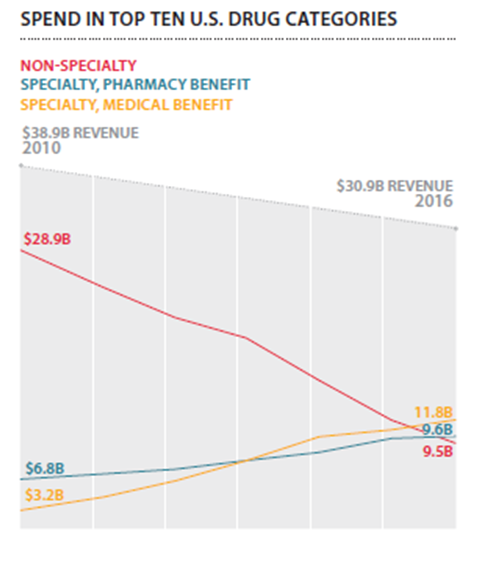
I found this chart to be very interesting.  According to the latest CVS Caremark projections, over 60% of healthcare spending on drugs will be on specialty drugs by 2016.  That’s a huge shift!  A lot of it still sits in the medical side which no PBM has really figured out how to manage, but it creates great opportunity for those that can integrate medical and pharmacy claims to analyze the data and leverage it for cost and care management programs.

9 Leading Trends In Rx Plan Management

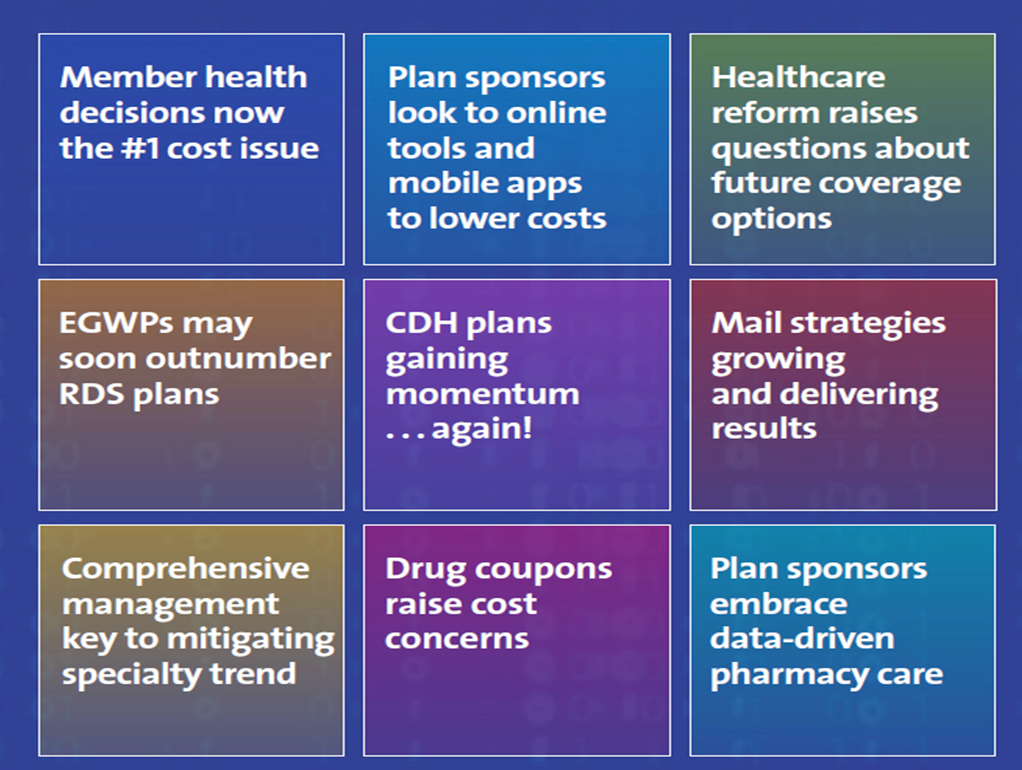
This a Medco report (now Express Scripts) that they recently released.  It lays out what’s on the minds of clients (payers) in terms of prescription management.  Not a lot of surprises here.  (But, if you’re looking at this, you might also note that the URL www.drugtrendreport.com is now up with the new branding and Express Scripts drug trend report.)

Good Mobile Health Quote From Intel

I saw this quote in my morning mHealth e-mail and wanted to share it.

“To change behavior, mobile health applications need to go beyond self- tracking, providing tips or access to an online community. Such applications need to address disconnects between long-term intentions and moment-to-moment choices. The most effective tools will creatively instantiate well-evidenced behavior-change principles with data mining, social networking, location awareness, and other capabilities of mobile technologies.”

– Margaret Morris PhD, Senior Researcher, Intel

Get Ready For The Gamification Of Healthcare

Whenever I bring up “gamification“, most people say “what?”.  But, gamification is gaining some steam based on a recent article from AIS that talked about United, Humana, Aetna, and Kaiser all looking at the topic.  (see Perficient white paper)

The idea is to improve patient engagement and outcomes by using games and the idea of competing, earning rewards, and solving challenges to improve health.  I think this is especially relevant with all the chronic diseases and obesity challenges in kids, but there are gamers of all ages.  Certainly, Wii and other technologies that respond to movement and integrate into social media help enable this.

Keas is certainly one company whose name I’ve heard a few times in this space for healthcare.  But, I think lots of people are talking about this and trying to figure it out.  A simple Google search pulls up lots of discussion on the topic.

With the upcoming Facebook IPO and their success working with Zynga on gaming, it makes me wonder if they’ll make any movement in this space.  They’ve generally stayed out of the healthcare space other than exercise and diet, but with their recent effort around organ donation, one could speculate about what they could do with all the money they’re raising.

Gabe Zichermann, the author of Game-Based Marketing, speaks of balancing the fun and frivolity of gamification with the task of making life easier for cancer patients. He says, “I don’t presume to think that we can make having cancer into a purely fun experience. But, we have data to show that when we give cancer patients gamified experiences to help them manage their drug prescriptions and manage chemotherapy, they improve their emotional state and also their adherence to their protocol.”

Will The GAO Doom Medicare Star Ratings?

I’ve talked about the Medicare Star Ratings several times before.  This is a critical framework for beginning the shift in payment from a fee-for-service world to a outcomes based system.  I’m sure there are many issues with it, but being in the trenches, I certainly noticed that many companies began to look differently at programs over the past 18 months.  So, from an attention getter, it worked.

We all know rates were getting cut in Medicare so this shifted some of that pain to make companies focus on what matters in terms of quality and outcomes.

Now, the GAO has put out a report that questions whether the expansion of the Star program to include 3 Star plans was a good idea.  (see Gorman’s comments here)  I think this is a fair question.  Should we reward mediocrity?  I think there are ways to do this.

  1. You could pay 3 and 3.5 star programs but only if they show improvement year-over-year.
  2. You could lower the payments or only reimburse them for investments made (i.e., no profit).
  3. You could do it for one year then move the line up to 3.5 stars and then move it to 4 stars to give plans some time to implement, learn, and improve.

Right now, very few plans earn 5 stars, but dropping it to include 3-star plans makes almost 90% of plans get bonuses.  Maybe this is a case for some time of GE program where the top 10% get the biggest bonus; the bottom 10% have to stop offering a program; and the remaining funds get divided up based on some time of rating system.

The key here is not to throw the baby out with the bathwater.  The framework is good.  It’s taking time to understand the program, implement changes, and see an impact.  But, let’s not reward people that can’t continue to innovate and improve and do it in a way that rewards members based on outcomes and satisfaction.

Discussing Oncology Prevention With Dr. Hawk From MD Anderson #WHCC12

Last week, I had a chance to sit down with Dr. Hawk right after his presentation at the World Health Care Congress (WHCC). Dr. Hawk is the Vice-President and Division Head for Cancer Prevention and Population Sciences at the University of Texas M. D. Anderson Cancer Center. He’s been there since late 2007 when he came from the National Cancer Institute.

My favorite point from talking to him was…

Cancer is a process not an event. Communication is critical.

In his presentation, he talked about several things:

So, after his formal presentation, we talked about several things.

  1. One of the big focus areas for MD Anderson is prevention. As we know from research, many cancers are preventable. And, the promise of personalize medicine and genetic testing is beginning to help us understand these cancers and their treatments even more.
    1. Primary – this would include lifestyle changes such as diet and smoking which help prevent the disease
    2. Secondary – this would include screening and detection to help slow the progression of the disease
    3. Tertiary – this would include the focus on the patient (not the tumor) for treatment and helping them with quality of life
  2. He talked about how cancer is really 200 different diseases to be understood and managed.
  3. He gave a great analogy about how CVD (cardio-vascular disease) evolved and talked about how all the individual risk factors became asymptomatic diseases which have led to all the “know your number” campaigns around lipids and blood pressure.
  4. We talked about cancer as a process which led us into the discussion about palliative care and shared decision making. He made another good analogy here about driving a car. We need to understand the value of wearing our seat belt and having insurance, but we have to make the final decision about whether to do that or not.
  5. We talked about personalized medicine including genomics and epigenetics. We talked about how this impacts dosing and understanding of the tumor. (Interesting in a conversation with another person in this field this week they were telling me about how tumors and viruses change over time and those implications on genetic test results.) We also talked about SNPs and the complications in getting validation in studies due to sample sizes. We wrapped up this topic with discussions on coordinated registries and work that companies like 23andMe are doing.
  6. Our final topic of discussion was around clinical practice algorithms and how evidence-based medicine (EBM) gets implemented. We talked about the use of guidelines and how those allow for monitoring the use of EBM standards. We also talked about the need for integrated EMRs that would allow for benchmarking and linking outcomes to use of guidelines.

This is a fascinating area. Cancer affects most of us either directly or through some family member or friend.

Number Of Chronic Conditions And Costs

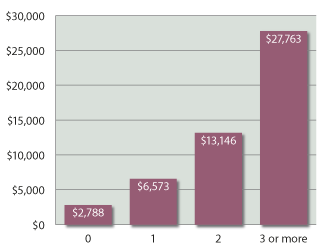
I found this data from BCBS of MI in 2008 which shows how costs go up as patients have more chronic conditions (comorbidities):

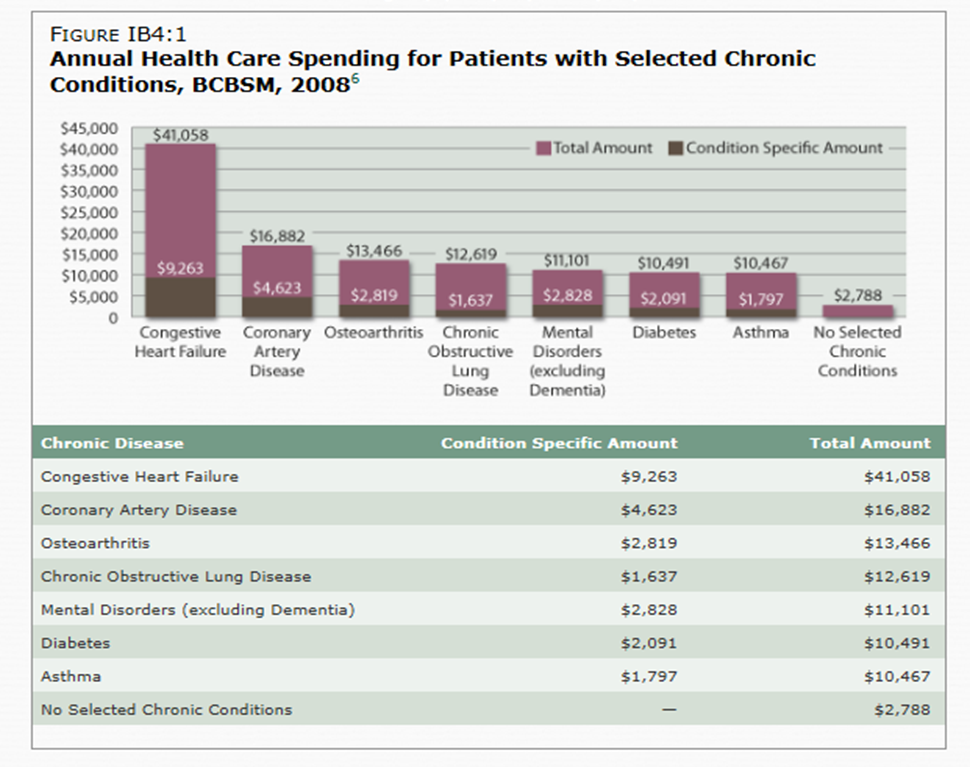
Another chart shows the annual costs by chronic condition which is good data:

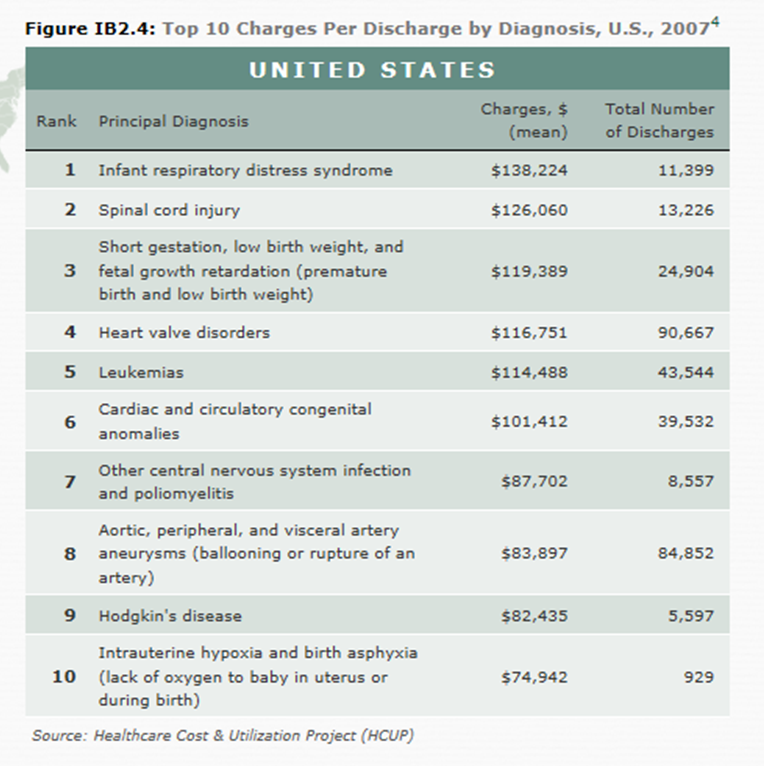
 And, from another area of the website, I found this data on US discharge costs interesting:

Costs Of Presenteeism and Absenteeism

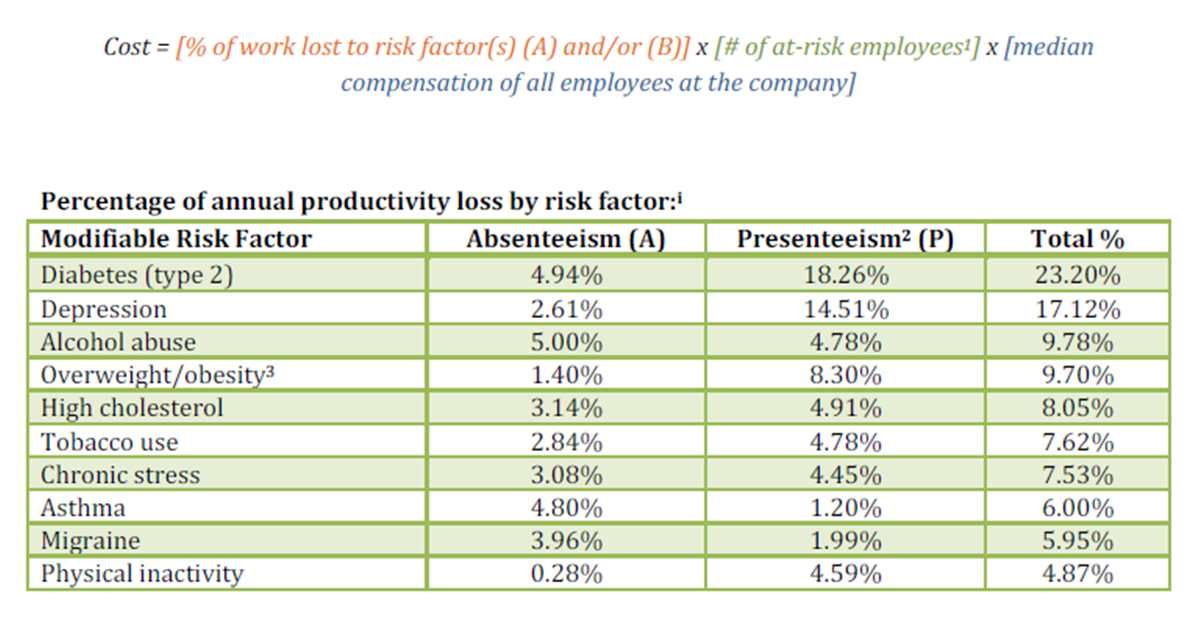
At the World Health Care Congress (WHCC), one of the presenters was making a great case for why employers want to continue to be involved in healthcare.  Their point was that the costs of presenteeism and absenteeism are significant and make health a bigger issue than simply the obvious medical and pharmacy claims costs.  (In one study, presenteeism costs alone were more than medical costs.)

While absenteeism costs are obvious as in sick days paid out, presenteeism is harder to estimate but can have significant costs.  Presenteeism occurs when people come to work sick and are not productive.

I’m sure there are numerous methodologies out there, but I found this one that seemed simple and gave me some data by condition on both factors.

Will Evidence-Based Medicine Become Reality?

Pills and surgery are potent symbols of healing power, but our faith in these symbols has often blinded us to truths. Somewhere along the line, theory trumped reality. Administering a medicine or performing a surgery became more important than its effect. (from NY Times story)

Did you ever think about the fact that your physician might not be using evidence-based medicine? This is an interesting discussion topic since we know it takes years for research and information to be disseminated throughout the medical community and become the standard of practice.

Scientific knowledge about best care is not applied systematically or expeditiously to clinical practice. It now takes an average of 17 years for new knowledge generated by randomized controlled trails to be incorporated into practice, and even then application is highly uneven. (According to the Institute of Medicine)

Will that change? One would think so. With technology, you can see more and more tools being used by the physician. You can also see more and more companies doing things like claims editing and then using clinical edits to support the process essentially creating the safety net for the physician, the consumer, and the payer. By implementing clinical standards from places like NCCN or using clinical pathways, companies can help physicians to drive better outcomes at lower costs. This is key for us to manage our healthcare costs here in the US and eliminate unwarranted variation.

So, what is evidence-based medicine? (from Wikipedia)

Evidence-based medicine (EBM) or evidence-based practice (EBP) aims to apply the best available evidence gained from the scientific method to clinical decision making. It seeks to assess the strength of evidence of the risks and benefits of treatments (including lack of treatment) and diagnostic tests. This helps clinicians to learn whether or not any treatment will do more good than harm.

Evidence quality can be assessed based on the source type (from meta-analyses and systematic reviews of double-blind, placebo-controlled clinical trials at the top end, down to conventional wisdom at the bottom), as well as other factors including statistical validity, clinical relevance, currency, and peer-review acceptance.

EBM/EBP recognizes that many aspects of health care depend on individual factors such as quality- and value-of-life judgments, which are only partially subject to scientific methods. EBP, however, seeks to clarify those parts of medical practice that are in principle subject to scientific methods and to apply these methods to ensure the best prediction of outcomes in medical treatment, even as debate continues about which outcomes are desirable.

Here’s a few more articles on the topic:

So, there is certainly some debate about this becoming “cookie-cutter” and not being personalized to the individual patient, but I think that’s a common misnomer. EBM is a tool to help guide care to the best decisions based on research and data, but it is balanced with the physician-patient relationship and specific needs.

[BTW – Another aspect of this is enabling consumers with information about how to select locations that are low-cost given the variety in pricing which exists. There was an article in the USA Today about this recently.]

Infographic: Decoding Your Medical Bills

Here’s a great infographic on costs.  This is another reason why you need a company monitoring your claims for cost savings opportunities and working with patients and physicians to implement evidence-based medicine and route patients to centers of excellence (better outcomes for lower costs).

Decoding Your Medical Bills
Created by: MedicalBillingAndCodingCertification.net

Eating Chocolate = Lower BMI!

Here’s a study that all of us with a sweet tooth should love…

In Time (4/9/12), they say:

Eating chocolate five or more times a week on a regular basis can translate to a one point drop in BMI on average, compared with those that don’t eat it.

It sounds too good to be true, but apparently chocolate can help the body absorb fewer calories from fat.

See the full study here.

(My question is why don’t I hear these messages from my health plan.)

And, for those of you that like salty snacks instead, the same page in Time talks about the fact that popcorn has more polyphenols by weight than fruits and vegetables. (Polyphenols can neutralize cancer causing free radicals.)

Changing Marketing Paradigms

Traditionally, consumer marketing has focused on the “young invincibles” as they are sometimes referred to in healthcare. Those are the 18-34 year olds that traditionally were the DINKs (dual income no kids) and younger population with more disposable income or focused on acquiring goods (as they bought homes and started careers).

Well, I think this quote by Sunil Gupta summarizes the issue:

If [young adults] have no money in their pockets, there is nothing to sell them.

With 46% of those age 18-24 unemployed and 20% of those 25-34 living at home, this group’s financial dynamics are very different. The focus on both those with money and those driving the healthcare costs have shifted to Baby Boomers. (Facts from Time article on page 16 in the 4/9/12 edition.)

At the same time, I read an article about marketing to women which continue to make majority of healthcare decisions both for themselves and their families. (and caregivers (often women) are less likely to be adherent to their own medications.)  Here were the recommended approaches:

  • Offer highly personalized formats
  • Provide complete anonymity
  • Eliminate the middle man
  • Understand self-perceptions
  • Consider the unique point of sale

And, some of these changes are driven by the economy. For example, according to NCH Marketing and Parks Associates, 81% of people are using coupons regularly and they redeemed them for 3.5B in 2011. (Of course, the jury is still out on the Groupon model…)

AHRQ Questions are the Answer campaign

I often talk about the issue of communications in healthcare. That could be patient to patient, healthplan to patient, pharmacist to patient, or physician to patient (or many more).

Understanding health literacy and personal motivation are critical as are so many other factors. With that in mind, I was glad to see this new campaign from AHRQ.

(Here’s the text they sent me about it.)

“When patients become more actively involved in their own health, there’s a much stronger likelihood their health outcomes will be better.

That’s why “Questions are the Answer,” a new public education initiative from the U.S. Agency for Healthcare Research and Quality (AHRQ), encourages patients to have more effective two-way communication with their doctors and other clinicians.

“Questions are the Answer” features a website — http://www.ahrq.gov/questions — where you will find these free educational tools to use with your patients:

· A 7-minute video featuring real-life patients and clinicians who give firsthand accounts on the importance of asking questions and sharing information – this tool is ideal for a patient waiting room area and can be set to run on a continuous loop.
· A brochure, titled “Be More Involved in Your Health Care: Tips for Patients,” that offers helpful suggestions to follow before, during and after a medical visit.
· Notepads to help patients prioritize the top three questions they wish to ask during their medical appointment.

Clinicians can request a free supply of these materials by calling AHRQ at 1-800-358-9295 or sending an email to AHRQpubs@ahrq.hhs.gov.”

All of this is good information, BUT:

  • Do physicians have time for this and are they prepared for these dialogues in plain language and with handouts and URLs they recommend?
  • Are patient’s prepared to slow their physicians down and make sure they explain everything?
  • Will this get measured at some point as a qualitative metric and correlated to outcomes?
  • Is Prescribing A Trial And Error Process?

    I found this chart fascinating.  As we know, drugs don’t always work (and not just because people don’t actually take them).  BUT did you realize in some cases it’s a coin flip of whether a drug will work for you?

    Data like this is just more support for the case for personalized medicine.  If a genetic test can help determine which drug will work in a patient, you can address their disease faster, avoid unnecessary side effects, and impact overall healthcare consumption and costs.

    The key of course is finding tests that can be administered easily and at a low cost for which the economic benefits exceed the costs.  Of course, addressing the education gap within the physician community and patient community to separate facts from myths is important.

    Some Facts On Palliative Care

    In the book called Healthcare in 2020 by Steve Jacob, there is a chapter on End-of-Life Care. It provides some great data all sourced there (so not repeated here). I find this whole are of discussion especially around palliative care very interesting.

    First, let’s define palliative care:

    Palliative care (from Latin palliare, to cloak) is an area of healthcare that focuses on relieving and preventing the suffering of patients. Unlike hospice care, palliative medicine is appropriate for patients in all disease stages, including those undergoing treatment for curable illnesses and those living with chronic diseases, as well as patients who are nearing the end of life. Palliative medicine utilizes a multidisciplinary approach to patient care, relying on input from physicians, pharmacists, nurses, chaplains, social workers, psychologists, and other allied health professionals in formulating a plan of care to relieve suffering in all areas of a patient’s life. This multidisciplinary approach allows the palliative care team to address physical, emotional, spiritual, and social concerns that arise with advanced illness. (from Wikipedia)

    The challenge of course is that most people don’t want to talk about dying, and physicians are taught to try everything to cure someone. After talking with a few people working in this area, the general scenario is where clinicians and other social workers are helping to enable to a patient to talk to their family and care team about their wishes. It’s not to make the decisions, but to give patients the tools to have an informed discussion.

    Here were some of the interesting things from this chapter in the book:

    • Less that ¼ of physicians were familiar with the term in a survey
    • The American Society of Clinical Oncology has established a goal of integrating palliative care into its model of comprehensive cancer care by 2020.
    • A 2009 study of cancer patients found that palliative care improved patient satisfaction and eased pain, fatigue, nausea, insomnia, anxiety, and depression. And, increased appetite.
    • According to the Worldwide Palliative Care Alliance, more than 100M people worldwide would benefit annually from either palliative care or hospice…yet only 8% have access to it.
    • The average physician’s estimate of how long a patient will live was 530% too high.
    • Fewer than 40% of oncologists speak candidly with patients about end-of-life treatments.
    • Physicians equate suggesting hospice as “giving up”.
    • A 2008 published study showed that patient satisfaction was higher, more advance directives were completed, fewer ICU admissions were necessary, and medical costs were lower for patients in palliative care.
    • Patients with lung cancer that received palliative care lived 3 months longer than those with standard care (which compares to only getting 2-3 months of life from chemotherapy). [BTW – 1 in 5 cancer patients are still receiving chemotherapy in the last two weeks of life.]
    • A hospitalized palliative-care patient costs $279-$374 less per day.
    • In a Medicare study, patients who received palliative care cost $6,900 less during a hospital stay.

    This seems like great data. Imagine that you can improve a patient’s experience in the last months of life and lower costs. To me, that’s a lot of what our healthcare system needs these days.

    What Is Motivational Interviewing?

    Motivational interviewing (MI) is a technique that we’ve been talking about in pharmacy for years (e.g., study re: MI and adherence), and care management has also been using this approach (e.g., CV study and chronic kidney study).  As we all know, getting consumers to engage is difficult.  It’s even more difficult to get them to engage and actually change behavior.

    As I understand it, this technique is focused on using open ended questions to understand a patient’s barriers to change as expressed in their own words.  It seems to be based on the traditional concept of active listening.  In healthcare, this changes the paradigm from a prescriptive approach to more of an enablement apporach.  Just like health literacy, I think of motivational interviewing as another leg of stool in creating an effective program for care management.  (article on nurse training)

    Definition from Wikipedia:

    Motivational interviewing (MI) refers to a counseling approach in part developed by clinical psychologists Professor William R Miller, Ph.D. and Professor Stephen Rollnick, Ph.D. The concept of motivational interviewing evolved from experience in the treatment of problem drinkers, and was first described by Miller (1983) in an article published in Behavioural Psychotherapy. These fundamental concepts and approaches were later elaborated by Miller and Rollnick (1991) in a more detailed description of clinical procedures. Motivational interviewing is a semi-directive, client-centered counseling style for eliciting behavior change by helping clients to explore and resolve ambivalence. Compared with non-directive counseling, it is more focused and goal-directed. Motivational Interviewing is a method that works on facilitating and engaging intrinsic motivation within the client in order to change behavior. The examination and resolution of ambivalence is a central purpose, and the counselor is intentionally directive in pursuing this goal.

    Motivational interviewing recognizes and accepts the fact that clients who need to make changes in their lives approach counseling at different levels of readiness to change their behavior. If the counseling is mandated, they may never have thought of changing the behavior in question. Some may have thought about it but not taken steps to change it. Others, especially those voluntarily seeking counseling, may be actively trying to change their behavior and may have been doing so unsuccessfully for years. In order for a therapist to be successful at motivational interviewing, four basic skills should first be established. These skills include: the ability to ask open ended questions, the ability to provide affirmations, the capacity for reflective listening, and the ability to periodically provide summary statements to the client.

    Here’s a video on motivational interviewing:


    Understanding Health Literacy Is Important For Care Management

    If you’re going to care for a patient, it’s critical to understand their level of health literacy.  A new study shows the correlation (not necessarily cause and effect) between health literacy and death.  Older people were twice as likely to die if they had poor health literacy in a five-year period.

    “Previous studies have found that low health literacy is associated with less knowledge of chronic diseases, poorer mental and physical health, less use of preventive health services and higher rates of hospital admission, according to background information in the report.”

    Your Behavior Affects Your Memory

    All the talk about Alzheimer’s disease makes you wonder what you’ll be like when you’re older. Several studies are beginning to point to different things that affect our memory:

    • People who eat > 2,143 calories a day are 2x as likely to have mild cognitive impairment as those that eat less than 1,526 a day.
    • People age 45-80 who don’t sleep well were more likely to have amyloid proteins which is the hallmark of Alzheimer’s.
    • Both physical exercise and cognitive exercise have been shown to prevent dementia.

    Some general facts about Alzheimer’s (source):

    • Today, 5.4 million Americans are living with Alzheimer’s disease – 5.2 million aged 65 and over; 200,000 with younger-onset Alzheimer’s. By 2050, as many as 16 million Americans will have the disease.
    • Two-thirds of those with the disease – 3.4 million – are women.
    • Of Americans aged 65 and over, 1 in 8 has Alzheimer’s, and nearly half of people aged 85 and older have the disease.
    • Another American develops Alzheimer’s disease every 69 seconds. In 2050, an American will develop the disease every 33 seconds.
    • Most people survive an average of four to eight years after an Alzheimer’s diagnosis, but some live as long as 20 years with the disease.
    • On average, 40 percent of a person’s years with Alzheimer’s are spent in the most severe stage of the disease – longer than any other stage.
    • Four percent of the general population will be admitted to a nursing home by age 80. But, for people with Alzheimer’s, 75 percent will be admitted to a nursing home by age

    Additionally, The Alzheimer’s Challenge 2012 was recently announced.

    The Alzheimer’s Challenge 2012 seeks the development of simple, cost-effective, consistent tools that could be easily used to assess memory, mood, thinking and activity level over time to help improve diagnosis and monitoring of people with Alzheimer’s disease. Today, easy to use, reliable, objective and cost-efficient methods to track and monitor Alzheimer’s disease — which is not a normal part of aging — remain an unmet need. The Alzheimer’s Challenge 2012 supports the U.S. Department of Health and Human Services (HHS) call to harness new thinking to deliver better care and better health at lower cost and provides an entrepreneurial springboard to harness new thinking and approaches to improve Alzheimer’s care.

    Curing Cancer Starts With Prevention

    “We have forgotten that curing cancer starts with prevention of cancer in the first place.” Dr. David Agus, author of The End of Illness

    Dr. Agus is a prominent cancer researcher who’s views on cancer are apparently radical (although seem logical to me). In an article about him in Fortune (2/27/12), it talks about how use of statins lowered cancer rates by 40% (although why isn’t known). It also talks about how inflammation is linked to diseases like heart attacks, Alzheimer’s, and diabetes and how taking a baby aspirin might curb inflammation.

    He’s gone on to be part of the founding team at Navigenics and then subsequently Applied Proteomics.

    Navigenics, Inc. develops and commercializes genetics-based products and services to improve individual health and wellness. Navigenics educates and empowers individuals and their physicians by providing clinically actionable, personalized genetic insights about disease risk and medication response to catalyze behavior change and inform clinical decision-making. The company was founded by leading scientists and clinicians, and continues to advance genomic knowledge and adoption of molecular medicine through studies with leading academic centers. Navigenics’ services are available through employer wellness programs and health plans, as well as through physicians and medical centers.

    Proteomics, the study of proteins expressed by the body, has the greatest potential for biomarker discovery. Protein expression profiles, determined from easy-to-collect body fluids (e.g., blood, urine, saliva, etc.), represent a snapshot of the current health status of an individual, a sum of the influence of genetics and environment. However, assaying such markers is not without its challenges, and proteomics has failed in the past due to immature technologies and a lack of process control. Lack of control adds noise and variability that block effective biomarker discovery and validation.

    Applied Proteomics, Inc. was founded in May 2007 by Dr. Danny Hills (Applied Minds, Inc.) and Dr. David Agus (USC-Keck School of Medicine) to make proteomics-based biomarker discovery practical and productive. Using their combined expertise in oncology, proteomics, systems control, and computation, the company has developed the leading protein biomarker discovery platform. API’s systems control and computational expertise as well as recent technological innovations (e.g., improved instrumentation, faster computing, and extensive genome annotations) make proteomics-based biomarker discovery possible as a replicable, industrial application. API has demonstrated that its approach leads to superior data (better signal, less noise), which leads to better results (more protein features and biomarkers observed). Better results will lead to improved diagnostics and a more efficient and effective healthcare system.

    The article talks about several negative reactions to his philosophies, but I must agree that a simple approach to prevention seems much easier to live with then complicated treatment plans on the backend.

    At the same time, I was talking with an oncologist the other day about the fact that you’re seeing more and more long-term cancer survivors and what their needs are from the healthcare system. This is changing the needs of the system, but it also is complicating the data that physician’s see. If you base your perception of success on survival, the data is skewed based on earlier screening. (see Reuters article)

    Employee Wellness Matters

    If you look at the infographic below, it paints a sad picture of how work impacts our healthcare.  At the same time, we have lots of discussion about the benefits (or lack of) for disease management and wellness programs.

    I think its critical for employers to play a role in helping engage and educate their employees about health and wellness.  I think this interview with MemorialCare Health System paints a good picture of why and how to approach this.

    A University of Michigan study revealed health costs for a high-risk worker is three times that of a low-risk employee. American Institute of Preventive Medicine reports 87.5 percent of health claim costs are due to lifestyle. Companies implementing wellness activities save from $3.48 to $5.42 for every dollar spent and reduce absences 30 percent.

    Work Is Murder
    Created by: Online University

    NACDS on George Paz Quote

    Apparently George Paz, the CEO of Express Scripts, had the following quote the other day that has upset NACDS:

    “At the end of the day … Nexium is Nexium, Lipitor is Lipitor, drugs are drugs, and it shouldn’t matter that much who’s counting to 30.”

    Are you offended by this quote? If I reverse this, then I guess it doesn’t matter which specialty pharmacy a patient uses, but we all know that pharmacy is a lot more than pill counting (or should be).

    I’ve talked about my vision of the future before which is where pharmacists can leverage technology more for prepackaged drugs (especially with low cost oral solids) and long-term patients while their expertise is leveraged in counseling and helping patients understand their drugs and conditions. This is crucial to the healthcare system.

    So, while I can exploit the quote to drive an emotional response, isn’t the point that counting doesn’t matter but delivery of the medication and interaction with the patient does matter?

    Get Blog Posts By Email

    I was talking to several people yesterday that read the log regularly. Thank you all for that.

    One thing they didn’t realize is that you can have the posts emailed to you regularly. To sign up just go to http://www.georgevanantwerp.com and enter your email in the area on the right hand side of the website.

    Infographic: Student Health

    We all know that college is often not the healthiest time period for many people between all-nighters, dorm food,  caffeine, and alcohol.  I find the correlation between health and grades interesting and got the original source for it to support the infographic that I’m sharing below.
    Student’s Guide to Health and Fitness

    Do Hospital Ratings Matter?

    Younger people who make more money and have a college education are most likely to care about hospital ratings.  Not a big surprise.  But, less than half of those surveyed by the Thomson Reuters 2010 PULSE Healthcare Survey were “very likely” to even look for a hospital rating.  In my opinion, we’re still in a world where we make decisions about our healthcare facilities by looking out the windshield of our car.  [borrowing from someone’s else’s analogy]

    I’m not sure I understand why income isn’t a straight line correlation with this.  It’s those making >$100K and then those making less than $25K that are most likely to look for a hospital rating. 

    As you get into the impact of the ratings, I thought there were several interesting things.  For example:

    • Younger people were more likely to change hospitals because of a low rating, but least likely to be influenced by a top rating. 
    • For a serious illness, younger people were more likely to be influenced by the top rating while older people were more likely to choose the local hospital over the top rated hospital.
    • Education was clearly correlated with choice especially when faced with a serious illness.

    This generally correlates with the infographic I shared previously on millenials.