Archive | Business Tools RSS feed for this section

P4P – Pharmacists vs. MDs

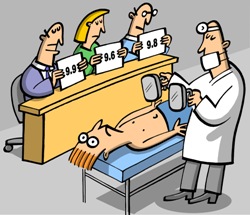
p4p.jpgI only heard a piece of the presentation yesterday at AHIP (America’s Health Insurance Plans), but I was a little surprised. They were talking about the topic of P4P (pay for performance). The survey population clearly supported P4P for MDs with the primary objective being preventative care and compliance. This focus did surprise me since I imagined it would have been more focused on cost management.

The survey population wasn’t interested in all at P4P for pharmacists. This surprised me a little bit especially given the access differences. Certainly, physicians can impact bigger dollar decisions (e.g., drugs vs wellness or surgery vs other options), but if the focus is on preventative care and compliance, they pharmacists have easy access to the patients.

Pharmacists are a walk-up option. No appointment is needed. Some pharmacists really know their patients. Both parties are really busy so rewarding them for the additional responsibility is appropriate.

I think it was about 20% that thought about rewarding pharmacists and clearly the focus (not surprisingly) was on driving formulary compliance and generics. In many cases, they have rewards to do this today.

If you’re interested in seeing one of the studies out there, here is one on Medicaid. The conclusion was:

“Medicaid directors and their staffs generally report positive feedback on their pay-for-performance programs and believe that the overall quality of care being provided is improving, although they have mixed opinions about cost savings resulting from the programs. Directors are considering changing some of the measures, incentives, and even the data collection strategies to improve their existing programs and to shape planned programs. Overall, they believe that pay-for-performance is adding to their repertoire of tools to improve the care provided to their Medicaid populations.” [K. Kuhmerker and T. Hartman, Pay-for-Performance in State Medicaid Programs: A Survey of State Medicaid Directors and Programs, The Commonwealth Fund, April 2007]

Analyzing Your Writing

Lois Kelly has an interesting post on her blog about the Linguistic Inquiry and Word Count program. You run text through the program and it categorizes the writing style. She compares 3 CEO bloggers. I grabbed text from my site and ran it through.

If I understand the results below correctly, it says I am fairly honest, somewhat outgoing, not very optimistic, have no anxiety, am actively thinking about the topic, and use lots of big words. I am sure my writing about all the problems in healthcare explains the low score on positive emotions, and I intentionally try not to make things too personal.

LIWC dimension

Your data

Personal texts

Formal texts

Social words – outgoing

7.08

9.5

8.0

Negative emotions – anxiety

1.13

2.6

1.6

Big words (> 6 letters) – higher grades which tend to be less emotional

22.35

13.1

19.6

Text Google for the 411

Google seems to be everywhere. It is probably the one site that I have to teach my kids to know to get anywhere. Perhaps they need a “Google Kids” which offers games, safe content, etc.

Anyways, this is more of a tip than anything about healthcare, but I was fascinated to find out about Google’s SMS service (aka text message) yesterday. I tried it a few times this morning right before I got on the flight. If you go to Google’s page at sms.google.com, you can find out more.

All you really need to know is that if you send a text message to Google (466453) you get information back almost instantly.

For example, I sent a text message saying “weather Boston” and before I could even type my next message, I had the weather report. Then I sent in another text for “AA 1577” (American Airlines flight 1577) and instantly had information on flight status and what gate it was leaving from. You can do it for scores (e.g., “Red Sox”) and many other things. If you are like me and on the go a lot and hate to pay fees for 411, this is great.

Geekipedia

Sure…a little off topic, but understanding technology is one of the critical components (in my humble opinion) to driving innovation and change in healthcare. Healthcare is not an early adopter of solutions. There is too much fear about change (and litigation).

So, when Wired but out this magazine supplement called Geekipedia, I knew it was a must read. As it says on the cover “149 people, places, ideas and trends you need to know now”.

Here are a few that jumped out at me:

  • AJAX – a suite of web-development technologies which produce squeaky clean surfaces. This allows web designers to build web sites that act like applications and accept user input and computing results without fetching entirely new pages from a server. I have worked with developers to use this before. Very cool. You see it on a lot more sites now, but anytime you enter data and the site changes without refreshing it…they built the site using AJAX.
  • APIs – application programming interfaces are sets of rules that govern how apps exchange information. These have been around for years and typically only mattered to the programmers and your engineering staff…but today APIs allow you to create custom applications using desktop widgets and mashups to have personalized sites that do all types of cool things.
  • Collaborative Filtering – this is the recommendation algorithm you see on Amazon or Netflix or many other sites. I can see healthcare one day embracing this in patient centric forums – patients with your similar benefits and genes were most likely to respond to this form of treatment.
  • Distributed Computing – most of you should know about this as the use of our computers to solve problems has been part of the news (good and bad) for years, but the point is to leverage the memory of individual computers in a network design to create a virtual supercomputer to solve complex problems that look at lots of data over years – e.g., SETI@Home that looks for extraterrestrial intelligence or FightAids@Home which looks for new AIDS treatments.
  • Mashup – these are sites / applications that are combinations of existing offerings that are cut and pasted together. For example:
  • Meganiche – with the Internet’s utilization now, it is possible to have a niche within a niche. For rare diseases, this could have some value.
  • Neurologism – all of the new areas of research driven by the breakthroughs in understanding the brain.
    • Neurofitness
    • Neuroceuticals
    • Neuroinformatics
    • Neuromarketing
    • Neuroergonomics
    • Neurosemantics
  • RNAi or Ribonucleic Acid Interference – “the silent assassin of cell biology”. It protects against viruses by tearing up the viral RNA and preventing it from making copies of itself.
  • RSS or Really Simple Syndication – you see this everywhere – on my blog, on websites, even in the new Outlook. This allows you to stream information to your reader (e.g., Google Reader) to see new information without having to go to all the individual sites. I wonder how many managed care companies and PBMs offer this on their websites today. It would be nice to get this pushed right to my personal Google page.
  • SEO or Search Engine Optimization – this is the use of tags and other links to maximize how your website shows up in a search.
  • Ultrahigh-throughput gene sequencing – this is all about the speed at which genes are sequenced which is obviously a big driver of personalized medicine and genomics. I am not sure I buy the prediction of “it won’t be long before a stall at the local shopping center will work up your genome ‘while u wait'”.
  • Widgets – these are small applications which can typically be embedded in a website using reusable code (e.g., a BMI calculator or mortgage calculator)
  • Wikipedia – this is a site that provides the modern encyclopedia full of links and information that is created by the net community – are you out there? Is your company or product?

It makes you wonder. As healthcare moves to more consumer centric and sales to commercial patients mimics Medicare Part D, will you see a United Healthcare avatar in Second Life or a Medco Facebook page. And, when will be see YouTube and Flickr being used to paint positive pictures of our healthcare system for the many people that it does work for. If politicians can begin to use these sites and big corporations encourage personal advertising of their brands, healthcare should give it some consideration.

Understanding Healthcare (Wurman)

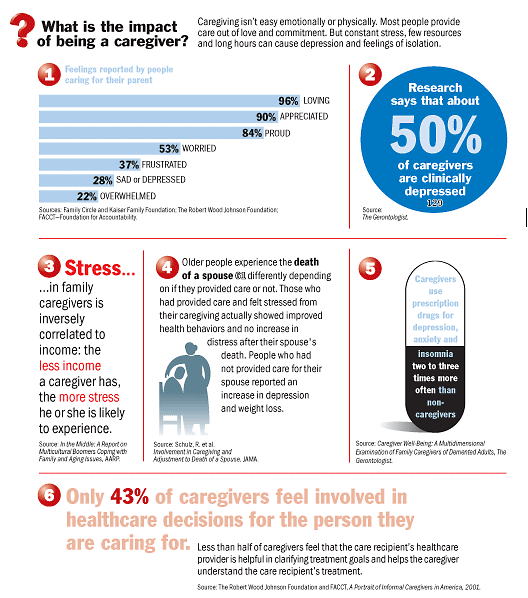
Richard Saul Wurman has been publishing for years and done many interesting things.  I just stumbled upon his Understanding Healthcare site today.  It is worth a visit.  You could get lost in it, but it has lots of great examples about how to frame healthcare issues visually.  I took a few screenshots below to get you interested.

One shows the top 10 causes of death in the US (note all this is a few years old) by age.  Very easy to understand the data this way.  One shows the tests that you need by age.  (I could use this now.)  The other is just representation of some data around caregivers.

wurman-causes-of-death-by-age.png

wurman-timeline.png

wurman-caregiver.png

Silverlink – My New Employer

After trying a few entrepreneurial things, I am excited to have accepted a job working with a consulting client of mine – Silverlink Communications. [I am also a former client of theirs from my time at Express Scripts.] The role is a good mix of entreprenerial and stability since they are a high growth, VC backed company. And, one of the most impressive things is their track record of delivery and impressive clients including lots of the big MCOs and PBMs (examples).

As I was getting ready to do an e-mail blast out to a 1,000+ people in my Outlook database, I figured that linking them to the blog and answering their predicted questions here might be a good solution. I could go with the micro-segmentation of my audience (i.e., my healthcare friends want to know something different than my consulting friends) that I started to do, but it’s turning out to be more time consuming than I would like.

So here goes. Here is more information about what I am doing and why. If you are in the healthcare space, I would encourage you to look at Silverlink and give me a call. We can leverage our technology and services to help you cut costs, grow revenue, and inprove patient satisfaction and outcomes.

Q&A:

  • Who is Silverlink and what do they do? Silverlink is a healthcare technology company that provides HIPAA compliant, targeted communications to patients [consumers] primarily using a automated voice-centric technology. This allows them [us] to push information (e.g., reminder call), collect data (e.g., surveys, COB, HRA), and qualify leads for transfer to a live agent (e.g., retail-to-mail, brand-to-generic, 30-day to 90-day). They provide consulting support, data mining, and great reporting. [and now outsourcing]

[Official PR Text] Silverlink is the leader in automated voice solutions for healthcare enterprises. Silverlink’s services enable customers to design, deploy and manage HIPAA compliant automated call programs to educate, collect information from and drive behavior of thousands of patients and members at a time. Serving six of the top ten health plans and with a customer base that collectively represents over 150 million covered lives, Silverlink drastically reduces the cost of communicating with customers while improving financial results and customer care.

  • Why did you join Silverlink? (A) Proven Value Proposition and Technology. (B) Great Team. (C) Very Impressed by Client Feedback. (D) Good Investors. (E) Great Market Demand.

We saw great results at Express Scripts. In one controlled study we ran through research, we saw our success rates improve by 30% by blending letters and calls. Additionally, access to data and flexibility were critical. We launched one new call program in under a day (either for Katrina or for a new drug warning).

Everybody is talking about consumerism and Health 2.0. Silverlink plays right into that strategy. Delivering timely information to patients. Blend their core technology with multi-modal, data mining, and experience based branding, and you have a unique opportunity to change the paradigm.

  • What are you going to do for them? I am going to be responsible for building out a business process outsourcing (BPO) and professional services group. As with any process oriented change, technology often enables step improvements. Their core technology has allowed companies to radically reduce key metrics (cycle time, response rates, collection ratios). By helping drive more of the process, introducing some new services, and leveraging our industry experts, we will help clients drive market differentiation.
  • Should I look at them as a solution provider for my business? If you are a PBM, mail order pharmacy, specialty pharmacy, medical device fulfillment company, or managed care company, they have many proven solutions to help you with. If you are a retailer, disease management company, or provider, there are numerous ways to use the technology. And, if you are a technology or services company, there are ways of embedding their technology into your solution.
  • Do consumers really like automated calls? You would be surprised. Using good voice talent with the right caller ID with the right sonic branding will get people to answer the phone. People throw away mail. We get too many e-mails. We still answer the phone and listen to voicemails. The response rates are great. On some programs, a reach rate in the 80-90% rate is not unusual.
  • (For my VC friends) Who backed them? There are several angels along with HLM (big healthcare VC firm), Kaiser Ventures, and Sigma Partners ($1.5B technology VC firm).
  • What happened to the other things you tried over the past year? Neither took off. Learned a lot about being an entrepreneur. I put a lot of my lessons learned here. No regrets since I believe everything happens for a reason.
  • Are you relocating? Not for now. We are going to try commuting. Since I will be spending time with clients and in other meetings, we are going to see how this works. Plus, the housing market is no good (at least for selling).

I am sure I could go on. But, while you are here, I would encourage you to look at the Silverlink website (PBM, MCO, Medicare, Medicaid, DM, Specialty/DME) and also at rest of my blog. If interested, register to get updates to the blog via e-mail by clicking here.

Information Therapy Blog

I was looking at the Healthwise website and The Center for Information Therapy and came across a blog by the team there with some good discussion topics. It is definitely worth your read. Here were a few things that caught my eye:

  • Can we more effectively engage consumers in better managing their own health by learning from Hollywood or video games about how to draw people in through entertainment? By doing so, can we make health care “fun” or at least truly engaging? (entry)
  • Since research shows that 40%-80% of everything a doctor tells a patient in the office is forgotten, taking along a patient advocate is a great strategy. Unfortunately, it is not always an option or sufficient. In order to ensure effective communication, every patient should leave the doctor’s office with an information prescription (Ix). (entry)

Customer Event

What a great week. I have been so busy that I haven’t had time to blog, but I will try to catch up over the next few days.

I always love to mingle with customers and talk to them about their experiences with a company. As a former client, a current consultant, and a future employee of Silverlink, I got to join their customer event this week where 40 customers talked about how they use the technology and services to lower costs, increase efficiency, and grow revenue. Talk about empowering.

Some of the key content / discussions revolved around the following:

  • JD Powers study on healthcare company satisfaction including a great non-healthcare example.
    • It showed how satisfaction with auto insurance actually went up and was higher when the company raised rates but pro-actively told the consumer versus when they lowered rates. Talk about the power of communications.
  • Lots of talk about how marketing and data analytics are going to drive healthcare and how non-healthcare companies are setting the expectations for patients very high compared to the current state.
  • How disjointed healthcare communications are – provider, pharmacy, PBM, MCO, DM companies. No consistency.
  • A great presentation by Liz Boehm from Forrester research which made a few key points:
    • She reinforced the loss avoidance point I blogged about the other day stating that savings is equal to one unit of happiness while loss is equal to two units of unhappiness. So, for many, losing money is a bigger factor than saving money.
    • She pointed out the fact that any healthcare site that quotes a price always has some disclaimer about the accuracy. Why can’t we simply guarantee a price (like any other industry)?
    • She showed that member services (IVR, web) are the 3 most important factor in chosing a carrier after price and network.
    • She showed research that consumers are generally dissatisfied with contacts across all channels from their health plan.
    • She talked about using a persona to design programs and prioritize efforts.
    • She compared channels across cost, reach, engagement, and immediacy.
    • It was obvious that we have a long way to go.
  • Heard from a few customers that talked about how they allow Customer Service Representatives (CSRs) to go “off the clock” to help patients so that they can still track average call time but allow for flexibility.
  • I talked about process innovation and how to apply that to your communication process. I also talked about business process outsourcing.
  • We heard about best practices in driving response rates. Everyone always seems so amazed when they hear about response rates of 50, 60, or 70%. Very difficult to get and/or measure that in other channels.
  • Talked about how MCOs are using the automated call technology – ANOC (Annual Notification of Change) for Medicare, Collections, Lead Management, COB, Missing Information, Wellness Program Recruitment, Reminders, Surveys, and many others.
  • We heard about calculating the ROI with a detailed methodology.
  • We talked a lot about models from other industries that could apply.
  • We talked about data mining and analytics.
  • We talked about member satisfaction, loyalty, and how to survey and capture that information.
  • An outside consultant talked about experience based branding and how sounds can be your brand – Harley‘s engine, Sprint‘s pin drop, Ford‘s door chime, AOL‘s “You’ve Got Mail”.
  • Had several clients talk about how they use Silverlink‘s technology to enhance their product suite

All of the conversations and presentations reinforced how critical successful communications are to healthcare and how big of a hill we have to climb. It was great to see how effective, timely, and personalized the Silverlink technology could make the process. It is worth looking into if you are a managed care company, a device supplier, a PBM, a pharmacy, or even a provider.

Prescribing Information (Ix)

I think the Information Therapy concept is a great way to think about consumerism and information in the healthcare space.  I was recently reviewing a presentation by Healthwise which pointed out 3 Simple Rules:

  1. Self Care Rule – helping people do as much for themselves as possible
  2. Guideline Rule – helping people ask for the care they need…giving them the guidelines
  3. Veto Rule – helping people say “no” to care they don’t need

Another place where you can learn more about this concept is at the Center for Information Therapy.  From a health plan perspective, here is one of their white papers which will help you begin to conceptualize this.

The key here is that we should be able to use data to trigger information events that are personalized to people.  This obviously needs to be actionable information that is in a format and uses terminology that patients can understand.  There is a huge difference between data and information.  Lots of data is sent to patients along with a typical “barfing” of information with no context or prioritization.

It is a great opportunity.  Lots of healthplans and consumer sites are embracing this.  As this gets refined and becomes mainstream, it can help drive wellness and a change in ownership for healthcare where consumers really feel responsible and can act responsibly for their care.

You can also look at Josh’s blog for more ongoing dialogue.

Healthcare Blogs

What a list!  I just came across the list of top Healthcare Blogs.  I am not on there yet, but I just submitted myself to be tracked.  This is a great resource for those of you that get lots of feeds or use Google Reader to track blogs.

Picture is worth a thousand words (at least)

As a former architect, I am a big believer that pictures have significant value in the business world.  I have been asked dozens of times to take complex ideas and simplify them down to a single-frame image that people can post in their cube or use in a meeting.  These images can be powerful.

At Express Scripts, we choose to take on the battle of moving market share from Lipitor to Zocor a few years ago.  This was set up to save clients and patients billions of dollars as the Zocor patent expired.  We had a list of 50 ideas which we paired down to 30.  The challenge was how to get people to think about and rally around the 30.  I came up with what was initially called the “bubble chart” which showed the 30 ideas in swim lanes and then time-mapped horizontally against key milestones.  This became used everywhere and even presented to the street.

This is important to BPM in several ways:

  1. If BPM is to be transformational, you need a future state vision that can be captured and disseminated across the company.
  2. If process mapping is part of your communication strategy, a simple to understand process map is critical.

I started thinking about this when I received an e-mail newsletter from BentonsEdge which is a company that helps you frame out your value proposition.  I have met with Dan Davison, the CEO, several times.  He seems to have a great process and good understanding of helping clients get to a simple story about their value proposition.

One example is below.  It is a little busy, but it captures all the complexities of raising capital in a one-page slide which is amazing.

http://www.tellingyourstory.com/content_library/files/whitepapers/RaisingCapital.pdf

Bentonsedge_startup

Continue reading

The McKinsey Way

You can certainly never go wrong looking at McKinsey. Their consultants are usually very top notch and their process of thinking and root cause analysis is great. Although this post is more about how you analyze a problem (i.e., business process innovation), it also makes a point about how important process and methodology is. The only way of delivering consistent, high-quality advice worldwide is to have a process of training and consulting that leverages smart people and delivers them to clients.

(Never mind the fact that McKinsey once told me that they only interview people with a 4.0 or people with a 3.8 and above from a top 5 business school. I didn’t fit the bill, but I have several good friends who were there. I have lots of respect for them.)

The McKinsey Way is actually a book so you can see some insight into the company. I have read the book and recommend it. Rather than re-type all my notes, I found comments about the book at MeansBusiness and on blog called Brian Groth’s Life at Microsoft and looked at notes on MECE (mutually exclusive, collectively exhaustive) from a book review on The McKinsey Mind.

My old boss who worked for McKinsey was a genius at asking the probing questions. She knew how to get to root cause better than anyone I worked for. This is essential in diagnosing any problem not least of which are process problems. (Since I assume you only look at BPM to drive value where you have some type of problem.)

So MECE, as Brian states in his blog, it suggests you should do the following:

  1. Identify the problem using a mutually exclusive, collectively exhaustive framework and then map the problem out using some type of logic tree (see example).
  2. Create a hypothesis (or hypotheses) about the solution…this drives your analysis.
  3. Analyze the data…remember that the only thing that is right is data (assuming some data integrity).
  4. Repeat steps 3 & 4 until you find a fact-based solution that makes sense.

From the book, some of the other key points are:

  1. “The most brilliant solution, backed up by libraries of data and promising billions in extra profits, is useless if your client or business can’t implement it.”
  2. “Most business problems resemble each other more than they differ.”
  3. “If you get your facts together and do you analyses, the solution will come to you.”
  4. “If you keep your eyes peeled for examples of 80/20 in your business, you will come up with ways to improve it.”
  5. “Know your solution so thoroughly that you can explain it clearly and precisely to your client in 30 seconds.”
  6. “It’s much better to get to first base consistently than to try to hit a home run and strike out 9 times out of 10.”
  7. “Just as you shouldn’t accept I have no idea from others, so you shouldn’t accept it from yourself, or expect others to accept it from you. This is the flip side of I don’t know.”
  8. “When you’re picking people’s brains, ask questions and then let them do the talking. Keep the interview on track by breaking in when necessary.”

Best Advice

I am not really sure of the best advice I have ever received.  Most of the things that jump to mind as good advice are: 

  • Be yourself.  
  • Everyone has something to add – treat them with respect. 
  • Travel the world. 
  • Keep a journal of what you learn each day.   
  • No one remembers you for how hard you work…your family is your memory.
  • Just act…don’t overanalyze.
  • Nothing will be perfect.

Here is advice from some well known names from a Fortune article titled “The Best Advice I Ever Got” (March 21, 2005 – page 90).

  • Warren Buffett “You’re right not because others agree with you, but because your facts are right.”
  • Richard Branson “Make a fool of yourself.  Otherwise you won’t survive.”
  • Howard Schultz “Recognize the skills and traits you don’t possess, and hire people who have them.”
  • A.G. Lafley “Have the courage to stick with a tough job.”
  • Sumner Redstone “Follow your own instincts, not those of people who see the world differently.”
  • Meg Whitman “Be nice, do your best – and most important, keep it in perspective.”
  • Jack Welch “Be yourself.”
  • Sallie Krawcheck “Don’t listen to the naysayers.”
  • Vivek Paul “Don’t limit yourself by past expectations.”
  • Dick Parsons “When you negotiate, leave a little something on the table.”
  • Andy Grove “When ‘everyone knows’ something to be true, nobody knows nothin’.”
  • Anne Mulcahy “Remember the parable of the cow in the ditch.” [First, get the cow out of the ditch.  Second, find out how the cow got in the ditch.  Third, make sure you do whatever it takes so the cow doesn’t go into the ditch again.]
  • Brian Grazer “All you really own are ideas and the confidence to write them down.”
  • Rick Warren “Regularly sit at the feet of Peter Drucker.”  [You need mentors.]
  • Jim Collins “The real discipline comes in saying no to the wrong opportunities.”
  • Peter Drucker “Get good – or get out.”
  • Ted Turner “Start young.”
  • David Neeleman “Balance your work with your family.”
  • Mickey Drexler “Bail out a business that isn’t growing.”
  • Brian Roberts “Let others take the credit.”
  • Marc Benioff “Incorporate philanthropy into your corporate structure.”
  • Hector Ruiz “Surround yourself with people of integrity, and get out of their way.”
  • Donny Deutsch “If you love something, the money will come.”
  • Klaus Kleinfeld “Keenly visualize the future.”
  • Ann Fudge “Don’t chart your career path too soon.”
  • Herb Kelleher “Respect people for who they are, not for what their titles are.”
  • Clayton Christensen “You can learn from anyone.”
  • Ted Koppel “Do what you love.”