Archive | PBM / Pharmacy RSS feed for this section

Medco’s Trend Report

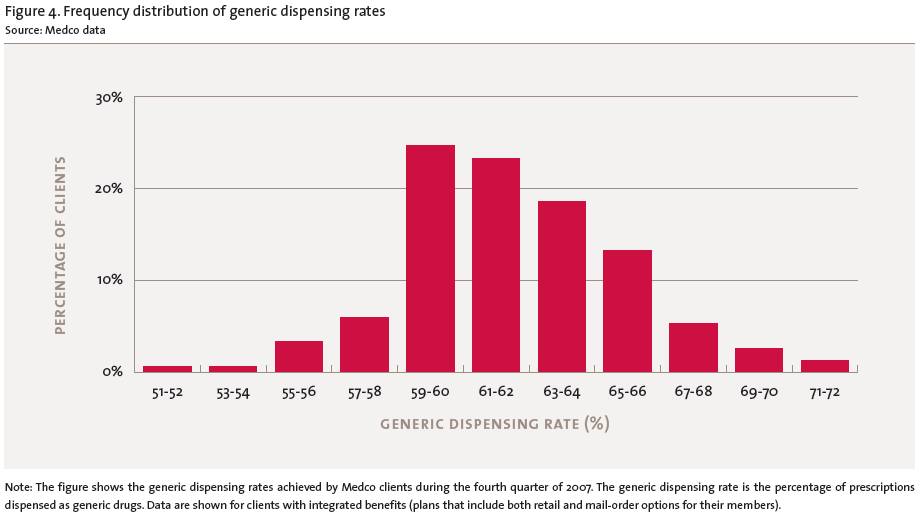
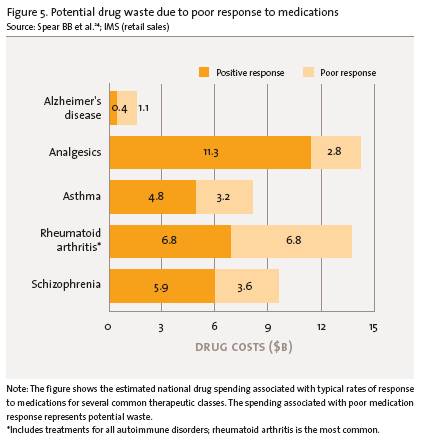
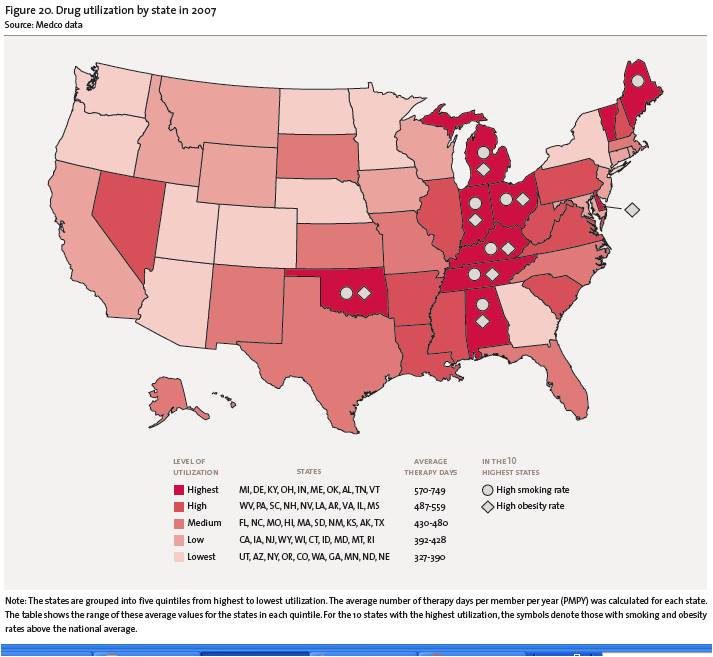
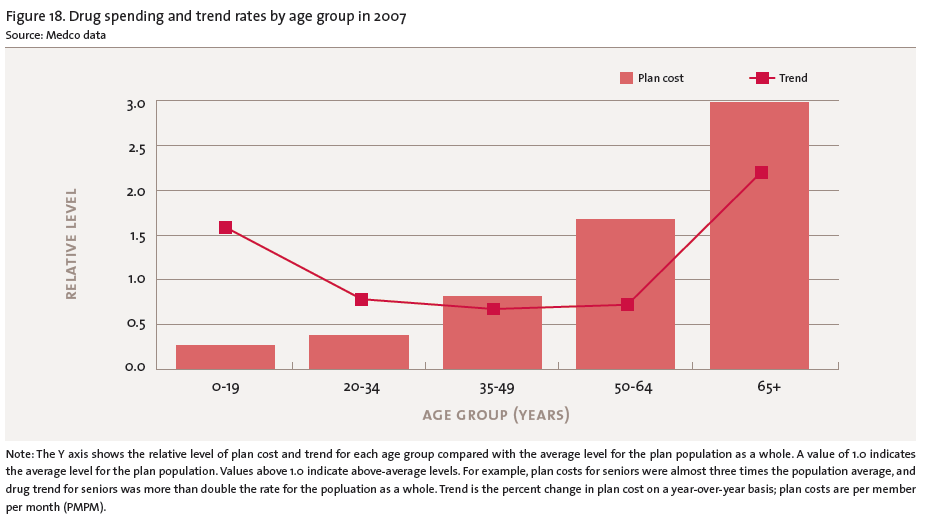
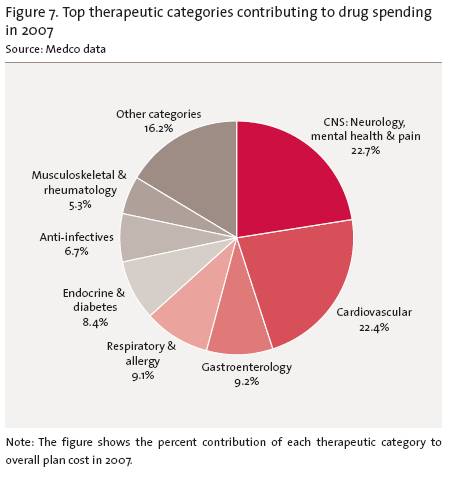
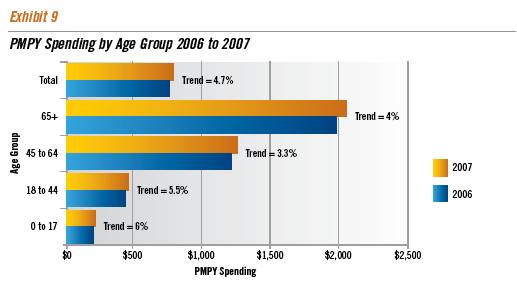
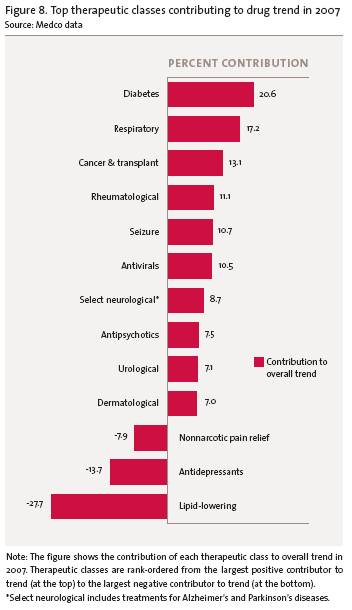
Medco‘s Trend Report recently came out for 2008 (which looks back at 2007). Here are some of the graphs and information from it.

“Generic drugs have been a tremendous asset in controlling runaway health care costs,” Medco Chairman and CEO David B. Snow Jr. said. “Generic cholesterol medications have helped contain our drug trend to a new all-time low of 2.0 percent. Patients and our clients are reaping the benefits of generics as we enable them to hold down costs and make prescription drugs one of the few areas where spending trails overall health care inflation.” (Source)

  • Drug trend was 2.0%.
  • They talk a lot about what drives trend by class.
  • It shares a lot of tables and charts. (I pulled out those below that most interested me.)
  • They talk about legislative and technology issues / opportunities such as e-prescribing.
  • They talk about consumer driven health plans (CDH):
    • Lot of plans offering them; low adoption (2.6M members)
    • Mail order use is only 1.2% higher and generic use is only 1.0% higher (so much for easy ways of saving money)
  • They talk about the rapid growth of people using social networking tools to learn about diseases and medications.
    • Which presents risks and opportunities

  • They introduce a new metric…the Generic Opportunity Score.
  • They introduce a new topic to me which is “adjunct therapies”. The key to this topic here is whether plans should consider coverage of over-the-counter (OTC) drugs that are prescribed for use with prescriptions to treat a condition.
  • They talk about Medicare driving a focus on quality.
  • They talk about coverage for the uninsured.
  • They talk about biosimilar drugs (aka – biogenerics).
  • The talk about genomics (i.e., personalized medicine).
  • They talk about BTC (behind-the-counter) and OTC (over-the-counter) trends.
  • They talk about nanotechnology.

I didn’t read it word for word, but it seems to cover the landscape well and give good easy to read metrics with lots of charts.
Literacy and Consumer Empowerment

A few of the highlights from external speakers at the Spring client event for Medco included:

Helen Osborne talking about the “Prescription for Savings: Using Health Literacy Principles in Your Communications.”

  • Finding the right words for the best reasons
  • Not about dumbing down but about smartening up
  • Health literacy is a shared responsibility between patients and providers and each must communicate in ways the other can understand.
  • Age, disability, language, cultural barriers, emotion, and literacy all come into play
  • Eight ways to improve health communications:
    • Know your audience
    • Tailor communications
    • Create a welcoming and supportive environment
    • Communicate in whatever ways work
    • Confirm understanding
    • Offer ways to learn more
    • Weigh the ethics of simplicity
    • Collaborate for good communication
  • Keep things clear, simple, and written for the end-user

“You need to develop an allergy to miscommunication and then turn that allergy into advocacy.”

Steve Case talking about streamlining healthcare by empowering consumers:

“I believe there is a degree of skepticism about managing one’s health, but we need to spend less time on the public policy debate and more time on how to change consumers’ thinking about health.”

  • It may take time for consumers to get fully invested in the notion of taking charge of their health
  • It took nine years for AOL to get its first million users and then rapidly jumped to 25M

“We want to engage people on the Internet and move them from a static situation, where they only go online when they have a problem, to a situation where they go back more habitually.”

  • Many employers are frustrated with their attempts to get employees involved
  • Revolution Health is working more with employers, hospitals and providers
  • Revolution Health is now the top visited site (passing WebMD in January)

Most Medicated Generation

Well, we have finally broke the 50% mark of people using maintenance (or chronic) medications. It shouldn’t be a big surprise. Sit around the table with your friends and ask who takes a medication (without asking what for). Why do so many people take medications:

  • We are in worse health…think obesity.
  • There are better medications.
  • Doctors are more willing to prescribe.
  • Patients know more about using medications through DTC (direct-to-consumer) advertising.

This is all according to a Medco report that was just published looking at a sample of 2.5M customers of all ages from 2001 – 2007. A few of the facts:

  • 2/3 of women 20 and older take maintenance medications.
  • ¼ of children and teenagers take maintenance medications
  • 52% of adult men take maintenance medications
  • ¾ people 65 or older take maintenance medications
  • Among seniors, 28% of women and 22% of men take 5 or more maintenance medications

“Honestly, a lot of it is related to obesity. We’ve become a couch potato culture (and) it’s a lot easier to pop a pill” than to exercise regularly or diet. (Dr. Robert Epstein, Chief Medical Officer at Medco)

Dr. Epstein makes the point that in some cases we have turned diseases that were once a death sentence into chronic conditions – AIDS, some cancers, hemophilia and sickle-cell disease. I was just talking about this yesterday with a nurse about an adherence program where I said we needed to look at some specialty drugs because they are being used chronically.

The biggest jump was in the 20-44 year old age group where utilization grew 20% mainly for depression, diabetes, asthma, ADD, and seizures.

Medco estimates about 1.2 million American children now are taking pills for Type 2 diabetes, sleeping troubles and gastrointestinal problems such as heartburn. (This should be troubling to everyone in terms of the long-term implications to our health care system.)

The Brand Only PBM

A few years ago, I would have argued that PBMs could one day simply cover generic drugs and not cover brand drugs.  With most therapy classes (excluding specialty) having multiple generic options, this seemed possible.  Already, some companies have generic fill rates which are above 70% (meaning that 70% of all prescriptions filled are filled with a generic).

But, now I am wondering the opposite.  If retailers drop generic drugs to $4 and make them available in 90-day supplies for $10 (see Wal-Mart), do you need to PBM in the middle managing those claims?

There are of course several questions to be answered:

  • What percentage of the total generics filled in the market are available at these prices?
  • What happens with new generics that typically have a higher price for the first 6-months?
  • Do these claims still get processed so that they show up in the PBM claims database to be used for drug-drug interactions?

And, Wal-Mart upped the ante here including over-the-counter drugs which typically aren’t covered by insurance.  We aren’t there yet, but it poses an interesting question about the future breadth of coverage and what the implications could be.  Today, most PBMs don’t make money on the brand drugs other than perhaps an administrative fee paid by the pharmaceutical manufacturer for those drugs that are on formulary.  (Something in the range of $1-$5 per claim depending on the cost of the drug and the contract.)

It would turn the market upside down also since a lot of the intervention programs today are in place to drive use of generics as first-line therapy so if they weren’t part of the benefit then the programs wouldn’t have as much value.

Just a thought.  BTW – I have asked the Wal-Mart people to answer the last question above for me since I am interested in whether this is a real issue today or whether most of these claims get paid out using the U&C (usual and customary) field and logic in the POS (point-of-sale) system (i.e., they process as paid claims not cash claims).

Pharmacy Satisfaction Did You Knows

PharmacySatisfaction.com puts out a weekly factoid. They are very interesting and make some great points. I have talked about it before, but here is an updated list with the new factoids from 2008.

  • Independent drug stores continue to score highest in customer satisfaction, followed by food stores, clinics, and chain and mass merchandise pharmacies, in that order.
  • The number one concern across all pharmacy users is that their prescriptions are filled accurately.
  • Independent pharmacy customers are the most satisfied with the services their stores provide.
  • The most useful feature those Web sites offer to them, the survey found, is the ability to order refills online.
  • Nearly three in 10 order their refills online.
  • An average of 69.4% of customers own or use a computer.
  • Customers average three visits each month to their pharmacy.
  • Only about 1-in-5 pharmacy customers, overall, say that they use a loyalty card that provides points, discounts or other savings.
  • While the majority of loyalty card users are satisfied with the expected cost savings by using their card and with the ease of enrolling and understanding the benefits of their card, fewer than 1-in-4 card users are highly satisfied.
  • The drug store industry remains largely up for grabs, with nearly half of pharmacy customers saying they use more than one pharmacy to fill prescriptions.
  • Pharmacy use varies considerably by population. Chain pharmacies are most commonly used among residents of areas with more than 100,000 people. Independent pharmacies are most commonly used among rural respondents (areas with less than 100,000 people). Use of independent and mass merchant pharmacies decreases as population increases. Chain, food store, mail/online, and clinic pharmacy use tend to increase with population.
  • However, as pharmacy customers age, they are much less likely to use chains and considerably more likely to use mail/online and clinic pharmacies.
  • Seven-out-of-ten pharmacy customers indicate that they “definitely would” or “probably would” use their local pharmacy if they could receive the same amount of medication at the same price as their mail-order pharmacy.
  • The heaviest users of prescriptions are survey respondents in their 60s, averaging 5.4 new scripts and 29.2 refills per year.
  • The most preferred method for filling those prescriptions among respondents is to take them to the pharmacy and wait for them to be filled.
  • Indeed, physically handing a paper script to the pharmacist or tech in the store—or picking up a script phoned in by the doctor—remains the overwhelming choice among consumers. Most shun the use of drive-through windows.
  • How long patients have to wait for their scripts to be filled is a key component of customer satisfaction.
  • Fully 93 percent of those surveyed expressed satisfaction with the ability of pharmacies to dispense their new prescriptions in the time promised.
  • Pharmacy customers’ most commonly preferred method of refilling prescriptions (assuming prices and amounts of medication are the same) is calling an automated telephone system and picking up prescriptions at the store.
  • Independent customers are the most likely to receive prescription refills in less than 15 minutes, followed by food store, chain and mass merchant customers.
  • The average survey respondent is spending a considerable sum each month on drugs at their pharmacy—$82 on average (versus $57 a month on food and groceries at their pharmacy).
  • Customers who paid full retail price for their medications, paid an average of $81 for their most recent prescription.
  • Customers who paid the store discounted amount for their medications, paid an average of $75 for their most recent prescription.
  • Customers who paid a fixed-percent co-pay for their medications, paid an average of $56 for their most recent prescription.
  • Customers who paid a fixed-dollar co-pay for their medications, paid an average of $36 for their most recent prescription.
  • On average, respondents spend $82 a month at their pharmacy on prescription drugs, $57 on food/groceries, $18 on non-prescription (OTC) drugs and $14 on personal care/cosmetics.
  • An average of 85.9% of computer owners/users use the computer to improve their health by looking for information about diseases.
  • Much has been written about the value of closer pharmacist-patient relationships, but Americans seem to feel far more connected to their physicians, dentists and nurses than to their pharmacists. That’s clearly not all pharmacy’s fault; the same survey respondents agreed that they were usually given the opportunity to speak with their pharmacist when filling their last prescription. What’s more, pharmacists ranked a close second to doctors as sources of information about medications.
  • Only 16 percent of respondents describe their relationship with their pharmacist as “We are on a first-name basis and have known each other for a very long time.”
  • Walgreens’ “Dial-a-Pharmacist” initiative, launched in February 2006, allows non-English speaking patients to connect with pharmacists speaking 14 different languages.
  • Doctors (94%) are the most commonly referenced source of information on medications, followed by pharmacists (83%), nurses (57%), pharmacy brochures (50%) and the Internet (42%).
  • Doctors (77%) are the most trusted source of information on medications, followed by pharmacists (64%), nurses (43%) and pharmacy brochures (20%).
  • Independent pharmacy customers have the most trust in pharmacists, while mail/online customers have the least. Compared to last year, customers of all types of pharmacies place more trust in their pharmacist as a source of information.
  • More than one-third of pharmacy customers failed to fill all their prescriptions last year, and only 35 percent of all respondents said they were fully compliant on the medications they did take. Nevertheless, refill reminders from the pharmacy remain relatively rare, most patients profess.

2008 Factoids

  • In general, older patients tend to be more compliant than their younger counterparts.
  • The biggest reason for not taking all medications as directed was simply, “I forgot.”
  • Nearly 2-out-of-3 (65%) indicate that they missed a dose or took less medication than prescribed in the past year.
  • The most commonly cited reason for not filling all prescriptions is not needing (42%), followed by too costly (27%), changed by doctor (20%), side effects (17%) and insurance did not cover (16%).
  • Among the medical conditions displayed, those treated for HIV/AIDS and high blood pressure are the most likely to have filled all of their prescriptions in the past year. Those treated for RLS are the least likely to have filled all their prescriptions in the past year.
  • For competing pharmacy providers, satisfaction is a key measurement. Customers who say they are “highly satisfied” with their pharmacy are much more likely to return than those who are simply “satisfied.”
  • Pharmacy customers who are “highly satisfied” with their pharmacy overall are considerably more likely to have positive return intentions, compared to customers who are simply “satisfied” (97% definitely intending to return versus 65%). Survey results have also shown significant revenue differences between highly and poorly rated pharmacies, health plans, and PBMs.
  • Compared to last year, pharmacy customers place more importance on four of the six overall areas of pharmacy services—most notably professional services — followed by pricing and insurance, and overall convenience.
  • 31% of customers consider it “very important” that Pharmacists give advice on OTC/herbal products.
  • 38% of customers consider it “very important” that Pharmacists give advice on health conditions.
  • 57% of customers consider it “very important” that Pharmacists are friendly and courteous.
  • 65% of customers consider it “very important” that they are able to speak to a Pharmacists give clear instructions about Rxs.
  • 65% of customers consider it “very important” that they are able to speak to a Pharmacists about their concerns/questions.
  • 66% of customers consider it “very important” that their pharmacy protects the privacy of their health info.
  • The most common ailment that drives customers into your stores is high blood pressure, which afflicts nearly 50 percent of the respondents surveyed by WilsonRx. High cholesterol, allergies, ailments of the esophagus, arthritis and diabetes also are extremely common among patients.
  • When asked about their satisfaction levels, respondents who received birth control prescriptions were happiest with the medical treatment they’re getting, followed by those thyroid disorders, epilepsy/seizures and type I diabetes.
  • Among the pharmacy services customers say are most important to them is: Help untangling complicated insurance issues, and money-saving alternatives like generic drugs.
  • Consumers are generally satisfied with many of the services, medicines and health-oriented advice they find at their local pharmacy, but they’re also keenly aware of the high costs of pharmaceuticals and quick to shift outlets if they feel their needs aren’t being met.
  • Those who are covered by prescription plans—including nearly 39 million Medicare patients enrolled in some kind of coverage—often feel overwhelmed by the complexities and co-pay issues they encounter at the pharmacy counter.
  • Know your customer — whomever, wherever they are. Being able to identify different customer types is an important first step in anticipating customer needs and managing the expectations of each person.

Are You Doing Enough To Drive Generics?

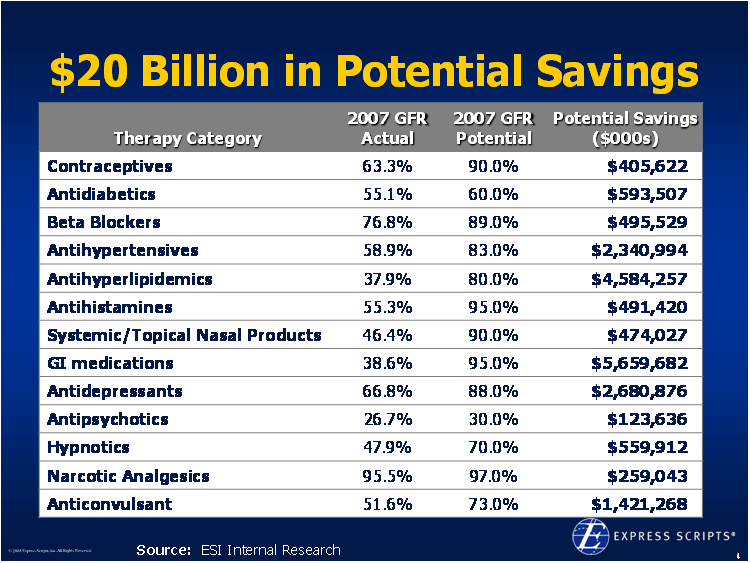
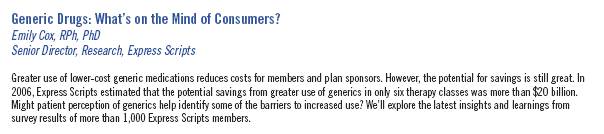
From the Express Scripts Outcomes event a few weeks ago, here is an estimate of all the money left on the table by not increasing your generic fill rate in certain key categories.  Are you doing enough?

  • Utilization management programs – step therapy, prior authorization, quantity level limits?
  • Formulary coverage?
  • Plan design incentives?
  • Pharmacy incentives?
  • eRx messaging?
  • Web tools?
  • Patient communications?
  • Patient incentives?
  • Driving people to mail?

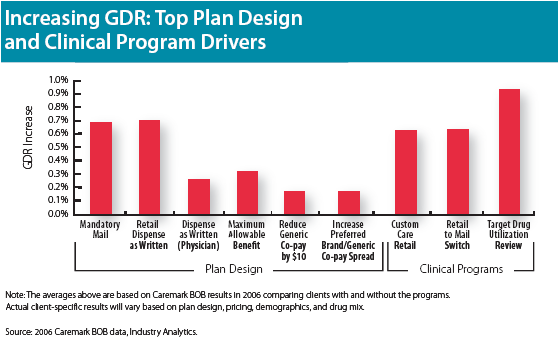
Here is a graph from CVS/Caremark‘s trend report from last year that shows correlation between certain programs and generic fill rate.

Incentives and Communications

Everybody looking at the healthcare system understands that incentives and alignment of goals is a critical component for successful change.

  • Providers need to be motivated to focus on wellness and prevention.
  • Individuals need to be motivated to care about the cost of care and to act in a healthy manner.
  • Pharmacists need to be motivated to take the extra action of moving patients to lower cost agents, resolving administrative edits, and counseling patients.
  • Hospitals need to be motivated to focus on Six Sigma type process initiatives.
  • Health Plans need to be motivated to invest in long-term care initiatives that prevent people from getting sick.
  • PBMs need to be motivated to drive optimal prescription use even if that includes more over-the-counter (OTC) drugs.
  • Employers need to be motivated to offer benefit plans to cover their employees which are simple to understand and align employees with healthy outcomes.
  • Pharmaceutical manufacturers need to be motivated to drive adherence across clinical conditions and to bring new drugs to market that represent significant improvements in therapy (better outcomes, less side effects, easier deliver methods).

With that in mind, I am glad that Silverlink Communications announced this morning that we are partnering with IncentOne to incorporate incentives into our communication programs.  Going forward, incentives will offer us another lever to improve outcomes in our programs that we conduct for clients.

“If applied appropriately in healthcare, incentives are an influential lever to motivate healthcare behaviors, arguably the most powerful force for changing the economics of healthcare,” said Stan Nowak, CEO and co-founder of Silverlink. “We’re excited to be partnering with IncentOne to design highly flexible, personalized and incentive-driven outreach that enables health plans to better connect with and engage their members to drive healthcare behaviors and reward them at the same time.”

“This is a truly integrated technology partnership that seamlessly connects healthcare consumer participation to incentives,” said Michael Dermer, CEO at IncentOne. “Silverlink and IncentOne together can deliver complementary solutions that drive participation and ultimately cost savings in healthcare. The combination of our expertise in finding the right incentives and Silverlink’s personalized communications to drive consumer behavior delivers the ability to implement more effective programs.”

Matthew Holt (author of The Healthcare Blog) did a podcast with both the CEOs yesterday that you can listen to to learn more.

You can also look at a study by Hewitt Associates of large employers which covers several related topics:

  • 2/3rds plan to offer incentives to motivate sustained health care behavior change.
  • 67% will utilize health care data and measurements to drive their organization’s health care strategy.
  • 74% of employees think their employer should help them understand how to use their health plan better.
  • 12% of employees think employers should help them become healthier.
  • Employee decisions on healthcare were influenced by cost:
    • Nearly one-third (30 percent) said they did not go to the doctor when they were sick because of cost.
    • 27 percent didn’t fill a prescription given by a doctor.
    • Almost one in five (19 percent) stopped taking medications before their prescription ran out, and of those, 18 percent did so due to finances.

Certainly, there are numerous examples of incentives being used to drive behavior.  Moving patients to evaluate mail order pharmacy has been a solution where coupons have been used over th years.  Driving therapeutic conversions have used incentives in the form of copay waivers.  Getting patients to complete health risk assessments (HRAs) and other tools have given incentives.

The interesting component will be the personalization of incentives.  While I may enjoy a $10 gift card to the dog store, my wife may enjoy a $10 gift card to the spa.  Flexibility of incentives and alignment of incentives with what drives behavior will be important.

Addressing Medicine Adherence

There are numerous studies on this, but they all point to the same issue…compliance.

The National Council on Patient Information and Education (NCPIE) released a report last year that I just came across titled “Enhancing Prescription Medicine Adherence: A National Action Plan“. With only 50% of patients using medication as prescribed, the systemic costs are enormous – $177B annually according to their estimates.

“Besides an estimated $47 billion each year for drug-related hospitalizations, not taking medicines as prescribed has been associated with as many as 40 percent of admissions to nursing homes and with an additional $2,000 a year per patient in medical costs for visits to physician’s offices.”

  • Between 40% and 75% of older people don’t take their medications at the right time or in the right amount.
  • As few as 30% of adolescents take their asthma treatments as prescribed.

Look at this in light of the recent study that showed about a quarter of people share drugs.  Another huge problem.

Their 10-step national action plan includes:

  • Elevate patient adherence as a critical health care issue
  • Agree on a common adherence terminology that will unify all stakeholders
  • Create a public / private partnership to mount a unified national education campaign to make patient adherence a national health priority
  • Establish a multidisciplinary approach to compliance education and management
  • Immediately implement professional training and increase the funding for professional education on patient medication adherence
  • Address the barriers to patient adherence for patients with low health literacy
  • Create the means to share information about best practices in adherence education and management
  • Develop a curriculum on medication adherence for use in medical schools and allied health care institutions
  • Seek regulatory changes to remove roadblocks for adherence assistance programs
  • Increase the federal budget and stimulate rigorous research on medication adherence

I am a little surprised that they didn’t talk about technology.  Integrated electronic medical records, personal health records, etc.  Since at least 1/4 of people don’t even fill their initial script, I don’t see how we can address adherence without beginning there and providing full lifecycle data to physicians about the status of scripts and refills.  I think there is also a huge role for collecting data about why people fill or don’t fill.

Home Delivery Versus Mail

Do you care what it’s called? Some people really dislike Mail Order Pharmacy and go with Home Delivery. I made that change when I was responsible for the product at Express Scripts.

It becomes a little bit more meaningful when you talk about Mandatory Mail which is a benefit design where you are required to fill your maintenance medications at a specific mail order pharmacy after you have titrated to (i.e., found) the right strength for your chronic medications.

Should it be Exclusive Home Delivery? How about Retail Refill Allowance? Or Mail Preferred? Do they make a difference? Do you feel better about being forced to use one particular pharmacy?

On the other hand, if they are giving you money (i.e., a lower copay), to do something that saves your employer money and is equally as safe and more convenient, should you care?

Drugs Down. Gas Up. Food Up.

With most of our good going up.  According to CNN, I heard them say this morning that gas is up $0.60 per gallon in the past year and earlier this week, they said that food is up 35% in the past year.  (Neither of these are scientific, but they make the point.)

That makes me wonder how our impression of price changes.  Will we become less price sensitive as we get used to higher prices on everything.  A friend of mine told me that when they had a global meeting the people from Europe were commenting about how great it is to come to the US where taxes are low and gas is cheap.  It’s all a matter of perspective.

So, with most things going up, I found this press release from Express Scripts interesting:

Last year marked the first time in at least five years that consumers paid less, on average, in their prescription drug copay, according to the 2007 Drug Trend Report released by pharmacy benefit manager Express Scripts. The average copay dropped 25 cents to $13.20 even as the average total cost of a prescription rose from $55.01 to $55.93.

Express Scripts attributed the average copay decrease to greater use of generic drugs, saying in the report that consumers saved an average of $15 per prescription each time they moved from a brand to a generic.

Where $15 was once a big deal, will that need to be increased over time to have the same effect as the price of goods increases?  My dad still talks about seeing movies for $0.10, but we know those days are gone and a dime doesn’t buy much any more (if anything).

Silverlink Coming To A City Near You

I am really excited about a new initiative at work.  We have pulled together a great set of speakers and are doing a road show around the country.

The speakers include:

The topic of the event is Healthcare Communications: Think Differently and is about how to engage the new healthcare consumer and drive behaviors in scale.  Very much like what a lot of the talks were about at the World Healthcare Congress.  It’s not simply getting data and information, but it is about making that information actionable.  That is exactly what this 1/2 day session will be about.

The meetings will be in Boston, NY, Hartford, Minneapolis, Oakland, and Westlake (CA).  Click here to find out more information and to get registered.  We hope to see you there.

Consumer Engagement Tools

This next session is with James (Jim) Roosevelt (President and CEO of Tufts Health Plan) and Phyllis Anderson (VP of Marketing from Humana). It should include real-life discussions on what works.

Interestingly, Jim is making a point that he made earlier which is about how to differentiate when all the providers are in each plan. I talk about this a lot. My opinion based on what JD Power showed in their study is that communications is the differentiator. How? What? When? Personalization? Rules? Preference based? Integrated?

Jim said that 3-years ago they were in touch with 1.5% of their members on a regular basis…that number is now 22%. I am not sure there is a benchmark to know if that’s too much or too little…but it seems good. Some of the words he uses which I think are important are – cost management, quality improvement, evidence-based, self-care, comprehensive and integrated, effective, and positive ROI.

He laid out a good continuum of programs moving from low cost, healthy programs (wellness) to more expensive programs for at-risk people (disease mgmt) to high cost programs for the chronic patients. Tufts is moving to a consumer empowerment plan called My Wellness Plan which will focus on engaging 100% of their members and still get an ROI of greater than or equal to 1.5:1. He showed a chart that 50% of health costs are driven by health behaviors (good news in that it is an addressable challenge).

He talked about an example around bariatric surgery which I thought was a good case study. Rather than simply not covering it, they cover it after certain steps including a six-month lifestyle modification program. The key point he made is that surgery without behavior modification is dangerous.

They have 3 categories for engaging members:

  1. Lead a Healthly Lifestyle
  2. Manage Care and Treatment
  3. Effectively Navigate Health Care System

He made the point that it could be copied, but the question is do you act first. I think the question really is how well do you implement the vision. It’s easy to envision and know what to do. It’s very difficult to execute it well and make a difference.

Phyllis started with some patient messages which were interesting.

  • Take a deep breath. We dare you.
  • The food groups are your friends.
  • Make you next smoke break a clean break from smoking.
  • Where do you see yourself in 5 pounds?
  • Lower back under attack?

“Healthiness is a nuance.”

As the quote indicates, health information and engagement varies dramatically, and it will take a while and some trial and error.

“Incremental change will ulimately result in significant impact.”

She talked about a pilot they did and what they learned:

  1. Create real-life goals (relevant to where they are and where they live)
    • Want to fit a dress by reunion versus lose 100 pounds in the next 6 months
  2. Community is key
    • Coach
    • Peers (the participants blogged and got feedback via the blog)
  3. Rewards and incentives are necessary
    • Personalized to individual
    • Not just monetary
    • Include recognition

“It costs less to support well people.”  Phyllis went on to make the point that it’s worth spending the money now rather than waiting until people get sick.

There was a good question from the audience on whether ROI mattered.  Apparently, some of the employers here at the conference had said that they were willing to invest in programs that promoted health without any ROI.  I think the key is that there are limited resources…I would spend money first where I got a return.  I am willing to bet that I don’t have much money (or time) to address the other programs.

Consumerology?

Express Scripts launched their Center for Cost-Effective Consumerism just recently.  If interested, here is the site.  Impressive group of contributors.  I know and respect the staff.

Is it enough to drive differentiation?  We will see.

It has a blog.  Does it become a “corporate blog” which is just informal PR speak or does it actually have the team’s raw thoughts?

What learnings will they share publicly versus keep internally?

Upcoming Webinars

If you missed it last week, I am giving a repeat performance of my webinar on retention.  I am going to talk about driving customer satisfaction and building loyalty to improve retention which is and should be a hot topic for everyone in healthcare. (Sign up here for the 23rd at 1:00 EDT)

Additionally, my peers are giving a webinar on closing the adherence gap which should be another hot topic for many of you.  (Sign up here for their sessions on April 30th and May 22nd)

Medco’s Customer Event 2008

Medco doesn’t host their event and release their drug trend report until mid-May. [You can see some of the highlights from the past few years online.] But, I think it is interesting to look at the agenda and topics to understand what they are talking about with their clients. As you would expect, consumerism, the election, and healthcare communications are present in both agendas.

  • The Predictions Conference: Five insights that will shape healthcare by David Snow, Medco’s Chairman and CEO
  • Emerging trends in the science of healthcare by Dr. Robert Epstein, SVP, Medical and Analytical Affairs and Chief Medical Officer, Medco
  • Wiring healthcare: Bringing personalized healthcare technology to consumers by Steve Case, founder of Revolution Health and co-founder of AOL
  • Politics of change: Preparing for a new administration’s impact on healthcare by TBD
  • Future shock: The economics of the uninsured by Former US Senate Majority Leader Bill Frist, MD and Uwe Reinhardt, PhD, James Madison Professor of Political Economy and Professor of Economics and Public Affairs at the Woodrow Wilson School at Princeton University
  • Prescription for savings: Using health literacy principles in your communications (breakout session)


2008 Outcomes Conference

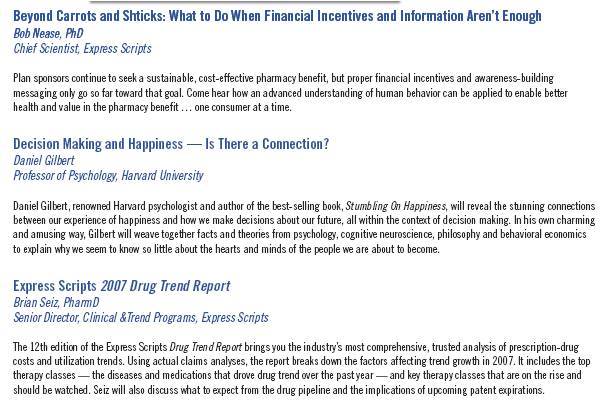
As a follow-up to my last post, I thought I would share some of the agenda items and the new Drug Trend Report from Express Scripts‘ Outcomes conference 2008 which is happening right now.  Unfortunately, they don’t let many external people in (even on my own dime) to hear the presentations.  I have to get it off the website and talk about it 3rd hand.

I will have to read the report and will have more to share.  Here are a few things that caught my eye:

As you can see from the agenda, several topics around consumerism which is a hot topic there.

Words Matter – Bitter and “Hope Bong”

If you ever needed proof that communications matter, here are a few recent examples:

1 – Look at all the “flap” that Obama is taking over the use of the word bitter. It may cost him the nomination.

2 – In another example, look at Colbert on Larry King Live last night (go to 5:20 on this YouTube video) where he talks about Obama passing around his “Hope Bong” to the young people of America.

3 – And back in healthcare, Express Scripts finally announced their Center for Cost-Effective Consumerism in the WSJ today.

“Express Scripts’ experiment with incentives is rooted in a discipline called behavioral economics, which draws heavily from principles of social and cognitive psychology. The field attempts to understand why people make economic decisions that aren’t based solely on saving or making money.”

I have talked about this HMG (or cholesteral lowering drugs) program before on the blog, but they have some results revealed in the article. The article goes on to talk about the research done and some of the findings:

“So Express Scripts surveyed thousands of customers to understand better their concerns about generics. It learned some were uncomfortable with how to tell their doctors they wanted to switch, or felt it wasn’t their role as patients to bring up the topic. Others found the whole topic too complicated to bother with.

With those concerns in mind, Express Scripts made several changes to how customers were informed about simvastatin, such as shortening the text in its literature and changing its color and including a letter that patients could just hand to their doctor requesting a switch.

The company also framed the message to focus not merely on cost savings, but on how generics can be the better value — explaining that drugs that cost more but don’t do more aren’t a better value. People often believe branded or costlier drugs simply are better, says Dr. Nease, whereas Express Scripts’ new message stated that the “best buys” are drugs that cost less and do the same thing.”

This is important. Driving personalization through multi-modal messaging that helps simply complex messages into digestible information that links the constituents in healthcare isn’t easy.

As the article points out, Medco and Caremark are going down similar paths as are many of the managed care plans. Communications is becoming the key area of differentiation in healthcare as it has been in other industries for years.

Medicare Part D Market Penetration

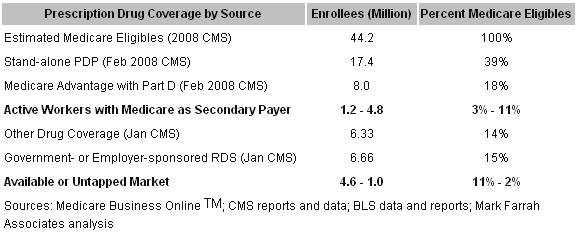
Mark Farrah Associates recently published a study through AHIP around Medicare Part D.  Here were a few of the takeaways:

  • 80 companies offer stand-alone prescription drug plans (PDP).
  • 17,409,974 people in PDP plans in 2008 (2.8% year-over-year increase).
  • Medicare Advantage (MA) plans with drug coverage had a 15% year-over-year gain.
  • Total Medicare population is 44.2M.

One of the key questions they were trying to answer is what is the untapped market size.  Their estimates put the market at 1M-4.6M.  But, I also found it interesting that they estimate that 3-11% of the eligible Medicare patients have Medicare as a secondary payor – a coordination of benefits (COB) opportunity?

Several Good Entries On Other Blogs

I was doing some blog surfing this morning and found a few entries worth going out and reviewing:

On EverythingHealth:

On HealthCareReformNow!:

On e-patients:

On The Sentinel Effect:

On Running a Hospital:

And to wrap up, on the Forrester Marketing Blog, you can get links to all the information being captured at their event on Engagement.

Medco on Future of Pharmacy

Medco has introduced a new publication called Perspectives. The one I just read was by Dr. Robert Epstein who is their Chief Medical Officer and is about how pharmacy will become personalized, specialized, and consumer driven. It is a well written piece with some good and interesting facts. Here are a facts and takeaways:

  • “Over the past five years we’ve seen a 60 percent increase in adult ailments diagnosed in children and treated with adult medicines.”
  • “The use of proton pump inhibitors (PPIs), drugs for heartburn and acid-reflux disease, increased by 60 percent in children between the ages of 1 and 4. This is despite studies revealing that as many as 95 percent of young children who present with symptoms of reflux self-correct for the condition in 12 to 16 months. Furthermore, some recent research suggests the long-term use of these products – particularly in the early years of life – can lead to infections, pneumonia or gastroenteritis.”
  • “Blockbuster medicines in three new major therapeutic categories – Fosamax® for osteoporosis, Risperdal®, an antipsychotic, and Imitrex® for migraines – soon lose patent protection.” [He then suggests that payors begin to look at strategies for driving Fosamax and Imitrex marketshare now, especially for new patients, so that when they go generic they are positioned to take advantage of the savings.]
  • He talks about the changing guidelines for hypertension, asthma, and cholesterol and points out that “It’s estimated that 25 percent of Americans have hypertension, and another 25 percent have “pre-hypertension” – which means half of the U.S. population will become candidates for treatment.”
  • He talks about nano-technology and gives the following example:

“One company, based in Houston, has taken nano-sized particles of gold, which are injected into the bloodstream and leach from the leaky blood vessels associated with rapidly growing tumors. When exposed to infrared light – these gold particles literally absorb the heat and destroy the tumor. Called AuroLaseTM Therapy, within 10 days of a single treatment this therapy caused, laboratory rats with prostate cancer to attain a 90-percent survival rate.”

  • “More than one in five people placed on Coumadin® are hospitalized by side effects, many of which could be averted by genetic tests to more accurately guide proper dosing”

Stop Sweating With Botox

I was just listening to the local news out here in Phoenix and was surprised to hear them talk about the increased use of Botox by people to stop sweating in their armpits. Apparently, stars have used this for a while but now average people are doing it. The report said that one set of injections lasts 6-9 months which for the people with overactive armpit sweating.

I am not sure I believe it, but the news reporter said that these are usually covered by insurance.

CBS News Story

Going to WHCC

I am excited that I get the opportunity to go to the World Healthcare Congress in DC later this month. This looks to be a great conference, and I am going to blog from the event. If you’re there, look me up. I will be sitting at the bloggers table at the front of the event.

73-Page PDL – Simplicity?

I hate to pick on a friend of mine, but I was looking at the PDL (Preferred Drug List) (aka Formulary) that his company puts out. It was 73-pages long. Not likely to be carried by many patients to their appointments. In today’s world of simplicity, it would seem like there must be a better answer.

Pharmacists to Prescribe?

Someone asked me if I thought pharmacists would be allowed to prescribe medication to patients. I’m not familiar with any legislation on this topic (although there well might be some).
My opinion is that the better model is that physicians are responsible for diagnosing and basically writing a prescription for the type of drug (e.g., statin). I think the pharmacist is in the best position to talk with the patient about which drug within that category they should use looking at drug-drug interactions, form of the medication, formulary status, costs, side-effects, and other things that usually result in a follow-up call to the physician. Given that 40% of scripts written today hit some type of edit as an exception, I can’t imagine pushing that responsibility to the physician.

One of the most creative scripts I saw at Express Scripts around this was a physician that had just written all the PPIs (e.g., Prilosec, Nexium, Protonix) on the script and said pick one. I don’t know if it was legal, but I thought it made the point that they didn’t want the call back.

Communications As Trend Mgmt Tool for Pharmacy: Cliff Notes

Here are a few points from my recent webinar on this topic. If you are interested and a potential client, I would be happy to share the detailed content with you offline.

[Since all our competitors tried to sign up to listen in, I won’t give away everything here.]

  1. Talked about all the value sitting on the table that could be captured (>$30B per year).
  2. Talked about how communications can both be the trend management tool and enable utilization of other trend management tools (e.g., utilization management).
  3. Talked about things like loss aversion versus cost savings, the placebo / price correlation, and the transition from the Ford framework to the Starbucks framework in the healthcare industry.
  4. Talked about how people are different and the need for a systemic approach to dynamically optimizing program success using a scalable model.
  5. Talked about some frameworks for retail-to-mail and brand-to-generic along with the importance of asking the right questions in program design and measuring ROI.
  6. Finally, we talked about some results and the different levers to play with to impact results.

Example of Misalignment

One of the points in George Halvorson’s book Health Care Reform Now! is about misalignment of incentives.  Providers are not paid for better outcomes.  They are paid per activity (i.e., to keep people coming back).  It’s a key point which deserves a much longer discussion.  That being said, I couldn’t help but think of this when reading yesterday’s WSJ article “Flu Economy Takes Unexpected Turn“.  A few quotes that it mentions include:

  • CEO of Walgreens at shareholder meeting – “If attendees of the meeting needed to cough, he joked, they should leave the room and ‘go to a movie theater or on a bus’ to spread their germs. ‘We’re really hoping for a very strong flu season’.”
  • “Unfortunately, people have not been getting sick at a rate that we would all like yet.” P&G CEO
  • “On the pediatric side, young kids coming into the hospital, that’s a nice margin for us, as well.” CFO of LifePoint Hospitals

Now, the easy discussion here would be to criticize these executives for being insensitive, but that’s not the problem.  The problem is that we have incented our healthcare system so that people make money when people are sick.  To my earlier post, this doesn’t mean people shouldn’t make money, but it means we should find a way to incent them to make people better.  We have decades of benchmark data (somewhere).

Next Webinar – Retention

The webinar I did last month on using patient communications to drive pharmacy trend went very well. We are continuing our educational series. I also have the honor of giving the next one on a topic I have discussed here a little, but one which I feel very strongly about. Here it is below. [I will try to post some notes that give some of the highlights without disclosing any “secret sauce”.]

If you are a pharmacy, PBM, managed care company, PDP, disease management company, or other provider of care to a group of patients, I would encourage you to sign up.

How Communications Can Influence Member Satisfaction, Loyalty, and Ultimately Retention

When: April 15th & 24th, 1:00 PM EST

We’ve all been told for years that it costs five times as much to win a new member as it does to retain an existing one. With the big focus on consumerism in healthcare, the continuing evolution in Medicare Part D and new growth and innovation happening in support of individual markets, it is time for the science of member communications to take center stage within healthcare companies.

Join Silverlink as we discuss ways of addressing this opportunity through comprehensive communications solutions that connect with your members and increase their advocacy for your insurance product.

We’ll look at some non-healthcare examples and some leading edge ideas in healthcare, while grounding it all with short-term actions that you can implement to achieve measurably better results.

Register now >

Patient Ping-Pong: Cholesterol

As if it’s not already difficult for patients to navigate their benefits, DTC advertising, and all the healthcare information on the web, it seems we are structurally trying to make it more difficult. With the recent news around Vytorin and Zetia, the drugs used to treat high cholesterol have gone through some dramatic changes over the past few years. (Here is the formal study.)

In an editorial by the New England Journal of Medicine:

“Until such data are available, it seems prudent to encourage
patients whose LDL cholesterol levels remain elevated despite
treatment with an optimal dose of a statin to redouble their
efforts at dietary control and regular exercise. Niacin, fibrates,
and resins should be considered when diet, exercise, and a statin
have failed to achieve the target, with ezetimibe [Vytorin] reserved for
patients who cannot tolerate these agents.”

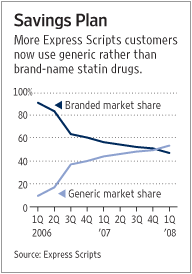
For several years, Lipitor was clearly the market leader with Zocor as a close second. Even with one drug (Mevacor) available generically, most plans (other than Kaiser) had single digit utilization. Kaiser was able to drive significant use of generic Mevacor as a first-line agent. When Zocor was going to lose it’s patent protection in 2006, most plans began moving Lipitor to the 3rd tier and introducing programs to move Lipitor patients to Zocor (generic name simvastatin). These included step therapy programs along with simple copay incentives by having a large copay differential between the 1st or 2nd tier and the 3rd tier.

Then, last year, Pfizer, which makes Lipitor, began to offer aggressive discounting to encourage some plans to actually encourage Lipitor utilization over generic Zocor. All the while, Vytorin and Zetia were gaining marketshare to capture a $5B piece of the market. Now, with the recent study, the authors are suggesting that these patients should be on generic Zocor or another drug in the statin class. I am sure there are some clinical nuances here, but the quote above seems to limit them.

And, of course, patients should discuss this with their physicians. They shouldn’t stop taking their drugs. And, generally, when you switch drugs, you want to get lab work done in this class. So, are we asking patients to change drugs again? Do they incur an office visit copay? Do they need to pay for the lab test?

Talk about confusing. And, at the same time, the Improve-It study around Vytorin and Zetia is enrolling more patients. Seems counterintuitive to the data just released.

I’m not a pharmacist, but after working in the industry, if I can’t figure out what to do, how can your average patient. At this rate, healthcare will be as confusing as our taxes.

Note: There are a handful of entries on this out at the WSJ Health Blog.

Compliance / Persistency / MPR

Non-compliance is a significant issue in healthcare.  You have the issue of whether people fill the prescriptions that their physician writes; whether they use them once they pick them up; and whether they continue to refill them and stay compliance over time.

You will hear several terms used:

  • Compliance is “the extent to which a patient acts in accordance with the prescribed interval and dose of a dosing regimen”. (source)
  • Medication Possession Ratio is the days supply of medication divided by the days between refills.
  • Persistence or length of therapy (LOT) is the number of days elapsed between the date of the first claim and the date when the days supply of the last claim is depleted.
  • Medication Possession Ratio (MPR) is the days supply of all fills minus days supply of last fill / days elapsed between first and last fill.
  • Adherence to therapy can be defined as being both compliant and persistant.
  • The medication ownership ratio (MOR) is calculated as the proportion
    of patients on each initial prescription on a given day. It was
    used to describe the percentage of patients within a treatment cohort
    who had the medication in their possession on any given day.

Here are a few good sources for information:

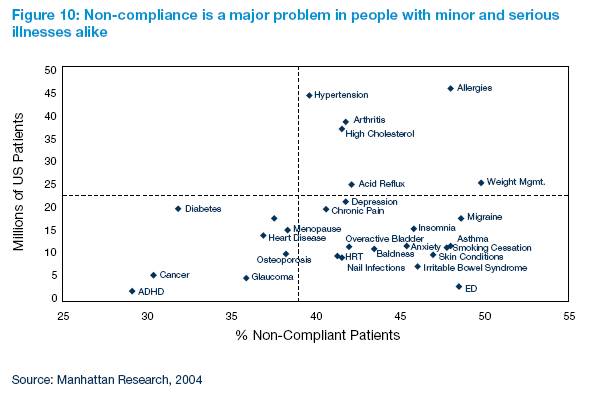
I found the following chart in PWC’s publication Pharma 2020: The Vision a good graphic.

noncompliance-pwc2020.jpg

Cigna’s Digital Coupon

Cigna recently announced some changes to their website. The one that caught my eye was the ability for a patient to print a coupon for a reduced copayment on their first fill of a generic drug.

I think it is a great step. My hope and questions would be as follows:

  • Is it to promote therapeutic switching or simply for movement from a multi-source brand to its chemical equivalent?
  • Is the coupon for anyone who is using a generic? Or is it only for new starts on a generic? Or is it only for those switching from a higher cost brand to a generic?
  • How do you drive awareness of the coupon and adoption of the web?
  • If all they really need is a coupon code, can you send it to their phone (much more likely to have it with them at the pharmacy)? Or could you trigger a fax to the pharmacy?

Anyways, I think couponing and incentives have a role in driving behavior, and it is good to see a MCO jumping into the digital age with this.