Archive | Value Propositions RSS feed for this section

Consumers Don’t Care About Wellness

Here’s a good provacative quote from Forrester…are all the wellness efforts doomed or are incentives the minimum requirement to play?

“Health plans keep saying that they have to improve consumer engagement and that one of the best ways to do this is by engaging them in wellness initiatives. The data tell me that consumers don’t care about wellness. Employers do. But while most employees may hear the [wellness] message, they also ignore it….”

— Carl Doty, VP and research director at Forrester Research, told AIS’s INSIDE CONSUMER-DIRECTED CARE.

Whitepaper: The Future of the PBM (Pharmacy)

As we have been working with a lot of PBMs over the past year, the question has come up many times – “where do you see the industry going?” After bouncing some ideas off a few of you, we have pulled together a whitepaper with the Silverlink Communications perspective. Certainly, each area of the whitepaper could have been its own chapter, but rather than turn this into a thesis, we are publishing it.

As I have said in a few recent articles including the one in HCPro, I think the Express Scripts acquisition of NextRx will likely accelerate a few of our predictions here.

The executive summary of the whitepaper is below. The final whitepaper is available here.

I would welcome any comments you have…

Executive Summary

In the next several years, we believe that three changes will drive the pharmacy marketplace and ultimately change the business model for PBMs. These changes will be accelerated by the current financial crisis which may drive further consolidation in the short-term. Consolidation which we believe will accelerate the “race to the bottom” where the traditional model of scale has been maxed out with parity achieved among the large PBMs.

1. The need to better engage the consumer in understanding their benefits and ultimately responsibility for their care;
2. The effort to automate and integrate data across a fragmented system and across siloed organizations; and
3. The shift from trend management to being responsible for outcomes.

Consumer Engagement
The industry-wide movement to consumerism will continue to affect plan design, but it will also thrust PBMs and pharmacies into the critical path of member engagement. With pharmacy being the most used benefit as well as the volume and accessibility of retail pharmacies, they will play a critical role in driving adherence and helping consumers understand healthcare. This will renew the focus on cognitive skills, medication therapy management and ultimately drive the desire for a more traditional “corner store” approach that can be scaled using technology.

Combining this with the macro-economic forces that are driving ubiquity of technology through mobile media and the evolution of the Internet from a pull media to a push media will also challenge the PBMs and pharmacies to innovate. They will be required to look outside of healthcare models to identify the right communications to drive behavior. PBM’s and pharmacies will have to leverage behavioral economics and personalization technology to get the right message to the right consumer at the right time through the right medium.
Automation and Integration
The consumer engagement challenges will only exasperate some ongoing challenges within the PBM and pharmacy community. This will include the lack of staff to provide more cognitive services and the general fragmentation of data across organizations and functional silos. Figuring out an overall “single view of the patient” which shows all the touch points and offers a coordinated multi-channel strategy for inbound and outbound communications will become a major focus.

In addition, in order to make these solutions efficient, the development of predictive models, much like the clinical and underwriting solutions being used today, will become the norm across the industry. As these models are fine tuned and the promise of e-prescribing becomes more of a reality, the channel for engaging physicians in the member’s care will finally exist. PBMs and pharmacies will be able to use data to allow physicians to understand when patients aren’t being compliant and when there is an opportunity to drive change.

From Trend Management to Outcomes
The traditional business model for the PBMs has been based on large scale negotiations to drive rebates and efficiencies within mail service – cost to fill and acquisition costs. At the same time as those efficiencies reach a maximum discount, the traditional tools for managing trend will have run their course. Although plan design won’t “die”, comparative effectiveness may reduce (or eliminate) the need for formularies, and in general, the ability to shift cost to the consumer above the 25-30% level will be difficult.

Both of these challenges will push the PBMs and pharmacies into a role where they are focused on driving health outcomes and being part of the bigger solution across the industry. They have a strong footprint to drive this change and as theranostics (or personalized medicine) evolves there will be an opportunity to find cost effective solutions to change the prescription landscape.

Express Scripts Outcomes Conference Begins

As with each annual Outcomes conference, Express Scripts (ESRX) has released their annual trend numbers. Here are a few of the highlights from the press release:

  • Overall pharmacy trend = 3.0% (down from 5.5% in 2007)
  • Estimate consumers and employers are paying $42B too much in 13 therapy classes by not optimizing generics.
  • On average, a generic drug is over $90 cheaper than a brand name drug.
  • Generic drug usage increased by 7.5 percent, while utilization of brand name medications decreased 11 percent.
  • 67.3 percent of all prescriptions that Express Scripts filled were for generic drugs by the end of 2008. [I didn’t like the comparison which was an average across the 12 months ending in Sept 2008 from IMS of 63.7%…not apples to apples.]
  • In 2009, at least 20 branded drugs are expected to become available generically.
  • Over the next five years, more than $66 billion worth of branded drugs are expected to lose patent exclusivity.

“Using generic drugs that are safe and effective can help lower costs while still driving value for patients and employers,” said Steven Miller, MD, senior vice president and chief medical officer at Express Scripts. “Our results indicate that cost control is achievable through careful management of appropriate use of drugs and delivery channels, without shifting costs to consumers. Although the trend is the lowest it has been in over a decade, significant opportunity to lower spending still exists.”

“Finding ways to reduce spending without compromising health outcomes is the top priority for healthcare reform, as the Obama administration recognizes,” said Alan Garber, MD, PhD, Henry J. Kaiser Professor and director of the Center for Health Policy at Stanford University. “We have long used financial incentives to try to eliminate waste. Now we’re finding that tools that build upon the insights of behavioral economics and psychology can have powerful, positive effects.”

“In today’s economy, we are not only tracking wasteful spending across the country but developing strategies to reduce it,” said George Paz, chief executive officer at Express Scripts. “By applying the principles of behavioral economics we are helping consumers make better and more cost-effective healthcare decisions. We understand we cannot eliminate waste alone and we are committed to working alongside likeminded organizations, such as the Federal Coordinating Council for Comparative Effectiveness Research, to continue to identify strategies to improve our healthcare system.”

“Studies have repeatedly shown that people work much harder to avoid losses than to pursue gains,” said Bob Nease, PhD, the company’s chief scientist. “This suggests that a ‘stop wasting money’ message is more effective than a message focused on potential savings. In addition, by applying evidence-based segmentation, we have practical insight into which members are likely to be most sensitive to loss aversion. One size does not fit all.”

The $40B HealthCare Opportunity Around Retention

It’s obvious to anyone close to it, but harder to align the goals to take advantage of it.  With people “aging-out” from group plans to Medicare and people leaving their employer coverage to go to the individual market, managed care has a huge opportunity to retain that business by providing them a transition path.  According to McKinsey (and from what we see), that’s generally not happening.

A few facts from their report:

  • 68 percent of all members aged 60 to 64 have never been approached by their current insurers to discuss retirement options.
  • more than 80 percent of respondents aged 60 to 64 said they would consider purchasing an individual product from their current carrier if they left their jobs or retired.
  • Only 33 percent of 60- to 64-year-olds thought that their insurers offered Medicare products, for example, when in fact almost all major carriers do.

It’s also a simple economic problem.  They are less expensive to retain and convert while their a member than once they are on the open market.  You may even save on broker fees.  Developing a data driven approach to create timely and personalized communications along with a service to transition them should be a priority.

mckinsey-conversion-opp

Upcoming Book By George Halvorson From Kaiser

I had the privledge of previewing George Halvorson‘s new book “Health Care Will Not Reform Itself” this week.  My book cover quote would go something like this:

“Opinions supported by facts all wrapped up in a narrative.  It’s like a fireside chat with one of the greatest leaders in healthcare.”

I won’t pull things from the book yet, but I found it a logical follow-up to his other book “Health Care Reform Now! A Prescription For Change“.  He talks about the need for bold goals and a clear set of metrics to drive change.  He talks about why healthcare costs go up and the fact that we need universal coverage.  And, he also hits on what seems to be the key theme of the day – reducing costs while improving outcomes.

While I was at the WHCC09, I got to sit down with George Halvorson and talk about healthcare for an hour.  It was a great privledge that I enjoyed a lot, and I could have talked for hours.  We hit on a bunch of topics so let me share some of them.

  • We talked about him writing books.  I was commenting on how much I like his writing style and was intrigued to learn that he said some professors don’t like using his books because they’re “too easy to read”.
  • We had a fascinating discussion around leadership and diversity and how he has created a very diverse leadership team at Kaiser.  I was also impressed to hear that one member of team does an international fellowship each year where they spend time abroad learning about how healthcare is delivered and managed in other countries.  [very progressive]
  • We talked about how healthcare was going to change.  He spent a lot of time on the need to create aggressive goals especially around the 10-20% of things that drive 80% of the costs.  For example, he asked why we don’t try to reduce asthma attacks or congestive heart failure by 90%.  And, he pointed out the fact that we don’t have a common set of goals that allows enterprises to reverse engineer the process and identify points of variance.  Without that process analysis and a specific goal, it is hard to drive improvements.

“We need to change our expectations of what is possible.”

  • We talked a little bit about where innovation will come from.  He talked about how Deming, a statistician, revolutionized manufacturing as a lead into the point that innovation will likely come from outside the industry.  [I think this is interesting as I have seen more and more executives at healthcare companies that are coming from outside of healthcare.  I also think things like the X-Prize may attract others to try their ideas.]
  • He gave some great examples of how Kaiser has deployed their 30 black belts.  The one I quickly jotted down had to do with how nurses change shifts.  This shift change is where all the information was exchanged about different patients and when accidents sometimes happened.  By changing the process, they dropped the accident rate and reduced the communication time from 40 minutes per shift to 12 minutes per shift.
  • We also talked about HIT (Healthcare Information Technology) and the need not only to drive utilization but to mandate system integration.  This tied in with an earlier conversation where we spoke about coordinated care versus uncoordinated care and the need to create a “virtual Kaiser”.  I think there is a lot to learn from the Kaiser model and some of the things they are doing with technology to drive care.  [I was pleasantly surprised that he believes physicians will embrace technology as a tool to help them standardize care.  I think that is critical path to successfully reducing costs while improving outcomes.]
  • I couldn’t jot down all the statistics fast enough, but he talked about how they were testing different “panel systems” in different geographies to see what the best process and technology solution would be.  They had had some great results.  [One fact he shared that jumped out at me was that 25% of people over 65 that break a bone die within a year.]
  • The last thing we talked about was probably the most insightful to me.  Given the amount of money spent in the last months of people’s lives, I was interested in his global perspective on whether that was a cultural issue.  He said that he thinks it is mostly that the care system in the US lacks honesty or the ability to be brutally honest.  We talked about one scenario where people who do nothing live an average of 140 days and those that get invasive surgery live an average of 100 days…but they are hoping to be that 1 in a 1,000 that live an extra year.  [Is it worth all that pain, surgery, and medicine for the last few months?]  We also talked about the new $100,000 breast surgery drug which extends the patient’s life on average for 1 month.  [Again, is that an appropriate use of money?  Would we spend it if it came out of our pockets?]

When the book comes out, I will try to pull out some of the key points, but I would recommend you pick it up and read it for yourself.  I think you will really enjoy it.

WHCC 09 Interview with Ed Batchelor (Humana)

I had an opportunity to sit down with Ed Batchelor from Humana yesterday.  He has an interesting role driving the Stay Smart / Stay Healthy program for them as part of his Corporate Web Strategy role.  From what I could tell, it’s a program done for the greater good of educating consumers about key healthcare topics.  To accomplish that, Ed has a direct reporting relationship to the operating committee at Humana and was brought in from outside the industry.

Here is an example of one of the videos that they are pushing out on YouTube.  I really like the whiteboard communication approach.

Some of the big takeaways from my discussion were:

  1. You have to meet the consumers where they are – Facebook, YouTube, Blogs.
  2. If you create a neutral educational message, consumers will trust information (even from health plans).
  3. You can only deliver information in “bits”.  Don’t overwhelm them.
  4. Fun is good.
  5. Regardless of what many (including myself) might think, seniors don’t all shy away from these social media.  [20% of the 1.1M views on YouTube have been from people over 55 years old]
  6. Success on YouTube doesn’t translate to blogs.

One question that I had was how to get away from the “healthcare speak” so that consumers could actually understand it.  He talked about 3 things:

  1. Bringing in an external person
  2. Using focus groups
  3. Using an outside agency

The other thing we talked about is that pull through that they are getting around employers and brokers.  They are pulling the videos in (like here) and re-using them.

This was a program they were highlighting in their booth and one of the public areas here so I appreciated the opportunity to sit down and learn more.

So…Google Was Indicative

I talked earlier about Google searches relative to the NextRx sale.  In the 3 days before the acquisition was announced, the majority of the searches (by far) that I could see and brought people to my site were about Express Scripts (or ESRX) and Wellpoint (or NextRx).  So, I am not sure if that was PR people looking for things to respond to or insiders doing some analysis, but it seems like Google searches could tell us something.

Again…the power of data.  Now, if I was a stock trader and had access to all of the Google search data, perhaps I would have a way to beat the market.

Medicaid Communications

Interested in hearing more about this topic.  You can hear Margot Walthall from my team talking about this on an upcoming webinar.

The Medicaid Communications Lifecycle:  From Onboarding through Redetermination
April 28, 2009 | 1:00 PM ET | 10:00 AM PT

Introducing your Medicaid members to your plan’s benefits as well as their responsibilities is critical to developing a successful member / health plan relationship. Sustaining positive impressions over the course of the member’s eligibility is equally important to retaining Medicaid members.

Silverlink has developed a broad set of communications outreach programs that have yielded strong results for Medicaid and CHIP populations. Join us for this complimentary webinar where we will explore how Silverlink can help you cost-efficiently support:

  • The Medicaid onboarding process with welcome/HRA outreach
  • Targeted messages about health screenings to drive HEDIS results
  • Communications approaches that can reduce health disparities
  • Effective methods for educating members about the redetermination process that can inspire loyalty

Register Here

Sprint: What’s Happening Now

I am not sure how this helps Sprint sell more phones and/or services, but I enjoyed the advertisement. The concept of leveraging data to understand consumer behavior is essential. This is a topic we [Silverlink] are constantly working with our healthcare clients to address.

  • How do you know what members or patients are doing?
  • Do you understand their preferences?
  • What have they historically done?
  • Can you predict how they will act in the future?
  • What data is needed to do analysis and create a predictive algorithm?
  • How do you leverage that to create interactive and compelling communications?
  • How do you study their behavior change?  (e.g., did they get a flu shot after being reminded)

Big Month For Vasectomies

Based on several articles over the past year, this should be a big month for vasectomies.

Last year, Forbes pointed out that the scheduling of vasectomies jumps dramatically before big sports events – The Masters, Final Four, Football.  Apparently, people want to get “snipped” on the Friday and have a good reason to sit around all weekend and recover while they watch their favorite sport.  Talk about planning.

And, last month, there was an article about the spike in vasectomies due to the economy.  No hard data about why, but the article hypothesizes that people are concerned about the additional costs of children and want to get the procedure done while they have health insurance.

Impact of Rising Health Care Costs

These are straight from the National Coalition on Health Care (NCHC), but they represent a sobering view of the impact of our rising costs. For the broader list of facts, you can go to their website.

  • In 2008, health care spending in the United States reached $2.4 trillion, and was projected to reach $3.1 trillion in 2012.1 Health care spending is projected to reach $4.3 trillion by 2016.1
  • Premiums for employer-based health insurance rose by 5.0 percent in 2008. In 2007, small employers saw their premiums, on average, increase 5.5 percent. Firms with less than 24 workers, experienced an increase of 6.8 percent.2
  • Health care spending is 4.3 times the amount spent on national defense.3
  • Health insurance expenses are the fastest growing cost component for employers. Unless something changes dramatically, health insurance costs will overtake profits by the end of 2008.4
  • The percentage of Americans under age 65 whose family-level, out-of-pocket spending for health care, including health insurance, that exceeds $2,000 a year, rose from 37.3 percent in 1996 to 43.1 percent in 2003 – a 16 percent increase.5
  • A recent study by Harvard University researchers found that the average out-of-pocket medical debt for those who filed for bankruptcy was $12,000. The study noted that 68 percent of those who filed for bankruptcy had health insurance. In addition, the study found that 50 percent of all bankruptcy filings were partly the result of medical expenses.6 Every 30 seconds in the United States someone files for bankruptcy in the aftermath of a serious health problem.
  • A new survey shows that more than 25 percent said that housing problems resulted from medical debt, including the inability to make rent or mortgage payments and the development of bad credit ratings.7
  • About 1.5 million families lose their homes to foreclosure every year due to unaffordable medical costs. 8
  • A survey of Iowa consumers found that in order to cope with rising health insurance costs, 86 percent said they had cut back on how much they could save, and 44 percent said that they have cut back on food and heating expenses.9

Notes

  1. Keehan, S. et al. “Health Spending Projections Through 2017, Health Affairs Web Exclusive W146: 21 February 2008.
  2. The Henry J. Kaiser Family Foundation. Employee Health Benefits: 2008 Annual Survey. September 2008.
  3. California Health Care Foundation. Health Care Costs 101 — 2005. 02 March 2005.
  4. McKinsey and Company. The McKinsey Quarterly Chart Focus Newsletter, “Will Health Benefit Costs Eclipse Profits,” September, 2004.
  5. Agency for Heathcare Research and Quality. Out-of-Pocket Expenditures on Health Care and Insurance Premiums Among the Non-elderly Population, 2003, March 2006.
  6. Himmelstein, D, E. Warren, D. Thorne, and S. Woolhander, “Illness and Injury as Contributors to Bankruptcy, ” Health Affairs Web Exclusive W5-63, 02 February , 2005.
  7. The Access Project. Home Sick: How Medical Debt Undermines Housing Security. Boston, MA, November 2005.
  8. Robertson, C.T., et al. “Get Sick, Get Out: The Medical Causes of Home Mortgage Foreclosures,” Health Matrix, 2008
  9. Selzer and Company Inc. Department of Public Health 2005 Survey of Iowa Consumers, September 2005.

Kaiser Family Foundation Health Care Data

The Kaiser Family Foundation always has some great data points on health surveys, data trends, and other topics. In some cases, they have made these into slides that you can download and re-use.

I grabbed a bunch of them which you can see below. To download them yourself, go to their website.

The Inbound Only Landline

I heard about an interesting service today which is being offered by one of the telecommunication companies. They are rolling out a landline for $5 a month that receives inbound calls, but you can only call 911 for outbound calls. Very interesting.

phone

OTC Equivalents to Prescription Drugs

In some cases, there are OTCs (over-the-counter) medications which a consumer can choose to use in place of a prescription drug. Financially, it’s a question of what your copay is versus the cost of the OTC medication.

The biggest drugs in the past few years to go OTC have been Claritin and Prilosec which are now both available as brands and generics over-the-counter.

I found this list that BCBS of TN had put out which I thought I would post as a link. It does a good job of creating a clean wall chart of some of the alternatives.

Given The Link Between Money And Health

As we have seen in numerous studies over the past six months, healthcare spending is clearly affected by the economy.  It is not “recession proof” as many had believed.  Adherence is down.  People are skipping preventative care.

With that in mind, I just thought I would point people to Clark Howard who is the new consumer “advisor” on CNN that focuses on current issues.

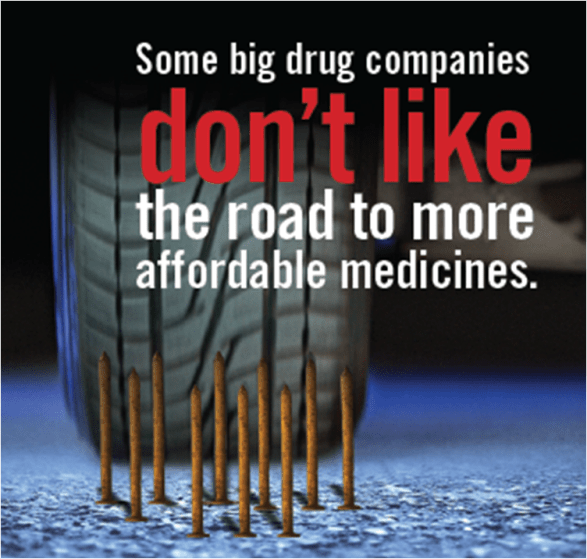
PCMA Carve-Out Advertisement

I was a little surprised to see the latest PCMA advertisement that goes for the jugular on pharma companies that support generic carve-out legislation.

pcma-ad

What is the “generic carve-out” concept – legislation which proposes making certain classes of drugs exempt from the ability of the pharmacy to substitute an A-B rated generic for its brand equivalent when the physician has not marked the prescription – Dispense As Written (DAW).

$2.3T on Healthcare and 47M Uninsured – National Disgrace

Kaiser Permanente recently launched a series of advertisements that drive this message around health disparities home. It is (or should be) a concern for most of us.  Health outcomes and especially preventative care is driven by health literacy, our attitudes towards health, and our access to the healthcare system.  We should all be working with our families, our communities, and our country to try to make this better.

I am a firm believer that one of the best ways to start to manage cost is to find a viable strategy to get universal coverage.  The costs of emergency care and absenteeism all get passed on to us in one way or another.  And, as the government is the dominant payor of healthcare (Medicare, Medicaid), long term costs are a significant issue for our economy.  If there is a systemic way of improving it, we should seek that out.

So, a cause that is both moral and economical…what more do you need?

Today, more than 50 percent of Americans and 75 percent of Californians without health care coverage are people of color.  Uninsured men, women, and children are far more likely to get sick and forego care simply because they lack coverage.  This is a national disgrace. We spend 2.3 trillion dollars on care in this country. Securing health care coverage for every American is the next great civil rights issue of our time. We can and should achieve universal coverage.

kaiser-ad

Some of the facts highlighted on their new website about disparities include:

  1. Disparities in health and health care impact everyone. African Americans, American Indians, Alaska Natives, Asians, Pacific Islanders, and Hispanics are most affected.

  2. 27% of adults report having no usual source of care. African-American (28%), Hispanic (51%), and Asian (23%) adults are all more likely to report not having a usual doctor.

  3. Uninsured adults are disproportionately, young, and minorities; 82% are between 19-49 years of age, and 41% identified themselves as black, Hispanic, or other.

  4. American Indian and Alaskan Native death rates from sudden infant death syndrome are the highest of any population groups.

  5. Asian Americans have the highest tuberculosis case rates of any racial and ethnic population.

  6. During 1996-2000, Native Hawaiians were 2.5 times more likely to be diagnosed with diabetes than non-Hispanic white residents of Hawaii of similar age.

  7. In 2005, African Americans accounted for 18,121 (49%) of the estimated 37,331 new HIV/AIDS diagnoses in a national poll which encompassed 33 states.

  8. 21.9% of U.S. children live in poverty, far and away the worst in the industrialized world. Comparable figures for the Nordic countries are 4.2% and less.

  9. Adults who have not finished high school are almost two times more likely than college graduates to be obese.

To learn more about the topic, you can go to their community of information.

Negotiating Health Care Is Normal

Sure, most of us with employer sponsored care haven’t dealt with this but providers (MD, hospitals, labs) have been negotiating with plans for years.  With over $34B in uncompensated care in 2007 (a number which will certainly go up), your physician would rather get something than nothing.  Talk to them like a professional (not a used car dealer) and see if they can give you a break on the costs.  This article in Patient Money provides some additional thoughts.

Another good article in this area is “Advice To The Jobless On Getting Health Coverage“.

Using Twitter For Health Care

Last week, I talked with a reporter about using Twitter for health care.  It can add a new dimension to communications, but I am not sold on it replacing current communications.

Some of my jumbled thoughts on this:

  • I like the one to many concept of Twitter with the opt-in concept (preference-based marketing), but it doesn’t personalize to the individual the way the information is delivered.
  • It definitely provides a stream of consciousness which is interesting.  I see a lot of application for a reality show type of health tools…like Biggest Loser via Twitter.
  • I like the idea of posting a question to a broad audience for quick response – Does anyone have research showing the impact of statins on asthma patients?
  • I don’t see this helping with patient to provider communications.  Do I really want my blood sugar posted to Twitter and sent to my physician from my smart device?  Do I (the physician) really want to see all that real-time data?  No.  What about HIPAA…from what I know Twitter is not meant to contain confidential information.  There are plenty of rules engines which can be used to capture data; look for things outside the norm; and then send an alert.
  • A lot of healthcare information has caveats and requires more than 140 characters to get across the message.  Most clinical things couldn’t be send this way.
  • As with most inbound things (i.e., I have to register or search it out), Twitter feeds get those that know what they are interested in and are active in their health management.  It still doesn’t help to drive action from those that aren’t engaged in their healthcare.
  • I can certainly see it as an alert to information, but since one tip to productivity is to batch things, do I really want them broken out during the day in a bunch of Twitter feeds.  I would rather get a daily synopsis from a website (which might be created by Twitter feeds).

Some things I found when looking on the web about this topic:

Here is a presentation on Twitter (they even have one of my old posts in there…which was a pleasant surprise to me) around healthcare.

So, my general perspective is that there is some value in pushing basic information out, reality show type of healthcare (Twitter surgery), capturing feedback, and developing community, but it’s not a tool for the corporate to individual communications that I typically deal with.

BioGenerics, Text Analysis, and Transparency

Here are a couple of blog posts from other blogs worth reading:

  • David Williams on the “Folly of BioGenerics” which talks about why they won’t be just like generic drugs.
  • James Taylor on Text Analysis which if ever figured out would be very helpful in taking inbound e-mails, letters, and call center notes and using them for customer relationship management.
  • Gilles Frydman on “Opaque Inc.” and how difficult it is to understand the US healthcare system.

Why Did The PBMs Get Into Specialty?

Thanks for all the questions lately.  I love to answer them (although I get backlogged sometimes with the real job).

Someone asked me why the PBMs got into specialty pharmacy over the past 5+ years.

  • Commoditization
  • Money
  • Opportunity

As the traditional PBM business continued to get squeezed and “transparency” was being pushed, there was a fear of commoditization.  That fear caused the PBMs to look more aggressively at what companies like CVS had been doing in the specialty pharmacy world.

The PBMs have typically been very financially motivated.  If you look at the basics, there is clear financial opportunity.

  • The value of an average specialty script is $1,200+ versus $80 for a normal script.
  • The majority of the scripts traditionally were filled outside the pharmacy network on the medical side creating lots of opportunity for cost management (and therefore spread).
  • Some specialty drugs have limited distribution meaning that you can be the only pharmacy (or one of a few) that stock the drug driving immediate marketshare.

Finally, to a lesser extent, I believe specialty created an opportunity for them to showcase more “care management” types of activities.  They could work more actively with the patient (member) to save them money and help them deal with their chronic condition.

Walgreen’s vs. CVS PBM Ownership

Another question I got yesterday was on retailers (specifically Walgreen’s versus CVS) owning PBMs.  The question was since they make so much money on foot traffic and selling non-pharmacy items why would they want to be in the PBM business.  DATA!

They both have similar fundamental concepts which are aggregating patient touchpoints – PBM, Clinic, Retail, Specialty.  If they can figure out how to aggregate and mine the data to better serve the patients and the plan sponsors, they can be a key influencer in driving health outcomes.  

The follow on question was what’s different.  Without getting into behind the scenes, the one thing that I think is publicly different is the CVS ExtraCare program.  They have a loyalty program that gives them visibility into the non-medical behavior of members.  Why is that important?  From a PBM perspective, it’s important because they can make sure to focus on channel optimization.  By that I mean that people that go to the pharmacy and shop at a CVS are people they want to keep in the stores.  But, patients that simply pick up prescriptions are probably people they want to move to mail.  Mail order is a lower cost fulfillment option for them and if those consumers aren’t buying other stuff, then they should look to convert them to mail.

What’s In A Voice?

In the most recent copy of AHIP’s Coverage Magazine (JAN+FEB.09), there is a nice feature called “What’s In A Voice?” which talks about Silverlink Communications. You can find the whole article (“Motivating Change“) here, but I pulled out a few quotes:

“When the phone rings, it takes just the right voice to motivate a member to overcome the tendency to put off receiving preventative care.”

“Silverlink calls allow us to communicate with our members in a really personalized way without incurring the costs associated with hiring and training additional customer service representatives.” Linda Lyle, Cariten Healthcare Vice President of Operations

“This mammography campaign contained scripting that allowed the members to respond, [indicating] whether or not they had had a mammogram. We received a large number of ‘yes’ responses that we will pursue for HEDIS improvement, as well as to identify gaps in our data collection. This method of collecting data about our members is unique to telephone outreach. We are anxious to explore our findings.” ” We know how many listened to the message and how many hung up. We know how many people we actually reach.” Michael Bryne, Assistant Director of Quality Management at EmblemHealth.

The article also talks about using non-professional voices such as the Chief Medical Officer or a customer service representative who was really good with members. In one example, Eleanor Sorrentino, the Managing Director of Quality Management at EmblemHealth, talks about getting 50 calls from members thanking her for the automated call which was recorded in her voice.

A few other items talked about include the use of data and reporting which is available real-time to make decisions along with the use of natural sounding voices to drive a conversational experience which leverages internal and professional scripting resources to develop the best content.

Biggest Loser…Losing Credibility

In one of those classic examples of why do smart people do stupid things, the show The Biggest Loser on NBC shows one of their recent contestants completing a marathon in under 4 hours while weighing close to 300 pounds.  I saw the show and was amazed.  I haven’t been able to do that on 3 tries and wondered what the heck I was doing wrong.

Well…come to find out that he didn’t run the marathon unaided.  Depending on which report you believe, he got a van ride for 3-6 miles toward the end and was crossing the finish line at just under 6 hours.  I just don’t get why the show would be so stupid. 

It’s a show about inspiring people with amazing transformations.  Having him run a half-marathon or even completing a full 26.2 miles at a slow time would have been a great story.  Instead you ruin it and cast down on some of the things that the contestants do.  

Story in the Detroit News about it.

You can read the official statements from Dane (the contestant), the show, and NBC in The LA Times.

“I always intended to run the full marathon. At the 17th mile, I knew I would not make it in time to cross the finish line before it closed at 6 hours, so I then received a ride from the field producer, who wanted to show me crossing the finish line. He drove me for three miles, and then I ran the rest of the way. After all the filming was done I went back and finished the last 3 miles later that day with my wife and cousin Blaine. I apologize for stating that I ran the entire marathon before I actually ran the whole 26 miles. I am proud of the feat of just running 26 miles in one day.”

Saving Money On Rxs

Are you interested in saving your members money?  There are a lot of things you can do.  Pill splitting is an easy solution with a quick impact.  Using generics and moving to mail order are others.  I am going to do a webinar on this in a few weeks. [March 10th and March 12th at 1:00 ET]

Even if you’re not specifically interested, I think you would be fascinated to see how we use a multi-modal approach to drive behavior.  It is modeled on what PBMs have been doing around mail order conversion for years.

Lots of people talk about multi-modal coordination.  We can and have done it.  Gartner is talking about Business Process Outsourcing (BPO) in healthcare and has mentioned Silverlink in their last two reports as one of the few vendors doing this.

I hope you can join us! REGISTER HERE.

Limited Networks

I was reading Charlie Baker’s post on Narrow Networks, and it made me think about this concept from a pharmacy perspective.

In general, this is a default solution for mail pharmacy.  You can’t chose between Medco’s mail pharmacy and Express Scripts.  You have one or the other.

And, Mandatory Mail is an expansion on this.  It not only limits the network size, but it forces you to use the network in certain ways (i.e., if you have a maintenance drug you have to fill it at the lowest cost location).

In specialty pharmacy, this has certainly been the trend.  More and more companies are limiting the choice of specialty pharmacies that you can choose from.  In some cases, this is dictated by the manufacturer who limits distribution of their drug to only certain pharmacies.  And, then Mandatory Specialty will drive you to a specific mail site for your specialty medications.

Within the retail network, this has been tried a few times, but without much adoption.  That being said, I found retailers very willing to offer lower prices to clients if they were part of a limited network (where they expected to get more marketshare).  Another option is to treat the network like a formulary (or drug list) with tiers and where members pay more to use certain pharmacies (which likely are higher cost or offer lower quality / service).

In this economy, I have to believe that we will see this take off.  Of course, consumers don’t like it, but it’s better than losing your benefit all together.  It seems like a logical change to the benefit…you limit choice without impacting outcomes in order to save money.  There are some times when it may not make sense.  For example, excluding CVS from the retail network in Boston would be a very difficult sell.  It’s all a question of marketshare, options, and ultimately the savings per disrupted (or upset) member.

Of course, the pharmacy network is very different than physicians.  I would think you could basically have any primary care physician, but everything else could be limited short of emergency care.