Archive | Value Propositions RSS feed for this section

Hall of Shame – Customer Service

On the positive side, there were no healthcare companies that “won” this “competition”.  Winning being that you were rated as having poor customer service the highest percentage of times.  (On the flipside, very few were included.)  [full rankings here]

“We’ve seen a fall in customer service as we’ve gone into a recession,” said Richard D. Hanks, the president of Mindshare Technologies, a customer-service consulting company. “As the cost cutting occurs . . . they start to cut the wrong things.” (Article)

Not surprisingly, the people surveyed said that being knowledgeable, available, and friendly were very important.  As we all know, the key attribute is knowledge and with the complexity of benefits, multiple systems that healthcare reps need to access, and turnover, this is a challenge. 

It’s no wonder that everyone is trying to move people to self-service.  In a related article, some of the benefits of self-service were clearly articulated:

“What better customer service is there than self-service?” ask the marketers. “It’s fast!” “It’s accurate!” “It’s convenient!” “It’s confidential!” (No more bystanders overhearing that triple-cheese, extra-mayo order.)


  • People buy more. Customers spend 39% more per order at fast-food kiosks and are twice as likely to upsize than if a person takes their orders. (Machines are programmed to ask every time, and no one can overhear.) Customers also buy more at deli kiosks in supermarkets.


  • More people buy. Good Web self-service allows for far more customers to be adequately served.


  • People remain loyal. “You mean I’m going to have to upload all my data into a new bank? And learn a new system? No way.”


  • People give the company high marks for customer service. Yes, funny but true. It’s hard to complain about a food order that you placed yourself, a transaction that you scripted or the way you pumped your own gas. When customer service is self-service, you have only yourself to blame.

Guest Post: Health Researchers Obtain Grants for Video Game Study

12 US research groups were awarded grants this week in order to conduct studies on how interactive video games affect players’ health. There has been a lot of press lately for Nintendo Wii and its many health benefits. It seems that the Wii isn’t the only gaming system to influence a person’s lifestyle choices where health is concerned. Of course, not all games are having a positive influence.

Grants totaling up to $200,000 were given to each research team, all of which are connected with a major US university. The generous donations come from Robert Wood Johnson Foundation (RWJF), a private foundation that is dedicated to improving the health of all Americans.

In regards to the grants, RWJF program officer Chinwe Onyekere stated:

We have been actively working in this area since 2004. Over this time, we have heard repeatedly that there is a need for stronger evidence that games can improve health and healthcare and support the growing realization that games can make a real difference in public healthcare in the United States.

Our vision is that in the coming years we will have a thriving marketplace of well designed, compelling interactive games that draw on this evidence base to become highly engaging and effective tools for improving the health and healthcare of Americans.

The 12 teams are currently working on projects that focus on different age groups and behaviors. Maine Medical Center, for example, was awarded a grant for its study, “Family-Based Exergaming with Dance Dance Revolution (DDR)”. The aforementioned game, DDR, is extremely popular with children and young adults. It involves moving on a small, portable dance floor while a video with instructions plays on the screen.

Research grants were dispersed by RWJF in order to study things like “the potential of physical activity video games to serve as innovative, cost-effective ways to help people recover motor skills after experiencing a stroke” or “health impacts of online mobile mini-games for people with type 2 diabetes.” Another group of 12 research grants will be awarded next year.

By-line: Heather Johnson is a regular commentator on the subject of CNA Classes Online. She welcomes your feedback and potential job inquiries at heatherjohnson2323 at gmail dot com.

Our First Think Different Event

Today was our first Think Different event in Boston. This is a road show we are doing around our new positioning and how health care companies need to get outside the box to improve the effectiveness of their communications. It has four external speakers plus our CEO.

[Spoiler Alert: If you are attending an upcoming session, I may reveal some of the content here.]

I missed ½ the session today due to a client call, but I will be at 3 of the other 5 events. In listening to the first two speakers, I jotted down a few thoughts.

From Kinney Zalesne:

  • She spoke about moving to the Starbucks economy and how we have much more choice today in what we do, who we love, religion, and our gender. Everyone immediately thinks of gender meaning sex change operations, but the point here is that there is a group of people who don’t want to be forced to select a gender identity. Before you discount it, you should know that 100 corporations, 75 colleges, and 8 states now ban discrimination based on gender identity. This was a bit of a surprise to me, but when I was talking with a large health plan about this, they informed me that their new EMR (electronic medical record) allowed for 5 possible gender options.
  • She talked about people basically starving themselves to focus on the theory that has been demonstrated in animals, but not yet in humans which says that by eating 30% less calories you can extend your life by 40%. (Not something I will be doing.)
  • She talked about the Do-It-Yourself (DIY) Doctors which are the people who use the Internet to self-diagnose and treat the MD as an ATM for drugs (i.e., I need a prescription for simvastatin can you please write it for me). I have heard a lot of talk recently about the changing perception of physicians. I haven’t seen the statistics, but one person said that they have lost the most respect over the past 20 years than any other profession. I think Kinney’s point is more about them moving from being a supervisor role (i.e., you should do this) to an advisor role (i.e., thanks for your opinion…I will take it into consideration).
  • Her statistics about 5M working retired (i.e., >65 years old) and 2M working teens (i.e., using the Internet to make money before they leave high school) says a lot about how benefit design will need to change. The implications on needs and flexibility (e.g., imagine two primary addresses for snowbirds) could be significant.
  • In her talk about micro-targeting, my mind drifted to a few thoughts:
    • How has gas prices changed our opinion of other costs? A $15 copay used to be equal to 7 gallons of gas. When it only equals 3 gallons of gas, do we view the $15 differently? [Have you caught yourself saying gas is only $3.75 at this one station near my house?]
    • Just like your segmentation can change in healthcare, it is important to consider the macro-economic and political environment when communicating. Have you listened to all the car advertisements lately…they all talk about gas mileage?
    • If you need a simple example of why personalization matters, think about buying a car. I am not a mechanical person so if I came in and someone talked to me about horsepower and cylinders then I would be turned off. I care about comfort and low maintenance.
    • Finally, getting back to health, I thought about how difficult it is to be successful. Let’s assume there were 10 primary reasons for non-adherence and 3 primary channels for delivering information (live, letter, automated call). In this case, you have 10% chance of hitting the right message and a 33% chance of using the right channel (i.e., a 3% chance to be successful).

From Liz Boehm:

  • She shared a lot of great facts about patient awareness of technology and how adherent they are.
  • She points out a scary fact that while our health care needs are going up with the boomers we simultaneously have an issue with health care workers retiring which will only make things worse in the short term.
  • She showed that 47% of people had visited their health plan’s website. [I will have to push her on this data since I believe they visited, but I think the percentage that log-in and use the site has to be very small. I would estimate 10-15%.]
  • She talked about use of social media and gave an example of a MySpace group on diabetes.
  • I found the discussion on wellness very interesting where she pointed out that things like chocolate, riding an elevator, or for some smoking gives you an immediate positive feeling while dropping your cholesterol by 10 points or even trying to lose 1 pound per week is pretty abstract.
  • I have talked about loss aversion several times, and she talks a lot about it. Using it to make a link to why incentives matter in health care.
  • Talking about motivation, I like her point that it isn’t a reasonable suggestion if you can’t achieve it. It may make good clinical sense to have a BMI of <25, but for someone with a BMI of 31, perhaps setting a goal of 28 is more reasonable and not as discouraging.
  • In her talk about trust, it made me wonder how many people that work for managed care companies and pharmacy benefit management companies reveal that fact at cocktail parties. I am not talking about professional networking events, but your neighborhood events. Do you say who you work for and address their comments about service and/or coverage issues?

I finished my client meeting in time to hear Stan Nowak, our CEO and co-founder, speak and tie together the different points of view with some potential actions that people could take. As he often does, he talked a lot about the power of data and the fact that what’s new to health care is often old in other industries. We are an industry with the most data about people, but the least ability to use it effectively.

It’s also interesting to hear him talk about some of the “data exhaust” that is created by the analysis that the team does. These are facts that get revealed which may be surprising and may be things you never even thought to look for. For example:

  • Patients with emphysema are 40% more likely to engage in a communications program related to additional coverage than patients with migraines.
  • Patients with uncommon names are 18% more likely to complete a healthcare survey than those with common names.
  • Males with depression are 83% less likely to do pill splitting than females with depression.

Groups And Microsegments

When I was listening to Kinney Zalesne (Microtrends author) present this morning at our Think Different event, there were several things that crossed my mind:

  1. Which micro-trends am I part of?
  2. How much micro-targeting is too much?
  3. Will consumers self-identify into groups?

Without going back to the whole book, I can think of several micro-trends with which I associate:

  • Marathoning
  • Stay-at-home worker and extreme commuter
  • 30-winker (don’t sleep a lot)
  • DIY Doctor (research my own care)
  • Pet Parent (pamper my dog)
  • Video Game Grown-ups (enjoy playing Wii w/ and w/o my kids)
  • Blogger

It has come up in the past two sessions where I have seen Kinney present. The question is how much is too much. Just because I know that you like cats, subscribe to Popular Mechanics and GQ, and have 3 siblings, should I use that information?

  • I certainly think that more targeting is better although I might not always want you to tell me how much you know about me.
  • You have to be flexible enough to allow for mistakes in interpretation and/or not too presumptuous. (For example, one of our co-founders is from Brazil but has been here for years. He recently started getting all of his communications from a few companies in Spanish. He didn’t opt-in, but they assumed his last name meant he spoke Spanish (which is not what they speak in Brazil BTW).)
  • You have some issues of parity which must be either addressed or are legally required (i.e., you may have to treat everyone in a similar way). I am sure we might all like to drive high satisfaction for healthy members to increase their retention, but this deliberate adverse selection would be an issue and abuse of information.

Finally, there is a lot of discussion about capturing preferences (i.e., I prefer calls over letters) and how to segment populations. I think there is an interesting trend in social media for people to self-identify into groups. For example, I pulled up my LinkedIn profile to look for a second at all the groups to which I belong. The same thing is happening in Facebook. Until recently, this was not a huge driver of activity, but over the past 6 months, I have noticed people forming and joining groups. We want to be associated with certain things. I think if I knew how the information was being used that I would spend a few minutes during enrollment filling out information about how and when to communicate and interact with me. I think I would even reveal my Myers-Briggs category (INTJ) if it helped someone better deliver information to me that would make me healthier.

The younger generation is rapidly becoming used to revealing lots of information about themselves. I don’t think that things are considered as private as they once were.

Express Scripts Settlement on Statin Switches

I don’t know the insider details, but I am certainly familiar with the original program in 2005/2006 which targeted users of 3rd tier branded cholesterol (statin) drugs to get them to move to a lower cost agent which could either be a brand or generic drug on formulary (obviously wanting it to be the generic).

Apparently Express Scripts settled with 28 states for $9.5M associated with their program.  I would guess there were several issues:

  • Switches within this class might require follow-up physician visits and/or lab work to be done.  That could increase copays for the patient and/or drive up plan costs.  How clearly that was explained could be an issue?
  • Depending on timing some of these switches might have occurred right when Lipitor was moved off formulary.  It would have then been more expensive for the plan sponsor, but I believe all the clients would have signed off on this knowing that they would save money over the initial 12-month period.
  • Depending on when this is from, they moved Lipitor back on formulary for 2008 which might mean some people were bounced around different formulary agents.  (But, I can’t imagine this was already identified and settled.)

It basically appears to be a communication issue.  Was the right information disclosed to the right person at the right time with the right amount of detail?  And, even if it was, is it worth fighting it?

From a patient perspective, I would hope that this doesn’t prevent my health plan / PBM from reaching out to me to tell me how to save money.  I spend a lot on health care each year and hate to believe that there aren’t ways to save money.

From a PBM / plan perspective, I wouldn’t be discouraged.  This just continues to clearly layout the rules about what needs to be done.  There are still plenty of opportunities, but they need to be designed the right way with the right information included in the communications.  There is nothing there that is not achievable or unreasonable.

Book Review: Health Care Reform Now!

Health Care Reform Now! A Prescription For Change is the latest book by George Halvorson (CEO of Kaiser Permanente). I have been talking about it and using quotes from it for a few months. I finished the book a few weeks ago and figured that I better carve out the time to capture my thoughts now.

First, if you are looking for a great book on why healthcare is a big issue in this election, you don’t have to look any further. As someone running one of the biggest healthcare entities in the US, George clearly knows what he is talking about and speaks from a position of authority. I know that he has talked with all of the candidates about their policies.

If you are in healthcare and trying to be a catalyst for change, you have to read the book. It is pointed, opinionated, and supported with lots of facts and examples. If it doesn’t make you want to change what we have, I would be shocked. Some of the examples of mis-alignment are scary.

Some of the facts he shares:

  • Family health insurance rates in CA already exceed the per capita income of 147 countries.
  • General Motors now spends more money on healthcare then on steel.
  • Nearly 50% of the time, patients in the US are receiving less than adequate, inconsistent, and too often, unsafe care.
  • Healthcare costs are unevenly distributed in America.
    • 1% of the population uses 35% of the healthcare dollars
    • 5% uses 60%
  • Care linkage deficiencies abound – and can impair or cripple care delivery.
  • Economic incentives significantly influence healthcare.
  • Systems thinking isn’t usually on the healthcare radar screen.
  • Most of our costs are for chronic diseases – primarily diabetes, congestive heart failure, coronary artery disease, asthma, and depression.
  • Prevention is a lot less expensive than addressing these chronic diseases at their late stages.
  • The US ranks 35th in the world in infant mortality.
  • We could cut the complications of diabetes by 90% with best care and involved patients.
    • We could cut second heart attacks by 40%.
    • We could cut school and work days lost because of asthma by 90%.
  • Incentives work…yet while we have 9,000 billing codes for procedures and services not one of them is for curing someone or improving someone’s health.
  • There is up to a 60% difference in the 5-year mortality rate for breast cancer patients, depending on which hospital’s surgery team did the surgery.
  • 1 in 10 doctors use electronic medical records (EMR) and only 5% of hospitals use computerized physician order entry (CPOE). This means our history exists mostly in paper files with no standards.
  • Almost 50 developing nations have higher immunization rates for preventable childhood diseases than the US.
  • The Institute of Medicine showed that it takes “seventeen years before a proven new technique becomes the standard of care in a given medical specialty.”
  • There were 2,000 published clinical trials in 1985 and 30,000 published in 2005. (Can your provider really keep up without an electronic system?)
  • Diabetes is the number one cause of new blindness (90% preventable) and foot and leg amputations (85% preventable). It is the number one co-morbidity associated with death from heart failure.
  • Asthma causes – 2M emergency room visits, 500,000 hospital stays, 5,000 deaths, and 14M lost school and work days per year.
  • The vast majority of asthma attacks can be prevented.
  • If Americans were 5-10% thinner and walked just 30 minutes per day, the incidence of Type 2 diabetes could be cut by more than half. (Culture and incentives matter)
  • We spend $250,000 every minute on heart disease.
  • More than 15M Americans have depression…and on average, people with depression have 3 other chronic diseases.
  • A 10% reduction in spending for the top 0.5% of patients would create enough savings to fund universal coverage for the uninsured.
  • The most expensive acute conditions are cancer, maternity, and trauma care. (Acute conditions account for 30% of the health care spend.)
  • The median life expectancy across the 117 cystic fibrosis centers is 33, but it is 47 at the highest performing center. (This seems embarrassing that there could be such a difference here.)
  • US employers pay an average of $6,600 Per Employee Per Year compared to $600 in Canada.
  • 4% of people believe they have insurance…but they don’t. (Who are these people?)
  • Government pays 44% of the healthcare bill today; employers 26%; and individuals 30%.

Key Point – I think everyone wishes that we could address the uninsured and underinsured issue here in the US. It is ridiculous. But, I think most people feel it would further complicate the economy and be a downward drag. George presents a good case that today’s model simply cost shifts so that we are paying for care but paying at the high cost of emergency care not preventative care for those people. In the book, they say that this cost represents $922 per employee today in what is paid. Someone has to pay the providers for these real costs that they incur and can’t recoup. We could cover the costs of the uninsured without any real increases in costs.

Some of my favorite quotes:

  • “We don’t really have a health care delivery system in this country. We have an expensive plethora of uncoordinated, unlinked, economically segregated, operationally limited Microsystems, each performing in ways that too often create suboptimal performance both for the overall health care infrastructure and for individual patients.” (introduction)
  • “Performance reporting that actually exists about either processes or outcomes is almost always regarded in the current culture of American health care as an onerous, externally imposed burden, extraneous and irrelevant to the actual business and profession of care delivery.” (pg. 23)
  • “I do not want ‘rules-based’ medicine. I do want accountable care.” (pg. 29)
  • “Process reengineering will not happen on any scale in health care until there is a financial reward for doing just that.” (pg. 33)
  • From the book Escape Fire: Designs for the Future of Health Care by Don Berwick – “A patient with anything but the simplest needs is traversing a very complicated system across many handoffs and locations and players. And as the machine gets more complicated, there are more ways it can break.” (pg 86)
  • “We need highly credible doctors, nurses, and health educators talking to patients in targeted and effective ways to help people make the lifestyle changes necessary to avoid diabetes.” (pg 117)
  • “Health care can be improved. The challenge is to do it consistently and systematically, not incidentally and haphazardly.” (pg 122)
  • “Improving care by 50 percent for diabetics is wonderful, but not as wonderful as reducing the number of diabetics by 50 percent by preventing the disease.” (pg 206)

Comments:

  • He talks about studying the international models and that none of them are the same. They have all been individually developed to fit the culture and needs of the country.
  • He talks about creating a “patient-centered American health care marketplace”.
  • He is careful about not just pushing the Kaiser model of vertical integration. He focuses on virtual integration which is more achievable.
  • More care is not better care.
  • He gives several examples of how following best practices for evidence based medicine improved outcomes but reduced revenues for the providers which is a hard model to sell.
  • He compares HEDIS scores (which measure how often health plans offer care that complies with best practices) with Six Sigma:
    • Average performance for screening for colorectal cancer is 49% (or 1.5 sigma).
    • Recommended treatment of acute depression is 61.6% (average) and 70.8% (90th percentile) which are 1.8 and 2.1 sigma performance.
    • Note: 2-sigma performance means 308,000 cases of non-compliance per million patients…6-sigma means only 3.4 cases per million.
  • He talks about the fact that 5% of patients experience an adverse drug event. I think the PBM industry has consolidated a lot of data to minimize this, but I am surprised more people don’t talk about samples here. Although they are supposed to track samples, I bet most physicians don’t record them in the chart and they certainly aren’t electronically managed to look for potential drug-drug interactions. (In my opinion, there is still opportunity for improvement, but it is at the pharmacy level not the provider level.)
  • He proactively addresses one major excuse about controlling patient behavior. Yes…we can’t control the patients, but we can make sure that the right events happen to align them for success.
  • I like his suggestion that a personal health record could be a more logical first-step than a full blown EMR solution due to costs and ability to execute.
    • “That personal health record data set for each patient should show all care received by that patient, all prescriptions paid for, all tests given, all diagnosis made, and all providers who delivered care to each person as a patient. The information should be in an easy-to-use format and available to each patient on demand, either electronically or on paper.”
  • He provides a good, quick comparison of PHR and EMR:
    • EMR has the exact Rx dosage and level. PHR may just have the name of the drug.
    • EMR will have the x-rays and scans. PHR will just say the date the test was done.
    • EMR will have notes from physician visit. PHR will just know the patient visited.
  • Preventing a CHF (congestive heart failure) crisis might only generate $200 in billable revenue while treating a crisis creates $10,000 – $20,000 in revenue. (And, we really wonder why people aren’t acting preventatively.)
  • Preventative care makes me think of two examples:
    • People have to want to be healthy and manage their risk. I know numerous people who are told to be on bed rest when they’re pregnant that don’t listen to their physicians.
    • People have to know there is not a risk of discrimination. I know a friend with MS who didn’t go see a doctor for several years until she had found a job with good health insurance.
  • He talks a little about it, but I think the issue of helping patients evaluate trade-offs is a big one. Enabling them with information is important, but how do we help them compare two treatments based on both outcomes and the experience (i.e., pain, functionality). Is it always better to simply live longer even if you have limited functionality and are always in pain?
  • He talks about plan design with some very good insight:
    • Deductibles only work if the unit of care being purchased is less than the deductible.
    • Deductibles tend to discourage chronic patients from getting preventative and maintenance care.
    • Percentage copays only work on big dollar differences. Otherwise, paying 10% more of a drug or office visit that costs $20 more is only $2.
  • In talking about plan design, he talks about something that in pharmacy is referred to as Therapeutic MAC. (MAC = maximum allowable cost) This allows patients access to any drug, but the plan only pays for the lowest cost drug which produces equal outcomes. Therefore, a patient might get the first $70 of any office visit covered, and they pay the difference. Then they care about where and when they go to the doctor.
  • For all the talk about price transparency and driving decisions, he makes a great point that this is thrown out the window at times. For example, when you are having a heart attack, you don’t have time to research your options and make tradeoffs.
  • Kaiser saw first-hand what happens after seniors pass a cap on prescription coverage (pg 137):
    • 18% started skipping doses of medication
    • 9% increase in ER visits
    • 13% increase in hospital admissions
    • 22% increase in mortality
  • He talks about 8 developments that have made health care reform possible:
    • Common provider number
    • Computerized databases
    • Electronic claims data portability
    • Government transparency about payment data
    • Universal awareness of the quality issues
    • Buyers are ready for change
    • Internet functionality used for care
    • Lawmakers are ready for reform
  • He talks about blending virtual care and live care with a technology infrastructure which I think makes a lot of sense. I wonder how we change physicians to be more comfortable with the “DIY” (Do It Yourself) patient that comes in with lots of information and suggestions from other caregivers or even getting “second-guessed” by the rules engine of the EMR.
  • He talks about health care needing a Target, Best Buy, or Wal-mart to manages the buy and sell side of health care.
  • (I am going to massively over-simplify this) He talks a lot about having the buyers issue an RFP requiring certain things and creating a new type of entity – the Infrastructure Vendor (IV). “The IV should facilitate and operate electronic connectivity support tools for the patients and caregivers and should demonstrate their effectiveness to the buyers.”
    • He doesn’t see the government playing this role which limits who could do this nationwide.
    • Conceptually, I agree that a technology backbone that connects everyone would be key.
    • It sounds a little too build it, and they will come to me. This is a radically and risky change that would need everyone on board.
    • Some mandated change at a government level has to be required.
    • Could you do this at a state level first?? For example, I know a coalition that got all the employers to agree to a RFP and moved all their business to Humana for one area after they won the RFP.
  • At many points in the book, I kept thinking about the need for SLAs (service level agreements) on outcomes. (I haven’t studied the capitation modes tried in the US years ago, but there seems to be something there about paying a provider a fixed amount per year. Their job is then to act preventatively.)
  • I am a fan of using incentives and penalties in the system with one caveat. I think you need to tie this to genomics. So, someone who has high cholesterol based on their family history and tries to treat it shouldn’t be treated the same way as someone who eats junk food all the time with no family history.
  • I think making people buy-up to different providers or drugs works great for events that can be planned, but not for emergency. It would be possible to tell which one was which with a fully integrated system. Of course, you have to manage people not gaming the system, but that is where there should be incentives for being preventative. Trading off metrics in your design to balance behavior will be key.
  • Another sad fact that he relays toward the end of the book is some of the data pointing to the racial and ethnic disparities in coverage and care in the US.
    • The death rate from asthma for African American children is 4x the death rate for white children.
    • Minority Americans make up ~ 1/3rd of our population but over ½ of the uninsured.
  • One thing I didn’t see or get was whether any of the international models that he studied had a focus on outcomes.
    • I thought one interesting point he made that in a government system where votes are at stake there is a strong focus on primary care which is used by the masses (i.e., more votes) versus specialists which are used by the minority of patients. Another example of how incentives skew solution design.
  • I am always shocked when I see the Federal Poverty Guidelines. How does someone survive on $9,800 or $20,000 for a family of 4? If you ever wonder how all the tasks get done around you and still feel like addressing the uninsured and underinsured is an issue, you should try to live on that income.

My summary after reading the book was:

  • Wow! We have a lot of work to do.
  • We can make a difference pretty easily.
  • There are three things that matter – infrastructure, incentives, and culture.
  • Employers have to be willing to push incentives or penalties to their employees. The strategy of lowering costs without “disrupting” people doesn’t work.

Go read the book. Help make a change.

Medco’s Trend Report

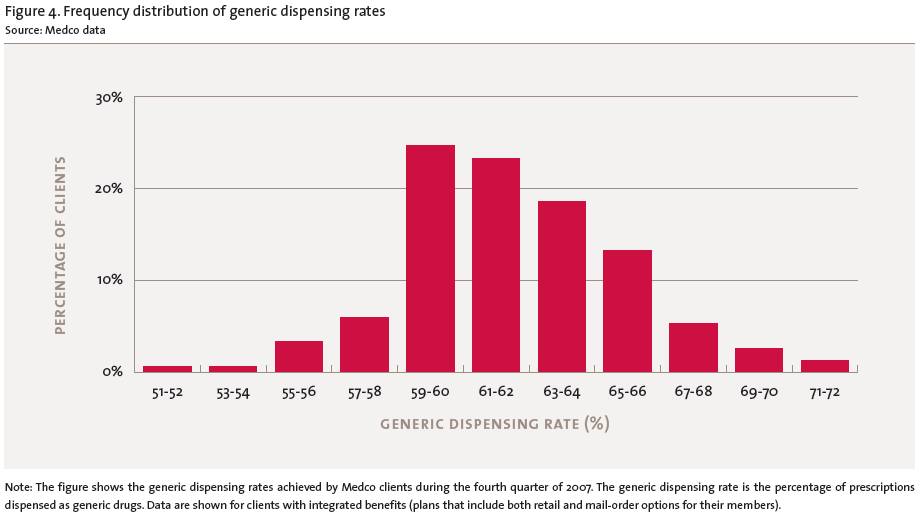
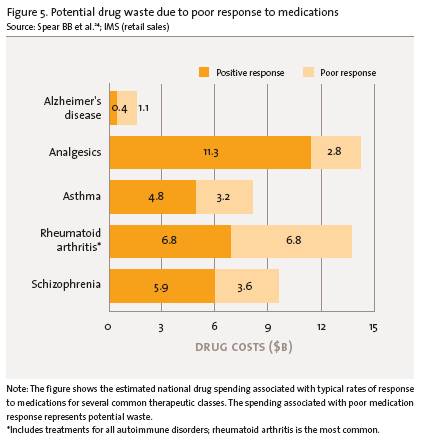
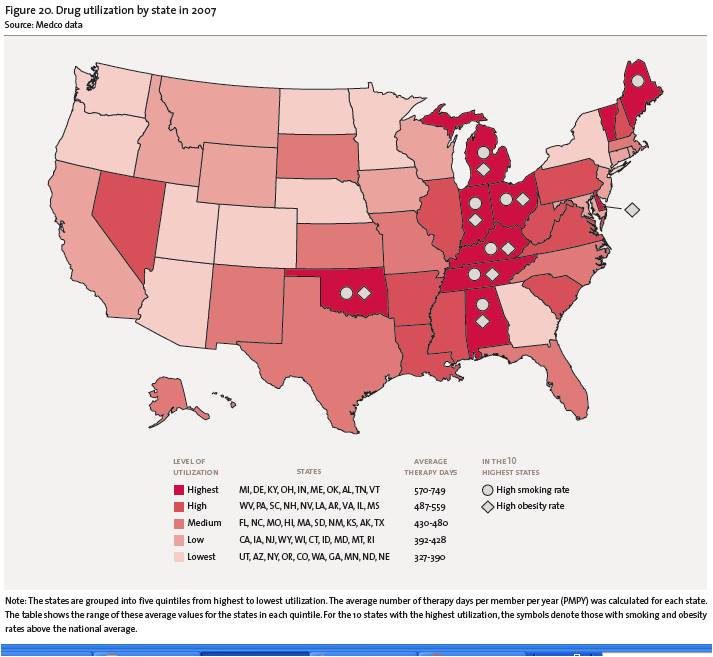
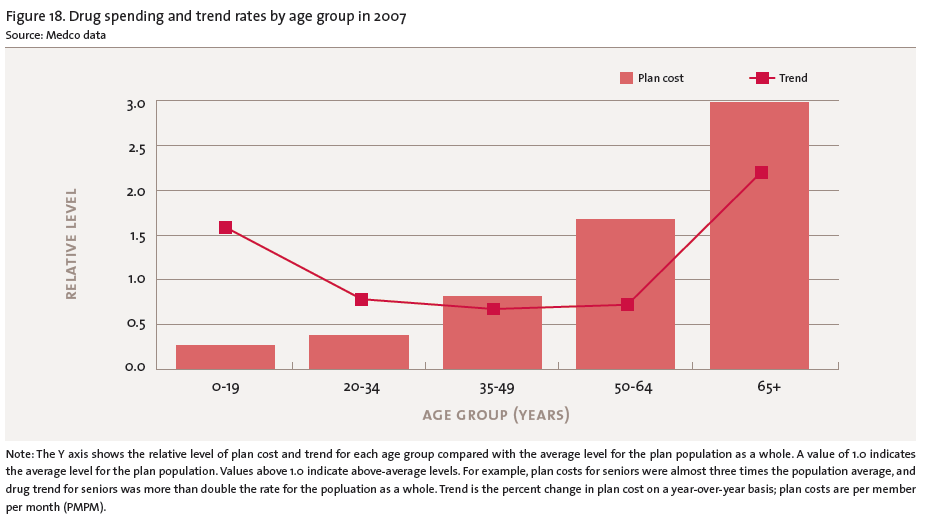
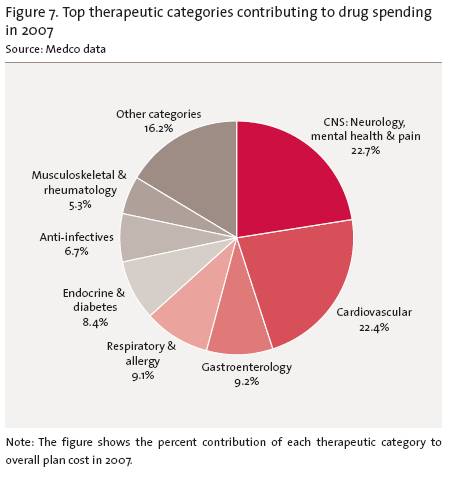
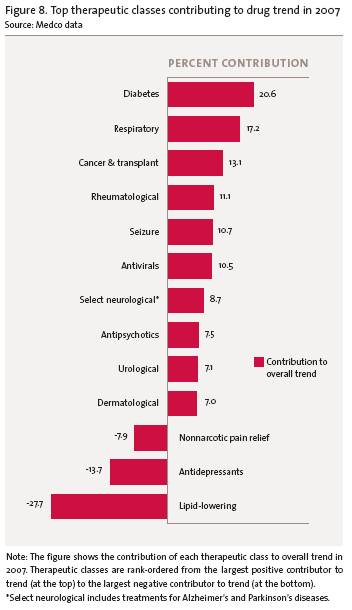
Medco‘s Trend Report recently came out for 2008 (which looks back at 2007). Here are some of the graphs and information from it.

“Generic drugs have been a tremendous asset in controlling runaway health care costs,” Medco Chairman and CEO David B. Snow Jr. said. “Generic cholesterol medications have helped contain our drug trend to a new all-time low of 2.0 percent. Patients and our clients are reaping the benefits of generics as we enable them to hold down costs and make prescription drugs one of the few areas where spending trails overall health care inflation.” (Source)

  • Drug trend was 2.0%.
  • They talk a lot about what drives trend by class.
  • It shares a lot of tables and charts. (I pulled out those below that most interested me.)
  • They talk about legislative and technology issues / opportunities such as e-prescribing.
  • They talk about consumer driven health plans (CDH):
    • Lot of plans offering them; low adoption (2.6M members)
    • Mail order use is only 1.2% higher and generic use is only 1.0% higher (so much for easy ways of saving money)
  • They talk about the rapid growth of people using social networking tools to learn about diseases and medications.
    • Which presents risks and opportunities

  • They introduce a new metric…the Generic Opportunity Score.
  • They introduce a new topic to me which is “adjunct therapies”. The key to this topic here is whether plans should consider coverage of over-the-counter (OTC) drugs that are prescribed for use with prescriptions to treat a condition.
  • They talk about Medicare driving a focus on quality.
  • They talk about coverage for the uninsured.
  • They talk about biosimilar drugs (aka – biogenerics).
  • The talk about genomics (i.e., personalized medicine).
  • They talk about BTC (behind-the-counter) and OTC (over-the-counter) trends.
  • They talk about nanotechnology.

I didn’t read it word for word, but it seems to cover the landscape well and give good easy to read metrics with lots of charts.

Silverlink HealthComm Behavioral Index

Although this new index was released in a story a few weeks ago, the official press release should be out this morning. It has been interesting to watch this transform from a concept to an initial survey with some data.

What is it? The Healthcomm Behavior Index is a quarterly survey of 1,000+ commercially insured adults in the US that measures the effectiveness of healthcare communications. It focuses on three areas – personalization, satisfaction, and action.

What are some of the key findings?

  • Effective healthcare communications (i.e., targeted and personalized) have the potential to build member affinity, loyalty and trust, and significantly drive behavior change.
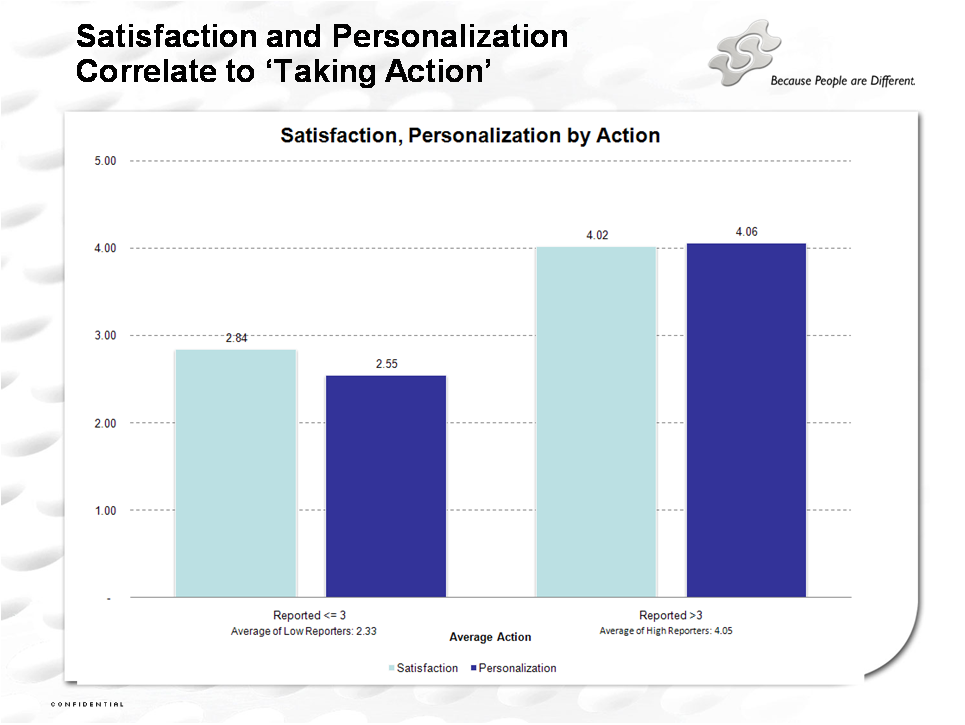
  • There is a direct relationship between healthcare behavior change (the willingness to take action) and how personalized and satisfied members are with their healthcare communications.
  • Respondents are generally lukewarm on healthcare communications and there is significant opportunity for health plans to improve the effectiveness of their communications programs.
  • Unlike other consumer industries, demographics are not as predictive
    of healthcare behaviors.
  • The single most consistent
    determinant of healthcare behaviors is health status.
  • Unhealthy members (those who arguably use health benefits more actively) are the least satisfied and the least likely to take action. These are the members who are the most costly to the health plans so if the plans improve the effectiveness of their communications, they will be able to drive behaviors within this segment and thus have the opportunity to significantly reduce healthcare costs.
  • Seniors are more satisfied and take more action relative to other age groups. This was a counter-intuitive finding as it was assumed that seniors as a whole would have a higher percentage of ‘unhealthy’ members. However, we found that people tend to rate their health status relative to their age.

What are the conclusions? Personalized healthcare communications leads to better satisfaction which leads to a higher likelihood that a healthcare consumer will take action relative to their healthcare behaviors. To most effectively drive member behavior, health plans should micro-segment their populations and deliver extremely targeted and personalized communications programs.

I found the most interesting fact to be that those who took action were the most satisfied with their healthcare communications and felt that they were personalized to them. Digging in a little on the research process, those terms were based on questions that addressed the following:

  • Took action = acted on information + adopted a healthier lifestyle + improved my health
  • Satisfaction = got the right amount of communications + easy to understand + timely + useful
  • Personalization = trust the communications + specific to my needs + treat me like an individual

It will be interesting to see how we can use these results with clients to create a benchmark, compare them to a national average, and then look at how self-reported data correlates to claims data. Ultimately, this could prove to be a defining moment in creating the business case for why healthcare communications are so important beyond the obvious – patient satisfaction, lowering inbound call volume, driving behavior, improved profits, etc.

Are You Doing Enough To Drive Generics?

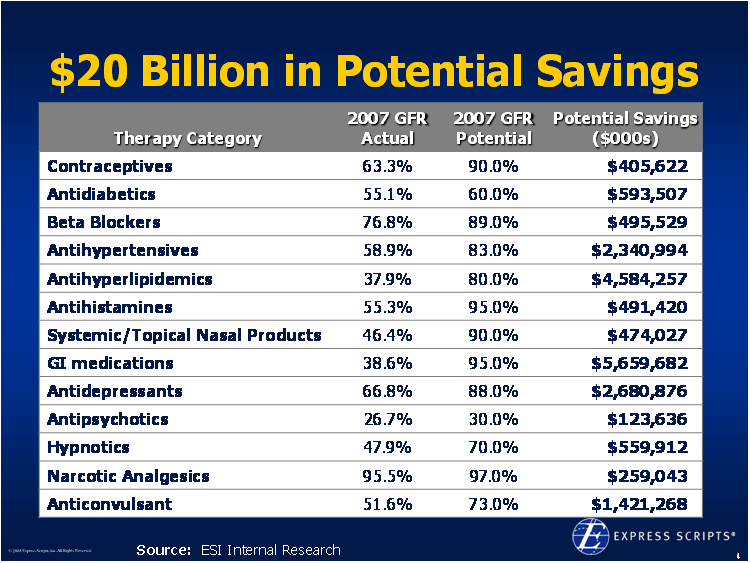
From the Express Scripts Outcomes event a few weeks ago, here is an estimate of all the money left on the table by not increasing your generic fill rate in certain key categories.  Are you doing enough?

  • Utilization management programs – step therapy, prior authorization, quantity level limits?
  • Formulary coverage?
  • Plan design incentives?
  • Pharmacy incentives?
  • eRx messaging?
  • Web tools?
  • Patient communications?
  • Patient incentives?
  • Driving people to mail?

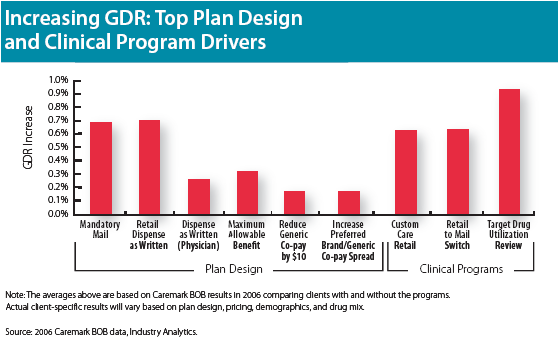
Here is a graph from CVS/Caremark‘s trend report from last year that shows correlation between certain programs and generic fill rate.

Incentives and Communications

Everybody looking at the healthcare system understands that incentives and alignment of goals is a critical component for successful change.

  • Providers need to be motivated to focus on wellness and prevention.
  • Individuals need to be motivated to care about the cost of care and to act in a healthy manner.
  • Pharmacists need to be motivated to take the extra action of moving patients to lower cost agents, resolving administrative edits, and counseling patients.
  • Hospitals need to be motivated to focus on Six Sigma type process initiatives.
  • Health Plans need to be motivated to invest in long-term care initiatives that prevent people from getting sick.
  • PBMs need to be motivated to drive optimal prescription use even if that includes more over-the-counter (OTC) drugs.
  • Employers need to be motivated to offer benefit plans to cover their employees which are simple to understand and align employees with healthy outcomes.
  • Pharmaceutical manufacturers need to be motivated to drive adherence across clinical conditions and to bring new drugs to market that represent significant improvements in therapy (better outcomes, less side effects, easier deliver methods).

With that in mind, I am glad that Silverlink Communications announced this morning that we are partnering with IncentOne to incorporate incentives into our communication programs.  Going forward, incentives will offer us another lever to improve outcomes in our programs that we conduct for clients.

“If applied appropriately in healthcare, incentives are an influential lever to motivate healthcare behaviors, arguably the most powerful force for changing the economics of healthcare,” said Stan Nowak, CEO and co-founder of Silverlink. “We’re excited to be partnering with IncentOne to design highly flexible, personalized and incentive-driven outreach that enables health plans to better connect with and engage their members to drive healthcare behaviors and reward them at the same time.”

“This is a truly integrated technology partnership that seamlessly connects healthcare consumer participation to incentives,” said Michael Dermer, CEO at IncentOne. “Silverlink and IncentOne together can deliver complementary solutions that drive participation and ultimately cost savings in healthcare. The combination of our expertise in finding the right incentives and Silverlink’s personalized communications to drive consumer behavior delivers the ability to implement more effective programs.”

Matthew Holt (author of The Healthcare Blog) did a podcast with both the CEOs yesterday that you can listen to to learn more.

You can also look at a study by Hewitt Associates of large employers which covers several related topics:

  • 2/3rds plan to offer incentives to motivate sustained health care behavior change.
  • 67% will utilize health care data and measurements to drive their organization’s health care strategy.
  • 74% of employees think their employer should help them understand how to use their health plan better.
  • 12% of employees think employers should help them become healthier.
  • Employee decisions on healthcare were influenced by cost:
    • Nearly one-third (30 percent) said they did not go to the doctor when they were sick because of cost.
    • 27 percent didn’t fill a prescription given by a doctor.
    • Almost one in five (19 percent) stopped taking medications before their prescription ran out, and of those, 18 percent did so due to finances.

Certainly, there are numerous examples of incentives being used to drive behavior.  Moving patients to evaluate mail order pharmacy has been a solution where coupons have been used over th years.  Driving therapeutic conversions have used incentives in the form of copay waivers.  Getting patients to complete health risk assessments (HRAs) and other tools have given incentives.

The interesting component will be the personalization of incentives.  While I may enjoy a $10 gift card to the dog store, my wife may enjoy a $10 gift card to the spa.  Flexibility of incentives and alignment of incentives with what drives behavior will be important.

Addressing Medicine Adherence

There are numerous studies on this, but they all point to the same issue…compliance.

The National Council on Patient Information and Education (NCPIE) released a report last year that I just came across titled “Enhancing Prescription Medicine Adherence: A National Action Plan“. With only 50% of patients using medication as prescribed, the systemic costs are enormous – $177B annually according to their estimates.

“Besides an estimated $47 billion each year for drug-related hospitalizations, not taking medicines as prescribed has been associated with as many as 40 percent of admissions to nursing homes and with an additional $2,000 a year per patient in medical costs for visits to physician’s offices.”

  • Between 40% and 75% of older people don’t take their medications at the right time or in the right amount.
  • As few as 30% of adolescents take their asthma treatments as prescribed.

Look at this in light of the recent study that showed about a quarter of people share drugs.  Another huge problem.

Their 10-step national action plan includes:

  • Elevate patient adherence as a critical health care issue
  • Agree on a common adherence terminology that will unify all stakeholders
  • Create a public / private partnership to mount a unified national education campaign to make patient adherence a national health priority
  • Establish a multidisciplinary approach to compliance education and management
  • Immediately implement professional training and increase the funding for professional education on patient medication adherence
  • Address the barriers to patient adherence for patients with low health literacy
  • Create the means to share information about best practices in adherence education and management
  • Develop a curriculum on medication adherence for use in medical schools and allied health care institutions
  • Seek regulatory changes to remove roadblocks for adherence assistance programs
  • Increase the federal budget and stimulate rigorous research on medication adherence

I am a little surprised that they didn’t talk about technology.  Integrated electronic medical records, personal health records, etc.  Since at least 1/4 of people don’t even fill their initial script, I don’t see how we can address adherence without beginning there and providing full lifecycle data to physicians about the status of scripts and refills.  I think there is also a huge role for collecting data about why people fill or don’t fill.

Poor Health Plan Satisfaction Due To Poor Communications

JD Power just finished their second annual National Health Insurance Plan Study which looks at member satisfaction.

“The study finds that the majority of health plan members rate their insurer lowest for the communications and information that are provided to help them understand their plan. Only 45 percent of members reported they fully understand how to use their health insurance coverage and member services. Enhancing member understanding with critical plan details—such as prescription coverage, co-pays, how to locate physicians and how to appeal coverage denials—can lead to higher satisfaction ratings for insurers.”

They evaluated 17 regions and publish reports like the following:

Information and communications is the third largest driver of health plan satisfaction at 17%. The only two things above it are coverage and benefits (#1) and choice of physicians, hospitals, and pharmacies (#2). So, it makes a great case for why communications is something to invest in and focus on. It drives satisfaction which drives retention. Additionally, it is something through which you can create sustainable differentiation. Benefit design and network size are pretty easy to copy.

Shared Savings With The Patient

Shared savings is always an interesting idea. It is often something that companies look at in a business to business relationship. What about health plan or employer with the patient? Is this an avenue to drive smarter decisions?

The whole theory behind consumer directed health care is making the consumer more responsible and aware of cost. [Although I will continue to argue that the original premise years ago was about driving quality of care not simply cost effectiveness.] But, clarity around the total long-term cost of a healthcare decision is not always readily apparent. In a best case scenario, I may understand the cost of a provider compared to another provider, but do I understand their comparable outcomes and those implications on longer terms costs…NO.

Pay-for-performance is something being tried (not for the first time) in healthcare. But, I don’t hear anyone talking about incentivizing the patients. If they go to the clinic instead of the Emergency Room, why not give them 25% of the savings generated. If they use self-service (i.e., the Internet) versus calling a live agent, why not give them points towards a healthy reward? There are a few innovative models being tried, but it is certainly not the focus. The focus is on making them pay the first X thousand dollars out of pocket with limited information. Transparency and access to data in a real-time setting is critical. I should be able to text message Google and say compare price of Dr. Smith versus Dr. Adams or Hospital A versus Hospital B and provide me with their comparable outcomes for my disease.

Perhaps the bigger question is whether or not incentives can be a key element in any structural re-design of healthcare. We know that providers clearly aren’t aligned to provide preventative care in most cases. If they treat you and educate you to not get sick, you don’t come into the office and you don’t need surgery. It’s great for the health plan, but it reduces provider (i.e., MDs and hospitals) revenue and drug company revenue. I am sure I am not the only one who sees that that is a problem.

Reminder: It’s Time For Your Patient To Come In For A Visit

Aetna announced that it is launching electronic alerts to 320,000 physicians. They will be called Care Considerations.

My understanding is that they will use the ActiveHealth engine to compare claims data to treatment guidelines to identify gaps in care. They will then send the physician a message through the NaviMedix platform and through fax, e-mail, or the phone.

This will be an interesting program to follow:

  • Will physicians take action off the alerts? How?
  • Since the NaviMedix system will allow two-way interaction, what will they say about the alerts?
  • Will this impact health outcomes?
  • Are these preventative alerts or are they catching things late in the lifecycle of a disease?
  • What will patient’s reactions be to their physician reaching out to them? I would be a little hesitant.

I am a little surprised that the program doesn’t include outreach to the patient also. I would be skeptical of a request to schedule an appointment without some understanding of why I should do it. Otherwise, it would look like an obvious attempt to drive revenue. It reminds me of something a physician said to me once. He said that they can control revenue in many cases. For a patient with mild pain, they can send them home and suggest they take Advil and call them if the pain continues. Or, they can write them a prescription, send them for a test, and schedule a follow-up visit in a few days.

This gets to the issue of Defensive Medicine which I talked about a few days ago.

Virtual Consultations

When I talk with people about using American Well or some other type of service, I continually get two very good questions which point to a next generation offering (I think).

  • How can they get my vitals – temperature, blood pressure, etc.?
  • Can they write a prescription?

For the first question, there is a logical future state where we have home devices for these things that are wirelessly connected to our PC and data can be captured and pulled back to the consulting professional (i.e., doctor, nurse, pharmacist).

For the second question, I think it is more complicated. A prescriber can write a prescription today without seeing you. But, they traditionally have data available from looking up your nose or feeling your throat or listening to your cough. There is a fine line to walk between self-diagnosis and prescribing off limited information. This is especially true when the physician is only seeing the patient for the first time and has no history.

Defensive Medicine

On April 23rd, USA Today had an article on Defensive Medicine by Kevin Pho (a PCP who blogs at KevinMD).

It was a well written piece with a few facts that I thought I would capture here:

  • $2.2T are wasted in our healthcare system (per PWC) due to medical errors, inefficient use of technology, and poorly managed chronic diseases.
  • Defensive medicine was the situation where physicians order tests to avoid the threat of malpractice.
  • Defensive medicine was estimated to contribute $210B annually to this $2.2T in waste.
  • According to the JAMA (2005), 93% of doctors reported practicing defensive medicine.
  • An American Academy of Family Physicians cited a study that physicians who had fought medical liability cases which showed that 90% “suffered significant mental effects from the lawsuits” and 10% contemplated suicide.
  • The New England Journal of Medicine analyzed 1,400 malpractice claims and found that 40% of cases had no medical error.

Kevin goes on to explain that most patients don’t mind the extra tests.  I would argue that patients probably feel that their doctor cares by going the extra mile.

As he talks about, more isn’t always better:

  • Risk of a false positive
  • Radiation from a CT scan might be unnecessary
  • Biopsy can lead to complications

Researchers at the Dartmouth Atlas Project concluded that higher intensity medical services have led to worse outcomes, higher costs, and an increased number of medical errors.

It’s a pretty sad state of affairs.  Physicians afraid of being sued.  Consumers with no direct understanding of the cost.  Again, it gets back to incentives and communication.  We have to align interests and protect people who are doing the right thing.  But, all parties have to be willing and able to provide information and disclose the implications and rationale.

Healthcare Retention

Retention in healthcare has become an emerging focus.  With the initial land grab for Medicare lives over, it is more and more important to retain them.  Focusing on new lives is becoming harder.  And, with one of the few green fields out there being individual lives, retention will continue to be a business driver for the next decade (or until we move to a single payor system).

Fortunately or unfortunately, there is no silver bullet.  But, this is clearly the time to act.  Figure out what works.  Set your baseline.  Learn from the consumer, customer, patient, or member.

I recently gave a webcast on this topic, and without giving away anything proprietary, I thought I would share some cliff notes.  If interested, feel free to contact me for the content or even to learn more about our retention solution.

  • Retention is a journey from employee satisfaction to customer satisfaction to loyalty and ultimately retention.
  • There are many different types of loyalty – price, programmatic, experience, and relationship.  (Forrester Research)
  • There are many lessons to be learned from outside the industry on the value of retention, how to measure retention, and what drives it.
  • A data centric approach to learning and understanding your consumers is critical path.
  • There are some basic programs emerging as foundational.
  • Health plans unfortunately start by having to build trust.
  • One way to build trust is to demonstrate that you are looking out for the best interest of the patient.
  • Your brand is affected by all the constituents in the delivery chain.
  • Price and product are the obvious drivers of satisfaction, but there are others.
  • The most satisfied are not always those with the lowest price.  (There is a great example of this in another industry.)
  • Your healthy members are the most likely to disenroll.
  • Satisfaction varies by condition.
  • There is a big difference in likelihood to renew between someone that scores you in the top box (i.e., 10 out of 10).

Lots more to come on this topic.

Doctors Won’t Trust PHRs

One step forward and two steps backwards is my reaction to this comment…if it’s true.

Steve Leiber — who runs Healthcare Information and Management Systems Society, the trade group for health IT — told the WSJ Health Blog that physicians won’t trust PHRs.  As John Sharp mentions on the eHealth Blog, this points to the need for PHR certification especially around data sources (i.e., payor claims data, patient self-reported).

Wow.  I just assumed that was part of any legitimate PHR.  I have asked the question of several vendors and always thought I got the answer that you could tell where the data came from.  I would certainly think some data in an emergency situation is better than none especially if you have some understanding of the source and date of the information.

If PHRs just become a tool for patients with no use in the medical community, they are doomed for extinction or will simply be marginalized.  We need solutions that bring us together.

Silverlink Coming To A City Near You

I am really excited about a new initiative at work.  We have pulled together a great set of speakers and are doing a road show around the country.

The speakers include:

The topic of the event is Healthcare Communications: Think Differently and is about how to engage the new healthcare consumer and drive behaviors in scale.  Very much like what a lot of the talks were about at the World Healthcare Congress.  It’s not simply getting data and information, but it is about making that information actionable.  That is exactly what this 1/2 day session will be about.

The meetings will be in Boston, NY, Hartford, Minneapolis, Oakland, and Westlake (CA).  Click here to find out more information and to get registered.  We hope to see you there.

Hidden Gem at WHCC 2008

For those of you missing the World Health Care Congress 2008 in DC, you are missing a good meeting.  It has lots of networking opportunities, good speakers, lots of company booths, and good content.  I have been here and trying to run between presentations, meetings, and interviews.

I went to a presentation yesterday on PHRs (personal health records) which is a hot topic here.  I think the presentation by Jan Oldenburg (Practice Leader, Health Content, Internet Services Group, Kaiser Permanente) could be the the hidden gem of the conference.  I know a lot of people will immediately discount it for being part of an IDS (integrated delivery system) but don’t.  There is a lot to learn here.

Some of the key things include:

  • Integration of the PHR and EMR.  [Their EMR is from Epic.]
  • A focus on four key attributes – transparency, accessibility, consistency, and security.
  • Four major components: record of information (lab values, visits, notes), an interaction tool (e-mail your physician, HRA), transaction engine (refills), and links to health content.

They have an amazing 2M members on the PHR with over 60% who signed in and used the tool more than 5 times in 2007.  [They probably deserve an award just for this ability to create a sticky application.]  And, 16% signed in more than 12 times.  […which is probably all of their chronic patients with co-morbities.]

Jan talked about their promotion of the site which includes all of their materials, registration drives, and even physicians giving out cards promoting the site.  She talked about making meaningful improvements like moving from mailing out the password to the patient to instant password set-up using a similar algorythm to what banks use.  (This improved their activation to 88% over the past 2 months.  They used to lose 30% between password request and actual registration.)

And, it sounds like they have taken a very thoughtful approach to the application:

  • She spoke about the fact that they had over 3.6M e-mail exchanges between MDs and patients in 2007.  Originally, they didn’t pay MDs for e-mails since it was like returning phone calls.  But, they are looking for how to distinguish between an e-visit and an e-mail.

“E-mail helps me take better care of myself” [a quote from a patient]

  • In a published study, they showed that patients using e-mail had 7-10% less visits and 14% less use of the phone for support.  [very impressive]  But…to George Halvorson’s point on day one, this is a perfect example of misaligned incentives.  The MD uses e-mail to improve health and patient satisfaction but makes less revenue.
  • They addressed one not so obvious issue which is timing of data being released.  For sensitive lab values, they are either delayed so the physician sees it first or its only released after the physician approves it.  The key is that the physicians don’t want the patients to see the data before they get a chance to call them.
  • The patient can take an HRA (health risk assessment) and decide whether or not to share it.
  • They have some impressive statistics around changing behavior:
    • 55% lost weight
    • 58% decreased stress
    • 78% had better pain management
  • They are just beginning to analyze who the users are (e.g., chronic patients, acute patients, family).  This was a question in every PHR meeting yesterday.
  • Some of their key learnings included:
    • Information has to be timely and current
    • You have to create “in the moment” opportunities to act (i.e., e-mail your provider)
    • You have to create teachable moments
    • You have to meet members where they live
    • You have to heal the fractures of our healthcare system

“Patients who use the PHR are 65% more likely to stay with Kaiser when they have a choice of plan options.”  [WOW!  Talk about a case for adoption.]

  • They were one of the first ones that I heard talk about working with portability standards to move data from PHR to PHR and to a DTC model (i.e., Google, Microsoft).
  • The final point which was similar to what I discussed with ActiveHealth was around genomics.  Jan talked about some of the analysis they were doing thinking out years in the future about how that data could influence generations.

This is certainly worth following and looking at as a model.  Some of the things are easier because of their model (e.g., getting MDs to use e-mail and promote the web), BUT somethings are lessons that can be leveraged.

Consumer Engagement Tools

This next session is with James (Jim) Roosevelt (President and CEO of Tufts Health Plan) and Phyllis Anderson (VP of Marketing from Humana). It should include real-life discussions on what works.

Interestingly, Jim is making a point that he made earlier which is about how to differentiate when all the providers are in each plan. I talk about this a lot. My opinion based on what JD Power showed in their study is that communications is the differentiator. How? What? When? Personalization? Rules? Preference based? Integrated?

Jim said that 3-years ago they were in touch with 1.5% of their members on a regular basis…that number is now 22%. I am not sure there is a benchmark to know if that’s too much or too little…but it seems good. Some of the words he uses which I think are important are – cost management, quality improvement, evidence-based, self-care, comprehensive and integrated, effective, and positive ROI.

He laid out a good continuum of programs moving from low cost, healthy programs (wellness) to more expensive programs for at-risk people (disease mgmt) to high cost programs for the chronic patients. Tufts is moving to a consumer empowerment plan called My Wellness Plan which will focus on engaging 100% of their members and still get an ROI of greater than or equal to 1.5:1. He showed a chart that 50% of health costs are driven by health behaviors (good news in that it is an addressable challenge).

He talked about an example around bariatric surgery which I thought was a good case study. Rather than simply not covering it, they cover it after certain steps including a six-month lifestyle modification program. The key point he made is that surgery without behavior modification is dangerous.

They have 3 categories for engaging members:

  1. Lead a Healthly Lifestyle
  2. Manage Care and Treatment
  3. Effectively Navigate Health Care System

He made the point that it could be copied, but the question is do you act first. I think the question really is how well do you implement the vision. It’s easy to envision and know what to do. It’s very difficult to execute it well and make a difference.

Phyllis started with some patient messages which were interesting.

  • Take a deep breath. We dare you.
  • The food groups are your friends.
  • Make you next smoke break a clean break from smoking.
  • Where do you see yourself in 5 pounds?
  • Lower back under attack?

“Healthiness is a nuance.”

As the quote indicates, health information and engagement varies dramatically, and it will take a while and some trial and error.

“Incremental change will ulimately result in significant impact.”

She talked about a pilot they did and what they learned:

  1. Create real-life goals (relevant to where they are and where they live)
    • Want to fit a dress by reunion versus lose 100 pounds in the next 6 months
  2. Community is key
    • Coach
    • Peers (the participants blogged and got feedback via the blog)
  3. Rewards and incentives are necessary
    • Personalized to individual
    • Not just monetary
    • Include recognition

“It costs less to support well people.”  Phyllis went on to make the point that it’s worth spending the money now rather than waiting until people get sick.

There was a good question from the audience on whether ROI mattered.  Apparently, some of the employers here at the conference had said that they were willing to invest in programs that promoted health without any ROI.  I think the key is that there are limited resources…I would spend money first where I got a return.  I am willing to bet that I don’t have much money (or time) to address the other programs.

Can We Build The Goodies (PHR)?

I am sitting in on a discussion around PHRs and Consumer Connectivity which features Jeffrey Gruen (Chief Medical Officer at Revolution Health) and Jeffery Rideout (Chief Medical Officer from Health Evolution Partners).

Let’s start with utilization – only 10% of people have access to a PHR (Personal Health Record) through their plan and only about 2% actually use it (at best).  This brings three challenges to the table: (1) building awareness; (2) security and trust and (3) automating the data load.  The next question is can you make these fun and engaging tools (i.e., the goodies).

The presenters and the facilitator who is from Carol all start with a fairly skeptical view of the world.  They pointed out that it’s like an ink test…everyone sees something different.

It seems to be a big challenge.  Do you build it for what everyone wants which would be a laundry list or do you build it for what you think they want which generalizes?  I do agree that systemically the value is collecting and tracking data that can be shared with your care team across providers and insurers.

I must admit that some of the things that I would want include:

  1. Claims access (lab, medical, pharmacy)
  2. Tracking of OTCs (pulled from my savings accounts)
  3. Current benefit information (which assumes it is transferable across payors)
  4. Disease information
  5. A communication hub for sending and receiving secure messages
  6. Outbound reminders to me about events or opportunities
  7. Identification of care opportunities
  8. Tracking of information
  9. Integration of health social networks
  10. Recommendations of things to do or act upon

But, like I would consult any sales person, why are we talking functionality and features versus value.  From a value perspective, I want a safe, proactive application that helps me become healthier.  Not an easy request.  If I track my running, can it tell me that I am adding miles too fast?  Can it tell me about a drug-drug interaction?  Can it tell me that I paid too much for a treatment?  Can it track my total spend?  Can it help me predict comorbities based on data and possibly even my genomics information?

One of the members of the audience chimed in (rather passionately) that no one wants a PHR from a payor or stand-alone company.  The majority want it from the physician.  [An opinion of one, but I don’t and can’t imagine getting anything from my physician.  Maybe I don’t have the right relationship or the right chronic diseases, but I move and I want to have the choice to find the best doctor and not feel stickiness to them.]

Here’s a couple of presentations on this:

I didn’t realize until yesterday that for the DTC (direct-to-consumer) PHRs that are available the consumer has to actually enter all their own data.  It isn’t automated.  What a potential nightmare.

So, a real couple of questions are:

  • Who is this for – patient, providers, payors, care team?
  • Why would I ever spend anytime on a PHR if I couldn’t transfer it to my next payor?  I think this makes a play for Google and Microsoft and Dossia to provide a backbone that all the other PHRs use to create interoperability.

Upcoming Webinars

If you missed it last week, I am giving a repeat performance of my webinar on retention.  I am going to talk about driving customer satisfaction and building loyalty to improve retention which is and should be a hot topic for everyone in healthcare. (Sign up here for the 23rd at 1:00 EDT)

Additionally, my peers are giving a webinar on closing the adherence gap which should be another hot topic for many of you.  (Sign up here for their sessions on April 30th and May 22nd)

Finally…Digitally Integrated Coupons

Using Shortcuts.com, Kroger has become the first retail partner to link their loyalty card to their digital coupon service.  I find this to be a great idea.  The consumer can go online and search for coupons by brand, product, or category.  They then add those coupons to their account.  When they use their loyalty card at checkout, the coupons are redeemed automatically.

No more paper.  No more remembering.

What a great opportunity.  If I worked at pharma, I would be looking at how I could get my over-the-counter products (OTCs) and even my Rx products into a program like this and link them to my health savings account or flexible spending account card from companies like the Benny Card or TriHealix (for example).

Health and Wealth

There have been several articles about the potential convergence of healthcare and financial services.  Can a Fidelity become a one-stop shop where you invest your money and also get your insurance (health, auto, home)?  If consumerism really transfers the healthcare spend to the individual, are they in the best position to manage that money and help you plan for the future?

It is both a scary and interesting question.  Do they understand healthcare?  Would they focus on outcomes or just return?  [Is that different from most payors today?]  Would we make different decisions if we were evaluating our out-of-pocket costs for healthcare versus buying a few more shares of a stock?  I think it would certainly drive a different view of the patient as the consumer and push all their lessons learned around behavior and customer service into healthcare which would be good.

You have the Blue Healthcare Bank and OptumHealth Financial Services (previously Exante) as two examples of historical healthcare companies (BCBS and United) who have expanded into this converged area.

Going back to a McKinsey article on this topic from June 2005 called “The coming convergence of US health care and financial services”, they laid out several opportunities:

  1. Savings oriented health care products (e.g., HSAs).  They estimated there could be 25M HSAs by 2013 generating $55-$75B in revenues.  (Big market)  They quoted a statistic that as many as 80% of consumers don’t reach their plan deductibles which creates an opportunity for financial services companies to make money managing their deductible dollars.
  2. Consumer health care payments and financing.  They estimate that there is $375B in out-of-pocket expenses that could be managed and $60B in consumer bad debt related to healthcare.  These create opportunities around debit cards or credit cards.
  3. Supplemental risk products.  I think this is a clear opportunity to provide the safety net for consumers around long-term care and major accidents.  They estimated this to be a $3-$5B in net profit opportunity.
  4. Benefits administration.  They estimated this to be a $50B space growing at 15% but with lots of established players (Accenture, Hewitt).
  5. Payment assurance and transaction processing.  They estimated that streamlined operations here could save as much as $4B in operating costs.

Obviously, this forecast and many of these opportunities have led to dozens of acquisitions and investments since the report came out.  But, we still haven’t seen any major sea change.  I predict that once the election is over and the future direction from the government is set that we will see some additional energy here.

Blogging Next Week – WorldHealthcareBlog

Next week, I will be posting my blogs to this site and to the WorldHealthcareBlog as part of my press efforts at the conference in DC.  I look forward to meeting lots of industry people there and have set up a bunch of interviews to talk about topics such as:

  • Gaining mindshare with the patient / member / consumer / customer
  • Mass personalization
  • PHR adoption
  • Consumerism
  • Patient segmentation
  • Getting ready for the individual market
  • Building trust with patients

Medicare Part D Market Penetration

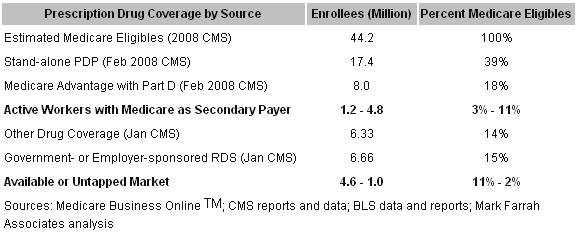
Mark Farrah Associates recently published a study through AHIP around Medicare Part D.  Here were a few of the takeaways:

  • 80 companies offer stand-alone prescription drug plans (PDP).
  • 17,409,974 people in PDP plans in 2008 (2.8% year-over-year increase).
  • Medicare Advantage (MA) plans with drug coverage had a 15% year-over-year gain.
  • Total Medicare population is 44.2M.

One of the key questions they were trying to answer is what is the untapped market size.  Their estimates put the market at 1M-4.6M.  But, I also found it interesting that they estimate that 3-11% of the eligible Medicare patients have Medicare as a secondary payor – a coordination of benefits (COB) opportunity?

Medco on Future of Pharmacy

Medco has introduced a new publication called Perspectives. The one I just read was by Dr. Robert Epstein who is their Chief Medical Officer and is about how pharmacy will become personalized, specialized, and consumer driven. It is a well written piece with some good and interesting facts. Here are a facts and takeaways:

  • “Over the past five years we’ve seen a 60 percent increase in adult ailments diagnosed in children and treated with adult medicines.”
  • “The use of proton pump inhibitors (PPIs), drugs for heartburn and acid-reflux disease, increased by 60 percent in children between the ages of 1 and 4. This is despite studies revealing that as many as 95 percent of young children who present with symptoms of reflux self-correct for the condition in 12 to 16 months. Furthermore, some recent research suggests the long-term use of these products – particularly in the early years of life – can lead to infections, pneumonia or gastroenteritis.”
  • “Blockbuster medicines in three new major therapeutic categories – Fosamax® for osteoporosis, Risperdal®, an antipsychotic, and Imitrex® for migraines – soon lose patent protection.” [He then suggests that payors begin to look at strategies for driving Fosamax and Imitrex marketshare now, especially for new patients, so that when they go generic they are positioned to take advantage of the savings.]
  • He talks about the changing guidelines for hypertension, asthma, and cholesterol and points out that “It’s estimated that 25 percent of Americans have hypertension, and another 25 percent have “pre-hypertension” – which means half of the U.S. population will become candidates for treatment.”
  • He talks about nano-technology and gives the following example:

“One company, based in Houston, has taken nano-sized particles of gold, which are injected into the bloodstream and leach from the leaky blood vessels associated with rapidly growing tumors. When exposed to infrared light – these gold particles literally absorb the heat and destroy the tumor. Called AuroLaseTM Therapy, within 10 days of a single treatment this therapy caused, laboratory rats with prostate cancer to attain a 90-percent survival rate.”

  • “More than one in five people placed on Coumadin® are hospitalized by side effects, many of which could be averted by genetic tests to more accurately guide proper dosing”

Stop Sweating With Botox

I was just listening to the local news out here in Phoenix and was surprised to hear them talk about the increased use of Botox by people to stop sweating in their armpits. Apparently, stars have used this for a while but now average people are doing it. The report said that one set of injections lasts 6-9 months which for the people with overactive armpit sweating.

I am not sure I believe it, but the news reporter said that these are usually covered by insurance.

CBS News Story

Communications As Trend Mgmt Tool for Pharmacy: Cliff Notes

Here are a few points from my recent webinar on this topic. If you are interested and a potential client, I would be happy to share the detailed content with you offline.

[Since all our competitors tried to sign up to listen in, I won’t give away everything here.]

  1. Talked about all the value sitting on the table that could be captured (>$30B per year).
  2. Talked about how communications can both be the trend management tool and enable utilization of other trend management tools (e.g., utilization management).
  3. Talked about things like loss aversion versus cost savings, the placebo / price correlation, and the transition from the Ford framework to the Starbucks framework in the healthcare industry.
  4. Talked about how people are different and the need for a systemic approach to dynamically optimizing program success using a scalable model.
  5. Talked about some frameworks for retail-to-mail and brand-to-generic along with the importance of asking the right questions in program design and measuring ROI.
  6. Finally, we talked about some results and the different levers to play with to impact results.