Archive | Consumerism RSS feed for this section

Patient Centric Healthcare

I changed the name of the blog last week. (I am still debating changing the URL since I don’t want to lose too much of the traffic I get today.)  It fits what I want to talk about (with the exception of some of my ramblings about technology, leadership, innovation, etc).

I was trying to describe this concept of patient centric healthcare to someone the other day when I realized that I have a deck I used over the summer that was a perfect fit.  When I was debating moving from a consultant back into a corporate role, I needed to tell people what I wanted to do and how I could help them.  So, I created a slide deck that I used with executives and recruiters.  It worked well.  I trimmed out the “why George” section, but the rest of this is a good summary of how I see the market evolving.

It is also exactly why I joined Silverlink Communications.  We share the same vision and dedication to process excellence.   Their technology already does what I think is critical:

  • Create personalized communications that target patients based on data driven models.
    • Push information
    • Collect information
    • Drive behavior
  • Use dynamic call algorithms that respond to patients words to take them down different paths is key.
  • Using technology to automate processes and augment your human capital based on proven value propositions.

Intelligent Paper

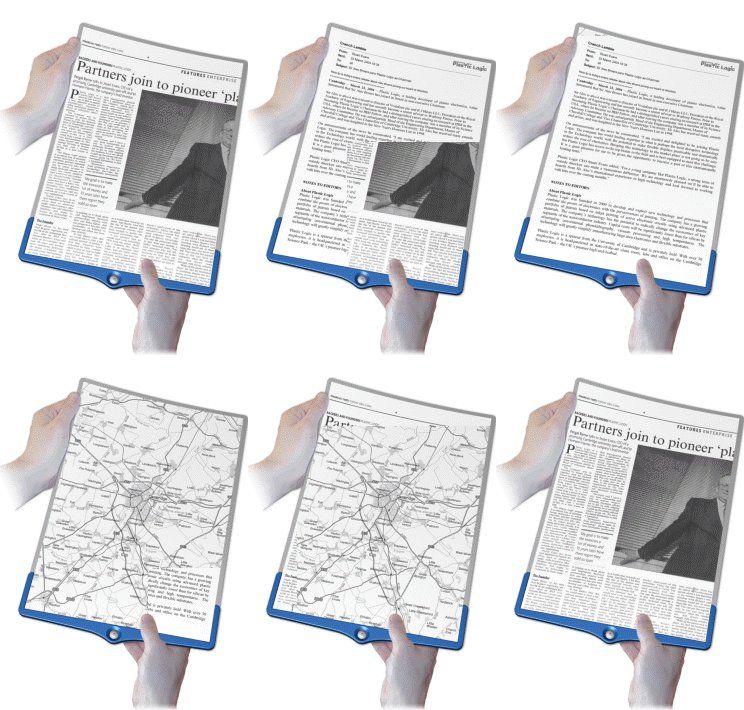
As healthcare is such a paper centric industry (as is financial services), I often wonder why we can’t get to the point of having intelligent paper.  I looked around a little and have never found anything so let me describe what I envision.

A regular paper that is embedded with intelligence such as RFID and the ability to receive and deliver text and/or graphical messages to the consumer.

digital-newspaper.jpgImagine for example a label on a prescription bottle which changed colors when it was time to refill and offered the consumer the ability to request a refill by pressing a digital button that was only available after the refill-too-soon (RTS) edit was passed (typically after 66% of the days supply dispensed should have been used).  Or, imagine new patient registration forms at the physicians office where you filled out one piece of paper that was auto-populated with information from your personal health record (PHR) based on your fingerprint.  All the forms could be brought up one at a time on the digital paper and your answers immediately pulled into the system of record.

Less paper.  More consistency.  Easier communications.  Better quality information.  Less costs associated with data entry. Fewer HIPAA risks.   

epaper_product.gif

Permission Marketing – This is What I [patient] Want

Permission Marketing is certainly not my concept. Seth Godin invented the term and wrote the book on this several years ago. But, I think it is a concept way behind it’s time in healthcare.

“Permission Marketing cuts through the clutter and allows a marketer to speak to prospects as friends, not strangers”

The concept (in my words) is that you ask the consumer (aka patient) what they want.

  • What information do you want from us?
    • Opportunities to save money
    • Alternative therapies
    • News about your drug
    • Benefit information
    • Compliance reminders (Rx, lab visit, tests)
  • How do you want that information delivered to you?
    • Phone
    • Voicemail
    • Cell phone
    • SMS / Text message
    • E-mail
    • Fax
    • Letter
  • Does the channel you want the message delivered through vary by the message?
    • Deliver savings information within 24 hours to me via my cell phone
    • Send benefit information via PDF using my home e-mail address
  • When do you want that information delivered to you?
    • Pro-actively
    • Reactively
    • Bundled (i.e., send me one “package” of information monthly)

Wouldn’t that be nice? Most of us don’t even know what the options are. We just get bombarded with information from our employer, managed care company, pharmacy, PBM, disease management company, wellness programs, HSA / HRA account manager, etc. Different messages. Different information.

In reality, one of the biggest problems is that our healthcare companies just can’t manage these type of personal rules today. Managing do not call lists are difficult enough. This should change over the next 5 years, but it will be a combination of patient generated preferences along with data mining to develop algorithms that predict what channel and message is most effective at driving behavior for certain patient segments.

Blunt Healthcare

Obviously language is a key building block in communications.  It is one thing to say “your cholesterol is above normal” and another thing to say “if you don’t control your cholesterol, you will die before your 60”.  But, are physicians and other health professionals willing to be that blunt?  And, can us patients receive the tough love?

Between all the legal caveats that regulators and lawyers force into messages combined with companies unwillingness to offend, it seems hard to imagine many people delivering the blunt message.  But, I personally know it makes a difference.  About 5 years ago, I had a physician tell me that I was overweight.  He had calculated my BMI and suggested I lose weight.  My initial response was okay (sure).

bmi-status-english.png

My wife was there and was quick to tell him that he needed to push me on the issue if it was important.  So, he changed his words and told me that according to my BMI I was obese.  Now, that caught my attention.  I wasn’t going to be obese by anyone’s standards. 

So, he told me that I needed to lose 40 lbs to be in the normal (clinically acceptable) range going from 215 to 175 lbs on my 5′-10″ body.  I hadn’t weighed that since high school (or earlier). 

But, in 60 days, I lost the weight.  I ran or did aerobic kick boxing every day for 60 days and lost 40 lbs.  From there, I started running and within 12 months of my appointment I had run my first marathon.  Now, 5 years later, I have put some of it back on, but even at my worse since then, I have been down 20 lbs and have a solution to apply.

The point here is that to motivate consumers like me I believe that the healthcare system needs to be more blunt (or harse or direct) than it is.  Communications have to drive to an action and push people to take it. 

Coverage Flip-Flop

I was talking with some friends at a PBM a few months ago and they were talking about putting Lipitor back on formulary (i.e., the covered drug list) that they took off two years ago.  It made me wonder about what a confusing message that is to consumers.

For years, you are taking Lipitor.  All of a sudden, Lipitor moves to the 3rd tier because Zocor goes generic.  You can stay with the drug and pay a lot more or try a new drug.  Now, 2 years later, Lipitor is back in favor because the manufacturer has offered enough rebates to make the branded drug cheaper than some of the generics.  Great for the manufacturer who extends the life of their drug and reaps economies of scale for a while longer.

But, for consumers, this means another visit or call to the MD.  It may mean more lab tests.  It means changing prescriptions again which could trigger drug-drug interactions or other issues.  It changes physician’s information and sets them up for more calls.

Obviously, changing for clinical reasons is one thing.  Trying to move marketshare and failing is another.  And, simply flip-flopping to save pennies is not logical (to me anyways).  Imagine if your provider was in network one year; out the next; and then back in.  I am sure it happens, but it is a pain.

Hopefully, the savings to the employer, consumer, and benefits to the PBM outweigh any disruption issues.

indecisive.gif

I guess the question here (as it often is) is alignment of incentives.  I had to wonder the other day when a friend at a large managed care company told me that their PBM wouldn’t implement certain programs for them since they were in the PBMs best interest.  BUT…they save the patients and the MCO (their client) money.  Wouldn’t you at least offer to do them for a fee that covered your lost profit?  (maybe I’m being too practical here)

Greedy – Your Friends or Your Managed Care Company

It is an interesting discussion to have with different people throughout the health value chain.  When I was 100% focused on driving generic utilization, I would hear questions about why do it.  Sure, I save a little on the copayment, but some consumers saw the copayment as a discount.

  • If I am paying $10 for a drug that cost $30, I am saving 66%.  Not bad.
  • If I am paying $25 for a drug that costs $125, I am saving 80%.  Great.   

People would say things like why should I save my employer or the managed care company (or the PBM) money.  I don’t get it back was their perception.  Unfortunately, that is sometimes true, but in general, in the long run, saving money on benefits should keep the costs down and reduce your premium increase year-to-year.  In a few cases, I worked with CFOs to look at how savings could be re-allocated to create shared incentives.  (For example, if we drive up generics 5 percentage points, we will save $10M.  We will use $3M of that to increase our 401K match by 10%.)

On the other hand, this is what one of the executives at Express Scripts termed The Diner’s Dilemna.  The concept is fairly simple.  If you go to dinner with 2 other couples and know you are going to split the bill, you probably order what everyone else orders so that their is some cost parity.  If you go to dinner with 10 other couples, there is always that person that gets the surf and turf and orders a bottle of really expensive wine.  When cost is divided equally, some people will abuse the system.  Just like health benefits.  Why should I get the generic if I only really pay a portion of the higher cost.  It is divided across the masses.  If you went to dinner with your whole company (especially if its big), you don’t know everyone and don’t mind using more then your fair share even if you only pay the same amount.

This overallocation is fine when needed (i.e., you are allergic to chicken and order beef) but simply for personal greed is wrong.  So, it puts us back to the premise…someone benefits from our actions to move to lower cost solutions.  Who?  And, how is that shared back so that we all have similar incentives to act in the greater good.

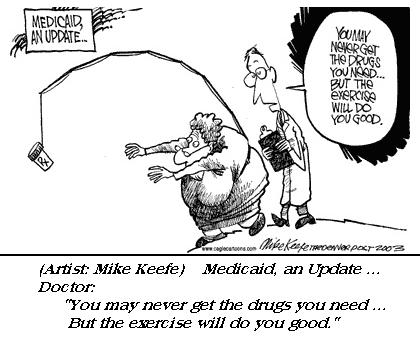
medicaredrugs.jpg

(Source)

Zagat Rating System for Doctors

A few weeks ago, Wellpoint revealed that they were going to work with Zagat’s to rate physicians.  I think any information with some benchmark is great.  Since it is patient driven, it also has the chance of being very subjective which is the risk. 

The talk about using trust, communications, cost, and availability.  I am not sure those would be my choice.

  • Trust: A great concept, but how can I be objective here. 
  • Communications: This one is critical.  Did they communicate well?  Did they write down any recommendations?  Do they call to remind me of appointments?  Were they timely in getting me follow-up appointments?  Do they remember who I am from my last visit?  Do they look at me?  If I bring in information, are they receptive to discussing what I found?  Are they straight or do they beat around the bush?  This should also include the office staff – are they friendly?  Bad office staff can blow it for a good physician very easily.
  • Cost: This is another critical one as long as it is not simply about the cost of the physician.  Did they take into account my formulary when writing prescriptions?  Did they make sure that physicians they referred were in network?  Did they prescribe generics or offer me samples?  Did they suggest non-invasive treatment options (e.g., diet)? 
  • Availability: Conceptually yes, but I am not sure your going to learn much here.  The best doctors should be the busiest doctor.  I wouldn’t want them to get a low rating simply because everyone goes to them.  Now, ability to stay on time would be good.  Ability to fit in sick patients within 48 hours would be good.  I might even include accessibility here.  Can I access the building easily if I am handicapped?  Does it have easy parking?  Does it have a place for my kids while I wait?
  • Technology: Why not measure how and if they use technology?  Online appointment setting.  Handheld prescribing.  Kiosks for signing into the office.  EMR. 
  • Outcomes: I hope that we get to a point where Wellpoint is complementing the patient data with outcomes type data or actual claims data.

Just a few thoughts.  You can find lots of blog entries about this.  Here are a few:

Consumer Response to Increased Costs

Employee Benefit Research Institute and research firm Mathew Greenwald & Associates recently released some data from a survey of 1,000 people which was interesting:

  • 63% said they saw an increase in their health plan’s out-of-pocket costs (I am surprised it’s not more.)
  • 81% said the increased financial responsibility motivated them to take better care of themselves (good)
  • 2/3 said they tried to talk to their MD more carefully about treatment options and costs (I wonder if the doctors knew the comparative costs)
  • 64% (a 10% jump) said they were only going to the doctor for more serious conditions or symptoms
  • 28% skipped or passes on filling doses of prescribed medications (this could be a problem)

Perhaps the most worrisome fact was that 30% said that the rising costs made it difficult to afford food, heat, and housing and another 30% said it caused them to reduce retirement contributions.

People were positive about wellness programs, but that went down if the program was prompting them for care (but they would do that if it gave them a break in premiums).

47% of Americans say that the healthcare system needs major changes although almost 1 in 4 say only minor changes are needed (probably the healthy people that never use the system).

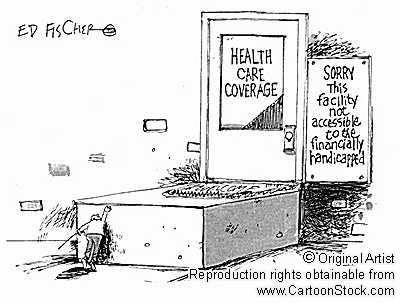
Here is a good cartoon.  There are lots at this site.

hc-cost-cartoon.jpg

Patient Insights

ist2_2780258_marketing_survey.jpg  I often get asked the question about how I made the transition from architect to business. The turning point was two projects I did. One was a visioning and architectural planning project for an Indian tribe that was using casino profits to buy back their tribal lands. The other was a sales process analysis for an architect I knew. He (and his father before him) had run a successful architecture firm for over 50 years. Over the past few years, their sales close rate had dropped. Not significantly, but enough to cause concern.

We worked together to identify a series of questions and then I interviewed his prospects in 3 buckets: (1) repeat buyers; (2) one-time buyers; and (3) those that never bought. It was a fascinating process. They all loved the fact that the firm cared enough to ask. And, they provided lots of information. In the end, it was a small thing – their architectural awards. It appeared that prospects correlated awards with expensive projects that were more about the firm and less about their needs. We simply downplayed these, and his sales close rate went back up. (If only all projects were so straightforward.)

Now, almost 15 years later, they still use the process. It got me thinking about healthcare. How often do we reach out to the patient to learn about their behavior? Do we really understand them at more than a macro level? With the technology available today to personalize communications or even benefits, shouldn’t this be a big focus. If I can developed personalized medicines based on my genes, I would think companies could figure out a way of developing personalized insurance plans that are based on my family history, recent claims, and predictors of future claims.

As I thought more about this, it reminded me of a question that someone asked me last month. They basically said “if you see a company is doing something really wrong, do you just come out and tell them how stupid they are?” What a great question? This gets to the heart of so many things. In a big company, politics often limits your ability to be brutally direct. As a sales person or consultant, you often have the issue of impacting future sales. As a peer, you have the issue of alienating someone or hurting someone on your team.

Good or bad. I have made this mistake too many times. I simply prefer to point out the obvious. When I was a teaching assistant, I remember telling a student in architecture school that he should find a new major. In consulting, I remember pointing out to a managed care CEO that he was never going to have an effective Internet strategy if he couldn’t even use a computer. I have had people ask me numerous times to give them feedback on presentations. I love to present so I have a high bar which often leaves me giving a lot of negatives (which are only meant to help grow the individual). [A good, but annoying, tool here is to drop a penny into a tin can every time the person says the word “um” so that they can break that habit.]

Anyways, bringing this all back…How do we get patients to trust healthcare companies and providers enough to give us valuable, direct feedback to improve our business. And, how do we engage the patients to create an ongoing dialogue to improve.

Free (or low cost) generic drugs

My local pharmacist told me that they are now moving to free antibiotics.  I still haven’t figured out how I feel about this from a business perspective. 

From a patient perspective – great.  Less out of pocket (or so I hope).

From a business perspective, here are my questions:

  1. The reason to do this is to capture new market share.  Is it working?  Target gave away a $10 gift card if you brought a new prescription to them for a while.  I don’t think it is was a profitable deal for them, but I am not sure.
  2. In most cases (even WalMart), the discounted or free drugs are a minority of the total Rxs dispensed.  Assuming people are mindly happy with their current pharmacy, are they willing to move for one drug that saves them $4 or $8?
  3. For cash patients that move, are the other drugs they fill at the new pharmacy more expensive then their previous pharmacy?
  4. Has this strategy become a requirement at retail or is it still a differentiator?
  5. Why start doing this?  The right answer would be that you care about the patient.  I think the reality is the that pills cost almost nothing and your labor is a fixed cost so why not. 

Perhaps it makes sense.  It certainly gets a lot of marketing coverage.  It would be interesting to see the data at some point and see what market share moved, at what cost, and whether it was profitable marketshare. 

Your biggest risk as a pharmacy is opportunity cost.  As your staff becomes busier, do they have less time to counsel patients?  Does their error rate go up?

ConnectYourCare Acquired by Express Scripts

connectyourcare.jpg

I was glad to see my former employer – Express Scripts – jump into the CDHC space with an acquisition.  They bought ConnectYourCare which is a fairly new company that had jumped into the market over the past few years with money from RevolutionHealth.  It provides online tools and a card for managing your HSA / FSA type funds.  It will be interesting to see how this plays out.  It may be a little late in the selling season to affect 2008 but it could play prominently in the spring for renewals or new business.

As an aside, ConnectYourCare provides a nice glossary of terms you might here around consumerism and benefits.

You can also get access to some of the Forrester research through their site – here.

Medco Tour of Champions

I was surprised to see a full-page advertisement yesterday by Medco in USA Today about their Tour of Champions.  I knew they were focusing on therapeutic resource centers (i.e., pharmacies dedicated to specific disease states like diabetes).  It seems like a great idea.

tourofchampions.png

It was interesting to go to the website – www.tourofchampions.com.  One of my biggest surprises was the fact that they have made their therapeutic alternative tool called My Rx Choices (i.e., telling you lower cost options based on your current drugs) available to the general public.  Now, obviously, it can’t tell you your copay savings, but it may help you identify options.  For example, I put in Lipitor to see what it would offer me.  (see below)

myrxchoices-lipitor.png

From the website, this is what it says the specialist pharmacists do:

  • Cross-check your current medications with your health history and available lab work to help you stay safe.
  • Understand your overall health, not just treat your condition.
  • Let your doctor’s office know how your pharmacy program works so your doctor can help you save.

FDA on Generics

The FDA has lots of information on generic drugs at their website. If you want to promote this to people, you can use their collateral. Here is a slide show of theirs (now that I know how to do this) and one of their educational PDFs.

FDA facts about generics

Learning about your pharmacy benefit or Medicare

I came across an interesting site today.  I went down a few paths and found good information so I thought I would mention it here.  The company is called Your Pharmacy Benefit and is available in Spanish and English.  Additionally, it directs people without coverage to the Partnership for Prescription Assistance which can help people get access to medications.

Retention Bias

As people always say, it costs less to keep a “customer” than to attract a new customer.  Given that 69% of people (per AON 2006 survey) have an option of health plans to choose from, why don’t managed care companies reach out to you to encourage you to choose them?

For healthy patients, I would reach out to them to encourage them to choose you.  They have to be the most profitable customers to keep.   You would hate for them to have either no contact with you or one contact with might not be positive.

Additionally, for sick customers, wouldn’t you want to interact with them and understand their impression of you (via surveys) and determine how to influence their decision during open enrollment.  Depending on the relationship – risk versus ASO (administrative services only) – you may have different reason for influencing their decisions.

This points to several key issues which exist in healthcare:

  1. How to segment your population?
  2. How to motivate people?
  3. How should you communicate with people?
  4. How to track satisfaction?

Microsoft’s HealthVault

health-vault-microsoft.jpghealth-vault-microsoft.jpg

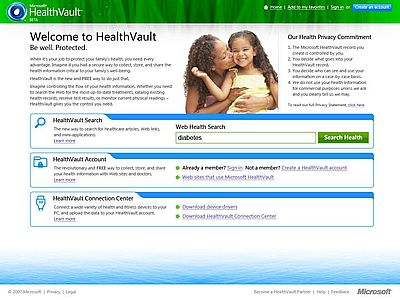
Microsoft has their new healthcare tool out – HealthVault.  It does three primary things – search, collect / store / share (i.e., PHR), and connect with devices.  The “connect with devices” concept seems pretty interesting especially as we get more intelligent home care devices that track blood pressure and other key metrics. 

Connect your HealthVault-compatible home health monitoring devices from partners, such as sport watches, blood glucose monitors, peak flow meters and blood pressure monitors to HealthVault Connection Center, and let our software copy your device data to your HealthVault record.

Given issues with Internet Explorer, will people worry about security – probably.  Given the challenge of connecting with numerous systems and devices, will Microsoft have a leg up – probably.  Will patients use these tools – definitely over the next 5 years.  Who will win – I don’t have a clue.

Here is their blog for developers.

There is lots of talk about this on blog sites:

Aetna CEO on Price Transparency

Here is a entry on the WSJ blog about Aetna’s new price transparency policy.  Conceptually, this is an important first step.  The next question of course is how do you get this to consumers in a timely and easy to digest manner.  Then, how does this correlate with outcomes (i.e., quality) and finally, how does this change people’s decisions.

It is great for planning.  It is great for benchmarking or negotiation.  But, I am waiting to see the impact.

Indu Subiaya with Health 2.0 quotes

Matthew Holt commented about his partner in the Health 2.0 conference – Indu Subaiya, MD.  I haven’t talked with her, but I didn’t want to ignore her.

Here is a link to her blog with a video summarizing some of the best quotes from their recent conference. 

  • People are the new algorhithm
  • P&G knows more about my laundry preferences than pharma knows about my drugs

BTW – I think they already announced that another Health 2.0 conference will be coming so you may want to register to get the notifications now. 

Can Health Consumers Vote With Their Feet?

If you can’t satisfy multiple buyers, does the company buying health insurance matter more than the consumers?  It’s a difficult question.  The employer cares about the average employee being happy with the health benefits.  You can’t design it for everyone.  And, since we can only switch insurance on annual enrollment (or other life events such as marriage), you [the consumer] can’t do much immediately.

feet  Over time, consumers can vote with their feet especially at companies where multiple insurance offerings exist.  This takes away some consumer power since you can’t storm out saying that this horrible customer service means that I am going to stop using you.

Does this affect service attitudes?  I certainly think so.  I saw it on TV several weeks ago in a sitcom, but I believe it is prevalent.  In that case, the CSR (customer service representative) basically told the person challenging the claim to terminate their coverage if they don’t like it.

call center  Since the consumer is often not the buyer or influencer of the corporate decision, this is an unfortunate reality.  Maybe we need another “life event” to be poor customer service.  When this happens you can change carriers.

Of course, the company arguement would be that this complicates underwriting and raises costs, but why not simply tie customer satisfaction to their pay.  The only way consumerism really works is where the consumer has the ability to walk away.

Interestingly, for one of our biggest customers at a past employer, we got paid cost with a bonus payment that was tied to patient satisfaction.  It was risky, but it put the right pressure on to make sure the patients were satisfied.

Companies from Health 2.0

I thought it was interesting to catalog the companies that were at Matthew Holt’s Health 2.0 conference. Many of which I was not familiar with.

MedHelp.org (interesting site which offers Q&A by disease topic with MDs and nurses)

ThinkHealth (medical management software)

Health Evolution Partners (a private equity firm)

Medstory (intelligent search for health)

Healia (health search engine)

Healthline Networks (health search engine)

WeGoHealth (disease specific communities)

Patients Like Me (patients sharing information with other patients)

Daily Strength (support groups)

Organized Wisdom (MD handcrafted search results)

Inspire (health and wellnes support networks)

DiabetesMine (site all about diabetes)

Enhanced Medical Decisions (uses natural language to look at drug interactions)

HealthEquity (health savings account software)

DNADirect (source for genetic testing)

Within3 (social networking tool for physicians)

Vimo (comparison shopping for healthcare)

Careseek (sharing information about physicians)

Health Hero – home health monitoring device

Additionally, John Sharp mentions a few other companies in his blog including:

Can You Answer These Questions (healthcare company)?

These are more company focused although you can think about whether your healthcare company knows this about you.  To be truly effective at education or marketing to patients to drive behavior and outcomes, these are important.  Interestingly, I am not sure I (or you) could answer all these questions about myself (or yourself).

  1. What is your preferred medium – letter, call, fax, e-mail, text message?  And, does this vary based on the content?
  2. When is the best time to reach you?
  3. Would you prefer to talk or hear information delivered in a female voice or male voice?  Would you react differently if they had an accent?
  4. What would compel you to act – saving money or losing money?  Is there a specific amount?
  5. What makes you open an envelope?  (For example, we used to places stamps on intentionally crooked since people were less likely to think they were from a company.)
  6. Does color matter in materials?
  7. How many times do you need to hear a message before you respond or do you make up your mind the first time?
  8. Do you want to be healthy or simply minimize out-of-pocket costs?
  9. Do you trust physicians, pharmacists, insurance companies, hospitals?
  10. What information do you want to receive that you don’t?

I could go on, but I think the point is that today we (healthcare) don’t really understand patients.  What information they want, how to get it to them, when to deliver it, what makes it more effective, and how to drive action.  On the other hand, we may not know ourselves until “experimented” on with different variables.

Does Technology Affect Awareness?

I remember when they first started letting us use calculators in school.  At the time, there was lots of discussion about whether this would impact people’s math skills.  I don’t hear much about this anymore.

But, if I think about it, there are many things I ignore because of technology.  I probably only know about 3 people’s phone numbers since they are all in Outlook and synched up with my Blackberry. 

What are the implications of consumer technology on our health awareness?  Once all my prescriptions are tracked in a PHR, will I forget what drugs I am on?  And, even if I do, do I care?  I don’t think I do as long as the PHR (or whatever tool) is always available to me and my care team. 

I certainly use a calculator today.  I depend upon my crackberry.  I can’t remember all my statistics since I can use Excel to calculate them and press help to find out what it means. 

But, literacy about healthcare and the ability to talk in a group (virtual or physical) about my condition or that of someone I care for is important.  I will certainly use technology as my crutch to store and remember information.  I only wonder how this will affect our long-term attitudes on health as things become abstracted. 

Sad Example of Poor Customer Service

Assuming it is real…This is one of the worst stories I have seen about claims denial.  Not only is it insulting, but it also shows how frustrating the process can be.  (BCBSKC complaint)

“we have had Blue Cross and Blue Shield of Kansas City for less than three months, they have denied every claim we have submitted to them. EVERYONE!”

BTW – The blog here (The Consumerist) is pretty interesting.  You might enjoy some of the entries:

  1. Launching an e-mail campaign to get something resolved at a company.  (I have done exactly what they describe numerous times with great success.)
  2. Saving money on prescriptions by paying cash.  (Yes this can work, but you lose visibility for drug-drug interactions if you use multiple pharmacies and a lot of pharmacies charge you more then the drug costs not less…but it can work.)
  3. Sample letter for appealing an insurance claim.  (Seems interesting.)

iGuard Offering and Drug Safety Webcast

West Glen logo

I always enjoy getting e-mails from readers promoting new ideas or suggesting sites or events to look at.  I received an e-mail the other day about iGuard which is a new company which is focused on delivering patient information about drugs as new information is identified. 

It is interesting although I am not sure how much new information is discovered that is material, but when it is, I agree that I would want to know.  Now, reading the website reveals that they have several concepts:

  1. Alert you and your doctor (if you choose) about important safety information for the drugs you are taking.  [Could be interesting depending on frequency of material new information.  Of course, most generic drugs which are tried and true will have little updates.  New drugs may have a lot of updates in the initial years.]
  2. Distribute risk ratings that help you understand drug risk today, and in the future as new safety information emerges. [You should get this today with any prescription although you probably don’t read it.]
  3. Facilitate communication between you and your physician about medication risks and monitoring.  [Interesting.  Not sure how this will be done.  Helping capture side effects and track them would be good data for MDs, pharma companies, and patient communities.]
  4. Provide an easily accessible summary of your medicines and conditions for your own records and to use in coordinating care across all your physicians.  [Ok, but this is another site for this.  Plugging this offering into a PHR or EMR probably is the long-term opportunity.]
  5. Help researchers identify safety problems faster.  [Interesting]
  6. Support family members and caregivers who are responsible for dependents in monitoring safety.  [Helping capture new drugs, side effects, new research, etc. and sharing that with the care team is an opportunity.]

Now, it is important to blend this with a multi-modal delivery strategy which allows the patient to integrate this data into other systems they use and allows them to chose the channel for delivery – e-mail, SMS, fax, live call, automated call, letter, etc. 

So, if interested, visit the website (www.iguard.org) and/or listen in to the webcast (see below):

iGuard
Live Webcast
POWER TO THE PATIENTS!
The Most Up-to-Date Drug Safety Information
Sent Directly to You When You Need It
Thursday, October 4, 2007 2:00 PM Eastern
Register Here!

Paper Claims – Are You Kidding Me?

The more I use the healthcare system the more I realize the issues with the system.  While I was preparing to take my new job, I went temporarily on COBRA.  I ended up with a few paper claims while I waited for my new insurance cards and due to an eligibility file issue which the MCO or the TPA made.

Now, I am trying to get reimbursed for the 5 prescriptions for my family.  After filling out the forms and getting the pharmacist to sign them, I faxed them to my payor.  A month later, I have heard nothing so I called them.  They inform me that they have been processed, and I will get a check less my copay.  (Sounds great.)

Then, they walk me through the claims.  In one example, I paid $95 for a generic drug.  Well, their negotiated rate with the pharmacy for that drug is $22.  Taking out my $10 copay, they are sending me a check for $12.  WAIT!  What about the other $73 that I spent (times 5).  I got a nice lecture on negotiated rate versus retail which I explained to the woman that I knew.

(Here is a WSJ article on generic pricing.  This is where the margins exist.  Cash customers often pay the average wholesale price plus while the negotiated rates for the payors are usually 60% or more below the average wholesale price.  Here is a blog discussion in the Freakonomics area about prices ranging from $12 to $117 for the same generic prescription.)

All I care about is getting my cash back.  They can refund my premium, claw it back from the pharmacy, or write me a check.  They didn’t get me my cards or set me up right (or the Third Party Administrator (TPA) didn’t).  I don’t care.

After a second call, they inform me that I can appeal it and will hear in 30-days at which time I can appeal it again.  It makes me ask what the problem is and how this works for people with limited cash flow.  You have to pay and wait 3 months only to likely get turned down.  This seems like a major flaw in the process.  Why offer paper claims if you don’t get your money back? 

Myers Briggs for Healthcare (1 of X)

I have been a big fan of Myers Briggs for years.  Every since I took the test and realized that it described me to a tee.  I even took an elective in graduate school to drill down on the testing and look at ways to use it in team development and other activities.

The purpose of the Myers-Briggs Type Indicator® (MBTI) personality inventory is to make the theory of psychological types described by C. G. Jung understandable and useful in people’s lives. The essence of the theory is that much seemingly random variation in the behavior is actually quite orderly and consistent, being due to basic differences in the ways individuals prefer to use their perception and judgment. (source)

If you haven’t taken the test, here is a site where you can answer a page of questions.  I took it and it matched my end result from numerous testings.  So why bring it up here?  And, why is this entry 1 of X?

First, I am a big believer in trying to categorize individuals to make some assumptions about how to deliver healthcare information to them.  This is one theoretical attempt to do this.  Second, I am certainly not going to solve this tonight so I will layout a few thoughts and likely pick the topic up again.

The first category is Introvert (I) or Extravert (E).  For me a healthcare introvert is someone who doesn’t talk about their family history or their individual ailments.  If they feel sick, they will research it before making an appointment.  Additionally, they may read online discussion groups but won’t participate.  The extravert will ask everyone’s opinion about their condition.  They want to tell you their cholesterol.  If they feel bad, they go right to the ER or Urgent Care.  And, if they have a chronic condition, they are active in online or physical groups.

The second variable is Sensing (S) or Intuitive (N).  For me, the sensing healthcare person has a deep memory of their condition.  They can tell you (and may even record) all the facts about their experience with a provider, drug, or disease.  The intuitive healthcare person remembers the general patterns (e.g., every time I eat after taking my pill) and speculates on what this might mean.  They aren’t focused on the specifics but more on the possibilities.

The third variable is Thinking (T) versus Feeling (F).  The thinking healthcare person is consumed by the facts.  They want to read the medical research and debate with their providers the treatment plan based on an article in the New England Journal of Medicine.  The feeling person is much more driven by experience.  If the placebo is helping them, they are willing to stick with it.  Or, if their neighbor says that generics are not good, then they won’t buy generics. 

The final category is Judging (J) or Perceiving (P).  The judging patient is planning their care path or wellness.  They participate in disease management.  They go to preventive clinics.  They get the flu shot even if they never get the flu.  The perceiving person reacts to the events.  They don’t have regular check-ups unless they are in pain.  They don’t participate in any programs unless they are sick.

These are some initial thoughts, but we all know that figuring out a healthcare segmentation model that would predict behavior is significant.  I don’t have the answer, but I think there is something here. 

If you know your type and want to learn more, here is a good site I found. (http://typelogic.com/)

Bus Week Article on CDHPs

In a special Business Week Report, Joseph Paduda (who writes the ManagedCareMatters blog) provides a critical summary of CDHPs (see CDHPs: No Rx for Health Care).  I think he makes several good points (although some of the commentors seem to disagree).

“The concept behind CDHPs is simple: People will be more careful about choosing which health-care services they buy if a big chunk of the dollars comes out of their own wallet.”  [As I have said before, I thought the original intent was to drive transparency and improved quality, but it is clearly about cost shifting (oh sorry I mean savings) today.]

  1. Of all workers in employee health plans, the percentage enrolled in CDHPs went from 2.7% in 2006 to 3.8% in 2007.
  2. employers hearing horror stories from employees about the myriad issues with CDHPs: no money in the deductible kitty, providers refusing to discuss price or negotiate post-treatment, health plans refusing to require providers to accept negotiated contract rates.
  3. just 4% of large employers think CDHPs are “very effective” at controlling costs.
  4. To be a smart consumer, one has to have information on pricing, quality, and results. Not only is this information sorely lacking, much of what does exist is complex and difficult to understand, requiring a good bit of in-depth knowledge of health-care terms and procedures.

“A RAND Corp. study concludes that when individuals are required to pay more for prescription drugs, they don’t take them as they should. As far as drug co-pays go, increasing consumers’ costs actually drives up total medical expenses. It’s not a great leap to think individuals with high deductibles will likely wait before scheduling an appointment with their physician to see if a problem just goes away on its own. That often leads to higher costs as the patient’s medical condition worsens and grows more difficult to treat.”

Getting People’s Attention

Comcast

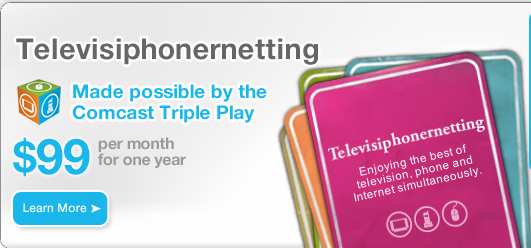
No, I am not taking money to do advertising.  After seeing this Comcast advertisement on TV about 3 times, I finally got what they were trying to say.  Some made up word of “televisiphonernetting”.  In the commercial, there is a guy talking on the phone while web surving and watching TV.  The grandfather is trying to talk to him with no luck.

This is a good reality to think about when trying to communicate with consumers.  We are consumed by our busy lives and always multi-tasking.  Finding the right medium, timing, and message to get them to give you 10 seconds of time is difficult.

In healthcare, we have lots of opportunities to touch the patient.  The key is doing it around an event.  They are engaged for a brief period of time around a visit to the doctor or getting a prescription or going to the lab.  If you can trigger messages that are targeted to their situation and timely, they will engage.  General educational messages that aren’t personalized or timely often fall on deaf ears.

Health 2.0 Conference – Blogs

This week was the Health 2.0 Conference in San Francisco.  I was not there, but I am sure it generated a lot of good discussion.  Numerous bloggers were there and put there comments up.  Here are a few sites for content.  It is certainly worth the read if only to keep up on new technology and new buzz words.  But, getting together a group of technologists focused on changing healthcare can only lead to some new ideas.

The Health Wisdom Blog

The Healthcare Blog

Francine Hardaway’s Blog

The Healthcare Law Blog

The eHealth Blog

Healthcare IT Blog