
I always love a good infographic with good data elements on a topic I care about.

 October 1, 2012
  2 Comments
I always love a good infographic with good data elements on a topic I care about.
September 20, 2012 0 Comments
Here’s an infographic from my previous company – Silverlink Communications.

September 17, 2012 0 Comments
I was looking up some information on using Twitter in healthcare prompted by the announcement around MappyHealth winning the HHS innovation award and found this that I thought I would share.

September 14, 2012 0 Comments
September 2, 2012 1 Comment
Here’s an infographic on healthcare costs from http://www.complianceandsafety.com.
September 1, 2012 0 Comments

Infographic from OnlineCollegeCourses.com
August 25, 2012 0 Comments

Created by: www.MastersDegreeOnline.org
August 23, 2012 0 Comments
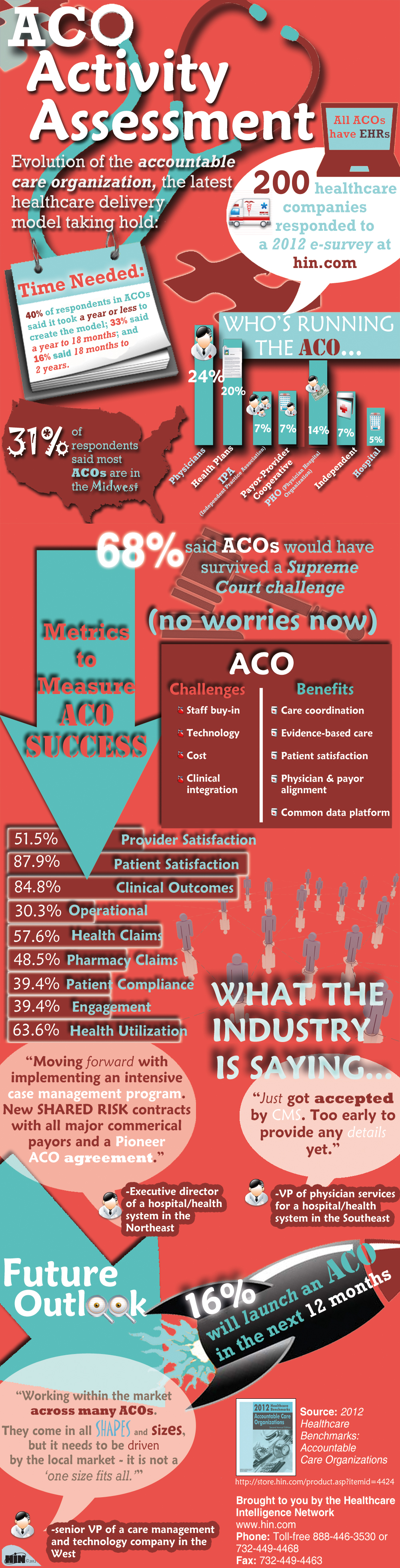
Here’s an infographic from some data on Accountable Care Organizations (ACOs) from Health Intelligence Network.
August 15, 2012 0 Comments
This is one of those debated topics that is hard to quantify, but I don’t think anyone doubts that it happens. The question is to what extent. But I think this infographic gives some data and points out some of the risks associated with this behavior.

From: OnlineDegrees.org
August 12, 2012 2 Comments
I found this list of data visualization winners and grabbed two to share here. Although I like their first place winner on cancer, I found it to hard to read on the site. These use bigger fonts and images with less detail which I personally think is important.


August 1, 2012 0 Comments
It’s been a few years now since my last marathon. There’s just not enough time to put in the right training these days. That being said, I’m finally getting back into running after taking some time off. With that in mind, I thought this infographic was good. It also reminded me to go back to my older post about running basics.

Compiled By: InsuranceQuotes.org
July 12, 2012 0 Comments
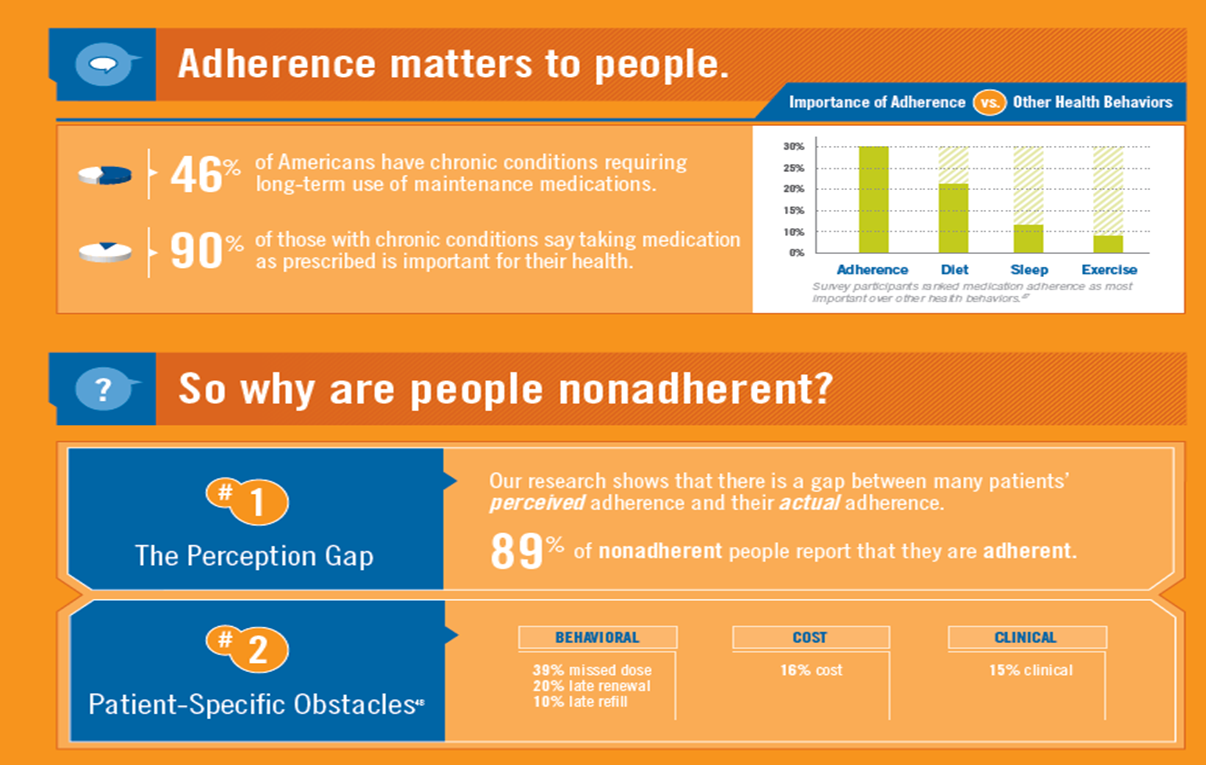
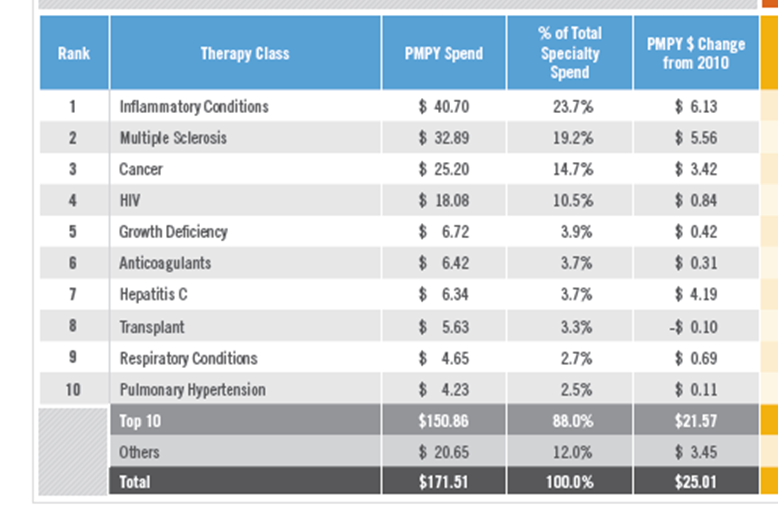
Those of you that have been readers for a few years know that I love to read and summarize these reports. They provide a huge set of aggregated data and summarized information that is useful in creating business cases and identifying trends.
This year is no different although the graphics within the Express Scripts Drug Trend Report continue to get better … ala infographics (as they even posted one recently on their blog).
So, what caught my eye this year…

Our 2011 retail-network negotiations marked another milestone in our heritage of independence from pharmacies and alignment with our plan sponsors. One retail pharmacy chain, Walgreens, was unwilling to offer rates and terms consistent with those of the market, and instead opted to leave our pharmacy network at the beginning of 2012. Although we remain open to Walgreens being part of our pharmacy network in the future, the positive reaction we received from plan sponsors and members during the process of transitioning patients to other pharmacies confirmed what our prior analyses had shown: the vast majority of the U.S. has an oversupply of pharmacies, suggesting that networks can be tightened significantly while maintaining sufficient patient access.
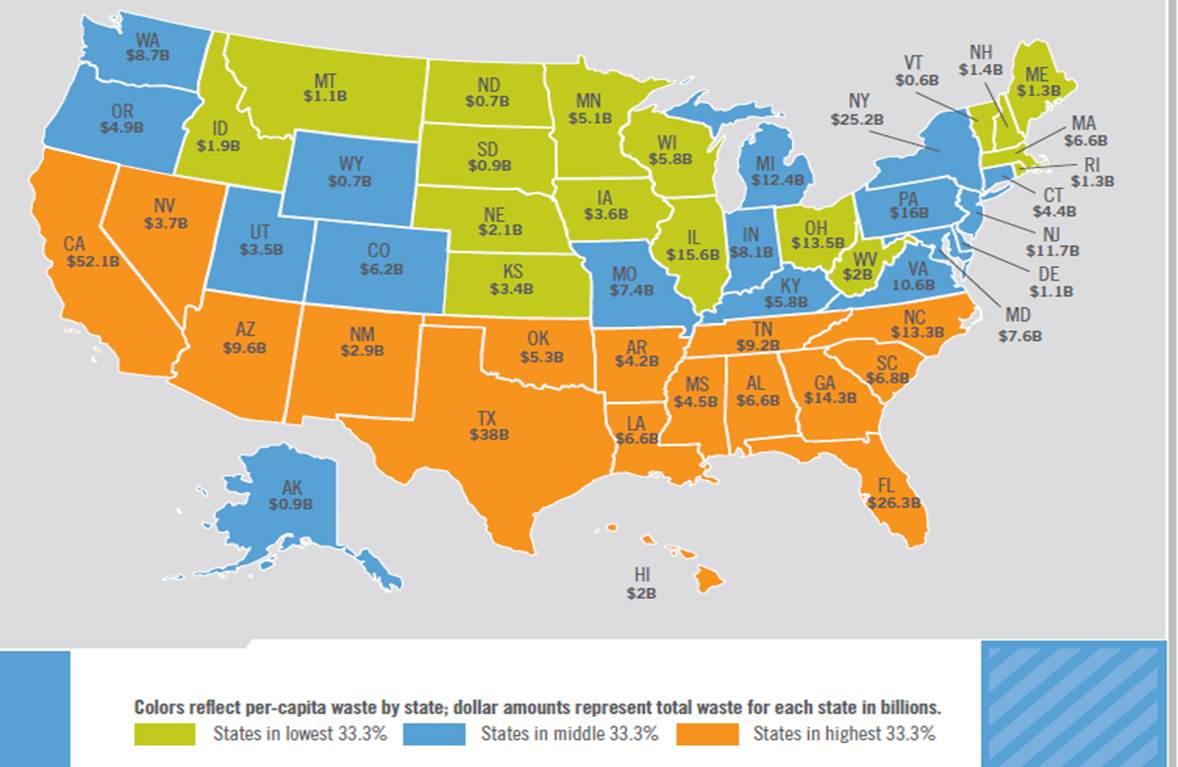
For example, patients in the least-adherent group in the survey of Express Scripts members had an average actual MPR of 24.3%. The average perceived MPR reported by patients in this group, however, was 90.6%. We therefore found a staggering 66% gap between perceived MPR and actual MPR.

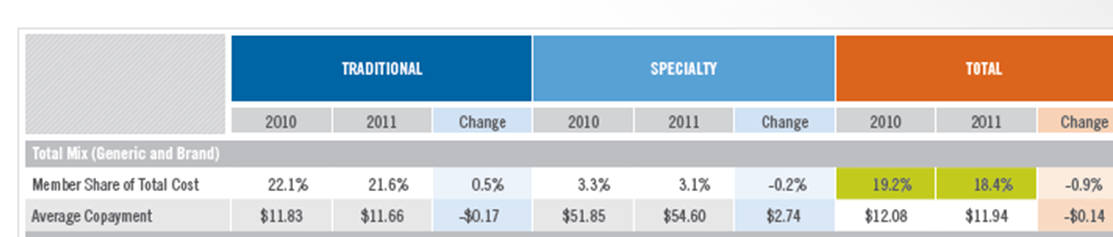
I’d also point you to Adam Fein’s breakdown of this report (in a more timely manner).
July 10, 2012 0 Comments
It’s organ donation week in the UK…so in the spirit, here’s one of their infographics on the topic.

Join the NHS Organ Donation Register
July 4, 2012 1 Comment
The scariest stat in here is that kids ages 1 and 2 are drinking soda on a daily basis.
Now, the fact that we’re fat and drink too much soda isn’t the soda’s company’s fault. We drink soda of our own free will, but this is a contributor to our obesity and this is why the NY soda law makes sense. (And, IMHO, this is why the soda companies supported removing their drinks from schools and went into the business of selling non-soda beverages…they know there are issues regardless of what they say.)

June 22, 2012 0 Comments
This infographic reminds me a lot of the Blue Zones work.
June 13, 2012 0 Comments
Another big focus area these days is around the creation of transparency solutions to enable consumers to make better cost decisions about their healthcare. While several companies have sprung up to work directly with consumers, the large payers have begun to rollout their own solutions. And, as you can see from the Towers Watson and National Business Group on Health 2012 Survey, this issue of transparency was the 3rd biggest focus area for 2013.

If you havent’ heard much about the topic, here’s several articles about the challenge of price discrepancies and surprise bills to consumers:
Here’s what UHG and Aetna are doing:

A few of the companies to look at are:
Companies like GoodRx are creating solutions in this area.
You also might enjoy this infographic from Change Healthcare.
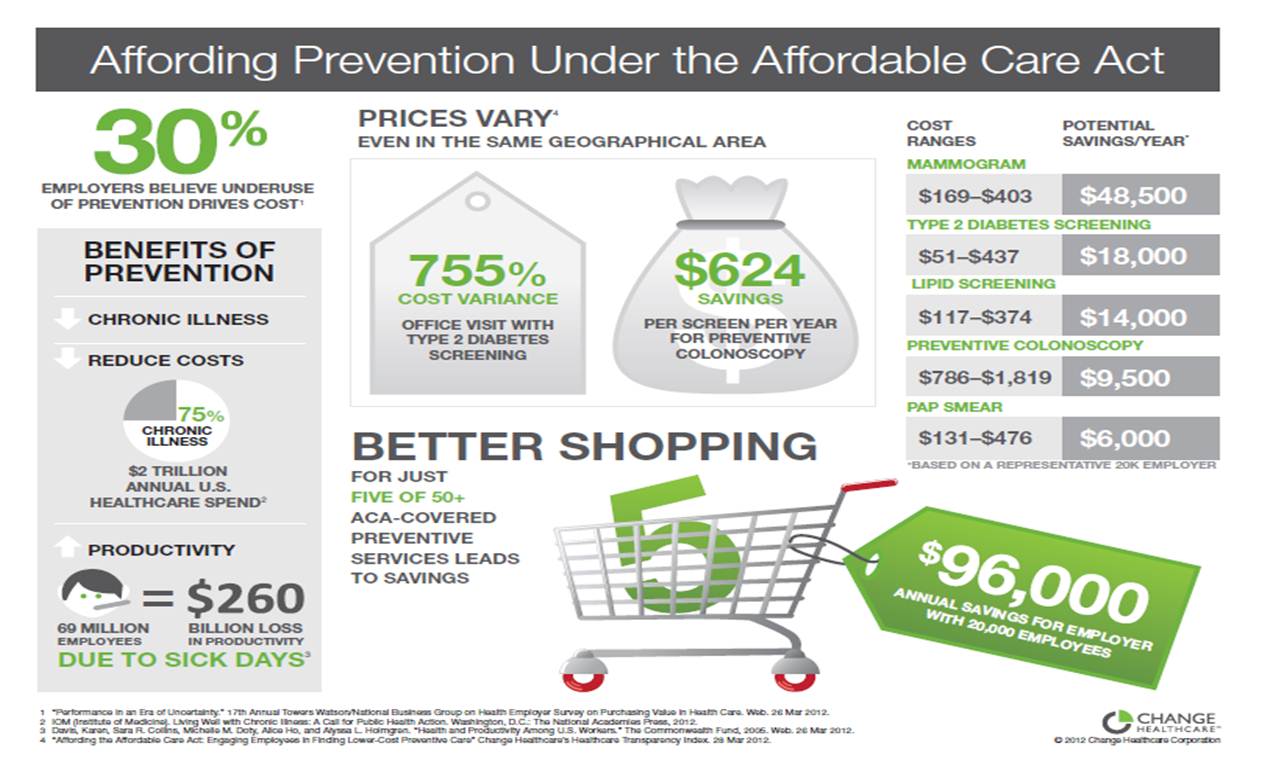
If you don’t believe this is a big issue in terms of price differentials, take a look at this data from the Healthcare Blue Book. This shows a huge swing in prices which depending on your plan design can directly impact your out-of-pocket spend.
| Test or treatment | Low | Fair | High |
| Brain MRI | $ 504 | $ 560 | $ 2,520 |
| Chest X-ray | 40 | 44 | 255 |
| Colonoscopy | 800 | 1,110 | 3,160 |
| Complete blood count | 15 | 23 | 105 |
| Hip replacement | 19,500 | 21,148 | 43,875 |
| Hysterectomy | 8,000 | 8,546 | 16,480 |
| Knee replacement | 17,800 | 19,791 | 42,750 |
| Knee arthroscopy | 3,000 | 3,675 | 7,350 |
| Laminectomy (spine surgery) | 8,150 | 11,744 | 25,760 |
| Laparoscopic gallbladder removal | 5,000 | 6,459 | 12,480 |
| Tubal ligation | 2,865 | 3,183 | 5,729 |
| Transurethral prostate removal | 4,000 | 4,409 | 8,875 |
| Ultrasound, fetal | 120 | 169 | 480 |
| Vasectomy | 700 | 1,003 | 2,100 |
June 13, 2012 0 Comments
Turning your smartphone into a diagnostic device seems to be a large focus right now. I just saw another one called CellScope. They allow you to take a picture of your inner ear or your skin and submit those for review.
From a recent article:
Khosla Ventures also recently invested $1 million in CellScope, an alum from Rock Health’s first class of startups in 2011. The company is developing smartphone peripheral devices designed for consumers to use for at-home diagnosis.
Think of it as a “modern-day digital first aid kit.”
CellScope’s first offering will be a smartphone-enabled otoscope that will enable physicians to remotely diagnose ear infections in children. Parents will be able to use the peripheral, which attaches to a smartphone camera lens, to send an image of their child’s inner ear that physicians can use to make a diagnosis and then write a prescription if need be. CellScope says ear infections in children make up 30 million doctor visits annually in the US alone. The consumer device would help parents miss less work and potentially cut down on late night emergency room visits, according to the startup.
The startup traces its origins to bioengineering Professor Dan Fletcher’s lab at UC Berkeley, where CellScope founders Erik Douglas and Amy Sheng were developing cellphone-microscopy for remote diagnosis in developing countries. CellScope expects to launch future products focused on throat and skin exams, including non-clinical apps for consumer skincare.
June 12, 2012 0 Comments
Transplants is huge issue especially with the increasing rates of obesity and diabetes leading to increased kidney disease.

Brought to you by: TermLifeInsurance.org
June 2, 2012 0 Comments
I know we can all complain about the government telling us what to do, but at the end of the day, they’re not saying we can’t drink soda. As far as I know, you can still have unlimited refills in NY. They are simply reframing one aspect of drinking soda to try to nudge us into being healthier. Ultimately, this should be a good thing for us for several reasons.

April 22, 2012 1 Comment
After going to the dentist this week, I thought this was a good infographic:
April 9, 2012 2 Comments
Here’s a great infographic on costs. This is another reason why you need a company monitoring your claims for cost savings opportunities and working with patients and physicians to implement evidence-based medicine and route patients to centers of excellence (better outcomes for lower costs).

Created by: MedicalBillingAndCodingCertification.net
March 22, 2012 0 Comments
Here’s another good infographic with some information about readmissions at the top.

March 10, 2012 0 Comments
Many of you know that this is one of my favorite topics…the health impacts of sleep.

Created by: MedicalBillingAndCodingCertification.net
March 2, 2012 0 Comments
If you look at the infographic below, it paints a sad picture of how work impacts our healthcare. At the same time, we have lots of discussion about the benefits (or lack of) for disease management and wellness programs.
I think its critical for employers to play a role in helping engage and educate their employees about health and wellness. I think this interview with MemorialCare Health System paints a good picture of why and how to approach this.
A University of Michigan study revealed health costs for a high-risk worker is three times that of a low-risk employee. American Institute of Preventive Medicine reports 87.5 percent of health claim costs are due to lifestyle. Companies implementing wellness activities save from $3.48 to $5.42 for every dollar spent and reduce absences 30 percent.

Created by: Online University
February 18, 2012 0 Comments
We all know that college is often not the healthiest time period for many people between all-nighters, dorm food, caffeine, and alcohol. I find the correlation between health and grades interesting and got the original source for it to support the infographic that I’m sharing below.

February 17, 2012 0 Comments
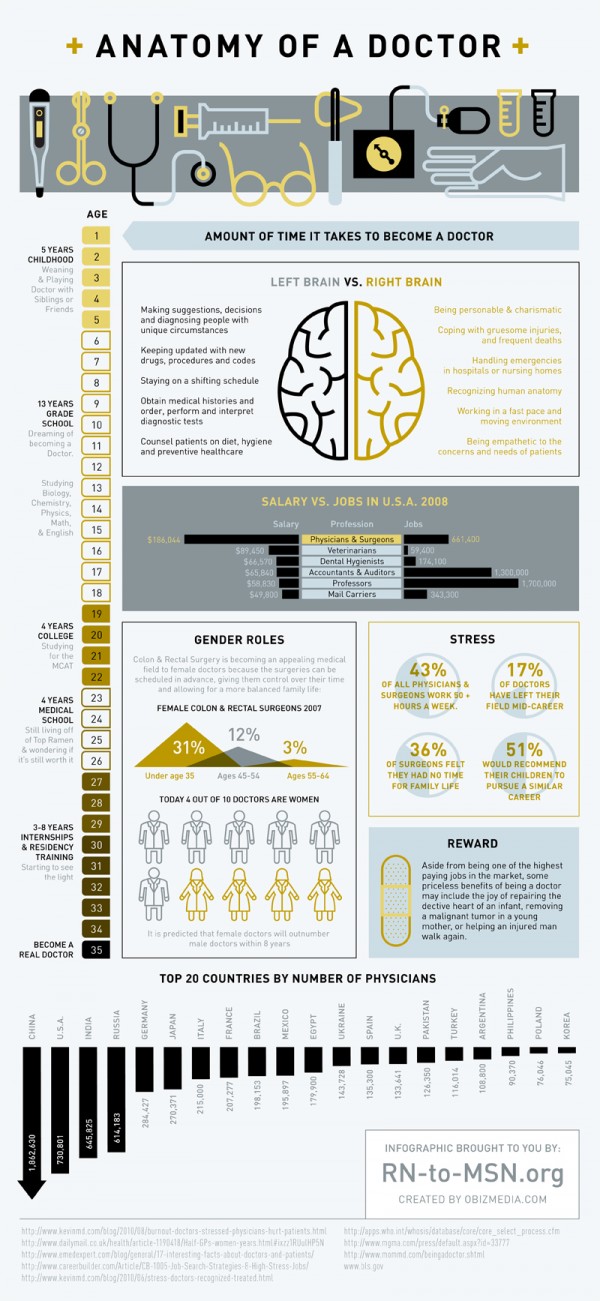
I found this graphic and thought I would share it.
January 29, 2012 0 Comments

Source: Text Marketer Bulk SMS Services


 WSJ Health Blog Drug Channels KevinMD Blog Health Populi e-Patients
 Contact me at gvanantwerp @ mac.com.




 Enabling Healthy Decisions