Archive | Marketing / Communications RSS feed for this section

My Top 11 Healthcare Predictions For 2013

It’s always fun to predict what will happen in the next year. No one is ever right, but you can hope to be directionally correct. With that in mind, here’s a few of my thoughts for what will happen in 2013…

  1. Reform (PPACA aka ObamaCare) will happen. While the Republicans will fight it, with Obama’s re-election and the Supreme Court decision. Reform will continue to happen. The states will mess up the Exchanges which will create many issues, but private exchanges will come to the “rescue”.
  2. Big Data” will be a focus at every healthcare company. What data to store? How to mine the data? What data to integrate? How to bring in unstructured data such as physician’s notes? What to do with consumer reported and consumer tracked data from all the different devices?
  3. Physicians will emerge back in the power seat. With Accountable Care Organizations and Patient Centered Medical Homes, consumers are finally becoming more aware of all the shortcomings in our sick care system. They trust their physicians although somewhat blindly given ongoing challenges with evidence-based care and quality which are often the result of our Fee For Service system (too little time) combined with an abundance of new research happening concurrently.
  4. mHealth will be the buzz word and exciting space as entrepreneurs from outside healthcare and people with personal healthcare experiences will attempt to capitalize on the technology gap and chaos within the health system. This will create lots of innovation, but adoption will lag as consumers struggle with 15,000+ apps and the sickest patients (often older patients) are the slowest to adopt.
  5. Device proliferation will go hand in hand with mHealth and with the Quantified Self movement. This will create general health devices, fitness devices, diabetes solutions, hypertension solutions, and many other devices for wellness and home monitoring for elderly patients. Like mHealth, this will foster lots of innovation but be overwhelming for consumers and lead to opportunities for device agnostic solutions for capturing data and integrating that data for payors and providers to use.
  6. The focus on incentives will shift in two ways. Technology vendors will begin to look more and more at the gamification of healthcare and how to use gaming theory and technology to drive initial and sustained engagement. At the same time, the recent ruling will allow employers to shift from rewards to “penalties” in the form of premium differentials where patients who don’t do certain things such as take biometric screenings or engage with a case manager will pay more. In 2014 and 2015, this shift will be from penalties with activity to penalties tied to outcomes.
  7. Consumer based testing will drive greater regulation. With the focus on home based testing (e.g., HIV or High Cholesterol) and the increased interest in genetic testing especially when tied to a medication, the FDA and other government agencies will have to address this market with new regulations to close gaps such as life insurance companies being able to force disclosure of genetic testing in order to get coverage (even though the testing isn’t necessarily deterministic).
  8. Clinics will prepare for 2014. With the increase number of consumers being covered in 2014, there will be an access challenge for patients to see a provider. This will drive buildout and utilization of health clinics such as TakeCare or MinuteClinic. Clinics will have to look at how to adapt their workflow to create a patient relationship which will create potential integration points with TeleHealth and bring back up the issue of whether they should or could replace the traditional Primary Care Provider (PCP) relationship or not.
  9. Telemedicine will hit a tipping point and begin to Cross the Chasm. They now have better technology and adoption within major employers. This will start to create more and more business cases and social awareness of the solution. With utilization, we will see great adoption and the increasing use of smart phones for healthcare will drive telemedicine into an accelerated growth stage.
  10. Transparency solutions will continue to be a hot area with CastLight and Change Healthcare leading the way. Their independence and consumer engagement approaches based on critical moments (i.e., pointing out how to save money on Rxs just before a refill) and using multiple channels will show high ROI which will also increase broader healthcare awareness making them part of the population health solution.
  11. Generics will no longer be a talked about issue. With generic fill rates running so high across different groups and being front page news, PBMs, pharmacies, and pharma will truly begin to move forward to embrace the specialty market with a clear vengeance (at least in the US).

There are still a few longer term trends that I’m watching, but I don’t think that 2013 is the primary year for them.

  1. The evolving role of pharmacists within the Medical Home and with vaccines.
  2. A significant shift from mail order to 90-day at retail fulfilled by massive central fill facilities.
  3. Pharma co-opetition where they begin to collaborate at the disease state level realizing the a rising tide is good for all boats.
  4. Integration of data from all types of solutions and actions into workflow triggers that automatically create new events within the care management infrastructure using Service Oriented Architecture and Business Process Management.
Kroger Expansion – Digital, Physical, Strategic, and Specialty Pharma … Oh My!

Since one of my first jobs was at Kroger, I’ve always been intrigued to see what happens with them. (I can even still go back almost 30 years later and still have some of the General Managers at my old store come out and remember me.) So, I was initially intrigued a few weeks ago when the story came out in Drug Store News about their expansion plans.

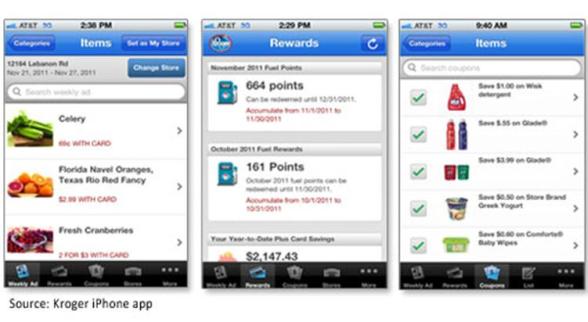
“Over the course of a day-long investor conference Tuesday, Kroger outlined its future growth strategy. Across its physical store base, Kroger plans to enter one or two as-yet-to-be-named new markets along with boosting presence in existing markets. But Kroger also has significant designs on the multichannel consumer, and outlined for analysts the grocer’s plan to grow its marketshare across the digital landscape as well.”

Kroger has several interesting assets to leverage:

Now, with today’s announcement, they’ve made a jump into the Specialty Pharmacy Space with their acquisition of Axium. It begs the question of what they want to be – a grocer with a pharmacy, a pharmacy with groceries, a health destination, or something new.

Looking at some JD Powers data from 2010, they are positioned in the middle of the pack from a pharmacy satisfaction perspective.

On the other hand, if I look at their positioning from Bruce Tempkin’s analysis, they score well.

I have to believe there’s some great opportunity here. I’m a big believer that the retail assets create large opportunities for them to play in the broader healthcare market.

  • They have broad hours (in some cases 24/7).
  • They are natural destinations for people.
  • They can host clinics.
  • They already have pharmacies.
  • They have food which is a critical part of addressing obesity and for certain conditions like hypertension and diabetes.
  • They have patient specific data around things like home monitoring tests, food products, OTCs, and other products.
  • They are generally located in easy access locations.
  • They have good brand equity.

For example, just look at this press release from Target from a few years ago. This is a broad vision (that I’ve never heard or seen in the market). On the flipside, we know that CVS, Walgreens, and WalMart are spending considerable efforts trying to really “own” this space with their teams. We also know that specialty pharmacy (and even pharma in general) is trying to see how it gets out of its box and become broader players in the health continuum looking beyond just drugs to actual outcomes. (This is why healthcare is so exciting right now!)

Using Gilligan To Drive Colonoscopies

While I do applaud the creative concept here, I wasn’t overly impressed with the creative itself.  At the end of the day, the question for me is results.  Did it pay for itself?  Did it get more people to get colonoscopies (in the target audience) than otherwise would have?  I’m unsure of that.

Here’s what I did find in a HealthLeaders article…At the end of the day, I’d want to compare that to a program we did at my last company for UHG in this area.

The campaign also netted 44 colonoscopy appointments. Of those 44 appointments, 13 were current Good Samaritan patients and 31 were new to the hospital. Forty-three of the 44 scheduled an appointment through the call center and one booked online. Of those who called, 27 cited the radio spot as how they found out about the service. More than half of the patients were in the target group of 50–59 year olds, with 24 female and 20 male.

The Transtheoretical Model And Setting Goals

There’s a good article in Time (9/17/12) called “Goal Power” by Dr. Oz.  I found it interesting on a few fronts.

“Getting people to make meaningful changes in their lives is much more complicated than explaining to them what to eat for dinner, how often to exercise and which kinds of tests they should get from their doctors.  The psychology of health is every bit as complex as the biology, and to create seismic shifts in behavior, we have to probe the subconscious.”

1. The topic of goals and objectives and their importance relative to healthcare behavior change is a repeating theme.

  • A month ago, I was at a presentation by Dr. Victor Strecher who founded HealthMedia.  He was talking about the importance of getting people to articulate their goals or objectives for changing.  (E.g., I want to become healthy to see my daughter get married.)
  • I had a pharmacy client who was looking into this as part of an adherence program a few years ago.

2. The topic of behavior change and behavioral economics has been a very popular theme with Nudge and many other publications and programs over the past few years.

3. Obesity, which is part of the focus of his article, is widely becoming recognized as the greatest public healthcare challenge of the 21st century.  And, it is a very complex issue tied to sleep, stress, social network, and many other factors.

4. He introduces the transtheoretical model (also known as the Prochastka model or the Stages of Change), which is widely known in the academic and health areas, into the public domain which surprised me.

(Here’s the abstract from what one widely quoted paper on this.)

The transtheoretical model posits that health behavior change involves progress through six stages of change: precontemplation, contemplation, preparation, action, maintenance, and termination. Ten processes of change have been identified for producing progress along with decisional balance, self-efficacy, and temptations. Basic research has generated a rule of thumb for at-risk populations: 40% in precontemplation, 40% in contemplation, and 20% in preparation. Across 12 health behaviors, consistent patterns have been found between the pros and cons of changing and the stages of change. Applied research has demonstrated dramatic improvements in recruitment, retention, and progress using stage-matched interventions and proactive recruitment procedures. The most promising outcomes to data have been found with computer-based individualized and interactive interventions. The most promising enhancement to the computer-based programs are personalized counselors. One of the most striking results to date for stage-matched programs is the similarity between participants reactively recruited who reached us for help and those proactively recruited who we reached out to help. If results with stage-matched interventions continue to be replicated, health promotion programs will be able to produce unprecedented impacts on entire at-risk populations.

5. He references two of the big studies that looked at social pressure an its influence on health.  Something that peer-to-peer healthcare and social network tools can create for us by developing support communities and “buddies” to support our change.

  • 2012 study in the journal Obesity about weight loss.
  • 2008 study in the NEJM about smoking

6. He references Dr. Nicholas Chrisakis who co-authored the book Connected which is being manifest in the company called Activate Networks.

Overall, for those of us that work in the healthcare field, these are all critical topics that we constantly talk about.  It’s nice to see it brought to the “popular press”.

Would You Pay $100 A Month For A Diabetes Application?

An article in MobiHealthNews caught my attention this morning when it talked about 2 payers agreeing to pay $100 a month for Welldoc’s diabetes application. This is fascinating to me since (a) I’m always interested in how people price and value services and (b) I’d love to bundle something like this into our diabetes offering. 

This of course begs the key question which is what is the value of the application.  We’re all familiar with the fact that diabetes drives significant costs within our healthcare system.  Here’s a quick summary from the ADA.

The national cost of diabetes in the U.S. in 2007 exceeds $174 billion. This estimate includes $116 billion in excess medical expenditures attributed to diabetes, as well as $58 billion in reduced national productivity. People with diagnosed diabetes, on average, have medical expenditures that are approximately 2.3 times higher than the expenditures would be in the absence of diabetes. Approximately $1 in $10 health care dollars is attributed to diabetes. Indirect costs include increased factors such as absenteeism, reduced productivity, and lost productive capacity due to early mortality.

Of course, diabetics also spend a lot of money on out-of-pocket costs themselves.  $6,000 from one study mentioned here.

But, I think the key question here is what assumptions make this a good investment.  Let’s me walk through my thought process.

  • At $100 per month, you pay $1,200 per year per member.
  • BUT, members won’t actively stay engaged with the application all year long so you have to assume some percentage of engaged members.  (A key question is whether you pay only for actively engaged members or all members enrolled in the program.)  And, how long does a patient have to use the application to achieve the results?
    • If 20% are engaged, the cost per engaged member would actually be $6,000 ($1,200 divided by 20%). 
    • If 60% are engaged, the cost per engaged member would be $2,000.
  • The next question is how you estimate the value of the application.  Based on their study, they saw a 1.9 point drop in A1c which is a good one-year drop and a good outcome metric to focus on (see article).  So the question becomes…what is the value of a 1.9 point drop in A1c?  This is a question I was looking for earlier.
    • This pharmacist based study talks about a 0.8% reduction in A1c leading to $1,200 in total savings.
    • This CVS study showed a $3,756 annual savings for an adherent diabetic versus non-adherent.  (But, adherence wasn’t shown in the Welldoc study.)
    • The President from Welldoc quotes a savings of $3,500-$4,000 per point drop in A1c, but I couldn’t find the study to support that.  (I e-mailed their PR people about this.)
    • And, a few weeks ago at a mHealth conference, I heard someone say the value was $7,000 per point reduction in A1c.

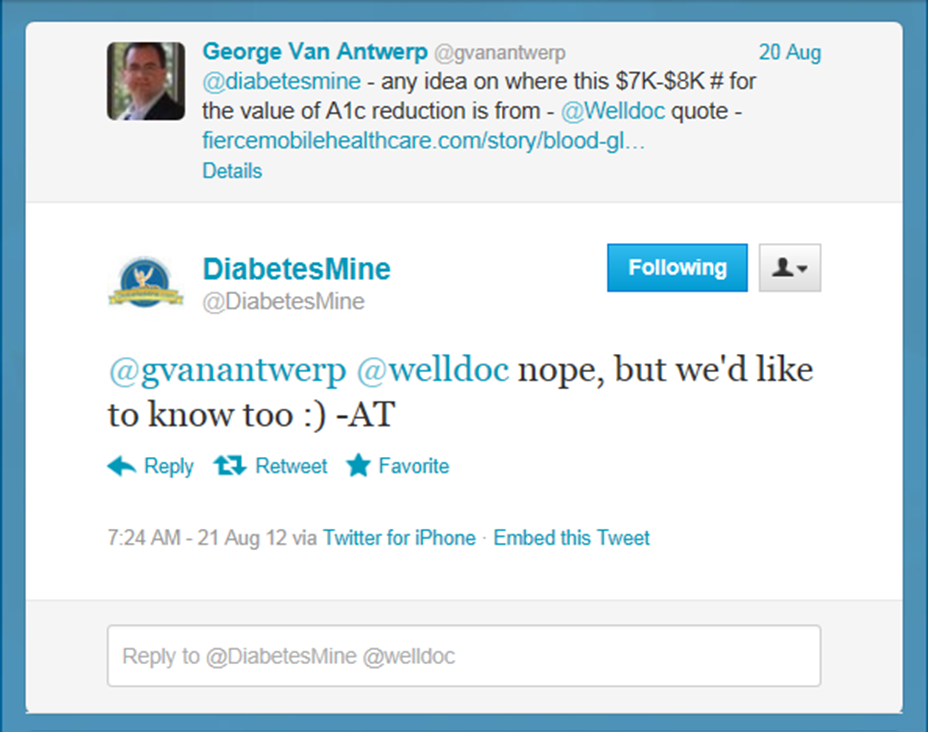
As you can see from this tweet, I was looking for this study yesterday and mentioned DiabetesMine to see if Amy might know, but she didn’t.


So, my conclusion is that this is worth it if:

  1. The value is closer to the $3,500 point.
  2. You pay based on actual engagement or utilization…or you only give it to people who actually use it versus the overall population. 
  3. The application improves adherence.

I hope to figure this out since this was the first FDA approved device and looks very promising.

Vaccine Excemptions By State

This is an interesting map from Every Child By Two which is a pro-immunization advocacy group.  And, per the article in USA Today, this discussion around vaccines is heating up with kids coming back to school and the biggest epidemic of whooping cough in 50 years.

I’ll also pull up this video that I posted last year which I thought to be a fun presentation of this topic.

36 Rules of Social Media

In the September 2012 Fast Company magazine, there was an illustration of 36 Rules of Social Media.  Let me pull out a few that caught my attention:

  • Everyone says they don’t want to be marketed to…Really, they just don’t want to be talked down to.
  • Always write back.
  • People would rather talk to “Comcast Melissa” than Comcast.
  • If fans distribute your content without your permission, offer to help.
  • If you don’t see financial results, you wasted your money.
  • People don’t want to shop where they socialize.
  • Don’t use ads to accelerate boring content.  Use ads to accelerate successful content.

But, I think the one that summarizes it the best is – If you’re bored by social media, it’s because you’re trying to get more value than you create.

Chronic Kidney Disease (CKD) Action Plan Poster

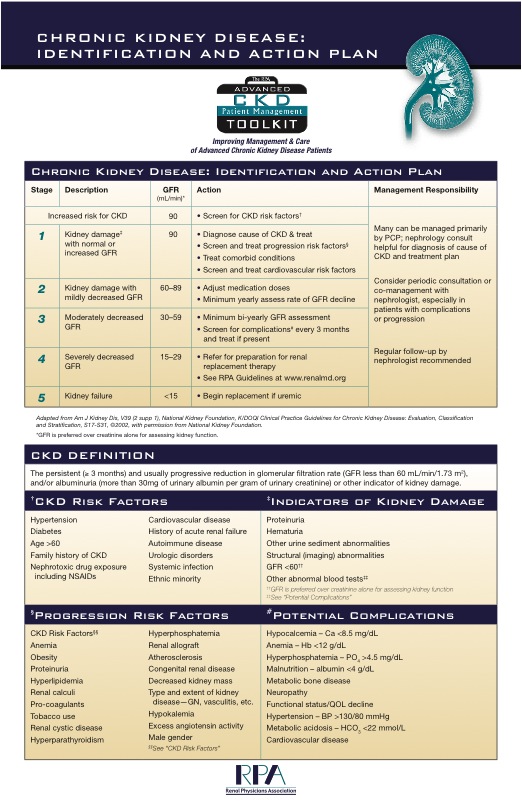
I was at my physician’s office yesterday and noticed this great poster on the wall from the Renal Physicians Association (RPA).  I reached out to them and got a PDF of the poster – RPA Toolkit Action Poster FINAL.  (Note: It’s meant to be a poster on the wall not a graphic in a blog post so it’s here for you to go look at, but it’s not easy to read and digest here.  Use the link to get to the PDF.)

The key points are that it shows you stages of CKD based on GFR along with the action you should take.  It also highlights the risk factors for CKD and the possible complications.


Express Scripts Study: 89% Of Consumers Don’t Know How Adherent They Are

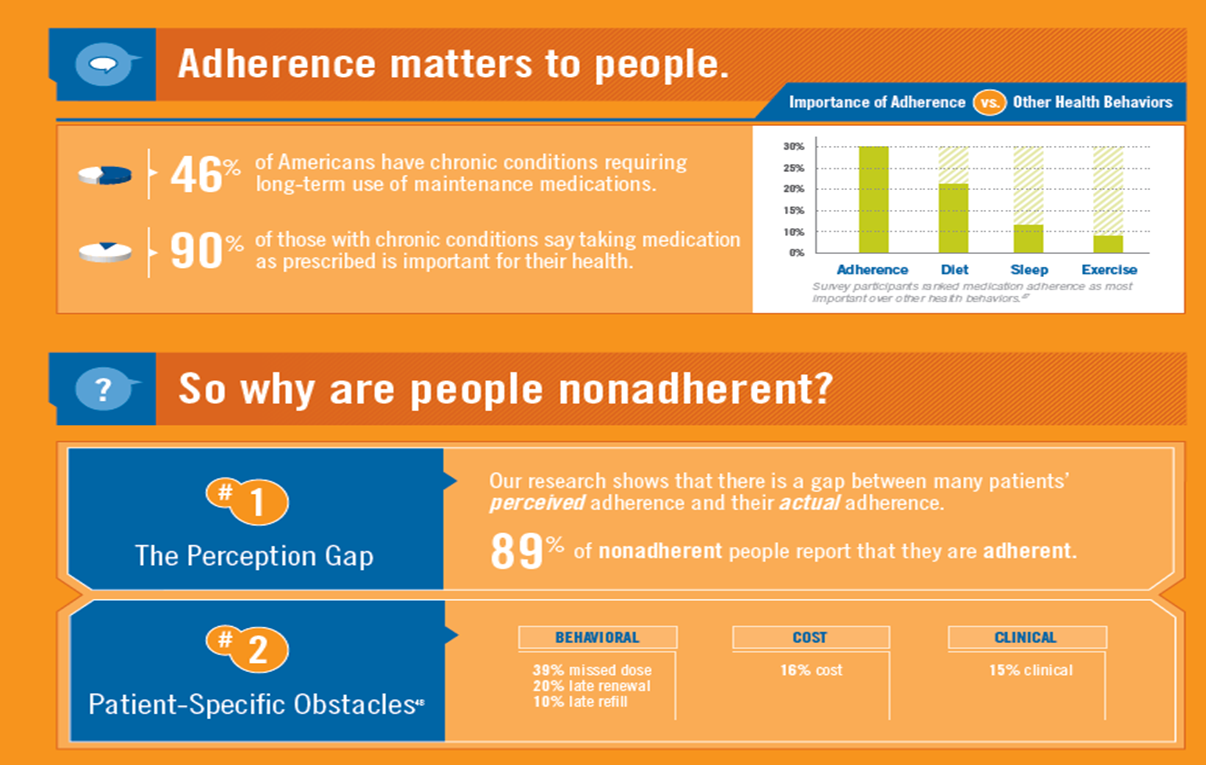
So much for self-reported data.  In the recent Drug Trend Report by Express Scripts, they mention a study they did looking at patient self-reported adherence and comparing it to actual adherence.  (I can’t believe no one had done this before.)  89% of the consumers incorrectly reported that they were taking the medication as prescribed.  For years, I’ve used two separate studies to point out that this gap had to exist, but it was not done on the same population. 

This is critical to any care manager or anyone else talking to the patient.  If you trust their perspective on adherence, you’re likely overestimating it.  In some cases, this might not be materials, but some of the gaps are significant.  Therefore, integrating pharmacy data to get to a true MPR (medication possession ratio) or PDC (percentage of days covered).

What Would You Pay For A Week Of Life?

I was at an Oncology meeting earlier today, and there was a brief discussion about pharmaceutical costs which is certainly one factor in overall healthcare costs.  (See article on the 11 most expensive drugs ranging from $200-$410K / year)  Ultimately, this always brings you back (at some point) to the topic of Quality Adjusted Life Year (QALY) or (a new term to me) “futile care” meaning care done essentially with a very low probability of working. 

Of course, like the lottery, we all like to believe that we’ll be the 1% for which this effort pays off.  (see Prospect Theory or a broader article on use of incentives in healthcare).  This can often be a very cost effective way to get people excited.  This is especially true for poorer people who spend as much as 3% of their income on lotteries which have a very low return

But, the question at the center of this is what you would pay for a week of life?

  • $100
  • $1,000
  • $10,000
  • $50,000

And, would that answer change based on timing?  I believe so.  If asked today, when you were healthy, would you agree to spend $50,000 to gain one week of life?  Perhaps not.  When you’re on your death bed and realize that you still want to see a few more people, your answer may change.  And, your family’s answer might change.  If you had to make that decision for your parent, it might be tough to make at the hospital, but if you sat down with them when they were healthy and asked them whether they would like you to spend your kid’s college savings account on gaining them a week of life, the answer might change.

But, what about when the money’s not yours.  We all know the infamous diner’s dilemna where we’re likely to spend more money when your splitting the bill with everyone.  When you’re covered by insurance or by the government, it’s not always your money being spent.  So, what if it was positioned differently?  If you knew that spending $50,000 for that one week of life meant that there wouldn’t be money to fund a shelter for 3-months that provided 20 homeless families with a place to sleep.  Would that change your answer?

It’s a tough question.  No one like to put a financial value on life.  I don’t have an easy answer other than having the discussions earlier with the patient and framing them the right way. 

Never mind the question about quality of life…Would you rather die in 2 days at home or would you rather live 8 days in the hospital where your throwing up all the time?

I don’t know the economic tradeoff of these treatments or drugs so this isn’t specific to any scenario, but is a situation which come up and everyone runs away from.  I understand why.

The Express Scripts 2011 Drug Trend Report – Full of Infographics

Those of you that have been readers for a few years know that I love to read and summarize these reports. They provide a huge set of aggregated data and summarized information that is useful in creating business cases and identifying trends.

This year is no different although the graphics within the Express Scripts Drug Trend Report continue to get better … ala infographics (as they even posted one recently on their blog).

So, what caught my eye this year…

  • There was one ex-Medco person who signed off on the intro letter…and interestingly (compared to other DTRs), no George Paz signature.
  • They have a big picture of their Research & New Solutions Lab upfront (see below). It reminds me of the NOCs (Network Operations Centers) that I had at my past 3 employers. [Maybe one day before I move out of St. Louis they’ll take me on a tour.]

  • I was definitely interested to hear what they would say about Walgreens. They tackled it early on in the document.

Our 2011 retail-network negotiations marked another milestone in our heritage of independence from pharmacies and alignment with our plan sponsors. One retail pharmacy chain, Walgreens, was unwilling to offer rates and terms consistent with those of the market, and instead opted to leave our pharmacy network at the beginning of 2012. Although we remain open to Walgreens being part of our pharmacy network in the future, the positive reaction we received from plan sponsors and members during the process of transitioning patients to other pharmacies confirmed what our prior analyses had shown: the vast majority of the U.S. has an oversupply of pharmacies, suggesting that networks can be tightened significantly while maintaining sufficient patient access.

  • 17.6% of the total Rx spend was for specialty
  • 47% of specialty medications are processed under the medical benefit
    • 78% for oncology
  • They talk a little about evaluating genetic tests and when to recommend a test. It’s definitely an evolving space, and it will be interesting to see the Medco influence here in terms of what they recommend.
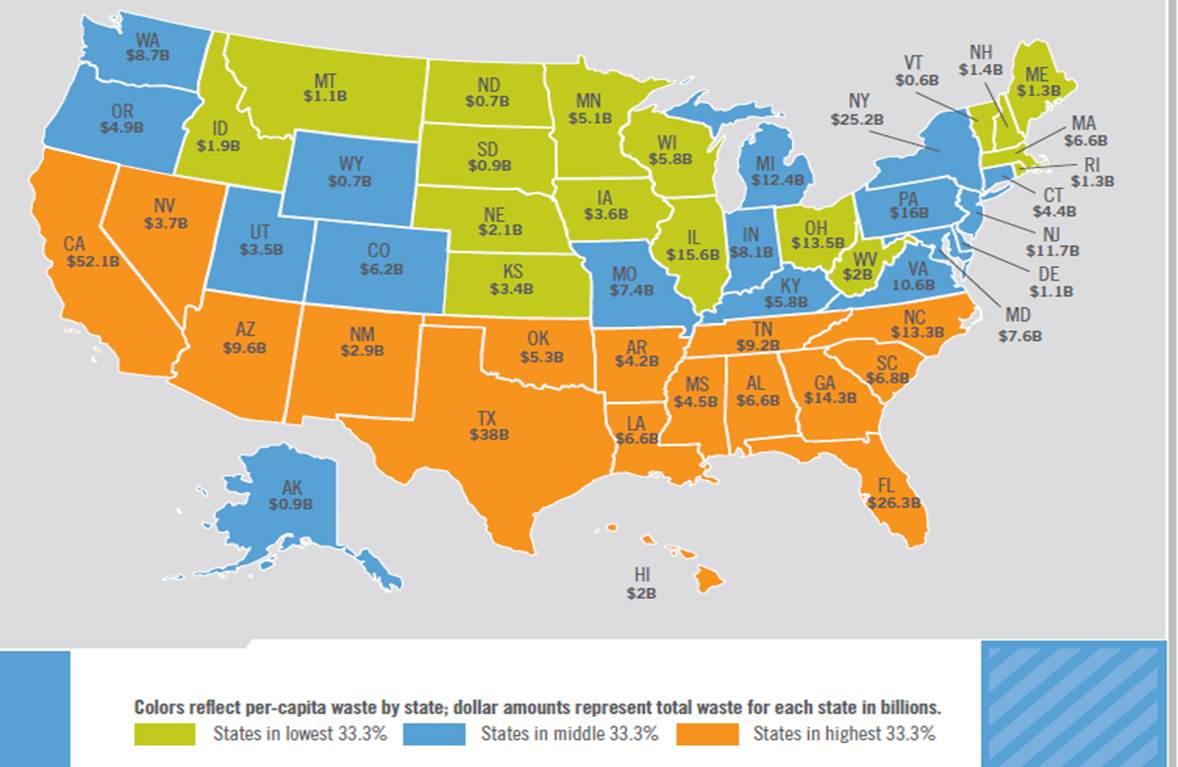
  • They talk about $408B in waste from adherence, generics and mail order. All consumer behaviors. (see last year’s report focused on waste)
  • They show the breakdown of waste by state where the South is the biggest problem. It looks a lot like the Diabetes Belt although it also includes the SouthWest.

  • Not surprisingly, diabetes, cholesterol, and hypertension represent 3 big opportunities.


  • FINALLY…For years, I’ve been comparing two older studies to make the point that people think their adherent when there’s no way that perceived adherence can match reality. The most exciting thing to me was that they actually looked at perceived and actual adherence on the same patients.

For example, patients in the least-adherent group in the survey of Express Scripts members had an average actual MPR of 24.3%. The average perceived MPR reported by patients in this group, however, was 90.6%. We therefore found a staggering 66% gap between perceived MPR and actual MPR.

  • They talk about how this data is being used to predict non-adherence with some crazy high reliability. (Meaning only that it sounds too good to be true.) Regardless, they’re right in using data to identify behavior gaps (current and future) and developing personalized interventions to address barriers.

  • The overall drug trend was 2.7%
    • 17.1% specialty trend
    • 0.1% traditional drug trend
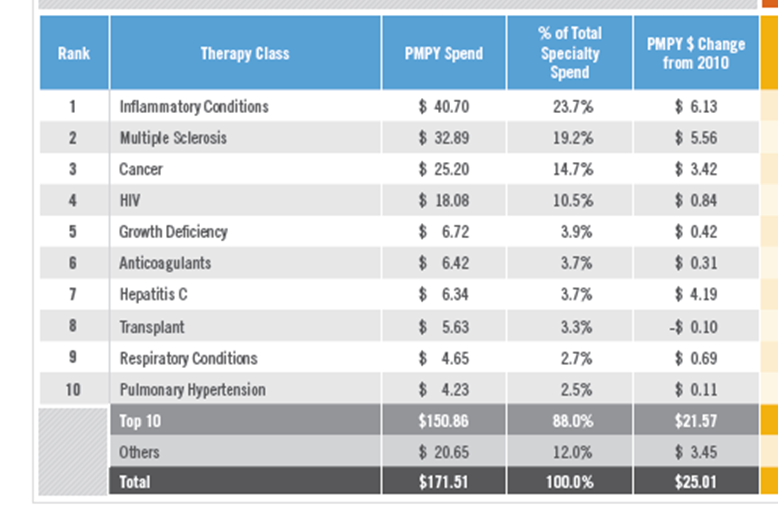
  • Here’s the breakout by class of specialty spend

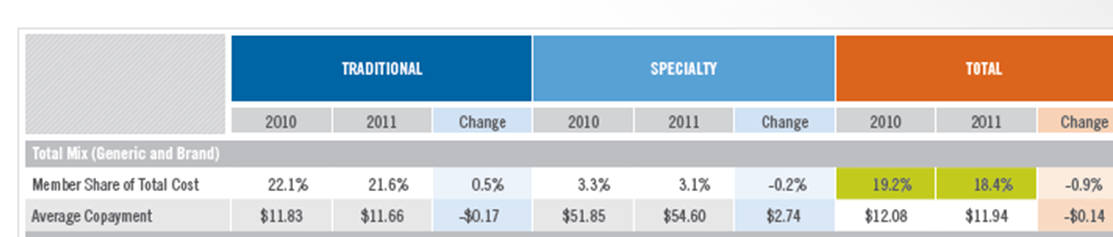
  • Actual member out-of-pocket and percentage of cost actually went down $0.14.  Surprised?

  • Perhaps most interesting (and new) is a huge section on Medicare and Medicaid trends. Obviously this shows their focus here in an area that CVS Caremark has also been focusing on.

I’d also point you to Adam Fein’s breakdown of this report (in a more timely manner).

inVentiv Medical Management and Vital Decisions

I’m excited about a new relationship at work with Vital Decisions.  Some of you have heard me talk about Palliative Care before.  The whole area of working with patients that have an advanced illness is a hot discussion topic especially within the CMS community (see yesterday’s WSJ).  But, while many consumers focus and worry about the idea of cost containment at this emotional time, Vital Decisions does a great job of using their behavioral counselors to work with patients to help them articulate their desires to their family and their physicians.  They’re not counseling them on medical decisions or trying to limit care.  They are simply trying to help patients to find a way to talk about this topic with their caregivers.

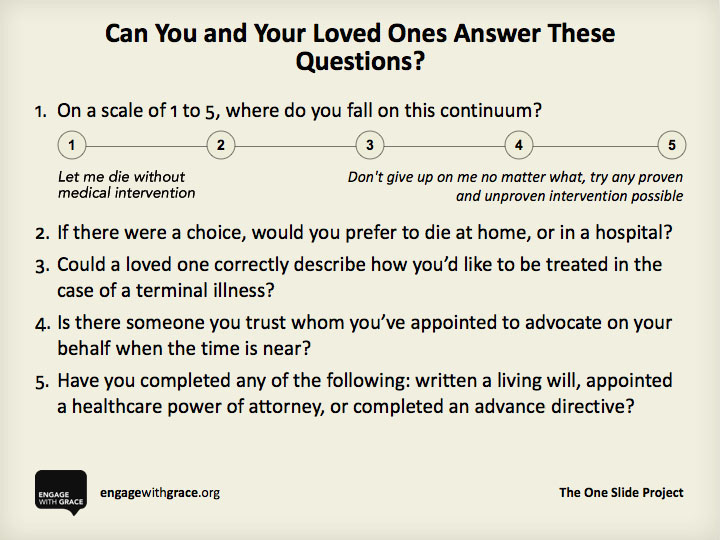
In some ways, it reminds me of the Engage With Grace movement to try to get families to talk about this with each other.  In this case, the conversation is coordinated with our care manager and part of an overall patient-centric approach to care.

Here’s some of the press release:

inVentiv Medical Management (iMM), an inVentiv Health company and provider of best-in-class medical management services to the healthcare industry, today announced that it has formed a partnership with Vital Decisions to better serve the needs of payers, providers, and seriously ill patients nationwide. The joint offering will support patients by empowering them to be more proactive decision makers when it comes to their health, and, thereby, reduce the use of costly care that is medically inappropriate or unwanted by individuals with advanced illnesses.

Together, iMM and Vital Decisions – an Edison, New Jersey-based company that provides patient-centered behavioral counseling programs for those with advanced illnesses – will offer a unique care management and counseling program to individuals battling metastatic cancer, end-stage heart or lung disease, and progressive neurologic conditions, such as Alzheimer’s or Lou Gehrig’s disease (Amyotrophic Lateral Sclerosis-ALS). The program is designed to encourage patients to work with their physicians and family members to make well-informed care decisions as their illnesses progress. inVentiv Medical Management case managers will provide patients with clinical advice, while Vital Decisions specialists will offer counseling support using the company’s proprietary “Living Well” program, which helps individuals with advanced illnesses communicate their quality-of-life preferences to those involved in their care.

McKinsey Quarterly On B2B Social Media

The recent McKinsey Quarterly had an article called Demystifying Social Media which I thought was a good read with a good framework to use (see below). 

In short, today’s chief executive can no longer treat social media as a side activity run solely by managers in marketing or public relations. It’s much more than simply another form of paid marketing, and it demands more too: a clear framework to help CEOs and other top executives evaluate investments in it, a plan for building support infrastructure, and performance-management systems to help leaders smartly scale their social presence. Companies that have these three elements in place can create critical new brand assets (such as content from customers or insights from their feedback), open up new channels for interactions (Twitter-based customer service, Facebook news feeds), and completely reposition a brand through the way its employees interact with customers or other parties.


Drug Trend Reports: Quick Summary Of Big Three PBMs

“Comparative” is a very loose word to use here since each PBM has a slightly different approach to their analysis.

But, while it’s truly impossible to compare apples to apples and I will continue to argue that trend may be an irrelevant metric, I know may consultants and others are focused on these metrics.

With that in mind, I pulled the trend numbers (overall and specialty) along with the generic fill rate from the Express Scripts, CVS Caremark, and Prime Therapeutics trend reports.


Overall Rx Trend

Specialty Trend

GFR

CVS Caremark

2.2%

19.1%

74.1%

Express Scripts

2.7%

17.1%

75.0%

Prime Therapeutics

1.3%

20.1%

74.7%

Notes:

  • I used the CVS Caremark health plan overall and specialty trend data which I thought would be most comparable to Prime’s data.
  • Express Scripts reports their overall trend (without specialty) being 0.1%.
  • CVS Caremark provides a break out of trend along with best practices by sector (see below).


Healthcare Transparency, Out-Of-Network Claims, and Technology Solutions

Another big focus area these days is around the creation of transparency solutions to enable consumers to make better cost decisions about their healthcare.  While several companies have sprung up to work directly with consumers, the large payers have begun to rollout their own solutions.   And, as you can see from the Towers Watson and National Business Group on Health 2012 Survey, this issue of transparency was the 3rd biggest focus area for 2013. 

If you havent’ heard much about the topic, here’s several articles about the challenge of price discrepancies and surprise bills to consumers:

Here’s what UHG and Aetna are doing:

A few of the companies to look at are:

Companies like GoodRx are creating solutions in this area. 

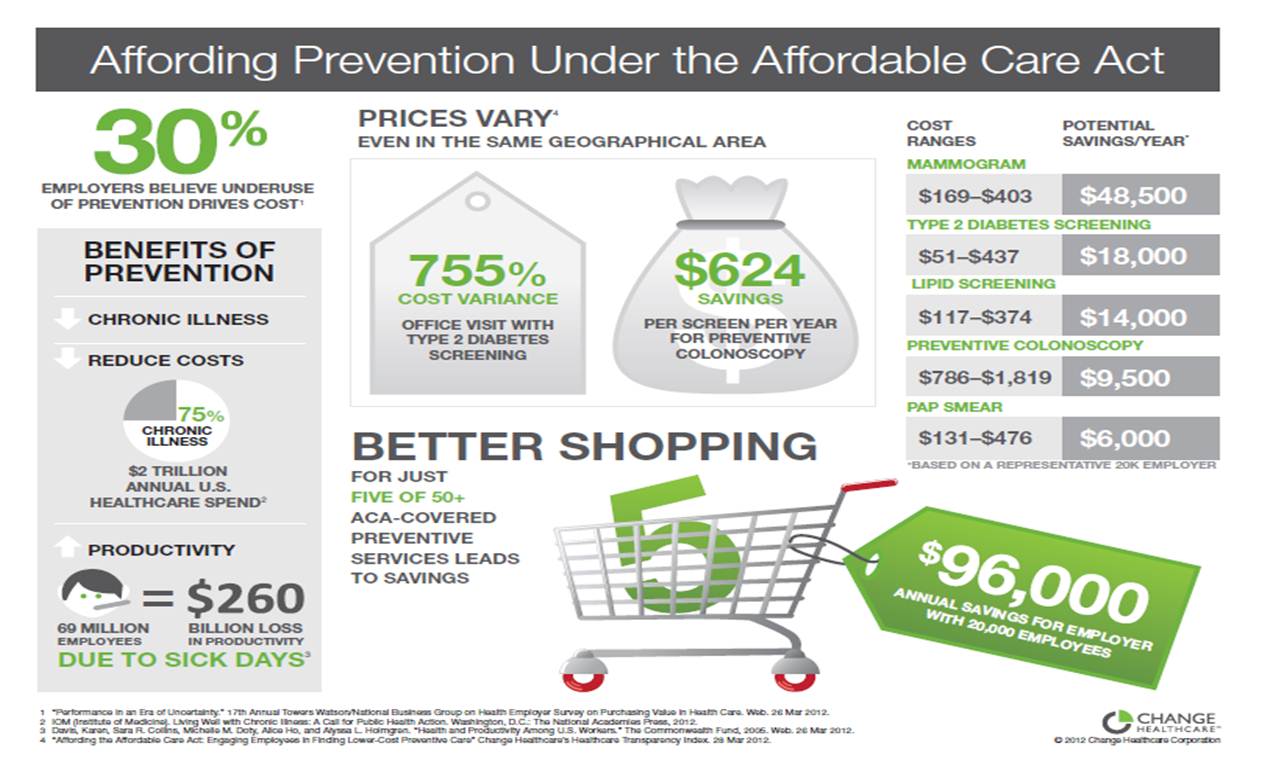
You also might enjoy this infographic from Change Healthcare.


If you don’t believe this is a big issue in terms of price differentials, take a look at this data from the Healthcare Blue Book.  This shows a huge swing in prices which depending on your plan design can directly impact your out-of-pocket spend. 

Test or treatment Low Fair High
Brain MRI $ 504 $ 560 $ 2,520
Chest X-ray 40 44 255
Colonoscopy 800 1,110 3,160
Complete blood count 15 23 105
Hip replacement 19,500 21,148 43,875
Hysterectomy 8,000 8,546 16,480
Knee replacement 17,800 19,791 42,750
Knee arthroscopy 3,000 3,675 7,350
Laminectomy (spine surgery) 8,150 11,744 25,760
Laparoscopic gallbladder removal 5,000 6,459 12,480
Tubal ligation 2,865 3,183 5,729
Transurethral prostate removal 4,000 4,409 8,875
Ultrasound, fetal 120 169 480
Vasectomy 700 1,003 2,100

Changing Marketing Paradigms

Traditionally, consumer marketing has focused on the “young invincibles” as they are sometimes referred to in healthcare. Those are the 18-34 year olds that traditionally were the DINKs (dual income no kids) and younger population with more disposable income or focused on acquiring goods (as they bought homes and started careers).

Well, I think this quote by Sunil Gupta summarizes the issue:

If [young adults] have no money in their pockets, there is nothing to sell them.

With 46% of those age 18-24 unemployed and 20% of those 25-34 living at home, this group’s financial dynamics are very different. The focus on both those with money and those driving the healthcare costs have shifted to Baby Boomers. (Facts from Time article on page 16 in the 4/9/12 edition.)

At the same time, I read an article about marketing to women which continue to make majority of healthcare decisions both for themselves and their families. (and caregivers (often women) are less likely to be adherent to their own medications.)  Here were the recommended approaches:

  • Offer highly personalized formats
  • Provide complete anonymity
  • Eliminate the middle man
  • Understand self-perceptions
  • Consider the unique point of sale

And, some of these changes are driven by the economy. For example, according to NCH Marketing and Parks Associates, 81% of people are using coupons regularly and they redeemed them for 3.5B in 2011. (Of course, the jury is still out on the Groupon model…)

AHRQ Questions are the Answer campaign

I often talk about the issue of communications in healthcare. That could be patient to patient, healthplan to patient, pharmacist to patient, or physician to patient (or many more).

Understanding health literacy and personal motivation are critical as are so many other factors. With that in mind, I was glad to see this new campaign from AHRQ.

(Here’s the text they sent me about it.)

“When patients become more actively involved in their own health, there’s a much stronger likelihood their health outcomes will be better.

That’s why “Questions are the Answer,” a new public education initiative from the U.S. Agency for Healthcare Research and Quality (AHRQ), encourages patients to have more effective two-way communication with their doctors and other clinicians.

“Questions are the Answer” features a website — http://www.ahrq.gov/questions — where you will find these free educational tools to use with your patients:

· A 7-minute video featuring real-life patients and clinicians who give firsthand accounts on the importance of asking questions and sharing information – this tool is ideal for a patient waiting room area and can be set to run on a continuous loop.
· A brochure, titled “Be More Involved in Your Health Care: Tips for Patients,” that offers helpful suggestions to follow before, during and after a medical visit.
· Notepads to help patients prioritize the top three questions they wish to ask during their medical appointment.

Clinicians can request a free supply of these materials by calling AHRQ at 1-800-358-9295 or sending an email to AHRQpubs@ahrq.hhs.gov.”

All of this is good information, BUT:

  • Do physicians have time for this and are they prepared for these dialogues in plain language and with handouts and URLs they recommend?
  • Are patient’s prepared to slow their physicians down and make sure they explain everything?
  • Will this get measured at some point as a qualitative metric and correlated to outcomes?
  • Some Facts On Palliative Care

    In the book called Healthcare in 2020 by Steve Jacob, there is a chapter on End-of-Life Care. It provides some great data all sourced there (so not repeated here). I find this whole are of discussion especially around palliative care very interesting.

    First, let’s define palliative care:

    Palliative care (from Latin palliare, to cloak) is an area of healthcare that focuses on relieving and preventing the suffering of patients. Unlike hospice care, palliative medicine is appropriate for patients in all disease stages, including those undergoing treatment for curable illnesses and those living with chronic diseases, as well as patients who are nearing the end of life. Palliative medicine utilizes a multidisciplinary approach to patient care, relying on input from physicians, pharmacists, nurses, chaplains, social workers, psychologists, and other allied health professionals in formulating a plan of care to relieve suffering in all areas of a patient’s life. This multidisciplinary approach allows the palliative care team to address physical, emotional, spiritual, and social concerns that arise with advanced illness. (from Wikipedia)

    The challenge of course is that most people don’t want to talk about dying, and physicians are taught to try everything to cure someone. After talking with a few people working in this area, the general scenario is where clinicians and other social workers are helping to enable to a patient to talk to their family and care team about their wishes. It’s not to make the decisions, but to give patients the tools to have an informed discussion.

    Here were some of the interesting things from this chapter in the book:

    • Less that ¼ of physicians were familiar with the term in a survey
    • The American Society of Clinical Oncology has established a goal of integrating palliative care into its model of comprehensive cancer care by 2020.
    • A 2009 study of cancer patients found that palliative care improved patient satisfaction and eased pain, fatigue, nausea, insomnia, anxiety, and depression. And, increased appetite.
    • According to the Worldwide Palliative Care Alliance, more than 100M people worldwide would benefit annually from either palliative care or hospice…yet only 8% have access to it.
    • The average physician’s estimate of how long a patient will live was 530% too high.
    • Fewer than 40% of oncologists speak candidly with patients about end-of-life treatments.
    • Physicians equate suggesting hospice as “giving up”.
    • A 2008 published study showed that patient satisfaction was higher, more advance directives were completed, fewer ICU admissions were necessary, and medical costs were lower for patients in palliative care.
    • Patients with lung cancer that received palliative care lived 3 months longer than those with standard care (which compares to only getting 2-3 months of life from chemotherapy). [BTW – 1 in 5 cancer patients are still receiving chemotherapy in the last two weeks of life.]
    • A hospitalized palliative-care patient costs $279-$374 less per day.
    • In a Medicare study, patients who received palliative care cost $6,900 less during a hospital stay.

    This seems like great data. Imagine that you can improve a patient’s experience in the last months of life and lower costs. To me, that’s a lot of what our healthcare system needs these days.

    What Is Motivational Interviewing?

    Motivational interviewing (MI) is a technique that we’ve been talking about in pharmacy for years (e.g., study re: MI and adherence), and care management has also been using this approach (e.g., CV study and chronic kidney study).  As we all know, getting consumers to engage is difficult.  It’s even more difficult to get them to engage and actually change behavior.

    As I understand it, this technique is focused on using open ended questions to understand a patient’s barriers to change as expressed in their own words.  It seems to be based on the traditional concept of active listening.  In healthcare, this changes the paradigm from a prescriptive approach to more of an enablement apporach.  Just like health literacy, I think of motivational interviewing as another leg of stool in creating an effective program for care management.  (article on nurse training)

    Definition from Wikipedia:

    Motivational interviewing (MI) refers to a counseling approach in part developed by clinical psychologists Professor William R Miller, Ph.D. and Professor Stephen Rollnick, Ph.D. The concept of motivational interviewing evolved from experience in the treatment of problem drinkers, and was first described by Miller (1983) in an article published in Behavioural Psychotherapy. These fundamental concepts and approaches were later elaborated by Miller and Rollnick (1991) in a more detailed description of clinical procedures. Motivational interviewing is a semi-directive, client-centered counseling style for eliciting behavior change by helping clients to explore and resolve ambivalence. Compared with non-directive counseling, it is more focused and goal-directed. Motivational Interviewing is a method that works on facilitating and engaging intrinsic motivation within the client in order to change behavior. The examination and resolution of ambivalence is a central purpose, and the counselor is intentionally directive in pursuing this goal.

    Motivational interviewing recognizes and accepts the fact that clients who need to make changes in their lives approach counseling at different levels of readiness to change their behavior. If the counseling is mandated, they may never have thought of changing the behavior in question. Some may have thought about it but not taken steps to change it. Others, especially those voluntarily seeking counseling, may be actively trying to change their behavior and may have been doing so unsuccessfully for years. In order for a therapist to be successful at motivational interviewing, four basic skills should first be established. These skills include: the ability to ask open ended questions, the ability to provide affirmations, the capacity for reflective listening, and the ability to periodically provide summary statements to the client.

    Here’s a video on motivational interviewing:


    Understanding Health Literacy Is Important For Care Management

    If you’re going to care for a patient, it’s critical to understand their level of health literacy.  A new study shows the correlation (not necessarily cause and effect) between health literacy and death.  Older people were twice as likely to die if they had poor health literacy in a five-year period.

    “Previous studies have found that low health literacy is associated with less knowledge of chronic diseases, poorer mental and physical health, less use of preventive health services and higher rates of hospital admission, according to background information in the report.”

    Employee Wellness Matters

    If you look at the infographic below, it paints a sad picture of how work impacts our healthcare.  At the same time, we have lots of discussion about the benefits (or lack of) for disease management and wellness programs.

    I think its critical for employers to play a role in helping engage and educate their employees about health and wellness.  I think this interview with MemorialCare Health System paints a good picture of why and how to approach this.

    A University of Michigan study revealed health costs for a high-risk worker is three times that of a low-risk employee. American Institute of Preventive Medicine reports 87.5 percent of health claim costs are due to lifestyle. Companies implementing wellness activities save from $3.48 to $5.42 for every dollar spent and reduce absences 30 percent.

    Work Is Murder
    Created by: Online University

    My PCMA Presentation On Copay Cards

    I’m giving my PCMA presentation in FL right now about copay cards. For those of you that can’t attend, here is my executive summary and a copy of some slides. (My actual slide deck was shorter for presentation but this gives more data to those of you looking online.)

    I focused on three key points:

    1. Copay cards are a direct threat to the PBM model. They can run against the idea of copay differentials and formulary tiers. Since they’re not allowed at mail order, they create a disconnect there. And, eventually, I believe they will be in conflict with rebates (i.e., why pay for both).
    2. The cost numbers to the payer are huge ($32B according to Visante) although this is less than $1 per Rx over that 10 year time period. But, it’s concentrated on 3% of all scripts which makes it a big deal.
    3. There should be a win-win IF they are concentrated on specialty medications with a link to improved adherence and health outcomes.

    There doesn’t seem to be clear data (although another article says it is available) but the general data shows that availability and use of copay cards is growing rapidly.

    Investing in copay cards seems to be based on four myths:

    1. Cost is a large issue in non-adherence. It’s an issue but not the dominant issue.
    2. Costs will influence physician choice. The reality is that they don’t know the costs and see this as a pharmacist issue.
    3. Copay cards are a cost effective way to improve adherence. They get about a 10% improvement in MPR which sometimes produces a positive ROI. There are much lower cost ways to get a similar improvement.
    4. Copay cards can delay conversion to generics. This is still in the air with the Pfizer Lipitor program, but if it works, it will be a lightning rod for PBMs and payers to focus on.

    This topic’s not going away. For now, the easy PBM response is to close down the formulary, move more scripts to mail, and implement prior authorization programs. I would expect this will happen more often unless there is more transparency here around what’s happening and the benefits. Things like ZQuiet can, indeed, help one to stop snoring when used correctly.

    Reading Labels; Understanding Side Effects

    We all know people don’t read labels on their medications or their over-the-counter (OTC) pills. If they did, their eyes would gloss over, and they would start to worry about all the side effects. Of course, this is a problem since some things can create drug-drug interactions or create an overdose.

    I was reading an article in USA Today called “Read the labels because ‘all drugs have side effects’“. It lists out Tylenol, Advil, Motrin, Benadryl, Claritin, and Zantac as examples of OTC medications with overdose risks. It gives more details on these and provides several other examples. Here’s a quote from the article:

    “It’s important for the public to realize that all drugs have side effects. It doesn’t matter if they’re prescription, over-the-counter, herbals or nutritional supplements. If they have active ingredients, they have side effects and can interfere with normal body functions.” Brian Strom, director of the Center for Clinical Epidemiology and Biostatistics and the University of Pennsylvania

    The reality is that we’re making an unconscious choice about tradeoffs. Do the risks and probabilities of the side effects outweigh the probabilities of improvement?  Of course, in many situations, they do. 

    I think this points to several things:

    • Document everything you take whether it’s an Rx, OTC, herbal, or supplement.
    • Read labels.
    • Tell your MD and Pharmacist what your taking especially if it’s regular and long-term.

    Ideally, once we have broad use of PHRs (personal health records) which are tied into our grocery bills to track purchases and use then computer algorithms can look for risk factors. And, with personalized medicine, we might one day know which things to avoid based on our genes.

    The Well Being Index

    I find this to be an interesting study (the Gallup-Healthways Well-Being Index). Gallup and Healthways are surveying 1,000 people per day for 350 days per year and has been doing it for several years.

    I was reading one of their brochures looking at data from 1/2/10 – 12/30/10. Here’s a few observations:

    • The index score across all states varies by a narrow range of 9.3 points.
    • The top 5 states (in 2010) were:
      • Hawaii
      • Wyoming
      • North Dakota
      • Alaska
      • Colorado
    • The top 5 large cities were:
      • Washington-Arlington-Alexandria, DC-VA-MD-WV
      • Austin-Round Rock, TX
      • San Jose-Sunnyvale-Santa Clara, CA
      • Seattle-Tacoma-Bellevue, WA
      • San Francisco-Oakland-Freemont, CA

    The overall composite score is based on six sub-indices:

    • Life Evaluation
      • Partially based on the Cantril Self-Anchoring Striving Scale
    • Emotional Health
      • A composite of how the consumer felt yesterday along nine dimensions
    • Physical Health
      • Body Mass Index
      • Disease burden
      • Sick days
      • Physical pain
      • Daily energy
      • History of disease
      • Daily health experiences
    • Healthy Behavior
      • Life style habits
    • Work Environment
      • Feelings and perceptions about work
    • Basic Access
      • 13 items measuring:
        • Access to food
        • Access to shelter
        • Access to healthcare
        • Having a safe and satisfying place to live

    This gives an interesting macro view of healthcare at a localized level. The thing I’d like to learn is how this is shaping communities and health care entities to act different. Is this changing engagement strategies? Is this changing regional investments? Can the data be tied back to individuals and used to help improve outcomes?

    Uping The RxAnte: An Adherence Predictive Model

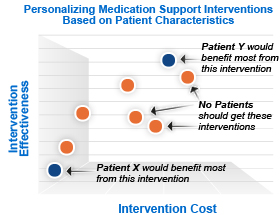
    Those of you that have heard me speak know that I look at this topic of predicting adherence both from an area of fascination along with the eye of a skeptic.  While I love the concept of predicting someone’s adherence and therefore determining how to best support them from an intervention approach, I also believe that the general predictors are pretty straightforward:

    1. Number of medications
    2. Plan design (i.e., cost)
    3. Gender
    4. Health literacy and engagement (see PAM score research)

    And, this is a hot topic (see post on FICO adherence score).  You can see my prior posts on some different studies, on the Merck Estimator, and some notes from the NEHI event on this topic.  It generated a good dialogue on Kevin MD’s blog when I talked about paying MD for adherence.

    I had a chance to talk with Josh Benner the CEO of RxAnte the other day.  It sounds very interesting, and they have an impressive team assembled.  In general, they’re focused on:

    • Predictive modeling
    • Decision rules
    • Monitoring and managing claims to track adherence
    • Evaluating effectiveness of interventions
    • And creating a learning system

    There are definitely some correlations to the work we do at Silverlink Communications around adherence.  We’re helping clients determine a communication strategy that might include call center agents, direct mail, automated calls, e-mail, SMS, mobile, or web solutions.  We’re looking at segmentation and prioritization.  We’re looking at past behavior and messaging.  The goal is how to best spend resources to drive health outcomes from primary adherence to sustaining adherence.  This is a challenge, and we all need to build upon the work that each other is doing to improve in this area.  We have a huge problem globally with adherence.

    Why People Under 35 Are Stressed

    This is a great list from what Beth Braverman calls “The Beaten Generation” looking at what’s happened since 2005:

    • Their home equity has dropped 51%
    • Their net worth is down 55%.
    • Their student debt is up 19%.
    • Unemployment for college grads is up 64%.
    • Their income is down 4.5%
    • 31% more are living with their parents.
    • The birth rate is down 7.1%.
    • 22% less think they’ll be able to retire by age 65.

    And, we wonder why they’re pessimistic…

    Stressed Out Workers Spend 2X On Healthcare

    Are you stressed out? In today’s economy, many people are. Whether it’s being a caregiver, your job, or other concerns (like just paying the bills), have you ever thought about how much that costs you?

    According to some data shared by Money Magazine, here are some examples of stress related ailments and their average annual costs:

    • Obesity – $2,600-$4,900
    • Back Pain – $1,300
    • Insomnia – $200-$1,200
    • Hypertension – $1,100
    • Teeth Grinding – $200-$1,100

    That’s real money!

    Some of their suggestions (other than going on a long vacation):

    1. Take advantage of the EAP (Employee Assistance Program) that your company might offer.
    2. Use the wellness programs that your employer might offer (since 74% of them do offer something).
    3. Go see a therapist and look into CBT (cognitive behavioral therapy).
    4. Workout.
    5. Take a break from e-mail (or your smartphone and constant Facebook updates).
    6. Stop multi-tasking.
    7. Meditate.

    (Beat Stress For Less by Kate Ashford)