Archive | Research RSS feed for this section

Double Whammy: Lose Job and Become Sicker

A study released earlier this year suggests that losing your job can increase your odds of developing a new stress-related health problem by about 80%.  (read more)
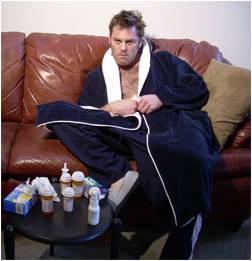
The study also suggests that just the threat of losing your job can do this and that those that keep their job are also at risk.  Oh well…If you’re a fatalist (like Michelle Obama), then you’re pretty much doomed in this economy.  But the reality is that life is stacked against you.  You need to take the bull by the horns and be responsible for your healthcare otherwise you enter that death spiral (literally).  And, being unhealthy will cost you more – medicine, physician visits, life insurance premiums, individual health insurance costs, absenteeism, salary (see below).

“Economists Susan Averett and Sanders Korenman studied the effects of obesity on wages, using a sample consisting of individuals aged 16-24 in 1981 who were 23-31 in 1988. They showed that women who were obese according to their Body Mass Index (BMI) in both 1981 and 1988 earned 17 percent lower wages on average than women within their recommended BMI range.

Women are not the only ones to suffer discrimination based on appearance. While obesity had a slightly negative effect on a man’s earning power, height seems to play a much more significant role in determining a man’s salary, with shorter men getting the “short end of the stick.”

So, one of the important things to do is understand the impact of stress and focus on stress management (see tips).  Regular exercise is a good way to help with this (and helps with your overall health and weight management).

 “Stress can increase blood pressure and heart rate, which can tax the heart.  We’re seeing more people who are putting on weight because they aren’t eating well under stress.”  (Marc Eisenberg, MD, Columbia University)

[P.S., Don’t forget that if you like these blog postings that you can get them sent to you an e-mail every time I post.  To get that, simply sign up here.)

Brand Drugs That Might Lose Patent In 2010

Here’s a short list of the big drugs that might lose patent protection (i.e., have a chemically equivalent generic become available) in 2010.  This is always subject to change and is based on data from PBMI which is summarized from presentations at the AMCP

2010 Aricept® donepezil Alzheimer’s disease
  Cozaar® losartan High blood pressure
  Effexor XR® venlafaxine Depression, panic disorder
  Flomax® tamsulosin Benign prostatic hypertropy
  Hyzaar® hydrochlorothiazide and losartan High blood pressure

Blending Social Media and Healthcare

There is certainly lots of talk in healthcare around incentives.  What incentives will drive people to behave healthier – peer pressure, cash, non-monetary incentives, competitions (e.g., The Biggest Loser), or lower copays and deductibles.

There is also lots of talk about social media.  There have been lots of studies showing the power of your friends to influence your behavior – smoking, weight loss. 

Separately, I continue to hear more and more stories about agencies and lawyers using social media to find out about what people are really doing.  For example, my friend’s mom was recently on a jury of someone suing a physician for malpractice.  She claimed she had limited use of her legs.  But, the physician’s lawyer accessed her facebook page and saw her talking about all the stuff she was doing now that she felt better.  Oops.

Before I paint my future scenario, let me toss out one example that really got me thinking.  Burger King recently created the “Whopper Sacrifice” application for Facebook.  You received a free Whopper if you would delete 10 of your friends from your Facebook account.  23,000 users did it before they took it down.

So, if people would “sacrifice” their friends for a Whopper, what would people do for a 10% reduction in their premiums [or some siginificant savings on healthcare]?  Could companies get people [and use social media to track it] to spend more time with their thin friends that don’t drink or smoke and regularly exercise and get 8 hours of sleep a night?  Assuming the research is true, this would dramatically reduce costs and make those people healthier. 


PBM Market Share

I was looking for something the other day and stumbled upon this survey from earlier this year. I modified it to add the Wellpoint NextRx lives to the Express Scripts lives, but I wasn’t sure how to reconcile the Walgreens numbers (they are listed twice) and didn’t see any lives for RxAmerica which is now part of CVS Caremark.

Company

Rx Covered Lives

Market Share

Express Scripts / CuraScript / Wellpoint NextRx

90,049,000

13.20%

CVS/Caremark Rx, Inc.

82,000,000

12.02%

Walgreens-OptionCare

75,000,000

10.99%

ICORE Healthcare, Inc.

60,000,000

8.79%

Medco Health Solutions, Inc.

60,000,000

8.79%

NovoLogix (formerly Ancillary Care Management)

40,000,000

5.86%

Argus Health Systems, Inc.

28,600,000

4.19%

MedImpact Healthcare Systems, Inc.

27,000,000

3.96%

HealthTrans

15,300,000

2.24%

Prime Therapeutics, LLC

14,700,000

2.15%


The other thing to note here that we always joke about is how 70% of the market is equal to almost 500M lives (more than the US population). It has to do with people who have mail with one PBM, specialty with another PBM, and claims processing with another PBM (for example).

It is an interesting space right now. Two of the top 10 PBMs are actively looking for a CEO/President – CVS Caremark and Prime Therapeutics. You have seen lots of press releases recently from companies like Express Scripts, Medco, and CVS Caremark on new partnerships and technologies that they are working with. I also think you’ve seen a shift in research from Express Scripts to Medco which has been publishing a lot more recently. And, you’ve also seen several Medco alumni go to CVS Caremark at very senior positions.

72% of People Prefer to Listen W/ Right Ear

Whisper ear

This is logical since the left side of the brain and right ear specialize in language processing.

But, perhaps the more interesting part of this study by Luca Tommasi and Daniele Marzoli of the University Gabriele d’Annunzio in Italy is that requests spoken into right ears generated more positive responses than those spoken into the left ear.  Think about that on your next sales call. 


Employers Use of Utilization Management Tools

Based on study by the Pharmacy Benefit Management Institute (PBMI) of 417 employers, here is a ranked list of Utilization Management (UM) tools used in 2009 for overall plan design.  The survey breaks it down further by class.

  • Refill Too Soon Supply Limit – 90%
  • Quantity Limits – 89%
  • Prior Authorization – 81%
  • Disease Management – 69%
  • Step Therapy – 59%
  • Therapeutic Substitution – 55%
  • Retrospective Drug Utilization Review (RDUR) – 47%
  • Outbound Telephone Calls – 44%
  • Dose Optimization – 44%
  • Face-to-Face Pharmacist Consults – 36%
  • Pill Splitting – 29%
  • Prescriber Profiling – 23%
  • Copayment Relief or Waivers – 20%
  • Generic Sampling – 16%
  • Academic Detailing of Prescribers – 11%

What I think would be interesting to know is which of these is provided by their PBM or managed care company versus which ones are they directly sourcing?

Influencing Behavior Thru Smell?

We’re always taught as kids to think about all the senses, but that seems to go out the window at an early age. We start focusing on print or TV or some limited set of modes.

I’ve started to see more things lately around smell. I saw a simple one yesterday that I thought I would highlight.

“What we wondered was whether you could regulate ethical behavior through cleanliness.  We found that you could.”  [Katie Liljenquist, asst professor at Brigham Young University]

In an experiment, people who sat is a room with citrus-scented Windex were more likely to act fairly and charitably than those in an unscented room.  In an experiment from last year, the researchers showed that people were more judmental and critical about certain moral issues when exposed to fart-scented spray.  [I’m not sure how people come up with these studies.]

Anyways, I doubt we’re going to start using scratch-n-sniff stickers or seeing TVs with scent dispensers, but I think it’s an interesting question to think about when trying to influence health behavior.  How should a doctor’s office smell?  Would your workplace be healthier if it smelled different?  Would I choose different foods at the cafeteria if it had a different scent?

Diabetes Facts From The ADA

November is Diabetes Month from the American Diabetes Association. You can learn more at www.stopdiabetes.com.

From their fact sheet, here are some key facts.

Prevalence

  • Nearly 24 million people have type 1 or type 2 diabetes.
  • Another 57 million people have pre-diabetes and are at risk for developing type 2 diabetes.
  • One out of every 3 children will face a future with diabetes if current trends continue.

The Toll on Health

  • The death rate from diabetes continues to climb. Since 1987, the death rate due to diabetes has increased by 45%, while the death rates due to cancer, heart disease, and stroke have declined.
  • About 60-70% of people with diabetes have mild to severe forms of nerve damage that could result in pain in the feet or hands, slowed digestion, sexual dysfunction, and other nerve problems.
  • The rate of amputation for people with diabetes is 10 times higher than for people without diabetes.
  • Two out of three people with diabetes die from heart disease or stroke.
  • Diabetes is the leading cause of new cases of blindness among adults.
  • Diabetes is the leading cause of kidney failure.

Cost of Diabetes

  • The total national cost of diagnosed diabetes in the United States is $174 billion.
  • Direct medical costs reach $116 billion, and the average medical expenditure among people with diabetes is 2.3 times higher than those without the disease.
  • Indirect costs amount to $58 billion (disability, work loss, premature mortality).
  • The cost of caring for someone with diabetes is $1 out of every $5 in total healthcare costs.

Industries That People Trust

Given all the healthcare debate this year, it will be interesting to see how that influences the annual Harris Interactive poll on industries that people trust.  (They should include government as an industry to see how that stacks up.)

Let’s look back at the 2008 results to the two key questions (from a healthcare perspective):

“Which of these industries do you think should be more regulated by government – for example for health, safety or environmental reasons – than they are now?”

  • Pharmaceutical and drug companies – 49%
  • Health insurance companies – 49%
  • Managed care companies – 39%
  • Hospitals – 27%

“Which of these industries do you think are generally honest and trustworthy – so that you normally believe a statement by a company in that industry?”

  • Hospitals – 31%
  • Pharmaceutical and drug companies – 10%
  • Health insurance companies – 7%
  • Managed care companies – 5%

It seems strange to me that more people want the drug companies to be more regulated than managed care, but that they trust the drug companies more. 

I’d also love to know how many of those people had seen Sicko (the Michael Moore movie). 

I would suspect that 2009 will show a huge spike in regulation around banking and a lack of trust of wall street.

Telling The World Your Status

Will the habit of “status updates” be a good thing for healthcare?  We are encouraged to keep food journals, to track medication, to track facts about our conditions, and to report on many other aspects of our life.  Those things can be very helpful for patients in their discussions with their physicians.

So, as people increasingly become used to track and reporting what their doing, will that make it more normal to track these healthcare statistics?

Here’s some recent facts from a Pew report on Twitter and Status Updating:

  • 19% of Internet users now do some type of status reporting
  • The more devices you own (laptop, Internet enabled phone, Kindle) the more likely you are to update your status…39% of those with four devices.
  • The average age of people using the following (and trend versus last year):

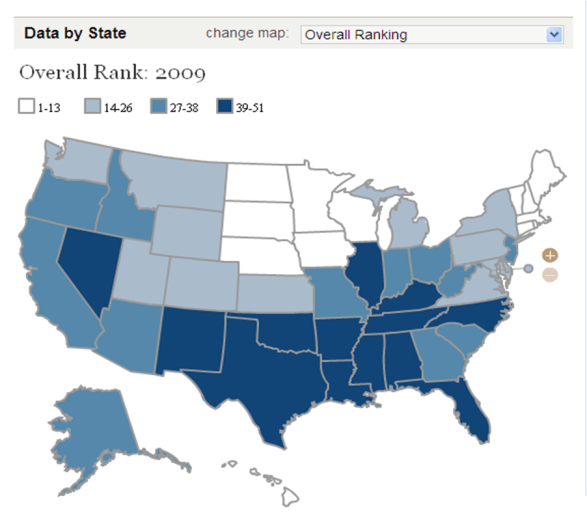
What Does Your State Say About Your Health

Forbes recently had an article about the most medicated states.  There has always been wide variation which is the key point here.  Some of this is attibuted to health and some of it to physician behavior. 

  • First, let me point out a flaw.  The author assumes that 7% of claims are mail and aren’t meaningful.  Well, you have to adjust that by days supply which means its more like 18-20% of volume which is meaningful.
  • Second, I think it’d be interesting to include OTC (over-the-counter) information here especially with things like Claritin and Prilosec going OTC in the past 5 years.
  • Third, I think the following quote from the article is very scary.

“Heightened awareness of certain drugs and conditions may be another explanation. In 2005, pharmaceutical companies spent $122 million on direct-to-consumer antidepressant advertising–almost four times what they spent in 1999. A 2005 study in JAMA found that 55% of participants who requested a brand-name drug received an antidepressant; only 10% of patients who had similar symptoms but made no request received an antidepressant.”

There is also another study out that ranks states – Commonwealth Fund State Scorecard on Health System Performance.

“Where you live matters for how long you live and how healthy you live”  (Cathy Schoen, VP, Commonwealth Fund)

State Health Rankings

Average Employee Healthcare Out-of-Pocket $1,938 (2010e)

In an article “It’s Health Enrollment Time” (10/6/09, USAToday), Hewitt is quoted as projecting that employee’s healthcare costs will increase by 10% in 2010 moving their costs up to $1,938.  The article also takes about 3 things you should expect:

  1. Continued movement to co-insurance versus co-payments. 
  2. More high-deductible plans.
  3. More dependent audits. (i.e., looking for kids that have graduated or others than can no longer be called dependents)

Consumer Preferences

The concept of preference-based marketing has been around for a long-time and continues to become a hotter issue especially in healthcare.  The challenge, of course, is balancing what consumers know they want versus what they actually use.  Ask anyone if they want an automated call, and the immediate answer is no.  People think about those annoying “robo-calls” that use text-to-speech (TTS), have a pause when you pick up the phone, and are not personalized at.

On the flipside, look at the data and outcomes which intelligence, voice-based call systems produce…it’s amazing.  People pick up the phone.  People interact with the technology.  And, the calls are highly personalized.

But, we are at an interesting crossroads about companies beginning to think thru and capture information about you.  Do you want to be called at home or on your mobile phone?  When is it okay to text you?  What communications should come in print versus e-mail?

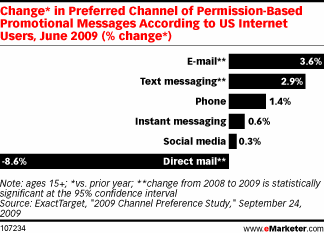
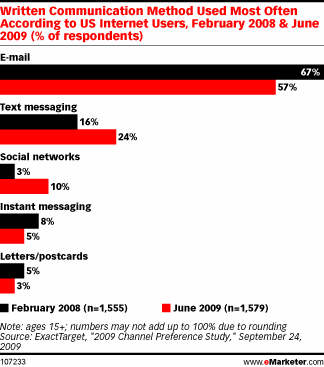
“Just 32% of marketing decision-makers surveyed in July 2009 said they knew how their customers behaved across channels, and only 37% were aware of consumers’ channel preferences.”  (ExactTarget 2009 Channel Preferences Survey)

The survey also showed changes in channel choice.

Change in preferences

Written format used

Top Drivers of Health Care Costs 2010

A recent Managed Healthcare Executive article (Oct 2009) provides survey data from 650 people at health plans, PBMs, disease management companies, and hospitals.  [As a side note, I was really surprised at how far off this group’s estimates were relative to the impact of prescription costs…which are generally in the 10-12% of total healthcare costs.]

Top Drivers of Cost 2010

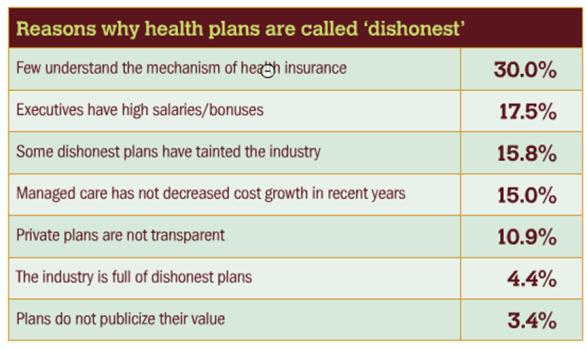
Another survey I found interesting in the article was why health plans are perceived as dishonest.

Why Healthplans Perceived DishonestAnother part of the survey had 7.8% of people saying that patients (consumers) are less interested in health and that the primary reasons for lack of engagement were:
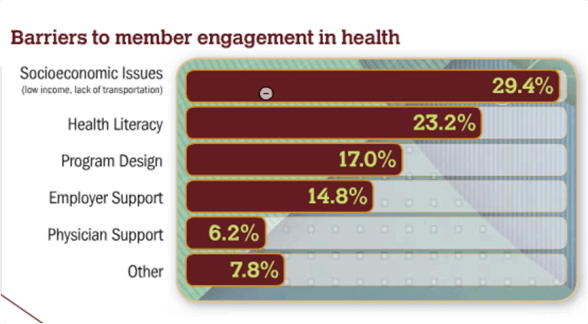


Barriers to mbr engagement

Americans Don’t Expect Healthcare Changes To Be Positive

In the latest poll by USA Today and Gallup, the majority of people expect health care legislation to either have no change or make things worse.  (A $1T for neutral would be a problem.)

Here are the results from four questions:

  1. Quality of health care you and your family receive.  [19% get better; 40% no change; 39% get worse]
  2. Health care coverage you and your family receive.  [20% get better; 40% no change; 37% get worse]
  3. Insurance company requirements you have to meet to get certain treatments covered.  [25% get better; 25% no change; 46% get worse]
  4. Cost you and your family pay for health care.  [22% get better; 27% no change; 49% get worse]

Get Ready To Pay More For Healthcare

As expected, employers are going to push more cost to employees (those lucky to still have coverage) in 2010.  Everyone should have been expecting this.  In an article on CNNMoney.com, a consultant from Watson Wyatt predicts 10-20% increased cost.  A consultant from Mercer says the catch phrase will be “taking responsibility”.

If anything, this should help Obama and health reform.  Having a huge cost burden pushed to you in one of the worse economies will force people to make tougher decisions and could have a negative impact on overall health.  Additionally, it will push more people into high-deductible plans which require more transparency around cost and quality which while better these days still isn’t there for the masses.

broken piggy bank

Oncology Specialty Spend Hits 5% (Medco)

A few weeks ago, Medco Health Solutions released some compelling (or scary) statistics on oncology spend:

  • Equals 5% of overall prescription costs
  • Grew at rate of 15.1% last year (trailing only autoimmune and multiple sclerosis within specialty drug spend)
  • Expected sales to be $80B by 2012
  • More than 800 drugs in the pipeline
  • 1.48M new diagnoses expected in 2009
  • Costs are typically more than $20,000 for a 12-week therapy and sometimes $10,000 per month

The good news is that people are living longer with the American Cancer Society saying that the 5-year survival rate is up to 66% for all cancers (1996-2004) versus 50% (1975-1977).

BUT, the treatments have lots of side effects which is creating an ancillary market around “supportive care therapies” to manage the side effects.  (Drugs to treat drugs…I understand it but it still seems wrong.)

13 of Top 50 Jobs in Healthcare

guy kicking

CNNMoney published a survey on the Top 50 Jobs.  It looks at median pay, top pay, 10-year growth rate, total current employment, flexibility, benefit to society, personal satisfaction, and stress.

Of those 50 jobs, 13 of them are health related:

2 – Physician Assistant

4 – Nurse Practitioner

7 – Physical Therapist

11 – Anesthesiologist

13 – Pharmacist

14 – Occupational Therapist

15 – Nurse Anesthetist

19 – Physician / General Practice

22 – Physician / Ob-Gyn

23 – Clinical Psychologist

24 – Psychiatrist

25 – Veternarian

44 – Pharmaceutical Sales Rep (I thought this job was disappearing)

Patient Choice in Health IT

If you don’t follow Susannah Fox‘s research and presentations, you should.  She works for the Pew Internet and American Life Project.  Here is a recent post about a recent presentation on Patient Choice in Health Information Technology (HIT).  Just pulling a few facts from it…

Our surveys find that the internet is increasingly helpful to American adults seeking health information.

  • 60% of e-patients (or 42% of all adults) say they or someone they know has been helped by following medical advice or health information found on the internet. That’s an increase from 2006 when 31% of e-patients (25% of all adults) said that.
  • 3% of e-patients say they or someone they know has been harmed by following medical advice or health information found on the internet, a number that has remained stable since 2006.

BUT, she also points out…

“There is no evidence that the internet is replacing health professionals, or Dr. Mom, but rather it is enabling a new way to connect to information and resources.”

Mail Order Pharmacy – Good or Bad (Two Surveys)

I love when two parties (both with their own agenda) publish data that clearly shows that they are right.  Now, in this case, one quotes a 3rd party so I do give them more credibility.  And, the other (as I will show below) seems to not take the patient’s responsibility in mind.

First, PCMA (Pharmaceutical Care Management Association) publishes research from JD Power on pharmacy satisfaction.  It shows that insured and non-insured patients are generally satisfied with their pharmacy experience.  Mail order clearly came out on top of all types of pharmacies.  (Given that only 12% of people know the name of their pharmacist, I would expect them to be more closely clustered together.)

The J.D. Power and Associates study measured customer satisfaction with the pharmacy experience across major national retail drug store chains, mass merchandisers and supermarket stores, and mail-order channels. The study examines seven factors that contribute to consumer satisfaction with brick-and-mortar pharmacies and five factors that determine satisfaction with mail-order pharmacies. The average overall satisfaction index for each of the pharmacy distribution channels were:

  • Mail-order pharmacies: 834
  • Supermarket pharmacies: 820
  • Mass merchandiser pharmacies: 801
  • Retail chain pharmacies: 798

Then (no big surprise here) NCPA (National Community Pharmacy Association) puts out a survey of 400 patients showing how dissatisfied they are with mail order.

  • They are unhappy being forced to use a lower cost pharmacy.  (GVA – get used to it as part of healthcare reform)
  • They complain that their prescriptions don’t arrive on time (which could impact adherence).  (GVA – did they call in time or wait for the last minute…were they adherent to begin with)
  • They complain about their medications changing (i.e., titrating to a different strength).  (GVA – they shouldn’t move to mail until they’ve stabilized and any mandatory plan I’ve ever seen required at least 2 months as the same strength before requiring movement to mail)
  • They complain about getting different medications than what they ordered.  (GVA – I bet most of that was people getting the chemically equivalent generic.)

This isn’t something that will easily get solved.  The FUD (fear, uncertainty, and doubt) out there rules in many cases and statistical anomolies are what get discussed.  I would love to compare complaint rates, error rates, and satisfaction for patients that use both channels (retail and mail).

Mail Order Retention (or Churn)

It is fascinating how life comes full circle.  I remember when I worked on the Sprint Data Warehousing project back in the 90’s.  At the time, it was the first 1 terrabyte warehouse being built, and we were using some very cool technology from Microstrategy which offered the first web-based DSS (decision support system).  One of the key components of the reporting solution and business driver model we created was churn (or retention).  You can look at it either way.

But, this is a classic example of focusing on the right metric and that you have to measure what matters (to throw out a few oldies but goodies).  Retention is a pretty new concept within the pharmacy world especially within mail order pharmacy.  Growth has been pretty constant for the past decade until the past 18 months.  Now, everyone is trying to figure out what’s happening and why.

  • Are people going to Wal-Mart and paying cash?  (Or other similar card programs at Walgreen’s and CVS?)
  • Are people simply filling less prescriptions?
  • Are people skipping doses and doing other things to stretch out their prescriptions?
  • Are people trying over-the-counter medications or using samples?

There are lots of questions that matter here.  And, you have to think through the mail order process.  How do patients experience it?  Why do they leave?  There’s lot of research that’s been done by the different PBMs here.

I had a chance to talk with Drug Benefit News about this the other day.  You can read the story here.  Here’s a piece of what we discussed:

Depending on the payer, mail-order customer retention rates vary from 75% to 95%, according to Van Antwerp. “Very few people left because of service issues,” he explains. “The majority left because of refill issues. They got to the point where they forgot to refill an important medication and couldn’t get it within a 24-hour time period…or it was up for renewal and they needed to get the next prescription written.”

To address that, some PBMs are working to develop better refill-reminder programs, including moving some customers to auto-refill, Van Antwerp says. “When you look at refill patterns, some people chronically refill too early so they hit that ‘refill too soon’ reject ,” he explains. “Others chronically refill too late.”

“Secondarily, we look at the channel that they’re using to fill,” he adds. “Some people still mail in their refill via ‘snail mail.’ Others use IVR [i.e., an interactive voice-response system].” His firm is working with some PBMs to help them understand each enrollee’s historical behavior, and then customize a response that helps improve mail-order retention while moving the member to the lowest-cost channel for ordering refills — either IVR or the member portal, Van Antwerp says.

Why Wellness Matters

I’ve had an intense month so I’m hoping to catch up on my big pile of blogging ideas this week.  We’ll see.

Here’s one I pulled the other day.  I liked this graphic from MVP Healthcare in their corporate profile.

MVP Wellness Stats

It hammers home all the key points – regression to the mean, focus on the high cost individuals, and cost is avoidable if you focus on preventation and education and successfully engage the consumer.

Phone Calls Improve Quality of Life

“Asking nurses to reach out to people who have advanced cancer – even if only by phone – can improve patients’ mood and quality of life” – Study in Journal of the American Medical Association

This program used nurses trained in palliative care and compared people with regular follow-up care with those that received these phone based interventions.  The nurses discussed issues such as coping, communication with their MD, finding support, managing symptoms, and planning for the end-of-life.

Again, a great reinforcement of the value of communications in healthcare.

How You Ask The Question Matters – Pre-Existing Conditions

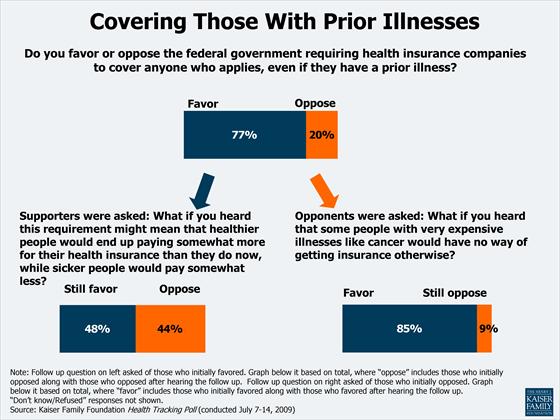
All of those in the communications space realize that linguistics do matter especially in certain healthcare situations.  I think this is a great example of how politics and healthcare are playing out.  No one really understands everything.  They understand and get excited (pro or con) based on the soundbite.

Covering_Those_With_Prior_Illness

Consumers Fear Gov’t Involvement More Than Insurers

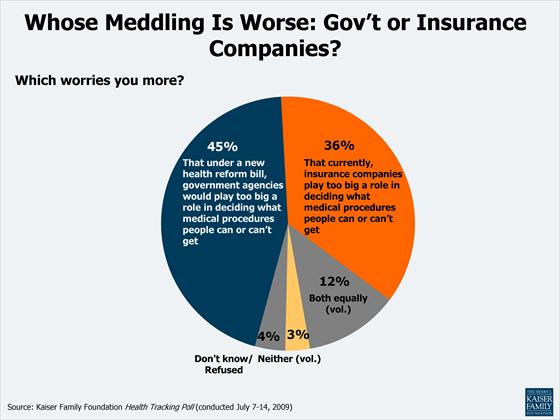
This was a pleasant surprise since I completely agree.  Based on this Kaiser survey, consumers worry more about the gov’t being involved in health care decisions than healthcare insurers.  Considering we always worry about consumer awareness and trust in healthcare entities, I think this is a positive.

Whose_Meddling_is_Worse_Govt_or_Insurance_Companies

22:1 ROI on Specialty Refills / Adherence

I always get very skeptical when an ROI goes above 3:1 so I was a little shocked to do some retrospective analysis with one of our Specialty Pharmacy clients at Silverlink and come up with an ROI that was 22:1 (or 2,200% ROI).  And, this was based on a pretty simple application.  (Of course it helps that specialty drugs are expensive and have a reasonable margin in some cases.)

But, for those of you interested, here are a few factoids:

  • A simple refill reminder program saved $12K per month in agents by automating the process
  • The program accelerated the refill timing within a 30-day period leading to less gaps-in-care
  • The program had almost a 20 percentage point jump in refill rates (a proxy for adherence)

It also validated a few things for us and the client:

  • As observed nationally, adherence has gone down over time (even on specialty medications) during this recession.
  • “I forgot” is still a common issue around adherence and solutions to address that should be the first thing that companies do.

Of course, the work doesn’t stop there.  We obviously want to continue our work on longitudinal analysis to look at MPR (Medication Possession Ratio) over time.  We also are working with them on addressing the other barriers on these medications (e.g., cost, side effects) by customizing communications by condition and based on the individual patient attributes.

If you’re interested in hearing more about how Silverlink works with clients on adherence (or tactically on refill automation), please feel free to reach out to me.

Deloitte 2009 Survey of Health Care Consumers

This is based on a Deloitte web-survey of 4,001 Americans in October 2008.

  • 73% are confused about how the US healthcare system works
  • Over 1/2 believe that 50% or more of healthcare dollars are wasted
  • 7 of 8 Americans believe themselves to be in good health
  • 1 in 3 are interested in working with a health “coach” to help them create and stick to a plan
  • 68% are interested in home monitoring devices that would check their condition and send results to their MD
  • 3 in 5 say financial penalties would improve their adherence
  • Only 1 in 3 Rx users say they compared treatment options
  • 22% say they looked or asked for information about a health insurance plan in the last 12 months
  • 9% have a PHR
  • Physicians who are more prescriptive (paternal) were preferred by a ratio of 2:1
  • 8 in 10 say they would consider switching from a physician recommended Rx if a pharmacist (RPh) indicated a cheaper alternative was available
  • Only 12% said they understood the term – biologics (should they?)
  • 35% are willing to accept a smaller provider network for a reduced premium and lower copayments
  • Only 25% favor increasing taxes to help cover the uninsured

Their major conclusions were:

  1. Health care is a consumer market
  2. The health care market is not homogeneous
  3. Cost concerns are changing behaviors
  4. Consumers want holistic care and resources to pursue wellness and healthy living
  5. Consumers embrace innovations that enhance self-care, convenience, personalization, and control of their personal health information