Archive | Research RSS feed for this section

Handwriting Analysis

This has always been a topic that fascinates me.  Learning from someone’s handwriting.  So I liked seeing a cliff note summary of The Complete Idiot’s Guide to Handwriting Analysis by Sheila Lowe in Spirit Magazine.  I am not sure I would be ready for this to be part of an employment process although I have taken personality tests such as Myers-Briggs (test yourself here) before.

Here are a couple of the items on handwriting:

  • Balanced margins; clear spaces between words = ability to plan ahead
  • All the letters connected in every word = logical thinker who enjoys debating to the point of nitpicking
  • Abrupt breaks between letters = person who jumps to conclusions without the benefit of logic
  • Large letters = loves the spotlight
  • Small letters = finds more satisfaction in working then socializing
  • Lots of rounded letters = outgoing person
  • Straight lines and angles = aggressive person who pushes hard for what they want
  • Lots of loops and close spaces between words = big imagination and need for social contact
  • Few loops and wide spaces between words = intellectual loner
  • Thin writing with illegible words = creative genius OR slippery character
  • Hidden personality traits are seen in the lower loops of letters g, y, f, p, and z):
    • Moderately wide loop =  welcomes a variety of experiences
    • Skinny loop = sticky to what they know
    • Extremely wide loops = bragger who doesn’t follow through
  • The upper loop slant measures emotional responsiveness:
    • Extreme right slant = emotionally explosive
    • Moderate right slant = warm and responsive
    • Vertical = cool headed
    • Left slant = friendly on the surface but hard to get to know

Now, I know you are dying to go look at your writing and see what it says about you.

Heart Attack Not Urgent Enough At ER

With an increase of Emergency Room (ER) patients from 93.4M to 110.2M from 1997 to 2004 and a reduction in 24-hour ERs by 12%, it now takes an average of 30 minutes to get seen. If you are a heart attack victim, it takes an average of 20 minutes with 25% of the cases taking almost an hour to get seen. Since every minute counts, that seems pretty worrisome. Where else are you supposed to go with a heart attack? [This is all according to a new study in Health Affairs that is described in USA Today.]

“We can no longer guarantee that a bed is going to be available when you have your heart attack.” Linda Lawrence, president of the American College of Emergency Physicians

Interestingly, when I was looking at this article, I clicked through a few links and found a CMS tool to compare hospitals called Hospital Compare. Just selecting a few local hospitals and looking at some metrics raised some questions. Here is one quick metric. Obviously, like anything, a single metric in isolation isn’t the best way to judge, but it certainly might make you do more research.  [HINT – Click on the image below to be able to read it.]

hospital-compare-graph.jpg

Using Thermometers To Avoid Foot Ulcers

600,000 diabetics get foot ulcers each year and over 10% of those lead to amputation of toes, feet, and lower legs.  A study discussed in USA Today showed that almost 2/3rds of those ulcers could be avoided by using a thermometer to identify whether an ulcer is developing.  So simple…so much savings (pain and financially)

So, assuming there isn’t some analysis or clinical bias that I don’t know about, this seems like a low-hanging opportunity for managed care companies.  What are you doing to reach out to your patients, get them a thermometer, collect their data, and remind them to use it on some regularity?

Coordinated Communications

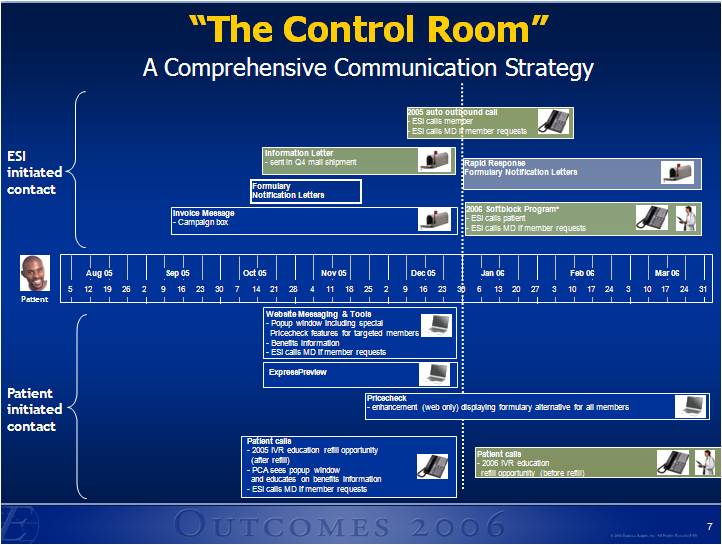
A few days ago, I talked about a press release from Express Scripts around formulary change programs to encourage patients to move to a different drug (same therapeutic category different chemical entity). I mentioned in there a single frame that I created to organize the program. Happily, I found it publicly so I can share it. Here it is. The key points here were – identifying the different constituents, determining the best mode of communication, coordinating across channels, and determining how to sequence communications based on events (aka triggers) which might be a date or a percentage of their prior prescription being used.

zocor-control-room.jpg

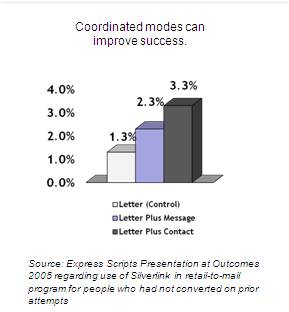
While I was searching, I also found the presentation we gave on how multi-modal coordinations using a letter and an automated call impacted success for my retail-to-mail program. The key to remember here is that we targeted people who had already received one or more letters and had not responded. The results were great.

esi-rtm-results.jpg

Is The Perception Of Health Skewed By Your Health?

I was reading a story in the WSJ (1/12-13/08) about “How the Rich Define Rich” and wondered if those that are healthy have a different perception of healthy.  Is it an endless path or is there an end goal?  I certainly think that those that are healthy have a different perception of what it means to be healthy.  I would believe they are more likely to buy natural foods, exercise, and take other actions to continue to be healthy.

“Of the respondents, 45% said $5 million or more [is how much it takes to be rich], 25% said $25 million or more, and 8% said $100 million.”  Survey of affluent households with investible assets of $500,000 or more.

For example, a marathon runner would view a 30-minute workout as pretty limited.  But, someone who doesn’t workout would think of a 30-minute workout as pretty strenuous.   Obviously, this is important when you interact with them.  The message you deliver to motivate those 3 different groups may need to be very different.  Given some of the research out last year about your health being motivated by the health of your friends, there is clearly a Health 2.0 opportunity to create communities and health activists to motivate people to improve their health together.

Pharmacy Satisfaction: Communication is Key

It’s always great when you find research that clearly reinforces one of the things you always talk about – communications. At PharmacySatisfaction.com which is a website sponsored by WilsonRx and Boehringer Ingelheim, it lists the 10 steps to customer satisfaction for a pharmacy. A few key items that I think are relevant to a lot of what I talk about and do with customers in pharmacy and healthcare in general:

  1. Know your customer (database marketing / management)
  2. Speak up (you’re the expert…help them)
  3. Educate the customer (reach out to them proactively and help them with information)
  4. People skills (understand that different people respond to different messages, mediums, voices, times of day, etc)
  5. Address compliance (refill reminders)

It also made me think about two topics which I think are relevant to communications success – Linguistics and Nuerosciences. As you might expect, there are lots of blogs on both. Here is a list of blogs and some definitions:

Linguistics is the study of the nature, structure, and variation of language, including phonetics, phonology, morphology, syntax, semantics, sociolinguistics, and pragmatics (per The American Heritage Dictionary of the English Language).


Neuroscience is a branch (as neurophysiology) of the life sciences that deals with the anatomy, physiology, biochemistry, or molecular biology of nerves and nervous tissue and especially their relation to behavior and learning (per Merriam-Webster’s Medical Dictionary).

Enhanced Communications Have An Impact

On January 4th, Express Scripts put out a press release about consumers using a home delivery pharmacy being more likely to choose lower-cost therapies. It is an interesting study as published in the December 2007 issue of the Annals of Pharmacotherapy. I had the fun job of designing the program as one of my projects before I left Express Scripts. I will never forget my boss coming to me and asking me to think about how we could drive market share movement of several large drugs if we took them off formulary (i.e., Lipitor). He handed me a white paper written the year before on what to do. Since he was new, I didn’t give him too much grief since I was the author of the white paper from the year earlier about what we should have been doing for the past 12-months to prepare for this.

Anyways, I pulled a lot of input and created a great single-frame image which showed the major constituents and the tools/tactics we would use to drive market share both pre-formulary change and post-formulary change. I went back to my day job, but the image became the roadmap for a multi-modal communications strategy. As was my intention (since I was responsible for mail order), it looks like it worked both to move share and to show how mail could be better than retail.

Here are a few of the highlights from the press release:

  • Express Scripts evaluated consumer behavior after they made a change to the formulary positioning of cholesterol lowering drugs to prepare for Zocor going generic in mid-2006.
  • They looked at more than 200,000 retail and mail patients.
  • All patients got a formulary notification letter informing them of their therapeutic options, materials for their physician, a website for more information, and toll-free number to call. [2 years earlier I had created the business case for mass mailings of formulary notification letters.]
  • The IVR refill line included messaging about switching to a formulary agent, and we placed automated outbound calls to mail order patients [using Silverlink Communications].
  • Patients that were interested were queued up for a change at mail after 1/1/06 (so as not to lose rebates for our clients in 2005).
  • Obviously, other plan factors (i.e., copay differentials, step therapy) impacted choice. [I.e., if I only have to pay $5 more per month for a drug that I am used to, I probably won’t switch]
  • The results were great. 52% of the mail order patients and 33% of the retail patients chose to switch therapies.
  • Some of the retail patients were part of a rapid response program in which they received a letter telling them about their options in the therapy class right after they received their first fill of the non-formulary drug in the new year. [another program which I developed and launched for step therapy] Receiving this letter increased their likelihood of switching by 28%. [BTW – we tested this with letters vs. automated calls from Silverlink back in 2005 and the results were very similar.]

“Creating a dialogue with consumers is a crucial factor in successfully changing behavior and delivering value at the consumer level,” explains Emily Cox, Ph.D., senior director of research at Express Scripts. “Home delivery consumers received additional information and were more likely to seek further assistance through the Web and by calling Express Scripts. Enhanced communication clearly has an impact. The effectiveness of the rapid response program for retail consumers also supports the value of enhanced communications.”

As I have mentioned before on the blog, this was a great program. It proved that PBMs can influence market share. I was more than a little disappointed to see that after we moved all these patients to Zocor to take advantage of the generic then company than moves Lipitor back on formulary only to have to ask the patients to switch drugs again. [Fortunately, I was not there for these discussions.]

Did You Know Factoids

I found this great list of factoids or Did You Know statements at PharmacySatisfaction.com. Here were some of my favorites or more interesting ones.

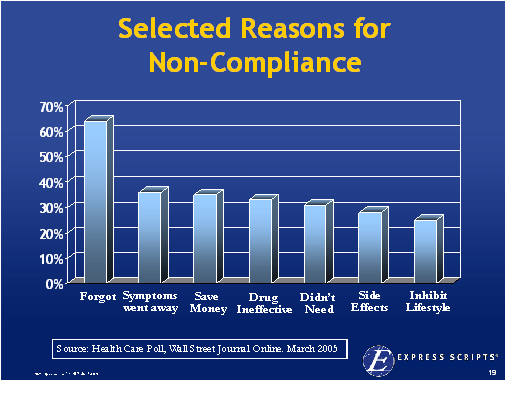
  • The biggest reason for not taking all medications as directed was simply, “I forgot.”
  • The number one concern across all pharmacy users is that their prescriptions are filled accurately.
  • The most useful feature those Web sites offer to them, the survey found, is the ability to order refills online.
  • Nearly three in 10 order their refills online.
  • Customers average three visits each month to their pharmacy.
  • Only about 1-in-5 pharmacy customers, overall, say that they use a loyalty card that provides points, discounts or other savings.
  • While the majority of loyalty card users are satisfied with the expected cost savings by using their card and with the ease of enrolling and understanding the benefits of their card, fewer than 1-in-4 card users are highly satisfied.
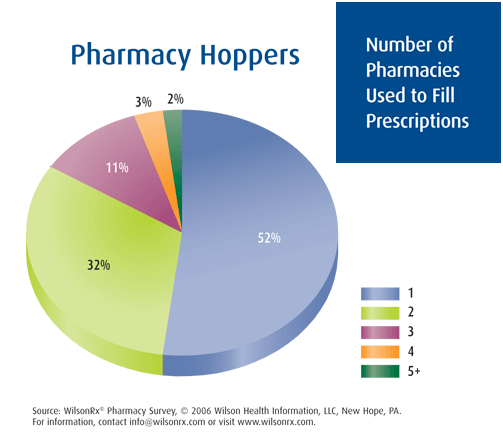
  • The drug store industry remains largely up for grabs, with nearly half of pharmacy customers saying they use more than one pharmacy to fill prescriptions.
  • Pharmacy use varies considerably by population. Chain pharmacies are most commonly used among residents of areas with more than 100,000 people. Independent pharmacies are most commonly used among rural respondents (areas with less than 100,000 people). Use of independent and mass merchant pharmacies decreases as population increases. Chain, food store, mail/online, and clinic pharmacy use tend to increase with population.
  • However, as pharmacy customers age, they are much less likely to use chains and considerably more likely to use mail/online and clinic pharmacies.
  • Seven-out-of-ten pharmacy customers indicate that they “definitely would” or “probably would” use their local pharmacy if they could receive the same amount of medication at the same price as their mail-order pharmacy.
  • The heaviest users of prescriptions are survey respondents in their 60s, averaging 5.4 new scripts and 29.2 refills per year.
  • How long patients have to wait for their scripts to be filled is a key component of customer satisfaction.
  • The average survey respondent is spending a considerable sum each month on drugs at their pharmacy—$82 on average (versus $57 a month on food and groceries at their pharmacy).
  • An average of 85.9% of computer owners/users use the computer to improve their health by looking for information about diseases.
  • Much has been written about the value of closer pharmacist-patient relationships, but Americans seem to feel far more connected to their physicians, dentists and nurses than to their pharmacists. That’s clearly not all pharmacy’s fault; the same survey respondents agreed that they were usually given the opportunity to speak with their pharmacist when filling their last prescription. What’s more, pharmacists ranked a close second to doctors as sources of information about medications.
  • Walgreens’ “Dial-a-Pharmacist” initiative, launched in February 2006, allows non-English speaking patients to connect with pharmacists speaking 14 different languages.
  • Independent pharmacy customers have the most trust in pharmacists, while mail/online customers have the least. Compared to last year, customers of all types of pharmacies place more trust in their pharmacist as a source of information.
  • More than one-third of pharmacy customers failed to fill all their prescriptions last year, and only 35 percent of all respondents said they were fully compliant on the medications they did take. Nevertheless, refill reminders from the pharmacy remain relatively rare, most patients profess.
  • In general, older patients tend to be more compliant than their younger counterparts.

I mentioned poly-pharmacy a few days ago, but here is some data about how many pharmacies patients use.

Forrester on PHRs

In mid-November, Forrester put out a report titled “PHRs: From Evolution to Revolution” by Liz Boehm, their healthcare lead. It’s not my lead area so I didn’t spend the money to buy the report, but here is the executive summary.

Health plans, driven by employer demand and expectations of improved member satisfaction and reduced medical costs, are investing in payer-based personal health records. But consumers have not raced to adopt them. Health plan customer experience professionals are on the hook to not only drive adoption but also engineer low-cost, interactive health support programs that will help members make better choices and save costs. To maximize their chance of success, health plan customer experience professionals need to focus on four critical areas: data management, behavior change, interface best practices, and patient and provider recruitment. This focus will help drive near-term success and position plans to weather the coming changes in the personal health record (PHR) market.

What I found interesting was the list of companies that they interviewed (and who they didn’t talk to).

Book by Kaiser CEO

George Halvorson, the Chairman and CEO of Kaiser Foundation Health Plan and Kaiser Foundation Hospitals, has just published a book called “Health Care Reform Now! A Prescription for Change”. A news clipping service I have sent me a summary from Business Insurance. It is published by John Wiley & Sons and is $27.95. It sounds quite interesting. Here are a few things which the article highlighted.

He says that the US does not have a health care system in place but has a “plethora of uncoordinated, unlinked, economically segregated, operationally limited microsystems…a nonsystem of care.”

He talks about the concentration of spending (based on Kaiser Permanente data):

  • 1% of the US population uses more than 35% of health care dollars
  • 5% uses 60%
  • 10% spends 70%

He talks about the fact that five chronic diseases are responsible for upwards of 70% of the health care costs in the US:

  • Asthma
  • Diabetes
  • Congestive heart failure
  • Coronary artery disease
  • Depression

He talks about the problems that arise when there is no communication between health care silos of care which leads to drug interactions and costly hospitalizations.

I haven’t read it yet, but the article says that he offers solutions for each problem and talks in a conversational and occasionally funny way. He proposes using insurance records to create a type of Electronic Medical Record rather than waiting for the long-term solution of integrated systems. He also proposes using computerized medical records to track quality issues.

Polypharmacy Programs

I am sure that some people are focused on this, but I rarely hear about it.  Although most people go to more than one pharmacy, today’s claims adjudication systems are programed to identify serious issues across pharmacies.  But, since you can’t reject every claim, the edits in the system are focused on the serious issues which might leave some opportunity for improvement.  If you add in OTCs and supplements that people take, there may be opportunities that aren’t captured by the system.

I found some results from a 2003 Premera BC program which I thought were quite impressive.  They built a program that offered a medication review with your physician if you took 5 or more prescriptions.  Their results included:

  • 50 percent of the targeted members brought in their medications for the physicians to review.
  • One out of every three members received prescription changes.
  • Sixty four percent had a medication added.
  • Forty seven percent had one or more medication stopped.
  • Sixty five percent had the dosage of a medication changed.

Given results like this, it would seem like a program everyone should be doing.

Parents on DNA Testing and Mandatory Vaccines

In the Early Fall 2007 Michigan Alumnus magazine (Go Blue!), they had a few health stories.  The CS Mott Children’s Hospital asked 2,000 adults if they would endorse genetic testing to determine if their children were at risk for developing a disease when no treatment exists.

  • 54% (of those with an opinion) said yes.
  • 39% agreed but only if an effective treatment existed.
  • Only just over a third said they were willing to have the DNA stored in a biobank (a collection of DNA to help researchers identify treatments and preventative strategies).

The authors believe the reluctance is related to fears of how that information could be used to affect employment or insurance coverage.  Apparently, Congress is evaluating a Genetic Information Nondiscrimination Act to address that concern.

With many states considering making it mandatory that girls 11-12 get the HPV vaccine that provides protection against human papillomavirus (the virus linked to cervical cancer and genital warts), the hospital polled US parents to get their opinion.  44% were in favor of making it mandatory for school entry.  23 states and Washington DC have introduced bills regarding this and Virginia has passed a law requiring it.

On the vaccine issue, I really don’t know enough to have an educated opinion right now.  On DNA testing, I think of it like participating in the national bone marrow donor program.  I would want mine on file so that if I had a disease and they found a cure that they would reach out to me and help me.  People might try to abuse the information, but I believe that in the long-term the benefits outweigh the risks and society will be protected.

Patient Comments About PBM Reimbursement

I understand the logic if I am the pharmacies of reaching out to the patients to motivate them and use that to compel the legislators to act but doesn’t it seem strange to have an end customer comment about the supply chain relationship of two entities. What am I talking about?

The Coalition for Community Pharmacy Action which is made up of the National Community Pharmacists Association (NCPA) and the National Association of Chain Drug Stores (NACDS) conducted a survey of 1,000 pharmacy patients about the slow reimbursement of Medicare Part D drugs by the PBMs and upcoming cuts in Medicaid reimbursement. Not that I don’t think it’s an issue, but I find it hard to believe consumers knew about the issue and weren’t “coached” into answers based simply on the way the questions were asked. Regardless, the results were:

  • 83% said that it was unfair that “PBMs and prescription drug plans keep money as long as possible, allowing them to earn interest on it, while pharmacies must continue to provide their services and prescription drugs upfront to patient even though they haven’t been paid.” [Do you think the average patient would say that if you simply asked them what they thought about reimbursement policies for pharmacies?]

The survey is obviously to drive support for two bills – H.R.1474, the Fair and Speedy Treatment of Medicare Prescription Drug Act of 2007, and S.1954, the Pharmacy Access Improvement Act (PhAIM) of 2007 which require complete and accurate Part D claims submitted electronically be paid within 14 days by electronic funds transfer, and paper claims within 30 days.

  • 78% thought it was unfair that “under the new rule, pharmacies that participate in the Medicaid program would have to sell generic drugs at a loss.” [I believe it’s possible, but I would like to see the math here. Is it net of their costs? Are their costs direct labor or is it a volume issue?]

“We have reached critical mass in our efforts to rectify the debilitating consequences of the Medicare Part D and Medicaid reimbursement systems,” said Bruce Roberts, RPh, NCPA executive vice president and CEO. “The sentiments expressed by community pharmacies, members of Congress, and organizations such as NCPA and the National Rural Health Association are well known. The missing voice has been the patients who are adversely affected by the consequence of community pharmacies being squeezed to the breaking point. Now we have a comprehensive scientific survey indicating patients find the reimbursement policies objectionable and are supportive of the pending legislative solutions that should spur action in the halls of Congress.”

I am a big believer in the independent pharmacy. They have and continue to play a vital role in many communities and serving patients in a very hands-on way. As the market has changed, it has been difficult. Seniors, who I believe are disproportionately represented at the independent pharmacies, were cash paying customers for a long time. Medicare Part D changed that and took away a great source of cash flow and margin.

Population Change – Good Graphic

Doing some cleaning and came across this image which does a great job of showing the transition across age groups over the next 12 years.  This tells you a lot about how we will have to adapt the system to support, care for, and communicate with a very different population.

change-in-age-groups.png

A Few Other Facts From CSC’s Survey

While I was flipping through CSC’s 2004 Customer Intelligence Diagnostic Survey, I found a few other interesting facts:

  • Only 20.7% of the 58 Fortune 1000 companies have a 360 degree view of the customer (i.e., consolidated data across the enterprise)
  • Only 41% of them had used external data to augment their internal customer data
  • Only 10% of the companies had a high degree of confidence that their customer data was clean, accurate, and timely
  • 20% of the companies never capture responses to marketing campaigns for evaluation and another 40% only collect the data occasionally
  • Only 25% were capturing and using customer preferences
  • Only 28% were using an external source (e.g., National Change of Address) to update and verify addresses
  • 62% of them were segmenting customers based on demographic or behavioral criteria
  • 59% of them segment customers based on preferences and needs
  • Almost 80% believe they are missing revenue opportunities due to poor data quality or lack of integrated information
  • Only 22% make customer insights readily available to all their personnel in sales, marketing, and service
  • Only 19% have business rules and triggers to launch targets treatments across customer touch points

There were no healthcare companies included in the survey, but I am sure they would have lagged even more.  Now, some of this has likely changed over the past few years, but there is a lot to be done to address the opportunities.

Proactively Addressing Customer “Defection”

Where your customer (or patient) has the ability to defect (i.e., chose another health plan, go to another PCP or hospital, chose another drug or pharmacy), what are you doing to predict this and act in advance.  As the old saying goes, it is cheaper to keep a customer than to attract a new one.

In wondering what other industries do, I was a little discouraged to find the following in CSC’s 2004 Customer Intelligence Diagnostic Survey:

“half of the respondent firms never, or almost never, perform defection analysis to identify customers who are on the verge of defection.  Nevertheless, over half of the respondents claim that they have developed targeted programs to prevent defection.”

Even companies that ask about your experience or satisfaction often don’t act on it.  For example, I have stayed at the Detroit Ritz several times for personal travel.  Each time, check-in has been bad.  Every time I check out, they ask how my experience was.  I say it was okay.  They say great and move on.  [Which shouldn’t be acceptable at a place like the Ritz that prides themselves on customer service.]  Never have they asked me for feedback.  So, instead, I complain to the national office and get a gift certificate which costs them money…simply for not acting on my lack of satisfaction.

In healthcare, it may be a little harder to predict, but not filling a maintenance drug or not scheduling a follow-up appointment are definitely bad signs.  A quick follow-up survey to any experience will tell you a lot.   And, as I think I have mentioned before, for healthy people that never experience their healthplan, it makes a lot of sense to reach out to them prior to open enrollment when all they will see is another rate hike.

Passing on the costs of unhealthy behavior

I mentioned it in a blog post a few days ago, but apparently, companies can now screen employees for something like smoking if they have a published policy.  [I don’t know all the details.]

The Cleveland Clinic won’t hire anyone who smokes anymore and Scott’s gives you six months to quit smoking or you get fired.  (Based on the fact that it costs about $3,400 more per year to employ someone who smokes.)

I asked a friend of mine at a large insurer this week who verified that they are getting lots of requests from employers around smoking.  Most companies are trying to figure out whether they discourage smoking or simply pass on the costs to the smoker.  This begs the obvious carrot or stick discussion in terms of motivation.

It made me wonder what would be next.  Obesity would seem like the condition that companies would want to address since it is tied to so many diseases and drives so much cost.  Maybe a BMI sliding scale for healthcare costs.  Of course, you would need to have some type of test to exclude people who were genetically pre-disposed or medically not able to control their weight. 

Whatever approach was taken, there is a lot to driving positive behavior.  A blog entry on Consumer Focused Care does a great job of talking about this.  He talks about how a group of maids became healthier simply by being told that their work (e.g., scrubbing floors) was equal to the recommended daily exercise.  There is a power in being positive and helping people realize what they can do to make a difference. 

The Cost of Stress

I think it is always interesting to quantify something that many of us may deal with abstractly.  Money Magazine (Dec 2007, pg. 44) has an article called “Hidden Costs of Stress” which does just that.

“Chronic stress, the kind you experience when the demands of life exceed your ability to cope, boosts the risk of developing ailments ranging from the common cold and gum disease to obesity and heart disease.”

The author working with several other groups puts the costs per year of stress at:

  1. $300 for over-the-counter drugs (e.g., pain relievers and decongestants)
  2. $5,600 for physician visits and other out-of-pocket healthcare costs
  3. $375 for high life insurance premiums
  4. $500 or more for dental costs

The other big issue is lost productivity which the article mentions saying that workers with severe stress miss 23 days of work a year.  That’s an economic hit to the employer along with a source of additional stress since your performance will be lower and you will use all your vacation days to cover your stress days.

The article throws out a few simple methods to reduce stress – exercise, stretching and breathing deeply, and reducing caffeine.  Personally, I believe we have to learn to say “no” to control stress.  No – I am too busy to do that.  No – I don’t need to buy that until I have the money.  A lot of stress is often self-induced trying to do or have too much.

So, given some obvious costs, I wonder if we will ever see a “disease management” type program to reduce and manage stress.

If Trust is Important…What Do I Do With This?

I don’t think anyone would argue that trust is one of the most important components of corporate branding especially if you are communicating with consumers.  How do you compel them to act (even if its in their self-interest) if they don’t trust you?

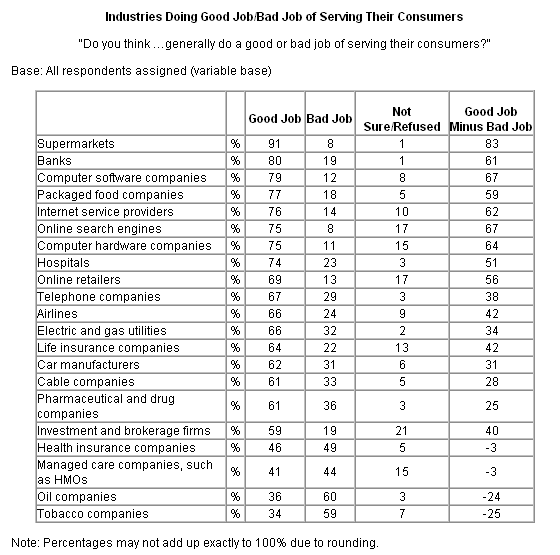
That being said, what does it tell us that the healthcare industry ranks so low in the annual Harris Interactive survey which asks “Do you think <industry> generally do a good or bad job of serving their customers?”  Hospitals do okay with 74% of those surveyed saying yes.  Even drug companies rank okay at 61%.  [Cable is also at 61% and the phone company at 67%.]  Health insurance comes in at 46% with managed care at 41%.  The only lower companies are oil and tobacco companies.  We have to figure out how to fix this if we are going to successfully drive wellness and change healthcare in this country.

harris-industry-survey.png

Forrester on Individual Health Market

It is a few months old, but Forrester put out a report called “The $115 Billion Individual Health Insurance Opportunity” back in October of this year that is packed with facts and a few interesting concepts. The key point is that established companies need to maintain success in the B2B world that we live in today while aggressively migrating processes, collateral, skills, and products to work in the B2C market.

I was definitely surprised by their statistic that 9% of today’s market is made up of individuals purchasing their own insurance and that 20% of the population is either in a high deductible or CDHC plan. Their data also says that 31% of the uninsured are actively investigating insurance. Obviously, this means a lot of people looking for health information and taking more responsibility for their care.

They offer 3 recommendations:

  1. Get ahead of the legislative curve. I would agree. Companies should be out testing models right now with the early adopters. [One of my favorite quotes from one of the founders of IDEO goes something like ‘fail early to succeed sooner’.]
  2. Develop and launch innovative plan designs. They talk about Prudential’s “pay-as-you-go” model in Europe and American Community Mutual Insurance in Michigan that has a buy-up plan that you can buy after you get sick. WOW!! I am not sure how you underwrite this, but it sounds very interesting.
  3. Invest in low cost distribution channels. They talk about Tonik which I mentioned before and the building of online presence. They also talk about outsourcing.

One of the big things that this will all require is some rebuilding of infrastructure to support different sales processes, personalization, claims set-up, and customer support. Companies should also be looking at data and how they can better use and mine data to learn and improve.

Applying Technology Trends to Healthcare

McKinsey recently put out their 8 technology trends article (access available with free registration). I thought I would translate those to the topic of healthcare communications. Hopefully, we don’t have to be hit by a bolt of lightning to change, but we realize and can document the ROI of acting now and improving our system by involving and reacting out to patients.

  1. Distributing Cocreation – This is the trend which is happening in many industries where consumers (patients) and suppliers (providers) are taking more involvement in product design and even advertising. New media and technology have enabled this to happen. This is a big opportunity for healthcare. In general, I see companies doing focus groups, but not letting product design be driven by the consumer. I don’t see competitions to design the next advertisement for a managed care company happening today.

“By distributing innovation through the value chain, companies may reduce their costs and usher new products to market faster by eliminating the bottlenecks that come with total control.”

  1. Using Consumers as Innovators – This conceptually seems similar to the first trend although there are likely more differences than semantics, but the value remains in letting consumers push healthcare. How do we capture what they want and the value associated with it? How do we create business models that allow companies to exist to provide that offering? It’s not easy for individuals to drive innovation since we are often tied to what we know.
  2. Tapping Into A World Of Talent – For the past few decades, many other industries have focused on getting their executives to gain multi-cultural experiences by working globally. There have also been studies that link innovation to diversity. With the exception of pharma, most healthcare companies aren’t global. Sure, all the big companies look outside the US for models and occasionally to sell to the government entities, but not much has taken off. The primary expansion in leadership that I have seen over the past five years is a lot more healthcare companies recruiting in executives from non-healthcare companies which will create some diversity and bring a new perspective to the table. Interestingly, I think this also is an issue in the patient outreach process. Are your communications taking into account the diversity of your patient population – e.g., language, messaging, channel, speed of voice?
  3. Extracting More Value From Interactions – This is very true for healthcare. I would bet that the majority of communications in healthcare are either reactive (you call them) or required by regulatory issues (e.g., explanation of benefits or annual notification of change). These programs were originally designed to cost as little as possible so that someone could check the box. Well, guess what. Over the past few years, companies are realizing that these communications are their best ability to influence patients. So, what are the “golden moments” that exist where an interaction can drive loyalty, satisfaction, wellness, etc. Companies need to figure out what the potential value is and how to capture it.
  4. Expanding The Frontiers Of Automation – Automation has been a focus for years. Healthcare is not an exception expect people struggle with how to provide care and a personalized experience while leveraging automation and technology. And, now with technologies such as web services, companies can be interlinked and automated which (when done right) can improve the consumer’s experience. Of course, the second challenge is that automation is best when it enables a process and people don’t often think, manage, or operate from a process perspective.
  5. Unbundling Production From Delivery – I think the whole concept of unbundling could be very interesting given consumerism. Unbundling has already happened for the corporate buyer…they can buy health insurance separate from pharmacy. So, could I (the consumer) one day buy long term insurance separate from prescription coverage separate from my provider network separate from customer support. Could I choose my disease management company? What would that mean for group discounts, bulk purchasing, underwriting models, etc.?
  6. Putting More Science Into Management – We are a lucky generation in that we have access to reams of data and information. Of course, the challenge is how to turn this into intelligence and use it. It is easy to get overwhelmed and frozen. But as managers, using information applying algorithms, linguistics, and neurosciences to it to create personalized communications that apply to each micro-segment of your population is a great opportunity. It translates success from luck to predictable outcomes.

“From “ideagoras” (eBay-like marketplaces for ideas) to predictive markets to performance-management approaches, ubiquitous standards-based technologies promote aggregation, processing, and decision making based on the use of growing pools of rich data.”

  1. Making Businesses From Information – Healthcare has long embraced this trend. There are numerous companies (e.g., IMS) which are built around information. There are clinical companies that produce drug monographs for use by clinicians. There are aggregators of information (e.g., ePocrates). The point is that companies not only create data exhaust, but as they apply decision sciences, they become consumers of more and more data.

“Creative leaders can use a broad spectrum of new, technology-enabled options to craft their strategies. These trends are best seen as emerging patterns that can be applied in a wide variety of businesses. Executives should reflect on which patterns may start to reshape their markets and industries next—and on whether they have opportunities to catalyze change and shape the outcome rather than merely react to it.”

These seem like reasonable trend predictions that are applicable generally and make a lot of sense form a healthcare perspective.

Medco on CDHC – Support Programs Are Important

In Managed Healthcare Executive (12/1/07), there is a CDHC (Consumer Driven Healthcare) article by Medco which I found very interesting.

  • A survey by the Employee Benefit Research Institute found that 70% of those in consumer driven healthcare plans consider costs when deciding to see a doctor or fill a prescription (versus 40% in a comprehensive plan). [This seems like the premise of consumer driven healthcare…you will be more careful with the costs of healthcare when they come out of your pocket.]
  • The study also found that people were twice as likely (35% vs. 17%) to avoid, skip, or delay healthcare services. [I’m feeling better so I don’t need to finish taking that prescription or no reason to go for my screening until my cash flow is better…here is the problem.]
  • The problem is compounded as an employer. Not only can your costs go up but you could lose productivity of an employee.
  • The author talks about a 2005 Medco study which showed the medication adherence is associated with significant medical savings (e.g., $1 spent on Rxs for diabetes leads to $7 in medical savings)
  • The article says that the average number of Rxs per household was just more than 21 in 2003. [I have never seen it presented this way. I always use the number of 13.1 Rxs PMPY which is from 2005.]
  • The article talks about RationalMed which is Medco’s patient safety system that looks at integrated data (pharmacy, medical, lab, and patient self-reported). [I think that this type of data integration is critical to healthcare. The challenge is integration of the data and taking action on it. I would also like to know the predictive value of the system compared to other tools such as ActiveHealth.]
  • It points to some data on generic drugs that is great and which was new to me.

“Generic drugs not only cost substantially less, but they also promote drug compliance. A recent study in The Archives of Internal Medicine found that patients who took a generic drug had close to a 13% increase in drug therapy adherence, compared with patients who took brand name third-tier drugs covered by their plan.”

  • The author goes on to talk about the need to provide patients with information and use tools to drive change. Here were a couple of the points being made:
    • People who used Savings Advisor (an online tool that compares costs) were 60% more likely to switch to a generic.
    • ¾ of people who discussed generics with their MD or pharmacist got a suggestion to use a generic. [I would like to see it for the percentage of people for which a generic was clinically appropriate. Was this 100% of the opportunities or 75% of the opportunities as implied?]
    • Direct mail about generics increased generic conversion by 22% at a savings of $88 per switch per year. [This seems low.]

CDHC will only be successful when companies have figured out how to empower patients with information rather than simply shifting the burden of financial management to them.

Generic Biologics

injection.jpgI mentioned this yesterday in a blog entry about The Right Prescription.  But I found a few things in an AHIP article today:

  •  Biologics are expensive, cutting-edge medical treatments made from living cells
  • $52.7B industry today; projected to grow to $90B by 2009

“We must focus our efforts on properly managing the costs of biotech drugs to ensure the pharmacy benefit is protected and preserved for the future.”  (Steve Miller, MD, Chief Medical Officer at Express Scripts)

  •  The  say that the top two anemia drugs accounted for 17% of all Medicare Part B carrier spending in 2005.  Two other biologics for cancer and rheumatoid arthritis made up another 3% of Medicare spending.
  • There is lots of discussion going on here at the legislative level to create a pathway for generic biologics to come to market.
  • PCMA estimated $14B in savings over the next 10 years if a pathway is created and Express Scripts estimated $71B in savings.

Wellpoint Investor Presentation

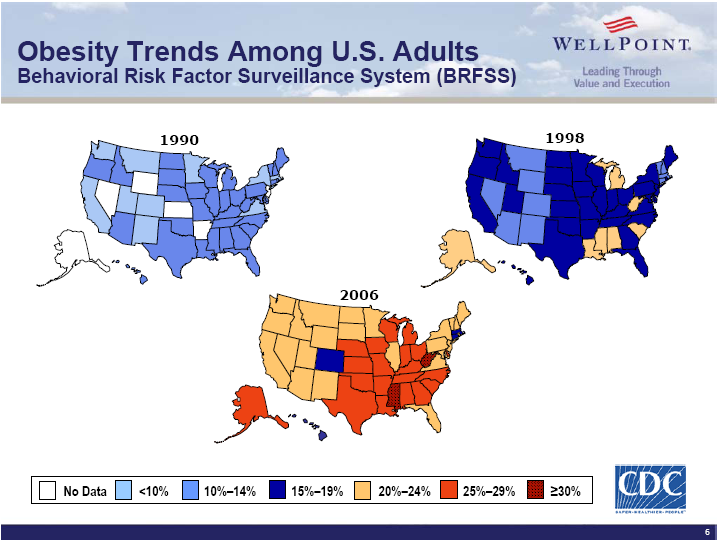
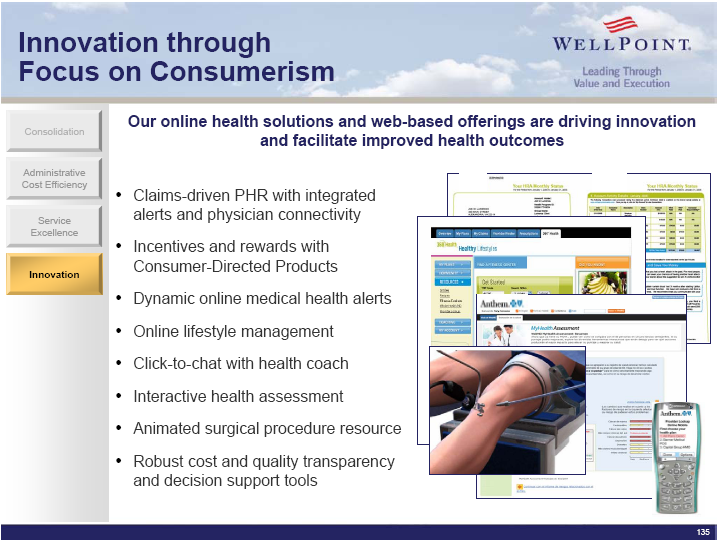
I was looking at a Wellpoint investor presentation and picked a few slides to pull out. It is definitely an interesting read to see all the things they are doing and how they approach the market. The first one talks about the prevalence of chronic diseases. The second about the obesity trend, and the third about some of their activities around consumerism.

wellpoint-chronic-disease.pngwellpoint-obesity.pngwellpoint-consumerism.png

A Few Slides on Specialty

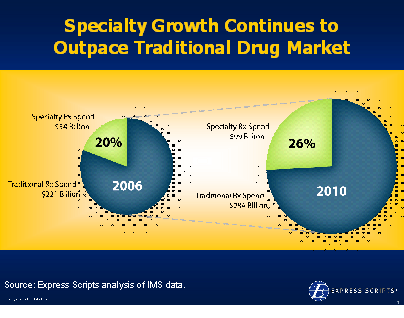
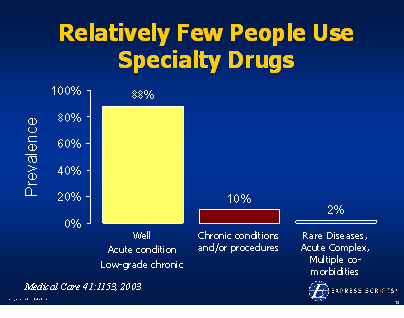
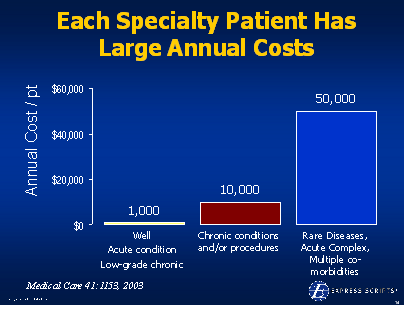
I only have one more post queued up on content from the Outcomes conference. Here is some data on specialty drugs that shows the growth, their percentage of the market, the prevalence, and the cost per patient.

More From ESI Outcomes

Continuing to pull some facts from the prior Outcomes conferences

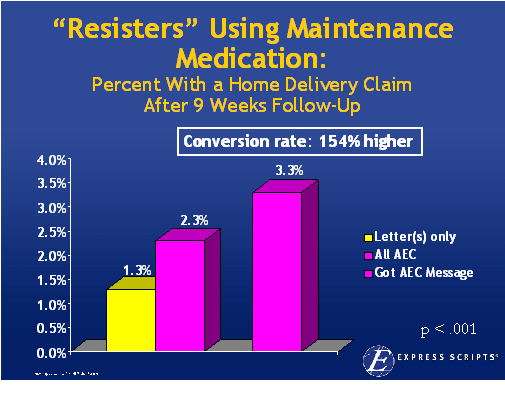
When we first began using what we called AEC (Automated Educational Calls), we did a couple of quick pilots with control groups to see how they worked and if they increased lift in our existing programs. For one of my programs (retail-to-mail), we saw a boost on top of our direct mail program not only from those people that received a generic message but especially from those people who listened to the call. Here was a quick snapshot since over the course of multiple attempts we had a 5% success rate with direct mail and in certain programs had gotten our success rate as high as 16% in direct mail while still seeing additional “lift” in the success rate by coupling calls and letters together.

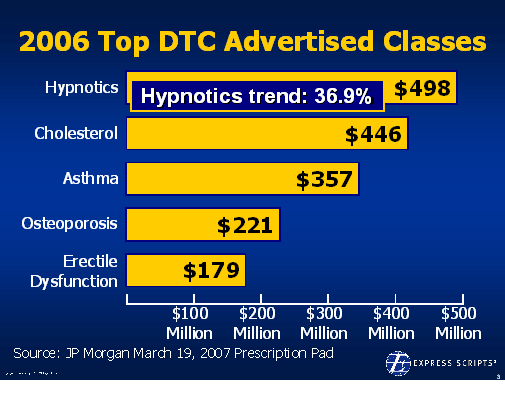
Another question answered was whether DTC (direct-to-consumer) advertising worked. Here you see that the most heavily advertised space had significant trend. In other studies, we showed that although DTC may not grow the specific drug in a 1:1 correlation it did grow the total pie for that therapy class.

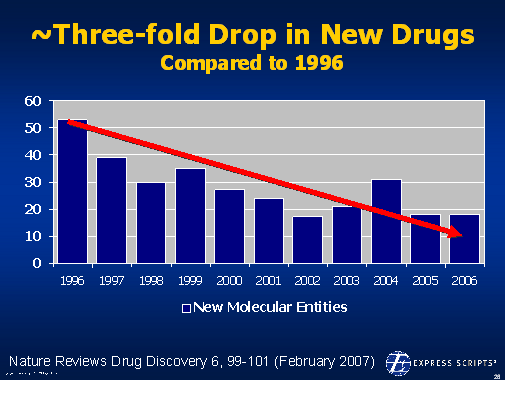
As I mentioned yesterday in the entry about big pharma, the discovery of new products has dropped dramatically as shown here.

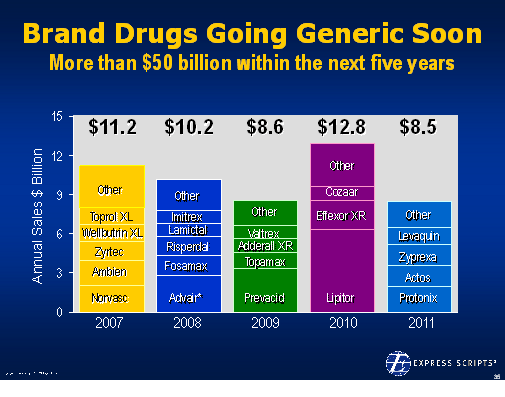
If you are focused on what’s happening from a generic drug perspective, this chart is a good picture of what’s expected over the next few years.

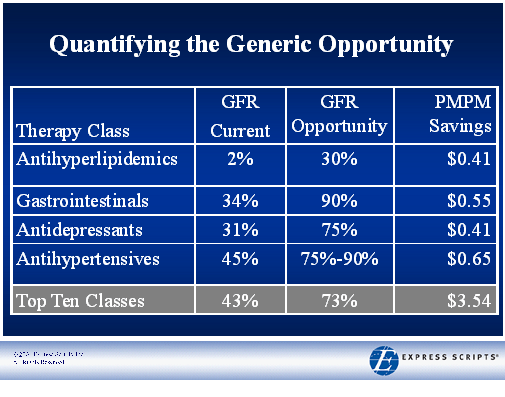
This is a little old (2004), but based on order of magnitude, it is relevant. The question is what is a theoretical maximum generic fill rate for some of the high cost therapy classes and what is this worth to a plan sponsor in terms of savings.

Another set of data that I always found interesting was the variation in use of generics by state.

The ESI Outcomes Conference

It was always fun to prepare for our annual Outcomes conference at Express Scripts. What research did we have? Who would it surprise? How would it impact us or clients? Anyways, all of these presentations and even some audio are on the website (2004, 2005, 2006, 2007). I pulled a few slides / graphs with some key points below.

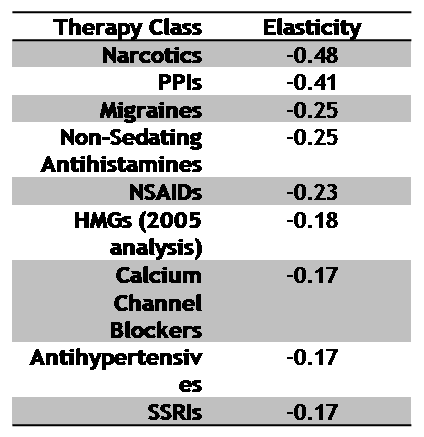
Is there compliance elasticity with prescription drugs? Of course. The research team replicated a published study and found results that were much less dramatic and echoed prior research supporting the following. (elasticity in this case meant that for each 100% increase in the cost of the drug what was the decrease in utilization of the drug)
elasticity-esi.png

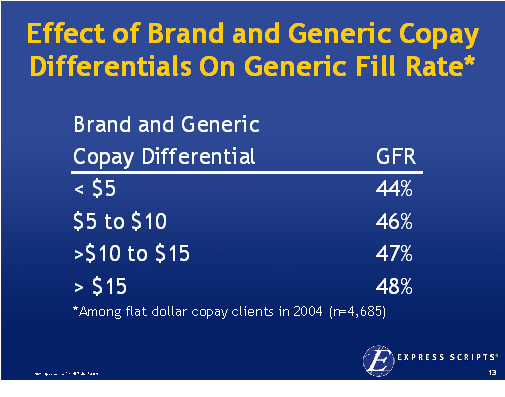
The differential between your brand and generic copays makes a difference in your generic fill rate (GFR). The data supports the null hypothesis that would say that the greater the difference (i.e., the more the patient saves) the higher the use of generic drugs.

Why are people non-compliant (actually from the WSJ)?

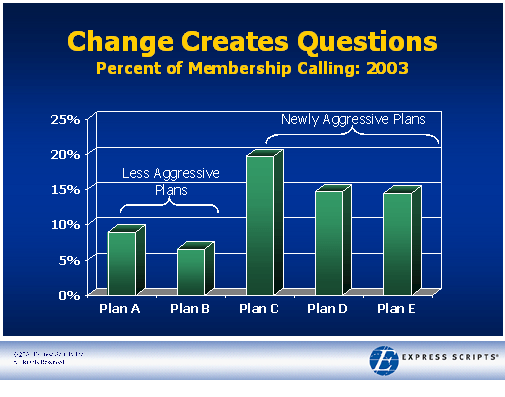
A question I often hear is what percentage of people call into the call center. Obviously this varies by population, but as shown below, it also greatly matters by how aggressive the plan design is and how many changes they are making.

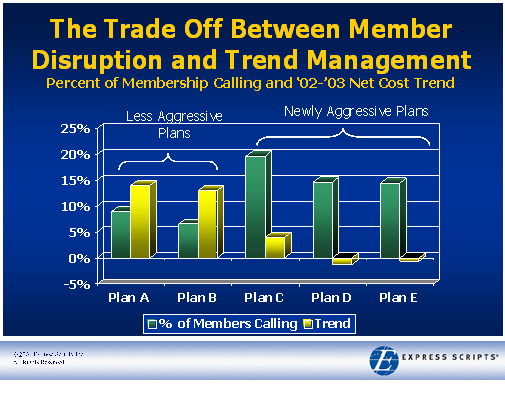
The next question should be whether disruption (measured by the proxy of inbound call volume) is worth it. So, the slides show the trend versus the call volume.

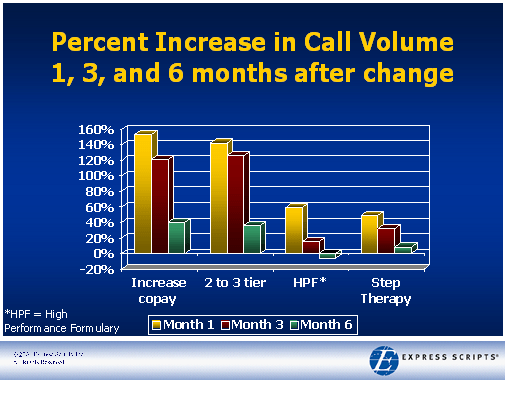
Sticking with the theme, the question is how long does the disruption last. Not too long.

It is never easy to get information out to patients in a timely and effective manner, but the question that also had to be asked is whether they wanted the information. From a 2002 Express Scripts survey:

  • 74% “feel more valued” when they understand the rationale behind their benefit design.
  • 85% “want information” about how to save money on their prescription drugs.
  • 80% feel “more in charge” when they understand choices

IBM HC 2015 – Win-Win or Lose-Lose

I skimmed another IBM publication today which I thought was a great piece – IBM Healthcare 2015: Win-win or lose-lose?. (A little long at ~70 pages, but good with concise charts.) It talks about what healthcare has to do to survive and create a win-win model. It looks at it from multiple perspectives – payor, provider, consumer, and supplier. They also do a good job of describing several unique models around the world and talking about several trends here in the US.

Here are a few quotes, facts, and charts from the publication which should tempt you to go read it…(note: I am not going to show all their sources, but you can get them from their publication.)

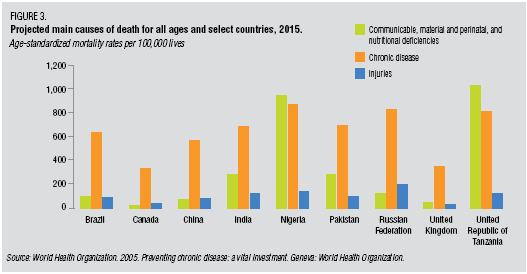
“The United States spends 22 percent more than second-ranked Luxembourg, 49 percent more than third-ranked Switzerland on healthcare per capita, and 2.4 times the average of the other OECD countries. Yet, the World Health Organization ranks it 37th in overall health system performance.

In Ontario, Canada’s most populous province, healthcare will account for 50 percent of governmental spending by 2011, two-thirds by 2017, and 100 percent by 2026.

In China, 39 percent of the rural population and 36 percent of urban population cannot afford professional medical treatment despite the success of the country’s economic and social reforms over the past 25 years.

Approximately 80 percent of coronary heart disease, up to 90 percent of type 2 diabetes, and more than half of cancers could be prevented through lifestyle changes, such as proper diet and exercise.

Preventable medical errors kill the equivalent of more than a jumbo jet full of people every day in the US and about 25 people per day in Australia.”

Table on IBM’s recommendations by stakeholder for what has to happen to transform to a value-based healthcare system (win-win).

ibm-table-1-on-change.png

IBM chart pointing out the obesity issue’s growth

ibm-on-obesity-trend.png

They talk a lot about the current system’s focus on episodic care while the problem is chronic disease.

ibm-3-chronic-disease.png

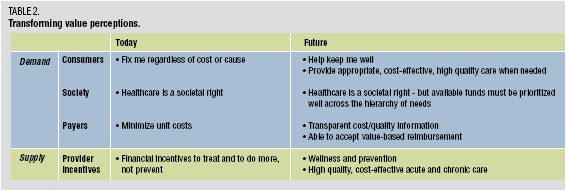
You will see lots of the buzzwords we hear today (transparency, empowerment, consumerism, infomediary, value-based) throughout the article, but they are delivered with facts and anecdotes to support their perspective.

ibm-4-transforming-health.png

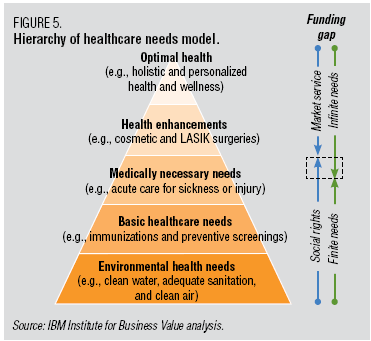
I could go on, but I will leave it with a nice adaptation of Maslow’s Hierarchy of Needs which they present around healthcare.

ibm-healthcare-hierarchy-of-needs.png

You will find information in here around telemedicine, retail medicine, health tourism, and they tee up some of the hard discussions about when is it too much. How much should we spend (individually or as a society)? What expectations should we have? A lot of it requires a different mindset for all the constituents. This would be a good read for the presidential candidates.

WSJ on the Future of Pharma

On 12/6/07, the WSJ had an article “Big Pharma Faces Grim Prognosis”. The manufacturers have been a good punching bag for a few years here as their creativity has slowed down (regardless of reality this is clearly the perception) and healthcare costs have become a front page issue. It is much easier to understand and compare drug prices than it is to look at provider costs. Now, with all the cost cutting at pharma, we will enter a new era.
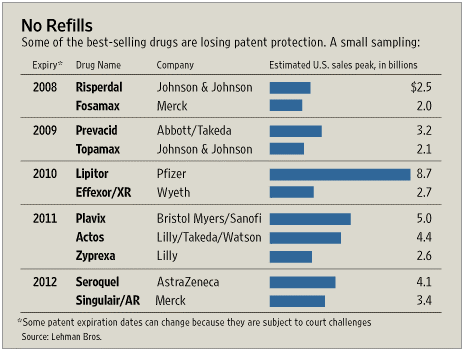
In the article, the authors (Barbara Martinez and Jacob Goldstein) predict that “over the next few years, the pharmaceutical business will hit a wall”. Their statistics on the movement to generics is even bigger than I remember. They say that roughly half of the manufacturer’s US sales are scheduled to lose patent between 2007 and 2012 (or more than 36 drugs representing $67B in annual US sales). (See charts from the article)

“The rise of generics wouldn’t matter so much if research labs were creating a stream of new hits. But that isn’t happening. During the five years from 2002 through 2006, the industry brought to market 43% fewer new chemical-based drugs than in the last five years of the 1990s, despite more than doubling research-and-development spending.”

“It has never been easy to take a drug from the lab, through animal testing and into human trials. The industry estimates only one out of every 5,000 to 10,000 candidates makes it to human trials. And many drugs that work beautifully in animals fail miserably in people.”

The article goes on to talk about regulation and the FDA and whether the lack of new products is their issue or some other issue such as the R&D organizational model. It also talks about the fact that not much has changed since the 1800s in terms of the framework for developing drugs. Obviously, this has been the driver for biotech where the drugs are made of proteins and there is no generic competition.
Of course, targeting niche patient groups with biogenerics creates very expensive drugs such as the $200,000 a year that Genzyme charges for Cerezyme to treat Gaucher disease. [If you’re total market size is smaller but your costs to develop and bring a product to market stay the same, prices have to go up or no one will develop the products. It is a problem.]
Given the focus on generics in the market and by the payors along with the battle between brands and generics, I always find it interesting that some of the big companies own generic companies (e.g., Novartis owns Sandoz and Pfizer owns Greenstone). I guess if you can’t beat them…join them.
It will be interesting to see how the companies react. As I have talked about with friends for years, it is relatively easy to be a successful executive in a wildly growing company and industry. It is hard to be a successful executive and leader in a cost oriented industry that is contracting and where the competitive pressures are great. Can these guys make the transition?

Would You Pay for Disease Management?

After landing (I often blog on the plane), I posted the last post about the Medicare pilot.  When I looked at my iGoogle page that tracks many of the blogs I watch, I saw a new posting on the WorldHealthCareBlog about Disease Management.  It is a good discussion on the value (if any) and talks about the different types of value (i.e., absenteeism versus lowering medical spend).

With such ambiguity, I think I would think differently.  If you had $X to spend per year and you were responsible for your total healthcare spend, would you (a consumer) spend money on DM?  At least intuitively, I would…assuming I had a chronic disease which was high cost and complicated.  Having someone push me information, coach me on how to get better and/or manage the disease, helping me find resources, navigating my benefits, etc., seems like something of value.

Obviously, there are lots of challenges here, and I think the current models often use too high cost of channels and don’t leverage technology.  At the same time, patients don’t have the same incentives today so they don’t necessarily always do what’s best for them.  (Think of all the people that still smoke given all the research that shows how bad it is for you.)