Archive | Value Propositions RSS feed for this section

Humanizing Healthcare Thru Science

I was getting ready for a presentation last week and thought that the right way to position technology was as “science” that helps to humanize an overly complex healthcare system that overwhelms most people.  In thinking about that, I stumbled upon the UnitedHealthcare concept of “Health in Numbers“.

Another example of this is the WSJ article this morning on using data. The question is how to find the right mix of data to use and understanding what data applies when. Healthcare isn’t like consumer products. People change segments over time. The segment they fit in for adherence is different than the segment they might fit in for retention programs.

Analysts On The PBM Marketplace (ESRX, MHS, CVS)

I continue to get the chance to talk with more and more analysts about the PBM marketplace (see list of PBMs by claims processed).  It teaches me a lot from how they think about and analyze events versus how I see things.  I heard several of them speak the other day.  Here’s my spin on what they collectively said.

  1. The general dynamics are good.  Prescription utilization has continued to go up slightly even with the bad economy.  Mail use has stagnated but still offers value to the market.  The PBM model has continued to be validated and shown proven savings.  There is less client churn.  There is potential growth in covered lives around Medicaid.  There are more generics coming to market.  Specialty continues to grow and with biosimilars will offer opportunities for the PBM.  (see prior post on health reform and the PBMs)
  2. There is a short-term market (pre-2014) and a long-term market (post-2014) positioning for PBMs.  In the short-term, the flow of new generics into the market will drive the bottom line so mail order penetration and ability to convert members to generics thru plan design and education will be important. 
  3. The long-term is a little unknown pending how health reform plays out.  It’s possible (probable) that exchanges do happen.  It’s possible that employers push employees into the exchanges (although the recent waivers impact this).  Then, a government focus and a managed care focus becomes much more important that PBM success in the self-funded market.
  4. The PBMs are making different moves today but the value of those will be obfuscated until post-2014.  Express Scripts is staying very focused on the core PBM business with some moves in ChinaCVS Caremark is pursuing an integrated retail-PBM model which leverages the pharmacist and focusing on pharmacogenomics and MinuteClinic.  Medco is leveraging their Therapeutic Resource Centers (TRCs) as a phone-based care model and focusing on pharmacogenomics, several international investments, and several new service companies. 
  5. The managed care companies have looked to outsource PBM (e.g., Wellpoint and Aetna), but if health reform were to drive consolidation in the managed care industry (such that there were 3 large players like in the PBM marketplace), it’s possible that the managed care companies would carve pharmacy back in.  It was interesting that they saw the 10-12 year deals as enough time for the reform and the exchanges to play out giving the managed care companies time to see whether they want to carve these assets back in at that time. 
  6. The PBM tools have been effective but pharmacy is still only 15-20% of healthcare spend.  They saw an opportunity to pull more things under the PBM (e.g., specialty spend in medical, devices) and the opportunity to leverage experience in pharmacy in other areas of healthcare. 
  7. They also talked about the potential Accountable Care Organization (ACO) impact.  Will they become insurers?  How will they be structured?  The final models that prove themselves legally, financially, and clinically will impact the industry.

Some quick thoughts for you.

Stop By The Silverlink Booth At The Forum 2010 (DMAA)

Next week in DC is The Forum 2010 which is the annual event for The Care Continuum Alliance (formerly known as The Disease Management Association of America).  If you’re there, you should stop by the Silverlink booth and attend the presentations that we’re giving with some of our clients and other industry leaders. 

  Aligning Employee, Employer & Provider Research to Maximize Value-Based Benefits
October 13, 1:00 – 2:00 p.m.
Jan Berger, MD, MJ, Chief Medical Officer, Silverlink Communications
Cheryl Larson, Vice President, Midwest Business Group on Health (MGBH)
   
  Improving Statin Adherence through Interactive Voice Technology & Barrier-Breaking Communications
October 13, 2:15 – 3:15 p.m.
Ananda Nimalasuriya, MD, Chief of Endocrinology & Complete Care, Kaiser Riverside
George Van Antwerp, MBA, General Manager, Pharmacy Solutions, Silverlink Communications
   
  Addressing Colorectal Screening Disparities in Ethnic Populations
October 14, 12:30 – 1:30 p.m.
R. Reid Kiser, MS, National Director, Clinical Excellence Special Projects and Reporting, UnitedHealthcare
Jack Newsom, MBA, MS, ScD, Vice President, Analytics, Silverlink Communications
   
  Addressing an Epidemic – Improving Diabetes Care with Personalized Communications
October 14, 3:00 – 4:00 p.m.
Jan Berger, MD, MJ, Chief Medical Officer, Silverlink Communications
William Shrank, MD, MSHS, Instructor, Harvard Medical School and Associate Physician, Division of Pharmacoepidemiology and Pharmacoeconomics, Brigham and Women’s Hospital

Pharma Manufacturers Need To “Blur” The Rx

Years ago when I was at Ernst & Young as a consultant, several of the partners wrote a book called BLUR.  The concept (that I took away) was that products and services were being combined into offerings.  That one could not stand without the other.  A quick example for me is General Motors with OnStar, but there are numerous examples out there.

In pharmacy, I think this has been the standard around specialty drugs for years.  Manufacturers produce the drugs and sell them to a pharmacy for distribution.  With that, they provide educational materials, adherence programs, or other “services”.

I think going forward that there is going to be increasing need to differentiate even oral solids (traditional small molecule products) that are less expensive and focus on chronic conditions.  Formularies are only going to get more narrow.  Comparative effectiveness is going to push companies to compare overall outcomes of products.  Why not find a way to wrap a similar service strategy around these medications in a more technology driven, scalable manner?

It seems like a great way to show that not only is your product effective when taken, but that patients on your product are more engaged with their condition and more likely to stay adherent.

Auto-Renewal / Auto-Refill Article In Drug Benefit News

Per my prior two posts on this, Drug Benefit News (DBN) published an article today on this topic. Renee talked with me along with several other people to get a perspective on the topic.

Here are a few quotes from the article:

“Auto-refill for prescriptions is all the focus lately,” says George Van Antwerp, General Manager of Pharmacy at Silverlink Communications. “Everyone from the big PBMs to the local pharmacies are encouraging this.” This is because auto-refill programs address one of the common patient-reported issues with adherence — forgetfulness — allowing insurers to “minimize gaps in care.” Auto-renewals, on the other hand, are not considered common practice and many payers are hesitant to implement the service.

Express Scripts, Inc. is one of the few PBMs developing an auto-renewal program, which it will offer through home delivery. “Renewals are much more problematic than refills for patients when procrastination occurs,” Bob Nease, Ph.D., chief scientist at Express Scripts, tells DBN. “If you procrastinate on getting a renewal, it’s not just a matter of calling the pharmacy. You have to get a new prescription with a physician. And if you talk to physicians, they pull their hair out over this issue.”

Others contend that auto-refill and renewal programs may up plan costs by increasing medication waste. The concern is that auto-renewals may result in “provisions of medications that may not be a current active medication therapy or where the patient may have experienced an adverse effect and their drug therapy may have been modified by their physician,” contends Andy Szczotka, senior vice president of corporate clinical services at HealthTrans. “This may lead to potential medication waste and increased member and plan sponsor costs.”

“This is all done under the assumption that you’re improving adherence,” [Jerry] Shipkin [from SXC] says. “But I have not seen solid evidence that this improves adherence.”As an alternative, SXC sends its members auto-reminders with phone calls or e-mails to inform patients about their upcoming refill. “This is a more patient-friendly program,” Shipkin argues. “When you measure patient adherence on this program, it’s just not significantly lower than what you might get on an auto-refill program when you calculate the reversal.”

Van Antwerp contends that auto-reminders aren’t enough. “Everyone does auto-reminder programs,” he says. “In my mind, that’s the minimum that a pharmacy or PBM should do.”In addition, he argues, “anything can lead to accumulation if the patient is not using their medication and refilling their drug on a regular basis.” However, “how many patients do that?” he asks. “Drugs cost money.” While it could drive up more prescriptions, “no one’s going to pay for — and/or pick up — scripts they don’t need,” he maintains.

CVS Caremark Corp. claims its “Ready-Fill” program is “a convenience our members love,” according to Bari Harlam, the PBM’s senior vice president of marketing. The program includes auto-refills and auto-renewals. “There are a lot of people that have trouble being adherent, and this is a service that we offer to our consumers that helps do the work for them,” she tells DBN.

CVS Caremark members enrolled in the program receive notifications about their refill a few days before it’s shipped, and have the option of cancelling the refill. The PBM also calls its members’ physicians to request additional refills. “The physicians’ offices view this as part of the normal workflow, and retail and mail pharmacies are always reaching out to them for particular medications,” Harlam says.

DEA National Take-Back Day (Prescriptions)

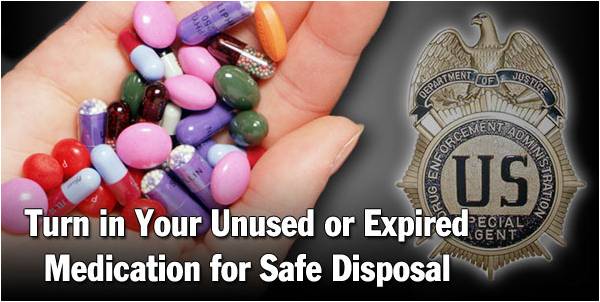
This topic continues to get more attention.  Don’t leave your old medications around for your kids to use.  Don’t flush them down the toilet and into our water supply.  Turn them in for safe disposal.

WASHINGTON, D.C. – The Drug Enforcement Administration and government, community, public health and law enforcement partners today announced a nationwide prescription drug “Take-Back” initiative that seeks to prevent increased pill abuse and theft. DEA will be collecting potentially dangerous expired, unused, and unwanted prescription drugs for destruction at sites nationwide on Saturday, September 25th from 10 a.m. to 2 p.m. local time. The service is free and anonymous, no questions asked.  

For more information, visit: http://www.deadiversion.usdoj.gov/takeback/  

Auto-Refill (Part II)

A few weeks ago, I posted my thoughts on the auto-refill solution that various pharmacies are implementing. After talking with a reporter about the topic, I posted it in a discussion group to get some additional thoughts. As a proponent of the solution, I was surprised by a few of the comments and questions which were more skeptical.

With that in mind, I thought I would post some clarifications to the issues raised in the discussion group.

  1. Is the auto-refill solution the same for retail, mail, and specialty?
    Generally, it is retail pharmacies and mail order pharmacies that are implementing this type of program for maintenance drugs. You wouldn’t want to implement this on controlled substances (even if it was legal). You wouldn’t want to implement it for drugs where patients frequently change strengths (i.e., titrate). You wouldn’t want to implement it when a patient was new to therapy in case of side effects or other issues. Once they are stabilized on a maintenance medication, this makes a lot of sense.
  2. Is auto-refill a solution for adherence? Aren’t there many other issues?
    People are non-adherent for numerous reasons. The most common reason in many studies is “I forgot”, but there are significant issues around health literacy. There are also cost barriers, side effects, and belief or cultural issues.
    Obviously, auto-refill won’t address all of those issues, but it can help with the people who say they forget to refill. It can also help minimize the gaps in care which exist (i.e., I run out of pills a few days before I pick up or receive my new prescription).
  3. Does auto-refill lead to accumulation of drug supply?
    Anything can lead to accumulation if the patient is not using their medication but refilling their drug on a regular basis. [How many patients do that…the drugs cost money.]
    This concern can be addressed in two ways: (a) setting the auto-refill trigger to be after 85-90% of the days supply last dispensed should have been used AND (b) reaching out to the consumer to see if they are ready for their next fill.
  4. Isn’t the best strategy for adherence to use “live” agents?
    Of course, we’d all love the luxury of talking to every patient at length around their therapy (imagine a world where commercial MTM was economically sustainable). This would be ideal, but in general, this “live” interaction is best for the initial diagnosis and new start of a script.
    Plenty of studies have shown that automated calling technology compares very favorably to nurses, agents, and other professionals in driving consumer behavior (at a much lower cost). Speech recognition technology creates a conversational tone with the consumer and can employ best practices such as personalization, motivational interviewing, behavioral sciences, and linguistics in a systemic way.
    At Silverlink, our studies have shown significant lift in improving refill rates and closing gaps-in-care around adherence through the use of automated calls.
  5. What about “auto-refill reminders”?
    This is exactly what I advocate. It’s much like the “choice architecture” that Express Scripts talks about in their Consumerology positioning around mail order. You’re more likely to get someone to refill a medication (typically appropriately) when asking them to opt-out of the refill than asking them to opt-in to the refill. And, neither I (or anyone I know) would advocate having a patient enroll in an auto-refill program and simply keep getting their medication shipped to them to simply drive up revenues and false adherence metrics.
  6. What about health literacy and education?
    This came up several times. An understanding of their disease, why the medication is important, what the medication will do, and other issues are critical for a patient to be engaged and “own” their condition. This is a systemic issue that begins with the lack of time for discourse at the physician’s office and runs throughout the entire process. We have to address these things. The more you can personalize adherence communications to reflect personal barriers and proactively address them during the interaction with the patient the better. Some of that can automated, but yes, some it has to be “escalated” to a “live” interaction.
  7. At the retail pharmacy, doesn’t this increase returns to stock?
    Again, I think this is in how you implement the program. Since I recommend that clients implement it with a reminder to the patient to tell us if you don’t need it refilled yet, I think you can avoid some of this. You might also be able to embed some system logic into your system (i.e., you could look for other therapeutically equivalent new starts within the same therapy class in the past 30-days to identify patients that may no longer be on the original drug).An example of the process might be:
  • Patient X fills their 4th fill of a maintenance drug on 3/17.
  • Patient X receives an offer to enroll in the auto-refill program.
  • Patient X receives an automated call on 4/10 stating “This is your pharmacy calling. Is this Patient X? As requested, we are calling to let you know that we are ready to refill your medication. If you are no longer taking the medication or you have more than 7 days supply left, please call us at 800# to let us know. Otherwise, your medication will be ready for you to pick it up in 2 days.” [Note that this would have to follow certain HIPAA guidelines.]

You can see more dialog on this at The Pharmacy Chick blog or in this article from last year.

“Steven Friedman, VP of pharma services at PDX-Rx, notes that the company’s dispensing and adjudication software, when engaged for auto-refill, has been shown to add as much as two additional months on therapy (i.e., two more months of adherence) in a six-month period—a substantial improvement both in adherence and in pharmaceutical sales.”

What’s the net of all this (IMHO)…

  • Adherence is a huge issue.
  • We need to try lots of things to address it.
  • People forget more than they are likely to admit.
  • Auto-refill (renewal) isn’t for everyone but is a nice service when implemented right.
  • It will drive up more Rxs but no one’s going to pay for (and/or pick up) scripts they don’t need.
  • I support it.

Suck, Cut, Zap or Work It Off – Fat

Obviously, the best way to get rid of fat is diet and exercise. Eat less calories; burn more calories.

But, in our instant gratification world, is that enough? Certainly not for people who have the money to try other solutions. Look at the weight loss business…it’s estimated to be about a $60B a year business.

We’ve all seen the obesity statistics and trends. It’s a huge issue (no pun intended). And, it has a presents a significant burden on our healthcare system today and is a looming issue that will drive future costs.

Are there other options? Yesterday’s WSJ identified two new treatments that cleared by the FDA for “body contouring”. I saw it being discussed on the news this morning, and I’m sure that the companies (and physicians that administer the treatments) are suddenly much busier.

Zeltiq is a company I read about a few months ago. They grab your fat and freeze the fat cells causing them to self-destruct. You may have some mild bruising or redness for several days. They say it takes 3-4 months to see results.

Zerona is a laser based treatment that forces the fat cells to empty. It takes a few treatments a week for a few weeks with relatively quick results. Their trial study had people losing over 3 inches more than a control group in their waist, hips, and thighs (combined).

There are no incisions (compared to traditional liposuction). No downtime. No anethesia. [Note that about 200,000 Americans had liposuction last year.]

These treatments aren’t cheap. Think $1,500 to $3,000 for an area. Obviously, that should allow for some good profit especially as the fixed cost of the machines are paid for with increased volume of consumer usage.

One question I’ve had is what happens if you do this, but you don’t change your lifestyle. If you eliminate the fat cells around your waist and keep eating crap, will you be more likely to get fat in other areas of your body?

The other big question I have is whether simply eliminating fat cells is healthy for you. As you’re weight goes down, will that make you more active? Will it reduce your appetite or desire for fatty foods? Will it decrease your cholesterol level?

Or, once you’ve spent the money, will you feel a greater commitment to keep your body in shape so the body contouring wasn’t a waste of money?

Obviously, this is a big area for pharmaceutical manufacturers searching for a weight loss pill and device manufacturers who keep trying to find new devices that are cheaper and more effective. I expect this to be a hot area in years to come.

From the article, it says that the devices only target subcutaneous fat (the kind under the skin) versus the visceral fat (the kind around your organs that releases fat into the blood stream). So, it’s a cosmetic improvement not necessarily a health improvement.

Of course, don’t get too excited…generally theses are for people with mild extra weight not for obese people.

I guess the final question I would have is what would these companies have to do or prove to make these covered under your health benefits…better health outcomes correlated with body contouring. Possible?

Increasing Flu Shots – Several Views

Let’s start with a few facts:

  • Health officials are recommending that everyone get a flu shot except those under 6 months and those with egg allergies.
  • Last year’s H1N1 killed 13,000 and made 60M sick in the US.
  • This year’s vaccine protects against the 2009 swine flu (H1N1) and two other flu strains that are out there this year.
  • 60% of Americans are viewed as susceptible to H1N1 (still).
  • There are 165M doses slated for use in the US.
  • At least 10% of the US is estimated to have trypanophobia (fear of needles).

Retailers (and likely others) are trying different things to drive flu shot volume:

This year, the competition for administering flu shots will be aggressive among retailers:

Walgreen says it administered 7.5 million H1N1 and seasonal flu shots last season, up from 1.2 million the year before. Walgreen’s figures represent about half of all the retailer-administered flu shots, says Mr. Miller, the analyst. He estimates retail pharmacies could administer 20 million to 30 million flu shots this season. Rite Aid, which doled out 250,000 shots last year, said it has ordered a million doses for this year.

Grocery chains with pharmacies also are pushing flu shots harder. Supervalu Inc., operator of the Jewel, Shaw’s and Albertson’s, says it expects to deliver 50% more flu shots this year in its 800 pharmacies. Kroger Co., the second largest food retailer by sales, says it will have flu vaccines available in all of its 1,900 pharmacies. (From WSJ)

The logical question would be why would the pharmacies care. Money. Flu shots are a profitable business and as long as you can administer them without disruption to your workforce…then your variable costs are limited. But, that also makes me wonder why everyone is taking a general marketing approach. There is lots of marketing, but very little targeted marketing that I’ve seen around flu shots (from the retail community).

On the flipside, managed care companies have a totally different reason to drive flu shots – it’s a HEDIS measure. [And, BTW…HEDIS is a big part of the STAR Ratings that CMS is using to pay incentives to Medicare plans.] They want to limit sickness, hospitalizations, and other medical costs.

This is one where everyone is aligned so that employers also want to drive flu shots to avoid absenteeism from sick employees. This article puts the value of a flu shot to the employer at $46.50. Since flu shots cost less than $30, why wouldn’t employers just give everyone a free flu shot. They’re getting a 50% return on their investment.

A more interesting debate is whether to mandate flu shots in certain cases. The biggest one which is debated is healthcare workers (although I would also lump in teachers and day care staff). The last thing you want is someone who is already at risk and sick to be exposed to the flu when they go to receive care.

Last January, a CDC survey found that just 37% of health care workers received swine flu vaccine and 35% received both seasonal and swine flu shots. On average, flu vaccination rates hover under 50%. (USA Today article)

So, I guess my net-net here is that flu shots are going to be pushed this year. I would think pharmacies and employers and pharmacies and MCOs would pair up to drive shots to specific locations. I think the general marketing and news will increase awareness, but the question is how to you reach the at risk population and drive them to your location and get them to get the shot early before they get exposed. I don’t think a build it and they will come strategy will “win” here.

[BTW – Every Google search I did around flu shots, brought back a Walgreens link at the top of the page.]

And, if you’re interested in what we’re doing or could do around flu shots at Silverlink Communications, let me know.  (Here’s an old article on results.)

Mobile / Social Media Stats c/o HubSpot

I’ve never met the people over at HubSpot, but I like the information that they’re making available.  (Thanks SF for the suggestion.)

Here’s a few graphics from a recent post on their blog about mobile infographics.  (BTW – I love infographics)

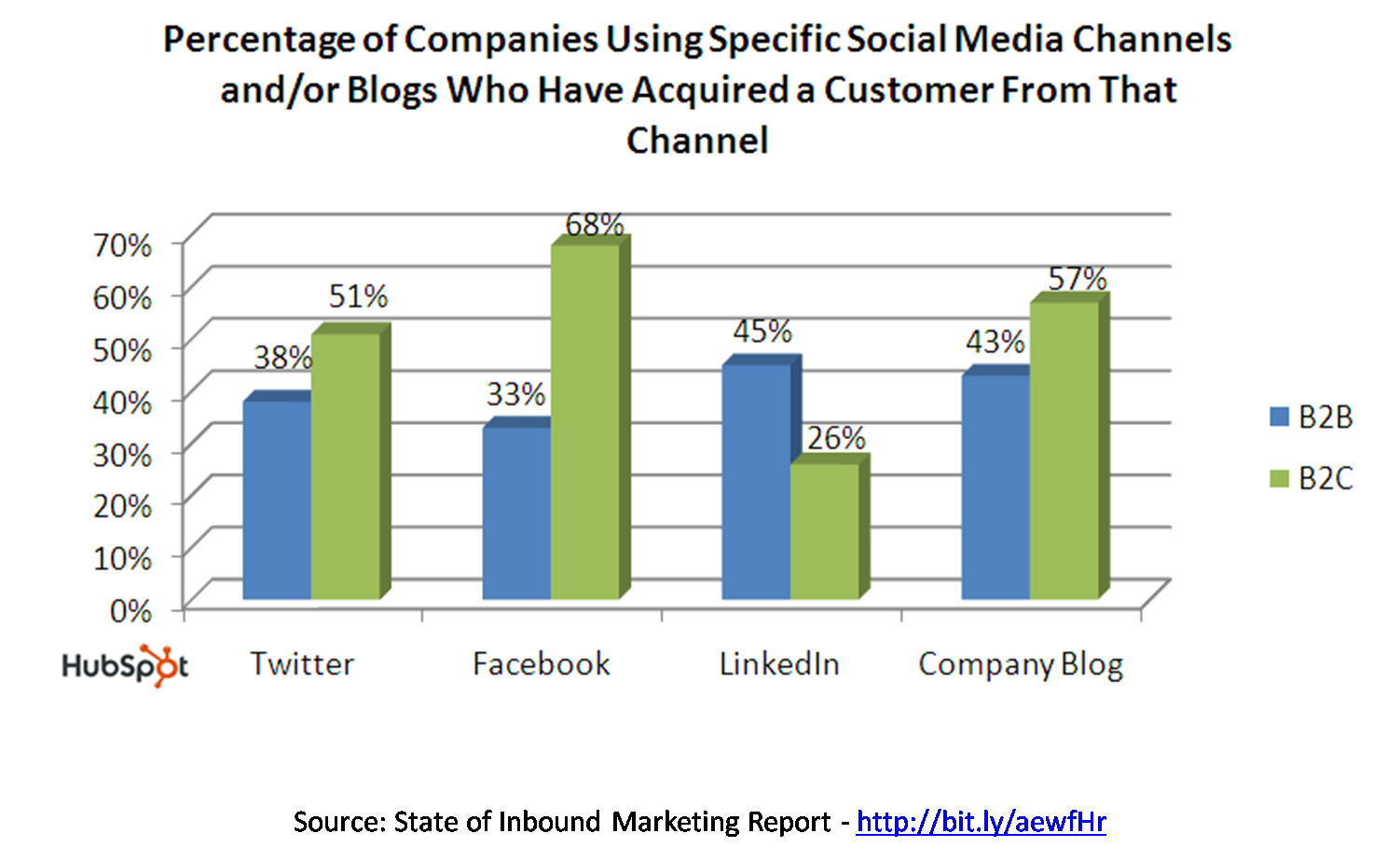
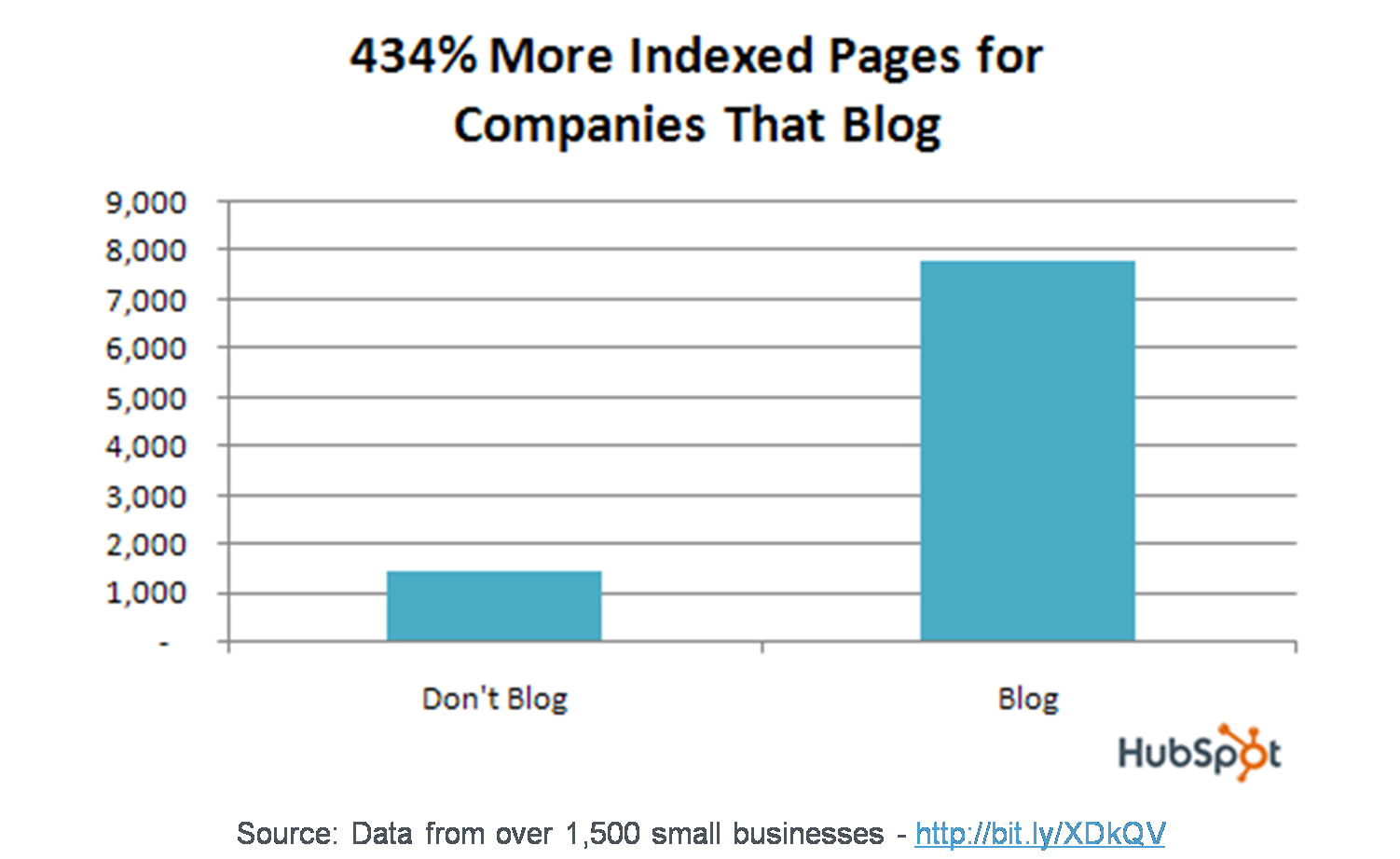
In another area of their site, they have some interesting data on how blogging and social media drives leads.  Here are three of them that I found interesting.

When Should You Ask About Auto-Refill?

Auto-refill for prescriptions is all the focus lately.  Everyone from the big PBMs to the local pharmacies are encouraging this.  It helps with adherence (or at least with adherence calculations since you can’t force someone to take the pills just because they have them).  It addresses one of the common patient reported issues with adherence which was that they forgot.  They ran out of pills or didn’t know to refill the medication.  In some cases, a few days of pills may not be a big issue, but in other categories, this could be a problem. 

In general, professionals consider taking medication 80% of the time (or 80% medication possession ratio) to be adherent.

So, what is auto-refill?  You sign up to have your medication refilled when it’s time for a new bottle and then mailed to you or ready for you at your retail pharmacy. 

One question is whether this includes auto-renewal.  To most consumers, renewal means nothing, but it does in the pharmacy business.  When you get a script, it is only good for 12-months.  That could be twelve 30-day fills or four 90-day fills.  When you’re done, you need a new prescription from your physician.  That is called a “renewal”.  To most consumers, we just think of it as we ran out of refills.  So the critical question here is whether you include renewals in the auto-refill process.  I certainly advocate for yes.  If I run out of medication and expect my prescription to be refilled (because I signed up for auto-refill), I would want my pharmacy to reach out to my prescriber proactively.  Or, even if I’m just planning on refilling, I’d like my pharmacy to let me know in advance that I need a renewal or new Rx since I don’t have any refills remaining.  That can delay the process so without doing that you can create a gap in care.

That gap-in-care is one of the reasons why patients drop out of mail (which may happen to me).  In my case, I waited until I was down to 5 days supply of my medication imagining that my pharmacy would call me to remind me to refill.  They never did so I called to refill, but I was out of refills so a renewal is needed.  Getting in touch with my prescriber could take a few days so now I’m not sure what might happen.  Ideally, I would get a confirmation from them on when it’s coming, and I could go to a local pharmacy and get a 3-day “bridge supply” for a minimal fee.  We shall see.

But, what I recently found interesting (that took me down this path) was some research from CVS Caremark that was recently presented saying that

According to Keller, new research by CVS Caremark seeks to address the fact that many healthcare decisions unnecessarily are complicated by the lack of clear and plain language. In addition, choices for such programs as automatic refill of prescriptions or generic alternatives can be overlooked because those options are not readily transparent to the consumer, Keller noted.

“Through this research we are testing options presented through four different communications channels to see how consumers react to different scenarios,” Keller said. “One of our preliminary findings looking at consumers on the Web shows that if we reach out and present a decision to choose automatic refill in advance of renewing a prescription, they sign up at twice the rate of those who were passively presented an opt-in choice after receiving a prescription.”

For those of us in the communication space, this is interesting.  How you present information…when you present information…the language you use…All of these things are important as demonstrated here.

Seven Myths Of Social Media

I’m just finishing up a book on social media (book review to come shortly). As I was reading it and based on my experience, I came up with a few myths:

  1. You have to be everywhere.  It’s impossible.  There are so many sites out there.  You have to know your audience and determine where to spend your effort.  You MIGHT have to stake your claim to avoid someone else using it and provide information for consumers to reach you, but you can’t actively contribute and add value across the social media spectrum.
  2. Set it and forget it.  Social media is about dialogues and continuous information.  You can’t put up static content like a website and come back every week, month, year and update it.  The best companies respond (for example) to a Twitter comment about them in 24-hours while some never respond. 
  3. Build it and they will come.  There is a constant dialogue about whether you have to “own” the community or simply participate in it.  There is certainly reason to create content (i.e., blog posts, tweets), but you have to find a non-marketing environment to interact with your customers and influencers and understand their needs.  In many cases, that environment might already exist and you need to join it.  Additionally, you can’t simply launch something or join something without pushing out information about it.  For example, if you have a Facebook page, you need to have a link on your website, put it in your LinkedIn profile, include it in your press releases, etc.
  4. Marketing should own social media.  Traditional marketing has been about the controlled message.  Social media is about participatory messages.  There’s a big difference.  Additionally, social media can be and needs to include any employees who are actively engaged in social media.  We’ve seen numerous examples of employees who comment inappropriately only to jeopardize their job.  (I’ll agree that there are issues here to still be defined regarding privacy versus freedom of speech.)  Marketing can’t reply real-time about operational issues.  Ownership is a collective effort.
  5. You can outsource your social media.  This is a big mistake.  There are lots of consultants who will tell you what you want to hear.  They will talk about some channel or channels that work (e.g., Twitter experts, Facebook experts).  They’ll talk about search engine optimization (SEO) and what to do.  They’ll tell you that you need an iPhone app or a YouTube channel.  The reality is for your solution to be genuine and timely that it needs to be someone(s) who understands the company, feels passionate, and is empowered to do something quickly.
  6. Tell me..tell me…tell me.  This works great for presentations.  But, you’re now a part of the audience (although an informed member with an agenda).  You need to tailor your objectives to what the audience wants / needs.  In a community, they’re there for a reason.  They are discussing a topic and sharing their thoughts.  They want you to add value not sell your products or agenda.  They want to be valued.
  7. You can avoid it.  This is an obvious one.  With 500M users on Facebook and YouTube being the second most popular search engine, you have to understand how people find you on the Internet.  Google is a verb.  Current generations will grow up with theses modes, smart phones, and be uninhibited by our sense of privacy.  Technology is and will continue to be more ubiquitous.  The way people learn about companies is changing.  The way people learn about people is changing.  Relationships between people are changed based on technology.  Companies have to understand what’s being said about them and embrace it not run from it. 

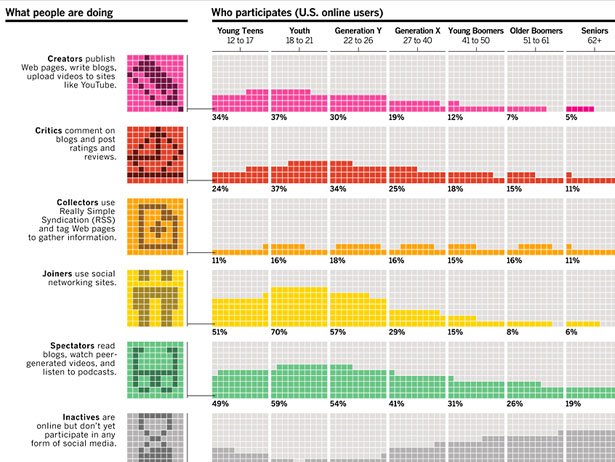
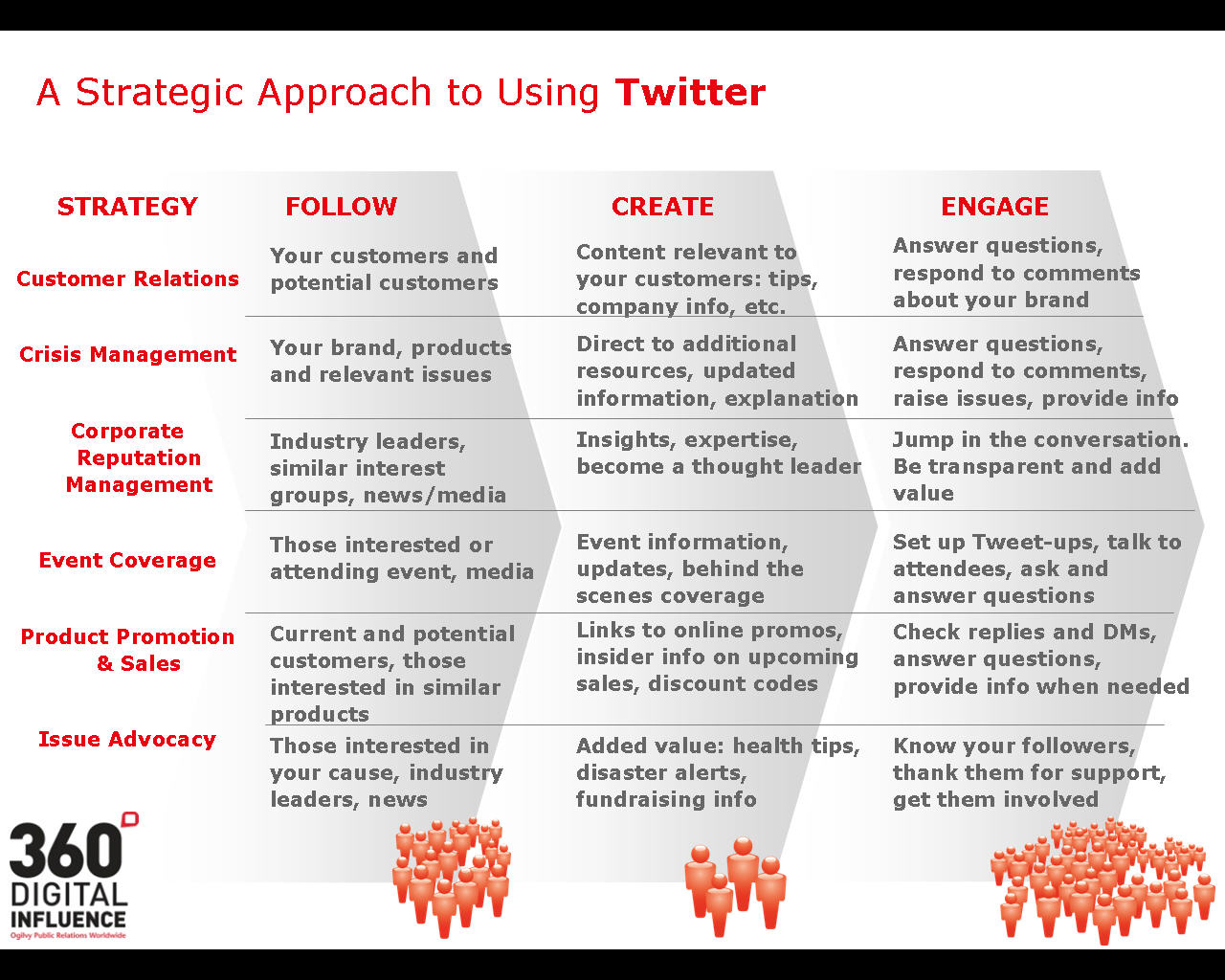
There are tons of infographics out there that symbolize some of this.  I pulled a few of my favorites together here, but you can find more.

NCPDP Nov 2010 Event: The New Economy And …

On November 2nd, NCPDP is hosting an educational event called “The New Economy and It’s Impact on Healthcare, Pharmacy, and the Patient.” Sounds pretty cool! It’s a topic we all talk about.

What does the new sense of frugality mean? What will new forms of insurance mean? How will pharmacy evolve? Will MTM work? Will MTM become a product for commercial? How is the consumer’s behavior changing relative to information and compliance?

The agenda includes yours truly along with people from:
* Kaiser
* Walgreens
* AARP
* Sanofi-Aventis
* North Carolina Association of Pharmacists
* Eaton Apothecary
* American Society of Consultant Pharmacists
* RegenceRx

Choices: Grande Skim Mocha With Whip @ 140 Degrees

Choices.  We can all become overwhelmed with them.  As several studies have shown, more choices are not better…they paralyze us and limit our ability to make a decision. 

So what do we do with this.  Choice is a double-edged sword.  On the one hand, you want to offer choice to everyone.  On the other hand, this can make implementation very difficult. 

Like my Starbucks example.  I can customize almost everything off a pretty basic menu…even the temperature.  (BTW – they suggested using 140 degrees rather than saying kiddy temperature)  But that makes it more difficult to standardize and should increase the risk of error.  Imagine doing this efficiently and in scale.

Mass customization has been a challenge for years. 

People can have the Model T in any color – as long as it’s black.  (Henry Ford)

While technology allows this to a certain degree, it all has to be moderated.  Let’s take communications.  I could let every consumer tell me their preferences and other facts about them.

I want you to send me automated calls unless the information is clinical in which case I want a letter than I can share with my physician.  I’d like the calls made to my home number between 5-7 pm or on Saturday’s between 10-4.  I’d like you to leave a message and don’t call back unless I don’t act for seven days.  If I interact with the call, please text me the URL or phone number for follow-up.  I like to be addressed by my first name.  I’m an INTJ so please use that as for framing the message. 

You get the point.  Where do you stop?  And, do you really think that I know what’s best.  I tell almost everyone to e-mail me, but depending on when it comes in, it could be days before I respond or even read the e-mail.  That’s if it passes the spam filter. 

I’m sure if I asked 10 people whether they wanted automated calls then 7 of them would say no, BUT you know what…good calls work (voice recorded, speech recognition, personalized).  The vast majority of people interact with good, automated calls (some for 10+ minutes).  Most people think about those annoying robocalls that use TTS (text to speech) we all get around the elections.  But, good technology with a relevant message from a relevant party get people to care.  It’s all about WIIFM (what’s in it for me).   The other half of the equation is being able to coordinate the multiple modes.  (e.g., I missed you so I’m sending you a letter.  Let me text you the URL.)

So, should I let the consumer pick their preferences?  Sure for certain things.  But, what about a drug recall (for example)?  Do I have to wait a week to get a letter?   What can I personalize versus what should the company own.  I pay for them to “manage” my health.  Why don’t I let them?

There is no perfect system.  You need a series of things to be successful. 

  • A database to track consumers – demographic data, claims data, preferences, interaction history, …
  • A workflow engine with embedded business rules to manage communication programs with rules about what to do when certain situations arise
  • Reporting to track basic metrics
  • Analytics to understand and analyze programs

And, of course all this requires expertise to interpret and leverage the data for continuous improvement.

Are you doing all that?  I doubt it…but you can be.

No “Pay-to-Delay” For Pharma

The Senate Appropriations Committee approved adding language to restrict this practice to a spending bill.  Will it ultimately pass?  I’m not sure.

What is it?  The way a generic drug comes to market is that generic manufacturers (e.g., Teva) will wait for a patent to expire and/or challenge the patent.  They do this by filing an ANDA (Abbreviated New Drug Application).  Manufacturers obviously want to enjoy the exclusivity of their patent(s) as long as possible.

My understanding is that “pay-to-delay” is when:

  • The brand manufacturer knows that someone is going to challenge their patent and try to get a generic to market before the patent expires.  They pay the generic manufacturer not to do this and in return might allow them to offer an “authorized generic” before the patent expires.

On the one hand, my reaction to this potential legislationis a “finally”.  On the other hand, this is a defeat for creative capitalism.  Does a company have to launch a product?

If Ford wanted to pay Toyota to delay the launch of a new car such that they both made more money, would the government step in and tell them they had to launch it.  Perhaps that’s apples to oranges.

The problem here is that while the brand manufacturer made more money and the generic manufacturer made money for doing nothing (other than getting the right to launch it) the public (i.e., consumers) and payers lost since they had to wait to save money.

DMAA Client Presentations

We (Silverlink Communications) are very excited to see three of our clients get selected to present at DMAA this year.  That is a tribute to all their hard work, creativity, inspiration, and willingness to leverage technology to improve outcomes.

Here are the presentation summaries from online:

Reducing Blood Pressure in Seniors with Hypertension Using Personalized Communications
CONTINUUM OF CARE SERIES
Wednesday, Oct. 13, 1-2 p.m.

  • Examine how an integrated communications program that utilizes remote monitoring and interactive voice response components combine for an easily scalable, cost-effective solution to reduce hypertension.
  • Review a program where 18 percent of participants transitioned their hypertension from out-of-control to well or adequate control.
  • Identify best practices for how personalized, automated, interactive communications can be leveraged to control hypertension in a scalable manner.
  • Evaluate how high blood pressure readings alerted patients with immediate feedback and education to help them better manage hypertension.

Improving Statin Adherence through Interactive Voice Technology and Barrier-Breaking Communications
Wednesday, Oct. 13, 2:15-3:15 p.m.

  • Examine how interactive voice response (IVR) and barrier-breaking communications can measurably improve statin adherence.
  • Review key barriers to statin adherence, including several barriers that are more significant than cost.
  • Identify best practices for using IVR technology to improve statin adherence by addressing specific barriers.
  • Evaluate how continuous quality improvement processes were used to drive higher response rates to IVR prescription refill reminder calls.

Addressing Colorectal Screening Disparities in Ethnic Populations
Thursday, Oct. 14, 12:30-1:30 p.m.

  • Examine how interactive voice response (IVR) technology and personalized messaging improves the rate of colorectal cancer screening for different populations.
  • Review the impact of ethnic-specific messaging on colorectal cancer screening rates and how this differs by ethnicity.
  • Examine how engagement is influenced by the gender of the voice in communications outreach.
  • Identify how to use predictive algorithms to project race and ethnicity to support tailored communications.

Gender Bias – Postpartum Depression

We all know that females are different that males in terms of healthcare.  And, regardless of the data, we all have biases in terms of what we believe.  These biases can cause issues.  (As I often say…”When you assume, you make an ass out of u and me.”)

That being said, I found the study a few months ago interesting where it said that 14% of American men develop depression either during their partner’s pregnancies or in the first year after delivery (peaking when babies are 3-6 months old). 

This is important since depression is correlated with lots of health issues and has a family impact.  The article mentions that children of depressed fathers have more emotional and behavioral problems than other kids at age 3 and more psychiatric disorders by age 7. 

An interesting note was:

“Any healthy adult who goes without good sleep for a month is liable to become depressed.”

The big takeaway from the study is that physicians (and other healthcare entities) need to treat the family around birth.  This is probably also a great opportunity for social media to support fathers as much of today’s infrastructure is set up to support the mother.

Pay For Full Service

In several industries (e.g., travel), you pay when you access a customer service representative.  That forces you to use the self-service options of the Internet and/or the automated call line.  Could this work in healthcare?

I doubt that people would be so directive as to penalize people for talking to a representative or a clinical person especially on such a sensitive and personal a topic as healthcare.

BUT, on the other hand, a disproportionate amount of calls are for mundane issues or questions would could be solved using other channels.  The fact is that these channels have to be efficient and easy to navigate (which they aren’t always today).  But, technology continues to become more ubiquitous so it’s not unreasonable to expect people to self-service more often.

One idea that I tried to sell years ago at Express Scripts was more around incentives for self-service.  Why not offer large employers a discount if their use of the call center decreased?  They have some opportunities to influence this.  They could put a link to the website on their intranet.  They could leverage their e-mail network to push out messaging.  They could encourage people to use the PBM (or health plan) website.

On thing that several CFOs told me years ago was that they would frame the problem differently for their employees.  It wasn’t  about just saving money to reduce cost, but it was about re-directing funds to cover more things.  For example, one company had to cut $10M in expenses.  They were looking at plan designs to accomplish some of that.  But, they also thought they were going to have cut on-site daycare.  We looked at one strategy that might save them $15M so they could achieve their savings and actually grow both the daycare program and their 401K matching program. 

What great positioning to the employees!  Here are two things we are going to give you…all you have to do is help us shift costs from point A to point B by taking the following actions.

Pelicans, Poverty, and Healthcare

I heard a talk the other day about the importance of localization and framing things in ways that people feel they can make a difference.  This person was framing the issue of poverty in the way that people respond to issues like the oil spill in the gulf and animals.  People care about animals.  They don’t want to see them covered in oil.  They can see themselves making a difference cleaning the animals.  Therefore, they respond.

This person was framing poverty in much the same way.  Thinking about global poverty and how to help the 1.2B people who make less than $1 per day is overwhelming much less trying to address the issues of the working poor.  But, he was framing poverty in ways that we could make a difference.  For example, you could buy a goat for $90 to feed a family.  Or, you could donate $2,600 which was matched by someone and could build a house.

This got me thinking about healthcare.  Not only because of the health and wealth connection, but the challenge of addressing a massive issue.  We need to continue to break healthcare problems down to finite issues that can be addressed by people like you and me.  This is not only for our own health – e.g., drink more water, but for the health of our communities – e.g., no more soda machines in our schools.

Innovation Has To Respect The Past

Cars provide us with some interesting examples of innovation which has had to adapt to fit our norms.

For example, we have keyless cars, but if you notice, several of them have places for you to put the key in.  It’s really just a holder for the key since it doesn’t activate anything, but otherwise, we don’t know what to do with the key once we get in the car.  [This may be more of an issue for me since I use this when I rent cars and don’t have such a car everyday.]

Another example is the silence of hybrid cars.  US lawmakers are considering making manufacturers put sound back into the electric cars so that the visually impared who rely on sound to help them navigate can tell when a car is coming. 

I’m sure there are other examples.

Wal-Mart Whitepaper on Restricted Pharmacy Networks

Of all the companies that might put out a restricted network whitepaper (PBMs, retail chains, consultants), I will admit that Wal-Mart is a surprise to me. It’s not that they haven’t been trying different strategies to increase market share – $4 generics, direct-to-employer contracting, but in general, I don’t see them doing a lot of marketing or selling in this space. They participate at one industry event, but their booth is very stark compared to other pharmacies.

But, that being said, the whitepaper makes the key points that anyone would make (i.e., I agree with the framing of the opportunity) with a slight twist of focusing on member savings versus payer savings.

Some of their key points from the whitepaper are:

  • You should treat pharmacy negotiations like buying any widget. There is more supply than demand.
  • Today’s model encourages all pharmacies to offer a rate that doesn’t get them kicked out of the network.
  • Today’s model doesn’t encourage consumers to pick one pharmacy over another.
  • There’s 5x more pharmacies than McDonald’s in the US…and no one would argue that it’s difficult to get a Big Mac.
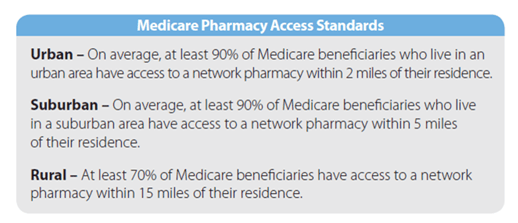
  • They quote the Medicare pharmacy access standards to make the point about what access you can survive with. They reference an Express Scripts analysis that says the Medicare access standard can be achieved with a national network of less than 20,000 retail pharmacies (compared to the 60,000 in most networks).

While limited retail networks are not a new concept, they haven’t been widely adopted historically (<10% of clients). PBMs have always offered this type of plan design to payers – “If you remove a few chains from your network, you’ll get a lower rate from the other chains in return for increased marketshare.”

With the integration of CVS Caremark and their offer of Maintenance Choice, we’ve obviously seen the focus on this increase. And, the recent public negotiations with Walgreens highlighted that this is seen as a viable model for the future.

The question now is whether this will accelerate adoption of some type of limited network. If it goes forward, there are lots of questions to answer:

  1. How small will the network be – regionally, nationally?
  2. Who do you build the network around – CVS, Walgreens?
  3. What does this mean for mail order?
  4. What rates do the retailers have to match to participate?
  5. Does it include 90-day?
  6. Does the network start to look like a formulary where you have preferred pharmacies at one copay and non-preferred at another copay or is it either in-network or out-of-network?
  7. Does this increase or decrease power for the independents that have to be in certain places?
  8. Will anyone really test the national access standards and go to a 20,000 store network?
  9. What will consumers say and do?
  10. Does this accelerate adoption of cash cards and cash business for generics?

But, again, I struggle to see Wal-Mart as the chain that you build around unless the whitepaper is a thinly veiled attempt to push the direct-to-employer model (i.e., Caterpillar) which has saved the employer lots of money, but isn’t a simple to implement program (IMHO).

Here are some marketshare numbers for Walgreens, CVS, Rite-Aid, and Wal-Mart for the top 30 MSAs. Only 9 of those markets have Wal-Mart share above 10% and none are higher than 14%. For the other three, you have markets where they have a much higher concentration around which you can build.


Someone was asking me the other day if I saw the PBMs essentially partnering up. I’m not sure I do since there are markets where you would want to build a limited network with Walgreens and markets where you would want to build a limited network with CVS. At least for now, I don’t see Medco and Express Scripts just picking one dance partner although they might just based on who’s willing to play with them.

The other thing that becomes important here (tying this back to my Silverlink work) is communications. You have to identify who will be affected in moving to a limited network. You have to communicate with those people and help get them to the preferred pharmacy. You have to help them understand why you are doing this (savings) and WIIFM (what’s in it for me).

It creates some great dialog between the head of benefits and the CFO. We can save $X…BUT we will have to ask Y% of our employees and their families. Will they care? Do they know their pharmacist (unlikely)? Will it be an issue of convenience? Will they complain (of course…change is hard)? Will they ultimately care (unlikely as most disruption becomes accepted after 3-6 months)?

DBN Article on Adherence

In today’s Drug Benefit News, I was quoted several times on the issue of incentives and adherence.  Here’s one of the quotes along with one of the quotes from Bob Nease from Express Scripts

Article: Should Patients Be Paid for Adherence? Strategy Could Yield Savings or Cost Hikes

Author: Renee Frojo

Medication nonadherence is recognized by most payers as a major driver of pharmacy costs, but nobody can get their hands on a foolproof solution to the problem. As a result, PBMs and health plans are experimenting with a new method that some critics view as a last resort: paying people to take their drugs appropriately. “There is no silver bullet when it comes to adherence, because it’s not that straightforward,” George Van Antwerp, vice president of the Solutions Strategy Group at Silverlink Communications, tells DBN. “However, it is an issue where everyone is aligned because there are a lot of potential savings.”

 “Some plans will do whatever it takes to get patients to be adherent to their therapy or engaged in better behaviors,” Bob Nease, Ph.D., chief scientist and vice president of marketing at Express Scripts, Inc., tells DBN. While the PBM hasn’t launched its own program yet, Nease says it will be following the trend closely. “The use of lotteries is very interesting and it has potential,” he adds.

Lottery For Taking Your Medicine

Adherence is the big focus these days.  It’s an issue where everyone is aligned – payer, pharmacy, PBM, pharma, patient, MD.  And, there are certainly lots of savings to be gained both hard dollars (less ER visits) and soft dollars (less absenteeism). 

BUT, COME ON…

There are lots of issues around adherence.  Getting people to fill the script after they leave the doctor’s office.  Making the script affordable.  Getting them to take the medication.  Remembering to take it over time.  Dealing with side effects.  Dealing with differences in cultures, conditions, health literacy, etc. 

Now, people are paying you or giving you a chance to “win” money every day just for taking your medication (see NYT article).  So, in my mind, this eliminates the issues of affordability (i.e., you already have the drug) and side effects (i.e., you’re not going to take something that has a meaningful side effect just for money).  So, why do I have to pay you.  Does the dentist pay you to brush your teeth?  Of course not.  Does your auto insurance company pay you not to speed?  Does your life insurance company pay you to not drive drunk?  NO…In all these cases you either pay more money if you do this or your service gets discounted if you don’t. 

If you have a chronic illness, can afford the medication, and have no meaningful reason to not take it, you should be doing your best to take the medication.  Otherwise, you’re driving up the costs of healthcare for you and your friends and your kids.  You do have some social responsibility to try and get better OR you should pay more for your healthcare.  We all have a choice (see the 1,000 pound woman).

Won’t paying people just create a long-term “dependency” where I only want to take my pills when I’m getting paid?  Probably…we certainly used to see that incentives at the call center drove up success rates, but once they went away the success fell below the baseline. 

Will this create an incentive simply to open the pillbox to get paid even without taking the medication?  No one is there making sure it goes down my throat so I’m sure some people will game the system.  (A sentiment shared by John Mack at the Pharma Marketing Blog.)

For the people that are adherent, will you just be wasting money?  Yes…and why should my neighbor get paid for forgetting…I’m going to want the same thing.

Don’t get me wrong.  I’m a fan of incentives, but reward me for the right things otherwise we end up with situations like Enron.  Incent me for managing my BMI, my A1c value, my blood pressure.  I can take medication, work out, or diet to achieve those. 

Give me tools and information.  Help me to understand my drug.  Help me to afford my drug (e.g., value based insurance design or patient assistance programs).  Educate me on my condition.  Have a talking pillbox or medication bottle.  Call me to remind me to refill.  Sign me up for auto-refill. 

I just can’t get on board with this latest twist.  I guess the proof is in the pudding so we’ll see if it makes a difference.  I’d love to be proven wrong here and see us throw money at people and change the healthcare cost curve.

Prioritizing Social Media Participation

If you haven’t read the article in USA Today titled “A doctor’s request: Please don’t ‘friend’ me“, I think you should.  It makes some great points and is symbolic of the challenge we all face relative to social media.

  • Should we participate?
  • Which tools should we use – MySpace, Facebook, Twitter, LinkedIn, Plaxo, blogging, …?
  • How much time to spend on them?
  • What should I expect from them – leads, contacts, friends, finding old friends?
  • Is this okay to do at work or should I do this at home?
  • Should these sites be blocked at work?
  • What can I or can’t I say?
  • Should I accept invitations from everyone who reaches out to me?

The author of this article talks about some of the more physician specific issues of becoming friends with your patients in Facebook, but it generally begs the question of where do those boundaries exist.

“Having a so-called dual relationship with a patient – that is, a financial, social or professional relationship in addition to a therapeutic relationship – can lead to serious ethical issues and potentially impair professional judgement.”

On the flipside, what if a friend of yours is a physician and you need to be treated.  Is that okay?  I think so.  I know my pharmacist very well.  We’ve even had her and her family over to the house several times.  But, we became friends through our kids and our gym not simply because we have a clinical relationship.  And, while we’ll talk industry trends occassionally, we rarely talk specifics.  Plus, the fact that I help lots of companies drive business away from her pharmacy (retail-to-mail) never sits too well!

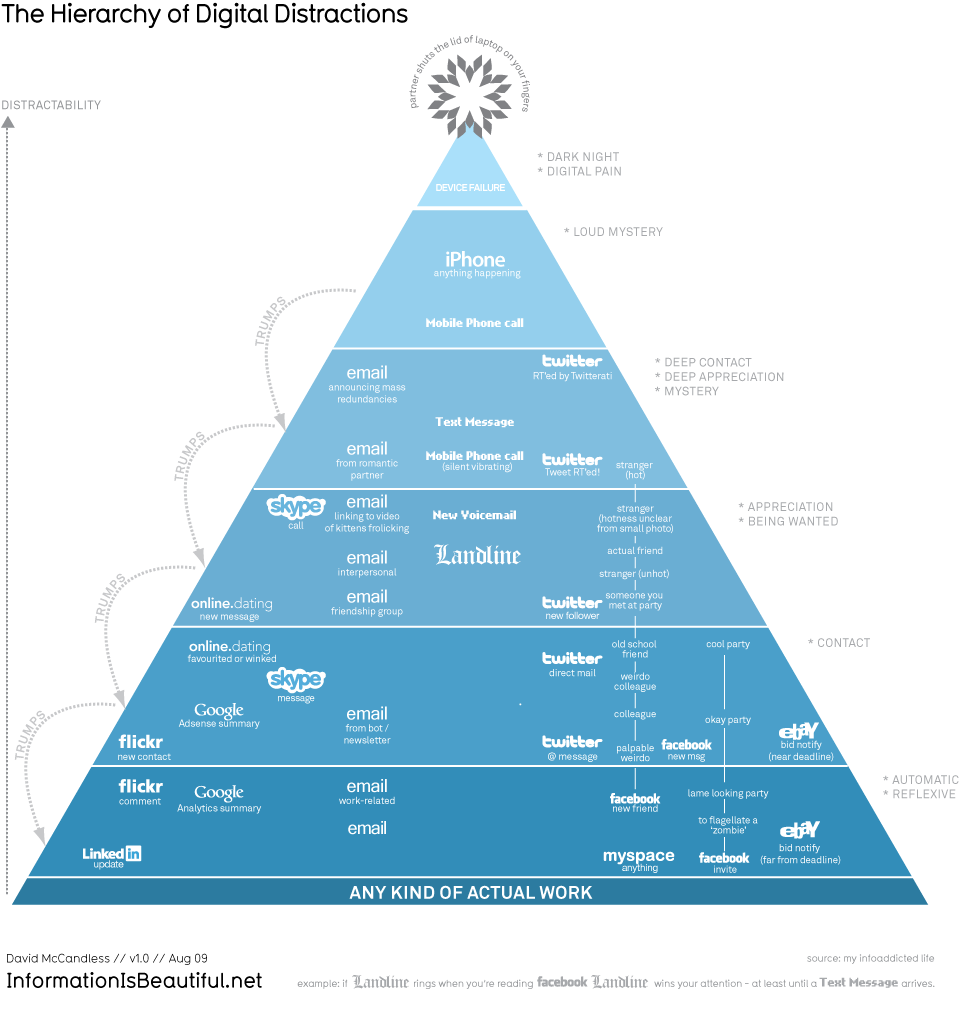
So, I’ve selectively added social media sites over the years.  Here’s a quick picture of how I think about it.  I do not accept the majority of invitations that I receive simply based on a few key criteria which vary by tool.  For example, in Facebook, I generally have to view you as someone who I have or would invite to my house in order to be your friend.  In LinkedIn, I have to have connected with you in person or on the phone one or more times before I would become a connection. 

Less Time in Hospital Correlated to More Readmissions

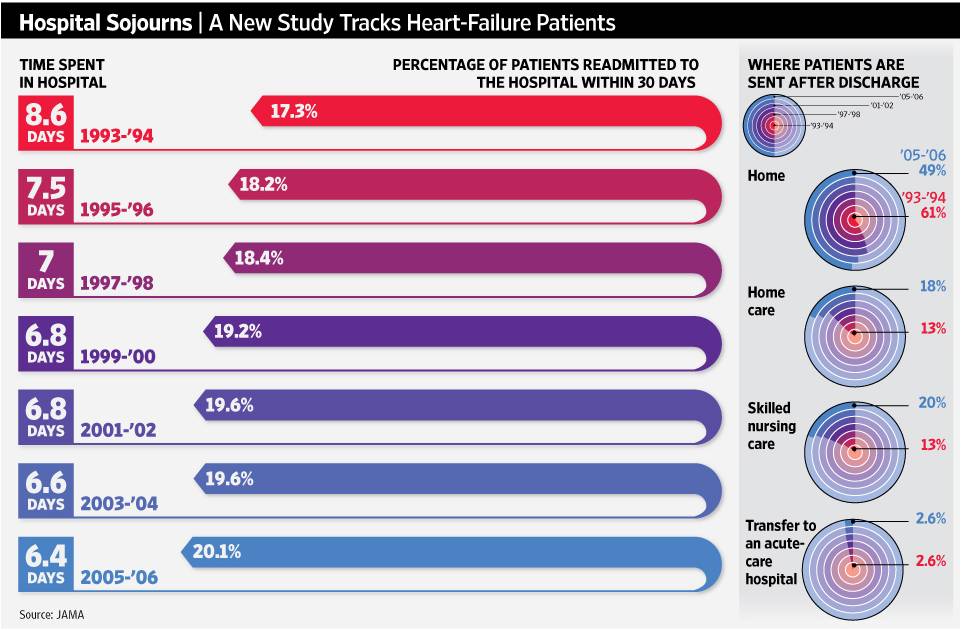
We all want to get out of the hospital as quickly as possible.  A recent study from JAMA that appeared in the WSJ showed that while days in the hospital dropped from 8.6 days in ’93-’94 to 6.4 days in ’05-’06 the readmission rate (within 30 days) went up from 17.3% to 20.1%.  I’d love to see the economics around this. 

  • Do the hospitals make more money in this case? 
  • Do the plans save more money? 
  • Are patients happier?  [Remember that the majority of them got out sooner.]

“From a societal point of view, dollars spent on health care likely increased.”  Harlan Krumholz, Yale University cardiologist and senior author of the study. 

The study author echos a point that we [Silverlink] often make to our clients which is that hospitals (or payers) need to invest more effort and resources to make sure the transition to outpatient status in seamless.  Do they understand what the doctor’s instructions were?  Do they have someone caring for them?  Did they pick up their medications?

Another key lesson learned here is that it’s important to measure what matters and that what’s measured gets improved.

2010 Medco Drug Trend Report

I can’t believe it’s taken me a few weeks to catch up on my notes from a conference call with David Snow and Dr. Rob Epstein from Medco Health Solutions about their 2010 Drug Trend Report. I captured some of Dr. Epstein’s comments in a quick blog post, but I have a lot of respect for David Snow and wanted to capture a few of his comments here and pull out some of the interesting data from the Drug Trend Report.

David Snow mentioned a few things:

  • Reform has to address all three legs of the stool – Access, Quality, and Cost. Right now, it’s focused on access.
  • Of the $2.4T we spend in the US on healthcare, $1T of it was unproductive.
  • One of the big issues in the system is poorly designed systems for the people that deliver care.
  • Pharmacy is ahead of the curve since it’s already wired and uses evidence-based care.
  • We have to focus on the chronic conditions. 96% of the pharmacy spend and 75% of the medical spend is here.
  • Prescriptions are used as first line solutions 90% of the time. (See my comments on why trend shouldn’t matter.)
  • $350B of the waste is due to poor management of chronic solutions.
  • We still have to address medical liability and defensive medicine.

He also answered questions. A few of my notes from the Q&A:

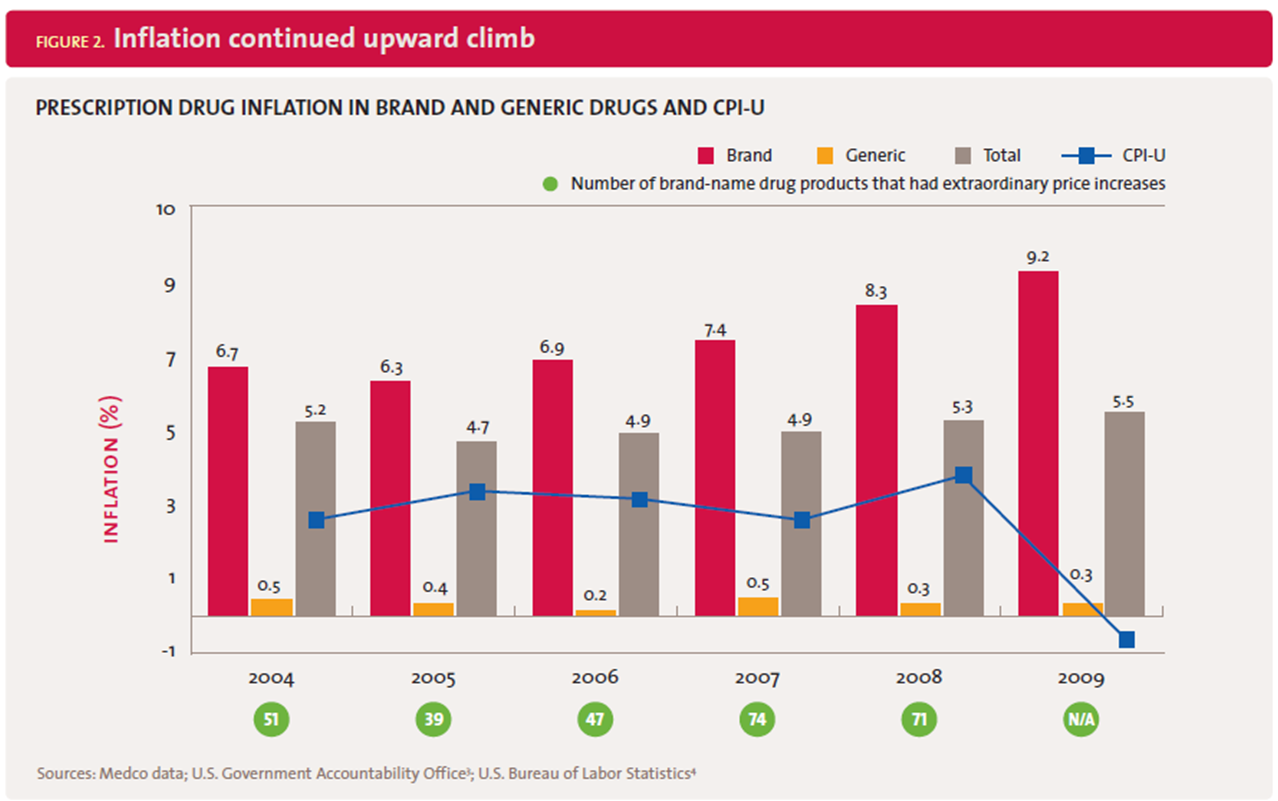
  • Patent expiration doesn’t fully explain the increase in brand pharmaceutical costs. (Traditionally these drug costs go up once the patent expires.) You can correlate the tax on pharma (in reform) to the increase in prices. (Not dis-similar to the increases around Part D if memory serves me.)
  • Adherence is a key issue. The Therapeutic Resource Centers (TRCs) are their answer to this. They drive adherence in the classes that matter and we report to clients on this. (While I think a lot of people viewed the TRCs as marketing strategies when they first came out, I believe they have demonstrated a clinical focus with some case studies and clinical leads over the past 18 months.)
  • The pathway to biosimilars is very fair to the innovator.
  • Class competition in specialty is increasing.

His most interesting comment which I’ll repeat from my earlier post was that if the FDA really understood true adherence they might make different decisions on approving drugs whose effect is tied to a person staying on a medication over time.

I won’t repeat some of the core data elements from my prior post, but here are some new ones from reading the document:

  • Mail order penetration was 34.2% (which I believe is industry leading for the PBM sector with only Walgreens showing a 90-day utilization number that’s higher).
  • Interestingly, they show trend for clients with over 50% mail use (and clients with less than 50% mail use). [Most PBMs would love to have any clients with over 50% mail use.]
    • 0.1% for those with over 50% versus 5.3% of those under 50%

Reported trends are based on 2 years’ data on pharmaceutical spending. Drug trend percent includes 201 clients representing approximately 65% of consolidated drug spending. The sample comprises clients who offer integrated (mail-order and retail) pharmacy benefit options for members. Clients with membership enrollment changes > 50% were excluded from the analysis. Plan spending is reported on a per-eligible per-month (PEPM) basis, unless otherwise specified. An “eligible” is a household, which may include multiple members who are covered under the same plan. Plan spending comprises the net cost to plan sponsors less discounts, rebates, subsidies, and member cost share. Generic dispensing rates and mail-order penetration rates represent the total consolidated Medco client base.


  • Diabetes is obviously a critical category for everyone. I found it interesting that they saw fewer patients filing claims for diabetes but more drugs per patient in 2009.
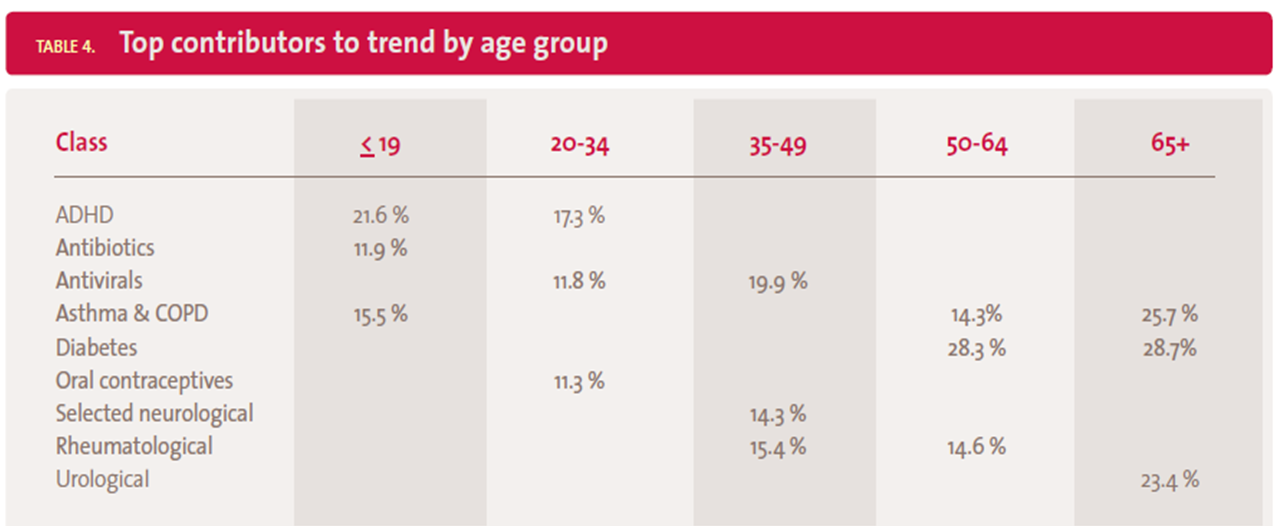
  • Respiratory therapies (driven by those <19 years old) jumped in contribution to trend from 8th to 2nd.
  • In patients aged 35 to 49, antiviral drugs are the greatest contributors to cost – 8.3% of plan pharmacy costs. [Some of this driven by flu although this is not the at risk age group.]  

Antiviral drugs (Formulary Guide Chapter 1.8) include oral treatments for HIV/AIDS, influenza, herpes, hepatitis C, hepatitis B, and injectable treatments for respiratory syncytial virus (RSV), and cytomegalovirus.

  • Utilization growth for ADHD drugs for those age 20-34 grew 21.2%. [Is this for people not diagnosed as kids, people who have adult-onset ADD (if that exists), or just an over-diagnosis of the condition?]
  • Specialty drugs…I’m always surprised that all the PBMs still have to caveat the fact that they only adjudicate some of the claims since some specialty drugs are filled and billed under the medical benefit. That seems like something that should / could be fixed, but I know it’s been tried and is hard since people are making money off them being billed elsewhere.  


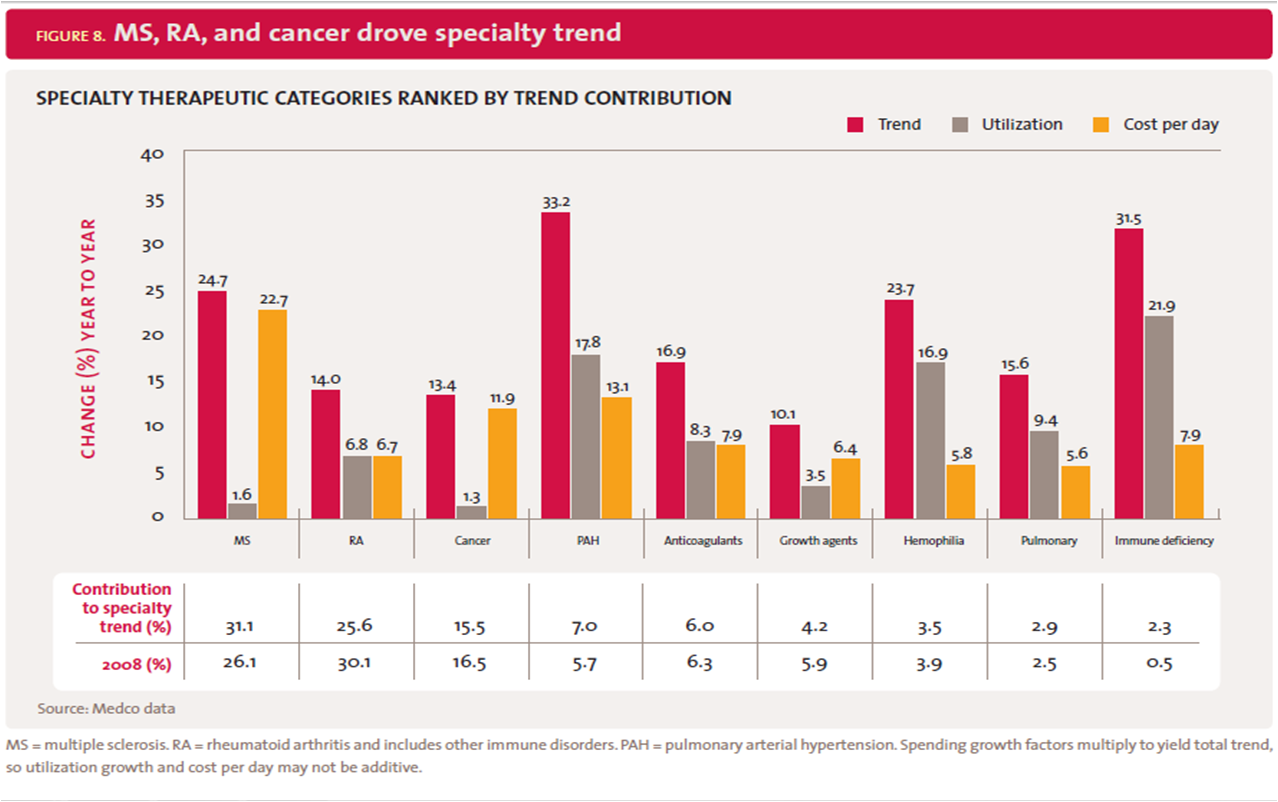
  • Cancer is already a huge driver of specialty costs AND:
    • Much of the spending is still under medical;
    • Most drugs approved in the past 4 years costs over $20,000 for a 12-week course; and
    • There are over 800 drugs in the pipeline.


Spending growth has outpaced spending for nonspecialty, or traditional medications because:

  • A high proportion of newly approved drugs are designated as specialty.
  • Unique manufacturing processes make specialty drugs expensive to develop.
  • Fewer drugs within a therapeutic category limit competition.
  • There may be only one specialty treatment for an orphan condition.
  • Few drugs are therapeutically equivalent to others in the category, reducing interchange and related cost savings opportunities.
  • It is more difficult to transition existing patients from one specialty drug to another preferred specialty drug because often these drugs are large, unique proteins that are not considered interchangeable.
  • Most small-molecule specialty drugs are relatively new with few generic alternatives.
  • No defined approval pathway exists for follow-on biologics (also known as biosimilars).
  • Drugs used to treat cancer represent a large portion of new drugs in both the pipeline and marketplace; most are specialty drugs and some can cost more than $20,000 for a 12-week therapy course.
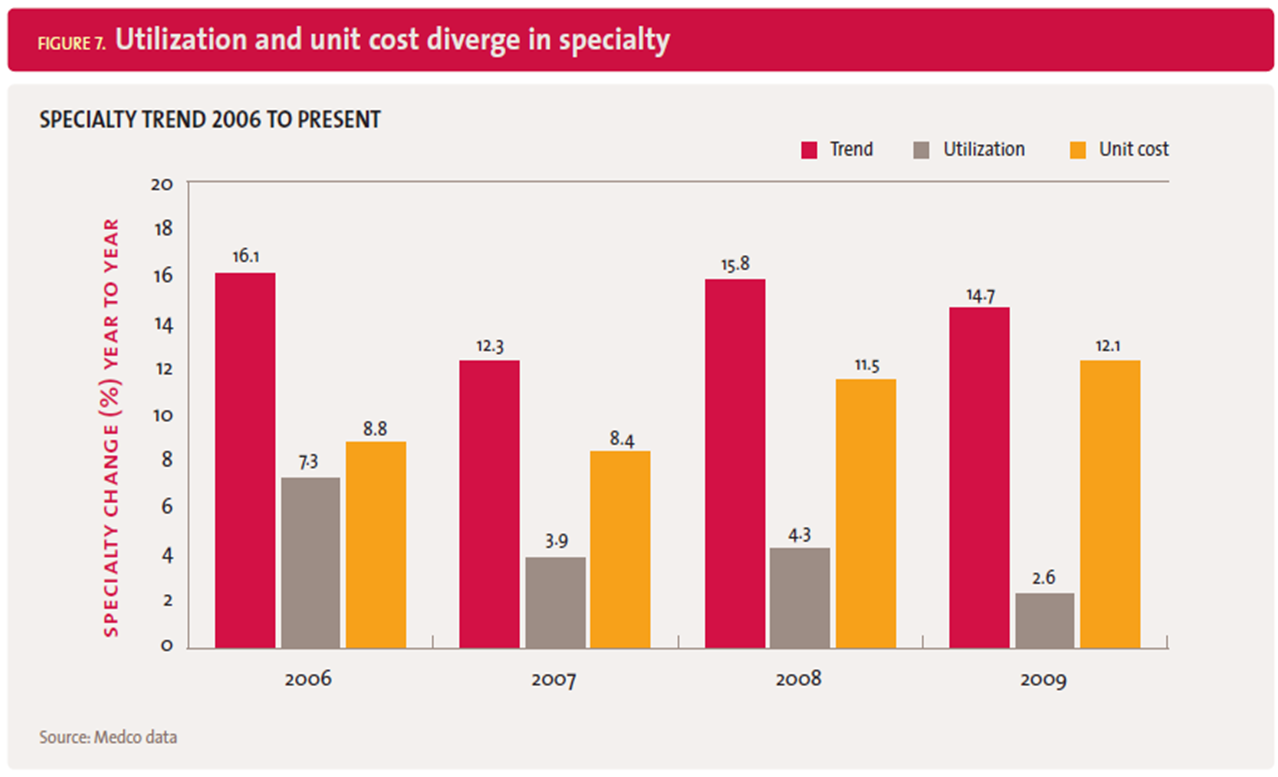
  • It was the first time I noticed anyone caveating the specialty trend. They proactively addressed different calculation methods to point out that their method yielded a 14.7% specialty trend, but if you did things differently (as I assume others must), then their trend would have been 12.1%.


  • Trend in children exceeded trend in other age groups for the second year in a row. (I think this is an interesting perspective and a scary indicator for the future health of our country.)
  • They provided some examples of drugs that had new indications for younger patients approved:
    • WelChol, Crestor—for low-density lipoprotein cholesterol (LDL-C) reduction in children aged 10 to 17 with heterozygous familial hypercholesterolemia.
    • Atacand—for hypertension in children aged 1 to 17.
    • Axert—for acute treatment of pediatric migraine.
    • Protonix—for erosive esophagitis in patients aged 5+.
    • Abilify—for irritability associated with autistic disorder in children aged 6 to 17.
    • Seroquel—for schizophrenia in children aged 13 to 17, and for acute manic episodes in children aged 10 to 17 with bipolar I disorder.
    • Zyprexa—for schizophrenia and for acute mania (bipolar I) in children aged 13 to 17.


  • An interesting perspective that I’ve talked about many times (without the research capabilities to analyze) is the correlation between sleep and chronic disease. They looked at this across states based on drug utilization and found a correlation (not necessarily causation).


So what do they say to watch:

  • Continued inflation in brand drug prices.
  • Majority of trend will come from specialty – oncology, orphan conditions.
  • Personalized medicine.
  • Biosimilars.
  • Generic pipeline.
  • Obesity epidemic.


  • They bring up an interesting issue relative to OTC (over-the-counter) product which is DUR (drug utilization review) which looks for drug-drug type interactions. They talk about the Medco Health Store integrating that data to monitor patients. [Do plans care? Do patients care? Should retail OTC purchases be integrated? How great are the interactions?]
  • They talk a little about obesity although I would love to understand more about how a plan sponsor should manage this.
    • 68% of adults are overweight; 34% obese
    • 32% of children are overweight; 17% obese
    • Medical spending on obesity related conditions is $147B
    • 19.5M adults (24-85) have diagnosed diabetes and other 4.25M are undiagnosed
    • Diabetic medical claims are forecasted to grow from $113B to $336B over the next 25 years.
  • I’m not going to spend a lot of time on personalized medicine here.  (A recent post of mine on this topic.)  They’ve been very active in this space for years talking about it. I think one of their interesting points in the Drug Trend Report is how Comparative Effectiveness will dovetail with Personalized Medicine.
  • Almost 2/3rds of people at risk for CHD in the next 10 years and eligible for lipid lowering drugs (e.g., Lipitor) were still not using them. (A common gap-in-care program run by many companies is to target these people (e.g., diabetics).)
  • Only 29% of patients treated for high cholesterol reach their cholesterol goal.
  • They have a section on wiring healthcare which David Snow has talked about for a while. It’s a critical area to address and has lots of opportunity.
  • They also talk about the concept of collaborative care (aka medical home…aka accountable care organizations).
  • I’m a big believer that poly-pharmacy creates issues (as does poly-physician). I don’t hear much talk about it. I was glad to see them talk about a study they did which identified poly-pharmacy issues, talked to MDs, and ended up with 24% of cases where medications were changed.


A Medco survey reported that 81% of participants with a new diagnosis, who received services at a traditional retail pharmacy, either did not receive counseling or were dissatisfied with the prescription drug counseling they received. When given the opportunity to speak with a Medco Specialist Pharmacist, 75% of these patients accepted the offer of immediate telephone support.


  • I thought it was really interesting to see a screen shot of their application used by the TRCs to create their Health Action Plans for consumers.


  • I was also interested in their focus on women’s health and some data on caregivers and the gender differences in healthcare. One of their TRCs is dedicated to addressing these differences.


Walgreens vs. CVS More Thoughts

This was definitely the hot topic yesterday. I talked to lots of people about it.

I had a chance to give it some more thought last night. A few things dawned on me.

1. Timing. This was timed well from a Walgreens perspective. Managed Care RFPs are mostly over and employers are making their decisions now on PBM services. Managed Care would have been more likely to focus on the cost and understand how to mitigate the disruption. Employers will be much more sensitive to the disruption. That will be something that CVS Caremark will have to manage.

2. Who wins. Since one analyst told me that Walgreens represents only a single-digit of CVS Caremark’s revenue, the impact may not be huge. On the flip side, it’s likely some downside for Walgreens since they’ll stop serving some portion of CVS Caremark’s business. Consumers aren’t helped here. So, my only conclusion is that the other PBMs (i.e., Medco and Express Scripts) are best positioned to win from this if it causes any CVS Caremark PBM decisions to go their way. At a minimum, it creates FUD (fear, uncertainty, and doubt) which no sales person likes to have to deal with.

3. Validation. If I’m the product manager for Maintenance Choice at CVS Caremark, this seems like pretty strong validation that the offering works. As Adam Fein showed before, it does drive volume to their stores. Obviously, Walgreens was afraid of this taking off and having a larger impact on them.

So…what would I do?

This is interesting since one of my last tasks at Express Scripts was to come up with a strategy in late 2005 around CVS and Walgreens backing out of our mandatory mail network. My strategy (which I ultimately left to pursue) was to respond by opening onsite clinics and building out a pharmacy kiosk system that could be put in grocery stores (only 50% have pharmacies), large employer campuses, and high density sites in big cities. While Express Scripts didn’t choose that path, I still believe there is opportunity there and CVS Caremark could easily implement such a strategy. [It’s starting to get momentum in Canada.] CVS Caremark (or Walgreens for that matter) have the technology and business model to implement on-site pharmacies and to create a central fill using kiosks. If those could mitigate the effect of the Walgreens decision, it could be an interesting response. [BTW – If you’re interested in my pharmacy kiosk business model that I ultimately wrote up and pursued with some angel investors, let me know. I may try to post some of it here later.]

On the other hand, another response would be to look at the top 5 MSA (market service areas) where Walgreens is stronger than CVS. I’m guessing those are NY (post-Duane Reade acquisition), Delaware (post-Happy Harry’s acquisition), St. Louis (CVS just started operating here), and a few others. They could go into those markets and buy up independents or some smaller chains to immediately mitigate this.

There are several responses short of just folding and putting Walgreens in the network. Ultimately, I think it’s about whether CVS and Walgreens see each other as “enemies” or just competitors. Do they want to grow the pie or do they want to put the other out of business (if such a thing were possible)?

More to come I’m sure…

Walgreens and CVS Caremark – Coming to Blows

I’m surprised this took the 3 years to play out. I talked about this back in 2007. Today, Walgreens announced that they would no longer participate with CVS Caremark networks for new networks and renewals. (See the CVS Caremark response here.)

Personally, I’m a little surprised they didn’t limit it just to the Maintenance Choice contracts which is where they have issues (like Mandatory Mail). Walgreens has fought for years against PBMs that implement models that limit choice.

I guess one of the big questions here is whether CVS Caremark allows Walgreens into their Maintenance Choice network. Walgreens (for example) has multiple 90-day networks. One which is just with Walgreens and one that includes other retailers.

Other questions I would have are:
1. Will CVS Caremark pull out of the Walgreen’s PBM network or their 90-day networks?
2. Will other retailers pull out of the CVS network?
3. Will Walgreens be more aggressive with other PBMs or can they only “fight” one at a time?
4. Will this help CVS Caremark focus their retail acquisition strategy to areas where Walgreens is stronger than them really creating a retail battle and less of a PBM battle?

I’m sure in some geographies (e.g., St. Louis, NYC) this may present some challenges where the CVS presence is not as strong, but in the end, most consumers have access to more retail pharmacies than they need and most PBM decisions are heavily influenced by price. If CVS Caremark can offer a price point that takes into account the disruption to the member base of not having Walgreens in the network, they can win. If that hurts them too much or they can’t do it, they’ll have to figure out how to make nice with Walgreens.

It will be interesting!