Anxiety and Depression Up In Students

In my opinion, your high school and college years are time to prepare for the future and enjoy life. After that, you start saving for retirement, taking care of a family, and many people end up in that sandwich generation having parents and children to care for. But, we know that kids also feel massive pressures (self-induced, peer pressure, or based on their parents) to perform well in sports, school, standardized tests, and other things that will help them succeed. There are also lots of social pressures at a time when the “right” answer isn’t clear.

Today, young people are also having a very hard time finding a job. A problem that is certain to create long-term issues as these people enter the workforce with less experience. [I know at E&Y the only variable that seemed to correlate with Partnership was whether the person had worked during college.]

A new survey [mentioned in USA Today , 1/12/10, pg. 4D) shows that five times as many high school and college students in the US are dealing with anxiety and other mental health problems than people of the same age in the Great Depression. That’s amazing to me. The Great Depression seems like such a hardship time.

Now, the other view of this is that more people are getting diagnosed with these diseases these days, but this survey was based on diagnosis codes or even Rxs filled. It was based on people taking the Minnesota Multiphasic Personality Inventory, a psychological questionnaire.


Calories on Menus – WOW!

This past week was the first time I was in NY since they were required to show calories on menus everywhere. WOW! It really makes you think differently. I went to Cosi to get a sandwich with a client and was stunned. I know I’m not the best, but sitting there seeing my options was both startling and a little bothersome. I hope this gets passed across the country. I would definitely think differently about my food choices.

Now, on the flipside, it definitely makes it much harder to just “cut loose” and grab a hot dog at the baseball game. You now are conscious about the impact that has on your waist (and potentially your health).

SPAM Blocker as Modern Day Censor

One of our clients told me this morning that my blog is blocked within the company. I was surprised. It got me thinking about the power of the SPAM Blocker (or whatever the right name is for the software that keeps people from visiting certain websites). Usually, I thought this was set up for pornography and gambling, but I know these have expanded to social sites like Facebook, LinkedIn, Twitter, and others.

Some, I can agree with others I can debate. Facebook seems unnecessary for work, but I could argue that LinkedIn could provide some work value. Twitter can be used as a distraction or with all the companies using it, it would seem like it could be a work tool.

That puts a lot of power in the hands of the software or IT person who selects which sites or parameters trigger “the big red hand”. [At least that’s what I’ve seen at several companies.]

Or, maybe I am simply too politically incorrect on my blog [doubtful].

New Respect For Swimmers

I’ve never been a swimmer and hence, whenever anyone asks me about doing a triathlon, I just laugh.  But, now my 8-year old has gotten into swimming. They run a mile then swim for 90-minutes 3x per week.  I figured if she could do it than I could.  Big mistake.

I tried to swim for 30-minutes that other day and felt like I was going to pass out.  I’m sure it was a good workout, but I realized that like running I need to manage my expectations and start small.  This may be a good new years resolution…make it one hour swimming.

4 of top 5 Fastest Growing Salaries are for Healthcare Jobs

A recent article highlights jobs with the fastest growing salaries.  Four of the top five are from healthcare:

  1. Oral pathologists
  2. Social medical researchers
  3. Pharmacologists
  4. Toxicologists


2010 Banned Words?

I think of Lake Superior State University as a place I expect to see list for NCAA hockey championship, but not the literary location that would be producing the 35th annual List of Words Banished from the Queen’s English for Mis-use, Over-use, and General Uselessness.

But, it seems to get lots of media play, and in the spirit of helping you trim your communication choices in the new year…

  1. Shovel-ready [I’ve never heard anyone use this.]
  2. Transparent / transparency [about time]
  3. Czar [doesn’t seem like a democratic term]
  4. Tweet [seems too early to kill this]
  5. App [might also be a little early]
  6. Sexting [n/c]
  7. Friend, as a verb [I think social media will keep this around for a while]
  8. Teachable moment [I actually like this one and didn’t realize it was a commonly used term]
  9. In these economic times…
  10. Stimulus
  11. Toxic assets
  12. Too big to fail
  13. Bromance
  14. Chillaxin’ [Never heard this one…maybe just not that cool]
  15. Obama, as a prefix [Agree…I was never a fan of Obamanomics, etc.]

Why Can’t I Text My [Application]

I forgot to grab a receipt earlier today when I used my debit card.  Since I keep a record of all my transactions in Quicken, I quickly realized that I needed to e-mail myself the amount so I could enter it when I got home.  That got me thinking…why couldn’t I just text it to home home PC.  The PC is on the web.  It could “listen” for my message; receive it; and integrate it. 

I’m sure there’s more to it, but this could work for healthcare updates – weigh, blood sugar, blood pressure.  Sure, ideally my bank would update my Quicken and my bluetooth connected WiFi health monitoring devices would do it for me.  BUT, in the interim…

How Quickly Framing Changes Your Perception of Information

After I posted my weak attempt at humor (I should learn to never try) about Dogs versus Kids (sent to me by someone else), I was thinking about it last night, and I figured out a connection.  It’s a great example of framing. 

Before you have kids, your perception of people with kids is very different.  When you’re in the grocery store (and you don’t have kids), you wonder why those parents can’t control their kids and why their kids are crying uncontrollably for some cereal or some other thing they want.  After you have kids, you realize that you can’t give in just to shut them up in public.  You might stop and tell them no.  You might even put them in timeout, but if you give in to their temper tantrum, then it will be worse next time.

So, what does this have to do with healthcare communications?  Well, it’s a simple question of framing.  We all have a frame of reference for how we receive information.  Before you’re diagnosed with a disease (e.g., diabetes), you may hear facts about the condition but they generally go in one ear and out the other.  After you’re diagnosed (or someone close to you), you start to listen differently to that same information. 

While for general communications, our segmentation may be relatively static and tied to things like education, geography, or income there are many other drivers in healthcare – plan design, condition, length of time with condition, …

Top Predications for Healthcare from Columbia Business School

These are from Cliff Cramer, Director, Healthcare and Pharmaceutical Management Program at Columbia Business School
[with my comments in brackets].  

  1. Multi-national pharmaceutical and medical technology companies will increase their investments in emerging markets, notably China and India, to access cost effective human capital and a growing middle class of consumers better able to afford more advanced medical products. [Seems pretty logical. Global expansion. I expect pharma expansion will be much easier than technology expansion although SaaS (Software as a Service) my make it easier. I don’t see some of the “cool” Health 2.0 tools gaining traction and becoming viable businesses just because of broader reach.]


  2. Information technology will make greater strides in a healthcare industry which has been slow to adopt, driven by financial incentives (e.g., government subsidies) and employees and consumers demanding better and more accessible information (e.g., transportable e-records) as their share of healthcare spending increases. [Again, I think this is pretty logical and driven by some of the government initiatives. I expect healthcare technology and services will be a hot industry for the next 5 years. At the same time, there has been lots of carnage on the road to make EMRs and PHRs and other tools work over the years. Will this be the time? Maybe.]
  3. Healthcare reform will continue across developed (U.S. and EU countries) and developing (China) markets, focused on increasing access to affordable and quality patient care. These initiatives are likely to be incremental due to political and economic (budget) considerations. [I’m not so sure I see this. Other countries are down a very different path. I think they will wait a few years to see what our reform efforts bear before engaging on massive reform efforts.]
  4. Consolidation will be a major theme in 2010 as insurers and hospitals seek additional leverage in contract negotiations, and pharmaceutical companies explore transformational mergers to broaden product lines, strengthen geographic breadth (emerging markets) and seek to manage earnings given major patent expirations in the near term. [An economic certainty.]

These were definitely interesting, but it left me lacking. What about health reform – will anything change in 2010? What about personalized medicine? What about health 2.0? What about consumer engagement? What about chronic conditions like obesity and diabetes?

IT growth; reform; consolidation; and international investment could apply to almost any industry.

Dog or Kids (fun)

I usually don’t stray too off topic, but I thought this was funny enough to share.

Which would you choose?  [Of course the only one that believes this is reality are those without either… at least most of the time]

Does Technology Make You More Efficient?

If you’re like me the answer is “of course”, but I realize that it isn’t always true for people.  Look at the people who get sucked into things like SecondLife or people who play games for hours on Facebook.  That certainly isn’t efficient time.

An article “The Internet Ruined My Life” by Pat Regnier in Money Magazine (Jan/Feb 2010) makes some good suggestions.

“When work got stressful – pretty often in this economy – it was all to easy to click over to Facebook.”

He points out that for Americans working over 50 hours per week:

  • 56% say technology has increased their job stress (27% by a lot).
  • 47% say technology has made it harder to focus at work (14% by a lot).
  • 66% say technology has made it harder to forget about work at home and on the weekends (37% by a lot).

I’d say what about the fact that it’s easier to multi-task and watch your kids soccer game during the week and stay in touch.

He makes a few suggestions (all relevant for getting into the new year):

  • Check out the 43folders.com blog.
  • Break the circuit – stop checking Facebook for a week and see if it’s still that important.
  • Be smarter about e-mail.  The more you send; the more you get.  Create better subject lines.  He suggests the book “The Tyranny of E-mail”.
  • Focus on your job (which isn’t to check e-mail…by the way).  He suggests checking e-mail just a few times a day [which is very hard but very efficient].
  • Stay offline in front of the kids [which is hard to do when you work from home].

Looking Back 10 Years Ago

I usually try to spend some time reflecting at the new year looking backwards on what’s been accomplished, what I’ve learned, and how I’ve changed while also setting some goals for the next 1, 5, and 10 years.  Given that it’s the changing of a decade, I’m first going to look back 10 years to see where I was.

1999:

  • Living in St. Louis [I’ve moved about a mile down the road.]
  • Working at Ernst & Young LLP [I’ve had 5 different jobs since then… although all of them with people from E&Y.]
  • Wondering if the Y2K work I did would matter [still not sure but the world didn’t crash].
  • Working with managed care companies trying to convince them to build member portals and how the Internet would change their business.  [I think we know where that went although they are still trying to drive traffic there.]
  • Married with no kids and a dog [We now have 2 kids and a new dog.]
  • Never worked out [I’ve since ran 3 marathons and try to work out several times a week.]
  • There was no social media [Now, I’ve got Twitter, blogging, Facebook, LinkedIn, and Plaxo.]
  • Same mobile phone number and carrier although I paid several hundred dollars a month for many less minutes and features.

The decade itself seems full of big events:

  • My kids being born and watching them grow – Amazing!  [I could talk about them and my amazing wife forever, but that’s probably not for this blog.]
  • The dotcom bubble bursting [which impacted the company I was then working for].
  • 9/11 – I can still remember driving to work that morning and sitting at work in sort of a daze [even out in the midwest].
  • Iraq and Afghanistan.
  • New Orleans.
  • The Red Wings domination in hockey.
  • The St. Louis Cardinals and the Boston Red Sox winning World Series.
  • Running my first marathon [and later running with my little brother].
  • Trying to start my own company.
  • Golfing with my wife [our weekly date] … but never seeming to significantly improve.
  • Tsunami.
  • Recession and seeing people I know lose their jobs and have to adjust lifestyles.  [I was glad I experienced this early in the decade and had an appreciation for this.]
  • Seeing my parents really begin to age.
  • Watching my brother and sister get married and have kids.
  • Learning more and more about what I like to do and what I’m good at.
  • Appreciate the power of networking.
  • Actually using the healthcare system – first for the kids and second for myself.
  • Learning a lot about stock markets and IPOs and caring about saving for retirement and college.
  • Seeing the frustrating challenge of changing behavior with physicians (eRx, generic sampling) and later with patients.
  • Getting to do more and more selling.
  • Continued reinforcement of my Renaissance Man philosophy that broad is still a valuable strategy.
  • Learning what doesn’t work and how not to act.  [that could be a whole book]
  • McMansions.
  • Disney.
  • Learning about corporate politics [you could avoid that as a consultant… generally].
  • Learning to play Texas Hold’Em with my friends.
  • Building two houses, finishing two basements, doing remodeling.

I guess in general it’s been a good decade for me.  I’m better off.  I have a great family.  I’ve learned a lot.  I’ve grown in my career.  I’ve made lots of new friends.

At the same time, the world’s been pretty crazy, and I appreciate the sacrifices that many have made in the Armed Forces during this time.  I hope that the next decade will be much better for everyone.

H1N1 – Trying To Match Supply And Demand

When there was a large demand several months ago, there wasn’t any supply.  Now there is adequate supply, but the demand has gone down.  Will there be another spike in demand in the Spring? 

With all the retail pharmacies and clinics having supply, we are now going to see the competition for the consumer.  (See WSJ story)

Some Foods And Drugs Don’t Mix

Without getting into all the clinical rules, I’ve always looked for a cut-to-the-chase consumer list of when to avoid what specific foods if you take certain medications.

Finally, in Real Simple magazine (pg. 74, Jan 2010), I found one.  Here it is:

  • Avoid grapefruit [including juice] if you’re taking a cholesterol lowering drug or a prescription sleep aid.
  • Avoid chocolate if your using an MAO-inhibiting antidepressant.
  • Avoid black licorice if you’re on heart medication.

I’m not sure of the science here, but I’m assuming that it’s real.  I’ve heard the grapefruit advice before, but never the others.  Do physicians and/or pharmacists tell you this?

The story also goes on to recommend a few foods:

  • Shiitake Mushrooms – help boost the immune system and prevent the growth of cancer cells
  • Brazil Nuts – may ward off colon, lung, and prostate cancer
  • Horseradish – increase the liver’s ability to fight carcinogens and suppress growth of cancerous tumors…and may help avoid urinary tract infections.
  • Walnuts – help reduce cholesterol and inflamation that may lead to high blood pressure and heart disease
  • Black rasperries – may retard the growth of precancerous cells

So…watch what you eat!

Why Didn’t I Know There Was A Generic Version

I got this question e-mailed to me today.  The patient has been using the same drug for years and it lost it’s patent about 6 months ago.  They just found out that they could have saved a lot of money and wondered who should have told them.  Here’s my thoughts.

  1. It’s the member’s responsibility ultimately to search for ways to save money and ask for generics.
  2. A lot of managed care companies and PBMs won’t reach out when patents expire because 90% of the time the drug is switched to the generic within 90-days by the pharmacy.
  3. The key players who would communicate are aligned – the pharmacy / PBM makes more money when generics are used and the managed care plan saves more money.
  4. BUT, sometimes managed care plans or individual employers (groups) will opt-out or never sign up for communication programs so their members don’t hear about ways to save money.
  5. BUT, sometimes consumers opt-out of communications from the PBM or managed care company and therefore miss out on opportunities.
  6. BUT, sometimes physicians won’t allow the prescription to be switched to the generic drug (even when chemically equivalent) and will write the prescription DAW (Dispense As Written) or say no substitution allowed.
  7. BUT, there have been a few instances when due to exclusivity on the generic that it actually costs more than the brand during the initial 6-months and people don’t move to the generic.

So, with lots of nuances, my reply was that no one had a legal obligation to tell her, but they all had good incentives to do it.  I suggest talking to the physician and/or the pharmacist.

Brand Drugs That Might Lose Patent In 2010

Here’s a short list of the big drugs that might lose patent protection (i.e., have a chemically equivalent generic become available) in 2010.  This is always subject to change and is based on data from PBMI which is summarized from presentations at the AMCP

2010 Aricept® donepezil Alzheimer’s disease
  Cozaar® losartan High blood pressure
  Effexor XR® venlafaxine Depression, panic disorder
  Flomax® tamsulosin Benign prostatic hypertropy
  Hyzaar® hydrochlorothiazide and losartan High blood pressure

FDA “Listed” Drugs – A New Hassle

As of 1/1/2010, Medicare beneficiares will face a new hassle at the pharmacy.  How big of a deal will this be?  I honestly don’t know.

But, from their site:

Starting January 1, 2010, if your pharmacy tries to sell you a version of a drug that isn’tlisted with the FDA, your Medicare drug plan might not pay for it. This means you mightgo to the pharmacy where you regularly get your Medicare-covered prescriptions filled, andif the pharmacy stocks only a version of the drug that isn’t listed (and, therefore, your planwon’t cover), the pharmacy may not be able to fill your prescription that day.

Since there are multiple manufacturers of a generic medication, multiple forms (capsule, tablet), and sometimes repackagers, this could complicate things for patients simply trying to fill their medications.  I’m not sure I understand what’s being addressed here.

You Know You’ve Had A Good Workout When

Every once in a while you have that great workout.  As we get ready for the 60% surge in gym memberships that occur with 1/1, I started thinking about what criteria I use to know this.

  1. An inability to walk up stairs without pain.  I even had one workout years ago (kickboxing plus spinning) where I had to crawl up my stairs at home for day.
  2. You have to take Advil before you workout again since you’re still sore.
  3. You have to use IcyHot before you workout again to try to relax your muscles.
  4. An inability to lift light objects (such as kids) since your arms are too sore.
  5. An ability to wring the sweat from your clothes as if you had just jumped in a pool.
  6. Throwing up from a workout.  (I have to trust this.  I’ve come close, but my body seems to stop before I get there.)
  7. Totally physical collapse.  (I also have to trust this.  You often see this with marathoners or people doing the IronMan, but my body seems to stop before I get to this point.)

Of course, you can’t do this everyday or you can’t recover (and you probably aren’t very comfortable).  But, I often find that the best way to get this is to try a new routine or new workout.  I’ve done this new core workout a few times at the Lifetime Fitness in Chesterfield, MO which seems pretty easy but is really hard.  I have trouble with certain movements the next day for sure.

Because People Are Different

I’ll borrow our tagline from Silverlink Communications Because People Are Different – to follow-up on my post on direct mail from yesterday.  The first commentor makes a good point.  Certainly e-mail doesn’t work for everyone.  Nor does the phone (although it is generally ubiquitous today). 

The reality is that different segments require different modes of communication.  The question is how to figure that out. 

  • Do you ask people for their preferences…realizing that many times people don’t know what they want or need?
  • Do you look at historical behavior to predict what will work best for people like them…realizing that healthcare is intensely personal and while predictive may not be indicative…and people’s healthcare behaviors change over time?
  • Do you pursue a cluster approach – i.e., send multiple modes simultaneously…realizing that this isn’t very cost effective?
  • Do you pursue a strategy of sequencing – i.e., call then e-mail then letter – and which pattern works best…and what spacing between modes works best?  (This will vary by message, objective, and audience.)

And, the question that I surprisingly don’t hear many people ask is why is there so much direct mail when we as a culture are generally more interested in being environmentally aware than ever (although we still have a long way to go).  Why kill a tree when other modes are more effective, less expensive, and offer better consumer insights?

Why Does Direct Mail Exist In Healthcare

Given all the progress we’ve made in the past 15 years around communications, I wonder why direct mail is still a primary component of communications. Obviously, there are some times when compliance requires a written notification, but considering you can’t tell if someone opened the mail and most companies don’t process return mail, you really have no visibility or ability to audit.

Written communications are also so static unlike a website or an automated call where a response can alter the next step in the communication.

Additionally, there is a time lag on written communications that you don’t have with e-mail or with an automated call.

I’ll break it out more in the table below, but in the end, direct mail costs the most yet gives you the least data, the worst customer experience, and is the least time sensitive. Seems like a problem to me.

Channel

Automated Call

Direct Mail

E-mail

Cost

Low – Medium

High

Low

Ability to Personalize

High

Medium

High

Dynamic Content

Yes

No

No

Know if received by consumer

Yes

No

Yes

Know how long consumer interacted

Yes

No

No

Time from event to consumer

Minutes

Days

Minutes

Response Rate

High

Low

Low

 Now, don’t get me wrong, there is a place for direct mail.

  • People who don’t respond to automated calls or e-mail.
  • People who request more information.
  • Communications which require detailed information to make a decision.

But, why is it that so many companies begin their communications to consumers with direct mail. Is it that people are simply stuck in a rut of what they’re used to and can’t embrace decade old technology? Or is it that people don’t believe the facts in front of them?

How will PBMs be affected by current trends?

You can certainly see the piece of the PBM world that I’m wrapped up in right now, but these seem to be important trends.

What are the most likely developments/trends that could affect pharmacy benefit executives in the year ahead? Why?

While healthcare reform or market consolidation could impact the industry, we don’t see either as having a material impact in 2010.  We expect several trends.  There will continue to be a focus on mail order utilization, specialty pharmacy market share, and generic fill rate, and the sophistication of those programs will continue to evolve.  PBMs will look at how to predict responses by patients to offers such as retail-to-mail and subsequently segment the market using variables such as condition, age, and plan design.  PBMs will continue to develop strategies to address programs like $4 generics, 90-day retail, and pharmacy to employer direct contracting.  We have also seen a huge focus on adherence which will take several forms – automated refill programs, physician focused programs, and pharma-funded programs.  Additionally, there will continue to be efforts to create a single view of the member in a longitudinal view of their claims and intervention history.  PBMs will begin to think and act more like consumer companies employing techniques like motivational interviewing and behavioral economics.

How might pharmacy benefit executives most effectively prepare for these important trends?

Executives should be developing processes with an inside-out perspective that focuses on how the consumer experiences the PBM not how the PBM optimizes their process.  They should be looking at how they blend claims data, lab data, communications data, and event data (e.g., website visits) to have a holistic view of the patient.  Additionally, PBMs need to have a rapid testing strategy for how they evaluate consumer hypotheses and rapidly improve programs while capturing insights about their population.

What are the biggest challenges facing pharmacy benefit executives in 2010?

Another question from the recent Drug Benefit News where I was interviewed with several other experts on the industry.  My answer…

  • How to continue to grow (top line, bottom line, marketshare, functionality, internationally)?
  • How to avoid commoditization within specialty and how to scale specialty operations with a lower FTE to Rx ratio without impacting outcomes?
  • How to prevent “churn” from mail whether due to non-adherence or movement to $4 generic type programs?
  • How to simplify consumer messaging and drive health outcomes?
  • How to develop restrictive benefits that drive behavior with minimal disruption?
  • How to structure client and pharma financial relationships that reward them for better outcomes?

Other thoughts?

Will there be more PBM acquisitions in 2010?

My response to this question…

The Express Scripts acquisition of Wellpoint’s NextRx certainly put several captive PBMs in play, but that appears to have died down.  There may be small acquisitions, but the big 3 appear focused on expansion into more health services and internationally more than buying new lives. 

Other opinions?

Should Rx Data Be Used By Pharma?

This is a great question as posed by numerous people (see WSJ blog).  Now, the one reality that most people don’t realize is that the data is only directionally correct.  Not everyone sells their data to the aggregators so depending on pharmacy (or PBM) marketshare the data could be close to significantly off.

Perhaps, that’s not the issue.  The question is whether pharma should have a right to see prescription data by physician to understand their behavior.  It’s not patient specific data so that alleviates what I think should be the big issue.

Between patients visiting healthcare sites, registering for coupons, buying disease specific publications or supplies, the individual data is probably a lot easier to get and use…and probably more accurate (at least at the household level). 

Assuming no one says that pharma can’t communicate with physicians, I think the data is relevant.  Certainly, they have an agenda – drive marketshare of their drugs.  I think we have to assume that physicians aren’t just guppies that hear the pharma rep talk and do whatever they say.  Physicians are smart, well-trained professionals that should be able to hear messaging about drug pros and cons; look at the research; talk to their peers; talk to their patients; and appropriately prescribe. 

I think the prescription data probably creates a more efficient system.  Physicians that use a drug frequently are visited less often by the rep and don’t spend time away from patients.  Physicians that don’t prescribe a drug frequently (and prescribe a high volume of competitive drugs) probably get more visits…BUT they have the choice of saying don’t come. 

[I’m taking a little extreme of a view here since nothing is black and white, but I’m not sure I see the privacy issue here.]

Lance Armstrong And Diabetes

Lance has decided to focus some of his passion and conviction on diabetes.  I think this is great.  Certainly, this is a condition which affects a lot of Americans and continues to get worse with the obesity epidemic. 

Given the focus on the pharmacies (CVS, Walgreens) and the PBMs (Caremark, Medco, Express Scripts) on management of this condition, I wonder who (if anyone) will get Lance Armstrong to be their sponsor or public face.  For the PBMs that traditional don’t have a consumer brand, I would think this is a great opportunity.  I compare it to Medco having Amy Tendrich from DiabetesMine promoting Liberty Medical.  While Amy might not be a household name, she is certainly a name in the diabetes community.

Phones On The Planes – Please No

The fact that there is even a coalition called the Inflight Passenger Communications Coalition which is focused on getting passengers the “right” to use their mobile phones on planes in the US is crazy.  I don’t care what they do in other countries.  This would drive me insane.  As someone who spends a significant amount of time on planes, the last thing I want to hear is some person talking the whole flight.  This is great downtime and work time for me. 

I completely agree with having Internet access.  People can stay connect via SMS (text messaging), e-mail, web chats, or other written modes.  Having dozens of people talking out loud in a confined space would be unpleasant for everyone.

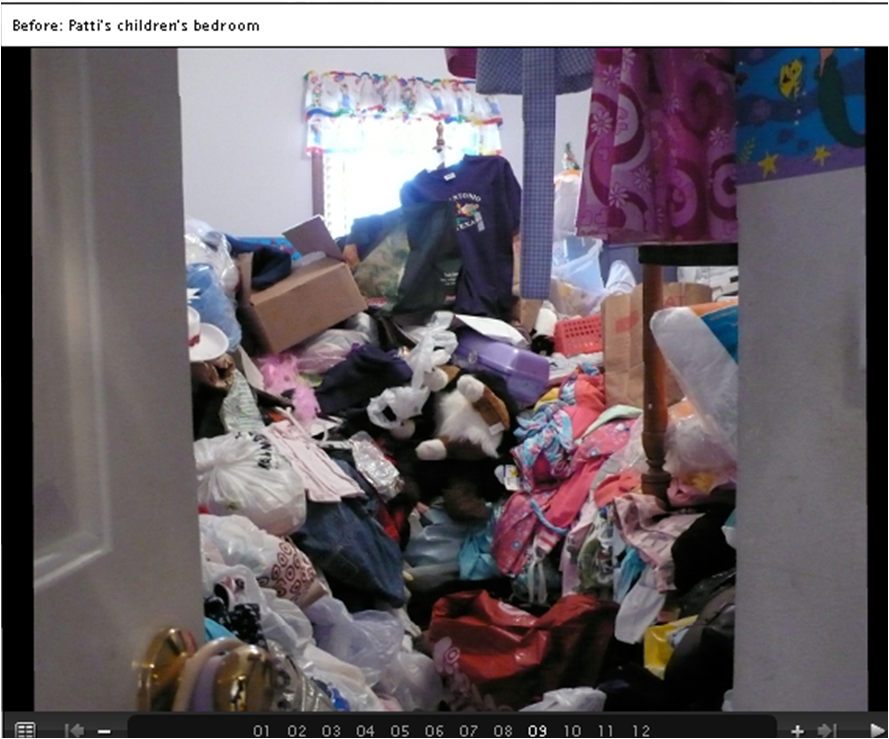
Hoarders – Scary Pictures; Big Health Consequences

Have you seen the show Hoarders?  Very scary.  It’s amazing that people can live like this.  Logically, it would appear that there is some type of additive or compulsive behavior issue here.  Go to the website and look at some of the pictures.

I can only imagine the social and health consequences of this on the entire family.

Can Un-Athletic Coaches Be Role Models?

As a parent, I always think about setting examples for my kids.  Since I do believe that playing sports is important to teach kids teamwork, coordination, social skills, and competitive skills, I think this is a key question.  Sports is an integral part of our society.  I see three potential role models for kids around sports:  [Also, over time, I think that kids peers can become role models or certainly older kids.]

  1. Parents
  2. Coaches
  3. Professional Athletes

While I think there are some great professional athletes who can serve as role models (e.g., Michael Jordan, Tiger Woods), there are a lot that aren’t due to drugs, violence, unsportsmanlike conduct, gambling, cheating, and financial mismanagement.  And, that’s a very hard thing to control.  We’re always (IMHO – in my humble opinion) going to pay to see the best even if they’ve used steriods or have control issues. 

As parents, we have the most control over ourselves.  We can make sure our children see us play sports and exercise.  We can stress the importance of this.  We can help them learn sports and make sure they take away lessons from their playing – e.g., winning isn’t everything.  [One interesting observation that I’ve had is that athletes make good sales people because they know how to keep trying and get focused even after a loss.]

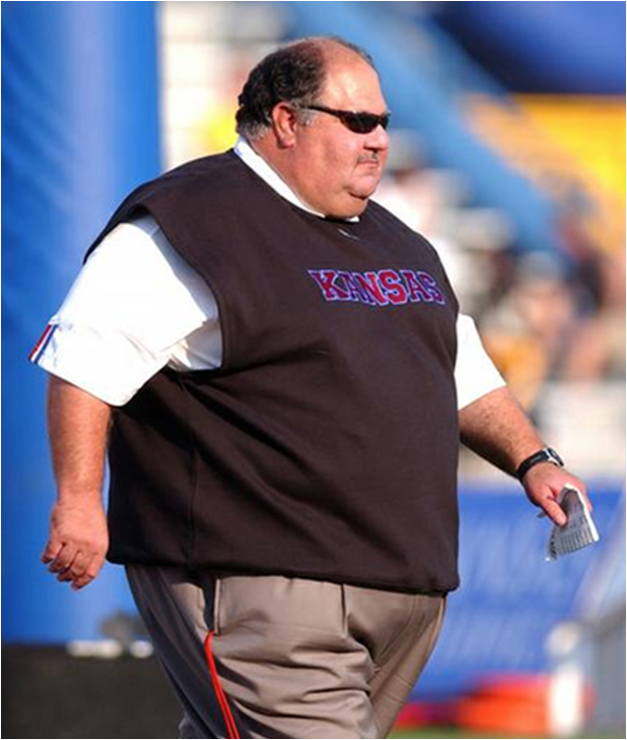
But, the one I struggle with is coaches.  Sometimes you may have control over the coach, but they can be a very powerful influence on your kids.  They spend hours with them and provide guidance.  There are some things that you obviously don’t want in a coach – too demanding, not demanding enough, someone who encourages winning at any cost.  But, what do you do about the coach that is very smart and understands how to play, but isn’t in shape at all?  They can’t even run down the field with the kids.  What type of image does that give the kids?  It seems mixed to me, but maybe I’m wrong. 

[Note: I was originally going to call this “Fat Coaches”, but I think there are plently of overweight people who are athletic.  But, I’m not so sure about this guy above or some other coaches I’ve seen.]