Archive | Books / Articles RSS feed for this section

A Couple Quick Lessons From Super Bowl Ads

“Success is like anything worthwhile. It has a price. You have to pay the price to win and you have to pay the price to get to the point where success is possible. Most important, you must pay the price to stay there.” – Vince Lombardi


While I didn’t have any personal stake in the game on Sunday and am generally a college football fan, I definitely enjoyed watching Green Bay win.  I’ve always liked many of Vince Lombardi’s quotes, and one of my first consulting projects was working with the Oneida Indian tribe in Green Bay. 

That being said, I (like many others) enjoy watching the advertisements.  In reading a post-game summary of the commercials in USA Today, there were two interesting points:

  1. One of the two winners (it was a tie) was for Doritos and was based on a customer created advertisement (which cost him $500 to produce). 
  2. Four of the top 10 advertisements (Doritos x2 and Pepsi x2) had been posted on Facebook and YouTube for days.


I think this presents several interesting scenarios in healthcare marketing:

  1. Why don’t we have more customers submitting and creating “advertisements” for us?  I personally would love to see 30-second spots by pharmacy users talking about why they chose mail order or a particular retail store.  Or, imagine a new mom talking about how great her experience was at a particular hospital.  [That seems a lot more compelling than the signs that tell me the number of births at a particular location.]
  2. Maybe familiarity doesn’t breed contempt but rather trust.  Should we think differently about how we share information concurrently on different channels?  [Hint: YES]  Is there value in sticking with a theme for a period of time?  [IMHO – Yes]

Coupons From Manufacturers

I’ve talked about this a few times. It’s an interesting topic. Are coupons for prescriptions a good thing or a bad thing?

Let’s look at a few perspectives and considerations…

Manufacturer:

  • Do they improve my marketshare?
  • Do they protect my marketshare from new entrants?
  • Do they protect my brand versus generic competition?
  • Do they improve adherence (as measured by refill rates)?
  • Per point of marketshare, is it cheaper to rebate a drug or offer direct-to-consumer coupons?
  • Are coupons more effective than samples? (They are clearly less expensive to produce and distribute.)
  • I’d be interested in feedback, but I haven’t found any conclusive data. BUT, I think manufacturers are smart marketers. They wouldn’t be doing this if it didn’t work.

Payor:

  • Do the coupons support my formulary? (I would generally think no…otherwise why use them.)
  • Do the coupons improve adherence? Are they creating waste?
  • Are the coupons changing physician or patient behavior? Is this costing me money (e.g., less generic starts)?
  • Is this impacting my total drug spend since the consumer is no longer as price sensitive to copay differentials?
  • Do claims processing using the coupons still show up in the patient history such that drug-drug interactions and other safety checks can be conducted?

Customer:

  • Am I saving money? [Yes]
  • Is the coupon easy to use and understand? [I would think generally yes.]
  • They should be asking about their total cost of the drug over time since depending on the condition they may be less likely to convert to a lower cost drug (typically generic) when the coupon is no longer offered. Or, switching drugs may require them to visit the physician or have lab work done that will cost them money.
  • They should be asking…if others use this coupon, which means that they are filling a more expensive drug, what does that decision cost me (shared cost)?

As far as I know, there are very few limitations on couponing.

  • The state of MA doesn’t allow their use at all.
  • There are lots of restrictions about their use in Medicare and Medicaid such that those consumers are usually excluded from using the coupons.

This is generally a topic where there is little known about the answers to these questions (as far as I know).

There was an article in last week’s Drug Benefit News about this topic where I was quoted and built upon a few comments I made about Lipitor earlier:

“Payers are concerned that copay cards incent consumers to use higher-cost drugs,” George Van Antwerp, general manager of pharmacy solutions for Silverlink Communications, tells DBN. “The consumer no longer sees the penalty of using a more expensive drug.”

Pfizer, who declined to comment for this article, has given some indication that it will continue the $4 copay card only until November, when a generic version hits the market, but Van Antwerp says he’d be surprised if the company did not extend the offer. “Back when Zocor went generic, Merck actually made the brand drug cheaper than the generic drug,” Van Antwerp recalls. “United and a few other payers ended up putting brand name Zocor into the generic tier on their formulary.”

Paper Prescriptions Helpful – Duh

I love when someone presents a basic idea as some “new” blockbuster idea. I was just looking through a webinar from last week where it addressed a key point which is increased abandonment of prescriptions at the pharmacy. The presentation referred to a study by CVS that showed that abandonment is higher for e-prescriptions than paper prescriptions. I’ve talked about this before. That physical document (paper prescription) serves both as a reminder, but it also provides the patient with information (drug name, dose, etc) which is an important take away from their visit. BUT, this isn’t new. When I worked with the e-prescribing vendors in 2001, they knew this and offered services where a printout was created for the patient while the prescription was sent to the pharmacy.

Then the presentation talked about actually placing “advertisements” on these printouts. Imagine the ability of the manufacturer to directly message the patient at the time of prescribing with messages about “consider my drug”. This seems to defeat many of the value propositions of e-prescribing which are about pushing plan design information to the physician during the encounter with the patient. Not to mention the disruption to me as the prescriber…imagine the following:

  • The MD writes for Drug A which is a generic.
  • The MD goes to meet with another patient and tells the current patient to pick up a paper prescription at the counter as they pay their copay.
  • When the patient gets their paper prescription, they see messaging around a copay coupon for a branded alternative.
  • They then ask to see the MD again to discuss alternatives right then.

Is this really just shifting that discussion from happening later to now or will it lead to a spike in this discussion and pushing it to face-to-face versus on the phone?

Will Physicians As We Know Them Disappear?

It’s not new news.  Physicians face a lot of pressure – new drugs, new technology, reform, ever demanding patients, lawsuits, lower pay, less time for cognitive services, …  The question is whether we’re at a “tipping point”.  In an article in HeathLeaders (Jan 2011, pg. 12), Walker Ray, MD who is head of the nonprofit Physician’s Foundation says there’s a “tsunami out there”.  More physicians want to leave practice while baby boomers are just hitting their Medicare years and chronic conditions continue to plague us. 

A recent survey by the foundation which published the report – Health Reform and the Decline of the Physician Private Practice – found that only 26% of respondents said they would continue practicing the way they are in 3 years.  The report talks about them becoming employees, part-time workers, and administrators.  Health reform should create lots of government jobs for them.

BUT, the remaining 74% said they would retire, close their practice, or seek non-clinical jobs (on top of the options above).  It’s a critical issue. 

We had a shortage of pharmacists a few years ago.  That has changed dramatically with new schools, more graduates, and technology.  I’m interested to see what happens here.  Could something simple like tort reform or payment reform change this trend?  Could the ACO model take off and improve this?

A “Difficult” Encounter Leads To Worse Outcomes

An interesting study looks at the percentage of “difficult” patients with some reflection on the physician also.  The study showed a few interesting things:

  • 18% of patients were considered difficult
  • Older physicians and those with better communication skills don’t have as many “difficult” patients
  • Difficult patients were 2.4x more likely to have worse symptoms two weeks after their visit

So…what is a “difficult” patient.  The article describes them as patients who have lots of unexplained physicial symptoms, stress, anxiety, and other complicating factors.

I think this reinforces a lot of what I talk about.  You have to go back to the root of the problem (e.g., adherence) – the patient and physician encounter.  We have to make this better.  Patients have to understand how to leverage their physician.  Physicians need to better understand their patient’s and how to engage them.

Once that infrastructure exists, a lot of things can play out after the fact.

Are You A Defeatist, Catastropist, or a Triumphalist?

In a post by Atul Gawande, he talks about “Seeing Spots“.  It’s an interesting piece on the generalized reactions to focusing care on those that really drive the costs in our system. 

It’s an important issue.  If 5% drive 60% of our costs, why wouldn’t you treat them differently.  If 1% drives 40% of the costs (or whatever the number is), shouldn’t you be driving out to their house and helping them. 

Of course it’s not a scalable model to the entire population, but 50% success with 5% of the population would save us 30% per year (not accounting for regression to the mean).  But, it would be meaningful. 

So…which are you?

Best Healthcare Companies To Work For

I was reading through the Fortune 100 Best Companies To Work For and pulled out the list of healthcare companies on there.  I was surprised there were not more pharma companies.  There were lots of hospital systems.  There weren’t any insurers or PBMs.

The top companies across all industries were:

  1. SAS
  2. Boston Consulting Group
  3. Wegmans Food Markets
  4. Google
  5. NetApp

In healthcare, the companies were:

#19 – The Methodist Hospital System

#27 – CHG Healthcare Services

#35 – Genetech

#36 – Southern Ohio Medical Center

#37 – Scripps Health

#42 – Baptist Health South Florida

#47 – Novo Nordisk

#54 – Atlantic Health

#56 – Millennium: The Takeda Oncology Company

#60 – Children’s Healthcare of Atlanata

#61 – Mayo Clinic

#62 – OhioHealth

#68 – Stryker

#75 – Arkansas Children’s Hospital

#80 – St. Jude Children’s Research Hospital

#88 – Meridian Health

#91 – The Everett Clinic

Some of the perks they call out in the list are:

  • Paid volunteer time
  • On-site conceirge
  • 100% coverage for healthcare
  • Unpaid sabbaticals
  • Paternity leave
  • 401K matching
  • Pensions
  • Training
  • On-site childcare
  • On-site gyms
  • Charitable matching
  • Diversity

The “New” Consumer

In the September 2010 issue of Inc. magazine, there was an article called “Decoding the New Consumer”.  It is an interview with John Gerzema, who is the Chief Insights Officer for Young & Rubicam.  Here’s a few comments from the article which are elaborated on in his new book – Spend Shift: How the Post-Crisis Values Revolution is Changing the Way We Buy, Sell, and Live:

  • Large numbers of people say money is no longer as important to them.
  • 76% say that the number of possessions they own doesn’t affect how happy they are
  • We are moving from mindless to mindful consumption
  • 71% of people say they make it a point to buy from companies who have values similar to their own
  • More and more consumers are moving from consumption to production (raising chickens, home canning, bartering)
  • 64% of people want to do more things and make more things themselves
  • Kindness and generosity are qualities customers increasingly demand from business
  • Many Americans no longer consider TVs, dishwashers, and air conditioners to be necessities
  • Irony isn’t dead…cynicism is dead.
  • Microsoft beats out Apple in reputation, leadership, and being the “best brand”…much of that has to do with the philantrophy of Bill Gates

I think this poses lots of interesting questions for healthcare companies.  What is your brand?  How is it perceived?  What are your values?  How do people experience those?  How do they add value to your company?  How does your call center display these qualities?  How do your communications?  How do you monitor the shifting of these values and expectations over time?

FL Pharmacists to Fight Medicaid Mail Order

The Florida Pharmacy Association along with a local pharmacy in Florida have filed suit against the state for allowing Medicaid patients to use mail order.  This seems silly to me.  The mail order pharmacy ship has sailed a long time ago.  Approximately 13% of all prescriptions filled in the US are through mail order. 

While I would still disagree if it was mandatory mail, this isn’t.  The state is simply giving patients the option to get their drugs through mail order.  If the community pharmacies have an issue, they should match the mail order rates and dispense 90-day prescriptions and delivery them to the patient’s house at no cost. 

We’re in a budget crisis here as a country.  If we can save money in Medicaid and therefore in the state budgets, why wouldn’t we do it?

The lawsuit says that the change –  

 “at a minimum deprives the patients’ access to a provider having extensive knowledge of their medical conditions and unique clinical problems.”

Really?  I’d love to know how many of those Medicaid patients have a long standing relationship with their pharmacist, know them by name, and don’t use multiple pharmacies.  Maybe I’m wrong. 

It comes down to losing business BUT if the patients are so happy, won’t they stay with their local pharmacy.  This is a transient population so it’s always been hard for mail order.  It’s not easy to send them refill reminders.  There’s not always a consistent address to mail to.  Some of that is changing as text messaging becomes more normal as a communication medium, but that’s still a small percentage of companies. 


Medical Data From Thomas Goetz

Here is a video of Thomas Goetz (Wired magazine) from TEDMED…

He talks about redesigning medical data and how to present it for people to understand.

He talks about a key notion of helping people see their way to better health.

He talks about the feedback loop of Personalized Data – Relevance – Choices – Options.

He talks about how Captain Crunch can inspire information delivery for prescription drugs.

And, then he shared the Wired article on redesigning information.

Vaccines and Autism…the Long Path Back

The 1998 article that started this all has been retracted.  Well, guess what…it’s going to take a long time for that to permeate the thinking of people across the country (world). 

A recent poll by Harris Interactive showed several things:

  1. 69% of those polled had heard the theory about them being linked BUT only 47% knew the Lancet article had been retracted.
  2. 18% of people think that vaccines cause autism
  3. 30% are unsure if they do
  4. 52% don’t believe they do

That 18% represents a lot of children who aren’t getting vaccines. 

USA Today had an article about this the other day.  They talked about the fact that 40% of parents have delayed or declined shots for their kids.  They point to 5 myths:

  1. Vaccines cause autism
  2. Too many vaccines overwhelm children’s immune systems
  3. It’s safe to “space out” vaccines
  4. Vaccines contain toxic chemicals
  5. Vaccine preventable diseases arent’ that dangerous

They go on to point out that there is more aluminum in breast milk (10 mg) and milk based formula (30 mg) than all the recommended vaccines combined (4 mg) based on total consumption in the first 6 months of life.

Compliance For Donations?

Would you be more compliance with your medications if you knew that every time you took a pill or refilled that a donation was made in your honor to a certain charity?  It’s an interesting hypothesis being put forth in this article – Leveraging Altruism To Improve Compliance… BUT I personally am fairly skeptical. 

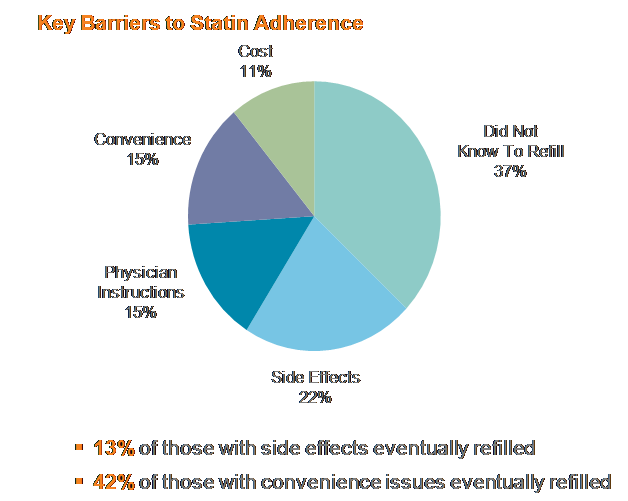
Let’s just look at the barriers identified in one recent barrier survey we did at Silverlink Communications for patients who had not refilled their statin medications. 

What do you see?

  1. Significant literacy issues.  People didn’t even know they were supposed to refill. 
  2. People don’t understand the medication and remember what the physician told them.
  3. Convenience…an easy to address opportunity.  These are key targets for a retail-to-mail or 90-day retail program.
  4. Side effects…this is harder to address but some of it can be managed by setting expectations up front.

Are those going to be addressed because a donation is being made?  I don’t think so.

Guest Post: The Strong Connection Between Education and Health Outcomes

Is there a correlation between education and health? Studies do in fact indicate that there is a positive relationship between advanced education levels and health outcomes. This association has been well-documented in many countries and for many different metrics of health.

Jobs that require a particular level of education typically provide better access to quality healthcare. Studies indicate that unemployment rates are highest for people without a high school diploma. Additionally, evidence indicates that the unemployed population experiences worse health and higher mortality rates than the employed population.

Other studies have shown that more education can reduce a woman’s risk of depression and obesity. Of course, there are health benefits for men as well: educated men tend to drink less and have less of a chance of dying young.

Multi-Generation Implications

Education has some positive multi-generational implications, as a mother’s level of education is correlated with the health of her children. The parents’ education level affects their kids’ health directly because of resources available to the kids and also indirectly because of the quality of schools their kids attend.

Emotional Health Benefits

Evidence shows that more education means a greater sense of personal control. Individuals who view themselves as having a high degree of personal control report a better health status. These folks are at lower risk for physical ailments and chronic diseases. Also, more education improves an individual’s self-perception of their social status, which also predicts a higher self-reported health status.

Health Literacy

Studies show that only three percent of college graduates have below average health literacy skills. On the other hand, fifteen percent of high school graduates and forty-nine percent of adults who don’t have a high school diploma have health literacy skills that are below average. Reports indicate, not surprisingly, that adults with less than average health literacy are more likely to be considered unhealthy.

Education and Health Report

The authors of the Education and Health Report, David M. Cutler of Harvard University and Adriana Lleras-Muney of Princeton University, find a clear connection between education and health. This connection cannot be completely explained by factors such as the labor market, income, or family background indicators. Health and education have a complicated relationship.

The report shows that for some health outcomes, including obesity and functional limitations, the impact of education appears to be even more positive after people have obtained education beyond a high school diploma. The relationship between health and education seems to be the same for men and women across most outcomes; however, there are a few exceptions.

Race, Education, and Health

Studies show there are few racial differences regarding the impact education has on health. For outcomes that do show differences between Caucasians and Blacks, such as being in fair or poor health, Caucasians tend to experience more positive health benefits from more education when compared to Blacks with the same level of education.

Literacy and Health

Low literacy is associated with adverse health outcomes and negative effects on the health of the population. Additionally, poor literacy skills often contribute to a poor understanding of spoken or written medical advice.

Ten studies showed a positive, significant relationship between literacy level and the participants’ knowledge of the following health issues:

  • Contraception
  • Smoking
  • Hypertension
  • Human immunodeficiency virus (HIV)
  • Asthma
  • Diabetes
  • Postoperative care

Clearly, there is a positive connection between education and health. A better educated society leads to better overall health and lower healthcare costs.

Useful Resources

Brian Jenkins writes about a variety of career and college topics for BrainTrack.

A Few Health Studies

(Trying to dig out of my work pile and grab a few blog ideas I’ve had on my desk.)

This article in Spirit Magazine (Jan 2011) mentioned 5 different studies that I thought were interesting:

  1. Too much ice-tea can wreak havoc on your kidneys according to researchers at Loyola University.  Add a splash of lemon to inhibit the growth of kidney stones due to the oxalates in iced tea.
  2. Resveratrol, the anti-aging compound found in red wine, grapes, blueberries, and peanuts, stops out-of-control blood vessel growth in your eyes according to a study by Washington University in St. Louis.
  3. Women who regularly wear high heels over a 2-year span showed 13% shorter muscle fiberts in their calves BUT a simple calf stretch at the end of the day will keep the muscles in balance according to Manchester Metropolitan University.
  4. Fast-paced video cames like Call of Duty help players make decisions in other areas of life faster according to researchers from the University of Rochester.
  5. Researchers at Virginia Tech found that people who drank two glasses of water before a meal lost (on average) 5 pounds more than the non-drinkers during a 12-week study.

Grand Rounds (volume 7: number 17): Engagement Is Multi-Faceted

The concept of “engagement” in healthcare is a difficult one. Traditionally, we’ve had a build it and they will come approach that didn’t encourage preventative care. It also didn’t openly acknowledge the challenges that consumers have in dealing with medication adherence and even understanding the system or their physician’s instructions.

In this week’s edition of Grand Rounds, I looked at submissions and recent posts from several angles on this issue.

One of the most engaging was from the healthAGEnda blog where Amy tells her personal story about being diagnosed with Stage IV inflammatory breast cancer and trying to work though the system. Her focus on patient-centered care and support for the Campaign for Better Care make you want to jump out of your seat and shake the physician she talks about.

“It doesn’t matter if care is cutting-edge and technologically advanced; if it doesn’t take the patient’s goals into account, it may not be worth doing.”

Another submission from the ACP Hospitalist blog tells a great story about how to use the “explanatory model” to engage the patient when it’s not apparent what the problem is. I think this focus on understanding that physician’s don’t always have the answer is an important one, and one that Joe Paduda talks about when he addresses guidelines as both an art and science. Dr. Pullen also talks about this from a different perspective by describing some examples of “Wicked Bad” medicine on his blog.

One of the common focus areas today from patient engagement is around adherence. Ryan from the ACP Internist blog talks about the recent CVS Caremark study which looks at how total healthcare costs are lowered with adherence. He goes on to point out the fact that understanding the reasons for non-adherence is important so that you can – simplify, explain, and involve.

Interestingly, my old boss from Express Scripts recently started her own blog and also talked about this same study but from a different perspective.

And, Dan Ariely briefly touched on this topic also when he shared a letter he got from a reader on getting their child to take their medications.

While I think a lot of us believe HIT might save the day, the Freakonomics blog mentions a few points about HIT to consider. And, Amy Tenderich (of DiabetesMine) who I think of as a great e-patient gives a more practical example when she talks about what diabetics need to do to stay prepared in the winter. (What’s the basic “survival kit” and where can you go to get one.) I think this has a lot of general applicability to how we plan our days and weeks and try to stay healthy. One physician I know who travels a lot always talks about the need to be prepared with healthy food on the road and at the airports.

On the flipside, we hear a lot about genomics and social networking as ways to engage the consumer and to understand their personal health decisions. To that affect, I liked Elizabeth Landau’s post on how your friend’s genes might affect you.

Of course, there are lots of other considerations. Louise from the Colorado Health Insurance Insider talks about the fact that we are so focused on health insurance reform rather than health care reform. She goes on to point out the lack of connectivity between the consumer and the true cost.

And, Henry from the InsureBlog points out a change in the NHS to look more like the US system and cut out one of the steps for cancer patients. Will it help?

But, at the end of the day, I think we have to address the systemic barriers while simultaneously figuring out how to better engage consumers. Julie Rosen at the Schwartz Center for Compassionate Healthcare talks about Patient and Family Advisor Councils. This was a new concept to me, but it makes a lot of sense that engaging the family in the patient’s care will lead to better outcomes and a better experience. I also heard from Will Meek from the Vancouver Counselor blog who talks about how dreams can be used as part of therapy, and Dr. Johnson who presents a story of woe about her challenges as a physician.

And, since many of us “experience” healthcare thru pharmacy and pharmacy thru DTC, I thought I would also include John Mack’s Pharmacy Marketing Highlights from 2010.

Next week’s Grand Rounds will be hosted by 33 charts.

Get Wellness Article in Time – Silverlink, Aetna, Hypertension

The recent issue of Time magazine includes an article called “Get Wellness” about wellness.  It talks about having MDs “prescribe” wellness (think Information Therapy or Ix) and the fact that Medicare enrollees will be eligible for wellness visits begining 1/1/11. 

The new wellness benefit tasks doctors with creating “personalized prevention plans,” which ideally will be tailored to each patient’s daily routine, psyche and family life. And if that sounds more like a nanny-state mandate than medicine, consider that some 75% of the $2.47 trillion in annual U.S. health care costs stems from chronic diseases, many of which can be prevented or delayed by lifestyle choices.
The article goes on to talk about the challenge this may create for physicians.  Can they act as nutritionists?  Can they change behavior? 
 
Of course, MDs won’t be the only one’s focusing here (although some of that could change with ACOs and PCMHs).  Disease management companies and managed care companies have focused here for a long time.  The focus in many ways these days is how to reduce costs in these traditionally nurse-centric programs with technology but without impacting outcomes and participation.  There is one example in the article from some work we are doing at Silverlink around hypertension
 
Some firms, in trying to bring down health care costs, have hired health coaches to reach out to the sedentary or overweight to get them moving more. Others use interactive voice-response systems to keep tabs on participants’ progress. In a study, Aetna set out to see whether it could reduce hypertension — and the attendant risks of stroke, heart attack and kidney failure — among its Medicare Advantage members. More than 1,100 participants were given automated blood-pressure cuffs and told to call in with readings at least monthly. They also got quarterly reminders to dial in. When they did so, an automated system run by Silverlink Communications provided immediate feedback, explaining what the readings meant and where to call for further advice. Alerts were also sent to nurse managers when readings were dangerously high. The result: of the 217 people who started out with uncontrolled hypertension and stuck with the program for a year or so, nearly 57% got their blood pressure under control.

Ambulance For Obese People

When I heard this story, I reflected on two things:

  • This is a sad state of our reality that people are so heavy that the EMTs can’t get them from their house to the hospital; and
  • Why is this happening in Boston.

I think we all know the obesity statistics in the US.  This is a crisis / epidemic that all of us in healthcare will be dealing with the for the rest of our lives…so, from that perspective, retrofitting hospital beds, stretchers, ambulances, etc. is a reality.

On the flipside, Massachusetts is the second healthiest state in the country so why not start this service in some other state where the likelihood of having an obese patient is higher?

The Art of Creating A “Campaign”

For a little more color on this program – click here.

What you saw here:

  • Engagement takes planning and creativity
  • Engagement is a process
  • Messaging before the event is critical
  • A retention strategy for sustained involvement is important
  • Think about your influencers and how to turn them into advocates
  • Clear goals and objectives
  • A defined metric of success

Compliance “Rapid Response” Team

In the future, will we have teams who rapidly engage patients who don’t take their medications as prescribed?  Will those be medical teams for patients who recently got a transplant and police teams for mentally ill patients with a history of violence?

Seem pretty farfetched?

Compliance with medication is such a hot topic today that you’re finally see the technology innovators jumping in.  You have solutions like the GlowCaps system that have been around for a few years and demonstrated their impact.  Now, you have technology going even further to attach itself to the pill and send data back. 

The LA Times had an article that talks about some of these technologies:

  • Camera pills
  • A device that you wear around your neck to monitor swallowing the pill using RFID
  • A device that detects when it encounters stomach acid

BUT, the kicker here is that the article estimates this will only improve adherence by 5-15%.  Remembering to take the pill isn’t the only reason people don’t take their pills!!!

Just look at this on the 11 Dimensions of Non-Adherence or this on the Predictors of Non-Adherence or some of the research coming out of CVS Caremark.

You have to address health literacy.  You have to address side effects.  You have to address beliefs.  And, many other issues.

These solutions are “cool” and will finally tell us if people take a pill, but I’m not sure that’s the silver bullet.  Plus, at what cost?  Get a 5-15% improvement in adherence isn’t that impressive.  We’ve done that multiple times at Silverlink with a quick remind to patients about taking their medications or asking patients about their barriers and addressing them. 

As with any solution, it’s about figuring out who it benefits most and getting it to them at the right time.

DBN: 2011 Pharmacy Predictions

Drug Benefit News (which is a must read publication) just came out with a summary of opinions from people about the new year (DBN, 1/7/11).  Here are a few highlights:

  • Focus on clinical programs to help MCOs hit their MLR targets
  • PBM consolidation and need for smaller PBMs to innovate (as my whitepaper discusses)
  • Potential for generic only formularies as generic fill rate is in the 70-80% range
  • Focus on specialty drug costs including the claims processed under the medical benefit (Express Scripts big push right now)
  • Outcomes based contracting (i.e., Merck and Cigna)
  • Direct contracting (i.e., Caterpillar, Delta)
  • Continued pharma shift to niche markets as brand oral solids make up <20% of claims
  • Health reform fallout
  • Continued streamlining and focus on MA and PDP
  • Continued innovation (i.e., Wal-Mart and Humana model)
  • Limited or restricted networks take off (finally)
  • Cost plus pricing
  • Modernizing Medicaid management and controlling costs

I was one of the people interviewed for the article.  My comments from the article are:

The things that I’m monitoring and think will affect the industry include mobile health, behavioral science application, preference-based marketing, risk based contracting, and integration with home monitoring devices. Rising costs will push several things such as increased management of the specialty benefit, more focus on adherence, and an increased understanding of how consumers impact health outcomes and how to best engage them. In 2011, innovations and changes in benefit design could include limited networks, more and more utilization management especially step therapy and 90-day retail or mail.

The biggest area of discussion in Medicare Part D right now is the Star Ratings. There are questions for PBMs about how they support the MA metrics and there are now specific PDP metrics. Understanding what those are, how to track them, how to influence them, and how to improve them will be a major focus in 2011.

New Pharmacy Whitepaper: Innovate Or Be Commoditized

In early 2009, I published an initial whitepaper on the PBM industry.  With all the changes going on in the industry, it seemed relevant to put out a new whitepaper although the total impact of reform and the definition of MLR is still TBD.  As I did before, I’m putting a summary here, and I welcome your comments.

You can download the whitepaper by registering on the adherence site at Silverlink Communications.  Thanks.  [If you’re a regular reader but not a logical client, you can request the whitepaper by contacting me.]

I think a quote from Larry Marsh (Managing Director, Equity Research) at Barclay’s Capital does a good job of summarizing it:

“Innovation will be increasingly important in the PBM world, as these companies seek to solve a greater set of pharmaceutical cost issues for their customers over the next 10 years.”

[BTW – If you want to get updates e-mailed to you as I post them, you can sign up here.]

************************

Innovate Or Be Commoditized: The PBM and Pharmacy Challenge for 2011

Doing more with less; dealing with constant change; and having technology be a part of everything…  Those are things that the next generation will take for granted.  For the rest of us, those are dynamics that are changing our personal and professional lives.  We’re constantly bombarded with information and decisions to make.

While the pharmacy industry has generally avoided the collapse of the automotive industry and the radical change of the health insurance industry, we’ve seen unprecedented change in the past few years.

It’s almost impossible to go a few days now without seeing information about prescription drugs in the mainstream news.  You might hear a financial analyst talking about the lack of blockbuster drugs in the pipeline.  You might read about a drug recall in USA Today.  You might see a new report talking about the $290B cost of non-adherence[ii] to the country.  Or, it might simply be water cooler discussions around how more than 25% of kids[iii] now take a prescription medication or how non-adherence can lead to hospital readmissions[iv].

This has raised the average consumer’s awareness of the industry and continues to push the trend of consumerism with which the entire healthcare industry is dealing.  Most of us in the industry already knew that pharmacy was the most used benefit (12 Rxs PMPY for PPO members[v]) and believed that pharmacists were a critical part of the care continuum.

The challenge now is for the industry to demonstrate their value beyond simple trend management.  The growth in generics will slow down while specialty spending grows.  Pharmacy and pharmacists have to become critical path in the care continuum and demonstrate how they engage consumers to improve outcomes.  It will become increasingly important to link outcomes and reimbursement as CIGNA Pharmacy did in their diabetes deal with Merck[vi].


[i] “Still More Pharma Jobs Go By The Wayside”, Pharmalot blog, posted on Nov. 3, 2010, http://www.pharmalot.com/2010/11/still-more-pharma-jobs-go-by-the-wayside/

[iii] Berkrot, Bill, “Prescription Drug Use By Children On The Rise”, Reuters, accessed on 1/4/11, http://www.reuters.com/article/idUSN1924289520100519?type=marketsNews

[iv] Leventhal MJ, Riegel B, Carlson B, De GS., Negotiating compliance in heart failure: remaining issues and questions, Eur J Cardiovasc Nurs., 2005;4:298–307 (abstract online at http://www.escardiocontent.org/periodicals/ejcn/article/S1474-5151(05)00038-1/abstract)

[v] Managed Care Digest Series: Key Findings, last updated Nov. 2010, http://www.managedcaredigest.com/KeyFindings.aspx?Digest=HMO

[vi] “CIGNA and Merck Sign Performance-Based Agreement”, CIGNA Press Release from April 23, 2009, http://newsroom.CIGNA.com/article_display.cfm?article_id=1043

CVS Caremark: Causal Link Between Adherence And Overall Costs

I’ve argued many times that prescription costs should (in many cases) go up not down.  But, the evidence to support that has often been anecdotal or from studies that people have struggled to replicate. 

CVS Caremark just released the results of their study “Medication Adherence Leads to Lower Health Care Use and Costs Despite Increased Drug Spending” in the January issue of Health Affairs.

  • Looked at pharmacy and medical claims
  • 135,000 patients
  • Patients with with one of more of the following – congestive heart failure, diabetes, hypertension, and dyslipidemia

“There have been many studies through the years that suggest adherence can save on health care costs, but the issue has not been central to health care cost discussions because those studies did not establish a causal link. We took the research further and what we found is that although adherent patients spend more on medications – as much as $1,000 more annually – across the board they spend significantly less for their overall health care costs”  by Troyen A. Brennan, MD, MPH, EVP and Chief medical Officer of CVS Caremark (source)

The savings associated with being adherent were:

  • Congestive heart failure = $7,823
  • Diabetes = $3,756
  • Hypertension = $3,908
  • Dyslipidemia = $1,258

It will be interesting.  Will this replace the “Sokol study” that everyone has historically quoted?  Will this lead to a rush of adherence programs for key conditions such as those studied here?  Will others try to replicate this study? 

I for one hope this changes the conversation from “prove the ROI” to show me how to best improve adherence across categories and segments of the population.  (To learn more about how Silverlink works with clients on adherence, you can go to our microsite.)

CVS and Universal American – 2 Additional Facts

Well, two things I didn’t know yesterday came out as everyone returned from vacation and started analyzing the acquisition.

  1. Adam Fein pointed out the close relationship that NCPA has with UA’s PDP plan and the fact that that is different from their prior relationships with CVS Caremark.  Will that change anything?
  2. Carl Mercurio points out that this now makes CVS Caremark the second largest PDP plan after United.

PPI “Dangers”?

PPIs are Proton Pump Inhibitors – e.g., Nexium, Prevacid, Prilosec, and Protonix.

For a long time, they were the second highest category of prescription spend (after anti-cholesterol drugs), but several of them are now available OTC (over-the-counter). 

In November, there was an article in the Experience Life magazine (from Lifetime Fitness) that highlighted a few things:

  • A 2009 study in the American Journal of Medicine suggested that up to 60% of PPI Rxs for hospitalized patients were unnecessary.
  • A 2009 study in Gastroenterology suggested that extended use of PPIs may worsen the symptoms they are designed to treat.
  • A 2006 study in JAMA reported that people taking long-term, high dose PPIs are 2.65 times more likely to experience hip fractures.
  • Studies published in JAMA in 2004 and 2005 reported that patients on acid-suppressing drugs are nearly twice as likely as unmedicated subjects to develop pneumonia. 

So, why were they so widely used?  Did the cure outweigh the risks?  Did physicians not know about these issues?  Was there no alternative?  Did direct-to-consumer advertising work?  Were the studies not valid?

I don’t know the answer, but I think it would be an interesting case study.

CVS Buys Universal American PDP Plan

I guess everyone’s on vacation since I haven’t seen much talking about this deal that was announced at the end of last year – CVS buying Universal American’s PDP plan.  The one post I saw was from someone who didn’t seem to have a clue. 

The reality here is that this is a good deal (IMHO).  I’m not speaking specifically on the price since I haven’t looked the financials, but more from the business strategy.  CVS Caremark has been actively moving forward over the past few years with new management (Per Lofberg and others), organizational changes, big wins (Aetna), success with their plan design, and many other research studies supporting their value proposition. 

Doubling down in one of the big areas of growth from both a population and a reform perspective makes a tons of sense.  Why wouldn’t you?  And, with the Star Ratings creating bonus opportunities, this is the time to jump in and focus on improving your quality metrics to get the bonus. 

[Note: I both work with CVS Caremark and own their stock.]

Predictors of Non-Adherence

From the literature…(NEJM 353:5 August 4, 2005, page 491) with my comments about how to address them.

  • Predictor: Presence of psychological problems, particularly depression
    • Study: vanServelien et al., Ammassari et al., Stilley et al.
  • Predictor: Presence of cognitive impairment
    • Study: Stilley et al., Kino et al.
  • Predictor: Treatment of asymptomatic disease  [Need aggressive reminder system to initial create habit]
    • Study: Sewitch et al.
  • Predictor: Inadequate follow-up or discharge planning.  [Educational follow-up]
    • Study: Sewitch et al., Lacro et al.
  • Predictor: Side effects of medication  [MD or RPh education of patient]
    • Study: van Servellen et al.
  • Predictor: Patient’s lack of belief in benefit of treatment
    • Study: Okuno et al., Lacro et al.
  • Predictor: Patient’s lack of insight into the illness  [New to therapy educational content]
    • Study: Lacro et al., Perkins
  • Predictor: Poor provider-patient relationship  [Tips to patients on how to interact with MD]
    • Study: Okuno et al., Lacro et al.
  • Predictor: Presence of barriers to care or medications  [Barrier survey and personalized info to address barriers]
    • Study: van Servellen et al., Perkins
  • Predictor: Missed appointments  [Appointment reminders]
    • Study: Servellen et al., Farley et al.
  • Predictor: Complexity of treatment  [MTM type services]
    • Study: Ammassari et al
  • Predictor: Cost of medication, copayment, or both  [Value based plan design]
    • Study: Balkrishnan, Ellis et al.

Save $30B in Medicaid (over next decade)

The big assumption around savings is always that you’ll have to cut benefits. What if that wasn’t true? Why wouldn’t the government be making those changes?

A new report by The Lewin Group explores this. 73% of Medicaid spending is based on fee-for-service plans that are administered by state officials. Not a big surprise to those of us that believe in the private market over big government, but they leave a lot of money on the table compared to Medicare and managed Medicaid.

The savings come from four areas:

  1. Generic Drug Dispensing: Medicaid FFS is less effective at encouraging the dispensing of generic drugs in place of brands. The generic dispensing rate in Medicaid FFS averages 68%, compared to an average 80% generic dispensing rate in Medicaid MCOs. While some of this difference is attributable to demographic differences between the Medicaid FFS and MCO populations, much of the generic dispensing difference persists when looking within each demographic subgroup.
  2. Dispensing Fees: At $4.81 per prescription, the national average dispensing fee that Medicaid FFS programs pay to retail pharmacies is more than double the average dispensing fees paid by Medicare Part D payers, Medicaid managed care organizations (MCOs), or health plans in the commercial sector.
  3. Ingredient Costs: The rate at which retail pharmacies are reimbursed for the actual medication ingredients (pills, capsules, etc) is also higher, on average, in Medicaid FFS programs than in Medicare Part D or the commercial sector.
  4. Drug Utilization: The number of prescriptions dispensed per person is typically higher for similar demographic subgroups in Medicaid FFS programs than in Medicaid MCOs for similar demographic subgroups due to less effective controls on polypharmacy, fraud, waste, abuse, and other factors in the FFS setting.

Their study estimates that converting all the FFS Medicaid to a Managed Medicaid model that relies on the typical PBM process would save almost 15% (or about $30B over the next decade).

The report also includes lots of comparative data (state by state) which shows the discrepancies across the US in terms of cost of FFS Medicaid.

Did You Pay Too Much?

I was looking at a few hints from Money Magazine about ways to shop smarter this season.  They are interesting from a communication perspective, but not always directly transferable to healthcare.

1. We pay more for items that we can touch…41% more.  And, the more time you spend holding the object, the more you were willing to pay for it later.  (How do we make healthcare services more tangible?)

2. Ever wonder why companies give you free chocolate?  It’s because people who eat even one increase their desire for luxury goods by 25%.  (What’s the “free chocolate” of healthcare?  How do we make consumers appreciate cognitive services by MDs and pharmacists more?)

3. People pay more when they’re distracted both online and offline.  And, how many of us aren’t distracted with kids and electronics these days?  (How do we get consumers to really focus to understand how to optimize their healthcare dollar?)

Is the Male “Customer” a Red Herring (in Healthcare)?

If you haven’t paid attention, the gender inequity in salaries in some areas seems to be broken.  For city-dwelling single people in their 20s, females median full-time income is 108% of their male counterparts (Reach Advisors research of 2008 Census Bureau data).

And, if you look at the statistics from “The Rise of the Sheconomy” in Time (11/22/10), the statistics paid a clear picture of change:

  • 35% of women (vs. 27% of men) ages 25-29 hold a bachelor degree or higher
  • Women hold 49.6% of non-farm jobs in the US
  • Women own 29% of companies
  • 64% of women with children under age 6 also work outside the home
  • Women make up 58% of online retail dollars spent
  • Women make 80% of healthcare decisions
  • Women purchased 45% of electronics
  • Women make up 44% of NFL fans
  • Women control 51.3% of the private wealth in the US
  • 35% of wives earn more than their husbands
  • 9 out of the 10 occupations predicted to add jobs in the next 8 years are dominated by women

You shouldn’t be surprised by this.  I personally have several friends that are the stay-at-home dads.  I worked for a women who had “never” been to a grocery store.  And, I know a lot of women who could tell you more about professional football than I could.  (Here’s an older list of facts.)

“Get the guy right and you’ve made a sale; get the woman right and you have a customer.”  (From Marti Barletta in the Time article)

So, will that play out in healthcare or has that ship sailed a long-time ago?  If females make 80% of the decisions, do you really need a male strategy?

Females accounted for 57 percent of all personal healthcare spending in 2004, although they made up just 50 percent of the U.S. population. Across all payers and services, females spent about $1,448 more per capita on healthcare than males in 2004. The greatest disparity was in nursing home care, where females spent nearly twice what males spent.

The gender divide in share of total spending should not come as a complete surprise, because women have a longer life expectancy (80.4 years compared to 75.2 years for men).

The estimates were based on administrative data from Medicare’s National Claims History Files, the Medicaid Statistical Information System and the Medicaid Analytic Extract System. (Source)

At the same time, we know that…

Men Frequently Ignore Symptoms and Are Reluctant to Seek Care Until There Is a Crisis

“Health, United States, 2009,” reports that men from ages 18-44 years were 70 percent less likely to visit a physician in 2007. The report also indicates that men were 80 percent less likely to have a usual source of health care, as compared to women. (source)

So, what does this all mean?  It means that males still represent about 1/2 the healthcare costs although it appears their use of the system is either prompted by a female in their live (wife, mother, sister, friend, caregiver) or by the fact that there is a crisis.  This plays well into the quote about targeted “shopping” versus looking for a relationship.

One could assume that means that males are more likely to use urgent cares and/or clinics…but I couldn’t find that data.

Getting males to be more preventative is one challenge.

Getting them to view a health plan or pharmacy as more tailored to their needs is another.

Is it worth the money and effort or should you (as a healthcare company) appeal only to the females?  I’m not sure I know the answer, but the data certainly points you in a direction.  It would be interesting to look at conditions that are primarily male or drugs that are tailored to male conditions and understand how females drive those decisions and utilization (knowing that a lot probably has to do with whether it’s asymptomatic or not.

Does Playing Sports Mean Your Kids Get Enough Exercise?

I would have thought so.  If my kids were signed up for soccer or baseball, I would imagine that when they practiced that they met the daily expectations for kids.  (I’m pretty sure that the 1 mile run plus 75 minute swim practice for my daughter meets the requirements, but…)

The government’s guidelines for physical activity are that children get 60 minutes a day of moderate to vigorous activity.

What do you think?  In a 90-minute practice, would your kid get 60 minutes of activity? 

Unfortunately, the answer is no.  In a study published in the Archives of Pediatrics and Adolescent Medicine:

  • Kids were only getting 45 minutes of moderate to vigorous activity (which was 46% of their practice time).
  • Only 24% of those monitored met the goal.
  • Soccer was more active than baseball which is more active than softball.

In another study in Medicine & Science in Sports & Exercise, it showed the there are only 16 minutes of exercise seperates fit and unfit kids and that boys get more exercise than girls. 

Should you plan differently?

Should coaches train differently?

I’m not sure, but it puts an interesting spotlight on something that I for one would have taken for granted.