Archive | Books / Articles RSS feed for this section

ATDM: Automated Telephone Disease Management

No. It’s not my term or even a company term. I am not sure who came up with it, but it was actually used in a published study from 2001.

“Impact of Automated Calls With Nurse Follow-Up on Diabetes Treatment Outcomes in a Department of Veterans Affairs Health Care System.”
Diabetes Care 24:202-208
2001
John D. Piette, PHD, Morris Weinberger, PHD, Frederic B. Kraemer, MD, and Stephen J. McPhee, MD
Contact John Piette (jpiette@stanford.edu) for more information (Center for Health Care Evaluation)

“Findings from multiple studies indicate that chronically ill patients will participate in ATDM and that the information they report during ATDM assessments is at least as reliable as information obtained via structured clinical interviews or medical record reviews. Indeed, some patients are more inclined to report health problems during an automated assessment than directly to a clinician.”

Obviously, given Silverlink’s historical focus, these kind of external validations are important. I cited the one on exercise from Stanford a few months ago.

Here were a few highlights from the article:

  • Obj: evaluate ATDM with telephone nurse follow-up to improve diabetes treatment and outcomes in Department of Veterans Affairs
  • Design: 272 diabetes patients using hypoglycemic medications in randomized 1-year study. Bi-weekly ATDM health assessment and self-care education calls. Nurse educator followed up based on assessment reports. Automated survey measured self-care, symptoms, and satisfaction. Outpatient service use was captured. Glycemic control was measured.
  • Results: intervention patients reported more frequent glucose self-monitoring and foot inspections. Intervention patients were more likely to be seen in specialty clinics and have had a cholesterol test. Intervention patients reported fewer symptoms of poor glycemic control and greater satisfaction with their healthcare.
  • Conclusion: intervention improved the quality of VA diabetes care.
  • Description of the intervention:
    • Structured messages using statements and queries
    • Recorded human voice
    • Outbound
    • 5-8 minute calls
    • Used touch-tone keypad to report information (now you would use speech recognition to collect the data)
    • Offered an optional health promotion message at the end of the call
    • Each week the nurse reviewed the data and followed up with patients based on established protocol
  • Intervention process:
    • Average patient received 15 ATDM calls over the 12 months
    • 50% were very satisfied (31% moderately satisfied)
    • 97% said the messages were mostly or always easy to understand
    • 76% said the calls made them feel like their MD knew how they were doing
    • 67% said the calls reminded them to engage in self-care activities
    • 79% said they would be more satisfied with their healthcare if they got such calls
    • 73% said they would personally choose to receive such calls

Obviously, if you’re very interested in the topic, you should read the article to get all the finer points.

My takeaways are that if this technology worked in 2000 then it should be even more effective now. There have been lots of improvements. Additionally, we all know the costs of diabetes (and many other diseases) and the cost of using nurses as the primary means of follow-up.
The PBM in 2010

Health Strategies Group is a good analyst group that focuses on healthcare. They produce good quality reports primarily for pharma.

In 2004, they put out one about the PBM in 2010. While I am on my way to the PBMI conference, I thought I would revisit it to see some of the interesting points and what has come true. They presented several scenarios (based on input from a panel of people from the industry) so some observations will run opposite each other. Panelists were from ACS State Healthcare, Caremark, Express Scripts, Medco Health Solutions, MedImpact, NMHCRx, Prescription Solutions, and RxAmerica.

  1. Payers may increase their use of cost-control strategies regardless of consumer desires.
  2. Improved market conditions my decrease focus on cost and trend management and shift focus to outcome quality.
  3. Changes in power, skyrocketing costs, or inadequate funding my move Medicare from a public/private partnership to a government run program.
  4. Consumers may reject their new role of taking on more healthcare responsibility due to lack of interest, cost, confusion, or a perception that it is the employer’s responsibility.
  5. The scenarios they present are:
    1. Enlightened Health Improvement
      1. Quality over cost management
      2. Drug approval focuses on safety, efficacy, and value
      3. PBMs focus on health and disease management
      4. PBM market splinters to claims processers and formulary only PBMs
    2. Status Quo
      1. Continued increase in cost management
      2. Costs shift to consumers
      3. CDHPs grows slowly with only 10% of lives by 2010
      4. Fewer manufacturers and PBMs
    3. Race to the Bottom
      1. Economic downturn makes it even more of a cost decision
      2. Drive to generic formularies and mail service
      3. Reduction in staff at PBMs
      4. Diversification into long-term care and other areas
    4. Government as Primary Healthcare Payer
      1. Government administrator makes decisions and contracts directly with pharma
      2. Government influences drug pricing and development
      3. PBMs are tightly managed by government
  6. How they interpret this for pharma:
    1. PBMs are here to stay
    2. Drug costs are important
    3. Value based decisions are not certain
    4. New players will emerge (Provider Synergies, ScripSolutions, Systems Xcellence, CatalystRx, ACS State Healthcare, First Health Services, and Innoviant)
  7. They layout a few economic indicators to watch for:
    1. Unemployment
    2. CPI increases
    3. Health plan financials
    4. Specialty trend
    5. Drug trend
    6. Medicare Part D success and costs
    7. Marketshare movement to non-traditional PBMs
    8. CDHP adoption
    9. Rate of adoption of EMR and ERx

I think a key quote at the end about PBMs (which was a sign of the times) is as follows regarding segmenting the population. The segments proposed were Outcome Seekers, Lifestyle Optimizers, Cost Managers, and Non-Users. I think this has changed over the past few years.

“While PBMs believe they can segment consumers into these categories, they see little value in doing so; they do not identify consumers as a target segment.”

The Imperfect Mind

I think a great parallel for healthcare consumerism is the shift to 401Ks. People had to take new responsibility. People had to begin to understand the markets. People had to think long-term. And, a certain percentage of those people failed. (At least that’s what I call it when I hear people are retiring with less than 2 years income in savings, no pension, and are therefore dependent on social security – see study from a few years ago.)

Obviously, we can risk a nation of people who fail at their healthcare and end up bankrupt, sick, and dependent on the government to bail them out.

So, I found a brief article in Money Magazine (Sept. 2007, pg 113) about Daniel Kahneman who won a Nobel Prize for explaining why people make the wrong decisions time after time about investing or spending money. He is a psychologist not an economist. Here were a few things from his interview (I paraphrased when not in quotes):

  • It’s unrealistic to believe people are rational and use all available information to make consistent decisions.
  • People respond to how things are positioned. (E.g., “An investment said to have a 80% chance of success sounds far more attractive than one with a 20% chance of failure.)
  • We need to make fewer decisions. He says there are two that matter: (1) “how much of your wealth you want to put at risk” and (2) “how much risk you want to take with it”.
    • I am sure there is a healthcare parallel here. What type of lifestyle do you want to have? And, how much work are you willing to put in to achieve that? (Not sure that’s it, but I think it can be simplified and a framework applied to let us make consistent decisions with long-term implications.)

Later, in the same magazine, Jason Zweig has an article titled “Your Money and Your Brain” which is excerpted from the book by the same name ©2007.

  • “Your investing brain often drives you to do things that make no logical sense – but make perfect emotional sense.”
  • “Scientists in the emerging field of ‘neuroeconomics’ – a hybrid of neuroscience, economics, and psychology – are making stunning discoveries about how the brain evaluates rewards, sizes up risks and calculates probabilities.”
  • He talks about the thrill of the chase. Our mind is more excited anticipating a profit than when we get one. (Think about this in terms of the need for constant reinforcement and rewards to drive behavior over time.)
  • He talks about the implications on long-term memory and an experiment showing that people were more likely to remember things that were associated with a reward than those that weren’t. (Think about this in terms of health education.)
  • I think a great quote is “we tend to judge the probability of an event by the ease with which we can call it to mind.”
  • He talks about the peer pressure impact on your brain. (We all saw this with the study last year on obesity linked to who your friends are.)

IDC Quote

In our recent press release, we had a quote from IDC that I think is relevant to all of you that read this.

“IDC’s research projects that actionable information, interactivity and communications to better manage consumer behavior will be a leading spend category for healthcare plans through 2010,” said Janice Young, Director, Healthcare Payer Strategies, Health Industry Insights, a subsidiary of IDC. “This will be critically important to health plans, not only to improve member satisfaction and retention but also to significantly lower costs.”

Managed Healthcare Executive Article

There is a nice article that appeared in the latest Managed Healthcare Executive magazine about non-compliance with a focus on behavioral health. Mari Edlin is the author and has written numerous articles for them.

I bring it up both because I talked to Mari and got a good quote from her in the article, but also because I think it is such a great example of why patient communications are so important. Although we would all like to believe that we pay attention to all the details of the product information (i.e., side effects), the reality is that we become much more aware of the medication once we start taking it. I believe some compliance issues could be addressed by quick follow-up with the patient.

  • For drugs which take time to take effect, right after the patient begins therapy, reach out to them and remind them that it can take time for the effects of the drug to take place.
  • Or, if it is a drug with significant side effects, reach out to them and remind them of the benefits of sticking with therapy so that they don’t give up due to the side effects.
  • Or, in other cases, they may need to titrate to a different dosage so reach out to them and capture some information about how their feeling on the medication.

From the facts I pulled from PharmacySatisfaction.com a while ago, the number one reason for non-compliance was “I forgot”. Combine that with the Caremark report showing that only 25% of people with a disease actually end up on the medication, and you have a real issue for us to address. I think for people with depression, ADD, bi-polar disease, and other behavioral health issues this has the added complexity of using controlled substances and medications that ultimately are affecting your mind.

“Medication adherence is driven by two significant factors,” says George Van Antwerp, vice president, outsourcing and professional services, Silverlink Communications Inc., a Boston-based company providing outreach to patients in their homes. “First is the patients’ view of prescriptions and belief in their ability to improve their health. Second, there are the experiential impacts of the regimen, such as realizing an immediate gain in health, the complexity of the therapy, the magnitude of the side effects and the cost to the patient.

“Since diagnosis of behavioral health conditions is not an exact science and the use of the medications can affect an individual’s behavior in different ways, several new complexities join the adherence discussion,” Van Antwerp continues. “Some patients with depression who have been prescribed an antidepressant, for example, may be thinking they should be feeling better very quickly. This is the kind of situation in which a patient can be reminded that it often takes a few weeks for the medication to begin working.”

If you like this post and are interested in the topics here, don’t forget to sign up for my e-mail updates or add the RSS feed from the blog to your reader.

Prime Therapeutics Drug Trend Insights 2006

As you may know, Prime Therapeutics is a PBM headquartered in Minneapolis that is owned by a group of BCBS plans. I just had a chance to read their Drug Report this past week. As I have talked about Caremark, Express Scripts, and Medco, I thought I would share a few comments and highlights here.

First, I thought it was interesting in that it took a slightly broader perspective (perhaps the BCBS influence) on the industry dynamics. It mentioned the war and YouTube (for example). [I don’t think I have seen many other people in healthcare even acknowledging YouTube.]

I was surprised by a 2004 Rand and BCBSA study they quoted saying that “approximately 70 percent of survey respondents cited the Internet as their main source of health information” thereby supplanting the role of the personal physician as the primary source.

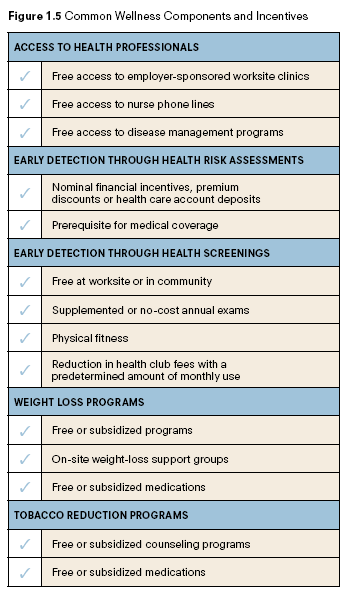
Given the focus on wellness across the industry, I found their list of common components and incentives that are used in creating a wellness program to be a good, quick checklist.

I couldn’t figure out two things that were either “corporate DNA” opportunities or something different about their pricing and plan designs.

  1. They say that plans that transition to Prime from other PBMs save 4.5 percent. (Which is significant.)
  2. They also said that their utilization was only 10.65 in 2006 which would be lower than most numbers that I have seen.

They do a good job of explaining some of the generic scenarios in the industry as people try to get that small advantage.

At-Risk Launches

Several generic companies launched their products ‘at-risk’, which means that the FDA has granted approval to their product prior to the expiration of a patent that is contested in court, but after all applicable exclusivity periods have ended. These ‘at risk’ generics, including generics of Biaxin®, Plavix®, Toprol XL® and Wellbutrin XL®, are subject to large penalties payable to the brand-name drug manufacturer if they lose pending lawsuits. Citizen Petitions Brand drug manufacturers, or their agents, frequently use Citizen Petitions in attempt to slow down the approval of generics. These are not legal proceedings in the typical sense, as they usually do not involve specific protection of a patent. The FDA must make a ruling on a Citizen Petition before it approves a generic, and this frequently takes a significant amount of time. These products are currently involved in Citizen Petitions: Lovenox®, Concerta®, Catapres TTS®, Skelaxin®, Vancocin®, Miacalcin® and Flovent®.

Authorized Generics

With authorized generics, the brand-name drug manufacturer makes its own generic version of its own brand-name drug. By doing this, they can reduce the profit a first-to-file generic company reaps during generic exclusivity periods, which could discourage generic companies from entering the market.

Agreements Between Brand and Generic Companies

Another pressing issue, which has also been around for several years, involves agreements between brand and generic companies. These agreements end litigation and keep generics off the market for a period of time, but still may allow generics on the market before all patents have expired. Sometimes these agreements involve payments to generic drug manufacturers in an effort to delay the release of the generic product.

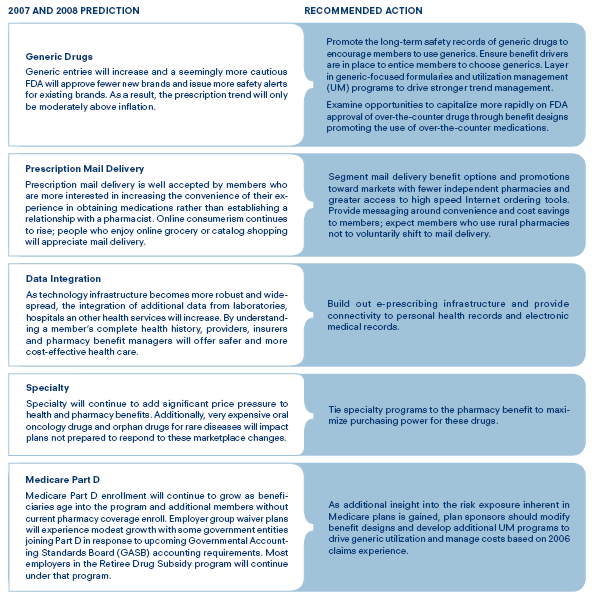
The other thing that I thought was a good summary in their document was their predictions for 2007 and 2008.

prime-predictions.png

If you like this post and are interested in the topics here, don’t forget to sign up for my e-mail updates or add the RSS feed from the blog to your reader.

Is Pharmacy Volume An Issue?

Here is a recent headline from USA Today that is guaranteed to capture your attention. Is it sensationalism? The Angry Pharmacist certainly thinks so although I think he/she is being a little harse when they say things like:

If you read the article, it plays on the emotion of the poor kid who got the wrong medication, and the poor baby who got 5x the amount of amoxicillin and would ‘writhe in pain’ (give me a f**king break, a 16 day old baby isn’t even developed enough to know it even exists, let alone what pain is). Wah wah wah. The kid probably was colic or had some gas and was fussy.

Those of us with kids certainly would care and believe that our kids feel pain. I don’t think I would trivialize someone’s individual experience like that.

rx_med_topper.jpg

The USA Today article says that retail pharmacy error rates run less than 1% which seems lower than some numbers I have seen depending on what you count as an error. Is it errors reported to the state board? Is it errors that cause harm? Is it errors that are made by humans but caught by the computer system?

An Auburn University pharmacy study in 2003 projected the odds of getting a prescription with a serious, health-threatening error at about 1 in 1,000. That could amount to 3.7 million such errors a year, based on 2006 national prescription volume.

Obviously pharmacists are over-worked. I know the head pharmacist at my pharmacy works almost 80 hours a week year round. At some point, fatigue will influence a manual job. Additionally, I was shocked when I first realized that in many states all that is required to be a pharmacy technician is a high school diploma. They aren’t highly trained individuals although many with years of experience know a ton and are key pieces of the process. There are some efforts to require certification of technicians across states such as the Institute For The Certification Of Pharmacy Technicians.

Job stress for pharmacists has been documented numerous times and given their salaries, many pharmacies push them to drive down the cost to fill (i.e., the more scripts filled divided by the salary = less cost per Rx).

Daniel Hussar, a pharmacy professor at the University of the Sciences in Philadelphia, offers a more critical view. He says staffing policies have made pharmacy chains stressful workplaces. “The emphasis on speed is counterproductive. It’s an invitation for error,” says Hussar, editor of The Pharmacist Activist, an online newsletter.

The time expectations for the pharmacist are very tight as USA Today reports.

Walgreens’ budget guidelines for work hours, never previously publicized, say a pharmacist at a typical store might have as little as two minutes to verify the accuracy of a drug, its dosage and directions.  [And include counseling?]

With a huge shortage of pharmacists and utilization of drugs going up rapidly, this issue isn’t going away.

New Physician Site – Vitals.com

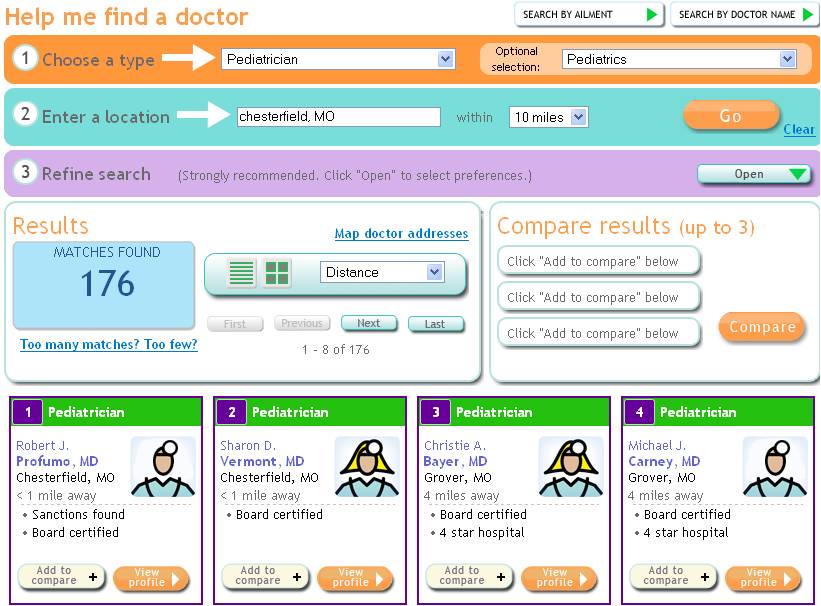
I have played with lots of these sites as they come out. The all want to help you find a physician, compare physicians, rank physicians, etc.

I received an e-mail about this new site – Vitals.com. I was skeptical at first that it would just be another me-too site. But, I was impressed at first glance. Here is a Fox Business article about them.

  1. It is easy to use.
  2. The graphics are intuitive.
  3. The information was easy to assimilate. (name, age, gender, specialty, addresses, certified, hospital affiliations, education, residence, fellowship, patient rankings, and disciplinary action)
  4. And, my favorite part is that you can compare physicians.

Here are a couple of screen shots. The first two show just comparing MDs. The third is the MD find and compare feature. The fourth is the rankings that they use plus an option to include free text comments.

(BTW – What I find interesting also is that this is the second time a PR agency has contacted me on behalf of their client. One was for a F100 company that I talked about and this is obviously a start-up, but managing the online brand has obviously become a full-time job.)

vitals-md-info-1.jpgvitals-md-info-2.jpgvitals-find-md.jpgvitals-rankings.jpg

Data Power

Communications and data provide us with a valuable tool.  How to leverage facts and put them forward in a way that drives a response.  For some that is getting people to buy a magazine (e.g., 82% of Americans do X…read the article on pg X to learn more).  For others, it is to drive them to buy a product or to prove a claim. The power of statistics is magnified when you have someone who understands how to present information.

I have talked about some aspects of this before around Dark Data, Understanding Healthcare by Wurman, and a little in my entry around COB.

That being said, I found it interesting to read a blog post on Bad Science about “How To Lie With Statistics” which is apparently the best sold statistics book ever (and not even written by a statistician).   Here are a few examples.  Again, it just makes the point that you need to ask questions and understand how a metric is defined, who the survey population was, whether there was a bias, etc.  The data may still be very useful, but you need to understand it before you use it.

Post on The HealthCare Blog

In case there are any of you that read my blog and not Matthew Holt’s blog, he was generous enough to let me post on his blog – The Healthcare Blog (which is the #6 ranked healthcare blog).  I also posted the entry – Peeling the Healthcare Onion – on this blog a few days ago.

BTW – I had a post a few weeks ago where I talked about Andrew Sobol, but I could find his site.  Finally, I realized I spelled it wrong and it is Sobel.  His site is www.andrewsobel.com.  

Sweating The Small Stuff and Corporate DNA

Although I agree with the book on Don’t Sweat The Small Stuff for your personal life, I would disagree from a patient communication perspective. I believe most healthcare people dislike the word marketing. They don’t want to think about communications as marketing (which of course has some HIPAA implications if they did). But, the fact is that you are competing for mindshare and trying to get the patient’s attention to do something (otherwise you are just communicating to fulfill some checkbox).

Let’s just think about a few key points in communications:

  1. Choosing the right word. There are lots of examples of how industries and/or companies have reshaped a single word or phrase to have new meaning and new positioning. It matters. Telling stories that evoke emotion and create a call to action have power. There are the classic bad examples such as calling a car a Nova which when exported to Spanish speaking countries means “no go”. And, traditionally, a lot of our health care terms are more negative such as prior authorization or only mean something to someone in the industry such as network.
    • Used cars have become pre-owned vehicles.
    • Online forums have become communities.
    • Generics have become unadvertised brands.
    • Mail order has become home delivery.
    • Employees have become associates.
    • Members have become patients.
    • Is formulary better than preferred drug list?
  2. Determining when to communicate. Depending on your family and your conditions, it is possible that you get at least one communication per month (if not more) from some entity within the healthcare process – managed care, hospital, primary care, specialist, retail pharmacy, mail pharmacy, specialty pharmacy, pharmacy benefit manager, employer, disease management company. The reality is that you are going to pay the most attention to a communication when it is timely. For example, telling me that some group of physicians will no longer be in my network doesn’t matter to me if I don’t go to them today. When I go to choose an allergist and find out that the best one in the state is no longer in network, then it matters, but I have long forgotten that communication.
  3. Coordinating multiple channels. Thinking through a communication and where people will look for information – website, inbound IVR, live agents, employer. It is important (to optimize success) to think about how patients receive and digest information and coordinating information. Nothing is more frustrating than hearing one thing but getting a different answer in another mode of communication.
  4. Using personalized preferences. You make yourself “sticky” and create loyalty by learning about your patients…and using that in how you interact with them. What do they do with information? How do they use information? How do they use healthcare? When do they respond to calls? Do they use the Internet?

It’s not easy, but it is essential. From a healthcare perspective, the industry continues to march down a path where differentiation is going to be in the way the company treats and interacts with the members and patients. Which brings me to the question of corporate DNA.

Are there things embedded into the culture of a company that all things being equal make the experience or outcomes with one company different from that with another? It is an important but difficult to prove question. We did a lot of analysis at Express Scripts to try and prove this. For example, if plan design and population was exactly the same, would a company have a different generic fill rate with us than another PBM?

This is where the small stuff matters. How people answer the phones at the call center. How patients perceive the company and the type of experience they have. How logic is coded in the system. Additionally, this is where I think you see the link between corporate culture and company results. Positive cultures where people love their work, enjoy coming to work, and want to make the company successful have a spillover effect on the customers.

Wal-Mart Expanding Clinics

Conceptually, I think the walk-in clinics are great.  They are convenient.  You go when you feel bad and don’t have to plan ahead.  The copay is less than the urgent care or ER.

Of course, the question is how many can we sustain and of course, whether the level of care is any different.  On paper, if you are going there for the right reasons (i.e., not for a heart attack), the care should be equal.  I found the article on Wal-Mart’s expansion in this space to leave me with more questions than answers.  Here were a few:

  • I don’t understand the Wal-Mart branding here.  They talk about wanting to have their branded clinics.  They also talk about partnering with RediClinics, a Revolution Health company.  They also talk about having local partners with a trusted brand (e.g., local hospitals).
  • It says that clinics aren’t profitable and take up to 3 years to recover the start-up costs.  I see the upside for Wal-Mart of foot traffic and potentially more prescriptions.  What do these other constituents get?
  • I also have to question this as a fast follower strategy (which can sometimes be a great strategy).  Walgreens and CVS have both gone into the PBM market.  Wal-Mart is considering the same.  Walgreens and CVS have both gone into the clinic market.  Will Wal-Mart acquire a company and do the same?
  • It is also confusing that one of their vendors (for almost 25% of their clinics) went out of business due to bankruptcy and is now supposedly raising funding to re-open them within Wal-Mart.  Didn’t they say earlier that they were going to be branding them as their own?  If the clinic company isn’t financially stable, why are they working with them? If they already had 23 clinics that closed, why was that – no customers, wrong financials?  And, why didn’t they just buy the assets to jump start their clinic model?

“We have learned that people are willing to receive their health care from the front of a store or the back of a drugstore,” said Dr. John Agwunobi, a medical doctor who is a Wal-Mart senior vice president. “But customers also have said they would rather it be delivered by a trusted name, a local health care practice, a trusted local provider of care.”

Will eRx Reach The Tipping Point

The concept of the tipping point made famous by Malcolm Gladwell’s book is (in my words) the inflection point at which the market begins to adopt something and everyone jumps on the bandwagon.

So, with CMS saying that eRx (electronic prescribing) could eliminate as many as 2M prescribing errors per year, and Congress considering a bill to link Medicare payments to use of technology, will it make a difference.  (I am pulling a few of these facts from Medco’s recent announcement about launching a Medicare Part D eRx initiative.)  Only 3% of physicians use the technology today, and from my experience working with the vendors and physicians, there are still several big issues.  Maybe this will address some of them.

  1. Standards – Will all the payors and PBMs share some standard such that a physician can move from system to system or from office to hospital without having to relearn a new application?  Can they write prescriptions for the majority of their patients from one system or have to keep using different applications?
  2. Stability – Is there a vendor that they can trust?  There have been several great concepts that were either before their time or had a flawed model.  Time and money wasted on a system that isn’t supported leaves a bad taste in their mouth.
  3. Workflow – Does the system fit into their current office workflow?  If not, why should they change behavior?  Is it less expensive and disruptive for them to have the pharmacy or PBM contact their staff to address the issues after the fact?  What percentage of the 2M errors wouldn’t be caught further upstream?
  4. Incentives – What’s in it for the physician?  You are asking them to do more.
  5. Division of Labor  – Who has what responsibility?  For the PBMs, MCOs, and pharmacies, it is great to resolve issues at the point-of-care (POC) with the physician.  Drug-drug interactions.  Formulary issues.  Brand to generic opportunities.  Retail to mail opportunities.  The physician could easily get overwhelmed with all the requests and go from a quick process to a difficult process.
  6. Support – What IT responsibilities come with the system?  Who is supporting it?  Does it impact the rest of their practice?  Does it integrate with their practice management system?  If they come to depend on the solution, what happens when it goes down?
  7. Cost – Who pays – physician, MCO, PBM, pharma (not likely these days)?

I know many of these are addressed in different ways today.  I think we may be able to systemically force some of this into the office, but in general, until there is a generational transition in the physicians office (i.e., those in their 30s today are the high prescribers), I don’t think wide spread adoption will happen.

The value is clearly there.  Even looking at the pilot statistics from the Medco pilot in Michigan, you see that there are issues and opportunities which can be addressed.  These don’t even take into account the handwriting issues and other safety issues which occur.

  • A severe or moderate drug-to-drug alert was sent to physicians for more than 1 million prescriptions (33 percent), resulting in nearly 423,000 (41 percent) of those prescriptions being changed or canceled by the prescribing doctor;

  • More than 100,000 medication allergy alerts were presented, of which more than 41,000 (41 percent) were acted upon; and

  • When a formulary alert was presented, 39 percent of the time the physician changed the prescription to comply with formulary requirements.

I personally think one of the most interesting opportunities will be to see who received a prescription and didn’t fill it and subsequently determining which of those estimated 30% of people should be filling the claim.  The value of driving that initial compliance should be significant in avoiding more costly issues down the line.

Total Value; Total Return

I came across a new website today for the Center for Value Based Health Management.  Their definition of Value-Based Health Management is below.

“The planning, design, implementation, administration, and evaluation of health management practices that are grounded in evidence-based guidelines across the healthcare continuum.”

It is a great concept.  The question always is how to do this without confusing the patient.  There are lots of plan designs out there that could be used, but become so confusing that patients don’t know how to meet the payor’s goals while minimizing their out-of-pocket spend.

The site also talks about a publication called Total Value Total Return which has seven rules for developing a value-based solution for your employees.  They seem like good fundamentals:

  1. The Health of Your Organization Begins with Your People.
  2. To Realize Total Value, You Must Understand Total Costs.
  3. Higher Costs Don’t Always Mean Higher Value.
  4. Health Begins and Ends with the Individual.
  5. Avoid Barriers to Effective Treatment.
  6. Carrots Are Valued Over Sticks.
  7. Total Value Demands Total Teamwork.

The Carrots Over Sticks comment made me think of all the press about forcing wellness down the throats of employees.  I have a recent article on that that I will post on later.

Myers-Briggs in Healthcare: Part 2 of X

I was looking for a book the other day to read on some of my flights and came across Health Care Communication Using Personality Type by Judy Allen and Susan A. Brock. I have just started reading it, but I related very well to their key assumptions:

  1. People prefer to communicate in different ways.
  2. Most people have a preferred style of communication.
  3. It is easier to communicate with some people than it is with others.
  4. A system exists which provides a simple framework for understanding these differences.

As I have mentioned before, I think that Myers-Briggs is a good framework for understanding people. I often pull up my notes about my personality type and can see that I respond as predicted to certain situations.

Applying some of their initial thoughts with my perspective, it would seem like there are some basic hypotheses that you could make in talking with patients.

  • Extraversion: People that like to talk things out. Probably more likely to respond to verbal outreach.
  • Intraversion: People that like to think things through. Probably more likely to respond to print (e.g., letter or web).
  • Sensing: People that like the specifics and the details. Probably more responsive to a detailed message (e.g., you can save exactly $X by doing this). Probably want to see the path of exactly who needs to do what.
  • Intuition: People that see the big picture. Probably more responsive to a communication that helps them understand the impact of their decision on overall healthcare trend. Probably want to understand their options versus being guided down a path.
  • Thinking: People who are very logical. They should respond well to automation and would want an if/then type of message.
  • Feeling: People that are more emotional. They would likely respond best to live agents where they could empathize with them and potentially even respond to a “peer pressure” type of message (e.g., most people are now using generic prescription drugs).
  • Judging: People that are organized, punctual, and focused on getting things done. They would likely respond to messages about how to save time and money delivered in the quickest format possible.
  • Perceiving: People that are flexible, don’t plan ahead, and are often more disorganized. They would likely respond to a just-in-time message, a compliance reminder, and a communication process that did everything for them (e.g., you should go in for a colonoscopy…would you like us to schedule that for you).

Obviously, one framework doesn’t solve everything, but I expect that there is a lot more to gain from this book as I read through it. I was just so excited after the first section given my interests that I wanted to post this quick entry.

Why Consumerism Matters For Pharmacy

I found this Hewitt data in a presentation by UHPS (United Healthcare Pharmaceutical Services) which is the subsidiary of United Healthcare that manages the Medco relationship (they still outsource their pieces including mail and claims adjudication) and the RxSolutions (former Pacificare PBM). It was from a slide deck given by their National Sales Director at an AeA Seminar on 9/20/07.

[On an interesting side note, UHPS recently won a 1M life competitive contract for PBM services which I believe is one of their biggest wins as a PBM selling outside their existing base.]

I think the key point from this image is that patients have the most influence over the drugs they utilize. With multiple drugs for any therapy and lots of information out there, patients can have an intelligent dialogue with their physician about their choices. This becomes much harder for certain medical situations.

If you get fascinated by the space, they talk about a few of their differences:

  1. A different formulary strategy – evidence based, real-time changes, place drugs on any tier (e.g., generic on 3rd tier if appropriate)
  2. They recommend a $35 differential between Tier 2 and Tier 3 (which probably means that their clients are price neutral if the patient chooses Tier 3…they may even be better off as the rebates to be at Tier 2 are probably much less than $35)
  3. They recommend a 2.5x to 3x multiplier for mail order (i.e., take your 30-day copay and multiply it by2.5 or 3 to determine your 90-day copay). This probably means very little mail adoption, but that patients that use mail will save the payor money on brands. They probably save on generics no matter what.

It is interesting to see the different models emerging in the PBM space. For a while the companies were highly clustered and faced with a price path. Now, you have a few key differences:

  • CVS / Caremark has the play of integrating retail and mail
  • Medco is going down the path of disease state differentiation
  • Express Scripts latest presentations have focused on consumers and engaging them
  • United is talking about their different approach along with the benefit of an integrated data set and captive PBM working with the managed care entity. If they figure out the evidence-based strategy and convince their clients of the value of this, they may be able to get a jump start on the market from a clinical perspective.

The one constant for all of them is communications and engaging the consumer. Interesting. A friend of mine who works with benefit consultants told me that that is the hot topic he hears everywhere today. They want to know how to engage them, what the value is, and how to prove it.

hewitt.png

Making Good Decisions

This is a classic article that I have reused several times.  The article “Great Escapes” by Michael Useem and Jerry Useem appeared in Fortune (6/27/05) on pg. 97.  It is about thing to use to avoid typical decision making problems.

These are all relevant for anyone in business or healthcare, but with the massive amount of change required in healthcare, it seems like these will be relevant at the macro level.

  1. Problem: Analysis paralysis
    Solution: 70% solution
    “A less than ideal action, swiftly executed, stands a chance of success, whereas no action stands no chance.”
  2. Problem: Sunk-cost syndrome
    Solution: Burn the boat
    “There is no such thing as timeless perfection, only obsolescence.”
  3. Problem: Yes-man echoes
    Solution: Voice question not opinions
    This one is pretty obvious, but if you have a strong personality or executive in the room, once they state their opinion you will get a much different level of interaction.
  4. Problem: Anxiety overload
    Solution: Look at the clock
    “A panicked mind stops processing new information, reverts to tried-and-true responses, and is prone to snap decisions that make things worse.”
    It talks about fighter pilots looking at the calm clock while things are spinning on their gauges.  The idea of finding a calming point to focus on.
  5. Problem: Warring camps
    Solution: Let the battle rage
    “Political infighting can be destructive, but battles over substance, managed well, can be constructive.”
    This reminds me of a boss who taught me that it was critical to have a close team where people could share opinions openly to drive value.
  6. Problem: A wily adversary
    Solution: Clone your opponent
    “Assigning a person (or a group) to think like your competitor can expose flaws that, identified early, are less likely to be fatal.”
  7. Problem: To be?  Or not to be?
    Solution: Go with the omen
    I am not so sure about this, but the point is that sometimes your mind is made up and allowing an event to trigger a decision may make sense.
  8. Problem: Inexperience
    Solution: Educate your instincts
    “Blind instincts cannot be trusted, but they can be educated.”  (Think flight simulator as preparing you for different situations.)
  9. Problem: Self-interested thinking
    Solution: What would Sara Lee do?
    Harder to use advice, but they suggest imagining that the company is a person with rational desires – security, growth, good relationships, respect, and a sense of purpose.  Then thinking about how they would react.  (Or our test at Express Scripts was what would Barbara Martinez say.  She is a journalist on the topic for the WSJ.)

Henry Ford said, “My advice to young men is to be ready to revise any system, scrap any methods, abandon any theory if the success of the job demands it.”

Single Answer or Multiple Answers

I was having an interesting discussion yesterday about how to solve a problem.  The two opinions were whether there is a best answer or whether there are multiple best answers.  It’s a great question.

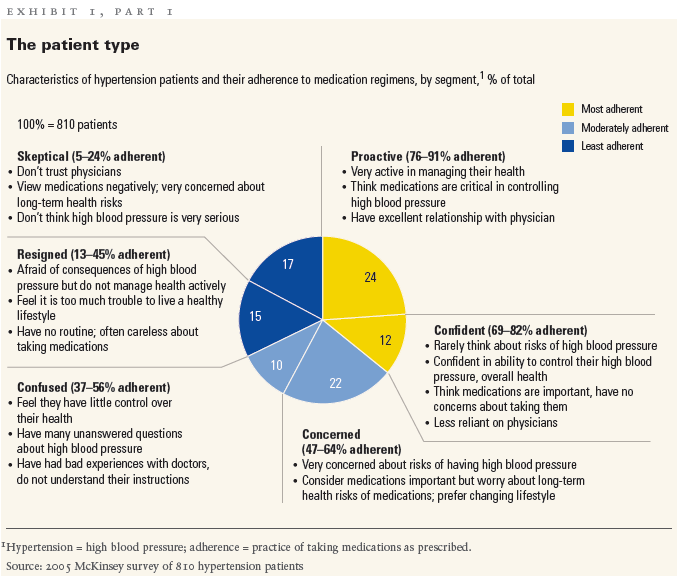
Let’s frame it this way.  Is there a message that is most likely to drive compliance for a group?  I gave them the benefit of the doubt that they aren’t crazy enough to suggest that one message works generally with no segmentation.  (McKinsey‘s article “Getting Patients To Take Their Medication” has some good research around creating segments and showing how some of the segments vary in what they want.)

The other person was presenting a case that they could do lots of research on linguistics and other topics and suggest one optimal message that would work across broad segments of the population.  I was of the opposite opinion that a personalized message that had certain core research but varied by geography, condition, age, income, benefit type, prior interactions, etc. was better.  And, that what is good today may change both generally and individually over time.

I would rather get all the micro-niches of people to their highest compliance and adherence level versus getting a better average across all group. 

Basically, my position is that there are multiple optimal solutions to the problem not just one.  It triggered a memory for me of when I first went to business school.  In architecture school, design is somewhat subjective.  (There are some logical rules such as the Fibonacci Sequence which serve as guiding principles of scale…for example.)   We were taught to always bring three solutions to our initial presentations to let the judges decide which one we should push to finalize.  We had to pick one for a deliverable, but it was always a tradeoff.  In business school and the hard sciences, there is often only one answer that is valid.  (1+1 always equals 2.)

But, for communications, marketing, and other things, it seems obvious to me that companies are best served by dynamic flexibility that allows them to bring multiple solutions to the market in parallel that adapt to different patients and change over time to respond to the market and the patient.

Here is a quick snapshot of the segmentation from the McKinsey report…

mckinsey-hypertension-segmentation.png

Communications

I can never stress the value of communication skills to anyone I met regardless of the path they want to go down in life.  I have had the luxury from an early age of public speaking beginning with something called Model United Nations (MUN) where you represent a country in mock-simulations of the UN process.  [We even won a national championship at my high school…and it really isn’t as geeky as it sounds.]

In graduate school, I participated in Toastmasters for a while which I think is great for someone who needs a casual setting to practice and get feedback.  I can even remember using one of the techniques from there (counting “ums”) when my sister told me she was going to be a lay minister in the Catholic church and be giving sermons.  [Note: Feedback on presentation skills isn’t always well received by people not seeking it out.]

I found a couple of presentations on the topic that I thought might be interesting to some of you.  Additionally, you might research the Minto Pyramid Principle which is a structured approach to communicating by an ex-McKinsey consultant.  (It was required reading/training at Ernst & Young years ago.)

This one is a little basic, but I have seen so many bad powerpoint presentations that obviously many people could use the primer.

One last one before getting back to work…Here is one on marketing which obviously has communications at its core.

Where Are The Evidologists?

After one of their team posted a comment on my site, I went to Bazian‘s website.  Very interesting.  They are a UK based company that focuses on providing evidence-based healthcare information to publishers, governments and insurers.  Sounds promising.  This is an important issue across the world as companies and practitioners look at how to embed intelligence into process and technology to deliver the best outcomes.  Here is a presentation that they have for download on their website.  In it, they propose a new healthcare role of the evidologist and draw a nice parallel to the radiologist.

“In late 2005, Bazian gave a presentation about putting evidence into practice – a much discussed topic in the world of evidology.  It summarised 10 years of experience in evidence-based medicine, and draws conclusions about who should be putting evidence into practice, when, and what has to really happen for evidence to become a routine part of medical practice.”

Ev·i·do·l·o·gy n.

A new medical specialty that enables medical research to be incorporated systematically into clinical practice [Latin videre to discern, comprehend; evideri to appear plainly]  

Factoid: Off-Label Use

I cut this from one of the many e-mail clipping services I use. It said that “20% …of the 725 million U.S. prescriptions written in 2001 went to treat conditions not approved on the drugs’ labels” according to a study published in Archives of Internal Medicine.

I always wonder:

  • How do physicians know to use a prescription off label?
  • How is that information shared? (I think drug reps are prohibited from promoting off-label use.)
  • How do patients and pharmacists respond to off-label use?

Concise Summary of Compliance Reality

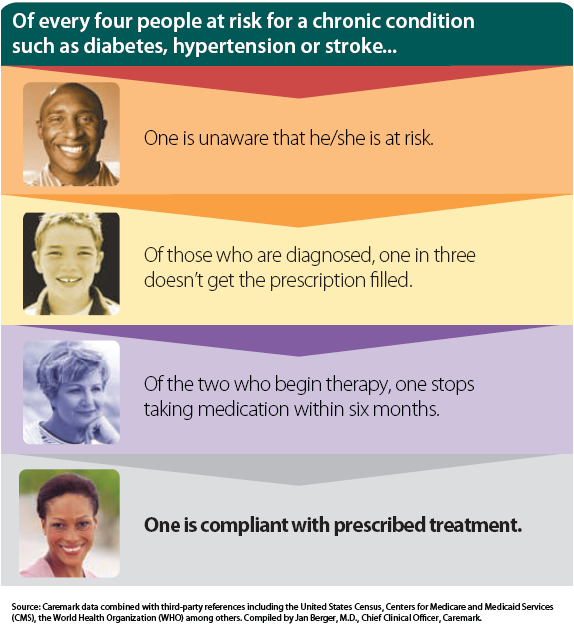
I have shared other facts with you on compliance. This is a hot topic in healthcare right now. I thought pulling this one graphic out of my entry on Caremark’s trend report made sense. This really gets to the point. Take this in light of the following quote from WHO (World Health Organization) and you can understand why.

“Increasing the effectiveness of adherence interventions may have a far greater impact on the health of the population than any improvement in specific medical treatments.”

caremark-compliance.png

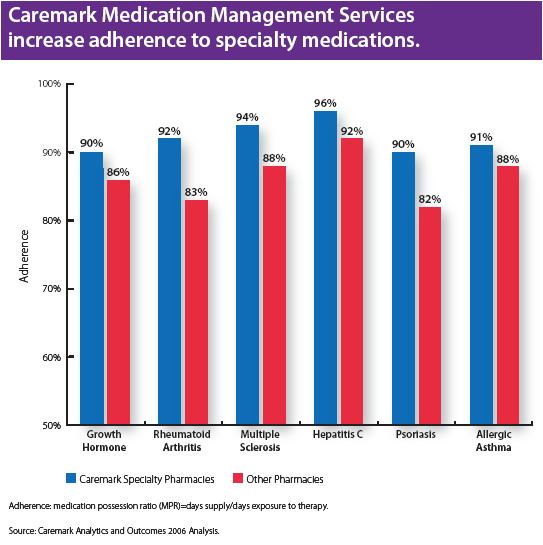
They have a good chart in the document about speciatly medications and the impact of medication management services.

caremark-specialty-adhearence.png

Increasing GDR

I love reading healthcare articles which have acronyms that not everyone knows. (Maybe it was defined earlier, but I didn’t see it.)

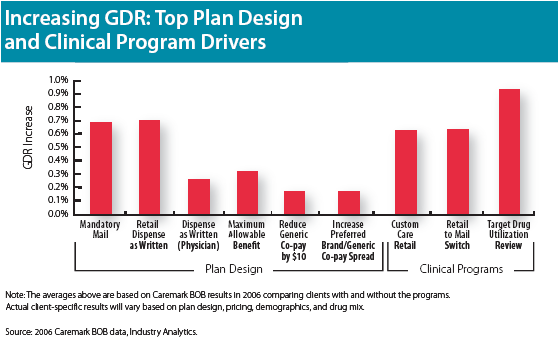
Another nugget from the Caremark trend report is on programs and plan design components to drive generic dispensing rate (GDR) which is the number of prescriptions filled as generics divided by the total number of prescriptions filled. (Versus generic substitution rate which is the number of prescriptions filled as generics divided by the total number of prescriptions filled for which a chemically equivalent generic is available. I can’t remember whether we used only A-B rated generics or all generics, but that is a technical discussion for another time.)

caremark-driving-gdr.png

This is great. It tells you the impact (on average) of implementing a plan design or some of their clinical programs on your GDR. (BTW…a good rule of thumb is that an increase of 1% in GDR is worth about 0.75-1.5% savings in your overall prescription spend.)

Caremark’s TrendsRx Report 2007

Well…I better get this posted before all the 2008 reports start coming out. I have started it a few times, but there is so much good content in here that I haven’t finished. I am determined to get this done tonight. As you may know, all of the PBMs publish very well done annual research reports on the trends in the industry and what they have learned from their data. I have talked about Express Scripts research and reports (here, here, and here) and Medco’s report (here). [Note: For simplicity sake, I am not going to put all the sources here. They are in the Caremark
document.]

“Consumers experience the [healthcare] system as complex, impersonal, disconnected, reactive, and increasingly unaffordable.”

  • In 2006, the average number of retail Rxs per capita was 12.4.
  • 59% of those <65 had an Rx in 2004 and 92% of those >65.
  • With consistent use of effective prevention, early intervention, and adherence strategies, they estimate that 30% of current healthcare spending could be eliminated. Image the impact of that on MLR (medical loss ratio) which is a key metric for managed care companies on how much of each premium dollar they actually spend on healthcare costs.
  • They layout a very logical vision that would take advantage of their unique set of assets with CVS, Caremark, and MinuteClinic.
    • Preference based consumer access.
    • Patient focused view within their systems and communications.
    • POC (point-of-care) connectivity. (i.e., pushing relevant information real-time to physicians and pharmacists to optimize care)
    • Personalized health advocacy (“make the healthcare experience less disconnected and impersonal”)
  • The price of brand drugs (on average) increased by a rate of 3x the CPI (consumer price index) in 2006…the highest since 2002. [In my opinion, this will continue as they face more price pressures with the government being the largest buyer now with Medicare Part D and with the majority of claims now being filled with generics.]
  • At the same time, the price of generic drugs decreased by 1.2%.
  • With Medicare, Medicaid, and other public payer, the government now pays 40% of the total drug spend in the US.
  • They are working with the Coalition for a Competitive Pharmaceutical Marketplace (CCPM) to reduce patent expiration “loopholes” (aka ways that brand manufacturers extend their patent lifecycles which are often perceived to not add any additional value).

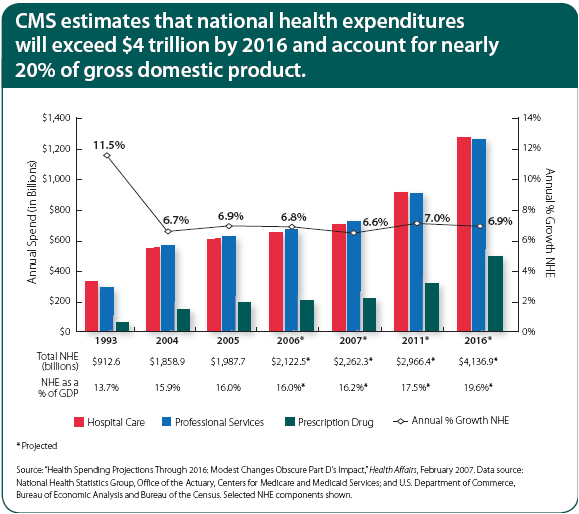
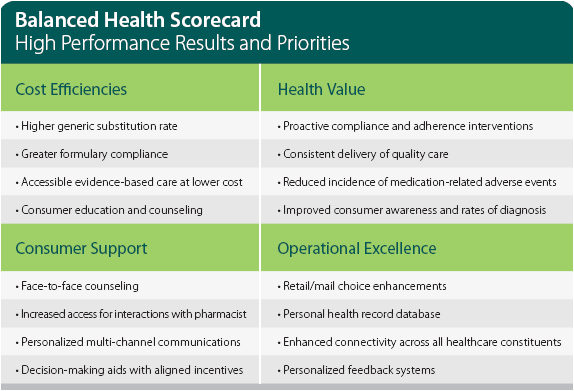
Some of the graphs and charts that I found interesting and helpful are below. (I pulled one of my favorites out in its own posting.)

caremark-national-health-expenditures.png

caremark-30-reduction.png

caremark-balanced-scorecard.png

caremark-awp-inflation.png

(BTW – If you don’t know who BOB is, it stands for Book of Business which means the payors whose data was included in the analysis.)

(They make the point that 5 of the 10 drugs face patent expiration by 2010 so as expected prices are increased in the years prior to maximize return.)

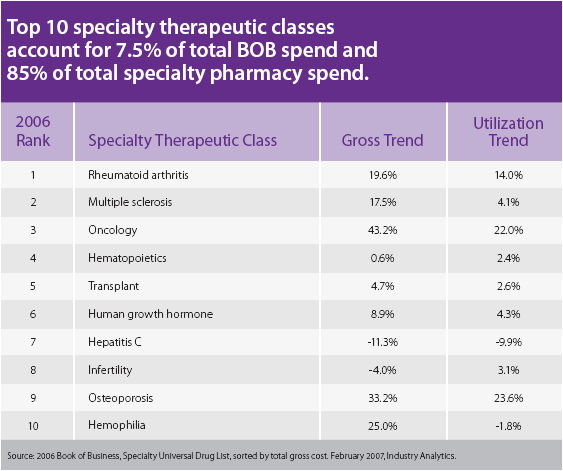
I haven’t talked a lot about specialty drugs here on the blog. Here is a good list of the top classes. Typically these drugs are either high cost and/or require special care (mostly meaning injection). The average specialty drug would typically cost $1,500 per 30-day supply versus more like $80 for a non-specialty drug.

caremark-specialty.png

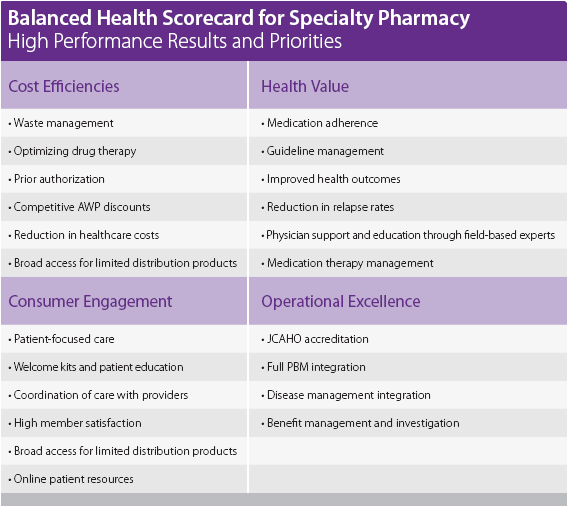
caremark-specialty-balanced-scorecard.png

Medical Mistakes

  •  Wash hands with soap.  Check.
  • Clean patient’s skin with antiseptic.  Check.
  • Wear sterile mask, gown, and gloves.  Check.
  • Put sterile drapes over  entire patient.  Check.

And that’s all it takes to reduce common infections from medical tubing by 2/3rds.  (12/28/06 study in the New England Journal of Medicine looking at 108 ICUs in Michigan hospitals)  Seems pretty simple.checkup.jpg

Do you remember when the Institute of Medicine put out their study in 1999 that said that 100,000 people died annually from preventable hospital errors?  People were shocked.  The medical profession thought the numbers were too high.  So, I find it more that a little interesting that the Institute for Healthcare Improvement (which includes 3,000 of the 5,000 hospitals in the US) put out a report in 2006 on saying that they had saved over 120,000 lives.  [If that was for 3/5th of the hospitals, I guess that means that about 200,000 people were dying per year in the US due to preventable hospital errors.]

So, it is with mixed emotion that I look at their latest campaign which is the 5M lives campaign to reduce deaths, injuries, and near misses in US hospitals.  Now, I am being a little sensationalistic.  The fact that hospitals are collaborating, sharing information, being transparent, looking for best practices, and trying to improve is great.  Sometimes, it is just shocking what has been going on.  [Imagine the error rates in some 3rd world countries.]

Here is an article from today in the LA Times about this.

Predictions…Not Mine

Rather than rehash or even post my thoughts right now (still digging out from vacation)…I will simply point you to a good summary on the WorldHealthCareBlog about what people are predicting for 2008 and beyond around healthcare.

It is a summary from IBM, Deloitte, and many others talking about spend, technology, adoption, new drugs, etc.

Freakonomics on Pharma

The Freakonomics blog has an interesting piece on pharmaceuticals.  It basically asks five experts what is the best secret in the industry.  Here were a few of the quotes from the posting…

  1. “Events are revealing that many pharmaceutical companies, along with their consulting academic physicians, have engaged in practices that obscure or misrepresent information about their products.”
  2. “The United States is subsidizing prescription drug prices for the rest of the world.”
  3. “The obscene profits made on generic drugs by the large chain stores.”
  4. “While most people understand in a vague way that modern biomedical science is advancing at a remarkable pace, many people are less aware that we have been far less successful at translating science from the laboratory bench to the clinic. This is not to say that the pharmaceutical industry has been quiescent; total spending on health related research by the drug industry has increased from about $6 billion in 1980 to about $39 billion in 2004. During that period, basic science research has increased the number of potential drug targets (the biological site on which a drug is intended to act) from 500 to more than 3,000.”
  5. “Underpinning many of the marketing strategies of big drug companies is a very sophisticated and comprehensive plan to widen the boundaries of illness, and create an environment in which more and more formerly healthy people are defined as ‘sick.'”

Paying MDs to Switch

Another WSJ article that I caught on the plane ride home last night was about Doctors Paid To Prescribe Generic Pills. When I read the WSJ Health Blog about this, I was shocked by the comments. It would appear that the blog is followed by people that don’t believe generics make sense. That perspective is a little outdated now that most therapy classes have one of the most popular drugs available as a generic.

Yes, in some cases there have been minor improvements, but I don’t think anyone can (with a straight face) get up and talk about how Nexium is clinically superior to generic or OTC Prilosec (see general comments about category of PPIs). There has been numerous research showing that the probability of having success with any anti-depressant is the same regardless of what drug you begin therapy with (so why not start with a generic). And, generic drugs have been around for a long time so all their side effects and drug-drug issues are well known and documented. There has never been a generic drug pulled from the market.

Here was what I posted there.

Wow! There seem to be a lot of the glass is half-full people out here. What if the generic (which often was the most prescribed drug in the class before the patent expired) is clinically appropriate.

There are 10,000+ drugs out there. Physicians can’t be expected to know and monitor the comparisons on each one. That is what technology and pharmacists are focused on. So, if companies can identify a way to help the patient save money, what’s wrong with switching drugs.

The exact process of paying the physician seems suspect, but some incentive to reward them for their time (perhaps regardless of outcome) makes sense. You are asking them to pull the patient’s file, look at a different drugs and perhaps some clinical information provided by the payor, and determine if a switch makes sense.

Physicians today rarely have an incentive linked to drugs so why not prescribe the most expensive, most heavily sampled, most advertised drug. That’s the easy path.

I don’t disagree that more sharing of the benefits might make sense, but the market has changed. Generics and therapeutic conversions can make a lot of sense.

The issue of incentives is a broader one.  Paying physicians directly per switch seems a little suspect.  But, incenting them to save money for plans and patients makes a lot of sense.  But, like any incentive system, it has to be balanced.  Health outcomes balanced with cost management.  Patient satisfaction balanced with simplicity of the process.  I won’t get on my soapbox here.  Metrics are difficult, but the system today doesn’t always align the parties correctly.

Wal-Mart: New PBM?

Well.  I am back from vacation.  I grabbed a WSJ on my way home from Orlando and was surprised to see an article about Wal-Mart potentially going into the PBM businessNot a surprise that they would go into the business, but a surprise that they would build it organically.  (Although I don’t believe they have confirmed their exact intent.)

Of course, pre-stock market correction, the PBM stocks (Medco, Express Scripts, and Caremark) were all very expensive, but there are numerous smaller PBMs which could be bought and give Wal-Mart the adjudication systems, logic, and other processes to jumpstart the business.

Logically, Wal-Mart is strong at many of the core PBM functions – supply chain management, cost management, and distribution.  But, this is not a retail play.  There is no efficiency per square foot to compare to other functions.  And, you are selling primarily to the payor not the individual.  And, face facts, Wal-Mart hasn’t traditionally been recognized as the healthcare friendly company for many of its million workers.  Would employers face backlash trying to convince their employers that they were simply containing costs or actually engaging Wal-Mart to educate and help employees make good health decisions?

So, it bears the question of whether they see a broader trend.  Could consumerism spell the end of the traditional business-to-business PBM and drive a business-to-consumer PBM?  Since the Wal-Mart Bank idea never took off, could they get into the space through healthcare.  [The convergence of Health and Wealth has been written about numerous times.]

Obviously, CVS saw a strong play in the PBM space with its purchase of Caremark.  Walgreens already has their own PBM.  And, with Wal-Mart being the third largest retailer, it would seem like a logical trend to build out their PBM functions.  [I think they have some PBM services that they provide today, but mostly for their own employees.]

Handwriting Analysis

This has always been a topic that fascinates me.  Learning from someone’s handwriting.  So I liked seeing a cliff note summary of The Complete Idiot’s Guide to Handwriting Analysis by Sheila Lowe in Spirit Magazine.  I am not sure I would be ready for this to be part of an employment process although I have taken personality tests such as Myers-Briggs (test yourself here) before.

Here are a couple of the items on handwriting:

  • Balanced margins; clear spaces between words = ability to plan ahead
  • All the letters connected in every word = logical thinker who enjoys debating to the point of nitpicking
  • Abrupt breaks between letters = person who jumps to conclusions without the benefit of logic
  • Large letters = loves the spotlight
  • Small letters = finds more satisfaction in working then socializing
  • Lots of rounded letters = outgoing person
  • Straight lines and angles = aggressive person who pushes hard for what they want
  • Lots of loops and close spaces between words = big imagination and need for social contact
  • Few loops and wide spaces between words = intellectual loner
  • Thin writing with illegible words = creative genius OR slippery character
  • Hidden personality traits are seen in the lower loops of letters g, y, f, p, and z):
    • Moderately wide loop =  welcomes a variety of experiences
    • Skinny loop = sticky to what they know
    • Extremely wide loops = bragger who doesn’t follow through
  • The upper loop slant measures emotional responsiveness:
    • Extreme right slant = emotionally explosive
    • Moderate right slant = warm and responsive
    • Vertical = cool headed
    • Left slant = friendly on the surface but hard to get to know

Now, I know you are dying to go look at your writing and see what it says about you.