Archive | Consumerism RSS feed for this section

Several Good Entries On Other Blogs

I was doing some blog surfing this morning and found a few entries worth going out and reviewing:

On EverythingHealth:

On HealthCareReformNow!:

On e-patients:

On The Sentinel Effect:

On Running a Hospital:

And to wrap up, on the Forrester Marketing Blog, you can get links to all the information being captured at their event on Engagement.

73-Page PDL – Simplicity?

I hate to pick on a friend of mine, but I was looking at the PDL (Preferred Drug List) (aka Formulary) that his company puts out. It was 73-pages long. Not likely to be carried by many patients to their appointments. In today’s world of simplicity, it would seem like there must be a better answer.

Communications As Trend Mgmt Tool for Pharmacy: Cliff Notes

Here are a few points from my recent webinar on this topic. If you are interested and a potential client, I would be happy to share the detailed content with you offline.

[Since all our competitors tried to sign up to listen in, I won’t give away everything here.]

  1. Talked about all the value sitting on the table that could be captured (>$30B per year).
  2. Talked about how communications can both be the trend management tool and enable utilization of other trend management tools (e.g., utilization management).
  3. Talked about things like loss aversion versus cost savings, the placebo / price correlation, and the transition from the Ford framework to the Starbucks framework in the healthcare industry.
  4. Talked about how people are different and the need for a systemic approach to dynamically optimizing program success using a scalable model.
  5. Talked about some frameworks for retail-to-mail and brand-to-generic along with the importance of asking the right questions in program design and measuring ROI.
  6. Finally, we talked about some results and the different levers to play with to impact results.

Next Webinar – Retention

The webinar I did last month on using patient communications to drive pharmacy trend went very well. We are continuing our educational series. I also have the honor of giving the next one on a topic I have discussed here a little, but one which I feel very strongly about. Here it is below. [I will try to post some notes that give some of the highlights without disclosing any “secret sauce”.]

If you are a pharmacy, PBM, managed care company, PDP, disease management company, or other provider of care to a group of patients, I would encourage you to sign up.

How Communications Can Influence Member Satisfaction, Loyalty, and Ultimately Retention

When: April 15th & 24th, 1:00 PM EST

We’ve all been told for years that it costs five times as much to win a new member as it does to retain an existing one. With the big focus on consumerism in healthcare, the continuing evolution in Medicare Part D and new growth and innovation happening in support of individual markets, it is time for the science of member communications to take center stage within healthcare companies.

Join Silverlink as we discuss ways of addressing this opportunity through comprehensive communications solutions that connect with your members and increase their advocacy for your insurance product.

We’ll look at some non-healthcare examples and some leading edge ideas in healthcare, while grounding it all with short-term actions that you can implement to achieve measurably better results.

Register now >

Patient Ping-Pong: Cholesterol

As if it’s not already difficult for patients to navigate their benefits, DTC advertising, and all the healthcare information on the web, it seems we are structurally trying to make it more difficult. With the recent news around Vytorin and Zetia, the drugs used to treat high cholesterol have gone through some dramatic changes over the past few years. (Here is the formal study.)

In an editorial by the New England Journal of Medicine:

“Until such data are available, it seems prudent to encourage
patients whose LDL cholesterol levels remain elevated despite
treatment with an optimal dose of a statin to redouble their
efforts at dietary control and regular exercise. Niacin, fibrates,
and resins should be considered when diet, exercise, and a statin
have failed to achieve the target, with ezetimibe [Vytorin] reserved for
patients who cannot tolerate these agents.”

For several years, Lipitor was clearly the market leader with Zocor as a close second. Even with one drug (Mevacor) available generically, most plans (other than Kaiser) had single digit utilization. Kaiser was able to drive significant use of generic Mevacor as a first-line agent. When Zocor was going to lose it’s patent protection in 2006, most plans began moving Lipitor to the 3rd tier and introducing programs to move Lipitor patients to Zocor (generic name simvastatin). These included step therapy programs along with simple copay incentives by having a large copay differential between the 1st or 2nd tier and the 3rd tier.

Then, last year, Pfizer, which makes Lipitor, began to offer aggressive discounting to encourage some plans to actually encourage Lipitor utilization over generic Zocor. All the while, Vytorin and Zetia were gaining marketshare to capture a $5B piece of the market. Now, with the recent study, the authors are suggesting that these patients should be on generic Zocor or another drug in the statin class. I am sure there are some clinical nuances here, but the quote above seems to limit them.

And, of course, patients should discuss this with their physicians. They shouldn’t stop taking their drugs. And, generally, when you switch drugs, you want to get lab work done in this class. So, are we asking patients to change drugs again? Do they incur an office visit copay? Do they need to pay for the lab test?

Talk about confusing. And, at the same time, the Improve-It study around Vytorin and Zetia is enrolling more patients. Seems counterintuitive to the data just released.

I’m not a pharmacist, but after working in the industry, if I can’t figure out what to do, how can your average patient. At this rate, healthcare will be as confusing as our taxes.

Note: There are a handful of entries on this out at the WSJ Health Blog.

Convergence: The White Space Between Ford and Starbucks

I recently read a great book called Microtrends. If you haven’t seen it, I highly recommend it for its interesting analysis of trends and the way it makes you think. For example, it talks about how people are drinking more water and more caffeine drinks. It talks about how people have much shorter attention spans yet there is a rise in knitting and books are getting longer. It talks about obesity and young vegans. It plays on the power to see small trends (i.e., 1% of the population) and how they can impact the overall framework. (You can read my detailed notes here.)

One of the frameworks that the authors use is to compare the world as moving from a Ford economy (one choice) to a Starbucks economy (personalization). As healthcare typically lags other industries, I think we this analogy works to show where healthcare was and where we are going over time. Historically (at least in the modern era), we had one choice for healthcare coverage which was offered through our employer. Over time, that has changed to where most people have more than one option for healthcare coverage from their employer. And now, more and more people are losing coverage and the fastest growing segment is individual health insurance.

We have evolved to personal healthcare, but we aren’t yet to personalized healthcare which I think will be largely driven by genomics and some radical change to our healthcare system. Unfortunately, I think we are stuck somewhere in between right now where to personalize your healthcare you need to go to a series of providers or tools which aren’t integrated. There are a few scenarios out there where there is some integration of medical, pharmacy, lab, and other data (Kaiser jumps to mind). But, even in an integrated environment, they haven’t yet fully digitized the offering and created a seamless patient experience (to the best of my knowledge).

As George Halvorson says in his latest book, Health Care Reform Now!, “We have an expensive plethora of uncoordinated, unlinked, economically segregated, operationally limited Microsystems, each performing in ways that too often create suboptimal performance both for the overall health care infrastructure and for individual patients.”

In a likely scenario, you have the following for a sick patient who is actively managing their health:

  • A primary care physician and their staff to interact with
  • A specialist and their staff to interact with
  • A pharmacist (or likely multiple pharmacists)
  • A specialty pharmacy and their nurse
  • A managed care company (and possibly Medicare) which offers a member portal and tools
  • A PBM which offers a member portal and tools
  • A disease management company and their health coach
  • Health portals or information sites (e.g., WebMD, RevolutionHealth)
  • A gym and potentially a trainer
  • A series of vitamins and OTCs that no one has visibility to (other than maybe their grocery frequent buyer card program)
  • One or more disease specific communities that they participate in (i.e., some of the Health 2.0 companies)
  • Blogs and news feeds they subscribe to for information on their disease

The reality is that they have to go out and build a series of interactions to create this semi-personalized offering with no hope of the data being integrated, getting consistent messages, or any true learnings being generated. Each party has a 1:1 relationship with them (best case) and knows a piece of the puzzle. Without an integrated infrastructure, aligned incentives, and a mechanism to engage each patient according to their preferences, we have a very difficult challenge (as an industry) and each patient bears the brunt of this.

Until we can create physical or virtual convergence (i.e., integration of data and tools into one framework), we won’t be able to move from buying coffee at one store and skim milk at another store and our muffin at another store to a Starbucks world where we have one interface to select and personalize our healthcare experience. I wish I had the answer. Unfortunately, as more and more people are talking about, it seems like we have to make a radical change to be successful. Evolution from the status quo will likely not work. Much like GE had a program in the dotcom days called DestroyYourBusiness.com where they encouraged their leadership to figure out how to develop a new model, that is what healthcare needs with the support to initiate the skunkworks organization which might eventually become the norm.

Cigna’s Digital Coupon

Cigna recently announced some changes to their website. The one that caught my eye was the ability for a patient to print a coupon for a reduced copayment on their first fill of a generic drug.

I think it is a great step. My hope and questions would be as follows:

  • Is it to promote therapeutic switching or simply for movement from a multi-source brand to its chemical equivalent?
  • Is the coupon for anyone who is using a generic? Or is it only for new starts on a generic? Or is it only for those switching from a higher cost brand to a generic?
  • How do you drive awareness of the coupon and adoption of the web?
  • If all they really need is a coupon code, can you send it to their phone (much more likely to have it with them at the pharmacy)? Or could you trigger a fax to the pharmacy?

Anyways, I think couponing and incentives have a role in driving behavior, and it is good to see a MCO jumping into the digital age with this.

Aging Impact on Communication Strategy

We all know that healthcare spending is concentrated and often very highly correlated with age. Yet, aging has several impacts on people that change their ability to receive information. I found the following statistics very enlightening as to why a multi-modal strategy (i.e., mail plus phone plus Internet) is important.

  • Impact on reading – slower reader, reduced contrast perception (source: www.preventblindness.org)
    • 17% of people over 40 have cataracts
    • 50% of people over 80 have cataracts
    • 2% of people over 50 have AMD (age-related macular degeneration)
    • 3% of people over 40 have a visual impairment (including blindness)
  • Impact on hearing – can’t hear certain sounds, need hearing aids
    • 30-35% of people between 65 and 75 have presbycusis
    • 40-50% of people over 75 have presbycusis
  • Impact on cognition – slower learning time (source: International Journal of Experimental, Clinical, and Behavioral Gerontology)
    • 1% of people age 60-64 have dementia
    • 30-50% of people over 85 have dementia
  • Impact on mobility – challenges operating a mouse or car
    • 37% of people over 55 have tremors

All this data was part of a Forrester teleconference on December 13, 2007 called The Customer Experience Review, Q4 2007.

I couldn’t find a link to the Journal listed above, but I did find a nice set of links to information on aging.

Fast Friday: First Edition

The good and bad of loving information is that you get a lot of it and hate to throw it away until you skim it and take some notes. But, I am getting backed up so I think I am going to start a Friday edition that will be less thorough and more a data dump of things that I have set aside. I welcome feedback on whether this is interesting, helpful, or just dumping.

  • ChangeNow4Health – I stumbled upon this website which interesting has a Humana copyright at the bottom. [Simplify, Prevent, Educate]

How do we go about fixing the nation’s health care system? Where do we start? ChangeNow4Health believes we begin with small first steps. We’re looking for changes we can confidently make in the short term, using existing resources in creative ways … changes that will result in genuine improvement.

    Facebook Application To Drive Blood Donations

    I must admit I am pretty conservative so it was with some reluctance that I finally joined Facebook.  After the Health 2.0 conference formed a group out there, I decided to join earlier this week.  First, my brother reached out to me.  Then, a roommate of mine from college who I hadn’t talked to in almost 20 years contacted me.

    Then, I became mildly interested.  So, I spent a few hours early this morning playing around.  But, I was most interested to find a post on Vijay’s Consumer Focused Healthcare blog about a non-profit using Facebook as a way to drive blood donations.  Will it work?  I don’t know, but it is a worthy cause and an interesting use of social technology.

    When a patient is in need of blood that isn’t available, it becomes a life and death situation. Historically the Red Cross will make efforts to alert the public during a shortage. But there may be a better way – leverage the social networks to get the word out. If shortages of a certain type of blood occur in a certain zip code, having a database of willing donors in that zip code to contact may be the most efficient way to solve the problem quickly.

    That’s where Takes All Types (TAT), a non-profit organization, comes in. Users install their just-released Facebook application, tell it their location and blood type, and say how often they are willing to be contacted to donate blood (maximum is every 57 days). If a shortage occurs, they’ll contact you via the methods that you authorize (Facebook, email, text message, etc.)

    Health Transformation 2.0: Follow-up

    The other day, I provided a few comments on this book (manifesto) that I picked up, and I reached out to the author. He got back to me last night and was kind enough to provide the PDF of the publication.

    In his words:

    “These are simply my thoughts and thoughts inspired by a community of friends. It’s written as a kind of manifesto with the hope to inspire more good minds to tackle a very major challenge facing our society.”

    I would encourage you to reach out to him if interested. (E-mail Scott Danielson – author)

    Here is the book for you to view. I hope you will enjoy the hard work his community put in both in terms of content and graphic design.

    Don’t forget to sign up for e-mail updates or put the blog in your reader. Thanks.

    Drug Benefit News: Highlights / Comments

    I just flipped through the February 29, 2008 DBN edition.  A few things caught my eye:

    •  There is a whole article on PBMs and health plans focusing on physicians to manage Rx costs.  [Is this really new news?  The problem is not the focus, but on the incentives, the communications, and the age old question of who is in charge.]
      • As I pointed out in my recent webinar, most physicians agree that out of pocket spend is an issue for patients BUT most of them think it is the pharmacists role AND most of them are upset with the amount of calls they get from the pharmacists [who are trying to manage the spend].

    Brian Solow, MD, medical director at Prescription Solutions says
    “Physicians in the past have seen PBMs as maybe interfering with the practice [of medicine], but now they understand that [PBMs are] here and here to stay.  We’re trying to get the word out that the PBM is there to maximize the patient’s benefit, which hopefully in turn will make the physician’s life easier by helping the patient control the disease and get the proper medications.”

    A physician who they interviewed summed up the confusion well saying:

    “You just sort of pick [a drug], hope it flies, and if it doesn’t, somebody has to deal with it.” 

    Short of common formularies or working in a captive model (e.g., Kaiser) it will be hard to eliminate the confusion of different plans and different information.  Simplifying processes like Prior Authorizations could help.  Pushing information to the point of prescribing via electronic tools could help, but you are asking the MD to own the benefit management task which they don’t today.  (i.e., let me prescribe drug A…it has $x copay…would you prefer a cheaper alternative)

    It talks a lot about the CVS/Caremark settlement which is a lot like the Medco settlement from a few years ago.  The outcome [which is what I think they do today] is that they agree to:

    • Not move people to a more expensive drug (net cost or copay).
    • Not move from a MSB (multi-source brand) to a SSB (single-source brand).
    • Not move away from a drug whose patent is likely to expire in the next 6 months.
    • Inform patients and prescribers of the impact on copayment.  [very difficult]

    It also gives the latest on Medicare Part D lives:

    The total enrollment is 17.4M (as of January 2008).

    EPS for EPS

    Express Scripts used to have a business line called Practice Patterns Sciences (PPS) which focused on using medical and pharmacy data to predict trends, improve costs, and improve outcomes.  This was back in the late 90s and probably ahead of its time.

    cog.gifI was talking with one of the people that was on that team yesterday and thought how similar that was to a lot of what I talk about.  So, I will call it Employee Pattern Sciences or Patient Pattern Sciences.  But, if I stick with the EPS, then it makes a clear point about focusing on Employee Patterns of behavior to drive Earnings Per Share.

    Any communication should have a clear ROI on it.  Building those and working to understand how to improve the business is where a lot of the fun is.  When you really understand data and metrics, you can start to see how one action can drive another action.

    For example, does better communications drive healthy outcomes?  If yes, does that decrease absenteeism?  If yes, there is a clear ROI.

    Value Based – Impact on Pharma

    Kip has a good posting about the impact of value-based benefit design on the manufacturers.  He doesn’t allow comments so I will post some thoughts here.

    For many firms, this will require a significant, even scary change in thinking and tactics; payor-centric communications; comfort with a massive increase in transparency; and a greater willingness to partner. Therefore, while the financial risks of moving to a value-based world are daunting, ultimately the greatest challenges are intellectual.

    Value-based drug benefit designs will pose the greatest challenges to manufacturers with product lines (or pipelines) dominated “me too” drugs; rigid, risk-adverse organizational silos; and out-dated, prescriber-centric communications.

    While I certainly think the industry has been tip-toeing towards value based benefits for a while, it still will beg several key questions:  [Note: When I think about value based, I think about a grid showing outcomes mapped out versus costs similar to a quality over price analysis.]

    1. How do you value certain things – less pain, convenience, minor variations in outcomes, extension of life?
    2. How does genomics play in here when you realize that a drug may be better for one patient but worse for another?
    3. How do you communicate this to patients without making benefits more difficult to understand?
    4. Can patients “buy-up” to pay the difference to allow them to get an alternative that keeps the company neutral?
    5. Will we ever get standards and clean data?  We can’t even agree about whether anti-depressants work.

    I agree it’s a key trend and one to watch, but I think the implemented reality will be radically different than the solutions out there.

    Health Transformation 2.0

    I grabbed this little book off the table at Health 2.0.  I am finally getting around to flipping through it (rather than sleeping).

    I can’t figure out if it’s associated with a company.  If yes, they have done a great job of disguising it.  [For what purpose, I don’t know.]  It is very well laid out with great graphics and is called:

    Health Transformation 2.0
    Can A Better Healthcare Operating System Make Us Healthier?

    The author’s name (Scott Danielson) and e-mail are in the cover so I have shot him a note to see if I could add it here as a flash or some other visual.  Here are a few of the comments from the book:

    •  Healthcare 2.0 uses emerging technologies to transform an archaic, disease-treating system into a progressive health-enhancing one.
    • In the past 4 years, healthcare costs have doubled.  Are we twice as healthy?
    • Today, we have the ability to create a set of tools, a healthcare operating system that will help people find and manage information, research and control costs, and get and/or stay healthy.
    • Connected.  Helpful.  Secure.  Organized.  Informed.
    • Personal + Health + Power = Personalized Health Empowerment

    Does 1% Matter?

    The whole theory behind Microtrends is the 1% of the population matters and can form a force that can drive change.  Look at all the talk about marathoning in this country when only 0.17% of people have run one.

    From a healthcare perspective, I found it interesting that genetically “any two people are more than 99% the same at the genetic level” yet obviously genomics matters.  [We want to know what genes do.]

    If small gene differences can make the difference in how our body uses medicine, it could be a breakthrough, but (as the WSJ article suggests) will it bee too much for medicine to really master and take advantage of.  Great question.

    All of this made me think back to healthcare communications…does 1% matter?  Yes.  If you could develop communications that were specific to each segment, even if they varied by 1%, wouldn’t that improve results.  And, if you’re focusing on the measures that matter to drive your results, won’t that have an impact.

    Medication Adherence Devices

    I think we all can predict that the medical device industry should explode over the next few years.  USA Today had a recent article on a “smart pillbox” which caught my eye.

    According to Forrester Research, the market for home health monitoring technologies is expected to reach $5 billion by 2010 — and $34 billion by 2015.

    As the article stresses, this technology will be important with over 30M Americans taking more than 3 medications per day and over 100,000 dying from adverse drug reactions.

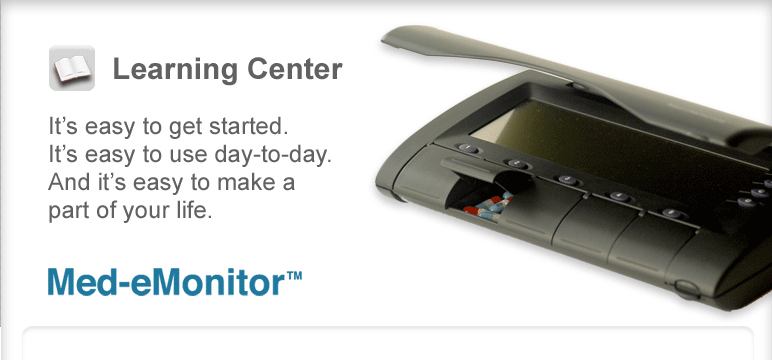
    Usually, I hear about things like glowing bottle caps to remind people to take their medications.  Although the Med E-Monitor is a little bulkier, I like the fact that it does more than simply remind you.  It also looks for adverse drug events and provides information.  Ideally, one of these devices will simply generate refills through a simple click.  [I have not read the studies but they claim to have raised adherence from 35-40% to 90% which would be significant.]

    med-e-monitor.gif

    My big questions from looking at the website are:

    • It holds up to 5 medications.  What about those patients on 30 medications?  Can it be modularized?
    • Even if it can’t have modules, can it store the data and serve as the central reminder for medications not in there?
    • Who programs it with every medication change?  The MD.  The patient.  The company.
    • Can it generate a refill request to the pharmacy?  Can it generate a request for a renewal (i.e., a new prescription for my existing medication)?
    • Will people pay $60 a month?  Is the buyer, the children that live out of town and want their parent to be safe or the actual patient themselves?

    Some of the other sites out there talking about solutions include:

    Great Book – Microtrends

    microtrends.jpgAt PBMI, one of the best speakers was Kinney Zalesne who with Mark Penn wrote the book Microtrends. I just finished reading the book – all 370+ pages. I found it to be one of the most engaging non-fiction books I have read in a long time…which says a lot. I have boxes and book shelves of books that I have bought, skimmed, and stopped reading. I get something out of them, but it is often not enough to continue reading the whole book.

    I found Microtrends to be interesting both personally and professionally. Let me throw out a few of the things that I highlighted and noted during my reading along with some of the potential implications within healthcare.

    Some of the topics they cover:

    • Love, Sex, and Relationships (Sex-Ratio Singles, Cougars, Office Romancers, Commuter Couples, Internet Marrieds)
    • Work Life (Working Retired, Extreme Commuters, Stay-at-Home Workers, Wordy Women, Ardent Amazons)
    • Race and Religion (Stained Glass Ceiling Breakers, Pro-Semites, Interracial Families, Protestant Hispanics, Moderate Muslims)
    • Health and Wellness (Sun-Haters, 30-winkers, Southpaws Unbound, DIY Doctors, Hard-of-Hearers)
    • Family Life (Old New Dads, Pet Parents, Pampering Parents, Late-Breaking Gays, Dutiful Sons)
    • Politics (Impressionable Elites, Swing Is Still King, Militant Illegals, Christian Zionists, Newly Released Ex-Cons)
    • Teens (The Mildly Disordered, Young Knitters, Black Teen Idols, High School Moguls, Aspiring Snipers)
    • Food, Drink, and Diet (Vegan Children, A Disporportionate Burden, Starving for Life, Caffeine Crazies)
    • Lifestyle (Long Attention Spanners, Neglected Dads, Native Language Speakers, Unisexuals)
    • Money and Class (Second-Home Buyers, Modern Mary Poppinses, Shy Millionaires, Burgeois and Bankrupt, Non-Profiteers)
    • Looks and Fashion (Uptown Tatooed, Snowed-Under Slobs, Surgery Lovers, Powerful Petites)
    • Technology (Social Geeks, New Luddites, Tech Fatales, Car-Buying Soccer Moms)
    • Leisure and Entertainment (Archery Moms?, XXX Men, Video Game Grown-ups, Neo-Classicals)
    • Education (Smart Child Left Behind, America’s Home Schooled, College Dropouts, Numbers Junkies)
    • International (Mini-Churched, International Home Buyers, LAT Couples, Mammonis, Eurostars, Vietnamese Entrepreneurs, French Teetotalers, Chinese Picassos, Russian Swings)

    Second, the countertrends are very interesting. More caffeine and more water. Shorter attention with a rise in knitting. More technology and more people abandoning technology. Obesity and intentional starvation. More sun tan parlors and more people afraid of the sun.

    “Microtrends is based on the idea that the most powerful forces in our society are the emerging, counterintuitive trends that are shaping tomorrow right before us.”

    Sample facts:

    • Less than 25% of the households in the US are married-with-kids. 26% are households of one person.
    • At birth, there are 90,000 more boys born per year than girls. By age 18, it has switched to a 51% female mix. Exclude out the gay men and lesbian women, you get a straight sex ratio of 53 women to 47 men.
    • 3M American adults in a long-term relationship or married met online which is the same number that met in church.
    • There are already 5M people 65 or older in the workforce and that number is expected to grow.
      • According to an economist at the Urban Institute, “if everyone worked just one year beyond expected retirement, we’d completely offset the anticipated shortfall between benefits and taxes in the old age insurance portion of Social Security.”
    • 3% of workers work from home. The average commute is 25 minutes. 3.4M people commute at least 90 minutes each way to work.
      • Researchers at Georgia Tech found that “every thirty minutes spent driving increases your risk of becoming obese by 3 percent.”
    • In a Gallup poll in 2006, when people were asked about how they feel about religious groups, Jews rated the highest with a net positive of 54%. There are more Christian evangelicals in the US that support Israel than Jews.
    • 5.4% of marriages are interracial which led to the US Census allowing people to select multiple races in 2000.
    • There are 10M Protestant Hispanics in the US which is more than the number of Muslims or Presbyterians.
    • 81% of American Muslims support gun control (compared to barely half of Americans).
    • There are 3x as many tanning parlors in the US as Starbucks.
    • 1 in 10 children aged 12-18 uses a sunlamp and only 1 in 3 uses sunscreen. And, at least 25% of skin damage occurs before a person is 18 years old.

    • 16% of American adults sleep less than 6 hours a night. But, this causes injuries, accidents, and health problems. Lack of sleep triggers hormones that boost hunger and appetite.
      • She calculated out what I have argued for years that this creates an extra 8.2 years of life for someone who lives to 82.
    • DIY (Do-It-Yourself) Doctors is a whole new group of people that self-diagnose, self-medicate, and challenge their physicians.
    • OTC sales are now $15B per year.
    • In 1997, Americans spend more out-of-pocket on Complementary and Alternative Medicine (CAM) that on hospitalizations.
    • 3 in 5 Americans worry about medication errors at the hospital.
    • Women make healthcare decisions in over 70% of households.
    • 81% of people would like to use e-mail with their doctors but only 8% say they do today. [If they were controlled and reimbursed for this without increasing risk, I think they would welcome it.]
    • 1 in 10 Americans have some hearing loss. Nine seconds into a rock concert, you experience hearing loss. [I have been to several concerts even in the front row so that seems like a problem.]
    • 1 in 18 births were to men over 50. [Changes your underwriting profile.]
    • 63% of American households have pets. And, the top 1% of pets live better than 99% of the world’s population.
      • Studies have show health benefits of pet ownership including lowering blood pressure, reducing stress, preventing heart disease, and warding off depression.
    • Only 15% of parents would take away their kids privileges if they found out their 15 year old was using illegal drugs. [And most of us think we are strict?]
    • Only 4% of people over age 65 live in nursing homes or assisted living arrangements.
    • 40% of the people providing unpaid care for infirm adults are men. [Counter this to the assumption that women make most healthcare decisions.]
    • 650,000 ex-cons enter society every year. [Have we increased their health literacy while in prison.]
    • Childhood autism has increased 9-fold since 1992.
    • The number of kids being treated with antipsychotic drugs shot up 138% between 1997 and 2000.
    • In 2005, the main medical manual on the mental health of infants added two new subsets of depression, five new subsets of anxiety disorders and six new subsets of feeding behavior disorders.
    • There are 20M knitters in the US and more than ½ of them are under 34 with almost 6M of them being under 18.
    • In 2000, over 8% of teens were making money on the Internet.
    • There are 1.5M kids (between 8-18) that are vegetarians. 3M more who pass up meat but each chicken or fish. And, 3M more that each just chicken. 11% of girls aged 13-15 don’t eat meat.
      • Vegetarian men have been shown to have a 37% lower risk of heart disease.
      • Vegetarians of both genders are ½ as likely to develop dementia.
    • There are 9M morbidly obese people in the US (100 pounds overweight). Women are 2x as likely as men to be morbidly obese, but 1 in 6 black women are morbidly obese.
    • There is a small group of people practicing Calorie Restriction diets (1,200 – 1,800 calories).
      • Scientists have found that this lowers blood pressure, LDL, clogging of arteries, and body temperature (which may slow aging).
    • 6 of 10 Americans drink coffee every day. And, Americans drink 23 gallons of bottled water per year and 52 gallons of carbonated soft drinks.
    • The average age of caffeine overdosers was 21 in a study done around the Chicago Poison Center.
      • Caffeine causes insomnia, anxiety, headaches, stomach problems, cardiac arrhythmias, and weight gain.

    “It is almost as though marketers see today’s society as an Amazon tribe, where women make all the decisions and men just go along for the ride.”

    • There are 12M “linguistically isolated” households in the US (i.e., no one speaks English well). And, in 2/3rds of these households, the head of household was born in the US. [Is multi-lingual soon to be a requirement?]
    • 1 in 3 Americans age 25-29 have a tattoo. 13% of Americans aged 18-24 have a tattoo and a body piercing.

    Sample Healthcare Questions:

    1. How do we respond to the change in the family – older dates, commuter couples?
    2. With people working longer, what does this mean for health benefits? Are your needs and expectations different at age 75?
    3. When people are doing things that influence their health – sun tanning, sleeping too little, drinking too much caffeine, will companies step in and try to control this? (I know one large company in the South that has decided they won’t serve any fried food in the cafeteria.)
    4. Why don’t we do things like encourage pet adoption to help people become healthier?
    5. What are the implications of vegan children and low calorie diets and should the industry embrace, reward, or monitor them?
    6. When people don’t want to indicate a gender, will healthcare forms have to offer a “neither” category?
    7. With so many people getting tatooes, how long until that is a covered benefit or where there is a negotiated discount like the gym.
    8. There are lots of messy people. How do you communicate with them knowing they will misplace many things?
    9. For the people that have tried the Internet and chosen not to use it again, do you risk offending them with your constant push to self-serve?
    10. If America wants numbers, should we communicate more details not less?
    11. Should we be tracking lots of other factors (diet, caffeine, commute) in our Personal Health Records?

    istock_000005278005medium.jpgI could go on, but I don’t want to give it all away. It is worth reading. It really makes you realize the value of targeting and personalization within a HealthComm framework.

    Don’t You Know Me

    A Harris Interactive poll published in AdAge a few weeks ago, talked about the value people put on companies knowing who they are. We have all had that experience where you put in your phone into the IVR then get asked to verify it when the person picks up the phone and asked again for the number and your name when you get transferred. How annoying!

    I always joked with our VP of Call Centers that Dominos was more likely to know who I was based on my caller ID then we were. There are so many technologies out there that there isn’t a good reason for companies not to take advantage of them. There is technology that based on your voice can tell if you are depressed. There is technology that based on your voice can tell if you’re angry. There are plenty of screen pops and technology that can pull in the caller ID.

    Even the companies that do that don’t often have a consolidated view of the customer. They don’t know that you called yesterday; visited the website earlier; got a call last week; had a mailing sent to you last month; filed a complaint about the same issue you are calling about; etc.

    So, how do consumers feel…

    • 95% believe it is at least somewhat important that companies know “who I am, my buying history, past problems or complaints, preferences, and billing record”
      • 37% said personal history is important
      • 27% said it’s very important
    • 62% said they would not hesitate to cancel or switch services if they had a negative experience

    Of course, healthcare makes this hard. With employer sponsored healthcare, I can only switch annually or with certain events. With individual healthcare, I might not switch for fear of having some condition excluded. Plus, companies worry about trading privacy for personalization.

    But, the reality is that this is going to continue to be an issue. Technology is putting more and more information out there and raising the bar.

    On the flipside, doing something wrong quickly gets put on people’s Facebook pages, their blogs, or other tools where the experience ripples real-time and never disappears.

    Savings From Wal-Mart Program

    I must admit that the $4 generics programs across the country cause me to have a mixed reaction.  On the one hand, it’s great.  It saves patients money.  In theory, it should encourage compliance.  On the other hand, if they get processed as cash transactions, I worry about them not showing up as claims which could limit the effectiveness of the POS (point-of-sale) DUR (drug utilization review) process.  [DUR includes things like drug-drug interactions.]

    But, I was very interested to see some of the Wal-Mart data being published.

    “While $1 billion in savings is an astonishing achievement, the real savings to America – and its health care system – are even larger. That’s because many of our competitors have also lowered their prices.  [Four dollar] prescriptions now represent approximately 40 percent of all filled prescriptions at Wal-Mart. Nearly 30 percent of $4 prescriptions are filled without insurance – significantly higher than the 10 percent industry trend.”  Dr. John Agwunobi, Wal-Mart‘s senior vice president and president of health and wellness

    You can go drill down on some of the data (e.g., state by state savings) here.  Some of the top states were:

    • Texas ($132,628,224)
    • Florida ($72,443,467)
    • North Carolina ($48,241,530)
    • Georgia ($42,279,383)
    • Missouri ($40,213,963)

    It is also great to see that 30% of all the $4 generics are being filled by people without insurance.   It was also good to see that they are focusing on bringing new generics into this group faster which was another historical criticism that I had.

    Trusted Source of Healthcare Information

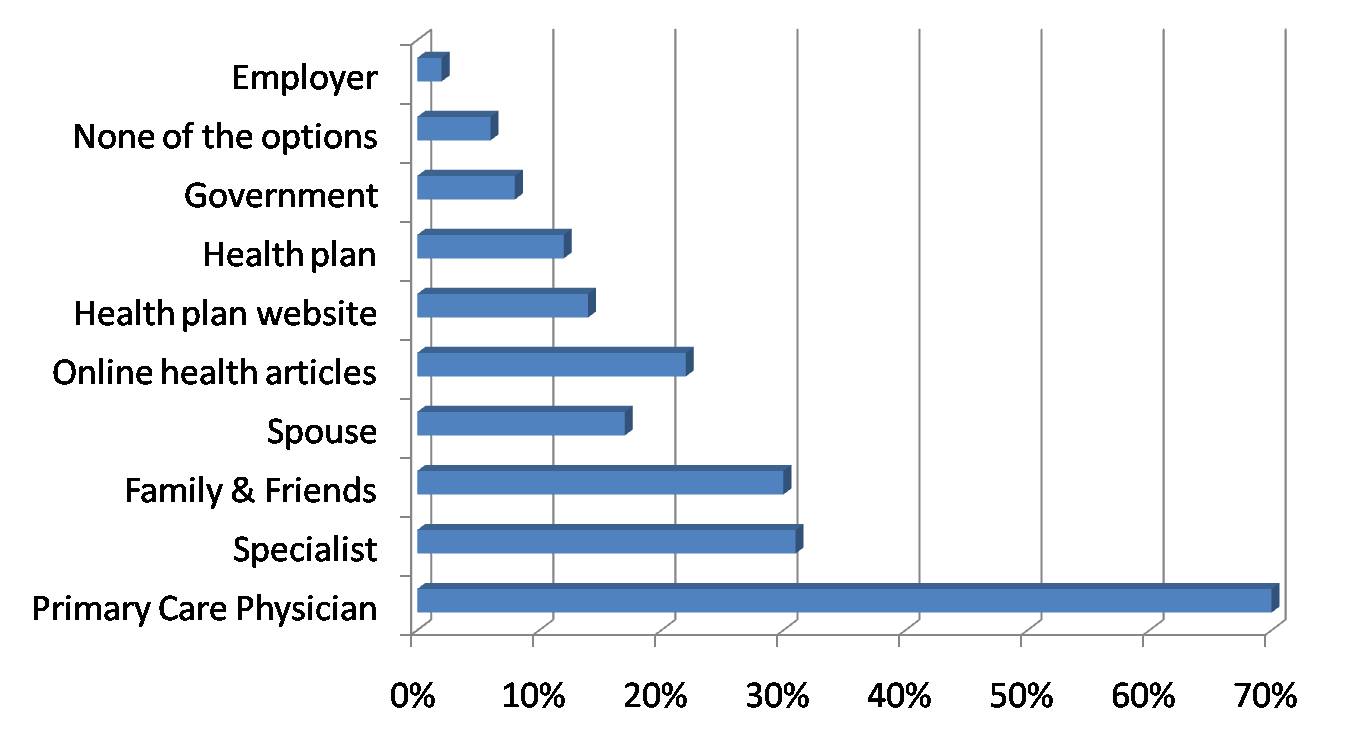
    I often wonder who people trust for information.  So I was glad to come across this  article in Employee Benefit News.
    I must admit that I was surprised by several of the results.

    • Only 2% trust their employers?
    • More people trust their PCP versus their specialist?
    • More people trust general information portals versus content sponsored on their health plan website?

    ebn-trusted-source-info.jpg

    Non-PC: Is Recession Good For HealthCare?

    I am sure this is not a politically correct topic to discuss, but the thought crossed my mind.  Since 75% of the US thinks we are in a recession, I think we can assume that people will act as if we are in a recession.  Never mind the economist definition of whether it’s a recession.

    So, what are the implications for healthcare:

    • If I am cost conscious, I should be more willing to accept generics and mail. (pro)
    • If I am cost conscious, I may be more willing to go to a clinic versus a physician or urgent care.  (neutral)
    • If I am cost conscious, I may be more likely to skip doses or not refill my medications. (con)
    • If I am cost conscious, I may not join a gym but instead workout outside.  (neutral)
    • If I am cost conscious, I may not be preventative in my care.  (con)
    • If I am cost conscious, I may be more willing to accept free services offered through my employer or plan. (pro)
    • If I am cost conscious, I may take advantage of all the web tools and member portals which exists.  (pro)

    In the big picture, there is a chance that a recession could push individual health insurance faster.  Just like Medicare Part D was a catalyst, a recession could change the employer sponsored healthcare paradigm and drive people to find insurance for themselves.  Making that happen quickly will be an issue.

    What Does Spitzer Teach Us About Sharing Information?

    While staying away from some of the issues around Spitzer, there is one that I found very interesting.  How does someone spend $4,000 (or $80,000) total without their spouse knowing?  I guess maybe when you have too much money that can happen.  I talked with 10 of my friends about it and in general they typically had shared accounts where many of them had their wife helping or managing the bills.  (My wife manages everything for us…thank goodness.)

    But, it brought a question to my mind which is how much information and when do people share with their spouses about their health conditions.

    • When you’re dating, should you disclose all your medical conditions?  What about your family history?
    • When you’re diagnosed, how quickly does the average spouse disclose that information to their family?  How does this vary by disease?
    • And, what happens in the future when you can get a genomics test to tell you what diseases you are genetically prone to get?  Should you disclose that to a future spouse and at what point?

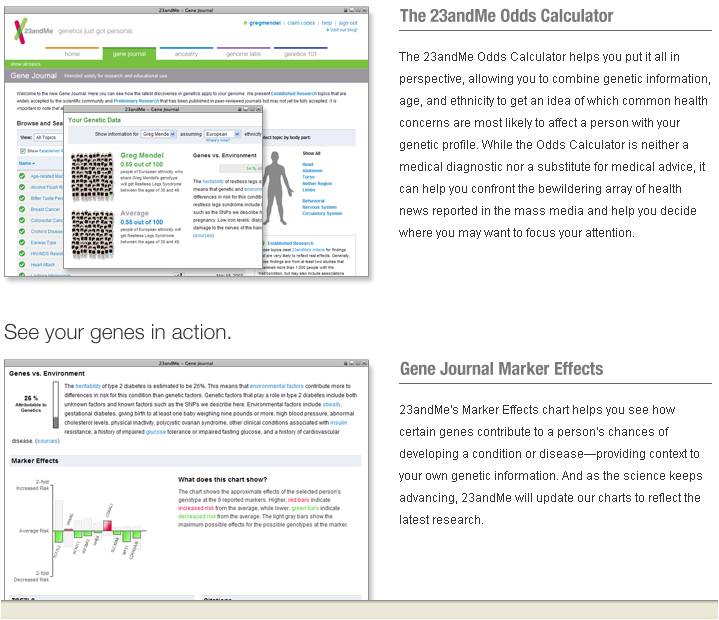
    They were showing 23andMe on the Today Show a few days ago where you could pay $1,000 to get a test done that showed you your likelihood of getting certain diseases.  It also showed you interesting things like where your ancestors were from and whether you tasted bitter things or sweet things.  It is worth going to their site and looking at, but it brings lots of interesting questions to the table.  Do you get your kids tested?  Once you have the information, can you influence the future or do you take a fatalistic view of having no control?

    23andme.jpg

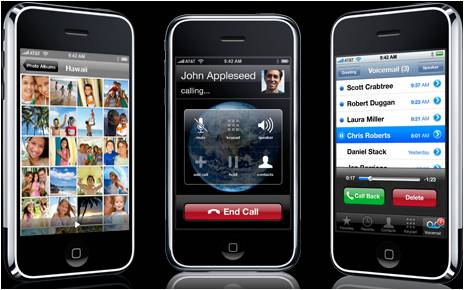
    Guest: 5 Ways an iPhone Can Improve Doctor-Patient Relationships

    I feel lucky to have people want to post on my blog. Susan Jacobs is a part-time teacher and regular reader. She is also a regular contributor for NOEDb, a site for learning about and selecting an online nursing degree program. Susan invites your comments and freelancing job inquiries at her email address susan.jacobs45@gmail.com .

    Ever since Apple announced that third party companies are developing medical applications for the iPhone, predictions on how this will impact the medical industry have run wild. Indeed, the possibilities are endless when doctors have so much information in the palm of their hands.

    1. Easy Drug Reference – One of the biggest names in medical iPhone applications is Epocrates. This company has developed a massive, free online drug reference guide. When prescribing medication, a doctor can quickly double-check any concerns about side effects, drug interactions and more. Also, it is possible that a situation may arise where a patient doesn’t know the name of the medication they are on; only what the pill looks like. Epocrates’ drug reference has a search feature based on a medication’s appearance.
    2. Access to Health Records – More and more patients are allowing their health records to be stored online. With an iPhone, doctors can quickly access a new patient’s health records, should they not be physically available on site. This could be more than convenient; it could save lives.
    3. Quick Second Opinions – How better to serve a patient’s needs than by getting instant advice from another doctor, perhaps a specialist? For instance, a general physician could take a picture of a patient’s skin condition, email it to a dermatologist, and get a quick second opinion. That is just one of the many possibilities available with an iPhone.
    4. Clinical Decision Support – Similar to contacting another doctor, there are applications being designed that offer reliable, clinical decision support. Again, this could improve a doctor’s ability to give a patient the best care possible.
    5. Little Interference – Although physicians could have accessed online information with a personal computer before the advent of the iPhone, this would have certainly interfered with the more intimate communication between doctor and patient when someone’s face is behind a computer. Now, with the aid of a handheld device, the doctor will experience little interruption while seeing a patient.

    iphone.jpg

    While the iPhone depends on wireless Internet access to take advantage of online applications, this won’t be a problem for doctors in many medical facilities. Hospitals, in particular, are often wired for broadband access and this kind of support is spreading. Communication between offices is also becoming simpler, more reliable and is using less and less paper. (Many medical administrators would be happy to through their fax machine out the window, no doubt.)

    The end of the month holds the iPhone Developer Summit in New York City. With more medical applications to possibly be discussed and showcased, even more possibilities will arise. With a vast database of knowledge at a doctor’s fingertips, patients should feel even more secure with the medical treatment they are receiving.

    Customer Service Communications

    Yesterday, we got a welcome surprise from a store where we had recently purchased a new couch.  They called to offer us a $750 gift card!  I had complained that I was unhappy with the installation of the couch and that it took 3 visits for them to get it resolved.

    That made me start thinking about feedback and communications to companies.  I have been very successful at getting issues addressed:

    • The hotel I stay at in Michigan never has our rooms ready when we arrive.  They recently sent me a $100 gift certificate.
    • Another hotel I stayed at a few years ago had several issues that made our vacation there less than perfect.  They gave me all my frequent traveler points back.
    • An airline that had taken all my frequent flier miles for not flying them in three years reinstated my points.

    I have had lots of luck where most people would simply give up.  If I reverse engineer why, it is many of the same reasons we tell clients when designing communication campaigns:

    1. Targeting matters.  [an executive is more willing to respond and take action than a customer service agent]
    2. Timing matters.  [when is the target not in meetings, working, and not having their messages screened]
    3. Channel matters.  [letter, fax, call, e-mail…which is mostly likely to get a response]
    4. Message matters.  [clear, to the point, call to action, fact-based]
    5. Tone matters.  [professional not angry]

    Another great example I often use is around buying appliances.  When we were redesigning out kitchen 3 years ago, I went to the store and asked the first sales person if they did price matching.  He said yes but with a bunch of caveats.  I walked five feet from him to the next sales person and asked the same question.  He said of course, asked what we were interested in, our timing, and what research we had done.

    I pulled out a list of the products we wanted with a grid of pricing.  Together we found the best time to buy, and I saved 40% off MSRP for the kitchen.  Since, I have bought appliances for a new house and had several other people buy from him.

    What’s the point here??  You have to try multiple times.  If you want to communicate with someone and you have a legitimate value proposition for them, you need to reach out several times.

    Remember…WIIMF…What’s In It For Me.

    Another Good IDC Quote

    We have been out talking to the analysts to get their feedback on the market and share some of our new ideas.  I mentioned a good quote a few weeks ago from IDC, but I was even more excited by their publication last week (see 1/2 way through the document).

    The story is called “Communications Technologies – the Industry Step Child to the PHR?” and is by Janice Young.

    “Amidst the market hoopla last week at HIMSS of Google’s formal entry into the healthcare market with the GoogleHealth PHR were other significant announcements focusing on what may are considered more mundane healthcare initiatives – consumer communication strategies. In particular, Silverlink Communications released two announcements in the past two weeks reflecting the next generation of healthplan investment in communications technologies.”

    “The successes and opportunities of new communications tools from Silverlink, Varolii and others are largely unheralded, yet good cost/benefit studies exist. Health plans have found the return on investment and report that automated communications programs improve prescription drug cost management and increase COB information to health plans.”

    “Targeted multi-channel communications tools can both improve healthplan costs and quality in the short term and also provide insight into consumer segmentation and behaviors that will be invaluable to managing the emerging consumer communications and information management platform, include PHR deployment and adoption”

    Comparing our announcements to that of Google was impressive, and she clearly gets the power of the solution.

    Guest: On Price/Placebo Effect

    Frederick Navarro is a research psychologist who, over the past 20 years, has focused his efforts on understanding people and the factors that shape their attention to health and care seeking. He has developed a unique model that approaches health care consumer behavior from a different angle than other models today. Over the past 10 years he has done considerable work with health plans and his findings often fly in the face of conventional thinking. He posted a long comment on my post the other day about Price and Placebo effect that I thought I would post here as a “guest post”.

    On the issue of predictable irrationality and perception, what about the situation where a group of people rate their health status much better than another group of people, but the first group generates nearly twice the level of medical claims as the poorer health status group. That’s counter to the current belief that health status drives claims. So, what’s going on?

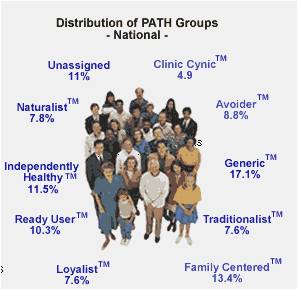
    [His methodology divides people into PATH ( Profiles of Activities and Attitudes Toward Healthcare) Groups as shown below.]

    path-groups.jpg

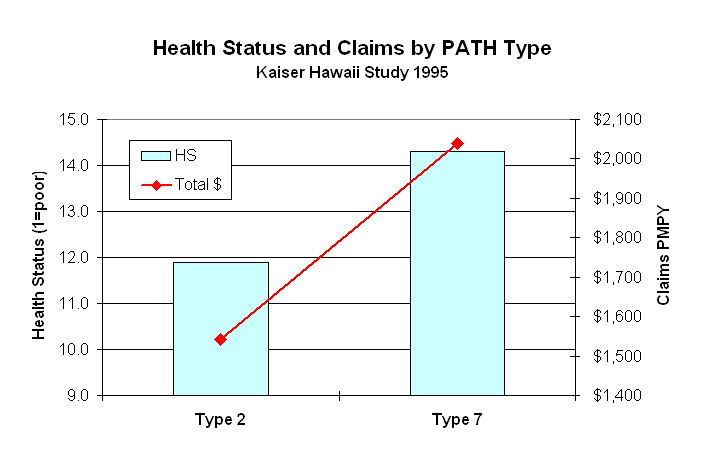
    Well, the difference is how each group of people judge when it is time to seek care. When do they say, it is time to go to the doctor? Type 2 people only go to the doctor when problems are serious. They ignore their health and are apathetic towards it. They have health problems, but they just live with them. Type 7 people go to the doctor at the first sign of a problem. They monitor their health and are very proactive about it. If something appears, they seek care for it. These are the types of people it seems the health industry wants to build more of to reduce costs.

    In a 1995 study of Kaiser members in Hawaii, the Type 2 members rated their health status 11.9 (SF-12 scale) and Type 7 members rated their health status at 14.3. The Type 2 group had avg claims pmpy of $1,541; the Type 2 group had avg claims pmpy of $2,040. Whoops! The higher health status Type 7’s had nearly twice the claims as the lower health status Type 2.

    healthstatus_kaiser.gif

    Let’s bring things closer to present time. In 2004/2005 year long study of Cigna members in a DM program the same patterns were there. At the baseline, the Type 2 group reported avg health status of 3.26 (1 to 5 scale) and the Type 7 group reported avg health status of 3.45. Type 7 were higher again! Type 2 avg claims pmpy were $6,176. Type 7 avg claims pmpy were $9,910. Whoops again! After a year, the DM intervention did not change this. At the end of the study, Type 2 people reported health status at 3.3 (a touch better), and the Type 7 people reported health status at 3.54 (a touch better again). The Type 2 group’s claims went down to $4,750 pmpy. That’s over a $1,400 drop. The Type 7 groups claims after 1 year of DM intervention dropped to $9,017 pmpy (almost a $800 drop). The Type 7 higher health status group still had claims that were nearly twice the level of Type 2.

    The moral to this story is that the predisposition to seek care is a huge driver of health care costs. In some groups of people it overrides their perception of their health. In the 1995 study and the 2004/2005 study, the reason why the Type 7 people had higher claims is because they came in demanding care. That’s all. And the doctors are happy to see them!

    This all harkens back to an earlier blog where you discussed the Dutch study and how preventive care did not lower health care costs. Providers have convinced everybody that the cure to lower health care costs is to encourage more people to become like Type 7 and to make care more accessible and affordable.

    Predictable irrationality?

    Looks like it to me.

    healthstatus_dm_1year.gifhealthstatus_dm_baseline.gif

    Health 2.0: My Notes

    I am just flying back from the Health 2.0 conference out in San Diego. I feel like there is a ton of information that I want to share so kudos to Matthew and Indu for the great job. (And, if you make it to the end of this post, you must really like the topic.)

    I decided the best way to do this is in three posts: (1) Notes; (2) Companies; and (3) Observations. [Some people were doing live blogging which I just couldn’t do and keep focused.]

    Here are a few of the other blog postings about the event:

    So, let me begin here with my notes from the conference which began Monday with some informal sessions (user driven) and a deep-dive on a new vendor American Well. [I missed this event since it was so packed that it was standing room only in the hallway, and I was 5 minutes late getting off a conference call. That being said, they were in there for 3 hours so there must be something pretty interesting.] Tuesday was pretty much packed from breakfast (7:00) until I got back from dinner (11:00).

    Matthew Holt:

    • Talked about his Health 2.0 picture of search, social networks, and tools. And, at the end of the conference, he showed a preliminary sketch of the model for the fall Health 2.0 conference where each of these are blown out into smaller segments.
    • Talked about the challenge of wrapping context around transitions. [In a side conversation, I thought someone else made a great point of saying that one of the biggest challenges will be how to drive change.]
    • Talked about the four stages of Health 2.0. I was soaking it in versus scribbling notes madly so all I got were phase 1 (user-generated content) and phase 2 (users as providers). But, I believe the later phases do (or should) show these models integrating into the establishment.

    Susannah Fox (Pew Internet & American Life Project):
    [Who by the way was a very good speaker and refreshingly gave a 30-minute presentation w/o any slides.]

    • Talked about an early 2000/2001 quote from the AMA on not trusting the Internet and a push to the physician. [That seems to have softened a bit over the years.]
    • Said that 40% of adults in America have a high school education or less which gets right to the issue of health literacy.
    • Talked about validity of online data. Researchers want to see date and source, but patients don’t look for that.
    • Talked about an article in a cancer magazine about misinformation which said the most highly correlated factor was a discussion around alternative medicine. Those sites often had misinformation on them.
    • She set the tone for the day by using the concept of a seven word expression to summarize your talk. Her’s was “Go Online. Use Common Sense. Be Skeptical.”
    • Pointed out that only 3% of e-patients report bad outcomes based on online data. [I think this whole discussion around what patients want in terms of research versus experiential data from their peers is very interesting.]
    • Talked about the white space between a “physican is omnipotent model” (my words) versus a “patient self-diagnosis world”. That is where we have to find a solution.
      • [A person from Europe who I talked with said that not only is their model different but the fact that they hold the physician on a pedestal makes some of these things impractical there.]
    • Talked about a new term for me – “participatory medicine”.
    • Said that Pew had classified people into three groups not on the concept of do you own a mobile device (for example) but on how you use it (e.g., do you feel like the device interrupts your life when it buzzes you, do you require help in setting up your devices).
      • 1/3 of Americans are “elite tech users” who own lots of devices
    • There is still minority distrust of some of these online tools. Some of this is generational.
      • The memory of the syphilis experiment is failing.
      • There is limited discussion of faith in these discussion areas which is important.
      • The older generation typically has less technical skills.
    • Her next seven word expression was “Recruit Docs. Let E-Patients Lead. Go Mobile.”
    • She described African American and Latino users of mobile devices as leveraging it as a Swiss Army knife versus a spoon. [I hope I use it more as a spork…which I assume is evolutionary over the spoon.] They use it more than TV or computers.

    Patient Videos:

    • One of the most engaging segments was a series of video clips from patients.
      • The founder of i2y.org (I’m Too Young For This) spoke about being diagnosed with cancer at an early age and how he overcame the physical challenges and has become a go to destination for people about cancer.
      • The founder of Heron Sanctuary in Second Life talked about how she has limited mobility in real-life and her ability to create a world in second life where she can help people and gave examples of how people are using this virtual reality tool.
      • A young woman with RSD talked about how she has used ReliefInsite to manage her disease and pain. She also had the same issue of being “too young” to have RSD and the challenges of finding a physician to help her and believe her.

    The format for most of the day was to have 3-4 founders or executives from companies get up and talk for 4 minutes on their company. Then a panel of people would comment and questions would get asked. On the one hand, it was a compelling, fast-based approach that kept your attention. [No nodding off at this conference.] On the other hand, it was heavy on marketing and light on really drilling down on the problem. [Although I am not sure that was the purpose or even achievable without making this a multi-day conference.]

    So…here were a few of my quick notes on some of the companies. I will post another one trying to look at some screen shots and other observations. If you didn’t get mentioned here, it’s likely because I was simply watching or distracted. Hopefully, I catch everyone on the Health 2.0 Company post.

    • WEGO Health – allows consumers to rank content…i.e., directed search…gave example of search for some health topic that returned 98,000 links on Google, but only 50 here…option to score after consumer uses the link
      • Seems interesting. How often is it updated? How do you build awareness? Can it be part of a broader search engine? Seems like a likely acquisition to be another option like images or desktop from a search criteria within Google.
    • HealthCentral – biggest brand you don’t know (or something to that effect)…have 40+ sites around specific disease states…6M unique visits per month…new VC money…100 “expert patients” found to create initial communities…ability to create inspirational cartoons that summarize your story…good GUI
      • I really liked some of the features they demonstrated (in 5 minutes). They talked about creating micro-communities (e.g., spouses of people with a disease).
      • The idea of “recruiting” 100 “expert patients” to build an active community was one of the best I saw.

    In preparation for discussion on patient-MD solutions, someone shared that only 2-3% of MDs allow appointments to be booked online. There was discussion that patients don’t really look to the Internet to find a physician or hospital. They look at what’s in-network and they ask their friends. There was an example given for Yelp which is used to rank restaurants, but allows people to review the physician. [A comment I heard later was when will we see a site ranking the sites that rank physicians.]

    • Carol (company name) – talked about mall concept in that people shop for something like a physical or allergy test not necessarily a specific type of MD…provide cash prices and insured prices
      • Seemed interesting. I will have to think more about how I search.
    • Vitals.com – I talked about this company on the blog a few weeks ago…still like the graphics…saw a few other features that I hadn’t noticed such as customizing the search criteria and using slider bars so that you get weighted recommendations

    I thought there was a good discussion on why would an MD participate in a ranking site.

    • Help them sub-specialize (i.e., I want to treat knee pain not neck pain).
    • Allow them to attract the right type of patient that matches their style and focus.
    • Ego…allowing them to manage comments.

    IDEO, the famous industrial design, company facilitated a lunch workshop and talked at the conference. For simplicity, I will blend both notes here. (see old post about IDEO book)

    • Talked about user-centric design which is key. At lunch asked us to come up with a solution to address the problems of diabetes patients. Showed us four interviews with diabetics. But the stress was not on solving what we thought was their problem, but trying to actually listen to what they say and do in order to find something. Key point.
    • Talked about empathic research showing that we don’t say what we think, do what we should logically do an online car loan, or even do what we think we do.
    • Talked about a book called Thoughtless Acts.
    • Gave examples of project with Bank of America that showed how most people round up their credit card payments so they started a “Keep the Change” campaign which allowed them to attract 2M new members.
    • Walked through an example of creating the Humalog pen for Eli Lilly.
    • Talked about creating a new bike design.
    • All of them were common in the framework they use and their focus on the person/user/patient/member.
    • Lunch was an interesting workshop where you listened to the videos, identified issues, brainstormed solutions, picked a solution to “pitch”, and then shared your idea with your neighbor. At our table…
      • Saw problem largely as educational / informational
        • Don’t know what to expect
        • Don’t know where to get information
        • Don’t understand lifecycle and treatment plan options
        • Don’t know what to do with the pump
      • Talked about everything from portal to device solutions
      • Settled on an iPump concept that would blend an iPod with an insulin pump and foster a community around it to develop cases (e.g., a belt that it fit into as part of a formal dress), videos to download to it on education, connectivity to trigger auto-refills, etc.

    Then we had several discussions by physicians that were blending the old model of house calls with technology. Seems very cool (for those that can afford it). Although one example was relevant, it missed the masses. One showed a trader who was too busy to leave the trading floor, but he had a sore throat so the physician came to his office, took a culture, and gave him an antibiotic.

    • One great point that they made was the benefit of seeing the patient’s environment (i.e., home) in helping them manage a disease.
    • I loved the fact that they would send me an e-mail with my notes from the visit rather than trying to scribble things down while they are talking.
      • Of course, this begs the question of literacy and teaching physicians how to communicate in simple, non-medical language.
    • Another great point was the issue of technology as a good unidirectional solution. For example, if the physician wants to know whether something works, an e-mail is very efficient if it does. Leaving a voicemail so that you play tag back and forth only to realize the patient is feeling better is a waste of time.
    • Jay Parkinson referred to himself as the “Geek Squad” for healthcare (think Best Buy computer technicians). Great analogy. He also showed this seemingly very intuitive and easy to use EMR called Myca which I believe he has built.
    • Somebody tied this back to the physician ranking discussion by asking how this new flexibility of business model would be captured and tracked on those sites (e.g., does MD respond to e-mail).
    • I can remember if I jotted this down or one of them said it but I have “More Time. Save Money. Less Costs.” I think this was in response to a question I e-mailed in about how these new models were affecting the compensation and lifestyle of the physicians.

    Phreesia talked about their tablet solution (i.e., electronic clipboard) for the physician’s office. They had an interesting statistic that 49M Americans move each year so address data is constantly changing. (Not to mention plan coverage, drug use, etc.) They are getting 200-300 new MDs a month to sign-up for this.

    I don’t see myself using it, but this is an interesting option. Organized Wisdom talked about their product LiveWisdom which allows users to leverage a live person (I assume MD or RPh or RN.) via chat to address questions they might otherwise contact their MD about. They pay $1.99 per minute.

    • As they admitted, they are limited in scope and often have to refer the patient to an MD. They seemed to me limiting, but creating an opportunity to partner with American Well who helps you find an MD, sees if they have time to talk, and launches an interactive video session and chat session with the MD right then for a pre-agreed upon rate.

    There were two patients there that were involved in lots of feedback sessions. The first was a woman who has lost 144 pounds (w/o going on The Biggest Loser) and has become an online advocate and support mechanism for lots of people using DailyStrength. The second was Amy Tenderich who is a very active diabetic and blogs at DiabetesMine.

    Amy’s story was great. Her blog is very engaging and as Matthew said it is “thought by many to be the #1 blog for patients“. I had a chance to talk with her and her husband and heard a lot about how it started and the response. It is a great story, and she is very knowledgeable and was willing to really push the patient-centric agenda at the conference.

    Someone made the point about linking patient costs to compliance with their care plan which I have blogged about before. I completely agree that the patient should be rewarded for using self-service options (web vs. live agent) and for staying compliant.

    ReliefInsite talked about their solution and shared that 1 in 6 Americans suffer from chronic pain. No matter what the CEO said, he couldn’t do better than the opening patient video which used their solution. (Which he said was a surprise to him.)…seemed like a good, interactive tools with nice reporting.

    Emmi Solutions showed their online educational tool which had videos built in a conversational tone and used animation to help people understand procedures and their disease. Seemed great. Said that informed patients are less likely to sue.

    MedEncentive is one that I will have to spend more time looking at. It plays to the incentive question and rewarding patients and MDs. They talked about a 10:1 ROI and said the medically literate patients have less hospital visits.

    [Completely off topic, but from the conference, I heard someone talking about CouchSurfing which is apparently a “network” where you allow people (that you don’t know) to come sleep on your couch. I thought that died with hitchhiking in the 60s.]

    A consultant from Mercer commented that some large employers with physicians on staff are more effective [at health and cost management] than small health plans. Not sure if that was a complement to employers or an insult to health plans.

    BenefitFocus which automates the set-up of your benefits (imagine no more paperwork to enroll) had a great video showing the future with personal consultants (via hologram), biometric signature, and other cool things. [I have heard good things about them for years although they never returned my phone calls several years ago even with name dropping one of their biggest investors.]

    Virgin Healthmiles was there and talked about their pedometer which is tracked online. They also have an employer kiosk for tracking weight and body fat. Offline, he also told me that they are rolling out connections which will be on the treadmills and other machines at participating gyms. I am a big fan of what they are doing. I believe he said they recommend 7,000 steps a day per person (and think he told me that 2500 is a mile).

    Stan Nowak (my boss) presented the Silverlink story talking about using technology to engage patients, the importance of capturing data, extreme personalization, and showed recent success improving compliance by 3x by rapidly doing a series of pilots.

    • I am not sure I have figured out our seven word description but here’s a few attempts:
      • Patients Are Different. Personalization Matters. Be Proactive.
      • Preference Based Communications Engage Patients & Drive ROI.
      • Segment. Learn. Interact. Empower. Use Communications Appropriately.

    iMetrikus talked about their solution which connects over 50 biometric devices today into backend healthcare systems. They charge $3 PMPM which caused me to raise an eyebrow. It is a great solution and integration is a nightmare, but that seems like a lot of money. But, I am all about ROI. If I can get better return on this than on another project and it exceeds my cost of capital, why wouldn’t I do it.

    iConecto didn’t present but had a booth and introduced a section. But, I love the concept of using play (e.g., Wii) to drive health.

    To be fair, I will even include my notes about Eliza Corporation (our competition). Their CEO and our CEO did a podcast with Matthew the weekend before which you can listen to here. The messaging is fairly similar (although I have a strong bias about why us). She talked about tailoring [of messaging] being the new black. She talked about using clinical and demographic data to drive programs. They are a good company, and it was well done. [I was even flattered that several of their employees said that they read my blog.] Both companies commented on how they feel old (~7 years) compared to a lot of the companies presenting here (~2 years).

    • One thing that I find strange is for two companies that pretty evenly split the healthcare marketplace for Strategic HealthComm is that we are located within 10 miles of each other near Boston.

    At one point, there was a discussion around ROI especially on new technologies and how to get that first big project. One of the panelists said that a 1:1 ROI over two years would be sufficient. [Not true for any company that I have worked at or consulted to.]

    The final panel discussion and closing statements had a lot of good content:

    • Discussion of the patient as a provider and what that could mean.
    • Discussion of importance of sharing information across solutions.
    • The concept of citizen (European) versus patient.
    • From the Wired magazine participant, discussion around fidelity versus flexibility:
      • Disk versus MP3
      • HDTV versus Tivo
      • Microsoft versus Google
    • Importance of moving upstream in care
      • Disease management
      • Wellness
      • Prevention
      • Diet
    • As part of upstream discussion, talked about involving the food companies and used the analogy of inviting the oil companies to a green conference. [I wondered where the MCOs were, the hospital networks, and the politicians.]
    • The author of the book “Demanding Medical Excellence” (who I believe is part of the Health 2.0 staff talked about “random acts of doctoring” and the issue of solving healthcare for the few or the masses.
    • Indu talked about building a new system versus extending and improving the existing system. [A great question]
    • I think it was Matthew that brought up the issue of designing for credibility.

    Wow! If you made it through this thesis, good for you. I hope it’s helpful. It is certainly easier than me trying to find my notes two months from now or sending a bunch of e-mails to people on sections they might find interesting.