Archive | General Thoughts RSS feed for this section

Innovation Has To Respect The Past

Cars provide us with some interesting examples of innovation which has had to adapt to fit our norms.

For example, we have keyless cars, but if you notice, several of them have places for you to put the key in.  It’s really just a holder for the key since it doesn’t activate anything, but otherwise, we don’t know what to do with the key once we get in the car.  [This may be more of an issue for me since I use this when I rent cars and don’t have such a car everyday.]

Another example is the silence of hybrid cars.  US lawmakers are considering making manufacturers put sound back into the electric cars so that the visually impared who rely on sound to help them navigate can tell when a car is coming. 

I’m sure there are other examples.

Should Restaurants Use Characters To Promote Unhealthy Foods?

I find this to be an interesting debate similar to should companies be able to promote smoking.  On the one hand, kids are obviously motivated to go to a fast food restaurant to get the latest toy that comes with the kids meal.  On the other hand, they can’t do it unless their parents take them there.

Additionally, you have to think about what the consumption of these fast foods are by the general population to understand if kids are eating the food at a higher rate than their parents.  I’m not sure you could look at families versus couples because by the nature of families being busier and more scheduled they are less likely to eat prepared meals at home.

These high level issues are important because if kids are likely to eat the meals anyways than why not give them a free toy because you are essentially using marketing to get them to choose one restaurant over another based on the toy.  If it is the toy that is changing their eating habits then we have a different issue – commercials, over-scheduling, parental control, access to healthy meals and snacks, and general eating habits of the population.  I struggle with the argument that the companies themselves shouldn’t be allowed to advertise.

But, I do think there is comparative research which has been done on tobacco and alcohol advertising (i.e., the Marlboro Man).

A factoid I saw in Time this morning was that

“Celebrity sells…kids think food tastes better when a popular carton character appears on the packaging…But, the flavor boost occurs only with junk food, not healthy snacks like vegetables.”

Even with that data, 47% of the child-marketing budgets for fruits and vegetables are on licensed characters compared to 29% of the dairy budgets, 15% of the junk food budgets, and 7% of the candy and ice cream budgets.

Little Improvements To Healthcare Process

I saw an advertisement for a site where you could share your thoughts on improving the healthcare system.  I went to the website, but I was disappointed.  It didn’t seem to have many patient inputs.  There are huge issues for us to deal with around this many of which are wrapped up in reform (whether that’s the right answer or not).

But, if I put my re-engineering hat on from the 90’s, I think there are lots of little improvements that I would make.  Here are some thoughts:

  • Online appointment scheduling for physician’s offices.  It would be great to do this outside of normal business hours or understand the open time slots.
  • Real-time updates if the physician is behind schedule – text message alerts.
  • Kiosks at the pharmacy for picking up refills so that pharmacists could spend their time on first-fills and counseling.
  • A forum to allow consumers to create a profile about communications preferences and relevant behavioral profiling that would help healthcare companies provide them with relevant information…and allow this profile to follow them as they moved from company to company.
  • Some type of online certification for health information websites so that we knew which sites to trust for information.
  • Simpler plan information so I really knew what was covered and what my costs would be.
  • A virtual coach to help me interpret information, guide me to content, decide when to get a second opinion, provide me with pre-screening, and manage worries (i.e., do I have the flu or just a cold).
  • Online portals and PHRs that were engaging, portable, and learning systems.
  • Better communications design and literacy considerations.
  • Full genomic profiles that not only told me what I was genetically pre-disposed to but what I can do about it.
  • Aggregation of all the cool tools into a front-end where I could manage a condition thru without having to have multiple logins and different pieces of content to put together.
  • Easy to understand billing.
  • A way to stop having to repeat myself on the phone, in the office, at the pharmacy, at the clinic, etc.
  • No waiting in line – ER, Urgent Care, pharmacy.
  • Automatic, real-time suggestions (did you know there’s a generic alternative to that?  did you know the urgent care down the road 2.3 miles is open and will save you $50 compared to your ER copay?).

I’m sure I could go on, and each of these has implications.  For example, to have no waiting in line means creating more locations which creates more costs which ultimately requires them to create more demand to stay business.  A vicious cycle.

Pediatricians To Discourage Teen Drinking?

I was reading the USA Today earlier (now that I’m back from vacation) and it has this whole article about “pediatricians need to work hard to discourage children and teens from drinking alcohol.”  Really?

That seems like a role for people other than the pediatrician.  Unresponsible drinking is certainly a problem:

  • Major contributor to the leading causes of teen deaths – accidents, homicide, suicide.
  • Increases the chances that teens engage in other risky behaviors.
  • Affects developing brains and general health.

Their statistics are:

  • >90% of high school seniors and 60% of 8th graders say alcohol is easy to get.
  • 29% of high school students report riding in a car 1+ times in the past month with someone who had been drinking.
  • 10.5% had driven a car in the past month after they had been drinking.

I always thought the most effective way to discourage drinking and driving was to park that crashed up car in front of the schools to serve as a visual reminder.  Probably today, you could create a virtual reality drinking experience that shows how bad your responses are and your likelihood to impact your life.

But, I can’t see pediatricians having enough access to students in their influential years (which I would consider grade 6 and above) and making a convincing arguement by taking about the damage to the developing brain. 

This is an issue which requires parential guidance and is massively impacted by social norms.  Do their friends drink?  Do their parents drink?  When?  How much?  Why?  Are they allowed to drink responsibly at home (like Europeans for example)? 

We have to culturally teach our kids the right view of alcohol.  If we paint it in the wrong light, it will be abused. 

Now, if you’re interested in why many of the facts about drinking are overstated and the agenda behind that, you can go to alcoholfacts.org or alcoholinformation.org[Note: I’ve only skimmed these pages which seem someone opinionated and counter to much of what I’ve seen.  I did see a few points I agreed with, but I’m only presenting a counter-opinion.]

Sleep, Work Hours, and Career Choices

I know there are limits on how many hours a trucker can drive per day and limits on how many hours an airline pilot can fly per day.  I even think there are some limits on hours that a resident can work in a day.  These are all within the past decade.

It struck me as interesting earlier today when I thought about the fact that it is the jobs to which we trust our lives and/or have the highest likelihood of harming us where people are most likely to have worked the most hours and slept the least.  Given all the research on the impact of sleep on our health and our decision making ability, shouldn’t this be a bigger concern for us?

  1. People with weapons – police and military – are highly likely to work in stressful positions with long days.
  2. People in the healthcare field – pharmacists, nurses, physicians – are highly likely to work in stressful positions with long days.
  3. People who provide transportation – taxi drivers, bus drivers, airline drivers, truckers – are highly likely to work long hours (at least historically).  [I assume these may be stressful jobs, but I don’t know.]

I’m sure there are more, but these were the 3 buckets that jumped out at me.

The “Toyota Effect”

While I’m not an expert, all these stories about Toyota get me thinking about prescriptions. Is the rapid acceleration caused by the car or the driver? Is the perception that it could happen contributing to it happening?

From an outside perspective, it seems to be a mix of correlation, causation, and the placebo effect. Here are some definitions from dictionary.com:

Correlation = the degree to which two or more attributes or measurements on the same group of elements show a tendency to vary together.

Placebo Effect = The beneficial effect in a patient following a particular treatment that arises from the patient’s expectations concerning the treatment rather than from the treatment itself.

In the medical world, it’s important to understand the differences between these three. Let’s say you start taking a new medication and feel sick to your stomach. Is it caused by the medication? Does it happen every time you take the medication but not related? Or did you expect to feel sick and therefore do?

People often don’t pause to think about this and test the hypothesis.

[See older post on price and placebo effect.]

Causation = anything that produces an effect.

The Stress Of The Healthcare Vote

I don’t spend a lot of time around politicians, but I had the chance this week to spend some time with lobbyists and people working with the lobbyists. One of the interesting things I heard about the healthcare vote is that politicians (especially the Democrats) were unusually stressed out about having to vote.

Basically, they’ve been told that they’ll be blackballed and unable to get any of their own initiatives pushed thru if they don’t vote for the bill.

And, many of them are seeing numbers that show only 50% of their constituents (at best) support the bill.

Therefore, it’s a lose-lose proposition. You’ve been elected to represent the people so you should do what they want. At the same time, we know that consumers are swayed by all the propaganda by both parties and multiple other groups. Do you know better?

It’s a great question. I haven’t been a big supporter of this reform while I 100% agree that our system is messed up. My recommendation continues to be to parse it up. First, solve coverage for the uninsured. Second, begin to address things like previous conditions. Third, focus on prevention and the payment / incentive systems.

And, I’m in the industry and don’t have time to keep up with all the changes and nuances to the legislation. I had finally resolved myself to reform and thought the bill(s) on the table right before the MA vote were probably ok (not great). But, I don’t know what’s changed since then and the meaning of those changes.

I saw some article about all the pork being put back in to the bills to get the vote. That makes me annoyed as a taxpayer.

Are You Using A Mystery Shopper / Caller Progam?

One of the programs we used very effectively at Express Scripts to test our call center was a “mystery shopper” program.  Much like the name implies and has been used in retail for years, this process had a person calling into the call center and asking a series of questions about plan design or other aspects.  This was a great way to see if training had worked and understand the experience that our members had. 

I honestly don’t remember exactly how we set this up to pass the authentication process, but I believe we probably created “dummy” members in the eligibility file with a name and member ID that could be used by the mystery shopper. 

Those calls were then ranked based on quality of response, consistency of response, first call resolution, and other aspects.  This testing process was continued until the quality scorecard passed a certain level. 

With the increasing complexity of plan design, this is something that everyone should look at.

Pottery Barn Example Of What Not To Do

One of the things that I’ve long talked about is the fact that loyalty of customers is not simply attributed to perfect service.  You can make a mistake as long as you quickly respond and fix the issue.  Last year, I was singing the praises of Pottery Barn for doing just that.  But, now they’ve blown it again.  [BTW – Pottery Barn is owned by William Sonoma.]

In 2008, I bought a couch from them.  Love the couch.  Loved the store.  Felt it was over-priced, but I was okay with that for the quality and service.  But, when it was delivered, there were a few issues.  Honestly, pretty small, but I had high expectations.  I sent a few messages and got a flurry of activity leading to a 10% discount on my purchase.  I was happy.

A year later, I decided that I was going to buy another couch and went back to Pottery Barn.  This time, it was a comedy of errors.  The 6-week delivery took 16-weeks.  The deferred payment terms which were supposed to be 12-months from delivery started immediately.  So, again I raised the issue, saw a flurry of activity, felt it was fixed, and received a discount (credit) on my purchase price.  I felt happy until after getting my next month’s bill only to find out that everything was still messed up.  They had simply gotten me to go away without fixing anything.  And, I also found out from the new installers that the original installation on my couch from last year was messed up and that was the reason why it constantly was disconnected (it’s a sectional). 

So, this time, my anticipation was another discount.  Would that have really made me feel better?  I’m not sure this time.  Now, I’ve actually spent time and been frustrated dealing with lots of credit people and customer service people.  It’s actually cost me money (in time).  But, I didn’t get another discount.  For a company that offers it’s employees a 40% discount, I know there’s lots of room to “reimburse” me for my time. 

Yes, I know this isn’t at all about healthcare, but it is about communications and customer service which are important.  [And, yes…I’m using my “bully pulpit” to voice my frustration.]

Implied Preferences / Educated Preferences

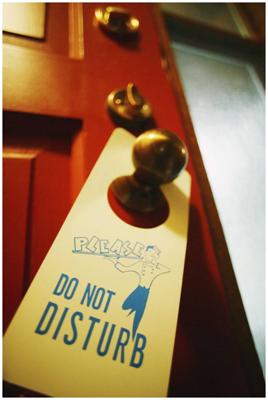
A few weeks ago, I was staying at a very nice hotel and was shocked to find out that they had cleaned my room while I had a do not disturb sign on the door. [My general mode when I travel is to just leave everything out in my room and not have them clean until I check out.] I immediately called downstairs to ask what the heck happened. They told me that they just assumed that I’d made a mistake and keyed themselves in.

I was honestly shocked. I’ve spent a lot of nights in hotels and never had this happen. They said that if the sign is up both in the morning and afternoon they assume that the guest had forgotten about it. They then offered to put me on the “honor the do not disturb sign list”. Are you kidding me?

I guess my argument (linking it back to healthcare and communications) is that aren’t there some implied preferences. Unless you tell me different, shouldn’t you honor my requests? If I sign up for e-mails, you should send me e-mails.

For example, if a consumer (member / patient) gives a company their mobile phone number, don’t they expect to receive calls on that phone? I think so. Now, I don’t think that giving a mobile phone number as a “phone number” implies that the consumer is saying it’s okay to send them text messages.

The other issue here is around “educated preferences”. If a company knows that the best way to get someone to stay adherent with their medications is to remind them to refill them, should they make it easy for consumers to opt-out of that program? I don’t think so. I think they have to offer that option, but why make it easy. Patients think they will be adherent. Heck, a lot of patients think they ARE adherent.

Don’t corporate entities have a role in leveraging their data and experience to help people even if people don’t know they need help.

Sleep Deprivation No Longer A “Badge of Honor”

I would argue that for years many people bragged about how little sleep they got (as a proxy to show how hard they work).  Has that changed or will that change?  I’m not sure.  The whole concept of face time is often more normal than the work smarter not harder concept.

The question of course is whether research on the impact of sleep deprivation will change anyone’s mind.  In an article I just read, it has several key points from a recent study [by Daniel Cohen, Harvard Medical School, Science Translational Medicine journal]:

  • Studies estimate that almost 30% of Americans get less than 6 hours of sleep per night.
  • The circadian rhythm hides the effects of chronic sleep loss and gives people a second wind btwn 3-7 pm (before they fall off a cliff in terms of attention).
  • If you stay up all-night on top of sleeping less than 6 hours a night for the past 2-3 weeks, your reaction times are 10x worse than they would have been if you just pulled an all-nighter. 

“A large segment of the population may be at a high risk of committing catastrophic errors” (Eve Van Cauter, sleep researcher at the University of Chicago)

Given the risks of error, the impact on health, and other issues, it would seem like companies would want to discourage this “badge of honor” and encourage people to get appropriate sleep.

New Respect For Swimmers

I’ve never been a swimmer and hence, whenever anyone asks me about doing a triathlon, I just laugh.  But, now my 8-year old has gotten into swimming. They run a mile then swim for 90-minutes 3x per week.  I figured if she could do it than I could.  Big mistake.

I tried to swim for 30-minutes that other day and felt like I was going to pass out.  I’m sure it was a good workout, but I realized that like running I need to manage my expectations and start small.  This may be a good new years resolution…make it one hour swimming.

Why Can’t I Text My [Application]

I forgot to grab a receipt earlier today when I used my debit card.  Since I keep a record of all my transactions in Quicken, I quickly realized that I needed to e-mail myself the amount so I could enter it when I got home.  That got me thinking…why couldn’t I just text it to home home PC.  The PC is on the web.  It could “listen” for my message; receive it; and integrate it. 

I’m sure there’s more to it, but this could work for healthcare updates – weigh, blood sugar, blood pressure.  Sure, ideally my bank would update my Quicken and my bluetooth connected WiFi health monitoring devices would do it for me.  BUT, in the interim…

Dog or Kids (fun)

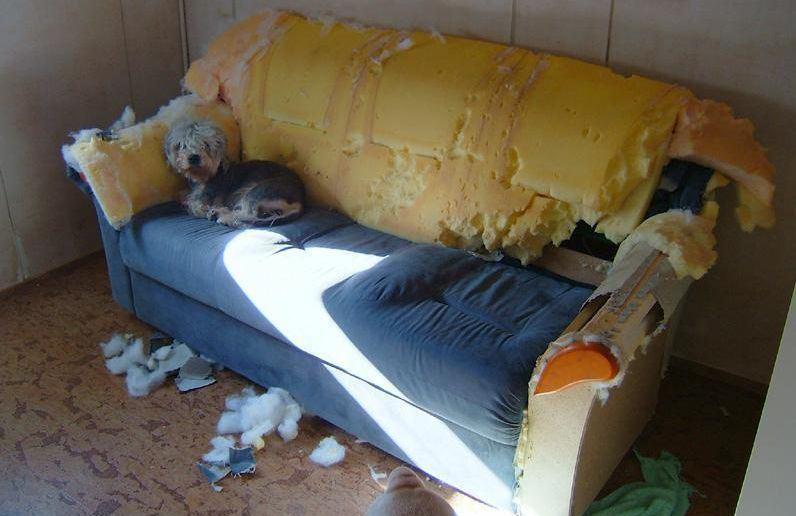
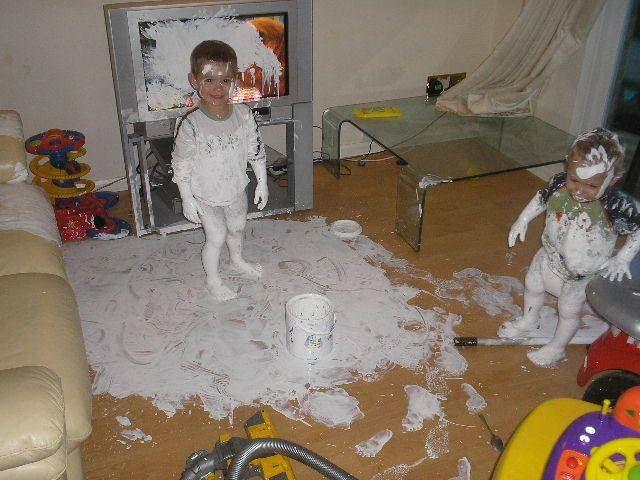
I usually don’t stray too off topic, but I thought this was funny enough to share.

Which would you choose?  [Of course the only one that believes this is reality are those without either… at least most of the time]

Does Technology Make You More Efficient?

If you’re like me the answer is “of course”, but I realize that it isn’t always true for people.  Look at the people who get sucked into things like SecondLife or people who play games for hours on Facebook.  That certainly isn’t efficient time.

An article “The Internet Ruined My Life” by Pat Regnier in Money Magazine (Jan/Feb 2010) makes some good suggestions.

“When work got stressful – pretty often in this economy – it was all to easy to click over to Facebook.”

He points out that for Americans working over 50 hours per week:

  • 56% say technology has increased their job stress (27% by a lot).
  • 47% say technology has made it harder to focus at work (14% by a lot).
  • 66% say technology has made it harder to forget about work at home and on the weekends (37% by a lot).

I’d say what about the fact that it’s easier to multi-task and watch your kids soccer game during the week and stay in touch.

He makes a few suggestions (all relevant for getting into the new year):

  • Check out the 43folders.com blog.
  • Break the circuit – stop checking Facebook for a week and see if it’s still that important.
  • Be smarter about e-mail.  The more you send; the more you get.  Create better subject lines.  He suggests the book “The Tyranny of E-mail”.
  • Focus on your job (which isn’t to check e-mail…by the way).  He suggests checking e-mail just a few times a day [which is very hard but very efficient].
  • Stay offline in front of the kids [which is hard to do when you work from home].

Looking Back 10 Years Ago

I usually try to spend some time reflecting at the new year looking backwards on what’s been accomplished, what I’ve learned, and how I’ve changed while also setting some goals for the next 1, 5, and 10 years.  Given that it’s the changing of a decade, I’m first going to look back 10 years to see where I was.

1999:

  • Living in St. Louis [I’ve moved about a mile down the road.]
  • Working at Ernst & Young LLP [I’ve had 5 different jobs since then… although all of them with people from E&Y.]
  • Wondering if the Y2K work I did would matter [still not sure but the world didn’t crash].
  • Working with managed care companies trying to convince them to build member portals and how the Internet would change their business.  [I think we know where that went although they are still trying to drive traffic there.]
  • Married with no kids and a dog [We now have 2 kids and a new dog.]
  • Never worked out [I’ve since ran 3 marathons and try to work out several times a week.]
  • There was no social media [Now, I’ve got Twitter, blogging, Facebook, LinkedIn, and Plaxo.]
  • Same mobile phone number and carrier although I paid several hundred dollars a month for many less minutes and features.

The decade itself seems full of big events:

  • My kids being born and watching them grow – Amazing!  [I could talk about them and my amazing wife forever, but that’s probably not for this blog.]
  • The dotcom bubble bursting [which impacted the company I was then working for].
  • 9/11 – I can still remember driving to work that morning and sitting at work in sort of a daze [even out in the midwest].
  • Iraq and Afghanistan.
  • New Orleans.
  • The Red Wings domination in hockey.
  • The St. Louis Cardinals and the Boston Red Sox winning World Series.
  • Running my first marathon [and later running with my little brother].
  • Trying to start my own company.
  • Golfing with my wife [our weekly date] … but never seeming to significantly improve.
  • Tsunami.
  • Recession and seeing people I know lose their jobs and have to adjust lifestyles.  [I was glad I experienced this early in the decade and had an appreciation for this.]
  • Seeing my parents really begin to age.
  • Watching my brother and sister get married and have kids.
  • Learning more and more about what I like to do and what I’m good at.
  • Appreciate the power of networking.
  • Actually using the healthcare system – first for the kids and second for myself.
  • Learning a lot about stock markets and IPOs and caring about saving for retirement and college.
  • Seeing the frustrating challenge of changing behavior with physicians (eRx, generic sampling) and later with patients.
  • Getting to do more and more selling.
  • Continued reinforcement of my Renaissance Man philosophy that broad is still a valuable strategy.
  • Learning what doesn’t work and how not to act.  [that could be a whole book]
  • McMansions.
  • Disney.
  • Learning about corporate politics [you could avoid that as a consultant… generally].
  • Learning to play Texas Hold’Em with my friends.
  • Building two houses, finishing two basements, doing remodeling.

I guess in general it’s been a good decade for me.  I’m better off.  I have a great family.  I’ve learned a lot.  I’ve grown in my career.  I’ve made lots of new friends.

At the same time, the world’s been pretty crazy, and I appreciate the sacrifices that many have made in the Armed Forces during this time.  I hope that the next decade will be much better for everyone.

You Know You’ve Had A Good Workout When

Every once in a while you have that great workout.  As we get ready for the 60% surge in gym memberships that occur with 1/1, I started thinking about what criteria I use to know this.

  1. An inability to walk up stairs without pain.  I even had one workout years ago (kickboxing plus spinning) where I had to crawl up my stairs at home for day.
  2. You have to take Advil before you workout again since you’re still sore.
  3. You have to use IcyHot before you workout again to try to relax your muscles.
  4. An inability to lift light objects (such as kids) since your arms are too sore.
  5. An ability to wring the sweat from your clothes as if you had just jumped in a pool.
  6. Throwing up from a workout.  (I have to trust this.  I’ve come close, but my body seems to stop before I get there.)
  7. Totally physical collapse.  (I also have to trust this.  You often see this with marathoners or people doing the IronMan, but my body seems to stop before I get to this point.)

Of course, you can’t do this everyday or you can’t recover (and you probably aren’t very comfortable).  But, I often find that the best way to get this is to try a new routine or new workout.  I’ve done this new core workout a few times at the Lifetime Fitness in Chesterfield, MO which seems pretty easy but is really hard.  I have trouble with certain movements the next day for sure.

Because People Are Different

I’ll borrow our tagline from Silverlink Communications Because People Are Different – to follow-up on my post on direct mail from yesterday.  The first commentor makes a good point.  Certainly e-mail doesn’t work for everyone.  Nor does the phone (although it is generally ubiquitous today). 

The reality is that different segments require different modes of communication.  The question is how to figure that out. 

  • Do you ask people for their preferences…realizing that many times people don’t know what they want or need?
  • Do you look at historical behavior to predict what will work best for people like them…realizing that healthcare is intensely personal and while predictive may not be indicative…and people’s healthcare behaviors change over time?
  • Do you pursue a cluster approach – i.e., send multiple modes simultaneously…realizing that this isn’t very cost effective?
  • Do you pursue a strategy of sequencing – i.e., call then e-mail then letter – and which pattern works best…and what spacing between modes works best?  (This will vary by message, objective, and audience.)

And, the question that I surprisingly don’t hear many people ask is why is there so much direct mail when we as a culture are generally more interested in being environmentally aware than ever (although we still have a long way to go).  Why kill a tree when other modes are more effective, less expensive, and offer better consumer insights?

Should Rx Data Be Used By Pharma?

This is a great question as posed by numerous people (see WSJ blog).  Now, the one reality that most people don’t realize is that the data is only directionally correct.  Not everyone sells their data to the aggregators so depending on pharmacy (or PBM) marketshare the data could be close to significantly off.

Perhaps, that’s not the issue.  The question is whether pharma should have a right to see prescription data by physician to understand their behavior.  It’s not patient specific data so that alleviates what I think should be the big issue.

Between patients visiting healthcare sites, registering for coupons, buying disease specific publications or supplies, the individual data is probably a lot easier to get and use…and probably more accurate (at least at the household level). 

Assuming no one says that pharma can’t communicate with physicians, I think the data is relevant.  Certainly, they have an agenda – drive marketshare of their drugs.  I think we have to assume that physicians aren’t just guppies that hear the pharma rep talk and do whatever they say.  Physicians are smart, well-trained professionals that should be able to hear messaging about drug pros and cons; look at the research; talk to their peers; talk to their patients; and appropriately prescribe. 

I think the prescription data probably creates a more efficient system.  Physicians that use a drug frequently are visited less often by the rep and don’t spend time away from patients.  Physicians that don’t prescribe a drug frequently (and prescribe a high volume of competitive drugs) probably get more visits…BUT they have the choice of saying don’t come. 

[I’m taking a little extreme of a view here since nothing is black and white, but I’m not sure I see the privacy issue here.]

Phones On The Planes – Please No

The fact that there is even a coalition called the Inflight Passenger Communications Coalition which is focused on getting passengers the “right” to use their mobile phones on planes in the US is crazy.  I don’t care what they do in other countries.  This would drive me insane.  As someone who spends a significant amount of time on planes, the last thing I want to hear is some person talking the whole flight.  This is great downtime and work time for me. 

I completely agree with having Internet access.  People can stay connect via SMS (text messaging), e-mail, web chats, or other written modes.  Having dozens of people talking out loud in a confined space would be unpleasant for everyone.

Can Un-Athletic Coaches Be Role Models?

As a parent, I always think about setting examples for my kids.  Since I do believe that playing sports is important to teach kids teamwork, coordination, social skills, and competitive skills, I think this is a key question.  Sports is an integral part of our society.  I see three potential role models for kids around sports:  [Also, over time, I think that kids peers can become role models or certainly older kids.]

  1. Parents
  2. Coaches
  3. Professional Athletes

While I think there are some great professional athletes who can serve as role models (e.g., Michael Jordan, Tiger Woods), there are a lot that aren’t due to drugs, violence, unsportsmanlike conduct, gambling, cheating, and financial mismanagement.  And, that’s a very hard thing to control.  We’re always (IMHO – in my humble opinion) going to pay to see the best even if they’ve used steriods or have control issues. 

As parents, we have the most control over ourselves.  We can make sure our children see us play sports and exercise.  We can stress the importance of this.  We can help them learn sports and make sure they take away lessons from their playing – e.g., winning isn’t everything.  [One interesting observation that I’ve had is that athletes make good sales people because they know how to keep trying and get focused even after a loss.]

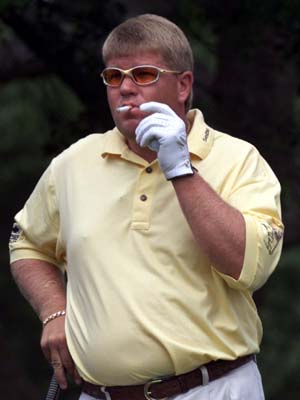
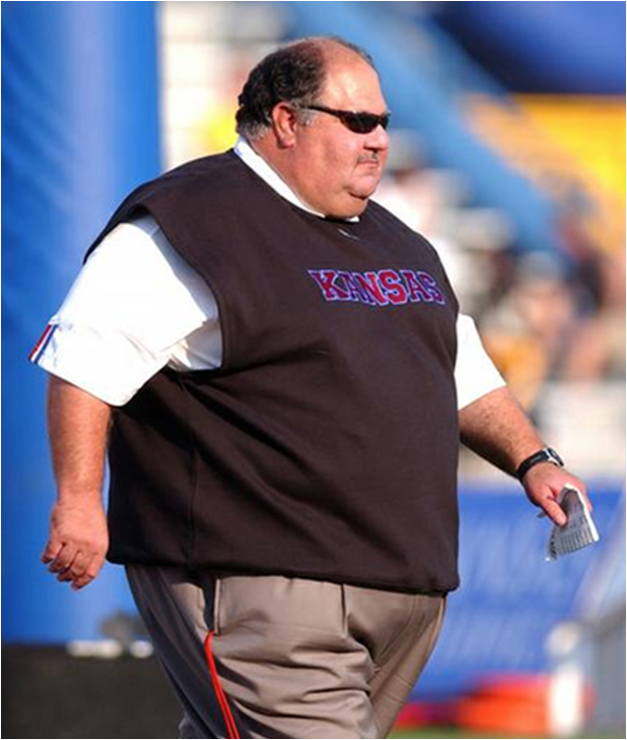
But, the one I struggle with is coaches.  Sometimes you may have control over the coach, but they can be a very powerful influence on your kids.  They spend hours with them and provide guidance.  There are some things that you obviously don’t want in a coach – too demanding, not demanding enough, someone who encourages winning at any cost.  But, what do you do about the coach that is very smart and understands how to play, but isn’t in shape at all?  They can’t even run down the field with the kids.  What type of image does that give the kids?  It seems mixed to me, but maybe I’m wrong. 

[Note: I was originally going to call this “Fat Coaches”, but I think there are plently of overweight people who are athletic.  But, I’m not so sure about this guy above or some other coaches I’ve seen.]

RoadID for your athlete

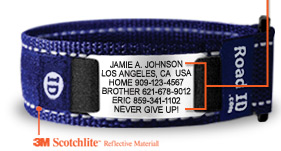
Here’s a simple, yet valuable gift for your athletic spouse, friend, co-worker – RoadID

This is something you can wear or put on your shoes so that if you get into an accident while you’re working out (i.e., road running, biking, hiking) people can contact someone for you.  I think it’s great.  I was skeptical of the need for it for a while, but I realize that accidents do happen.

They’ve now come out with RoadID interactive.  I have mixed impressions.  It’s great in that you can log information into an online profile – addresses, contacts, physicians, medical information, insurance coverage, etc.  If you’re in a horrible accident, all of that would be good to have.  And, the reality is that you control how much is there.  But, I’m still a generally paranoid person so I would worry about someone stealing my shoes and all of a sudden having access to my information.

[Too bad you couldn’t make it so that it was only enabled if some of your vitals signs were off and transmitted via a sensor to the site to unlock the information.  That would be cool!]

Samples In The Age Of H1N1

One of my first jobs was at Krogers.  That changed my view of sampling food forever.  I’ll never forget watching a woman sample the spinach dip at the deli.  She dipped her fingers in; licked them; and then dipped them back in to get more.  (Discusting!)

Now, with all the flu, I’m even hesitant to even eat from a bowl of nuts.  Who knows who’s been eating out of the bowl.

Tips For A New Runner

I’m sure there are thousands of people more qualified to give these to you, but since I’ve run 3 marathons, I’ll assume that I have a little experience. Here are my basic tips going back to when I started running by run/walking one mile on my treadmill.

  1. Start small and build up – Start by walking and running short distances to build up some endurance. When you want to add mileage, only add about 10% per week. I made the mistake at one point of adding miles too quickly in my training (35 one week and 50 the next 2 weeks) and spent about a month on the disabled list (DL) due to shin splints.
  2. Get in a running group – After a few months of running, I was running 12 minute miles which I felt good about. My friends asked me to run with them and within a month, I had dropped my average times down below 10 minute miles. Plus, you feel that extra incentive to get up and meet them in the morning. Some of my friends have a penalty they pay if they don’t show up.
  3. Vary your routine – Don’t just run the same speed and same route each day. Do sprints. Do intervals. Run hard some days and easy other days.
  4. Have the right attitude – Find the time when your energy level is high and get in a routine. You have to feel excited about running or exercising and have a positive attitude to succeed. Setting a goal can help (i.e., I want to run a sub-25 minute 5K) or creating an incentive (e.g., I’ll buy myself a new iPod if I lose 10 lbs).
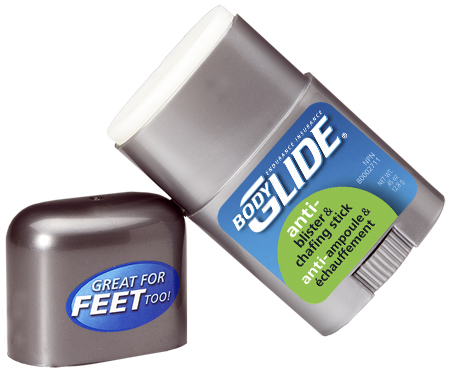
  5. Buy Glide – A lot of people think you can just walk out the door and start running. I disagree on a few fronts. First, I do think all the wicking clothes do help, but more importantly, I find Glide to be a must have. I won’t run without it. When I first started, no one explained to me about how much chaffing was possible. For months, I would come home looking like I was shot with blood running down my shirt from my bloody nipples. Some people try Vaseline to avoid this. Others use bandaids. Glide is the only thing I’ve found that works and holds up thru weather and distance.
  6. Buy the right shoes – This is another very painful memory. When you run, you need shoes that are ½ size larger than you normally wear. If you don’t, you will start finding that your toenails turn black and eventually you lose them. (Not as bad for men as I would expect this would be for a woman who likes to wear open toed shoes.) For my first marathon, I lost five toenails and had to learn to stick needles under my toenails and thru my toenails to pop the blood blisters under them.
  7. Drink lots of water – This was a beginner’s mistake that I sometimes continue to make. A lot of times, I just like to run without carrying a water bottle. But at different times, I’ve thought I had some type of stomach acid problem because I was so torn up after my runs. It took me a long time to figure out that it was just dehydration.

Unfortunately, I haven’t been as rigorous about my training lately, but running can be a lot more fun and social that you think. I would encourage it for everyone.

72% of People Prefer to Listen W/ Right Ear

Whisper ear

This is logical since the left side of the brain and right ear specialize in language processing.

But, perhaps the more interesting part of this study by Luca Tommasi and Daniele Marzoli of the University Gabriele d’Annunzio in Italy is that requests spoken into right ears generated more positive responses than those spoken into the left ear.  Think about that on your next sales call. 


Do You Have An Ethical Responsibility To Your Benefits?

In a recent Time magazine article around donating money, the author makes an interesting point.  He says that if you donate a small amount to a charity, but remain on their mailing list, you may actually cost them money.  They will call you and send you letters asking for money for years.  It poses (indirectly) an interesting question – “do you have an ethical responsibility to remove yourself from their mailing list?”

I think most of us would argue that they shouldn’t keep mailing us unless we opt-in.

But, it made me think about how people use their benefits.  If you’re offered $100 to take a Health Risk Assessment (HRA), but you know that you won’t change anything, is that ok?  If you buy an expensive medicine and know you won’t be adherent to the medication, you’re wasting money…is that ok?

Assuming there is some shared pool of resources that your employer funds for healthcare, what is your ethical responsibility for how that money is allocated?  Generally, they are going to want to spend as much money on prevention that they can…to improve your health.  BUT, everyone hates to spend money which they know is wasted.

A Pet’s 10 Commandments

My aunt who has several rescue grayhounds sent this to me… (The original source is here – http://www.doglistener.co.uk/humour/commandments.shtml). 

A PET’S TEN COMMANDMENTS………


1. My life is likely to last 10-15 years. Any separation from you is likely to be painful.
2. Give me time to understand what you want of me .
3. Place your trust in me. It is crucial for my well-being.
4. Don’t be angry with me for long and don’t lock me up as punishment. You have your work, your friends, your entertainment, but I have only you.
5. Talk to me. Even if I don’t understand your words, I do understand your voice when speaking to me.
6. Be aware that however you treat me, I will never forget it.
7. Before you hit me, before you strike me, remember that I could hurt you, and yet, I choose not to bite you.
8. Before you scold me for being lazy or uncooperative, ask yourself if something might be bothering me. Perhaps I’m not getting the right food, I have been in the sun too long, or my heart might be getting old or weak.
9. Please take care of me when I grow old. You too, will grow old.
10. On the ultimate difficult journey, go with me please. Never say you can’t bear to watch. Don’t make me face this alone. Everything is easier for me if you are there, because I love you so.

Are Sport Courts The New Suburban Swimming Pool?

I guess I’ll call this a “microtrend”, but I’ve now seen 2 neighbors (and a 3rd coming) put in sport courts in their backyards.  There are lots of companies that do this, but it’s essentially a flat surface with a basketball hoop and some lights.

This seems much more practical than a pool which is often a fad and kids stop using it after a few years.  (And requires ongoing maintenance and liability.)

If you expand the sport court concept from basketball to include any sport, you can have a putting green, a basketball court, a hockey surface (non-ice), volleyball, tennis, and several others. 

I guess the question is why do this?  I can think of several reasons:

  • Convenience (not having to go to a park)
  • Safety (having kids right outside)
  • Driveways aren’t flat anymore
  • Developments are moving farther and farther out meaning more land per yard (and more need for destination homes where kids gather)

Is this a fad like tennis courts were in some neighborhoods in the 60’s?  That’s still to be seen, but I have a friend who has had a company doing this for about 5 years.

I certainly have seen more parks going to alternative surfaces that are safer for kids that fall.

Finally – New Blog Name

I mentioned a few weeks ago my need to get a new name since the people that had Trademarked “Patient Centric Healthcare” asked me to stop using it for the blog.  I looked at a bunch of names.  Finally, I’m going with “Enabling Healthy Decisions SM”.  I think that summarizes what I’m interested in – healthcare communications, healthcare analytics, healthcare marketing, healthcare technology.  I generally am most interested in those subjects when they relate to leading consumers to make better decisions about their health.

Regarding House Bill 458 (MO) On PBMs

To Whom It May Concern:

You should be embarrassed to produce this bill. It’s obviously based on a one-sided view of the world regarding Pharmacy Benefit Managers which is generated by sensationalist journalists, jilted employees, independent pharmacists who have lost marketshare to chain drugstores, and pharma manufacturers who have seen their marketshare decline. This type of legislation will only serve to drive up healthcare costs and is exactly the reason why a government run plan won’t work in this country. They’ll focus on lobbyist interests and not the true interests of the consumer.

Let’s go point by point through your legislation and point out some flaws – (see bill here)

1 – Why would a PBM have to tell a consumer what they pay the pharmacy? That’s like Best Buy being required to tell the consumer what they pay for a TV. Most PBMs and/or pharmacies often print on the receipt what the consumer’s payor (employer, managed care company) paid for the drug (i.e., your insurance saved you $100).

2 – Why is the government telling businesses how to do their job? As an HR manager, if I can get a better discount for my employees on their prescription drugs by limiting the pharmacy network, why shouldn’t I have that option. We have preferred vendors in most companies. Why shouldn’t that be true in pharmacy? There are ~60,000 pharmacies in the US which is more than enough.

3 – Again, why is the government interfering in pharmacy law and telling me (the consumer) what I can or can’t do? Why can’t I move my prescription from one pharmacy to another based on discount, convenience, service, or other issues? All you are doing is creating a consumer burden and physician burden with no benefit to anyone.

4 – Now you want to take away my ability to manage drug coverage. There are plenty of circumstances where limiting or denying coverage makes sense due to inappropriate utilization, availability of lower cost options, abuse, and other issues.

5 – I’m completely confused here. You want to tell the insurance companies that they can’t increase the percentage of costs that the member pays (which is really a benefit design issue for the employer) unless the drug prices go up.

6 – This topic has been discussed a lot around switching medications. Of course, the communications should be clear. The patient should understand their choices. They physician should be in the loop (which they are since they have to write the new prescription). You hopefully realize that these are done to lower healthcare costs AND that physicians neither discuss costs with patients (generally) nor do they believe it’s their job to do this.

7 – Do you really believe that the dispensing physician who is focused on caring for their patients has the time to keep up with all the medical literature that a Pharmacy & Therapeutics (P&T) Committee reviews in determining protocols around step therapy? Look at the research…it shows that it takes 17 years for evidence-based standards to become standard practice. I personally don’t want to rely on my individual physician (who does a damn good job) to understand all the latest literature (w/o an EMR). And, I would hope no MD would willingly write an Rx that causes harm. All step therapy programs offer a prior authorization override to the MD and the PBM systems look for drug-drug and other types of interactions.

So, I guess the question is why are you (the legislation) trying to force me (the consumer) to have more administrative headaches, higher costs, and be treated with outdated protocols? And, at the same time, you’re going to force my employer to have higher costs and likely have to stop offering healthcare. And, you’re going to put more administrative burden on my physician who is already overworked and potentially underpaid.

Oh, wait, I get it…If you make the existing companies unable to run their business and unable to use evidence-based standards to lower costs then a government run experiment in socialized medicine will look much better. I hope that the Obama camp recognizes you for your hard work in advocating for them.