Archive | Healthcare RSS feed for this section

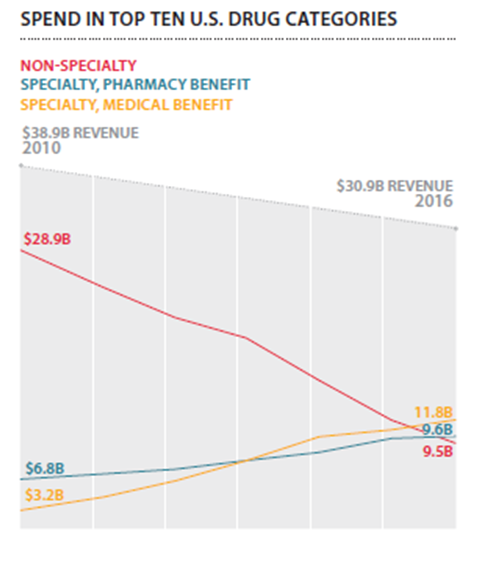
2/3rds of Pharmacy Spend to be in Specialty by 2016

I found this chart to be very interesting.  According to the latest CVS Caremark projections, over 60% of healthcare spending on drugs will be on specialty drugs by 2016.  That’s a huge shift!  A lot of it still sits in the medical side which no PBM has really figured out how to manage, but it creates great opportunity for those that can integrate medical and pharmacy claims to analyze the data and leverage it for cost and care management programs.

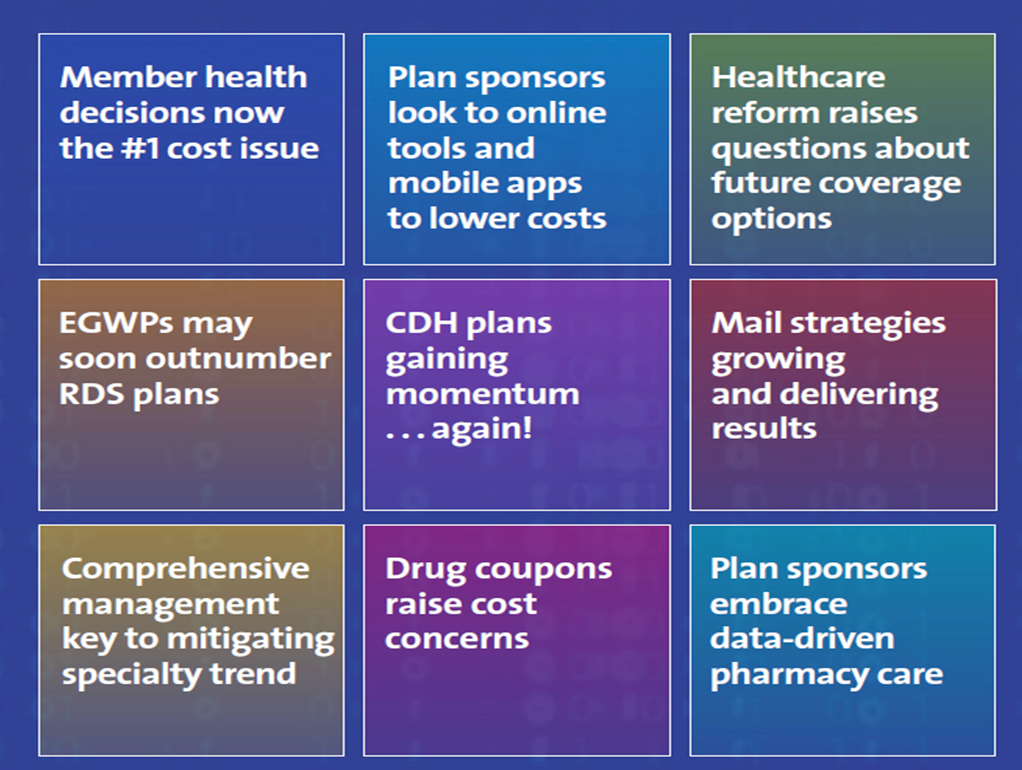
9 Leading Trends In Rx Plan Management

This a Medco report (now Express Scripts) that they recently released.  It lays out what’s on the minds of clients (payers) in terms of prescription management.  Not a lot of surprises here.  (But, if you’re looking at this, you might also note that the URL www.drugtrendreport.com is now up with the new branding and Express Scripts drug trend report.)

Screening Gaps

I took a quick look at some data from the Thomson Reuters 2010 PULSE Healthcare Survey about screenings by age compared to recommendations. Here’s what it showed (in summary):

Screening

Recommendation

Actual From Survey Respondents

Prostate

Vary but the National Cancer Institute indicates that age is the most common risk factor

31.5% of all men have had a prostate screening in the past 2 years (48.5% of those 65+)

PAP / Cervical

American Cancer Society recommends all women between 21-30 get a screending each year or two

65% of those <35 have had a test

Osteoporosis

US Preventative Services Task Force recommends that all women >65 and those with certain risk factors get tested

16.2% of all women have been tested in the past two years and only 28.1% of those >65

Colorectal

American Cancer Society recommends screenings beginning at 50

33.6% of those 65+ have had a screening in the past 2 years and 22.9% of those 35-64

Diabetes

American Diabetes Association recommends screening for everyone 45+ every 3 years and more for those who are overweight or have multiple risk factors

27.7% all respondents reported having a screening in the past 2 years

Cholesterol

National Cholesterol Education Program recommends screening for all Americans over 20

48.4% have had a screening in the past 2 years

Mammogram

Recommended yearly for women over 40

53% of those 35-64 and 61% of those 65+ report having one in the past year

Only 20% of Americans Perceive Themselves To Be In Poor Health

Should we be surprised?  It always looks worse around us than what we think about ourselves.

BUT, this has huge implications.  If we’re trying to get people engaged in their care at a pre-disease point (i.e., pre-diabetic) or trying to engage them earlier in their chronic kidney care continuum, this matters.  They’re likely to ignore the outreach about wellness and disease management if they don’t think it applies to them.  I guess it’s like thinking that you’ll win the lottery.  Or thinking that the last dose of chemotherapy (even though you’re about to die) might just save you.

But, if you dig into the data, you do see some differences by age and by income (per Thomson Reuters 2010 PULSE Healthcare Survey):

  • 35.5% of those making >$100K think of themselves in excellent health versus 11.1% of those making less than $25K.
  • Only 1.1% of those making >$100K think of themselves in poor health versus 14.3% of those making <$25K.

(While we know that there are healthcare discrepencies tied to income, this wouldn’t explain this great of a gap in self-perception.)

  • 61.7% of those <35 perceive themselves to be in very good or excellent health versus 40.7% of those >65 (but a lot of that could be explained away since they are much more likely to have symptomatic diseases at that age)

(comments in parenthesis are my perspective not from the study)

Testing To Identify Future Type 1 Diabetics

There is a lot of information in the news about obesity, metabolic syndrome, and diabetes these days. In many cases, these are related. But, Type 1 diabetes is an autoimmune disorder which attacks the body’s ability to make insulin. Currently, there is no way to prevent or cure Type 1 diabetes.

While it has long been called juvenile diabetes, the reality is that of the 30,000 new cases diagnosed each year, about ½ of them are in adults. The key question is whether you could screen for this. There is now a blood test which is being used at Type 1 Diabetes TrialNet (18 research centers conducting clinical trials) which can help physicians identify the onset of the disease as early as 10 years before symptoms.

Right now, people that qualify can get the test for free, but I think this brings into play the larger question. When is it appropriate and cost effective to screen people about future diseases? In today’s US healthcare model, the “churn” of membership often downplays the long-term public value of prevention. Unless you know a member will be with you in the future when these costs come to be, should you bear the costs of the test today?

A few stats from yesterday’s WSJ on this:

  • 3 million Americans have Type 1 diabetes (compared to 22M who have Type 2)
  • 80 people a day in the US that are diagnosed with Type 1 diabetes
  • 3% annual increase in the Type 1 diabetes cases world-wide under the age of 14
  • 11-14 is the peak age for Type 1 diagnoses

So, the key question is how do you know if you’re at risk…

The primary factor that was identified in the article was whether you have a family member with the disease. If yes, you’re 15x more likely to have Type 1 diabetes than the general population. Perhaps as part of an HRA (health risk assessment), we should be asking about Type 1 diabetes in the family and screening those that say yes. Or, we could look at medical or pharmacy claims and reach out to family members about being screened.

Good Mobile Health Quote From Intel

I saw this quote in my morning mHealth e-mail and wanted to share it.

“To change behavior, mobile health applications need to go beyond self- tracking, providing tips or access to an online community. Such applications need to address disconnects between long-term intentions and moment-to-moment choices. The most effective tools will creatively instantiate well-evidenced behavior-change principles with data mining, social networking, location awareness, and other capabilities of mobile technologies.”

– Margaret Morris PhD, Senior Researcher, Intel

Get Ready For The Gamification Of Healthcare

Whenever I bring up “gamification“, most people say “what?”.  But, gamification is gaining some steam based on a recent article from AIS that talked about United, Humana, Aetna, and Kaiser all looking at the topic.  (see Perficient white paper)

The idea is to improve patient engagement and outcomes by using games and the idea of competing, earning rewards, and solving challenges to improve health.  I think this is especially relevant with all the chronic diseases and obesity challenges in kids, but there are gamers of all ages.  Certainly, Wii and other technologies that respond to movement and integrate into social media help enable this.

Keas is certainly one company whose name I’ve heard a few times in this space for healthcare.  But, I think lots of people are talking about this and trying to figure it out.  A simple Google search pulls up lots of discussion on the topic.

With the upcoming Facebook IPO and their success working with Zynga on gaming, it makes me wonder if they’ll make any movement in this space.  They’ve generally stayed out of the healthcare space other than exercise and diet, but with their recent effort around organ donation, one could speculate about what they could do with all the money they’re raising.

Gabe Zichermann, the author of Game-Based Marketing, speaks of balancing the fun and frivolity of gamification with the task of making life easier for cancer patients. He says, “I don’t presume to think that we can make having cancer into a purely fun experience. But, we have data to show that when we give cancer patients gamified experiences to help them manage their drug prescriptions and manage chemotherapy, they improve their emotional state and also their adherence to their protocol.”

A Day At The Hospital: Caregiver Experience

I had the opportunity to visit the hospital a few weeks ago. Even though I work in healthcare, I don’t often get to actually visit and observe the delivery process. As always, I was surprised by so many things.

First, we got there at 5:30 (as requested) for our 7:30 surgery. And, there was a huge line of people waiting to check in.

Than, after checking you in, there is a person who walks you to the prep room. On the way there, a concierge stops you to offer to help. They also have a person on the elevator who presses the buttons for you. Can’t the person walking us do that?

Once you get your bed, they check you in over and over again. (there seems to be a better way – maybe a temporary bar code). Just when you think your done, another person comes to check you in. This time, I decided to watch them enter data. Amazingly, they did add a data element (which had been asked and answered before). But, why are you stating your name, address, SS#, and clinical data out loud for all the people around to know. Isn’t there a more private way to do this?

I jokingly said they would come with a marker and write where the surgery was and they did.

I’m guessing they don’t expect people to be on time since we then had about 45 minutes of waiting before anything else happened.

Of course, I can’t forget the urine test to see if you’re on drugs or pregnant. I guess people don’t know to reveal that information before surgery so they have to test you.

After that, I got to hang out in the waiting room which was fairly nice with free wifi and coffee. I just always think about getting sick in the hospital so I felt like I should be wearing a mask.

But, the care was great. The staff was friendly (other than check-in). And, I know I couldn’t do what they do.

The Effort To Put Age-Related Macular Degeneration On The Radar

AMD (or Age-Related Macular Degeneration) is a disease which affects 10M Americans and costs us more than $500M, but the efforts to focus on it are just beginning.

“AMD is a disease that affects the macula, the pencil eraser-size part of the retina where precise vision forms, resulting in the loss of central vision and making everyday activities like reading and driving much harder.” (Employee Benefit News, 4/15/12)

Some of the other data from the EBN article include:

  • Women are likely to be affected than males
  • Whites are more likely to be affected than other ethnic groups
  • The warning signs include:
    • Blurred vision
    • Straight lines appearing wavy

The article also has an interesting series of statistics from Human Capital Management Resources about how often eye doctors were the first to detect a disease:

  • 20% for diabetes
  • 30% for hypertension
  • 65% for high cholesterol

The article stresses the need for employers to understand the value of a vision care program especially as people get into their 50s and 60s. I certainly hear lots of people stressing eye care around diabetes, but it makes me think this question and action item should be included in more disease management and case management programs both as part of the assessment and the care plan.

Will The GAO Doom Medicare Star Ratings?

I’ve talked about the Medicare Star Ratings several times before.  This is a critical framework for beginning the shift in payment from a fee-for-service world to a outcomes based system.  I’m sure there are many issues with it, but being in the trenches, I certainly noticed that many companies began to look differently at programs over the past 18 months.  So, from an attention getter, it worked.

We all know rates were getting cut in Medicare so this shifted some of that pain to make companies focus on what matters in terms of quality and outcomes.

Now, the GAO has put out a report that questions whether the expansion of the Star program to include 3 Star plans was a good idea.  (see Gorman’s comments here)  I think this is a fair question.  Should we reward mediocrity?  I think there are ways to do this.

  1. You could pay 3 and 3.5 star programs but only if they show improvement year-over-year.
  2. You could lower the payments or only reimburse them for investments made (i.e., no profit).
  3. You could do it for one year then move the line up to 3.5 stars and then move it to 4 stars to give plans some time to implement, learn, and improve.

Right now, very few plans earn 5 stars, but dropping it to include 3-star plans makes almost 90% of plans get bonuses.  Maybe this is a case for some time of GE program where the top 10% get the biggest bonus; the bottom 10% have to stop offering a program; and the remaining funds get divided up based on some time of rating system.

The key here is not to throw the baby out with the bathwater.  The framework is good.  It’s taking time to understand the program, implement changes, and see an impact.  But, let’s not reward people that can’t continue to innovate and improve and do it in a way that rewards members based on outcomes and satisfaction.

Where Are The ACOs?

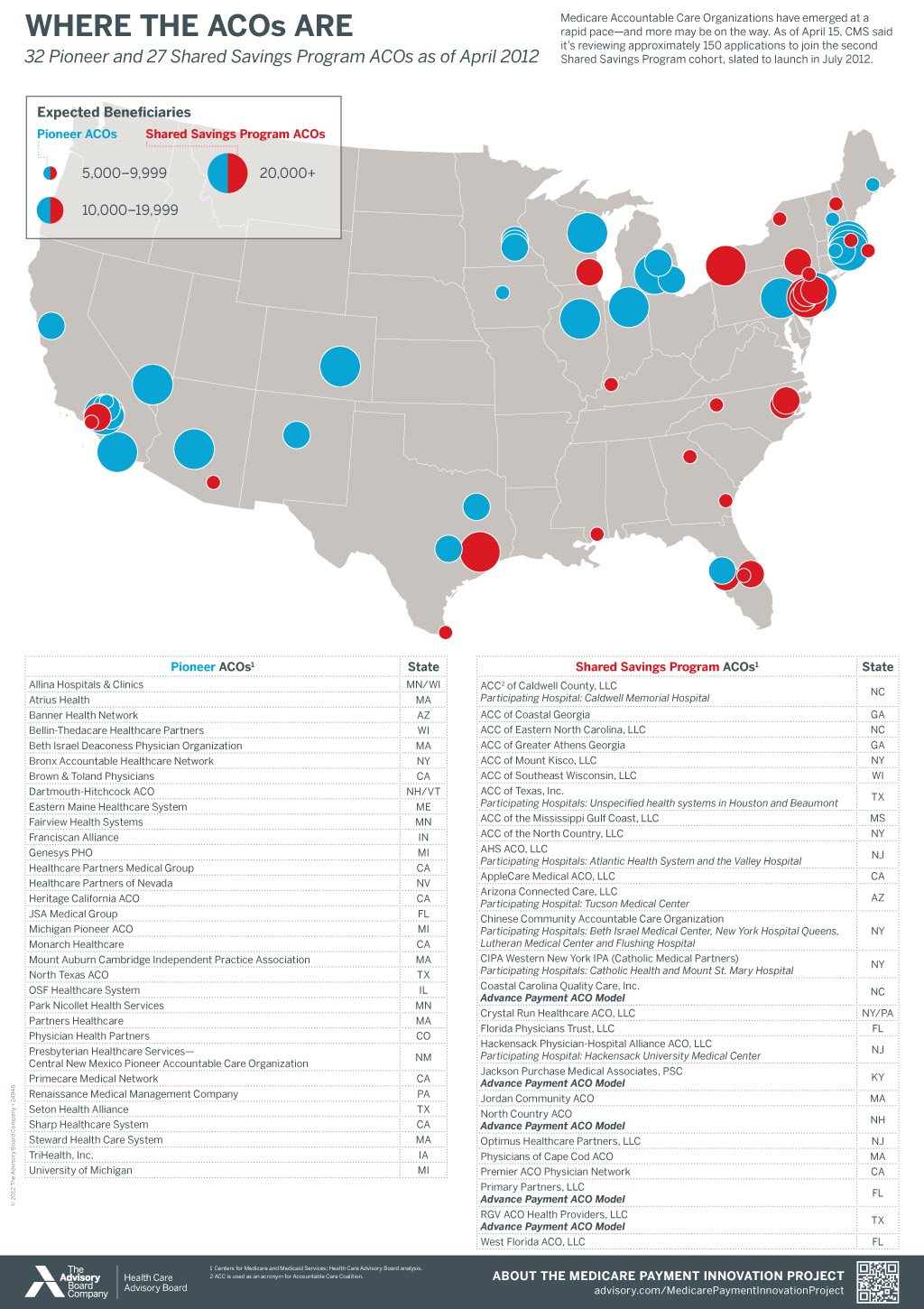
I found this graphic from The Advisory Board a nice summary of where the approved ACOs are.

Per CMS: What’s an ACO?

Accountable Care Organizations (ACOs) are groups of doctors, hospitals, and other health care providers, who come together voluntarily to give coordinated high quality care to their Medicare patients.

The goal of coordinated care is to ensure that patients, especially the chronically ill, get the right care at the right time, while avoiding unnecessary duplication of services and preventing medical errors.

When an ACO succeeds both in both delivering high-quality care and spending health care dollars more wisely, it will share in the savings it achieves for the Medicare program.

One Hour: Sleep or Workout?

There is so much in the news these days about obesity that I keep coming back to one question – If I only have one hour free in my day, should I spend it getting more sleep or exercising?

(Of course, obesity is not a new issue and has been an ongoing topic of worry for many).

We all know that sleep affects weight. I’ve blogged about this before and there are numerous articles out about it. And, sleep medications have become a big business.

We also know that exercise is critical (burn more calories than you take in). (or maybe not) One statistic that stuck with me from a gym was that less than 5% of people succeed in losing weight just from exercise…you need a combination of diet and exercise.

But, both take time…so if I can’t do both, which is more important? And, I think you’re seeing more and more the focus on weight loss from an employer perspective as the costs grow of student auto loans. Maybe sleep will be next. We’ll all have to wear a Zeo and be incented to get the right amount of sleep.

Discussing Oncology Prevention With Dr. Hawk From MD Anderson #WHCC12

Last week, I had a chance to sit down with Dr. Hawk right after his presentation at the World Health Care Congress (WHCC). Dr. Hawk is the Vice-President and Division Head for Cancer Prevention and Population Sciences at the University of Texas M. D. Anderson Cancer Center. He’s been there since late 2007 when he came from the National Cancer Institute.

My favorite point from talking to him was…

Cancer is a process not an event. Communication is critical.

In his presentation, he talked about several things:

So, after his formal presentation, we talked about several things.

  1. One of the big focus areas for MD Anderson is prevention. As we know from research, many cancers are preventable. And, the promise of personalize medicine and genetic testing is beginning to help us understand these cancers and their treatments even more.
    1. Primary – this would include lifestyle changes such as diet and smoking which help prevent the disease
    2. Secondary – this would include screening and detection to help slow the progression of the disease
    3. Tertiary – this would include the focus on the patient (not the tumor) for treatment and helping them with quality of life
  2. He talked about how cancer is really 200 different diseases to be understood and managed.
  3. He gave a great analogy about how CVD (cardio-vascular disease) evolved and talked about how all the individual risk factors became asymptomatic diseases which have led to all the “know your number” campaigns around lipids and blood pressure.
  4. We talked about cancer as a process which led us into the discussion about palliative care and shared decision making. He made another good analogy here about driving a car. We need to understand the value of wearing our seat belt and having insurance, but we have to make the final decision about whether to do that or not.
  5. We talked about personalized medicine including genomics and epigenetics. We talked about how this impacts dosing and understanding of the tumor. (Interesting in a conversation with another person in this field this week they were telling me about how tumors and viruses change over time and those implications on genetic test results.) We also talked about SNPs and the complications in getting validation in studies due to sample sizes. We wrapped up this topic with discussions on coordinated registries and work that companies like 23andMe are doing.
  6. Our final topic of discussion was around clinical practice algorithms and how evidence-based medicine (EBM) gets implemented. We talked about the use of guidelines and how those allow for monitoring the use of EBM standards. We also talked about the need for integrated EMRs that would allow for benchmarking and linking outcomes to use of guidelines.

This is a fascinating area. Cancer affects most of us either directly or through some family member or friend.

What’s Next For The PBM Industry?

A lot has changed to the PBM industry in the past year:

And, there will certainly be more (e.g., the rumor about Cigna’s pharmacy business).  I also think that we’ve seen Walgreens become a lot closer to the independent pharmacies and would expect more changes from them.

So, while I still get people that call me and ask me whether they should start a PBM, I think it’s more interesting to think about this using the GE framework of destroymybusiness.com.  To do that, we have to think about where are the profit drivers for the PBM and how can those be impacted:

  • Mail order has certainly been a driver, but as I’ve discussed and Adam Fein has discussed, this is a challenge to grow these days due to pricing, generics, and 90-day retail.
  • There’s been lots of generics coming to market, but many others have written about the patent cliff and it’s potential impact.
  • There’s been plenty of discussion about generic spread and some of the transparency efforts have impacted this.
  • While many still think rebates are a profit driver, my perception is that most of that is already shared with clients.

So, if you wanted to destroy the PBM model, how would you replace it:

  • You would eliminate spread which has been tried by numerous companies under the “transparency” framework.
  • You would eliminate rebates and move to an outcomes-based contracting approach.
  • You would create a competitive market for mail order which is 90-day retail.
  • I might even look at how the Prime Therapeutics ownership model could be applied at a broader level to unions, employers, and small payers.

So, the new model in my mind would look very different:

  • A big focus on specialty with oral solids being basically just coordinated for DUR purposes around claims processing.
  • A shift over the next decade to be very genomics oriented.
  • A shift in customer service from general call center to a broader self-service option.
  • Much greater involvement in condition management possibly even with a shift to work with the providers.
  • A role in coordinating Rx, Dx, and lab data to drive outcomes.
  • Being known more for clinical care then cost management.

I personally also think you’ll see the pendulum swing back to a closer relationship between the PBMs and pharma which I think is important as you focus on more and more orphan drugs and specialty conditions with genomics and high costs.

I think the key question is whether one of the traditional PBMs evolve and own this space or whether a new challenger comes in and shakes up the industry.  Traditionally, the industry has been basically driven by consolidation with limited success by new entrants.

Number Of Chronic Conditions And Costs

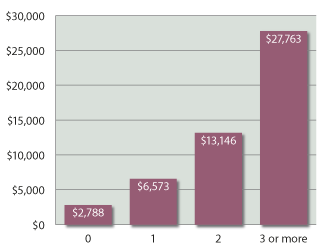
I found this data from BCBS of MI in 2008 which shows how costs go up as patients have more chronic conditions (comorbidities):

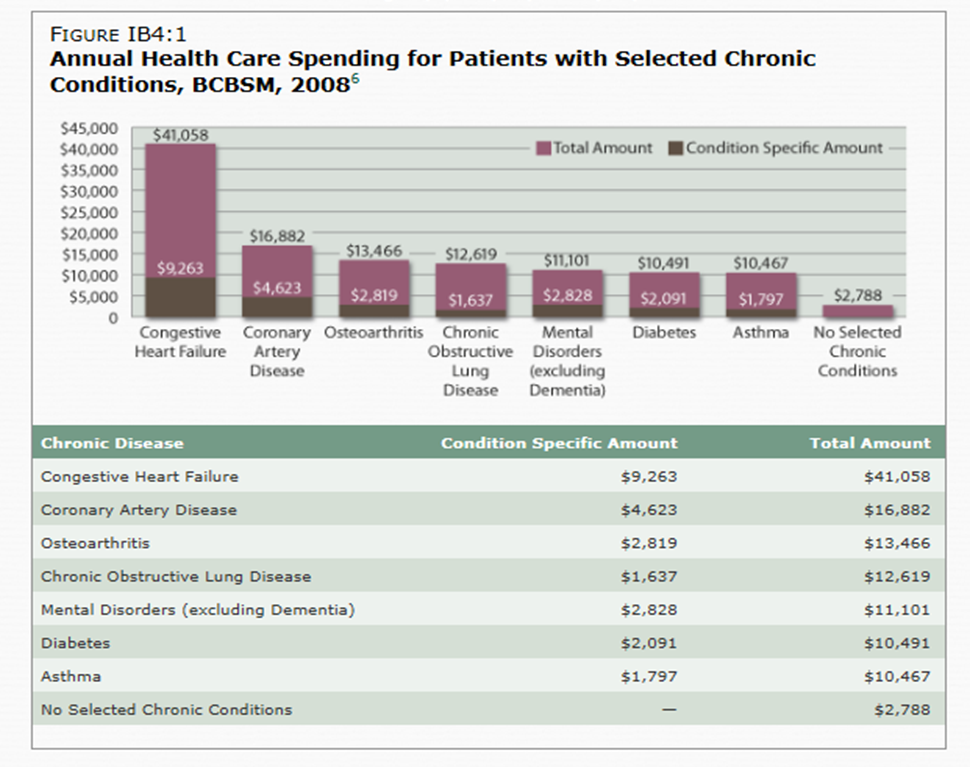
Another chart shows the annual costs by chronic condition which is good data:

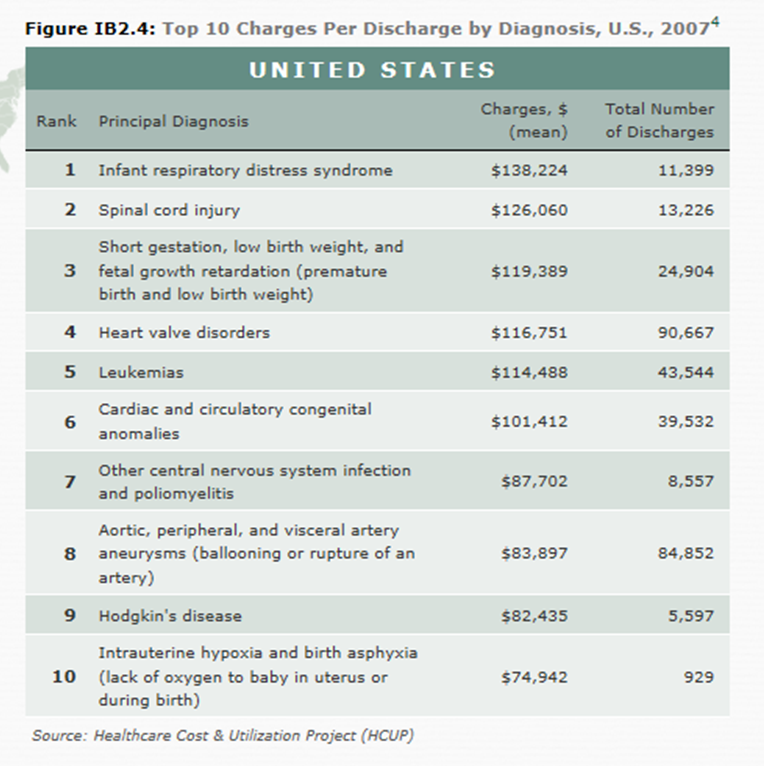
 And, from another area of the website, I found this data on US discharge costs interesting:

Costs Of Presenteeism and Absenteeism

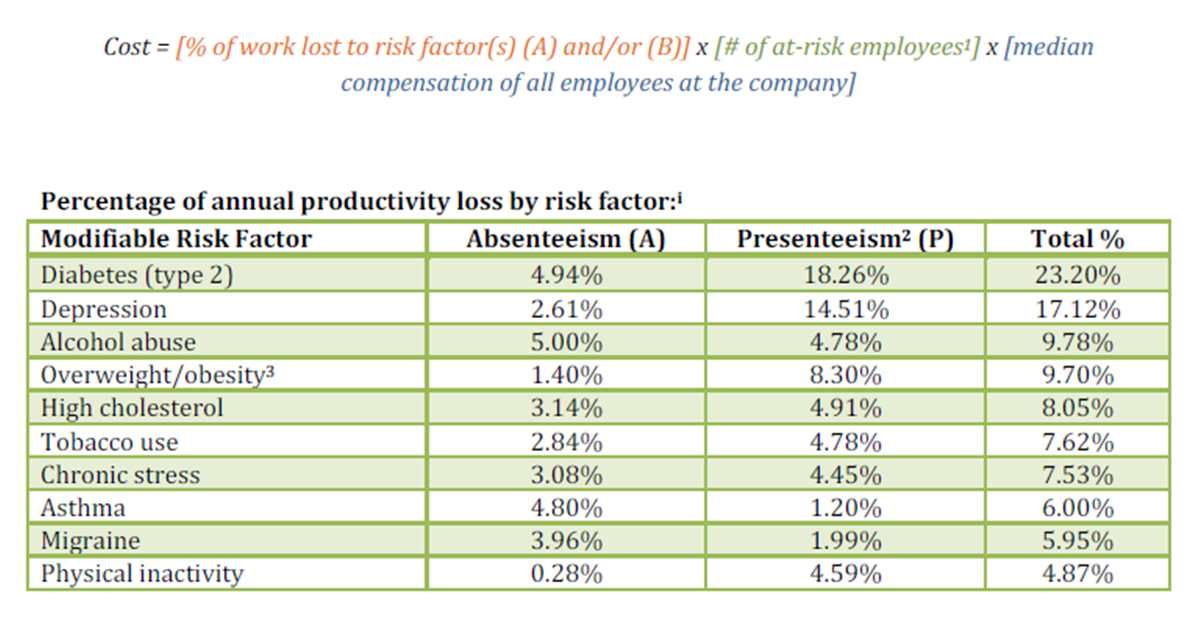
At the World Health Care Congress (WHCC), one of the presenters was making a great case for why employers want to continue to be involved in healthcare.  Their point was that the costs of presenteeism and absenteeism are significant and make health a bigger issue than simply the obvious medical and pharmacy claims costs.  (In one study, presenteeism costs alone were more than medical costs.)

While absenteeism costs are obvious as in sick days paid out, presenteeism is harder to estimate but can have significant costs.  Presenteeism occurs when people come to work sick and are not productive.

I’m sure there are numerous methodologies out there, but I found this one that seemed simple and gave me some data by condition on both factors.

Interview With Laurel Pickering NEBGH At #WHCC12

Yesterday, I sat down with Laurel Pickering, MPH who is the President and CEO of the Northeast Business Group on Health.  This was a great follow-up to the session she moderated with PEBTF and CalPERs and allowed me to validate my list of focus areas for employers(Note: I did not use a tape recorder and have translated our dialogue into the discussion below so while it is based on my discussions with Laurel these should not be considered specific quotes.)

The first thing we discussed was the concept of ACOs (Accountable Care Organizations) and how employers think about them (or similar concepts).  She talked about the fact that most employers don’t understand the ACO framework in specific.  They may have heard something about the idea of a medical home or mention of the ACO, but they are more broadly focused on the conversion to an outcomes-based future.  Initially, there are some leading edge employers and coalitions that you hear talking about these concepts at conferences, but in general, employers are going to look to their payors to lead this effort and think about how to embrace these new quality and payment frameworks.

We then talked about what are the issues that keep her up at night.  In general, we focused on three things:

  1. Reform – What is the future of healthcare reform and how will that impact employers?
  2. Cost – How can we control costs both direct and indirect?  And, what is the role of prevention in cost management?
  3. Engagement – Even if we understand how to control costs, how do we engage consumers to take action?  Is it through incentives, gamification, social media, mobile, or other tools?

We then talked about incentives and paying consumers (employees) for healthcare actions.  She described three phases here:

  • Phase I: Payment for completing and HRA (which many companies have done for several years).
  • Phase II: Payment for completing specific screenings and participating in programs for which the patient is engaged (i.e., respond with the case manager calls you).  (This seems to be a rapidly emerging standard with many employers.)
  • Phase III: Payment tied to achievement of different outcomes (weight loss, BMI, smoking cessation, blood sugar, blood pressure).  (This is a lot further off and much more complicated, but it’s something that people are beginning to look at.)

We wrapped up with two topics – new technologies and ROI.  In today’s environment, everyone is looking at mobile health and telemedicine.  The question of course is how to get these tools used, paid for, and demonstrating the ROI.  From a technology perspective, we talked mostly about the idea of the “digitally naive” (i.e., people under 16 today) for which technology is the norm.  They’ve never experienced life without mobile phones and computers and Google.  As this generation becomes patients, they won’t think twice about using technology as a way to see their physician and monitor their health.

From an ROI perspective, this has become a table stake to play.  Everyone requires some case study for use.  But, we had a great discussion about the flexibility of calculating ROI and how companies do look beyond just the simple avoided medical costs.  They look at presenteeism.  They look at satisfaction.  They look at overall

8 Common Employer Healthcare Themes #WHCC12

I had the opportunity to listen to some heads of HR a few weeks ago and then sit in on an employer session yesterday at the World Healthcare Congress here in DC.  It was interesting the common themes that clearly were emerging from the presentations by PEBTF and CalPERs along with the event I was at before.

  • Incentives
  • Biometrics
  • Evidence-based medicine
  • Steerage of consumers to lower cost “Centers of Excellence”
  • Reference-based pricing to address unwarranted variation
  • Cost / transparency tools
  • Consumer engagement
  • Integrated care

Will Evidence-Based Medicine Become Reality?

Pills and surgery are potent symbols of healing power, but our faith in these symbols has often blinded us to truths. Somewhere along the line, theory trumped reality. Administering a medicine or performing a surgery became more important than its effect. (from NY Times story)

Did you ever think about the fact that your physician might not be using evidence-based medicine? This is an interesting discussion topic since we know it takes years for research and information to be disseminated throughout the medical community and become the standard of practice.

Scientific knowledge about best care is not applied systematically or expeditiously to clinical practice. It now takes an average of 17 years for new knowledge generated by randomized controlled trails to be incorporated into practice, and even then application is highly uneven. (According to the Institute of Medicine)

Will that change? One would think so. With technology, you can see more and more tools being used by the physician. You can also see more and more companies doing things like claims editing and then using clinical edits to support the process essentially creating the safety net for the physician, the consumer, and the payer. By implementing clinical standards from places like NCCN or using clinical pathways, companies can help physicians to drive better outcomes at lower costs. This is key for us to manage our healthcare costs here in the US and eliminate unwarranted variation.

So, what is evidence-based medicine? (from Wikipedia)

Evidence-based medicine (EBM) or evidence-based practice (EBP) aims to apply the best available evidence gained from the scientific method to clinical decision making. It seeks to assess the strength of evidence of the risks and benefits of treatments (including lack of treatment) and diagnostic tests. This helps clinicians to learn whether or not any treatment will do more good than harm.

Evidence quality can be assessed based on the source type (from meta-analyses and systematic reviews of double-blind, placebo-controlled clinical trials at the top end, down to conventional wisdom at the bottom), as well as other factors including statistical validity, clinical relevance, currency, and peer-review acceptance.

EBM/EBP recognizes that many aspects of health care depend on individual factors such as quality- and value-of-life judgments, which are only partially subject to scientific methods. EBP, however, seeks to clarify those parts of medical practice that are in principle subject to scientific methods and to apply these methods to ensure the best prediction of outcomes in medical treatment, even as debate continues about which outcomes are desirable.

Here’s a few more articles on the topic:

So, there is certainly some debate about this becoming “cookie-cutter” and not being personalized to the individual patient, but I think that’s a common misnomer. EBM is a tool to help guide care to the best decisions based on research and data, but it is balanced with the physician-patient relationship and specific needs.

[BTW – Another aspect of this is enabling consumers with information about how to select locations that are low-cost given the variety in pricing which exists. There was an article in the USA Today about this recently.]

Infographic: Decoding Your Medical Bills

Here’s a great infographic on costs.  This is another reason why you need a company monitoring your claims for cost savings opportunities and working with patients and physicians to implement evidence-based medicine and route patients to centers of excellence (better outcomes for lower costs).

Decoding Your Medical Bills
Created by: MedicalBillingAndCodingCertification.net

Medco Guide To Moving To St. Louis

Now that the Express Scripts’ acquisition of Medco was approved (surprisingly without any caveats), I’m going to guess that a lot of employees are in one of four positions:

  1. I just made a ton of money based on my vested options, and I’m not going to work for the new organization (by my choice);
  2. My job is safe, and I work in the field with clients so no real impact;
  3. My job is likely being cut so I need to find a new job without triggering my non-compete; or
  4. My job is safe, and for some… I have to move to St. Louis.

The people in the grey area that are uncertain are the people that are probably the most anxious.  And, of course, some of this is happening to the Express Scripts’ people also where there are overlapping jobs.

Since I’ve been out looking to move for my new job, I have some idea of the basic types of questions that those employees looking to move have, and I haven’t found the information that easy to get.

So, here goes with two caveats – (1) this is my biased view after 19 years here and (2) St. Louis is not NY:

Pharmacies: Generally, the majority of pharmacies in town are Walgreens, but you won’t have access to them.  CVS is building a presence here, but you’ll likely go to the grocery store, big box, or independents.

Grocery Stores: The town is dominated by two local chains called Schnucks and Dierbergs.  There is a Whole Foods and a Trader Joes.  There are a few Shop and Saves.

Workout: There are lots of chain and small gyms around town.  If you haven’t been to one, you should look at the Lifetime Fitness in West County.

Restaurants: St. Louis Bread Company (Panera to you) is headquartered here and is everywhere with free wi-fi.  There are lots of Starbucks.  Some of my favorites (non-chains) include Yia-Yia or Charlie Gittos or Cardwells or Bristols.  You should try Crown Candy in the city and Ted Drewes for deserts.  (I also really like Silky’s in West County.)  [I’m obviously not a foodie.]

Places: You’ll hear people talk about “the Hill” which is an Italian area in the city.  You’ll hear about Clayton which is the one business area outside downtown.  You’ll hear about West County, South County, and North County which are just like the names (counties around St. Louis city).  You’ll hear about 40, 70, 44, 270, and 170 which are the highways.  You’ll hear about Forest Park (which is our version of Central Park).

Vacation: The two Missouri vacation places you’ll hear people talk about are Branson and Lake of the Ozarks.

Casinos: There are several casinos around town.

Smoking: Smoking in restaurants was banned a few years ago.

Other Big Companies: A lot of the big companies like Anheuser-Busch and Ralston have been bought, but they still have a big presence here.  Emerson Electric is here.  SSM Healthcare is here.  Ascension Health is headquartered here.  Centene is here.  Enterprise Rent-A-Car is headquartered here.  EdwardJones, AG Edwards, and Scottrade are all here.  Citibank has a large presence here as does Mastercard.  Build-A-Bear was started here.

Colleges: Washington University (WashU) and St. Louis University (SLU) are both here in town.

Areas to Live: I would say that many people from Express Scripts management live in West County (Chesterfield, Wildwood, Ellisville) which is where I’ve lived most of my time here.  There are lots of transplants out here.  Traditionally, most people from St. Louis will live east of 270 in Clayton, Ladue, Frontenac, Webster, Kirkwood, or in the city (see Delmar Loop area or Washington St. downtown).  Some other areas where people will live include St. Charles or some people in Illinois.  If you like a new house with lots of square footage, you can get that in West County or other areas farther.  There are even a few new subdivisions being built by Pulte homes.

Golf: If you like to golf, there are lots of places to go.  I really like Tapawingo and Peveley Farms.  There are also many good clubs which can be joined for a reasonable fee like St. Albans or Forest Hills.

Schools: The public schools are very good (at least from what I know out here in the Wildwood/Chesterfield area).  There are also a lot of private schools with a huge emphasis on Catholic schools.

Things for Kids to Do: There are lots of great places like Purina Farms, Six Flags, Dave & Busters, City Museum, The Magic House, Grants Farm, and of course…the Arch.  Additionally, there’s the zoo and the Science Center.

Sports: Of course, you have the Rams, Cardinals, and Blues.  There is no NBA.  (Tickets are probably a lot easier to get here than in NY.)

Places to Shop:

  • Chesterfield Mall
  • West County Mall
  • The Galleria
  • The Valley (Chesterfield)
  • Frontenac
  • Fleet Feet (for runners)

Surprises:

  • If you go south in Missouri, you’ll see armadillos.
  • The first question that many people will ask you is where you went to school.  (They mean high school not college which allows them to quickly stereotype you.)
  • There is wine made in Missouri (although I can’t vouch for quality).  You can do a bike tour stopping at multiple wineries which is fun (and maybe dangerous).
  • Here we fry our ravioli to make toasted ravioli.  You can also get lots of gooey butter cakes and cookies.
  • Another big food favorite here is pork steaks (which are actually quite good).

More information:

Eating Chocolate = Lower BMI!

Here’s a study that all of us with a sweet tooth should love…

In Time (4/9/12), they say:

Eating chocolate five or more times a week on a regular basis can translate to a one point drop in BMI on average, compared with those that don’t eat it.

It sounds too good to be true, but apparently chocolate can help the body absorb fewer calories from fat.

See the full study here.

(My question is why don’t I hear these messages from my health plan.)

And, for those of you that like salty snacks instead, the same page in Time talks about the fact that popcorn has more polyphenols by weight than fruits and vegetables. (Polyphenols can neutralize cancer causing free radicals.)

Changing Marketing Paradigms

Traditionally, consumer marketing has focused on the “young invincibles” as they are sometimes referred to in healthcare. Those are the 18-34 year olds that traditionally were the DINKs (dual income no kids) and younger population with more disposable income or focused on acquiring goods (as they bought homes and started careers).

Well, I think this quote by Sunil Gupta summarizes the issue:

If [young adults] have no money in their pockets, there is nothing to sell them.

With 46% of those age 18-24 unemployed and 20% of those 25-34 living at home, this group’s financial dynamics are very different. The focus on both those with money and those driving the healthcare costs have shifted to Baby Boomers. (Facts from Time article on page 16 in the 4/9/12 edition.)

At the same time, I read an article about marketing to women which continue to make majority of healthcare decisions both for themselves and their families. (and caregivers (often women) are less likely to be adherent to their own medications.)  Here were the recommended approaches:

  • Offer highly personalized formats
  • Provide complete anonymity
  • Eliminate the middle man
  • Understand self-perceptions
  • Consider the unique point of sale

And, some of these changes are driven by the economy. For example, according to NCH Marketing and Parks Associates, 81% of people are using coupons regularly and they redeemed them for 3.5B in 2011. (Of course, the jury is still out on the Groupon model…)

AHRQ Questions are the Answer campaign

I often talk about the issue of communications in healthcare. That could be patient to patient, healthplan to patient, pharmacist to patient, or physician to patient (or many more).

Understanding health literacy and personal motivation are critical as are so many other factors. With that in mind, I was glad to see this new campaign from AHRQ.

(Here’s the text they sent me about it.)

“When patients become more actively involved in their own health, there’s a much stronger likelihood their health outcomes will be better.

That’s why “Questions are the Answer,” a new public education initiative from the U.S. Agency for Healthcare Research and Quality (AHRQ), encourages patients to have more effective two-way communication with their doctors and other clinicians.

“Questions are the Answer” features a website — http://www.ahrq.gov/questions — where you will find these free educational tools to use with your patients:

· A 7-minute video featuring real-life patients and clinicians who give firsthand accounts on the importance of asking questions and sharing information – this tool is ideal for a patient waiting room area and can be set to run on a continuous loop.
· A brochure, titled “Be More Involved in Your Health Care: Tips for Patients,” that offers helpful suggestions to follow before, during and after a medical visit.
· Notepads to help patients prioritize the top three questions they wish to ask during their medical appointment.

Clinicians can request a free supply of these materials by calling AHRQ at 1-800-358-9295 or sending an email to AHRQpubs@ahrq.hhs.gov.”

All of this is good information, BUT:

  • Do physicians have time for this and are they prepared for these dialogues in plain language and with handouts and URLs they recommend?
  • Are patient’s prepared to slow their physicians down and make sure they explain everything?
  • Will this get measured at some point as a qualitative metric and correlated to outcomes?
  • Is Prescribing A Trial And Error Process?

    I found this chart fascinating.  As we know, drugs don’t always work (and not just because people don’t actually take them).  BUT did you realize in some cases it’s a coin flip of whether a drug will work for you?

    Data like this is just more support for the case for personalized medicine.  If a genetic test can help determine which drug will work in a patient, you can address their disease faster, avoid unnecessary side effects, and impact overall healthcare consumption and costs.

    The key of course is finding tests that can be administered easily and at a low cost for which the economic benefits exceed the costs.  Of course, addressing the education gap within the physician community and patient community to separate facts from myths is important.

    2012 Towers Watson Study

    For the 17th year, Towers Watson and the National Business Group on Health published their survey of employers. There’s some fascinating data in there.

    I grabbed two charts to share here. As you can see, wellness, transparency, and incentives are all popular topics. Engagement of consumers is also another hot topic.

    Epigenetics: How Your Actions Ripple Thru Future Generations

    Epigenetics is a fairly new area of study that most people haven’t heard much about.

    The development and maintenance of an organism is orchestrated by a set of chemical reactions that switch parts of the genome off and on at strategic times and locations. Epigenetics is the study of these reactions and the factors that influence them. (from University of Utah site on epigenetics)

    We all hear much more these days about personalized medicine attributed in many discussions to the opportunities created by genomics. Also common is airbrushing with a tool such as Luminess Air.

    But, epigenetics is looking at how genes express themselves and how environmental factors can impact that both in an individual but also in their offspring. From an article in the WSJ, they focused on several areas in terms of our experiences as a kid beginning in the fetus and how that affects our genes.

    • Smoking appears to increase the risk of cancer by deactivating a specific tumor-suppression gene.
    • Stress during pregnancy, such as depression or marital conflict, appears to increase the level of methylation in kids which suppresses the action of a gene.
    • Abuse as a child also appears to explain some epigenetic variation.

    This is a pretty fascinating area. The one study I’ve often seen referred to is one on twins which shows how their genes change over time. (See PBS video here.) Imagine the ability to influence future generations by your behaviors. Will that change what you do next?