Archive | Healthcare RSS feed for this section

The Lipstick Index; Health / Wealth; And Connectedness

Have you ever heard of the “lipstick index”? It was coined by Leonard Lauder from Estee Lauder about a decade ago. It points to a phenomenon that lipstick sales go up when the economy declines. It happened in 2001 and right now lipstick sales are up 14% in 2011. Perhaps, more disturbingly, nail polish is up 54% this year. (Of course, further proof showed this not to be a true indicator but interesting anyways.)

But, why would it matter?

Apparently, makeup is a cheap thrill for penny-pincher shoppers. People cut back on many things, but they still need some luxury in their life. (at least that’s what the article in Time on 10/10/11 says)

I find this whole line of research really interesting given the Health and Wealth overlap. Another point in the same article was looking at whether money buys us happiness. Apparently, according to the article, happiness peaks at $75,000. I think one of the points made which many people realized post 9/11 is about the difference in happiness based on materialism versus experiences.

Interestingly, that plays into a broader discussion topic in healthcare around connectivity. Apparently, spending on travel and experiences with friends and family help enhance feelings of social connectedness (leading to a 25% increase in recreation spending from 2007-2011). Interestingly, as we’ve become more thrifty, what we define as splurges have changed. Connectivity (i.e., cell phones and Internet) have not been impacted by the recession at all.

“Connectivity has joined food, shelter and sex as a necessity.” (Paco Underhill, consumer behavior expert, Time, 10/10/11)

Sandwiches and Caregivers During AEP

October 1st marked the beginning of the Medicare marketing period leading into the enrollment period known at AEP (Annual Enrollment Period) which begins on 10/15. [For more on how Silverlink is helping clients with AEP – click here.] More to come on this topic, but for right now, I was just reading an article about the sandwich generation which made me think about this.

Traditionally, we think of sandwich generation as those that have young kids and parents to care for. Increasingly, that “young kids” age is getting stretched out as kids move back in post-college or even as they lose their jobs later in their career.

Perhaps, some of this will be good as we go through more integration of multiple generations into single households as other cultures experience, but it certainly is creating financial stress for the baby boomers. As you think about your marketing, this is just another wrinkle.

For example, according to Strategic Business Insights’ MacroMonitor, 39% of households headed by 60-64 year olds had primary mortgages compared with 22% in 1994. And, as we know, it’s often harder to get out of those houses these days as many people are unwater or can’t sell their homes.

How does this change our caregiver strategy as a healthcare provider? (assuming you even have a caregiver strategy)

On this caregiver point, here are some statistics from the National Family Caregivers Association:

More than 65 million people, 29% of the U.S. population, provide care for a chronically ill, disabled or aged family member or friend during any given year and spend an average of 20 hours per week providing care for their loved one.
Caregiving in the United States;
National Alliance for Caregiving in collaboration with AARP; November 2009
The value of the services family caregivers provide for “free,” when caring for older adults, is estimated to be $375 billion a year. That is almost twice as much as is actually spent on homecare and nursing home services combined ($158 billion).
Evercare Survey of the Economic Downturn and Its Impact on Family Caregiving;
National Alliance for Caregiving and Evercare. March 2009
The typical family caregiver is a 49-year-old woman caring for her widowed 69-year-old mother who does not live with her. She is married and employed. Approximately 66% of family caregivers are women. More than 37% have children or grandchildren under 18 years old living with them.
Caregiving in the United States;
National Alliance for Caregiving in collaboration with AARP. November 2009
1.4 million children ages 8 to 18 provide care for an adult relative; 72% are caring for a parent or grandparent; and 64% live in the same household as their care recipient. Fortunately, most are not the sole caregiver.
National Alliance for Caregiving and the United Hospital Fund, Young Caregivers in the U.S., 2005.
51% of care recipients live in their own home, 29% live with their family caregiver, and 4% live in nursing homes and assisted living.
Caregiving in the United States;
National Alliance for Caregiving in collaboration with AARP. November 2009
36% of family caregivers care for a parent and 7 out of 10 caregivers are caring for loved ones over 50 years old.
Caregiving in the United States;
National Alliance for Caregiving in collaboration with AARP. November 2009

Do You Have A Communications Waterfall?

For those of us that have ever worked in IT, the idea of a waterfall based design always implies a less than optimal strategy.  But, I’m beginning to see an applicability of this framework for communications.

Let’s look at a scenario for a prescription refill where you’re trying to optimize for the lowest cost intervention.

  • Identify targets for an intervention
  • First push a message to all those that have downloaded your mobile application (~10%)
  • Second push a message to all those that have opted into your SMS reminder system (~6% with some overlap)
  • Third push a reminder to those that you have an e-mail address on file
  • Fourth send a reminder using an automated outbound call with the option to refill during the call
  • Fifth (maybe) use agents to reach out to the patient
As you go through this “communications waterfall”, there are several things to think about:
  1. How do you leverage permission-based or preference-based marketing here?
  2. How do you integrate your channels so that if you send an e-mail which isn’t opened after 48 hours (and the message is important) that it automatically escalates to the next channel?
  3. How do you cross-promote across channels to drive greater use of the self-service channel?
  4. What permissions do you need to use each channel?
  5. What are the HIPAA / PHI limitations within each channel?
  6. What is the correlation between preferences and behavior?
  7. If you know that certain segmentation and messaging increase the likelihood of action, how do those insights manifest themselves in each channel and does that change your interest in using a particular channel?
  8. What data do you want and can you get from each channel to understand the response curves?

Ambient Paper For Adherence

We’ve all heard of GlowCaps which is a great idea of using sound and color and communications to remind people to fill their medications.

One idea I’ve thought about for several years is the idea of “intelligent paper”.  Imagine a refrigerator magnet or prescription label or some other piece of information printed on paper that changed color with time.  As it got closer to time to refill your medication, it would turn yellow.  When it was time to refill, it would turn red.

It should be easy.  If you blend this with the QR code that Walgreens uses for refills, you have a captive reminder and reorder system that could be embedded within the label for less cost.  I haven’t totally solved the issue, but it’s one that I think is feasible to accomplish and sell as a low-cost reminder vehicle.

Coordinated Versus Integrated PBM

I’ve long held what would appear to be conflicting positions:

A. I believe that a standalone PBM offers the unique ability to be laser focused on pharmacy and should therefore optimize your benefits from a carve-out perspective.

B. I also believe that ideally that focus could be achieved within an integrated benefit where you could leverage pharmacy strategically to drive down the bigger overall area of costs – medical.

So, my initial reaction when I heard about the study below Anthem was that this finally showed a clear savings from the integrated PBM model.

According to a separate analysis Anthem conducted of members in its affiliated health plans, enrollees with both medical and pharmacy benefits managed by Anthem have medical costs that are $8 to $16 lower per employee per month compared with those without Anthem’s pharmacy program. (from Drug Benefit News)

I haven’t seen the original study which I’d like to read in more depth, but on the surface, this is interesting.  After further retrospect, I wonder if the issue isn’t necessarily integrated versus coordinated.

Can a standalone PBM act as an integrated PBM?  What would need to happen for that to be true?

  • They would need to coordinate benefit design across both areas (pharmacy and medical) which is easier when the managed care company is the buyer of PBM services not the individual employers.
  • There would need to be integration of pharmacy and medical benefits into a predictive model and an outcomes model.
  • The PBM would need to be tied to outcomes in some type of P4P model.
I’m sure there’s lots of PBMs out there on both sides of the fence who could (and will) argue this story better.  I’m just thinking through my initial reaction to think about what this study really means.

Pharmacy Adherence (Waste) And The Need for MD-RPh Collaboration

I spent the day today at the NEHI adherence event in DC. I pulled out a few of my takeaways below, but while I was riding on the plane to get here, a few things were running thru my head:

  • The focus on budget and the estimates that adherence costs us $290B a year here in the US.  (or as one person pointed out that’s $1.2T in a presidential term)
  • The recent report estimating that chronic conditions could cost us $47T worldwide over the 20 years which is leading to the UN talking about healthcare for only the second time ever.
  • The discussion by George Paz from Express Scripts the other day about how PBMs drive value by eliminating waste (see Drug Trend Report). A large piece of waste is adherence and certainly one of the forecasted benefits of the combined Express Scipts and Medco entity is the intersection of Consumerology with the Therapeutic Resource Centers (TRCs).
  • The ongoing dialogue around motivational interviewing, commercial MTM, and blending face to face interventions with technology to “nudge” behaviors.
  • The huge opportunity which I believe exists in leveraging technologies like Surescripts to create data exchanges with physicians around MPR and barriers.
  • The exciting fact that the new STAR measures for Medicare include more adherence metrics that are weighed more heavily than some of the operational metrics.

Fortunately, these were a lot of the topics that were discussed.  Here some of the discussion topics:

  • The fact that there’s no “easy button” for adherence.
  • How adherence is a foundational building block for quality.
  • The role of HIT in sharing data bi-directionally across the care team.
  • Upcoming evidence around VBID.
  • The role of the pharmacist and need for them to collaborate more with the physician to discuss and manage adherence.
  • The fact that the adherence solution has to be multi-factorial.
  • The need to optimize the drug regiment and individualize care (aka patient-centered care).
  • The role of the caregiver.
  • Opportunities around PCMH, readmissions, MTM, and eRx.
  • The need for patient engagement.
  • The need for the patient to believe in the therapy and that it will make them better.
  • Good discussion on the role of the PCMH (patient-centered medical home) versus the pharmacy as the foundation for adherence.
  • Discussion on whether physicians could address adherence if time wasn’t an issue.  Do they have the training and skills?
  • Social media as an emerging factor.
  • Reaching the consumer when they have time and are receptive to information.
  • Helping prepare the consumer for the encounter (i.e., checklist or list of questions).
  • What happens when the patient waits in line and then is rushed themselves in the encounter.
  • The role of technology in complementing the physician and patient.
  • How to share data across team members.
  • The need for ROI data on interventions.
  • The value of having a Dx on the Rx.
  • The need to vary incentives and not keep doing the same thing.
  • If prevention is long-term and adherence is short-term, should the physician focus more on adherence and less on screening and other preventative measures.
  • The need for – sufficient accountability, information, and skills.
  • Adherence as a solution that needs to be localized.
  • Patient centered or disease centered solutions.
  • The governments role in improving adherence via policy and funding demonstration projects through CMS.
  • STAR ratings and the bonus payments as an incentive to motivate research and programs in this area.

Overall, it was a good discussion with a very engaged panel and audience.  We didn’t come to any answers, but you certainly got to think about the topic, identify some projects that should be done, and identify some research questions. 

I look forward to pulling out a few of the topics in more depth.  They align well with the communications platform and intervention strategies that Silverlink provides for our clients around adherence.

Flu Shots: Stock It And They Will Come?

This is the hot topic. Everyone wants you to get a flu shot because it’s good for your health and a profit making opportunity.

  • The CDC recommends flu shots for everyone over 6 months of age.
  • Pharmacies have big expectations about volume but “unfortunately” (from the perspective of nudging people to act) the disease does not seem to be too prevalent yet.

According to the CDC (and thanks to Larry Marsh’s team at Barclays Capital for sending out in their Flu Clues report):

We highlight that 0.8% of patient visits to physicians were due to flu-like illness, which is down 20bps from last week’s data. We note that this is well below the peak of 8.0% in early 2010. The 0.8% rate is below the national baseline average of 2.5%. Next we note that 6.0% of all reported deaths were due to pneumonia and the flu, 10 bps below last week, and below the epidemic threshold of 6.4% for week 37.

Traditionally, only about 40% of US adults will get a flu shot meaning there’s lots of opportunity for growth in vaccinations.  Tim Martin from the WSJ has talked about this in a few recent articles – Flu Shots Are A tough Sell This Year and People Have Big Plans For Flu Shots.  In the second article, he quotes a recent survey showing almost 2/3rds of adults plan to get the shot this year.  BUT WHY?  (other than the fact that those who respond to survey’s around flu shots may be more likely to take action)

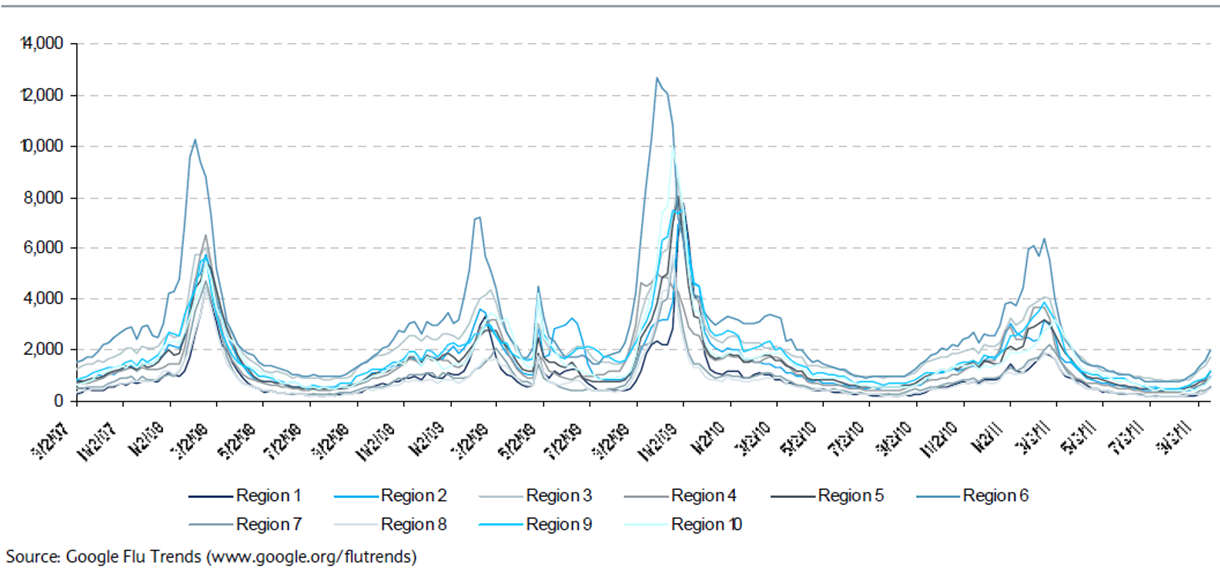
You can also look at the Google flu trends data (again thanks to Larry Marsh and team for pointing this out) which shows online searches down for flu topics:

Like last year, the number of locations for getting a flu shot has expanded exponentially driven predominantly by pharmacies (which BTW is a good thing for them in demonstrating additional value).  You’re even seeing some creative programs building on last year’s programs. One new one I’ve seen is Walgreens use of Foursquare for donating flu shots.

Of course, if we can’t convince healthcare workers to get flu shots then it’s going to be really hard to convince the average consumer.

I would expect MA plans to work with their PDP provider or pharmacy partner to drive members to get flu shots. Since flu shots are a STAR measure, it’s important for plans to reach out and get consumers to get a flu shot.

But why should I get a flu shot if my likelihood of getting the flu is down?  That is the question.

That’s why I’m skeptical about some of the “generic” marketing efforts.  I think everyone knows that they “should” get a flu shot and now finding a location for one is easy.  BUT, we need to make it relevant to them especially those of us in healthcare.  Ideally, their pharmacist and physician are talking to them about it, but if not, how do “we” (as healthcare companies) engage them.

We have to make the “pitch” relevant to them. For families, make them understand the importance of keeping the family healthy and their kids in school. For pregnant moms, help them understand that it’s important and why.  For people who work, stress the importance of not missing work. For people with chronic conditions, focus on their additional risk.  For the elderly, explain the risks to them.

A recent Walgreens study quantified some of the costs of the flu:

A new Walgreens survey examining the effects of influenza on people’s everyday lives and the economy, suggests that last flu season resulted in 100 million lost works days, along with nearly $7 billion in lost wages and 32 million missed school days, among many other findings released today. These findings, the first of a two-part Walgreens Flu Impact Report series, underscore the ramifications the flu and ill-timed illness can have beyond people’s health – from missed work and lost income to parenting challenges.

According to the Centers for Disease Control and Prevention (CDC), on average 13 percent of the U.S. population gets the flu every year, with active flu seasons seeing closer to 20 percent, or more than 62 million Americans.

Judicial Committee On Proposed Express Scripts Acquisition Of Medco

While the judicial committee meeting today has no direct bearing on the FTC’s review of the proposed merger, it will definitely help form some public opinions and may help layout some areas of focus for the review.  You can see the Bloomberg summary of some of the key quotes here.

You can also read the submitted testimony by each of the six witnesses online at the judicial site.  I pulled a few comments from each below.

From Stephanie Kanwit:

The most important theme of the Guidelines is that “mergers should not be permitted to create, enhance, or entrench market power or to facilitate its exercise.” Reams have been written about what constitutes “market power,” but the definition in the Guidelines is relatively straightforward:

“A merger enhances market power if it is likely to encourage one or more firms to raise prices, reduce output, diminish innovation, or otherwise harm customers as a result of diminished competitive constraints or incentives.”

From Dan Gustafson:

the major PBMs continue to expand exclusive distribution arrangements with pharmaceutical manufacturers. Further analysis is required to determine whether these acquisitions and distribution alliances have led to decreased service and consumer choice in providers, as well as substantial increases in the prices of several specialty drugs.  [Isn’t this becoming the norm with more and more REMS being required by the government for specialty drugs?]

From Dennis Wiesner:

The payment from a PBM to a pharmacy for dispensing a prescription drug differs from the amount a PBM charges a plan for the same prescription drug, to the benefit of the PBM. Plans sponsors are typically unaware of this difference, commonly referred to as “spread.”  [Isn’t this common in business?  Does a clothing retailer reveal what it pays its supplier for goods?]

From Joseph Lech:

Everyone knows the fastest way to reduce drug costs is to maximize the proper utilization less-expensive generic drugs. Yet, community pharmacies dispense generics at a much higher rate than the PBM-owned mail order outlets because we do not have incentives, such as kickbacks from manufacturers, to dispense brand name drugs. For example, the generic dispensing rate at the ESI mail facility is 60%. It is 62% at the Medco facility. By contrast, community pharmacies dispense generics on average 72% of the time.  [How long will these inflated statistics stay around…it’s like the false perception about vaccines.  You have to adjust out the acute drugs and acknowledge a different consumer mix leading to similar GFR.]

From George Paz:

According to our data, Express Scripts members utilizing our full complement of tools enjoy an additional annual average savings of over 11 percent per year. These savings are in addition to the discounts from negotiating with drug makers, which average 27 percent below the average cash price consumers would pay at a retail pharmacy for brand name drugs and 53 percent below the retail cash price for generic drugs.

From David Snow:

The business of pharmacy benefit managers (PBMs) is defined by robust competition, with more than 40 PBMs working hard to provide differentiated value propositions for public and private payors. These firms are a diverse group with very different business models and varying degrees of vertical integration, some integrated with pharmacies, others integrated with managed care organizations and others entirely independent. Nine Fortune 500 companies operate their own PBMs. Non-PBM participants like Wal-Mart and Target also contribute meaningfully to the competitive landscape by offering low-price generic prescriptions, as do other retail pharmacies that are providing steep discounts on 90-day prescriptions.

I didn’t get to listen to the prepared testimony, but I think I heard most of the Q&A which was interesting.  But, I think I’m too close to it.  I was really confused by some of questions and discussion.

  1. If the large payers only will choose one of the large PBMs that aren’t associated with another payer (i.e., OptumRx or Humana Rightsource), why would a merger of two of the top three affect the smaller PBMs in any way?  [I don’t agree with the hypothesis by the way.]
  2. Since several PBMs leverage either SXC or Argus software, why would someone say that the smaller PBMs don’t have access to the same technology?
  3. Why would you view sales to managed care companies as a submarket for which to look specifically at marketshare?  Or national employers for that matter?  And, will any of that matter in the exchange market if consumers can purchase pharmacy coverage separately from medical benefits?
  4. Since consumers typically pay copayments, why is there a big focus on how consumers feel the savings of the merger?  They may see a slight difference in percentage copayment plan designs, but the savings accrue to the payer which can choose whether or not to share those savings through lower copayments with the consumer.
  5. What services that a PBM provides are limited because of their geographic location?  This seems to be one of the key points about the limitations of the smaller PBMs.
  6. Part of the pharmacy arguement was for creating a pharmacy home (which I agree with) and directing consumers to a single pharmacy.  They also talked about having the pharmacist determine who should be allowed to fill 90-day prescriptions.  This doesn’t sound very consumer friendly and sounds a lot like what they say the PBMs are doing that is bad.
  7. The idea that drugs are just shipped to patients without them wanting them was brought up several times.  I’d really love to see some specific data about how that happens.  Did their physician call it in?  Did they sign up for auto-refill?  There is a process to be followed which addresses consent and payment so while I believe consumers may say this happened I’d love to see the data on an individual basis.

I also thought it showed the difference culturally or philosophically when you listened to George Paz answer the question about the greatest opportunity to save money versus David Snow’s reponse.

  • George said to focus on eliminating fraud, waste, and abuse
  • David said to focus on managing chronic conditions

This difference is both the challenge and the opportunity that the combined entity will have to embrace.

The one part that really frustrated me was watching the member of the committee from Michigan try to pin everyone down on what they thought of healthcare reform and making the point that they were under oath.  That seemed too political and not relevant to me.

Post ESRX/MHS Merger – How Many Big PBMs Are There?

This seems to be one of the critical questions in the evaluation of whether the merger should go through.  We’ve always talked about the Big 3 PBMs – Express Scripts, Medco, and CVS Caremark.  If that’s the market, then going from 3 to 2 seems like a huge deal.

But, I think the market has and is changing.

  • What about OptumRx (formerly Prescription Solutions)?  Once the lives formerly managed by Medco are insourced in 2013, this is going to be > $20B company (I believe) which is part of a huge company (United Healthcare).
  • What about Prime Therapeutics?  They manage over 14M members (I believe) and have been actively bringing in lots of new management from other PBMs as part of their growth strategy.
  • What about SXC and CatalystRx?  They both have shown their ability to win against the “Big 3” and grow.
  • What about “captive PBMs” like Humana and CIGNA?  I think they would both want a bigger crack at the lives outside their insured book of business.
  • What about MedImpact?  They manage 35M lives today.
There are dozens of other PBMs that have shown success in the market – ReStat, WelldyneRx, Navitus.  I guess it also depends on whether you view the market as just PBMs or you look at it for drug spend in which case cash patients play into the mix and you look at what companies like Walgreens, Walmart, CVS, Target, and RiteAid do.  [One could hypothesize that in a >80% generic world that cash is really the dominant method since insurance discounts matter much less and the role of the PBM or PBA is more around claims coordination for utilization management and DUR.]
Ultimately, I think it boils down to whether size gets you unfair advantages in pricing and discounts (i.e., rebates, acquisition cost, network discounts).  I would suppose that Worker’s Compensation is an area to look at where there are dozens of smaller WC PBMs competing with Express Scripts – MyMatrixx, PMSI, CypressCare.  What’s their experience been?

Today’s session in DC will certainly be interesting.

[As noted before, I both own shares in some of the companies mentioned here and do business with others and/or seek to do business with the companies mentioned here.]

New Walgreens Pharmacy Layout

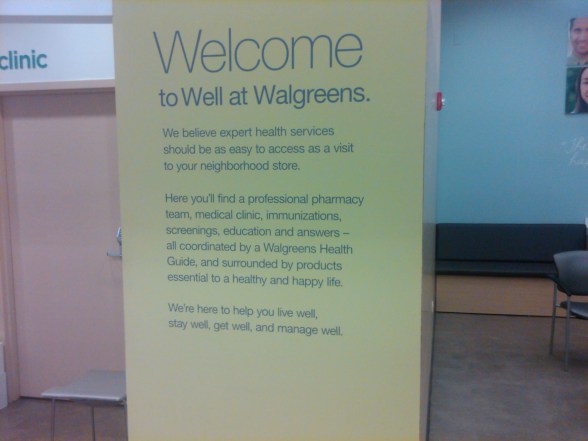
I was in a Walgreens last week in Chicago.  Maybe it’s just a newer store than my local store in St. Louis, but I thought the pharmacy looked very different.  I captured a few shots with my camera phone.  As you can see below:

1. There is an automated check-in option for refills. 

2. There is a pharmacist in front of the counter not just behind.  (And people were actively coming in and talking with him.)  The clinic also seemed to have a person on the floor roaving around interacting rather than sitting behind a podium. 

4. There was a sitting space with what appeared to be a meeting room.

5. Overall, there was a lot more signage and videos which made it a very lively and bright place to be. 


This seems like a different engagement strategy.  I’m surprised no one is talking about it.  The only thing I could find was a mention of a “training store” and 40 locations and the following mention in an article about Express Scripts and Walgreens:

As part of its plan to expand its healthcare offerings and reduce costs, Walgreen is working on pilot stores with new technology and a health guide on staff to help patrons more easily fill prescriptions, speak to pharmacists and see nurse practitioners at its in-store Take Care clinics. The first such store, in the village of Oak Park, Illinois, opened in November. Walgreen plans to have 20 stores in Chicago and other nearby towns by October.  (source)

It sounds like there are just a few stores so I must have got lucky to stumble into this one.  I had heard rumors of some re-design, but I hadn’t seen anything out there on the Internet.  Interesting.  I’d love to see a study to understand satisfaction, engagement rates, retention, etc. associated with this footprint versus the older store pharmacy layout.

Is Your Adherence Program Leveraging Segmentation?

I was just finalizing a new marketing piece with our marketing team on Silverlink’s adherence services.  I love this picture because it drives home the point of understanding the consumer.

If you don’t understand the factors that drive behavior and leverage those attributes in segmentation and personalization of your adherence program, you may be leaving opportunities on the table.

State By State Use of Rxs per Capita, Age, and Gender

(Note: This is retail only data so it’s not comprehensive, but it should be directionally accurate.)

The Kaiser Family Foundation puts out lots of data.  One of their sites shows state by state analysis.  Here is a map of utilization by state. 

As you can see on the site, the top 5 states are (i.e., highest utilizers of prescription drugs):

  • WV
  • KY
  • AL
  • TN
  • MS

The bottom 5 are:

  • AK
  • CO
  • UT
  • NM
  • WA

For age breakdown, the data showed:

  • 0-18 = 3.8 average Rxs
  • 19-64 = 11.3
  • 65+ = 31.1

For gender, the averages were 9.5 Rxs for males and 14.4 Rxs for females. 

Note: All this data is available online at http://www.statehealthfacts.org/

CxO Roles In Pharmacy: A Quick Scan

I always find it interesting to see the senior roles created within organizations. While pharmacy doesn’t have many radical titles like Chief Executive Bear (aka Maxine Clark at Build-A-Bear), I did find the following looking at company websites, LinkedIn, and some quick Google searches:

  • Chief Innovation Officer – Walgreens
  • Chief Experience Officer – Walgreens
  • Chief Supply Chain Officer – Express Scripts
  • Chief Pharmacy Officer – Aetna, PartnersRx, Cigna, US Oncology, Tricare, United, Wellpoint, Excellus, CatalystRx
  • Chief Sales Officer – PTRx
  • Chief Strategy & Innovation Officer – OptumRx
  • SVP Imagineering & Innovation – Medco
  • Chief Trade Relations Officer – Express Scripts
  • Chief Clinical Research & Development Officer – Medco
  • Chief Healthcare Strategy & Marketing Officer – CVS Caremark
  • Chief Scientist – Express Scripts
  • Chief Strategy Officer – American Healthcare, Walgreens
  • Chief Actuary – OptumRx
  • Chief Branding Officer – Medco

Of course, there are always the obvious – CEO, COO, CFO, CIO, CTO, CMO (Marketing), CCO (Clinical), CMO (Medical), CCO (Compliance), and CAO (Accounting).

My takeaways from this list (which is likely incomplete) are:

  • I would expect to see more Chief Innovation and Chief Experience Officers in the years to come.
  • I continue to be surprised that there aren’t more Chief Pharmacy Officers.

Do you have others you’ve seen or companies that have these roles that my quick scan missed? Thanks.

Primary Adherence – Technology, Kaiser Study, and EHRs

I think we all know that primary adherence is a real issue.  Depending on what you read, you see that anywhere from 20-30% (or more) of patients don’t start therapy.  They are prescribed a drug, but they never fill it.  This is due to lots of reasons:

  • They get a sample.
  • The drug costs too much leading to abandonment.
  • They don’t feel like they need the prescription.
  • They feel better.
  • The doctor tells them only to fill it if something else doesn’t work.

These issues vary based on whether it’s an acute drug or a maintenance drug.  It also varys by drug class. 

I’ve always been surprised that pharmaceutical manufacturers focus so much on ongoing refills leading to improved MPR rather than focusing on primary adherence which would grow their market significantly.  One of the big reasons for this has been visibility.  Without electronic prescriptions and mapping those to claims data, it was hard to identify who had a prescription and didn’t fill it.  You could do something with data out of the PPMS (Physician Practice Management System) or through more complicated processes to get data out of their notes, but it wasn’t easy. 

So, this new study by Kaiser caught my attention. 

If you are a diabetic, have high cholesterol, or high blood pressure and you receive medical care at an integrated healthcare system that has electronic health records (EHRs) linked to its own pharmacy, then you are more likely to collect your new prescriptions than people who receive care in a non-integrated system, a Kaiser Permanente study shows.

That’s a strong sell for an integrated model, but perhaps more realistically for the use of EHRs.  You can also see some of the data from Surescripts around this topic of electronic prescriptions and adherence

This creates a great opportunity for pharmacies, PBMs, payers, and pharmaceutical manufacturers to leverage technology to improve primary adherence.  By identifying people who don’t fill a prescription they receive, companies can help determine which of those are intentional and which of those should be addressed.  This should help address the overall costs attributed to non-adherence and be a business driver for all these entities. 

[Note: If you’re interested in working on primary adherence, let me know.  We have several approaches for this at Silverlink.]

Walgreens and Express Scripts: The Plot Thickens ($ESRX, $WAG)

Remember when this “conflict” was first announced a few months ago.  If you’re like me, you probably assumed this would be over in 30-days like the Walgreens – CVS Caremark dispute last year.  What’s different?  I’m not sure.  It seems like both sides are well dug in.  (From my poll a few days ago of 22 of the readers of this blog, 65% felt this would get resolved by 1/1 and 25% felt that it would never get resolved.)

Now, it seems like both sides are continuing to take significant steps towards no resolution.

Express Scripts has apparently launched a pilot program to move share from Walgreens stores now using coupons.  I believe the pilot was with Lowes and is about to expand to the Department of Defense.  Additionally, I’ve heard that Express Scripts has sent out letters to their clients preparing them for a limited network starting 1/1/12 without Walgreens.

On the flipside, I’ve heard that Walgreens has begun putting signage out encouraging consumers to talk to their plans about excluding them from the network and for Medicare members to chose plans that aren’t run by Express Scripts.  Walgreens also put out a whitepaper about what happens when you remove them from the network.  This has some really interesting data in it.

Key Statement: Excluding Walgreens from a pharmacy network will result in little to no savings for most sponsors and patients, and in some cases will raise costs, while causing significant patient disruption and risking gaps in care, and increasing administrative costs on plan sponsors.

  • As part of this document, they are encouraging payers to consider directly contracting with them and/or creating a custom network (if their PBM contracts allow for that).
  • They state that their costs are comparable to other retailers or within 2% of their costs.
  • They show some data from another PBM (not named) that modeled out network savings for them based on a limited network taking into account their drug costs, generic fill rate, and 90-day rates.  It shows a jump in costs versus savings.

  • They share data that their Generic Fill Rate (GFR) is 1.4% higher than the rest of the Express Scripts retail network which the paper says translates to $2 per Rx in cost.
  • They say that 90-day retail generates a 6-8% savings compared to 30-day retail based on the pricing that they offered to Express Scripts.

Ultimately, I still believe resolution will occur before the end of the year.  While both parties are dug in, I believe it’s a lose-lose situation for this to stay unresolved.  That being said, there are lots of things that could occur here:

  • This creates a wave of direct contracting between payers and pharmacies.
  • This validates the integrated model of CVS and Caremark.
  • This creates a large number of limited networks.
  • This creates greater use of the Walgreens discount card and/or cash business at Walgreens especially for lower cost generics.
  • Alienating Walgreens creates a disruptive force in the FTC review of the proposed Medco acquisition.
  • Another PBM jumps in to do a creative deal with Walgreens which limits their long-term ability to work with Express Scripts.
  • Express Scripts ends up in a shotgun relationship with CVS.
  • The terms of PBM contracts get changed going forward based on new terms regarding retailers.
  • Walgreens becomes a much more vocal voice in the retail world through NCPA and other organizations.

Between this and the proposed Express Scripts acquisition of Medco, the landscape in the PBM market could be radically different by early 2012.

[Note: As the stock market has dropped, I have continued to buy stock in the PBM industry including several of the specific companies mentioned in this post – MHS, ESRX, WAG and CVS.]

Anonymous Pharmacy / PBM Survey

There are lots of big things going on in the industry right now.  I’d love to get some of you to give your opinions.  I figure the easiest way to do this is a few anonymous survey questions.  Please weigh in…

$47 Per Rx Guarantee From Prime Therapeutics

I think this is a good, bold move.  Prime Therapeutics has launched four new programs.  The most aggressive is called Reliance and guarantees your net spend per Rx at $47.  The easy way to do this would be to exclude specialty drugs and basically offer a generics-only formulary.  My quick read from their drug trend report and press release is that it includes specialty drugs.  It also includes a lot of utilization management programs, suggestions on plan design, encouragement for mail order, and other features.  I’ll be interested to see the adoption of the program or whether it’s just a great program to encourage clients to consider new, more aggressive plan designs.

“Our Reliance plan keeps costs predictable for plan sponsors,” said Michael Showalter, Prime Chief Marketing Officer. “The goal is to make pharmacy benefits easy, understandable and affordable. Through Reliance, there will be no surprises, allowing organizations to better plan for and manage their pharmacy costs and reduce overall health care costs, while providing excellent benefits. We provide a single number demonstrating the true cost of care – $47. We are the only PBM to back that up with a price guarantee and complete price transparency.”

Highlights From the Prime Therapeutics 2010 Drug Trend Report

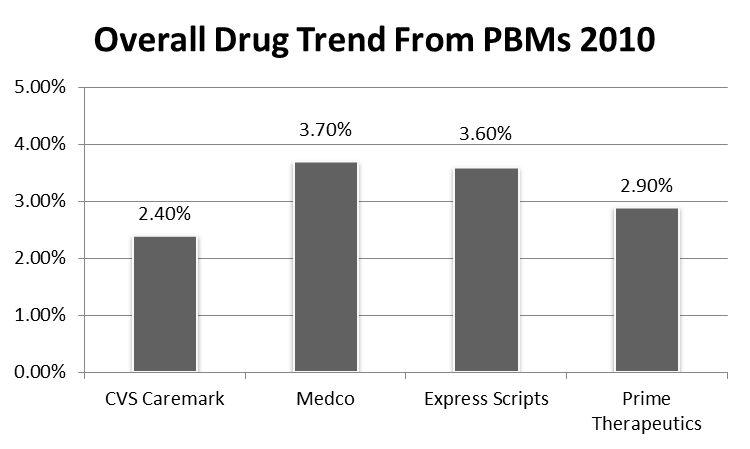
I just finished reading the Prime Therapeutics Drug Trend Report. As I highlighted the other day, their overall drug trend was 2.9%. Like in the past few years, they have jumped up to offer a report comparable with the other big PBMs. And, as we saw with last year’s report, the new management team is aggressive in using this to highlight research, their competitive differentiation, and point out why they are a competitive force in the market.

More interesting that just their success in drug trend was their “adjusted drug trend” for the other PBMs. You don’t often see this in your face marketing in this space, but they clearly want to show not only that their trend was better but that their methodology is better. (I don’t have the time to compare methodologies at this point.)

Fortunately, they don’t stake the argument on trend since as I’ve pointed out before – trend can be misleading. Sometimes higher trend is good as when it indicates better Medication Possession Ratio or better success at reducing gaps-in-care. They focus on five things in the document:

  • Savings
  • Safety
  • Guidance
  • Satisfaction
  • Partnership

Their Generic Fill Rate (GFR) for 2010 was 69.2% which was lower than the 71% reported by Medco and the 71.5% reported by CVS Caremark. (I couldn’t find the Express Scripts numbers for whatever reason.)

The report focuses on some of the differences in the Prime model (client ownership, not public) and how that plays out in transparency and alignment.

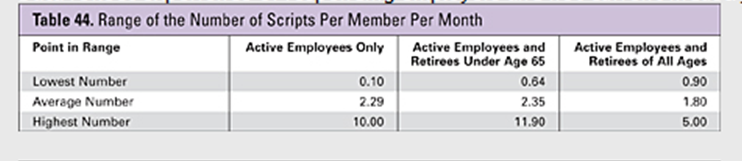
They are now at 12 Rxs PMPY which to me still seems a little low. (I’ve mentioned this is prior reviews, but I don’t understand why their population usage is different.) To validate my hypothesis, I looked at the PBMI report from last year which shows PMPM utilization ranges by respondents (not industry averages).

I do think their example around implementing a generics-formulary along with their new benefit plan guaranteeing cost at $47 per Rx are very interesting. They remind me of the GenericsWork product I launched at Express Scripts and should offer some clients a great way to save money. They key, as I learned, was really understanding how to manage member disruption and gain buy-in to the offering.  [Amazingly, a quick Google search led me to a cached image of the PDF from my product from 2004.]
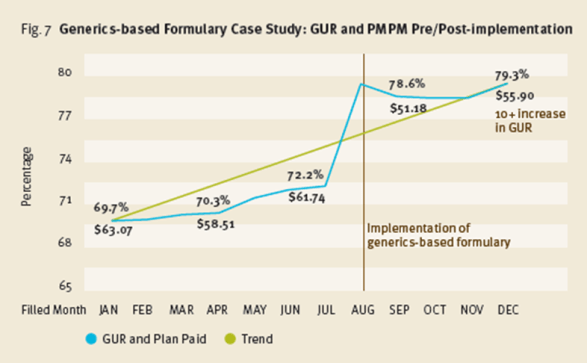
They give some good MTM numbers:

  • $1.29 in return for every $1 spent
  • $86 in savings to the payer over a 10 year period per MTM encounter

They also announce a new offering for 2012 which they call the GuidedHealth care engine. There’s a little information in the document, but it sounds intriguing.

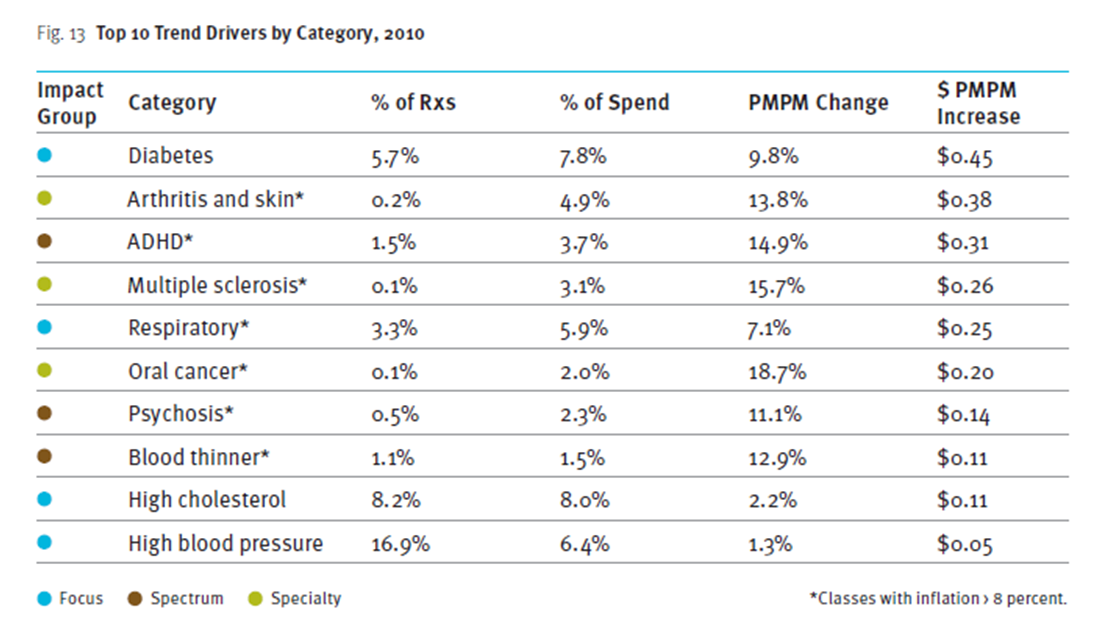
One of those typical charts that we all like to look at shows the drug classes that contributed most to driving trend.
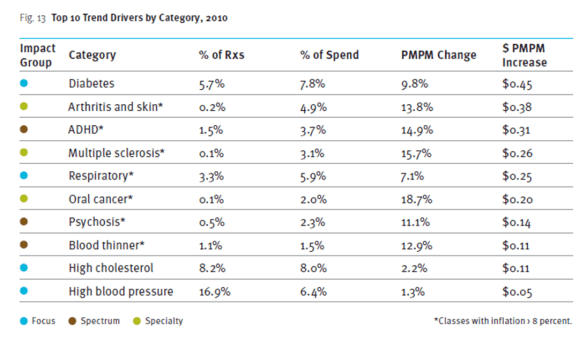
I think their equation about overall cost…

Optimal cost = (medical cost + pharmacy cost) x health outcomes

One of my favorite charts is below which recognizes that there are two cost curves to focus on. The one for the relatively healthy which is often highly pharmacy focused cost versus the chronically ill that drive the majority of overall costs and is heavily medical and specialty medications.

Another study they share in here looks at the likelihood of hospitalization tied to adherence. Very interesting.

$7.60 PMPY savings for a limited network. Those are big numbers that they share from a case study around a client limiting their retail network by excluding one chain.

Their drug trend report looks at another hot topic – 90-day prescriptions. They share their results of a statin study looking at waste in 90-day retail and mail and 30-day retail and estimate the cost impact of the waste.

Another hot topic is the mix of specialty drug spend between medical and pharmacy. They share a chart looking at several of the large specialty drug classes.
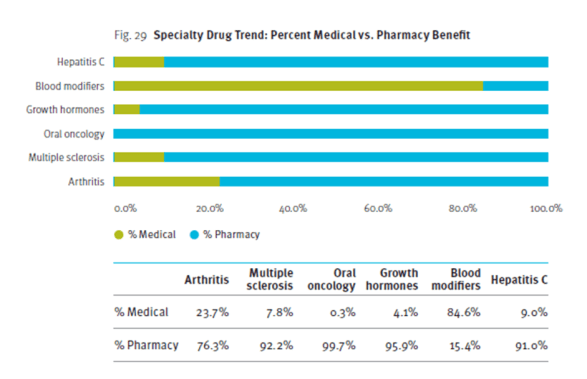
At the end of the report, they give suggestions to clients on a spectrum of management (low to high). They also predict a few things in the next five years:

  1. A return to double digit trend increases after this generic wave;
  2. A generic fill rate in excess of 90%;
  3. Specialty drugs accounting for 40% of spend;
  4. Healthcare spending will increase 8-10% per year;
  5. The role of genetic testing will be validated; and
  6. Up to 25% of employers will drop benefit coverage.

Adherence Event In DC – September 22 – NEHI

Do you remember NEHI? They are the ones that prepared the often quoted report quantifying the cost of adherence at $290B per year.

Well, they’re at it again. They’re hosting an event in Washington DC on September 22nd to talk about adherence. And, from the participant list, it looks like everyone is signing up to be there. So, I called Tom Hubbard (Senior Program Director) and asked him some questions about the organization and the event. Here’s his responses:

  • Who is NEHI?
    • NEHI is a non-profit research organization, headquartered in Cambridge (Massachusetts). We were created to be a “think and do tank” that focuses primarily on questions of innovation in health care. Our particular modus operandi is to be very multi-stakeholder in how we approach things: our founders deliberately set out to create a think tank, supported by member organizations that spanned multiple sectors of the health care world, including patient groups, payers, providers, academic medicine and technology firms in pharma, biotech and medical devices.  
  • Why are you focused on adherence?
    • We started to focus on adherence because of very strong input from member organizations that adherence is one issue in health care that could prove to be one of those rare win-win propositions. At least in theory, better adherence will result in better health for patients, more effective health care that creates higher value and less waste, a bend in the cost curve, while increasing the appropriate use of drug therapies. Back when we started this work, almost three years ago, many of our member organizations felt that poor adherence was a neglected issue in health policy that cried out for greater attention and creativity from all stakeholders. (See their recent 2-page overview document.)
  • Describe the current project – history, objectives, participants?
    • Our current project in medication adherence is an attempt to create a “roadmap” for improved adherence. We’re not ambitious enough to suggest that we can produce the kind of roadmap that some industries are familiar with —- a roadmap that lays out specific benchmarks of progress at specific points in time. Health care doesn’t work that way, for better or worse.  The medication adherence roadmap we’re devising is one that will identify what we think are outstanding opportunities for making progress on medication management and patient adherence based on the multitude of trends and initiatives that are aligning to support these goals, or could align given time and attention from decision makers. So – for example – one major opportunity that a lot of people are seeing is in initiatives around the reduction of unwarranted hospital readmissions. Cutting readmissions will involve good medication management and faithful adherence among patients, and readmissions policy represents a significant driver of new medication management and adherence strategy.
  • What is the upcoming event about?
    • On September 22, we will hold a conference in Washington at the National Press Club to release our roadmap document and stage a discussion that will focus on how to make the roadmap a reality. We’re assembling a panel and an audience of thought leaders from a number of key sectors to explore where we can find common cause on these various opportunities to improve medication management and patient adherence throughout the health care system over the next few years.
    • Some of the panelists for the upcoming event are:
      • Joshua Benner, PharmD, Brookings Institution
      • Laura Cranston, Pharmacy Quality Alliance
      • Doug Hoey, National Community Pharmacists Association
      • Ken Majkowski, PharmD, Surescripts
      • Terry McInnis, MD, Blue Thorn Inc.
      • Michael Sherman, MD, Harvard Pilgrim Health Care
      • William Shrank, MD, Center for Medicare and Medicaid Innovation
      • Brian Sweet, AstraZeneca
      • Troy Trygstad, PharmD, PhD, Community CareNorth Carolina
      • Ira Wilson, MD, Brown University
  • What is the objective of the event and how does this build on the prior report?
    • Our primary objective with the roadmap and the September 22 event is to help build more understanding and support for action that will promote good medication management and adherence. There’s widespread recognition that more research is needed on effective adherence promotion, so there’s a lot left to learn about how to do this well. But the health care system cannot afford the luxury of waiting. The double whammy of increasing chronic disease cases and increasing health care spending is already compelling at least some organizations to reorganize and refocus on the effective use of medications. We want to shed more light on this and build more support.
  • What’s next for NEHI in this area?
    •  I mentioned that NEHI’s founders sought to build a “think and do tank,” so we’re interested in the “doing” part of adherence promotion. In the short ter,m this will mean working hard to disseminate the patient medication adherence roadmap among decision makers in both the public and private sectors. Longer term, we want to work with like-minded organizations to try and advance an adherence agenda that makes sense for patients and other stakeholders. Just exactly what this means in terms of our work after September 22 is something we’ll assess as we launch the roadmap.      


Walgreens Quote From NACDS As “Community Pharmacy”

While many of us would consider Walgreens as one of the two models of chain pharmacy (with CVS), this quote from one of their executives from the NACDS conference in Boston right now makes it sound like they consider themselves more of a community pharmacy.

“There is no greater value in healthcare delivery than community pharmacy.  When I talk of value, I am not talking just about all that community pharmacists do everyday to help reduce drug spend.  Though that is important, pharmacy’s value goes so much deeper.  It is about community pharmacy – and the expertise of pharmacists – as a true partner in a comprehensive and collaborative approach to healthcare.  It is about improving patient health, while delivering part of the solution to driving down health costs across the spectrum by preventing more costly forms of care.”  Walgreen Co. Divisional Vice President, Government and Community Relations, and 2011 National Association of Chain Drug Stores (NACDS) Pharmacy & Technology Conference Chairman Debbie B. Garza, RPh

Maybe this has been their long-term positioning, but I also wonder if a few events haven’t pushed them from being a mediator in the middle of the industry to taking a more hardline approach:

  • CVS (their competition) buys Caremark changing their retail perspective
  • Walgreens jumping into the direct-to-employer model at Caterpillar with Walmart
  • CVS Caremark and Walgreens network dispute in 2010
  • Walgreens sells their PBM to CatalystRx
  • Walgreens and Express Scripts ongoing dispute

Given the traditional angst between the independents and the PBMs, will Walgreens harden their position to be closer to the independents and what will that mean for the overall industry?

Pharmacy Satisfaction Report

If you haven’t read through the Pharmacy Satisfaction Pulse Report, you’re missing some great information.  There’s not a lot out there about consumer level expectations for pharmacies but this is a good start.  (Full site with other data)

Here’s four charts I pulled out of the report to get you started…These should help you frame messaging around retail-to-mail, 90-day, and pharmacy adherence programs.


Summary Of Drug Trends (Prime’s Report’s Out)

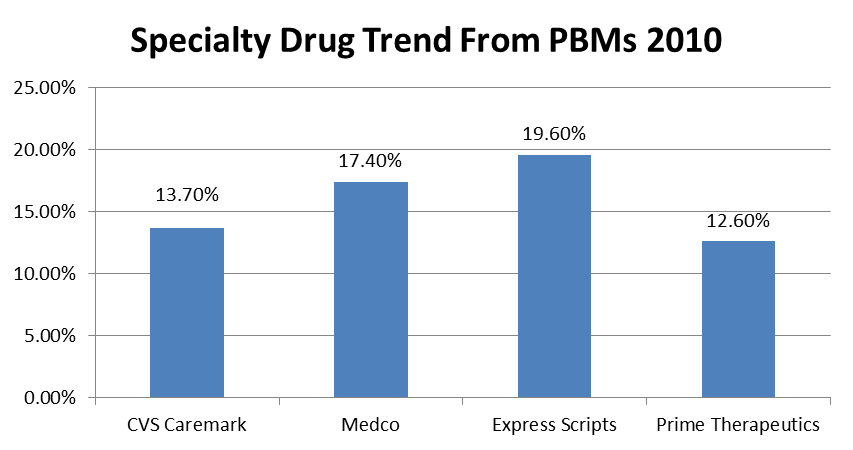
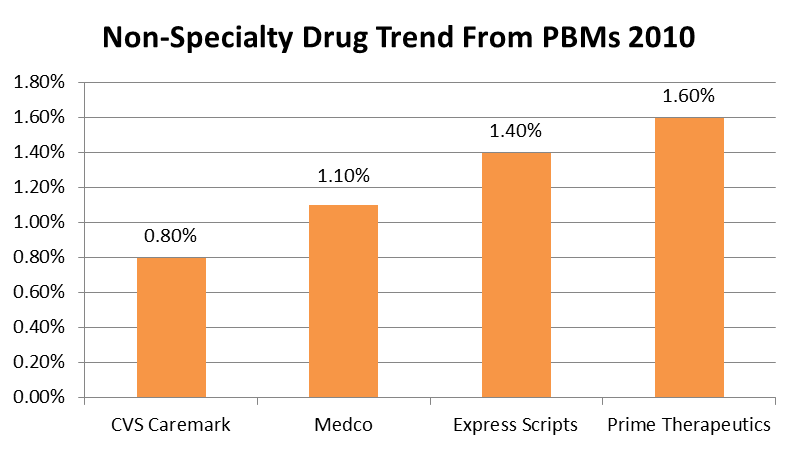
Prime Therapeutics published their Drug Trend Report yesterday.  I haven’t had time to read it yet, but I pulled their total trend numbers and aggregated them into charts with the previously reported numbers from other PBMs.  (As always, you can see detailed summary’s from Adam Fein and I on most of the reports.)

Additionally, here’s a summary from last year.  AND, as always, don’t forget that these aren’t apples to apples.

(NOTE: Lower trend is better implying that the PBM is doing a better job at managing costs for their clients although as I’ve argued there may be some clinical reasons for trend going up that are good – e.g., improved adherence, identification of pre-diabetics, addressing primary adherence.)


Increasing Preferred Pharmacy Usage (3 of 3)

This is the third of three posts on new ideas for increasing usage:
  1. Driving preferred pharmacy usage from the employer site
  2. Using social media
  3. Borrowing from other industries

The idea in all of these was to look at new ways that builds on the standard approach that we work with many clients on today.  And, if you believe that the Express Scripts / Walgreens dispute won’t get resolved, we’re going to see a lot of people using limited or preferred networks very soon.  This is also something that Adam Fein talked about in highlighting some of the progress Wal-Mart is making in this area.

So what are some examples of things we could borrow from other industries?

Referral Program:  Why not offer incentives for people who refer their friends and family into the pharmacy? Wouldn’t this play into the social network or peer-to-peer trends out there?

Satisfaction Surveys:  Why isn’t there more monitoring of the customer satisfaction to look for improvement opportunities?  [Note: I know there is some, but I think it’s under-utilized as a tool.]

Tiered Service Levels:  Frequent travelers get different levels of customer service.  Why don’t high utilizers with lots of co-morbidities and Rxs get a better level of service?

Points:  Why aren’t there more incentive systems and “points” that are used to reward consumers based on share-of-wallet or other metrics?  [I think there may be some legal issues here.]

Online Order Tracking:  Why can’t I watch my prescription being filled and track it around the system online?

Pharmacy Ratings:  Why isn’t there a consumer and business system that ranks pharmacies based on wait time, friendliness of staff, error rates, generic fill rates, overall satisfaction, or other metrics that can then be pushed to the consumers?

Incentives / Coupons: Certainly these have been tried and there are limits here especially in government funded benefits, but it’s still few and far between.

MD Programs: Physicians can certainly influence this decision.  Why isn’t there more effort to differentiate a pharmacy (mail, retail, specialty) by building relationships with high prescribers?

Check-in / Preferences: Why don’t the forms in the physician’s office (or applications) have you select a preferred pharmacy or have a pop-up with a preferred pharmacy in it to drive you there?

Credit: For some people, it’s an issue to front the money for the 90-day supply.  Why haven’t the mail order pharmacies partnered with a credit card company to allow for installment payment?

If you’re going to “win” at this game, you have to think differently.  You have to test and learn.  You have to capture insights from your customers and translate them into product offerings.  It’s not easy.

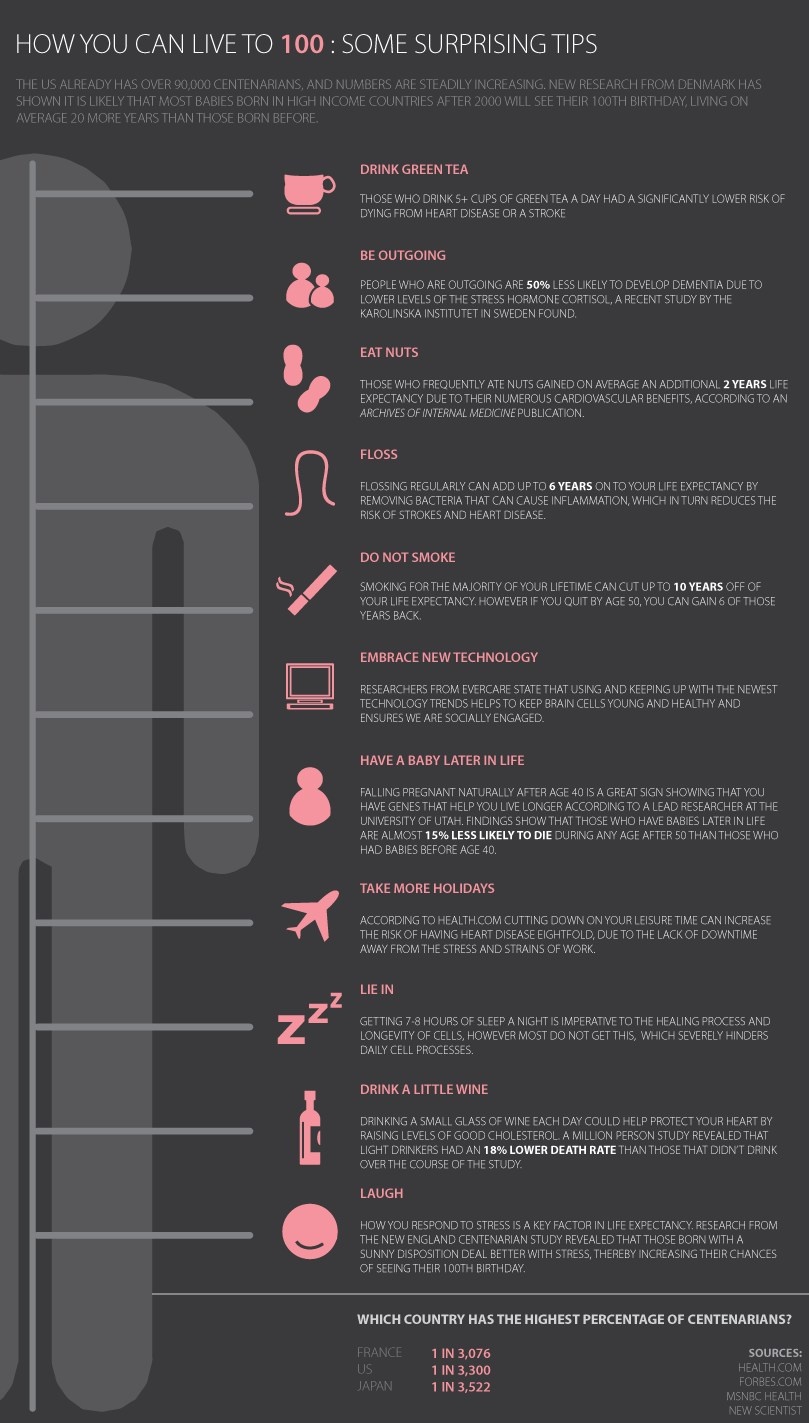
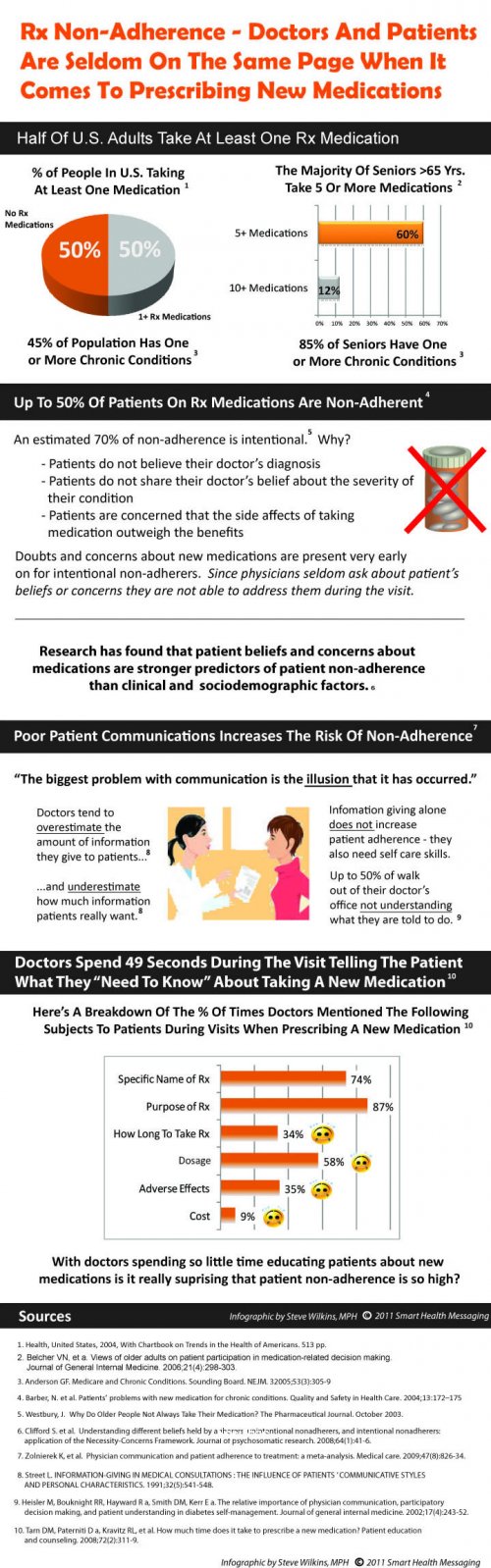
Infographic: MD-Pt Communication Link To Non-Adherence

Within the payer / pharmacy / PBM world, we tend to think of adherence as something that can be addressed by us. What if the problem is more systemic than that? I’m not talking about clinical issues like side effects or even cultural biases.

I’m talking about process related issues that stem from physician and patient interactions. If the patient doesn’t believe the drug will help them and doesn’t understand their condition and their medication, they’re set up to fail.

With that in mind, I appreciated the infographic that Stephen Wilkins (@HealthyMessaging) sent to me earlier today (see below):

Increasing Preferred Pharmacy Usage (2 of 3)

This is the second of three posts on new ideas for increasing usage:
  1. Driving preferred pharmacy usage from the employer site
  2. Using social media
  3. Borrowing from other industries
A lot of companies have YouTube channels (for example):
But, why hasn’t anyone focused on how to leverage patient or consumer stories as testimonials about their pharmacy experience to drive new customer acquisition?  This is certainly used in other industries.  We’ve all seen promotions where companies ask people to submit video stories about how they use their product.  What a great way to get people talking about their experience.  I haven’t seen anyone do that in pharmacy.
Given that we know storytelling works for patients, why don’t people try this.  We know peer pressure messaging works to address weight loss or smoking or even energy usage so why not pharmacy selection.
We’re all probably familiar with the famous “What Would You Do For A Klondike Bar” campaigns.

Or what about the Foursquare concept of location based check-in?  Would this drive traffic?  Could you cross-sell using Foursquare – OTCs, non-Rx purchases, DME?  Maybe we could ask Walgreens

Here’s a description from Foursquare on their merchant page:

“Whether you’re a national chain, a mom-and-pop shop, or anywhere in between, you can attract new customers or reward your most loyal ones by offering foursquare Specials – mobile coupons, prizes or discounts – which are presented to users when they check in at or near your venue.  Specials create extra enticement to get customers to stop by – think 20% off a meal, a free dessert, or even a reserved parking spot for your most loyal customers.  Specials can be tailored to fit your needs, whether it’s a unique discount for first-time customers or rewards for the 10th visit (see our full menu of available Specials below).”