Archive | Marketing / Communications RSS feed for this section

P4P Survey and Comments

The American College of Physician Executives did a survey on P4P.  Here are a few of the survey results (from over 900 participants):

  1.  Only about 40% of the organizations had a P4P program.
  2. 58% of those without a P4P program are considering it.
  3. 60% think P4P will be a permanent part of healthcare.

I found the comments even more interesting.  Here are a few:

  • It is sad to see some HMOs to put the programs (carrott) out there and then look for every loop hole to deny payment.
  • The challenge is defining the performance and quality improvment. Clearly rewards for volume through the office or RVU’s per month work, but the real issue is the quality of the outcome for a given patient. Defining the clinical outcome is the slippery slope. I think physicians are going to resist being told what they get to create for fear of being judged less than capable. So, the tendency will be to set the bar lower that what could be achieved.
  • In California the P4P program is working very well with significant improvement in outcomes.

payforperformance.gif

What Have You Failed At Today?

I caught this story on ABC last night about entrepreuners.  It made an interesting point about the need to fail and learn from your failure.  In summary, it was basically saying that people who took risks, failed, and spent the time to learn from their failures ended up more successful.

I think that is very relevant to the world of healthcare communications.  Any program should have a test plan of ideas that are constantly being varied to see what works best.  Each micro-niche of the population is going to respond differently.  If you aren’t out there trying different things, you won’t optimize the success of your programs.

Of course, this is easier said than done. You need a culture that believes in failure.  You need a way to learn from your mistakes.  You need people that are willing to admit they were wrong.  You need a measurement tool to document the success of one attempt versus the other.  And, you need to understand what can be varied to drive change.

Let’s take a simple example here.  In the world of automated voice communications, you can vary dozens of things:

  • Which voice should you use – gender, age, accent?
  • How should the voice speak – casually, formally, authoritarian, consultative?
  • What speed should the voice be at – normal pace, fast, slow?
  • What time of day should you call?
  • What day of the week should you call?
  • Should you leave a message or call back?
  • How many times should you attempt to reach the patient?  Within what window?
  • How long should the call be?
  • Should the call be complemented by letters or other outreach?
  • Should the call offer to connect them to a live agent?

I could go on, but I think you see the point.  Experimentation is key and makes a difference.  I am not even getting into the thousands of variables in the messages. 

So, go out and fail at some new program to communicate and engage with your patients.  Learning faster is your best way to succeed. 

Some Pharmacy Statistics

statistics.jpgWhen I worked on my start-up, I collected a bunch of data that I used in my business plan and pitch documents.  I thought they would make an interesting read for many of you.

  1. Size – The prescription drug market is enormous and growing every year. Current estimates put the market size at $221B, and it is projected to grow to $520B by 2014 .
  2. Marketshare – In 2004, according to the National Association of Chain Drug Stores (NACDS), the pharmacy market share was divided as follows traditional chains (41%), mass merchants (9.7%), supermarkets (12.2%), independents (18.3%) and mail order (18.7%). Walgreens had 14% market share.
  3. Cost Pressures – The economic situation for pharmacies is complicated by several forces putting pressure on them:
    • The growth of the Pharmacy Benefit Management (PBM) company has increased the concentration of insured lives within a few Fortune 100 companies forcing the pharmacies to accept lower reimbursement rates;
    • There are now more than 55,000 retail pharmacies in the US and an overcapacity of mail order pharmacies which is more than can be profitably supported;
    • The largest companies such as Walgreens are rapidly leveraging innovative technologies to allow them to fill drugs at a much lower cost while others are clinging to a high touch, convenience model that is not sustainable; and
    • A shortage of thousands of pharmacists in the US has driven starting salaries for pharmacists above $100,000 in some markets.
  4. Growth – The cost pressures facing pharmacies are mitigated by two things – inflation and utilization. Both continue to go up year over year and have dulled the effect of economic pressure. According to Express Scripts 2004 Drug Trend Report, Per Member Per Year (PMPY) utilization is 13.1 prescriptions for insured patients. Assuming a 6% annual growth in prescription utilization, that means that the average insured consumer would use 18.6 prescriptions PMPY by 2010.
  5. Pharmacist Staffing – A recent article estimated that the current pharmacist shortage in the US of 4,000 to 8,000 open positions will increase to 157,000 by 2020. This staffing crunch combined with the payor’s move to consumer driven healthcare where the patient has greater responsibility for their healthcare dollars will put incredible stress on the system. Just as patients need the trusted pharmacist to play counselor or coach, the workload will have increased to the point where they do not have the time to spend with them. In 2005, these issues led Walgreens pharmacists to briefly strike noting the risk to patient safety.
  6. New Models – An increasing number of employers are building on-site pharmacies, and several companies are piloting “vending machine” type solutions for pick-up of dispensed medications. In late 2005, the Department of Defense issued an RFI to explore a telepharmacy solution to replace their Military Treatment Facilities (MTFs) . Some states such as North Dakota are piloting a telepharmacy solution which is a model allowed in several states where a pharmacy technician can dispense while being monitored remotely by a pharmacist.
  7. Patient Satisfaction – Although studies show that pharmacy patients are generally satisfied, 56% of household consumers report that they use more than one pharmacy to fill prescriptions according to the WilsonRx Report 2005. And, according to NACDS, 68% of people choose a pharmacy based on location.
  8. Loyalty – Even though location is a huge influencer, a Morgan Stanley report showed that the willingness to switch to mail was highest at big chains – Walgreens (44%), Wal-Mart (41%), and CVS (35%). Given the concentration of marketshare in these stores and their growth forecasts, it seems logical that the marketshare could be re-distributed to locations that are already visited like grocery stores. According to the Food Marketing Institute (FMI) shoppers make and average of 2.2 visits to the grocery store each week.
  9. Consumer Driven Healthcare (CDHC) – CDHC is used to refer to a lot of different scenarios in which the burden for managing cost is pushed to the patient. This includes high deductible plans, Health Reimbursement Arrangements (HRAs), Health Savings Accounts (HSAs) and Flexible Spending Accounts (FSAs). One of the biggest issues is that this is similar to the movement to 401K plans, but in healthcare, there is no decision support infrastructure. Initial estimates are that 40% of employers will offer this type of plan design over the next few years. This will put pressure on the pharmacist to act as this decision support resource.
  10. Aging of the Population – With the ongoing aging of the population and forecasted growth in people age 65+, this growth in prescription drug use will continue. Based on the Medical</a Expenditure Survey from 2002, the differences in utilization of prescriptions increases dramatically as people age. For example, people 35 to 44 use 7 prescriptions per year while those 45 to 54 use 12 prescriptions per year and those 65 to 74 use 24 prescriptions per year.

Emotional Intelligence (EQ)

I will admit that I have a lot to learn around EQ which is firmly grounded in neuroscience, but I wonder why I don’t hear a lot about this from a communication perspective. Obviously, our reaction to information varies based on where we are emotionally. At the simplest level, I think EQ is why guerilla marketing or grass roots marketing can sometimes be so effective. For many people, group interaction and group perceptions drive their behavior.


Daniel Goleman is the author who popularized the EQ term with his book “Emotional Intelligence” published in 1995.

He has identified Five Dimensions of Emotional Intelligence. The first three are personal and the final two are social.

  1. Self-Awareness – Knowing one’s internal states, preferences, and intuitions
  2. Self-Regulation – Managing one’s internal states, impulses and resources
  3. Motivation – Emotional tendencies that guide or facilitate reaching goals
  4. Empathy – Awareness of other’s feelings, needs and concerns
  5. Social Skills – Adeptness at inducing desirable responses in others

After typing these out, I wonder if we could get an EQ score for companies. That would be an interesting ranking to see how aware and empathetic companies really are.

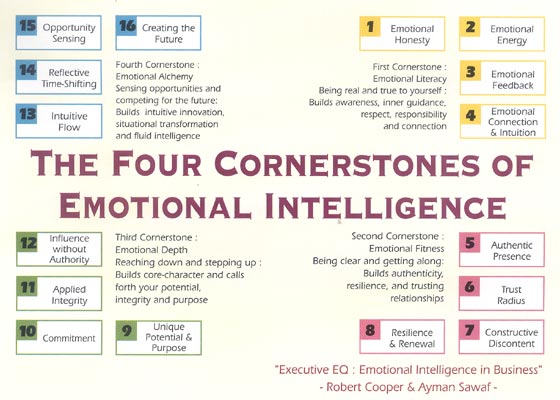
I liked this image I found that represents Executive EQ or EQ for Business.

eq-for-business.jpg

So, I think the key question here is how could we capture an individual’s EQ (or a proxy for it) and use that in our targeting and messaging to them about healthcare.

AHIP Panel

I am at the AHIP meeting here in Chicago. This morning, I had the opportunity to facilitate a panel which included three speakers on the topic of communicating with members:

It was a great discussion with strong attendance. I think we had 20 people standing in the hall outside the room listening for an hour. Here are some of the questions we discussed. Since I normally give my opinion (and couldn’t this morning), I will here. [And, since ½ the questions were ones that I thought of on the spot, the panel did great on their feet.]

  • How has Medicare Part D changed the way that healthcare companies interact with consumers?
    • It has forced them to think about members as consumers. They can vote 100% with their feet (within a window). And, this is the group with the most spend and highest utilization. They require segmentation and new services to drive behavior. All of this is new.
  • Healthcare is a front page topic in the news and the upcoming election. How has this changed consumer expectations for healthcare communications? And, what are the top 3 challenges for dealing with this consumer?
    • Consumers know what to expect and what to ask for. They want transparency (whatever that means to them). They want information. They expect companies to do more than simply react to claims. There is a proactive expectation and patients are comparing them not to healthcare companies but to retail companies like Nordstroms or Disney. (see blog entry on “If Disney Did Healthcare“)
    • The top challenges – understanding what is valuable to them, understanding how they digest and react to information, and providing them with a single face that isn’t disjoined across functional areas, business units, and external companies.
  • In most companies, there if no “patient ombudsman” that drives branding and message consistency. How can healthcare companies overcome this functional or process “silo” approach to communications?
    • Companies need to do a communication audit to understand how communications get out the door and how many communications a patient receives. They need to integrate their programs (inbound and outbound) and set a series of rules and triggers to manage communications across all medium. They also need to establish processes that are integrated cross-functionally to initiate communications but reference them back to a corporate set of rules.
  • Up until recently, much of the members experience with the plan was based on the service experience they got from the inbound call center. How has that changed and what are the elements in this new world that will drive satisfaction and loyalty?
    • I don’t think much has changed. The high utilizers of heathcare are still seniors. As someone else first said “pushing Health2.0 to a 1.0 population is difficult”.
    • But, I think that retention and loyalty are new and important. Most companies don’t understand satisfaction at an individual level. Nor have many health plans embraced loyalty type programs. Personalizing the value proposition, constant communications, and establishing incentives to drive healthy and cost effective behavior is essential.
  • Every company struggles with budget and ROI. The key is getting more for less. How are companies optimizing their communications and are they embracing a permission based approach as in the right message to the right person at the right time via the right channel?
    • Companies are aggressively looking at communication objectives and think through how to use multi-modal approaches. No one has really figured out permission based marketing (that I know of). Having a clear purpose for touching a patient and finding a metric to study the impact of that communication is essential to developing an ROI. Communications (and your vendors) have to have shared incentives that drive the right behavior which is focused on clear ROI.
  • Give me your craziest idea about how technology can change the healthcare communication framework over the next 5-10 years?
    • Integration of health, Rx, and lab data into a PHR that is embedded in a smartcard and which launches proactive communications to the health team using intelligent, learning algorithms which are personalized based on individual genetics
  • Since MDs, RPhs, and RNs are some of the front line contacts for patients, how do companies engage them to drive behavior?
    • This is still the problem. These people are so focused on care and so bombarded with information from multiple payors that unless there is a concentration from a single payor or technology that doesn’t impact their workflow it is hard to get them involved. And, in many cases, without P4P (pay for performance), there may not be much of an economic incentive for them to do things differently.
  • How will things like JD Powers and HEDIS focusing on communications and measuring satisfaction impact communications?
    • I think this is the key. Plans need to get scored, ranked, compared, and published relative to what they do, how they do it, effectiveness, cost per success, complaints, and patient satisfaction with the communications.

I am getting a little wordy here so let me move on. The point is that this is a great topic with lots of passionate people figuring it out. I have seen more consumer packaged goods people coming into healthcare over the past few years than anyone could have imagined a few years ago.

Patient Centric Healthcare

I changed the name of the blog last week. (I am still debating changing the URL since I don’t want to lose too much of the traffic I get today.)  It fits what I want to talk about (with the exception of some of my ramblings about technology, leadership, innovation, etc).

I was trying to describe this concept of patient centric healthcare to someone the other day when I realized that I have a deck I used over the summer that was a perfect fit.  When I was debating moving from a consultant back into a corporate role, I needed to tell people what I wanted to do and how I could help them.  So, I created a slide deck that I used with executives and recruiters.  It worked well.  I trimmed out the “why George” section, but the rest of this is a good summary of how I see the market evolving.

It is also exactly why I joined Silverlink Communications.  We share the same vision and dedication to process excellence.   Their technology already does what I think is critical:

  • Create personalized communications that target patients based on data driven models.
    • Push information
    • Collect information
    • Drive behavior
  • Use dynamic call algorithms that respond to patients words to take them down different paths is key.
  • Using technology to automate processes and augment your human capital based on proven value propositions.

Time to Change

Do you ever wonder why you have to change?  Things are going well.  We are making money.  Healthcare is recession proof.  We’ve been doing this for 20 years.

Well…the world is changing.  This deck is a good reminder of what happens outside the US and how fast things will change.

Intelligent Paper

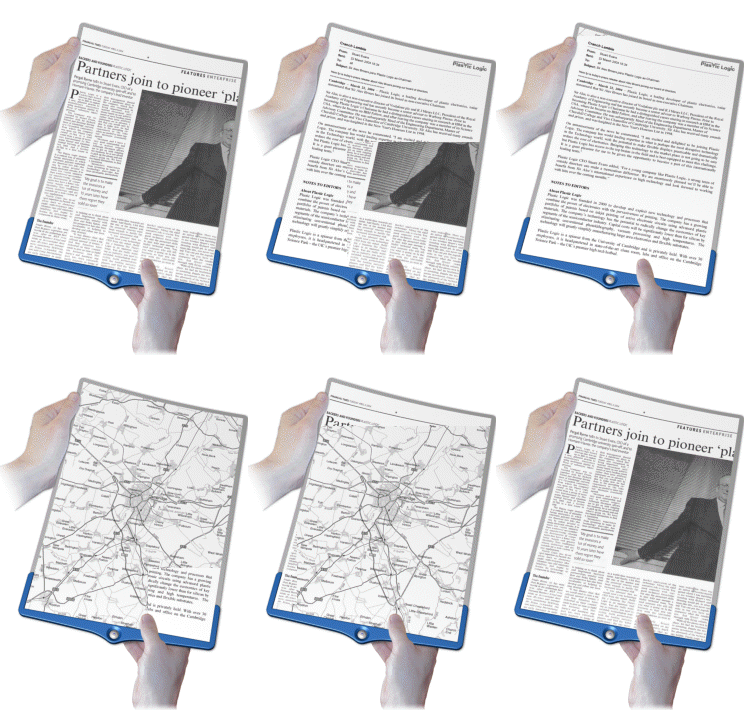
As healthcare is such a paper centric industry (as is financial services), I often wonder why we can’t get to the point of having intelligent paper.  I looked around a little and have never found anything so let me describe what I envision.

A regular paper that is embedded with intelligence such as RFID and the ability to receive and deliver text and/or graphical messages to the consumer.

digital-newspaper.jpgImagine for example a label on a prescription bottle which changed colors when it was time to refill and offered the consumer the ability to request a refill by pressing a digital button that was only available after the refill-too-soon (RTS) edit was passed (typically after 66% of the days supply dispensed should have been used).  Or, imagine new patient registration forms at the physicians office where you filled out one piece of paper that was auto-populated with information from your personal health record (PHR) based on your fingerprint.  All the forms could be brought up one at a time on the digital paper and your answers immediately pulled into the system of record.

Less paper.  More consistency.  Easier communications.  Better quality information.  Less costs associated with data entry. Fewer HIPAA risks.   

epaper_product.gif

Scary or Interesting Technology

After my post the other night about analyzing your writing, I had a chance to talk with a technology company about how they digest and use text from things like letters, e-mails, and call recordings.  It was fascinating.  They were describing to me a system they developed for the military which is now available commercially.

They can take all these communications and use them as part of a segmentation or targeting model that is based on patient behavior.  How great (and scary) would that be?  (Big Brother is always watching.)  Imagine that you have a model that tries to identify how to best incent a person to improve their health.  If you could input any e-mails or letters they have sent into your company and input any call recordings using speech to text, you would have all types of indicators about personality and interests along with communication modes, time of day that they respond to information, etc.

big-brother.gif

Obviously, a patient-centric healthcare model means really understanding things about people.  To do that, we have to get multi-dimensional and think differently.  Rather than simply focusing on moving people to mail order from retail, shouldn’t you focus on attracting the people that are most likely to stay with it and not move right back?  If you are going to offer an incentive for taking a Health Risk Assessment, don’t you want to offer it only to the people that will act on the results?

Compliance with prescriptions or testing is a great example.  There are certain people that are more inclined to stay compliant.  But, it is also important to understand what message will motivate them to stay compliant – not dying, seeing their kids get married, saving money, not missing work, etc.

And, because we are in healthcare, there are some legal constraints about when you can make different offers within the same or similar populations.

Analyzing Your Writing

Lois Kelly has an interesting post on her blog about the Linguistic Inquiry and Word Count program. You run text through the program and it categorizes the writing style. She compares 3 CEO bloggers. I grabbed text from my site and ran it through.

If I understand the results below correctly, it says I am fairly honest, somewhat outgoing, not very optimistic, have no anxiety, am actively thinking about the topic, and use lots of big words. I am sure my writing about all the problems in healthcare explains the low score on positive emotions, and I intentionally try not to make things too personal.

LIWC dimension

Your data

Personal texts

Formal texts

Social words – outgoing

7.08

9.5

8.0

Negative emotions – anxiety

1.13

2.6

1.6

Big words (> 6 letters) – higher grades which tend to be less emotional

22.35

13.1

19.6

Permission Marketing – This is What I [patient] Want

Permission Marketing is certainly not my concept. Seth Godin invented the term and wrote the book on this several years ago. But, I think it is a concept way behind it’s time in healthcare.

“Permission Marketing cuts through the clutter and allows a marketer to speak to prospects as friends, not strangers”

The concept (in my words) is that you ask the consumer (aka patient) what they want.

  • What information do you want from us?
    • Opportunities to save money
    • Alternative therapies
    • News about your drug
    • Benefit information
    • Compliance reminders (Rx, lab visit, tests)
  • How do you want that information delivered to you?
    • Phone
    • Voicemail
    • Cell phone
    • SMS / Text message
    • E-mail
    • Fax
    • Letter
  • Does the channel you want the message delivered through vary by the message?
    • Deliver savings information within 24 hours to me via my cell phone
    • Send benefit information via PDF using my home e-mail address
  • When do you want that information delivered to you?
    • Pro-actively
    • Reactively
    • Bundled (i.e., send me one “package” of information monthly)

Wouldn’t that be nice? Most of us don’t even know what the options are. We just get bombarded with information from our employer, managed care company, pharmacy, PBM, disease management company, wellness programs, HSA / HRA account manager, etc. Different messages. Different information.

In reality, one of the biggest problems is that our healthcare companies just can’t manage these type of personal rules today. Managing do not call lists are difficult enough. This should change over the next 5 years, but it will be a combination of patient generated preferences along with data mining to develop algorithms that predict what channel and message is most effective at driving behavior for certain patient segments.

Geekipedia

Sure…a little off topic, but understanding technology is one of the critical components (in my humble opinion) to driving innovation and change in healthcare. Healthcare is not an early adopter of solutions. There is too much fear about change (and litigation).

So, when Wired but out this magazine supplement called Geekipedia, I knew it was a must read. As it says on the cover “149 people, places, ideas and trends you need to know now”.

Here are a few that jumped out at me:

  • AJAX – a suite of web-development technologies which produce squeaky clean surfaces. This allows web designers to build web sites that act like applications and accept user input and computing results without fetching entirely new pages from a server. I have worked with developers to use this before. Very cool. You see it on a lot more sites now, but anytime you enter data and the site changes without refreshing it…they built the site using AJAX.
  • APIs – application programming interfaces are sets of rules that govern how apps exchange information. These have been around for years and typically only mattered to the programmers and your engineering staff…but today APIs allow you to create custom applications using desktop widgets and mashups to have personalized sites that do all types of cool things.
  • Collaborative Filtering – this is the recommendation algorithm you see on Amazon or Netflix or many other sites. I can see healthcare one day embracing this in patient centric forums – patients with your similar benefits and genes were most likely to respond to this form of treatment.
  • Distributed Computing – most of you should know about this as the use of our computers to solve problems has been part of the news (good and bad) for years, but the point is to leverage the memory of individual computers in a network design to create a virtual supercomputer to solve complex problems that look at lots of data over years – e.g., SETI@Home that looks for extraterrestrial intelligence or FightAids@Home which looks for new AIDS treatments.
  • Mashup – these are sites / applications that are combinations of existing offerings that are cut and pasted together. For example:
  • Meganiche – with the Internet’s utilization now, it is possible to have a niche within a niche. For rare diseases, this could have some value.
  • Neurologism – all of the new areas of research driven by the breakthroughs in understanding the brain.
    • Neurofitness
    • Neuroceuticals
    • Neuroinformatics
    • Neuromarketing
    • Neuroergonomics
    • Neurosemantics
  • RNAi or Ribonucleic Acid Interference – “the silent assassin of cell biology”. It protects against viruses by tearing up the viral RNA and preventing it from making copies of itself.
  • RSS or Really Simple Syndication – you see this everywhere – on my blog, on websites, even in the new Outlook. This allows you to stream information to your reader (e.g., Google Reader) to see new information without having to go to all the individual sites. I wonder how many managed care companies and PBMs offer this on their websites today. It would be nice to get this pushed right to my personal Google page.
  • SEO or Search Engine Optimization – this is the use of tags and other links to maximize how your website shows up in a search.
  • Ultrahigh-throughput gene sequencing – this is all about the speed at which genes are sequenced which is obviously a big driver of personalized medicine and genomics. I am not sure I buy the prediction of “it won’t be long before a stall at the local shopping center will work up your genome ‘while u wait'”.
  • Widgets – these are small applications which can typically be embedded in a website using reusable code (e.g., a BMI calculator or mortgage calculator)
  • Wikipedia – this is a site that provides the modern encyclopedia full of links and information that is created by the net community – are you out there? Is your company or product?

It makes you wonder. As healthcare moves to more consumer centric and sales to commercial patients mimics Medicare Part D, will you see a United Healthcare avatar in Second Life or a Medco Facebook page. And, when will be see YouTube and Flickr being used to paint positive pictures of our healthcare system for the many people that it does work for. If politicians can begin to use these sites and big corporations encourage personal advertising of their brands, healthcare should give it some consideration.

Blunt Healthcare

Obviously language is a key building block in communications.  It is one thing to say “your cholesterol is above normal” and another thing to say “if you don’t control your cholesterol, you will die before your 60”.  But, are physicians and other health professionals willing to be that blunt?  And, can us patients receive the tough love?

Between all the legal caveats that regulators and lawyers force into messages combined with companies unwillingness to offend, it seems hard to imagine many people delivering the blunt message.  But, I personally know it makes a difference.  About 5 years ago, I had a physician tell me that I was overweight.  He had calculated my BMI and suggested I lose weight.  My initial response was okay (sure).

bmi-status-english.png

My wife was there and was quick to tell him that he needed to push me on the issue if it was important.  So, he changed his words and told me that according to my BMI I was obese.  Now, that caught my attention.  I wasn’t going to be obese by anyone’s standards. 

So, he told me that I needed to lose 40 lbs to be in the normal (clinically acceptable) range going from 215 to 175 lbs on my 5′-10″ body.  I hadn’t weighed that since high school (or earlier). 

But, in 60 days, I lost the weight.  I ran or did aerobic kick boxing every day for 60 days and lost 40 lbs.  From there, I started running and within 12 months of my appointment I had run my first marathon.  Now, 5 years later, I have put some of it back on, but even at my worse since then, I have been down 20 lbs and have a solution to apply.

The point here is that to motivate consumers like me I believe that the healthcare system needs to be more blunt (or harse or direct) than it is.  Communications have to drive to an action and push people to take it. 

Greedy – Your Friends or Your Managed Care Company

It is an interesting discussion to have with different people throughout the health value chain.  When I was 100% focused on driving generic utilization, I would hear questions about why do it.  Sure, I save a little on the copayment, but some consumers saw the copayment as a discount.

  • If I am paying $10 for a drug that cost $30, I am saving 66%.  Not bad.
  • If I am paying $25 for a drug that costs $125, I am saving 80%.  Great.   

People would say things like why should I save my employer or the managed care company (or the PBM) money.  I don’t get it back was their perception.  Unfortunately, that is sometimes true, but in general, in the long run, saving money on benefits should keep the costs down and reduce your premium increase year-to-year.  In a few cases, I worked with CFOs to look at how savings could be re-allocated to create shared incentives.  (For example, if we drive up generics 5 percentage points, we will save $10M.  We will use $3M of that to increase our 401K match by 10%.)

On the other hand, this is what one of the executives at Express Scripts termed The Diner’s Dilemna.  The concept is fairly simple.  If you go to dinner with 2 other couples and know you are going to split the bill, you probably order what everyone else orders so that their is some cost parity.  If you go to dinner with 10 other couples, there is always that person that gets the surf and turf and orders a bottle of really expensive wine.  When cost is divided equally, some people will abuse the system.  Just like health benefits.  Why should I get the generic if I only really pay a portion of the higher cost.  It is divided across the masses.  If you went to dinner with your whole company (especially if its big), you don’t know everyone and don’t mind using more then your fair share even if you only pay the same amount.

This overallocation is fine when needed (i.e., you are allergic to chicken and order beef) but simply for personal greed is wrong.  So, it puts us back to the premise…someone benefits from our actions to move to lower cost solutions.  Who?  And, how is that shared back so that we all have similar incentives to act in the greater good.

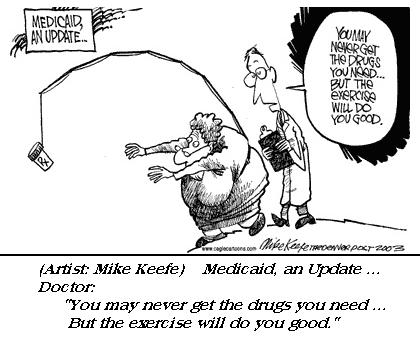
medicaredrugs.jpg

(Source)

Understanding Healthcare (Wurman)

Richard Saul Wurman has been publishing for years and done many interesting things.  I just stumbled upon his Understanding Healthcare site today.  It is worth a visit.  You could get lost in it, but it has lots of great examples about how to frame healthcare issues visually.  I took a few screenshots below to get you interested.

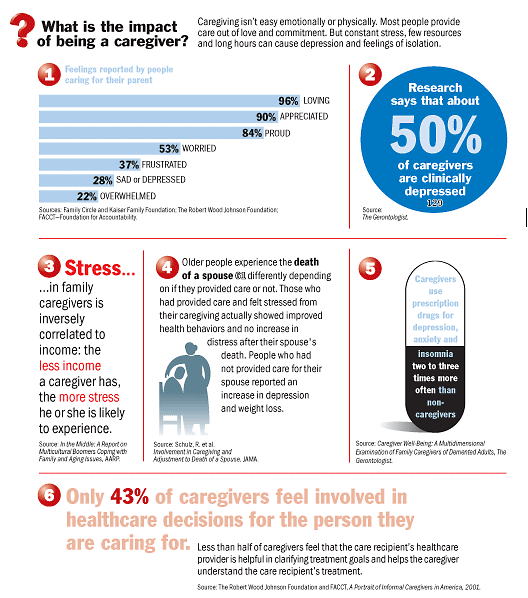
One shows the top 10 causes of death in the US (note all this is a few years old) by age.  Very easy to understand the data this way.  One shows the tests that you need by age.  (I could use this now.)  The other is just representation of some data around caregivers.

wurman-causes-of-death-by-age.png

wurman-timeline.png

wurman-caregiver.png

Zagat Rating System for Doctors

A few weeks ago, Wellpoint revealed that they were going to work with Zagat’s to rate physicians.  I think any information with some benchmark is great.  Since it is patient driven, it also has the chance of being very subjective which is the risk. 

The talk about using trust, communications, cost, and availability.  I am not sure those would be my choice.

  • Trust: A great concept, but how can I be objective here. 
  • Communications: This one is critical.  Did they communicate well?  Did they write down any recommendations?  Do they call to remind me of appointments?  Were they timely in getting me follow-up appointments?  Do they remember who I am from my last visit?  Do they look at me?  If I bring in information, are they receptive to discussing what I found?  Are they straight or do they beat around the bush?  This should also include the office staff – are they friendly?  Bad office staff can blow it for a good physician very easily.
  • Cost: This is another critical one as long as it is not simply about the cost of the physician.  Did they take into account my formulary when writing prescriptions?  Did they make sure that physicians they referred were in network?  Did they prescribe generics or offer me samples?  Did they suggest non-invasive treatment options (e.g., diet)? 
  • Availability: Conceptually yes, but I am not sure your going to learn much here.  The best doctors should be the busiest doctor.  I wouldn’t want them to get a low rating simply because everyone goes to them.  Now, ability to stay on time would be good.  Ability to fit in sick patients within 48 hours would be good.  I might even include accessibility here.  Can I access the building easily if I am handicapped?  Does it have easy parking?  Does it have a place for my kids while I wait?
  • Technology: Why not measure how and if they use technology?  Online appointment setting.  Handheld prescribing.  Kiosks for signing into the office.  EMR. 
  • Outcomes: I hope that we get to a point where Wellpoint is complementing the patient data with outcomes type data or actual claims data.

Just a few thoughts.  You can find lots of blog entries about this.  Here are a few:

Patient Insights

ist2_2780258_marketing_survey.jpg  I often get asked the question about how I made the transition from architect to business. The turning point was two projects I did. One was a visioning and architectural planning project for an Indian tribe that was using casino profits to buy back their tribal lands. The other was a sales process analysis for an architect I knew. He (and his father before him) had run a successful architecture firm for over 50 years. Over the past few years, their sales close rate had dropped. Not significantly, but enough to cause concern.

We worked together to identify a series of questions and then I interviewed his prospects in 3 buckets: (1) repeat buyers; (2) one-time buyers; and (3) those that never bought. It was a fascinating process. They all loved the fact that the firm cared enough to ask. And, they provided lots of information. In the end, it was a small thing – their architectural awards. It appeared that prospects correlated awards with expensive projects that were more about the firm and less about their needs. We simply downplayed these, and his sales close rate went back up. (If only all projects were so straightforward.)

Now, almost 15 years later, they still use the process. It got me thinking about healthcare. How often do we reach out to the patient to learn about their behavior? Do we really understand them at more than a macro level? With the technology available today to personalize communications or even benefits, shouldn’t this be a big focus. If I can developed personalized medicines based on my genes, I would think companies could figure out a way of developing personalized insurance plans that are based on my family history, recent claims, and predictors of future claims.

As I thought more about this, it reminded me of a question that someone asked me last month. They basically said “if you see a company is doing something really wrong, do you just come out and tell them how stupid they are?” What a great question? This gets to the heart of so many things. In a big company, politics often limits your ability to be brutally direct. As a sales person or consultant, you often have the issue of impacting future sales. As a peer, you have the issue of alienating someone or hurting someone on your team.

Good or bad. I have made this mistake too many times. I simply prefer to point out the obvious. When I was a teaching assistant, I remember telling a student in architecture school that he should find a new major. In consulting, I remember pointing out to a managed care CEO that he was never going to have an effective Internet strategy if he couldn’t even use a computer. I have had people ask me numerous times to give them feedback on presentations. I love to present so I have a high bar which often leaves me giving a lot of negatives (which are only meant to help grow the individual). [A good, but annoying, tool here is to drop a penny into a tin can every time the person says the word “um” so that they can break that habit.]

Anyways, bringing this all back…How do we get patients to trust healthcare companies and providers enough to give us valuable, direct feedback to improve our business. And, how do we engage the patients to create an ongoing dialogue to improve.

Free (or low cost) generic drugs

My local pharmacist told me that they are now moving to free antibiotics.  I still haven’t figured out how I feel about this from a business perspective. 

From a patient perspective – great.  Less out of pocket (or so I hope).

From a business perspective, here are my questions:

  1. The reason to do this is to capture new market share.  Is it working?  Target gave away a $10 gift card if you brought a new prescription to them for a while.  I don’t think it is was a profitable deal for them, but I am not sure.
  2. In most cases (even WalMart), the discounted or free drugs are a minority of the total Rxs dispensed.  Assuming people are mindly happy with their current pharmacy, are they willing to move for one drug that saves them $4 or $8?
  3. For cash patients that move, are the other drugs they fill at the new pharmacy more expensive then their previous pharmacy?
  4. Has this strategy become a requirement at retail or is it still a differentiator?
  5. Why start doing this?  The right answer would be that you care about the patient.  I think the reality is the that pills cost almost nothing and your labor is a fixed cost so why not. 

Perhaps it makes sense.  It certainly gets a lot of marketing coverage.  It would be interesting to see the data at some point and see what market share moved, at what cost, and whether it was profitable marketshare. 

Your biggest risk as a pharmacy is opportunity cost.  As your staff becomes busier, do they have less time to counsel patients?  Does their error rate go up?

Customer ROI

This is not a blog about my company – Silverlink, but I certainly am happy to share some of the learnings that we have.

We just put out a press release with one of our clients that has some great results. The client – Medica – is a non-profit, health insurance company with 1.3M members headquartered in Minneapolis.

A couple of the programs that they conducted with us include:

  • Welcome calls which increased member satisfaction while reducing costs by 90%. (Does your plan call you? I certainly never got welcomed to a plan.) They also were able to reduce their resolution time for resolving member issues by over 75%.
  • Coordination of benefits communications which led to a 32% increase in efficiency and less pended claims.

By using our automated outbound call technology, they saw response rate to surveys increase by 22%. (BTW – This is a great use of the technology. You send out calls until you hit your statistically significant N, and you can make real-time changes to survey questions if you see issues arising or need more information based on the answers you are getting.) In their case, they got surveys done in 5 days versus 24 days…and we process the responses to show real-time reports of status. (You can finally solve problems with real-time patient feedback to make critical decisions.)

And, communication costs were 8% below the costs of traditional mailers.

Obviously, there is a reason I choose Silverlink as the company I joined. It is great to see customer validated ROI (Return on Investment). In this world, focusing on your assets and how to maximize them (ROA) is critical.

(BTW – This is my first time writing a post in Word 2007 and sending it the blog.  It worked great.)

ConnectYourCare Acquired by Express Scripts

connectyourcare.jpg

I was glad to see my former employer – Express Scripts – jump into the CDHC space with an acquisition.  They bought ConnectYourCare which is a fairly new company that had jumped into the market over the past few years with money from RevolutionHealth.  It provides online tools and a card for managing your HSA / FSA type funds.  It will be interesting to see how this plays out.  It may be a little late in the selling season to affect 2008 but it could play prominently in the spring for renewals or new business.

As an aside, ConnectYourCare provides a nice glossary of terms you might here around consumerism and benefits.

You can also get access to some of the Forrester research through their site – here.

Medco Tour of Champions

I was surprised to see a full-page advertisement yesterday by Medco in USA Today about their Tour of Champions.  I knew they were focusing on therapeutic resource centers (i.e., pharmacies dedicated to specific disease states like diabetes).  It seems like a great idea.

tourofchampions.png

It was interesting to go to the website – www.tourofchampions.com.  One of my biggest surprises was the fact that they have made their therapeutic alternative tool called My Rx Choices (i.e., telling you lower cost options based on your current drugs) available to the general public.  Now, obviously, it can’t tell you your copay savings, but it may help you identify options.  For example, I put in Lipitor to see what it would offer me.  (see below)

myrxchoices-lipitor.png

From the website, this is what it says the specialist pharmacists do:

  • Cross-check your current medications with your health history and available lab work to help you stay safe.
  • Understand your overall health, not just treat your condition.
  • Let your doctor’s office know how your pharmacy program works so your doctor can help you save.

Retention Bias

As people always say, it costs less to keep a “customer” than to attract a new customer.  Given that 69% of people (per AON 2006 survey) have an option of health plans to choose from, why don’t managed care companies reach out to you to encourage you to choose them?

For healthy patients, I would reach out to them to encourage them to choose you.  They have to be the most profitable customers to keep.   You would hate for them to have either no contact with you or one contact with might not be positive.

Additionally, for sick customers, wouldn’t you want to interact with them and understand their impression of you (via surveys) and determine how to influence their decision during open enrollment.  Depending on the relationship – risk versus ASO (administrative services only) – you may have different reason for influencing their decisions.

This points to several key issues which exist in healthcare:

  1. How to segment your population?
  2. How to motivate people?
  3. How should you communicate with people?
  4. How to track satisfaction?

Can You Answer These Questions (healthcare company)?

These are more company focused although you can think about whether your healthcare company knows this about you.  To be truly effective at education or marketing to patients to drive behavior and outcomes, these are important.  Interestingly, I am not sure I (or you) could answer all these questions about myself (or yourself).

  1. What is your preferred medium – letter, call, fax, e-mail, text message?  And, does this vary based on the content?
  2. When is the best time to reach you?
  3. Would you prefer to talk or hear information delivered in a female voice or male voice?  Would you react differently if they had an accent?
  4. What would compel you to act – saving money or losing money?  Is there a specific amount?
  5. What makes you open an envelope?  (For example, we used to places stamps on intentionally crooked since people were less likely to think they were from a company.)
  6. Does color matter in materials?
  7. How many times do you need to hear a message before you respond or do you make up your mind the first time?
  8. Do you want to be healthy or simply minimize out-of-pocket costs?
  9. Do you trust physicians, pharmacists, insurance companies, hospitals?
  10. What information do you want to receive that you don’t?

I could go on, but I think the point is that today we (healthcare) don’t really understand patients.  What information they want, how to get it to them, when to deliver it, what makes it more effective, and how to drive action.  On the other hand, we may not know ourselves until “experimented” on with different variables.

Unified Communications

Those of you that know me (or follow the blog) know that one of my key issues is how to improve healthcare communications.  I think this is where we (as an industry) missed the boat.  I used to tease our VP of Call Centers that Dominos knew more about me when I called in than we did.

I was glad to see a blog entry from earlier this year by the physician that leads Microsoft’s healthcare group on this topic.

“Healthcare is a communication intensive business.  Good communication has a profound effect on the quality and safety of patient care.  Communication also has a huge bearing on patient satisfaction.  Yet historically, the options for how we communicate with each other in the healthcare industry have been somewhat limited.” 

Obviously, we have a long way to go.  Many times companies simply give up due to regulatory issues or the challenges of changing behavior.  The reality is that communications are difficult.  It is both an art (i.e., messaging, branding, design) and a science (i.e., linguistics, data mining, targeting, personalization).

Technology will drive a step change in the relationship between patients and providers and insurance companies.  This is the time to jump on board and figure out how to improve.

Regional Differences

I remember one of the first thing that healthcare peope used to tell me 10 years ago when I first began working in healthcare.  “Healthcare is local.”  At the time, I took this for granted.  Since then, I have seen all the data that shows how prescription utilization, spend per person, obesity, and many other variables vary by geography.

As I have been traveling, I was thinking about this as I noticed lots of anxillary things that vary dramatically state-to-state:

Boston and some eastern states have Dunken Donuts everywhere.  They went out of business in St. Louis.

In Michigan, everyone drives faster than any other state I have been in.  The other day, I was going 90 in the left hand lane and got waived out of the lane by a minivan and an SUV going about 100. 

In LA, people consider an hour drive nothing.  In some smaller areas, a 30 minute drive wouldn’t be considered for some normal task. 

Yet, from what I can tell, many national companies don’t vary their healthcare marketing and communications per region.  Why is that?  Is it simply a data sophistication question?  If attitudes are going to vary, have you taken that into account?

It makes me think of a project I did with a retailer years ago.  One of their questions was about stocking inventory and how to develop a model to optimize the mix based on location.  They had just gone through a season where some stores had excess shorts which they had to dramatically discount and some stores that ran out of shorts.  At the time, WalMart had just begun their CFAR (Collaborative Forecasting and Replenishment) initiative which created an integrated application for sharing data across stores and with suppliers to optimize mix and maximize inventory turns. 

That CFAR model has now become a default SAP module and created an industry association that uses the model.  Will healthcare do the same?  Not for a while from what I can see.

But, it is critical in communicating.  Attitudes towards preventative care vary.  Willingness to try and exercise and wellness vary.  Perceptions vary.  The most simplistic example I saw a few years back was the doubling of the success of a call campaign when the person calling [into the South] had a southern accent.  People weren’t as responsive without that familiar accent.

The website for Premier (a non-profit hospital association) had some good facts about localization (pros and cons):

“All healthcare is local”: Good for innovation and personalization of care

  • Widespread, local experimentation among U.S. healthcare providers prompts innovation, which as New York Times columnist, Tyler Cowen points out, makes the United States the world leader in new treatments and technologies. Innovations include the development of new drugs and devices and better treatment protocols.
  • The U.S. healthcare system is anchored by community hospitals and healthcare organizations. These local hospitals and organizations are rooted in the community and are able to shape care in accordance with the needs of their specific populations, making healthcare more personal and direct.
  • “Community-based approaches act as a reality check of what is doable and practical: They can provide an actual model of what works; they help identify promising practices in key areas; and they can provide lessons about how to address political issues.”[1]

But local orientation results in variation of care, uneven outcomes and high costs

  • In a national study on quality of care, RAND found that American adults receive just half of recommended evidence-based care services.
  • The National Committee for Quality Assurance’s recent scorecard, The State of Health Care Quality: 2006, reports huge variation in healthcare performance exists in every region of the country and in every clinical area.
  • “Despite the billions of U.S. tax dollars spent on research and the more than a trillion spent on service delivery, movement of evidence-based interventions into communities and health systems is often slow.”[2]
  • Lack of scale and connectedness (“buying clout”) and unnecessary duplication result in high healthcare costs.

[1] Debbie I. Chang, “Applying Lesson Learned in Communities To Programs and Policies at the Federal Level,” Health Affairs 25, no. 3 (2006): w192-w194.

[2] Jonathan E. Fielding and Peter A. Briss, “Promoting Evidence-Based Public Health Policy: Can We Have Better Evidence and More Action?,” Health Affairs, 25, no. 4 (2006): 969-978.

Reward vs. Loss Avoidance Example

Here is a good example I found yesterday in Fast Company that reinforces one of my posting from a few weeks ago on loss avoidance.

In an article that talks about plastic bags and how bad they are for the environment.  Would you believe we use 380B of those plastic bags you get at the grocery store (each year)?  And, in landfills they last 1,000 years.  I could go on, but that’s not the point of this blog.

Anyways, at Whole Foods, they give the customer a $0.05-$0.10 discount for each bag they reuse (i.e., reward).  They get 20% of people bringing in their own bags.  Ikea charges customers $0.05 for each bag they take (i.e., loss avoidance).  Ikea utilization of plastic bags has dropped by 50%.  People hate to lose more than they like to save.

Myers Briggs for Healthcare (1 of X)

I have been a big fan of Myers Briggs for years.  Every since I took the test and realized that it described me to a tee.  I even took an elective in graduate school to drill down on the testing and look at ways to use it in team development and other activities.

The purpose of the Myers-Briggs Type Indicator® (MBTI) personality inventory is to make the theory of psychological types described by C. G. Jung understandable and useful in people’s lives. The essence of the theory is that much seemingly random variation in the behavior is actually quite orderly and consistent, being due to basic differences in the ways individuals prefer to use their perception and judgment. (source)

If you haven’t taken the test, here is a site where you can answer a page of questions.  I took it and it matched my end result from numerous testings.  So why bring it up here?  And, why is this entry 1 of X?

First, I am a big believer in trying to categorize individuals to make some assumptions about how to deliver healthcare information to them.  This is one theoretical attempt to do this.  Second, I am certainly not going to solve this tonight so I will layout a few thoughts and likely pick the topic up again.

The first category is Introvert (I) or Extravert (E).  For me a healthcare introvert is someone who doesn’t talk about their family history or their individual ailments.  If they feel sick, they will research it before making an appointment.  Additionally, they may read online discussion groups but won’t participate.  The extravert will ask everyone’s opinion about their condition.  They want to tell you their cholesterol.  If they feel bad, they go right to the ER or Urgent Care.  And, if they have a chronic condition, they are active in online or physical groups.

The second variable is Sensing (S) or Intuitive (N).  For me, the sensing healthcare person has a deep memory of their condition.  They can tell you (and may even record) all the facts about their experience with a provider, drug, or disease.  The intuitive healthcare person remembers the general patterns (e.g., every time I eat after taking my pill) and speculates on what this might mean.  They aren’t focused on the specifics but more on the possibilities.

The third variable is Thinking (T) versus Feeling (F).  The thinking healthcare person is consumed by the facts.  They want to read the medical research and debate with their providers the treatment plan based on an article in the New England Journal of Medicine.  The feeling person is much more driven by experience.  If the placebo is helping them, they are willing to stick with it.  Or, if their neighbor says that generics are not good, then they won’t buy generics. 

The final category is Judging (J) or Perceiving (P).  The judging patient is planning their care path or wellness.  They participate in disease management.  They go to preventive clinics.  They get the flu shot even if they never get the flu.  The perceiving person reacts to the events.  They don’t have regular check-ups unless they are in pain.  They don’t participate in any programs unless they are sick.

These are some initial thoughts, but we all know that figuring out a healthcare segmentation model that would predict behavior is significant.  I don’t have the answer, but I think there is something here. 

If you know your type and want to learn more, here is a good site I found. (http://typelogic.com/)

Getting People’s Attention

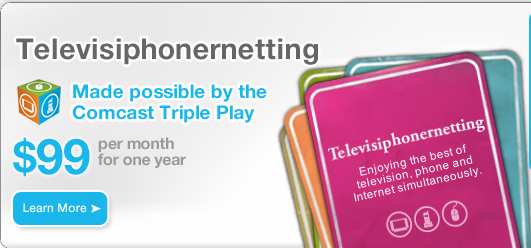
Comcast

No, I am not taking money to do advertising.  After seeing this Comcast advertisement on TV about 3 times, I finally got what they were trying to say.  Some made up word of “televisiphonernetting”.  In the commercial, there is a guy talking on the phone while web surving and watching TV.  The grandfather is trying to talk to him with no luck.

This is a good reality to think about when trying to communicate with consumers.  We are consumed by our busy lives and always multi-tasking.  Finding the right medium, timing, and message to get them to give you 10 seconds of time is difficult.

In healthcare, we have lots of opportunities to touch the patient.  The key is doing it around an event.  They are engaged for a brief period of time around a visit to the doctor or getting a prescription or going to the lab.  If you can trigger messages that are targeted to their situation and timely, they will engage.  General educational messages that aren’t personalized or timely often fall on deaf ears.