Archive | PBM / Pharmacy RSS feed for this section

Regarding House Bill 458 (MO) On PBMs

To Whom It May Concern:

You should be embarrassed to produce this bill. It’s obviously based on a one-sided view of the world regarding Pharmacy Benefit Managers which is generated by sensationalist journalists, jilted employees, independent pharmacists who have lost marketshare to chain drugstores, and pharma manufacturers who have seen their marketshare decline. This type of legislation will only serve to drive up healthcare costs and is exactly the reason why a government run plan won’t work in this country. They’ll focus on lobbyist interests and not the true interests of the consumer.

Let’s go point by point through your legislation and point out some flaws – (see bill here)

1 – Why would a PBM have to tell a consumer what they pay the pharmacy? That’s like Best Buy being required to tell the consumer what they pay for a TV. Most PBMs and/or pharmacies often print on the receipt what the consumer’s payor (employer, managed care company) paid for the drug (i.e., your insurance saved you $100).

2 – Why is the government telling businesses how to do their job? As an HR manager, if I can get a better discount for my employees on their prescription drugs by limiting the pharmacy network, why shouldn’t I have that option. We have preferred vendors in most companies. Why shouldn’t that be true in pharmacy? There are ~60,000 pharmacies in the US which is more than enough.

3 – Again, why is the government interfering in pharmacy law and telling me (the consumer) what I can or can’t do? Why can’t I move my prescription from one pharmacy to another based on discount, convenience, service, or other issues? All you are doing is creating a consumer burden and physician burden with no benefit to anyone.

4 – Now you want to take away my ability to manage drug coverage. There are plenty of circumstances where limiting or denying coverage makes sense due to inappropriate utilization, availability of lower cost options, abuse, and other issues.

5 – I’m completely confused here. You want to tell the insurance companies that they can’t increase the percentage of costs that the member pays (which is really a benefit design issue for the employer) unless the drug prices go up.

6 – This topic has been discussed a lot around switching medications. Of course, the communications should be clear. The patient should understand their choices. They physician should be in the loop (which they are since they have to write the new prescription). You hopefully realize that these are done to lower healthcare costs AND that physicians neither discuss costs with patients (generally) nor do they believe it’s their job to do this.

7 – Do you really believe that the dispensing physician who is focused on caring for their patients has the time to keep up with all the medical literature that a Pharmacy & Therapeutics (P&T) Committee reviews in determining protocols around step therapy? Look at the research…it shows that it takes 17 years for evidence-based standards to become standard practice. I personally don’t want to rely on my individual physician (who does a damn good job) to understand all the latest literature (w/o an EMR). And, I would hope no MD would willingly write an Rx that causes harm. All step therapy programs offer a prior authorization override to the MD and the PBM systems look for drug-drug and other types of interactions.

So, I guess the question is why are you (the legislation) trying to force me (the consumer) to have more administrative headaches, higher costs, and be treated with outdated protocols? And, at the same time, you’re going to force my employer to have higher costs and likely have to stop offering healthcare. And, you’re going to put more administrative burden on my physician who is already overworked and potentially underpaid.

Oh, wait, I get it…If you make the existing companies unable to run their business and unable to use evidence-based standards to lower costs then a government run experiment in socialized medicine will look much better. I hope that the Obama camp recognizes you for your hard work in advocating for them.

So Much Confusion Over Generics

In reading the article about generic drugs and the subsequent comments, I am amazed at how much mis-information and confusion exists.

Let’s start with a few facts:

  • Generics are approved by the FDA and have to have the same manufacturing standards.
  • Generics receive a rating (e.g., A-B) and are chemically equivalent to the brand drug upon whose patent they are based.
  • Chemically equivalent drugs have the same active ingredients but different inactive ingredients.
  • Generics cost less since there is no research and no sales and marketing activity to support.
  • A high percentage of generic drugs are made by the brand drug manufacturers.
  • Consumers save money on generics.  Pharmacies and PBMs make money on generics.  Plan sponsors (i.e., employers) save money on generics.  Everybody wins!
  • The variance in active ingredients is no different on generics than it is on brands.

There is definitely plenty of misinformation out there.  I would suggest sticking with sites like the FDA’s site on what’s real.

As the study by Prescription Solutions (United Healthcare) shows, there is confusion in the market.

  • Nearly 1/3rd of Americans don’t know or believe that generics are identical to brand drugs.  (They’re not identical, but the active ingredients are.  I would have asked the question differently.)
  • 2/3rds of respondents didn’t know that generics typically cost 50-70% less than brands.  (That surprises me.)

Jacqueline Kosecoff, Ph.D., chief executive officer of Prescription Solutions, said, “Using generics helps make health care more affordable without compromising results. Many Americans erroneously believe that the most expensive drug is always the most effective drug, so by helping to change perceptions, we can help people save money and still get the best treatment available.”

New CMO – Dr. Jan Berger

I’ve had the chance to read Dr. Berger’s research over the years when she was at CVS Caremark. After having a chance to spend some time with her on a few topics, I am very excited that she is coming on board at Silverlink Communications as our Chief Medical Officer.

From the press release:

DR. JAN BERGER JOINS SILVERLINK AS CHIEF MEDICAL OFFICER

June 23, 2009

Burlington, MA – Silverlink Communications® Inc., the leader in healthcare consumer communications, today announced that Dr. Jan Berger, former Senior Vice President and Chief Clinical Officer for CVS Caremark, joins Silverlink as Chief Medical Officer. In her role, Dr. Berger will focus on setting the company’s overall vision and strategy for population health and clinical communications programs within the managed care, population health, and pharmacy benefit management space.

Dr. Berger brings more than 25 years of business and clinical expertise in healthcare, including more than 15 years as a medical director at both a health plan and a major regional hospital. She is actively involved in quality initiatives, participating in numerous committees for National Committee for Quality Assurance (NCQA); medication safety, participating in steering committees at National Quality Forum (NQF); and population health management through her Executive Board position at DMAA. She also serves on several influential editorial and healthcare company boards, including Editor in Chief of American Journal of Pharmacy Benefit. Her expertise expands Silverlink’s focus in population health and clinical outreach – specifically related to engaging and connecting with healthcare consumers in a variety of lifestyle management, disease management and preventive health activities.

“Jan is clearly one of the leading innovators in healthcare, with tremendous clinical acumen and an ongoing track record of business execution in programs that drive down healthcare costs and improve health outcomes,” said Stan Nowak, Silverlink’s co-founder and CEO. “We are extremely proud to have her join our executive team at a time when behavior change is critical to our national healthcare reform process.”

“Silverlink is at the forefront of using communications and analytics as strategic assets to help consumers make more effective healthcare decisions,” said Dr. Jan Berger. “With the consumer at the center of our healthcare cost equation, we have the opportunity to improve the health of our country and eliminate hundreds of billions of dollars that relate to preventable conditions. This is a complex but solvable problem and I’m passionate to be part of a team that is already making an impact.”

Gov’t Reduce HC Costs: Rx Decisions Say No

I have nothing against the pharmaceutical companies.  We need medications.  Development of medications costs money.  There are lots of failures to find one that works.  They deserve to make money.

That being said…they are smart and apparently the administration is inappropriately (IMHO) paying attention to what they suggest is right.

  • For Medicare PDP, the plans can no longer require the member to pay more when they choose a brand drug which is available as a generic.  WHY NOT?  It’s the same drug.  There may be a few exceptions called Narrow Therapeutic Index (NTI) drugs, but just make them exceptions.  This was a bad decision which will cost us taxpayers money.  (See prior posts – Potentially Ridiculous Decision and Uproar Over “Reference-Based”…)
  • Now, they jump on the savings that are offered for members who hit the “donut hole” and stay on the brand medication.  Why not just require MDs to give out samples?  Of course this will effect behavior and drive brand utilization.  Pharma is not stupid.  This is another decision which will cost us taxpayers money.

On the one decision where they go against pharma – drug reimportation, they make a bad decision.  Why import drugs?  Why not implement a therapeutic MAC (maximum allowable cost)?  This will definitely impact drug costs AND generic drugs (which make up almost 70% of the claims filled) are cheaper in the US.

This is the government that we want to manage the costs of our healthcare system when they can’t even make the logical decisions that anyone close the business could make.  Come on!

[IMHO = In My Humble Opinion]

Sold to Pharma

What Would A Public Healthcare Company Give Us?

I’ll admit upfront that I’m well behind in all my policy reading, but as a citizen and someone who works in healthcare, I have to wonder why this makes sense.

  1. Is it to lower administrative costs as Kathleen Sebelius said on TV this morning?  Since they only represent ~10% of the total healthcare costs, that’s not going to make a big difference.
  2. Is it to provide coverage for the uninsured?  This seems like a fundamentally good cause but how is that population defined.  Why can’t that happen in the existing system with the right incentives / mandates?
  3. Is it to provide competition for the current insurers?  This seems like a bad path.  Government competing with industry…will the playing field be even?
  4. Is it to provide a government subsidy to those that can’t be profitably insured?  Again…this is probably in the social interest of the country.  Can it be done w/o simply overspending?
  5. Is it to drive a long term investment in preventative care?  Now, this seems like an interesting perspective.  We know one of the issues with long-term investments in patient care is that members churn.  If I invest today in a member that I won’t have, I don’t get my money back.

I think my point here is that a public system (IMHO – In My Humble Opinion) isn’t the right question.  We have systemic challenges around incentives, payment structure, long-term care, supply and demand, health literacy, etc. that have to be addressed.

From what I’ve seen in Medicare Part D (PDP), I have no faith that a public system would manage trend.  They won’t even push people to chemically equivalent generics.  They blindly pursue re-importation.  They don’t have a very limited formulary.  They don’t have aggressive utilization management programs (e.g., step therapy).

Someone needs to set an aggressive goal of keeping trend to 0% for the next decade and then work toward that.

New Clinical Webinars – HEDIS, Adherence, Engagement

In June, we are offering three complimentary webinars to our clients and prospects on key topics of discussion.

Increasing the Effectiveness of Population Health Program Engagement
June 16th | 1:00 PM ET

Getting consumers to take charge of their healthcare behaviors and choices is critical to controlling costs and improving outcomes. Successfully welcoming and engaging consumers in DM and health management programs can be the toughest road for health plans and population health organizations. Strategies that motivate participatory engagement are key – but it takes more than a friendly voice and the right script.

Join Silverlink for a complimentary webinar where we will discuss the challenges of moving health behaviors and effective strategies organizations can implement to get ahead of the behavior change curve.

In addition, learn how to:

  • Leverage tailored messaging to drive high engagement rates
  • Enable continued engagement over time
  • Maximize buy-in and acceptance of health coaching
  • Combine multichannel approaches to elicit engagement and re-engagement
  • Optimize engagement campaigns through predictive analytics to drive results

Drive Positive Health Behaviors and Improve HEDIS Results

June 23rd | 1:00 PM ET

Whether your focus is on the HEDIS measures for women’s health, the diabetes metrics or a broad range of effectiveness of care measures, Silverlink can design communications strategies that increase your reach, motivate member action and improve HEDIS results.

With the backdrop of the economic slowdown, communicating with members about the importance of key preventive screenings is more critical than ever. Explore the many routes to break through health prevention challenges by tailoring communications interventions that work for your populations.

Join Silverlink for a complimentary webinar where we will present the results and lessons learned over several years in supporting HEDIS screenings including a recent campaign aimed at reducing health disparirities in African American and Hispanic populations related to colorectal cancer screenings.

In addition, learn how to:

  • Use a flexible framework that supports national teams in delivering effective outreach in local markets
  • Drive performance on high-profile HEDIS measures where plan performance has hit a plateau
  • Segment your membership to deliver highly personal messages using multiple levers
  • Design and target messages to help reduce health disparities
  • Combine multiple messages to support members with more than one gap
  • Leverage multichannel campaigns to maximize reach and action

Rethinking Medication Adherence

June 30th | 1:00 PM ET

More than 50% of consumers become nonadherent around their maintenance medications within the first 12 months of therapy. And, today’s economy is putting even more pressure on people to make economic tradeoffs that threaten their health. Several studies have shown that more people are skipping doses or not refilling medications. Non-adherence leads to $177B in direct and indirect costs to the healthcare system per year.

Silverlink provides a comprehensive suite of communications services to drive medication adherence from targeting and messaging to multi-channel campaign management and execution. Join Silverlink where we will discuss some of the common myths around and key strategies related to medication adherence.

In addition, you will learn about:

  • Critical success factors in designing adherence solutions
  • Important conditions to focus on for adherence
  • Success metrics and key measurements
  • Comprehensive solutions for all phases of the patient’s therapy from initiation through long term maintenance

Medco 2009 Drug Trend Report

Here are my highlights from Medco Health’s 2009 Drug Trend Report:

  • Overall trend was 3.3%.  (1.3% excluding specialty drugs.)
  • Specialty trend was 15.8%.
  • Their generic fill rate was 64.1%.
  • Interestingly, they broke out trend to show that clients with over 40% mail use had a trend of -0.7% while those with less than 40% had a trend of 5.8%.
  • I do like the generic distribution chart below although it is for 2008 Q4 while their 64.1% number is for the average of 2008.

Medco GFR Distribution

  • They point out that utilization growth was negative 1.1% last year which was the first time in a decade.  What I was surprised at is that they didn’t “blame” the economy for this.  Most surveys I have seen say or imply that people are taking less medications because of the increasing cost burden while their overall wealth is decreasing.
  • Medicare costs increased 6.8% for their PDP (prescription drug plans).

Medco Medicare Spending 2009 Rpt

  • I think it’s interesting in helping companies focus their management efforts when they project that “in the next 3 years more than 85% of drug trend will be driven by drugs in six categories: cardiovascular, endocrine/
    diabetes, central nervous system, musculoskeletal/rheumatology, respiratory, and oncology”.
  • In a brief section about the unwired state of healthcare, they share some scary statistics:
    • A review involving the medical records of 41 million Medicare patients identified $8.8 billion in error-associated costs and 238,837 preventable deaths. Moreover, a large subset of these errors are medication errors.
    • An estimated 1.5 million preventable serious medication errors occur each year, with $217 billion (2006 dollars) in associated costs.
  • Since people are always asking for quantifiable value around adherence, I liked the chart below which showed the survival rates over years based on adherence vs. non-adherence.

Medco Statin Survival Rates by Adherence

  • They introduce a new metric – Generic Opportunity Score (GOS).  It takes into account both chemical and therapeutic opportunities for generics to be used.
  • They also provide some details on a brand-to-generic $0 copay waiver program which had a 14% success rate.  That’s pretty good from what I have seen.
  • Here is a breakout of the specialty pharmacy categories:

Medco Specialty 2009

  • Now, where they do credit the economy is with improving generic fill rate, mail order utilization, and client’s use of trend management programs.
  • They show trend by age group with the lower age groups growing faster.  They also showed a nice graph of utilization by state.

Medco Geo Distribution 2009

  • Below is their chart on where trend growth in the future is projected to occur (which should tell you where to focus preventative action).

Medco Top Therapy Classes Trend 2009

A Few Medco Updates

First, Medco published their Drug Trend Report for 2009 a few days ago.  I am just starting to read it and will post my comments in the next few days.  [BTW – I am the #1 Google hit if you query “drug trend report”.]

Second, they recently posted a video of Mark Spitz talking about Medco’s website and savings money on prescriptions.

Then, they also presented a few new studies at ISPOR this past week which showed:

  • Asthma patients taking a statin were less likely to have a asthma related hospital or ER visit.
  • Patients with MS (multiple sclerosis) were more adherent when using specialty.

I think I’m going to try to learn more about the MS study.  Did it vary by age, gender, plan design, pharmacy type, stage of disease, etc.

Why Does WSJ Villanize CVS Caremark?

I was so annoyed when I read the WSJ this morning about CVS Caremark charging more for members that go outside the CVS store or mail order.  Come on guys.  This is a basic tiered network design.  It’s not unlike tiered formularies or preferred drug lists.

First, it’s a plan design that was created and offered to clients.  Some clients choose it.  That’s not CVS Caremark’s issue.  Anyone could do this and offer it.

Second, what’s different between this an mandatory mail or retail buy-up.  If you choose a higher cost location, you have to pay more.  You’re getting the same drug at a higher cost facility.

What frustrates me the most here is that we will never reform healthcare and drive out costs if people want to have their cake and eat it too.  You think you can have total flexibility and manage costs.  We have to make some hard decisions and push people to drugs, locations, treatments, etc. that offer similar quality at a lower cost.  That’s not going to be easy.

cake

Express Scripts 2009 Drug Trend Report

I always enjoyed being part of the team that put the Drug Trend Report out when I was at Express Scripts from 2001-2006. With that in mind, I do await anxiously to see what new information they will share each year. I will say that the core fundamentals (as always) were very strong in the 2009 report, but I missed not having any client case studies in the document.

They reported drug trend of 1.5% (without specialty) and 3% with specialty.

Specialty drug trend was 15.4%.

Patients paid an average of $12.82 per Rx.

They say that more patients converted to Home Delivery (aka mail order). [I have to check this. My recollection is that mail volume was relatively flat and this would be hard to achieve unless they had more people filling less drugs on average at mail.]

They reported PMPY utilization of 14.32 Rxs.

Their members paid 29% of the generic drug costs; 19.6% of the brand costs; and 22.3% overall for traditional drugs. For specialty drugs, they paid 2.3% (or 20.2% for all drugs including specialty).

They have a section on compliance (which is rapidly becoming a key discussion point in the PBM world). I was a little surprised they didn’t call it adherence which is more common these days. But, they revealed some surprisingly high MPR (medication possession ratio) numbers for antidiabetics, antihypertensives, and lipid-lowering drugs. Considering adherence is where a member has an MPR of greater than 80%, they showed 77%, 83%, and 83% respectively. Since we know that 50% of people (on average) drop therapy within 12-months, this seems improbable on a book-of-business basis. (Maybe I’m just becoming a cynic in my old age.) The only reason I could find to explain this example was that this was not based on new starts (i.e., NRxs) unless they came in the first quarter. Therefore, there might be some selection bias in that they are taking MPR on people that started the year on the medication and may therefore have been people who were more likely to be adherent. I would rather see this done on a rolling 12-month basis.

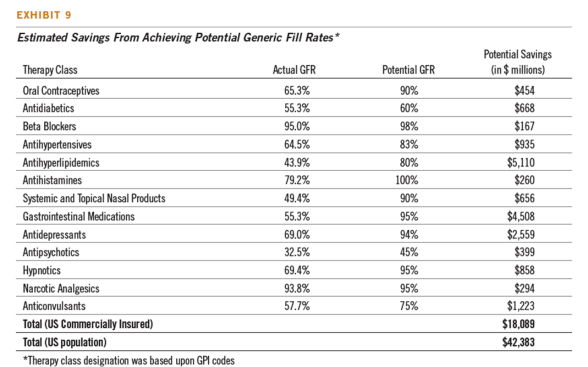
As I often use, they define waste in the system and give you a potential GFR (generic fill rate) goal for the top therapy classes.

ESI Estimated Savings GFR 2009

Their analysis shows that 55% of the costs for specialty drugs were billed through the medical benefit rather than the pharmacy benefit.

55% of their members are in plans with at least one step therapy module.

They talk about a few studies they have published showing that targeted and framed messages are more effective than general messages. And, that those messages are more effective with mail order users than people at retail.

Again, there might be some selection bias here as people at Home Delivery may simply be more active in managing their healthcare. The other question I have had for a few of my friends there has been whether we are comparing apples-to-apples. Since I ran a few of the programs before I left, I know we did a lot more interventions (web, inbound IVR, outbound calls, messaging on the invoice, letters, POS rejects) than we did for retail (letters and outbound IVR). If they’ve adjusted for that, than this is clear. If not, I would want to see that adjustment made.

As anyone who reads the blog knows, I am a big supporter of the theory behind their Consumerology story. I think Larry Zarin and Bob Nease have done a great job putting together their advisory board, creating case studies, and using behavioral economics. I always talk with our clients about these theories, and our analytics team is constantly helping clients define test plans that use these.

  • Social comparison
  • Hyperbolic discounting
  • Loss aversion

In comparing adherence at retail and mail, one thing that came into my mind was whether a driver of better adherence was a longer time window to refill. Typically, you have a refill-too-soon (RTS) edit in place until 2/3rds of the medication has been used (based on days supply dispensed from dispense date). At retail, that means you have about 10 days. At mail, that means you have about 30 days (less the 7 days for shipping). Does that make a difference?

I was also surprised under the methodology section that they now include rebates in calculating costs. It’s a quick one-line comment but how did that effect trend or other metrics here…and if so, how significantly?

As always, I love the therapy class reviews in the back that give you great numbers like:

  • Cost PMPY
  • # Rxs PMPY
  • Prevalence of Use
  • Average Cost / Rx
  • # Rxs / User / Year

CVS Caremark TrendsRx Report 2009

This is one of my favorite times of year. After working on the Drug Trend Report at Express Scripts for several years, I love to get all the trend reports from the PBMs and read them. The first one that I have had a chance to review is the one from CVS Caremark. I found it an easy to read document with good case studies and a mix of strategy and tactics.

Here are some of my highlights and observations:

  • 3 out of 4 clients cited “reducing health care costs” as their primary measure of PBM success…AND 2 out of 3 prioritized “plan participant behavior change” as the way to reach that goal. [Maybe the plan design bigot is finally dead.]
  • With pharmacy spend approaching $1,000 PMPY, I found their chart on potential cost reduction a simple way of pointing people to things they should think about.
    cvs_caremark_savings-opportunities-09
  • A 10% improvement in diabetes adherence can save $2,000 in annual health care costs. [I assume this is based on improving MPR and would definitely like to learn more on how the health care costs are quantified.]
  • They layout three objectives – improve use of lower cost drugs, improve adherence, and get people to take better care of their health. [Similar to the concept I laid out in my white paper of needing to be broader than just Rx benefit management.]
  • They talk about two of their solutions:
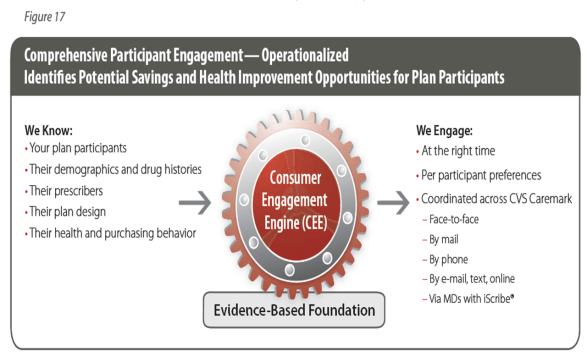
    • Consumer Engagement Engine (CEE) which is very similar to what Silverlink does and provides business logic for targeting the right member at the right time with the right message.

      consumer-engagement-engine

    • Proactive Pharmacy Care is their “medical neighborhood” concept to stitch together their entities – Mail Order, CVS retail, Specialty, MinuteClinic, and their disease management company.
  • Their trend was 3.9% PMPM in 2008 (or 2.8% excluding specialty drugs).
  • Medicare Part D utilization was up 4.1% compared to 0.8% for the rest of their BOB (book of business).
  • Their GDR (generic dispensing rate) averaged 65.1% for 2008 and was 66.3% in December 2008.
    • Best in class employers = 68.2%
    • Best in class health plans = 73.4%
  • As they remind you, a 1% increase in GDR is roughly equal to a 1% reduction in pharmacy spend.
    • [What I would like to see is improvements in GDR from new drugs coming to market in 2008 versus improvements that came from clients implementing plan design.]
  • They say [which I preach all the time} – “proactive consumer engagement improves results and lowers the risk of disruption. For best results, provide personalized actionable information at a range of touchpoints.”
  • I saw a few interesting things in one of the case studies they share about their “Generous Generics” program. [Does that name get used with consumers? What’s their reaction to it?]
    • $0 generic copay at mail [that should drive volume]
    • 10% coinsurance penalty for not shifting to mail after the second fill [similar in concept (I believe) to the Medco “retail buy-up” concept]
  • Top Ten Therapeutic categories (53% of spend):
    • Antihyperlipidemics
    • Ulcer drugs
    • Antidiabetics
    • Antidepressants
    • Antiasthmatics
    • Antihypertensives
    • Analgesics, Anti-inflamatory
    • Anticonvulsants
    • Analgesics, Opioid
    • Endocrine and Metabolic Agents
  • They state that the population of diagnosed diabetics is growing by roughly 1M a year.
  • They state that a generic for Lipitor is now expected in Q4 2011 [which I think is about a year later than originally expected]
  • They show some data from their Maintenance Choice program which I think has a lot of opportunity.
    • This is where you can get a 90-day Rx from either mail or a CVS store for the same copay. [The key here is for them to understand member profitability and for CVS Caremark to understand how to drive consumers to the preferred channel.]
    • [I would really need to understand their profitability by channel because if I read the chart in here right, it would appear that given the choice 45% of those at mail would choose 90-day at retail…a scary concept for mail order pharmacy.]
      maintenance-choice
  • They give a case on Maintenance Choice which leaves me looking for a key fact. They state that a recent implementation has a goal of 70% of the client’s day’s supply will go through the preferred network (CVS) or mail and that 20% of it goes through mail today. [What percentage goes through CVS today? If it’s a client in Boston, that one scenario. If it’s a client in Chicago, that would be another feat.]
  • Specialty pharmacy trend was 13.5%.
  • They say that pharmacogenomic testing is being used more frequently for specialty drugs. [I would love to know more…how often? For what drugs? Has it improved outcomes? Are their clients covering it? How are they playing in this space?]
  • They talk about adherence which continues to be one of the hottest areas in the Rx arena today. They give stats showing 15-48% improvement across different metrics and up to $142 in cost avoidance in one case. [Are these again control groups? What was the cost / benefit analysis or ROI? Is this improvement in average MPR (Medication Possession Ratio) or improvement in the % of people with an MPR of >80%?]
  • They talk about 88% of heart failure patients maintaining optimal prescription adherence compared to a norm of less than 50%. [My questions here (which isn’t apparent) is whether this was an opt-in program so the 88% is for engaged and active participants or whether it was across all targeted members.]
  • They provide a quick list of factors that will impact drug trend:
    • Driving costs:
      • Aging
      • Obesity
      • Diabetes
      • Specialty pipeline
      • More aggressive treatment guidelines and earlier diagnosis [which hopefully would lower total healthcare costs]
      • DTC advertising
    • Reducing costs:
      • Economy – reduced utilization and improved GDR
      • Increased availability of generics
      • FDA safety reform
      • Lackluster non-specialty drug pipeline
      • Utilization and formulary management
      • Consumer price transparency

Communication Strategy Regarding H1N1 (Swine) Flu

“There is a lot of media, a lot of news, a lot of rumor – the sooner you can get correct and accurate information to consumers, the better – otherwise people will look to other sources that may not always be accurate.”  (Jan Berger, President of Health Intelligence Partners on podcast)

We have been hearing a few things from our clients and have put some information up on the Silverlink website.  Some of the comments have been:

  1. I have seen a spike in call center volume about this topic.
  2. Clients want to change plan design to make sure Relenza and Tamiflu are covered and don’t require a prior authorization or have a quantity level limit on them.
  3. We want to proactively reach out to at risk populations – children, seniors, or people with a compromised immune system.
  4. We want to be able to flexibly target certain geographies.
  5. We want to remind people not to panic, drive them to quality information sources, and make sure they know the basics – wash your hands.

At a minimum, everyone is adding information to their websites.  Many consumers are Googling the topic or following updates from @CDCEmergency (on Twitter).

Healthplans, PBMs, and population health companies are at the heart of this.  They need a coordinated strategy to inform people appropriately as this issue continues to be top of mind.

We recorded a podcast last night with the Medical Director from Healthwise and Jan Berger who is the former Chief Medical Officer from CVS Caremark and is now president of Health Intelligence Partners.  In here, they answer some general questions about the situation and what companies should be doing to educate members.

The two standard solutions Silverlink is offering clients are:

  1. Offer an inbound FAQ (Frequently Asked Questions) line with CDC content and specifics about their plans.  This can help with overflow from their call center and/or be used as a direct line from their website or outbound communications.
  2. Selectively target populations (age, zip code, disease state) with a brief message reminding them to wash their hands and telling them where to get qualified information.

As with all our communications offerings, these can be customized (messaging, channel, targeting, etc.) to meet client requirements.  Additionally, since one of our technology advantages over others in the space is our flexibility, we can work with clients to keep these messages up-to-date as the situation changes and as new information has to be added.

Swine Flu (H1N1) Continues To Top News

(picture from http://www.myfox8.com/lifestyle/health/la-sciw-swine-masks28-2009apr28,0,4461177.story)

It’s amazing how this has dominated traditional media and blown away the online media.

I few things that stick out for me:

One of my favorite pictures that goes right to the health literacy issue is the following.

NOTE: This is not what H1N1 flu is about…hence the dropping of the “swine flu” term.

(picture from http://cuteoverload.com/)

Who’s Killing Independent Pharmacy?

This is a great question.

  1. Has it been the big mail order pharmacies?
  2. Has it been the PBM’s and their negotiating leverage?
  3. Was the final straw Medicare Part D and the loss of the cash patient?
  4. Is it other retail chains and their operating efficiencies?
  5. Was it just a natural evolution?
  6. Is it the fact that money isn’t made on the Rx anymore but on the candy bars and soda?
  7. Is it technology and the capital investments required?

Here is a quote from Jennifer Luddy, spokeswoman for Medco Health Solutions, (from AIS Drug Benefit News):

“The facts show that it is not mail-order [pharmacy], but rather chain pharmacies that are presenting a threat to independent pharmacies. According to national data from the pharmacy industry itself, for every independent pharmacy that closes, 25 chain and big-box retail pharmacies open.”

One Universal Mail Facility

Given the market trends and the over-capacity of mail, could we ever see one facility that served everyone?  It would be an interesting play.  I think the evolution would be to allow all the existing mail facilities into the network (i.e., Express Scripts mail could serve Medco members and vice-versa).  That would force consolidation and really put everyone in a competition around cost-to-fill and customer service.

Economically, it seems very logical to come down to a few high-volume facilities that filled all the automated scripts.

I guess the other play would be that mail just became a central fill for retail and every Rx was picked up locally but the majority were filled centrally and shipped for pick-up.

Neither are likely in the near future, but interesting models to debate.

postman

Whitepaper: The Future of the PBM (Pharmacy)

As we have been working with a lot of PBMs over the past year, the question has come up many times – “where do you see the industry going?” After bouncing some ideas off a few of you, we have pulled together a whitepaper with the Silverlink Communications perspective. Certainly, each area of the whitepaper could have been its own chapter, but rather than turn this into a thesis, we are publishing it.

As I have said in a few recent articles including the one in HCPro, I think the Express Scripts acquisition of NextRx will likely accelerate a few of our predictions here.

The executive summary of the whitepaper is below. The final whitepaper is available here.

I would welcome any comments you have…

Executive Summary

In the next several years, we believe that three changes will drive the pharmacy marketplace and ultimately change the business model for PBMs. These changes will be accelerated by the current financial crisis which may drive further consolidation in the short-term. Consolidation which we believe will accelerate the “race to the bottom” where the traditional model of scale has been maxed out with parity achieved among the large PBMs.

1. The need to better engage the consumer in understanding their benefits and ultimately responsibility for their care;
2. The effort to automate and integrate data across a fragmented system and across siloed organizations; and
3. The shift from trend management to being responsible for outcomes.

Consumer Engagement
The industry-wide movement to consumerism will continue to affect plan design, but it will also thrust PBMs and pharmacies into the critical path of member engagement. With pharmacy being the most used benefit as well as the volume and accessibility of retail pharmacies, they will play a critical role in driving adherence and helping consumers understand healthcare. This will renew the focus on cognitive skills, medication therapy management and ultimately drive the desire for a more traditional “corner store” approach that can be scaled using technology.

Combining this with the macro-economic forces that are driving ubiquity of technology through mobile media and the evolution of the Internet from a pull media to a push media will also challenge the PBMs and pharmacies to innovate. They will be required to look outside of healthcare models to identify the right communications to drive behavior. PBM’s and pharmacies will have to leverage behavioral economics and personalization technology to get the right message to the right consumer at the right time through the right medium.
Automation and Integration
The consumer engagement challenges will only exasperate some ongoing challenges within the PBM and pharmacy community. This will include the lack of staff to provide more cognitive services and the general fragmentation of data across organizations and functional silos. Figuring out an overall “single view of the patient” which shows all the touch points and offers a coordinated multi-channel strategy for inbound and outbound communications will become a major focus.

In addition, in order to make these solutions efficient, the development of predictive models, much like the clinical and underwriting solutions being used today, will become the norm across the industry. As these models are fine tuned and the promise of e-prescribing becomes more of a reality, the channel for engaging physicians in the member’s care will finally exist. PBMs and pharmacies will be able to use data to allow physicians to understand when patients aren’t being compliant and when there is an opportunity to drive change.

From Trend Management to Outcomes
The traditional business model for the PBMs has been based on large scale negotiations to drive rebates and efficiencies within mail service – cost to fill and acquisition costs. At the same time as those efficiencies reach a maximum discount, the traditional tools for managing trend will have run their course. Although plan design won’t “die”, comparative effectiveness may reduce (or eliminate) the need for formularies, and in general, the ability to shift cost to the consumer above the 25-30% level will be difficult.

Both of these challenges will push the PBMs and pharmacies into a role where they are focused on driving health outcomes and being part of the bigger solution across the industry. They have a strong footprint to drive this change and as theranostics (or personalized medicine) evolves there will be an opportunity to find cost effective solutions to change the prescription landscape.

Promotion vs. Nudging vs. Mandatory Mail

Although there is always a dialogue about the lifecycle of mail order, I think some of the work out of the Consumerology group at Express Scripts is interesting.  The frameworks that they apply internally are very similar to the technology and approach that Silverlink uses with the rest of the market.  [Kudos to Sean Donnelly and Bob Nease for their work on this new approach.]

The traditional ways of driving mail order have been:

  • Over a copay incentive (and hope)
  • Letter and calls encouraging member to convert
  • Providing a call center to facilitate the conversion to mail (from an inbound call or from a transfer on an automated outbound call)
  • Mandatory mail – requiring the member to use mail or pay the full cash price for the drug
  • Retail buy-up – allowing the member to keep getting the maintenance drug at retail (after 2 fills typically) but requiring them to pay a penalty for choosing a higher cost channel

Now, “Select Home Delivery” uses the 401K approach of opt-out vs. opt-in to drive participation.  As behavioral economics would suggest, inertia will carry the momentum and by getting the member signed up in mail and moving them to mail will drive success versus requiring them to take an action. The idea here is to “nudge” the member versus force them or leave it up to them to take action.

Select Home Delivery optimizes the use of cost-saving Home Delivery, requiring members to opt out of the program rather than the traditional approach of requiring members to opt in.  The program is based on the psychological principle of hyperbolic discounting, which says immediate events (for example, the hassles of signing up for Home Delivery) loom large compared to downstream benefits (such as a lower overall copayment and receiving a 90-day supply).  Dr. David Laibson, an economics professor at Harvard and member of the Center’s advisory board, conducted research showing that applying this principle to 401(k) programs dramatically improved participation rates.

“Opt-out and active decision programs for 401(k) enrollment dramatically improved low employee participation rates. We wanted to explore whether these tools could also solve healthcare challenges,” Laibson said. “This is one of the first marketplace adaptations that successfully applies behavioral economics to improve healthcare.”  [quotes from Consumerology blog]

I think the new results from their blog (below) are impressive.  [BTW – If you’re a member at Lowe’s or another client which has used this, I would love to hear your reactions.]

select-home-delivery

Express Scripts Outcomes Conference Begins

As with each annual Outcomes conference, Express Scripts (ESRX) has released their annual trend numbers. Here are a few of the highlights from the press release:

  • Overall pharmacy trend = 3.0% (down from 5.5% in 2007)
  • Estimate consumers and employers are paying $42B too much in 13 therapy classes by not optimizing generics.
  • On average, a generic drug is over $90 cheaper than a brand name drug.
  • Generic drug usage increased by 7.5 percent, while utilization of brand name medications decreased 11 percent.
  • 67.3 percent of all prescriptions that Express Scripts filled were for generic drugs by the end of 2008. [I didn’t like the comparison which was an average across the 12 months ending in Sept 2008 from IMS of 63.7%…not apples to apples.]
  • In 2009, at least 20 branded drugs are expected to become available generically.
  • Over the next five years, more than $66 billion worth of branded drugs are expected to lose patent exclusivity.

“Using generic drugs that are safe and effective can help lower costs while still driving value for patients and employers,” said Steven Miller, MD, senior vice president and chief medical officer at Express Scripts. “Our results indicate that cost control is achievable through careful management of appropriate use of drugs and delivery channels, without shifting costs to consumers. Although the trend is the lowest it has been in over a decade, significant opportunity to lower spending still exists.”

“Finding ways to reduce spending without compromising health outcomes is the top priority for healthcare reform, as the Obama administration recognizes,” said Alan Garber, MD, PhD, Henry J. Kaiser Professor and director of the Center for Health Policy at Stanford University. “We have long used financial incentives to try to eliminate waste. Now we’re finding that tools that build upon the insights of behavioral economics and psychology can have powerful, positive effects.”

“In today’s economy, we are not only tracking wasteful spending across the country but developing strategies to reduce it,” said George Paz, chief executive officer at Express Scripts. “By applying the principles of behavioral economics we are helping consumers make better and more cost-effective healthcare decisions. We understand we cannot eliminate waste alone and we are committed to working alongside likeminded organizations, such as the Federal Coordinating Council for Comparative Effectiveness Research, to continue to identify strategies to improve our healthcare system.”

“Studies have repeatedly shown that people work much harder to avoid losses than to pursue gains,” said Bob Nease, PhD, the company’s chief scientist. “This suggests that a ‘stop wasting money’ message is more effective than a message focused on potential savings. In addition, by applying evidence-based segmentation, we have practical insight into which members are likely to be most sensitive to loss aversion. One size does not fit all.”

Tipping Point for eRx

David Snow said that Medco had achieved over 10% of Rxs being electronic a few months ago.  Now Walgreens put out a press release that in March they had 15% of all their Rxs sent in electronically.  Perhaps we are reaching the “tipping point”.

Walgreens pharmacies filled 3.1 million electronic prescriptions in March, a 211% increase over the same period a year ago. Still, that represents only about 15% of all eligible prescriptions.

Walgreens estimates it will fill more than 40 million electronic prescriptions in 2009, compared with 15 million last year.

Selling NextRx to Express Scripts

I was hoping I might get a chance to sit down with Angela Braly (CEO at Wellpoint) at the WHCC 2009 in DC to talk about the sale they announced yesterday NextRx to Express Scripts).  I think it’s a very logical decision, and I think they got a good price.  For my old team at ESI, there is a huge opportunity for them to drive mail volume.

In her keynote discussion this morning, she briefly mentioned the sale saying that they sold it to help lower healthcare costs.  While I completely agree in the short-term (i.e., rebate contracting, network negotiations), I remain mixed in my long-term view.

I talked briefly with Les Masterson about this yesterday for the article he just published – “PBM Sale Highlights Dilemna for Health Plans“.  I do expect this will push for the development of a new business model which will highlight automation, member engagement, and a greater role in driving outcomes.

George Van Antwerp, vice president, solutions strategy, at Silverlink Communications, Inc., in Burlington, MA, says health plans can benefit from having their own PBMs if they use them properly.

“I think that it’s beneficial to plans to own their own PBM if they can integrate data and create a better member experience; make the tradeoff between increased pharmacy spend and lower medical loss ratio; and manage to get most of the economies of scale in terms of operations and negotiation. That has proven hard to do within health plans, and therefore, there will be short-term interest in capitalizing on the valuation of the PBM business,” says Van Antwerp.

With three large PBMs left after the pending purchase, Van Antwerp says the trio will “race to the bottom in terms of negotiating scale leverage.” Van Antwerp predicts the remaining PBMs will ultimately try to differentiate themselves by offering healthcare management through member engagement, greater transparency, and a renewed focus on health outcomes.

Express Scripts (ESRX) buys NextRx from Wellpoint

Express Scripts is buying NextRx from Wellpoint (press release).  Key points:

  • $4.675 B
  • 10 year deal w/ Wellpoint
  • 25M lives
  • 265M adjusted Rxs managed annually

This makes them bigger than CVS Caremark and almost as big as Medco in terms of Rx volume.  The challenge will be whether these lives stay with Express Scripts when they come up for renewal or not.  Just having a deal with Wellpoint doesn’t require them to stay.  (I hope they have an earn out tied to retained lives.)

BTW – This is almost at the top of the $1-$5B range which will bring anyone else contemplating selling their PBM to the table.

Here is the mention with script counts from the WSJ Blog.

OTC Equivalents to Prescription Drugs

In some cases, there are OTCs (over-the-counter) medications which a consumer can choose to use in place of a prescription drug. Financially, it’s a question of what your copay is versus the cost of the OTC medication.

The biggest drugs in the past few years to go OTC have been Claritin and Prilosec which are now both available as brands and generics over-the-counter.

I found this list that BCBS of TN had put out which I thought I would post as a link. It does a good job of creating a clean wall chart of some of the alternatives.

Do Google Searches Tell Us Anything About Wellpoint Buyer?

I doubt it, but it is interesting.  After I first posted about Wellpoint’s PBM (NextRx) being for sale, most of the Google searches that came to my blog came from people searching using some string about Express Scripts buying NextRx.  Now, there are more searches coming from people searching about Medco buying NextRx.  I get some occasional ones about Wal-Mart and Walgreens but that’s about it.

Unfortunately, I don’t have much more context on the searches to know who’s doing them.

Drug Importation

From what I saw this morning, it looks like the administration is going to go down this path.  I don’t think it’s a good idea.  I will point to my post from a few months ago on why.

My prediction is that it’s an arbitratage opportunity which will appeal to the public, but will cost us more in the long run.

On the flipside, I guess it’s better than having people take buses to Canada to buy drugs and sneak them into the country risking arrest.

bus1

PCMA Carve-Out Advertisement

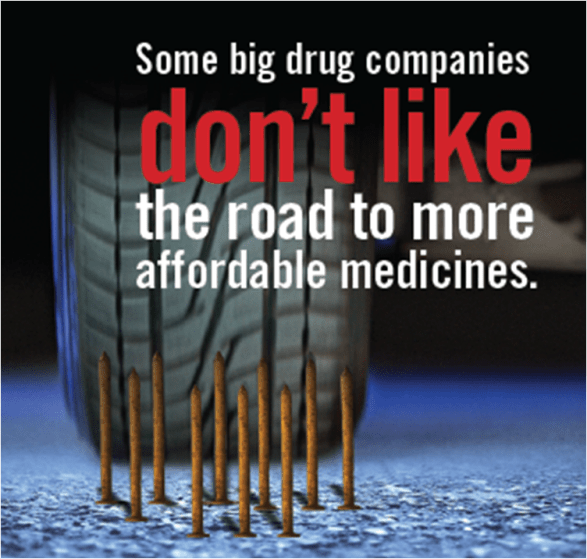
I was a little surprised to see the latest PCMA advertisement that goes for the jugular on pharma companies that support generic carve-out legislation.

pcma-ad

What is the “generic carve-out” concept – legislation which proposes making certain classes of drugs exempt from the ability of the pharmacy to substitute an A-B rated generic for its brand equivalent when the physician has not marked the prescription – Dispense As Written (DAW).

BioGenerics, Text Analysis, and Transparency

Here are a couple of blog posts from other blogs worth reading:

  • David Williams on the “Folly of BioGenerics” which talks about why they won’t be just like generic drugs.
  • James Taylor on Text Analysis which if ever figured out would be very helpful in taking inbound e-mails, letters, and call center notes and using them for customer relationship management.
  • Gilles Frydman on “Opaque Inc.” and how difficult it is to understand the US healthcare system.

Why Did The PBMs Get Into Specialty?

Thanks for all the questions lately.  I love to answer them (although I get backlogged sometimes with the real job).

Someone asked me why the PBMs got into specialty pharmacy over the past 5+ years.

  • Commoditization
  • Money
  • Opportunity

As the traditional PBM business continued to get squeezed and “transparency” was being pushed, there was a fear of commoditization.  That fear caused the PBMs to look more aggressively at what companies like CVS had been doing in the specialty pharmacy world.

The PBMs have typically been very financially motivated.  If you look at the basics, there is clear financial opportunity.

  • The value of an average specialty script is $1,200+ versus $80 for a normal script.
  • The majority of the scripts traditionally were filled outside the pharmacy network on the medical side creating lots of opportunity for cost management (and therefore spread).
  • Some specialty drugs have limited distribution meaning that you can be the only pharmacy (or one of a few) that stock the drug driving immediate marketshare.

Finally, to a lesser extent, I believe specialty created an opportunity for them to showcase more “care management” types of activities.  They could work more actively with the patient (member) to save them money and help them deal with their chronic condition.

Walgreen’s vs. CVS PBM Ownership

Another question I got yesterday was on retailers (specifically Walgreen’s versus CVS) owning PBMs.  The question was since they make so much money on foot traffic and selling non-pharmacy items why would they want to be in the PBM business.  DATA!

They both have similar fundamental concepts which are aggregating patient touchpoints – PBM, Clinic, Retail, Specialty.  If they can figure out how to aggregate and mine the data to better serve the patients and the plan sponsors, they can be a key influencer in driving health outcomes.  

The follow on question was what’s different.  Without getting into behind the scenes, the one thing that I think is publicly different is the CVS ExtraCare program.  They have a loyalty program that gives them visibility into the non-medical behavior of members.  Why is that important?  From a PBM perspective, it’s important because they can make sure to focus on channel optimization.  By that I mean that people that go to the pharmacy and shop at a CVS are people they want to keep in the stores.  But, patients that simply pick up prescriptions are probably people they want to move to mail.  Mail order is a lower cost fulfillment option for them and if those consumers aren’t buying other stuff, then they should look to convert them to mail.