Archive | Research RSS feed for this section

Do Seniors Use Automated Calls?

Without hesitation, that is the number one question I get from people in healthcare. Since seniors make up ~45% of the spend in healthcare, it would be difficult to promote a solution that didn’t work for that portion of the population. We have had some great success with the calls we have done around Medicare Part D and can provide a detailed set of data offline if you’re interested.

Here are a few of the key observations:

  • If you use the Medicare Part D experience, you can see from the data that the CMS website was very busy during the week and much less so on the weekends. [Implying that the target population doesn’t use the Internet at home or had their caregivers or some public access facility helping them.]
  • If you compare the 800# for Medicare Part D to the website volume, it is 4-5x as high. [Implying seniors use the phone primarily.]
  • Comparing authentication by age for a refill program and a COB (coordination of benefits) program, the senior population (>64) responded best.
    • Authentication means people that received an automated phone call and confirmed that they were the intended recipient (“are you bill jones?”).
  • Once seniors started receiving the calls, they continued to be receptive over time to additional calls.
  • The likelihood of saying “repeat” during a call rose very slowly from 60 to 90 years of age.
    • On an automated call, the patient has the opportunity to say “repeat” to hear the prior message again.
  • We followed up on one call program and surveyed 70,000 seniors…95% said the messages were easy to understand and 91% said the calls were quick and helpful.
  • Seniors answer calls all day, but more at night. [Gives you a good option for smoothing inbound call volume or transfers from outbound call programs.]

Physician Double Standard (What’s Ours)

There was an article out yesterday summarizing a survey of physicians.  The key point it made was that “up to 96 percent of those surveyed said they should report all instances of significant incompetence or medical errors to the hospital clinic or to authorities.”  [It was only 45% among cardiologists and surgeons??]  BUT, 46% of those surveyed knew of a serious medical error that had been made and did not report it.

Given all the focus on quality and error rates over the past few years, this seems concerning.  Although I am equally as concerned that the surgeons didn’t feel it was necessary to report issues. 

At the same time, I believe we can’t expect different standards from others that we wouldn’t be willing to be held to.  So, if you knew a collegue did something wrong, would you report them?  If they acted inappropriately at a client social event.  If they presented poorly and lost a sale.  If they made a mistake in their financial model.  If they had a spelling error in a marketing piece. 

Of course, not all of these are life and death, but I could certainly argue that rejecting a claim that pushed undue financial stress to a patient would be a serious issue.  Or, simply telling them a service wouldn’t be covered might discourage them from getting needed work performed. 

“There is a measurable disconnect between what physicians say they think is the right thing to do and what they actually do,” said Eric Campbell of Massachusetts General Hospital and Harvard Medical School in Boston, who led the survey.

Some of the other findings included:

  • Doctors are willing to order unnecessary — and often expensive — tests.  [How many of us don’t always take the least expensive path?]

  • Only 25% consciously tried to avoid gender or racial bias in how they treat people.  [How many of us consciously do this in our job?]

  • 93% of doctors said they should provide care regardless of a patient’s ability to pay but only 69% actually accepted uninsured patients who cannot pay.  [How many of us would be willing to provide our services for free to someone that needed them?]

URL:

IBM on HC 2015 – Part II

I think the entry got too long.  I got a system error that made me think I should split this up.  So, continuing on my review of the IBM publication on the future of healthcare, here are some additional notes I took:

  • They envision the growth of a “health infomediary” that helps people navigate their benefits and options within the healthcare marketplace:
    • A “health coach” – expert in lifestyle and behavioral change
    • A “value coach” – expert in benefits, pricing options, and cost-quality tradeoffs
    • A “wealth coach” – expert in financial planning for health related needs
  • They say that health plans as well as physicians could step into this role (along with new players).
    • 80% say hospitals are “doing a good job”
    • 60% say health plans are “doing a bad job” [which may challenge them in some of these future roles]

“Today, healthcare delivery is overly focused on the episodic treatment of acute care.  However, the emphasis of the healthcare system will contine to expand from episodic acute care services to include prevention, chronic condition management and better care coordination.”

value-based-ibm.png

  • There is good discussion about the needed change in the healthcare system to be more focused on wellness and greater alignment of incentives.  They say “today, there is more variability at the point of contact with the consumer (that is, the point of care) than in virtually any other industry.”
  • If you read the report, figure 8 summaries the current state versus future state that they envision along numerous dimensions – sponsorship, competition, innovation, revenues, networks, etc.  The things that captured my eye were:
    • Competition being based on information access [and in my opinion…easy of use of these tools across multiple channels]
    • Competition being drives by targeted products and services [one of my favorite topics…microsegmentation]
    • A wellness ROI
    • Value-based reimbursement [which I am sure is much more than P4P]
  • They talk about the blending of product and service (i.e., the offering as I would call it).  This has been a topic in other industries for years.  [Look at the book Blur from 1999.]
  • They layout four different roles for health plans:
    1. Health / Wealth Service Advisors – personal health concierges
    2. Health Services Optimizers – guide individuals to wellness and through healthcare maze
    3. Applied Research Advisors – aggregate knowledge to help patients
    4. Transaction Processors – clearinghouse
  • I didn’t know that the top 6 healthplans cover 60% of all insured Americans while their are another 500 plans.
  • They go on to propose some questions and sample indicators of readiness for the new healthcare environment.  Here are a few indicators:
    • single view of the member across products and business partners
    • proactive contact center
    • real-time analytics regarding wellness calls
    • member loyalty
    • value-based arrangement with providers
    • consistent answers across multiple channels

Hopefully, this is a helpful summary and enough for you to read the document.  Is a quick 18 pages with good facts and realistic proposals for the future.

IBM on HC 2015 – Part I

I had a chance to catch up on a bunch of reading on the plane including an IBM brochure I picked up the other day on “Healthcare 2015 and US Health Plans“. I found it to be a good piece with several good frameworks although it doesn’t take any radical views on the future (which I would have liked to see).

Here were a few of the facts / takeaways from the brochure:

  • US healthcare expenditures per capita are 2.3 times higher than other developed countries and projected to increase 83% over the next 10 years
  • Medical errors cause between 48,000 and 98,000 patient deaths per year
  • Medication errors cost the US over $3.5B per year
  • On top of the 47M uninsured, there are 15.6M underinsured
  • There are five issues that will make change difficult for healthcare:
    • Funding constraints
    • Societal expectations and norms
    • Lack of aligned incentives
    • Inability to balance ST and LT perspectives
    • Inability to access and share information

    “We believe that the U.S. healthcare system will not achieve a comprehensive “win-win” transformation by 2015 because of political gridlock and inability of key stakeholders to work collaboratively to reach solutions for the ‘greater good’.”

  • They do predict that some form of universal coverage will be enacted by 2015 and will be focused on the individual not the employer to address the “job lock” challenge.
  • They see a key role for health plans and call upon them to lead the transformation to a “more patient-centric, value-based, accountable, affordable and sustainable U.S. healthcare system”.
  • They predict that employer-sponsored health benefits for family coverage will increase from $8,167 in 2005 to $17,362 in 2015.
  • In 2006, PPOs (preferred provider organizations) accounted for 60% of private insurance enrollees (up from 41% in 2000).
  • Employers offering coverage has dropped from 69% in 2000 to 61% in 2006 and is predicted to go below 50% by 2015.
  • They talked about employers putting a lifetime cap on retiree benefits which was a new concept to me, but they said that 49% of employers polled in 2005 had a cap (of which 59% of those on the plan had already hit the cap).
  • They talk about lifestyle choices impacting premiums which would lead to increased wellness and preventative programs.
  • There is some scary data about money needed post retirement. They say that half of all bankruptcies are in part due to medical expense. They also say that “a couple retiring in 2016 at 65 years of age would need US$560,000 if they lived an average lifespan. They would need US$1.05 million if they lived to 95 years.” This is specific savings for healthcare costs in addition to Medicare. WOW!! And, they say that 40% of people over 55 have $50,000 or less saved.

ibm-retirement-health-savings.png


“The health–wealth intersection is already taking shape. Players from each sector are experimenting with offerings that cross the boundary between the two, such as reverse mortgages to finance nursing-home costs and arrangements that let individuals tap into their life insurance policies to cover medical costs. But the new health–wealth business will evolve and change shape for at least the next couple of decades, as the retail health-care market coalesces and consumers take on more responsibility for their medical needs.”

HBR Health Consumer Segmentation

Harvard Business Review has an article “What Health Consumers Want” by Caroline Calkins and John Sviokla (both from Diamond Consultants) in the December 2007 issue.  I think they sum up one of the problems that I talk about with a couple of quick comments in the beginning:

“Yet the idea that companies might profit by segmenting customers to address their varied needs seems almost foreign to the health industry.”

“Companies can uncover areas of untapped value by analyzing patterns in demand for health products and services.”

They point out that looking at people from a health and wealth perspective at the same time is very revealing.  Which certainly makes sense as many people are predicting that these two markets will come together at some future stage.  Their research pulled out four consumer groups [with my summary of their text]:

  1. Healthy Worriers – receptive to new things, willing to change, look at dynamic between wage inflation and healthcare costs, look to employers for information, overwhelmed by choices
  2. Healthy, Wealthy, and Wise – fit, health conscious, financially confident, want choices, not scared of complexity, self-service tools important, service focused
  3. Unfit and Happy – manage own money but overconfident on health issues, don’t trust MDs, need tools and incentives to drive action
  4. Hapless Heavyweights – not particularly health or financially oriented, typically overweight, need support groups and penalties

Personally, I find it nice that they point out the fact that some groups want incentives and some need penalties.  I have blogged about this a couple times as one of the simplest examples of why segmentation and message flexibility is so key.  I think the first two have a nice opposite with simplicity versus choice.

More Clinic Information

checkup.jpgThe AHIP magazine Coverage (Sep + Oct 2007) also has an article about retail clinics. There were a few takeaways here:

  • Someone is finally going to try and offer an airport based clinic (AeroClinic). This seems to make sense as some airports are basically shopping malls in disguise.
  • 5% of consumers know about retail clinics and have used them. Maybe I am too close to the space, but it seems like this is all I hear about.
  • 90% of consumers say they are satisfied with the quality of care…85% with the quality of staff…83% with the convenience. [Harris Interactive survey of 2,441 adults in March 2007 for the WSJ]
  • 42% of those that visited clinics were covered by insurance for some or all of the services provided.
  • Co-pays ranged from $15-$35.
  • 22% of those that visited clinics were uninsured. (which is a little more than the % of the general population that is uninsured – if my back of the envelope math is right)
  • The forecasted growth of clinics – 700 (2007); 1,500 (2008); 4,000 (2010). I am a little skeptical here, but I wouldn’t think you could have 3 Starbucks at one intersection or 6 pharmacies within a 3 mile stretch of one street. (both real examples)
  • There are some challenges around the model including from the AMA (American Medical Association) around conflicts of interest (i.e., clinics being owned by pharmacy chains) or the erosion of the “medical home” for the patient. Ultimately, there should be some health outcomes metric which is used – better compliance, more prevention, lower cost per disease state, etc.
  • BCBSMN found that members who were part of a consumer directed healthplan were twice as likely to use a retail clinic. They have been very closely involved with MinuteClinic from the beginning.
  • An individual from HealthPartners raises an interesting risk around provider capacity pointing out that if use of retail clinics increases provider capacity then it might actually increase total healthcare costs for the system. I guess this implies that the physician or hospital could charge more if they weren’t as busy. Not sure I buy the logic, but my micro-economics could be off.

Several groups have come out with standards or guidelines including:

PHR – Key for Improving Senior Care???

In the AHIP (America’s Health Insurance Plans) magazine Coverage (Sept+Oct 2007), there is an article on using Personal Health Records to improve healthcare for seniors. I am reading it as I type my commentary here, but I start with some skepticism.

  • Apparently CMS (Centers for Medicare & Medicaid Services) commissioned a 18-month pilot to help design a user-friendly PHR for Medicare beneficiaries.
  • The article gives a good, simple definition of PHR as being “designed for use by individual consumers and contain a core set of medical information that includes physician office visits, medications, lab results, and general health information.”
  • It talks about advance PHRs having a care alert which is a signal to consumers that they are due for a treatment of test. [I have talked with a few PHR vendors about this. I can’t agree more. It is great to have the data, but the systems need a proactive communication mechanism to push timely content to consumers so that they take action. (shameless plug…what a great opportunity for someone like Silverlink to offer an automated call program that takes automated triggers from the PHR and launches a pre-defined, personalized call to the consumer)]
  • It offers an interesting statistic that I haven’t seen before – 100M people (of the 249M insured) have at least one chronic disease.
  • CMS previously rolled out a bare-bones PHR at www.MyMedicare.gov which had 2M of the 42M Medicare beneficiaries register. [Of course, registration means nothing. How many actively log-in, update information, and use the information?]
  • Plans participating in the pilot include HIP of NY, Arkansas BCBS, BCBSLA, Humana, Kaiser Permanente, UPMC Health Plan, Aetna, and Medcore Health Plan.

“Health information technology will improve health outcomes and contain costs and help provide meaningful dialogue between members and providers so tests are not conducted unnecessarily.” (Laura Landry, Director of IT, BCBS Louisiana)

  • It talks about AHIP and the BCBSA (Blue Cross Blue Shield Association) collaborating to make PHRs transferable across plans which is vital for success.
  • Apparently, the groups have also collaborated to define a model PHR which would include physician encounters, names of clinicians and facilities, medications, lab results, family history, immunizations, health risk factors, advance directives, allergies, alerts, and physician directed plans of care.
  • The article also highlights another issue which is true for many solutions which is density of utilization by provider. For example, if the physician is expected to use a tool but only 5% of their patient base uses it, it will be hard to get them to change their workflow. If 90% of their patients use the same tool or a tool that provides a common interface to the physician, then they will be more likely to interact using the technology.
  • A representative from Humana says that seniors are using the data to enhance their dialogue with physicians. [I think this is a key point. I spearheaded the rollout of a “physician kit” at Express Scripts which was a set of forms that the patient could download to take to the physician’s office to discuss generics, mail order, and their condition. The key was that us communicating with either party was only so effective. We had to drive the two parties most involved in care to talk together with the facts in front of them.]
    • The article later talks about several of the demonstration projects that offer printouts for discussion or putting in the patient’s chart.
  • Humana members can also give access to family members and providers through their user names and eventually direct access.
  • Kaiser’s PHR allows the member to see when a lab was done, the results, and send questions to the physician directly through the tool.
  • It talks about one of the PHRs which automatically hides certain information from the provider but can be unhidden by the patient.
  • I thought the article was going to skip the subject of whether this population would adopt this technology, but towards the end it points out that according the US Census Bureau only 35% of people over age 65 have computers and only 29% have access to the Internet. [Of course, this will change as the Baby Boomers move into this phase of their life.]

senior-w-computer.jpgThe other critical component in my mind is that these things have to be automatically populated. The patient can contribute family history, allergies, and OTC utilization, but why should I have to type in my physician visits or prescriptions. That should all come directly into a system. There is a lot to prove here. The concepts are sound and rationale, but it’s a complex system with limited historical adoption of consistent technologies. People won’t stand for having to rebuild a new PHR every year as vendors and companies cycle through trying to settle on a few core products.

Pharmacy Satisfaction Is Declining

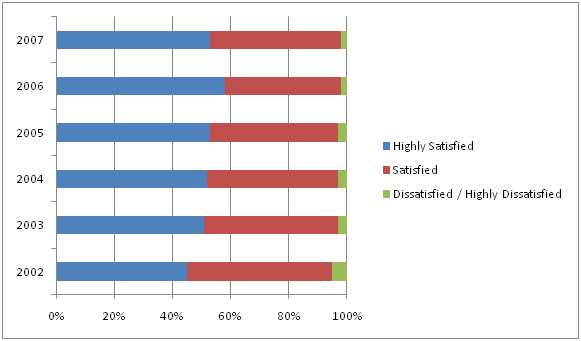
According to a WilsonRx survey that was published in the same Retail Clinician magazine (Winter 2007), “customers express a decline in overall satisfaction with their pharmacy in 2006, probably due to difficulties with Medicare Part D and rising copays.” The highly satisfied percentage dropped from 58% to 53%. I still think many industries would be happy with a 3% dissatisfied population. (see www.pharmacysatisfaction.com for more information)

I find it difficult to believe that people would blame the pharmacy for rising copayments or the complexities of Medicare Part D. But, everyone looks for a scapegoat for their problems. I think a more interesting question or survey would be how people judge satisfaction with their pharmacy. Is it wait time? Is it friendliness of the staff? Is it access to the pharmacist? Is it price when they pay cash? Is it willingness to call their physician or insurance company to resolve issues?

I was pleasantly surprised recently when I was at a Walgreens and saw the pharmacist come out from behind the counter to great an older patient, ask them about their wife, and spend time trying to see what she could do to help the couple. Usually, you think of the bigger chains as being so focused on production that you interface with the pharmacy technicians.

Retail Clinician Survey

Back when I visited a retail clinic (i.e., MinuteClinic, RediClinic, TakeCare), I grabbed a copy of the Retail Clinician magazine that they had. Finally, I am getting to the bottom of that reading pile to browse through it. It had a survey of 150 nurse practitioners that work in the clinics which revealed the following:

  • 57.2% of them work in clinics that are in chain drug stores
  • 63.7% of them came from a physician’s office or hospital / ER
  • 58.1% of them see more than 10 patients per day
  • Their busiest days are Mondays and Saturdays
  • 57.2% said that they write prescriptions for more than 70% of the patients they see
  • 53% said that they give OTC recommendations to less than 40% of their patients
  • 56.2% said that more than 40% of the patients they see don’t have a medical home (i.e., a primary care physician)
  • 21.2% of them saw their challenge as health care claims adjudication and 24.6% of them saw their challenge as public awareness
  • 79% said they would be receptive to handing out patient education materials
  • 67% said they would be willing to hand out product samples
  • 50% of them said that they consult the pharmacist 1-5 times per day for questions

I don’t have the data right now to compare this to physician’s practices, but it would be an interesting comparison in terms of percentage of times Rxs are written, etc. As I mentioned the first time I went to a clinic (I have been back since), I agree that this is a great avenue for information distribution. It is much less rushed than the physician’s office.


Healthcare Costs vs. Wages and Inflation

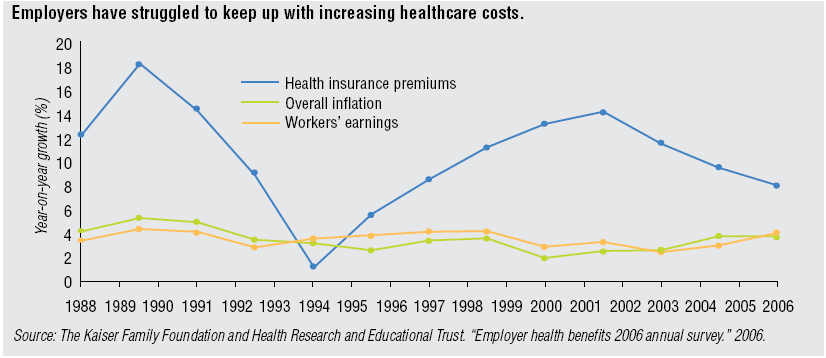
It is always interesting to compare wages to inflation to see if we are actually earning more in real dollars today than in the past.  But, that comparison is relatively tame year to year if you compare it to healthcare costs.  As I have mentioned before, those costs have started to slow down from double digit growth to single digit growth.  The last time that happened was in the mid-90s with a huge rise in tightly managed care programs.  (And, like the retirement argument, compounding is powerful so several years of double digit growth compounds very quickly to push costs out of whack with earnings growth.)

Here is a good chart I found yesterday which shows it.

insurance-v-inflation-and-wages.png

The Express Scripts Outcomes Conference

In my time at Express Scripts, one of the most interesting events was our Outcomes conference. We invited about 700 clients to come to beautiful St. Louis for 3 days to hear from our research group on trends and new programs to manage pharmacy benefits. All the large PBMs (Medco, Caremark, Express Scripts) put out annual publications on their research.

Express Scripts puts the publication along with the slides and audio out on the Internet. Here is a quick summary from 2007 which I took from the website.

  • Brand prices rose 6.9% in 2006, while generic prices fell 5.7%, which shows how generics continue to play a major role in managing prescription-drug trend.
  • 2006 drug trend of 5.9% – lowest in a decade.
  • More than $50 billion worth of brand drugs are scheduled to lose patent during the next five years. Important examples include Prevacid® in 2009 and Lipitor® in 2010.
  • Twenty percent of drug spend comes from specialty medications, but relatively few people use these types of drugs. This portion is projected to grow to 26% by 2010.
  • There are over 600 biopharmaceuticals products in the pipeline. This trend is being driven by the Human Genome Project, breakthroughs in the field of biopharmaceuticals, and a philosophical change in the pharmacy industry.
  • A growing number of members are becoming engaged in their decisions about prescription drugs, seeking information on drug-therapy alternatives and the prices of these alternatives. For example, 21% of the users on Express Scripts’ website used the Price Check feature during Q4 2006.
  • What Patients Don’t Know About Their Prescription-Drug Benefit
    • 64% could not correctly identify the type of pharmacy benefit plan they enrolled in.
    • 60% could not correctly identify the amount of their generic copayment.
    • 50% indicated their physician or pharmacist never or seldom talked to them about generics.
  • Several active ingredients work to influence the effectiveness of the information that plan sponsors provide to members:
    • Opportunity – Making sure you provide the information at the time in which the member is most engaged in the decision-making process.
    • Incentive – Members sometimes need an additional short-time incentive to choose the lower-cost option.
    • Assistance – Changing medications requires considerable assistance, which provides a barrier in making this adjustment.
  • The hypothesis was that Part D beneficiaries would take advantage of lower-cost generics to avoid hitting the donut hole. However, the reality is that many beneficiaries are hitting the donut hole unnecessarily and could take advantage of lower-cost generics.
  • Express Scripts’ research has shown that there is a direct correlation between a higher generic fill rate and the lower percentage of members reaching the donut hole.
  • The hypothesis from Wal-Mart was that low prices on selected generics would result in more volume of other generics and brands as well as increased nonpharmacy store sales. However, their market share increased by just 1% overall, which lead to a minimal market impact on prescription-drug use. Three reasons for this minor effect:
    • Members didn’t always save as much as advertised, and the payment was closer to $6 due to program limitations.
    • Members did not want to unbundle their prescriptions and use multiple pharmacies.
    • Many patients do not consider Wal-Mart a convenient choice.

It Seems So Simple…

In the CVS/Caremark 2007 TrendsRx report, they present a compelling yet simple story about people with chronic diseases.

“Increasing the effectiveness of adherence interventions may have a far greater impact on the health of the population than any improvement in specific medical treatments.” World Health Organization 2003 Special Report “Adherence to Long-Term Therapies: Evidence for Action

If every four people at risk for a chronic condition such as diabetes, hypertension or stroke:

  • One is unaware that he/she is sick
  • Of those who are diagnosed, one in three doesn’t get the prescription filled
  • Of the two who begin therapy, one stops taking medications within six months.
  • One is compliant with prescribed treatment

This clearly points to issues – the need for wellness programs and preventative medicine, the need to link compliance across MDs/Pharmacies/Patients, the need to drive adherence, and finally helping consumers understand why this important. It seems like simple problems to address, but if you’ve tried, you will realize it is a challenge and would be even if incentives were aligned.

[Sources: Caremark data combined with third-party references including the US Census, Centers for Medicare and Medicaid Services (CMS), the World Health Organization (WHO) among others.  Compiled by Jan Berger, MD, Chief Clinical Officer at Caremark.]

HC Stocks Over Time

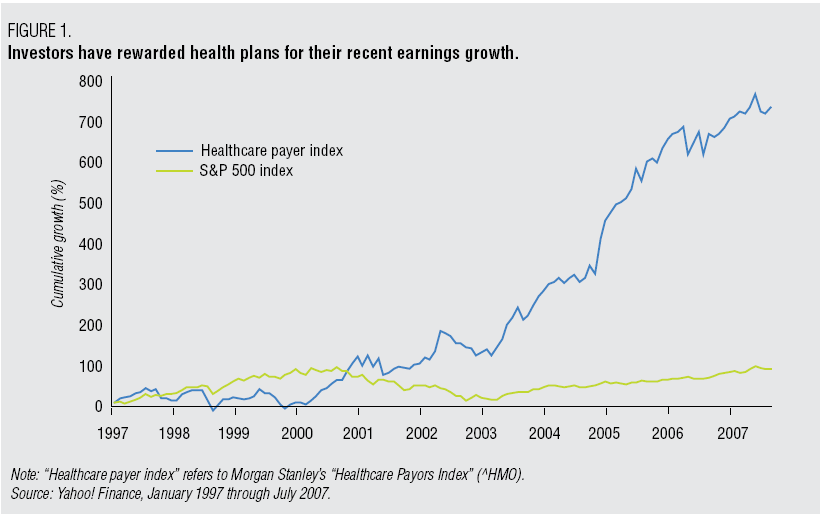
When you are in healthcare, all you ever hear about is how tight the margins are and how important it is to manage costs.  Obviously, healthcare has produced a lot of wealth over the years for a lot of people.  In my time at Express Scripts, the stock when from $37 in 2001 to (split adjusted) about $180 when I left in 2006.  (Not bad)

I thought this chart which I found in an IBM publication did a good job of portraying how the investment market has viewed and rewarded healthcare.  This is based on a payor (HMO) index.  The PBM index would probably be even higher over that same time period as Medco, Express Scripts, and Caremark have grown immensely over the past decade.

hc-stock-market-growth.png

Empty Every Chair

It takes a lot for an advertisement to catch my eye, but “empty every chair” made me think.  Especially, when I see the word health in the text.  The text goes on…

“Whose idea was it to build a room to house inefficiency?  The less time patients spend in the waiting room, the happier everyone will be.”

It’s an interesting view.  I couldn’t agree more.  The advertisement ends up being for PWC (PriceWaterhouseCoopers) and their healthcare consulting practice.  A link takes you to their site with publications on P4P, presidential plans for healthcare, wellness, and lots of other topics.

Highest Spending at Independents

In the November 12, 2007 issue of Drug Store News, they have a Pharmacy Facts section.  This month’s fact is about how much pharmacy customers spend on prescription medicines per month at the different types of pharmacies.  This is based on a survey done by WilsonRx.

  1. Independent – $87
  2. Mass Merchant – $82 (e.g., Target)
  3. Food – $78
  4. Chain Drug Store – $75 (e.g., CVS or Walgreens)
  5. Mail / Online – $69
  6. Clinic – $40

Even being close to the data, I am not sure what this tells me:

  • Older patients (who have more Rxs and therefore higher spend) go to the independents?
  • People without insurance and who pay full-price go to the independents?
  • The independents aren’t as able to drive formulary compliance and/or generic utilization to help lower out-of-pocket costs for their patients?
  • That people that go to independents are less likely to divide their spending between multiple pharmacies (i.e., use retail and mail order)?

It is an interesting data point, but without context, I am not sure how anyone can do anything with it.  But, that is how data gets manipulated.  I could use it to support any theory above.

BAH on Demographic Changes

BAH (Booz Allen Hamilton) has a business publication called Strategy and Business which has some great research.  I found this recent article on the changing demographics worldwide to be interesting and relevant to what we see in the US (which has a big implication on healthcare).

Here are a couple of quotes and facts from the article:

“To prepare for the implications of aging populations, individuals, organizations, and society as a whole must confront assumptions that are no longer valid.”

  • According to United Nations projections, the proportion of the global population over 65 years old will triple between now and 2100, from 7 percent to 21 percent.
  • Assumption 1: We’ll work long enough to pay for our retirement. …But suveys show that, until the age of 75 or so, people consistently underestimate the length of their retirement and under-provide for it financially.
  • Assumption 2: As our society gets richer, we can afford to retire earlier. The basic flaw in this is that people are not taking into account increasing longevity and its associated higher costs.

  • Assumption 3: It is useful to retire people early, because there are not enough jobs for everyone.

  • Assumption 4: Income and status at work rise linearly, and people retire at their most senior position.

  • Assumption 5: We accumulate assets while working and spend them during retirement.

  • Assumption 6: During retirement we won’t change residences more than once.

  • Assumption 7: The state will provide social and health-care services for us in our later years, allowing our children to inherit a significant portion of our estate.

  • For a couple who reach the age of 65, there is a 50 percent chance one of them will survive to the age of 90, and a 17 percent chance that one will reach 100.

“Restricting compulsory retirement will foster — or force — changes in work culture and minimize ageism. Our mental model is already changing from one of a ‘cliff edge,’ with an abrupt change from work to retirement, to more of a ‘plateau.’ “

All of this will have big implications on how we pay for healthcare, what types of services are needed, how we interact with these groups, etc. 

Literacy Adds Additional Challenges

I have some other seniors statistics that I will add later, but this morning I was researching seniors and healthcare communications.  I was surprised to see some of the data around how literacy presents a big challenge for them.  Here are a few facts and some links for more information:

  • “People aged 70 years and older with limited literacy skills are one and one half [1.5x] to two [2x] times as likely to have poor health and poor health care access as people with adequate or higher reading ability, according to a study led by researchers at the San Francisco VA Medical Center and the University of California, San Francisco.” (source)
  • “One in four [seniors] had limited literacy. In practical terms, these elders ‘may have trouble reading basic health information or pill bottle instructions'” (source)
  • “Although only 12 percent of the U.S. population was age 65 and older in 2003, they accounted for one-third of all patients admitted to the nation’s community hospitals in that year – over 13 million hospital stays, according to the Agency for Healthcare Research…The elderly also accounted for 44 percent of all hospital charges  nearly $329 billion.” (source)

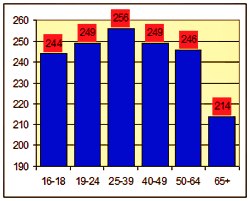
  • “Senior citizens (65+) scored far lower than younger people in a 2003 literacy test. The test had a maximum score of 500.” (source)

literacyhlth-6-09-12.gif

  • “Less than one out of six U.S. adults have “proficient” health literacy, according to the report released this week, but for seniors it is only about three out of a hundred.  A staggering 29% of senior citizens do not even have “basic” health literacy.” (source)

I think this is an interesting angle that you don’t hear much about.  We spend all this time trying to think about what to say and other creative aspects, but sometimes we have to simplify the story to get to the point of being usable.  Here are a few other links if interested in the topic:

Zyrtec to Go OTC

By now, everyone should be familiar with Claritin (loratadine) and Prilosec going OTC.  They were really the first two blockbuster drugs to go OTC (over-the-counter).  Motrin / Advil is available both as a prescription strength and OTC.  Zantac (ranitidine) is also available OTC.

From a personal perspective, I am happy.  I have two kids with allergies that are on Zyrtec (which is off formulary) and where I pay $50 / month per kid.  I also find this an interesting DTC (direct-to-consumer) challenge for managed care plans and PBMs.  I had the opportunity to run both of our programs (Claritin and Prilosec OTC) at Express Scripts for this which included coordinating with modeling and clinical teams, designing the communication strategy, talking with clients, and helping drive OTC utilization where clinically appropriate.

From some initial research, I found the following:

  • Zyrtec (5 and 10mg tablets and 5 and 10mg chewables) and Zyrtec-D (1mg syrup and extended release) were approved by the FDA to go OTC. (article)
  • McNeil Consumer Healthcare (subsidiary of J&J) will be responsible for the OTC products.
  • McNeil has said the products will be available in late January 2008 and will be less than 1/3 the price of the prescription.
  • Non-Sedating Antihistamines (NSAs) represent 7.8% of the commercial Rx market and Zyrtec had about 37% marketshare in 2006 (generics had greater than 50%) with a typical member using 3.65 Rxs per year (or 0.29 Rxs PMPY).  (per Express Scripts Drug Trend Report)

Taking common Rxs to OTC status makes a lot of sense, but also creates a lot of questions:

  • If there are interactions with the drug but it no longer shows up as a claim, does this create a DUR (drug utilization review) problem?
  • Do pharmacies make more money on the generic Allegra or on the OTC?
  • For PBMs that make spread on claims and/or get a claims administration fee, how do they align their incentives with their clients (employers, managed care) that would prefer to see the patient use the OTC?
  • Which costs less out-of-pocket…the generic Rx or the OTC?

So, what should you do?   If you’re a consumer, you will likely hear something from your employer, managed care company, PBM, or pharmacy.  If your a company, you need a creative plan to execute against.  Contact me to learn more about how we (Silverlink) are going to help our clients.  [I can’t give away all the secret sauce here.]

But, if you are generally interested in this topic, here are a few links for you:

New (to me) Blog – Consumer Focused Care

I found a new blog this morning called Consumer-Focused Healthcare written by an ex-McKinsey consultant which seems to have a very similar focus to my blog – “refocusing healthcare on serving consumer needs“.  [As a sidenote, the benefit here of LinkedIn was that I could quickly look him up and see that we have a mutual friend which instantly gives him some validation.]

Vijay has a lot of posts that I liked.  Here are a few exerpts:

  1. “the consumer often pays MORE for a visit to a retail clinic than a physician’s office. The implications are that they really prize the convenience and time taken far over the extra training provided by the physicians.”  In this blog entry, he shared some data about out-of-pocket expenses for clinic visits.
  2. “It is pretty clear that many doctors don’t know how to tell their patients that they have no idea”  In this blog entry, he talks about the inexact aspects of patient advice.  Determining a diagnosis or the right advice is very situational.
  3. “why are people willing to spend $3.50/ pill on sleep meds when they’re discouraged by $10 co-pays to take other, potentially life-saving medication?”  In this entry, he talks about consumerism.
  4. He also points out an assumption from Google that technology will push physicians to spend less time with patients which I think isn’t logical based on the work I did around e-prescribing.  I already put a comment in this blog entry this morning.

And, these are just his most recent entries.  I am interested to flow his blog more.

P4P Survey and Comments

The American College of Physician Executives did a survey on P4P.  Here are a few of the survey results (from over 900 participants):

  1.  Only about 40% of the organizations had a P4P program.
  2. 58% of those without a P4P program are considering it.
  3. 60% think P4P will be a permanent part of healthcare.

I found the comments even more interesting.  Here are a few:

  • It is sad to see some HMOs to put the programs (carrott) out there and then look for every loop hole to deny payment.
  • The challenge is defining the performance and quality improvment. Clearly rewards for volume through the office or RVU’s per month work, but the real issue is the quality of the outcome for a given patient. Defining the clinical outcome is the slippery slope. I think physicians are going to resist being told what they get to create for fear of being judged less than capable. So, the tendency will be to set the bar lower that what could be achieved.
  • In California the P4P program is working very well with significant improvement in outcomes.

payforperformance.gif

Some Pharmacy Statistics

statistics.jpgWhen I worked on my start-up, I collected a bunch of data that I used in my business plan and pitch documents.  I thought they would make an interesting read for many of you.

  1. Size – The prescription drug market is enormous and growing every year. Current estimates put the market size at $221B, and it is projected to grow to $520B by 2014 .
  2. Marketshare – In 2004, according to the National Association of Chain Drug Stores (NACDS), the pharmacy market share was divided as follows traditional chains (41%), mass merchants (9.7%), supermarkets (12.2%), independents (18.3%) and mail order (18.7%). Walgreens had 14% market share.
  3. Cost Pressures – The economic situation for pharmacies is complicated by several forces putting pressure on them:
    • The growth of the Pharmacy Benefit Management (PBM) company has increased the concentration of insured lives within a few Fortune 100 companies forcing the pharmacies to accept lower reimbursement rates;
    • There are now more than 55,000 retail pharmacies in the US and an overcapacity of mail order pharmacies which is more than can be profitably supported;
    • The largest companies such as Walgreens are rapidly leveraging innovative technologies to allow them to fill drugs at a much lower cost while others are clinging to a high touch, convenience model that is not sustainable; and
    • A shortage of thousands of pharmacists in the US has driven starting salaries for pharmacists above $100,000 in some markets.
  4. Growth – The cost pressures facing pharmacies are mitigated by two things – inflation and utilization. Both continue to go up year over year and have dulled the effect of economic pressure. According to Express Scripts 2004 Drug Trend Report, Per Member Per Year (PMPY) utilization is 13.1 prescriptions for insured patients. Assuming a 6% annual growth in prescription utilization, that means that the average insured consumer would use 18.6 prescriptions PMPY by 2010.
  5. Pharmacist Staffing – A recent article estimated that the current pharmacist shortage in the US of 4,000 to 8,000 open positions will increase to 157,000 by 2020. This staffing crunch combined with the payor’s move to consumer driven healthcare where the patient has greater responsibility for their healthcare dollars will put incredible stress on the system. Just as patients need the trusted pharmacist to play counselor or coach, the workload will have increased to the point where they do not have the time to spend with them. In 2005, these issues led Walgreens pharmacists to briefly strike noting the risk to patient safety.
  6. New Models – An increasing number of employers are building on-site pharmacies, and several companies are piloting “vending machine” type solutions for pick-up of dispensed medications. In late 2005, the Department of Defense issued an RFI to explore a telepharmacy solution to replace their Military Treatment Facilities (MTFs) . Some states such as North Dakota are piloting a telepharmacy solution which is a model allowed in several states where a pharmacy technician can dispense while being monitored remotely by a pharmacist.
  7. Patient Satisfaction – Although studies show that pharmacy patients are generally satisfied, 56% of household consumers report that they use more than one pharmacy to fill prescriptions according to the WilsonRx Report 2005. And, according to NACDS, 68% of people choose a pharmacy based on location.
  8. Loyalty – Even though location is a huge influencer, a Morgan Stanley report showed that the willingness to switch to mail was highest at big chains – Walgreens (44%), Wal-Mart (41%), and CVS (35%). Given the concentration of marketshare in these stores and their growth forecasts, it seems logical that the marketshare could be re-distributed to locations that are already visited like grocery stores. According to the Food Marketing Institute (FMI) shoppers make and average of 2.2 visits to the grocery store each week.
  9. Consumer Driven Healthcare (CDHC) – CDHC is used to refer to a lot of different scenarios in which the burden for managing cost is pushed to the patient. This includes high deductible plans, Health Reimbursement Arrangements (HRAs), Health Savings Accounts (HSAs) and Flexible Spending Accounts (FSAs). One of the biggest issues is that this is similar to the movement to 401K plans, but in healthcare, there is no decision support infrastructure. Initial estimates are that 40% of employers will offer this type of plan design over the next few years. This will put pressure on the pharmacist to act as this decision support resource.
  10. Aging of the Population – With the ongoing aging of the population and forecasted growth in people age 65+, this growth in prescription drug use will continue. Based on the Medical</a Expenditure Survey from 2002, the differences in utilization of prescriptions increases dramatically as people age. For example, people 35 to 44 use 7 prescriptions per year while those 45 to 54 use 12 prescriptions per year and those 65 to 74 use 24 prescriptions per year.

Most Prescribed Drugs for Kids

Another factoid from USA Today…Healthcare (due to costs) has been a front page issue in business for most of the past decade. Just over the past 3-5 years has it become a front page consumer issue. It is rare that I can pick up USA Today, go to MSN, or open up my iGoogle news page and not see one or more article about healthcare. This is certainly a positive step in the consumerism path.

None of us would be ready to take on more responsibility for our healthcare until it becomes ingrained in our head about the basic market dynamics and sources of information.

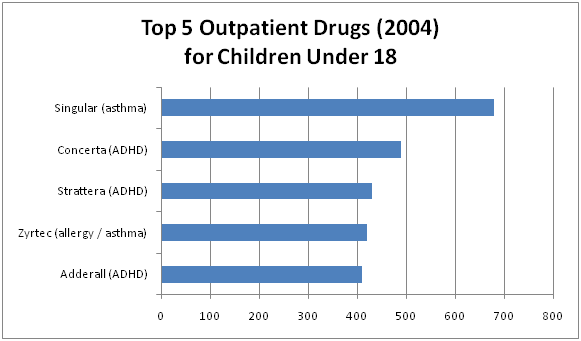
This list of drugs is pretty telling about children. As I have heard asked many times “Are these conditions really more prevalent today or are we better at diagnosing them or are we simply a culture that is more willing to medicate marginally impacted people to stop any problem?”

Here is a chart from the 2004 Medical Expenditure Panel Survey which shows the top 5 drugs based on spending (in millions). (shown in USA Today Snapshots on Nov. 13th on the frontpage of Section D)

P4P – Pharmacists vs. MDs

p4p.jpgI only heard a piece of the presentation yesterday at AHIP (America’s Health Insurance Plans), but I was a little surprised. They were talking about the topic of P4P (pay for performance). The survey population clearly supported P4P for MDs with the primary objective being preventative care and compliance. This focus did surprise me since I imagined it would have been more focused on cost management.

The survey population wasn’t interested in all at P4P for pharmacists. This surprised me a little bit especially given the access differences. Certainly, physicians can impact bigger dollar decisions (e.g., drugs vs wellness or surgery vs other options), but if the focus is on preventative care and compliance, they pharmacists have easy access to the patients.

Pharmacists are a walk-up option. No appointment is needed. Some pharmacists really know their patients. Both parties are really busy so rewarding them for the additional responsibility is appropriate.

I think it was about 20% that thought about rewarding pharmacists and clearly the focus (not surprisingly) was on driving formulary compliance and generics. In many cases, they have rewards to do this today.

If you’re interested in seeing one of the studies out there, here is one on Medicaid. The conclusion was:

“Medicaid directors and their staffs generally report positive feedback on their pay-for-performance programs and believe that the overall quality of care being provided is improving, although they have mixed opinions about cost savings resulting from the programs. Directors are considering changing some of the measures, incentives, and even the data collection strategies to improve their existing programs and to shape planned programs. Overall, they believe that pay-for-performance is adding to their repertoire of tools to improve the care provided to their Medicaid populations.” [K. Kuhmerker and T. Hartman, Pay-for-Performance in State Medicaid Programs: A Survey of State Medicaid Directors and Programs, The Commonwealth Fund, April 2007]

Time to Change

Do you ever wonder why you have to change?  Things are going well.  We are making money.  Healthcare is recession proof.  We’ve been doing this for 20 years.

Well…the world is changing.  This deck is a good reminder of what happens outside the US and how fast things will change.

Dark Data

As we all know, the only research that we ever see is research that is successful. I start with a null hypothesis (i.e., I believe X is driven by Y). I then collect and analyze data to look at facts to see if I can prove the null hypothesis. If I don’t prove it, I move on to another project.

Occasionally, I find out something completely surprising which makes a career or a performance year. Think about all the analysts that find correlation between different variables and the stock market. For example, the stock market does X after a democrat is elected. The stock market does Y after a long, cold winter.

In healthcare, there is an amazing amount of clinical data out there being collected and analyzed. People are looking for new cures and new drugs all the time. The question is what happens with all the “dark data” that gets put in the closet. Should it be shared? How? Would it help other people?

I don’t know the answer, but I am a big believer that more data is better. If I can predict something off just pharmacy data, I should be much more accurate with medical claims and lab values (for example).

In another Wired Magazine article from October 2007 called “Mind the Gaps” by Thomas Goetz, he talks about this topic and several efforts here:

Understanding Healthcare (Wurman)

Richard Saul Wurman has been publishing for years and done many interesting things.  I just stumbled upon his Understanding Healthcare site today.  It is worth a visit.  You could get lost in it, but it has lots of great examples about how to frame healthcare issues visually.  I took a few screenshots below to get you interested.

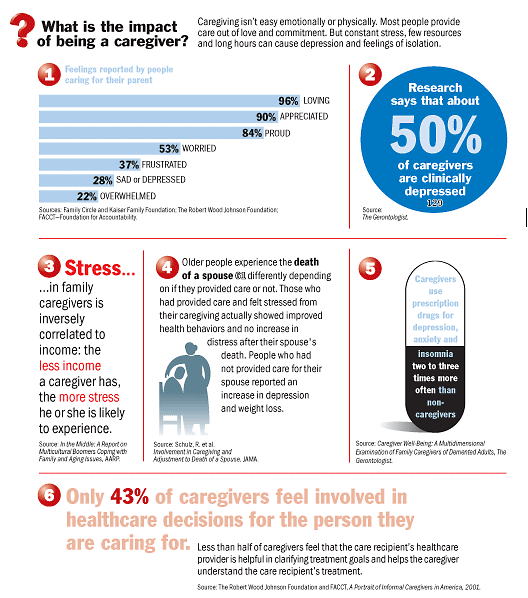
One shows the top 10 causes of death in the US (note all this is a few years old) by age.  Very easy to understand the data this way.  One shows the tests that you need by age.  (I could use this now.)  The other is just representation of some data around caregivers.

wurman-causes-of-death-by-age.png

wurman-timeline.png

wurman-caregiver.png

Consumer Response to Increased Costs

Employee Benefit Research Institute and research firm Mathew Greenwald & Associates recently released some data from a survey of 1,000 people which was interesting:

  • 63% said they saw an increase in their health plan’s out-of-pocket costs (I am surprised it’s not more.)
  • 81% said the increased financial responsibility motivated them to take better care of themselves (good)
  • 2/3 said they tried to talk to their MD more carefully about treatment options and costs (I wonder if the doctors knew the comparative costs)
  • 64% (a 10% jump) said they were only going to the doctor for more serious conditions or symptoms
  • 28% skipped or passes on filling doses of prescribed medications (this could be a problem)

Perhaps the most worrisome fact was that 30% said that the rising costs made it difficult to afford food, heat, and housing and another 30% said it caused them to reduce retirement contributions.

People were positive about wellness programs, but that went down if the program was prompting them for care (but they would do that if it gave them a break in premiums).

47% of Americans say that the healthcare system needs major changes although almost 1 in 4 say only minor changes are needed (probably the healthy people that never use the system).

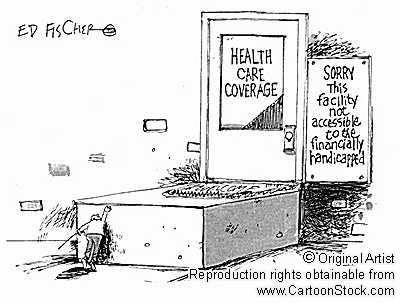
Here is a good cartoon.  There are lots at this site.

hc-cost-cartoon.jpg

Patient Insights

ist2_2780258_marketing_survey.jpg  I often get asked the question about how I made the transition from architect to business. The turning point was two projects I did. One was a visioning and architectural planning project for an Indian tribe that was using casino profits to buy back their tribal lands. The other was a sales process analysis for an architect I knew. He (and his father before him) had run a successful architecture firm for over 50 years. Over the past few years, their sales close rate had dropped. Not significantly, but enough to cause concern.

We worked together to identify a series of questions and then I interviewed his prospects in 3 buckets: (1) repeat buyers; (2) one-time buyers; and (3) those that never bought. It was a fascinating process. They all loved the fact that the firm cared enough to ask. And, they provided lots of information. In the end, it was a small thing – their architectural awards. It appeared that prospects correlated awards with expensive projects that were more about the firm and less about their needs. We simply downplayed these, and his sales close rate went back up. (If only all projects were so straightforward.)

Now, almost 15 years later, they still use the process. It got me thinking about healthcare. How often do we reach out to the patient to learn about their behavior? Do we really understand them at more than a macro level? With the technology available today to personalize communications or even benefits, shouldn’t this be a big focus. If I can developed personalized medicines based on my genes, I would think companies could figure out a way of developing personalized insurance plans that are based on my family history, recent claims, and predictors of future claims.

As I thought more about this, it reminded me of a question that someone asked me last month. They basically said “if you see a company is doing something really wrong, do you just come out and tell them how stupid they are?” What a great question? This gets to the heart of so many things. In a big company, politics often limits your ability to be brutally direct. As a sales person or consultant, you often have the issue of impacting future sales. As a peer, you have the issue of alienating someone or hurting someone on your team.

Good or bad. I have made this mistake too many times. I simply prefer to point out the obvious. When I was a teaching assistant, I remember telling a student in architecture school that he should find a new major. In consulting, I remember pointing out to a managed care CEO that he was never going to have an effective Internet strategy if he couldn’t even use a computer. I have had people ask me numerous times to give them feedback on presentations. I love to present so I have a high bar which often leaves me giving a lot of negatives (which are only meant to help grow the individual). [A good, but annoying, tool here is to drop a penny into a tin can every time the person says the word “um” so that they can break that habit.]

Anyways, bringing this all back…How do we get patients to trust healthcare companies and providers enough to give us valuable, direct feedback to improve our business. And, how do we engage the patients to create an ongoing dialogue to improve.

Customer ROI

This is not a blog about my company – Silverlink, but I certainly am happy to share some of the learnings that we have.

We just put out a press release with one of our clients that has some great results. The client – Medica – is a non-profit, health insurance company with 1.3M members headquartered in Minneapolis.

A couple of the programs that they conducted with us include:

  • Welcome calls which increased member satisfaction while reducing costs by 90%. (Does your plan call you? I certainly never got welcomed to a plan.) They also were able to reduce their resolution time for resolving member issues by over 75%.
  • Coordination of benefits communications which led to a 32% increase in efficiency and less pended claims.

By using our automated outbound call technology, they saw response rate to surveys increase by 22%. (BTW – This is a great use of the technology. You send out calls until you hit your statistically significant N, and you can make real-time changes to survey questions if you see issues arising or need more information based on the answers you are getting.) In their case, they got surveys done in 5 days versus 24 days…and we process the responses to show real-time reports of status. (You can finally solve problems with real-time patient feedback to make critical decisions.)

And, communication costs were 8% below the costs of traditional mailers.

Obviously, there is a reason I choose Silverlink as the company I joined. It is great to see customer validated ROI (Return on Investment). In this world, focusing on your assets and how to maximize them (ROA) is critical.

(BTW – This is my first time writing a post in Word 2007 and sending it the blog.  It worked great.)

FDA on Generics

The FDA has lots of information on generic drugs at their website. If you want to promote this to people, you can use their collateral. Here is a slide show of theirs (now that I know how to do this) and one of their educational PDFs.

FDA facts about generics