BAH Interview of David Cordani (Cigna)

Booz Allen Hamilton has been writing good pieces on healthcare and the trends. Here are a few items from their interview back in March of David Cordani (president of Cigna Healthcare).

CORDANI: “The industry’s winners will be those that differentiate by engaging, educating, and enabling their members to navigate the health-care system independently. We define consumerism broadly and have identified four critical elements that will make it work: financing vehicles, which incorporate new health plans; choice and convenience, which will be the key to making services easier to access through a variety of channels, whether it is online, through mini-clinics, or otherwise; member engagement, which is the linchpin of consumerism; and, last, information transparency around the quality and cost of services. These give consumers the insight into the market forces that they need to make informed decisions.”

I think this is a great quote on what consumerism is – financing, choice / convenience, member engagement, and transparency.

The article also talks about Cigna’s segmentation of patients and their mapping of 264 different touchpoints that they have with the consumer. A great first step.

Assured planners represent about 34 percent of the population. They are relatively thoughtful and make sure they have what they need. Price isn’t a driver for them; what matters are comfort, security, and even status. They are also the most affluent.

Enlightened shoppers make up about 16 percent of the population. They do their own research online, read Consumer Reports, and figure out exactly what they want. They then spend time and energy finding the best deal. They’re also likely to experiment with alternative medicine, as well as other new products and services.

Steady contenders make up 28 percent of the population, and they tend to be content with what they have and would prefer to stick with it. They need a very compelling reason to change.

Cavaliers want nothing to do with health care. They’re the most likely to smoke and are in the worst physical condition. Cavaliers account for a little more than a fifth of the population.

If you are an analyst or strategist in the healthcare space, they have a few must reads that I will highlight here for you.

Research Discussion on Wellness Incentives

Here is a blog entry from the research site on wellness incentives.  It is a good piece.

Perhaps targeting on how to drive wellness needs an atribute of the segmentation model to be career path or industry…food for thought.

Fixing problems w/o intimate knowledge

I have no idea how someone who doesn’t understand the internal working of the healthcare system gets things done.  I have trouble when I understand it.

A few months ago, I had an issue with a prior authorization for an Rx for my son.  I paid cash and then knew to send it in via a paper claim.  It was still rejected.  Fortunately, I know you can appeal twice and then formally a third time.  It took two appeals and several “discussions” with the call center staff, but I got it fixed.

Today, it happened again.  I had changed something on our plan and eligibility got mixed up so my Rx rejected.  When I called, the managed care company said my family was all eligible.  When I explained what happened, they informed me that prescriptions were a different eligibility file that they weren’t looking at.  (Like I should know to ask this.)

They then explained that my employer must have submitted the wrong paperwork.  I said that was impossible since I did the paperwork myself.  I also explained to the agent that since the managed care eligibility was right then it was a data entry issue on the pharmacy side for them.  She tried three times to tell me to talk with my employer.  (Only because I understand the process did I refuse.)

She finally went away for 20 minutes.  (I was sure she was just sitting there laughing at me.)  When she came back, she admitted that they had made an error and needed to fix the eligibility data.  Of course, it couldn’t be done tonight, but it could be done in the morning.

If I didn’t know how data was sent and the processes, I would have been chasing my tale with my employer and TPA for days.  I feel for all of you that don’t know these things.

First Call Resolution

I was reading a new blog tonight on healthcare research.  Boring…NO.  This is a good blog call Health as Human Capital Foundation.

One of the entries was about misalignment of incentives.  It is an interesting point.  It made me think of a typical call center metric called First Call Resolution.  This measures how many customer issues are resolved the first time they call the call center.  Wouldn’t it be wonderful if this was true in healthcare?  How many people have had to go to their primary care physician, a specialist, another specialist, etc. to try and figure out what’s wrong with them?

MN to require eRx by 2011

I was a little surprised to see that the state of Minnesota is leading the pack in requiring that physicians use electronic prescribing by 2011 if they contract with the state employees. In theory, using an eRx software product like Purkinje, Allscripts, or Prematics, should reduce errors and save patients money (more generics, more mail).

The key question that I always had is that the big value here is by driving edits that today happen at the pharmacy to the point of care (POC). Will a physician want to deal with step therapy, drug-drug interactions, drug not covered, and other messages in the middle of their patient visit? On the one hand, they deal with it regardless since they get called by the pharmacy…but it changes their workflow.

And, how do patients feel about physicians with their face in a PDA or a laptop? Not that all doctors have great bedside manners anyways. Wouldn’t it be great if physicians could just dictate prescriptions by voice and enable pharmacists to move patients to therapeutic alternatives that were clinically appropriate and saved patients money. A few states allow this, but we are a long way away.

Very few prescriptions get written with software solutions today. Adoption has been hampered by failed products and failed companies. Even physicians with the technology often stop using it quickly.

Moving to Generics – Chemical vs. Therapeutic

Since many in the industry miss the semantics here, I am sure those of you that are consumers could benefit from a couple of points here.

If you are on a brand drug, there are two types of generic opportunities to consider.  One is a chemical substitution.  In this case, the patent has expired on the brand and the same chemical entity is available in a generic form.  In many cases, unless your physician marks DAW (dispense as written), you will get the generic drug (or pay for chosing the brand drug).  The only time I would ever hesitate to do this is on NTI (narrow therapeutic index) drugs where the active ingredients are titrated to your blood – e.g., coumatin.

The other type of generic savings opportunity is a therapeutic substitution.  In this case, there is a generic drug that is therapeutically equivalent to your drug but NOT the same chemical entity.  For example, if you take Lipitor, you might have the same ability to manage your high cholesterol using generic Zocor which became available about a year ago.  In most drug classes (or for most conditions), there is a generic drug available.  Many of these were the former blockbuster drugs in this category. 

It is worth talking to your physician or pharmacist about this.  Additionally, it is worth going to your managed care or PBM website and using their online tools to look up chemical and therapeutic switch opportunities. 

Physician Rankings

It’s interesting to me that NY has gone after Aetna, Cigna, and UHG to not publish and use their physician ranking in their state.  I agree that we need information about how these ranking are created.  And, it is important that the lowest cost physician is not the highest ranked physician (necessarily).

But, it seems like a call to cooperate and drive standards that benefit patients is better than simply trying to close down the programs.

I think you need an Economic Value Added (EVA) type summary metric that aggregates a series of key data points for physicians.  In my humble opinion, those metrics need to address:

  • Percentage of their patients that are treated per national guidelines.
  • Patient satisfaction.
  • Some type of population adjusted wellness metric (i.e., adjusted to normalize across geography, age, etc.).
  • Some type of population adjusted PMPM healthcare cost for their patients (i.e., are they encouraging generics…are they using lower cost therapies when appropriate).
  • Error rate – prescribing, surgeries, tests.
  • Disease state awareness (i.e., do their patients understand their disease…this is a proxy for communication effectiveness).
  • Technology adoption – eRx, EMR, PHR.
  • Process metrics – average wait time, billing errors, HIPAA compliance.

Just some initial thoughts.  It isn’t an area I have spent a lot of time on, but it is one that is important.  Consumers would like to know how to compare physicians and choose one that meets their needs (which may vary by severity of the disease).
FYI: Here is a good blog entry by another author on this topic of metrics.

You can also look at the Physician Quality Reporting Initiative metrics.

CDHPs – New Study Says Communication is Key

There is a new study out about consumer directed health plans by Watson Wyatt and RAND Corporation.  The multi-year study was jointly funded by the California HealthCare Foundation and the Robert Wood Johnson Foundation.  Copies of the research brief, “The CDHP Implementation Experience with Large Employers,” are available at http://www.watsonwyatt.com/cdhp.

Not surprisingly, it points out that companies need to educate employees about how to be responsible for their care and give them tools on cost and quality.  These need to be easy to use and easy to understand.

Here are a few of the key points:

  • Most employers that offer a consumer-directed health plan say communicating with workers about these plans is their greatest challenge.
  • Nearly all of the respondents — 90 percent — cited employee communication as their greatest challenge in introducing the consumer-directed health plan (CDHP) and during the plan’s first year.
  • Employers, on average, began communicating information about the new plan to workers four months prior to open enrollment.
  • The study found that employers are generally pleased with Web-based, out-of-pocket cost calculators for employees.
  • Just 2 percent rated cost information about health care providers as excellent, and 5 percent rated it as good.
  • Only 10 percent rated information on the quality of care as good; none rated it as excellent.

“Employers have high expectations for CDHPs,” said Roland McDevitt, director of health research at Watson Wyatt and co-author of the study. “While their early experiences are favorable, the success of the plans will ultimately hinge on whether employers can provide employees with decision support tools that will empower them as engaged consumers.”

Facts from Medco’s Drug Trend Report

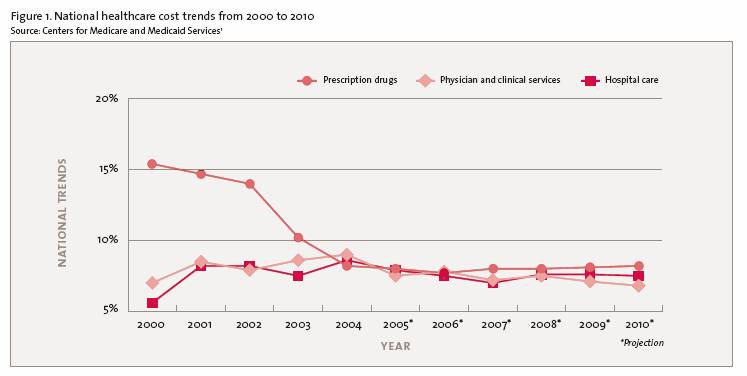
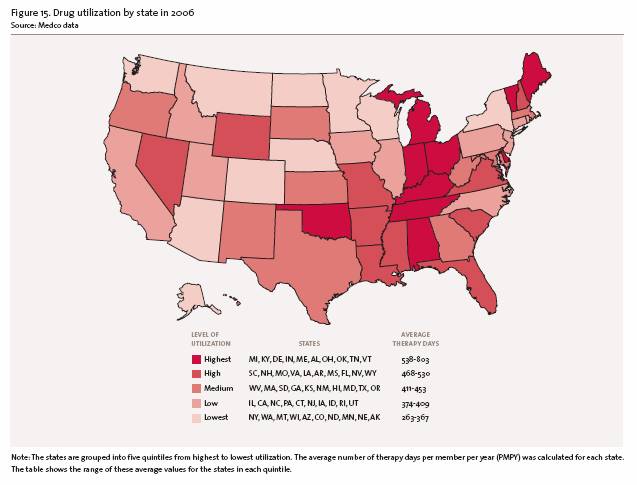
Medco DTR CoverI had the opportunity to read Medco‘s Drug Trend Report yesterday on the plane.  I have read Express Scripts many times (and helped write and edit several sections).  I saw several graphs I thought you might find interesting on the general market.

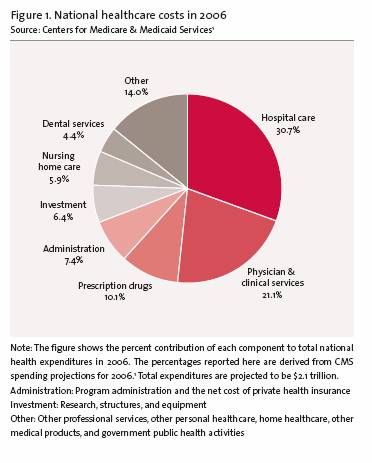
Healthcare Costs - Medco DTR

 HC Trends

 Util by State - Medco

JD Powers Cust Sat Study – Pharmacy

I saw a summary of this JD Powers report in the medcoExtra (internal weekly publication).  I think the data is interesting so here is what they reported:

  1. 6,500 participants (500 seniors) were surveyed on overall experience, loyalty, choice, and purchase behavior
  2. Highest levels of satisfaction were found at mail order where 71% were either “delighted” or “pleased”.  The second highest went to supermarkets.
  3. Mail order included Medco, Caremark, Express Scripts, drugstore.com, Precision Rx, RxSolutions, Walgreens Health Initiatives, Walmart, Cigna, Pharmacare, and RiteAid.
  4. Medco ranked third based on client satisfaction behind Caremark and Pharmacare.
  5. Consumers responded that convenience – time to fill, ease of ordering, and ease of contact – as the most important factor in overall satisfaction.
  6. Ranked second was “store layout” which means website design, IVR, etc. (for mail order).
  7. Some people didn’t realize that you could speak to a pharmacist at mail. (communication)
  8. The survey confirmed that some people don’t take advantage of mail because they don’t understand the process or the reasons to use it.  (communication)
  9. 5% of patients said they had a problem, but the majority of those were around long waits or unfilled prescriptions.  9% of the 5% said the problem was related to quantity or dosage.

Covering OTCs

Why don’t insurance companies cover selective OTCs (over-the-counter)?  I always heard clients talk about opening pandora’s box.  If I cover one OTC then I have to cover aspirin and vitamins.  Hopefully, us consumers aren’t stupid enough to look a gift horse in the mouth.

But, I like to make rational economic arguements.  So, let’s look at the math around Proton Pump Inhibitors (PPIs) such as Nexium.  If a client covers these, they probably pay somewhere around $100.

  • The AWP (average wholesale price) of the drug might be $150.
  • Their cost might be 15% discount off AWP.
  • The member might pay $22.
  • They might get a 10% rebate from the manufacturer.

But, whatever the assumptions, it has to be cheaper for them to give the OTC product which might cost $20, to the members for free.  Why not?

Some other recent blog entries

I always like to watch other blogs and look for interesting entries. Here are a few good ones that you might enjoy:

  1. Google and PHR
  2. Bluetooth heart monitor (exactly the type of idea I believe will be here soon)
  3. A list of sites really focused on patient advocacy (versus my site which is more about how healthcare institutions can focus on the patient)
  4. Medicare analogies (pretty direct criticism but I think you will enjoy Ezra’s entries)
  5. Some information on Microsoft’s Healthcare IT efforts
  6. Not sure this will affect your daily life but an interesting analysis on how to schedule doctor’s visits
  7. J&J suing American Red Cross (this was a mistake from the minute I saw it on the news)
  8. Brokers in Healthcare (an article on the Healthcare Blog)

Mini Clinics: Taking Off?

I can’t weigh in on the quality of care issue that surrounds the mini-clinics that are popping up all over the country (but here are a few facts). But, from a convenience perspective, I like the concept. They still aren’t open enough hours for me. Why not focus on 5-9am and 5-11pm which always seems to be when things go wrong.

I came across a good article with some facts on the trend from 8-11-07:

  • 7% of people have tried a clinic
  • There are 400 today in the US – projected to go to 700 by the end of 2007 and 2,000 by the end of 2008
  • 40-50% of clinics accept insurance from companies like Humana, United, and Aetna

There is even a Convenient Care Association that you can go to learn about the industry.

At the Health Business Blog, David mentions a site called Healthcare311.com where you look up the nearest clinics. At least I think it is supposed to. It crashed for me multiple times.

Convenience – Good or Bad

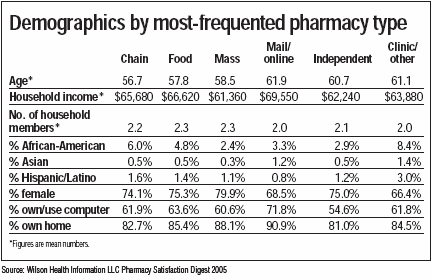
Anyone with prescriptions knows there are different pharmacy types – independent, online, mail order, grocery, and chains (e.g., Walgreens).  Each have different attributes.  The biggest question is always why one choses one over the other, whether there is a difference, and who is the most probable to chose one over the other.  In February 2005, Drug Store News put out what is probably one of the best studies on this.  It shows segmentation, reasons people chose one pharmacy over another, and other good data.  The graphical version is available as a PDF for $5 here.  Otherwise, you can read the plain text version.  One of the central points is that as consumers want convenience and chains implement drive-throughs then they are playing into the mail order trend.  They are disintermediating the pharmacist-patient relationship.

“In general, one of the things we’re seeing is that consumers are spending less time overall interacting inside the store,” Wilson said. “Not only is mail pulling them away, but [as] these drive-throughs increase dramatically … customer interaction seems to be shifting away from a more personalized approach to more time-saving and convenience methods.”

Abroad (from what I understand), the pharmacist and pharmacy play a more central care role with regards to the patient.  I think pharmacists that have time try to do that today, but the model is not set up for that.  This might be a model that CVS pursues with the blending of Caremark and MinuteClinic.  The study said that only 11% of people know the first name of their pharmacists.  Do you?  Mine are Renee and Mark.  I know them both well.

Here is one of the charts you will find that shows some variance across pharmacy type.  It didn’t show any statistical values so I don’t know if the differences are meaningful.

WilsonRx Pharmacy Segmentation

Future Possibility?

I always like to try to think out-of-the-box and have tried to see a future where tools like Second Life will affect healthcare. (I haven’t played Second Life which is a virtual reality world being used for all types of things. Look into some of the articles or blogs about what IBM is doing with it.)

I was reading a blog entry yesterday on DigitOwl about some future technologies called semacodes, MyVu, and d’fusion (see below) and then saw a new entry this morning in the eHealth blog when an idea started to form.

Put simply, Semacodes are machine-readable codes that contain URLs. Think “cooler barcode” and you’re on the right track. Almost all advertising will carry Semacodes, enabling consumers to photograph them to connect to information instantly via a mobile device.

The second piece of technology Tom highlights in his blog is MyVu; “funky Robocop-style sunnies” that are already available at apple.com. MyVu glasses plug into your video iPod to create a virtual big-screen within the “real space” in front of you.

The third piece of Tom’s technology pie is something called d’fusion (no, it’s not a fancy French hair product). D’fusion is a software that will allow you to create “augmented reality”. Put simply, a merging of real time, 3D objects/characters with live video.

In the future, could we simply pause when we felt sick, put on our MyVu glasses to create a virtual big-screen wherever we are, use d’fusion technology to enter a Second Life type of environment, and see a whole series of MDs, specialists and others in real-time. They could be anywhere in the world. They could give you an Information Prescription and/or a real prescription (digital of course) with a series of semacodes on it that could be used to take you to other virtual environments or content locations. You could then stop on your way home at a kiosk to pick up any physical drugs or products you needed.

Of course this only works with the advent of Smart Devices that could be used to take all the physical measurements that a clinic, nurse or MD would take, but that seems very feasible.  A device injected inside you which constantly monitors blood pressure, temperature, and tests your blood could address this and push your data to a PHR or other data source that the virtual physician could tap into.

Great. No waiting. Instant gratification. No travel. Access to the best care in the world. Links to lots of information. Seems logical to me.  Already, people are trying telemedicine and telepharmacy.

Step Therapy – Relevant for Consumerism?

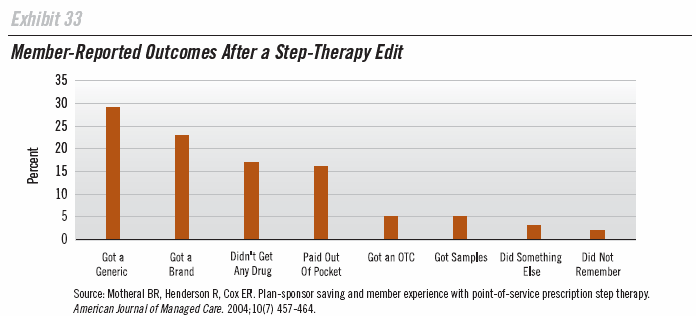
One of the key programs we used at Express Scripts to manage trend was Step Therapy.  What this means is that a patient is required to use a less expensive drug (typically a generic) prior to using a more expensive drug.  A day-to-day example of this is with antibiotics.  Anyone with kids knows that you start your child on a generic antibiotic and if that doesn’t work you escalate to a stronger (and more expensive) product.

Step Therapy has two challenges.  One, consumers got “rejected” at the Point-of-Sale (POS) (i.e., the pharmacy) and were upset they couldn’t get the drug their doctor prescribed.  Two, how do you handle programs like this (that are effective) with CDHC where the consumer is responsible for managing their own money and edits are typically frowned upon.

Patients generally don’t understand plan design and edits and don’t know what to do.  As you can see from the Express Scripts 2004 Drug Trend Report (pg. 121), a material amount of people filed no claim (great savings) but did take action (i.e., no negative clinical outcomes identified).  We developed a rapid response program to inform them what to do to get their drug covered which seemed to help.

ESI ST

But, what do you do in a consumer driven plan where you just have a high deductible.  I for one advocated that I would like edits that forced me to save money.  Perhaps, I needed an override code, but I wanted to know when and how to save money.  Left to my own devices and having to research every prescription would be a burden.

I think this still remains to play out, and I am sure there are lots of opinions here.

Number 366

I mentioned the Top 100 Healthcare Blogs a few weeks ago.  Well, I made it to the honorable mention at number 366.  So, if you like what you read here, help me move up the rankings by:

  1. Subscribing to the blog
  2. Adding a link to my blog on your site or blog roll

Thanks.

Influencing Your MD

After posting the note on Sermo yesterday, I began wondering about a patient’s ability to influence their physician.  The best study I have seen on this topic was around Direct-to-Consumer (DTC) advertising on brand drugs.  The FDA did a study a few years ago that showed how that information influenced the physician-patient relationship.  It is a good read (if you like studies).

But, what do you do when you know about some type of online resource for your physician?  Can you influence them to go out and research your disease state?  Will you even push your physician on his or her knowledge?

I think this is definitely influenced by generational issues.  This is a sweeping generalization, but I generally see older people have more deference towards people like physicians.  I think some of that is beginning to change as people bear more costs and responsibility for their healthcare.  But, younger people (who are not the sick ones generally) have a greater willingness to challenge those in authority (good and bad).

We faced this issue a lot at Express Scripts in trying to drive generic drugs and mail order.  Eventually, we created a “Physician Kit” that the patient could complete online and print to take to their physician.  It was presented by the physician, but it had the backing of the provider. 

Networked Communities – Sermo

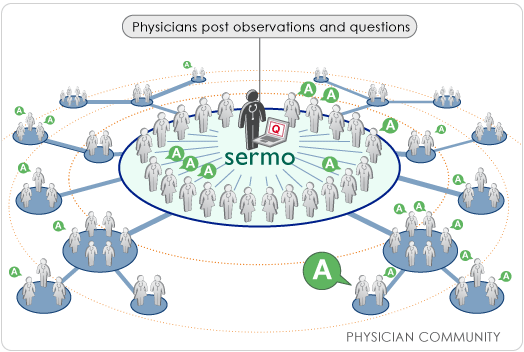
Physician Networking Sermo

I saw this mentioned in the HealthNex blog and thought I would add it here.  I was thinking earlier today about the power of social networking from a patient perspective.  It is helpful (and potentially misleading) to hear from peers when you have a chronic disease.  They can provide you with experiential data that helps you understand.  They can also direct you to information sources.

For people with more fatal diseases, they can serve as a support function.  Sermo, on the other hand, is a networking tool for physicians to help them share clinical experiences with other physicians.   Here are a couple of examples of some postings (I can’t see everything since I am not an MD):

  1. Statin Side Effects

    How often do you people develop fatigue and/or myalgias while on a statin? does it negate use of other members of this family? if so, what would your next drug choice be in the setting of a patient with high ldl and low hdl?…

  2. orbital follicular lymphoma

    this is a 65 y old woman diagnosed about 3 months ago with a right orbital grade II/III follicular lymphoma (lacrimal gland excised ). patient had a staging workup including PET scan and bone marrow biopsy which were negative ,that was after surgery….

This is definitely the power of Health2.0 where people can collaborate and share information using web tools.

Aetna Leadership Blueprint

I was looking for something else on the Aetna site and stumbled across this picture in their latest investor presentation (Morgan Stanley Global Healthcare Unplugged). For those of us looking at consumerism, I think this is a good snapshot for competitive intelligence.

Aetna Leadership Blueprint

It hits all the key buzzwords – optimizing health, quality, affordability, literacy, transparency, and evidence based.  The proof is always in the actions, but this is what you want your MCO to be discussing.  The key challenge in all of this is bringing information to the consumer in digestible amounts and in a format and language that they can understand.

Google’s Health Advisory Board

I use Google all the time.  I have been very interested to see pieces of information around Google Health.  Will it compete with WebMD and Revolution?  Will it create new tools like a PHR?  How will it leverage its technology to improve healthcare?

I found their announcement of their board several months ago interesting.  A good mix of people – MDs, employers, academic facilities, researchers.  I didn’t notice many technologists which surprised me.  There are numerous start-ups with MDs or RPhs or other health professionals running them.   

More to come, but a company with great resources that understands how to innovate and seems to have a social conscience could make a big difference here.  You can go read a speech by Adam Bosworth at Google about this.

Consumer Voices for Coverage

The Robert Wood Johnson Foundation has funded something called the Consumer Voices for Coverage which begins in 2008. 

The need from the project comes from the publication of Consumer Health Advocacy: A View from 16 States by Community Catalyst in October of 2006.  This calls for consumers to be active in protecting and expanding healthc are access.  In order to be effective, consumers need to organize into  state advocacy networks with the ability to:

  1. analyze complex legal and policy issues in order to develop achievable policy alternatives;
  2. build a strong grassroots base of support;
  3. design and implement communications strategies to build timely public and political support for reform;
  4. build and sustain strong broad-based coalitions and maintain strategic alliances with other stakeholders;
  5. develop and implement strategic health policy campaigns; and
  6. generate resources from diverse sources to build organizational infrastructure.

I must admit to never being much of an activist, but I certainly support the concept of people being active to support their cause.  And, of the many causes out there, access and care for people is a good one.  In a wealthy country like the US, it is a shame to see people dying and in pain for simple reasons like lack of access. 

Unfortunately, many Americans probably don’t realize how good we have it here.  Even those without have TVs and clothes.  Go to a 3rd world country and spend some time with the poor.  It will radically change your opinion. 

Life Expectancy

I find it interesting that all the financial magazines I read talk about how life expectancy is going up in the US.  They talk about the need to plan for 30+ years of retirement money. 

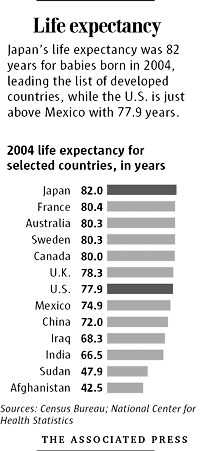
At the same time, all the healthcare articles I read talk about life expectancy in the US (although at an all-time high) dramatically lags behind 41 other countries…even though we spend the most on healthcare.  You can read the AP article here.  It makes some interesting points blaming the difference on obesity (2/3 of Americans are overweight), the fact that we have 47M uninsured Americans, and our horrible rate of infant mortality (6.8 out of 1,000).

Here is the chart from the article:

Life Expectancy - AP

Pharmacists on Prescriptions (and OTCs, etc.)

I was pleasantly surprised this morning to learn about RxWiki.com.  This is a website by pharmacists to provide consumer information about drugs, OTCs, and other products.  Certainly, for those practicing pharmacy (versus in the ivory tower), they should have some good first hand experiences to share with patients.

I think about when I first started seeing advertisements for Alli (diet drug).  When I asked a pharmacist about it, he said it was great as long as you eat no fat.  He said you couldn’t make it from taking one bite of a McDonald’s hamburger in your car into the bathroom at McDonald’s fast enough to avoid an accident.  Doesn’t sound appealing to me.  Why not just give up fat?

I wonder if we will ever see a MDWiki (somebody already has the URL).  These collaborative tools are great for allowing people to share information with the general public.  Hopefully, they have the right disclaimers so they don’t ever have some frivolous lawsuit because I think consumerism is only going to take off when information is generally available with some quality assurance process.  We need to trust the information but have it relayed to us in straightforward, non-legalese.

Calls vs. Letters

The more I learn about automated call technology the more I wonder why people don’t use it as much as letters.  Obviously, there are telemarketing laws.  And, I think many people think of calls as only being done by humans and being expensive.

But, imagine the following differences and benefits:

  1. Lower cost then letters
  2. Able to customize the messaging (think e-mail personalization)
  3. Able to change your campaign real-time (i.e., our response rate is lower than expected, let’s change the messaging to say this)
  4. Able to track lots of data – who picks up, when they pick up, how much of the message they listen to
  5. Able to collect data immediately
  6. Able to interact with the participant (e.g., give me your BMI…that is 10% higher than last time…are you following your diet)

Obviously, e-mail is the cheapest medium, but our culture is rapidly becoming overwhelmed with e-mail.  You have some of the same benefits, but you can’t modify during the interaction.  And, in healthcare, there is limited information you can push to a patient.  In most cases, you are asking them to click through a link to go to a secure website to receive information.  With letters, you assume it is secure since it is addressed to them.  With automated calls, you have them verify who they are based on a few points of reference (name, DOB, member ID).

Cultural Communications

In the spirit of advocating for the patient, I think one of the key things missing at many companies is culturally specific communications.  The simplest solution here is multi-lingual.  Now that nearly 1 in 10 counties in the US have a majority of minorities, this is important (USA Today 8/9/07).

Of course, I always hear the question back of how do I track this.  Will people self-identify into a cultural group?  It depends.  Do you have anything to offer them?  Can you articulate value to them?

If I speak a different language as my primary language and you offer me communications in my native tongue, I would likely be happy to request it.  Can you track it when I request it?  Aquent appears to be a company focused on this within the healthcare space.

This can also manifest itself in color selection.  For different cultures, a certain color can mean different things which might affect your brochure creation.  (see article)   Of course, you need to be able to do mass customization of your brochure rather than print 7M in one run.

With hispanics expected to represent 21% of the US population by 2020, it will be important to understand this segment and how to communicate with them.  Here is a good article on this.  I have seen studies that show they respond at a higher rate than other segments to both letters and direct calls.  Shouldn’t that be important?

The point here is that if you really care about the patient and their health wouldn’t you want to push information to them in a language they care about; using colors that evoke action and emotion; and using words and frameworks that they understand.

Data Sources

There are a few places that I always go for information.  I thought I would share them:

  1. For general Rx data, I use the NACDS website.
  2. For prescription trend information, the PBMs have good trend reports.  I helped with ESI’s report so I know it well, but Medco and Caremark also put out good reports.
  3. General government health data
  4. Rand
  5. Kaiser Foundation
  6. CDC (e.g., publication)
  7. RevolutionHealth or WebMd (e.g., look at this scary obesity chart)
  8. DrugDigest
  9. Consumer Reports on Prescriptions

More to come, but I found myself going to the same site multiple times today and jotted down a few URLs that I find as common tools.

Organs and Medical Tourism

I find the whole concept of Medical Tourism fascinating.  The fact that it can be less expensive for someone in the US to fly to a foreign country and get an operation done is logical while also amazing.  When I was trying my start-up, one of my board members had a friend raising $2B to develop a medical center in Asia to bring people there for long-term surgery and recovery periods.

Business 2.0 had an article about medical tourism that predicted it would be a $40B market by 2010.  A great opportunity?

Example from the article “GlobalChoice sent a patient to Punjab for a hip replacement that cost about $13,000, including airfare and a 20-day hotel stay. The estimated cost in the United States for the surgery alone? $40,000.”

I also found it interesting in a April 2007 Wired article called “Organs for Sale” to see the prices for transplants overseas (with much higher availability also).

  • $15,000 – $145,000 for a kidney
  • $150,000 – $290,000 for a lung
  • $25,000 – $290,000 for a liver
  • $110,000 – $140,000 for a pancreas
  • $90,000 – $290,000 for a heart

My key point with blog (other than just interest) is that there is a market for companies to provide these services, insure the patient, manage the quality of care, and offer incentives (even for insured people) to get this care.

Clothes for Wellness

So what does BodyMedia have in mind…If you read this article from a few years ago, I think they are on to something.  Can you put sensors in people’s clothes without changing the comfort of the clothes – probably?  Can you link those sensors to data driven models to help drive behavior – sure?  Will people wear the clothes, use the data, and change behavior – who knows?

The concept is right.  Embedding technology into everything we do and using that data to push information to us at the right time is critical to changing behavior and driving technology enabled wellness.  I love the picture below of their reporting.  I get this from my GPS watch.  I definitely intend to learn more about what they are doing.

Wellness Incentives

Can incentives actually drive wellness? Why not? Why?

Incentives are powerful tools once you understand the healthcare consumer and how they react. Is the incentive a lower copay? Is it a free service? Lots of interesting models are going to come up. It has worked in other industries but can it work here.

I think a lot will depend on the segment of the market and what you are asking them to do. A old person (i.e., a MD worshipper) is unlikely to challenge their doctor and push for certain action. A younger person in good health (i.e., a Living for Today) is unlikely to respond to messaging about pre-screening and general check-ups.

Here are a couple of the things out there:

Another model which will be interesting is existing companies like Maritz which do loyalty programs and incentive programs for other industries.  As they apply their skills to the healthcare market, it should allow this to take off faster.