Archive | Books / Articles RSS feed for this section

Healthcare Fails Again In Experience Survey

The fact that most people would rate their experience with their health insurer low isn’t a big surprise to most of us in healthcare.  But, with the Triple Aim and other quality metrics, the customer experience is becoming an increasingly important metric.  Several recent surveys have talked about this as one of the top priorities for hospital systems.  And, as use of CAHPS continues to grow, this will be more closely linked with incentives.

“Patient experience is on the radar of hospital executives, especially since Hospital Consumer Assessment of Healthcare Providers and Systems (HCAHPS) scores will soon affect reimbursement,” said Jason Wolf, executive director of the Beryl Institute. “However, the data shows that executives are still grappling with how to implement change within their organizations.” (source)

Like in years past, health insurers just barely nudge out TV service providers to prevent being the bottom of the industry in Bruce Temkin’s Benchmarking work.  While I’d love to see healthcare broken out into hospitals, physicians, pharmacies, insurance companies, PBMs, and care management companies, I think we can assume some similar concerns would fall out.

Healthcare companies need to find ways to address this.  I think there are several key first steps:

  1. Defining your customer;
  2. Mapping their experience;
  3. Creating personas or segments to think about (i.e., healthy, sick, insured);
  4. Identifying influences on their experience (some of which you might not control);
  5. Determining what matters versus doesn’t matter;
  6. Capturing baseline metrics; and
  7. Building a continuous improvement process.

Temkin Group 2013 Satisfaction Temkin Group Satisfaction


Body Peace Treaty As Mentioned On Biggest Loser

I was finally catching up on my Biggest Loser shows yesterday.  They talked about the Body Peace Treaty from Seventeen magazine. Not something I read, but there are some good points in the treaty.  Here are a few for you.

  • Do the little things that will keep my body healthy, like walking instead of hanging on the couch, or drinking water rather than something sugary.
  • Appreciate what makes my body different from anyone else’s. I love that I’m unique on the inside, I will try to feel that way about the outside too!
  • Support my friends, who just like me, have their own body issues. Hey, we’re all in this together!
  • Remember that the sun will still rise tomorrow even if I had one too many slices of pizza or an extra scoop of ice cream tonight.
  • Quit judging a person solely by how his or her body looks — even if it seems harmless — because I’d never want anyone to do that to me.
  • Remind myself that what you see isn’t always what you get on TV and in ads — it takes a lot of airbrushing, dieting, money, and work to look like that.
  • Respect my body by feeding it well, working up a sweat when it needs it, and knowing when to give it a break.
  • Realize that the mirror can reflect only what’s on the surface of me, not who I am inside.
  • Not let my size define me. It’s far better to focus on how awesome I look in my jeans than the number on the tag.
  • Surround myself with positive people. True friends are there to lift me up when I’m feeling low and won’t bring me down with criticism, body bashing, or gossip.

So, while some of the things on the list may be more biased towards young women, the fundamentals are the same for all of us.

2013 PBMI Presentation On Pharmacy Need To Shift To Value Focus

Today, I’m giving my presentation at the PBMI conference in Las Vegas.  This year, I choose to focus on the idea of shifting from fee-for-service to value-based contracting.  People talk about this relative to ACOs (Accountable Care Organizations) and PCMHs (Patient Centered Medical Homes) from a provider perspective.  There have been several groups such as the Center For Health Value Innovation and others thinking about this for year, but in general, this is mostly a concept.  That being said, I think it’s time for the industry to grab the bull by the horns and force change.

If the PBM industry doesn’t disintermediate itself (to be extreme) then someone will come in and do it for them but per an older post, this ability to adapt is key for the industry.  While the industry may feel “too big to fail”, I’m not sure I agree.  If you listened the to the Walgreens / Boots investor call last week or saw some of things that captive PBMs and other data companies are trying to do, there are lots of bites at the apple.  That being said, I’m not selling my PBM stocks yet.

So, today I’m giving the attached presentation to facilitate this discussion.  I’ve also pre-scheduled some of my tweets to highlight key points (see summary below).


Planned PBMI Tweets

59% Of MDs Want To Know About Employer Care Mgmt Efforts

I just came across this survey data from January of 2010 where the Midwest Business Group on Health (MBGH) did a survey of physicians. I found it really interesting. Let me pull out a few points with some comments…

  • 72% of physicians agree that employers should have a role in improving and maintaining the health of their employees with chronic disease. [Since they ultimately are the one paying the bill, this seems like a reasonable expectation in today’s world.]
  • 59% believe that they should be informed about employer efforts to help their patients manage chronic conditions. [This is increasingly becoming important as we move from a Fee-For-Service (FFS) world to a value-based or outcomes-based healthcare environment.]
  • 46% agree that employers should have a role in helping employees adhere to their medication and treatment regimes. [Since MDs generally don’t view this as their task, if it’s not someone acting on behalf of the employer, I wonder who they think should be doing this.]
  • 32% agree that employers should play no role in the health of patients. [With healthcare impacting productivity and global competitiveness, I think this is an unreasonable expectation.]
  • 61% want the employer to provide physicians with information on what is available to patients so they can counsel them on the value of participation. [How would they want this information and what would they do with it?]
  • 49% would like to receive workplace clinical screening results to reduce redundancies in testing. [Do the other 51% want duplicative testing?]
  • 48% want to receive actionable reports (e.g., screening results, health coaching reports) to support them in treating patients. [I would hope so. If the employer (or really their proxy) is managing the patient in a chronic program, why wouldn’t the physician want this data?]
The study went on to say that physician’s want employers to provide support around weight loss, smoking cessation, flu shots, and other broad programs. They also want the employer to focus on lifestyle change and health improvement not the chronic disease itself. This makes sense, but in general employees are more focused on trusted information coming from their physician not their employer so there’s a clear gap here. (See graph from Aon Hewitt’s 2011 Health Care Survey, New Paths. New Approaches.)

The Prescribing Apps ERA – Will Clinicians Be Ready? #mHealth

Dr. Kraft (@daniel_kraft) recently spoke at FutureMed and talked about the prescribing apps era.  I’ve talked about this concept many times, and I agree that we are rapidly moving in that direction.  And, there’s lots of buzz about whether apps will change behavior and how soon we’ll see “clinical trials” or published data to prove this.

From this site, you can get a recap, but here are the key points that he made:

1) Mobile Phones (quantified self) are becoming constant monitoring devices that create feedback loops which help individuals lead a healthy lifestyle.  Examples include; monitoring glucose levels, blood pressure levels, stress levels, temperature, calories burned, heart rate, arrythmias. Gathering all this information can potentially help the patient make lifestyle changes to avoid a complication, decrease progression of a particular disease, and have quality information regarding his physical emotional state for their physician to tailor his treatment in a more efficient manner.

2) The App prescription ERA:  Just as we prescribe medications prescribing apps to patients will be the future. The reason why this is important is that apps created for particular cases can help the patients understand their disease better and empower them to take better control.

3) Gamification: using games in order to change lifestyle, habits, have been mentioned before. A very interesting concept was that created in the Hope Labs of Stanford. The labs created a game in which children would receive points after there therapeutic regiment, once points were optioned they could shoot and attack the tumor. Helping with the compliance rate of the treatments

4) Lab on a chip and point of care testing

5) Artificial Intelligence like Watson and its application in medicine.

6) Procedure Simulation: Several procedures done by medical professionals follow (not 100%) a see one, do one teach one scenario.  Probably very few people agree with this concept and that is why simulation has great potential. In this case residents, fellows in training can see one, simulate many and then when comfortable do one.

7) Social Networks and Augmented Reality

At the same time, a recent ePocrates study hammered home the point that while this is taking off physicians don’t have a mechanism for which ones to recommend and why.

According to the Epocrates survey, more than 40 percent of physicians are recommending apps to their patients. In terms of the apps being recommended, 72 percent are for patient education, 57 percent are lifestyle change tools, 37 percent are for drug information, 37 percent are for chronic disease management, 24 percent are for medical adherence and 11 percent are to connect the patient to an electronic health record portal.

Physicians also have several different sources for identifying which apps to recommend to their patients. According to the survey, 41 percent get advice from a friend or colleague, while 38 percent use an app store, another 38 percent use an Internet search engine, 23 percent learn of an app from another patient or patients, and 21 percent use the app themselves.

That said, the survey also notes that more than half of the physicians contacted said they don’t know which apps are “good to share.”

As I’ve discussed before, this is somewhat of the Wild West.  Patients are buying and downloading apps based on what they learn about.  They’d love for physicians, nurses, pharmacists, and other trusted sources to help them.  But, those clinicians are often not technology savvy (or at least many of the ones who are actively practicing).  There are exceptions to the norm and those are the ones in the news and speaking at conferences.

IMHO…consumers want to know the following:

  1. Which apps make sense for me based on my condition?
  2. Will that app be relevant as I move from newly diagnosed to maintenance?
  3. Should I pay for an app or stick with the free version?
  4. Is my data secure?
  5. Will this app allow me to share data with my caregiver or case manager?
  6. Will this app have an open API for integration with my other apps or devices?
  7. Is it intuitive to use?
  8. Will this company be around or will I be able to port my data to another app if the company goes away?
  9. Is the information clinically sound?
  10. Is the content consumer friendly?
  11. Is it easy to use?
  12. Is there an escalation path if I need help with clinical information?
  13. Will my employer or health plan pay for it for me?
  14. Is my data secure?

And, employers and payers also have lots of questions (on top of many of the ones above):

  1. Is this tool effective in changing behavior?
  2. Should I promote any apps to my members?
  3. Should I pay for the apps?
  4. How should I integrate them into my care system?
  5. Do my staff need to have them, use them, and be able to discuss them with the patient?  (Do they do that today with their member portal?)

mhealth_infographic_large

Two Examples Of How Healthcare Is Going Local

I remember when I first started working in the healthcare industry in 1998, people kept reinforcing for me that “Healthcare is Local”.  As we move into a national effort to transform healthcare, the question is how will healthcare transform to gain scale efficiencies while still taking advantage of this simple reality.

With that in mind, I found a WSJ article today about hospitals trying house calls very interesting.  It talks about how insurers and health systems are using the old fashion model of house calls to engage patients to reduce re-admissions and improve outcomes…while lowering costs.  Since healthcare costs are massively concentrated with 1% of patients driving 22% of healthcare costs, this becomes possible.  Additionally, as you focus .  on people at high risk based on some model like the Johns Hopkins ACG model or people who have been recently discharged or people with multiple co-morbidities and other risk factors, you have a chance to make a difference.  It will be interesting to see how this takes off.

Another example of how healthcare is going local is the use of health apps.  I saw a number earlier today where someone was saying there’s now 50,000 health apps.  I usually talk about 16,000, but it’s obviously going up all the time.  Employee Benefit News recently had an article about how health apps were changing the engagement rates for wellness programs.  Obviously, the phone is the ultimate in local allowing the creation of an app that’s with us all the time and can be real-time in terms of interactivity.

Wellness In The Workplace – Optum Research

I found a summary of this Optum Study – Wellness In The Workplace in the January 2013 Employee Benefit News:

  • 56% of companies (surveyed) have a formal, written strategic plan for wellness
  • 28% of companies have an onsite clinic
  • 49% of eligible employees participate in company wellness programs (seems really high to me)
  • 90% of companies with 3,000+ employees say wellness solutions are an important part of their benefits (compared with 79% of employers with 2-99 employees)
  • 83% of companies use coaching to address weigh management
  • The top barriers to employee participation are:
    • Lack of time / energy
    • Lack of interest
    • Effective communications
  • 52% of companies offer wellness programs to employee’s family members
  • Onsite clinics are offering:
    • 77% flu shots
    • 56% wellness communications
    • 43% fitness challenges
    • 42% preventative care
    • 41% health risk assessments

wellness participation

Healthcare Companies On The 100 Best Companies To Work For

Here’s a list of the Healthcare companies that were on the 2013 “100 Best Companies To Work For” list by Fortune.

  • #3 – CHG Healthcare Services
  • #17 – REI (although more of a retail company from the traditional view)
  • #20 – Millennium
  • #21 – W.L. Gore
  • #32 – JM Family Enterprises
  • #36 – Genentech
  • #39 – Meridian Health
  • #41 – Mayo Clinic
  • #43 – Scripps Health
  • #46 – Children’s Healthcare of Atlanta
  • #48 – Novo Nordisk
  • #49 – Atlantic Health System
  • #52 – St. Jude Children’s Research Hospital
  • #58 – The Everett Clinic
  • #61 – Stryker
  • #67 – The Methodist Hospital System
  • #69 – OhioHealth
  • #76 – Baptist Health South Florida
  • #89 – Roche Diagnostics

Given how much healthcare companies should know about the importance of workplace satisfaction and it’s correlation with overall health (less stress), healthcare costs, and overall presenteeism and absenteeism, I personally would expect more on the list.

How Quickly Do Healthcare Companies Respond To Twitter Comments? (Test)

I was intrigued by this test done over in the UK to look at how quickly retailers responded to comments via Twitter (you can see an infographic about similar US data below).  Obviously, more and more consumers are using social media.  And, we know that comments can go viral quickly especially when they’re negative.

“A recent Spherion Staffing Services survey shows that when consumers have a good customer service experience, 47 percent are likely to tell a company representative; 17 percent will express their opinions via social media; and 15 percent will write a review. The same survey from 2010 showed that only 40 percent of consumers were likely to share a great experience with a company representative—proving that consumers are becoming more vocal with companies they interact with. If consumers have a poor experience, 36 percent are willing to write a complaint directly to the company, and one in four will express their opinions on social media. Nineteen percent, the same statistic as last year, will choose to write a review online.” (December 2011 Study)

Of course, some people actively monitor their social media feeds while others view them more as a PR channel.  It also depends on whether the feed management is outsourced or insource and whether it’s monitored by marketing, operations, customer service, sales, or some combined team.

Here’s a good post on measuring response and activity within Twitter accounts.

So, what I’ve decided to do is a Twitter test similar to the one above.  I’m going to post the following to different categories of healthcare companies and see how quickly they respond.

  1. To retail pharmacies:  Are you using social media to handle customer service?
  2. To PBMs:  Are you using social media to handle customer service?
  3. To Managed Care: Where’s the best place to find out about your Medicare products?
  4. To mHealth companies:  Can you share examples of how employers are promoting your products?
  5. To pharma:  Are you doing any value-based contracting with PBMs?
  6. To device companies:  Can you share examples of how employers are promoting your products?

Who do you think will be the fastest to respond?  Will the bigger companies simply have more resources to monitor and staff their teams or with more digital companies be more in tune with social media?

KeepingUpWithTwitter_2

Google Glass Plus The Checklist Manifesto

I continue to think about all the cool ways that Google Glass could be used to change healthcare.  Here’s my thought from today.

You could combine The Checklist Manifesto concept with Google Glass to allow surgeons to be reminded of the things they need to do with a patient while they were during the encounter or during the procedure.

In complex situations – such as those which arise in almost every profession and industry today – the solutions to problems are technical and demanding. There are often a variety of different ways to solve a problem. It’s all too easy to get so caught up dealing with all these complexities that the most obvious and common sense immediate solutions are not tried first. To overcome this problem, take a leaf from the commercial aviation industry and develop checklists people can use to make sure every base is covered quickly and concisely. Checklists are a forgotten or ignored business tool. It’s time for them to come in from the cold. 

“Here, then, is our situation at the start of the twenty-first century:We have accumulated stupendous know-how. We have put it in the hands of some of the most highly trained, highly skilled, and hardworking people in our society. And with it, they have accomplished extraordinary things. Nonetheless, that know-how is often unmanageable. Avoidable failures are common and persistent, not to mention demoralizing and frustrating, across many fields – from medicine to finance, business to government. And the reason is increasingly evident: the volume and complexity of what we know has exceeded our individual ability to deliver its benefits correctly, safely, or reliably. Knowledge has both saved us and burdened us. That means we need a different strategy for overcoming failure, one that builds on experience and takes advantage of the knowledge people have but somehow also makes up for our human inadequacies. And there is such a strategy – though it will seem almost ridiculous in its simplicity, maybe even crazy to those of us who have spent years carefully developing ever more advanced skills and technologies. It is a checklist.”

(This is from this PDF on The Checklist Manifesto.)

Here’s an example of a checklist from the WHO.


PHM Is The New Black Post At CCA Blog With Diabetes Examples

This is a partial copy (teaser) of a guest blog I did on the Care Continuum Alliance blog earlier this week.

**********************

With all the talk about Accountable Care Organizations (ACOs) and Patient Centered Medical Homes (PCMHs), the adoption curve for the Care Continuum Alliance (CCA) model for Population Health Management (PHM) should move beyond the innovators in 2013 and begin to “Cross the Chasm.” I believe there are several preconditions that would set the stage for this to occur, for instance:

  1. Technology advances leading to the “Big Data” focus;
  2. The changing paradigm from fee-for-service to outcomes-based care;
  3. The realization of the role of the consumer led by the e-Patient movement, the idea of the Quantified Self, and the focus of large healthcare enterprises on being consumer centric; and
  4. The budget crisis that is driving employers and other payers to embrace PHM, wellness, and other initiatives that impact cost and productivity.

Of course, most companies are still in the infancy of designing systems to address this coordinated care model, which does not view the patient as a claim, but longitudinally aggregates demographical, psychosocial and claims data.  Additionally, training staff using Motivational Interviewing and integrating external staff into the virtual care team in partnership with the provider will continue to evolve as do our care delivery models.

To read more especially the diabetes examples that I shared, please click over to their blog.  Thanks.


Guest Post: Is It Too Late To Avoid The Flu?

By Paula Spencer Scott, Caring.com Senior Editor

The 2012-13 flu season is shaping up to be one of the worst in years. If you or your loved ones haven’t succumbed yet, these steps can help you stay healthy. And if someone does get sick, many of the same steps can prevent a wider spread of infection.

Get a flu shot. No, it’s not too late. This year’s shot only offers 62 percent effectiveness, according to Thomas Frieden, director of the Centers for Disease Control and Prevention. But it’s still considered the number-one prevention tool.

Give the flu shot time to kick in. It can take one to two weeks for a flu shot to offer protection (see: How Long Does It Take for a Flu Shot to Offer Protection? for more information on flu shot protection). So don’t expect instant immunity.

Keep vulnerable loved ones away from crowds. Given how widespread the flu already is, we’re all courting trouble by hanging out in crowded public places like shopping malls. But those who should especially keep away include the very young, the frail old, and those with health conditions that weaken the immune system or who are using treatments that can affect the immune system, such as.

Keep suspicious visitors away from vulnerable loved ones. If you live with someone with a chronic illness or who is a frail older adult, be a good gatekeeper. If a guest has a cough, a runny nose, or is complaining about being under the weather, don’t endure a visit. Invite him or her back at a better (healthier) time.

Stay home if you’re feeling under the weather. Best to avoid crowds, including the workplace, when your immune system is low. And in case your symptoms mean you’re coming down with something, you can avoid infecting others.

Wash hands often. Pretend you’re obsessive-compulsive and do it all day long. Be sure to wash hands (with soap and water or hand sanitizer) after touching doorknobs.

Become a clean freak. Stock up on cleaning supplies. You may use them more if you have them handy right in each bathroom and the kitchen. Wipe down surfaces often. Bring portable wipes to work so you can keep your keyboard and any shared spaces cleaner, too.

Try a face mask. It’s not clear they’re super-effective, but in a situation where some people are sick, they can provide an added barrier between a frail older adult and the flu.

Stay well hydrated. Keeping nasal passages moist helps them resist germs. Drinking lots of water and using nasal saline sprays helps — especially when flying, as aircraft cabin air is dry.

Get at-risk groups to the doctor at the earliest symptoms. Very young children and the very old should get swift treatment, says the CDC. Medicines such as Tamiflu work best within the first 48 hours.

About the Author

Paula Spencer Scott is senior editor at Caring.com, the leading online destination for caregivers seeking information and support as they care for aging parents, spouses, and other loved ones. Paula is a 2011 MetLife Foundation Journalists in Aging fellow and writes extensively about health and caregiving. You may also want to see Paula’s article 7 Ways to Have Fun While Fighting Cold and Flu.

CVS Caremark Adherence Study – Is Facebook The Solution To Adherence?

A new study funded by CVS Caremark as part of their ongoing research into medication adherence was recently published.

“Association Between Different Types of Social Support and Medication Adherence,” December 2012 issue of American Journal of Managed Care

In this, researchers reviewed 50 peer-reviewed articles about studies which directly measured the relationship between medication adherence and four categories of social support, including:

  • Structural support – marital status, living arrangements and size of the patient’s social network
  • Practical support – helping patients by paying for medications, picking up prescriptions, reading labels, filling pill boxes and providing transportation
  • Emotional support – providing encouragement and reassurance of worth, listening and providing spiritual support
  • Combination support – any combination of the three support structures detailed above

According to the study, greater practical support was more often linked to improved medication adherence, with 67 percent of the studies evaluating practical support finding a significant association between the support and medication adherence.

It drives some interesting questions as you dig into the actual research.  I sent several questions to Troyen A. Brennan, MD, MPH, who is the Executive Vice President and Chief Medical Officer of CVS Caremark, and heads the research initiative that conducted the study.  Here are his responses:

1. How will this research change CVS Caremark’s approach to medication adherence such as your Adherence to Care program? 

CVS Caremark’s Adherence to Care program is all about engaging patients more consistently and directly to ensure they are following their medication regimes. We understand that our patients’ social networks and communication preferences are diverse, and we know that multi-dimensional interventions help to change behaviors. Given these factors, this research can be an important reference point as we develop new approaches to our adherence programs, challenging us to look beyond traditional engagement strategies in an effort to most effectively support patients on their path to better health. We are planning to test some interventions along these lines in 2013.  As a pharmacy innovation company, we want to make sure we are anticipating patient needs and remaining relevant to them especially given the changing face of social communication and networks.  

2.  The data points required to assess these support factors aren’t readily available in the eligibility file or claims file.  Are you collecting that data at the POS or during the enrollment process and using it in any way to determine the correct intervention cadence or level of effort at an individual level?

While this may not be the standard today, it is clear from the research that a patient’s social network and resulting support can be important factors in helping them take their medications as directed. This research can help us and others in the industry think about how best to incorporate new approaches to identify and leverage social networks for greater medication adherence.  For now, we will rely on POS as a way to collect this type of information.


  • 3.  To me, it appeared the data was less conclusive than I would like.  There were lots of conflicting data points and qualitative data.  Do you plan to refine this testing within your population to look at differences across disease states and relative to other factors?


This study relied on a comprehensive analysis of current literature linking medication adherence to social support networks – so we recognize that there are limitations in being able to draw concrete conclusions on certain factors, such as disease-specific conditions. Regardless, we still believe these findings – which look at clinical, peer-reviewed studies – contribute to the knowledge base in our field. As with all of the research we conduct, we challenge our teams to consider how we might be able to use the information to find practical supports for patients, while at the same time contributing to awareness about the implications of adherence on the broader health care landscape. The best way to understand this research is as hypothesis generating, which we can use in the design of real interventions that we can then test definitively in subsequent studies.

4.        Some of these social factors might be correlated with depression.  Was there any screening done to look at how depression as a co-morbidity might have affected adherence rates?

The methodology of this study relied on literature review and analysis of fifty peer-reviewed research articles which directly measured the relationship between medication adherence and forms of social support. A full review of the medical conditions associated with these studies can be found in Appendix 1. While depression, alone, was not one of the conditions featured in these studies, several did look at mental health conditions and the linkage between adherence and social networks. We did not however stratify by existence of depression—it may be a factor we have to take into account in future studies.

5.   The one thing that I read between the lines was the need for a caregiver strategy.  This has been missing in the industry for years.  Does CVS Caremark have an approach to engaging the caregivers?


Our study found that practical support such as picking up prescriptions, reading labels and filling pill boxes – all within the realm of a given caregiver’s role – were the most significant in driving greater adherence. Considering this finding, and acknowledging the role caretakers have in the lives of our patients, there is certainly space for us to develop solutions that engage caretakers more effectively. Recent analyses of “buddy” programs do suggest such interventions do work- -we just need to consider how to scale it.


  • 6.        With all this talk about social networks, it naturally leads you to a discussion about Facebook (or Google+).  Neither of them have big focuses in the healthcare space.  In your opinion, will these tools offer an intervention approach for changing behavior around medication or will that be occur at the disease community level in tools like PatientsLikeMe or CureTogether where there’s no social bond but a connectivity around disease? 


 The role of social media has changed the way we communicate and connect with one another dramatically over the past decade. What we can say, based on this particular study, is that the more practical the support, the more significant the impact on medication adherence. Perhaps further studies looking into solutions that effectively combine online/social media platforms to complement practical support would help clarify their impact on medication adherence.

If interested, here are some of their other presentations on adherence:

Catching Up: Interesting Articles

As part of my efforts to start the new year, I’m cleaning out my inbox with all items I’ve tagged as possible blog topics.  Here’s the first list of things that caught my attention, but never made it into a story.

Childhood Obesity Quiz On The Biggest Loser

This season, on The Biggest Loser, they’ve invited 3 kids to be ambassadors for childhood obesity. They aren’t living on the ranch, but they are coming out for some of the challenges. In last night’s show, they quizzed the contestants on several facts about childhood obesity. They were pretty scary. I thought I’d share them here with the research to support them (or at least as close to the questions as I can remember).

There are lots of efforts in this area. Here’s a few links to resources:

Childhood Obesity Epidemic Infographic
Brought to you by MAT@USC Masters in Teaching

Limiting Factor For Behavior Change is We Don’t Believe We Will Change

One of the biggest challenges in healthcare is getting people to change behavior or as Express Scripts would frame it – activating intent.  Since approximately 75% of healthcare costs are due to preventable conditions, it’s important that we can help people see the future value of change.  People often discount that future value of change based on the amount of effort required to get there.  They see the short-term pain not the long-term gain.

A new study puts an interesting perspective on this.  It shows that people can generally see the amount of change they’ve made in the past decade, but they fail to realize that change will continue for the next decade.  They appear to see themselves as stable at the current moment without significant change in the future.  I believe this is really important as we think about Motivational Interviewing techniques and communications for engaging consumers.

So, as you think about behavior change in healthcare for things like diabetes, you will likely continue to see more and more emphasis on behavior change and research in this area (see example from RWJF last year or Cigna whitepaper).

To learn more about this topic of behavior economics, you might look a few places:

And, here’s a good list of books to start with.

Saturday Evening Post On The Placebo Effect

Do you know what the Placebo Effect is?  There’s lot of information out there.  For example, here’s what WebMD says about it.  Here’s my definition of it.

In general, it’s when someone is told they are given a medication (or procedure) that will work but instead are given a sugar pill or otherwise “deceived” into believing they’ve gotten the prescribed treatment.  It is often used in clinical trials for drugs to establish the baseline of side effects.  The amazing part is that it shows the power of the mind to influence our healing ability.  

Below is a video that I’ve used a few times before.  It’s also been a concept I’ve built on in a few other posts – New To Therapy, Price And Placebo Effect, Guest Post on the Topic.

The amazing thing that captured my attention a few months ago is that this can work not only for medication but also for surgery.  (Maybe this is the key to saving money in the US healthcare system.)  This was tested in the case of knee surgery in a trial that was published several years ago.  This article also points out another trial on patients with Parkinson’s.  The reality appears to be that this is happening in trials but also in real life according to an article in American Medical News (see quote below).

Nearly half of physicians use placebos in clinical care, and only 4% tell their patients the truth about it, according to a survey of Chicago academic physicians that was published this month in the Journal of General Internal Medicine.

This begs all types of questions about who will respond to placebos and when or if it’s ok to use them with patients.

The Saturday Evening Post just published an article on this topic.  They touch on a few of the same studies I’ve looked at, but they also point out several new things that I put below – conditioned response and ritual.  They also share a video on the placebo effect.

Conditioned responses are a third way the placebo response works. In one elegant experiment demonstrating this phenomenon, scientists showed 40 volunteers two male faces on a computer screen for 0.1 second. When the volunteers looked at one face, they got a mild burn on their forearm; when they looked at the other, they got a more painful burn. The volunteers became as conditioned as Pavlov’s dogs. In the next round when they saw the high-pain face and felt a burn, they rated it as more painful than when they saw the low-pain face and felt a burn—even though the applied heat was identical the second time around.

The perception of pain, says Ted Kaptchuk of Harvard Medical School, who helped lead the 2012 study, depends on “what the nonconscious mind anticipates despite any conscious thoughts.”

The placebo effect doesn’t even depend on deception. It can kick in even when people are told they are receiving an inactive drug. For instance, in a 2010 study led by Harvard’s Kaptchuk, scientists recruited 80 people with irritable bowel syndrome, or IBS, and gave half no treatment and half what they were told were “placebo pills made of an inert substance, like sugar pills, that have been shown in clinical studies to produce significant improvement in IBS symptoms through mind-body, self-healing processes.” It was full disclosure. Even without the deception, the placebo-takers’ IBS symptoms improved over the course of three weeks. That response suggests another avenue for the placebo response: ritual.

The author (Sharon Begley) asks the key question which is how does this placebo effect play out in the 21st century.  With all this technology that we have and the physician shortage, is there a greater opportunity here?  Can we tap into this in a positive way?  She also points out how doctors are using other techniques such as relaxation therapy to address the power of the mind.

Consume Cocoa Like The Kuna (aka Chocolate is Good For You)

For years, we’ve all heard pieces of information about cocoa being good for us.  Here’s a few articles about that:

And from Cleveland Clinic, here’s a key point about selecting your chocolate:

your best choices are likely dark chocolate over milk chocolate (especially milk chocolate that is loaded with other fats and sugars) and cocoa powder that has not undergone Dutch processing (cocoa that is treated with an alkali to neutralize its natural acidity).

It appears in a recent meta-analysis that the data generally supports this fact although some longer terms studies are needed.  One of the most interesting things mentioned in both of the hyperlinked studies above are the Kuna.

The Kuna, an indigenous group of approximately 50,000 people who live predominantly on small islands off the coast of Panama, are virtually free of hypertension and cardiovascular disease. Kuna who migrate to nearby Panama City, however, lose this advantage, a loss that cannot be attributed to changes in salt intake (1) or stress (2). The Kuna who live on the Caribbean archipelago, however, consume a striking amount of natural cocoa drinks, whereas those who migrate to the mainland do not (1).

I also got an e-mail from a PR firm about the meta-analysis saying the following:

Recent research published in The Journal of Agricultural and Food Chemistry found that a mug of hot cocoa had nearly twice the antioxidants as a glass of red wine and up to three times the antioxidants as a cup of green tea. Compared to black tea, cocoa had up to five times the concentration of antioxidants.
 
“The results of this Cornell University study corroborate earlier research showing the extensive health benefits of cocoa,” says Harvard nutritionist and epidemiologist Eric Ding, Ph.D. Dr. Ding was lead researcher of a landmark Journal of Nutrition meta-analysis on cocoa’s multiple benefits for cardiovascular and metabolic health. The study incorporated 24 papers with 1106 participants.
 
“Cocoa flavonoids are protective against heart disease,” says Dr. Ding. “We’ve found that they lower blood pressure, lower bad LDL, raise good HDL, improve insulin sensitivity, and improve blood flow and, in a long term study, lower the risk of heart disease.” Journal of Nutrition meta-analysis on cocoa’s multiple benefits for cardiovascular and metabolic health. The study incorporated 24 papers with 1106 participants.
 
“Cocoa flavonoids are protective against heart disease,” says Dr. Ding. “We’ve found that they lower blood pressure, lower bad LDL, raise good HDL, improve insulin sensitivity, and improve blood flow and, in a long term study, lower the risk of heart disease.”
So, don’t feel bad about enjoying chocolate.  Not only is it good for your mood, but it can be good for your health (if you pick the right kinds).  But, this shouldn’t be an excuse for binging on it since it’s also high in fat.

FitBit Review Summary – Device, Apps, And Suggestions

In the spirit of the Quantified Self movement and in order to better understand how mHealth tools like FitBit can drive behavior change, I’ve been using a FitBit One for about 6 weeks now. I’ve posted some notes along the way, but I thought I’d do a wrap up post here. Here’s the old posts.

Those were focused mostly on the device itself. Now I’ve had some time to play with the mobile app. Let me provide some comments there.  And, with the data showing a jump in buyers this year, I expect this will be a hot topic at the Consumer Electronics Show this week.

  • The user interface is simple to use. (see a few screenshots below)

  • I feel like it works in terms of helping me learn about my food habits. (Which I guess shouldn’t be surprising since research shows that having a food diary works and another recent study showed that a tool worked better than a paper diary.) For example, I learned several things:
    1. I drink way too little water.
    2. I eat almost 65% of my calories by the end of lunch.
    3. Some foods that I thought were okay have too many calories.
  • In general, the tracking for my steps makes me motivated to try to walk further on days that I’m not doing good.
  • The ease of use and simple device has helped me change behavior.  For example, when I went to go to dinner tonight, I quickly looked up my total calories and saw that I had 600 calories left.  Here’s what I ate for dinner.  (It works!)

Meal

But, on the flipside, I think there are some simple improvement options:

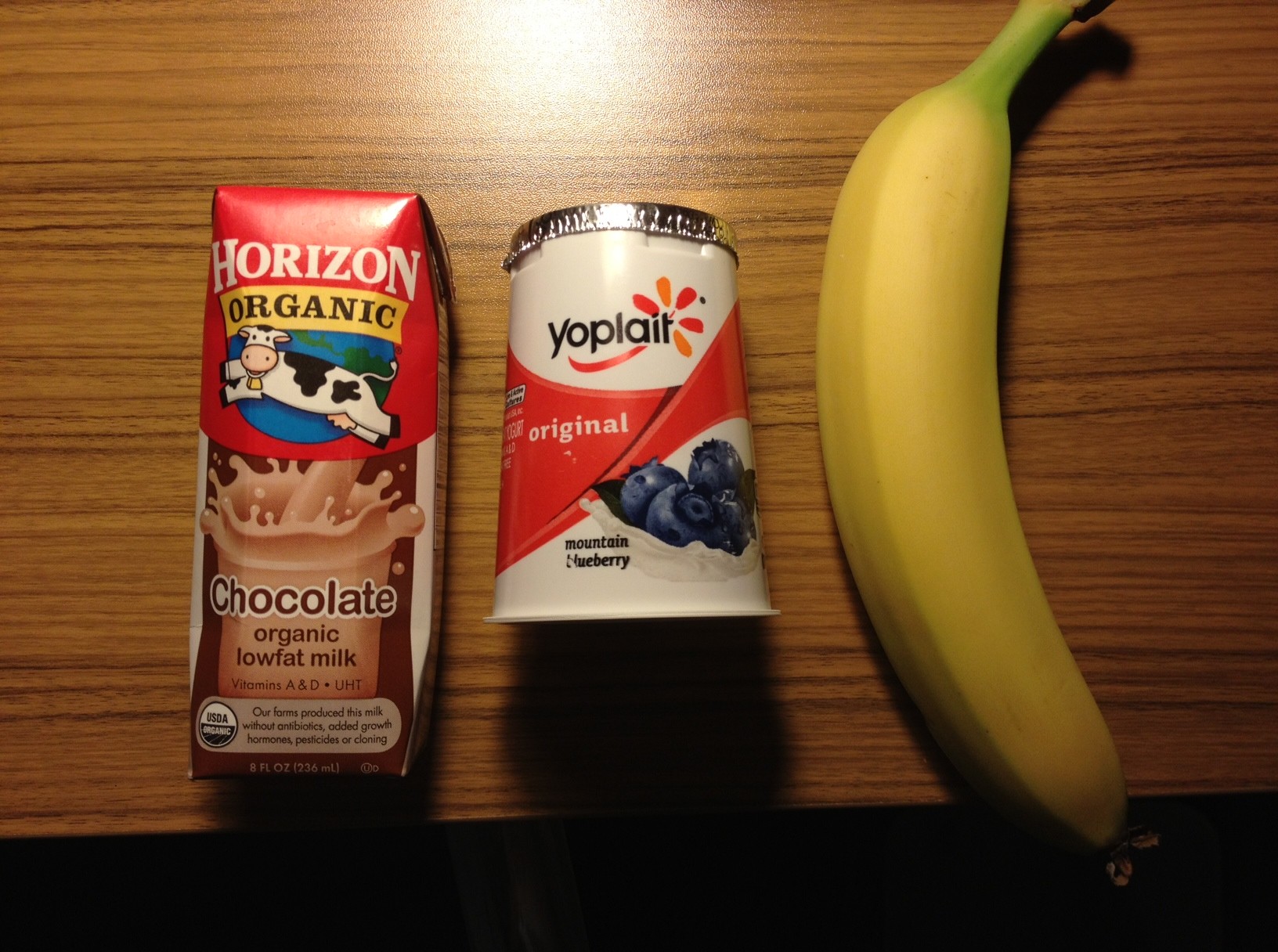
  1. I eat a fairly similar breakfast everyday which is either cereal with 2% milk and orange juice or chocolate milk (if after a workout). [In case you don’t know, chocolate milk is great for your recovery.] Rather than have to enter each item, FitBit could analyze your behavior and recommend a “breakfast bundle”. (and yes, I know I could create it myself)
  2. Some days, I don’t enter everything I eat. When I get my end of week report, it shows me all the calories burned versus the calories taken in. That shows a huge deficit which isn’t true. I think they should do two things:
    1. Add some type of daily validation when you fall below some typical caloric intake. (Did you enter all your food yesterday, it seemed low?)
    2. Then create some average daily intake to allow you to have a semi-relevant weekly summary.
  3. The same can be true for days that you forget to carry your device or even allowing for notes on days (i.e., was sick in bed). This would provide a more accurate long-term record for analysis.
  4. The food search engine seems to offer some improvement opportunities. For example, one day I ate a Dunkin Donuts donut, but it had most types but not the one I ate. I don’t understand that since there’s only about 15 donuts. But, perhaps it’s a search engine or Natural Language Processing (NLP) issue. (I guess it could be user error, but in this case, I don’t think so.)
  5. Finally, as I think about mHealth in general, I think it would be really important to see how these devices and this data is integrated with a care management system.  I should be able to “opt-in” my case manager to get these reports and/or the data.

The other opportunity that I think exists is better promotion of some things you don’t learn without searching the FitBit site:

  • They’re connected with lots of other apps.  Which ones should I use?  Can’t it see which other ones I have on my phone and point this out?  How would they help me?
  • There’s a premium version with interesting analysis.  Why don’t they push these to me?

I also think that they would want an upsell path as they rollout new things like the new Flex wristband revealed at CES.

And, with the discussions around whether physicians will “prescribe” apps, it’s going to be important for them to be part of these discussions although this survey from Philips showed that patients continue to increasingly rely on these apps and Dr. Google.

Philips_Health_Infographic_12%2012_F3

Finally, before I close, all of this makes me think about an interesting dialogue recently on Twitter about Quantified Self.

Court Decision Allows Pharma Reps To Discuss Off-Label Uses Of Prescriptions

I must admit that I’ve heard very little about this decision from the Federal Appeals Court for the Second Circuit of Manhattan that decided that discussing off-label uses for prescription drugs was an issue of free speech. This could change the way pharmaceutical manufacturers interact with physicians. It could change the job of the pharmaceutical rep. It could change how clinical trials are done. It could change how prescriptions are used. It could also lead to a whole new set of prior authorizations by companies that actually have to actively manage off-label usage as it becomes widespread.

On the other hand, I wonder if this door hadn’t already been opened. Have you looked at some of the peer-to-peer (P2P) healthcare websites out there or the disease based communities (e.g., PatientLikeMe or CureTogether)? Patients are already talking about what medications they are using to treat their diseases and their symptoms. Don’t you think those are leading to requests to the provider and discussions with them about off-label utilization?

And, I’m sure that Dr. Google has helped many patients identify other uses of medications. This process (to the best of my knowledge) is completely un-managed. It’s a popular enough topic that Consumer Reports talked about it earlier this year and even put together the following table on drugs commonly used off-label.

Specific drug, type of drug Examples of off-label use**
Aripiprazole (Abilify), antipsychotic Dementia, Alzheimer’s disease
Tiagabine (Gabitril), antiseizure Depression
Gabapentin (Neurontin), antiseizure Nerve pain caused by diabetes, migraines, hot flashes
Topiramate (Topamax), antiseizure, in combination with phenteramine for weight loss Bipolar disorder, depression, nerve pain, alcohol dependence, eating disorders
Risperidone (Risperdal), antipsychotic Alzheimer’s disease, dementia, eating disorders, post-traumatic stress disorder
Trazodone (Desyrel), antidepressant Insomnia, anxiety, bipolar disorder
Propranolol (Inderal), high blood pressure, heart disease Stage fright
Sildenafil (Viagra), erectile dysfunction To enhance sexual performance in people not diagnosed with erectile dysfunction, to improve sexual function in women taking certain antidepressants
Quetiapine (Seroquel), antipsychotic Dementia, Alzheimer’s disease, obsessive-compulsive disorder, anxiety, post-traumatic stress disorder
SSRI antidepressants such as paroxetine (Paxil) and sertraline (Zoloft) Premature ejaculation, hot flashes, tinnitus (ringing in the ears)
Prazosin (Minipress), high blood pressure Post-traumatic stress disorder
Amitriptyline (Elavil), antidepressant Fibromyalgia, migraines, eating disorders, pain after shingles infection
Bevacizumab (Avastin), certain types of cancer Wet age-related macular degeneration (eye disease)
Statins such as atorvastatin (Lipitor), simvastatin (Zocor), high cholesterol in adults, children with an inherited cholesterol condition Rheumatoid arthritis, to lower cholesterol in children who lack the inherited condition
Clonidine (Catapres), high blood pressure Smoking cessation, hot flashes, attention deficit/hyperactivity disorder (ADHD), Tourette’s syndrome, restless legs syndrome

* Not meant to be a comprehensive list. Many of the drugs listed here are also available as generics.

** Does not imply that use is clinically appropriate or inappropriate, or beneficial or not.

***To find out if a drug’s off-label use is supported by evidence, click on the medication name.


I would imagine that pharma is going to tip-toe through this open door not simply crash through it. They’re generally risk adverse so their discussions of off-label utilization will be fact-based (to limit exposure) even if (as we all know) statistics can lie. I would suspect (as I’ve seen on other blogs) that this will ultimately go to the Supreme Court before anyone really takes advantage of it.

I guess I’d also point to the issue that physicians have responsibility here. They prescribe off-label today. Here’s what the FDA says about this:

Good medical practice and the best interests of the patient require that physicians use legally available drugs, biologics and devices according to their best knowledge and judgement. If physicians use a product for an indication not in the approved labeling, they have the responsibility to be well informed about the product, to base its use on firm scientific rationale and on sound medical evidence, and to maintain records of the product’s use and effects. Use of a marketed product in this manner when the intent is the “practice of medicine” does not require the submission of an Investigational New Drug Application (IND), Investigational Device Exemption (IDE) or review by an Institutional Review Board (IRB). However, the institution at which the product will be used may, under its own authority, require IRB review or other institutional oversight.

One way to begin to manage this would be to require the use of diagnosis codes (Dx) on all prescriptions. This would at least great a way of tracking how the medications are being used and allow for better technology oversight across the provider, payer, pharmacy, and PBM.

In the interim, Consumer Reports suggest consumers do the following:

  • When your doctor prescribes a drug, ask if it’s an approved use. If he or she doesn’t know, ask your pharmacist.
  • Check for yourself. Go to DailyMed (dailymed.nlm.nih.gov/) and search for the drug. Then click on the tab for “Indications & Usage” to see if your condition is listed.
  • If it’s an off-label use, ask your doctor if it’s supported by well-designed trials showing significant improvement for people with your condition.
  • Ask your doctor why he or she thinks the drug will work better than approved drugs for your illness.
  • Find out if your health insurer covers payment for the off-label use. Some may require evidence of effectiveness or failure with conventional treatments, especially if the drug is expensive.

Fortune Article Questions Generic Equivalency Of Drugs

A new Fortune article “Are Generics Really the Same as Branded Drugs?” (1/14/13) sets a dangerous tone for something that has become a standard across the pharmaceutical industry.  This is either:

(a) giving consumer credibility to a long-standing rumor with a case study or

(b) a dangerous perspective which will only further activate the conspiracy theory consumers and clinicians.

Let’s start with a few basics from the Generic Pharmaceutical Association:

  • There are over 4B prescriptions filled in the US per year.
  • Of those, over 80% are generic medications.
  • Generic medications saved over $190B last year.

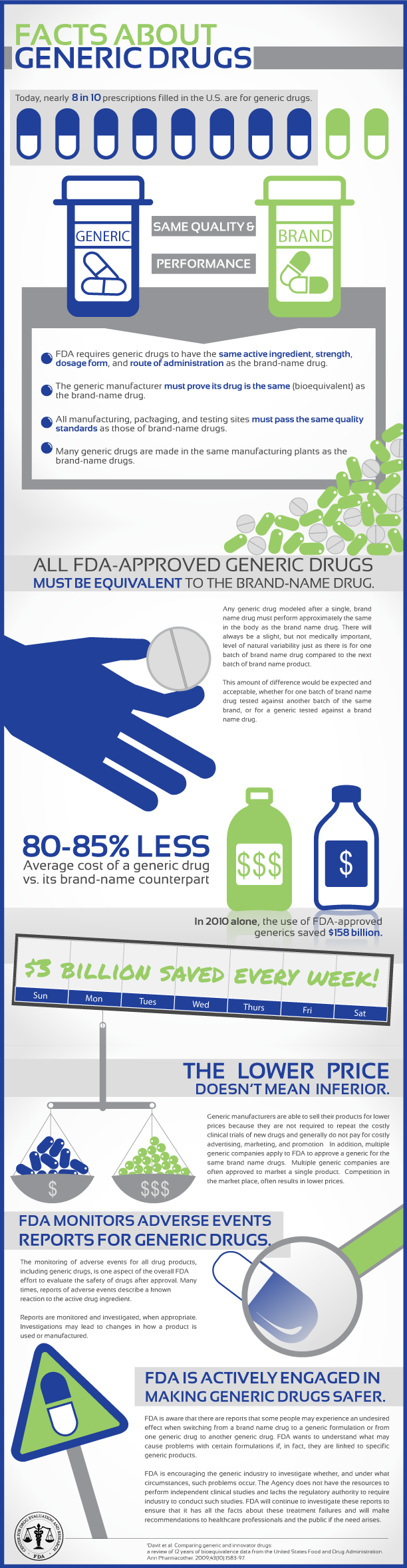
For facts on generics, I would point you to the FDA website.  I posted some of their slides years ago on SlideShare which I put below along with their latest infographic.

The article in Fortune focuses on a case regarding an anti-depressant called Wellbutrin and its generic counterpart.  The article goes on to point out that the active ingredients in the generic (compared to the brand) can vary from 80% to 125%.  (I think a good more detailed explanation of this is available here).

But, the author goes on to point out the risks associated with the fillers (or inactive ingredients) and talks about the issue of NTI (Narrow Therapeutic Index) drugs that no one substitutes for anyways.

One big thing that I was always taught was to understand that the difference in active ingredients between brands and generics was similar to the differences in different lots of the same brand drug.  And, given the fact that traditionally, 50% of generic drugs were made by the brand manufacturers, it would seem difficult to believe that they were simply throwing caution to the wind by producing substandard product.

I would hope that Express Scripts, CVS Caremark, Walgreens, PCMA, and many other groups will come out strongly to address this article. This is the type of article that could be a significant setback to the generic industry which has proven itself under lots of scrutiny over the years to save money and have very few negative impacts with the FDA’s scrutiny.

ucm305899

Are Females More Or Less Adherent? Big Data Question

FICO adherence image

Certainly, the push around Big Data should drive more companies to look into predictive algorithms.  You already have Fair Issac (above), ScreenRx by Express Scripts, and RxAnte.

I’d always been under the impression that women were less adherent than men to prescription drugs.  I’d heard several very logical reasons:

  1. As the caregiver, they often took care of their children, spouse, and/or other people first before being adherent themselves.
  2. They took more medications on average which is highly correlated with non-adherence.

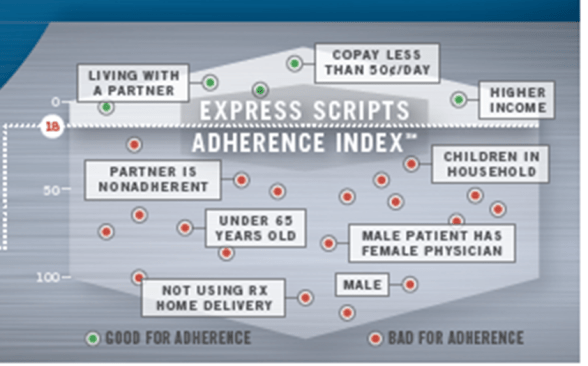
But, some researchers recently told me that their data showed women to be more adherent.  And, I then noticed that the infographic that Express Scripts put together showed something similar.  (see zoomed in picture)

Express Scripts Adherence Infographic Zoom

So which is it?  I can find lots of research online to support females being less adherent.  Here’s a few links:

BTW…If you want to see a good presentation on some adherence data from CVS Caremark from a few years ago, you can follow this link to a presentation that was given.  Here’s a more recent one from URAC.

Finally…A Use For Klout Scores?

Klout Score

Do you know your Klout score?  I know mine – 51.  Is that good or bad?  I guess it’s all relative.  Mine is only based on Twitter and LinkedIn.

The bigger question is should I care.  I’ve struggled with why to care, but it finally hit me the other day.  There are a few circumstances where I might care:

  • If my purpose was to get a job as a social media consultant.
  • If I was trying to be a community manager.
  • If I was trying to get a job in PR or as a reporter…or maybe if I tried to monetize my blog.
  • If I was trying to get some role driving awareness of a product or topic.
  • Maybe as an individual consultant.

As an average person working for a company, I’m not sure it matters.  Of course, you can argue with the “scoring” process, but the reality is that people do want some benchmark to compare themselves to for what they do online.  The interesting question is whether companies will care.  And, is there a minimum that you should have just to be able to say you understand and use social media?

Here’s a few recent articles discussing the topic of Klout.

It’s competitors are Kred and PeerIndex which I only went to because of this post.  But, I signed up for them to see what my scores where there.

Screen Shot 2012-12-26 at 2.29.09 PM PeerIndex Score

My question would be how do you adjust this for people (like me) who don’t use Facebook or should that fact alone exclude me from certain things like being a community manager for a product that needs a Facebook presence?  Perhaps.

So, if you’re hiring a mHealth or social media team, you might want to know their Klout (or Kred or PeerIndex) scores (on average for the team).  I’d say it’s like gamification.  I wouldn’t want someone just using that buzzword with me.  I’d want to know the last game they got sucked in to.  Why it kept their attention?  And, then I’d ask them things like why they think Steam is gathering gaming apps in their and whether it’s critical path for them in gamifying their app.

Guest Post: Home Health Aides

Home Health Aides: the Unsung Heroes of Healthcare

It takes a special type of person to succeed in the field of home care. Home health aides’ commitment to their patients really does make them the unsung heroes of the healthcare field. Often times, after patients are discharged, they recall the names of their home health aides and write them letters of gratitude.

Home health aides assist patients during very vulnerable times. Hospice home health aides, for example, provide comfort to patients near the ends of their lives.

A home health aide is sometimes the only person a patient sees on a given day. Therefore, aides go beyond providing much needed medical help; they also provide compassion and an emotional connection. They might be the only person to whom a patient expresses their emotions and thoughts. They’re typically a patient’s housekeeper, caretaker, and compassionate listener.

These compassionate care givers work on the front lines of healthcare to assist seniors, people with disabilities, people recovering from illnesses, and others unable to take care of themselves. Home health aides help their clients with daily activities such as grooming, hygiene, and eating. They give clients their medication and also perform tasks such as dressing wounds, changing bandages, and applying topical medications.

Home health aides also clean their client’s home, do their laundry, and changes their linens. They plan nutritious meals and shop for and prepare the food. They also run errands for their clients and provide much needed time off for family caregivers.

Testimonials

Here are a few excerpts from letters written by actual patients in which they express their thanks for their home health aides:

“Just a note to thank you for the time you spent with my sister and me. You were very helpful and your sensitive manner put us at ease so that we could understand and deal with mother better at such an emotional time. You folks who work with ill people are very special and I for one thank you for being that way.”

“I want to thank you for sending Dolores as my homemaker. She does a great job; she sees what needs to be done and does it! This is so helpful to me. She’s very pleasant to have around.”

“Thank you so much for your promptness in responding to my need. I must say, Ellen was excellent. She was so warm and kind. I responded favorably to her at once. She worked hard and seemed to fit my rhythm so well. I had been quite shocked by my recent experience and was feeling quite low. Her spirit and enthusiasm had such a positive effect on me. I think she is a gem and I am so grateful to have had her come into my life and care for me.”

(Source: Metropolitan Home Health Services, Inc.)

Home health aides make a huge difference in the lives of their patients and their family members. However, according to the Bureau of Labor Statistics, the median annual salary of home health aides is only $20,610. It’s no question that these unsung heroes who play a vital role in improving the quality of life of their patients deserve a whole lot more!

Brian Jenkins writes about the home health aide career field, as well as other careers in allied health, for the Riley Guide.

Updated: What Is A PBM? Pharmacy Benefit Manager

The short answer is that a PBM is the company hired by your employer (either directly or through your health insurance company) to manage your pharmacy benefits.  When you use your pharmacy card at the retail pharmacy to get a prescription, the pharmacy interacts with your PBM electronically to find out if the drug is covered and the copay to you the consumer.

*****************

Back when I first started blogging, I used a lot of my experiences at Express Scripts to shape some of my perspectives about the PBM or Pharmacy Benefit Manager industry.  It took me a few months before I realized that some people reading the blog didn’t know what a PBM was.  That led me to my all time most popular blog post – “What Is A PBM?

Since that was over 5 years ago, I figured it was time for an update.

The market has shifted in the past 5 years especially with Express Scripts purchase of Medco to become the largest player in this space.  Walgreens has also divested their PBM to CatalystRx which was then bought by SXC and the new entity renamed CatamaranRx.  At the same time, you’ve seen United Healthcare insource their PBM business from Medco to combine it with their old Pacificare PBM to create OptumRx.  You’ve also seen Humana’s PBM business and mail order business – RightSourceRx – grow significantly.

There are other big PBMs which I didn’t mention such as CVS Caremark which after years of rumors about them splitting back up seems to have proven their case as an integrated, retail-owned PBM.  There is MedImpact which has 32M lives according to the latest PBMI market share report, and Prime Therapeutics which is a PBM owned by several of the BCBS plans.  Additionally, Aetna, Cigna, and several other managed care companies also have their own PBMs.

While I would have argued that the PBM wasn’t typically known to consumers 5 years ago, I think that the very public dispute between Walgreens and Express Scripts has changed some of this.

But, what a PBM does is relatively simple:

  • Process pharmacy claims (i.e., when you go to your retail pharmacy, the pharmacist enters your prescription and electronically submits it for adjudication. The claim is routed to the PBM where it is checked for eligibility and then to see if it pays and what copayment you owe.)
  • Set up pharmacy benefits (i.e., based on the plan selected by your employer or payor, the PBM codes what drugs are covered and the copayment structure).
  • Administer rebates…since large pharma companies (e.g., Pfizer) pay rebates for having their drugs on formulary (aka preferred drug list), someone has to manage the negotiations and billing of this.
  • Set up clinical programs (i.e., most PBMs have a clinical committee which evaluates new drugs and looks at market data to help employers choose coverage options).  This also includes programs to look for drug-drug interactions and pharmacy adherence.
  • Establish a retail pharmacy network (i.e., work with retailers to get them to agree to discounts on drugs) and are a big part of SureScripts which is the hub to enable electronic prescribing between physicians, pharmacies, and PBMs.
  • Communicate with patients and physicians (i.e., look at pharmacy claims data and help find ways to save money or identify clinical issues to inform the patient or physician about).
  • Provide cross pharmacy data for drug-drug interactions…this is a critical function since many people use more than one pharmacy for claims.
  • And, last but not least, most PBMs provide a mail order and often specialty pharmacy where they ship prescriptions to patients.

The PBM’s clients are employers who are self-insured, government entities (i.e., state employees, Department of Defense), unions, TPAs (third party administrators), and managed care companies (i.e., BCBS of).

PBMs are sometimes referred to as middlemen, but I will point to a few other posts on this:

In general, if you’re looking for more information on PBMs, I would point you to several sources:

The only other blogger who really offers any coverage of this space is Adam Fein which his blog – Drug Channels.

What Do MDs Tell Patients About Their Rx … with only 99 seconds?

As part of a new study mentioned on The Doctor Weighs In, it shows that physicians spend an average of 10 minutes and 10 seconds with patients in an average visit.  Of that, 99 seconds (or 16% of the time) they are discussion prescriptions.  The big question is what are they discussing.

MD Rx discussions

A 2006 study showed the following:

74 percent of the doctors mentioned the trade or generic name of the medicine, and 87 percent stated its purpose. Sixty-six percent said nothing about how long to take the medicine, 45 percent did not say what dosage to take and 42 percent failed to mention the timing or frequency of doses. Physicians mentioned adverse side effects only 35 percent of the time.

Of course, research on the physician and patient dialogue around prescriptions should also include looking at these studies:

That is asking a lot of the money spent by the manufacturers on the physicians.

Detailing to physicians, nurse practitioners, and physicians’ assistants cost $12 billion, accounting for more than half of that promotional spending (see Figure 1). Drug companies spent another $3.4 billion sponsoring professional meetings and events and about $0.4 billion placing advertisements in professional journals. Pharmaceutical manufacturers spent the rest of their promotional budgets, $4.7 billion in 2008, on direct-to-consumer advertising.

Diabetes Innovation – mHealth; Quantified Self; Business Model

I’m not a diabetic, but I’ve been researching the topic to understand the space and what innovation is occurring around diabetes. This is a space where there are lots of applications, tools, devices, communities, and research. The ADA estimates the total US cost at $218B with very high prevalence. If you expand that on a global scale, the costs and impact is staggering.

  • Total: 25.8 million children and adults in the United States—8.3% of the population—have diabetes.
  • Diagnosed: 18.8 million people
  • Undiagnosed: 7.0 million people
  • Prediabetes: 79 million people*
  • New Cases: 1.9 million new cases of diabetes are diagnosed in people aged 20 years and older in 2010.

So, what’s being done about it? And, what opportunities exist? I think you’ve certainly seen a lot of innovation events being sponsored by pharma and others.

You’ve seen a shift from drug to engagement for a few years as evidenced in this old post about Roche – http://www.diabetesmine.com/2009/10/a-visit-to-the-roche-new-concept-incubator.html

You’ve seen a proliferation of diabetes apps. (A prime opportunity for Happtique.)

From my traditional PBM/Pharmacy focus, you’ve seen several efforts there:

Obviously, Medco (pre-Express Scripts acquisition) thought enough of this space to buy Liberty Medical.

I pulled some screen shots and examples into a deck that I posted on SlideShare. I’d welcome people’s thoughts on what’s missing or what are the key pain points from a diabetes perspective (e.g., not integrated devices).

While I was doing my research, I found a few interesting things worth sharing.

Several interesting studies:

Some good slide decks:

Additionally a few videos:

I also posted some diabetes infographics on my blog – https://georgevanantwerp.com/2012/12/13/more-diabetes-infographics/

And, while I started to pull together a list of diabetes twitter accounts below, you can follow @AskManny’s list with 360 people already tagged in it. https://twitter.com/askmanny/diabetes

My starting twitter List:

iBlueButton Interview At The mHealth Summit #mhs12

I had a chance to sit down and do several interviews at the mHealth Summit earlier this week in DC. I’m slow to get my interviews posted, but they were all very interesting.

One of the best was with Dr. Bettina Experton (see bio below) of Humetrix. I will admit that reading about iBlueButton doesn’t do it justice. I was confused as to what they were trying to do and why it won an award. And, while explanatory after the fact, I found the graphic below intimidating as a consumer before talking with her.

[For those of you that don’t know what BlueButton is, you should go research it here.]

Dr. Experton explained to me how broad the BlueButton initiative now is. I only knew that CMS was using it, but apparently, there are now 200 plans also using it including Aetna, United Healthcare, and Humana. What Humetrix focused on for this offering was the mobile empowerment of BlueButton allowing the patient to have control of their information in the iOS platform (i.e., your Apple products – iPhone, iPad). They provide a tool for downloading and encrypting the data – prescription, medical claims, lab, and procedures.

iBlueButton

Of course, if you’ve ever seen what this data looks like in the raw form, this wouldn’t seem very helpful. Most of us wouldn’t know what to do with this. But, as Dr. Experton showed me, they’ve rendered the data in a great GUI (graphic user interface) that really brings it to life in a readable and understandable format. For example, they translate the NDC code (used for prescriptions) into the drug name with the chemical name and the dosage. The GUI is very iPod like in terms of simplicity and ease of use.

iBlueButton 2

The iBlueButton app even will pull in patient self-reported data from a PHR (personal health record) and show it in a different color and different section so the provider can understand the sources. Of course, this was another point of confusion for me before we talked which was how would a physician get this and what would they do with it. She showed me a demonstration of the patient opting to share their data and records with the provider in real-time. Of course, this assumes the provider’s office and/or the physician is actually using a device in the presence of the patient, but we know that is changing quickly these days. (See article on survey about MD use of iPad / iPhone.) So, with their tool, I can now store and share my data. The challenge still is integrating this data into the physician’s EMR (electronic medical record), but the iBlueButton app on the provider’s device can do this. It can also print it for those physicians who still want to see the printout in their paper file.

Another thing that you see in the second set of screen shots above is that you can start to report on whether you’re using the prescriptions still that it shows you on. Assuming patients engage, this would be a great tool for medication reconciliation and adherence discussions.

I’m not the Meaningful Use expert, but Dr. Experton pointed out to me that all of this is important since meaningful use requires viewing, downloading, and transmitting capabilities. They provide all of these.

I definitely plan to download iBlueButton and my data, and I hope to use this as a tool to reinforce why any claims provider should be offering you BlueButton access to your data. This is definitely a company to watch.

Bettina Experton, M.D., M.P.H.
President & CEO

Dr. Experton is the founder, President and CEO of Humetrix which she has led over the last 15 years on the HIT innovation path starting with the development of health risk appraisals, chronic care management software, and since the early 2000s with the development of novel mobile device-based solutions which have been deployed worldwide. A physician with over 20 years of healthcare informatics experience, Dr. Experton is the author of multiple information technology patents. At Humetrix, Dr. Experton also conducted groundbreaking health services research on the frail elderly which led to major federal legislation in the area of Medicare and managed care, and has been a national healthcare policy advisor in the US, China, and France. As a healthcare IT advisor to the French Ministry of Health, she made important contributions to the design of the newly launched French government sponsored single web-based individual health record with smart card access made available to French citizens and their physicians. Dr. Experton is an Adjunct Professor of Medicine at the University of California at San Diego, School of Medicine and a permanent member of the Faculty of the School of Medicine in Paris, after graduating Summa Cum Laude where she completed her training in Internal Medicine. In California, Dr. Experton received a Master’s degree in Public Health with a major in epidemiology from Loma Linda University School of Public Health, completed a Pediatrics internship at University of California Davis Medical Center and a Public Health residency with the State of California Department of Health Services.