Archive | Consumerism RSS feed for this section

Stop By The Silverlink Booth At The Forum 2010 (DMAA)

Next week in DC is The Forum 2010 which is the annual event for The Care Continuum Alliance (formerly known as The Disease Management Association of America).  If you’re there, you should stop by the Silverlink booth and attend the presentations that we’re giving with some of our clients and other industry leaders. 

  Aligning Employee, Employer & Provider Research to Maximize Value-Based Benefits
October 13, 1:00 – 2:00 p.m.
Jan Berger, MD, MJ, Chief Medical Officer, Silverlink Communications
Cheryl Larson, Vice President, Midwest Business Group on Health (MGBH)
   
  Improving Statin Adherence through Interactive Voice Technology & Barrier-Breaking Communications
October 13, 2:15 – 3:15 p.m.
Ananda Nimalasuriya, MD, Chief of Endocrinology & Complete Care, Kaiser Riverside
George Van Antwerp, MBA, General Manager, Pharmacy Solutions, Silverlink Communications
   
  Addressing Colorectal Screening Disparities in Ethnic Populations
October 14, 12:30 – 1:30 p.m.
R. Reid Kiser, MS, National Director, Clinical Excellence Special Projects and Reporting, UnitedHealthcare
Jack Newsom, MBA, MS, ScD, Vice President, Analytics, Silverlink Communications
   
  Addressing an Epidemic – Improving Diabetes Care with Personalized Communications
October 14, 3:00 – 4:00 p.m.
Jan Berger, MD, MJ, Chief Medical Officer, Silverlink Communications
William Shrank, MD, MSHS, Instructor, Harvard Medical School and Associate Physician, Division of Pharmacoepidemiology and Pharmacoeconomics, Brigham and Women’s Hospital

White Coat Adherence

Do you brush your teeth more before you go to the dentist?

Are you more likely to take your medications the week before you go back for your physician visit?

YES!

But, do we make that clear to the physician? No. When the physician asks if you’re taking your medications, the answer is yes. That’s not a lie. What they need to know is how many pills are left since you last filled your medication? How many pills did you start with? How many did you lose?…

You get the picture. I like the term here that our Chief Medical Officer used – “white coat adherence”.

Now, let’s imagine that the physician orders a blood test for your cholesterol and your LDL hasn’t dropped, there are three scenarios:
1. They go back and really push you on your adherence (or diet and exercise);
2. They believe you but they assume the medication dose isn’t strong enough and increase your dose; or
3. They believe you but they assume the medication isn’t working and change your medication.

These are minimally issues for the healthcare system – wasted costs – but there is also the potential for giving you an unnecessarily high dose or changing you to a riskier medication since the default one didn’t work.

How do we address this? It’s not easy. This involves a few things:
1. Improving physician access to data (i.e., adherence data);
2. Improving physician – patient communications; and
3. Helping patients stay adherent and understand the impact of their medication (and lifestyle decisions) on their health.

I continue to see more and more data on the physician patient gap in communications. This is from a few years ago, but a study showed that 40 to 60% of patients could not correctly report medication expectations 10 to 80 minutes after physicians provided information, AND more than 60% of patients misunderstood prescription directions immediately after doctor visits. (source)

Pretty scary!

Seven Myths Of Social Media

I’m just finishing up a book on social media (book review to come shortly). As I was reading it and based on my experience, I came up with a few myths:

  1. You have to be everywhere.  It’s impossible.  There are so many sites out there.  You have to know your audience and determine where to spend your effort.  You MIGHT have to stake your claim to avoid someone else using it and provide information for consumers to reach you, but you can’t actively contribute and add value across the social media spectrum.
  2. Set it and forget it.  Social media is about dialogues and continuous information.  You can’t put up static content like a website and come back every week, month, year and update it.  The best companies respond (for example) to a Twitter comment about them in 24-hours while some never respond. 
  3. Build it and they will come.  There is a constant dialogue about whether you have to “own” the community or simply participate in it.  There is certainly reason to create content (i.e., blog posts, tweets), but you have to find a non-marketing environment to interact with your customers and influencers and understand their needs.  In many cases, that environment might already exist and you need to join it.  Additionally, you can’t simply launch something or join something without pushing out information about it.  For example, if you have a Facebook page, you need to have a link on your website, put it in your LinkedIn profile, include it in your press releases, etc.
  4. Marketing should own social media.  Traditional marketing has been about the controlled message.  Social media is about participatory messages.  There’s a big difference.  Additionally, social media can be and needs to include any employees who are actively engaged in social media.  We’ve seen numerous examples of employees who comment inappropriately only to jeopardize their job.  (I’ll agree that there are issues here to still be defined regarding privacy versus freedom of speech.)  Marketing can’t reply real-time about operational issues.  Ownership is a collective effort.
  5. You can outsource your social media.  This is a big mistake.  There are lots of consultants who will tell you what you want to hear.  They will talk about some channel or channels that work (e.g., Twitter experts, Facebook experts).  They’ll talk about search engine optimization (SEO) and what to do.  They’ll tell you that you need an iPhone app or a YouTube channel.  The reality is for your solution to be genuine and timely that it needs to be someone(s) who understands the company, feels passionate, and is empowered to do something quickly.
  6. Tell me..tell me…tell me.  This works great for presentations.  But, you’re now a part of the audience (although an informed member with an agenda).  You need to tailor your objectives to what the audience wants / needs.  In a community, they’re there for a reason.  They are discussing a topic and sharing their thoughts.  They want you to add value not sell your products or agenda.  They want to be valued.
  7. You can avoid it.  This is an obvious one.  With 500M users on Facebook and YouTube being the second most popular search engine, you have to understand how people find you on the Internet.  Google is a verb.  Current generations will grow up with theses modes, smart phones, and be uninhibited by our sense of privacy.  Technology is and will continue to be more ubiquitous.  The way people learn about companies is changing.  The way people learn about people is changing.  Relationships between people are changed based on technology.  Companies have to understand what’s being said about them and embrace it not run from it. 

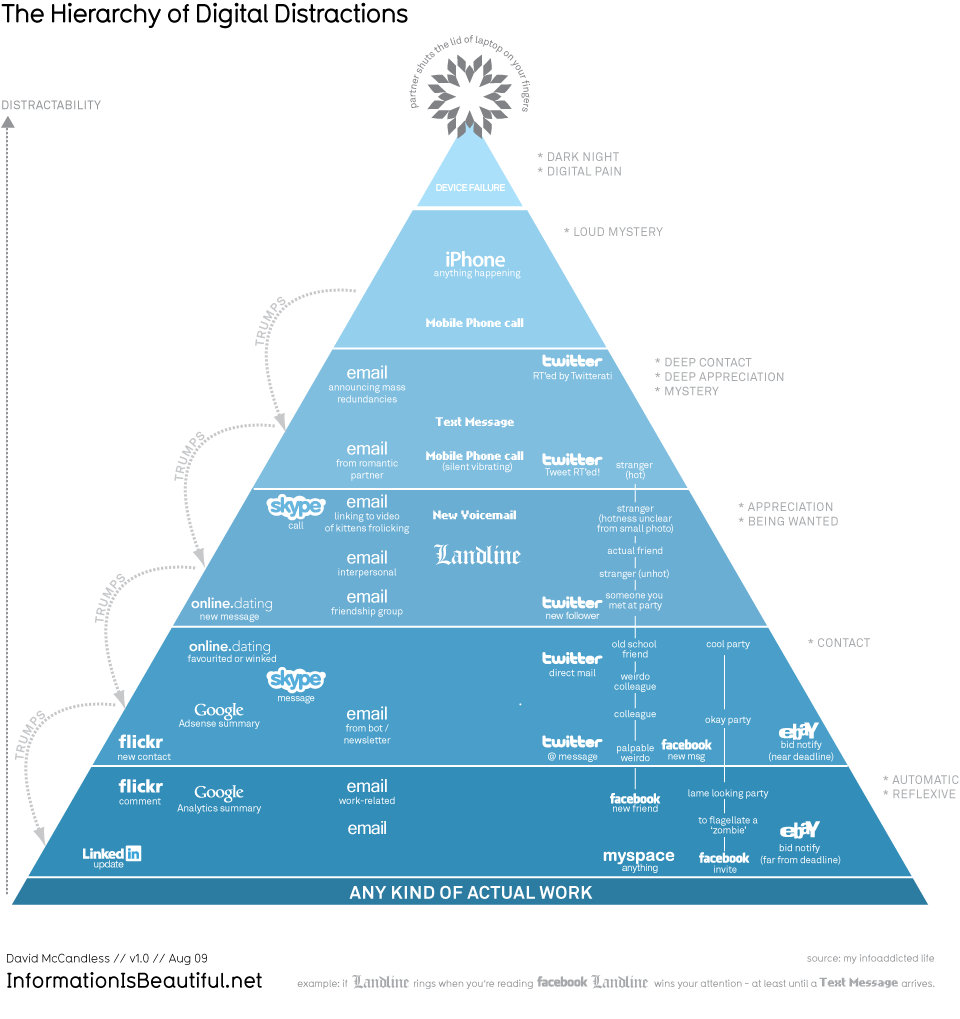
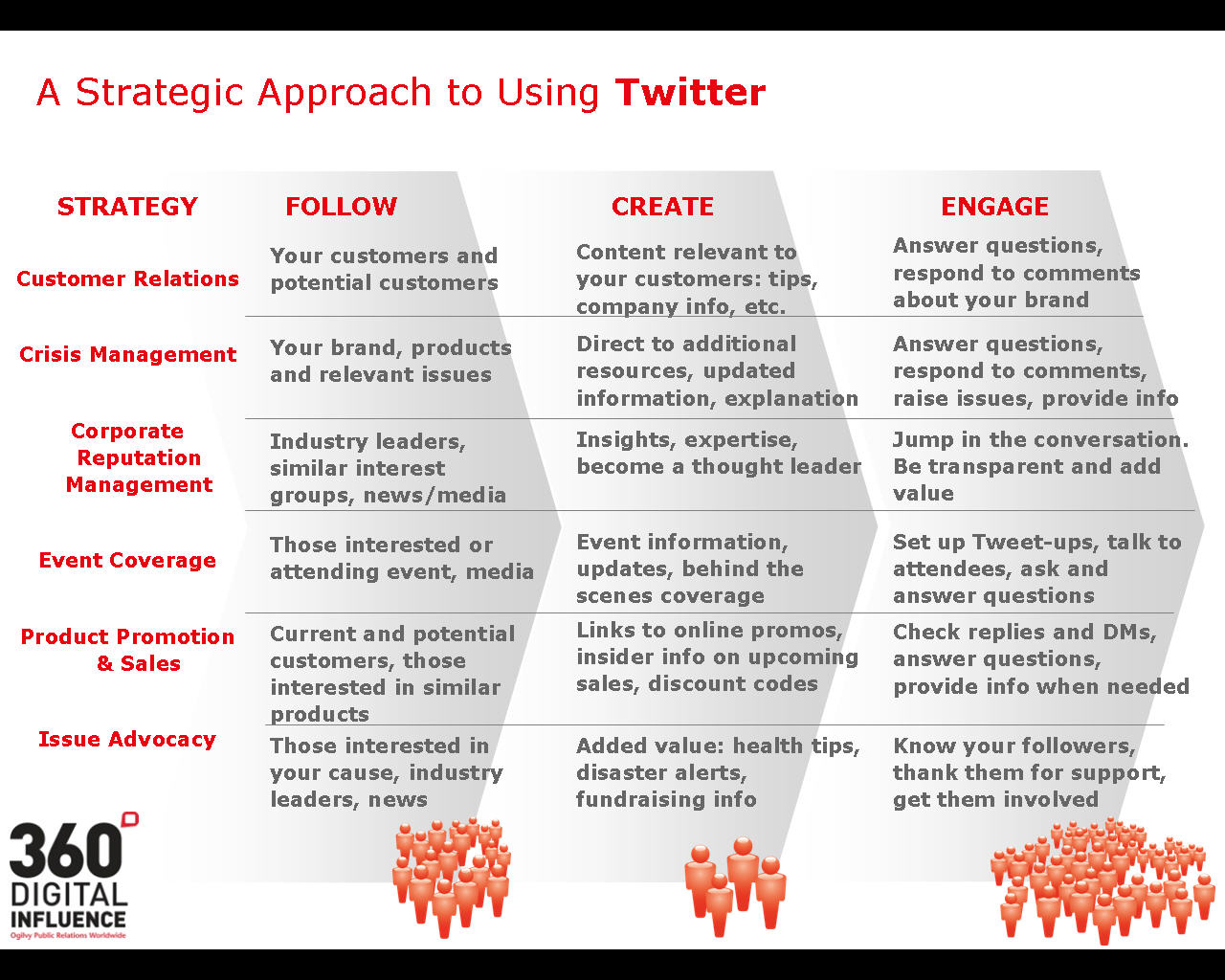
There are tons of infographics out there that symbolize some of this.  I pulled a few of my favorites together here, but you can find more.

NCPDP Nov 2010 Event: The New Economy And …

On November 2nd, NCPDP is hosting an educational event called “The New Economy and It’s Impact on Healthcare, Pharmacy, and the Patient.” Sounds pretty cool! It’s a topic we all talk about.

What does the new sense of frugality mean? What will new forms of insurance mean? How will pharmacy evolve? Will MTM work? Will MTM become a product for commercial? How is the consumer’s behavior changing relative to information and compliance?

The agenda includes yours truly along with people from:
* Kaiser
* Walgreens
* AARP
* Sanofi-Aventis
* North Carolina Association of Pharmacists
* Eaton Apothecary
* American Society of Consultant Pharmacists
* RegenceRx

Complexity of Decision Making

In today’s world, the amount of information is overwhelming.  At the same time, we are constantly striving to practice DIY (do it yourself) medicine where we are reaching out to experts to help us sort thru information (especially when data is conflicting).  But, a lot of that assumes we know what we need or we know when to ask for help.

A study published recently in the Annals of Family Medicine looked a small group of diabetics and how they received information about their condition. 

They collected a nice long list of different sources used for information:

  • People
  • Physician
  • Nurse, nurse practitioner
  • Dietitian
  • Diabetes educator
  • Pharmacist
  • Dentist
  • Eye doctor, eye laser surgeon
  • Health care professional(s), specific role not indicated
  • Self, have had training as health professional or worked in medical field
  • Hospital-based diabetes center
  • Insurance company nurse, nurse, dietician, educator, wellness program personnel
  • Workplace nurse, health professional or wellness program
  • Family, including family members with diabetes
  • Friends, neighbors, coworkers, acquaintances, other patients, personal interaction, “word of mouth”
  • Classes or seminars
  • Support groups
  • Participation in research study
  • Comprehensive weight loss program
  • Health fair or similar event
  • Media
  • Internet (Web sites, search engines)
  • Information from organizations (eg, American Diabetes Association, American Kidney Foundation), other than from their Web sites
  • Books
  • Magazines (eg, Diabetes Forecast, Diabetes Self-Management, popular magazines—especially health/diet, cooking, women’s, African-American interest)
  • Television (eg, “D-Life,” news programs, talk shows, food-oriented shows)
  • Newspaper/newsmagazine articles
  • Booklets, brochures, etc, from clinic or health professionals
  • Booklets, brochures, newsletters, e-mail newsletters, etc, from miscellaneous sources (“in the mail”)
  • Information from pharmaceutical company, drugstore, medication supplier
  • Information from insurance company
  • Library
  • Bookstore
  • “Reading” or “studying” (type of material not specified)
  • “Media” or “articles” (not further specified)
  • Nutrition labels on food packages
  • Nutritional information pamphlet, fast foods
  • Product information (eg, Glucerna, information in insulin kit)
  • Atkins, South Beach diets
  • Reader’s Digest “Change One” program
  • Exercise videos
  • Printed reports of laboratory results

RESULTS Five themes emerged: (1) passive receipt of health information about diabetes is an important aspect of health information behavior; (2) patients weave their own information web depending on their disease trajectory; (3) patients’ personal relationships help them understand and use this information; (4) a relationship with a health care professional is needed to cope with complicated and sometimes conflicting information; and (5) health literacy makes a difference in patients’ ability to understand and use information.

CONCLUSIONS Patients make decisions about diabetes self-management depending on their current needs, seeking and incorporating diverse information sources not traditionally viewed as providing health information. Based on our findings, we have developed a new health information model that reflects both the nonlinear nature of health information-seeking behavior and the interplay of both active information seeking and passive receipt of information.

The Sandwich Generation

One of the things that I am surprised that we don’t hear more about is the sandwich generation.  These are people who are caring both for children along with their older parents.  According to Pew, 1 in every 8 people aged 40 to 60 fit into this category.

There are obvious implications in terms of managing health.

  1. Information challenges for these caregivers that have to manage information on their health, their kid’s health, and their parent’s health.
  2. Challenges in acting and coordinating this caregiver role while managing typical stresses of work, financial planning, and other things.

And, all of this puts a new requirement on health plans and health entities.  How do you engage the caregiver?  How do you track approval to send information to the caregiver instead of the patient? 

What about when the caregiver is remote and there is a surrogate?  How are decisions delegated?  How do you create information and send it to multiple parties?  Should the information be personalized to the individual knowing that perhaps my parents need certain information which I might need presented to me differently? 

Other resources on this topic include:

Choices: Grande Skim Mocha With Whip @ 140 Degrees

Choices.  We can all become overwhelmed with them.  As several studies have shown, more choices are not better…they paralyze us and limit our ability to make a decision. 

So what do we do with this.  Choice is a double-edged sword.  On the one hand, you want to offer choice to everyone.  On the other hand, this can make implementation very difficult. 

Like my Starbucks example.  I can customize almost everything off a pretty basic menu…even the temperature.  (BTW – they suggested using 140 degrees rather than saying kiddy temperature)  But that makes it more difficult to standardize and should increase the risk of error.  Imagine doing this efficiently and in scale.

Mass customization has been a challenge for years. 

People can have the Model T in any color – as long as it’s black.  (Henry Ford)

While technology allows this to a certain degree, it all has to be moderated.  Let’s take communications.  I could let every consumer tell me their preferences and other facts about them.

I want you to send me automated calls unless the information is clinical in which case I want a letter than I can share with my physician.  I’d like the calls made to my home number between 5-7 pm or on Saturday’s between 10-4.  I’d like you to leave a message and don’t call back unless I don’t act for seven days.  If I interact with the call, please text me the URL or phone number for follow-up.  I like to be addressed by my first name.  I’m an INTJ so please use that as for framing the message. 

You get the point.  Where do you stop?  And, do you really think that I know what’s best.  I tell almost everyone to e-mail me, but depending on when it comes in, it could be days before I respond or even read the e-mail.  That’s if it passes the spam filter. 

I’m sure if I asked 10 people whether they wanted automated calls then 7 of them would say no, BUT you know what…good calls work (voice recorded, speech recognition, personalized).  The vast majority of people interact with good, automated calls (some for 10+ minutes).  Most people think about those annoying robocalls that use TTS (text to speech) we all get around the elections.  But, good technology with a relevant message from a relevant party get people to care.  It’s all about WIIFM (what’s in it for me).   The other half of the equation is being able to coordinate the multiple modes.  (e.g., I missed you so I’m sending you a letter.  Let me text you the URL.)

So, should I let the consumer pick their preferences?  Sure for certain things.  But, what about a drug recall (for example)?  Do I have to wait a week to get a letter?   What can I personalize versus what should the company own.  I pay for them to “manage” my health.  Why don’t I let them?

There is no perfect system.  You need a series of things to be successful. 

  • A database to track consumers – demographic data, claims data, preferences, interaction history, …
  • A workflow engine with embedded business rules to manage communication programs with rules about what to do when certain situations arise
  • Reporting to track basic metrics
  • Analytics to understand and analyze programs

And, of course all this requires expertise to interpret and leverage the data for continuous improvement.

Are you doing all that?  I doubt it…but you can be.

Racing: Incentive or Extra Cost

I’ve run a handful of races over the past 7 years (marathons, 1/2 marathons, and 5Ks).  I have a lot of friends that us the race as an event to motivate them to train.  And, I agree.  It’s helpful to have a goal and be timeboxed to deliver against that goal. 

On the flipside, I always struggle with paying to run in a race with all the added headaches (parking, crowds) if I don’t see any chance to beat my PR (personal record).  I have decent PRs in my 5K (20:55) and my 1/2 marathon (1:42)…we won’t talk about my full marathons.  I’ve finished, but all around 4:30. 

Why is this relevant?  For several reasons:

  1. Incentives are important in healthcare.  Motivating people to change is critical.
  2. This is an example of how an incentive is viewed differently by different people.
  3. This is an example of how the view of an incentive (or motivating event) changes over time or based on a particular framework.

I know this is an opinion of one, but I’ve seen this numerous times.  Healthcare is different.  People are different.  People’s perceptions of their disease change over time.  People’s understanding of healthcare changes over time.  The macro economic factors change. 

You have to be aware of this as you design programs to drive health behaviors.  While you need to understand and respect the past programs, you have to be willing to try things again as the environment might have changed.  You also can’t segment people broadly or put people into one segmentation across time and across different programs (even if their demographic segmentation – income, geography – hasn’t changed).

Doctor – Patient: Relationship or Transaction…and Therefore

Don’t jump the gun too quick here. I assume most of you are going to say that there is an implicit (or explicit) relationship between the physician and the patient. They have some interest in your outcome and your care.

But, before you go there, I want to put forth a hypothesis. If this is true, is it okay for the physician to monitor your activities on your social network? (original question posted by The Side Note blog) Can they follow your tweets? Can they review your activities on Facebook or MySpace or some future site? Can they reach out to you to ask why you tell them you’re on a diet while you tweet about eating a Big Mac? Can they ask you about side effects that you’re having to a medication?

I’m positive that they don’t have the time to monitor these sites (but someone could do that for them). The question is whether it’s ethically okay for them to do that and use that information to provide you with care.

It seems like everyone else is using that information (which is public domain). Lawyers are using it. Tax collectors are using it. HR managers are using it. I would assume insurance adjusters might be using it.

Creators, Critics, Collectors, Joiners, Spectators, and Inactives

Which of these are you?  I’m clearly a creator and a joiner.

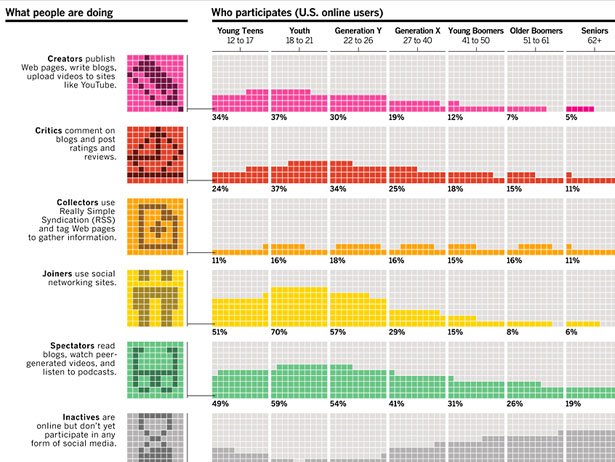
Forrester has created 6 overlapping groups of people from a social media perspective (paraphrased):

  1. Creators.  These are people who publish on the web (blog, website, video, podcasts).
  2. Critics.  These are people who post reviews online, comment on blogs, or contribute in other ways to existing content.
  3. Collectors.  These are people who read lots of information and may vote or tag pages or photos.
  4. Joiners.  These are people who have a profile on different social networking sites and visit them with some regularity.
  5. Spectators.  These are people who read online information, list to podcasts, and watch videos but do not participate.
  6. Inactives.  As suspected, these are the people who aren’t engaged in any of these social technologies. 

The other thing that I think is interesting is their breakdown of these groups by percentage (Based on their North American Technographics Interactive Marketing Online Survey (Q2 2009)).  As expected, in all these categories (except inactives), the younger age groups are more likely to represent these categories.  For example, 46% of people 18-24 are creators while only 12% of people over 55 are creators. 

  • 24% of people are creators
  • 37% are critics
  • 21% are collectors
  • 51% are joiners
  • 73% are spectators
  • 18% are inactives

Health Loyalty Lessons

Colloquy published a good article on Health Loyalty Lessons.  It pointed out 6 things that were important:

  1. Short-term incentives can mean long-term payoffs.
  2. Understand your objectives if you want to offer the right benefits.
  3. Communicate.  Communicate.  Then communicate some more.
  4. Strike a balance between hard and soft benefits.
  5. Stay relevant if you want consumers to stay motivated.
  6. Raise the bar.

These are good points (and more detail is in the article).  They’re relevant whether you’re doing a full blown loyalty or incentive program or simply focusing on the WIIFM principle (What’s In It For Me).  This is why healthcare communications is such a hot area right now. 

  • Who do I communicate with? (targeting)
  • When do I communicate with them?
  • How do I communicate with them? (letter, call, e-mail, text)
  • What message will drive them to act?
  • How do I measure success?
  • What’s worked before…for the individual or for people in the same segment as the individual (gender, age, condition, income, plan design)?

No “Pay-to-Delay” For Pharma

The Senate Appropriations Committee approved adding language to restrict this practice to a spending bill.  Will it ultimately pass?  I’m not sure.

What is it?  The way a generic drug comes to market is that generic manufacturers (e.g., Teva) will wait for a patent to expire and/or challenge the patent.  They do this by filing an ANDA (Abbreviated New Drug Application).  Manufacturers obviously want to enjoy the exclusivity of their patent(s) as long as possible.

My understanding is that “pay-to-delay” is when:

  • The brand manufacturer knows that someone is going to challenge their patent and try to get a generic to market before the patent expires.  They pay the generic manufacturer not to do this and in return might allow them to offer an “authorized generic” before the patent expires.

On the one hand, my reaction to this potential legislationis a “finally”.  On the other hand, this is a defeat for creative capitalism.  Does a company have to launch a product?

If Ford wanted to pay Toyota to delay the launch of a new car such that they both made more money, would the government step in and tell them they had to launch it.  Perhaps that’s apples to oranges.

The problem here is that while the brand manufacturer made more money and the generic manufacturer made money for doing nothing (other than getting the right to launch it) the public (i.e., consumers) and payers lost since they had to wait to save money.

DMAA Client Presentations

We (Silverlink Communications) are very excited to see three of our clients get selected to present at DMAA this year.  That is a tribute to all their hard work, creativity, inspiration, and willingness to leverage technology to improve outcomes.

Here are the presentation summaries from online:

Reducing Blood Pressure in Seniors with Hypertension Using Personalized Communications
CONTINUUM OF CARE SERIES
Wednesday, Oct. 13, 1-2 p.m.

  • Examine how an integrated communications program that utilizes remote monitoring and interactive voice response components combine for an easily scalable, cost-effective solution to reduce hypertension.
  • Review a program where 18 percent of participants transitioned their hypertension from out-of-control to well or adequate control.
  • Identify best practices for how personalized, automated, interactive communications can be leveraged to control hypertension in a scalable manner.
  • Evaluate how high blood pressure readings alerted patients with immediate feedback and education to help them better manage hypertension.

Improving Statin Adherence through Interactive Voice Technology and Barrier-Breaking Communications
Wednesday, Oct. 13, 2:15-3:15 p.m.

  • Examine how interactive voice response (IVR) and barrier-breaking communications can measurably improve statin adherence.
  • Review key barriers to statin adherence, including several barriers that are more significant than cost.
  • Identify best practices for using IVR technology to improve statin adherence by addressing specific barriers.
  • Evaluate how continuous quality improvement processes were used to drive higher response rates to IVR prescription refill reminder calls.

Addressing Colorectal Screening Disparities in Ethnic Populations
Thursday, Oct. 14, 12:30-1:30 p.m.

  • Examine how interactive voice response (IVR) technology and personalized messaging improves the rate of colorectal cancer screening for different populations.
  • Review the impact of ethnic-specific messaging on colorectal cancer screening rates and how this differs by ethnicity.
  • Examine how engagement is influenced by the gender of the voice in communications outreach.
  • Identify how to use predictive algorithms to project race and ethnicity to support tailored communications.

How Much Do You Really Notice?

The Dateline NBC show “Did You See That” shows us just how little we see or how easily our minds are distracted. This is a real issue when we think about communicating information to patients who have hundreds of other things going on in their life.

Would you notice if the man who stopped to ask you directions on the street all of a sudden became a woman?

Would you notice a man walking thru a group of basketball players when you were focused on counting passes?

Would you notice when the talk show host’s shirt turned from blue to green?

Would you notice that the person helping you at the store was blond one minute and a brunette the next minute?

People in the videos on the show didn’t. It was amazing…scary…surprising.

It makes you think. It made me want to experience the tests. Would I notice?

Watch this video – http://www.msnbc.msn.com/id/21134540/vp/38287250#38287250.

10 Numbers You Need To Know For Mobile Health

I found this great list of statistics yesterday from RxEOB. I won’t repost them all here so you click thru to the original content, but I thought it was very helpful.

23%. Percent of American households who use only a mobile telephone, no land line. Another 15% of homes with landlines report they receive all calls to their mobile device.

32%. Percent of Americans whom have accessed the internet from their mobile phone as of 2009. (19% reported they did it “yesterday”). In total 56% of Americans have accessed the internet via some form or wireless device (e.g., phones, MP3 players, laptop, game consoles).

81%. Percent of physicians will own a smart phone by 2012. Physicians are one of the highest using Smartphone demographics overall.

5,820. The number of health apps that were available for download from the major online Smartphone app stores (as of a report published Q2 2010).

66%. Percent of Americans who are interested in receiving health related emails from their health insurance company… 52% would be open to receiving emails that provide them feedback on their health process.

How Blunt Should You Be?

I’ve talked about this before from my personal perspective so I found this article about shocking men into going to the doctors right on point. But, I think this begs a great question…

“Should you communicate differently with men and women?”

My short answer is yes. In reality, it doesn’t always make a difference, but there are lots of times when it does. I’m not sure I’m ready to bet the farm on shocking messages to men all the time, but I would love to try that. Imagine an adherence message that told them they were improving their likelihood of death by 27% by not taking their medications. Or, a message about going to get a prostate exam which pointed out how many people die per year.

Most healthcare companies keep the gloves on when delivering messages. They are trying to motivate them, but they are hesitant to be too blunt (or direct). I’m sure that generally makes sense, but sometimes you just have to catch someone’s attention to get them to act.

Telling someone they are overweight and should start to workout and diet is very different than saying they are obese and are likely to die in their 50s if they don’t change their lifestyle immediately.

Related story – Top 5 Reasons That Men Don’t Go To The Doctor

How Do You Pull, Push, and Pay?

I was reading something on Healthwise this morning.  We recently had Don Kemper (CEO) present at our client event in May.  He was talking about “Billion Dollar Decisions: Right Tools, Right People, Right Time”.  A few key things from the overview:

  • Today’s healthcare crisis can’t be solved with out helping everyone do more for themselves.
  • People need to ask for the care they need and avoid care that’s not right.  (a huge information and health literacy challenge)
  • Every year people make 300M major healthcare decisions, 50M surgeries, 100M medical tests, and 150M+ major medication changes.
  • Patient decision aids are key – http://ipdas.ohri.ca.

The summary was that to get people to uses decision aids you have to employ pull, push, and pay strategies.

Pull: Consumers pull the decision aids from the Web.

Push: Providers and payers push contextually relevant decision aids to consumers when they need them.  (What Silverlink does!)

Pay: Providers and payers create incentives to encourage the use of decision aids. 

5 Keys To Health Plan Survival

I thought I would re-post these from the Corporate Research Group.   

Bertolini outlined  five keys to surviving reform: 1. Payment reforms that shifts incentives from volume to outcomes; 2. Information technology that improves quality, lowers cost; 3. Wellness: engaging consumers with incentives and decision-support tools; 4. Transparency tools that provide information and improve accountability; 5. Revamped benefits and plan designs.

 These seem pretty logical and echo some of the things I brought up in my pharmacy white paper last year. 

1. The need to better engage the consumer in understanding their benefits and ultimately responsibility for their care;
2. The effort to automate and integrate data across a fragmented system and across siloed organizations; and
3. The shift from trend management to being responsible for outcomes.

Pay For Full Service

In several industries (e.g., travel), you pay when you access a customer service representative.  That forces you to use the self-service options of the Internet and/or the automated call line.  Could this work in healthcare?

I doubt that people would be so directive as to penalize people for talking to a representative or a clinical person especially on such a sensitive and personal a topic as healthcare.

BUT, on the other hand, a disproportionate amount of calls are for mundane issues or questions would could be solved using other channels.  The fact is that these channels have to be efficient and easy to navigate (which they aren’t always today).  But, technology continues to become more ubiquitous so it’s not unreasonable to expect people to self-service more often.

One idea that I tried to sell years ago at Express Scripts was more around incentives for self-service.  Why not offer large employers a discount if their use of the call center decreased?  They have some opportunities to influence this.  They could put a link to the website on their intranet.  They could leverage their e-mail network to push out messaging.  They could encourage people to use the PBM (or health plan) website.

On thing that several CFOs told me years ago was that they would frame the problem differently for their employees.  It wasn’t  about just saving money to reduce cost, but it was about re-directing funds to cover more things.  For example, one company had to cut $10M in expenses.  They were looking at plan designs to accomplish some of that.  But, they also thought they were going to have cut on-site daycare.  We looked at one strategy that might save them $15M so they could achieve their savings and actually grow both the daycare program and their 401K matching program. 

What great positioning to the employees!  Here are two things we are going to give you…all you have to do is help us shift costs from point A to point B by taking the following actions.

New Health Insurance Ideas

Just two ideas that I was playing with for health insurance.

1. Complete transformation from group to individual

Why not change the entire market to be an individual purchase…There are obviously some reasons such as adverse selection and group buying power, but I would think those were things where the government could add value.  If individuals selected the health insurance companies and products that they liked, it would create a very different dynamic. 

You could then change the employment paradigm not to a provider of health insurance, but make it more a part of your compensation.  Company A might fund up to $5,000 per year in health insurance while Company B provides up to $7,200 for family coverage.

One of the big benefits of this (beyond making individuals into consumers with power) is that health insurance companies could start to invest in outcomes.  Today, they are hesitant to make long-term investments (i.e., if I do this for 5 years, it will reduce the cost of this individual in 20 years) because their membership turns over.  This is a real issue in my mind.

2. Free insurance for healthy people

There is obviously an issue with funding and hyperbolic discounting, but what if we simply said that people who maintain some set of health standards (BMI btwn 20-25; HDL less than 180; able to run a mile in under 8 minutes) got free health insurance.  Would that make a difference?  I think so.  Companies would be better off – less absenteeism.  The US healthcare costs would drop.

Of course, it would take it’s toll on the providers while being a boom for gyms.  But, it’s hard to find that win-win-win. 

I know there’s a big issue of funding, but I was thinking about some radical ideas of what the money being raised by Gates and Buffet could be used to do and how it could motivate people.

Pelicans, Poverty, and Healthcare

I heard a talk the other day about the importance of localization and framing things in ways that people feel they can make a difference.  This person was framing the issue of poverty in the way that people respond to issues like the oil spill in the gulf and animals.  People care about animals.  They don’t want to see them covered in oil.  They can see themselves making a difference cleaning the animals.  Therefore, they respond.

This person was framing poverty in much the same way.  Thinking about global poverty and how to help the 1.2B people who make less than $1 per day is overwhelming much less trying to address the issues of the working poor.  But, he was framing poverty in ways that we could make a difference.  For example, you could buy a goat for $90 to feed a family.  Or, you could donate $2,600 which was matched by someone and could build a house.

This got me thinking about healthcare.  Not only because of the health and wealth connection, but the challenge of addressing a massive issue.  We need to continue to break healthcare problems down to finite issues that can be addressed by people like you and me.  This is not only for our own health – e.g., drink more water, but for the health of our communities – e.g., no more soda machines in our schools.

Innovation Has To Respect The Past

Cars provide us with some interesting examples of innovation which has had to adapt to fit our norms.

For example, we have keyless cars, but if you notice, several of them have places for you to put the key in.  It’s really just a holder for the key since it doesn’t activate anything, but otherwise, we don’t know what to do with the key once we get in the car.  [This may be more of an issue for me since I use this when I rent cars and don’t have such a car everyday.]

Another example is the silence of hybrid cars.  US lawmakers are considering making manufacturers put sound back into the electric cars so that the visually impared who rely on sound to help them navigate can tell when a car is coming. 

I’m sure there are other examples.

Should Restaurants Use Characters To Promote Unhealthy Foods?

I find this to be an interesting debate similar to should companies be able to promote smoking.  On the one hand, kids are obviously motivated to go to a fast food restaurant to get the latest toy that comes with the kids meal.  On the other hand, they can’t do it unless their parents take them there.

Additionally, you have to think about what the consumption of these fast foods are by the general population to understand if kids are eating the food at a higher rate than their parents.  I’m not sure you could look at families versus couples because by the nature of families being busier and more scheduled they are less likely to eat prepared meals at home.

These high level issues are important because if kids are likely to eat the meals anyways than why not give them a free toy because you are essentially using marketing to get them to choose one restaurant over another based on the toy.  If it is the toy that is changing their eating habits then we have a different issue – commercials, over-scheduling, parental control, access to healthy meals and snacks, and general eating habits of the population.  I struggle with the argument that the companies themselves shouldn’t be allowed to advertise.

But, I do think there is comparative research which has been done on tobacco and alcohol advertising (i.e., the Marlboro Man).

A factoid I saw in Time this morning was that

“Celebrity sells…kids think food tastes better when a popular carton character appears on the packaging…But, the flavor boost occurs only with junk food, not healthy snacks like vegetables.”

Even with that data, 47% of the child-marketing budgets for fruits and vegetables are on licensed characters compared to 29% of the dairy budgets, 15% of the junk food budgets, and 7% of the candy and ice cream budgets.

Lottery For Taking Your Medicine

Adherence is the big focus these days.  It’s an issue where everyone is aligned – payer, pharmacy, PBM, pharma, patient, MD.  And, there are certainly lots of savings to be gained both hard dollars (less ER visits) and soft dollars (less absenteeism). 

BUT, COME ON…

There are lots of issues around adherence.  Getting people to fill the script after they leave the doctor’s office.  Making the script affordable.  Getting them to take the medication.  Remembering to take it over time.  Dealing with side effects.  Dealing with differences in cultures, conditions, health literacy, etc. 

Now, people are paying you or giving you a chance to “win” money every day just for taking your medication (see NYT article).  So, in my mind, this eliminates the issues of affordability (i.e., you already have the drug) and side effects (i.e., you’re not going to take something that has a meaningful side effect just for money).  So, why do I have to pay you.  Does the dentist pay you to brush your teeth?  Of course not.  Does your auto insurance company pay you not to speed?  Does your life insurance company pay you to not drive drunk?  NO…In all these cases you either pay more money if you do this or your service gets discounted if you don’t. 

If you have a chronic illness, can afford the medication, and have no meaningful reason to not take it, you should be doing your best to take the medication.  Otherwise, you’re driving up the costs of healthcare for you and your friends and your kids.  You do have some social responsibility to try and get better OR you should pay more for your healthcare.  We all have a choice (see the 1,000 pound woman).

Won’t paying people just create a long-term “dependency” where I only want to take my pills when I’m getting paid?  Probably…we certainly used to see that incentives at the call center drove up success rates, but once they went away the success fell below the baseline. 

Will this create an incentive simply to open the pillbox to get paid even without taking the medication?  No one is there making sure it goes down my throat so I’m sure some people will game the system.  (A sentiment shared by John Mack at the Pharma Marketing Blog.)

For the people that are adherent, will you just be wasting money?  Yes…and why should my neighbor get paid for forgetting…I’m going to want the same thing.

Don’t get me wrong.  I’m a fan of incentives, but reward me for the right things otherwise we end up with situations like Enron.  Incent me for managing my BMI, my A1c value, my blood pressure.  I can take medication, work out, or diet to achieve those. 

Give me tools and information.  Help me to understand my drug.  Help me to afford my drug (e.g., value based insurance design or patient assistance programs).  Educate me on my condition.  Have a talking pillbox or medication bottle.  Call me to remind me to refill.  Sign me up for auto-refill. 

I just can’t get on board with this latest twist.  I guess the proof is in the pudding so we’ll see if it makes a difference.  I’d love to be proven wrong here and see us throw money at people and change the healthcare cost curve.

Walgreens vs. CVS More Thoughts

This was definitely the hot topic yesterday. I talked to lots of people about it.

I had a chance to give it some more thought last night. A few things dawned on me.

1. Timing. This was timed well from a Walgreens perspective. Managed Care RFPs are mostly over and employers are making their decisions now on PBM services. Managed Care would have been more likely to focus on the cost and understand how to mitigate the disruption. Employers will be much more sensitive to the disruption. That will be something that CVS Caremark will have to manage.

2. Who wins. Since one analyst told me that Walgreens represents only a single-digit of CVS Caremark’s revenue, the impact may not be huge. On the flip side, it’s likely some downside for Walgreens since they’ll stop serving some portion of CVS Caremark’s business. Consumers aren’t helped here. So, my only conclusion is that the other PBMs (i.e., Medco and Express Scripts) are best positioned to win from this if it causes any CVS Caremark PBM decisions to go their way. At a minimum, it creates FUD (fear, uncertainty, and doubt) which no sales person likes to have to deal with.

3. Validation. If I’m the product manager for Maintenance Choice at CVS Caremark, this seems like pretty strong validation that the offering works. As Adam Fein showed before, it does drive volume to their stores. Obviously, Walgreens was afraid of this taking off and having a larger impact on them.

So…what would I do?

This is interesting since one of my last tasks at Express Scripts was to come up with a strategy in late 2005 around CVS and Walgreens backing out of our mandatory mail network. My strategy (which I ultimately left to pursue) was to respond by opening onsite clinics and building out a pharmacy kiosk system that could be put in grocery stores (only 50% have pharmacies), large employer campuses, and high density sites in big cities. While Express Scripts didn’t choose that path, I still believe there is opportunity there and CVS Caremark could easily implement such a strategy. [It’s starting to get momentum in Canada.] CVS Caremark (or Walgreens for that matter) have the technology and business model to implement on-site pharmacies and to create a central fill using kiosks. If those could mitigate the effect of the Walgreens decision, it could be an interesting response. [BTW – If you’re interested in my pharmacy kiosk business model that I ultimately wrote up and pursued with some angel investors, let me know. I may try to post some of it here later.]

On the other hand, another response would be to look at the top 5 MSA (market service areas) where Walgreens is stronger than CVS. I’m guessing those are NY (post-Duane Reade acquisition), Delaware (post-Happy Harry’s acquisition), St. Louis (CVS just started operating here), and a few others. They could go into those markets and buy up independents or some smaller chains to immediately mitigate this.

There are several responses short of just folding and putting Walgreens in the network. Ultimately, I think it’s about whether CVS and Walgreens see each other as “enemies” or just competitors. Do they want to grow the pie or do they want to put the other out of business (if such a thing were possible)?

More to come I’m sure…

Behavioral Economics – Affirmative Choice – Organ Donations

You can call the framework whatever you want but forcing people to chose an option works. I think Organ Donations are a great thing and the data is out there to show what states should do to encourage this. In Colorado, 64% of driver’s license and State ID applicants signed up as donors. In Michigan and NY, less than 13% did. The 8 states who have rates in exceess of 50% all do the same thing…the employees at the motor vehicles department ask the people and force them to say yes or no.

Apparently there are some people pushing for “presumed consent” which would require that people opt-out. This is apparently done in several European nations, and while I don’t have an issue with it personally, I’m sure it won’t happen here.

This framework reminds me of the Select Home Delivery option which Express Scripts designed a few years ago, and I believe is the best product idea to come out of the Consumerology concept.

From Donate Life America:
* Top 5 states for participation – Colorado (64%), Iowa (63%), Montana (62%), Washington (57%), and Wyoming (55%)
* Bottom 5 states – New York (11%), Michigan (13%), Arizona (17%), California (25%), and Kentucky (26%)

Text4Baby (or Bebe)

This seems to be one of the more successful texting programs in the healthcare space.  This public-private partnership with sponsors like J&J and Pfizer is leveraging texting technology to try to address the US infant mortality rate (with is 30th worldwide).

With 25% of people not having a landline and more and more people (especially younger generations) depending upon the mobile phone, this makes a lot of sense.  In general, the sick population for the healthcare companies are not the younger generations, but this is typically different for pregnancy.  What I didn’t know until reading an article about this is that Hispanics and African Americans are 2.5x as likely at Whites to put off prenatal care until the 3rd trimester or skip it altogether. 

So what do you do?  Text BABY (or BEBE) to 511411 and punch in your due date.

Who writes the content?  The National Healthy Mothers, Healthy Babies Coalition.

Is there a charge?  No.

What is the content?  You get up to 3 texts a week until the baby’s first birthday.  They talk about seeing their doctor.  Keeping their appointments.  Get immunizations.  Put babies on their backs to sleep. 

What do they hope to learn?  Will users have different outcomes?  Will they go to more appointments?  Will they stop smoking?  Will the incidents of low birth weight and pre-maturity decline?

Some of my notes from RESULTS2010

This week was our [Silverlink Communication’s] annual client event – RESULTS2010 (click here to see the final agenda). I’ve talked about this before as one of the best events.  It was great! Educational. Fun. Good networking.  

Here’s a few of my notes along with a summary of the twitter feed (using hashtag #results2010). Unfortunately, the two of us twittering were also fairly involved so there are some gaps in coverage. And, my notes are sporadic due to the same issue.

Overall themes:

  • Communications are critical to driving behavior change.
  • We have to address cost and quality.
  • Reform creates opportunity.
  • Systemic problems require systemic solutions.
  • Measure, measure, measure.
  • Automated calls – while not the whole solution – work in study after study.
  • People are different.
  • There is a gap in physician – patient interactions. 

Notes:

  • Reform basics – guarantee issue, requirements for coverage, income related subsidy.
  • Independent payment advisory board has an aggressive goal – get Medicare spending to equal GDP growth + 1% each year.
  • ½ of the $1 trillion needed to pay for health reform comes from Medicare savings / reform…the rest from taxes.
  • Everyone’s fear is that MCOs become “regulated utilities” that just process claims…unlikely.
  • Need to address underuse, misuse, overuse, and limited coverage.
  • Need to measure quality and cost at the person level.
  • CMS pilots around shared savings are working – outcomes improved.
  • Medicare Part D only got one complaint per thousand for therapeutic interchange programs / drug switching.
  • The decision around defining MLR (medical loss ratio) and what fits in there is critical.
  • Healthcare is like anything else…it’s not great and needs to change, but don’t touch mine cause it works ok. [frog in the pot]
  • How do we make each healthcare decision an informed decision.
  • Decision aids.
  • Pull, push, or pay – 3 ways to drive awareness.
  • Moving from information about your care to information being care.
  • The incentive rebound effect…what happens when you take away an incentive.
  • Social interaction affects our behavior.
  • Solving for how to change consumer behavior cost effectively and in a sustainable manner is a good challenge to work on.
  • How do we move people from desires to action? From “I’d like to exercise” to actually doing it.
  • The fact that some European programs take 3-5 years to see an impact makes me wonder what that means for our US investment strategy given the member churn across plans.
  • Great examples of ethnographic interviews
  • Good McKinsey data on people’s perceptions – Annual Retail Healthcare Consumer Survey.
  • Inform / Enable / Influence / Incentivize / Enforce
  • One way of categorizing – willingness to change versus barriers to change (rational, emotional, psychological).
  • Attitudinal segmentation – cool…but how to scale?
  • Provider staffs attitudes are important.
  • Design – delivery – measurement
  • Readiness to coach
  • A culture of health
  • Have to mix up your tools (incentives, channels)
  • “Communication Cures”
  • The chief experience officer is a new role in plans and PBMs.
  • The only experience you have with health insurance is via communications. Make it count.
  • Loyalty is a result of cumulative experiences.
  • People have to trust you so they listen to your message
  • Communication maturity model
  • Price is what you pay; value is what you get. (Warren Buffett quote…he wasn’t there)
  • Shifting paradigms:
    • Consumption to sustainability
    • Possessions to purpose
    • Retirement to employment
    • Trading up to trading off
    • Perceived value to real value
  • Simple…less is more
    • 1/3 of people feel their lives are out of control.
  • Inflamation causes 80% of diseases (really)?
  • If only 10% of outcomes are driven by costs, why do we spend 100% of our time trying to fix that problem. [tail wagging the dog] [It’s the same point on adherence.]
  • There are 45M sick days per year from 5 conditions – hypertension, heart disease, diabetes, depression, and asthma.
  • Have to look at clinical efficacy and elasticity of demand.
  • Commitment, concern, and cost.
  • Five components – plan design, program, community, communication, and provider engagement.
  • Need a multi-faceted approach to create a culture of health.
  • MDs much more likely to talk about pros than cons.
  • There would be 25% less invasive procedures if patients fully understood the risks.
  • Foundation of Informed Decision Making
  • Huge gaps in patient view versus physician views around breast cancer.
  • Preference-sensitive care
  • Dartmouth Atlas
  • Genomics tells you the probability of being on a disease curve, but not where you are in the potential severity.
  • Only 60-70% of women get at least one mammogram their entire life.
  • Statin study – barriers to adherence:
    • 37% didn’t know to stay on the Rx
    • 27% side effects
    • 15% convenience
    • 15% MD instructions
    • 11% cost
  • In healthcare, we’re all taught to speak a language that no one else understands.
  • It takes a village.
  • Challenge – Use communications to cure cancer.
  • Collaboration. Innovation. Evaluation.
  • Adherence is a great example of where everyone’s interests are aligned.
  • There is no magic bullet for adherence.
  • You need a multi-factorial approach to address adherence…Physicians are rather ineffective at addressing adherence.
  • Evidence-based plan design works to impact adherence (although I think another speaker said no).
  • You have to think about operant conditioning. (Look at dog training manuals and kid training manuals – very similar)
  • Think about all the failure points in the process.
  • What is the relative value to the patient.
  • Reward system has to reward at the failure points not just at the end of the process.
  • Using a point system successfully increased the use of a select (on-site) pharmacy by 57% at one employer.
  • 75% of PBM profits are from dispensing generics…that’s why Wal-Mart was able to be a threat to the industry.
  • Drugs only work in 20-80% of people.
  • There are people with a gene that doesn’t break down caffeine.
  • 3% of people are ultrafast metabolizers of codeine (which turns to morpheine in the body)…that can be a problem.
  • Epigenetics – turning DNA switches on and off.

“Tweets”

Rebecca from ProjectHEALTH closes #results2010 with a remarkable talk on this crucial program; they work with 5,000 families/year.

Reid Kielo, UnitedHealth: 93% of members validated ethnicity data for HEDIS-related program using automated telephony #results2010

25% of Medco pt take a drug with pharmacogenetic considerations. Robert Epstein, CMO Medco #results2010

Bruce Fried: the “California model” of physician groups facilitate efficiencies that improve delivery; an oppty for M’care #results2010

Bruce Fried on Medicare: 5 star ratings have strategic econ. importance, med. mgt. and cust serv. key #results2010

Fred Karutz: members who leave health plans have MLRs 2 standard deviations below the population. #results2010

Fred Karutz: Market reform survival – retain the young and healthy #results2010

Poly-pharmacy has negative impact on adherence. #cvscaremark
#results2010

1 in 3 boys and 2 in 5 girls born today will develop diabetes in their life. SCARY! #results2010

20% of all HC costs associated with diabetes. #results2010. What are you doing to manage that?

Messages to prevent discontinuation of medication therapy far more effective than messages after discontinuation. CVS #results2010

25-30% of people who start on a statin don’t ever refill. #CVSCaremark
#results2010

Maintenace of optimal conditions for respiratory patients increased 23.4% with evidence-based plan design. Julie Slezak, CVS. #results2010

Value-based benefits help control for cost sensitivity for medications; every 10% increase in cost = 2% – 6% reduction on use. #results2010

Pharmacists who inform patients at the point of dispensing are highly influental in improving adherence. William Shrank #results2010

The game of telephone tag in HC is broken. Pt – MD communications. #results2010

37% of Pts were nonadherent because they didn’t know they were supposed to keep filling Rx. #results2010

Last mile: 12% of Americans are truly health-literate; they can sufficiently understand health information and take action. #results2010

Only 12% of people can take and use info shared with them. #healthliteracy
#results2010
#DrJanBerger.

We need to improve the last mile in healthcare… clear, effective conmunication. Jan Berger #results2010

#McClellan used paying drug or device manu based on outcomes as example of “accountable care”. #results2010

72% of those with BMI>30 believe their health is good to excellent; as do 67% of those w/ chronic condition. #McKinsey
#results2010

Are incentive systems more likely to reward those that would have taken health actions anyways (i.e., waste)? #McKinsey
#results2010

Only 36% of boomers rate their health as good to excellent. #results2010

27% of people believe foods / beverages can be used in place of prescriptions. #NaturalMarketingInstitute
#results2010

Why do we spend so much time on impacting health outcomes thru the system when that only explains 10%. #Dr.JackMahoney #results2010

Using auto calls vs letters led to 12% less surgeries & 16% lower PMPM costs in study for back pain. #Wennberg
#HealthDialog
#results2010

MDs are much more likely to discuss pros with patients than cons. #Wennberg
#HealthDialog
#results2010

Should physicians be rewarded as much for not doing surgery? How do economics influence care decisions? #results2010

Physicians were 3x as concerned with aesthetics than breast cancer patients in DECISIONS study. #results2010

Fully-informed patients are more risk-averse; 25% fewer of informed pts in Ontario choose angioplasty. #results2010

Patients trust physicians over any other source (media, social connections) but only receive 50% of key knowledge. #results2010

Informing Patients, Improving Care. 90% of adults 45 or older initiate discussions about medication for high BP or cholesterol. #results2010

What is #results2010? #Silverlink client event.

#results2010#Aetna Medicare hypertension program leads to 18% moved from out of control to in control using auto calls (#Silverlink) …

About 2 of 3 medicare pts have hypertension. #results2010

John Mahoney describes how he connects payors, providers, and care via research. #results2010

As information becomes commoditized in healthcare, sustainability enters the vernacular. #results2010

Segmentation innovations of today will be tomorrow’s commodities. Measurement and learning must be “last mile” IDC insights #results2010

Plans are strategically investing in bus. intel to reach wide population for wellness, not just the low-hanging fruit. #results2010

The single most significant future market success factor is measurable results. Janice Young, IDC Insights. #results2010

Knowing our attendees’ preferences could have fueled segmented, precise invitations to #results2010. Dennis Callahan from Nielsen Media.

Drivers of those sereking alternative therapies: stress, lack of sleep and energy, anxiety, inflammation. #results2010

Only 2% of people don’t believe it’s important to lead a healthy lifestyle. Their behavior could’ve fooled me. #results2010

Are purity and simplicity the new consumption? Steve French of Natural Marketing Institute explores. #results2010

Gen Y is the most stressed out generation. #results2010

Less is more. 54% say having fewer material possessions is more satisfying. Natural Mktg Institute #results2010

Loyalty is a result of a cumulative set of experiences. Individual intervention ROI is sometimes difficult. #results2010

Sundiatu Dixon-Fyle of McKinsey; understand how beliefs shape an individual’s ability to change behavior. #results2010

Don Kemper: each of 300M HC decisions made each year need to be informed. #silverlink
#results2010

Medicare Part D: 40% lower cost than projected, seniors covered through tiered coverage powered by communication. #silverlink
#results2010

Mark McClellan: Brookings is engaging private insurers to pool data to understand quality of care. #silverlink
#results2010

Mark McClellan at RESULTS2010; bend the curves, provide quality care efficiently. HC reform >> insurance reform. #silverlink
#results2010