Archive | Marketing / Communications RSS feed for this section

The New Post-Recession Consumer

I’m always fascinated by segmentation, and I think understanding how market events like the Great Recession have changed the fundamentals of the game is important. In November 2011, Money Magazine shared some data from a survey they did. Here are some of the results.

  • 53% of Americans aren’t sure their kids will better off then they are.
  • 67% are worked their quality of life will suffer in retirement.
  • 80% say they’re eating at home more.
  • 75% say time with family is more important than ever.

“Big periods of economic upheaval can define a generation. Not so much because of the depth of this recession, but because of its prolonged nature, it will have lasting impact.” Paul Flatters, Managing Director of Trajectory Partnership. (How The Economy Changed You by Dan Kadlec)

  • 85% spend more time looking for deals before they buy. (hence the couponing craze)
  • 57% are building an emergency fund.
  • 51% are pessimistic about the US economy in the next 12 months.
  • 61% are pessimistic about government officials spurring growth.

I don’t know about you, but I see a ton of nuggets in here about positioning generic drugs, preventative health, adherence, mail order, and many other cost savings actions in healthcare.

Pharmacy Needs A Neuromarketing Study

I was reading this article in Fast Company about neuromarketing with a focus on the CEO of NeuroFocus. Companies like PepsiCo, Intel, CBS, ESPN, and eBay have used them and many others are trying work in this area. But, I’ve never heard of a healthcare company doing anything in this space. I’ve talked about this before in my article about the book Buyology. It’s fascinating, and the mobile tool that NeuroFocus has created could create new ways of capturing data.

One interesting example he talked about was the expression of a person on a poster (for example). If the expression is too easy to decipher, we simply move on…BUT if it’s hard to decipher, it causes us to pause and think.

He also talks about always putting images on the left hand side of the screen and words on the right. (Seems applicable to direct mail and maybe my next slide presentation.)

Another example is that the brain loves curves not sharp edges.

Given the shifting pharmacy marketplace, I would think this is a study that the industry needs. The PBMs should better understand what the consumer thinks about when they hear the word mail order. Manufacturers should understand the reaction to brand names or copay cards. The retailers should think about how brand equity plays into choice. There are endless opportunities here. (A business opportunity perhaps!)

(They Have Hacked Your Brain by Adam Penenberg)

Wellpoint Quote On Drug Copay Cards

This topic seems to be heating back up based on several posts on Adam Fein’s blog (Lipitor, adherence) and an article in Drug Benefit News where this quote appeared along with an AIS blog post questioning the PBM’s dislike of copay cards (from the same article that Adam mentioned).

“Copay offset programs [offered by brand-name drugmakers to compete with generics] mitigate the effectiveness of our tiered benefit design programs and [are] going against what we’re trying to accomplish for our members’ health and for employers.”

— Peter Clagett, vice president of pharmaceutical strategies and PBM oversight for WellPoint, Inc.


Walgreens Interview As Follow-up To Their White Paper

As anyone who follows the pharmacy industry knows (and now millions of consumers), Walgreens and Express Scripts have had an ongoing contract dispute since mid-2011.  Most of us expected this to get resolved by the end of the year to minimize patient disruption, but it didn’t.

With that in mind, Walgreens has published several white papers to help articulate the results of their employer survey data and to help plans quantify the value of keeping Walgreens in the network.  As this is a fascinating case study that will someday make a great Harvard case study, I reached out to Walgreens to get their thoughts on a few points.

Thanks to their PR team, I was able to get responses from Michael Polzin, their VP of Corporate Communications, to my questions.

Consumers are always resistant to change.  After the initial disruption and assuming you eventually reach terms with Express Scripts, how will you get your consumers to return to Walgreens’ pharmacy?  Is the retail pharmacy experience able to be significantly differentiated?  How are you doing this today?

As we’ve previously stated, we are now moving on without being part of the Express Scripts network. While we are open to any fair and competitive offer from them, we also are fine with continuing to operate our business without Express Scripts.

We intend to retain patients affected by this situation over time by reaching out on both a consumer level and a business-to-business level. To date, more than 120 health plans, employers and other Express Scripts clients have informed us that they have either changed pharmacy benefit managers (PBMs) or taken steps consistent with their contracts to maintain access to Walgreens pharmacies in 2012.  That represents 10 million of the 88 million Express Scripts prescriptions we filled last year. We’re also in active negotiations with many health plans and employers to provide access to Walgreens in their networks as soon as their contracts allow. In addition to those 10 million prescriptions already retained, we also expect to retain many Medicare Part D patients who previously were in an Express Scripts-managed Part D plan and moved to a different plan during last fall’s open enrollment period. We will get more detail on those numbers when CMS announces the results of the open enrollment period later this month.

On the consumer level, they are very receptive to looking at options to continue using Walgreens pharmacies whenever possible. They want to retain their choice of pharmacy and are exercising that ability as best they can. For example, we’ve had great response this month with our Prescription Savings Club (PSC) promotion. The PSC offers savings on more than 8,000 brand name and all generic medications. During the month of January, you can get an annual membership in this program for just $5 ($10 for a family).  We have seen more than 250,000 patients sign up for the club just since Jan. 1, and we continue to have record sign-up days. The interest we’ve seen in the club has been extraordinary.

As for differentiating the retail pharmacy experience, that is exactly what we are doing through our new Well Experience store format, which has piloted so far in about 20 Chicago area stores and the entire Indianapolis market. The pharmacy, health and wellness area of these stores are truly a game changer. The pharmacist is more accessible by bringing them out from behind the pharmacy counter to a desk in front of the pharmacy. As a result, patient interactions are higher than our pharmacists have ever experienced. The format also allows for tighter integration between our Take Care Clinic nurse practitioners and pharmacists to create a real community health corner.

We’ve had many CEOs of major health plans and large employers tour these Well Experience stores, and their No. 1 comment is, “This is exactly what we need. How fast can you make this happen?”

The white papers are good summaries for the consultants. How are you taking your message to other constituents – consumers, MDs, Wall Street?

Our best ambassadors to consumers are our pharmacy staffs. They are the ones with the trusted relationship with our customers and are able to have individual, face-to-face conversations with them. They’ve done a tremendous job educating our patients, and that’s why we’re seeing so much interest in the PSC and have patients finding other ways to continue using Walgreens, such as using their spouse’s coverage, if available.

The same is true with physicians. Our pharmacy staff work with them every day and help them find the best options for their patients including generic alternatives that can be very competitive through the PSC card with a 90-day supply compared with the patient’s program under Express Scripts.

As for Wall Street, we’ve been quite active speaking at analyst conferences, addressing the issue on our earnings conference calls and at our recent annual shareholders meeting. The analysts also have found our white papers and other SEC filings to be helpful in understanding the situation.

Ultimately, payers/employers care about cost.  If a PBM creates savings for them thru a limited network, can you summarize what they lose by not including Walgreens and how that transfers to hard dollar savings?  Are Walgreens consumers more engaged with their health?  Are they more satisfied with their healthcare?

Our research demonstrates the importance of Walgreens presence in a payers’ network in addition to the cost factor. A Walgreens proprietary survey conducted in December of 823 executives and managers who are key decision makers for pharmacy benefit decisions or provide input found that 82 percent of employers said that they would not exclude Walgreens for less than 5 percent savings on their total pharmacy spend. Sixty percent of employers would not exclude Walgreens for less than 10 percent savings, and 21 percent would not exclude Walgreens from their network regardless of the amount of savings. These findings on employer attitudes are consistent with recent research published by several leading equity research analysts. Clearly, employers value having Walgreens as a pharmacy option for their employees, but Express Scripts wants to take that choice away.

Now, add to that the small variation in costs among pharmacies. We believe that the vast majority of pharmacies, including Walgreens, receive reimbursements per prescription that fall within a narrow band, typically within less than 5 percent of one another. Therefore, excluding any pharmacy with our 20 percent market share from a 5 percent pricing band can only result in savings on the order of 1 percent or less. And that doesn’t take into consideration the additional savings Walgreens can provide through our leading generic dispensing rate or the 7 percent savings that payers can see by adding a 90-day refill option at our retail pharmacies.

It’s also important to point out that during negotiations, Walgreens offered to hold rates for a new contract flat and did not seek an increase in rates. The response from Express Scripts was to insist on being able to unilaterally define contract terms, such as what does and does not constitute a brand and generic drug. Express Scripts also proposed to slash Walgreens reimbursement rates to levels below the industry average cost to provide each prescription.

Walgreens is focused on helping payers with their total health care spend, not just the 10-12 percent of their health care costs that are spent on prescription drugs. While a patient with asthma can lower drug spend by not getting refills on their medication, the resulting emergency room visit that could result will be much more expensive overall for the payer. So we are focused on expanding the pharmacist’s role among health care providers to lower overall medical costs rather than focusing on drug spend alone.

Adherence is a big issue these days especially in Medicare where it is one of the key Star measures for PDP. One of the key value points in the paper is about adherence. How has Walgreens improved patient adherence and are you collaborating with payers to do this?

Walgreens pharmacies provide many medication adherence services, counseling and other assistance that lowers medical costs by improving outcomes. These include monthly adherence calls to inform patients about critical upcoming blood tests that are required to continue therapy; next-day home delivery for medications; assistance programs to help patients minimize risk resulting from economic circumstances that may negatively impact therapy compliance; and alerts for missed doses, at-risk patient behavior or serious adverse side effects that are communicated to a prescribing physician. We also offer 90-day supplies of medication, further promoting adherence. Walgreens pharmacists have consistently demonstrated increased adherence to chronic medicines for high-risk conditions for the populations that we serve. For example, for patients in one study who filled their statin and thyroid medications at community pharmacies and who consulted with a pharmacist, a significant improvement in first refill rates resulted (from 55.7 percent to 70.4 percent) after the adherence program was implemented.

While CVS has opted to own a PBM, Walgreens has sold their PBM.  Has this experience with Express Scripts changed the way you interact and contract with PBMs?  Do you think this will have broader implications on the industry?

I think it has helped us tremendously in terms of building closer relationships with other PBMs and payers. We’re moving forward with partners such as Catalyst Rx, Prime Therapeutics and SXC Health Solutions, and health plans such as Coventry and Humana. All of us see this as an opportunity to create a differentiated offering during the upcoming selling season.

Have any PBMs stepped up to work more strategically with you to create a differentiated offering to take advantage of this disruption during the 2012 selling season?

See answer above.

What’s next?  As Walgreens looks to the future and focuses on creating new value, how are you embracing key changes in the industry around health reform and technology innovation?

See question 1 and our development of the Well Experience store and pharmacy format.

“Twight” (Twitter Fight) Between $ESRX and $WAG

This is either a massive validation of the perceived value of Twitter or a crazy distraction, but either way, it’s interesting to those of us who study the industry and/or study marketing and communications. 

As part of the ongoing dispute between Walgreens and Express Scripts, Twitter has become one of the latest tools.  (see June post and September post)  In an effort to sway public opinion and thereby pressure Express Scripts and its clients, Walgreens turned to bloggers and Twitter to push their messaging…but these were in some case paid comments which was surprising.  They already have strong messaging in their IChooseWalgreens website and whitepapers on the Value of Walgreens.  I also thought they were demonstrating some success in converting people to their discount program which was part of their overall growth strategy shared at their shareholders meeting

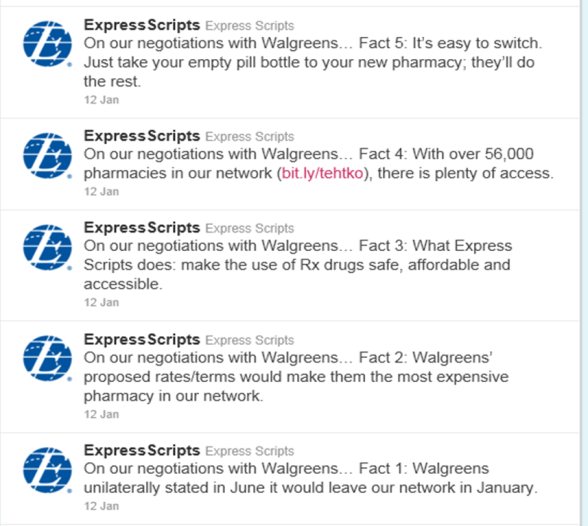
After Walgreens (with almost 84,000 followers) created a promoted hashtag of #ILoveWalgreens, Express Scripts (with 1,645 followers) countered back with several Tweets about the dispute (see below).  I guess the question is whether with millions affected and decisions made by the businesses and not consumers…does this forum matter?  But, journalists and analysts follow them so it’s important to keep the messaging up.  (Other articles on this are here, here, and here.)

Conveniently, I found this infographic on how Twitter is changing healthcare.  At the same time, this is an interesting fight because it’s a blend of B2C and B2B crossing paths.  More to come since I’m sure this fight is long from over.

Medicare and Medicaid Social Media Use For Healthcare

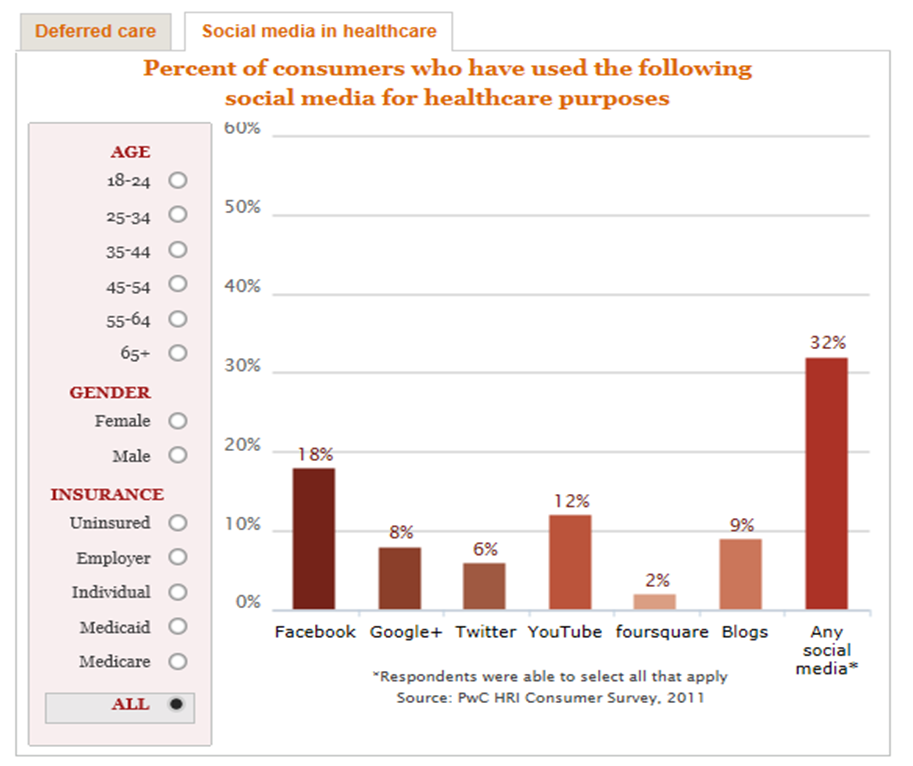
As people look at ways to engage the Medicare and Medicaid populations, I continue to talk about the facts from the Pew research that shows how these demographics use technology.  I was glad to see some research from PWC that also reinforced this.  As you can see in the three charts below, the Medicare population uses technology similar to the average respondent while the Medicaid population uses social media for healthcare more. 

Mouthguards For Non-Contact Sports

I wore a mouthguard when I played lacrosse, but I’m not sure I could see myself putting in a mouthguard for running or playing tennis or golf.  Under Armour is pushing a series of mouthguards for any sport now (see brochure).  But, from a purely academic perspective, it’s interesting.

The material says that:

  • It improves airflow.
  • It reduces stress.
  • It improves strength.
  • It reduces lactic build-up.
  • It improves response time.
  • It reduces cortisol production.

It just makes me think that you’ll create this casual athlete with:

  • A mouthguard.
  • Nose strips to improve breathing.
  • Dark compression socks pulled up to the knee (perhaps with no bottom to allow for barefoot running).
  • Compression arm sleeves.
  • Heart rate monitor with GPS.
  • Googles to protect the eyes.
  • Magnetic band for strength and balance.

You get my point.  All of these things offer either some type of protection and some improvement in results, but it can go too far (IMHO).  Although on the flipside, the competitor inside me is anxious to try them out.

Will Patient Reported Data Augment Claims Based Models?

On the one hand, it seems fairly obvious that patient reported data (use of OTCs, exercise, food intake) is important in understanding their healthcare.  On the other hand, the historical bias has been to use historical claims to predict future costs.  At a minimum, I think that studies around tools like PAM (Patient Activation Measure) have shown that patient reported information is important in understanding their literacy and attitudes on healthcare.  This data is critical in designing effective healthcare engagement programs.  [One of the reasons that Silverlink has stressed our focus on using data for segmentation and personalization for years.] 

That’s why I found one of the latest studies by Kaiser to be really important.  They used both claims data and patient reported data to evaluate inpatient admission rates and costs.  And, as explained below, this data increased the predictive power of their model. 

The research determined that self-reported information about being in poorer health was a key determinant in predicting higher inpatient admissions and for being in the top tier for costs. Higher admission rates and costs were associated with patients who self-reported:

  • Lower score for general self-rated health
  • Yes to “do you need help with one or more activities of daily living?”
  • Yes to “do you have a bothersome health condition?”

The addition of this self-reported information to a claims history model explained an additional 2.8 percent of variance in admissions and 4 percent in cost.

Good Health Is More Than Skin Deep

In the July 11th Time Magazine, there was a small article which I think made a great point – you can be lean and still be at risk for heart disease and diabetes due to fat.  What you can’t tell by weight and appearance is the person’s genetics.  Apparently, international researchers have found a specific variant of a gene that regulates where and how fat is stored.  People with the “lean gene” were storing fat deeper in the body around organs and in tissues.  This visceral fat is more dangerous and can impair bodily functions. 

So…the key point is that even healthy looking people need to monitor their cholesterol and glucose levels.  (I guess those advertisements for high cholesterol drugs were right!)

Infographic: New Year’s Resolutions

I’m not a big New Year’s Eve fan.  I much rather start the new year refreshed and beginning to think about my goals for the next year.  While I used to do a very rigorous 1, 3, 5, and 10-year plan every New Year’s Day, I’ve been a little slack lately.  I’m going to try to be better this week and at least get some 1 and 5-year personal and professional goals captured. 

With that being said, I liked this infographic from visual.ly.  It’s relevant if you think in terms of prescription adherence. 

Opportunists vs. Solidarity

With the Walgreens and Express Scripts dispute unresolved, you are certainly seeing more of an opportunistic attitude in pharmacies than one of solidarity.  Maybe this shouldn’t be a surprise, but early on, I thought that the pharmacy groups would see Walgreens as their “leader” standing up to the large PBM.  If the largest retailer can’t get negotiating leverage over the PBM, can anyone?

Now, if you go into my local grocery store (Dierbergs), you see signs about moving your prescriptions to them from Walgreens before it’s too late.  You see and hear videos playing throughout the store talking about how to move your prescriptions and how easy it is.

CVS Caremark is predicting that it could see as many as 23M prescriptions move from Walgreens to CVS stores.

I’m certainly a fan of preferred or limited networks although I’m not sure I ever imagined a scenario where one PBM would totally exclude one of the big two retailers.  I always imagined a scenario where you were playing them off each other and letting the client choose which one(s) to exclude.

You can see in the new whitepaper by Walgreens that they point out several things:

  • The savings  being offered / created is likely not enough for clients to want to exclude Walgreens and create the disruption.
  • Clients who can include Walgreens are doing so and others would like to or believe they can.
  • If Walgreens is excluded long-term, self-funded clients will be more likely to consider other PBMs.
  • Many people still think this will get resolved in 2011 or by early 2012.

This brings up two other discussion topics:

  1. Will they come back?  If the disruption happens (or has already happened), will consumers come back to Walgreens once they are back in the network?  This will be a true test of satisfaction, branding, and many other efforts.  On the flipside, the other retailers should be spending real effort welcoming and trying to retain the new consumers so they don’t boomerang back.
  2. Has the pressure shifted from Walgreens to Express Scripts?  Depending on the timing, Walgreens will have felt most of their pain by mid-January.  At that point, the pressure (IMHO) shifts to Express Scripts.  Will they want to go through their 2012 selling season without Walgreens in their network, a major acquisition in the works, and any other potential distractions?  I wouldn’t.

Using the Local Pharmacist to Moderate the P2P Discussion

P2P or Peer-to-Peer healthcare is a common discussion topic these days. Patients want to go online and learn from others with their condition on sites like Inspire.com or PatientsLikeMe.com. The government has been one of the early adopters.

“The social media sites we have created show that the government can interact in a meaningful way with the public. We don’t just push information out; we strive to make the content relevant so people can act on it, share it with family or friends and ultimately change their behavior.” Amy Burnett, CDC (Tapping Into The Power By Getting Personal, Robin Robinson, PharmaVOICE, May 2011)

The question is how can traditional companies – pharmaceutical manufacturers, disease management companies, providers, managed care companies, pharmacies, and PBMs – interact in these discussions. On the one hand, they have a broad depth of experience and data to share. On the other hand, they can’t just jump in and drive their agenda. They have to add value to the conversation, demonstrate that they care, and add value.

Much like the idea that you can purchase things online and return them to the physical store, I think these virtual discussions need to eventually be tied to a physical experience for many patients. One group that I think could play significantly in this is local pharmacists. Imagine that a chain or an association created a social media team. That team could monitor and interact with patients especially in key conditions such as some of the specialty drug areas. As relevant, this could be linked back to a local store where a pharmacist could spend time consulting with the patient. I think this would be a great way to drive the retail specialty business and increase consumer brand awareness.

“The potential use of social media as a bellwether for identifying trends, informational gaps, support tools, even improved communications between providers, allied health professionals, and others could pave the way for a more collaborative approach to population mapping and patient care.” Michael Parks, Vox Media (Social Media: Paving The Way, Robin Robinson, PharmaVOICE, May 2011)

The CDC has even created a toolkit for people to use.

Cost and Outcomes Drive Better Use of Data

Overall, I would describe healthcare companies as trying to figure out how to drive the best outcomes at the lowest cost while maintaining a positive consumer experience.  This isn’t easy.  One area of opportunity that companies increasingly look at is how to use data to become smarter. 

  • Can I build a predictive model of response curves?  Who’s likely to respond?  Who’s likely to take action?
  • Can I develop a segmentation model that works?  How will I customize my communications after the segmentation?
  • Can I rank and prioritize my outreaches?  Should I do that based on risk or based on potential value? 

Ultimately, I think this is driving companies to be a lot smarter and to look at how they use both medical and pharmacy data.  For example, I’ll point to both CVS Caremark and Prime Therapeutics in press releases from earlier this year. 

“The ActiveHealth CareEngine offers evidence-based information that can be used to improve the health care of our members and enables us to take our programs to the next level by seamlessly incorporating medical data,” stated Troyen Brennan, EVP and chief medical officer of CVS Caremark. “This agreement will enhance our existing programs to identify issues related to gaps in care, potential drug-to-drug interactions and duplicative care — information that is important to bring to the attention of the member’s physician.”  (article that this is sourced from)

Smart use of medical and pharmacy data is one of the most powerful tools we have to improve outcomes and increase value for our members and clients,” said David Lassen, PharmD, Chief Clinical Officer at Prime. “Through ongoing partnership with health plan clients, Prime is uniquely positioned to view the entire spectrum of patient care, and we can leverage that information to help manage cost and to improve outcomes. We are very excited to collaborate with Corticon on the development of this clinical platform.” (press release)

The next step will be to integrate PRO (patient reported outcomes) from sources like connected devices and PHR (personal health records) that might show blood pressure, workouts, calories, or other data points that could help companies determine when to intervene and how to add value to drive an outcome.

Additionally, another key is continued work in the outcomes-based contracting world and bonus areas such as Star Ratings where the financial value is tied in the short-term to outcomes.  This creates a burning platform for smarter use of data and use of a broader set of data to understand and impact care.

State By State Rankings – Key Healthcare Metrics

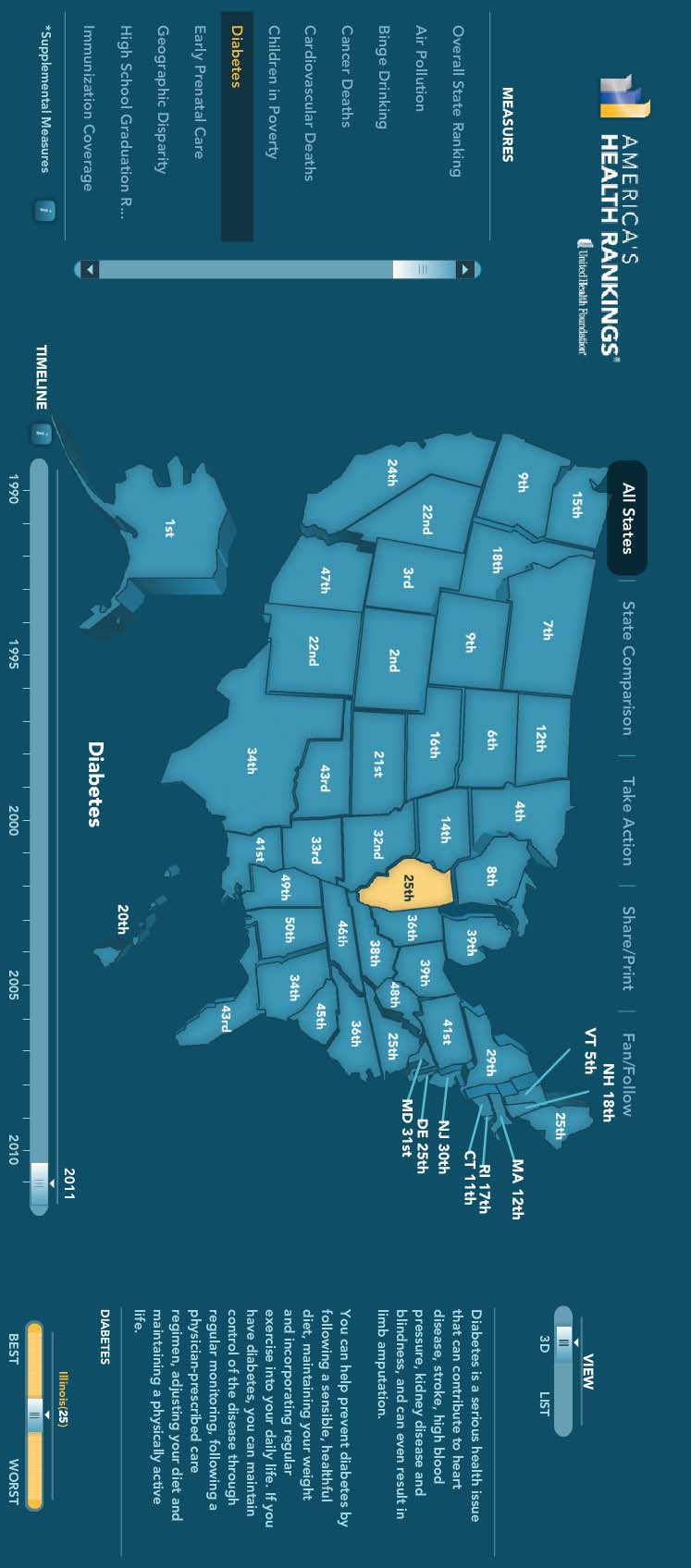
United Health Foundation published their Health Rankings today which offers some great statistics and interactive graphics to see how states compare on things like high cholesterol and diabetes. I pulled a few examples here, but it’s definitely worth checking out.

What’s Your Digital Strategy?

Do you have a digital strategy?  Even if you don’t call it out that way, you certainly have digital as part of your overall member and physician strategy these days. 

Hopefully, you start with a few basics like:

  • What do I want to accomplish?
  • How do I measure success?
  • Who am I targeting?
  • What does my target group do online and what tools do they use (and for what)?
  • What is my competition doing?  (and what do companies outside my vertical that I want to emulate do)

Once you know those things, you can start looking at different areas of focus.  The key ones that jump to mind for me are:

  • Search engine optimization
  • Brand monitoring (e.g., Radian6)
  • Content creation (blogging, Twitter, Facebook, Google+, LinkedIn)
  • Moderation and involvement with social networking (e.g., PatientsLikeMe, DiabetesMine)
  • Tele-monitoring / telemedicine
  • Electronic prescribing / EMR / PHR
  • Digital couponing / incentives
  • Gamification
  • Mobile applications
  • SMS
  • QR codes
  • Augmented reality

But, I’m sure there are others…suggestions on what I’m missing?

Text4Baby Learnings About Flu Shots And More

Here’s a slide presentation from the Text4Baby team that they presented yesterday.  This has been one of the biggest SMS programs in the country and has gotten a lot of press.  They did a survey of people about their plans to get flu shots and also share some other data and plans.

What’s A PAM Score?

PAMTM is the Patient Activation Measure which was developed by Dr. Hibbard, Dr. Bill Mahoney, and colleagues. It helps you gauge how much people feel in charge of their healthcare. To find out more, you can go to InsigniaHealth’s website.

Given the focus on health engagement across the industry these days, I think this is an important tool to consider. It’s been used broadly and has been validated in a lot of published studies. The questions lead people to be assigned to one of four different activation levels.


You can collect and use the PAM score for segmentation, developing customized messaging, measuring program success, and/or identifying at risk populations.

A few other interesting points from one of their FAQ documents were:

  • Patients who are more activated are more likely to adopt positive behaviors regardless of plan design.
  • People with higher activation levels are more likely to choose consumer directed plans.
  • People with low activation often feel overwhelmed with the task of taking care of themselves.
  • You increase the level of success in by breaking down change into smaller steps where the consumer has a greater likelihood of success.

Which PBMs Have The Highest Mail Order Penetration?

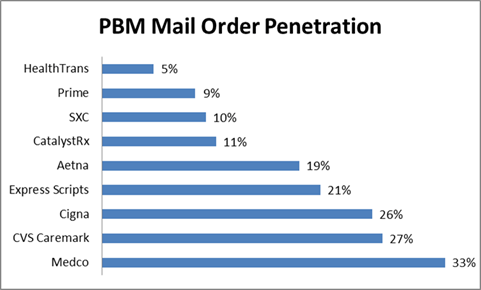
I was looking at some data from earlier this year (Q1 – 2011) from the AIS quarterly survey of PBMs. I thought this was a nice summary of mail order penetration by PBM. As you can see, it identifies some areas of opportunity:

  • Will Express Scripts’ mail penetration go up with the potential acquisition of Medco? Or, will Medco’s go down?
  • Will anyone be able to match the Medco mail penetration?
  • Will Aetna’s mail penetration go up to the CVS Caremark penetration rate?
  • How will Prime Therapeutics, SXC, and CatalystRx increase their mail penetration?

Overall, the mail penetration of the industry has dropped to 16.3% which is the lowest it’s been since 2004 when it was 12.9% (according to AIS). [Note: These are based on adjusted Rxs.]

Will Pfizer Strategy On Lipitor Become The Norm?

Remember Twisted Sister’s song – We’re Not Going To Take It Anymore?

That’ seems like a good summary of the Pfizer response to the typical market dynamics around patent expiration.

Here’s a summary of what they’re doing:

  1. Pfizer is striking deals with PBMs to offer them brand Lipitor at a lower cost (net of rebate) than the generic drugs which are coming to market during the exclusivity period.
  2. Pfizer is continuing to offer their $4 coupon for brand Lipitor direct-to-consumers.
  3. Pfizer is continuing to advertise Lipitor and talking about “if Lipitor has been working for you, stay with it”.
  4. Pfizer is partnering with Diplomat Pharmacy to sell Lipitor directly to the consumer through mail order.
  5. Pfizer is offering pharmacies additional services around adherence for helping keep patients on Lipitor.

Here’s some key questions on implications:

  1. If I’m the authorized generic, how do I feel? I thought I had a deal by which I was bringing a drug to market and making some money during the exclusivity period. Will this change the way that authorized generic deals get structured?
  2. If I’m the generic manufacturer that has the 180-day exclusivity, how do I feel? I’ve just lost a lot of my opportunity. Will this change the economics of generic manufacturers? I believe most of their profit is made during the exclusivity period.
  3. Will other brand manufacturers follow suit on other patent expirations?
  4. Will the PBM response to couponing intensify with their push into couponing when there is a multi-source generic available?
  5. Will this serve as a bridge until they can get OTC Lipitor approved? And, will that ever happen?
  6. How does this affect retailers who make more money on the generics and won’t see the increased rebate dollars?
  7. For PBM clients that get rebate dollars shared with them, these deals with Pfizer are probably a win (i.e., lower cost). What about those clients that don’t? How are they being made whole? What about clients of clients (i.e., employers who contract with a TPA or MCO who gets the rebates but doesn’t share them)?
  8. How hard does it become to transition patients off Lipitor when Pfizer stops offering the increased rebates or lower cost?

This could be a game changing moment in the industry. We’ve seen lots of shifts, and I would add this as a new phase in the industry.

  • 1.0 = Traditional focus on MDs and heavy use of people to detail physicians.
  • 2.0 = Shift to DTC advertising still supported with detail reps.
  • 3.0 = Increased power of PBMs and focus on rebating and formulary positioning.
  • 4.0 = Rise of generics and shift to specialty.
  • 5.0 = DTC couponing and broader disease centric strategies.
  • 6.0 = New business models??

Canadian Pharmacy Loyalty Program

Lawtons Drugs in Canada is partnering with LoyaltyOne to offer an air miles program tied to participation in an informational program on healthy behaviors.

A few of the interesting statistics:

  • 69% were interested in receiving awards for incorporating healthy advice from their pharmacists into their self-management
  • 58% were more likely to pick a pharmacy if it offered rewards
  • 36% said they would be more likely to take care of themselves if they got rewarded

The Dynamic Video Book: Aetna Example (Specialty Opportunity)


About a year ago, I picked up a “book” at an Aetna booth at a conference. I’d shown the technology to a few clients, but I’d never had a physical example. I thought I would share it here. When you open it up, it has a video embedded into the book. The video has several different options for messaging that you can view by pressing the buttons.


The cool aspect of the book is that it can be linked up to a computer so the videos can be updated over time. It’s produced by a company called Americhip who calls it “Video in Print”.

I’m sure it’s more expensive than a typical direct mail piece, but it can be used and updated over time. My thought is that this is a great tool for specialty pharmacy. These are high cost patients. Imagine a book with the following videos that came with their first script:

  1. Understanding your disease
  2. What to expect from your medicine
  3. How to access support
  4. Refilling your medication
  5. The importance of adherence

The content of these videos could change over time as their condition evolves, as they change medications, or even based on different lab values.

Reprint: Getting Aligned For Consumer Engagement

(This just appeared in the publication by Frost  & Sullivan and McKesson called “Mastering the Art and Science of Patient Adherence“.  It was written by me so I’m sharing it here also for those of you that don’t get that publication.)

According to the 15th Annual NBGH/Towers Watson Health Survey, employees’ poor health habits are the number one issue for maintaining affordable benefits. Since studies have shown that 50-to-70 percent of healthcare costs are attributed to consumer choices and adherence is one of those issues, the topic of how to engage consumers isn’t going away.

The challenge is getting the healthcare industry to use analytics and technology tools when engaging the consumer in a way that works for each individual and builds on their proven success in other industries. Healthcare has an enormous amount of consumer data ranging from demographics to claims and behavior data. Consequently, there is great opportunity to use this data to engage consumers in their health to improve clinical outcomes. While on the one hand, it’s like motivating consumers to buy a good, the reality is that healthcare is both personal and local which complicates the standard segmentation models.

This is a dynamic time where people are experimenting with different strategies for engagement. For instance, in medication adherence, people are trying everything from teaming those who have chronic conditions with community pharmacists to make sure they are taking their medications correctly to technology that monitors when the pill actually enters your body. But, there are still fundamental gaps in the process which can be addressed using interactive technology to complement the pharmacist interventions.

Consumer engagement in healthcare is increasingly moving to new channels with 59 percent of adults in the U.S. looking for health information online and 9 percent using mobile health applications according to Pew Research Center. Additionally, there is more and more participation in social media or peer-to-peer healthcare applications. Modes like SMS, which companies are starting to leverage in programs like Text4Baby or the diabetes reminder program recently launched by Aetna, are gaining popularity. Companies like Walgreens have also begun exploring the use of SMS and Quick Response (QR) codes for medication refills.

At the end of the day, consumers want preference-based marketing where they can elect how to best engage them, but that doesn’t mean that’s the most likely channel to get them to take action.They want you to learn from their past responses to improve your future outreach, but they are also skeptic about how their data is used. You have to put yourself in their shoes to create the optimal consumer experience. You have to deliver the right message to the right consumer at the right time using the right sequence and combination of channels.This is not easy.

So, if you’re going to optimize your resources and build the best consumer experience, you need an approach which is dynamic and personalizes each experience. For example, we found that creating the right sequence and timing around direct mail and automated calls improved results by as much as 100 percent in a pharmacy program. Or, in another case, at Silverlink Communications, we found that using a male voice in an automated call to Latinos got an 89 percent better engagement rate around colonoscopies. We also know that using a peer pressure message does not work in motivating seniors to take action in both a retail-to-mail program and a cancer screening program, but does work for those younger than 55-years-old?

You have to make simple messaging relevant to them—why should I get a vaccination, why is medication adherence important, how can you address my barriers? Only an ongoing test and learn approach to consumer insights will suffice, and those that figure this out will become critical in the ongoing fight for mindshare and trust. But, this isn’t a stand-alone opportunity. We have to partner with providers to improve engagement, adherence, and ultimately outcomes in different forms. We have to offer them a platform for engagement that is built upon consumer insights and provides a unique consumer experience to them based on their disease, their demographic attributes, and their plan design. All of these factor into their behavior and are important in “nudging” them towards healthcare engagement and ultimately, better health.

“Code Lavender” – Focusing On The Patient Experience

If you don’t know it yet, the consumer “experience” is rapidly becoming the hot topic. I’ve talked about it a lot beginning with companies like Cigna that have hired and staffed a consumer experience team and Chief Experience Officer. But, as the WSJ pointed out earlier this week in their article “A Financial Incentive For A Better Bedside Manner“, this is getting quantified in the provider world. One might argue that experience has always mattered more in the provider world since it’s easier to switch hospitals or physicians than insurance companies, but that is likely to continue to change as the individual insurance world and Medicare continue to create competition for the individual.

For payers, you can already see this individual market playing out with the growth of retail stores which is where the experience begins. In other cases, the PBMs and payers have to rely on many cases on their call centers as the front-end of the consumer experience. Additionally, with pharmacy being the most used benefit, this is another critical area. And, we know that pharmacy satisfaction is highly correlated with overall payer satisfaction.

But, let me pull a few things that caught my attention in the WSJ article:

  • CMS will begin withholding 1% of their payments and tying payment to quality standards for medical care AND patient satisfaction surveys known as HCAHPS (Hospital Consumer Assessment of Healthcare Providers and Services). This will go up to 2% in 2017.
  • The survey is a 27-question survey sent to a random sample of discharged patients (about 25% of the 36M patients admitted in 2010 with a pretty low response rate of 7%). It asks about cleanliness, quiet, communications, and an overall satisfaction based on something similar to the Net Promoter Score (i.e., would you recommend the hospital to friends and family).
  • 67% of patients give their hospitals the top two ratings on a scale of 1-10 (which I actually think is pretty good).
  • Only 60% say that doctors and nurses always communicated well about medications (which was higher than I expected).

Cleveland Clinic Chief Executive Delos “Toby” Cosgrove, a heart surgeon by training, says he had an epiphany several years ago at a Harvard Business School seminar, where a young woman raised her hand and told him that despite the clinic’s stellar medical reputation, her grandfather had chosen to go elsewhere for surgery because “we heard you don’t have empathy.”

  • The Cleveland Clinic calls their program HEART—for hear the concern, empathize, apologize, respond and thank. They also use the term “Code Lavender” for patients or family members who need immediate comfort.

I look forward to watching how this transforms over time. I know I’ve seen this play out in the dentist’s offices for my kids. The waiting rooms have video games and other things to keep them and their siblings busy, but I do agree with the article that this may unfairly bias the wealthier hospitals.

Sustained Patient Engagement Around Hypertension: Silverlink and Aetna

At Silverlink, we had a great opportunity to work with one of our clients and publicize it. This morning, Aetna released a joint press release with us about our hypertension program.

As companies continue to look at new ways to use technology to engage patients around chronic diseases, solutions like this offer companies a unique way to blend multiple channels into an overall consumer experience that improves engagement and outcomes.

From the press release:

The program also achieved high levels of engagement, with nearly 60 percent of participants continuing to actively monitor their blood pressure by using a free blood pressure monitor and submitting readings on a monthly basis. The frequency of participants’ cholesterol (low-density lipoprotein (LDL) cholesterol) screening also improved 5 percent.

“By helping our Medicare members manage their high blood pressure, we are hoping to help prevent heart disease, strokes and even deaths,” says Randall Krakauer, MD, FACP, FACR, Aetna’s national Medicare medical director. “Our nurse case managers work closely with our members and do a tremendous job providing them with the information, tools and support they need to help them control and improve various chronic conditions, including hypertension. The results of our program with Silverlink demonstrate that an automated program can further support and engage members in managing their own health conditions.”

Retail Pharmacy Mobile Applications

I’ve talked before about some of the mobile PBM efforts, but what about the retail pharmacies. You should expect that the chains will have different mobile strategies than the grocery stores or the big box retailers. And, it will be interesting to see how the independents might collaborate on a shared platform.

Here’s a few things already out there:
Walmart new shopping application and Walmart’s page on mobile
CVS retail application
Walgreens has a mobile pharmacy app
Target also has a mobile pharmacy application

So what should or could pharmacies offer consumers in terms of mobile applications:
– A refill application is a minimum
– Education or drug information is another basic
– There are certainly some geographic options such as a store locator or clinic locator
– There are options for location based check-in using Foursquare
– Scheduling MTM consultations or vaccinations are a reasonable option
– What about promoting saving thru 90-day retail or generics?
– As retail pharmacies are in the specialty business, there could be opportunities to promote this channel and offer support.
– Telemonitoring is another option (e.g., FaceTime)
– Use of QR code is another part as is augmenting the shopping experience with augmented reality
– Of course, couponing will be part of the solution, but what I’d like is someone who would download my shopping receipts (from multiple companies) and provide me with relevant savings.
– Should it include Rx coupons? Unlike the PBMs, retailers want traffic and if coupons increase adherence then why not.
– There are other options like photos and integration with social networks and tools.

I think one of the key “killer apps” is secure rules based messaging. Imagine using data to identify when you need a vaccination or identifying a potential drug-food issue or having age based triggers. These could be sent directly to the consumer in a secure environment. Of course, we’re only at about 10% adoption and the key question is whether these are the key consumer that everyone wants to attract. Are they the high utilizers? Do they buy other goods?

More to come here. This is a rapidly evolving space.

The Augmented Reality Prescription Bottle

I was watching a YouTube video on Starbucks’ augmented reality cup which got me thinking. Why not do the same with the prescription bottle?

What a great way to engage the tech savvy consumer.

Perhaps you could provide a plain language summary of information about the medication. You could give a list of side effects. Or show how to take the medication.

Perhaps it could have an embedded survey that you complete weekly.

And, it seems like an easy opportunity for someone to offer an augmented reality applications for all medications. Hold up the phone to a pill and get information on it. (maybe a little harder)

I think there is a lot more here as companies like Lamar continue to evolve.

Highlights From the Takeda / PBMI 2011-2012 Prescription Drug Report

PBMI puts this out each year with funding support from Takeda. It is another one of those great annual reports full of lots of trend data for you to digest. Let me pull out a few of the things that stood out to me, but I recommend you read the entire thing yourself:

  • Use of 4-tier plans grew by 25% in 2011.
  • Specialty copays increased by 37% (to $84).
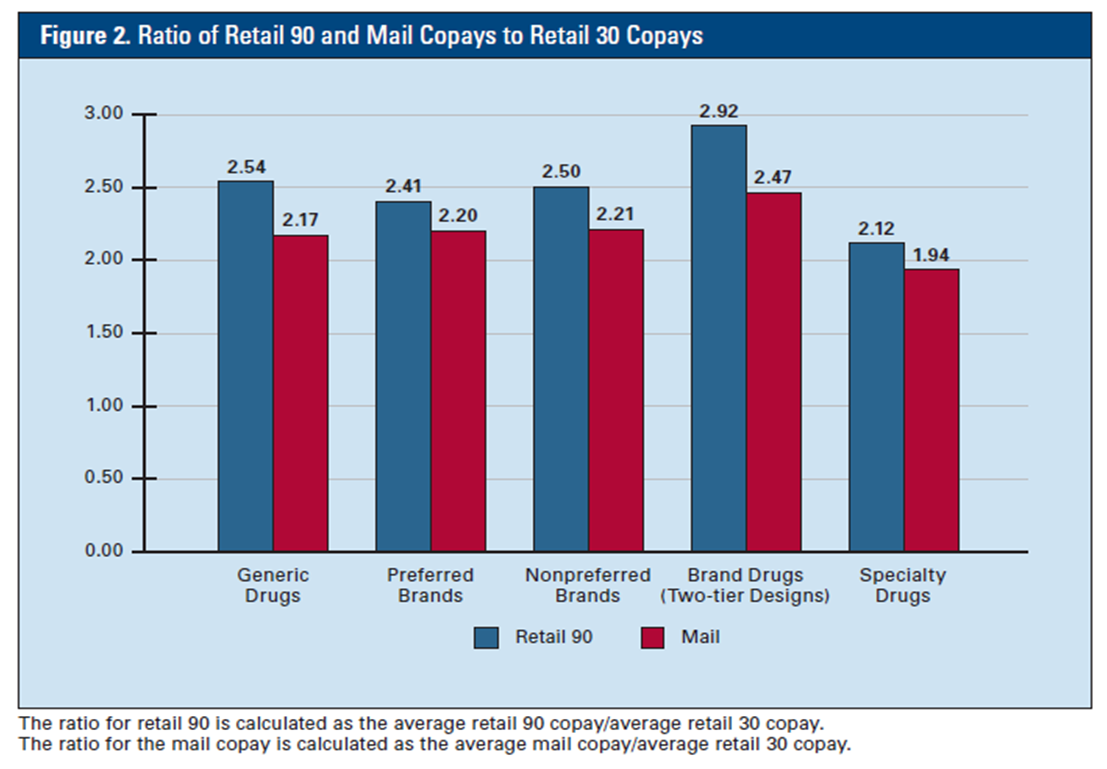
  • Plans continue to offer 90-day mail at a lower copay multiple than 90-day retail.

  • Nearly 60% of plans allow 90-day retail prescriptions. [Wow! This was a shocker to me.]
  • 30% of respondents require specialty medications to be filled by their PBM. [Which seemed low to me.]


  • Only 5% of respondents said they give their PBM responsibility for plan design.
  • 18% of plans have mandatory mail (although the statistic is 26% for respondents who have pharmacy provided as a carve-out).
  • 21% of plans have a limited retail network.
  • 36% of plans have copay waivers.
  • 7% of plans cover some form of genetic testing.
  • In general, there was an equal view of all the forces impacting benefit plans.


  • 64% of plans are focusing on member education to help them control costs. [exactly what we do at Silverlink everyday!]

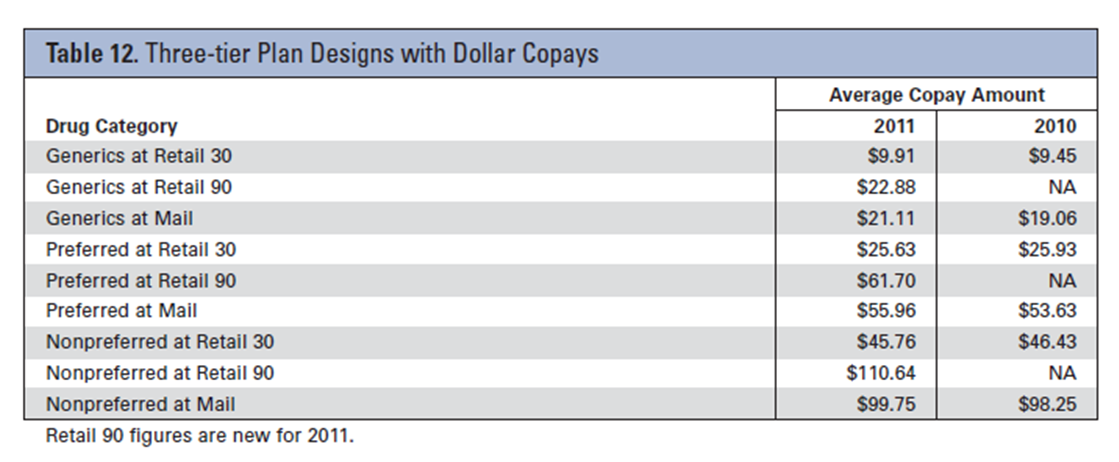
Here’s a key chart on average copays for 3-tier plan designs.


Another summary they show from some external research is below:


Adam Fein recently pointed this out, but the use of MAC pricing at mail is pitifully low at 18% versus 42% for 30-day retail.  (More from Adam on the report.)

I’m always interested in the overall use of programs by plans which is summarized here. Interestingly, there were three areas which carve-in did much less than carve-out – outbound phone calls, retro DUR, and therapeutic substitution.


They also include a summary of several research studies on adherence with a quote from me:

“In working with healthcare companies around adherence, our focus is always on how to best use data and technology to personalize interventions in a scalable way,” said George Van Antwerp, 2011-2012 Prescription Drug Benefit Cost and Plan Design Report Advisory Board member. “Medication adherence is a multi-faceted issue. While there is no silver bullet, technology can help deliver different messages to consumers based on the complexity of their condition, specific medications, and their plan design (for example). But, while technology can provide the initial nudge, the care team has to work together to address health literacy and build an understanding of the condition, the medication, and value of adherence.”

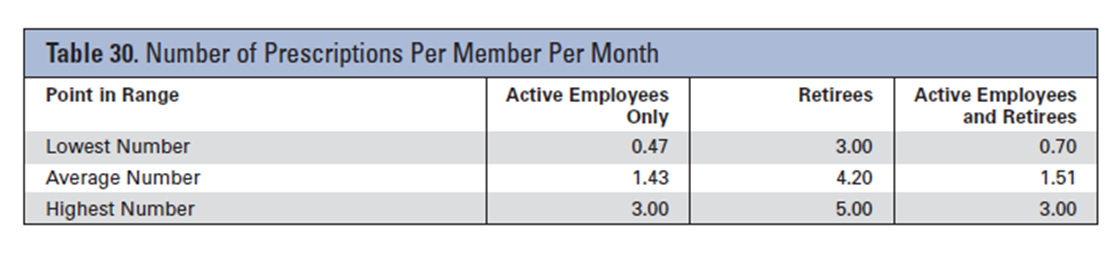
Another data point that I often use from here is the average number of Rxs PMPM:


One Challenge Of Medicare OEP – Satisfaction

We’re in the Medicare open enrollment period right now.  This is a highly competitive time for MA and PDP plans to compete for new members and to get members to switch to their plans.  I’ve talked about the Star Ratings process before.  I’ve talked a little about the limited network offerings before.

This time, I wanted to focus on a recent study by Medicare Today that was put out on satisfaction.  It shows:

  • 95% say their current Part D plan works well, with 94% saying it is easy to use.
  • 82% say their Part D plan offers good value.
  • 67% say they have lowered their prescription drug spending.
  • 34% say they used to skip or reduce their prescription medicine doses to save money, but now no longer have to do so.
  • Two of every three seniors said they are unlikely to shop around.
Those are impressive statistics.  They certain point to the battlegrounds being around new Medicare eligible participants and retention (not acquisition) for existing PDP or MAPD members.