Archive | PBM / Pharmacy RSS feed for this section

One Challenge Of Medicare OEP – Satisfaction

We’re in the Medicare open enrollment period right now.  This is a highly competitive time for MA and PDP plans to compete for new members and to get members to switch to their plans.  I’ve talked about the Star Ratings process before.  I’ve talked a little about the limited network offerings before.

This time, I wanted to focus on a recent study by Medicare Today that was put out on satisfaction.  It shows:

  • 95% say their current Part D plan works well, with 94% saying it is easy to use.
  • 82% say their Part D plan offers good value.
  • 67% say they have lowered their prescription drug spending.
  • 34% say they used to skip or reduce their prescription medicine doses to save money, but now no longer have to do so.
  • Two of every three seniors said they are unlikely to shop around.
Those are impressive statistics.  They certain point to the battlegrounds being around new Medicare eligible participants and retention (not acquisition) for existing PDP or MAPD members.

My Eight PBM Predictions For 2012

I recently heard one of the key CEOs in the PBM industry say that his crystal ball for 2012 was fuzzy, and he wasn’t sure what was going to happen.  (Not particularly reassuring.)  That being said…it’s an exciting time, and I’m going to take my pass at predictions anyways.

  1. The proposed Express Scripts acquisition of Medco will take place although they will be required to sell off some specialty assets.  This will create a new specialty player and will also trigger further consolidation and acquisitions.  You will also see many of the Medco people go to new healthcare companies throughout the industry to drive change.
  2. The contract dispute between Express Scripts and Walgreens will get resolved shortly after 1/1/12, but it will serve as the trigger for limited networks as multiple clients will keep Walgreens out of the network since they’ve addressed most of the disruption and achieved savings.  But, you will also see several companies quickly add Walgreens back into their network.
  3. Star Ratings will trigger a bigger focus on adherence across the industry and begin to create outcomes-based performance measures that the commercial business starts to see in their PBM contracts linking payment to performance.
  4. Lipitor will be a disruptive item throughout the year with aggressive Pfizer rebating, the overhang from it potentially going OTC, and the pricing of the initial generic.
  5. Innovation will finally begin to shift to the specialty space with this being the primary area of concern from a trend management and clinical perspective.  Clients will expect innovative ways of engaging patients and improving outcomes which will push closer links between pharma and PBMs around key drugs and complex conditions.  The focus on specialty spend in medical will continue, but the increasing percentage of infusion drugs will challenge this and push specialty to look for more ways of engaging with the physician.
  6. The “retailing of healthcare” through storefronts will manifest itself in different ways in pharmacy with greater focus on specialty at retail, pharmacists as part of the ACO/PCMH concept, MTM, and ultimately through exchange based partnerships with large payers.
  7. Integration of medical, pharmacy, and lab data will be a huge focus on PBMs create targeting algorithms and databases for segmentation, targeting, and ultimately engaging consumers around specific health behaviors.
  8. Telemedicine in the form of telemonitoring will link into the retail pharmacy clinic strategy as they extend their pharmacy relationship from an event based relationship to an ongoing monitoring relationship around key conditions like diabetes.

Two things that I expect to continue to be areas of focus will be the development and execution of a mobile strategy and continued exploration in the area of personalized medicine and genomics.

The one outlier which I’m not sure of yet is Medicaid pharmacy.  It’s been a hot topic lately, but I’m still unsure of whether that will radically change in 2012 or not.

[Interested in sharing your opinions on 2012 in a formal way?  I’m going to reach out to several companies and ask their thought leaders or executives to do an “interview” with me about their predictions for 2012.  Let me know if you’d like to participate.]

[And, don’t forget that you can sign up to have these posts e-mailed to you whenever I write them by signing up for my e-mail list on the right side of the blog.  Thanks for reading.]

Diabetes Facts From the ADA – Total Costs in US = $174B

I found this list of diabetes fact from the American Diabetes Association in an article I was reading:

  • 25.8M children and adults in the US have diabetes (8.3% of the population).  This includes 7.0M who haven’t yet been diagnosed.
  • 1.9M new cases of diabetes were diagnosed in people 20+ in 2010.
  • 215,000 or 0.26% of all people under 20 have diabetes.
  • In 2007, diabetes was listed as the underlying cause of death on 71,382 death certificates and as a contributing factor on another 160.022 death certificates.
  • Adults with diabetes have heart disease death rates 2-4x higher than adults without diabetes.
  • The risk for stroke is 2-4x higher for people with diabetes.
  • Diabetes is the leading cause of blindness among adults ages 20-74.
  • Diabetes is the leading cause of failure accounting for 44% of new cases in 2008.
  • Total cost of diagnosed diabetes in the US was $174B in 2007.

No wonder this is such a focus in the Medicare Star Ratings!

Tiny Tower Retail Pharmacy Missed Branding Opportunity

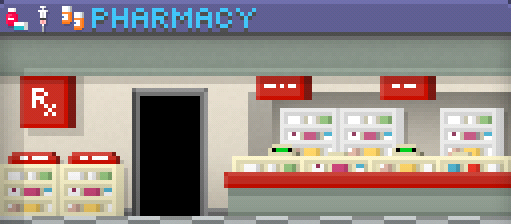
Tiny Tower is a simple yet addictive game you can play on your iPhone or iPad.  My kids figured out the other day that you could re-name the floors.  For example, one of the floors is a pharmacy.

So, instead of saying “pharmacy” this could say Walgreens or CVS or Express Scripts.  What a missed opportunity.  I’ve talked about this before, but I think the pharmacy industry in general has missed integrating themselves into Hollywood and gaming.  When’s the last movie or TV show you saw where the primary actor was a pharmacist or worked at a PBM or even worked at a health insurance company (and was shown in a positive light)?

Here’s an easy branding opportunity.  It also seems like an easy revenue source for the Tiny Tower founders.  Why not have companies pay them to brand these?  Why not have people playing the game earn points to buy up from McDonalds to Red Robin?

Three Pillars of Adherence (NEHI)

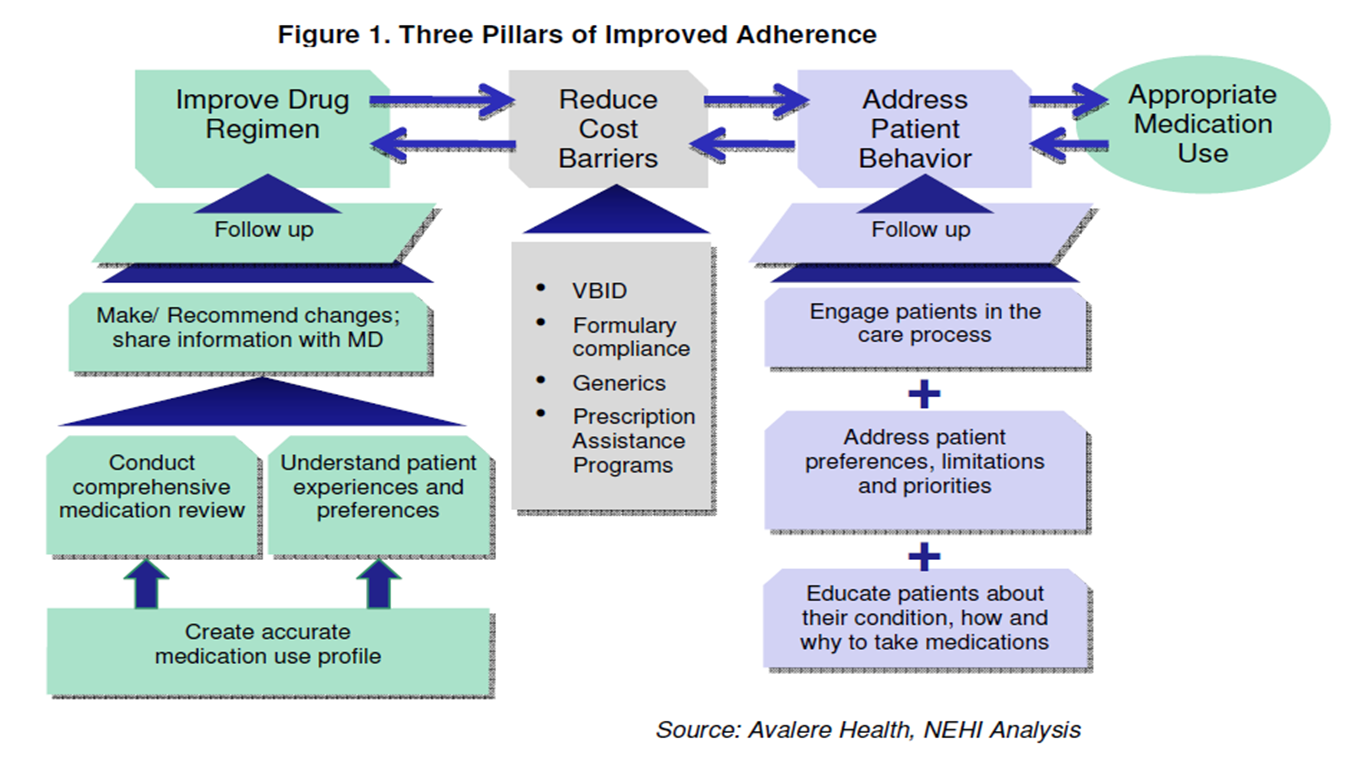
I was digging through some adherence materials, and I stopped on the NEHI graphic from their report “Thinking Outside The Pillbox” which first quantified the impact of non-adherence at $290B (a number which everyone uses now).

I don’t remember every posting it on the blog so I’m sharing it now.  I think it hits on the key topics that we all talk about:

  1. We have to get it right from the beginning with the drug regiment.
  2. Cost can be an issue so if possible address it.
  3. But, the biggest issues are with understanding (literacy), side effects, creating a habit, and many other things that require education and ongoing intervention and support for the patient.

[Note: NEHI has now releasesdd their roadmap on Medication Adherence which I’ll review in a subsequent post.]

Why Don’t Physicians Use More Information Therapy

My PCP is very good about giving me information to read every time I visit him.  (Never mind that it sits in a pile on my desk.)  But, I believe this is under-utilized in today’s information rich society.

I was reading an article this morning from PharmaVOICE about physicians not using certain medications or treatments because they didn’t have the time to spend with patients explaining them.  Therefore, they default to the “easier” solution which requires less explaining.  Is this prevalent?  I don’t know.

The article talked about a survey from Sermo and Aetna Health which revealed that almost 2/3rds of the 1,000 MDs surveyed felt that “the current health care environment is detrimental to the delivery of care”.  And, less than 1/5th felt that “they could make clinical decisions based on the what was best for the patient, rather than on what the payers are willing to cover”.  Pretty scary and sad.

Imagine if the physician was using an electronic interface during the encounter.  They could pre-create several information packets around certain diseases, drugs, and/or treatments.  When the patient was diagnosed and a treatment plan agreed to, they could e-mail the package to the patient.  It might include written information, links to websites, YouTube videos, or other assets.  I would imagine this could be very powerful and address the common gaps that exist between what the physician says and the patient hears.

[The article was “Is the Business of Health Care Getting in the Way of Providing Good Health Care? by Ken Ribotsky in PharmaVOICE from October 2011.]

Predicting Medication Adherence

Is there a secret sauce?  (Hint: past behavior)

It always important to be skeptical, but there are certainly attributes like the number of Rxs, gender, condition, copay amount, and other factors that contribute to the likelihood of a consumer being adherent.

But, one of the big discussions is around how to use other variables.  FICO, the company that creates credit scores, has created an adherence score.  In today’s WSJ, they shared this image about predicting adherence.  Interesting…

Lots Of Consumers Looking For Generic Lipitor

Assuming my blog volume is any indicator, it seems like consumers are increasingly looking for information on generic Lipitor.  My blog volume doubled last week.

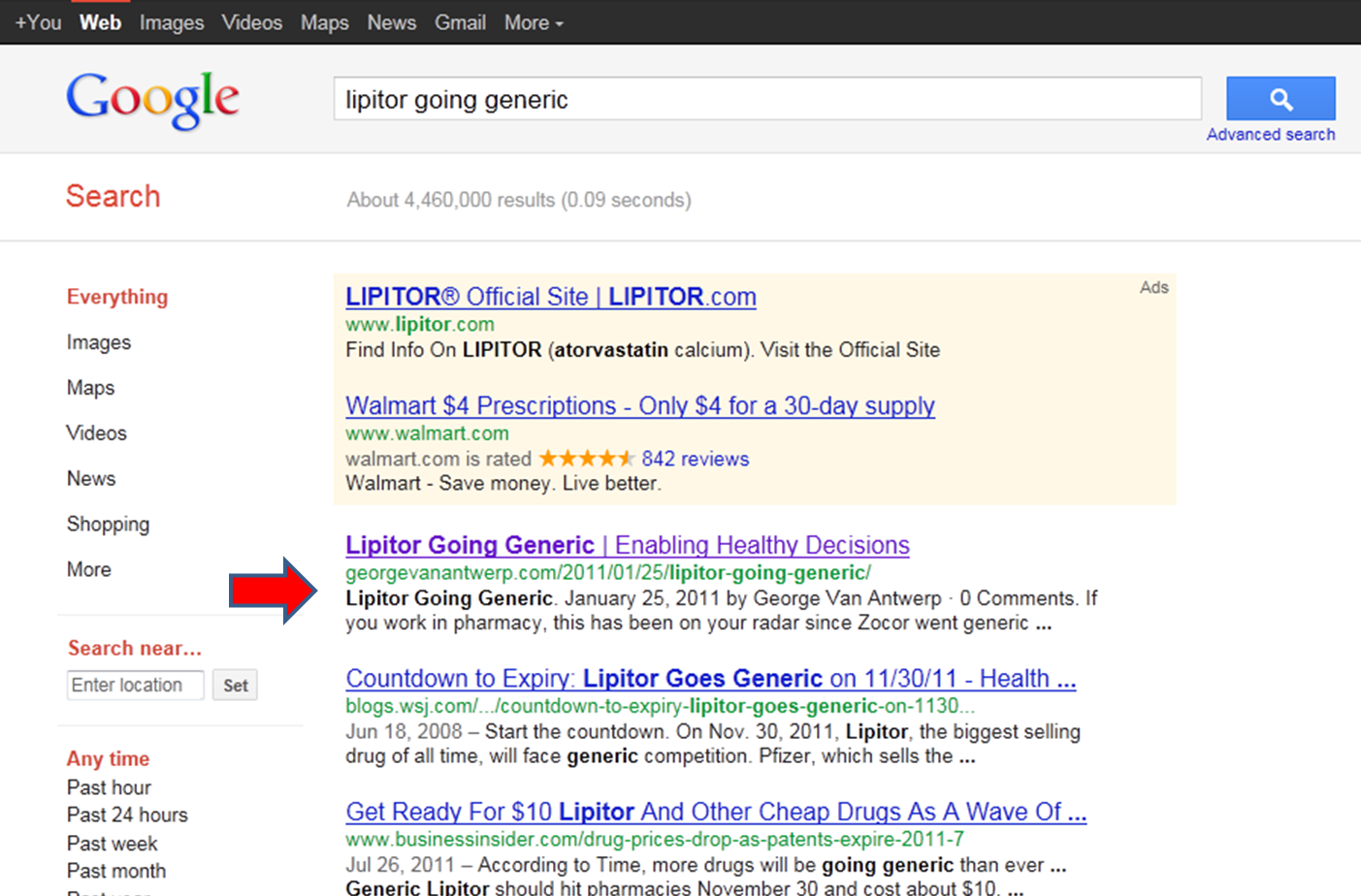
If you type “Lipitor going generic” into Google, I’m the first page returned (after paid search).  [I always love finding these Search Engine Optimization (SEO) results.]

Will The Stars Align To Drive Adherence?

We all know that adherence to prescriptions is a problem.  People don’t start on their medications.  People don’t stay on their medications.  But, another problem also exists which is finding the ROI on adherence.  While the ROI is clear to the manufacturer or even to the pharmacy, it’s often less clear to the payer.

This is not true in every category.  Diabetes and several other conditions have been shown to have an ROI associated with intervention programs that improve adherence.  But what about all the others.

In the short-term, I expect you’ll see the CMS Star Ratings and bonus payments drive behavior in three critical categories that are now measured in the 2012 for MAPD and PDP plans.  (see technical notes on 2012 measures)

If you’re not familiar with the Star Ratings system, you should read this.  In 2012, there were three new adherence measures added.  Not only are they now part of the evaluation process, but they were weighted more heavily than some of the operational measures.  A  good indication of focus on quality of care.

Getting more Stars is important since it is linked to bonus dollars that the plans can get.  And, there aren’t many Five Star Plans.  Only 9 plans received 5-Star Ratings for 2012 (see article).  [Interestingly, I think one of the unique assets that Express Scripts is buying in the proposed Medco acquisition is one of the 4 Five-Star PDP plans.]

“The Medicare star quality rating system encourages health plans to improve care and service, leading to better patient experiences across the board,” Jed Weissberg, a senior vice president at Kaiser Permanente.  (from 5-star article above)

The adherence measures focus on diabetes, high cholesterol, and hypertension and use Proportion of Days Covered (PDC) rather than MPR for their measurement.  Certainly, one of the things we’re seeing at Silverlink with our Star Power program is that many of these Star Measures can be influenced by communications.  Adherence is certainly one of those big areas of opportunity for plans to focus on.

While the benefit is obvious to the plan in terms of reimbursement, the big question is whether consumers care about Star Ratings or just focus on lowest price point and access to pharmacies or specific medications.  A Kaiser study that was done seems to indicate that the answer is no.

Conducted by Harris Interactive, the survey showed that only 18 percent of Medicare-eligible seniors said that they are familiar with the government’s rating system. Of those that are familiar, less than one-third have used the system to select their health plan. Moreover, only 2 percent of respondents were aware of how their current plans rates. 

Since we’re in open enrollment for Medicare right now (see Medicare.gov to evaluate options), perhaps we’ll get some data in early 2012.  2012 will also be the first year for the 5-Star plans to be able to market all year round and not be limited to the OEP (open enrollment period).

But, one of the things I found interesting as I looked on the Medicare.gov site to “select” a plan in my area is that there is an option to “Select Plan Ratings” but even I wasn’t sure what that was.  It’s not intuitive to the consumer that this is a quality rating for them to pay attention to.  And, it appears that the default order of options which is presented to you is based on price.

What Will Happen With Generic Lipitor (atorvastatin)?

Well, it finally looks like generic Lipitor will be on the market soon.  I think November 30th is still the date.

Of course, now the question is what will this mean to you (the consumer)?  Since atorvastatin will be distributed by only one manufacturer for the first six months after the patent expires, there will not be a significant price drop.  Therefore, I know at least one (and have heard two) PBMs will be blocking the generic drug during that time.  Consumers will be able to get Lipitor at a generic copay.

I’ve offered my opinion on scenarios like this before.  I think it’s confusing to the consumer.  It’s great for Pfizer and generally everyone wins since it’s the same out-of-pocket costs to the consumer and lower cost to the plan sponsor (employer) than the exclusive generic (due to rebates), BUT I think it sends a confusing message.  “You can and should use generics except for in some cases where the brand drug is cheaper.”  I’m not sure how this plays out in states where generic substitution is required by law.

Of course, your other option is to go use the Lipitor $4 coupon.  If I were the Pfizer brand manager for Lipitor, I would offer a $50 payment for a 1-year supply of Lipitor and lock people in for the year.  [A seperate discussion needs to be had about how cash and coupon claims which don’t necessarily get adjudicated affect adherence measures for bonus payments like Star Ratings…and yes, I know that coupons aren’t supposed to be used for Medicare members, but I don’t think that’s monitored well.]

So, you might go to get your generic Lipitor and leave with the brand at your generic copay.  On the other hand, I wouldn’t be surprised to see some PBM negotiate well enough to get a better price on the generic than Lipitor (net of rebate).  [Of course, these are the types of scenarios that cause friction in the supply chain.  Which drug can the retailer buy better?  Does the client get the rebates shared with them or not?]

I know this is what some companies like GoodRx are looking at with their application which compares drug prices across retailers.  It shows you if there’s a coupon available (see broader article on them).  It suggests savings like splitting the pill.  (No mail or 90-day promotion yet that I saw.)  Of course, this is from a cash paying customer perspective.  But, with atorvastatin, you may want to compare your plan design with the cash price with coupons.  You’ll want to know if it’s part of the $4 generics program or if you get a better price with the CVS or Walgreens discount card programs.

Here’s two examples from GoodRx.  One is for Lipitor which shows some variation (and has no generic today).  The other is for Prozac which has been available as a generic for a while.

Increasing The Value Of Your Refill Reminder Call

The other day, I got a refill reminder call from my pharmacy. The call came to my home number and simply stated that your prescription is ready.

Thanks…BUT what prescription. Mine? My wife’s? My kid’s?

If mine, was it the one I stopped taking? Or was it the second fill or an anti-biotic that we switched since it wasn’t working?

Did they even have the right phone number? (They never said anyone’s name in the message.)

I was confused and annoyed. I don’t think this type of message is helpful.

IMHO…the ideal refill reminder call should be something like the following:

  • This is pharmacy X calling for George Van Antwerp. Please have him call us back.
  • Thanks for calling back in. Please enter (or say) your prescription number or date of birth.
  • We have a prescription for drug X ready to refill for you. Will you be coming to pick it up in the next 2 days?
  • (If no) Do you intend to refill it?
    • (If no) Why not? (and then address the barrier)
    • (If yes) When should we call you back to remind you?

This would minimize me calling the pharmacy to follow-up on the call. It would cut down on abandonment. It would also address adherence by capturing and addressing any barriers in the interactive call.  [Of course, you have to manage HIPAA and several other constraints to achieve this, but it is possible.]

Creating an interactive and effective communication is the type of work we do at Silverlink (campaign design, scripting, segmentation, behavioral economics, communication execution, analytics). Like many others, we’re seeing refill reminders move from blast calls to interactive calls and expanding to SMS, mobile apps, and e-mail. Ultimately, it’s about figuring out the patient’s preference and the right way to “nudge” them to refill at the lowest cost per success. And, it works. You can see more at our adherence site – https://adherence.silverlink.com.

  • What voice should you use?
  • When should you call?
  • Should you e-mail then call?
  • Should you call then send a text?
  • Should you talk about their condition and stress the value of adherence?
  • What’s important to the patient about being adherent?
  • What is their previous pattern of refills?

NCPA Announces “Simplify My Meds”

For patients with multiple prescriptions, it can be very annoying to have to constantly refill different medications on different cycles. This leads to waste (time) and forgetfulness around refills. It’s an age old problem.

The easy answer would be to work with the patient to consolidate the orders to refill on the same day of the month. This might involve a few split orders or short-fills to get them lined up. I’ve talked with multiple pharmacies about this over the years.

NCPA announced the other day that they were going to focus on this as part of their adherence program. This is great! If they can pull this off, I would expect the whole industry to try and follow.

“By coordinating exactly what day patient refills occur, the independent pharmacy staff’s workload is streamlined. Daily workloads become more predictable, labor costs go down, and staff stress levels decrease. Data analyzed from pharmacies using this model has shown as much as a 30 percent increase in prescription volume, a 50 percent decrease in labor costs, and $1.87 per script increase in gross margin.” (NCPA Press Release)

Using Hypothetical Questions To Influence Decisions

Most people don’t realize how questions can be persuasive, according to new research from the University of Alberta. Hypothetical questions usually start with the word “if,” meaning the information may or may not be true. Our brains process that information like the “if” isn’t even there, says study author Sarah Moore, Ph.D., a marketing professor at Alberta’s School of Business. “As a result, people accept the data you present at the beginning of a question as fact,” Moore says.

This is from an article in Men’s Health.  It made me think about lots of ways that hypotheticals could be used to drive consumer behavior in healthcare:

  • If you were able to avoid having your kids home with the flu shot this year, would you take them to get a flu shot?
  • If you were able to save $50,000 in healthcare costs over your lifetime, would you make sure to take your medications everyday?
  • If you were able to spend more time with your family rather than waiting in line at the pharmacy, would you be more likely to use 90-day prescriptions?
  • If you didn’t have to take any sick days next year, would you go in for your annual physical exam?
  • If you decreased your likelihood of losing your foot to amputation due to diabetes, would you go get a foot exam every year?

This fits well with a lot of the behavioral economics frameworks that companies are using today.

Patient Reasons For Participating (or not) in Genetic Test

Medco just put out a study that I found very interesting since it shares data around patients opting-in to a genetic test around use of statins.

In the big picture, it showed that those got the genetic test were more adherent.  Perhaps this points to a better belief in the therapy post-genetic test (similar to the placebo effect).

But, what first grabbed my eye was data on the consumers:

  • 53.8% participated in the study since they believed in the utility of genetic testing
  • Only 6.7% of those that declined cited privacy issues
  • Only 8.8% of those that declined cited anxiety about the results

This could be very promising for something that is complex but is certainly part of the future of medicine.

Infographic: Patient Education

This is a topic I often bring up in discussing adherence with clients.  We have to partner with MDs as a pharmacy community to address this.  There are fundamental gaps at the beginning of the process where patients don’t understand their disease or their drug.  Without that, it’s hard to believe that taking your medication will make you better or to understand that this is a lifelong process in some cases.

Will Insurers Continue To Cover Avastin?

In case you haven’t seen the news about Genetech’s Avastin, here’s the quick summary:

This will be a hot topic.  While it only affects a relatively small group of patients (~17K), this is an emotional issue.  Many patients strongly believe in the drug.  I would expect companies to be getting lots of questions on the topic.
At the end of the day, if the panel and FDA agree that the drug is not effective, I find it hard to believe that many insurers will cover it or if they do, it will be tightly controlled with prior authorization.

Flu Shots, Myths, Appointments, and Public Health

I talked about Flu Shots last week, but I came across a few other things when I was following up on the post.  One is a site called Faces Of Influenza by the American Lung Association.  It does a good job of making this public health concern personal by highlighting lots of personal stories.

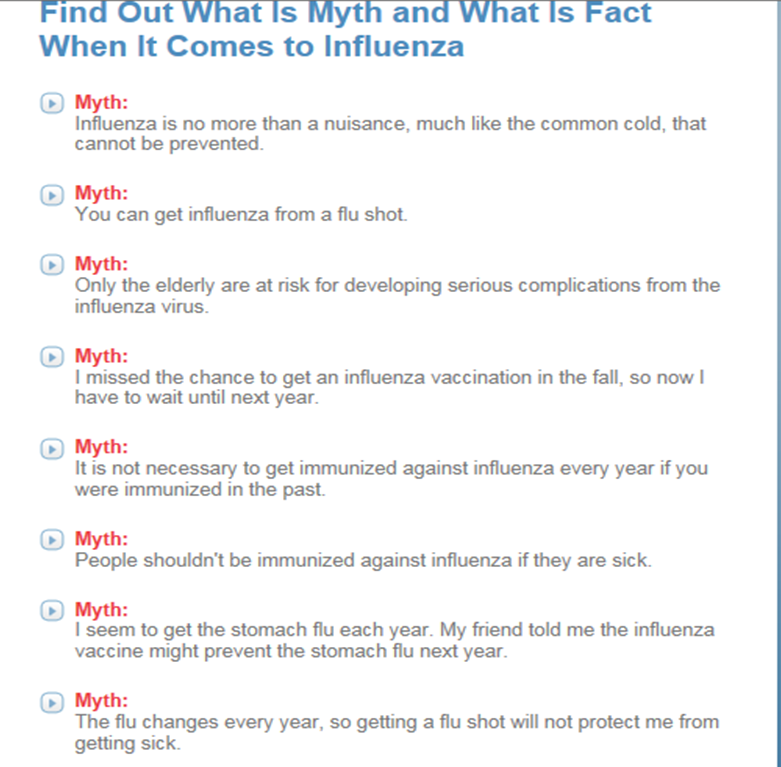
They also provide a list of myths and address those.

The other thing that this got me thinking of is whether people want appointments.  In general, flu shots have become a walk-in, adhoc business.  Which is nice from a consumer perspective (as long as there’s not a wait), but I have to imagine it’s difficult for the pharmacy to plan their data around.

I know that CVS is now offering apointments as an option for flu shots.  It would be interesting to see what percentage of people choose this option and their demographic attributes.

Diabetes And Medicare Star Ratings

Do you know what the Medicare Star Ratings are?  If not, you might want to review the Kaiser Family Foundation brief from last year.

Basically, the star ratings provide individuals with a quality rating across numerous dimension on a Medicare plan.  And, they are helping to drive the pay-for-performance (P4P) focus across healthcare.  This year’s changes include several adherence metrics and have brought the total diabetes measures up to 7.  And, if you happen to be one of the few 5-star Medicare plans, you will be able to have open enrollment all year not simply during the AEP period from 10/15-12/7.

Here’s a quick summary of the seven (lots of opportunities to work with communications to improve ratings and outcomes):

Measure Summary
Cholesterol Screening Percentage of diabetics with an LDL  test
Eye Exam Percentage of diabetics with an eye exam
Kidney Disease Monitoring Percentage of diabetics with a kidney function test
Blood Sugar Controlled Percentage of diabetics with an A1c test showing their blood
sugar under control
Cholesterol Controlled Percentage of diabetics with an acceptable LDL value in their cholesterol test
Treatment Percentage of diabetics with both a diabetic medication and a hypertension medication that are getting an ACEI or an ARB
Adherence to Oral Rxs An average Proportion of Days Covered (PDC) greater than 80%

We all know the statistics on diabetes so hopefully this will help to improve outcomes.  If you’re interested in how Silverlink helps plans with Star Ratings – go here.

Here Come The Pharmacy Co-Branded MA/PDP Plans

In the past few days, I’ve seen two new announcements:

  1. Aetna partnering with CVS to launch a co-branded Medicare plan
  2. Coventry partnering with Walmart, Walgreens, and Target

I think we’re all familiar with the success that Humana has had in their Medicare offering with Walmart.

I think one could also say that the PBMs (i.e., mail order) getting into the Medicare business was also an effort to co-brand Medicare offerings between payers and pharmacies.

I wonder if we’ll see an NCPA offering.  I would think in certain regions that that would play well.


Do You Have A Communications Waterfall?

For those of us that have ever worked in IT, the idea of a waterfall based design always implies a less than optimal strategy.  But, I’m beginning to see an applicability of this framework for communications.

Let’s look at a scenario for a prescription refill where you’re trying to optimize for the lowest cost intervention.

  • Identify targets for an intervention
  • First push a message to all those that have downloaded your mobile application (~10%)
  • Second push a message to all those that have opted into your SMS reminder system (~6% with some overlap)
  • Third push a reminder to those that you have an e-mail address on file
  • Fourth send a reminder using an automated outbound call with the option to refill during the call
  • Fifth (maybe) use agents to reach out to the patient
As you go through this “communications waterfall”, there are several things to think about:
  1. How do you leverage permission-based or preference-based marketing here?
  2. How do you integrate your channels so that if you send an e-mail which isn’t opened after 48 hours (and the message is important) that it automatically escalates to the next channel?
  3. How do you cross-promote across channels to drive greater use of the self-service channel?
  4. What permissions do you need to use each channel?
  5. What are the HIPAA / PHI limitations within each channel?
  6. What is the correlation between preferences and behavior?
  7. If you know that certain segmentation and messaging increase the likelihood of action, how do those insights manifest themselves in each channel and does that change your interest in using a particular channel?
  8. What data do you want and can you get from each channel to understand the response curves?

Ambient Paper For Adherence

We’ve all heard of GlowCaps which is a great idea of using sound and color and communications to remind people to fill their medications.

One idea I’ve thought about for several years is the idea of “intelligent paper”.  Imagine a refrigerator magnet or prescription label or some other piece of information printed on paper that changed color with time.  As it got closer to time to refill your medication, it would turn yellow.  When it was time to refill, it would turn red.

It should be easy.  If you blend this with the QR code that Walgreens uses for refills, you have a captive reminder and reorder system that could be embedded within the label for less cost.  I haven’t totally solved the issue, but it’s one that I think is feasible to accomplish and sell as a low-cost reminder vehicle.

Coordinated Versus Integrated PBM

I’ve long held what would appear to be conflicting positions:

A. I believe that a standalone PBM offers the unique ability to be laser focused on pharmacy and should therefore optimize your benefits from a carve-out perspective.

B. I also believe that ideally that focus could be achieved within an integrated benefit where you could leverage pharmacy strategically to drive down the bigger overall area of costs – medical.

So, my initial reaction when I heard about the study below Anthem was that this finally showed a clear savings from the integrated PBM model.

According to a separate analysis Anthem conducted of members in its affiliated health plans, enrollees with both medical and pharmacy benefits managed by Anthem have medical costs that are $8 to $16 lower per employee per month compared with those without Anthem’s pharmacy program. (from Drug Benefit News)

I haven’t seen the original study which I’d like to read in more depth, but on the surface, this is interesting.  After further retrospect, I wonder if the issue isn’t necessarily integrated versus coordinated.

Can a standalone PBM act as an integrated PBM?  What would need to happen for that to be true?

  • They would need to coordinate benefit design across both areas (pharmacy and medical) which is easier when the managed care company is the buyer of PBM services not the individual employers.
  • There would need to be integration of pharmacy and medical benefits into a predictive model and an outcomes model.
  • The PBM would need to be tied to outcomes in some type of P4P model.
I’m sure there’s lots of PBMs out there on both sides of the fence who could (and will) argue this story better.  I’m just thinking through my initial reaction to think about what this study really means.

Pharmacy Adherence (Waste) And The Need for MD-RPh Collaboration

I spent the day today at the NEHI adherence event in DC. I pulled out a few of my takeaways below, but while I was riding on the plane to get here, a few things were running thru my head:

  • The focus on budget and the estimates that adherence costs us $290B a year here in the US.  (or as one person pointed out that’s $1.2T in a presidential term)
  • The recent report estimating that chronic conditions could cost us $47T worldwide over the 20 years which is leading to the UN talking about healthcare for only the second time ever.
  • The discussion by George Paz from Express Scripts the other day about how PBMs drive value by eliminating waste (see Drug Trend Report). A large piece of waste is adherence and certainly one of the forecasted benefits of the combined Express Scipts and Medco entity is the intersection of Consumerology with the Therapeutic Resource Centers (TRCs).
  • The ongoing dialogue around motivational interviewing, commercial MTM, and blending face to face interventions with technology to “nudge” behaviors.
  • The huge opportunity which I believe exists in leveraging technologies like Surescripts to create data exchanges with physicians around MPR and barriers.
  • The exciting fact that the new STAR measures for Medicare include more adherence metrics that are weighed more heavily than some of the operational metrics.

Fortunately, these were a lot of the topics that were discussed.  Here some of the discussion topics:

  • The fact that there’s no “easy button” for adherence.
  • How adherence is a foundational building block for quality.
  • The role of HIT in sharing data bi-directionally across the care team.
  • Upcoming evidence around VBID.
  • The role of the pharmacist and need for them to collaborate more with the physician to discuss and manage adherence.
  • The fact that the adherence solution has to be multi-factorial.
  • The need to optimize the drug regiment and individualize care (aka patient-centered care).
  • The role of the caregiver.
  • Opportunities around PCMH, readmissions, MTM, and eRx.
  • The need for patient engagement.
  • The need for the patient to believe in the therapy and that it will make them better.
  • Good discussion on the role of the PCMH (patient-centered medical home) versus the pharmacy as the foundation for adherence.
  • Discussion on whether physicians could address adherence if time wasn’t an issue.  Do they have the training and skills?
  • Social media as an emerging factor.
  • Reaching the consumer when they have time and are receptive to information.
  • Helping prepare the consumer for the encounter (i.e., checklist or list of questions).
  • What happens when the patient waits in line and then is rushed themselves in the encounter.
  • The role of technology in complementing the physician and patient.
  • How to share data across team members.
  • The need for ROI data on interventions.
  • The value of having a Dx on the Rx.
  • The need to vary incentives and not keep doing the same thing.
  • If prevention is long-term and adherence is short-term, should the physician focus more on adherence and less on screening and other preventative measures.
  • The need for – sufficient accountability, information, and skills.
  • Adherence as a solution that needs to be localized.
  • Patient centered or disease centered solutions.
  • The governments role in improving adherence via policy and funding demonstration projects through CMS.
  • STAR ratings and the bonus payments as an incentive to motivate research and programs in this area.

Overall, it was a good discussion with a very engaged panel and audience.  We didn’t come to any answers, but you certainly got to think about the topic, identify some projects that should be done, and identify some research questions. 

I look forward to pulling out a few of the topics in more depth.  They align well with the communications platform and intervention strategies that Silverlink provides for our clients around adherence.

Flu Shots: Stock It And They Will Come?

This is the hot topic. Everyone wants you to get a flu shot because it’s good for your health and a profit making opportunity.

  • The CDC recommends flu shots for everyone over 6 months of age.
  • Pharmacies have big expectations about volume but “unfortunately” (from the perspective of nudging people to act) the disease does not seem to be too prevalent yet.

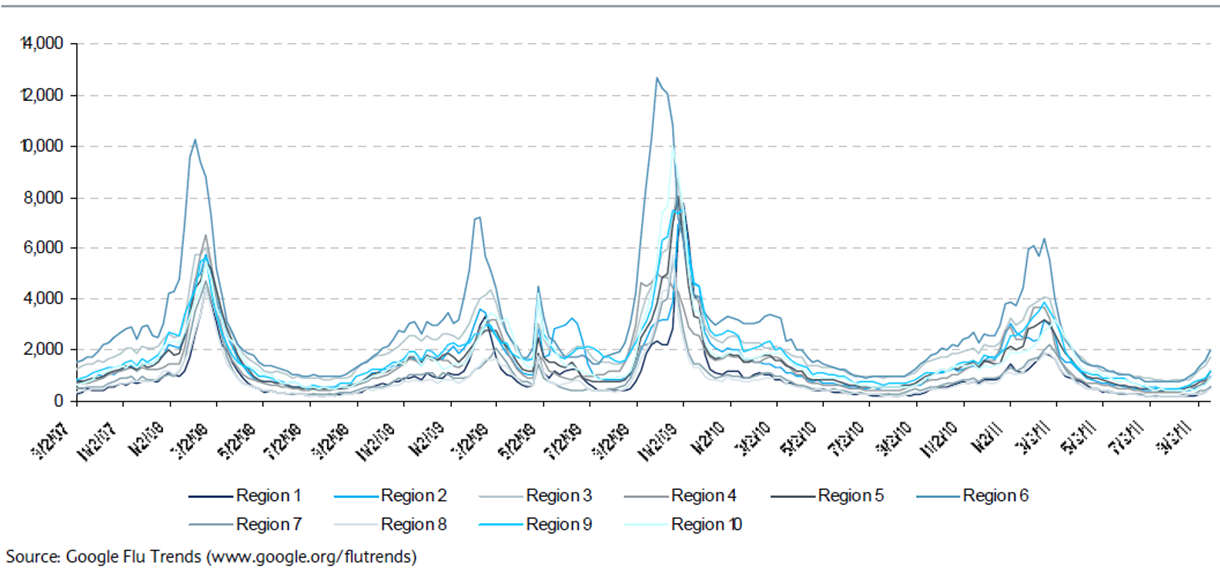
According to the CDC (and thanks to Larry Marsh’s team at Barclays Capital for sending out in their Flu Clues report):

We highlight that 0.8% of patient visits to physicians were due to flu-like illness, which is down 20bps from last week’s data. We note that this is well below the peak of 8.0% in early 2010. The 0.8% rate is below the national baseline average of 2.5%. Next we note that 6.0% of all reported deaths were due to pneumonia and the flu, 10 bps below last week, and below the epidemic threshold of 6.4% for week 37.

Traditionally, only about 40% of US adults will get a flu shot meaning there’s lots of opportunity for growth in vaccinations.  Tim Martin from the WSJ has talked about this in a few recent articles – Flu Shots Are A tough Sell This Year and People Have Big Plans For Flu Shots.  In the second article, he quotes a recent survey showing almost 2/3rds of adults plan to get the shot this year.  BUT WHY?  (other than the fact that those who respond to survey’s around flu shots may be more likely to take action)

You can also look at the Google flu trends data (again thanks to Larry Marsh and team for pointing this out) which shows online searches down for flu topics:

Like last year, the number of locations for getting a flu shot has expanded exponentially driven predominantly by pharmacies (which BTW is a good thing for them in demonstrating additional value).  You’re even seeing some creative programs building on last year’s programs. One new one I’ve seen is Walgreens use of Foursquare for donating flu shots.

Of course, if we can’t convince healthcare workers to get flu shots then it’s going to be really hard to convince the average consumer.

I would expect MA plans to work with their PDP provider or pharmacy partner to drive members to get flu shots. Since flu shots are a STAR measure, it’s important for plans to reach out and get consumers to get a flu shot.

But why should I get a flu shot if my likelihood of getting the flu is down?  That is the question.

That’s why I’m skeptical about some of the “generic” marketing efforts.  I think everyone knows that they “should” get a flu shot and now finding a location for one is easy.  BUT, we need to make it relevant to them especially those of us in healthcare.  Ideally, their pharmacist and physician are talking to them about it, but if not, how do “we” (as healthcare companies) engage them.

We have to make the “pitch” relevant to them. For families, make them understand the importance of keeping the family healthy and their kids in school. For pregnant moms, help them understand that it’s important and why.  For people who work, stress the importance of not missing work. For people with chronic conditions, focus on their additional risk.  For the elderly, explain the risks to them.

A recent Walgreens study quantified some of the costs of the flu:

A new Walgreens survey examining the effects of influenza on people’s everyday lives and the economy, suggests that last flu season resulted in 100 million lost works days, along with nearly $7 billion in lost wages and 32 million missed school days, among many other findings released today. These findings, the first of a two-part Walgreens Flu Impact Report series, underscore the ramifications the flu and ill-timed illness can have beyond people’s health – from missed work and lost income to parenting challenges.

According to the Centers for Disease Control and Prevention (CDC), on average 13 percent of the U.S. population gets the flu every year, with active flu seasons seeing closer to 20 percent, or more than 62 million Americans.

Judicial Committee On Proposed Express Scripts Acquisition Of Medco

While the judicial committee meeting today has no direct bearing on the FTC’s review of the proposed merger, it will definitely help form some public opinions and may help layout some areas of focus for the review.  You can see the Bloomberg summary of some of the key quotes here.

You can also read the submitted testimony by each of the six witnesses online at the judicial site.  I pulled a few comments from each below.

From Stephanie Kanwit:

The most important theme of the Guidelines is that “mergers should not be permitted to create, enhance, or entrench market power or to facilitate its exercise.” Reams have been written about what constitutes “market power,” but the definition in the Guidelines is relatively straightforward:

“A merger enhances market power if it is likely to encourage one or more firms to raise prices, reduce output, diminish innovation, or otherwise harm customers as a result of diminished competitive constraints or incentives.”

From Dan Gustafson:

the major PBMs continue to expand exclusive distribution arrangements with pharmaceutical manufacturers. Further analysis is required to determine whether these acquisitions and distribution alliances have led to decreased service and consumer choice in providers, as well as substantial increases in the prices of several specialty drugs.  [Isn’t this becoming the norm with more and more REMS being required by the government for specialty drugs?]

From Dennis Wiesner:

The payment from a PBM to a pharmacy for dispensing a prescription drug differs from the amount a PBM charges a plan for the same prescription drug, to the benefit of the PBM. Plans sponsors are typically unaware of this difference, commonly referred to as “spread.”  [Isn’t this common in business?  Does a clothing retailer reveal what it pays its supplier for goods?]

From Joseph Lech:

Everyone knows the fastest way to reduce drug costs is to maximize the proper utilization less-expensive generic drugs. Yet, community pharmacies dispense generics at a much higher rate than the PBM-owned mail order outlets because we do not have incentives, such as kickbacks from manufacturers, to dispense brand name drugs. For example, the generic dispensing rate at the ESI mail facility is 60%. It is 62% at the Medco facility. By contrast, community pharmacies dispense generics on average 72% of the time.  [How long will these inflated statistics stay around…it’s like the false perception about vaccines.  You have to adjust out the acute drugs and acknowledge a different consumer mix leading to similar GFR.]

From George Paz:

According to our data, Express Scripts members utilizing our full complement of tools enjoy an additional annual average savings of over 11 percent per year. These savings are in addition to the discounts from negotiating with drug makers, which average 27 percent below the average cash price consumers would pay at a retail pharmacy for brand name drugs and 53 percent below the retail cash price for generic drugs.

From David Snow:

The business of pharmacy benefit managers (PBMs) is defined by robust competition, with more than 40 PBMs working hard to provide differentiated value propositions for public and private payors. These firms are a diverse group with very different business models and varying degrees of vertical integration, some integrated with pharmacies, others integrated with managed care organizations and others entirely independent. Nine Fortune 500 companies operate their own PBMs. Non-PBM participants like Wal-Mart and Target also contribute meaningfully to the competitive landscape by offering low-price generic prescriptions, as do other retail pharmacies that are providing steep discounts on 90-day prescriptions.

I didn’t get to listen to the prepared testimony, but I think I heard most of the Q&A which was interesting.  But, I think I’m too close to it.  I was really confused by some of questions and discussion.

  1. If the large payers only will choose one of the large PBMs that aren’t associated with another payer (i.e., OptumRx or Humana Rightsource), why would a merger of two of the top three affect the smaller PBMs in any way?  [I don’t agree with the hypothesis by the way.]
  2. Since several PBMs leverage either SXC or Argus software, why would someone say that the smaller PBMs don’t have access to the same technology?
  3. Why would you view sales to managed care companies as a submarket for which to look specifically at marketshare?  Or national employers for that matter?  And, will any of that matter in the exchange market if consumers can purchase pharmacy coverage separately from medical benefits?
  4. Since consumers typically pay copayments, why is there a big focus on how consumers feel the savings of the merger?  They may see a slight difference in percentage copayment plan designs, but the savings accrue to the payer which can choose whether or not to share those savings through lower copayments with the consumer.
  5. What services that a PBM provides are limited because of their geographic location?  This seems to be one of the key points about the limitations of the smaller PBMs.
  6. Part of the pharmacy arguement was for creating a pharmacy home (which I agree with) and directing consumers to a single pharmacy.  They also talked about having the pharmacist determine who should be allowed to fill 90-day prescriptions.  This doesn’t sound very consumer friendly and sounds a lot like what they say the PBMs are doing that is bad.
  7. The idea that drugs are just shipped to patients without them wanting them was brought up several times.  I’d really love to see some specific data about how that happens.  Did their physician call it in?  Did they sign up for auto-refill?  There is a process to be followed which addresses consent and payment so while I believe consumers may say this happened I’d love to see the data on an individual basis.

I also thought it showed the difference culturally or philosophically when you listened to George Paz answer the question about the greatest opportunity to save money versus David Snow’s reponse.

  • George said to focus on eliminating fraud, waste, and abuse
  • David said to focus on managing chronic conditions

This difference is both the challenge and the opportunity that the combined entity will have to embrace.

The one part that really frustrated me was watching the member of the committee from Michigan try to pin everyone down on what they thought of healthcare reform and making the point that they were under oath.  That seemed too political and not relevant to me.

Post ESRX/MHS Merger – How Many Big PBMs Are There?

This seems to be one of the critical questions in the evaluation of whether the merger should go through.  We’ve always talked about the Big 3 PBMs – Express Scripts, Medco, and CVS Caremark.  If that’s the market, then going from 3 to 2 seems like a huge deal.

But, I think the market has and is changing.

  • What about OptumRx (formerly Prescription Solutions)?  Once the lives formerly managed by Medco are insourced in 2013, this is going to be > $20B company (I believe) which is part of a huge company (United Healthcare).
  • What about Prime Therapeutics?  They manage over 14M members (I believe) and have been actively bringing in lots of new management from other PBMs as part of their growth strategy.
  • What about SXC and CatalystRx?  They both have shown their ability to win against the “Big 3” and grow.
  • What about “captive PBMs” like Humana and CIGNA?  I think they would both want a bigger crack at the lives outside their insured book of business.
  • What about MedImpact?  They manage 35M lives today.
There are dozens of other PBMs that have shown success in the market – ReStat, WelldyneRx, Navitus.  I guess it also depends on whether you view the market as just PBMs or you look at it for drug spend in which case cash patients play into the mix and you look at what companies like Walgreens, Walmart, CVS, Target, and RiteAid do.  [One could hypothesize that in a >80% generic world that cash is really the dominant method since insurance discounts matter much less and the role of the PBM or PBA is more around claims coordination for utilization management and DUR.]
Ultimately, I think it boils down to whether size gets you unfair advantages in pricing and discounts (i.e., rebates, acquisition cost, network discounts).  I would suppose that Worker’s Compensation is an area to look at where there are dozens of smaller WC PBMs competing with Express Scripts – MyMatrixx, PMSI, CypressCare.  What’s their experience been?

Today’s session in DC will certainly be interesting.

[As noted before, I both own shares in some of the companies mentioned here and do business with others and/or seek to do business with the companies mentioned here.]

New Walgreens Pharmacy Layout

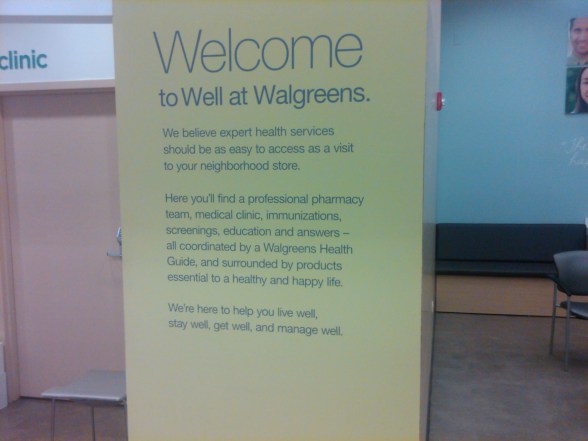
I was in a Walgreens last week in Chicago.  Maybe it’s just a newer store than my local store in St. Louis, but I thought the pharmacy looked very different.  I captured a few shots with my camera phone.  As you can see below:

1. There is an automated check-in option for refills. 

2. There is a pharmacist in front of the counter not just behind.  (And people were actively coming in and talking with him.)  The clinic also seemed to have a person on the floor roaving around interacting rather than sitting behind a podium. 

4. There was a sitting space with what appeared to be a meeting room.

5. Overall, there was a lot more signage and videos which made it a very lively and bright place to be. 


This seems like a different engagement strategy.  I’m surprised no one is talking about it.  The only thing I could find was a mention of a “training store” and 40 locations and the following mention in an article about Express Scripts and Walgreens:

As part of its plan to expand its healthcare offerings and reduce costs, Walgreen is working on pilot stores with new technology and a health guide on staff to help patrons more easily fill prescriptions, speak to pharmacists and see nurse practitioners at its in-store Take Care clinics. The first such store, in the village of Oak Park, Illinois, opened in November. Walgreen plans to have 20 stores in Chicago and other nearby towns by October.  (source)

It sounds like there are just a few stores so I must have got lucky to stumble into this one.  I had heard rumors of some re-design, but I hadn’t seen anything out there on the Internet.  Interesting.  I’d love to see a study to understand satisfaction, engagement rates, retention, etc. associated with this footprint versus the older store pharmacy layout.