Archive | Technology RSS feed for this section

Do Seniors Use Automated Calls?

Without hesitation, that is the number one question I get from people in healthcare. Since seniors make up ~45% of the spend in healthcare, it would be difficult to promote a solution that didn’t work for that portion of the population. We have had some great success with the calls we have done around Medicare Part D and can provide a detailed set of data offline if you’re interested.

Here are a few of the key observations:

  • If you use the Medicare Part D experience, you can see from the data that the CMS website was very busy during the week and much less so on the weekends. [Implying that the target population doesn’t use the Internet at home or had their caregivers or some public access facility helping them.]
  • If you compare the 800# for Medicare Part D to the website volume, it is 4-5x as high. [Implying seniors use the phone primarily.]
  • Comparing authentication by age for a refill program and a COB (coordination of benefits) program, the senior population (>64) responded best.
    • Authentication means people that received an automated phone call and confirmed that they were the intended recipient (“are you bill jones?”).
  • Once seniors started receiving the calls, they continued to be receptive over time to additional calls.
  • The likelihood of saying “repeat” during a call rose very slowly from 60 to 90 years of age.
    • On an automated call, the patient has the opportunity to say “repeat” to hear the prior message again.
  • We followed up on one call program and surveyed 70,000 seniors…95% said the messages were easy to understand and 91% said the calls were quick and helpful.
  • Seniors answer calls all day, but more at night. [Gives you a good option for smoothing inbound call volume or transfers from outbound call programs.]

Stanford Study: Automated Calls

Stanford just published a report called “Computer calls can talk couch potatoes into walking” which is a great valuation of the automated call technology. The study compared calls by real people to automated calls encouraging sedentary adults to exercise.

It is interesting since it is conceptually similar to the technology which we provide at Silverlink Communications. They used Text to Speech (TTS) which can sound a little “computer-like” while we record our calls with voice talent. In their study, participants had to respond using the dial pad (e.g., press “1” if you have exercised today) while our calls respond to voice (e.g., say “one” if you have exercised today). We have studied the improvements in success rates on calls simply from using all recorded voice versus some TTS and seen a very positive lift. [It is obviously hard to record variable fields such as first and last name, but we have done some of that to improve results.] Additionally, given all the variables you can play with in a more sophisticated system – different voices, different speed of the message, dynamic paths, etc., it would be interesting to do that head to head comparison.

A couple of key takeaways from the article:

  • Many of the participants in the program were over 55. [Which are your primary users of healthcare services.]
  • Initially 80-85% of those in the program said that they preferred or needed a human after listening to the computer program. [What you hear from lots of people until they use it a few times.]
  • Participants who lacked confidence in their abilities to be successful and who were less comfortable interacting with people did better with the computer voice. [A client of ours in the specialty pharmacy space was emphasizing this for certain therapy classes recently.]
  • The computer voice was just as helpful for men and women.

“The goal was to get participants out walking at a brisk pace for 30 minutes most days of the week, or some other form of medium-intensity physical activity, for about 150 minutes a week, as recommended by the U.S. Surgeon General. They were divided into three groups: a control group that didn’t get calls, a group called by trained health educators and a group called by a computer delivering an interactive, individualized program similar to that being delivered by the health educators. Exercise levels were measured with the use of an accelerometer, which provides an estimate of physical activity amount as well as intensity.”

Access, Price, Service…The Next Phase for MCOs

It seems a logical evolution of the marketplace. Have we moved to a point where MCOs can really differentiate themselves based on their service? (The indicator for me on this would be whether consumers are willing to pay more out-of-pocket to have one plan versus another simply because of service.) It will certainly happen. Web tools. Pro-active communications. Personalized messaging. Educational programs. Friendly call center reps. Consumers care about these things.

Coverage, the AHIP magazine, had a recent article called “Creating a Culture of Service” which is about this topic. It talks about a health plan where the average call is picked up in 12 seconds, the call abandonment rate is 2%, and 88% of questions are resolved on the first call. I am not sure this is a sustainable model of differentiation since there is a floor to improvement. It is similar to the Kano Model which is used in Six Sigma. This model points out that there are different curves of expectations. Initially, you can delight a customer with something new, but it quickly becomes a standard expectation in the marketplace.

The article does point out a key point which is that patients expectations of service are not based on healthcare companies. They look at Starbucks, Nordstrom’s, Amazon, Dell, Disney, and other companies for what they expect in terms of online presence, response time, and service culture. In many companies, the call center agent is the first (and potentially only) point of contact for a patient (or member). They are not highly paid and often take the brunt of complaints all day long. Finding a way to make them happy and patient centric is essential.

Another challenge which exists in any human centric function like customer service is consistency. As benefits get more complex and companies have huge turnover issues at their call center, getting the same answer every time is difficult. Which is massively frustrating as a consumer. We used to have to do “secret shopper” calls constantly to determine what parts needed more training. This is of course one area where automated voice solutions are being used both inbound (reactively) and outbound (proactively) to address consistency and timeliness. In many cases, you can predict events that will drive a call and see a patient’s history to understand their probability of calling (versus using the web). Why not launch a call to them before the call which is less expensive?

One hiring model we saw work very well in specialty pharmacy was hiring people who had a family member with a chronic condition. They were empathetic. They understood the patient’s frustrations. And, they could project their family member’s experience. They were great.

BTW – The article has a great sub-story about what Connecticare has done in their call center to address recruiting and turnover.

Other things I have seen work are empowering the end agent to resolve an issue up to a certain level. If a person is complaining about a $5 copay change, it may be worth waiving it one time and sending them some information rather than taking 3 calls from them at $5 per call. Or, it may be worth providing a one-time override rather than spending 8 hours trying to resolve it.

Incentives along with metrics are also another obvious tactic. Definitely don’t incent them to get off the phone quickly. That always creates issues. Look at ways of turning them into “sales agents” for the company and reward them for getting patients to change behavior or based on satisfaction scores.

And, one thing to avoid that drives patients crazy is having different information on the web than at the call center. And, even worse is not letting the call center agents have Internet access so they can’t see what the patient sees.

There are a few words on technology such as CRM (customer relationship management) and voice recognition software (e.g., routing to a different agent based on an angry voice). This surprises me a little since I think using data to segment and address different patients differently. Are they a frequent caller that we should route to a live agent without IVR (interactive voice response)? Do we know why they might be calling and have an answer?

As I have talked about before, I believe MCOs and other healthcare companies will be differentiated based on communications. How do they use their data and a permission based marketing approach to understand the patient, push information to them at the right time using the right medium, and support their needs? That is what I am focused on building with clients.

Biometrics – Role in HC – What About a Voice Print?

I have always found biometrics a fascinating topic (i.e., fingerprint recognition, retinal scans). Usually, you only see them employed in James Bond type movies or movies like The Bourne Identity. But, my first job out of undergraduate school was at SH&G which is a large architecture firm in Detroit. We designed US embassies and access to that area of the building was only through a retinal scanner.

Healthcare, much like financial services, is massively paranoid about security. [For good reason.] Just like you don’t want fraud on your credit card, you don’t want all your private healthcare information being shared with the world. One of the challenges in healthcare communications is therefore authentication. When you send a letter, technically it can’t be opened by anyone other than the recipient (without breaking the law). With the phone, you typically ask a question or questions – is this “John Smith” and/or “what is your member id”. The more questions (aka layers of authentication) or the more unique the question (e.g., give me the prescription refill number off your bottle) then the more sure you are of who are speaking with. Of course, as you make the questions more specific the questions or add more questions, you increase the difficulty for the consumer.

So, would consumers use a voice print? It is easier than fingerprinting or retinal scans in that you don’t need hardware at the patient’s location. You simply have to match an audio file against a prior file. It seems like an easy solution. Perhaps, once all computers are touchscreen, we could use handwriting recognition to send secure e-mail.

IBM on HC 2015 – Part II

I think the entry got too long.  I got a system error that made me think I should split this up.  So, continuing on my review of the IBM publication on the future of healthcare, here are some additional notes I took:

  • They envision the growth of a “health infomediary” that helps people navigate their benefits and options within the healthcare marketplace:
    • A “health coach” – expert in lifestyle and behavioral change
    • A “value coach” – expert in benefits, pricing options, and cost-quality tradeoffs
    • A “wealth coach” – expert in financial planning for health related needs
  • They say that health plans as well as physicians could step into this role (along with new players).
    • 80% say hospitals are “doing a good job”
    • 60% say health plans are “doing a bad job” [which may challenge them in some of these future roles]

“Today, healthcare delivery is overly focused on the episodic treatment of acute care.  However, the emphasis of the healthcare system will contine to expand from episodic acute care services to include prevention, chronic condition management and better care coordination.”

value-based-ibm.png

  • There is good discussion about the needed change in the healthcare system to be more focused on wellness and greater alignment of incentives.  They say “today, there is more variability at the point of contact with the consumer (that is, the point of care) than in virtually any other industry.”
  • If you read the report, figure 8 summaries the current state versus future state that they envision along numerous dimensions – sponsorship, competition, innovation, revenues, networks, etc.  The things that captured my eye were:
    • Competition being based on information access [and in my opinion…easy of use of these tools across multiple channels]
    • Competition being drives by targeted products and services [one of my favorite topics…microsegmentation]
    • A wellness ROI
    • Value-based reimbursement [which I am sure is much more than P4P]
  • They talk about the blending of product and service (i.e., the offering as I would call it).  This has been a topic in other industries for years.  [Look at the book Blur from 1999.]
  • They layout four different roles for health plans:
    1. Health / Wealth Service Advisors – personal health concierges
    2. Health Services Optimizers – guide individuals to wellness and through healthcare maze
    3. Applied Research Advisors – aggregate knowledge to help patients
    4. Transaction Processors – clearinghouse
  • I didn’t know that the top 6 healthplans cover 60% of all insured Americans while their are another 500 plans.
  • They go on to propose some questions and sample indicators of readiness for the new healthcare environment.  Here are a few indicators:
    • single view of the member across products and business partners
    • proactive contact center
    • real-time analytics regarding wellness calls
    • member loyalty
    • value-based arrangement with providers
    • consistent answers across multiple channels

Hopefully, this is a helpful summary and enough for you to read the document.  Is a quick 18 pages with good facts and realistic proposals for the future.

IBM on HC 2015 – Part I

I had a chance to catch up on a bunch of reading on the plane including an IBM brochure I picked up the other day on “Healthcare 2015 and US Health Plans“. I found it to be a good piece with several good frameworks although it doesn’t take any radical views on the future (which I would have liked to see).

Here were a few of the facts / takeaways from the brochure:

  • US healthcare expenditures per capita are 2.3 times higher than other developed countries and projected to increase 83% over the next 10 years
  • Medical errors cause between 48,000 and 98,000 patient deaths per year
  • Medication errors cost the US over $3.5B per year
  • On top of the 47M uninsured, there are 15.6M underinsured
  • There are five issues that will make change difficult for healthcare:
    • Funding constraints
    • Societal expectations and norms
    • Lack of aligned incentives
    • Inability to balance ST and LT perspectives
    • Inability to access and share information

    “We believe that the U.S. healthcare system will not achieve a comprehensive “win-win” transformation by 2015 because of political gridlock and inability of key stakeholders to work collaboratively to reach solutions for the ‘greater good’.”

  • They do predict that some form of universal coverage will be enacted by 2015 and will be focused on the individual not the employer to address the “job lock” challenge.
  • They see a key role for health plans and call upon them to lead the transformation to a “more patient-centric, value-based, accountable, affordable and sustainable U.S. healthcare system”.
  • They predict that employer-sponsored health benefits for family coverage will increase from $8,167 in 2005 to $17,362 in 2015.
  • In 2006, PPOs (preferred provider organizations) accounted for 60% of private insurance enrollees (up from 41% in 2000).
  • Employers offering coverage has dropped from 69% in 2000 to 61% in 2006 and is predicted to go below 50% by 2015.
  • They talked about employers putting a lifetime cap on retiree benefits which was a new concept to me, but they said that 49% of employers polled in 2005 had a cap (of which 59% of those on the plan had already hit the cap).
  • They talk about lifestyle choices impacting premiums which would lead to increased wellness and preventative programs.
  • There is some scary data about money needed post retirement. They say that half of all bankruptcies are in part due to medical expense. They also say that “a couple retiring in 2016 at 65 years of age would need US$560,000 if they lived an average lifespan. They would need US$1.05 million if they lived to 95 years.” This is specific savings for healthcare costs in addition to Medicare. WOW!! And, they say that 40% of people over 55 have $50,000 or less saved.

ibm-retirement-health-savings.png


“The health–wealth intersection is already taking shape. Players from each sector are experimenting with offerings that cross the boundary between the two, such as reverse mortgages to finance nursing-home costs and arrangements that let individuals tap into their life insurance policies to cover medical costs. But the new health–wealth business will evolve and change shape for at least the next couple of decades, as the retail health-care market coalesces and consumers take on more responsibility for their medical needs.”

Tivo For Your Communications Program

What I have been completely surprised by over the past few months at Silverlink has been the amount of calls from companies who need to execute an automated call program ASAP to address something wrong in a written communication.

  • The mail merge failed.
  • There was a spelling error that no one caught.
  • The date has changed.
  • The letter went to some group that wasn’t supposed to receive them.

[One client I mentioned this to was glad to know that their peers had the same challenges.]

That is certainly one of the benefits of a flexible application which allows us to execute call programs using recorded voice (not text to speech (TTS)) as quickly as same day. But, I have struggled with how to position that “feature” of speed as a benefit.

It’s a benefit when you make a mistake or when something big happens – e.g., black box warning issued by the FDA, drug recall, natural disaster. But, hopefully that is the minority of the time.

Finally, it hit me. As anyone that uses Tivo or another DVR (Digital Video Recorder) knows, it is very convenient to just pause a program to do something else and come back to it later. (There is also the benefit of being able to fast forward through advertisements and just watch your program but that’s not the point here.) So, in the world of communications, rapid implementation with the right application framework actually gives you the benefit of “real-time play calling”. [If you’re a football fan, this would be like the quarterback calling a new play at the line of scrimmage when they see the opponents defense.]

Imagine being able to launch your communication program to your target group of patients.

  • First, you don’t have to send out all million letters at once which crushes your call center with an inbound call spike. You actually can “dial” the rate of calls so that inbound calls are moderated based on your existing volume and ASA (average seconds to answer).
  • Second, you can send out 10,000 calls and watch the response rate to determine if it’s working.
    • How many patients answer?
    • How many stay on through the entire message?
    • How many take action (e.g., answer yes, ask to get transfered to a live agent)?
  • Then based on what you see you can “pause” the program and make modifications – change a word, incorporate a different message for one segment, use a different voice.

And, of course, if you make a mistake and catch it, you can stop the program at any time to fix it. This saves you money as does improving a program midstream to make it more effective. It still probably needs a little work on positioning.

Student Ideas

entrepreneur_2002_cover.jpgWhen I got my MBA at Washington University, we had a business plan competition.  [Which I won one year and took second the other year.]  It was fun and challenging.  You got to present to a group of CEOs at the end.  (Mine included Chuck Knight (Emerson Electric) and Andy Taylor (Enterprise Rent-a-Car)  But, it was more an exercise than starting a company.

As entrepreneurship has become a big focus in business school, this has taken on a life of its own.  Wash U, like many schools, has staff dedicated to this.  The business plan competition has corporate sponsors and now VCs come to look at the ideas.  Additionally, entrepreneurs give their ideas to students to work on for 6 months and flush them out for them. 

What I found interesting was the number of business plans written this year that had a healthcare focus.  They have a website called IdeaBounce where all of these are posted.  I took a few bullets from there to highlight here: [to see the specific ideas from this competition on IdeaBounce sort it based on programs [Olin Cup] on the right hand side of the screen]

  • Medi-bite is a medical device company that has developed technology to facilitate the recovery of people affected by temporomandibular (jaw) joint injury.   Temporomandibular joint injury affects 100,000 people in the U.S. annually. Injury makes eating difficult, interferes with speech, and often reduces one’s effectiveness on the job. The standard of care involves physical therapy sessions, and is often painful, inconvenient and insufficient to treat the condition fully. Medi-bite has developed technology to address these unmet needs.

  • Medobo is a company that provides services and tools for medical patients to holistically manage their health online. medobo retrieves medical records and consolidates them into an easy-to-use, secure, and private online personal health record (PHR). medobo also provides appointment and prescription management tools, a library of medical research, and a targeted medical web search engine.

  • Over 6,000,000 patients enter US emergency rooms annually complaining of abdominal pain. Current method of diagnosis of appendicitis is difficult because of considerable overlap with other clinical conditions, (15-40% error rate)! We are developing a blood test to accurately diagnose appendicitis within 5 minutes. Our company is working on identifying biomarkers from clinical samples. We hope to develop low cost, point-of-care, disposable diagnostic strips to clinicians in emergency room. We are an early stage company looking for financial, business & logistical support to execute our plan

  • You’re sick and at your doctor’s office – why not pick up your prescription while there? MedBox offers a Web-enabled, robotically controlled, videoconferenced dispensing pharmacy for doctor’s offices, run by local pharmacies. In the $200 billion prescription marketplace, where no company has more than 10% market share, this new paradigm places diagnosis and treatment in the same place – convenient for consumers. MedBox is easier for patients and doctors, attractive to insurance companies and profitable for pharmacies by streamlining an antiquated healthcare system.

  • Personal Pediatrics is a platform by which pediatricians in its network can dramatically take control of their practice. Physicians who adopt its retainer-based house call practice method provide HIPAA-compliant, boutique, patient-focused health care. Dr. Hodge has developed the Personal Pediatrics care model in her St. Louis practice for more than two years, tailoring offerings to consumer needs and designing technology solutions to replace high physician overhead.

Some of the biotech ideas were also impressive.  It has come a long way from where it was in the early 90s.

WSJ on Texting in Healthcare

Obviously my entries about texting in healthcare are timely. Today’s WSJ includes an article (pg D1) by Rachel Zimmerman called “don’t 4get ur pills: Text messaging for Health”.

She points out several compliance type programs where this is being used (outside the US)…birth control pills (England), AIDS (Australia), psychological support for bulimics (Germany), and smoking cessation (New Zealand).

Apparently, the American Telemedicine Association is developing guidelines for the appropriate use of text messaging in healthcare (along with other new media). The executive director, Jonathan Linkous, was quoted as saying “There are obviously times when telemedicine is inappropriate. Texting someone to tell them they have cancer is one of them.” [I think we can all agree.]

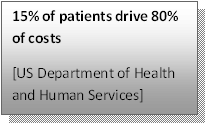
Of course, with health costs being concentrated in a small percentage of the population which is typically older, can texting make a difference? It isn’t easy to type on those small mobile phones with arthritis. Lots of seniors don’t even carry mobile phones. Plus texting is a whole different message as the article points out. My kids will probably get it much better than me.

Plus, using condense information can be risky. We had this problem in sending messages to pharmacies where we had a finite amount of characters to say “Drug A is not covered but the following drugs are covered but if medically required then the physician has to call 800-xxx-xxxx to request a prior authorization”. Other than reminders or pushing them to a very specific action it may be a challenge.

I think sending links or phone numbers via text message could be helpful. For example, using co-browsing, a company could trigger a message a message suggesting the patient call-in for more information or also go to another site. [What is co-browsing…this is when a company (typically a call center agent) can see where an individual is on the web and what they are looking at to help them.]

She mentions a few companies:

There certainly is a need for something that is quick and ubiquitous around healthcare. For someone under 40, I think texting could work great. For people over 40 (an arbitrary line), I think automated voice is better. It is just as quick. It is ubiquitous. And, it can be personalized and change during the call versus going back and forth via text messages.

Reverse Auction for MDs / Hospitals

auction.jpgIn healthcare, you sometimes hear people talk about waiting (at the pharmacy, for an appointment) while other people seem to get right in.  A lot of this has to do with geography (remember ‘healthcare is local’) but it also has to do with cycles.  For example, Mondays are always busier after the weekends.  [I have heard ERs are often busier during a full moon, but I don’t have research on that (and didn’t look).]

Certainly, another driver of healthcare costs are some of the large capital purchases at hospitals for imaging or other diagnostics.  If every hospital has to have the latest and greatest but they are only use 20% of the time, that isn’t an efficient use of capital across the healthcare system.  If you have to spread that cost for the equipment across 1/5th of the potential patients, it means you are overcharging by 5x.

Reverse auctions wouldn’t be easy, but BidRx pulled it off in pharmacy.  [I am not sure how successfully.]  The reverse auction model would be consumerism at its best.  The consumer would post their needs – a CAT scan, a PCP, a neurosurgeon, open heart surgery.  Physicians or hospitals would bid on their business based on the parameters – timing, price, etc.

In a theoretical sense, it would be interesting to test and see if it would work.  But, my objective was not to sit in the ivory tower, but to look at a model that would improve healthcare capital efficiency by better utilizing fixed costs.  If hospitals and MDs could bid for patients to fill their slow times, wouldn’t the following be possible:

  • Less need for capital redundancy (i.e., every hospital would not need to have the same equipment)
  • Less wait times for patients since they would be slotted in to open times
  • Less peaks and valleys at doctor’s office and hospitals since they would be offering a “discount” for you to come on Wednesday versus everyone wanting to come on Monday

Participation wouldn’t be easy, but ultimately, changing our healthcare model won’t be easy.  Just an idea.  There is something here to make the system more efficient.

Mashing Two of My Posts

I was thinking about Google’s SMS service earlier today (see post on this).  Separately, I was thinking about my post on remembering health information (e.g., drugs, strength, previous lab values).

So I went to one of the Google Health Blogs to suggest the idea.  Unfortunately, the e-mail they list bounces back and you can’t leave comments…strange.  Why not combine the two comments from my earlier blogs was my suggestion?  Obviously, it only appeals to a piece of the population, but I would love to be able to text message my PHR (Personal Health Record) with “Rx name, strength” or “PCP name, phone” or “HCL scores and dates”.  [Look at myPHR, iHealthRecord, ActiveHealth, Microsoft, or Google for PHR solutions.]

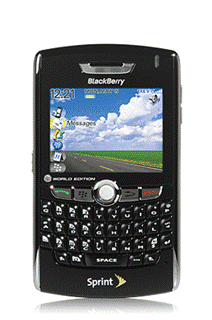
It is always so difficult to remember that information, but if I could get it texted to me in a few seconds, it would be great.  I have to believe there is some unique code in my Blackberry that could serve as a unique identifier for security purposes.  Just a thought…

BTW – If you try to find Google blogs on health, you find out there are dozens of Google blogs:

“There’s all this hubub about what Google and Microsoft are doing,” Aetna CEO Ron Williams (pictured) said this afternoon on a visit to Health Blog HQ. “We’re perplexed by the fact that their vaporware gets all this attention and we get very little.” (comment on the WSJ Health Blog)

Don’t forget to add this blog to your reader or sign up for e-mail updates whenever a new entry is posted. 

New (to me) Blog – Consumer Focused Care

I found a new blog this morning called Consumer-Focused Healthcare written by an ex-McKinsey consultant which seems to have a very similar focus to my blog – “refocusing healthcare on serving consumer needs“.  [As a sidenote, the benefit here of LinkedIn was that I could quickly look him up and see that we have a mutual friend which instantly gives him some validation.]

Vijay has a lot of posts that I liked.  Here are a few exerpts:

  1. “the consumer often pays MORE for a visit to a retail clinic than a physician’s office. The implications are that they really prize the convenience and time taken far over the extra training provided by the physicians.”  In this blog entry, he shared some data about out-of-pocket expenses for clinic visits.
  2. “It is pretty clear that many doctors don’t know how to tell their patients that they have no idea”  In this blog entry, he talks about the inexact aspects of patient advice.  Determining a diagnosis or the right advice is very situational.
  3. “why are people willing to spend $3.50/ pill on sleep meds when they’re discouraged by $10 co-pays to take other, potentially life-saving medication?”  In this entry, he talks about consumerism.
  4. He also points out an assumption from Google that technology will push physicians to spend less time with patients which I think isn’t logical based on the work I did around e-prescribing.  I already put a comment in this blog entry this morning.

And, these are just his most recent entries.  I am interested to flow his blog more.

Would You Use a Pharmacy Kiosk?

Another question from a few years ago that I thought I would throw out here [while I wait for my connecting flight in Charlotte]. Would you use a pharmacy kiosk to drop off your prescription and pick up your prescription as long as you had access to a pharmacist via video conference?

This was an idea that I worked on for about a year. The concept was the following:

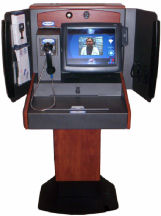
  1. Develop a kiosk that had the following functionality:
    • A scanner for you to scan in your paper prescription, insurance card, and identification;
    • A video conference connection for you to talk to a pharmacist who was located remotely using a phone receiver for privacy;
    • A credit card swipe for payment; and
    • Stock the top 200 drugs which could be picked and labeled via robotics and dispensed real-time after your claim was adjudicated and copay collected.
  2. The technology was going to be a blend of what Duane Reade had piloted in NY and what RedBox had created in the DVD space.

redbox_kiosk_1_300.jpg + dr-kiosk.jpg

These kiosks could then be used by the different constituents in the following way:

  • Retail pharmacies to serve as an afterhours pharmacist for certain drugs
  • PBMs as a way to serve employers by putting a kiosk on-site for employees to get acute drugs or short-fills for movement to mail order
  • FDA as a secure way of managing behind-the-counter drugs such as Sudafed where dispensing could be tracked electronically across pharmacies
  • Grocery stores or other retailers as a low-cost customer service play of offering their customers access to drugs without having to invest in inventory and physical assets

I had lots of debate with pharmacists about this.  The pushback of course was whether I was trying to replace or dis-intermediate them.  That was not the objective but rather trying to find a way to allow them to focus on truly providing counseling to patients who needed it while allowing patients filling maintenance drugs or simple acute drugs to get them delivered at the lowest cost.

Given the pharmacist shortage, this seemed like a logical solution to me.  Who knows.  There might be an adoption of this.  It is probably like automated grocery store lines.  I remember seeing them about 10 years ago at a few places and just within the past 2 years they have taken off everywhere.

instymeds.jpg 

The one company that had a similar concept, raised funding, and seems to be getting a little progress is Instymeds.  They have focused on using the technology for rural hospitals where pharmacist staffing and afterhours pharmacy access is difficult.  When I spoke with their CEO, they had raised over $10M, had very patient VCs that were willing to wait out the changes needed in the regulatory environment, and had millions from previous successes in the entrepreneurial space.  I wish them luck.

Here is my older entry on some basics around kiosks in healthcare.

AHIP Panel

I am at the AHIP meeting here in Chicago. This morning, I had the opportunity to facilitate a panel which included three speakers on the topic of communicating with members:

It was a great discussion with strong attendance. I think we had 20 people standing in the hall outside the room listening for an hour. Here are some of the questions we discussed. Since I normally give my opinion (and couldn’t this morning), I will here. [And, since ½ the questions were ones that I thought of on the spot, the panel did great on their feet.]

  • How has Medicare Part D changed the way that healthcare companies interact with consumers?
    • It has forced them to think about members as consumers. They can vote 100% with their feet (within a window). And, this is the group with the most spend and highest utilization. They require segmentation and new services to drive behavior. All of this is new.
  • Healthcare is a front page topic in the news and the upcoming election. How has this changed consumer expectations for healthcare communications? And, what are the top 3 challenges for dealing with this consumer?
    • Consumers know what to expect and what to ask for. They want transparency (whatever that means to them). They want information. They expect companies to do more than simply react to claims. There is a proactive expectation and patients are comparing them not to healthcare companies but to retail companies like Nordstroms or Disney. (see blog entry on “If Disney Did Healthcare“)
    • The top challenges – understanding what is valuable to them, understanding how they digest and react to information, and providing them with a single face that isn’t disjoined across functional areas, business units, and external companies.
  • In most companies, there if no “patient ombudsman” that drives branding and message consistency. How can healthcare companies overcome this functional or process “silo” approach to communications?
    • Companies need to do a communication audit to understand how communications get out the door and how many communications a patient receives. They need to integrate their programs (inbound and outbound) and set a series of rules and triggers to manage communications across all medium. They also need to establish processes that are integrated cross-functionally to initiate communications but reference them back to a corporate set of rules.
  • Up until recently, much of the members experience with the plan was based on the service experience they got from the inbound call center. How has that changed and what are the elements in this new world that will drive satisfaction and loyalty?
    • I don’t think much has changed. The high utilizers of heathcare are still seniors. As someone else first said “pushing Health2.0 to a 1.0 population is difficult”.
    • But, I think that retention and loyalty are new and important. Most companies don’t understand satisfaction at an individual level. Nor have many health plans embraced loyalty type programs. Personalizing the value proposition, constant communications, and establishing incentives to drive healthy and cost effective behavior is essential.
  • Every company struggles with budget and ROI. The key is getting more for less. How are companies optimizing their communications and are they embracing a permission based approach as in the right message to the right person at the right time via the right channel?
    • Companies are aggressively looking at communication objectives and think through how to use multi-modal approaches. No one has really figured out permission based marketing (that I know of). Having a clear purpose for touching a patient and finding a metric to study the impact of that communication is essential to developing an ROI. Communications (and your vendors) have to have shared incentives that drive the right behavior which is focused on clear ROI.
  • Give me your craziest idea about how technology can change the healthcare communication framework over the next 5-10 years?
    • Integration of health, Rx, and lab data into a PHR that is embedded in a smartcard and which launches proactive communications to the health team using intelligent, learning algorithms which are personalized based on individual genetics
  • Since MDs, RPhs, and RNs are some of the front line contacts for patients, how do companies engage them to drive behavior?
    • This is still the problem. These people are so focused on care and so bombarded with information from multiple payors that unless there is a concentration from a single payor or technology that doesn’t impact their workflow it is hard to get them involved. And, in many cases, without P4P (pay for performance), there may not be much of an economic incentive for them to do things differently.
  • How will things like JD Powers and HEDIS focusing on communications and measuring satisfaction impact communications?
    • I think this is the key. Plans need to get scored, ranked, compared, and published relative to what they do, how they do it, effectiveness, cost per success, complaints, and patient satisfaction with the communications.

I am getting a little wordy here so let me move on. The point is that this is a great topic with lots of passionate people figuring it out. I have seen more consumer packaged goods people coming into healthcare over the past few years than anyone could have imagined a few years ago.

Patient Centric Healthcare

I changed the name of the blog last week. (I am still debating changing the URL since I don’t want to lose too much of the traffic I get today.)  It fits what I want to talk about (with the exception of some of my ramblings about technology, leadership, innovation, etc).

I was trying to describe this concept of patient centric healthcare to someone the other day when I realized that I have a deck I used over the summer that was a perfect fit.  When I was debating moving from a consultant back into a corporate role, I needed to tell people what I wanted to do and how I could help them.  So, I created a slide deck that I used with executives and recruiters.  It worked well.  I trimmed out the “why George” section, but the rest of this is a good summary of how I see the market evolving.

It is also exactly why I joined Silverlink Communications.  We share the same vision and dedication to process excellence.   Their technology already does what I think is critical:

  • Create personalized communications that target patients based on data driven models.
    • Push information
    • Collect information
    • Drive behavior
  • Use dynamic call algorithms that respond to patients words to take them down different paths is key.
  • Using technology to automate processes and augment your human capital based on proven value propositions.

Mashup Idea – Twitter + Telemedicine + Second Opinion

I spoke a little on Mashups the other day in my Geekipedia entry, and I was thinking about it yesterday while I ran.

Here are the concepts that could come together:

  • Realtime blogging through Twitter
  • Telemedicine especially around remote monitoring and access to experts
  • The need for quality assurance in healthcare for complex or even routine procedures
  • Transparency and the need to expose more to the patient
  • Voice to text
  • Intelligent data mining and algorithms

The specific example that came to my mind was when a complex surgery is being done by a surgical team with little experience and where the procedure takes hours.  The team could talk through the process and a voice to text program could document all of what they said.  The text could then run through an algorithm looking for key words or phrases.  Depending on what was being said, it could be sent to a team for QA or to provide a second opinion real-time.  Additionally, it could be sent to the family to keep them up-to-date on progress.

There would need to be a lot to build this out, but I could see a lot of advantages to it.  Just a thought.

Intelligent Paper

As healthcare is such a paper centric industry (as is financial services), I often wonder why we can’t get to the point of having intelligent paper.  I looked around a little and have never found anything so let me describe what I envision.

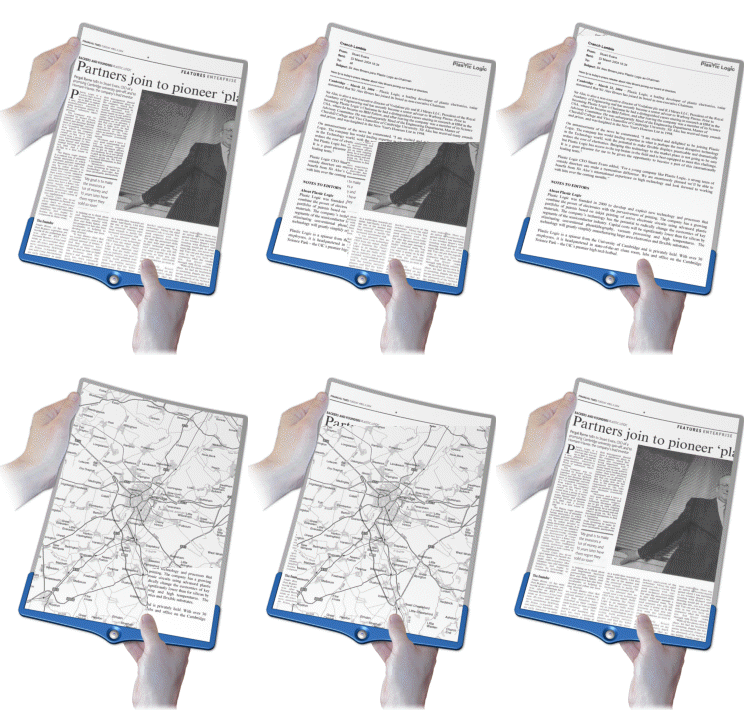
A regular paper that is embedded with intelligence such as RFID and the ability to receive and deliver text and/or graphical messages to the consumer.

digital-newspaper.jpgImagine for example a label on a prescription bottle which changed colors when it was time to refill and offered the consumer the ability to request a refill by pressing a digital button that was only available after the refill-too-soon (RTS) edit was passed (typically after 66% of the days supply dispensed should have been used).  Or, imagine new patient registration forms at the physicians office where you filled out one piece of paper that was auto-populated with information from your personal health record (PHR) based on your fingerprint.  All the forms could be brought up one at a time on the digital paper and your answers immediately pulled into the system of record.

Less paper.  More consistency.  Easier communications.  Better quality information.  Less costs associated with data entry. Fewer HIPAA risks.   

epaper_product.gif

Scary or Interesting Technology

After my post the other night about analyzing your writing, I had a chance to talk with a technology company about how they digest and use text from things like letters, e-mails, and call recordings.  It was fascinating.  They were describing to me a system they developed for the military which is now available commercially.

They can take all these communications and use them as part of a segmentation or targeting model that is based on patient behavior.  How great (and scary) would that be?  (Big Brother is always watching.)  Imagine that you have a model that tries to identify how to best incent a person to improve their health.  If you could input any e-mails or letters they have sent into your company and input any call recordings using speech to text, you would have all types of indicators about personality and interests along with communication modes, time of day that they respond to information, etc.

big-brother.gif

Obviously, a patient-centric healthcare model means really understanding things about people.  To do that, we have to get multi-dimensional and think differently.  Rather than simply focusing on moving people to mail order from retail, shouldn’t you focus on attracting the people that are most likely to stay with it and not move right back?  If you are going to offer an incentive for taking a Health Risk Assessment, don’t you want to offer it only to the people that will act on the results?

Compliance with prescriptions or testing is a great example.  There are certain people that are more inclined to stay compliant.  But, it is also important to understand what message will motivate them to stay compliant – not dying, seeing their kids get married, saving money, not missing work, etc.

And, because we are in healthcare, there are some legal constraints about when you can make different offers within the same or similar populations.

Analyzing Your Writing

Lois Kelly has an interesting post on her blog about the Linguistic Inquiry and Word Count program. You run text through the program and it categorizes the writing style. She compares 3 CEO bloggers. I grabbed text from my site and ran it through.

If I understand the results below correctly, it says I am fairly honest, somewhat outgoing, not very optimistic, have no anxiety, am actively thinking about the topic, and use lots of big words. I am sure my writing about all the problems in healthcare explains the low score on positive emotions, and I intentionally try not to make things too personal.

LIWC dimension

Your data

Personal texts

Formal texts

Social words – outgoing

7.08

9.5

8.0

Negative emotions – anxiety

1.13

2.6

1.6

Big words (> 6 letters) – higher grades which tend to be less emotional

22.35

13.1

19.6

Text Google for the 411

Google seems to be everywhere. It is probably the one site that I have to teach my kids to know to get anywhere. Perhaps they need a “Google Kids” which offers games, safe content, etc.

Anyways, this is more of a tip than anything about healthcare, but I was fascinated to find out about Google’s SMS service (aka text message) yesterday. I tried it a few times this morning right before I got on the flight. If you go to Google’s page at sms.google.com, you can find out more.

All you really need to know is that if you send a text message to Google (466453) you get information back almost instantly.

For example, I sent a text message saying “weather Boston” and before I could even type my next message, I had the weather report. Then I sent in another text for “AA 1577” (American Airlines flight 1577) and instantly had information on flight status and what gate it was leaving from. You can do it for scores (e.g., “Red Sox”) and many other things. If you are like me and on the go a lot and hate to pay fees for 411, this is great.

Geekipedia

Sure…a little off topic, but understanding technology is one of the critical components (in my humble opinion) to driving innovation and change in healthcare. Healthcare is not an early adopter of solutions. There is too much fear about change (and litigation).

So, when Wired but out this magazine supplement called Geekipedia, I knew it was a must read. As it says on the cover “149 people, places, ideas and trends you need to know now”.

Here are a few that jumped out at me:

  • AJAX – a suite of web-development technologies which produce squeaky clean surfaces. This allows web designers to build web sites that act like applications and accept user input and computing results without fetching entirely new pages from a server. I have worked with developers to use this before. Very cool. You see it on a lot more sites now, but anytime you enter data and the site changes without refreshing it…they built the site using AJAX.
  • APIs – application programming interfaces are sets of rules that govern how apps exchange information. These have been around for years and typically only mattered to the programmers and your engineering staff…but today APIs allow you to create custom applications using desktop widgets and mashups to have personalized sites that do all types of cool things.
  • Collaborative Filtering – this is the recommendation algorithm you see on Amazon or Netflix or many other sites. I can see healthcare one day embracing this in patient centric forums – patients with your similar benefits and genes were most likely to respond to this form of treatment.
  • Distributed Computing – most of you should know about this as the use of our computers to solve problems has been part of the news (good and bad) for years, but the point is to leverage the memory of individual computers in a network design to create a virtual supercomputer to solve complex problems that look at lots of data over years – e.g., SETI@Home that looks for extraterrestrial intelligence or FightAids@Home which looks for new AIDS treatments.
  • Mashup – these are sites / applications that are combinations of existing offerings that are cut and pasted together. For example:
  • Meganiche – with the Internet’s utilization now, it is possible to have a niche within a niche. For rare diseases, this could have some value.
  • Neurologism – all of the new areas of research driven by the breakthroughs in understanding the brain.
    • Neurofitness
    • Neuroceuticals
    • Neuroinformatics
    • Neuromarketing
    • Neuroergonomics
    • Neurosemantics
  • RNAi or Ribonucleic Acid Interference – “the silent assassin of cell biology”. It protects against viruses by tearing up the viral RNA and preventing it from making copies of itself.
  • RSS or Really Simple Syndication – you see this everywhere – on my blog, on websites, even in the new Outlook. This allows you to stream information to your reader (e.g., Google Reader) to see new information without having to go to all the individual sites. I wonder how many managed care companies and PBMs offer this on their websites today. It would be nice to get this pushed right to my personal Google page.
  • SEO or Search Engine Optimization – this is the use of tags and other links to maximize how your website shows up in a search.
  • Ultrahigh-throughput gene sequencing – this is all about the speed at which genes are sequenced which is obviously a big driver of personalized medicine and genomics. I am not sure I buy the prediction of “it won’t be long before a stall at the local shopping center will work up your genome ‘while u wait'”.
  • Widgets – these are small applications which can typically be embedded in a website using reusable code (e.g., a BMI calculator or mortgage calculator)
  • Wikipedia – this is a site that provides the modern encyclopedia full of links and information that is created by the net community – are you out there? Is your company or product?

It makes you wonder. As healthcare moves to more consumer centric and sales to commercial patients mimics Medicare Part D, will you see a United Healthcare avatar in Second Life or a Medco Facebook page. And, when will be see YouTube and Flickr being used to paint positive pictures of our healthcare system for the many people that it does work for. If politicians can begin to use these sites and big corporations encourage personal advertising of their brands, healthcare should give it some consideration.

Calculator Culture

As technology becomes ubiquitous (everywhere and anytime), do we run the risk of losing our sense of logic and memory around health (and other issues).

For example, I bet most seniors could tell you their medicines (name, dose, cost). I was asked recently what medications I took and didn’t have a clue. (If you remember, after my visit to a clinic, I got several allergy medicines.) My immediate reaction was to type medicine into my Blackberry and see what it told me. Did I have a note or some file tracking my prescriptions? I was clueless.

(Again, maybe another business idea – a simple Personal Health Record application for the cell phone.)

There was an article in Wired Magazine’s October 2007 edition called “Your Outboard Brain Knows All” by Clive Thompson which made this exact point.

“In fact, the line between where my memory leaves off and Google picks up is getting blurrier by the second. Often when I am talking on the phone, I hit Wikipedia and search engines to explore the subject at hand, harnessing the results to buttress my arguments.”

The question of course is what happens when that’s not appropriate. Multi-tasking and relying on technology works great when you are virtual, but it is hard when you are in a face-to-face conversation to inject technology.

Maybe some day when we are all “bionic people” with some robotics this could work.

(In case you don’t get the calculator culture title…the point is that people are less likely to know their basic math if they grow up doing even basic calculations with a calculator.)

Several New Sites – Blogs and Other

Thanks to John Sharp for blogging about several interesting sites that I visited this morning:

  • Life as a Healthcare CIO Blog (see example entry on PHRs) – this is a new blog by one of the more outspoken CIOs in the industry.  Based on the initial entries, it should be an interesting blog to follow.
  • eHealth Initiative Blueprint – I haven’t read the PDF yet, but it sounds like an interesting organization.  Browsing the site offers lots of information and strategy level thoughts on how to improve healthcare across constituents using IT.
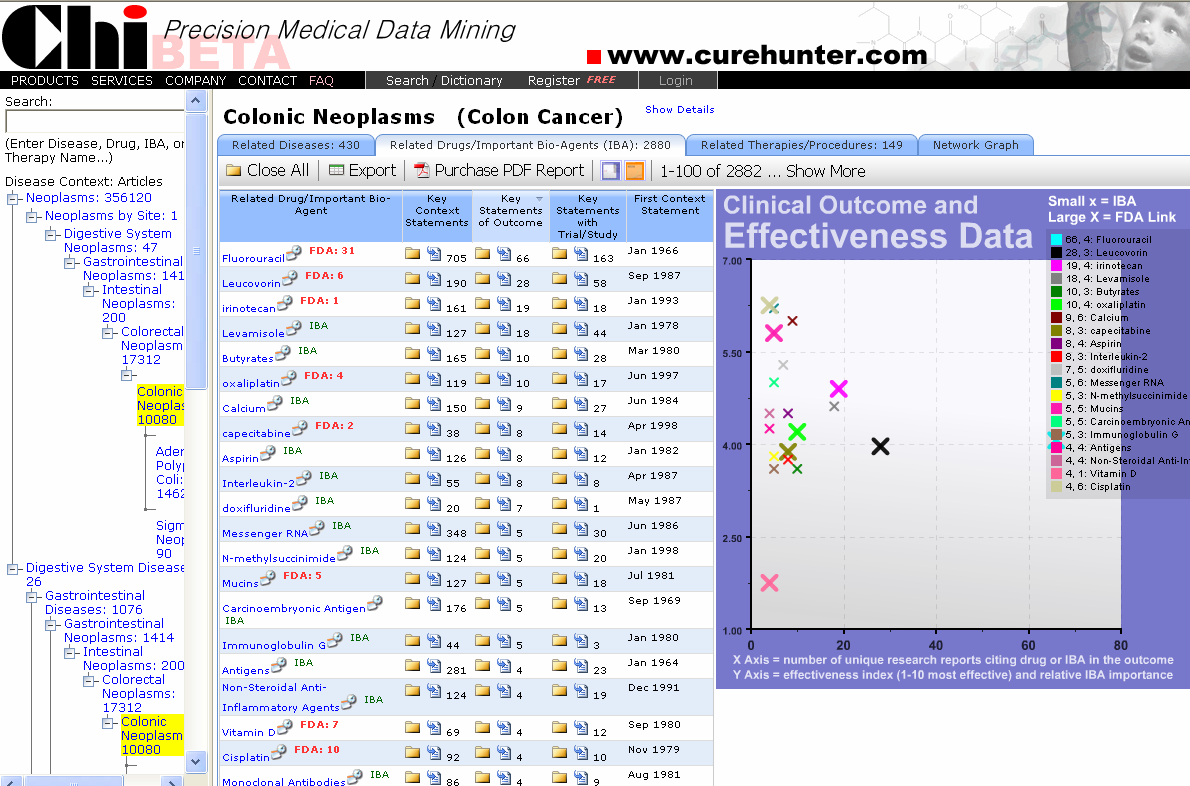
  • Curehunter – a new healthcare online data mining tool for pulling up disease specific research and information.  As described on their website, the uses for the application are:
    • For patients we provide low-cost Summary PDF Reports with all drug evidence for all known cures or symptom improvement
    • For medical professionals CureHunter on-line access delivers decision support in 10-20 seconds of real clinical time to make an evidence check as SOP as a BP or Temp
    • For pharma research scientists we offer powerful data export functions that deliver over 1.5 million specific clinical outcome data points to new drug discovery software
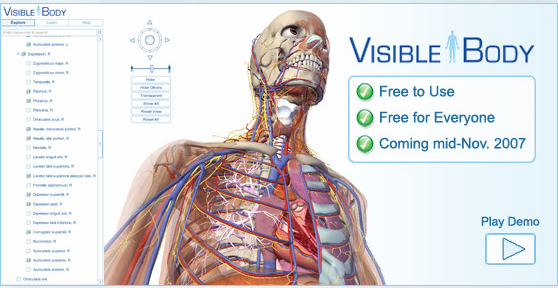
  • VisibleBody – this is a 3-D model of the human anatomy which will soon be available online.  The graphics that you can see look great and it seems like an interesting and fun tool.  Probably a good way to teach your kids or even explain to patients what is going on inside them.  From the site, here are a few things they say about using it:
    • View highly detailed models of all body systems. 
    • Search for and locate anatomical structures by name.
    • Click on anatomical structures to reveal names.
    • Rotate and explore anatomy in a virtual space. 
    • Peel away layers to view relative placement of the components of all body systems. 
    • See placement of specific organs relative to other anatomical structures. 
    • View anatomical structures with or without surrounding anatomy. 
    • Investigate anatomy virtually, without the costly cadaver lab.

visible-body.png

Customer ROI

This is not a blog about my company – Silverlink, but I certainly am happy to share some of the learnings that we have.

We just put out a press release with one of our clients that has some great results. The client – Medica – is a non-profit, health insurance company with 1.3M members headquartered in Minneapolis.

A couple of the programs that they conducted with us include:

  • Welcome calls which increased member satisfaction while reducing costs by 90%. (Does your plan call you? I certainly never got welcomed to a plan.) They also were able to reduce their resolution time for resolving member issues by over 75%.
  • Coordination of benefits communications which led to a 32% increase in efficiency and less pended claims.

By using our automated outbound call technology, they saw response rate to surveys increase by 22%. (BTW – This is a great use of the technology. You send out calls until you hit your statistically significant N, and you can make real-time changes to survey questions if you see issues arising or need more information based on the answers you are getting.) In their case, they got surveys done in 5 days versus 24 days…and we process the responses to show real-time reports of status. (You can finally solve problems with real-time patient feedback to make critical decisions.)

And, communication costs were 8% below the costs of traditional mailers.

Obviously, there is a reason I choose Silverlink as the company I joined. It is great to see customer validated ROI (Return on Investment). In this world, focusing on your assets and how to maximize them (ROA) is critical.

(BTW – This is my first time writing a post in Word 2007 and sending it the blog.  It worked great.)

ConnectYourCare Acquired by Express Scripts

connectyourcare.jpg

I was glad to see my former employer – Express Scripts – jump into the CDHC space with an acquisition.  They bought ConnectYourCare which is a fairly new company that had jumped into the market over the past few years with money from RevolutionHealth.  It provides online tools and a card for managing your HSA / FSA type funds.  It will be interesting to see how this plays out.  It may be a little late in the selling season to affect 2008 but it could play prominently in the spring for renewals or new business.

As an aside, ConnectYourCare provides a nice glossary of terms you might here around consumerism and benefits.

You can also get access to some of the Forrester research through their site – here.

Going to a Clinic

Yesterday, I had my first opportunity to go to one of the many clinics out there.  I went to a TakeCare HealthClinic which was in the local Walgreens.  Here are some quick observations:

  1. Kiosk for check-in works great, but I don’t understand why it doesn’t take my insurance card and license right there.
  2. No line, but I have seen one there before.
  3. The nurse practitioner did a very thorough job although heavily aided by a workflow application that forced her to ask me dozens of questions.  (This would appear to be the secret sauce…other than the relationship with Walgreens.)
  4. Determined that I have allergies and wrote me several prescriptions. 
  5. Initially the prescriptions were off formulary, but the system flagged that and we found some with generics available. 
  6. No real pressure to fill them at Walgreens.  I felt some implicit pressure, but it was probably self-inflicted.
  7. No health information.  I think they missed an opportunity to provide me with information on seasonal allergies.

Overall, I was pleased.  It took longer (~30 minutes) than I expected, but I believe that was due to the thoroughness of the application.  I am not sure if (or how) that information gets to my primary care physician which would be a nice follow through.  I am also a little surprised they don’t offer to push the information to an Electronic Medical Record (EMR) or my Personal Health Record (PHR). 

The fact that I didn’t need an appointment and feel like the diagnosis was right was great.  I did ask her how many people came there inappropriately and she told me that they have had to call an ambulance and send people to the ER. 

Microsoft’s HealthVault

health-vault-microsoft.jpghealth-vault-microsoft.jpg

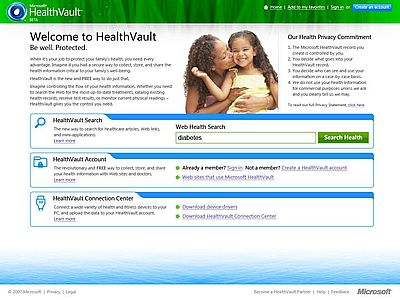
Microsoft has their new healthcare tool out – HealthVault.  It does three primary things – search, collect / store / share (i.e., PHR), and connect with devices.  The “connect with devices” concept seems pretty interesting especially as we get more intelligent home care devices that track blood pressure and other key metrics. 

Connect your HealthVault-compatible home health monitoring devices from partners, such as sport watches, blood glucose monitors, peak flow meters and blood pressure monitors to HealthVault Connection Center, and let our software copy your device data to your HealthVault record.

Given issues with Internet Explorer, will people worry about security – probably.  Given the challenge of connecting with numerous systems and devices, will Microsoft have a leg up – probably.  Will patients use these tools – definitely over the next 5 years.  Who will win – I don’t have a clue.

Here is their blog for developers.

There is lots of talk about this on blog sites:

Companies from Health 2.0

I thought it was interesting to catalog the companies that were at Matthew Holt’s Health 2.0 conference. Many of which I was not familiar with.

MedHelp.org (interesting site which offers Q&A by disease topic with MDs and nurses)

ThinkHealth (medical management software)

Health Evolution Partners (a private equity firm)

Medstory (intelligent search for health)

Healia (health search engine)

Healthline Networks (health search engine)

WeGoHealth (disease specific communities)

Patients Like Me (patients sharing information with other patients)

Daily Strength (support groups)

Organized Wisdom (MD handcrafted search results)

Inspire (health and wellnes support networks)

DiabetesMine (site all about diabetes)

Enhanced Medical Decisions (uses natural language to look at drug interactions)

HealthEquity (health savings account software)

DNADirect (source for genetic testing)

Within3 (social networking tool for physicians)

Vimo (comparison shopping for healthcare)

Careseek (sharing information about physicians)

Health Hero – home health monitoring device

Additionally, John Sharp mentions a few other companies in his blog including:

Health 3.0 – Ubiquitous Transparency

I was thinking about dieting over the weekend and thought back to an idea I had many years ago.  The concept then was to create a data integration layer for the smart house that integrated the data from your multiple devices.  Imagine the following:

You set a diet plan.  Your virtual health coach (think artificial intelligence) looks at your daily calendar and the food you have at home.  It proactively recommends what you should eat at the restaurant you are going to for lunch; orders a few items from the grocery store to be ready for pick-up on the way home; prints out the cooking instructions; and pre-heats the oven when you are 5 minutes away from home. 

Over time, it plots your caloric intake and suggests workouts based on your calendar and biorhythms. 

If I expand this concept, I would see this as a Health 3.0 type application.  Total integration of data (home, work, health).  Total transparency of information (healthcare, lab, medical, cost, quality, consumer goods).  And, availability of information anywhere and anytime.

I am sure there are definitions, but I think about Health 1.0 and Health 2.0 as the following:

  1. Health 1.0 was several things – workflow oriented applications (e.g., practice management systems), e-prescribing, online content (e.g., WebMD), and transaction hubs.  I saw the focus here on efficiency, quality, and connectivity.
  2. Health 2.0 is still developing and includes transparency and web tools.  I see the focus here on pushing information from companies into the hands of consumers. 

Surprising (or maybe not), there are several people using the term Health 3.0.  Here were a few things I found:

  1. Money magazine article about home monitoring and companies like Health Hero, NxStage, iCare, and CareMatix.
  2. This link which talks about the semantic web but has little other information.
  3. An article about the Health 2.0 conference which mentions Health 3.0:
    • Things start to change when the institutions don’t control all the information. Even though the largest flow of money will still be centralized and often mis-directed, the new user tools will make all the tangles more visible.

      At that point, the Health 3.0 conference will have to include folks from the establishment – government, large software vendors and entrenched health-care institutions.

 Who knows when and where Health 3.0 will really appear, but I generally disagree with the opinion that Health 2.0 isn’t real because there aren’t business models.  In the early dotcom days, the business models were limited.  Those that figured them out – WebMD, Amazon, eBay – survived.  First you figure out the concept and the value add.  Then, you figure out who can pay for it.