Archive | Technology RSS feed for this section

Who’s Your Date To The Genetic Testing Prom?

Genetic testing (aka pharmacogenomics, personalized medicine) is certainly a hot topic these days.  There is lots of research around how to use the testing to manage drug spend by appropriately matching drugs with genetics at the individual member level. 

I find it interesting to see who’s going to the “prom” with whom here.  Another interesting perspective is how physicians feel about these (see survey).

  1. Medco acquired DNA Direct.
  2. CVS Caremark hired Per Lofberg from Generation Health and invested in the company.
  3. P&G invested in Navigenics.
  4. Walgreens was going down the path with Pathway Genomics before the FDA intervened.

So…what is Express Scripts doing?  I’ve heard some talk at a conference about their strategy which involves a broader focus on integrating data from multiple sources including genetic testing to help drive clinical decisions.  It seems like they’re either late to the party or smart in staying away.  The question is whether this is a nice to have, a differentiator, or something that consultants will start requiring the PBM to provide.  From their 2009 Outcomes conference:

[Genomics and personalized medicine]  The potential for improved outcomes and cost savings are attractive but still unproven.

Don’t Believe The Hype – Copay Waivers

Don’t believe the hype – its a sequel
As an equal, can I get this through to you
 

I talk about it all the time as most people do…non-adherence to prescription drugs is a real issue.  People don’t fill their initial script.  People who do fill their first script drop off after the first several fills.  By 12-18 months after a patient starts therapy, less than 50% of them are still taking their medications.  Here’s a few key articles on this: 

Common barriers to adherence are under the patient’s control, so that attention to them is a necessary and important step in improving adherence. In responses to a questionnaire, typical reasons cited by patients for not taking their medications included forgetfulness (30 percent), other priorities (16 percent), decision to omit doses (11 percent), lack of information (9 percent), and emotional factors (7 percent); 27 percent of the respondents did not provide a reason for poor adherence to a regimen.  Physicians contribute to patients’ poor adherence by prescribing complex regimens, failing to explain the benefits and side effects of a medication adequately, not giving consideration to the patient’s lifestyle or the cost of the medications, and having poor therapeutic relationships with their patients.  (NEJM article) 

Depending on what study you look at cost is certainly an issue, but it typically isn’t the primary issue.  I typically see cost as being a factor in 5-15% of the cases.  I think if you look at how Merck weighs cost in their Adherence Estimator that it is only a small factor.  A lot of this plays out in VBID (Value Based Insurance Design) which while not purely about copay waivers that certainly is an element of most solutions.  

A few friends of mine formed their own company (CareScientific) and had a paper published in AMCP recently.  From that article: 


VBID is receiving attention as a tool to increase medication adherence and lower medical costs. However, applying a “plausibility calculation” method to data generated from a recent VBID study involving reduction of drug copayments, this evaluation found that health plan sponsors are highly unlikely to experience net savings by implementing VBID programs, even under generous assumptions, for 2 reasons. First, the price elasticities of medications are too low to generate meaningful increases in medication adherence when copayments are lowered. Second, the potential reductions in the avoidable hospitalization and ER utilization rates across a commercially insured population with varying risk levels are generally not large enough to offset the additional plan costs of lowering copayments to increase medication adherence. 

I would also suggest looking at some of their tools that they’ve developed

So, getting back to how I’m tying in my reference to Public Enemy (rap musicians)… 

When I look at the upside for pharmaceutical manufacturers to grow the pie (get more Rxs through adherence), I often wonder why one of the default solutions is to fund copay waivers.  That happens by employers, health plans, and even the manufacturers.  There are many less expensive ways to get that lift by addressing things like reminders and tailoring information to individuals based on their personalized barriers. 

There are lots of high cost solutions that will make an impact.  The question is how to triage those resources to focus them on the right people.  It’s important to identify adherence risks (pro-active intervention) and adherence gaps (retrospective) and intervene with the patient.  

Here are a few of my other posts on this: 


Could You Change Behavior With Virtual Reality?

I am a big believer in experiential learning.  To that effect, every time I’ve decided to change behavior I only have to envision myself at some future state affected by my current state decisions.  When I believed that my drinking caffeine would impact my future health, I quit cold turkey for 15 months.  (I observed no meaningful difference in health and allowed myself to drink caffeine again.)

So… I guess my question is why can’t this be harnessed in all of us.  Would we make different decisions if there was a way to reflect on our decisions in a “magic mirror” of sorts that showed us how these would impact our lives?  Is this a role for a “Future Life” play on Second Life?

Imagine:

  • Inputing your food decisions for a month and having it show you your weight, physical attributes, diseases, impact on your kids, etc in 10-years and do that in a 3D virtual reality environment.
  • People who smoke observing themselves thru the eyes of others and smelling the smell that others smell when the smoke is saturated into their clothes.
  • People who chew tobacco seeing what their mouth would look like in 20 years without teeth and having dentures and the things they could no longer do.
  • People who drink and drive imagining themselves in a car crash where they die and the impact that has on their friends and family.

Or, if you focus on the carrot versus the stick maybe there’s more motivation to change by letting them dream what is possible if they change behavior:

  • Running a marathon at age 70.
  • Seeing their grandchildren and being able to chase them around.
  • Being without any medications.

The Best Healthcare Conference

In today’s budget conscious economy, people are constantly evaluating where to spend their time and money from a conference perspective.  Some conferences are good networking events.  Some of requirements to work in an industry.  Some are educational.  Some give you new ideas on how to run your business.  Some are in great fun locations with fun events.  Very few fit all of those.

I think our Silverlink Communications client event called RESULTS2010 does all of those.  [Hint – the conference is called RESULTS since that’s what we focus on with our customers.]  It takes on all the key issues we see in the market.  It brings in industry experts and clients to talk about what they are doing to address these issues.  Those problems are framed out by our industry experts that have line experience with these roles.  [Our leadership team comes from places such as Express Scripts, CVS Caremark, Gorman, and HCSC and our team includes people from McKesson, Humana, United Healthcare, IMS, DigitasHealth, Medco, and WebMD.  I challenge anyone to find a more knowledgeable vendor team.]  It gives people a chance to network and talk to their peers.  And, there’s some fun mixed in there.

This year’s event is focused on THE HEALTH CONSUMER.  I’m pretty sure it’s the only conference focused on communicating with consumers in healthcare.  The objective is to provide clients with ideas about how to educate, support, and motivate consumers to take actions which support health outcomes. 

Honestly, it was the original event that convinced me to come to Silverlink.  I was a consultant at my first event working with the company.  I met 75 users who were passionate about the company and had great first hand experience using the technology to make a difference in their companies.  I was able to ask them about the competition and understand why they choose Silverlink for their member communication partner.

So, what does this year’s event have in store:

  1. An amazing list of external speakers including Mark McClellan, David Wennberg, Don Kemper, Jack Mahoney, and Janice Young.
  2. A long list of client case studies – 14 so far.
  3. Specific tracks to cover our different client groups and allow for smaller discussion versus formal presentations – Pharmacy, Population Health, Medicare, and Managed Care.
  4. Industy experts on key topics such as consumer engagement, use of data in healthcare, consumer data, behavior change models and incentives, pharmacy economics, pharmacogenomics, medicare market dynamics, and the evolving retail healthcare model.
  5. Adherence experts such as Dr. Will Shrank from Harvard and Valerie Fleishman who led the NEHI adherence study that is widely quoted.
  6. Several fun events including golf, morning runs, and a few special sports related surprises.

There are several more speakers who you would know and I’m very excited to have come and speak…BUT, I want to leave something inside the package for you to want to rip it open and learn more.

How much does it cost?  Nothing (as long as you’re a Silverlink client).

Where is it?  Boston (a great city).

How do I learn more?  Well…if you work for a large managed care company, a population health company, or a pharmacy / PBM, you may already be a client.  We have over 80 clients today.  So, if you’re not on our invite list, think you might be a client, and want to learn more, let me know.  I’m at gvanantwerp at silverlink dot com.  [spelling it out avoids spam]

This year’s event is in late May so I hope to see many of you there!

BOB vs. ERP Concept For Patient Experience

I had a quick dialogue with Andrew Webber (President and CEO of the National Business Coalition on Health) earlier today at the WHCC (see #whcc10 twitter feed).  I wanted to talk with him about how we create a unified consumer experience in today’s healthcare environment. 

Today, a consumer gets messages from their employer, their physician, their pharmacy, their PBM, their managed care company, their hospital, their disease management company, healthcare sites such as WebMD, and probably several other places.  Very little of that is coordinated, and it’s certainly not always consistent in messaging and direction.

Mr. Webber explained that the employers need a “supply chain management” solution to share data across vendors and develop a consistent message.  We talked about how the Accountable Care Organization (ACO) concept will try to get us back to some type of solution where there is a primary “owner” of the relationship and that this would be with the trusted key in the solution – the MD. 

We talked about the fact that the employers have created this system which pushed the BOB (best-of-breed) over a consolidated, centralized solution.  And, we discussed the fact that employers continue to love these “boutique solutions” that develop niche plays (think Health 2.0 companies) which address an acute need.  They create great case studies but are often difficult to scale.

It made me think of some old IT models I worked on where clients had to decided whether to pick an ERP system like SAP or go with the best-of-breed and manage the infrastructure to connect them.  I think the current employer based system even went a step past this.  In the IT world, the company had to manage a connected infrastructure (think enterprise data warehouse and service oriented architecture).  BUT, in healthcare (or benefits), that infrastructure doesn’t exist.  Each entity owns their piece of it completely with limited interaction and connectivity.

This was the first time where I could see the point of a “employee centric model” versus an “employer centric model”.  I’m not sure I believe it could effectively be done, but it reminded me of a company that was trying to create a web-application that was a type of next generation PHR (personal health record) where the member could consolidate communications, designate preferences, and would adapt general (vanilla) communications to the consumer based on behavior, preferences, demographics, etc.

New And Easier Version of Medicare.gov

Got this from CMS…(looks better to me, but it’s been a while since I was there)

Today, the Centers for Medicare & Medicaid Services posted a new and easier to use version of www.medicare.gov, the Medicare consumer-focused Web site.  The updated Web site is part of the steps Medicare is taking to make using www.medicare.gov easier for seniors and people who care for them to find the information they need about Medicare. The improved Web site provides users with a summary of Medicare benefits, coverage options, rights and protections, and answers to the most frequently asked questions about Medicare.

The updated Web site reflects Web 2.0 design principles and concepts.  The new design was focus tested with seniors, caregivers and operators at Medicare’s helpline, 1-800-MEDICARE, some of the most frequent users of www.medicare.gov.  The new design gives Medicare more flexibility to quickly update information that is important to users, especially people with Medicare and family members who care for them. 

Take a tour of the new online face of Medicare by clicking on www.medicare.gov.

Voice Personality Is A Powerful Lever To Motivate Health Behavior

This article appeared in HealthLeaders (3/3/10) by two of my co-workers based on some very interesting work they’ve been doing.  

It’s not what you say, but how you say it that matters. The “how” includes a number of specific voice attributes, such as inflection, rate of speech, and intonation—all of which contribute to an overall perceived “voice personality.” 

Voice is a powerful lever in the ability to effectively communicate your message to ultimately motivate behavior. Would you be more apt to trust the voice of James Earl Jones or the voice of your local car dealer? How do you perceive these voices overall? Which voice personality most effectively delivers a message? The answers, of course, depend on the listener, what is being communicated, and the behavior you’re trying to motivate. 

In healthcare, individuals are educated and supported in the decisions they make about their health through communications. This article highlights a recent study of the impact of voice in healthcare communications and how individuals perceive voice as it relates to health messaging. 

Specifically, this research analyzes voice selection for interactive automated calls, an effective outreach channel widely used in healthcare to reach and motivate individuals. 

Subjectivity in Voice Selection
If you put a small group of people in a room and ask them to describe the voice they hear, the answers will be wildly different: “This voice sounds too perky.” “That one sounds robotic.” “This voice sounds friendly and cheerful.” Reaching a final conclusion about which voice is “best” often is a highly subjective process. 

While we don’t consciously listen to an individual’s voice attributes, we do subconsciously assess the voice’s characteristics and create inferences about the speaker. Over the telephone or on the radio, when voice is the focus, we paint a picture of how someone looks, what kind of person they are, their age, gender, and generally whether or not you trust them. 

We’re sometimes surprised in the end at how different the person is when we meet him or her face-to-face. By itself, voice impacts our perceptions, which affect how well we understand a particular message. 

In healthcare, it is a common belief that people prefer a female voice when receiving messages about their health. Perhaps this is because female voices are perceived as more nurturing and caring; and women are often the caregivers in the home. 

But is a female voice equally effective when communicating to all people, of every age, in every region, and for every type of health related behavior? For instance, is a female voice as effective for people of poor health status hearing a message about an important health screening? What about seniors hearing a reminder to take their cholesterol-lowering medications? 

Voice Research
To answer these questions, we created a framework to map specific voice attributes with voice personality. We conducted an attitudinal study to learn how people of different age, gender, and region perceive and respond to different voices. We surveyed 3,000 people across the country, in a statistically representative sample of the commercially insured U.S. population. 

Participants heard the same short informational wellness message spoken by several different voices representing a variety of ages, gender, and unique voice characteristics. Survey responders were asked to provide their opinions on the following: 

  • Is the voice perceived negatively or positively overall?
  • Which attributes do people generally use to describe a particular voice? (e.g., rate, volume, and age)
  • Is the voice perceived as introverted, extroverted, formal, or conversational?
  • Is the voice perceived as coming from someone who is more caring and sincere, or someone who is trying to sell something?
  • Do people believe and trust the voice?

The survey results provide a powerful depiction of how different voices are perceived by different segments of a population. 

What’s in a Voice?
High trust and care/sincerity ratings are important factors when trying to motivate healthcare behaviors. Medication adherence, for example, is associated with the quality of relationship between the patient and the physician. When people trust the voice they hear, and feel that the person speaking to them is sincere, they are more likely to change their behavior. 

There are many interesting attitudinal findings from our study including: 

  • Both men and women across all age groups preferred a male voice to a female voice overall.
  • Voices described as fast paced, young, highly extroverted, perky, and animated rated poorly in the trustworthy and caring categories.
  • Voices described as moderately paced, middle-aged, and well-spoken/educated, were rated most trustworthy and caring.
  • Seniors (those 65+ years old) aren’t as sensitive to voice age as other groups and don’t perceive older voices as necessarily older sounding. By contrast, younger groups perceive “older” voices more negatively.
  • Seniors aren’t as sensitive to the rate of speech as younger populations; therefore, slowing the pace may not be as impactful as was once thought for older populations.
  • Younger people (18- to 34-year-olds) are significantly more sensitive to voice age and rate of speech, which means very careful selection of voices for young audiences is important to drive behavior.,/li>
  • Young people showed stronger opinions overall between men and women when rating the voice gender they prefer. In other age groups, there is general agreement on voice gender preferences. Gender selection is therefore a more important factor for the 18-to-34-year-old age group.

The use of voice to motivate health decisions
The results of this study provide us insight into how people of varying gender, age, region, and health status perceive the voices they hear. Our goal is to validate how specific voices can be used as a lever to change behavior. 

Voice, like other communications levers, such as messages and timing, can be selected based on the demographics, purpose, tone, and intent of communication, as well as how voice supports brand identity. By validating attitudinal voice responses against behavioral activity, voice can ultimately become a measurable behavioral best practice in healthcare communications. 

While the bulk of our experience supports the conventional wisdom that a woman’s voice is more effective for healthcare communications, our voice research suggests that there are opportunities to use a male voice to measurably move health behavior. A recent outreach program to educate individuals about the importance of colorectal cancer screenings supports our attitudinal research. 

The outreach asked if the individual had received a screening during the past two years, and if they planned to schedule a consultation with their doctor. The same message was delivered by a male and a female voice. All population segments, including men, women, Caucasians, Hispanics, and Asians, answered the survey at a higher rate when a male voice was used versus when a female voice was used. 

Conclusion
By applying science and measurement, we can determine the voice qualities that are the most impactful for a specific health behavior and for a group of people. There are measurable patterns in overall voice preference. Communications programs aimed at driving individual behavior should include voice analysis. 

By measuring and understanding perceived voice personality, our research sheds light on an objective way to effectively apply voice in healthcare communications to ultimately impacts behavior change. 


Jack Newsom, ScD, is vice president of analytics at Silverlink Communications, and Ryan Robbins is voice production manager at Silverlink Communications.

Google Health And SureScripts

I’m just catching up with this announcement from a few weeks ago. Google Health has added Surescripts to their partner list. This is interesting to me on a few fronts.

1 – Can this solve the portability issue? Today, if you change employers, your prescription history gets reset. If your employer changes health plans or PBMs, your prescription history gets reset. While this isn’t always a major issue, that history is important both for a DUR (i.e., drug-drug interaction) perspective but also from a research perspective (e.g., Medication Possession Ratio).

2 – Google is going to message users about potential DUR issues. That is a big value proposition of the PBMs. Given the other threats to their business model ($4 generics, direct-to-consumer mail order, claims administrators, legislation, pharmacy to employer contracting), is this another issue?

Can’t Wait For My Augmented Reality Glasses

With Droid and other technologies, the augmented reality concept is becoming real. Never heard of it. Here’s a definition from Wikipedia:

Augmented reality (AR) is a term for a live direct or indirect view of a physical real-world environment whose elements are augmented by virtual computer-generated imagery. It is related to a more general concept called mediated reality in which a view of reality is modified (possibly even diminished rather than augmented) by a computer.

In the case of Augmented Reality, The augmentation is conventionally in real-time and in semantic context with environmental elements, such as sports scores on TV during a match. With the help of advanced AR technology (e.g. adding computer vision and object recognition) the information about the surrounding real world of the user becomes interactive and digitally usable. Artificial information about the environment and the objects in it can be stored and retrieved as an information layer on top of the real world view.

The simple examples that many of us may be familiar with are the simulated first down line in football or the line of the hockey puck. They are graphics that are applied in real-time to a reality.

Here’s a couple of cool examples:

Dialing using your hand.

Yelp via Monocle on your iPhone. (Just look thru your camera phone)

Travel Guide using Wikitude. (Just look thru your camera phone.)

First off, the geeky side of me finds this fascinating. Practically speaking, as someone who struggles with names especially at large social events, this would be great in my glasses. If I had pictures of everyone I knew and had ever met and that could pop up into my view in my glasses with some basic information on them (John, works at X company, went to University of Michigan, has two kids, last spoke on April 09).

Maybe at some point this becomes the Matrix meets SecondLife meets Wall-E where everyone’s obese and the only thing you see of them is their Avatar as they move thru some augmented reality.

Addressing Hospital Readmission Rates

High hospital readmission rates are a real source of concern for health plans, from both a quality and cost perspective. With 20% of Medicare patients being readmitted within 30 days of discharge, health plans and their partners have a significant opportunity to reduce readmission rates across all populations. Even just a half-point drop in readmissions for a Medicare plan with 1 million members can yield $10 to $15 million in annual medical cost savings.

In a new podcast, Dr. Jan Berger, Silverlink’s Chief Medical Officer, discusses how health plans can address this costly, growing issue affecting our healthcare system. Dr. Berger offers best practices for reducing readmissions such as:
• Expanding outreach to entire discharged population
• Reaching out within 24-72 hours of discharge
• Coordinating communications among members, physicians and care managers
• Identifying members at risk for readmissions

Download this podcast and visit our new Post Hospital Discharge Microsite to access other valuable resources on this important healthcare topic.

DBN On Mandatory Mail

I’ve talked a few times about mandatory mail on the blog and after talking with Drug Benefit News (DBN), a few of my comments appeared in today’s publication.  One of the hypotheses in the article is that mandatory mail is growing (which doesn’t surprise me in this tough economy), and Ken Malley from Medco is quoted several times in there talking about their growth in the program.  He says they have 11M lives in the program which I believe would be more than anyone else.  I also think the Medco program with RiteAid which is described is probably something that clients would like a lot and similar to the Maintenance Choice product that CVS Caremark is offering. 

My comments in the article are mostly about the importance of communications which can ease the transition to mail.  The article also quotes Claire Marie Burchill from Cigna about communications and branding.  They called mandatory mail the “pharmacy of choice” which is not unusual.  When I was at Express Scripts, my team changed it to “Exclusive Home Delivery” and Medco calls it “Retail Refill Allowance”.  [This is the whole concept of framing which is core to communications.]  

The fact is that once members start using mail pharmacy, the overwhelming majority of them like it, “but the challenge is more the inertia of getting them started,” Van Antwerp says. “They need a good boarding experience at mail around first fill, and then it becomes more automatic.” Depending on the payer, mail-order customer retention rates vary from 75% to 95%. 

He adds that if more plans start implementing mandatory programs, “initially you’re going to get some disruption, because people push back against change.” However, once patients realize that they can receive 24/7 support and save money, “most people will be pretty happy,” Van Antwerp says. 


All of this plays into the other benefits of mail order – faster generic substitution, adherence, convenience, and savings.  The other key is aligning pricing and plan design to drive mail order which remains a challenge across the industry but is critical.  

The one thing we didn’t get into in the DBN article was the science of communications and how important it is to understand consumers and what motivates them.  I think this is the future of pharmacy.  A good segmentation and targeting strategy allows you to personalize communications and deliver the right message at the right time to the right person using the right channel with the right message to motivate them.  It’s not that easy to do, but it can be done.

Why Integrated Communications Are Better?

This morning is a perfect example of why integrated communications are better.  What do I mean by this?  I mean where a communication campaign is designed using rules to coordinate events across multiple channels.  Still too mumbo-jumbo…Where companies can interact with consumers across channels (e-mail, voice, print, web, call center) and create a seamless experience.

Here’s an example…

This morning, my kid’s school is closed due to snow.  [Although the snow has passed and they’ve already plowed the side streets.]  When I checked the Internet at 5:15, it wasn’t closed.  At 5:40, I got the call that it was closed.  BUT, the call comes on my home line, our home business line, and both our mobile phones.  Somehow it didn’t wake the kids, but it could have.

I don’t really care about the over-communication in this example, but in a professional setting, this would seem like overkill and potentially a waste of money.  In an integrated communications example, it might work like this:

  • An update was put on the Internet and everyone was sent an e-mail
  • At 5:50, the system would identify anyone who had either not opened their e-mail or had not visited the website (assuming they had cookies on their PC for tracking website visitors)
  • At 5:50, the system would call the primary number to play the recorded message by the principal
  • If there was no answer by a live person or the entire message was not listened to, the system would move on to additional numbers

This is always one of the big discussions we [Silverlink Communications] get in with clients in healthcare.  What are the rules for escalation of communications?  How do I track data in an integrated data set?  What is the right timing between communications?

This is critical.  Sending people a letter and a call or a letter or a call (for example) is pretty easy.  Determining the next action based on their final disposition in the initial outreach is not.

Of course, the other question this begs is how many companies actually track return mail.  I know a lot of companies don’t.  If it keeps getting returned, they’re not processing this return mail and taking the bad addresses out of their member database.

The Maturing of Social Media

I found some of the new stats from Pew very interesting.

  • Drop in blogging for people <30 and a rise above 30.  [Maturing?]
  • 47% of online adults now use social media sites – Facebook is the most common.

Maybe I’m reading too much into it, but as you look at the stats, it seems to me that some of the hype around things like Twitter and other uses have stabilized with usage outside of the teen groups.  I suspect a lot of that is the corporate world embracing some of these modes.

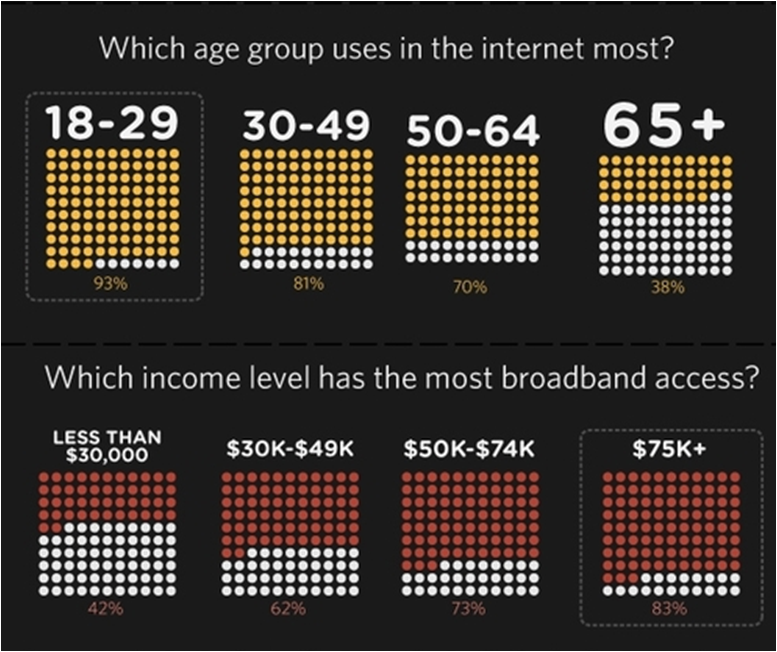
And, if you haven’t seen Paul Boag’s great graphics on Internet use (see example below), you should.

A Few Adherence Examples of Communications

Express Scripts has been using Consumerology as their framework for member communications.  I hadn’t heard much about what they were doing in the adherence area so I turned to the web.  I found a few things that I thought people might be interested in.  [Google is a wonderful tool.]

Last year, they had talked about the study in California with the power company and the influence that social norms had on power utilization.  They were testing this.  I found a presentation online that shows a cool graphic with some of the messaging.  I’m not really sure if patients will get the concept of medication possession ratio (MPR) so I’m anxiously awaiting the results.

I also found a screenshot of sample adherence report which they’re using in a pilot with Vitality.  [I’ll assume the data is mocked up and not real PHI.]  I really like the report.  I’m still torn on the GlowCaps concept in terms of whether consumers will use them, but they seem to have some good results.  [And, I always try to remember that I’m not the average consumer so my opinion is just my opinion.]

The last thing that I found which was interesting was some FAQs on their auto-refill program.  I remember pushing for this back when I was there, and I could never get the operations people and clinical people to approve it.  This type of program is becoming the norm now for many mail order and retail pharmacies so I’m glad to see they have it in place.

Latest Data Shows Low % Of Seniors Online

Everyone always wants to move to electronic communications (e-mail, portal) in healthcare (along with other industries) based on cost and data availability.  Unfortunately, seniors aren’t online as much as we think.  Yes, there are exceptions.  We all have stories about our grandparents being online or some blogger whose 80 years old.

But, the latest data from Pew shows that they aren’t online.  Their not using high speed connections.  And, when they do go online, they’re dipping their toes in the water not jumping in the deep end to use all the cool tools. 

This is certainly reinforcing of the data we observe at Silverlink when we interact with Seniors.  They are used to the phone.  They like to talk on the phone.  They know how to navigate and interact with automated telephony (especially intelligent telephony not annoying IVR trees).  And, since we can provide similar data to the web and e-mail about how Seniors interact with the communications, it has been a growing area for healthcare companies.

Why Can’t I Text My [Application]

I forgot to grab a receipt earlier today when I used my debit card.  Since I keep a record of all my transactions in Quicken, I quickly realized that I needed to e-mail myself the amount so I could enter it when I got home.  That got me thinking…why couldn’t I just text it to home home PC.  The PC is on the web.  It could “listen” for my message; receive it; and integrate it. 

I’m sure there’s more to it, but this could work for healthcare updates – weigh, blood sugar, blood pressure.  Sure, ideally my bank would update my Quicken and my bluetooth connected WiFi health monitoring devices would do it for me.  BUT, in the interim…

Why Does Direct Mail Exist In Healthcare

Given all the progress we’ve made in the past 15 years around communications, I wonder why direct mail is still a primary component of communications. Obviously, there are some times when compliance requires a written notification, but considering you can’t tell if someone opened the mail and most companies don’t process return mail, you really have no visibility or ability to audit.

Written communications are also so static unlike a website or an automated call where a response can alter the next step in the communication.

Additionally, there is a time lag on written communications that you don’t have with e-mail or with an automated call.

I’ll break it out more in the table below, but in the end, direct mail costs the most yet gives you the least data, the worst customer experience, and is the least time sensitive. Seems like a problem to me.

Channel

Automated Call

Direct Mail

E-mail

Cost

Low – Medium

High

Low

Ability to Personalize

High

Medium

High

Dynamic Content

Yes

No

No

Know if received by consumer

Yes

No

Yes

Know how long consumer interacted

Yes

No

No

Time from event to consumer

Minutes

Days

Minutes

Response Rate

High

Low

Low

 Now, don’t get me wrong, there is a place for direct mail.

  • People who don’t respond to automated calls or e-mail.
  • People who request more information.
  • Communications which require detailed information to make a decision.

But, why is it that so many companies begin their communications to consumers with direct mail. Is it that people are simply stuck in a rut of what they’re used to and can’t embrace decade old technology? Or is it that people don’t believe the facts in front of them?

RoadID for your athlete

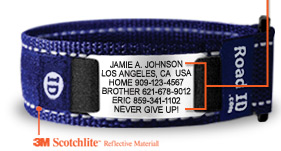
Here’s a simple, yet valuable gift for your athletic spouse, friend, co-worker – RoadID

This is something you can wear or put on your shoes so that if you get into an accident while you’re working out (i.e., road running, biking, hiking) people can contact someone for you.  I think it’s great.  I was skeptical of the need for it for a while, but I realize that accidents do happen.

They’ve now come out with RoadID interactive.  I have mixed impressions.  It’s great in that you can log information into an online profile – addresses, contacts, physicians, medical information, insurance coverage, etc.  If you’re in a horrible accident, all of that would be good to have.  And, the reality is that you control how much is there.  But, I’m still a generally paranoid person so I would worry about someone stealing my shoes and all of a sudden having access to my information.

[Too bad you couldn’t make it so that it was only enabled if some of your vitals signs were off and transmitted via a sensor to the site to unlock the information.  That would be cool!]

Band-Aid To Monitor Your Heart

Let’s stick with today’s examples that can be extrapolated to the future.  [Good Sunday am thinking]

I was reading in Fast Company [Dec 09 / Jan 10] about Corventis’ PiiX monitor. 

It’s a “wireless, water-resistant sensor that sticks to a patient’s chest like a large Band-Aid and monitors heart rate, respiratory rate, bodily fluids, and overall activity.”

Interesting!   I see an immediate use for this in team sports like the Tour de France where it can be monitored by a team manager and used to push fluids or encourage a change in pattern.  But, as the company talks about, imagine the power of using predictive algorithms here to know when someone may be in danger of a heart attack or some other medical issue. 

As devices like this become standard and are used to monitor our key bodily statistics and used, will we become healthier?  Again, will companies be able to use these to help guide our decisions through incentives – lower health care costs, lower life insurance costs?

I think as the data from these get transmitted electronically and populate PHRs and EMRs and get used by clinicians it will be very interesting to see how they change outcomes.

Blending Social Media and Healthcare

There is certainly lots of talk in healthcare around incentives.  What incentives will drive people to behave healthier – peer pressure, cash, non-monetary incentives, competitions (e.g., The Biggest Loser), or lower copays and deductibles.

There is also lots of talk about social media.  There have been lots of studies showing the power of your friends to influence your behavior – smoking, weight loss. 

Separately, I continue to hear more and more stories about agencies and lawyers using social media to find out about what people are really doing.  For example, my friend’s mom was recently on a jury of someone suing a physician for malpractice.  She claimed she had limited use of her legs.  But, the physician’s lawyer accessed her facebook page and saw her talking about all the stuff she was doing now that she felt better.  Oops.

Before I paint my future scenario, let me toss out one example that really got me thinking.  Burger King recently created the “Whopper Sacrifice” application for Facebook.  You received a free Whopper if you would delete 10 of your friends from your Facebook account.  23,000 users did it before they took it down.

So, if people would “sacrifice” their friends for a Whopper, what would people do for a 10% reduction in their premiums [or some siginificant savings on healthcare]?  Could companies get people [and use social media to track it] to spend more time with their thin friends that don’t drink or smoke and regularly exercise and get 8 hours of sleep a night?  Assuming the research is true, this would dramatically reduce costs and make those people healthier. 


IronMan for Sick and Injured People

robot suitironman-4
If you ever saw the movie Ironman, you will find this interesting.

Cyberdyne, a Japanese electronics company, has released a promotional video showing an elderly patient with Parkinson’s disease using a robotic skeleton to walk for the first time in two years. Of course, we have some skepticism and paranoia about robots which will have to be addressed (think iRobot), but the potential is significant. Here’s a picture of their HAL (Hybrid Assisted Limb) from their website. [Honestly, I would be fairly skeptical if this hadn’t appeared front page in the USA Today.]

Robot Suit - HAL

Telling The World Your Status

Will the habit of “status updates” be a good thing for healthcare?  We are encouraged to keep food journals, to track medication, to track facts about our conditions, and to report on many other aspects of our life.  Those things can be very helpful for patients in their discussions with their physicians.

So, as people increasingly become used to track and reporting what their doing, will that make it more normal to track these healthcare statistics?

Here’s some recent facts from a Pew report on Twitter and Status Updating:

  • 19% of Internet users now do some type of status reporting
  • The more devices you own (laptop, Internet enabled phone, Kindle) the more likely you are to update your status…39% of those with four devices.
  • The average age of people using the following (and trend versus last year):

Patient Choice in Health IT

If you don’t follow Susannah Fox‘s research and presentations, you should.  She works for the Pew Internet and American Life Project.  Here is a recent post about a recent presentation on Patient Choice in Health Information Technology (HIT).  Just pulling a few facts from it…

Our surveys find that the internet is increasingly helpful to American adults seeking health information.

  • 60% of e-patients (or 42% of all adults) say they or someone they know has been helped by following medical advice or health information found on the internet. That’s an increase from 2006 when 31% of e-patients (25% of all adults) said that.
  • 3% of e-patients say they or someone they know has been harmed by following medical advice or health information found on the internet, a number that has remained stable since 2006.

BUT, she also points out…

“There is no evidence that the internet is replacing health professionals, or Dr. Mom, but rather it is enabling a new way to connect to information and resources.”

“Insights” Gone Wrong

There is a great “cartoon” at the end of the recent Fast Company magazine that gives an example of how using information can lead you to a wrong decision.  It’s one of the reasons that I always point out the difference between someone who has provided services to an industry and someone who has worked in an industry.  It’s not the same.  Sometimes, you need to truly understand the nuances and how decisions are made.

It also made me think of a great Facebook example of how using social connections can lead to bad business decisions.  Given all the talk about making peer-to-peer recommendations based on your social network, this is a slippery slope to watch.  We are still new to this area and mistakes will happen.  One of the bigger ones that I have heard occurred in Facebook where they allowed advertisers to use member’s pictures.  Well, how do you think people felt when they saw the advertisements that say “Meet Singles In Your Neighborhood” with a picture of their spouse.  It didn’t go over well.

Great idea.  Interesting technology.  Bad application.

This will happen in healthcare.  The question is who will be first to stub their toe in the new world.

Mail Order Retention (or Churn)

It is fascinating how life comes full circle.  I remember when I worked on the Sprint Data Warehousing project back in the 90’s.  At the time, it was the first 1 terrabyte warehouse being built, and we were using some very cool technology from Microstrategy which offered the first web-based DSS (decision support system).  One of the key components of the reporting solution and business driver model we created was churn (or retention).  You can look at it either way.

But, this is a classic example of focusing on the right metric and that you have to measure what matters (to throw out a few oldies but goodies).  Retention is a pretty new concept within the pharmacy world especially within mail order pharmacy.  Growth has been pretty constant for the past decade until the past 18 months.  Now, everyone is trying to figure out what’s happening and why.

  • Are people going to Wal-Mart and paying cash?  (Or other similar card programs at Walgreen’s and CVS?)
  • Are people simply filling less prescriptions?
  • Are people skipping doses and doing other things to stretch out their prescriptions?
  • Are people trying over-the-counter medications or using samples?

There are lots of questions that matter here.  And, you have to think through the mail order process.  How do patients experience it?  Why do they leave?  There’s lot of research that’s been done by the different PBMs here.

I had a chance to talk with Drug Benefit News about this the other day.  You can read the story here.  Here’s a piece of what we discussed:

Depending on the payer, mail-order customer retention rates vary from 75% to 95%, according to Van Antwerp. “Very few people left because of service issues,” he explains. “The majority left because of refill issues. They got to the point where they forgot to refill an important medication and couldn’t get it within a 24-hour time period…or it was up for renewal and they needed to get the next prescription written.”

To address that, some PBMs are working to develop better refill-reminder programs, including moving some customers to auto-refill, Van Antwerp says. “When you look at refill patterns, some people chronically refill too early so they hit that ‘refill too soon’ reject ,” he explains. “Others chronically refill too late.”

“Secondarily, we look at the channel that they’re using to fill,” he adds. “Some people still mail in their refill via ‘snail mail.’ Others use IVR [i.e., an interactive voice-response system].” His firm is working with some PBMs to help them understand each enrollee’s historical behavior, and then customize a response that helps improve mail-order retention while moving the member to the lowest-cost channel for ordering refills — either IVR or the member portal, Van Antwerp says.