Archive | Marketing / Communications RSS feed for this section

Does Technology Make You More Efficient?

If you’re like me the answer is “of course”, but I realize that it isn’t always true for people.  Look at the people who get sucked into things like SecondLife or people who play games for hours on Facebook.  That certainly isn’t efficient time.

An article “The Internet Ruined My Life” by Pat Regnier in Money Magazine (Jan/Feb 2010) makes some good suggestions.

“When work got stressful – pretty often in this economy – it was all to easy to click over to Facebook.”

He points out that for Americans working over 50 hours per week:

  • 56% say technology has increased their job stress (27% by a lot).
  • 47% say technology has made it harder to focus at work (14% by a lot).
  • 66% say technology has made it harder to forget about work at home and on the weekends (37% by a lot).

I’d say what about the fact that it’s easier to multi-task and watch your kids soccer game during the week and stay in touch.

He makes a few suggestions (all relevant for getting into the new year):

  • Check out the 43folders.com blog.
  • Break the circuit – stop checking Facebook for a week and see if it’s still that important.
  • Be smarter about e-mail.  The more you send; the more you get.  Create better subject lines.  He suggests the book “The Tyranny of E-mail”.
  • Focus on your job (which isn’t to check e-mail…by the way).  He suggests checking e-mail just a few times a day [which is very hard but very efficient].
  • Stay offline in front of the kids [which is hard to do when you work from home].

H1N1 – Trying To Match Supply And Demand

When there was a large demand several months ago, there wasn’t any supply.  Now there is adequate supply, but the demand has gone down.  Will there be another spike in demand in the Spring? 

With all the retail pharmacies and clinics having supply, we are now going to see the competition for the consumer.  (See WSJ story)

Why Didn’t I Know There Was A Generic Version

I got this question e-mailed to me today.  The patient has been using the same drug for years and it lost it’s patent about 6 months ago.  They just found out that they could have saved a lot of money and wondered who should have told them.  Here’s my thoughts.

  1. It’s the member’s responsibility ultimately to search for ways to save money and ask for generics.
  2. A lot of managed care companies and PBMs won’t reach out when patents expire because 90% of the time the drug is switched to the generic within 90-days by the pharmacy.
  3. The key players who would communicate are aligned – the pharmacy / PBM makes more money when generics are used and the managed care plan saves more money.
  4. BUT, sometimes managed care plans or individual employers (groups) will opt-out or never sign up for communication programs so their members don’t hear about ways to save money.
  5. BUT, sometimes consumers opt-out of communications from the PBM or managed care company and therefore miss out on opportunities.
  6. BUT, sometimes physicians won’t allow the prescription to be switched to the generic drug (even when chemically equivalent) and will write the prescription DAW (Dispense As Written) or say no substitution allowed.
  7. BUT, there have been a few instances when due to exclusivity on the generic that it actually costs more than the brand during the initial 6-months and people don’t move to the generic.

So, with lots of nuances, my reply was that no one had a legal obligation to tell her, but they all had good incentives to do it.  I suggest talking to the physician and/or the pharmacist.

Because People Are Different

I’ll borrow our tagline from Silverlink Communications Because People Are Different – to follow-up on my post on direct mail from yesterday.  The first commentor makes a good point.  Certainly e-mail doesn’t work for everyone.  Nor does the phone (although it is generally ubiquitous today). 

The reality is that different segments require different modes of communication.  The question is how to figure that out. 

  • Do you ask people for their preferences…realizing that many times people don’t know what they want or need?
  • Do you look at historical behavior to predict what will work best for people like them…realizing that healthcare is intensely personal and while predictive may not be indicative…and people’s healthcare behaviors change over time?
  • Do you pursue a cluster approach – i.e., send multiple modes simultaneously…realizing that this isn’t very cost effective?
  • Do you pursue a strategy of sequencing – i.e., call then e-mail then letter – and which pattern works best…and what spacing between modes works best?  (This will vary by message, objective, and audience.)

And, the question that I surprisingly don’t hear many people ask is why is there so much direct mail when we as a culture are generally more interested in being environmentally aware than ever (although we still have a long way to go).  Why kill a tree when other modes are more effective, less expensive, and offer better consumer insights?

Why Does Direct Mail Exist In Healthcare

Given all the progress we’ve made in the past 15 years around communications, I wonder why direct mail is still a primary component of communications. Obviously, there are some times when compliance requires a written notification, but considering you can’t tell if someone opened the mail and most companies don’t process return mail, you really have no visibility or ability to audit.

Written communications are also so static unlike a website or an automated call where a response can alter the next step in the communication.

Additionally, there is a time lag on written communications that you don’t have with e-mail or with an automated call.

I’ll break it out more in the table below, but in the end, direct mail costs the most yet gives you the least data, the worst customer experience, and is the least time sensitive. Seems like a problem to me.

Channel

Automated Call

Direct Mail

E-mail

Cost

Low – Medium

High

Low

Ability to Personalize

High

Medium

High

Dynamic Content

Yes

No

No

Know if received by consumer

Yes

No

Yes

Know how long consumer interacted

Yes

No

No

Time from event to consumer

Minutes

Days

Minutes

Response Rate

High

Low

Low

 Now, don’t get me wrong, there is a place for direct mail.

  • People who don’t respond to automated calls or e-mail.
  • People who request more information.
  • Communications which require detailed information to make a decision.

But, why is it that so many companies begin their communications to consumers with direct mail. Is it that people are simply stuck in a rut of what they’re used to and can’t embrace decade old technology? Or is it that people don’t believe the facts in front of them?

Should Rx Data Be Used By Pharma?

This is a great question as posed by numerous people (see WSJ blog).  Now, the one reality that most people don’t realize is that the data is only directionally correct.  Not everyone sells their data to the aggregators so depending on pharmacy (or PBM) marketshare the data could be close to significantly off.

Perhaps, that’s not the issue.  The question is whether pharma should have a right to see prescription data by physician to understand their behavior.  It’s not patient specific data so that alleviates what I think should be the big issue.

Between patients visiting healthcare sites, registering for coupons, buying disease specific publications or supplies, the individual data is probably a lot easier to get and use…and probably more accurate (at least at the household level). 

Assuming no one says that pharma can’t communicate with physicians, I think the data is relevant.  Certainly, they have an agenda – drive marketshare of their drugs.  I think we have to assume that physicians aren’t just guppies that hear the pharma rep talk and do whatever they say.  Physicians are smart, well-trained professionals that should be able to hear messaging about drug pros and cons; look at the research; talk to their peers; talk to their patients; and appropriately prescribe. 

I think the prescription data probably creates a more efficient system.  Physicians that use a drug frequently are visited less often by the rep and don’t spend time away from patients.  Physicians that don’t prescribe a drug frequently (and prescribe a high volume of competitive drugs) probably get more visits…BUT they have the choice of saying don’t come. 

[I’m taking a little extreme of a view here since nothing is black and white, but I’m not sure I see the privacy issue here.]

Lance Armstrong And Diabetes

Lance has decided to focus some of his passion and conviction on diabetes.  I think this is great.  Certainly, this is a condition which affects a lot of Americans and continues to get worse with the obesity epidemic. 

Given the focus on the pharmacies (CVS, Walgreens) and the PBMs (Caremark, Medco, Express Scripts) on management of this condition, I wonder who (if anyone) will get Lance Armstrong to be their sponsor or public face.  For the PBMs that traditional don’t have a consumer brand, I would think this is a great opportunity.  I compare it to Medco having Amy Tendrich from DiabetesMine promoting Liberty Medical.  While Amy might not be a household name, she is certainly a name in the diabetes community.

72% of People Prefer to Listen W/ Right Ear

Whisper ear

This is logical since the left side of the brain and right ear specialize in language processing.

But, perhaps the more interesting part of this study by Luca Tommasi and Daniele Marzoli of the University Gabriele d’Annunzio in Italy is that requests spoken into right ears generated more positive responses than those spoken into the left ear.  Think about that on your next sales call. 


Employers Use of Utilization Management Tools

Based on study by the Pharmacy Benefit Management Institute (PBMI) of 417 employers, here is a ranked list of Utilization Management (UM) tools used in 2009 for overall plan design.  The survey breaks it down further by class.

  • Refill Too Soon Supply Limit – 90%
  • Quantity Limits – 89%
  • Prior Authorization – 81%
  • Disease Management – 69%
  • Step Therapy – 59%
  • Therapeutic Substitution – 55%
  • Retrospective Drug Utilization Review (RDUR) – 47%
  • Outbound Telephone Calls – 44%
  • Dose Optimization – 44%
  • Face-to-Face Pharmacist Consults – 36%
  • Pill Splitting – 29%
  • Prescriber Profiling – 23%
  • Copayment Relief or Waivers – 20%
  • Generic Sampling – 16%
  • Academic Detailing of Prescribers – 11%

What I think would be interesting to know is which of these is provided by their PBM or managed care company versus which ones are they directly sourcing?

Pharma Couponing

Using copay coupons in place of real samples is both cost effective and allows pharmaceutical manufacturers to get more patient specific information (since patients typically have to register to get the coupons). They can be short-term or long-term. The primary site to go to is InternetDrugCoupons.com.

Here’s my slides from the conference call I did the other day. Some of the quotes from the event are in the recent Drug Benefit News (11/13/09).

Consumer Preferences

The concept of preference-based marketing has been around for a long-time and continues to become a hotter issue especially in healthcare.  The challenge, of course, is balancing what consumers know they want versus what they actually use.  Ask anyone if they want an automated call, and the immediate answer is no.  People think about those annoying “robo-calls” that use text-to-speech (TTS), have a pause when you pick up the phone, and are not personalized at.

On the flipside, look at the data and outcomes which intelligence, voice-based call systems produce…it’s amazing.  People pick up the phone.  People interact with the technology.  And, the calls are highly personalized.

But, we are at an interesting crossroads about companies beginning to think thru and capture information about you.  Do you want to be called at home or on your mobile phone?  When is it okay to text you?  What communications should come in print versus e-mail?

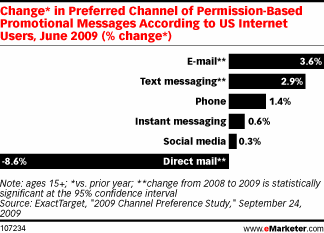
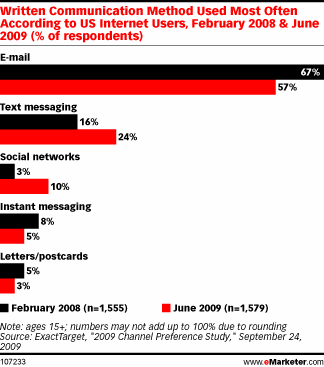
“Just 32% of marketing decision-makers surveyed in July 2009 said they knew how their customers behaved across channels, and only 37% were aware of consumers’ channel preferences.”  (ExactTarget 2009 Channel Preferences Survey)

The survey also showed changes in channel choice.

Change in preferences

Written format used

Patient Choice in Health IT

If you don’t follow Susannah Fox‘s research and presentations, you should.  She works for the Pew Internet and American Life Project.  Here is a recent post about a recent presentation on Patient Choice in Health Information Technology (HIT).  Just pulling a few facts from it…

Our surveys find that the internet is increasingly helpful to American adults seeking health information.

  • 60% of e-patients (or 42% of all adults) say they or someone they know has been helped by following medical advice or health information found on the internet. That’s an increase from 2006 when 31% of e-patients (25% of all adults) said that.
  • 3% of e-patients say they or someone they know has been harmed by following medical advice or health information found on the internet, a number that has remained stable since 2006.

BUT, she also points out…

“There is no evidence that the internet is replacing health professionals, or Dr. Mom, but rather it is enabling a new way to connect to information and resources.”

“Insights” Gone Wrong

There is a great “cartoon” at the end of the recent Fast Company magazine that gives an example of how using information can lead you to a wrong decision.  It’s one of the reasons that I always point out the difference between someone who has provided services to an industry and someone who has worked in an industry.  It’s not the same.  Sometimes, you need to truly understand the nuances and how decisions are made.

It also made me think of a great Facebook example of how using social connections can lead to bad business decisions.  Given all the talk about making peer-to-peer recommendations based on your social network, this is a slippery slope to watch.  We are still new to this area and mistakes will happen.  One of the bigger ones that I have heard occurred in Facebook where they allowed advertisers to use member’s pictures.  Well, how do you think people felt when they saw the advertisements that say “Meet Singles In Your Neighborhood” with a picture of their spouse.  It didn’t go over well.

Great idea.  Interesting technology.  Bad application.

This will happen in healthcare.  The question is who will be first to stub their toe in the new world.

Mail Order Retention (or Churn)

It is fascinating how life comes full circle.  I remember when I worked on the Sprint Data Warehousing project back in the 90’s.  At the time, it was the first 1 terrabyte warehouse being built, and we were using some very cool technology from Microstrategy which offered the first web-based DSS (decision support system).  One of the key components of the reporting solution and business driver model we created was churn (or retention).  You can look at it either way.

But, this is a classic example of focusing on the right metric and that you have to measure what matters (to throw out a few oldies but goodies).  Retention is a pretty new concept within the pharmacy world especially within mail order pharmacy.  Growth has been pretty constant for the past decade until the past 18 months.  Now, everyone is trying to figure out what’s happening and why.

  • Are people going to Wal-Mart and paying cash?  (Or other similar card programs at Walgreen’s and CVS?)
  • Are people simply filling less prescriptions?
  • Are people skipping doses and doing other things to stretch out their prescriptions?
  • Are people trying over-the-counter medications or using samples?

There are lots of questions that matter here.  And, you have to think through the mail order process.  How do patients experience it?  Why do they leave?  There’s lot of research that’s been done by the different PBMs here.

I had a chance to talk with Drug Benefit News about this the other day.  You can read the story here.  Here’s a piece of what we discussed:

Depending on the payer, mail-order customer retention rates vary from 75% to 95%, according to Van Antwerp. “Very few people left because of service issues,” he explains. “The majority left because of refill issues. They got to the point where they forgot to refill an important medication and couldn’t get it within a 24-hour time period…or it was up for renewal and they needed to get the next prescription written.”

To address that, some PBMs are working to develop better refill-reminder programs, including moving some customers to auto-refill, Van Antwerp says. “When you look at refill patterns, some people chronically refill too early so they hit that ‘refill too soon’ reject ,” he explains. “Others chronically refill too late.”

“Secondarily, we look at the channel that they’re using to fill,” he adds. “Some people still mail in their refill via ‘snail mail.’ Others use IVR [i.e., an interactive voice-response system].” His firm is working with some PBMs to help them understand each enrollee’s historical behavior, and then customize a response that helps improve mail-order retention while moving the member to the lowest-cost channel for ordering refills — either IVR or the member portal, Van Antwerp says.

Phone Calls Improve Quality of Life

“Asking nurses to reach out to people who have advanced cancer – even if only by phone – can improve patients’ mood and quality of life” – Study in Journal of the American Medical Association

This program used nurses trained in palliative care and compared people with regular follow-up care with those that received these phone based interventions.  The nurses discussed issues such as coping, communication with their MD, finding support, managing symptoms, and planning for the end-of-life.

Again, a great reinforcement of the value of communications in healthcare.

My Healthcare Strategy For Obama

So, this is getting messy quickly.  Support is waning.  The public is confused.  It’s time to do something.

If I put myself in your shoes [President Obama] here’s how I would have proceeded:

  1. Make 2009 about the uninsured.  Focus on one problem which is achievable – coverage for all.  You would have people rallying around you.  And, if the numbers that I have seen are right, the net costs to the insured population would be the same.  Right now, they pay for the uninsured through higher bills from the providers who ultimately have to cover their bad debt. 
    • Challenge – getting the providers to agree to lower their rates once their bad debt dropped.
    • Financing – short-term coverage of the 12-18 month lag between coverage and rates dropping.  long-term mandate with costs covered by taxes for those who can’t pay.
  2. In 2010-2011, I would take on the issue of evidence-based medicine, comparative effectiveness, and health IT.  I would save health reform for my second term (if I got one). 

    Everyone knows the system is broken.  BUT, I would stop talking about a trillion dollars in cost to fix the system.  Think like when we stretched to put a man on the moon. 

    Set a goal of “designing a healthcare system in which the total cost per individual is no more in 2020 than it is in 2010.” 

    Now, you can get people to rally around your efforts to save a trillion dollars and get us out of debt as a country. 

    The goal of keeping everyone happy and taxing the rich plays well on TV, but it’s not reality.  People can’t have their cake and eat it to.  People are going to have to give up some of the luxuries in the healthcare system.  We can’t have defensive medicine.  We have to have some limits on litigation.  We have to have health IT to push evidence-based medicine.  We have to reward people for actively managing their health. 

One of the winning strategies for you in the campaign was a simple focus on change.  You can’t change everything at once.  People have limited capacity.  Think like a program manager – phased implementations; goals people call rally around; simple wins.  People don’t understand what a trillion dollars is.  People can’t focus on 10 year plans. 

Healthcare is complex.  Focus on making it simplier:

  • Get universal coverage.
  • Establish standards of care which are driven by technology.
  • Hold costs flat.

New Words For New Times – “Recession-ese”

I always find new words interesting so I found the article “Do You Speak Recession-ese?” by Jill Becker in the American Way (8/1/09) interesting.  Here’s a few of the words she introduces with their definitions (paraphrased):

  • Bankster – combined form of banker and gangster.
  • Boomeranger – adult child who’s been forced to move back in with their parents.
  • The Chewbacca – the hair style that results when you skip a haircut or two to save money.
  • Duppie – depressed urban professional or downwardly mobile urban professional.
  • Frugalista – someone that is frugal and fashionable.

Pavlovian Caller ID

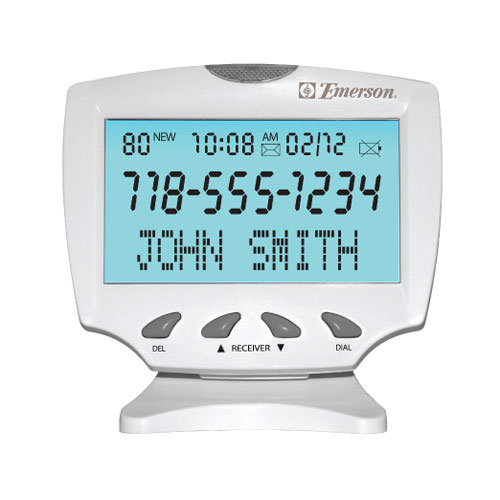
When the phone rings, what the first thing you do?

caller ID

You look at the caller ID (or at least most people do).  A lot of people won’t answer the phone if they don’t recognize the caller or if there’s no caller ID.

Recently, I thought about how I was using caller ID at home.

  1. In one case, I used to use a service for my dry cleaning.  They would pick it up once a week and drop it off 48 hours later at my house.  The key was making sure I put it outside for them to pick it up.  It got to a point where I never even answered the phone.  I just looked at the caller ID and saw that they were calling.  That was enough to remind me to put the clothes out.
  2. In another case, I could tell how important it was for someone to reach me based on the number of attempts that they made to contact me and the frequency of their number on the caller ID.
  3. In a third case, I realized that I often called the caller ID on the phone rather than bothering to listen to the caller ID that was left in the message.

Certainly, these lessons apply across other channels (e.g., direct mail, e-mail).  The question is how do you incorporate them into your communication strategy and understand the magnitude to which they happen and influence results.

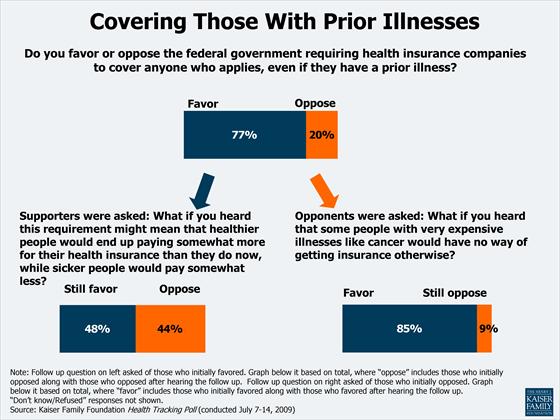
How You Ask The Question Matters – Pre-Existing Conditions

All of those in the communications space realize that linguistics do matter especially in certain healthcare situations.  I think this is a great example of how politics and healthcare are playing out.  No one really understands everything.  They understand and get excited (pro or con) based on the soundbite.

Covering_Those_With_Prior_Illness

22:1 ROI on Specialty Refills / Adherence

I always get very skeptical when an ROI goes above 3:1 so I was a little shocked to do some retrospective analysis with one of our Specialty Pharmacy clients at Silverlink and come up with an ROI that was 22:1 (or 2,200% ROI).  And, this was based on a pretty simple application.  (Of course it helps that specialty drugs are expensive and have a reasonable margin in some cases.)

But, for those of you interested, here are a few factoids:

  • A simple refill reminder program saved $12K per month in agents by automating the process
  • The program accelerated the refill timing within a 30-day period leading to less gaps-in-care
  • The program had almost a 20 percentage point jump in refill rates (a proxy for adherence)

It also validated a few things for us and the client:

  • As observed nationally, adherence has gone down over time (even on specialty medications) during this recession.
  • “I forgot” is still a common issue around adherence and solutions to address that should be the first thing that companies do.

Of course, the work doesn’t stop there.  We obviously want to continue our work on longitudinal analysis to look at MPR (Medication Possession Ratio) over time.  We also are working with them on addressing the other barriers on these medications (e.g., cost, side effects) by customizing communications by condition and based on the individual patient attributes.

If you’re interested in hearing more about how Silverlink works with clients on adherence (or tactically on refill automation), please feel free to reach out to me.

Time To Kill The “Clean Plate Club”

Dirty Dish

I always thought this was something that only my parents talked about until recently when I heard a few friends use the same term – “clean plate club”.  So, maybe more of you are familiar with these words:

“You have to finish what you were served.  Don’t you want to be part of the clean plate club?  People are starving around the world while you have all this food.”

I just assumed that my dad who was one of eleven kids who grew up in the Depression had this as a reality of limited food.  It took me years to realize that this framework was a recipe for disaster in today’s age.  When you go to restaurants that serve you huge plates of food and apply this mental framework, you are bound to over-eat site.

This is a great example of how something framed early in life can drive behavior.  That’s one of the key concepts when planning healthcare communications is understanding the frameworks that consumers / members / patients have about their physician, their health insurer, their pharmacist, generic drugs, mail order, and a variety of other healthcare topics.

How Teeth Are Like Trees

I was at my dentist the other day, and he spent the whole time using analogies to explain things to me.  He began by asking me if I was really sick when I was about 4 years old.  I was a little confused, but he pointed out that I have a white spot on the back of one of my teeth.  He said that teeth are like trees and like the rings in trees you can learn things from your teeth and date them.  Apparently, that spot would indicate high antibiotic use or malnutrition right during the period of development.

He later went on to explain the surface of the teeth and how a round object that hits the ground is less likely to break than a square object.  He was talking about how the tops of teeth get ground down over time and the risk that it creates to the stability of the tooth.

The 5 Questions (Regence Group)

Regence Group recently put out an interesting website – www.whatstherealcost.org.  It takes an unorthodox (for a health plan) approach to delivering several important points.  It reminds me of what Wellpoint has done with Tonik or some of the things Humana is doing at HumanaGames.

One of the things I found interesting and very straightforward for patients to think about were their 5 questions:

  1. How much does that cost?
  2. Is that really necessary?
  3. Is there a cheaper option?
  4. Is there a generic for that?
  5. Has anyone out there had this before?

Imagine if every time we were asked to take a test or start a new therapy that we (patients) asked these five questions of our provider.

One Cigarette vs. 11 Minutes of Life

So, if smoking a cigarette knocks 11 minutes off of your life, you would think that would capture people’s attention.  Or would you?  Given the framework of hyperbolic discounting, what is the value we put on that 11 minutes of life.  If I’m young, I see that as a very distant value with a lot of things that could happen between now and then.  The “benefit” of smoking the one cigarette is very real and immediate.  (I’ve never been a smoker, but I assume there is an enjoyment.)

It’s not very different from eating.  The extra spoonful of sugar in my coffee can (over the course of a year) add a pound and over the course of a decade add 10 pounds…BUT can I really make that tradeoff.

This is one of the fundamental challenges in healthcare especially for asymptomatic diseases where there aren’t regularly experienced symptoms – e.g., high cholesterol.

Social Norm – E-mail, Voicemail, SMS

Are there social norms around responsiveness to communications?  I was reading this quote and realized that I am obviously not fitting the norm.

“The social norm is that you should respond [to e-mail] within a couple of hours, if not immediately,” said David E. Meyer, a professor of psychology at the University of Michigan. “If you don’t, it is assumed you are out to lunch mentally, out of it socially, or don’t like the person who sent the e-mail.” (source)

There are many days when between travel, client meetings, conference calls, hundreds of e-mails, and trying to read all the things I get that I barely respond to anything but critical e-mails.  Add a few conferences or a day off here and there, and it’s literally impossible to keep up.  So, if the expectation is immediate due to blackberry’s and other smart phones, I guess I’m in trouble.


“Web 2.0” – Millionth Word in Language w/ Most Words

I guess I never really thought of English as a complicated language because it had so many words.  I always thought things like the fact that we had so many homophones or words that sound similar.

I found all the recent discussion about adding the millionth word to the English language interesting.  I’m not sure I consider “Web 2.0” as a word.  For example, the fact that Chinese is the language with the second highest number of words at 450,000 is interesting.  The way in which words become “official” is interesting.

This is why the study of linguistics becomes so interesting (see good context at Wikipedia).  This is also part of our broader health literacy issue in this country.

New Clinical Webinars – HEDIS, Adherence, Engagement

In June, we are offering three complimentary webinars to our clients and prospects on key topics of discussion.

Increasing the Effectiveness of Population Health Program Engagement
June 16th | 1:00 PM ET

Getting consumers to take charge of their healthcare behaviors and choices is critical to controlling costs and improving outcomes. Successfully welcoming and engaging consumers in DM and health management programs can be the toughest road for health plans and population health organizations. Strategies that motivate participatory engagement are key – but it takes more than a friendly voice and the right script.

Join Silverlink for a complimentary webinar where we will discuss the challenges of moving health behaviors and effective strategies organizations can implement to get ahead of the behavior change curve.

In addition, learn how to:

  • Leverage tailored messaging to drive high engagement rates
  • Enable continued engagement over time
  • Maximize buy-in and acceptance of health coaching
  • Combine multichannel approaches to elicit engagement and re-engagement
  • Optimize engagement campaigns through predictive analytics to drive results

Drive Positive Health Behaviors and Improve HEDIS Results

June 23rd | 1:00 PM ET

Whether your focus is on the HEDIS measures for women’s health, the diabetes metrics or a broad range of effectiveness of care measures, Silverlink can design communications strategies that increase your reach, motivate member action and improve HEDIS results.

With the backdrop of the economic slowdown, communicating with members about the importance of key preventive screenings is more critical than ever. Explore the many routes to break through health prevention challenges by tailoring communications interventions that work for your populations.

Join Silverlink for a complimentary webinar where we will present the results and lessons learned over several years in supporting HEDIS screenings including a recent campaign aimed at reducing health disparirities in African American and Hispanic populations related to colorectal cancer screenings.

In addition, learn how to:

  • Use a flexible framework that supports national teams in delivering effective outreach in local markets
  • Drive performance on high-profile HEDIS measures where plan performance has hit a plateau
  • Segment your membership to deliver highly personal messages using multiple levers
  • Design and target messages to help reduce health disparities
  • Combine multiple messages to support members with more than one gap
  • Leverage multichannel campaigns to maximize reach and action

Rethinking Medication Adherence

June 30th | 1:00 PM ET

More than 50% of consumers become nonadherent around their maintenance medications within the first 12 months of therapy. And, today’s economy is putting even more pressure on people to make economic tradeoffs that threaten their health. Several studies have shown that more people are skipping doses or not refilling medications. Non-adherence leads to $177B in direct and indirect costs to the healthcare system per year.

Silverlink provides a comprehensive suite of communications services to drive medication adherence from targeting and messaging to multi-channel campaign management and execution. Join Silverlink where we will discuss some of the common myths around and key strategies related to medication adherence.

In addition, you will learn about:

  • Critical success factors in designing adherence solutions
  • Important conditions to focus on for adherence
  • Success metrics and key measurements
  • Comprehensive solutions for all phases of the patient’s therapy from initiation through long term maintenance

A Few Medco Updates

First, Medco published their Drug Trend Report for 2009 a few days ago.  I am just starting to read it and will post my comments in the next few days.  [BTW – I am the #1 Google hit if you query “drug trend report”.]

Second, they recently posted a video of Mark Spitz talking about Medco’s website and savings money on prescriptions.

Then, they also presented a few new studies at ISPOR this past week which showed:

  • Asthma patients taking a statin were less likely to have a asthma related hospital or ER visit.
  • Patients with MS (multiple sclerosis) were more adherent when using specialty.

I think I’m going to try to learn more about the MS study.  Did it vary by age, gender, plan design, pharmacy type, stage of disease, etc.