Archive | Marketing / Communications RSS feed for this section

Cured After The First Fill!

I was at a presentation recently where a Chief Medical Officer from one of the PBMs was talking about a survey they did on statin users and why they didn’t refill.  Amazingly, he said that 21% of people said they thought they were cured after the first fill.  Talk about a problem.

This data reminds me of a barrier survey from a statin adherence program that we did where 37% said they didn’t know they were supposed to refill their medication. 

This topic then reminded me of a study that was published in the Archives of Internal Medicine in 2006 which looked at the frequency with which physicians did certain things when talking with patients.  So, how often did they explain the duration of therapy to the patients – 34%!

Sometimes, we spend so much time trying to solve the complexities of adherence when there are baseline activities which can make a huge difference.

Trust As The Foundation For Healthcare Communications

Trust improves medical outcomes. It is the number one predictor of loyalty to a physician’s practice. Patients who trust their doctors are more likely to follow treatment protocols and are more likely to succeed in their efforts to change behavior. (Introduction of The Trust Prescription)

I just finished reading The Trust Prescription For Healthcare by David Shore. I would recommend it. It definitely framed things in a differently light. I also had a chance to talk with David on the phone and pick his brain a little. He sounds like a great speaker, and I’m looking forward to his new book coming out around building trust as an intermediary (i.e., managed care company or PBM).

A few of my highlights from the book are:

  • Trust can be a differentiator.
  • Trust is good business.
  • The physician to patient relationship is where the baseline of trust exists today. Although he brings up the question of whether that trust erode as you get more and more time pressure.  [I don’t remember the book specifically addressing the pharmacist – patient trust relationship although one would assume it is a similar foundational element.]
  • Trust is critical in healthcare because you’re asking a vulnerable patient to believe you can help them.
  • Profits may be negatively correlated with trust in healthcare (but not in other industries).
  • He pointed out the fact that it’s ironic that while pharmaceutical companies do so much good they get such a bad rap.
  • It was the first time I had seen someone introduce the issue of how healthcare entities are portrayed in TV shows and how while this is generally neutral that managed care organizations in the early 2000’s were portrayed negatively (and probably still are).
  • He talks about the concept of “response shift” which I think it an important phenomenon about how our expectations change over time and the effect of expectations on trust.
  • He talks about how two things happen when trust erodes – government intervention and consumer activism. [Hey…that’s where we are today!]
  • He uses two examples many times which are very relevant:
    • Volvo is known for safety not specifically for making cars. They make sure this is consistent in their branding (e.g., not funding NASCAR races). It gets to the core of defining who you are. [This concept also made me think about the new Dawn campaign about saving wildlife.]
    • You can build trust equity like Johnson & Johnson did which helps you when you have issues. [The question is how long they can draw on this given their current issues.]
  • He holds out a few healthcare power brands but says there are very few – Mayo Clinic, Cleveland Clinic, BCBS, Kaiser, Massachusetts General.
  • He talked about the concept of a Brand Architecture which made me think about some of the recent rebranding efforts at United Healthcare.
  • He talks about how consumer understanding and communications are key to building trust.

Communication in healthcare typically runs into a series of obstacles related to listening, clarity, and confidence.

Some of the interesting research data was [noting that this was a book from 2005]:

  • 56% of consumers say they will pursue something simply because it was made by a company they trust. (Macrae and Uncles 1997)
  • About half of people agree that “doctors are not as thorough as they should be” and “doctors always treat patients with respect”. (National Opinion Research Center 1998)
  • Race was a highly significant variable in trust correlation even when researchers controlled for other variables. (Corbie-Smith, Thomas, and St. George 2002)
  • Patients are more likely to take a drug that they have requested than a drug with which they are unfamiliar. (Handlin et al 2003)

It book made me think of some interesting questions:

  • Does transparency build trust with consumers?
  • Does concierge medicine build trust overall?
  • Does the use of technology by physicians enable or erode trust? [I believe he said that a lot of physicians didn’t think so.]
  • Do non-profit systems have more consumer trust?
  • What does all the news about drug problems, medical errors, and other issues do to the overall trust of the system?
  • What are the trust queues for consumers by type of healthcare entity? (For example, a dirty bathroom at a hospital might make you worried. What’s true for insurers, PBMs, pharmacies, etc.?)

One key point to pull out that he makes is that

Without branding, healthcare becomes a retail industry, and in retail, as in residential real estate, the three most important factors are location, location, and location.

Only 56% Want To Set MD Appointments Online – Why Not?

To me, this survey has three major themes:

  1. People are still hesitant to communicate with their MDs using social media [not that surprising].
  2. People are slow to use the web even for administrative functions [why].
  3. Hispanics are much more willing to use technology to engage their provider [why].

Some of the data:

  • 85% would not use social media or instant messaging channels for medical communication if their doctors offered it.
  • Only 11% of respondents said they would take advantage of social media such as Twitter or Facebook to communicate with their doctor.
  • Only 20% said they would use chat or instant message.
  • 52% said they would confer via e-mail.  (versus 89% of Hispanics)
  • Only 48% said they would pay their physician bills online. 
  • 72% would take advantage of a nurse line if it was offered by their doctor.

You Need An Experience Architect

I’m often asked how my 6 years of architecture school plays into what I do right now.  I have a variety of things that I believe I learned in architecture that help me, but it wasn’t until the other day that it really clicked.  I was reading an interview about a CEO who had been trained as an architect.  She described architecture as building experiences.

All of sudden it hit me…that’s what I do.  I help companies look at an objective and architect the consumer experience to get to that objective.  And, it’s a lot of fun!

So, what are the parallels between healthcare communications and physical architecture?

  • There is no one answer.
  • You have to listen.
  • There is lots of data.
  • You have to use lots of materials. (print, e-mail, web, automated call versus concrete, glass, steel)
  • Each person’s experience is different.
  • Compliance matters. (building codes versus CMS)

Now, unfortunately, I can’t coin the term “experience architect”.  It’s been used by others.  For example, Tom Kelley from IDEO used it as one of his Ten Faces of Innovation.  He says an experience architect is one who:

Is that person relentlessly focused on creating remarkable individual experiences. This person facilitates positive encounters with your organization through products, services, digital interactions, spaces, or events. Whether an architect or a sushi chef, the Experience Architect maps out how to turn something ordinary into something distinctive—even delightful—every chance they get.

Fast Company talks about the Experience Architect in an article from 2005.  More commonly you’ll find articles or references to user experience architect. 

The point is that you need to think about things in this light, and I think the architectural paradigm is helpful in how you construct and embrace the creation of an experience for the consumer whether it’s around shopping, adherence, or managing diabetes.

CMS Treatment Of Generic Samples Offers False Hope

It’s interesting but irrelevant that CMS is now proposing that Part D plans can treat generic samples similar to OTC drugs.  Who cares?

Why do I say that?

  1. Generics represent more that 80% of the non-specialty drugs dispensed in many cases.
  2. The technique doesn’t work.

At Express Scripts, I ran a program for a year.  We hired pharmaceutical representatives to detail doctors.  We bought generic drugs and repackaged them.  And, we tracked GFR (generic fill rate) in the six categories for a year. 

Guess what?

In most cases, the GFR for the doctors with the samples barely exceeded the GFR for the doctors without the samples.  In one category, it was even lower.  The GFR was going up too fast in the general market.  If you add in the costs, it was a money loser. 

We even compared our GFR in certain geographies to the published statistics from another company doing generic sampling…our clients GFR without samples was going up faster than their GFR with samples. 

If you want to give away free drugs as a “gift” to make your academic detailing program more effective, have at it, but lets keep reality in mind here.  This is not going to make a difference.  All it’s going to do is drive up administrative costs for PDP plans.

Using the “Placebo Effect” in New to Therapy Situations

I was reading a book about trust which pointed out the concept of “remembered wellness“.  This concept is similar to the “placebo effect” in that it shows that patients who trust their physicians and their course of therapy are more likely to have better outcomes (e.g., HIV study).  WOW!!

I’ve talked before about the gap that exists when patients leave their physician’s office with a new diagnosis and we all know that health literacy is a big issue.

So…what are you doing to address this?  I’ve been talking a lot lately about “primary adherence” (i.e., getting people to start therapy) and about engaging patients when they first get a new prescription or a new diagnosis.  This concept of trust only makes this a more pressing issue.

Here’s your worse case scenario:

  • Patient is newly diagnosed with a chronic condition and given a new prescription.
  • They don’t have a great relationship with the physician and/or have limited understanding of the condition (due to literacy, fear, or other issues).
  • They fill the prescription once and stop taking the medication after a few days.

How can you step in here?

  • You can trigger an outreach based on diagnosis code.
  • You can assess their understanding of the condition and help them learn more by addressing their barriers.
  • You can engage them when they fill their first script.
  • You can follow-up with them after the first few days to make sure they stay on therapy.
  • You can enroll them in an adherence program.
  • You can enroll them in a condition management program.

But, the point here is that you need to be doing something that reinforces the decision to manage the therapy and help them to understand and believe in that course of treatment.  If they don’t believe and have trust, they are less likely to get to a successful outcome.

JD Power Customer Service Leaders – Pharmacy

Understanding how top performers achieve excellence is the first step to becoming a Customer Service Champion. The rest is up to you.

This is the statement by Gary Tucker, SVP, J.D. Power & Associates at the beginning of their publication Achieving Excellence in Customer Service from February 2011. 

If you’ve never read their reports, you should understand that they look at five areas – people, presentation, price, product, and process.  Interestingly, they use several examples from pharmacy to make their points about these five categories:

  • Proactive communications
  • Private space for consultation
  • Clear information about how to save money
  • Auto-refill

Another interesting thing they look at is whether the gap between high performing and low performing company has increased or decreased over time.  In the product industries, the gap has decreased due in many ways to quality improvements.  In the service industries, the gap has increased…WHY?

First, advances in technology have created new expectations among customers, resulting in new challenges for services. For instance, customers expect multi-channel service delivery and expect to choose whether to interact with their service provider in person, via the phone or e-mail, through online chat, or via Web-based self-service, among others. More challenging is that they expect the same level of service across communication channels. With ever-improving technology, it has been difficult for companies to keep all systems up to date and to remain equally effective in each.

They are preaching to the choir here.  This is exactly what I tell clients all the time. 

One of their examples that I’ve used for years is around the power of communications.  They show satisfaction with auto insurance based on whether your premium stayed the same or increased.  For those that it increased, they look at whether you were pro-actively informed and whether you had the option to discuss it.  What group do you think had the highest satisfaction?

  • Decreased premium
  • Increased premium, pro-active notification, and chance to discuss
  • No change
  • Increased premium, pro-active notification
  • Increased premium, no notification

Worried about satisfaction or churn?  Have lots of changes to plan design?  Here’s why you communicate.

In this report, they call out 40 companies as exceptional out of the 800 that were ranked.  7 of those 40 were pharmacies:

  • Good Neighbor
  • Health Mart
  • Kaiser Permanente
  • Publix
  • Veteran’s Administration Mail Order
  • Wegmans
  • Winn-Dixie

Who’s Your HOL For Improving Engagement

Following up on my post earlier today, I went to an article in PharmaVOICE from January 2011  called Engaging the Empowered Patient by Carolyn Gretton.  It has lots of interesting statistics and quotes.  Here’s a few:

These consumers have done at least one of the following based on finding information online:

  • Challenged their doctor’s treatment or diagnosis
  • Asked their doctor to change their treatment
  • Discussed information found online at a doctor’s appointment
  • Used the Internet instead of going to the doctor
  • Made a healthcare decision because of online information

I’ll have to drill into the report because I’d love to know how many have done the first two things, what the physician response was, and (ideally) if it impacted their outcome in any way.

40% of online consumers engage with social media on health sites either by reading or posting content, though frequency of engagement varies widely.  (based on a survey from Epsilon and eRewards)

That last part is where the issue is (IMHO).  Consumers do use lots of these tools BUT sustaining their interest and engagement over time is difficult.

The Epsilon report – A Prescription For Customer Engagement: An Inside Look at Social Media and the Pharmaceutical Industry – pointed out that consumers use healthcare social media for:

  • Support
  • Sense of intimacy with others with a similar experience
  • Foundational information about their condition and symptoms
  • Information about drugs and supplements
  • Health news

Many of the individuals who are highly engaged in social media feel better equipped to manage their health.  (Mark Miller, SVP, Epsilon)

I was really surprised that the Epsilon study said that consumers viewed product sites to be as important as healthcare provider interactions.  I could argue both sides here.  Obviously, the product site is going to have some bias.  On the other hand, given the complexity of treatments and therapies these days, it has to be close to impossible for the provider to stay up on all the latest information. 

Not surprisingly, the author of the article talks about people having mixed feelings about the product managers participating in a social media site.  BUT, I think everyone would agree that with proper disclosure and the right person, this can work very well. 

The article introduces a new term (for me) here – HOLS or Health Opinion Leaders.  It talks about them becoming active parts of the pharma brand team.  That sounds like an interesting role. 

It was also interesting that they talked a lot about gaming as an engagement mechanism.  It’s not something I’ve spent as much time with, but it keeps coming up (even more than incentives).  They talk about several examples:

They also bring up an older game as a cautionary tale – Viva Cruiser – which riled critics for trivializing ED. 

At the end of the day, it’s the same old challenge – how to get the consumer to act and stay engaged?

Should Drug Makers Take Action Off Social Media Comments?

I think it’s a fascinating question that was raised around Actos. Here’s the text about a wool.labs report:

In this month’s report on social media’s influence in the world of diabetes, wool.labs presents an analysis of social media conversations beginning as far back as 2002 and continuing to the present, noting a significant shift in patient attitude toward the drug.

Early on, the presenting side effects such as weight gain and edema drew concerns and warnings from some patients. Some questioned whether the drug should be used in combination with insulin. But even while the debate raged on, wool.labs’ analysis showed the conversation could have been shifted had drugmaker Takeda meaningfully interceded before 2006 when comments about the drug began to turn sarcastic, and before long, angry and hostile.

There are enough tools and companies out there that IMHO companies (and brands) should be able to actively manage social media sites to understand what consumers think.  I don’t know this case specifically so I won’t comment on it, but certainly, companies need to have a robust Voice of the Customer process by which they understand what consumers think of them.  And, if it avoids future litigation, leads to add-on products, or even helps re-position a current product, this mechanism can be very valuable.

Hillary and Abe Talk Healthcare Communications

I’ve wanted to try this Xtranormal technology for a while.  It was pretty simple.  I’m interested in your feedback on whether this is an interesting delivery mechanism, annoying, or fun (see anonymous survey).  Here’s the video.  [BTW – If you get this in e-mail, you might have to come to the web to view this.]

PBMs and Star Ratings

Finally, I’m hearing more talk about PBMs and their role in Star Ratings for Medicare. It seemed like this was a subtlety at the end of last year when I raised it as a 2011 priority.

Drug Benefit News had a story about it in their March 4, 2011 edition with examples from HealthTrans and PerformRx.

In general, there are opportunities to help impact Star Ratings by:

  • Blending pharmacy and medical data
  • Helping monitor patients on long-term medications
  • Increase cholesterol screening
  • Increase use of flu shots
  • Controlling blood pressure
  • Addressing physician communication gaps
  • Improving Customer service
  • Prior authorization process
  • Churn
  • Time on hold
  • Appeal process
  • Accuracy of information provided by customer service
  • Managing complaints
  • Helping with access issues
  • Timely information about the drug plan
  • Monitoring use of drugs with a high risk
  • Making sure diabetics us hypertension drugs

Since pharmacy is the most used benefit, it can have a very direct impact on the overall satisfaction. It can drive calls. It can be complicated. It can affect perception. And, it can lead to churn.

PBMs need to be working to proactively engage consumers. They need to use data to personalize the experience. They need to use clinical data to identify gaps in care. They need to drive adherence.

I personally hope that the Star “concept” becomes a more normal set of metrics outside of Medicare for measuring success and ultimately leads to a performance-based contracting framework.

Should The State Board Of Pharmacy Govern PBMs?

Mississippi has introduced legislation that would move the oversight of PBMs from the State Insurance Commissioner to the State Board of Pharmacy.  From a clinical care perspective, there seems to be some logic here, but from a business perspective, it doesn’t work.  Right now, the State Boards are generally made up of local pharmacists with an occassional PBM pharmacist on the board. 

Since that group negotiates with the PBMs for rates, it would seem to create a major conflict of interest.  PCMA has honed in on this and is actively fighting it. 

I guess that’s like saying that hospitals should govern managed care organizations.

Rules Based Communications

After working with data warehouses, configuration engines, and workflow management systems, I’m a big believer in embedding rules into a process. Communications is no different.

Let’s look at a few rules:

  • Don’t communicate with someone more than X times per week.
  • Don’t call these people.
  • Use Spanish for people with that language preference.
  • Send a text message to people who have provided their mobile number and opted in to the program.
  • When applicable, use a preferred method of communication for reaching out to someone.
  • If a caregiver is identified and permission is on file, send the caregiver a copy of all communications to the patient.
  • Call the patient if the amount being billed for their prescription is greater than $75.
  • For patients between these ages, use the following messaging.
  • If the patient hasn’t opened the e-mail after 48 hours, then call them.
  • For clinical information, use this channel of communications.
  • For John Smith, only call them on Tuesdays between 5-6 pm ET.
  • For Medicare recipients, use this font in all letters.
  • For Hispanic consumers, use this particular voice in all call programs.
  • If the patient doesn’t respond after two attempts, send a fax to their physician.
  • For patients with an e-mail on file, send them an e-mail after you leave them a voicemail.
  • For patients who are supported by Nurse Smith, only call them when she is on duty and use her name in the caller ID.

I could go on. But, the point is that communications, like healthcare, is a personalized experience. We have to use data to become smarter (historical behavior, segmentation, preferences). We have to use customization to create the right experience. AND, probably the most difficult thing for lots of companies, we have to coordinate communications across modes (i.e., e-mail, direct mail, SMS, automated call, call center, web).

Ultimately, I believe consumers will get to a point where they can help set these rules themselves to create a personalized profile for what they want to know, how they want it delivered, and ultimately provide some perspective on how to frame information to best capture their attention.

To learn more, you should reach out to us at Silverlink Communications.

The Rider, the Elephant, and the Path

If you haven’t read the books by Chip and Dan Health (Switch and Made to Stick), you should.  I was reading a story they had in the Experience Life magazine by Lifetime Fitness the other day.  I pulled out a few things here to share:

“For anything to change, someone has to start acting differently.”

Such a simple phrase, but it’s the key of most marketing programs.  I was talking to a friend the other day, and he asked why do people bother sending marketing pieces.  In today’s world, people know all their options so if they want to change they will.  For some people, that might be true (at least on a finite list of things that matter). 

In this article, the Health brothers talk about Jonathan Haidt’s book The Happiness Hypothesis where he argues that our emotional side is an elephant and the rational side is its rider.  We have to find the balance between the two. 

It’s interesting that they talk about the rider as wearing out easily pointing out that exerting self-control and focusing on the next thing to do can leave you worn out.  You need to create a path that makes it easier to be successful.  This is relevant around adherence.  This is relevant for addressing obesity. 

All of these articles and books on behavioral economics have fascinating studies in them.  In one story they talk about a group of maids which were split into two groups.  One group was told that all the work they did cleaning was great exercise.  The other group went upon their job as normal.  Four weeks later, the group that thought they were exercising had lost an average of 1.8 pounds compared to the other group.

Or they talk about the book Mindless Eating which shows that “people eat more when you give them a bigger container.  Period.”

They then introduce 3 surprises which can be helpful in framing messages:

  1. What looks like resistance is often lack of clarity.  Don’t say eat healthier.  Say eat more dark leafy greens.
  2. What looks like laziness is often exhaustion.  Change is hard…acknowledge it.
  3. What looks like a people problem is often a situational problem.  Make sure to think about their environment and support system. 

Physicians Want A Long-Term Patient Relationship

In a recent survey by Consumer Reports, 76% of physicians say that a longer-term relationship with their patients would be very helpful.

Is that feasible in today’s environment with consumers more likely to move cities and states?

Assuming it is, this would seem to make EMRs more important especially as they could act as a CRM system for the physician. The average physician probably supports about 2,000 active patients (“physician panel“). It would be difficult for them to remember and personalize their experiences without some mechanism for capturing notes about the patient. Certainly this can and has been done on paper for years, but technology would make this much more efficient.

“A primary-care doctor should be your partner in overall health, not just someone you go to for minor problems or a referral to specialty care,” said Kevin Grumbach, M.D., professor and chair of the department of family and community medicine at the University of California at San Francisco.

The article says that there is research that supports the fact that patients who stick with one physician over time have less healthcare issues and lower healthcare costs. I would assume that it therefore holds that patients who like their physician begin to trust their physician and therefore stay with their physician longer.

Physicians said that respect was the second thing that could help patients get better care. Does that mean that disrespect causes you to get worse care or simply that you’re less likely to engage the physician in a dialogue and understand their recommendation?

There were lots of surprises to me in the data:

  • 33% of patients track their changes and activity between visits. I’m guessing those are the chronically ill patients with complex diseases not the average patient.
  • 80% of MDs thought that patients would be better off with a family member or friend joining them for the visit…but only 28% of patients have someone with them.
  • Only 8% of MDs thought that online research was very helpful with the majority of them thinking it provided little to no value.
  • 9% of patients had e-mailed their physician in the past year.
  • ¼ of patients indicated some level of discomfort with their physician’s willingness to prescribe medications.

What’s Your Fitness Personality?

If you don’t read Experience Life magazine from Lifetime Fitness, I would recommend getting it or following them on Twitter. They put out some very interesting articles on expercise and food.

One that I found interesting was about Fitness Personalities. By using the Myers-Briggs test as a framework, Suzanne Brue developed 8 different categories (I’m a white). Given the difficulty of making exercise a lifetime habit for many of us, this could be a helpful framework for understanding what works, what doesn’t work, and with some rationale for why.

Here’s the quick summary:

  • Blues are safety-conscious, and good at creating their own space and concentrating in a gym.
  • Golds are traditional, conservative, and like to share their exercise experiences and results with others.
  • Greens are nature lovers who enjoy outdoor activities.
  • Reds like to live in the moment and compete in team sports.
  • Whites prefer to plan, hate to be rushed and are visionary types who enjoy calm spaces.
  • Saffrons like to express themselves as individuals and are attracted to spontaneous, engaging activities.
  • Purples are routine-oriented and enjoy repetition.
  • Silvers like exercise to be disguised as fun.

Online Company Looking For Pharmacy Partner For Customer Acquisition

A friend I met years ago when I looked at the Duane Reade pharmacy kiosk is now at Everyday Health. He recently asked if I new anyone in the pharmacy area (independent, chain, mail, specialty) that might be interested in partnering with them to drive new customer acquisition based on their online content.

I figure there are several people that might be interested. I asked him to write up a brief note and provide some contact information. Here it is for anyone who’s interested.

Everyday Health is online health network that connects more than 27MM monthly users to in-depth medical content for health condition prevention and management, as well as lifestyle content in pregnancy, diet, fitness, and much more. Our network of 25 sites consists of our flagship, everydayhealth.com, in addition to many well-known health brands such as What to Expect When You’re Expecting, South Beach Diet and Jillian Michaels.

Everyday Health is currently exploring the local health frontier and trying to determine how our organization can better leverage relationships with local doctors, dentists, pharmacies and hospitals. For pharmacies, we’re wondering if there is any value in driving Rx’s to a given storefront and whether there would be economic upside for doing so.

We’d like to connect with people with experience in marketing acquisition of patient Rx’s and/or anyone who can help clarify the above opportunity. Email Dan Wilmer in Everyday Health Business Development at dwilmer at everydayhealth.com.

You Have Cancer…Blah Blah Blah

After you get diagnosed with a serious disease like cancer or even a chronic condition like diabetes, do you remember anything the physician says?  Someone once told me that patients remember something like 12% of what the physician says after that (I couldn’t find the source).  Another person shared with me that their physician told them to go home and call them later to talk about all their questions. 

This is the extreme example, but a situation that repeats itself day after day.  Patients learn that they have a disease.  In some cases, they’ve been searching for an answer to their symptoms for a while, and there is a sense of relief followed by anxiety.  In other cases, they had a minor problem which leads to identification of a much more serious issue. 

I talk about this because in some cases we start this patient on a course of therapy that they don’t understand or a drug which has side-effects they didn’t expect.  Health literacy is a big enough issue, but not understanding the receptiveness of the patient based on environmental issues such as shock is a big deal. 

We (as a healthcare system) have to continue to help close this gap to educate consumers and leverage the broader care team including physician, pharmacist, and caregivers to help patients understand their condition and the next steps they need to take.  Trisha Torrey does a good job of laying out a series of steps for you to take beginning with acknowledging your fear.

Can We Use Technology To Address Gaps In Resources – YES!

Dr. Joseph Kvedar writes a great piece about the psychology of persuasion and the possibility of using technology to engage consumers and drive behavior change.  This is an important topic as we look at addressing healthcare as a country.  Since behavior and consumer choice drive a significant portion of our healthcare costs, we have to think more about how to engage patients – what is the right message?  what is the right channel?  what is the right time to deliver the message?

We can deploy technology in smarter to ways to engage consumers in new ways that leverage our limited resources in better ways – i.e., get good and scalable outcomes without increasing costs.  That is what we do everyday at Silverlink Communications with our clients whether it’s around HEDIS, adherence, condition management, or many other programs. Recently, there was an article in Time Magazine that talked about some work we did with a Medicare population for Aetna.

I also think you can look at the research Stanford has published on the topic over the past decade.  You can also look at some of the data from the CVS Caremark Pharmacy Advisor program. While it certainly showed the value of having pharmacists involved, it also showed some positive results from automation.

The reality is that combining automation and live resources can be very powerful. Technology can screen and triage people to connect the at risk population with critical resources. This can allow resources to support as many as 4x as many consumers.

The Cost Of Chronic Pain

The March 7th edition of Time Magazine has a whole section on chronic pain including a fascinating timeline of how pain has been managed over the years.  It’s just in recent history that pain has moved from being a side effect to being a condition to be management.

An article by Dr. Oz provides some statistics on pain:

  • The annual price tag of chronic pain is $50B.
  • Lower-back pain is one of the most common complaints affecting 70-85% of adults at some point.
  • 7M people are either partially or severely disabled because of their back pain.
  • Lower-back pain accounts for 93M lost workdays every year and consumes over $5B in costs.
  • 40M Americans suffer from arthritis pain.
  • 45M Americans suffer from chronic headaches.
  • People with chronic pain are twice as likely to suffer from depression and anxiety.

One of his key suggestions – if you’ve worked with your physician for six months and its not resolved – go see a specialist.

He also points you to the American Chronic Pain Association for communication tools in helping you verbalize your pain.

In his article and in the other articles, it talks about stretching as a way to alleviate pain.  Obviously, there are medications that can help with pain relief although some of them can be abused and addictive.  And, both Dr. Oz and the other articles mention acupuncture as a potential solution.

You can also go to the American Chronic Pain Association to learn more.

From a management space, one of the areas where chronic pain is a big area of focus is in Worker’s Compensation.  For more about this space, you can follow Joe Paduda’s blog.  You can also follow some of the Worker’s Compensation PBMs such as:

Pharmacy Benefit Data From PBMI

I had a chance to read through the new 2010-2011 Prescription Drug Benefit Cost and Plan Design Report that PBMI puts out and is sponsored by Takeda Pharmaceuticals. Here are some of my highlights:

  • Percentage of the pharmacy claims costs paid by the beneficiary
    • Retail = 25.3%
    • Mail = 20.1%
    • Specialty = 15.9%
  • Average difference between retail and mail copayments (see chart):
    • Non-preferred brands = $18.38
    • Preferred brands = $7.15
    • Generics = $3.61
  • 5.1% of employers are covering genetic tests to improve drug therapy management
    • 68.8% of them are covered under the medical benefit
  • 43.0% of employers are restricting maintenance medication dispensing to select pharmacies (retail or mail) [much higher than I expected]
  • They give examples of the percentage of respondents using the following value-based tools:
    • 31.7% – reduced copayments in select classes
    • 19.7% – incentives to motivate behavior change
  • I was surprised to see a significant drop in the percentage of clients requiring specialty medications to be dispensed at their PBM’s specialty pharmacy.
    • 2009 = 53.8%
    • 2010 = 40.0%
  • There was a similar drop from 15.7% to 11.5% of employers restricting coverage of specialty drugs under the medical plan.
  • Given all the focus on medication adherence, I was disappointed to see that only 24.2% of employers were focused on maximizing compliance in specialty. [Maybe they haven’t seen all the studies on this topic.]
  • They have some nice comments on Personalized Medicine and the critical questions to address.
  • I was also surprised that less than 1% of employers were using onsite pharmacies or pharmacists.
  • They provided the following data on average copayments for 3-tier plan designs with dollar copayments:
    • Generics at retail = $9.45
    • Generics at mail = $19.06
    • Preferred at retail = $25.93
    • Preferred at mail = $53.63
    • Non-preferred at retail = $46.43
    • Non-preferred at mail = $98.25
  • The average pharmacy discounts (based off AWP) were:
    • Retail brand = 17.5%
    • Retail generic = 46.6%
    • Retail 90-day = 19.8%
    • Mail brand = 23.3%
    • Mail generic = 53.5%
    • Specialty = 18.7%
  • The one number that seemed off to me was the Rxs PMPM which they had as 2.29 for active employees. That would mean 27.48 PMPY which seems closer to Medicare. [I typically use 12 Rxs PMPY for commercial and 30 Rxs PMPY for Medicare as a quick proxy.]
  • For the first time, they showed the percentage of employers excluding coverage of non-sedating antihistamines (e.g., OTC Claritin) and proton pump inhibitors (e.g., Prilosec OTC). Both classes have had lots of blockbuster drugs go OTC (over the counter) so it makes sense to exclude coverage.
    • NSAs = 44.7%
    • PPIs = 30.6%
  • They provide a nice summary of how employers are using UM (utilization management) tools.

The report has tons of data on different scenarios, different plan designs, rebates, and many other topics. I’d encourage you to go online and read thru it.

BTW – The respondent group of employers included 372 employers representing 5.8M lives including both active and retired. The average group size (active only) was 9,736 which is a decent size employer group. And, 12% of the respondents were part of a union bargaining agreement.

CatalystRx Engaging Patients With Avatars

Last week, I got to see one of the more interesting presentations I’ve seen in a while. CatalystRx presented on some of the work they are doing with a mobile application to be released later this year. The application uses an avatar (well technically an “embodied conversational agent“) to engage with the consumer. I’m not sure how well that will work with a senior population, but the technology (shown in a video demo) was very cool.
The application is based on lots of research (and designed by the people who made Happy Feet). For example, they talked about:

  •  
    •  
      • The importance of finding the right balance between too cartoonish and too human. They referenced some Disney research about size of the eyes versus the size of the head which creates a positive memory trigger due to similarities to baby’s faces.
      • Creating a “trusted advisor” for the patient (using David Shore’s book – Trust Crisis in Healthcare).
      • The importance of the face and how it shows emotion (both human and avatar).
      • How small talk engaged the consumer and builds trust even when it’s an avatar telling first person stories.

Some of the research comes from Chris Creed and Russell Beale’s work.

Recent research has suggested that affective embodied agents that can effectively express simulated emotion have the potential to build and maintain long-term relationships with users. We present our experiences in this space and detail the wide array of design and evaluation issues we had to take into consideration when building an affective embodied agent that assists users with improving poor dietary habits. An overview of our experimental progress is also provided.

The application helps patients to:

  • Make decisions
  • Identify pharmacies
  • See prescription history
  • Get reminded about refills
  • Get information about generics and formulary compliance
  • Receive personalized interventions

Obviously, mobile solutions as a way to engage patients using a secure environment for delivering PHI is a holy grail (for those that download and stay engaged). This was an interesting and promising variation on some of the solutions out there. I look forward to learning more and seeing it once it’s fully available.

(Community) Pharmacy 101

The NCPA blog talks about educating Congress about their value.  They also share their slide deck

I’m not sure I see how this is community pharmacy specific, but I agree that this is a good educational deck of what pharmacists do (retail, mail, specialty). 

  1. It’s more than counting pills.
  2. Immunizations.
  3. Address adherence.
  4. Educate patients and serve to support patient centered care and address MD shortage.
  5. Medication management

I was surprised at the low numbers of non-Rx discussions they have per day and the low number of physician discussions.  It would be good to benchmark those based on average store volume.

NCPA Twisting Reality Again

I continue to be frustrated by NCPA (National Community Pharmacists Association). While I agree that the pharmacist – patient relationship is important, they continue to blatantly misrepresent the facts to make their point. On Tuesday, they sent a letter to Kathleen Sebelius, Secretary of HHS, stating the following:

While we strongly support your efforts to provide the states with measures to drive pharmaceutical program costs down, we respectfully disagree with the statement that mail order is a potential cost-savings program strategy. Experience has shown that mail order pharmacies almost never deliver the savings they promise and are often ultimately more expensive than community pharmacies. In 2009, retail pharmacies drove a 69% generic dispensing rate (GDR) while the three dispensing services of the largest PBMs – Medco Health Solutions, Inc.; Express Scripts, Inc.; and CVS Caremark – had GDRs under 58% for the exact same time period – leaving potential savings on the table resulting from increased brand usage.

Either they are naïve or they think HHS is. You can’t compare the GDR at retail pharmacies to the GDR at mail order pharmacies without significant adjustment for acute medications and seasonal medications that aren’t appropriate for mail order. Historically, those medications have had higher generic utilization than other conditions (e.g., antibiotics).

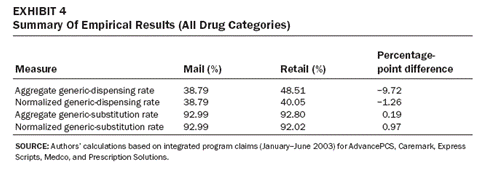
On the other hand, maybe they aren’t a history fan. The only independent study that I’ve seen comparing the two channels specifically on this issue was published in 2004 by Harvard in Health Affairs. It looked at claims from 5 PBMs across both channels, made the adjustments, and concluded that while retail had a slightly better GDR than mail, it had a lower generic substitution rate. It also pointed out that the majority of the different was attributed to the statin class which was over-represented in the mail order channel (and at the time was mostly brand prescriptions).

Or, maybe they haven’t looked at the chain GDR versus the independent GDR…In this presentation, you see what I would expect – chain GDR > independent GDR. Combine that with the percentage of scripts dispensed (i.e., weighted average) and the normalized GDR from the Health Affairs study probably would favor PBMs over independents.

Since PBMs make over 50% of their profits on generic at mail, it wouldn’t make sense for them to sub-optimize this area. Given the changes in drug mix over the past 7 years (i.e., more generics), I would hypothesize that if this study were done again you would see mail order matching or exceeding retail GDR especially GDR for independents.

Growing Mail Order Pharmacy Utilization

A common topic which I discuss with PBM clients is how to improve their mail order utilization. Since more than 50% of their profits come from generics at mail order, this is a critical process. And, while the industry average is 13% utilization (on an adjusted script basis), there are many companies (especially outside of the big 3 PBMs – CVS Caremark, Medco, and Express Scripts) that have much lower utilization and therefore huge value in upside.

Today, I got the chance to speak to investors on this topic courtesy of Barclays Capital. I structured the discussion around three topics:

1. Why is mail order important to the PBM?
2. How do you improve mail order utilization?
3. What are the challenges to improving mail order utilization?

Attached are the slides which I used on the call.

A Couple Quick Lessons From Super Bowl Ads

“Success is like anything worthwhile. It has a price. You have to pay the price to win and you have to pay the price to get to the point where success is possible. Most important, you must pay the price to stay there.” – Vince Lombardi


While I didn’t have any personal stake in the game on Sunday and am generally a college football fan, I definitely enjoyed watching Green Bay win.  I’ve always liked many of Vince Lombardi’s quotes, and one of my first consulting projects was working with the Oneida Indian tribe in Green Bay. 

That being said, I (like many others) enjoy watching the advertisements.  In reading a post-game summary of the commercials in USA Today, there were two interesting points:

  1. One of the two winners (it was a tie) was for Doritos and was based on a customer created advertisement (which cost him $500 to produce). 
  2. Four of the top 10 advertisements (Doritos x2 and Pepsi x2) had been posted on Facebook and YouTube for days.


I think this presents several interesting scenarios in healthcare marketing:

  1. Why don’t we have more customers submitting and creating “advertisements” for us?  I personally would love to see 30-second spots by pharmacy users talking about why they chose mail order or a particular retail store.  Or, imagine a new mom talking about how great her experience was at a particular hospital.  [That seems a lot more compelling than the signs that tell me the number of births at a particular location.]
  2. Maybe familiarity doesn’t breed contempt but rather trust.  Should we think differently about how we share information concurrently on different channels?  [Hint: YES]  Is there value in sticking with a theme for a period of time?  [IMHO – Yes]

Coupons From Manufacturers

I’ve talked about this a few times. It’s an interesting topic. Are coupons for prescriptions a good thing or a bad thing?

Let’s look at a few perspectives and considerations…

Manufacturer:

  • Do they improve my marketshare?
  • Do they protect my marketshare from new entrants?
  • Do they protect my brand versus generic competition?
  • Do they improve adherence (as measured by refill rates)?
  • Per point of marketshare, is it cheaper to rebate a drug or offer direct-to-consumer coupons?
  • Are coupons more effective than samples? (They are clearly less expensive to produce and distribute.)
  • I’d be interested in feedback, but I haven’t found any conclusive data. BUT, I think manufacturers are smart marketers. They wouldn’t be doing this if it didn’t work.

Payor:

  • Do the coupons support my formulary? (I would generally think no…otherwise why use them.)
  • Do the coupons improve adherence? Are they creating waste?
  • Are the coupons changing physician or patient behavior? Is this costing me money (e.g., less generic starts)?
  • Is this impacting my total drug spend since the consumer is no longer as price sensitive to copay differentials?
  • Do claims processing using the coupons still show up in the patient history such that drug-drug interactions and other safety checks can be conducted?

Customer:

  • Am I saving money? [Yes]
  • Is the coupon easy to use and understand? [I would think generally yes.]
  • They should be asking about their total cost of the drug over time since depending on the condition they may be less likely to convert to a lower cost drug (typically generic) when the coupon is no longer offered. Or, switching drugs may require them to visit the physician or have lab work done that will cost them money.
  • They should be asking…if others use this coupon, which means that they are filling a more expensive drug, what does that decision cost me (shared cost)?

As far as I know, there are very few limitations on couponing.

  • The state of MA doesn’t allow their use at all.
  • There are lots of restrictions about their use in Medicare and Medicaid such that those consumers are usually excluded from using the coupons.

This is generally a topic where there is little known about the answers to these questions (as far as I know).

There was an article in last week’s Drug Benefit News about this topic where I was quoted and built upon a few comments I made about Lipitor earlier:

“Payers are concerned that copay cards incent consumers to use higher-cost drugs,” George Van Antwerp, general manager of pharmacy solutions for Silverlink Communications, tells DBN. “The consumer no longer sees the penalty of using a more expensive drug.”

Pfizer, who declined to comment for this article, has given some indication that it will continue the $4 copay card only until November, when a generic version hits the market, but Van Antwerp says he’d be surprised if the company did not extend the offer. “Back when Zocor went generic, Merck actually made the brand drug cheaper than the generic drug,” Van Antwerp recalls. “United and a few other payers ended up putting brand name Zocor into the generic tier on their formulary.”

A “Difficult” Encounter Leads To Worse Outcomes

An interesting study looks at the percentage of “difficult” patients with some reflection on the physician also.  The study showed a few interesting things:

  • 18% of patients were considered difficult
  • Older physicians and those with better communication skills don’t have as many “difficult” patients
  • Difficult patients were 2.4x more likely to have worse symptoms two weeks after their visit

So…what is a “difficult” patient.  The article describes them as patients who have lots of unexplained physicial symptoms, stress, anxiety, and other complicating factors.

I think this reinforces a lot of what I talk about.  You have to go back to the root of the problem (e.g., adherence) – the patient and physician encounter.  We have to make this better.  Patients have to understand how to leverage their physician.  Physicians need to better understand their patient’s and how to engage them.

Once that infrastructure exists, a lot of things can play out after the fact.