Archive | PBM / Pharmacy RSS feed for this section

Shifting Spend In Pharmaceutical Spending

Pharmaceutical manufacturers are dealing with massive shifts in their industry – less blockbuster drugs, more generics, emergence of different global markets, a greater payor emphasis on outcomes and adherence, less interaction with sales reps, more use of biologics, and the emerging biosimilar opportunity.

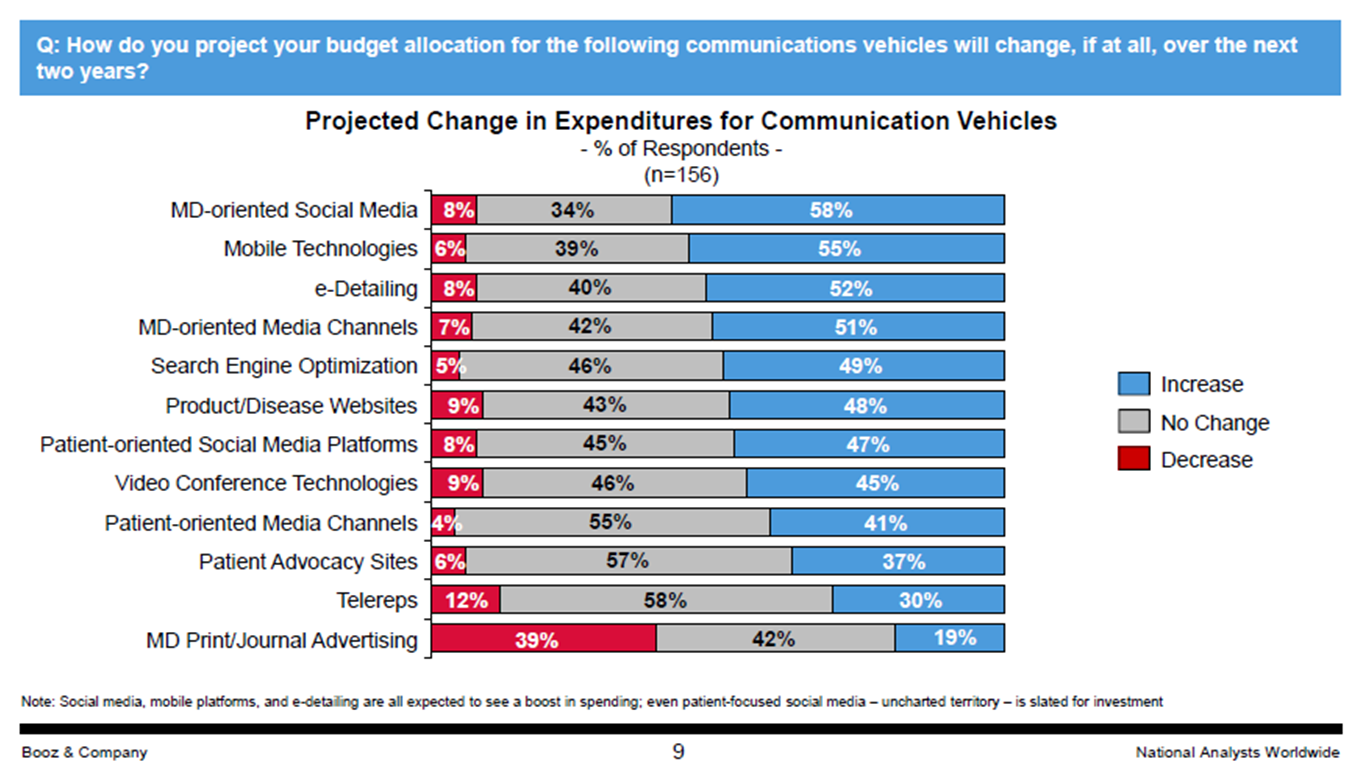
All of that is causing a massive shift in where they invest.  In some cases, you’re seeing manufacturers invest in devices (e.g., Sanofi diabetes device) or into education and content at a disease (not drug) level or even in mHealth (e.g., Boehringer and Healthrageous). 

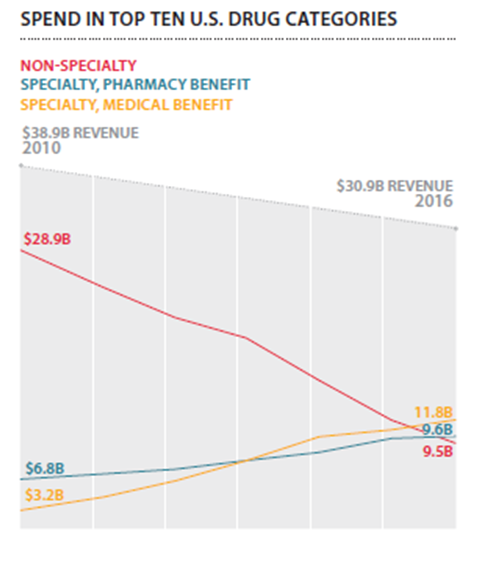
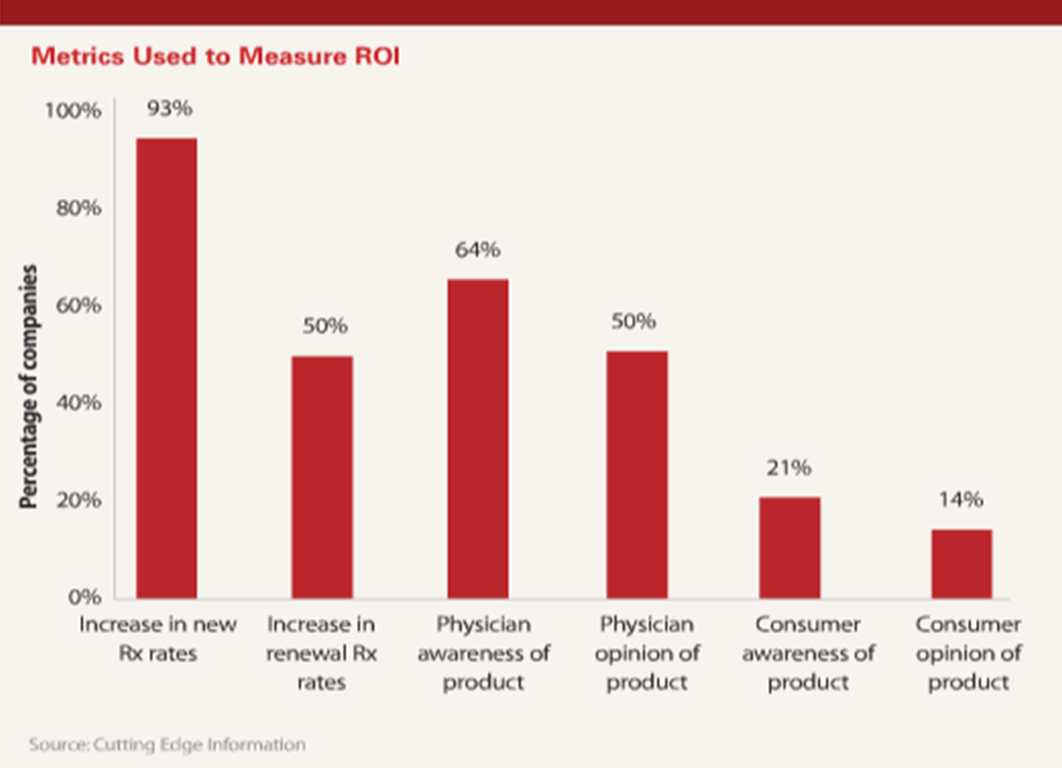
With that in mind, I found this Booz & Company survey interesting in highlighting how their shift in spending is changing.

$WAG and $ESRX Reach New Pharmacy Deal!

Wow!  Finally! 

Those are my immediate reactions.  I just saw the news that Walgreens and Express Scripts have reached a new pharmacy deal effective 9/1/12.  I’m sure there are lots of consumers that will be happy about that and a few competitive PBMs that will be disappointed. 

A few things that this makes me think about:

  • The Walgreen’s shareholders will be happy.
  • Both parties can claim some victory by holding out so long.
  • I imagine that the limited network was working ok, but there wasn’t huge adoption.  It was probably also an issue in RFPs and with consultants.
  • Other PBMs were likely using this in selling against Express Scripts so they’ll be disappointed.
  • Obviously, the Medco contract with Walgreens was the big catalyst here.  Letting that transition to a point where they didn’t get any Medco or Express Scripts patients would be a disaster.
  • Will this change Walgreens collaboration with the NCPA against the PBMs and mail order or is that just the natural conflict here?

The biggest battle now will be around customer retention and winback.  Can Walgreens get their old Express Scripts patients to come back?  Can CVS and others hold on to the patients?  This will really test the theory about customer loyalty in the pharmacy space. 

The other interesting thing here is that this pushed Walgreens to really re-evaluate their strategy and market positioning.  Will they emerge as as stronger and different company because of this 9 month period.  I would think so, but that is still TBD.

The Express Scripts 2011 Drug Trend Report – Full of Infographics

Those of you that have been readers for a few years know that I love to read and summarize these reports. They provide a huge set of aggregated data and summarized information that is useful in creating business cases and identifying trends.

This year is no different although the graphics within the Express Scripts Drug Trend Report continue to get better … ala infographics (as they even posted one recently on their blog).

So, what caught my eye this year…

  • There was one ex-Medco person who signed off on the intro letter…and interestingly (compared to other DTRs), no George Paz signature.
  • They have a big picture of their Research & New Solutions Lab upfront (see below). It reminds me of the NOCs (Network Operations Centers) that I had at my past 3 employers. [Maybe one day before I move out of St. Louis they’ll take me on a tour.]

  • I was definitely interested to hear what they would say about Walgreens. They tackled it early on in the document.

Our 2011 retail-network negotiations marked another milestone in our heritage of independence from pharmacies and alignment with our plan sponsors. One retail pharmacy chain, Walgreens, was unwilling to offer rates and terms consistent with those of the market, and instead opted to leave our pharmacy network at the beginning of 2012. Although we remain open to Walgreens being part of our pharmacy network in the future, the positive reaction we received from plan sponsors and members during the process of transitioning patients to other pharmacies confirmed what our prior analyses had shown: the vast majority of the U.S. has an oversupply of pharmacies, suggesting that networks can be tightened significantly while maintaining sufficient patient access.

  • 17.6% of the total Rx spend was for specialty
  • 47% of specialty medications are processed under the medical benefit
    • 78% for oncology
  • They talk a little about evaluating genetic tests and when to recommend a test. It’s definitely an evolving space, and it will be interesting to see the Medco influence here in terms of what they recommend.
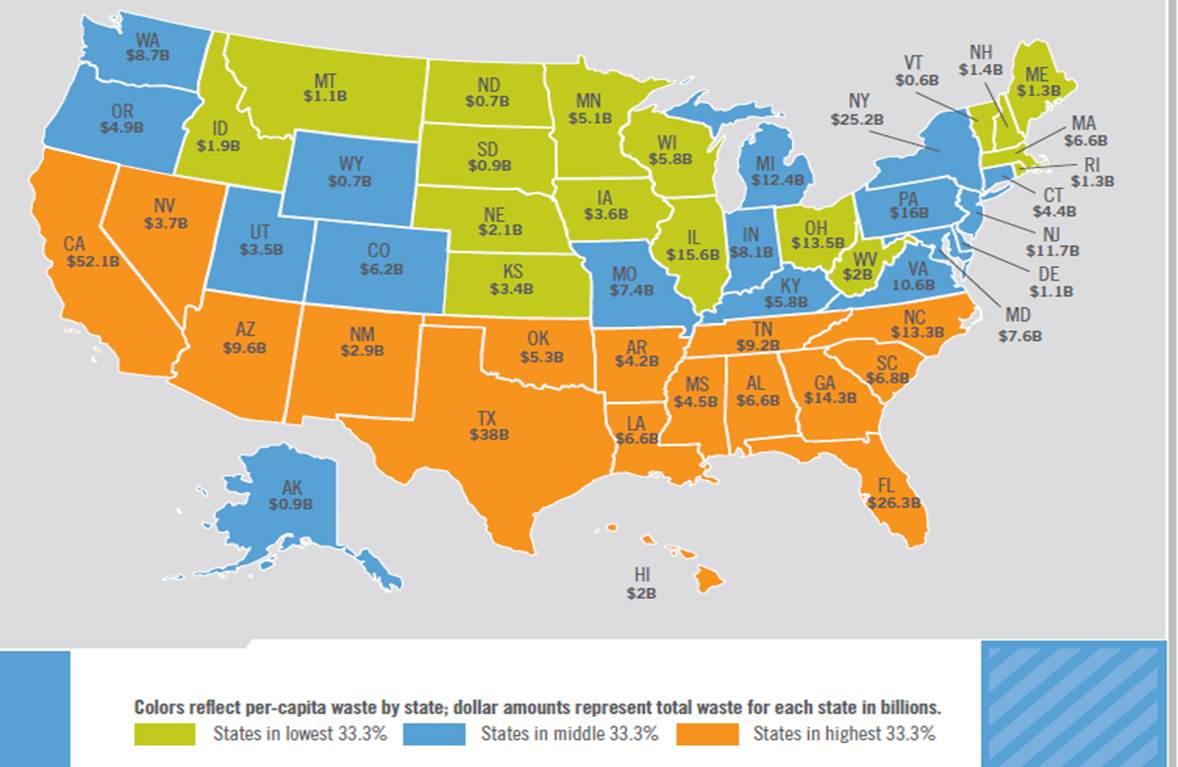
  • They talk about $408B in waste from adherence, generics and mail order. All consumer behaviors. (see last year’s report focused on waste)
  • They show the breakdown of waste by state where the South is the biggest problem. It looks a lot like the Diabetes Belt although it also includes the SouthWest.

  • Not surprisingly, diabetes, cholesterol, and hypertension represent 3 big opportunities.


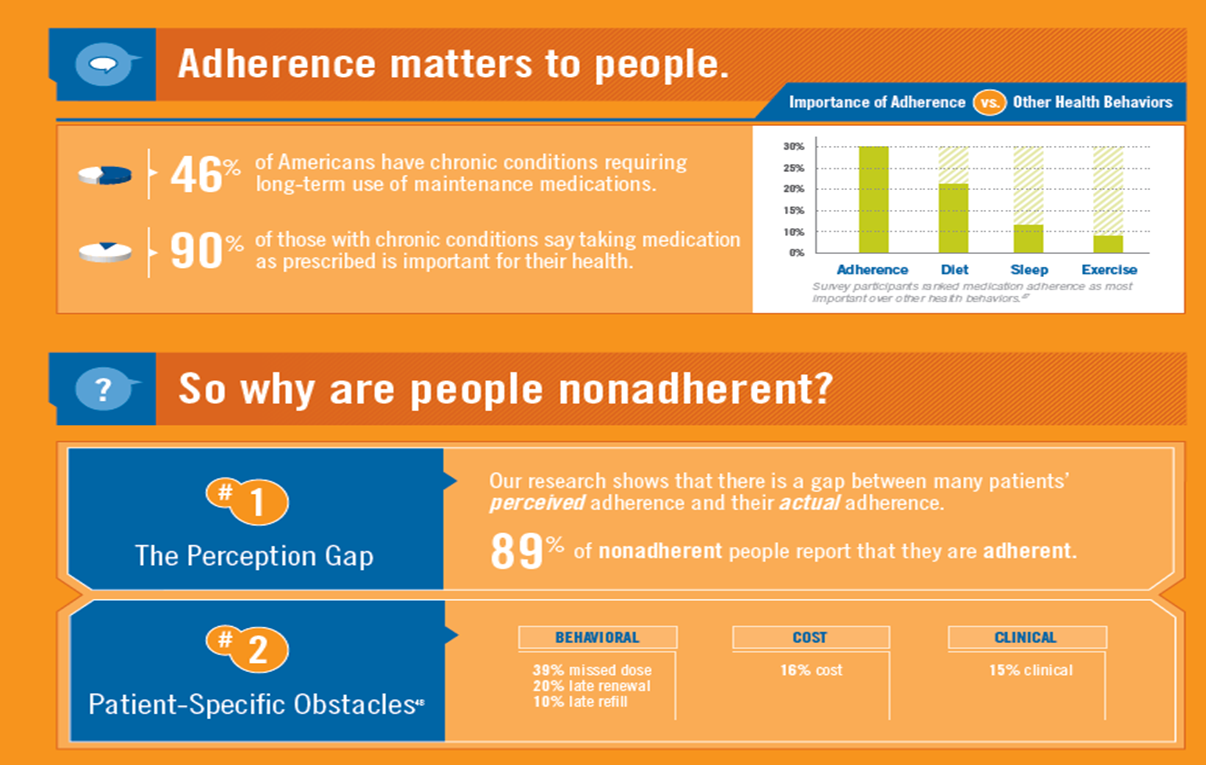
  • FINALLY…For years, I’ve been comparing two older studies to make the point that people think their adherent when there’s no way that perceived adherence can match reality. The most exciting thing to me was that they actually looked at perceived and actual adherence on the same patients.

For example, patients in the least-adherent group in the survey of Express Scripts members had an average actual MPR of 24.3%. The average perceived MPR reported by patients in this group, however, was 90.6%. We therefore found a staggering 66% gap between perceived MPR and actual MPR.

  • They talk about how this data is being used to predict non-adherence with some crazy high reliability. (Meaning only that it sounds too good to be true.) Regardless, they’re right in using data to identify behavior gaps (current and future) and developing personalized interventions to address barriers.

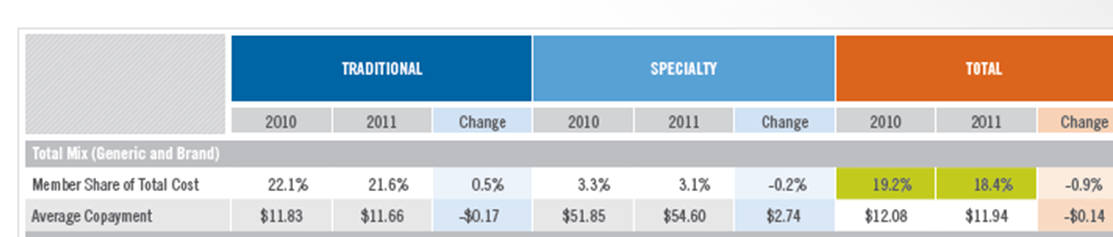
  • The overall drug trend was 2.7%
    • 17.1% specialty trend
    • 0.1% traditional drug trend
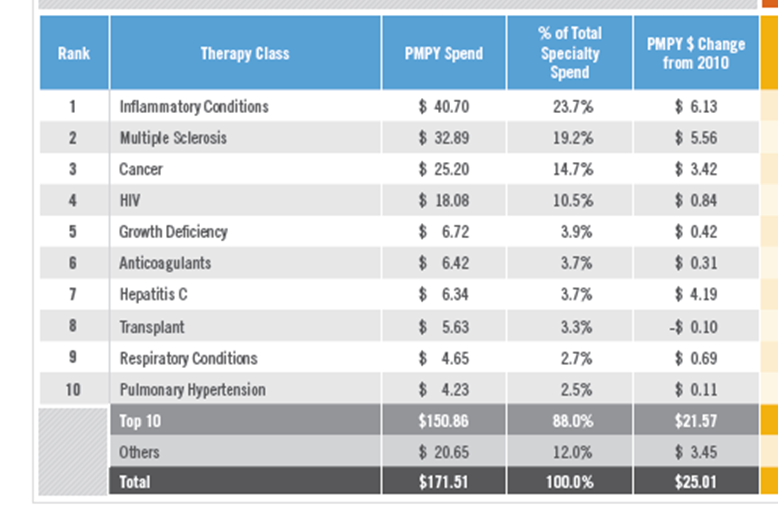
  • Here’s the breakout by class of specialty spend

  • Actual member out-of-pocket and percentage of cost actually went down $0.14.  Surprised?

  • Perhaps most interesting (and new) is a huge section on Medicare and Medicaid trends. Obviously this shows their focus here in an area that CVS Caremark has also been focusing on.

I’d also point you to Adam Fein’s breakdown of this report (in a more timely manner).

Highlights From The Prime Therapeutics Drug Trend Report

It’s been a busy year, and I’m getting a late start on reviewing the drug trend reports as I’ve done in the past. I’ll try to get to the CVS Caremark and Express Scripts reports next week.

As I mentioned last year, the Prime Therapeutics Drug Trend Report takes a more aggressive stand and how they compare to the competition. I’ll give a lot of that credit to Eric Elliot’s presence there as the CEO.

“Smart car buyers know that the actual cost of a car does not always align with the price on the window; the same is true for pharmacy benefits. Yet plan sponsors continually focus on “sticker price” measures such as brand-name discounts or manufacturer rebates — metrics that can be manipulated to make a deal look more attractive.”

The one thing which is noticeably different this year is that the document has more of a care management sound to some of the programs they talk about with an emphasis on total healthcare cost savings. Again, I attribute that to both being owned by the Blues and having several people in the management team that came from payers. Buried towards the back, they call themselves “total health focused” versus their competitors.

As always, here’s a few things that caught my attention:

  • A $4.73:$1 ROI for using the local pharmacist to address gaps-in-care.
  • 1.3% trend increase.
  • 74.7% generic fill rate.
  • 20.1% specialty trend increase.
  • 15.4% of client’s pharmacy spend is for specialty drugs which cost on average $2,654.
  • 0.4% of Rx claims processed are for specialty drugs.
  • Their Rxs PMPY have gone up to 12.4 which I think is closer to industry.
    • This is an interesting one. I pointed out a few years ago that they were below average which I wasn’t sure if this was due to plan design, member mix, or client mix.
    • They seem to be going up even though some industry data suggests a downturn in Rxs filled which again is something I can’t explain.
    • It could simply be more people >50 years old are staying in the insured mix…and they use more drugs.
  • Their average net costs per Rx were:
    • $165.33 brand
    • $17.95 generic
    • $57.53 combined
  • They breakdown specialty spend by category and also show how it’s growing and is projected to grow as a percentage of total drug spend.
  • Of course, another big piece of the specialty picture is how the spend breaks out between medical and pharmacy benefits. This is why blending data to understand the complete picture is important.
  • I thought the list of specialty drug management tools was a good starting point although I expected to see more here about how to integrate with the payers especially around categories like oncology and what BCBS of Florida is doing around an oncology ACO solution.


Drug Trend Reports: Quick Summary Of Big Three PBMs

“Comparative” is a very loose word to use here since each PBM has a slightly different approach to their analysis.

But, while it’s truly impossible to compare apples to apples and I will continue to argue that trend may be an irrelevant metric, I know may consultants and others are focused on these metrics.

With that in mind, I pulled the trend numbers (overall and specialty) along with the generic fill rate from the Express Scripts, CVS Caremark, and Prime Therapeutics trend reports.


Overall Rx Trend

Specialty Trend

GFR

CVS Caremark

2.2%

19.1%

74.1%

Express Scripts

2.7%

17.1%

75.0%

Prime Therapeutics

1.3%

20.1%

74.7%

Notes:

  • I used the CVS Caremark health plan overall and specialty trend data which I thought would be most comparable to Prime’s data.
  • Express Scripts reports their overall trend (without specialty) being 0.1%.
  • CVS Caremark provides a break out of trend along with best practices by sector (see below).


Healthcare Transparency, Out-Of-Network Claims, and Technology Solutions

Another big focus area these days is around the creation of transparency solutions to enable consumers to make better cost decisions about their healthcare.  While several companies have sprung up to work directly with consumers, the large payers have begun to rollout their own solutions.   And, as you can see from the Towers Watson and National Business Group on Health 2012 Survey, this issue of transparency was the 3rd biggest focus area for 2013. 

If you havent’ heard much about the topic, here’s several articles about the challenge of price discrepancies and surprise bills to consumers:

Here’s what UHG and Aetna are doing:

A few of the companies to look at are:

Companies like GoodRx are creating solutions in this area. 

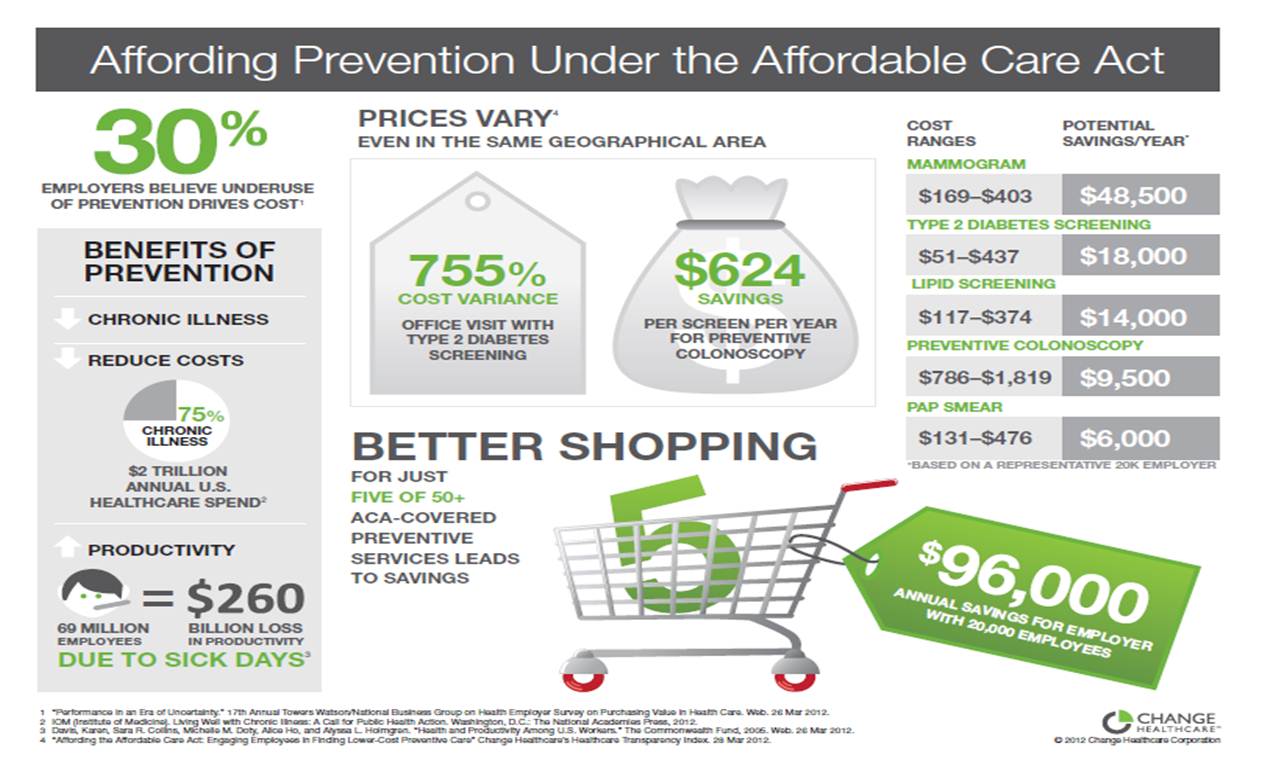
You also might enjoy this infographic from Change Healthcare.


If you don’t believe this is a big issue in terms of price differentials, take a look at this data from the Healthcare Blue Book.  This shows a huge swing in prices which depending on your plan design can directly impact your out-of-pocket spend. 

Test or treatment Low Fair High
Brain MRI $ 504 $ 560 $ 2,520
Chest X-ray 40 44 255
Colonoscopy 800 1,110 3,160
Complete blood count 15 23 105
Hip replacement 19,500 21,148 43,875
Hysterectomy 8,000 8,546 16,480
Knee replacement 17,800 19,791 42,750
Knee arthroscopy 3,000 3,675 7,350
Laminectomy (spine surgery) 8,150 11,744 25,760
Laparoscopic gallbladder removal 5,000 6,459 12,480
Tubal ligation 2,865 3,183 5,729
Transurethral prostate removal 4,000 4,409 8,875
Ultrasound, fetal 120 169 480
Vasectomy 700 1,003 2,100

A Few Diabetes Facts From Express Scripts

Here’s a summary of some of the data from the latest Express Scripts Drug Trend Report relative to Diabetes.

  • 26M Americans have diabetes
  • 15% of Americans (or 39M) will have diabetes by 2020
  • Diabetes costs $194B per year (health spending) and that is expected to rise to $500B by the end of the decade
  • 41% of diabetes are non-adherent to their medications
  • 60% of diabetics using insulin don’t regularly self-monitor their blood glucose levels
  • The drug costs are $81.12 PMPY (based on high utilization of metformin (a generic)) with 14.91 Rxs per user per year (which seems low since the average diabetic takes 5 medications from what I know)

This gives you some data, but I pulled this data from an older blog post of mine from the ADA…

I found this list of diabetes fact from the American Diabetes Association in an article I was reading:

  • 25.8M children and adults in the US have diabetes (8.3% of the population).  This includes 7.0M who haven’t yet been diagnosed.
  • 1.9M new cases of diabetes were diagnosed in people 20+ in 2010.
  • 215,000 or 0.26% of all people under 20 have diabetes.
  • In 2007, diabetes was listed as the underlying cause of death on 71,382 death certificates and as a contributing factor on another 160.022 death certificates.
  • Adults with diabetes have heart disease death rates 2-4x higher than adults without diabetes.
  • The risk for stroke is 2-4x higher for people with diabetes.
  • Diabetes is the leading cause of blindness among adults ages 20-74.
  • Diabetes is the leading cause of failure accounting for 44% of new cases in 2008.
  • Total cost of diagnosed diabetes in the US was $174B in 2007.

And, depending on if you focus on pre-diabetics, the population becomes even larger.  I expect with more and more companies doing onsite biometric screening that the population in diabetes management programs will increase significantly over the next few years.  The keys will be treating them differently based on risk, disease understanding, and patient preferences to make the programs cost effective.

2/3rds of Pharmacy Spend to be in Specialty by 2016

I found this chart to be very interesting.  According to the latest CVS Caremark projections, over 60% of healthcare spending on drugs will be on specialty drugs by 2016.  That’s a huge shift!  A lot of it still sits in the medical side which no PBM has really figured out how to manage, but it creates great opportunity for those that can integrate medical and pharmacy claims to analyze the data and leverage it for cost and care management programs.

9 Leading Trends In Rx Plan Management

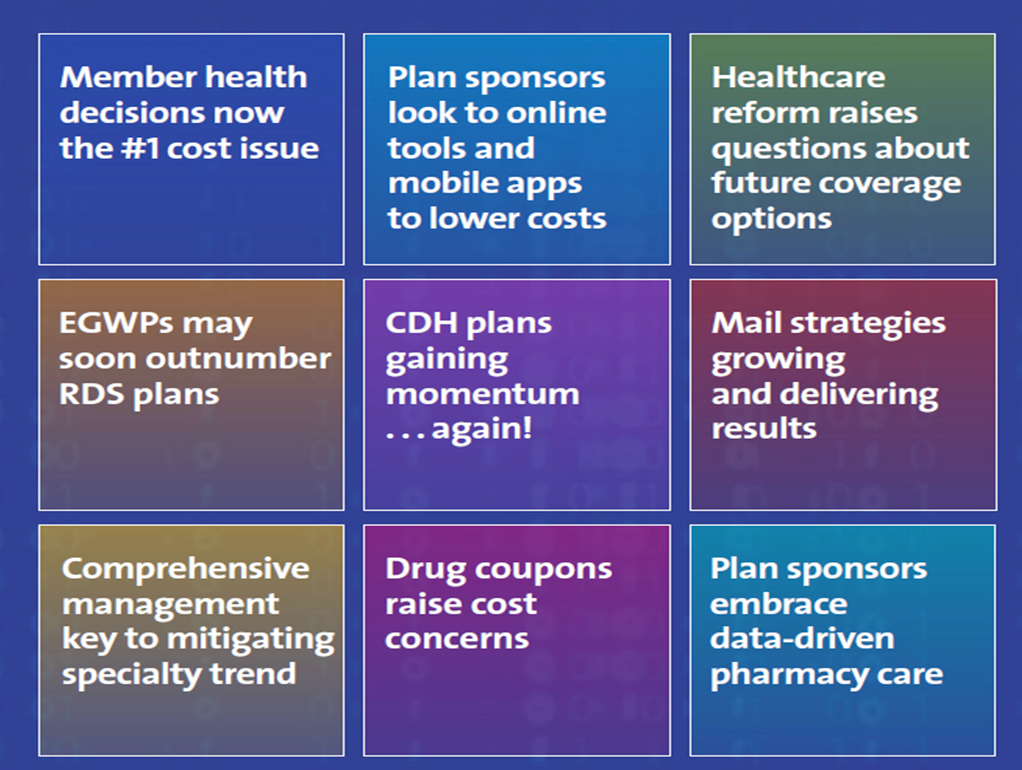
This a Medco report (now Express Scripts) that they recently released.  It lays out what’s on the minds of clients (payers) in terms of prescription management.  Not a lot of surprises here.  (But, if you’re looking at this, you might also note that the URL www.drugtrendreport.com is now up with the new branding and Express Scripts drug trend report.)

What’s Next For The PBM Industry?

A lot has changed to the PBM industry in the past year:

And, there will certainly be more (e.g., the rumor about Cigna’s pharmacy business).  I also think that we’ve seen Walgreens become a lot closer to the independent pharmacies and would expect more changes from them.

So, while I still get people that call me and ask me whether they should start a PBM, I think it’s more interesting to think about this using the GE framework of destroymybusiness.com.  To do that, we have to think about where are the profit drivers for the PBM and how can those be impacted:

  • Mail order has certainly been a driver, but as I’ve discussed and Adam Fein has discussed, this is a challenge to grow these days due to pricing, generics, and 90-day retail.
  • There’s been lots of generics coming to market, but many others have written about the patent cliff and it’s potential impact.
  • There’s been plenty of discussion about generic spread and some of the transparency efforts have impacted this.
  • While many still think rebates are a profit driver, my perception is that most of that is already shared with clients.

So, if you wanted to destroy the PBM model, how would you replace it:

  • You would eliminate spread which has been tried by numerous companies under the “transparency” framework.
  • You would eliminate rebates and move to an outcomes-based contracting approach.
  • You would create a competitive market for mail order which is 90-day retail.
  • I might even look at how the Prime Therapeutics ownership model could be applied at a broader level to unions, employers, and small payers.

So, the new model in my mind would look very different:

  • A big focus on specialty with oral solids being basically just coordinated for DUR purposes around claims processing.
  • A shift over the next decade to be very genomics oriented.
  • A shift in customer service from general call center to a broader self-service option.
  • Much greater involvement in condition management possibly even with a shift to work with the providers.
  • A role in coordinating Rx, Dx, and lab data to drive outcomes.
  • Being known more for clinical care then cost management.

I personally also think you’ll see the pendulum swing back to a closer relationship between the PBMs and pharma which I think is important as you focus on more and more orphan drugs and specialty conditions with genomics and high costs.

I think the key question is whether one of the traditional PBMs evolve and own this space or whether a new challenger comes in and shakes up the industry.  Traditionally, the industry has been basically driven by consolidation with limited success by new entrants.

Medco Guide To Moving To St. Louis

Now that the Express Scripts’ acquisition of Medco was approved (surprisingly without any caveats), I’m going to guess that a lot of employees are in one of four positions:

  1. I just made a ton of money based on my vested options, and I’m not going to work for the new organization (by my choice);
  2. My job is safe, and I work in the field with clients so no real impact;
  3. My job is likely being cut so I need to find a new job without triggering my non-compete; or
  4. My job is safe, and for some… I have to move to St. Louis.

The people in the grey area that are uncertain are the people that are probably the most anxious.  And, of course, some of this is happening to the Express Scripts’ people also where there are overlapping jobs.

Since I’ve been out looking to move for my new job, I have some idea of the basic types of questions that those employees looking to move have, and I haven’t found the information that easy to get.

So, here goes with two caveats – (1) this is my biased view after 19 years here and (2) St. Louis is not NY:

Pharmacies: Generally, the majority of pharmacies in town are Walgreens, but you won’t have access to them.  CVS is building a presence here, but you’ll likely go to the grocery store, big box, or independents.

Grocery Stores: The town is dominated by two local chains called Schnucks and Dierbergs.  There is a Whole Foods and a Trader Joes.  There are a few Shop and Saves.

Workout: There are lots of chain and small gyms around town.  If you haven’t been to one, you should look at the Lifetime Fitness in West County.

Restaurants: St. Louis Bread Company (Panera to you) is headquartered here and is everywhere with free wi-fi.  There are lots of Starbucks.  Some of my favorites (non-chains) include Yia-Yia or Charlie Gittos or Cardwells or Bristols.  You should try Crown Candy in the city and Ted Drewes for deserts.  (I also really like Silky’s in West County.)  [I’m obviously not a foodie.]

Places: You’ll hear people talk about “the Hill” which is an Italian area in the city.  You’ll hear about Clayton which is the one business area outside downtown.  You’ll hear about West County, South County, and North County which are just like the names (counties around St. Louis city).  You’ll hear about 40, 70, 44, 270, and 170 which are the highways.  You’ll hear about Forest Park (which is our version of Central Park).

Vacation: The two Missouri vacation places you’ll hear people talk about are Branson and Lake of the Ozarks.

Casinos: There are several casinos around town.

Smoking: Smoking in restaurants was banned a few years ago.

Other Big Companies: A lot of the big companies like Anheuser-Busch and Ralston have been bought, but they still have a big presence here.  Emerson Electric is here.  SSM Healthcare is here.  Ascension Health is headquartered here.  Centene is here.  Enterprise Rent-A-Car is headquartered here.  EdwardJones, AG Edwards, and Scottrade are all here.  Citibank has a large presence here as does Mastercard.  Build-A-Bear was started here.

Colleges: Washington University (WashU) and St. Louis University (SLU) are both here in town.

Areas to Live: I would say that many people from Express Scripts management live in West County (Chesterfield, Wildwood, Ellisville) which is where I’ve lived most of my time here.  There are lots of transplants out here.  Traditionally, most people from St. Louis will live east of 270 in Clayton, Ladue, Frontenac, Webster, Kirkwood, or in the city (see Delmar Loop area or Washington St. downtown).  Some other areas where people will live include St. Charles or some people in Illinois.  If you like a new house with lots of square footage, you can get that in West County or other areas farther.  There are even a few new subdivisions being built by Pulte homes.

Golf: If you like to golf, there are lots of places to go.  I really like Tapawingo and Peveley Farms.  There are also many good clubs which can be joined for a reasonable fee like St. Albans or Forest Hills.

Schools: The public schools are very good (at least from what I know out here in the Wildwood/Chesterfield area).  There are also a lot of private schools with a huge emphasis on Catholic schools.

Things for Kids to Do: There are lots of great places like Purina Farms, Six Flags, Dave & Busters, City Museum, The Magic House, Grants Farm, and of course…the Arch.  Additionally, there’s the zoo and the Science Center.

Sports: Of course, you have the Rams, Cardinals, and Blues.  There is no NBA.  (Tickets are probably a lot easier to get here than in NY.)

Places to Shop:

  • Chesterfield Mall
  • West County Mall
  • The Galleria
  • The Valley (Chesterfield)
  • Frontenac
  • Fleet Feet (for runners)

Surprises:

  • If you go south in Missouri, you’ll see armadillos.
  • The first question that many people will ask you is where you went to school.  (They mean high school not college which allows them to quickly stereotype you.)
  • There is wine made in Missouri (although I can’t vouch for quality).  You can do a bike tour stopping at multiple wineries which is fun (and maybe dangerous).
  • Here we fry our ravioli to make toasted ravioli.  You can also get lots of gooey butter cakes and cookies.
  • Another big food favorite here is pork steaks (which are actually quite good).

More information:

Is Prescribing A Trial And Error Process?

I found this chart fascinating.  As we know, drugs don’t always work (and not just because people don’t actually take them).  BUT did you realize in some cases it’s a coin flip of whether a drug will work for you?

Data like this is just more support for the case for personalized medicine.  If a genetic test can help determine which drug will work in a patient, you can address their disease faster, avoid unnecessary side effects, and impact overall healthcare consumption and costs.

The key of course is finding tests that can be administered easily and at a low cost for which the economic benefits exceed the costs.  Of course, addressing the education gap within the physician community and patient community to separate facts from myths is important.

NACDS on George Paz Quote

Apparently George Paz, the CEO of Express Scripts, had the following quote the other day that has upset NACDS:

“At the end of the day … Nexium is Nexium, Lipitor is Lipitor, drugs are drugs, and it shouldn’t matter that much who’s counting to 30.”

Are you offended by this quote? If I reverse this, then I guess it doesn’t matter which specialty pharmacy a patient uses, but we all know that pharmacy is a lot more than pill counting (or should be).

I’ve talked about my vision of the future before which is where pharmacists can leverage technology more for prepackaged drugs (especially with low cost oral solids) and long-term patients while their expertise is leveraged in counseling and helping patients understand their drugs and conditions. This is crucial to the healthcare system.

So, while I can exploit the quote to drive an emotional response, isn’t the point that counting doesn’t matter but delivery of the medication and interaction with the patient does matter?

What $6B Could Do For Adherence?

I keep thinking about the $4-$6B that the Visante Study estimated was being spent by pharma on copay cards and how that money could drive overall adherence.

Here’s my thought:

  • If 50% of Americans are taking a chronic medication, there are ~170M people to spend this money on.
  • We can safely assume that 20-40% of this population is adherent without additional investment.
  • We therefore have 119M patients (midpoint) across which to spend $5B (midpoint).
  • This means we have about $42 per patient per year to spend on utilization.
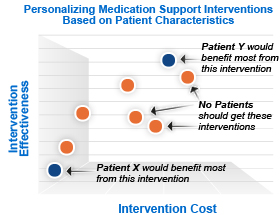
  • Based on work I’ve participated in and work I’ve seen my clients do, I know you could raise adherence by ~10 percentage points by some simple intervention programs that would cost much less than $10 per patient per year. At the same time, there is still lots more work to be done to address primary adherence and we know that not all people are non-adherent for the same reasons or will respond to the same techniques.

    But, I’m pretty confident that the the remaining $32 per patient could fund a lot of POS interventions like Ashville, education programs, caregiver programs, incentives, and other tactics. Of course, this would float all boats (I.e., brand and generic Rxs) so the cost per manufacturer might drop and the ROI should go up. At the same time, this should create overall saving by cutting into the estimated $290B in costs associated with non-adherence.

    Of course, most people are skeptical about this type of preventative health programs (aka primary preventation or public health) although 25 of the 30 years in additional life expectancy gained over the last century is credited to public health. Additionally, the Trust for America’s Health (TFAH) had estimated that an annual $10 per person investment in disease prevention programs could produce more than $16B in annual saving within five years.

    The easy argument would be that ultimately interests aren’t aligned for pharma as prevention might reduce Rx utilization. I would hypothesize that the increased number of new starts and decrease in abandonment would more than compensate.

    Of course, how do we pull this off? I’m not sure but it seems like a great HHS opportunity.

    Pharmacy is “Sexy”? Maybe But Challenges Exist.

    Within the M&A landscape, “people keep returning to pharmacy. Pharmacy has always had long-term investment [interest] … and opportunities for growth and expansion are not difficult to imagine…. Pharmacy is sexy; it always has been, and, for the near future, it will continue to be.” — Dexter Braff, president of The Braff Group, a health care M&A company, told AIS’s Specialty Pharmacy News.

    This was an interesting quote for me. While I agree that the fundamentals of pharmacy are good, there are lots of challenges.

    From a positive perspective:

  • People are living longer
  • People are taking more medications
  • More and more traditional medications are available as generics which have higher margins as a percentage
  • There are more and more infant drugs and other high cost injectables
  • Adherence is becoming more and more important
  • Health reform will give millions prescription coverage (if not repealed)
  • BUT, from a negative perspective:

  • The economy is still tough which impacts overall utilization
  • The costs of healthcare and prescriptions in terms of out-of-pocket costs as a percentage of their earnings can’t continue to rise
  • You make less in real dollars per generic dispensed in many cases
  • Margins are under significant pressure in the traditional business (just look at Walgreens dispute with Express Scripts)
  • Margin compression is (and has been) moving into specialty
  • Consolidation in the PBM, pharmacy, pharma, and specialty world will continue
  • Pharma innovation and pipelines are not very robust with a few exceptions in some specialty categories
  • So…on the one hand, I agree. Pharmacy is very interesting and ripe for innovation. On the other land, there are lots of big, established players fighting for the same margin dollar. I’m still betting money on the industry, but I know lots of companies are trying to sell out so that tells me there are some challenges.

    Why Blending Rx and Dx Data Matters

    Yesterday at the PBMI conference, I was listening to a presentation on the blending of pharmacy and medical data. This has been the Holy Grail for a while although companies have struggled to do it well and successfully use it to affect change. That being said, I think it’s one of the biggest focus area for differentiation in the market today. From a large PBM perspective, you can look at the Guided Health efforts at Prime Therapeutics. From a payer software perspective, you can look at Active Health.

    Some of the examples from yesterday were interesting data points that you’d never see without digging into both sets of data. For example:

  • 84% of patients using PPIs chronically had no clinical diagnosis to support that
  • 67% of patients taking CNS stimulants had no clinical diagnosis to support that
  • 31% of patients taking atypical antipsychotics had no glucose monitoring
  • 60% of patients taking a psychotropic drug didn’t have a clinical diagnosis
  • Of course, the challenge is not only to identify them but to engage the patient and the provider in the best course of treatment looking at cost, outcomes, and patient experience.

    My PCMA Presentation On Copay Cards

    I’m giving my PCMA presentation in FL right now about copay cards. For those of you that can’t attend, here is my executive summary and a copy of some slides. (My actual slide deck was shorter for presentation but this gives more data to those of you looking online.)

    I focused on three key points:

    1. Copay cards are a direct threat to the PBM model. They can run against the idea of copay differentials and formulary tiers. Since they’re not allowed at mail order, they create a disconnect there. And, eventually, I believe they will be in conflict with rebates (i.e., why pay for both).
    2. The cost numbers to the payer are huge ($32B according to Visante) although this is less than $1 per Rx over that 10 year time period. But, it’s concentrated on 3% of all scripts which makes it a big deal.
    3. There should be a win-win IF they are concentrated on specialty medications with a link to improved adherence and health outcomes.

    There doesn’t seem to be clear data (although another article says it is available) but the general data shows that availability and use of copay cards is growing rapidly.

    Investing in copay cards seems to be based on four myths:

    1. Cost is a large issue in non-adherence. It’s an issue but not the dominant issue.
    2. Costs will influence physician choice. The reality is that they don’t know the costs and see this as a pharmacist issue.
    3. Copay cards are a cost effective way to improve adherence. They get about a 10% improvement in MPR which sometimes produces a positive ROI. There are much lower cost ways to get a similar improvement.
    4. Copay cards can delay conversion to generics. This is still in the air with the Pfizer Lipitor program, but if it works, it will be a lightning rod for PBMs and payers to focus on.

    This topic’s not going away. For now, the easy PBM response is to close down the formulary, move more scripts to mail, and implement prior authorization programs. I would expect this will happen more often unless there is more transparency here around what’s happening and the benefits. Things like ZQuiet can, indeed, help one to stop snoring when used correctly.

    Reading Labels; Understanding Side Effects

    We all know people don’t read labels on their medications or their over-the-counter (OTC) pills. If they did, their eyes would gloss over, and they would start to worry about all the side effects. Of course, this is a problem since some things can create drug-drug interactions or create an overdose.

    I was reading an article in USA Today called “Read the labels because ‘all drugs have side effects’“. It lists out Tylenol, Advil, Motrin, Benadryl, Claritin, and Zantac as examples of OTC medications with overdose risks. It gives more details on these and provides several other examples. Here’s a quote from the article:

    “It’s important for the public to realize that all drugs have side effects. It doesn’t matter if they’re prescription, over-the-counter, herbals or nutritional supplements. If they have active ingredients, they have side effects and can interfere with normal body functions.” Brian Strom, director of the Center for Clinical Epidemiology and Biostatistics and the University of Pennsylvania

    The reality is that we’re making an unconscious choice about tradeoffs. Do the risks and probabilities of the side effects outweigh the probabilities of improvement?  Of course, in many situations, they do. 

    I think this points to several things:

    • Document everything you take whether it’s an Rx, OTC, herbal, or supplement.
    • Read labels.
    • Tell your MD and Pharmacist what your taking especially if it’s regular and long-term.

    Ideally, once we have broad use of PHRs (personal health records) which are tied into our grocery bills to track purchases and use then computer algorithms can look for risk factors. And, with personalized medicine, we might one day know which things to avoid based on our genes.

    90 Day Rxs Get Better Adherence

    I think we can all agree now that 90-day prescriptions are correlated with better adherence (and the percentage of retail 90-day scripts is going up).  The latest study here is from Walgreens.

    A new Walgreens study analyzing relative medication adherence of patients filling 90-day supplies of maintenance medications using retail and mail order channels over a one-year period concluded that patients who fill prescriptions via retail have as high or slightly higher adherence levels than those utilizing mail (77 percent vs. 76 percent). The study, “Medication Adherence for 90-Day Quantities of Medication Dispensed Through Retail and Mail Order Pharmacies,” was recently released in the November issue of The American Journal of Managed Care.

    This reflects other studies from CVS Caremark, Express Scripts, Kaiser, and BCBSNC.  (Although sometimes it shows mail order as better and sometimes retail.)

    Of course, the data is slightly different in either case, but the general consensus is the same.  So, the question is what’s next.  How should you compare the two channels?

    • Generic fill rate
    • Overall health literacy and health outcomes
    • Patient experience / satisfaction
    • Payer cost
    • Cost to fill

    This issue won’t go away so it’s going to be important to continue to find ways to compare the channels and find populations that are similar for comparison or remove the bias.


    Medicare Enrollment Up 1.2M (9.5%) in 2012

    Based on new data from CMS as shared by CSFB in a report, the enrollment in Medicare Advantage through January 12th is up 1.2M to 13.3M.  This is 27% penetration into the Medicare market.  PDP enrollment was up to 19.69M a similar gain of 1.2M. 

    A quick summary of the big winners are:

    • For Medicare Advantage (by percentage)
      • Humana +13.5%
      • Amerigroup +13.3%
      • Coventry +12.2%
    • For Medicare Advantage (by membership)
      • Humana +262K
      • United +132K
      • Aetna +35K
    • For PDP (by percentage)
      • Coventry +25.3%
      • Cigna +14.8%
      • Humana +12.3%
    • For PDP (by membership)
      • Humana +312K
      • Coventry +291K
      • Cigna +80K

    This is also interesting in light of Kermit Crawford (CEO of Walgreens) comment yesterday:

    “Based on our preliminary analysis of the Centers for Medicare and Medicaid Services (CMS) data, Medicare Part D plans with Walgreens in their network gained market share in the aggregate, while those without Walgreens lost market share. Importantly, we were very pleased to see that those plans that included Walgreens grew nearly twice as fast as those Medicare Part D plans without Walgreens. In fact, several health plans that partnered with Walgreens grew significantly faster. For example, Coventry, who partnered with Walgreens and introduced a low cost Medicare Part D option, grew five times faster than the overall market.”

    The one obvious account that he’s talking about is Wellpoint which lost 2,000 (0.3%) members in MA and 73,000 (11.6%) members in PDP.

    Uping The RxAnte: An Adherence Predictive Model

    Those of you that have heard me speak know that I look at this topic of predicting adherence both from an area of fascination along with the eye of a skeptic.  While I love the concept of predicting someone’s adherence and therefore determining how to best support them from an intervention approach, I also believe that the general predictors are pretty straightforward:

    1. Number of medications
    2. Plan design (i.e., cost)
    3. Gender
    4. Health literacy and engagement (see PAM score research)

    And, this is a hot topic (see post on FICO adherence score).  You can see my prior posts on some different studies, on the Merck Estimator, and some notes from the NEHI event on this topic.  It generated a good dialogue on Kevin MD’s blog when I talked about paying MD for adherence.

    I had a chance to talk with Josh Benner the CEO of RxAnte the other day.  It sounds very interesting, and they have an impressive team assembled.  In general, they’re focused on:

    • Predictive modeling
    • Decision rules
    • Monitoring and managing claims to track adherence
    • Evaluating effectiveness of interventions
    • And creating a learning system

    There are definitely some correlations to the work we do at Silverlink Communications around adherence.  We’re helping clients determine a communication strategy that might include call center agents, direct mail, automated calls, e-mail, SMS, mobile, or web solutions.  We’re looking at segmentation and prioritization.  We’re looking at past behavior and messaging.  The goal is how to best spend resources to drive health outcomes from primary adherence to sustaining adherence.  This is a challenge, and we all need to build upon the work that each other is doing to improve in this area.  We have a huge problem globally with adherence.

    Why Use Facial Recognition Software At The Pharmacy…Retention?

    I’m sure this is a little bit out there in terms of some of my ideas, but I like it. While a little Orwellian, I was talking with a retailer the other day about how to maximize the experience at the counter between the patient and the pharmacist. At a small independent pharmacy, the owner (pharmacist) probably knows a lot of this patients (customers) by name. On the other hand, this is a lot harder at the larger chains which are busier and with multiple pharmacists working different shifts.

    I was thinking about how technology could address this. What if you had a camera that was monitoring customers as they came in the store (which most probably have today in terms of security cameras)? Could that be augmented by adding facial recognition software (which I have no idea how expensive it is)? Then, the pharmacy could know that George was in the store and tap into a CRM system that could remind Nancy the pharmacist that I have a dog and a fear of needles (for example). When I got to the counter, Nancy could greet me by name and ask about my dog. It would certainly make me feel welcome and should create some stickiness (although maybe less if I knew it was technology enabled).

    Pharmacy Needs A Neuromarketing Study

    I was reading this article in Fast Company about neuromarketing with a focus on the CEO of NeuroFocus. Companies like PepsiCo, Intel, CBS, ESPN, and eBay have used them and many others are trying work in this area. But, I’ve never heard of a healthcare company doing anything in this space. I’ve talked about this before in my article about the book Buyology. It’s fascinating, and the mobile tool that NeuroFocus has created could create new ways of capturing data.

    One interesting example he talked about was the expression of a person on a poster (for example). If the expression is too easy to decipher, we simply move on…BUT if it’s hard to decipher, it causes us to pause and think.

    He also talks about always putting images on the left hand side of the screen and words on the right. (Seems applicable to direct mail and maybe my next slide presentation.)

    Another example is that the brain loves curves not sharp edges.

    Given the shifting pharmacy marketplace, I would think this is a study that the industry needs. The PBMs should better understand what the consumer thinks about when they hear the word mail order. Manufacturers should understand the reaction to brand names or copay cards. The retailers should think about how brand equity plays into choice. There are endless opportunities here. (A business opportunity perhaps!)

    (They Have Hacked Your Brain by Adam Penenberg)

    Wellpoint Quote On Drug Copay Cards

    This topic seems to be heating back up based on several posts on Adam Fein’s blog (Lipitor, adherence) and an article in Drug Benefit News where this quote appeared along with an AIS blog post questioning the PBM’s dislike of copay cards (from the same article that Adam mentioned).

    “Copay offset programs [offered by brand-name drugmakers to compete with generics] mitigate the effectiveness of our tiered benefit design programs and [are] going against what we’re trying to accomplish for our members’ health and for employers.”

    — Peter Clagett, vice president of pharmaceutical strategies and PBM oversight for WellPoint, Inc.


    Walgreens Interview As Follow-up To Their White Paper

    As anyone who follows the pharmacy industry knows (and now millions of consumers), Walgreens and Express Scripts have had an ongoing contract dispute since mid-2011.  Most of us expected this to get resolved by the end of the year to minimize patient disruption, but it didn’t.

    With that in mind, Walgreens has published several white papers to help articulate the results of their employer survey data and to help plans quantify the value of keeping Walgreens in the network.  As this is a fascinating case study that will someday make a great Harvard case study, I reached out to Walgreens to get their thoughts on a few points.

    Thanks to their PR team, I was able to get responses from Michael Polzin, their VP of Corporate Communications, to my questions.

    Consumers are always resistant to change.  After the initial disruption and assuming you eventually reach terms with Express Scripts, how will you get your consumers to return to Walgreens’ pharmacy?  Is the retail pharmacy experience able to be significantly differentiated?  How are you doing this today?

    As we’ve previously stated, we are now moving on without being part of the Express Scripts network. While we are open to any fair and competitive offer from them, we also are fine with continuing to operate our business without Express Scripts.

    We intend to retain patients affected by this situation over time by reaching out on both a consumer level and a business-to-business level. To date, more than 120 health plans, employers and other Express Scripts clients have informed us that they have either changed pharmacy benefit managers (PBMs) or taken steps consistent with their contracts to maintain access to Walgreens pharmacies in 2012.  That represents 10 million of the 88 million Express Scripts prescriptions we filled last year. We’re also in active negotiations with many health plans and employers to provide access to Walgreens in their networks as soon as their contracts allow. In addition to those 10 million prescriptions already retained, we also expect to retain many Medicare Part D patients who previously were in an Express Scripts-managed Part D plan and moved to a different plan during last fall’s open enrollment period. We will get more detail on those numbers when CMS announces the results of the open enrollment period later this month.

    On the consumer level, they are very receptive to looking at options to continue using Walgreens pharmacies whenever possible. They want to retain their choice of pharmacy and are exercising that ability as best they can. For example, we’ve had great response this month with our Prescription Savings Club (PSC) promotion. The PSC offers savings on more than 8,000 brand name and all generic medications. During the month of January, you can get an annual membership in this program for just $5 ($10 for a family).  We have seen more than 250,000 patients sign up for the club just since Jan. 1, and we continue to have record sign-up days. The interest we’ve seen in the club has been extraordinary.

    As for differentiating the retail pharmacy experience, that is exactly what we are doing through our new Well Experience store format, which has piloted so far in about 20 Chicago area stores and the entire Indianapolis market. The pharmacy, health and wellness area of these stores are truly a game changer. The pharmacist is more accessible by bringing them out from behind the pharmacy counter to a desk in front of the pharmacy. As a result, patient interactions are higher than our pharmacists have ever experienced. The format also allows for tighter integration between our Take Care Clinic nurse practitioners and pharmacists to create a real community health corner.

    We’ve had many CEOs of major health plans and large employers tour these Well Experience stores, and their No. 1 comment is, “This is exactly what we need. How fast can you make this happen?”

    The white papers are good summaries for the consultants. How are you taking your message to other constituents – consumers, MDs, Wall Street?

    Our best ambassadors to consumers are our pharmacy staffs. They are the ones with the trusted relationship with our customers and are able to have individual, face-to-face conversations with them. They’ve done a tremendous job educating our patients, and that’s why we’re seeing so much interest in the PSC and have patients finding other ways to continue using Walgreens, such as using their spouse’s coverage, if available.

    The same is true with physicians. Our pharmacy staff work with them every day and help them find the best options for their patients including generic alternatives that can be very competitive through the PSC card with a 90-day supply compared with the patient’s program under Express Scripts.

    As for Wall Street, we’ve been quite active speaking at analyst conferences, addressing the issue on our earnings conference calls and at our recent annual shareholders meeting. The analysts also have found our white papers and other SEC filings to be helpful in understanding the situation.

    Ultimately, payers/employers care about cost.  If a PBM creates savings for them thru a limited network, can you summarize what they lose by not including Walgreens and how that transfers to hard dollar savings?  Are Walgreens consumers more engaged with their health?  Are they more satisfied with their healthcare?

    Our research demonstrates the importance of Walgreens presence in a payers’ network in addition to the cost factor. A Walgreens proprietary survey conducted in December of 823 executives and managers who are key decision makers for pharmacy benefit decisions or provide input found that 82 percent of employers said that they would not exclude Walgreens for less than 5 percent savings on their total pharmacy spend. Sixty percent of employers would not exclude Walgreens for less than 10 percent savings, and 21 percent would not exclude Walgreens from their network regardless of the amount of savings. These findings on employer attitudes are consistent with recent research published by several leading equity research analysts. Clearly, employers value having Walgreens as a pharmacy option for their employees, but Express Scripts wants to take that choice away.

    Now, add to that the small variation in costs among pharmacies. We believe that the vast majority of pharmacies, including Walgreens, receive reimbursements per prescription that fall within a narrow band, typically within less than 5 percent of one another. Therefore, excluding any pharmacy with our 20 percent market share from a 5 percent pricing band can only result in savings on the order of 1 percent or less. And that doesn’t take into consideration the additional savings Walgreens can provide through our leading generic dispensing rate or the 7 percent savings that payers can see by adding a 90-day refill option at our retail pharmacies.

    It’s also important to point out that during negotiations, Walgreens offered to hold rates for a new contract flat and did not seek an increase in rates. The response from Express Scripts was to insist on being able to unilaterally define contract terms, such as what does and does not constitute a brand and generic drug. Express Scripts also proposed to slash Walgreens reimbursement rates to levels below the industry average cost to provide each prescription.

    Walgreens is focused on helping payers with their total health care spend, not just the 10-12 percent of their health care costs that are spent on prescription drugs. While a patient with asthma can lower drug spend by not getting refills on their medication, the resulting emergency room visit that could result will be much more expensive overall for the payer. So we are focused on expanding the pharmacist’s role among health care providers to lower overall medical costs rather than focusing on drug spend alone.

    Adherence is a big issue these days especially in Medicare where it is one of the key Star measures for PDP. One of the key value points in the paper is about adherence. How has Walgreens improved patient adherence and are you collaborating with payers to do this?

    Walgreens pharmacies provide many medication adherence services, counseling and other assistance that lowers medical costs by improving outcomes. These include monthly adherence calls to inform patients about critical upcoming blood tests that are required to continue therapy; next-day home delivery for medications; assistance programs to help patients minimize risk resulting from economic circumstances that may negatively impact therapy compliance; and alerts for missed doses, at-risk patient behavior or serious adverse side effects that are communicated to a prescribing physician. We also offer 90-day supplies of medication, further promoting adherence. Walgreens pharmacists have consistently demonstrated increased adherence to chronic medicines for high-risk conditions for the populations that we serve. For example, for patients in one study who filled their statin and thyroid medications at community pharmacies and who consulted with a pharmacist, a significant improvement in first refill rates resulted (from 55.7 percent to 70.4 percent) after the adherence program was implemented.

    While CVS has opted to own a PBM, Walgreens has sold their PBM.  Has this experience with Express Scripts changed the way you interact and contract with PBMs?  Do you think this will have broader implications on the industry?

    I think it has helped us tremendously in terms of building closer relationships with other PBMs and payers. We’re moving forward with partners such as Catalyst Rx, Prime Therapeutics and SXC Health Solutions, and health plans such as Coventry and Humana. All of us see this as an opportunity to create a differentiated offering during the upcoming selling season.

    Have any PBMs stepped up to work more strategically with you to create a differentiated offering to take advantage of this disruption during the 2012 selling season?

    See answer above.

    What’s next?  As Walgreens looks to the future and focuses on creating new value, how are you embracing key changes in the industry around health reform and technology innovation?

    See question 1 and our development of the Well Experience store and pharmacy format.

    Speaking at the upcoming PCMA Event

    I just got added to the agenda for the February PCMA event so look me up if you’ll be there.  I’ve spoken on the topic of copay cards a few times for AIS in the past.  Since then, there have been a few significant events:

    • The Pfizer Lipitor strategy and push around a copay card.
    • The PCMA study on the impact of copay cards.
    • CVS Caremark’s changes to their formulary of which some were attributed to the existence of copay cards.

    As always, I welcome comments, articles, suggestions, or data to support this discussion.  It is certainly one where there is limited data or facts.  Thanks.

    “Twight” (Twitter Fight) Between $ESRX and $WAG

    This is either a massive validation of the perceived value of Twitter or a crazy distraction, but either way, it’s interesting to those of us who study the industry and/or study marketing and communications. 

    As part of the ongoing dispute between Walgreens and Express Scripts, Twitter has become one of the latest tools.  (see June post and September post)  In an effort to sway public opinion and thereby pressure Express Scripts and its clients, Walgreens turned to bloggers and Twitter to push their messaging…but these were in some case paid comments which was surprising.  They already have strong messaging in their IChooseWalgreens website and whitepapers on the Value of Walgreens.  I also thought they were demonstrating some success in converting people to their discount program which was part of their overall growth strategy shared at their shareholders meeting

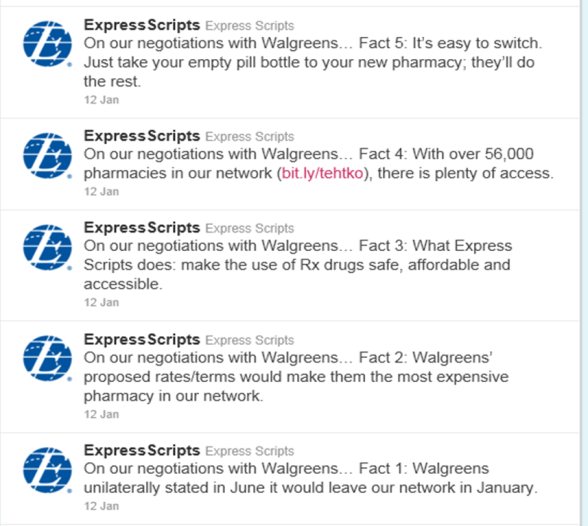
    After Walgreens (with almost 84,000 followers) created a promoted hashtag of #ILoveWalgreens, Express Scripts (with 1,645 followers) countered back with several Tweets about the dispute (see below).  I guess the question is whether with millions affected and decisions made by the businesses and not consumers…does this forum matter?  But, journalists and analysts follow them so it’s important to keep the messaging up.  (Other articles on this are here, here, and here.)

    Conveniently, I found this infographic on how Twitter is changing healthcare.  At the same time, this is an interesting fight because it’s a blend of B2C and B2B crossing paths.  More to come since I’m sure this fight is long from over.

    Who’s the 1% in healthcare?

    As we all have known, healthcare costs are driven by the minority. According to the Agency for Healthcare Research and Quality, the top 1% account for 22% of healthcare spending in the US or about $90,000 per year. (USA Today article)

    So, what are the characteristics of these people:
    – White, non-Hispanic
    – Female
    – In poor health
    – Elderly
    – Users of publicly funded healthcare

    Only about 20% of the high cost consumers stay in that bucket for two straight years…which I think is good. But, I guess you have to look at what percentage die during that period since a lot of costs are concentrated at the end-of-life.

    Obviously it’s critical to develop solutions to engage and manage these patients earlier in the process. As data gets better, our predictive algorithms around conditions will improve and we’ll be able to intervene and prevent or delay cost in the system. The key of course is doing that in a way that fully engages the healthcare team and the caregivers.