Archive | Technology RSS feed for this section

Express Scripts Model – DBN Article

I was quoted in yesterday’s Drug Benefit News with one of my favorite people – Dr. Steve Miller from Express Scripts.  This was a follow-up to talk about their predictive model for adherence.  Steve confirmed what had previously been reported that it is 85% accurate in predicting the 10% of people least likely to be adherent.  He says that the model takes into account past behavior, demographics, condition, and the drug.  Those sound like a lot of the right variables.

The article teases us with information that CVS Caremark is planning to publish a study in the upcoming months on their model.  Medco Health Solutions comes across as more of a skeptic in the article talking about efforts from 20 years ago that were difficult and expensive to execute. 

My quotes were very consistent with what I’ve shared on the blog – fascinating, somewhat skeptical, more concerned about the group that is somewhat adherent than those that are the bottom 10%, implementation of behavior change is more important that the model. 

“Everybody’s trying similar efforts in terms of how to predict adherence…but there hasn’t been a model that has proven itself as being a good predictor.  Maybe Express Scripts has cracked the code…I would assume that if you can accurately predict who is going to be adherent that will be a good tool.”

However, attempting to change behavior in the top 10% of patients likely to be nonadherent will be tough, Van Antwerp contends. “The industry is still waiting for that proof,” he maintains. “If we can predict that patients are adherent but can’t change behavior, then the model doesn’t do us much good.”

CVS Adds Mobile Application

Communications continue to evolve.  Mobile health in the form of applications has either crossed the chasm or is crossing the chasm.  I expect in 5 years that most communications in healthcare for people under 45 will start with a mobile application.  It may “escalate” to other modes, but using a secure application on the ubiquitous mobile phone will be a primary starting point to engage them.

Caremark rolled out their mobile application earlier this year.  Now CVS has rolled out there application.  Several other companies have rolled out their applications also.  Humana’s application is out (mobile site).  Another big PBM is piloting their mobile application with one employer right now. 

So, what does the CVS mobile application do:

  • Find nearby CVS/pharmacy locations using the GPS-based store locator with integrated driving directions and maps;
  • Refill prescriptions from a personalized prescription history for pickup at any CVS/pharmacy;
  • Transfer prescriptions from another pharmacy to CVS/pharmacy;
  • Access the Drug Information Center to retrieve critical details about medication management, including instructions for use, dosing information, side effects and relevant safety warnings;
  • View and manage sales circular to create a custom shopping list and identify money-saving deals each week; and
  • Schedule a flu shot at any local CVS/pharmacy location.

Some Social Media Videos

More and more, I am getting in conversations with clients about emerging media and how that plays into their healthcare communications strategy.  Whether that is simpler things like PURLs, SMS, and mobile applications or more complex decisions around Twitter, Facebook, YouTube, blogging, and social media. 

Here are a few things from YouTube that I thought were good on the general market.

Humanizing Healthcare Thru Science

I was getting ready for a presentation last week and thought that the right way to position technology was as “science” that helps to humanize an overly complex healthcare system that overwhelms most people.  In thinking about that, I stumbled upon the UnitedHealthcare concept of “Health in Numbers“.

Another example of this is the WSJ article this morning on using data. The question is how to find the right mix of data to use and understanding what data applies when. Healthcare isn’t like consumer products. People change segments over time. The segment they fit in for adherence is different than the segment they might fit in for retention programs.

Stop By The Silverlink Booth At The Forum 2010 (DMAA)

Next week in DC is The Forum 2010 which is the annual event for The Care Continuum Alliance (formerly known as The Disease Management Association of America).  If you’re there, you should stop by the Silverlink booth and attend the presentations that we’re giving with some of our clients and other industry leaders. 

  Aligning Employee, Employer & Provider Research to Maximize Value-Based Benefits
October 13, 1:00 – 2:00 p.m.
Jan Berger, MD, MJ, Chief Medical Officer, Silverlink Communications
Cheryl Larson, Vice President, Midwest Business Group on Health (MGBH)
   
  Improving Statin Adherence through Interactive Voice Technology & Barrier-Breaking Communications
October 13, 2:15 – 3:15 p.m.
Ananda Nimalasuriya, MD, Chief of Endocrinology & Complete Care, Kaiser Riverside
George Van Antwerp, MBA, General Manager, Pharmacy Solutions, Silverlink Communications
   
  Addressing Colorectal Screening Disparities in Ethnic Populations
October 14, 12:30 – 1:30 p.m.
R. Reid Kiser, MS, National Director, Clinical Excellence Special Projects and Reporting, UnitedHealthcare
Jack Newsom, MBA, MS, ScD, Vice President, Analytics, Silverlink Communications
   
  Addressing an Epidemic – Improving Diabetes Care with Personalized Communications
October 14, 3:00 – 4:00 p.m.
Jan Berger, MD, MJ, Chief Medical Officer, Silverlink Communications
William Shrank, MD, MSHS, Instructor, Harvard Medical School and Associate Physician, Division of Pharmacoepidemiology and Pharmacoeconomics, Brigham and Women’s Hospital

Do You Know The Tone Of Your E-mail?

This one intrigues me.  We know that it’s much easier to convey emotions face-to-face…BUT we continue to evolve to more electronic communications and less face-to-face interactions.  So, does that lead to more mis-understandings.  I’m sure it does.  One study says e-mails are mis-understood 50% of the time. 

Haven’t you ever read an e-mail several times trying to figure out what the writer was trying to say and making certain assumptions.  We all read into messages.

The application is ToneCheck which integrates right into Outlook.  I haven’t tried it yet, but I’m intrigued by the demo.

Auto-Refill (Part II)

A few weeks ago, I posted my thoughts on the auto-refill solution that various pharmacies are implementing. After talking with a reporter about the topic, I posted it in a discussion group to get some additional thoughts. As a proponent of the solution, I was surprised by a few of the comments and questions which were more skeptical.

With that in mind, I thought I would post some clarifications to the issues raised in the discussion group.

  1. Is the auto-refill solution the same for retail, mail, and specialty?
    Generally, it is retail pharmacies and mail order pharmacies that are implementing this type of program for maintenance drugs. You wouldn’t want to implement this on controlled substances (even if it was legal). You wouldn’t want to implement it for drugs where patients frequently change strengths (i.e., titrate). You wouldn’t want to implement it when a patient was new to therapy in case of side effects or other issues. Once they are stabilized on a maintenance medication, this makes a lot of sense.
  2. Is auto-refill a solution for adherence? Aren’t there many other issues?
    People are non-adherent for numerous reasons. The most common reason in many studies is “I forgot”, but there are significant issues around health literacy. There are also cost barriers, side effects, and belief or cultural issues.
    Obviously, auto-refill won’t address all of those issues, but it can help with the people who say they forget to refill. It can also help minimize the gaps in care which exist (i.e., I run out of pills a few days before I pick up or receive my new prescription).
  3. Does auto-refill lead to accumulation of drug supply?
    Anything can lead to accumulation if the patient is not using their medication but refilling their drug on a regular basis. [How many patients do that…the drugs cost money.]
    This concern can be addressed in two ways: (a) setting the auto-refill trigger to be after 85-90% of the days supply last dispensed should have been used AND (b) reaching out to the consumer to see if they are ready for their next fill.
  4. Isn’t the best strategy for adherence to use “live” agents?
    Of course, we’d all love the luxury of talking to every patient at length around their therapy (imagine a world where commercial MTM was economically sustainable). This would be ideal, but in general, this “live” interaction is best for the initial diagnosis and new start of a script.
    Plenty of studies have shown that automated calling technology compares very favorably to nurses, agents, and other professionals in driving consumer behavior (at a much lower cost). Speech recognition technology creates a conversational tone with the consumer and can employ best practices such as personalization, motivational interviewing, behavioral sciences, and linguistics in a systemic way.
    At Silverlink, our studies have shown significant lift in improving refill rates and closing gaps-in-care around adherence through the use of automated calls.
  5. What about “auto-refill reminders”?
    This is exactly what I advocate. It’s much like the “choice architecture” that Express Scripts talks about in their Consumerology positioning around mail order. You’re more likely to get someone to refill a medication (typically appropriately) when asking them to opt-out of the refill than asking them to opt-in to the refill. And, neither I (or anyone I know) would advocate having a patient enroll in an auto-refill program and simply keep getting their medication shipped to them to simply drive up revenues and false adherence metrics.
  6. What about health literacy and education?
    This came up several times. An understanding of their disease, why the medication is important, what the medication will do, and other issues are critical for a patient to be engaged and “own” their condition. This is a systemic issue that begins with the lack of time for discourse at the physician’s office and runs throughout the entire process. We have to address these things. The more you can personalize adherence communications to reflect personal barriers and proactively address them during the interaction with the patient the better. Some of that can automated, but yes, some it has to be “escalated” to a “live” interaction.
  7. At the retail pharmacy, doesn’t this increase returns to stock?
    Again, I think this is in how you implement the program. Since I recommend that clients implement it with a reminder to the patient to tell us if you don’t need it refilled yet, I think you can avoid some of this. You might also be able to embed some system logic into your system (i.e., you could look for other therapeutically equivalent new starts within the same therapy class in the past 30-days to identify patients that may no longer be on the original drug).An example of the process might be:
  • Patient X fills their 4th fill of a maintenance drug on 3/17.
  • Patient X receives an offer to enroll in the auto-refill program.
  • Patient X receives an automated call on 4/10 stating “This is your pharmacy calling. Is this Patient X? As requested, we are calling to let you know that we are ready to refill your medication. If you are no longer taking the medication or you have more than 7 days supply left, please call us at 800# to let us know. Otherwise, your medication will be ready for you to pick it up in 2 days.” [Note that this would have to follow certain HIPAA guidelines.]

You can see more dialog on this at The Pharmacy Chick blog or in this article from last year.

“Steven Friedman, VP of pharma services at PDX-Rx, notes that the company’s dispensing and adjudication software, when engaged for auto-refill, has been shown to add as much as two additional months on therapy (i.e., two more months of adherence) in a six-month period—a substantial improvement both in adherence and in pharmaceutical sales.”

What’s the net of all this (IMHO)…

  • Adherence is a huge issue.
  • We need to try lots of things to address it.
  • People forget more than they are likely to admit.
  • Auto-refill (renewal) isn’t for everyone but is a nice service when implemented right.
  • It will drive up more Rxs but no one’s going to pay for (and/or pick up) scripts they don’t need.
  • I support it.

Suck, Cut, Zap or Work It Off – Fat

Obviously, the best way to get rid of fat is diet and exercise. Eat less calories; burn more calories.

But, in our instant gratification world, is that enough? Certainly not for people who have the money to try other solutions. Look at the weight loss business…it’s estimated to be about a $60B a year business.

We’ve all seen the obesity statistics and trends. It’s a huge issue (no pun intended). And, it has a presents a significant burden on our healthcare system today and is a looming issue that will drive future costs.

Are there other options? Yesterday’s WSJ identified two new treatments that cleared by the FDA for “body contouring”. I saw it being discussed on the news this morning, and I’m sure that the companies (and physicians that administer the treatments) are suddenly much busier.

Zeltiq is a company I read about a few months ago. They grab your fat and freeze the fat cells causing them to self-destruct. You may have some mild bruising or redness for several days. They say it takes 3-4 months to see results.

Zerona is a laser based treatment that forces the fat cells to empty. It takes a few treatments a week for a few weeks with relatively quick results. Their trial study had people losing over 3 inches more than a control group in their waist, hips, and thighs (combined).

There are no incisions (compared to traditional liposuction). No downtime. No anethesia. [Note that about 200,000 Americans had liposuction last year.]

These treatments aren’t cheap. Think $1,500 to $3,000 for an area. Obviously, that should allow for some good profit especially as the fixed cost of the machines are paid for with increased volume of consumer usage.

One question I’ve had is what happens if you do this, but you don’t change your lifestyle. If you eliminate the fat cells around your waist and keep eating crap, will you be more likely to get fat in other areas of your body?

The other big question I have is whether simply eliminating fat cells is healthy for you. As you’re weight goes down, will that make you more active? Will it reduce your appetite or desire for fatty foods? Will it decrease your cholesterol level?

Or, once you’ve spent the money, will you feel a greater commitment to keep your body in shape so the body contouring wasn’t a waste of money?

Obviously, this is a big area for pharmaceutical manufacturers searching for a weight loss pill and device manufacturers who keep trying to find new devices that are cheaper and more effective. I expect this to be a hot area in years to come.

From the article, it says that the devices only target subcutaneous fat (the kind under the skin) versus the visceral fat (the kind around your organs that releases fat into the blood stream). So, it’s a cosmetic improvement not necessarily a health improvement.

Of course, don’t get too excited…generally theses are for people with mild extra weight not for obese people.

I guess the final question I would have is what would these companies have to do or prove to make these covered under your health benefits…better health outcomes correlated with body contouring. Possible?

Texting Trends Infographic

I remember a few years ago when I got my first text.  It was from the CTO at Accenture, and I had a phone that didn’t have SMS.  I had to click thru a link to a website to see the text.  I was totally flustered.  How was I supposed to respond?

Well…I’m past that now.  My brother and I send happy birthday via text.  I find it easier to send a quick text when in a loud spot like the airport than to try and call.  I’m sure my volume is still low.  My friend said their kid did 15,000 in one month (which seems impossible).  Another friend told me that their kids can text without looking.  They sneak a quick peak and then respond without even pulling it out of their pocket (when their supposed to be off the phone). 

We all know this is an emerging communication channel that will continue to evolve.  And, smart phone use and adoption is expanding rapidly.  So, here’s the infographic.

Mobile / Social Media Stats c/o HubSpot

I’ve never met the people over at HubSpot, but I like the information that they’re making available.  (Thanks SF for the suggestion.)

Here’s a few graphics from a recent post on their blog about mobile infographics.  (BTW – I love infographics)

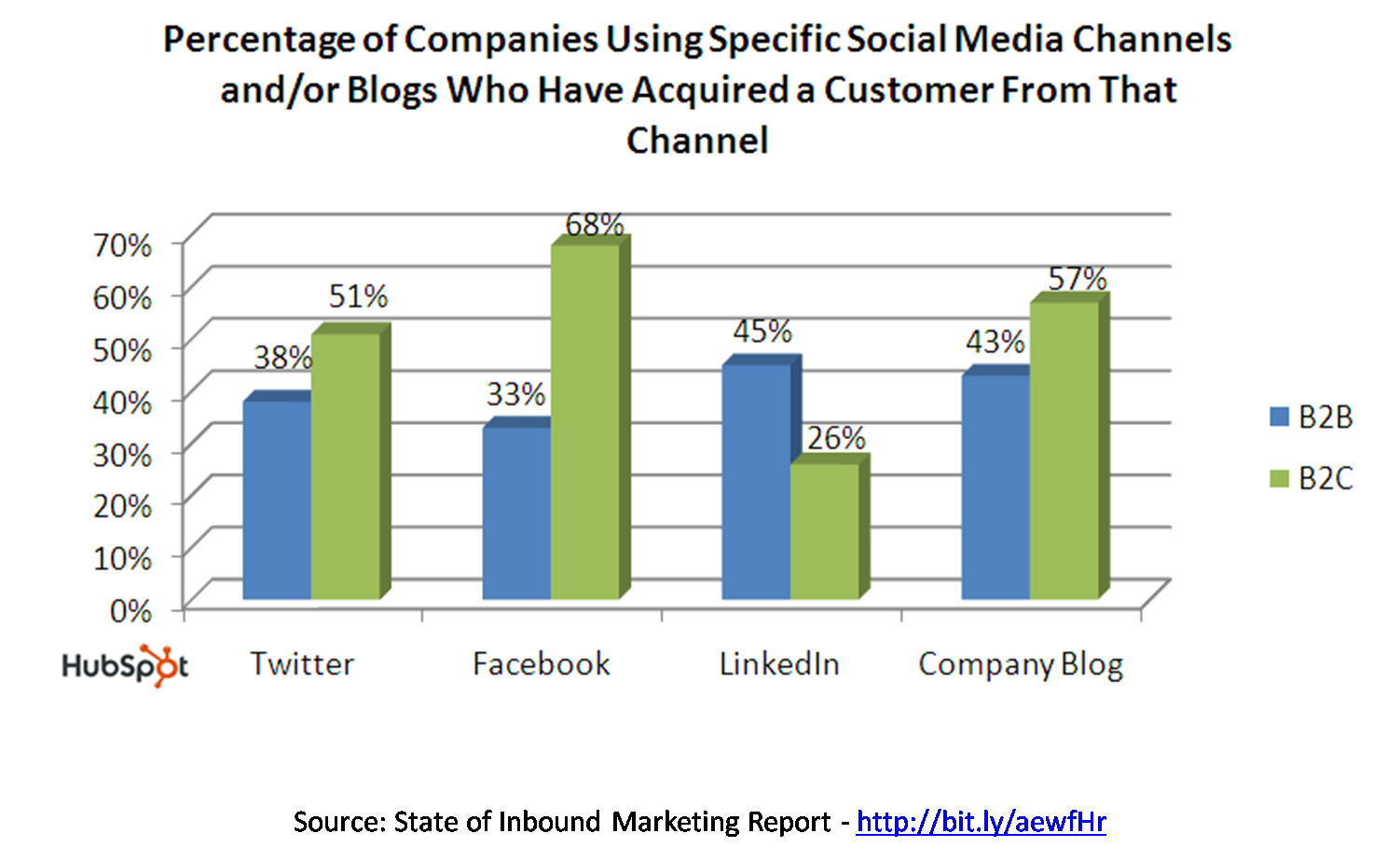
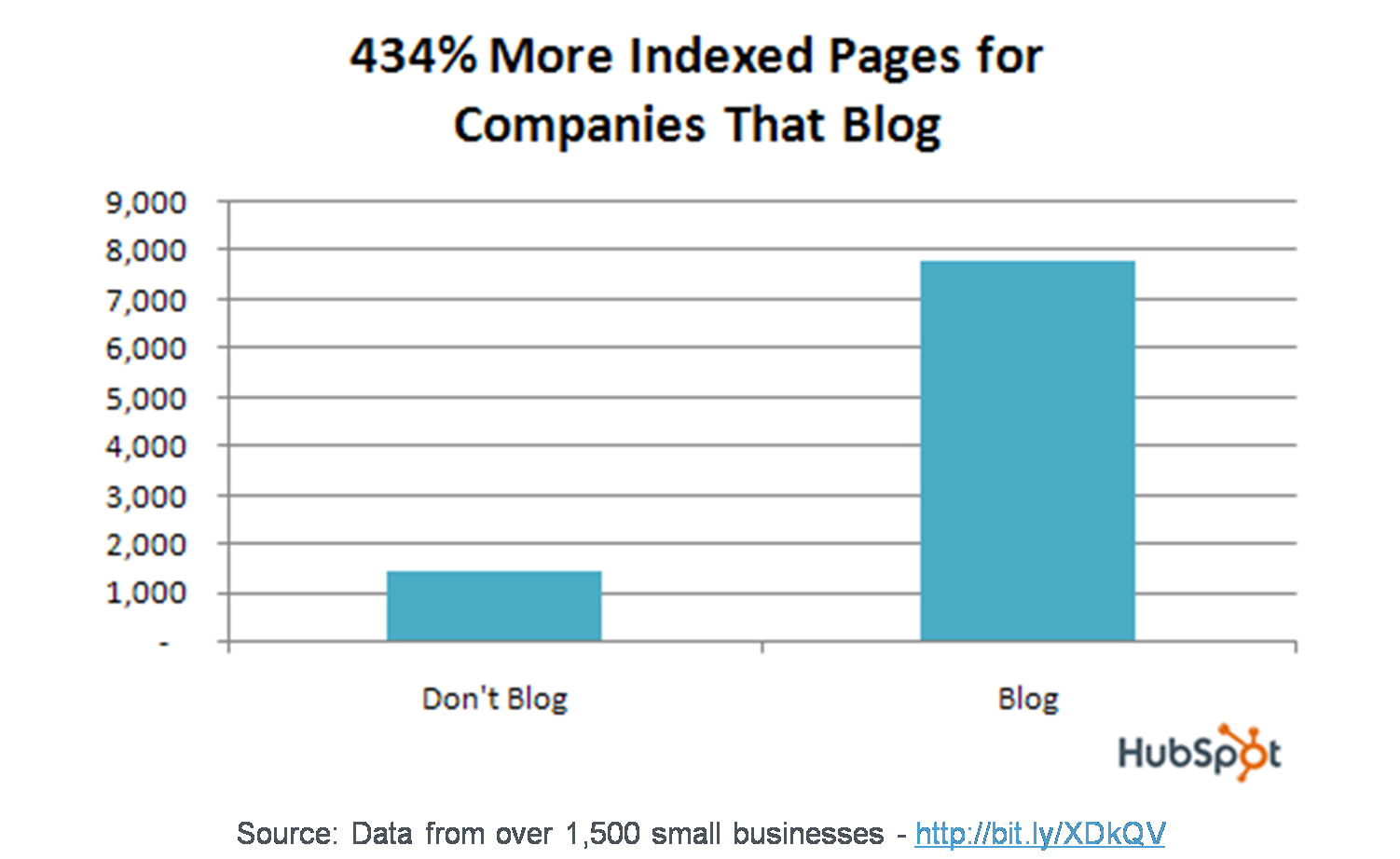
In another area of their site, they have some interesting data on how blogging and social media drives leads.  Here are three of them that I found interesting.

Sleeping With Your Mobile Phone

There is lots of good data in the new Pew report on “Cell Phones And American Adults“.  It shows that people who text a lot also talk on the phone a lot.  It shows how adults use text messaging compared to teens.  The one that stuck out at me was that 65% of people had slept with their phone.

Why do people do this?  I do it if I’m using the phone as an alarm at a hotel, but otherwise, I don’t want the phone beeping at me at night with e-mails (legitimate or spam). 

When Should You Ask About Auto-Refill?

Auto-refill for prescriptions is all the focus lately.  Everyone from the big PBMs to the local pharmacies are encouraging this.  It helps with adherence (or at least with adherence calculations since you can’t force someone to take the pills just because they have them).  It addresses one of the common patient reported issues with adherence which was that they forgot.  They ran out of pills or didn’t know to refill the medication.  In some cases, a few days of pills may not be a big issue, but in other categories, this could be a problem. 

In general, professionals consider taking medication 80% of the time (or 80% medication possession ratio) to be adherent.

So, what is auto-refill?  You sign up to have your medication refilled when it’s time for a new bottle and then mailed to you or ready for you at your retail pharmacy. 

One question is whether this includes auto-renewal.  To most consumers, renewal means nothing, but it does in the pharmacy business.  When you get a script, it is only good for 12-months.  That could be twelve 30-day fills or four 90-day fills.  When you’re done, you need a new prescription from your physician.  That is called a “renewal”.  To most consumers, we just think of it as we ran out of refills.  So the critical question here is whether you include renewals in the auto-refill process.  I certainly advocate for yes.  If I run out of medication and expect my prescription to be refilled (because I signed up for auto-refill), I would want my pharmacy to reach out to my prescriber proactively.  Or, even if I’m just planning on refilling, I’d like my pharmacy to let me know in advance that I need a renewal or new Rx since I don’t have any refills remaining.  That can delay the process so without doing that you can create a gap in care.

That gap-in-care is one of the reasons why patients drop out of mail (which may happen to me).  In my case, I waited until I was down to 5 days supply of my medication imagining that my pharmacy would call me to remind me to refill.  They never did so I called to refill, but I was out of refills so a renewal is needed.  Getting in touch with my prescriber could take a few days so now I’m not sure what might happen.  Ideally, I would get a confirmation from them on when it’s coming, and I could go to a local pharmacy and get a 3-day “bridge supply” for a minimal fee.  We shall see.

But, what I recently found interesting (that took me down this path) was some research from CVS Caremark that was recently presented saying that

According to Keller, new research by CVS Caremark seeks to address the fact that many healthcare decisions unnecessarily are complicated by the lack of clear and plain language. In addition, choices for such programs as automatic refill of prescriptions or generic alternatives can be overlooked because those options are not readily transparent to the consumer, Keller noted.

“Through this research we are testing options presented through four different communications channels to see how consumers react to different scenarios,” Keller said. “One of our preliminary findings looking at consumers on the Web shows that if we reach out and present a decision to choose automatic refill in advance of renewing a prescription, they sign up at twice the rate of those who were passively presented an opt-in choice after receiving a prescription.”

For those of us in the communication space, this is interesting.  How you present information…when you present information…the language you use…All of these things are important as demonstrated here.

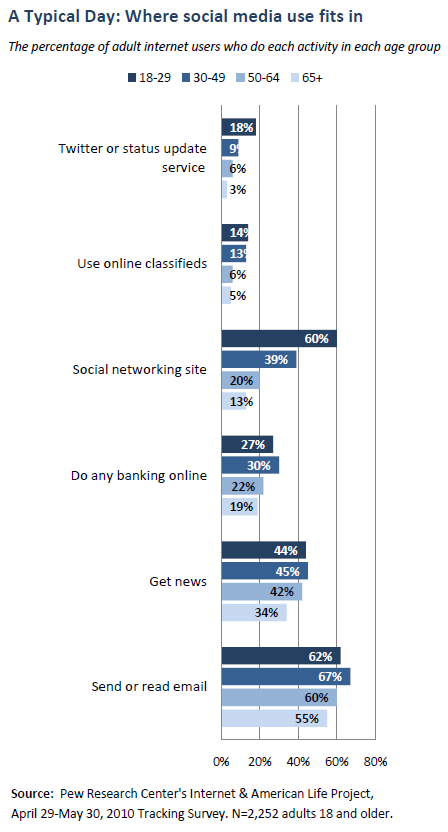
How Seniors Use Social Media (Pew)

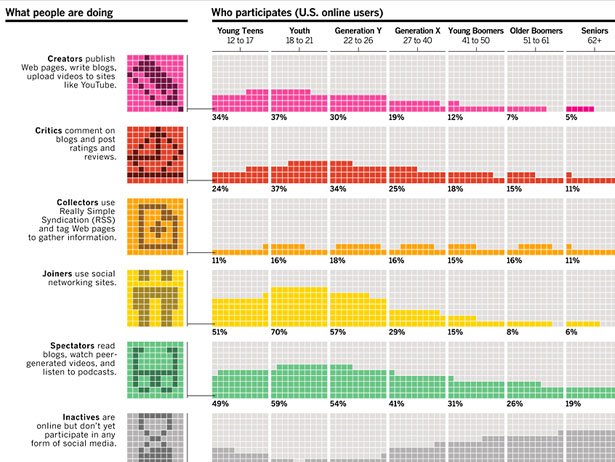
Not a big surprise…the Baby Boomers use technology.  Many of us have had their parents, uncles, grandparents, etc., send them a “friend invite” or talk to them about technology.  This will obviously continue as it’s more the norm and you have people that have been using technology for years age into retirement and look to connect with disparate friends and family.

Here are two charts from the recent report from Pew – Older Adults and Social Media.  Very interesting to watch the trends.

Seven Myths Of Social Media

I’m just finishing up a book on social media (book review to come shortly). As I was reading it and based on my experience, I came up with a few myths:

  1. You have to be everywhere.  It’s impossible.  There are so many sites out there.  You have to know your audience and determine where to spend your effort.  You MIGHT have to stake your claim to avoid someone else using it and provide information for consumers to reach you, but you can’t actively contribute and add value across the social media spectrum.
  2. Set it and forget it.  Social media is about dialogues and continuous information.  You can’t put up static content like a website and come back every week, month, year and update it.  The best companies respond (for example) to a Twitter comment about them in 24-hours while some never respond. 
  3. Build it and they will come.  There is a constant dialogue about whether you have to “own” the community or simply participate in it.  There is certainly reason to create content (i.e., blog posts, tweets), but you have to find a non-marketing environment to interact with your customers and influencers and understand their needs.  In many cases, that environment might already exist and you need to join it.  Additionally, you can’t simply launch something or join something without pushing out information about it.  For example, if you have a Facebook page, you need to have a link on your website, put it in your LinkedIn profile, include it in your press releases, etc.
  4. Marketing should own social media.  Traditional marketing has been about the controlled message.  Social media is about participatory messages.  There’s a big difference.  Additionally, social media can be and needs to include any employees who are actively engaged in social media.  We’ve seen numerous examples of employees who comment inappropriately only to jeopardize their job.  (I’ll agree that there are issues here to still be defined regarding privacy versus freedom of speech.)  Marketing can’t reply real-time about operational issues.  Ownership is a collective effort.
  5. You can outsource your social media.  This is a big mistake.  There are lots of consultants who will tell you what you want to hear.  They will talk about some channel or channels that work (e.g., Twitter experts, Facebook experts).  They’ll talk about search engine optimization (SEO) and what to do.  They’ll tell you that you need an iPhone app or a YouTube channel.  The reality is for your solution to be genuine and timely that it needs to be someone(s) who understands the company, feels passionate, and is empowered to do something quickly.
  6. Tell me..tell me…tell me.  This works great for presentations.  But, you’re now a part of the audience (although an informed member with an agenda).  You need to tailor your objectives to what the audience wants / needs.  In a community, they’re there for a reason.  They are discussing a topic and sharing their thoughts.  They want you to add value not sell your products or agenda.  They want to be valued.
  7. You can avoid it.  This is an obvious one.  With 500M users on Facebook and YouTube being the second most popular search engine, you have to understand how people find you on the Internet.  Google is a verb.  Current generations will grow up with theses modes, smart phones, and be uninhibited by our sense of privacy.  Technology is and will continue to be more ubiquitous.  The way people learn about companies is changing.  The way people learn about people is changing.  Relationships between people are changed based on technology.  Companies have to understand what’s being said about them and embrace it not run from it. 

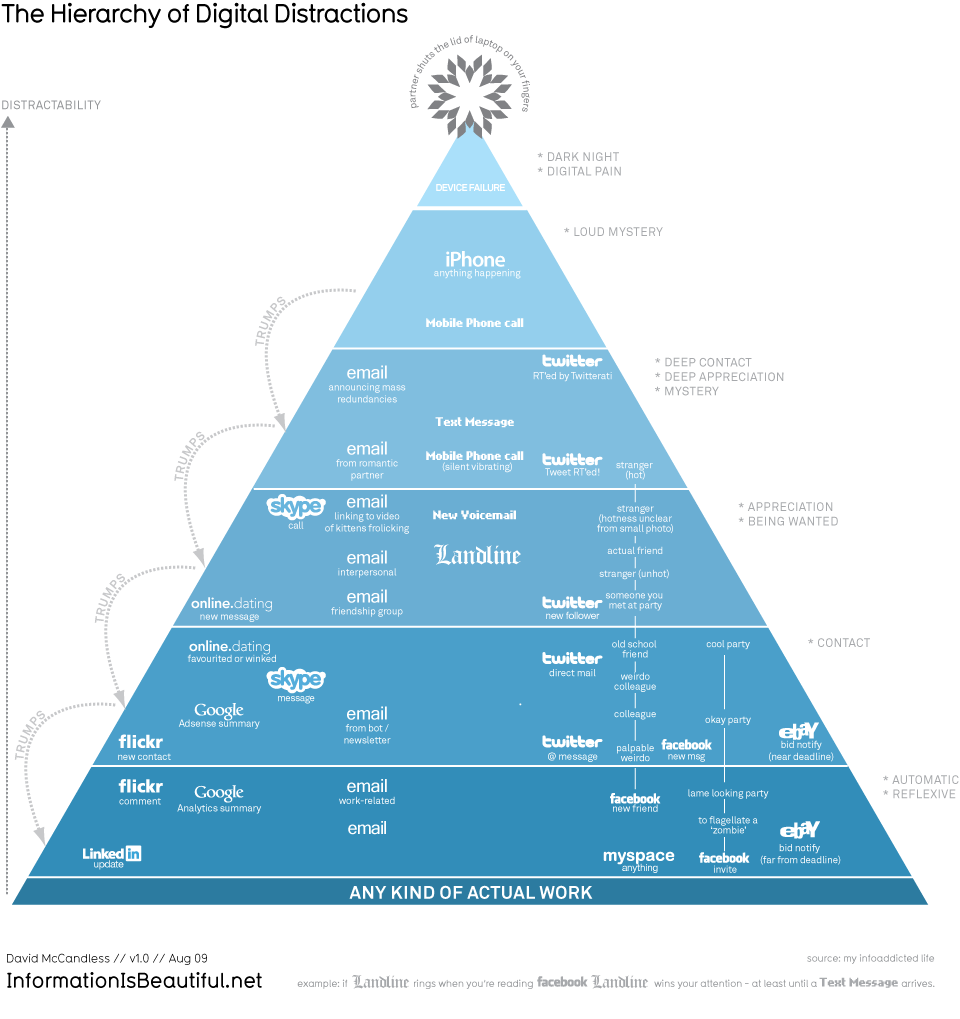
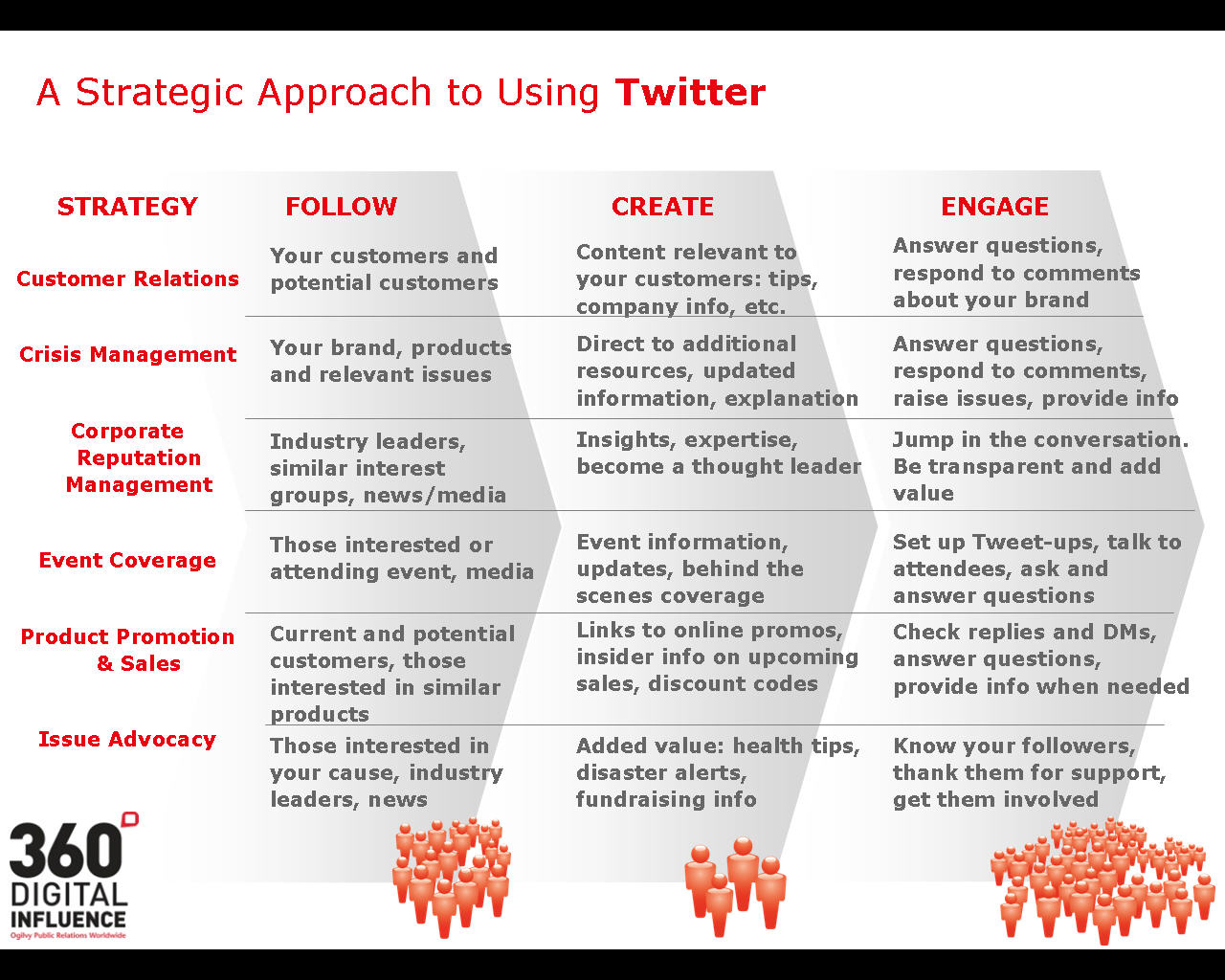
There are tons of infographics out there that symbolize some of this.  I pulled a few of my favorites together here, but you can find more.

NCPDP Nov 2010 Event: The New Economy And …

On November 2nd, NCPDP is hosting an educational event called “The New Economy and It’s Impact on Healthcare, Pharmacy, and the Patient.” Sounds pretty cool! It’s a topic we all talk about.

What does the new sense of frugality mean? What will new forms of insurance mean? How will pharmacy evolve? Will MTM work? Will MTM become a product for commercial? How is the consumer’s behavior changing relative to information and compliance?

The agenda includes yours truly along with people from:
* Kaiser
* Walgreens
* AARP
* Sanofi-Aventis
* North Carolina Association of Pharmacists
* Eaton Apothecary
* American Society of Consultant Pharmacists
* RegenceRx

Complexity of Decision Making

In today’s world, the amount of information is overwhelming.  At the same time, we are constantly striving to practice DIY (do it yourself) medicine where we are reaching out to experts to help us sort thru information (especially when data is conflicting).  But, a lot of that assumes we know what we need or we know when to ask for help.

A study published recently in the Annals of Family Medicine looked a small group of diabetics and how they received information about their condition. 

They collected a nice long list of different sources used for information:

  • People
  • Physician
  • Nurse, nurse practitioner
  • Dietitian
  • Diabetes educator
  • Pharmacist
  • Dentist
  • Eye doctor, eye laser surgeon
  • Health care professional(s), specific role not indicated
  • Self, have had training as health professional or worked in medical field
  • Hospital-based diabetes center
  • Insurance company nurse, nurse, dietician, educator, wellness program personnel
  • Workplace nurse, health professional or wellness program
  • Family, including family members with diabetes
  • Friends, neighbors, coworkers, acquaintances, other patients, personal interaction, “word of mouth”
  • Classes or seminars
  • Support groups
  • Participation in research study
  • Comprehensive weight loss program
  • Health fair or similar event
  • Media
  • Internet (Web sites, search engines)
  • Information from organizations (eg, American Diabetes Association, American Kidney Foundation), other than from their Web sites
  • Books
  • Magazines (eg, Diabetes Forecast, Diabetes Self-Management, popular magazines—especially health/diet, cooking, women’s, African-American interest)
  • Television (eg, “D-Life,” news programs, talk shows, food-oriented shows)
  • Newspaper/newsmagazine articles
  • Booklets, brochures, etc, from clinic or health professionals
  • Booklets, brochures, newsletters, e-mail newsletters, etc, from miscellaneous sources (“in the mail”)
  • Information from pharmaceutical company, drugstore, medication supplier
  • Information from insurance company
  • Library
  • Bookstore
  • “Reading” or “studying” (type of material not specified)
  • “Media” or “articles” (not further specified)
  • Nutrition labels on food packages
  • Nutritional information pamphlet, fast foods
  • Product information (eg, Glucerna, information in insulin kit)
  • Atkins, South Beach diets
  • Reader’s Digest “Change One” program
  • Exercise videos
  • Printed reports of laboratory results

RESULTS Five themes emerged: (1) passive receipt of health information about diabetes is an important aspect of health information behavior; (2) patients weave their own information web depending on their disease trajectory; (3) patients’ personal relationships help them understand and use this information; (4) a relationship with a health care professional is needed to cope with complicated and sometimes conflicting information; and (5) health literacy makes a difference in patients’ ability to understand and use information.

CONCLUSIONS Patients make decisions about diabetes self-management depending on their current needs, seeking and incorporating diverse information sources not traditionally viewed as providing health information. Based on our findings, we have developed a new health information model that reflects both the nonlinear nature of health information-seeking behavior and the interplay of both active information seeking and passive receipt of information.

Choices: Grande Skim Mocha With Whip @ 140 Degrees

Choices.  We can all become overwhelmed with them.  As several studies have shown, more choices are not better…they paralyze us and limit our ability to make a decision. 

So what do we do with this.  Choice is a double-edged sword.  On the one hand, you want to offer choice to everyone.  On the other hand, this can make implementation very difficult. 

Like my Starbucks example.  I can customize almost everything off a pretty basic menu…even the temperature.  (BTW – they suggested using 140 degrees rather than saying kiddy temperature)  But that makes it more difficult to standardize and should increase the risk of error.  Imagine doing this efficiently and in scale.

Mass customization has been a challenge for years. 

People can have the Model T in any color – as long as it’s black.  (Henry Ford)

While technology allows this to a certain degree, it all has to be moderated.  Let’s take communications.  I could let every consumer tell me their preferences and other facts about them.

I want you to send me automated calls unless the information is clinical in which case I want a letter than I can share with my physician.  I’d like the calls made to my home number between 5-7 pm or on Saturday’s between 10-4.  I’d like you to leave a message and don’t call back unless I don’t act for seven days.  If I interact with the call, please text me the URL or phone number for follow-up.  I like to be addressed by my first name.  I’m an INTJ so please use that as for framing the message. 

You get the point.  Where do you stop?  And, do you really think that I know what’s best.  I tell almost everyone to e-mail me, but depending on when it comes in, it could be days before I respond or even read the e-mail.  That’s if it passes the spam filter. 

I’m sure if I asked 10 people whether they wanted automated calls then 7 of them would say no, BUT you know what…good calls work (voice recorded, speech recognition, personalized).  The vast majority of people interact with good, automated calls (some for 10+ minutes).  Most people think about those annoying robocalls that use TTS (text to speech) we all get around the elections.  But, good technology with a relevant message from a relevant party get people to care.  It’s all about WIIFM (what’s in it for me).   The other half of the equation is being able to coordinate the multiple modes.  (e.g., I missed you so I’m sending you a letter.  Let me text you the URL.)

So, should I let the consumer pick their preferences?  Sure for certain things.  But, what about a drug recall (for example)?  Do I have to wait a week to get a letter?   What can I personalize versus what should the company own.  I pay for them to “manage” my health.  Why don’t I let them?

There is no perfect system.  You need a series of things to be successful. 

  • A database to track consumers – demographic data, claims data, preferences, interaction history, …
  • A workflow engine with embedded business rules to manage communication programs with rules about what to do when certain situations arise
  • Reporting to track basic metrics
  • Analytics to understand and analyze programs

And, of course all this requires expertise to interpret and leverage the data for continuous improvement.

Are you doing all that?  I doubt it…but you can be.

DMAA Client Presentations

We (Silverlink Communications) are very excited to see three of our clients get selected to present at DMAA this year.  That is a tribute to all their hard work, creativity, inspiration, and willingness to leverage technology to improve outcomes.

Here are the presentation summaries from online:

Reducing Blood Pressure in Seniors with Hypertension Using Personalized Communications
CONTINUUM OF CARE SERIES
Wednesday, Oct. 13, 1-2 p.m.

  • Examine how an integrated communications program that utilizes remote monitoring and interactive voice response components combine for an easily scalable, cost-effective solution to reduce hypertension.
  • Review a program where 18 percent of participants transitioned their hypertension from out-of-control to well or adequate control.
  • Identify best practices for how personalized, automated, interactive communications can be leveraged to control hypertension in a scalable manner.
  • Evaluate how high blood pressure readings alerted patients with immediate feedback and education to help them better manage hypertension.

Improving Statin Adherence through Interactive Voice Technology and Barrier-Breaking Communications
Wednesday, Oct. 13, 2:15-3:15 p.m.

  • Examine how interactive voice response (IVR) and barrier-breaking communications can measurably improve statin adherence.
  • Review key barriers to statin adherence, including several barriers that are more significant than cost.
  • Identify best practices for using IVR technology to improve statin adherence by addressing specific barriers.
  • Evaluate how continuous quality improvement processes were used to drive higher response rates to IVR prescription refill reminder calls.

Addressing Colorectal Screening Disparities in Ethnic Populations
Thursday, Oct. 14, 12:30-1:30 p.m.

  • Examine how interactive voice response (IVR) technology and personalized messaging improves the rate of colorectal cancer screening for different populations.
  • Review the impact of ethnic-specific messaging on colorectal cancer screening rates and how this differs by ethnicity.
  • Examine how engagement is influenced by the gender of the voice in communications outreach.
  • Identify how to use predictive algorithms to project race and ethnicity to support tailored communications.

Caremark iPhone App – Will Others Follow?

CVS Caremark announced today that they were releasing a Caremark iPhone application. First, I think it’s about time (for some PBM to do this). I would think the other PBMs will follow suit.

Second, I think this is a great opportunity for an expanded CVS Caremark iPhone application which expands the functionality of the app and is like Maintenance Choice in that it offers a benefit of the integrated company.

Today’s application is PBM centric and focused on ordering refills (I assume at mail only); checking prescription order history (I assume mail only); viewing prescription history; requesting a new prescription (retail-to-mail I believe); checking drug cost; and finding a nearby network pharmacy. Checking drug cost could be the coolest feature since it would give patients what they don’t have today – an ability to check the cost while they’re at the physician’s office. Finding a network pharmacy is an important tool if companies were to promote limited networks, but it’s only a nice to have if all the pharmacies are in the network.

So, of course the question that I would have is when will they add the retail components to request retail refills (at CVS stores or all locations); check status of prescriptions (e.g., prior auth required); request a renewal of an Rx; request a lower cost alternative; find a CVS with a MinuteClinic; or identify opportunities to save money (e.g., a generic alternative).

There are lots of other things to push out via the application, but I agree with the strategy of focusing on the core applications first. Caremark (or other PBMs) could push clinical suggestions; send adherence reminders; do satisfaction surveys; collect barrier data (why not adherent); and collect information (why not using generics). I also see it as a great way to push tools – e.g., 5 questions to ask your physician when you get a new Rx.

It would be interesting to see the statistics in a year – how many downloads of the app; how frequently is it used; patient satisfaction with the Caremark for those with the app (vs those without); adherence for those that use the application; what functions work best; savings versus other modes of communication; and effectiveness of their appliction versus other health applications.

10 Numbers You Need To Know For Mobile Health

I found this great list of statistics yesterday from RxEOB. I won’t repost them all here so you click thru to the original content, but I thought it was very helpful.

23%. Percent of American households who use only a mobile telephone, no land line. Another 15% of homes with landlines report they receive all calls to their mobile device.

32%. Percent of Americans whom have accessed the internet from their mobile phone as of 2009. (19% reported they did it “yesterday”). In total 56% of Americans have accessed the internet via some form or wireless device (e.g., phones, MP3 players, laptop, game consoles).

81%. Percent of physicians will own a smart phone by 2012. Physicians are one of the highest using Smartphone demographics overall.

5,820. The number of health apps that were available for download from the major online Smartphone app stores (as of a report published Q2 2010).

66%. Percent of Americans who are interested in receiving health related emails from their health insurance company… 52% would be open to receiving emails that provide them feedback on their health process.

Member ID Card Application on iPhone

Priority Health (which I find to be a well run and progressive managed care plan) announced their new iPhone application.  I suspect many will follow. It’s simple today, but imagine all the information you can put there – copays, drug history, lab values.

Does Age Matter in Adherence?

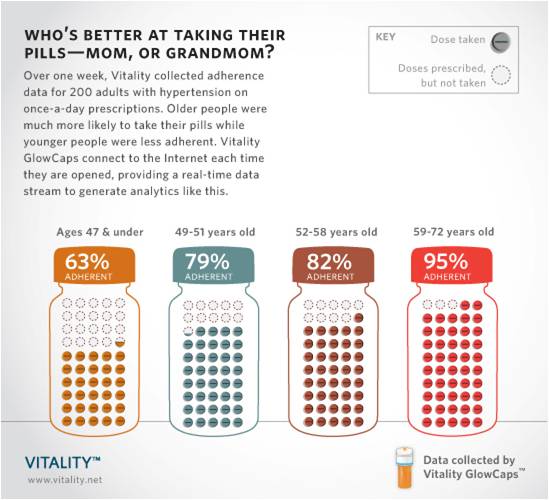
Certainly age could be a confounding factor for many reasons – health literacy, length with a condition, co-morbidities, number of medications, tolerance for side effects – but I like this chart that the people at Vitality (aka GlowCaps) (www.rxvitality.com or www.roseology.com) just put out.

Of course, like any survey, there is sample bias so I would hesitate to extrapolate this, but I would say something like…

“for people who have and use a refill reminder device in their homes for hypertension medications, older people are more likely to be adherent.”

Of course, I’d love to know their MPR (medication possession ratio) before using the device.  Which had the higher lift? 

2010 Medco Drug Trend Report

I can’t believe it’s taken me a few weeks to catch up on my notes from a conference call with David Snow and Dr. Rob Epstein from Medco Health Solutions about their 2010 Drug Trend Report. I captured some of Dr. Epstein’s comments in a quick blog post, but I have a lot of respect for David Snow and wanted to capture a few of his comments here and pull out some of the interesting data from the Drug Trend Report.

David Snow mentioned a few things:

  • Reform has to address all three legs of the stool – Access, Quality, and Cost. Right now, it’s focused on access.
  • Of the $2.4T we spend in the US on healthcare, $1T of it was unproductive.
  • One of the big issues in the system is poorly designed systems for the people that deliver care.
  • Pharmacy is ahead of the curve since it’s already wired and uses evidence-based care.
  • We have to focus on the chronic conditions. 96% of the pharmacy spend and 75% of the medical spend is here.
  • Prescriptions are used as first line solutions 90% of the time. (See my comments on why trend shouldn’t matter.)
  • $350B of the waste is due to poor management of chronic solutions.
  • We still have to address medical liability and defensive medicine.

He also answered questions. A few of my notes from the Q&A:

  • Patent expiration doesn’t fully explain the increase in brand pharmaceutical costs. (Traditionally these drug costs go up once the patent expires.) You can correlate the tax on pharma (in reform) to the increase in prices. (Not dis-similar to the increases around Part D if memory serves me.)
  • Adherence is a key issue. The Therapeutic Resource Centers (TRCs) are their answer to this. They drive adherence in the classes that matter and we report to clients on this. (While I think a lot of people viewed the TRCs as marketing strategies when they first came out, I believe they have demonstrated a clinical focus with some case studies and clinical leads over the past 18 months.)
  • The pathway to biosimilars is very fair to the innovator.
  • Class competition in specialty is increasing.

His most interesting comment which I’ll repeat from my earlier post was that if the FDA really understood true adherence they might make different decisions on approving drugs whose effect is tied to a person staying on a medication over time.

I won’t repeat some of the core data elements from my prior post, but here are some new ones from reading the document:

  • Mail order penetration was 34.2% (which I believe is industry leading for the PBM sector with only Walgreens showing a 90-day utilization number that’s higher).
  • Interestingly, they show trend for clients with over 50% mail use (and clients with less than 50% mail use). [Most PBMs would love to have any clients with over 50% mail use.]
    • 0.1% for those with over 50% versus 5.3% of those under 50%

Reported trends are based on 2 years’ data on pharmaceutical spending. Drug trend percent includes 201 clients representing approximately 65% of consolidated drug spending. The sample comprises clients who offer integrated (mail-order and retail) pharmacy benefit options for members. Clients with membership enrollment changes > 50% were excluded from the analysis. Plan spending is reported on a per-eligible per-month (PEPM) basis, unless otherwise specified. An “eligible” is a household, which may include multiple members who are covered under the same plan. Plan spending comprises the net cost to plan sponsors less discounts, rebates, subsidies, and member cost share. Generic dispensing rates and mail-order penetration rates represent the total consolidated Medco client base.


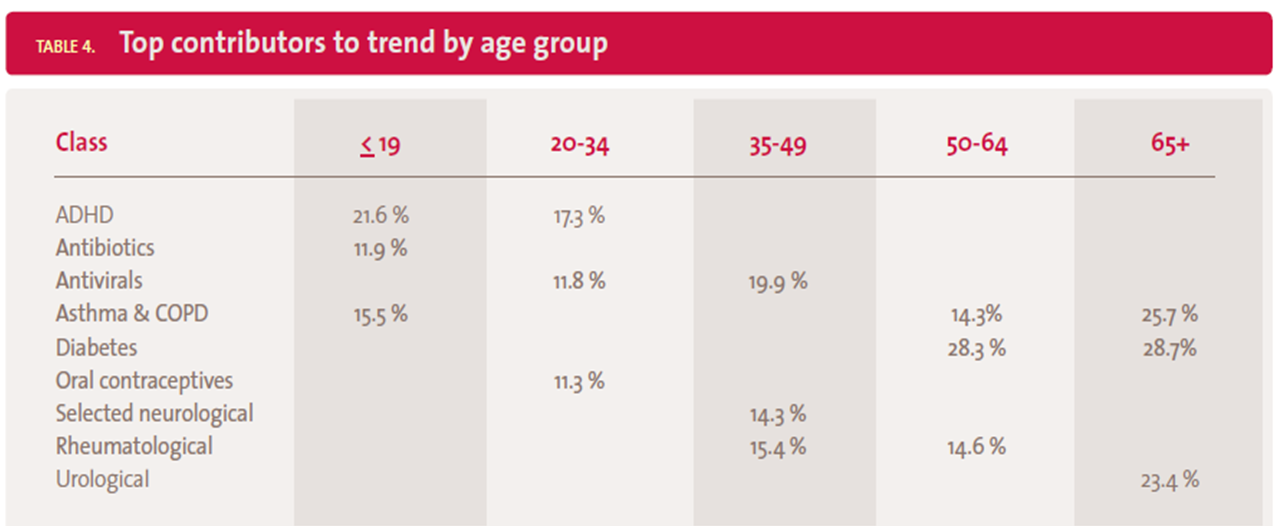
  • Diabetes is obviously a critical category for everyone. I found it interesting that they saw fewer patients filing claims for diabetes but more drugs per patient in 2009.
  • Respiratory therapies (driven by those <19 years old) jumped in contribution to trend from 8th to 2nd.
  • In patients aged 35 to 49, antiviral drugs are the greatest contributors to cost – 8.3% of plan pharmacy costs. [Some of this driven by flu although this is not the at risk age group.]  

Antiviral drugs (Formulary Guide Chapter 1.8) include oral treatments for HIV/AIDS, influenza, herpes, hepatitis C, hepatitis B, and injectable treatments for respiratory syncytial virus (RSV), and cytomegalovirus.

  • Utilization growth for ADHD drugs for those age 20-34 grew 21.2%. [Is this for people not diagnosed as kids, people who have adult-onset ADD (if that exists), or just an over-diagnosis of the condition?]
  • Specialty drugs…I’m always surprised that all the PBMs still have to caveat the fact that they only adjudicate some of the claims since some specialty drugs are filled and billed under the medical benefit. That seems like something that should / could be fixed, but I know it’s been tried and is hard since people are making money off them being billed elsewhere.  


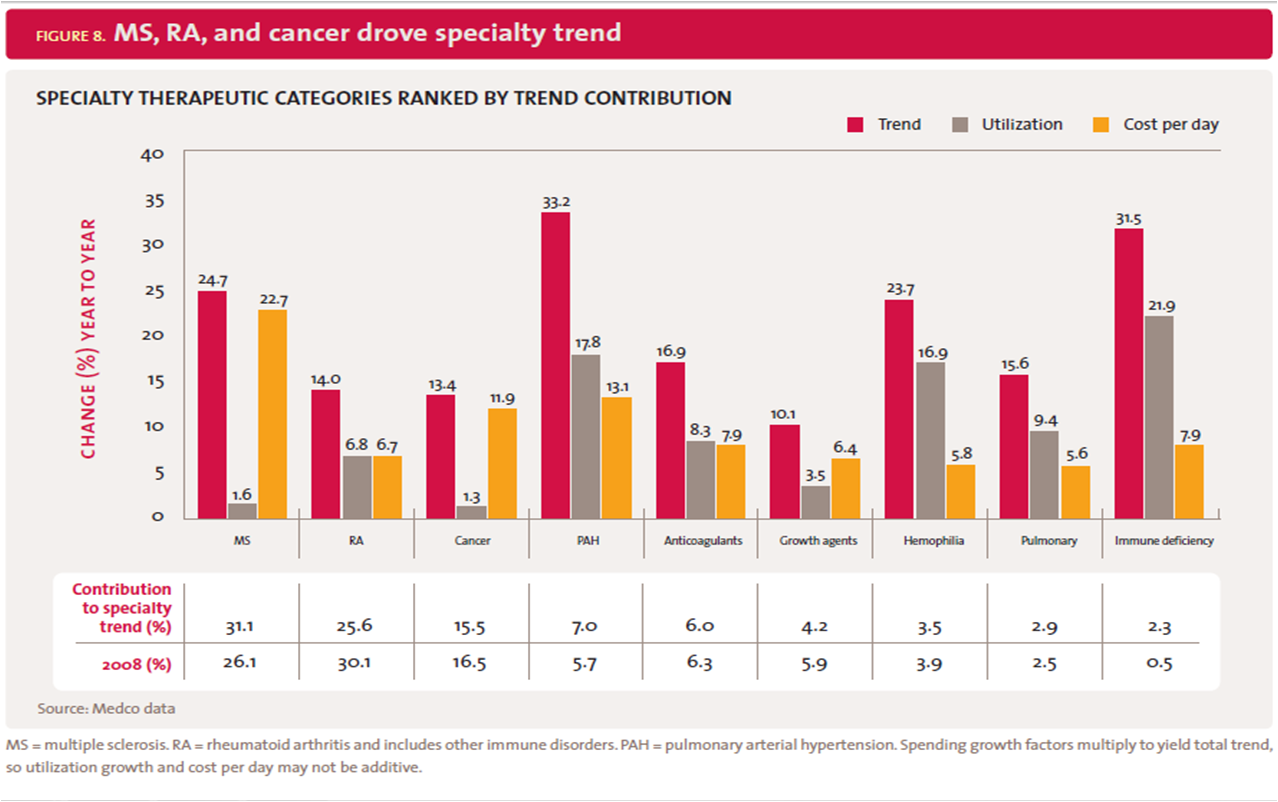
  • Cancer is already a huge driver of specialty costs AND:
    • Much of the spending is still under medical;
    • Most drugs approved in the past 4 years costs over $20,000 for a 12-week course; and
    • There are over 800 drugs in the pipeline.


Spending growth has outpaced spending for nonspecialty, or traditional medications because:

  • A high proportion of newly approved drugs are designated as specialty.
  • Unique manufacturing processes make specialty drugs expensive to develop.
  • Fewer drugs within a therapeutic category limit competition.
  • There may be only one specialty treatment for an orphan condition.
  • Few drugs are therapeutically equivalent to others in the category, reducing interchange and related cost savings opportunities.
  • It is more difficult to transition existing patients from one specialty drug to another preferred specialty drug because often these drugs are large, unique proteins that are not considered interchangeable.
  • Most small-molecule specialty drugs are relatively new with few generic alternatives.
  • No defined approval pathway exists for follow-on biologics (also known as biosimilars).
  • Drugs used to treat cancer represent a large portion of new drugs in both the pipeline and marketplace; most are specialty drugs and some can cost more than $20,000 for a 12-week therapy course.
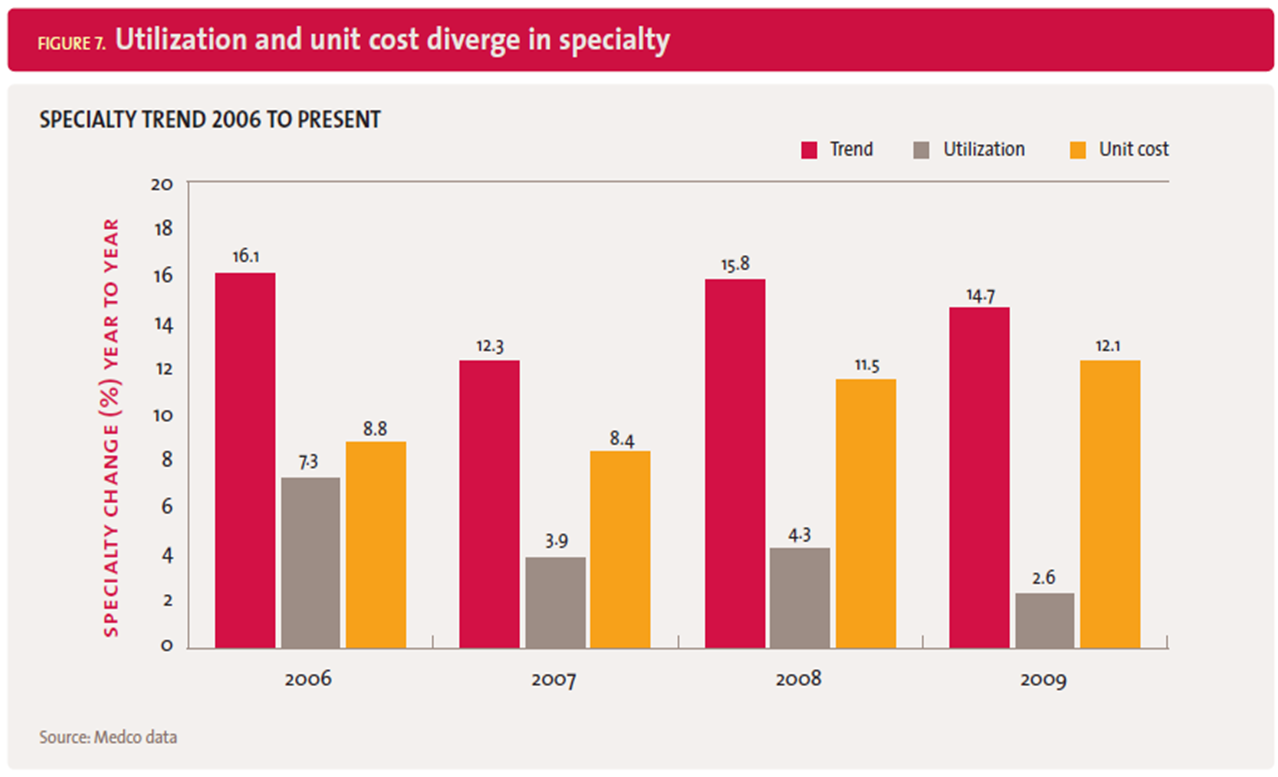
  • It was the first time I noticed anyone caveating the specialty trend. They proactively addressed different calculation methods to point out that their method yielded a 14.7% specialty trend, but if you did things differently (as I assume others must), then their trend would have been 12.1%.


  • Trend in children exceeded trend in other age groups for the second year in a row. (I think this is an interesting perspective and a scary indicator for the future health of our country.)
  • They provided some examples of drugs that had new indications for younger patients approved:
    • WelChol, Crestor—for low-density lipoprotein cholesterol (LDL-C) reduction in children aged 10 to 17 with heterozygous familial hypercholesterolemia.
    • Atacand—for hypertension in children aged 1 to 17.
    • Axert—for acute treatment of pediatric migraine.
    • Protonix—for erosive esophagitis in patients aged 5+.
    • Abilify—for irritability associated with autistic disorder in children aged 6 to 17.
    • Seroquel—for schizophrenia in children aged 13 to 17, and for acute manic episodes in children aged 10 to 17 with bipolar I disorder.
    • Zyprexa—for schizophrenia and for acute mania (bipolar I) in children aged 13 to 17.


  • An interesting perspective that I’ve talked about many times (without the research capabilities to analyze) is the correlation between sleep and chronic disease. They looked at this across states based on drug utilization and found a correlation (not necessarily causation).


So what do they say to watch:

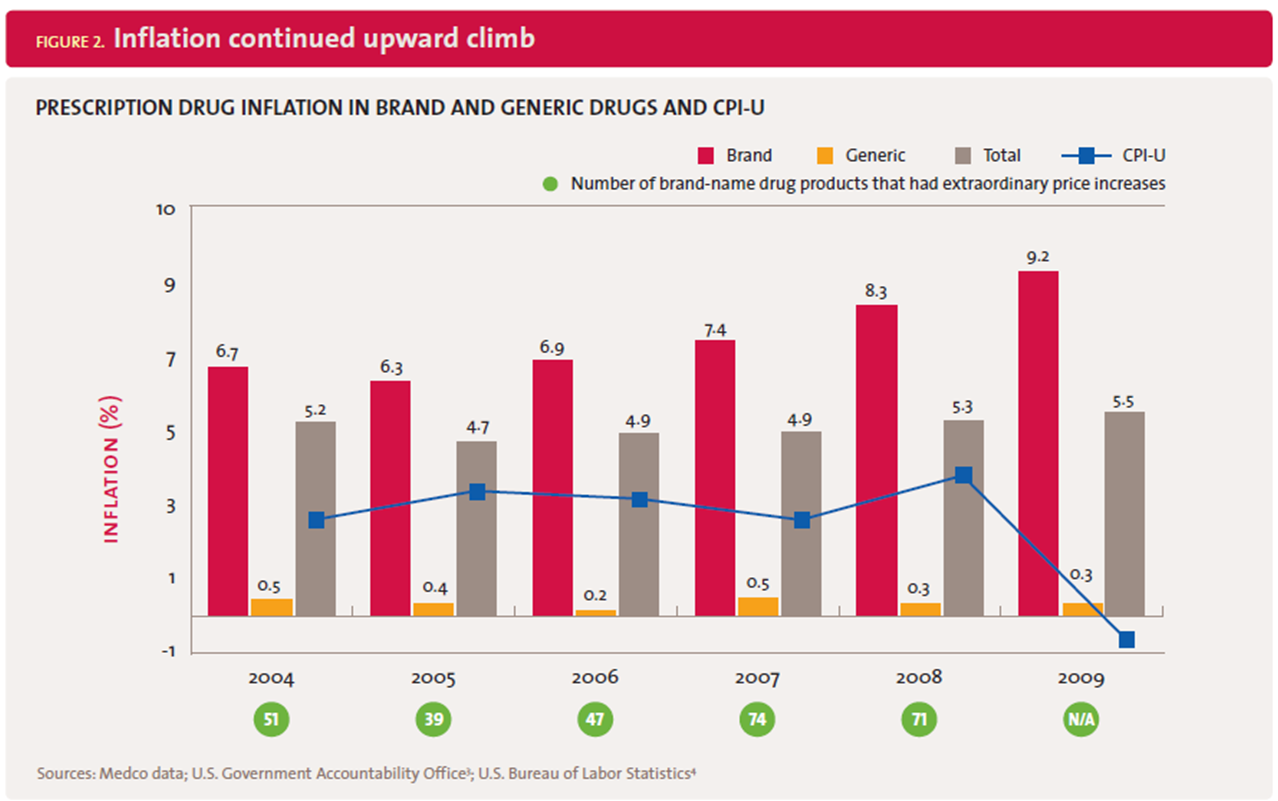
  • Continued inflation in brand drug prices.
  • Majority of trend will come from specialty – oncology, orphan conditions.
  • Personalized medicine.
  • Biosimilars.
  • Generic pipeline.
  • Obesity epidemic.


  • They bring up an interesting issue relative to OTC (over-the-counter) product which is DUR (drug utilization review) which looks for drug-drug type interactions. They talk about the Medco Health Store integrating that data to monitor patients. [Do plans care? Do patients care? Should retail OTC purchases be integrated? How great are the interactions?]
  • They talk a little about obesity although I would love to understand more about how a plan sponsor should manage this.
    • 68% of adults are overweight; 34% obese
    • 32% of children are overweight; 17% obese
    • Medical spending on obesity related conditions is $147B
    • 19.5M adults (24-85) have diagnosed diabetes and other 4.25M are undiagnosed
    • Diabetic medical claims are forecasted to grow from $113B to $336B over the next 25 years.
  • I’m not going to spend a lot of time on personalized medicine here.  (A recent post of mine on this topic.)  They’ve been very active in this space for years talking about it. I think one of their interesting points in the Drug Trend Report is how Comparative Effectiveness will dovetail with Personalized Medicine.
  • Almost 2/3rds of people at risk for CHD in the next 10 years and eligible for lipid lowering drugs (e.g., Lipitor) were still not using them. (A common gap-in-care program run by many companies is to target these people (e.g., diabetics).)
  • Only 29% of patients treated for high cholesterol reach their cholesterol goal.
  • They have a section on wiring healthcare which David Snow has talked about for a while. It’s a critical area to address and has lots of opportunity.
  • They also talk about the concept of collaborative care (aka medical home…aka accountable care organizations).
  • I’m a big believer that poly-pharmacy creates issues (as does poly-physician). I don’t hear much talk about it. I was glad to see them talk about a study they did which identified poly-pharmacy issues, talked to MDs, and ended up with 24% of cases where medications were changed.


A Medco survey reported that 81% of participants with a new diagnosis, who received services at a traditional retail pharmacy, either did not receive counseling or were dissatisfied with the prescription drug counseling they received. When given the opportunity to speak with a Medco Specialist Pharmacist, 75% of these patients accepted the offer of immediate telephone support.


  • I thought it was really interesting to see a screen shot of their application used by the TRCs to create their Health Action Plans for consumers.


  • I was also interested in their focus on women’s health and some data on caregivers and the gender differences in healthcare. One of their TRCs is dedicated to addressing these differences.


Walgreens vs. CVS More Thoughts

This was definitely the hot topic yesterday. I talked to lots of people about it.

I had a chance to give it some more thought last night. A few things dawned on me.

1. Timing. This was timed well from a Walgreens perspective. Managed Care RFPs are mostly over and employers are making their decisions now on PBM services. Managed Care would have been more likely to focus on the cost and understand how to mitigate the disruption. Employers will be much more sensitive to the disruption. That will be something that CVS Caremark will have to manage.

2. Who wins. Since one analyst told me that Walgreens represents only a single-digit of CVS Caremark’s revenue, the impact may not be huge. On the flip side, it’s likely some downside for Walgreens since they’ll stop serving some portion of CVS Caremark’s business. Consumers aren’t helped here. So, my only conclusion is that the other PBMs (i.e., Medco and Express Scripts) are best positioned to win from this if it causes any CVS Caremark PBM decisions to go their way. At a minimum, it creates FUD (fear, uncertainty, and doubt) which no sales person likes to have to deal with.

3. Validation. If I’m the product manager for Maintenance Choice at CVS Caremark, this seems like pretty strong validation that the offering works. As Adam Fein showed before, it does drive volume to their stores. Obviously, Walgreens was afraid of this taking off and having a larger impact on them.

So…what would I do?

This is interesting since one of my last tasks at Express Scripts was to come up with a strategy in late 2005 around CVS and Walgreens backing out of our mandatory mail network. My strategy (which I ultimately left to pursue) was to respond by opening onsite clinics and building out a pharmacy kiosk system that could be put in grocery stores (only 50% have pharmacies), large employer campuses, and high density sites in big cities. While Express Scripts didn’t choose that path, I still believe there is opportunity there and CVS Caremark could easily implement such a strategy. [It’s starting to get momentum in Canada.] CVS Caremark (or Walgreens for that matter) have the technology and business model to implement on-site pharmacies and to create a central fill using kiosks. If those could mitigate the effect of the Walgreens decision, it could be an interesting response. [BTW – If you’re interested in my pharmacy kiosk business model that I ultimately wrote up and pursued with some angel investors, let me know. I may try to post some of it here later.]

On the other hand, another response would be to look at the top 5 MSA (market service areas) where Walgreens is stronger than CVS. I’m guessing those are NY (post-Duane Reade acquisition), Delaware (post-Happy Harry’s acquisition), St. Louis (CVS just started operating here), and a few others. They could go into those markets and buy up independents or some smaller chains to immediately mitigate this.

There are several responses short of just folding and putting Walgreens in the network. Ultimately, I think it’s about whether CVS and Walgreens see each other as “enemies” or just competitors. Do they want to grow the pie or do they want to put the other out of business (if such a thing were possible)?

More to come I’m sure…

Text4Baby (or Bebe)

This seems to be one of the more successful texting programs in the healthcare space.  This public-private partnership with sponsors like J&J and Pfizer is leveraging texting technology to try to address the US infant mortality rate (with is 30th worldwide).

With 25% of people not having a landline and more and more people (especially younger generations) depending upon the mobile phone, this makes a lot of sense.  In general, the sick population for the healthcare companies are not the younger generations, but this is typically different for pregnancy.  What I didn’t know until reading an article about this is that Hispanics and African Americans are 2.5x as likely at Whites to put off prenatal care until the 3rd trimester or skip it altogether. 

So what do you do?  Text BABY (or BEBE) to 511411 and punch in your due date.

Who writes the content?  The National Healthy Mothers, Healthy Babies Coalition.

Is there a charge?  No.

What is the content?  You get up to 3 texts a week until the baby’s first birthday.  They talk about seeing their doctor.  Keeping their appointments.  Get immunizations.  Put babies on their backs to sleep. 

What do they hope to learn?  Will users have different outcomes?  Will they go to more appointments?  Will they stop smoking?  Will the incidents of low birth weight and pre-maturity decline?

Automated Call Nudge – WSJ

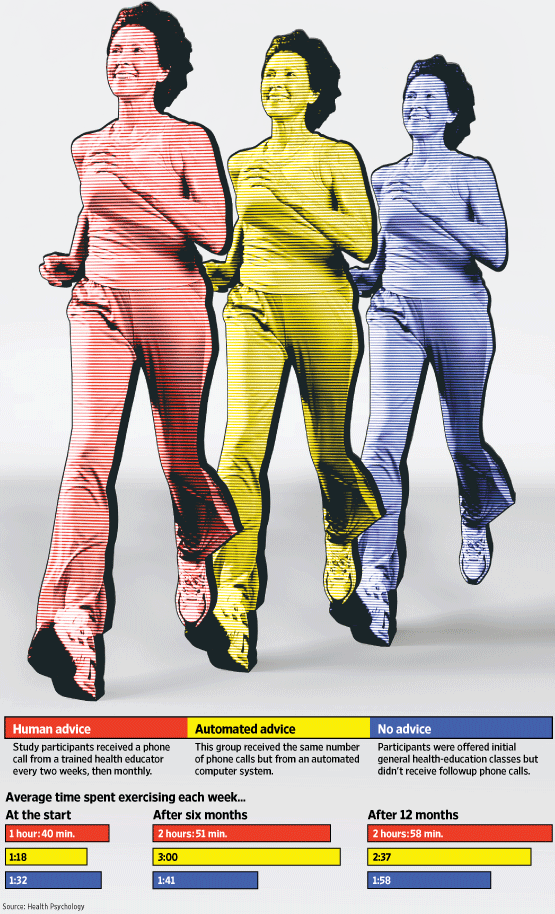
Yesterday’s WSJ had an article about some research done at Stanford about comparing automated calls and human interventions.  The goal was to see what motivated people to exercise more.  As you can see in the chart below, at 6-months automated calls produced better results while at 12-months they were below the human interventions.  But, an automated solution is obviously much more cost efficient and scalable.  The one big question I have is how to make the automated calls even more interactive.  There are lots of things we do at Silverlink to use automation to drive behavior.

While many are skeptical, the reality is that automated calls are the best channel in healthcare based on the cost per success ratio.  [Do you know any other channel that can get you a 70% “open” rate?]  You can deliver PHI.  You can track interventions for audit purposes.  You can have real-time access to data.  You can create rules based solutions that dynamically change based on interactions. 

And, this is not the first study Stanford has done on this.  Here’s links to two older studies they did: