Largest PBMs By Covered Lives

The covered lives calculation is a little funny since a “life” can be counted by multiple PBMs.  For example, look at the Federal Employee Plan (FEP) contract which until recently was split between Medco and CVS Caremark and therefore counted by both (I assume).  But, it is a measure that is used none the less.  [Another way is based on claims processed.]

So, what I did is take the numbers from this chart on the PBMI website and make the following adjustments:

  1. I focused just on the large PBMs that provide a full suite of services (to my knowledge) and were on this original list which excludes some such as Navitus or WelldyneRx.
  2. I added the Express Scripts and Medco lives together.
  3. I subtracted 10M for the United Healthcare (UHG) contract at Medco and moved those to Prescription Solutions (now called OptumRx).  (acknowledging that this doesn’t happen yet)
  4. I subtracted 8M for the FEP loss for Medco recognizing that those don’t show up at CVS Caremark since they would already have been counted there on the retail contract.
  5. I added together the CatalystRx and Walgreens lives from their deal earlier this year.
  6. I noted that Humana’s lives are counted under the Argus number.
With that, I get the following lives count and percentage marketshare (of the companies listed).

Medco And Express Scripts Specialty Share Could Top 50%

Express Scripts buying Medco – This is still the big topic of discussion (see original comments with links added since I was on vacation last week with no wireless access).  The question of course begins to shift to the FTC approval.  According to one report out, one analyst estimated that the combined entity would have 30-35% of the PBM market in terms of script volume, and they estimated what the Herfindahl-Hirschman Index would say about market concentration post merger – heavily scrutinized but not a big issue.  I would agree from a claims perspective that this probably won’t be an issue.

I’ve only seen one analyst bring up the issue of mail order concentration which Medco has always led in.  I’m not sure this will be a sticking point since mail is still typically optional.  Where I would be interested in seeing the HHI would be in specialty.  Given that 28% of the time only one specialty pharmacy (SP) is contracted with and 57% of the time it’s 1-2 SPs, this seems like a bigger area of focus and potential control.  (per EMD Serono Specialty Digest)  It’s also clearly the future of the pharmacy and PBM market. 

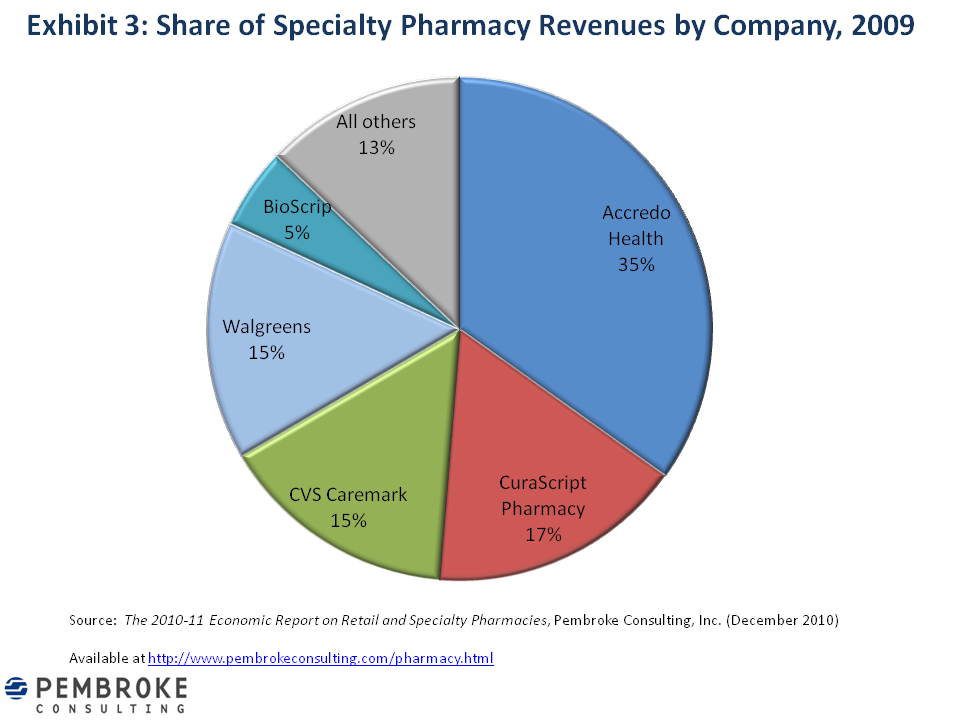
If you use Adam Fein’s estimates from his 2010-11 Economic Report on Retail and Specialty Pharmacies, the combined Curascript and Accredo market share would be somewhere around 52% which would seem high for one entity.  [I’m sure Walgreens or CVS (among others) would be happy to buy some of their specialty assets if that made the deal more likely.]  More to come as I catch up. 

A Few Stats On Seniors And Technology

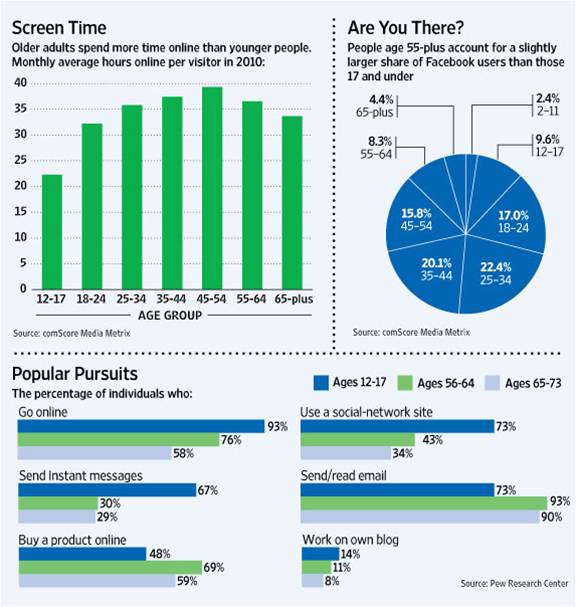
This is from a WSJ article earlier this year, but I thought it made a few key points about seniors and technology (which is relevant for your Medicare strategy).

Express Scripts (ESRX) to buy Medco (MHS) – WOW!!

In maybe even bigger news than the CVS acquisition of Caremark, Express Scripts announced this morning that they were merging (buying) Medco (for more information go to www.betterrxcare.com) . I’ve imagined a lot of scenarios for the industry, but this was not one.

You now have one big independent PBM with one owned by a retail and the third biggest owned by a payer. A big difference from a few years ago. The 3 models represent fundamentally different approaches.

I knew the United Healthcare decision would prompt something radical to happen in the industry, but I saw Medco driving that not being acquired. This brings a lot of things to mind:

1. What does this mean for the Walgreen’s negotiations with Express Scripts?  (original post)

2. What will the combined entity look like in terms of Consumerology + Therapeutic Resources Centers, International, Specialty, rebates, trend management, mail order operations, call center, and leadership?

3. There will be some serious consolidation over time of people and facilities. How long will this take?

4. Which system(s) will be used?

5. Will this accelerate other consolidation? I would think this puts other PBMs in play.

6. Will United build on their PBM by being an acquirer of other PBMs? How will CVS Caremark respond?

7. With the FEP decision re: Medco, will this impact DOD at Express Scripts?

8. Which of the executives survive? For example, much of David’s team (Medco CEO) has been together for a while. Do they have parachutes? Do they all leave?

9. This becomes a huge client for a wholesaler and other vendors. How will they throw their weight around and what does that mean for the competition?

10. How will they leverage unique components across companies (e.g., different approaches to Medicare, systemed, worker’s comp)?

Of course, all of this assumes the SEC approves this, but I assume the parties feel this is very likely. The industry will look like the wholesalers from a concentration perspective. Will this simply be the beginning of mass consolidation across healthcare – payer, hospital, pharma, technology?

And, at the end of the day, what will the combined entity’s culture be and how will other’s react? I’m sure you’ll see lots of lobbying against the combined entity.

And, in all this, I think people probably missed an analyst report on another PBM that said they thought two captive PBMs with an estimated value of $200-400M would be up for sale in the near future. Who could that be?

Other articles on this:

May Video On PBM Selling Season (CVS, ESRX, MHS)

I just came across this video from May of Lisa Gill from JP Morgan talking about the 2011 PBM selling season. My couple of takeaways were pretty basic:

  • Price is not the #1 decision factor in choosing a PBM.  (I don’t believe that no matter how many surveys there are.)
  • The model is creating differentiation.  People like consumerology or the Medco clinical programs or the CVS Caremark 90-day program (Maintenance Choice). 

I liked her quote from Florida relative to the CALPers issue at Medco that if they didn’t deal with people under investigation then there wouldn’t be anyone to do business with.  (A little jaded perhaps!)

The key question here is the success that the smaller PBMs have been having especially SXC and Catalyst, but even more interesting would be her take on what will happen as Prime and OptumRx focus more outside of their traditional payer markets. 

Everyone always talks about the 9x% of companies that don’t move PBMs, but the question really should be about lives that move.  It only takes a few big clients – Walmart, GE, BCBS, … to make a difference in a selling season. 

http://www.corporateresearchgroup.com/video-details.cfm?ID=263

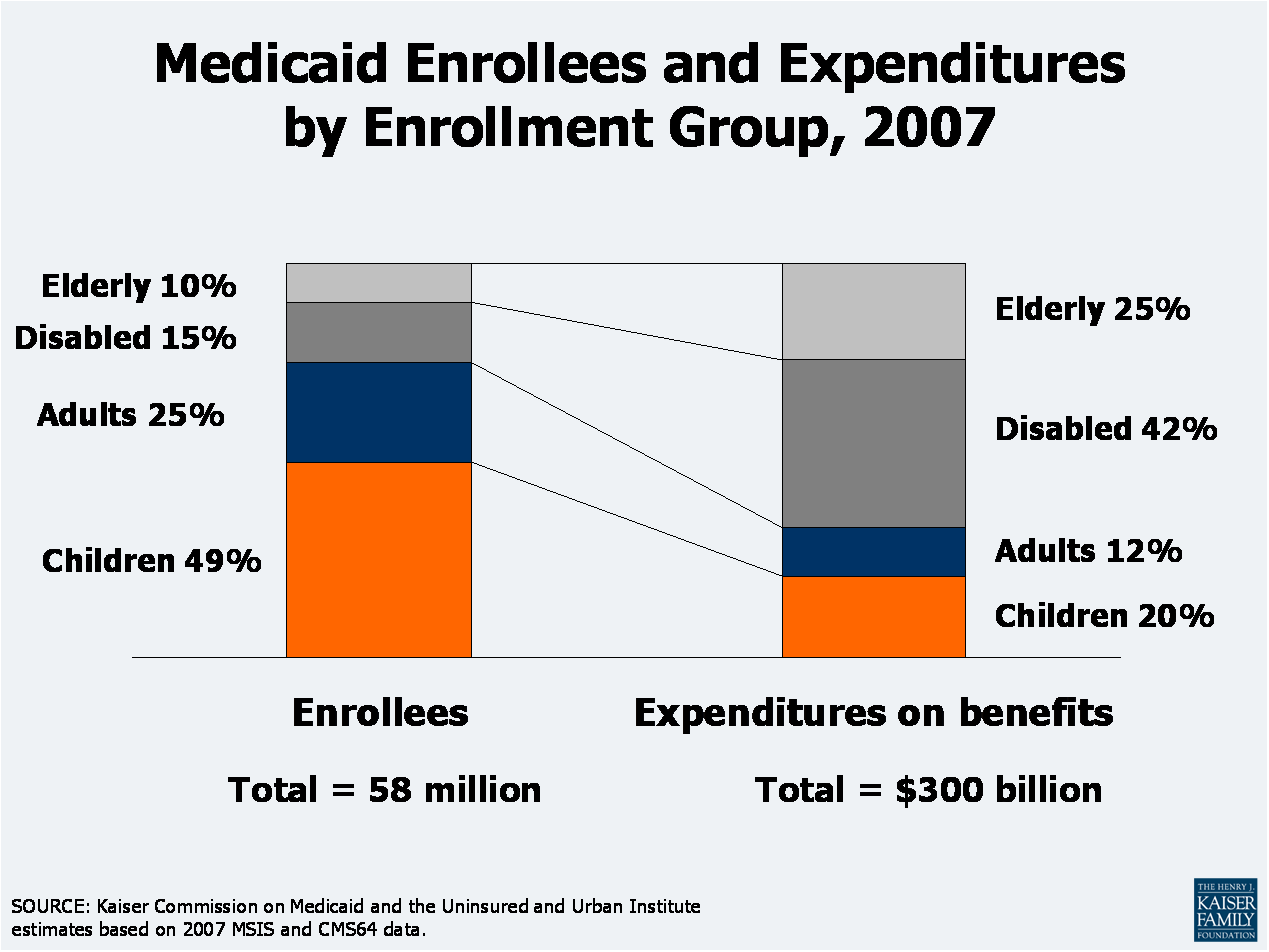
Who Drives Cost In Medicaid?

Here’s a quick chart from Kaiser.

5 Indicators Of Pharmacies Crossing The Chasm

I’ve talked about this several times before in my post about The Future Of Pharmacists and in my whitepaper “Innovate Or Be Commoditized“, but I continue to believe that pharmacists can play a bigger role in healthcare (see also Pharmacists to Prescribe).

I know that people sometimes perceive my support for mail order and/or PBMs as anti-pharmacist, but they’re not. Even my criticism of independent pharmacies isn’t on the great work they do with patients but is focused on the tactics used to try to even the playing field.

But, one of the things I’ve been watching for is what are some early indicators of how pharmacists are crossing the chasm from being dispensing-focused to being core members of the care team.

I’ve seen several:

  • A more outspoken push for pharmacist involvement in ACOs.

“I really think that CMS was remiss in not explicitly including the drug benefit in the Shared Savings model. Because the industry recognizes that it’s important, what we are seeing is that the people who are planning on participating in the ACOs are already reaching out to the PBMs to lean on them to develop programs. So by default, we will end up being participants in it indirectly versus directly…. It’s the most frequently used benefit. It’s hard to imagine that you’ll be able to have a successful ACO model without considering the effects of somebody involved in health outcomes.”  Brit Pim, VP and general manager of the Medicare/Medicaid division of Express Scripts, Inc. (from Drug Benefit News)

  • MTM moving from a required program in Medicare to an optional program for commercial populations.

The Academy of Managed Care Pharmacy (AMCP) recently conducted a survey of its members to get an update on current MTM programs being offered by payers. Out of 57 respondents — which included 43 health plans, six PBMs, five integrated delivery systems and three other organizations — only six reported using MTM programs for their commercial populations alone. Another 17 said they use MTM programs for both Medicare and commercial populations. (from Drug Benefit News)

  • Continued focus on pharmacists and distribution of vaccines.

Immunizations are crucial to protecting patients from developing and dying from vaccine-preventable diseases, and in order to be successful, a team effort is required for all health care professionals to increase immunizations.29 Pharmacists are in a pivotal position to increase awareness about the importance of vaccinations and identify those patients who may benefit from specific vaccinations. By continually increasing awareness about the availability and importance of vaccinations, patients can make informed decisions to protect themselves and their family members. (Pharmacy Times article)

Up to 50 percent of chronically ill people stop taking their medication within the first year. Pharmacists understand many of the contributing factors, which range from cost and side effects to the inherent challenges of taking multiple medications, and can help address them. In fact, CVS Caremark research shows a pharmacist in a face-to-face setting is the most effective healthcare professional at encouraging patients to take medications as prescribed. (CVS Caremark press release)

Healthcare From 40 Years Ago…And Feeling Old

When I was at the U2 concert a few weeks ago in St. Louis, I couldn’t help thinking about their music and other things from growing up.  While it was a great concert, it really made me feel old.  Here’s a few of those things which then got me thinking about what healthcare was like 40 years ago.

  • We had record players not digital turntables (or iPad turntable apps).  [I still remember my first 45-single that I bought by Twisted Sister.]
  • I still want to call it a Walkman half the time not an iPod.  And, I think my kids were wondering why I had these big “beat boxes” in the basement that I finally gave away.
  • I actually remember when apartheid in South Africa was more than history and when Nelson Mandela was freed.  I saw him speak when he first came to the US. 
  • When I think of terrorists, I think of the IRA not al Qaeda. 
  • I remember that “the Wall” is not just a song.
  • I remember hyperinflation in Brazil not them as part of the emerging global marketplace. 
  • I remember using my friend’s dad’s car phone and how exciting that was.
  • I remember saving files I programmed in basic to a tape player.  Heck, I even remember having a tape player and recording songs off the radio.
  • I remember wanting a banana seat for my bike as a kid.
  • I remember celebrating the Centennial (200 years of freedom).
  • I remember kids played sports for fun not to become the next Tiger Woods.
  • I remember when China was “the Orient” and not a superpower looking over our shoulder.
  • I remember when people were politically incorrect.
  • I remember when seat belts were optional as were car seats for kids and bike helmets.
  • I even remember owning a black and white TV.

Anyways, I think you get the point.  Of course, I don’t remember what healthcare was like 40 years ago.  For that, I had to do some research. 

I think this YouTube video with Nixon and Kennedy is a good start.  Nixon is talking about spiraling costs and the need for well care.  (Full text of President Nixon’s speech is here.)

In the video, they talk about costs hitting almost $100B that year (while we’re at well over $2.4T per year in the US today).  And, in a quote that sets up well the ongoing technology struggles the industry has had:

Health Information Systems: Each physician, hospital and clinic today is virtually an information island unto itself. Records and billings are not kept on the same basis everywhere, laboratory tests are often needlessly repeated and vital patient data can get lost. All of these problems have been accentuated because our population is so constantly on the move. The technology exists to end this chaos and improve the quality of care. I have therefore asked the Secretary of Health, Education, and Welfare to plan a series of projects to demonstrate the feasibility of developing integrated and uniform systems of health information.  (source)

Does all of this sound familiar?  Scary!

One question I wondered a few months ago is whether we could offer a retrospective plan to people that was lower cost.  What if you stripped out all the “cool” new developments over the past decade, but gave people a safety net healthcare offering that leveraged generics and traditional treatments.  They would have to buy-up to the newer technologies and solutions that were available.  Could that work?  I doubt consumers would tolerate it, but perhaps it could create a reasonable, low cost offering.

Handling A Mistake: Chevy’s Versus Jilly’s Cupcakes

I think in healthcare we are finally all realizing that the customer experience matters (#CEM).  The question is how to standardize and optimize that experience in scale and on a personal level when the people delivering that experience are call center agents, receptionists, physicians, pharmacists, pharmacy technicians, etc.  It’s the people in the field not those sitting in the corner office.

And, since exchanges will make healthcare a more individual buying experience and satisfaction is tied to loyalty, this is something we all need to figure out sooner rather than later.

As a family, we recently had a few experiences that show the two extremes here:

  1. Chevy’s.  This is a Mexican restaurant we frequent.  We go there probably once a week to the point where we have a preferred waiter (who knows our order before we sit down) and know the server and the manager.  Service has been great for years, but it’s begun to go down.  One night, it took 3x as long to get our food with no explanation, and we had to leave without eating.  The next time, the hot plate of food had some oil jump off and burn my wife (to the point of them getting her burn spray and ice).

    This seems like a great opportunity for an intervention by the manager.  But no.  They didn’t do anything.  They still charged us for the meal including my wife who’s leaving with an ice bag.  Oh well…time to find a new restaurant.

  2.  Jilly’s Cupcakes.  Here’s a cupcake store and restaurant that we’ve never been to, but we saw that they recently won on Cupcake Wars.  We decided to book a small birthday party there to decorate custom cupcakes.  When we show up, they are surprised.  Apparently, their reservations person wasn’t very good and got fired so they’re dealing with us and another party of 25 that have showed up unexpectedly.  A key opportunity for success or failure.

    I thought the General Manager did great.  She stepped right up and came up with a plan for us.  We got to go behind the scenes and meet the cupcake making team.  We got to customize our own cupcakes and really enjoyed it.  It was probably more memorable that the original party would have been.  In this case, I’m willing to drive people to her store and will send her a personal note to thank her.

One of the big points here is that it’s easy to either lose a lot of credibility or build up some credibility.  But, customers are fickle.  Much like companies strive for Six Sigma from a process perspective we need to keep that in mind from a customer experience perspective.  It won’t always go perfect, but how do you enable your staff and train them to respond quickly to keep the consumer happy and engaged.

Can Demographics Predict Adherence – FICO?

Several people have asked me about the FICO adherence scoring tool.  I (like many of you in the adherence business) am fascinated by the concept on using data to predict adherence and subsequently customize programs around that.  On the flip side, consumers may be a little paranoid about this based on comments on the NY Times article.

Ultimately, there are a few questions:

  1. Can you predict adherence?
  2. What data do you need access to?
  3. How accurate is the prediction?
  4. Does the prediction change based on drug type, duration on therapy, health literacy, etc.?
  5. What can you do with the prediction to influence it?
Traditionally, a demographic centric model has shown some attributes such as acknowledging that females are less adherent than males.  But, most of the attributes that I’m familiar with as predicting adherence fall into two buckets:
  1. Healthcare centric data – number of prescriptions, copay amount, formulary status
  2. Consumer provided information – PAM score, Merck Adherence Estimator

I highlighted some of these things in my 15 Things You Should Know About Prescription Non-Adherence post.  The one item that seems to fall across both healthcare and non-healthcare data is past behavior.  This could certainly play into a credit score or even some type of preventative health score.  Do you get your screenings done?  Have you filled other medications on a regular basis?  Do you have and use a PHR? 

Lots more to come on this topic over time, but this is certainly an area with many eyes on it.

Friends, Klout, Networks, and Biological Limitations

Companies like Klout are looking for ways of calculating people’s reach using social media.  The question of course is always the tradeoff of quantity versus quality.

For example, I quit Facebook when I found it to be more distracting than productive.  Yesterday, I cut over 100 people out of my LinkedIn network because it had been years since I had connected and interacted with them and didn’t feel any connection with them.  I also have a requirement that I won’t connect with anyone unless I’ve talked and/or met with them IRL (in real life).  It’s amazing how much of a screening mechanism that is.

But, these efforts run counter to driving up a good Klout score which looks at Twitter, Facebook, LinkedIn, and FourSquare (which I’ve never tried).

It leads you to the great question of “how many friends can you have” and the definition of friend versus business contact.  On the first point, there is research that says the human mind can only manage 150 friends which seems to make sense.  In the traditional sense of friendship, I doubt there are a 150 people who I frequently interact with socially.  But, in the broader sense of having a friendly relationship with a large group of people both socially and professionally, I think social media definitely allows you to expand beyond the 150.

But, if technology limited us to our biological limitations that wouldn’t be any fun.  I find tools like blogging and tweeting as good outlets to share information with like-minded people some of whom I know well, some who I know, and some who I’ll never know.  That’s ok.

Copay Cards: Don’t Throw The Baby Out With The Bathwater

Prescription Copay Cards continues to be a hot topic (see list of articles at the end here), but I see a lot of FUD (fear, uncertainty, and doubt) versus a lot of facts. At the end of the day, there are certainly a few stories about cases where costs have jumped up due to copay cards overcoming formulary positioning.

But, no one knows the total market impact. I’ve spoken with six different organizations that would be well positioned to know, but they don’t. It’s not tracked or easily available in the data. Reasonable estimates from Dr. Adam Fein over at DrugChannels put the market at about 100-125M Rxs which is about 3% of the total Rx market (assuming 3.3B Rxs/year) or 12% of the total brand market (assuming 75% GFR). [I validated those numbers with a specialty pharmacy that shared that they were seeing 13% of their claims come in with a copay card.] Certainly, the market has grown as IMS estimated in one recent article.

The question of course is whether these are good or bad and whether their use is malicious or not. My conclusions are based on talking with about 30 people in preparation for my AIS webinar on this topic today. What I concluded was:

  1. There is a win-win. Copay cards can improve adherence. Adherence can reduce total healthcare costs. There is a point at which the increased cost curve crosses the savings curve and is something to be considered.
  2. Today’s approach is a shotgun approach by which cards are available online (e.g., www.internetdrugcoupons.com) and by physicians. They’re not focused on patients with need or on patients with adherence barriers. They play into the misperception that cost is the primary barrier to adherence WHICH IT IS NOT. [Cost is an issue in <20% of the cases according to multiple barrier surveys.]
  3. Copay cards are really a CRM Trojan Horse for pharma to build a 1:1 patient relationship (or should be if they’re not thinking that way). Due to HIPAA, pharma doesn’t typically know who uses their drugs. If I were a brand manager, I would gladly trade some copay relief in return for increased adherence and the contact information for my patients.

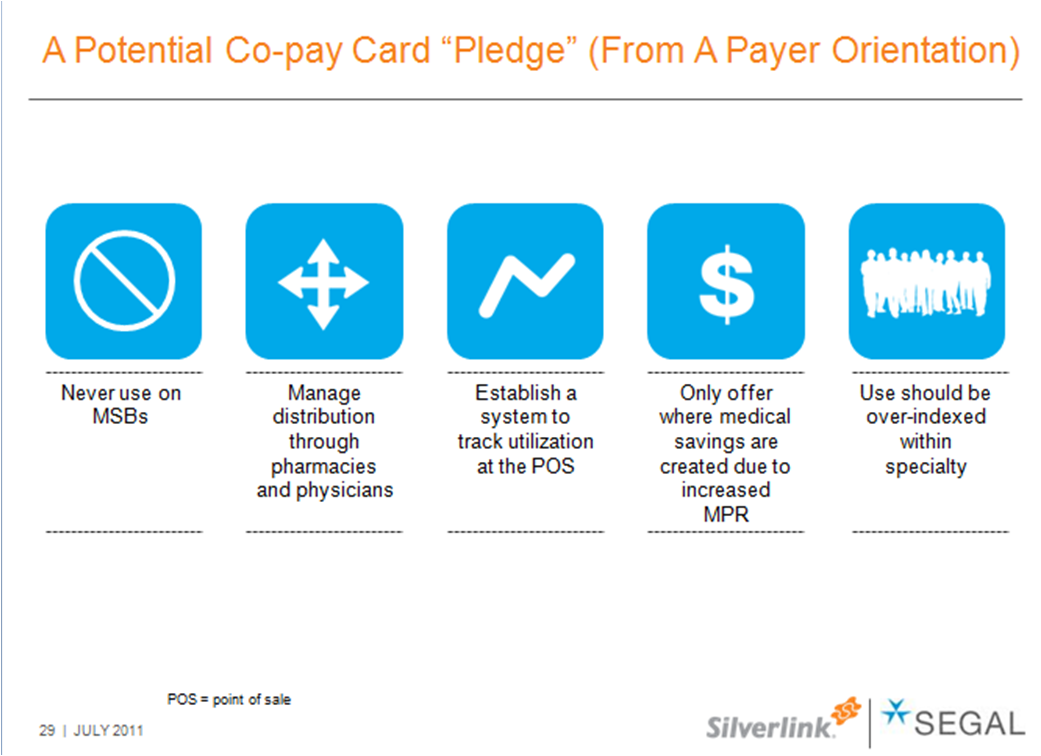
I think there are several ways that industry (especially pharmacies) should collaborate with pharma on how to leverage these copay cards at the POS with patients [call me to discuss]. But, to do that, I think the broader industry is going to require some type of rules which I am sharing shortly as a proposed “pledge”.


The other thing longer-term to watch is will this further change the PBM-Pharma relationship.  I think yes.  If the PBMs push for legislation on this marketing tactic or the manufacturers figure out that this is a better use of their spend than rebates, this will change the relationship. 

Additional Reading:

  1. Prescription Drug Coupons Bad for Patients
  2. Drug Firms Providing Kickbacks For Copays and Coinsurance
  3. DBN article – As Competitors Encroach, Pfizer Seizes A Few More Glory Days With Lipitor Promo
  4. Adam Fein blog posts
  5. Copayment Subsidies
  6. Coupons For Patients, But Higher Bills For Insurers

Eight Studies To Share With Your Soccer Mom Friends

I was at a swim meet yesterday and started talking about recovery drinks after working out.  I then went on to share a few studies with people.  I can’t promise that this make you “cool”, but you can get a few interesting discussions out of these.

  1. The best recovery drink is chocolate milk.
  2. Use sports drinks as appropriate, but don’t make them a common drink for your kids.
  3. Stretching is over-rated and in some cases not productive.
  4. Just because your kid’s at practice for 2 hours doesn’t mean he exercised for 2 hours (although this doesn’t seem to be true for swimming).
  5. Exercise games are good; let your kid’s play them for exercise.
  6. Make sure your kid gets enough sleep.  Sleep effects both health and decision making capabilities (another article comparing alcohol and lack of sleep).
  7. Cross-training and playing multiple sports may avoid injury at an early age.
  8. Cheerleading is the most dangerous sport for girls, and basketball creates more injuries than any other sport.

How I Would Use Generic Lipitor To Improve Mail Order Utilization

The fact that Lipitor is scheduled to go generic towards the end of 2011 is the big news many have been waiting for.  The key question of course is whether payers see immediate savings in pricing or whether the price drop is only minor until there are more manufacturers providing the generic. 

I keep thinking about how to leverage this event in other efforts as a PBM or a pharmacy.  This seems like a great chance to drive to a preferred pharmacy (retail or mail).  If it was me making decisions (and I had my pricing and copays aligned correctly), I would do something like the following:

  • Reach out to all brand Lipitor users before their September / October refill.
  • Offer to refill their medication at no out-of-pocket cost to them (i.e., copay waiver) if they move to mail order (or a preferred pharmacy).
  • Provide them with a conceirge service (i.e., fax their physician to get the new Rx) to make it easy to do.
  • Convert them to the generic when available. 

Yes.  This will cost some money, but the 12-months savings (payer) or increased profit (pharmacy/PBM) should outweigh the costs.  It’s a great opportunity to co-mingle your messages and leverage a market event to everyone’s benefit. 

Of course, this should be only part of your broader strategy around the world’s biggest drug.  Your going to want something that addresses:

  • Inbound IVR messaging
  • Web messaging
  • Mobile application messaging
  • MD communications
  • Messaging integrated into outbound communications (print, call, pharmacy inserts)

This is similar to the control room concept my team designed at Express Scripts years ago around Zocor.

Silverlink eBook: 13 Common Pitfalls In Consumer Health Engagement

After working on consumer communications in healthcare for most of the  past decade, I realized that there were some common pitfalls that happen.  Many of them are pretty straightforward, but when rushed, they may get forgotten.  I worked with Dr. Jan Berger (our Chief Medical Officer) to identify a short list of them, and then the Silverlink marketing team pulled them together in a beautiful eBook

Each of the pitfalls is set up with a quote and a great image:

Then, there is a brief description to explain the pitfall on the page across from it:

What are some of the pitfalls:

  • Not knowing how to declare success
  • Limiting design based on company constraints
  • Forgetting about health literacy
  • Not understanding the entire process
  • Thinking you represent the customer

To get a copy of the entire eBook, you can register online.  [Alternatively, you can e-mail me at gvanantwerp at mac dot com.]

mHealth, Mexico, and HIV

I can tell I’m finally getting through my pile of interesting articles when I pick up an article from February 2010 in HealthAffairs, but it’s a good case study about Mexico’s use of cell phones and mobile technology.

The focus of the story is on VidaNET which is a cell-phone based system that sends text messages and e-mail to patients reminding them to take their medications, keep their physician’s appointments, and stay up to date on their lab tests.  The VidaNET program is for HIV patients and also provides them with other related health information.

“VidaNET is a technology platform that helps you self-manage your health.”

This solution is a partnership between the leading Mexican cellular company (Telcel) and the Carso Health Institute.  It built on their initial program called CardioNET which was focused on obesity related illnesses.  CardioNet featured a risk assessment tool that then drove the consumer to health related resources and provided them with facts to lead a healthier lifestyle.

Although a few of the statistics are now a year old, they are good on the access of the mobile channel:

  • 55% of the world’s citizens have mobile phones
  • It’s projected that by 2018 that there will be one cell phone per person in the world.
  • 80% of Mexicans own a cell phone and the country has more cell phones than people.
I also learned some interesting things about the Mexican healthcare system:
  • Patients don’t have access to their medical records (by law).
  • Doctors are often too busy to explain information to patients.
It clearly is a “physician as God” type of relationship where information is handed down for the patient to follow blindly.  That makes their use of telehealth even more radical by empowering the patient.
The article references two other studies on text messaging:
  • A Vodafone study that found that text messaging appointment reminders to patients in the UK reduced missed physician appointments by 33-50 percent.
  • A review of 14 studies in the American Journal of Preventative Medicine that found that text-messaging interventions produced positive behavior change in 93% of the cases.
I thought the article also did a good job of talking about why adherence is an issue for HIV patients and its importance:
  • Multiple doses of multiple drugs
  • Unpleasant side effects
  • Work only if drugs are taken at least 95% of the time
  • If patients go off their medications, it can lead to the growth of resistant strains of HIV
To some degree, the system is essentially sending you messages based on data you input which seems like a short-coming.  It’s not looking for refill data, planned appointments, and other information which might be electronically accessible.  You input data to set up your profile which then triggers reminders.
One of the cool features is a “stoplight” which tells you quickly your MPR (medication possession ratio).  If you miss your medications twice, you get a red light with the following:
“Don’t let the virus continue replicating.  LOOK FOR SUPPORT AND VISIT YOUR DOCTOR.”
At the time of the article, they were just working on DiabeDiario which is basically a Diabetes Diary.

Pharma Virtual Trial (like Remote Monitoring)

I think one of the most exciting things in pharma in the past few months has been the approval that Pfizer received to allow them to do a virtual trial.  This appears to build on a lot of the momentum around remote monitoring, mobile health, telemedicine, and other trends.  The key is that this opens up a gateway for broader trials at potentially lower cost.

But, I think the key with any solution like this is the blend of active and passive monitoring.  In passive monitoring, you wait for the patient to not provide data and then intervene.  In active monitoring, you are prompting them to provide data proactively.  Different patients will respond differently, and probably, like adherence programs, you need a mix of both.

A Few YouTube Videos On ADHD

(Note: If you get this e-mailed to you, the videos may not show up without visiting the site.)

Here are a few videos on this topic:

Better Care From MD With Computer

Do you believe your physician is giving you better care when they are using technology?  I certainly do.  Here’s a few stats from a survey by GfK Roper for Practice Fusion:

  • 78% of patients whose doctors used an EHR believe the computer system helps their doctor deliver better care
  • 49% of patients reported that their physician used an EHR during their last office visit
  • 38% of patients whose doctors use paper charts would like their physician to go digital
I’m a little surprised by the last data point.  I would think most patients would want physicians to use technology although I suppose the fear is that it creates a less personal experience.
On the other hand, the survey would probably be more interesting in evaluating technology use based on diagnosis.  I’m very interested in technology being used when I have x-rays or tests or a complex condition but not as much for a simple check-up.

Exercise To Increase Your Hippocampus

In a paper published in the Proceedings of the National Academy of Sciences, researchers reported that they observed a roughly 2% increase in hippocampus volume for people between the ages of 55-80 who walked for 40 minutes three times a week for a year.

Why do you care?  The hippocampus is the brain region critical to long-term memory.

Another point from the study – those who did aerobic exercise also had higher levels of proteins to help build new neurons.

More research is starting to suggest that exercise earlier in life could act as a protective barrier against disease and brain atrophy later in life.  It’s in your brain’s best interest to start the exercise habit early. [Kirk Erickson, coauthor of the paper and professor at the University of Pittsburgh – from Experience Life magazine]

Why Doesn’t The FDA Require Adherence Programs?

The one thing that kept jumping into my head while thinking about the FDA’s decision to require REMS programs is why they don’t require adherence programs.  They approve drugs based on clinical trials.  In the clinical trials, we see unreal adherence rates that are never duplicated in the real world.  If they saw the same adherence drop-off rates in the clinical trials, would they still approve the drugs?  I would venture a guess that the answer would be no because the outcomes would be much less. 

So, if drugs don’t work in people that don’t take them (as Dr. Koop would say), why do we have a bunch of drugs on the market that “don’t work”?  Wouldn’t the FDA want to address adherence of these ~9,800 drugs where 99% of the spend is and which have a huge impact (~$290B) on the healthcare costs of the US in addition to focusing on the ~120 drugs that have safety concerns that require REMS?

REMS: A Few Learnings

I just finished reading Assessing the Impact of Risk Evaluation and Mitigation Strategies (REMS) Requirements on the Pharmaceutical Supply Chain by the Center For Healthcare Supply Chain Research

If you don’t know what REMS is, here is the FDA page on REMS.  Essentially, they are programs that the manufacturer is required to provide to mitigate risks associated with certain drugs. 

This study does a good job of describing the REMS landscape and sharing some challenges and opportunities.  As someone who was less familiar with this than many of you in the industry, I found it a good foundational piece which got my mind thinking. 

Overall REMS can be required to include five distinct elements:

  1. A medication guide
  2. A communication plan to healthcare professionals
  3. An ETASU (Elements to Assure Safe Use)
  4. An implementation system
  5. A timetable for submission of assessments of the REMS (required in all cases)

“As part of the REMS submission to the FDA, a manufacturer also must show that the strategy elements will not unduly burden patient access (particularly where patients have life-threatening diseases or difficult access to healthcare providers of the drug).”

Definitely, that access issue is key.  These programs add time and hurdles which need to be seamlessly worked into the workflow for physicians and pharmacies and show improvement in outcomes or reduction in risk.  And, ideally that should happen with cost in mind. 

Given the infrequency that some generalists might have with some specialty products, this can create communication and compliance challenges.

For distributors, this creates both a burden but also a financial upside as they charge to manage and implement the REMS.  On the flipside, for physicians, this creates extra effort which isn’t reimbursed.  As the study broke out different perspectives from constituents in the process, this along with several others from providers caught my attention:

  • Do the REMS requirements hold the physician liable for safety?
  • Will the perception of risk impact the likelihood of the patient starting or continuing on therapy?

Certainly from a communications perspective, REMS have led to the buildout of “hubs” that provide services around these drugs in the areas of data management, patient counseling, call center, registry, and content management. 

The study estimates the economic impact of these programs on both the distributor and the provider (physician, nurse, and pharmacy).  For example, they estimate that a pharmacist at a specialty pharmacy spends 100-165 minutes per patient per month for those on drugs with a REMS requirement. 

They pose a question towards the end around generics and biologics which gets at the heart of the cost / benefit tradeoff for bringing a product to market which requires a REMS when part of your value proposition is a lower cost. 

Anyways, for those of you interested in the topic, it’s a good read. 


Discount Code For AIS Webinar: Drug Copay Cards

For those of you that are interested, here’s a link for a $30 discount on the AIS webinar that I’m doing with Sean Brandle from Segal Company on drug copay cards.  As a teaser, here’s results from one of the survey questions that I posed earlier (noting that the sample size was small, but likely indicative of the overall market).

Prior fMRI Research Would Say That New Smoking Labels Won’t Work

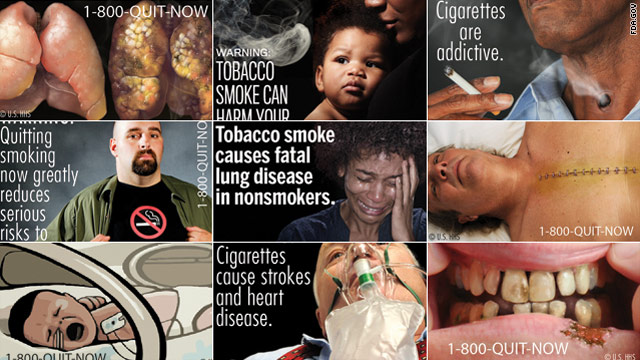
I talked about this briefly in my review of the book Buyology, but in the book, the author talks about an fMRI study that showed exactly the opposite.  Warning labels don’t discourage smoking.  Of course, the logical question is whether graphics have a different impact than words.  It would be interesting to test, but I wonder if the FDA even considered this study in their analysis.  And, if they did, did they not believe it?

Here’s the labels which definitely get your attention but is it like believing you’ll win the lottery…it won’t happen to me; I won’t get addicted; I’ll only smoke socially.

BTW – A quick search tells me that I’m not the only one skeptical of the labels.  Discovery magazine has a more thorough story on this.

Enchantment Infographics (by Guy Kawasaki)

I’ve had the privilege to hear Guy Kawasaki speak and have read a lot of the stuff he’s written over the years.  I haven’t read the new book Enchantment, but these infographics might get me to go out and do that.

I’d love to think about similar graphics which blend his work and the work of David Shore on trust in healthcare…how to you engage and build trust as a healthcare entity!

$5.2B In Savings From OTC And Patient Self-Diagnosis?

This is an interesting piece with some good data in it.  It estimates that 10% of physician visits are for minor healthcare items where an OTC (over-the-counter) drug could be used.  It then estimates that if 50% of those unnecessary visits were eliminated we could save $5.2B.  It will certainly get some political attention (which it already has).

I have a lot of questions:

  1. How does the patient know that their “ailment” is something to self-diagnose?
  2. Does self-diagnosis lead to new issues?
  3. What are the restrictions around OTCs versus Rx products?  [Look at Prilosec OTC which has labeling limiting it’s long-term use versus the Rx product which could be viewed as a maintenance drug.]
  4. Were there other benefits to the patient and healthcare system of them visiting the physician?

On the other hand, if I were a clinic company (think MinuteClinic or TakeCare Clinic), this would be great.  It’s proposing to move 26M physician visits to another channel.  I think the research believes this all jumps to Dr. Google, but I think it’s more likely that this gets pushed to clinics (and hopefully not to ERs). 

Sleepiest States And More On Sleep Impact

The impact of sleep on health is an important topic. 

Let’s begin with a list of the sleepiest states from CDC/WebMD which I came across.  It reports the percentage of adults who report not getting enough sleep:

  • West Virginia – 19.3%
  • Tennessee – 14.8%
  • Kentucky – 14.4%
  • Oklahoma – 14.3%
  • Florida – 13.5%

Some of the facts that I took from the other article I was reading in Experience Life magazine (Dec 2010) were:

  • People between the age of 32-59 who only slept four hours were 73% more likely to be obese than those sleeping 7-9 hours…and those that slept only 6 hours were 23 more likely to become obese than those sleeping 6 hours.  (Columbia University)
  • The average sleep of Americans has fallen from almost 9 hours in 1960 to just over 6.5 hours in 2009.  (National Sleep Foundation)
  • Nearly 1/3 of the population gets less than 6 hours of sleep per night.

Sleep impacts weight because leptin decreases and ghrelin increases when you don’t have enough sleep (2004 study in the Annals of Internal Medicine).  These are both hormones that control hunger.  Leptin tells the brain when the body has had enough food and ghrelin indicates that our energy reserves are running low. 


Here We Go Again – WAG and ESRX Network Dispute

This morning Walgreen’s announced that it could not reach agreement with Express Scripts on their retail network contract. This is a big deal (for both parties) as Walgreens processes approximately 90M Rxs for Express Scripts or approximately $5.3B worth of Rxs.

This has definitely happened before (see CVS Caremark and Walgreens before), but this year’s dispute is different for a few reasons:

  1. CVS Caremark clearly had their own retail network to fall back on. Express Scripts wouldn’t likely partner up with CVS so they’d be pushed into creating limited networks and partnering with everyone except the two biggest retail chains (in so much as PBMs partner with retailers versus simply negotiate with them).
  2. Last year’s dispute seemed focused on Maintenance Choice while this year’s dispute seems focused on contract terms (from press release).
    1. Express Scripts insisted on being able to unilaterally define contract terms, including what does and does not constitute a brand and generic drug, which would have denied Walgreens the predictability necessary to reliably plan its business operations going forward.
    2. Express Scripts rejected Walgreens request to be informed in advance if Express Scripts intends to add or transfer a prescription drug plan to a different Express Scripts pharmacy network, and to provide patients with equal access to Walgreens retail pharmacies.
    3. Express Scripts proposed to cut reimbursement rates to unacceptable levels below the industry average cost to provide each prescription.

As with last year (and year’s prior), I believe this will get resolved, but it creates an arbitrage opportunity for all the PBMs except Express Scripts in the short-term. [In the short-term, Express Scripts gets hurt in the sales cycle with this distraction. If this played out, Walgreens would take the brunt of the real impact by losing significant script volume. Ultimately, it’s a game of chicken with potential bad outcomes for all (as the picture indicates).]

My questions are:

  • These have been issues in contracting for a long time. Why now?
  • Why are these disputes with CVS Caremark and Express Scripts? What are Medco (or others) doing to avoid these issues?
  • Does Walgreens get these terms from other PBMs? Or, is Express Scripts able to get these terms from CVS and other large chains like Walmart?
  • Is this just a negotiating tactic which is to put public pressure out there? If so, it’s seemed to work in the past. Will it work again? [The UAW used to do this on a rotating basis to the big 3 auto makers. It worked well, but every once in a while they had to go on strike.]

I know one Wall Street analyst who is at Express Scripts tomorrow. That should be an interesting discussion.

If history is any indication, I would expect we’ll see an Express Scripts press release on their perspective by the end of the day.

Ultimately, the big question is whether something like this could be the final event to push the industry into limited / restricted networks (see Walmart post) and get it from the 5-10% of clients that use this today to a more meaningful number.

[FYI – As of right now, ESRX is down 1% and WAG is down almost 6%…buying opportunity?]

The Implication Of Personal Decisions On Health

I was reading Ralph Keeney’s article “Personal Decisions Are the Leading Cause of Death” over the weekend. It’s very interesting. He attributes 1M of the 2.4M deaths in 2000 in the US to personal decisions that we make. And, unfortunately, he says that retrospective analysis would suggest we’re on a bad trend line of increasingly being responsible for a greater percentage of our deaths.

The article points out that the fact that these are personal decisions makes this a manageable issue.

  1. We can engage consumers to take more responsibility for their healthcare.
  2. Improving decision making is less expensive and in some cases more effective than other options.

“A personal decision is a situation where an individual can make a choice between two or more alternatives.”

“A premature death resulting from a personal decision is defined to be one where an individual dies sooner than would have been the case if a different choice had been made.”

The premature deaths attributed to personal decisions in the article are:

  • Smoking
  • Weight
  • Alcoholic diseases
  • Accidents
  • Suicide
  • Unprotected sex
  • Homicide
  • Illicit drugs

If you go read the paper, you can see how he breaks down each of these areas.

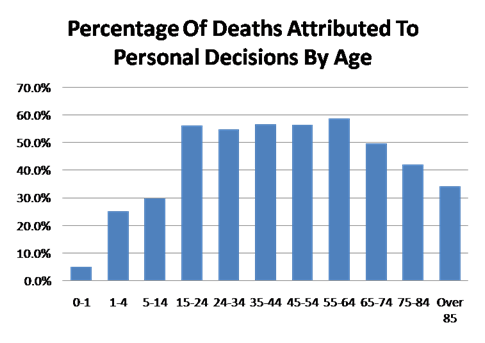
What I also found very interesting was the breakdown of the percentage of deaths by age group that are attributable to personal decisions. [I honestly expected it to peak earlier, but I think the fact that 80% of the impact is from smoking and weight that it takes time to see that impact.]

“Take control of your own health. Studies show that at least two-thirds of cancer deaths can be prevented by not using tobacco products, maintaining a healthy weight, getting plenty of physical activity, eating health foods, and avoiding the midday sun and protecting the skin with a hat, shirt, and sunscreen.” (Quote from the American Cancer Association)

A key question is whether people feel responsible for their own health. A 2009 survey by Thomson Reuters showed that those with a higher education level had a much stronger sense of that ownership (71.2% for those with a college degree versus 47.5% for those with less than a high school education).

The article made me think of a few things:

Much like Silverlink Communications, many healthcare companies are very focused on consumer engagement. As this article points out, getting consumers to understand the impact of their decisions on their health may be a very effective way of reducing premature deaths. That should also reduce the burden of chronic conditions on our economy.

“Seven chronic diseases…have a total impact on the economy of $1.3 trillion annually. Of this amount, $1.1 trillion represents the cost of lost productivity.” (Milken Institute)

While we typically focus on throwing money or incentives at the issue, this may not always be the answer (see post on the book – Drive). There are many simple interventions to help address health literacy and help consumers understand the need to take action (see post on cured after the first fill). Creating personalized communications that address people’s barriers is a critical success factor for healthcare organizations. There are several critical success factors to consider:

  • Help consumers understand the need for the action (WIIFM)
  • Make it simple so they can fit it into their busy schedules
  • Coordinate with the physician
  • Address their fears
  • AND, be cognizant of cost and the burdens this can cause (see recent article on OOP spend for people with cancer)