Archive | exercise RSS feed for this section

Obesity Rates Vs. Population Growth

The research correlating weight with your social network is out.  So, it makes me wonder as I look at the states with the highest rates of obesity whether they will build on themselves.  Will they continue to get more and more obese?  The logical next question is whether that will at some point affect things like the healthcare costs in these states, employment growth in these states, and population growth.

Given two options, would you move to a healthier state or do you believe that you’re above this social pressure which will lead to less exercise and higher weight? 

The states with the highest rates of obesity were:

  1. Mississippi (33.8%)
  2. Alabama
  3. Tennessee (tied for 2nd)
  4. West Virginia
  5. Louisiana
  6. Oklahoma
  7. Kentucky
  8. Arkansas
  9. South Carolina
  10. Michigan
  11. North Carolina (tied for 10th at 29.4%)

The fastest growing states (2008-2009) were:

  1. Wyoming
  2. Utah
  3. Texas
  4. Colorado
  5. Alaska
  6. Arizona
  7. Washington
  8. North Carolina
  9. Georgia
  10. South Carolina

Woman Tries To Eat Herself To Death

I’m not sure how else to describe this woman who willingly wants to weigh 1,000 pounds so she can hold a world record.  She’ll be so unhealthy.  I at first assumed that she must not have kids since this is essentially suicide…but she does.

I wonder if this is a reason to remove someone from health insurance or life insurance.  If she needed an ambulance, I’m not even sure how they would get her out of the house.  She’s already over 600 pounds.

Automated Call Nudge – WSJ

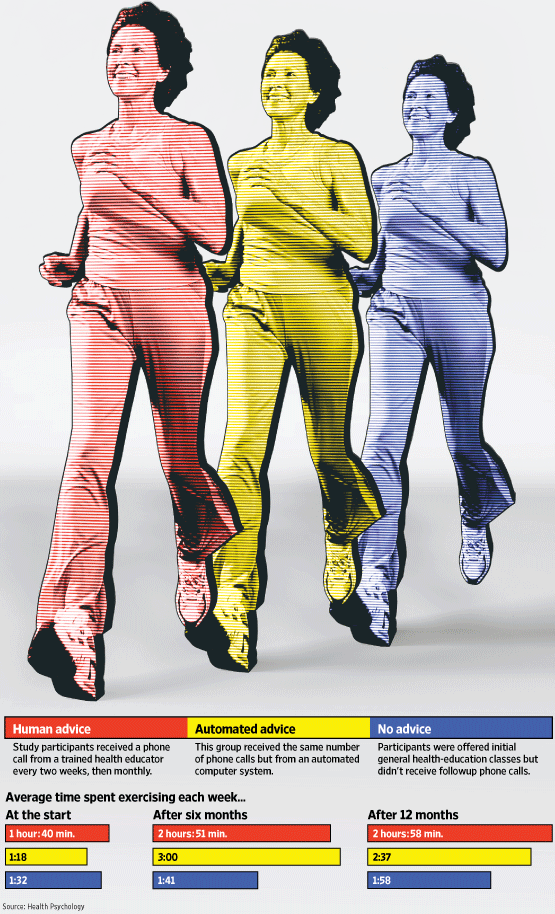
Yesterday’s WSJ had an article about some research done at Stanford about comparing automated calls and human interventions.  The goal was to see what motivated people to exercise more.  As you can see in the chart below, at 6-months automated calls produced better results while at 12-months they were below the human interventions.  But, an automated solution is obviously much more cost efficient and scalable.  The one big question I have is how to make the automated calls even more interactive.  There are lots of things we do at Silverlink to use automation to drive behavior.

While many are skeptical, the reality is that automated calls are the best channel in healthcare based on the cost per success ratio.  [Do you know any other channel that can get you a 70% “open” rate?]  You can deliver PHI.  You can track interventions for audit purposes.  You can have real-time access to data.  You can create rules based solutions that dynamically change based on interactions. 

And, this is not the first study Stanford has done on this.  Here’s links to two older studies they did:

Healthy Habits In US Aren’t Good

A few stats from the National Health Interview Survey:

  1. 61% of adults drink alcohol.  [Seems low to me…plus I thought some data showed red wine to be good for you]
  2. Only 31% get enough physical activity
  3. 40% do no leisure physical activity
  4. 20% smoke (and 21% are former smokers)

The report has shown no improvement in physical activity since 1997.

The data did show that education makes a difference.  More educated people were less likely to be smoking, more active, less likely to be obese, and less likely to have slept 6 hours or less in the past 24 hours.  And, it showed that married adults are more likely to have healthier behaviors than people who are divorced, widowed, or separated.

Insanity Workout

I must admit that I generally go out of my way to not promote products, but I started this new workout routine (Insanity by BeachBody) a few weeks ago and am impressed. Very difficult. I think in the first two weeks that I’ve only made it thru the warm-up twice without stopping. I’ve checked with a few others so I know I’m not crazy. It’s hard.

For me, I needed one that I could travel with (i.e., no equipment needed) and would push me. I’m trying to work on the better eating concept, but that is always my achilles heel.

Double Whammy: Lose Job and Become Sicker

A study released earlier this year suggests that losing your job can increase your odds of developing a new stress-related health problem by about 80%.  (read more)

The study also suggests that just the threat of losing your job can do this and that those that keep their job are also at risk.  Oh well…If you’re a fatalist (like Michelle Obama), then you’re pretty much doomed in this economy.  But the reality is that life is stacked against you.  You need to take the bull by the horns and be responsible for your healthcare otherwise you enter that death spiral (literally).  And, being unhealthy will cost you more – medicine, physician visits, life insurance premiums, individual health insurance costs, absenteeism, salary (see below).

“Economists Susan Averett and Sanders Korenman studied the effects of obesity on wages, using a sample consisting of individuals aged 16-24 in 1981 who were 23-31 in 1988. They showed that women who were obese according to their Body Mass Index (BMI) in both 1981 and 1988 earned 17 percent lower wages on average than women within their recommended BMI range.

Women are not the only ones to suffer discrimination based on appearance. While obesity had a slightly negative effect on a man’s earning power, height seems to play a much more significant role in determining a man’s salary, with shorter men getting the “short end of the stick.”

So, one of the important things to do is understand the impact of stress and focus on stress management (see tips).  Regular exercise is a good way to help with this (and helps with your overall health and weight management).

 “Stress can increase blood pressure and heart rate, which can tax the heart.  We’re seeing more people who are putting on weight because they aren’t eating well under stress.”  (Marc Eisenberg, MD, Columbia University)

[P.S., Don’t forget that if you like these blog postings that you can get them sent to you an e-mail every time I post.  To get that, simply sign up here.)

New Respect For Swimmers

I’ve never been a swimmer and hence, whenever anyone asks me about doing a triathlon, I just laugh.  But, now my 8-year old has gotten into swimming. They run a mile then swim for 90-minutes 3x per week.  I figured if she could do it than I could.  Big mistake.

I tried to swim for 30-minutes that other day and felt like I was going to pass out.  I’m sure it was a good workout, but I realized that like running I need to manage my expectations and start small.  This may be a good new years resolution…make it one hour swimming.

You Know You’ve Had A Good Workout When

Every once in a while you have that great workout.  As we get ready for the 60% surge in gym memberships that occur with 1/1, I started thinking about what criteria I use to know this.

  1. An inability to walk up stairs without pain.  I even had one workout years ago (kickboxing plus spinning) where I had to crawl up my stairs at home for day.
  2. You have to take Advil before you workout again since you’re still sore.
  3. You have to use IcyHot before you workout again to try to relax your muscles.
  4. An inability to lift light objects (such as kids) since your arms are too sore.
  5. An ability to wring the sweat from your clothes as if you had just jumped in a pool.
  6. Throwing up from a workout.  (I have to trust this.  I’ve come close, but my body seems to stop before I get there.)
  7. Totally physical collapse.  (I also have to trust this.  You often see this with marathoners or people doing the IronMan, but my body seems to stop before I get to this point.)

Of course, you can’t do this everyday or you can’t recover (and you probably aren’t very comfortable).  But, I often find that the best way to get this is to try a new routine or new workout.  I’ve done this new core workout a few times at the Lifetime Fitness in Chesterfield, MO which seems pretty easy but is really hard.  I have trouble with certain movements the next day for sure.

Can Un-Athletic Coaches Be Role Models?

As a parent, I always think about setting examples for my kids.  Since I do believe that playing sports is important to teach kids teamwork, coordination, social skills, and competitive skills, I think this is a key question.  Sports is an integral part of our society.  I see three potential role models for kids around sports:  [Also, over time, I think that kids peers can become role models or certainly older kids.]

  1. Parents
  2. Coaches
  3. Professional Athletes

While I think there are some great professional athletes who can serve as role models (e.g., Michael Jordan, Tiger Woods), there are a lot that aren’t due to drugs, violence, unsportsmanlike conduct, gambling, cheating, and financial mismanagement.  And, that’s a very hard thing to control.  We’re always (IMHO – in my humble opinion) going to pay to see the best even if they’ve used steriods or have control issues. 

As parents, we have the most control over ourselves.  We can make sure our children see us play sports and exercise.  We can stress the importance of this.  We can help them learn sports and make sure they take away lessons from their playing – e.g., winning isn’t everything.  [One interesting observation that I’ve had is that athletes make good sales people because they know how to keep trying and get focused even after a loss.]

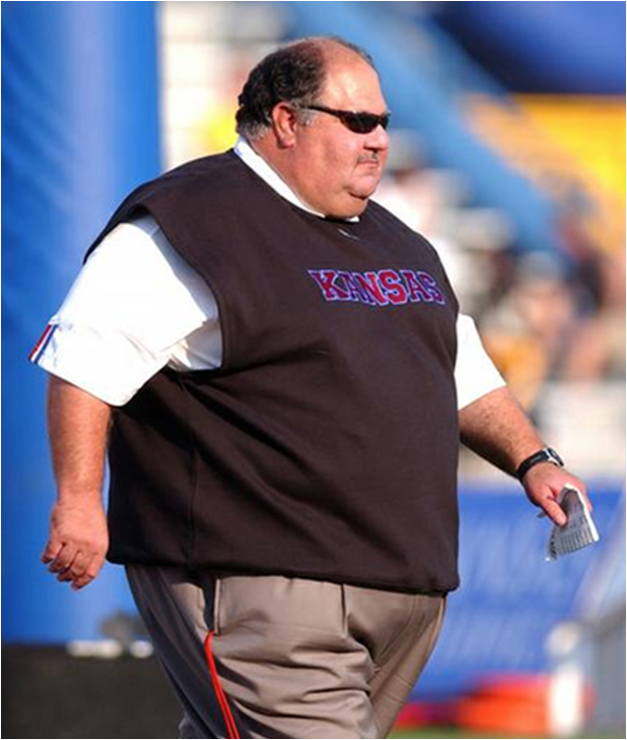
But, the one I struggle with is coaches.  Sometimes you may have control over the coach, but they can be a very powerful influence on your kids.  They spend hours with them and provide guidance.  There are some things that you obviously don’t want in a coach – too demanding, not demanding enough, someone who encourages winning at any cost.  But, what do you do about the coach that is very smart and understands how to play, but isn’t in shape at all?  They can’t even run down the field with the kids.  What type of image does that give the kids?  It seems mixed to me, but maybe I’m wrong. 
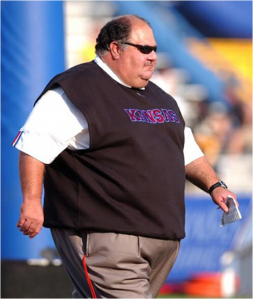
[Note: I was originally going to call this “Fat Coaches”, but I think there are plently of overweight people who are athletic.  But, I’m not so sure about this guy above or some other coaches I’ve seen.]

RoadID for your athlete

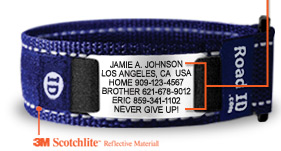
Here’s a simple, yet valuable gift for your athletic spouse, friend, co-worker – RoadID

This is something you can wear or put on your shoes so that if you get into an accident while you’re working out (i.e., road running, biking, hiking) people can contact someone for you.  I think it’s great.  I was skeptical of the need for it for a while, but I realize that accidents do happen.

They’ve now come out with RoadID interactive.  I have mixed impressions.  It’s great in that you can log information into an online profile – addresses, contacts, physicians, medical information, insurance coverage, etc.  If you’re in a horrible accident, all of that would be good to have.  And, the reality is that you control how much is there.  But, I’m still a generally paranoid person so I would worry about someone stealing my shoes and all of a sudden having access to my information.

[Too bad you couldn’t make it so that it was only enabled if some of your vitals signs were off and transmitted via a sensor to the site to unlock the information.  That would be cool!]

Band-Aid To Monitor Your Heart

Let’s stick with today’s examples that can be extrapolated to the future.  [Good Sunday am thinking]

I was reading in Fast Company [Dec 09 / Jan 10] about Corventis’ PiiX monitor. 

It’s a “wireless, water-resistant sensor that sticks to a patient’s chest like a large Band-Aid and monitors heart rate, respiratory rate, bodily fluids, and overall activity.”

Interesting!   I see an immediate use for this in team sports like the Tour de France where it can be monitored by a team manager and used to push fluids or encourage a change in pattern.  But, as the company talks about, imagine the power of using predictive algorithms here to know when someone may be in danger of a heart attack or some other medical issue. 

As devices like this become standard and are used to monitor our key bodily statistics and used, will we become healthier?  Again, will companies be able to use these to help guide our decisions through incentives – lower health care costs, lower life insurance costs?

I think as the data from these get transmitted electronically and populate PHRs and EMRs and get used by clinicians it will be very interesting to see how they change outcomes.

“Training” For Disney

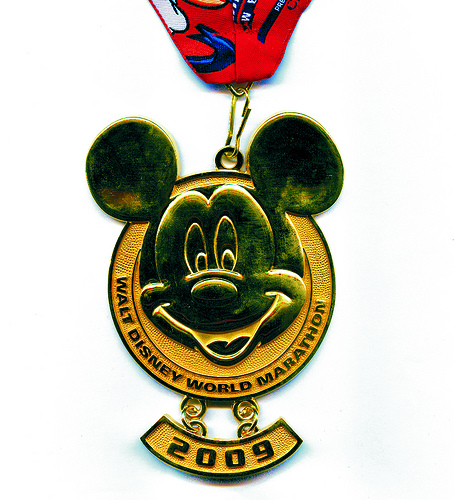
We’re doing our first family vacation (brother, sister, parents, and kids – 14 in total) at Disney in December.  We’ve been to Disney several times with kids, but my family hasn’t been in years.  Their travel agent sent out an e-mail telling them that they should be “training” for Disney.  She said that you should be able to walk 16 miles.

Are you kidding me?  Do you really think that our obese society is paying $70 a day (or whatever it costs) to wait in line and walk 16 miles within the park…especially in the heat of the Florida summer? 

Now, my family is all worried about getting ready.  I’m pretty sure the millions of young kids that go there every year don’t have the stamina to walk 16 miles a day even hyped up from seeing Mickey and eating lots of junk food.

Tips For A New Runner

I’m sure there are thousands of people more qualified to give these to you, but since I’ve run 3 marathons, I’ll assume that I have a little experience. Here are my basic tips going back to when I started running by run/walking one mile on my treadmill.

  1. Start small and build up – Start by walking and running short distances to build up some endurance. When you want to add mileage, only add about 10% per week. I made the mistake at one point of adding miles too quickly in my training (35 one week and 50 the next 2 weeks) and spent about a month on the disabled list (DL) due to shin splints.
  2. Get in a running group – After a few months of running, I was running 12 minute miles which I felt good about. My friends asked me to run with them and within a month, I had dropped my average times down below 10 minute miles. Plus, you feel that extra incentive to get up and meet them in the morning. Some of my friends have a penalty they pay if they don’t show up.
  3. Vary your routine – Don’t just run the same speed and same route each day. Do sprints. Do intervals. Run hard some days and easy other days.
  4. Have the right attitude – Find the time when your energy level is high and get in a routine. You have to feel excited about running or exercising and have a positive attitude to succeed. Setting a goal can help (i.e., I want to run a sub-25 minute 5K) or creating an incentive (e.g., I’ll buy myself a new iPod if I lose 10 lbs).
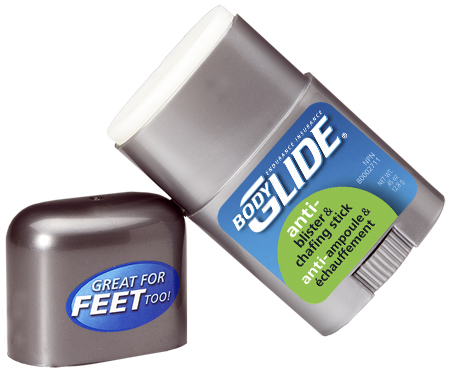
  5. Buy Glide – A lot of people think you can just walk out the door and start running. I disagree on a few fronts. First, I do think all the wicking clothes do help, but more importantly, I find Glide to be a must have. I won’t run without it. When I first started, no one explained to me about how much chaffing was possible. For months, I would come home looking like I was shot with blood running down my shirt from my bloody nipples. Some people try Vaseline to avoid this. Others use bandaids. Glide is the only thing I’ve found that works and holds up thru weather and distance.
  6. Buy the right shoes – This is another very painful memory. When you run, you need shoes that are ½ size larger than you normally wear. If you don’t, you will start finding that your toenails turn black and eventually you lose them. (Not as bad for men as I would expect this would be for a woman who likes to wear open toed shoes.) For my first marathon, I lost five toenails and had to learn to stick needles under my toenails and thru my toenails to pop the blood blisters under them.
  7. Drink lots of water – This was a beginner’s mistake that I sometimes continue to make. A lot of times, I just like to run without carrying a water bottle. But at different times, I’ve thought I had some type of stomach acid problem because I was so torn up after my runs. It took me a long time to figure out that it was just dehydration.

Unfortunately, I haven’t been as rigorous about my training lately, but running can be a lot more fun and social that you think. I would encourage it for everyone.

Are Sport Courts The New Suburban Swimming Pool?

I guess I’ll call this a “microtrend”, but I’ve now seen 2 neighbors (and a 3rd coming) put in sport courts in their backyards.  There are lots of companies that do this, but it’s essentially a flat surface with a basketball hoop and some lights.

This seems much more practical than a pool which is often a fad and kids stop using it after a few years.  (And requires ongoing maintenance and liability.)

If you expand the sport court concept from basketball to include any sport, you can have a putting green, a basketball court, a hockey surface (non-ice), volleyball, tennis, and several others. 

I guess the question is why do this?  I can think of several reasons:

  • Convenience (not having to go to a park)
  • Safety (having kids right outside)
  • Driveways aren’t flat anymore
  • Developments are moving farther and farther out meaning more land per yard (and more need for destination homes where kids gather)

Is this a fad like tennis courts were in some neighborhoods in the 60’s?  That’s still to be seen, but I have a friend who has had a company doing this for about 5 years.

I certainly have seen more parks going to alternative surfaces that are safer for kids that fall.

Getting Kids Active

In today’s computer world, this is as much a challenge for some kids as it is for us adults to find the time. But, it’s important to start the practice early. I liked Dr. Dolgoff’s blog entry on this. It’s pretty straightforward but a good reminder for all of us.

Step One: Let your children see you enjoying exercise.

Step Two: When your child is old enough (around age 3), allow them to participate in very small amounts. You don’t want to overwhelm them.

Step Three: Don’t say no!

Step Four: Step it up!

Step Five: Keep it up!

Marathon / Triathalon Deaths Per Million

An article that came out yesterday points out that there is a much higher risk of heart problems in the triathalon especially around jumping into the cold water for the open swim.  It puts the deaths per million participants at 15 compared to 4-8 deaths per million marathon participants.  Certainly, if you are jumping into either sport, you should train appropriately and talk with your physician about any concerns or ideally get checked out for any potential heart complications.

But, I think it’s also important to put these in perspective.  According to FARS (Fatality Analysis Reporting System), the statistics on fatalities from car accidents are:

  • 13.61 per 100,000 people
  • 16.05 per 100,000 registered vehicles
  • 19.96 per 100,000 licensed drivers

Biggest Loser…Losing Credibility

In one of those classic examples of why do smart people do stupid things, the show The Biggest Loser on NBC shows one of their recent contestants completing a marathon in under 4 hours while weighing close to 300 pounds.  I saw the show and was amazed.  I haven’t been able to do that on 3 tries and wondered what the heck I was doing wrong.

Well…come to find out that he didn’t run the marathon unaided.  Depending on which report you believe, he got a van ride for 3-6 miles toward the end and was crossing the finish line at just under 6 hours.  I just don’t get why the show would be so stupid. 

It’s a show about inspiring people with amazing transformations.  Having him run a half-marathon or even completing a full 26.2 miles at a slow time would have been a great story.  Instead you ruin it and cast down on some of the things that the contestants do.  

Story in the Detroit News about it.

You can read the official statements from Dane (the contestant), the show, and NBC in The LA Times.

“I always intended to run the full marathon. At the 17th mile, I knew I would not make it in time to cross the finish line before it closed at 6 hours, so I then received a ride from the field producer, who wanted to show me crossing the finish line. He drove me for three miles, and then I ran the rest of the way. After all the filming was done I went back and finished the last 3 miles later that day with my wife and cousin Blaine. I apologize for stating that I ran the entire marathon before I actually ran the whole 26 miles. I am proud of the feat of just running 26 miles in one day.”

Trickle Down Healthcare

Many of us know the term “trickle-down economics” which is generally associated with Ronald Reagan.  (Obviously not a concept bought into by the current administration.)  I was thinking about this today from the concept of workplace culture around healthcare.

I have not seen any research to this point, but it would seem to make sense that companies where the senior executive team is focused on exercising – running, triathalons, tennis, etc. – would generally be healthier companies.  As we have seen multiple times, peer pressure works.  So, does it work from a top-down perspective also?

I know one healthcare company where they were refining what was served at the cafeteria and what was in the vending machines.  Obviously, there are ways to control diet through what the company “encourages”.  Do they have bowls of fruit or bowls of chocolate?

Intense Workout

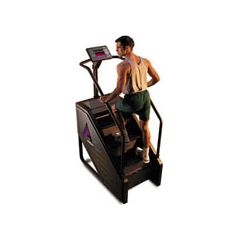
stairmasterI have to say that climbing stairs on this type of stairmaster is one of the best workouts I have ever done.  You do this for 30-minutes at a reasonable pace (say 10 minutes per mile or 6 stories per minute) and you will be feeling it.  You burn a ton of calories.  I think the key is that you are lifting your feet up to get to each stair.  There is no machine bounce to help you.

Did You “Catch” Your Obesity?

What if obesity were a virus that once you caught it you couldn’t manage it with simply diet and exercise?  That would be a very discouraging fact.

sneezeWell, some recent research is finding a link between a virus and obesity and claiming just that.  Of course, the primary issue is overeating especially with limited exercise, but this presents a new wrinkle in solving the obesity crisis.

So, to manage obesity, you need to sleep more and eat better.  Exercise has an impact, but it may not be the best way to try to lose weight (see article).

Where Are My Land Legs

I just got back from our “annual” Disney Cruise realizing that this vacation of 8 nights was the longest vacation I have ever taken.  Anyways, less that 24 hours later, I was back on a plane and jumping into meetings.  I still haven’t quite got my land legs  back.

But, I am anxious to share lots of things with you so hopefully, I will find some time this week to catch up on blogging.

A few things from vacation:

  1. It is amazing the redundancy and rigor that a company like Disney has.  We love the cruises.  I was amazed to learn that for the stage productions they put on on the boat that they have 2 microphones and 2 batteries for each actor.  And, if that’s not enough, they have their voices recorded for each part so they could lip synch if everything failed.  Why don’t we have that type of redundancy (without adding cost) in the healthcare system?
  2. I always lose faith in the healthcare system when I see the advertisement at the airport showing a physician signing the foot on which surgery is going to be performed.  Is that the best way we have of ensuring no mistakes are made?
  3. On the boat, you have to wash your hands before you enter any restaurant.  It would certainly take away from the ambiance, but should that be a more regular practice on land?
  4. They have a nice gym on board that I used 3 times.  They even run a 5K now at their island (on some not all cruises).  It made me wonder what percentage of the people on board worked out and whether that was a similar ratio to typical life and society.  If so, it reinforces one of our major challenges.
  5. How about some healthy food at airports?  I am surprised I haven’t ranted about this before.  It is getting better at a few airports where you can find a few things, but it is genuinely difficult to travel and eat healthy.

Using Your FSA For Your Gym Membership

Maryland is working on a bill that will allow you to use your flexible spending account (i.e., pre-tax dollars) for things like gym memberships and sports equipment.  I am not sure I agree with the sports equipment since I could see a whole arbitrage opportunity of buying equipment with pre-tax dollars and then selling it on eBay.  But, I can see things like gym membership or even fees for a race qualifying.

I don’t have an opinion on the bill, but the concept sounds intriguing and sends the right message.

Body Fat or Weight (BMI)

As we are all setting our goals this time of year, I was struck with a key question.

Do I focus on the traditional metric of weight which plays into my BMI (Body Mass Index)?

Or, do I use a body fat metric as a more appropriate metric to focus on?

I talked to a personal trainer who said to focus on body fat.  He gave me the following grid for men:

  • <14.1% low
  • 14.1-19.0 optimal
  • 19.1-24.0 moderate
  • 24.1-29.0 high
  • >29.0 very high

I was in the optimal, but I want to get to the low.

What’s Your “Age”?

We were talking about this the other night at a New Years Party. There are now several ways of assessing your “real age”. Of course, you have the actual calendar showing days, months, and years that have passed since your birthday, but is that a fair assessment of how your body is really aging.

fr-time

Without getting philosophical, I think these are some fun tools that assess your age that give you some directional indication. [Hint…It’s always better to be younger!]

1 – Your RealAge is a test that looks at 125 different factors to assess how you are aging. It takes into account diet, exercise, relationship, stress, and lots of other facts. It is an interesting test. (I was 3 years below my calendar age.)

2 – Your Wii Age is an assessment on the Nintendo Wii that looks at your flexibility and a few other factors based on how you respond to a test you can do each day. (I have taken it several times, but at best, I got to 14 years below my calendar age.)

3 – Your BrainAge is a game that provides exercise for your brain. It is made for the Nintendo DS. (I have never played this.)

4 – Your LifeTime Fitness Age is based on free assessment they provide members. I just did it the other day where they looked at my heartrate on the treadmill, a strength test, a flexibility test, and looked at my weight and body fat. (Happily, I was 6 years below my calendar age.)

Win Detergent – For Athletes

Not really a product promotion, but I have been so impressed that I thought I would post a more light-hearted entry.  I just started using this Win Detergent for my running clothes.  Much better.  For those of you that are athletes and have trouble getting that sweat smell out of your workout clothes.  Give this a try.  (I get it at the local Dicks Sporting Goods.)