Archive | Technology RSS feed for this section

Monitoring Your Health Thru Existing Devices – Convergence

Not a big surprise, but a company [and probably many more] is focused on applications that leverage the smart phone for remote monitoring.  They are looking at respiration, pulse, heart rhythm, and blood oxygen level.

This reminds me of the Ford announcement about monitoring air quality for allergies and considering a diabetes app within the car.

This idea of convergence isn’t new.  I think we’ve all seen how our smart phones now replace our cameras in many cases.

The one that I keep wondering about is when monitoring will happen through the toilet.  You could monitor your kids for drugs or alcohol.  Your urine could tell you about a urinary track infection or the color can tell you about dehydration.  Your feces color or smell could also provide health information.  This has been a topic on Dr. Oz before (but I couldn’t get the video to play and embed here).

Maybe the “smart toilet” will be the next big thing in preventative health.

Ambient Paper For Adherence

We’ve all heard of GlowCaps which is a great idea of using sound and color and communications to remind people to fill their medications.

One idea I’ve thought about for several years is the idea of “intelligent paper”.  Imagine a refrigerator magnet or prescription label or some other piece of information printed on paper that changed color with time.  As it got closer to time to refill your medication, it would turn yellow.  When it was time to refill, it would turn red.

It should be easy.  If you blend this with the QR code that Walgreens uses for refills, you have a captive reminder and reorder system that could be embedded within the label for less cost.  I haven’t totally solved the issue, but it’s one that I think is feasible to accomplish and sell as a low-cost reminder vehicle.

Primary Adherence – Technology, Kaiser Study, and EHRs

I think we all know that primary adherence is a real issue.  Depending on what you read, you see that anywhere from 20-30% (or more) of patients don’t start therapy.  They are prescribed a drug, but they never fill it.  This is due to lots of reasons:

  • They get a sample.
  • The drug costs too much leading to abandonment.
  • They don’t feel like they need the prescription.
  • They feel better.
  • The doctor tells them only to fill it if something else doesn’t work.

These issues vary based on whether it’s an acute drug or a maintenance drug.  It also varys by drug class. 

I’ve always been surprised that pharmaceutical manufacturers focus so much on ongoing refills leading to improved MPR rather than focusing on primary adherence which would grow their market significantly.  One of the big reasons for this has been visibility.  Without electronic prescriptions and mapping those to claims data, it was hard to identify who had a prescription and didn’t fill it.  You could do something with data out of the PPMS (Physician Practice Management System) or through more complicated processes to get data out of their notes, but it wasn’t easy. 

So, this new study by Kaiser caught my attention. 

If you are a diabetic, have high cholesterol, or high blood pressure and you receive medical care at an integrated healthcare system that has electronic health records (EHRs) linked to its own pharmacy, then you are more likely to collect your new prescriptions than people who receive care in a non-integrated system, a Kaiser Permanente study shows.

That’s a strong sell for an integrated model, but perhaps more realistically for the use of EHRs.  You can also see some of the data from Surescripts around this topic of electronic prescriptions and adherence

This creates a great opportunity for pharmacies, PBMs, payers, and pharmaceutical manufacturers to leverage technology to improve primary adherence.  By identifying people who don’t fill a prescription they receive, companies can help determine which of those are intentional and which of those should be addressed.  This should help address the overall costs attributed to non-adherence and be a business driver for all these entities. 

[Note: If you’re interested in working on primary adherence, let me know.  We have several approaches for this at Silverlink.]

Increasing Preferred Pharmacy Usage (1 of 3)

For my purposes, I’m going to define a preferred pharmacy as one of the following:

This is the first of three posts on new ideas for increasing usage:
  1. Driving preferred pharmacy usage from the employer site
  2. Using social media
  3. Borrowing from other industries
For today’s post, I’m going to focus on how a PBM (or retailer) could work with an employer to drive use of a preferred pharmacy.  There are the obvious ways:
  1. Plan design
  2. Incentives
  3. Interventions (letters, calls)
  4. Reminders on the intranet
But, let’s look at a little history of what’s been tried first outside the obvious:
  1. On-site collection boxes
  2. Kiosks
  3. On-site pharmacy
It’s my understanding that Medco used to (or maybe still does) have “drop boxes” at their large employer sites in the HR department for people to drop off prescriptions for mail order.  The employee would drop them off and then they would be FedEx’d to Medco each night.  It’s a nice convenience feature and if promoted probably serves as a good constant reminder.
Another attempt was made by Duane Reade in NY to put kiosks at employer sites and hospitals to capture new prescriptions and allow them to be couriered over to the consumer from their central fill.  It was a good idea, but it didn’t scale well and had limited upside outside NY.
I spent about a year looking at how to blend the Duane Reade model with Redbox to allow for kiosks that could leverage telemedicine and dispense the top 100 SKUs.  A few models of that concept have continued to grow (although slowly).  Instymeds now has 200 deployments (after almost a decade).  I’ve heard about a few others continuing to try also.
You then began to see a spike in on-site clinics where you could see a physician or another medical professional and get a prescription filled.  Again, this works like some of these others in high density areas where there is a population using lots of chronic medications and with the same PBM/insurer.
Now, with technology, is there an easier way?
Why not have a QR Code posted in your HR department or in the physician’s office or on the back of your ID card or some other place.  When the patient gets their new Rx, they can scan in the code and it can do any of the following:
  • Show them a message about considering mail order
  • Trigger an SMS asking someone to call them
  • Send an e-mail requesting a call back about the closest preferred pharmacy
  • Send them a map of the closest in-network pharmacy
  • Link them to a YouTube video on getting started with mail order
  • Or, in the Worker’s Compensation area, it could create a virtual card for the network
We all know that mobile apps in the pharmacy space are “all the rage” although adoption is surely in the 5-10% range (best case).  So, will this make a difference?  Perhaps not today, but it’s a low-cost way of learning about how consumers (especially those working in large, high-tech environments) might engage.  Right now, most companies are in a learning mode.

How To Use A Robot For Patient Support

While it’s unlikely that we’re going to get much empathy from robots in the near future, VGo Communications is definitely making the idea of tele-presence more believable.  What intrigued me when I first saw this was the ability for remote caregivers to participate in events.  For example, I could imagine my parents going to a physician’s visit in Detroit.  If I was able to log-in and join them using a VGo robot, it would be great.  It’s unlikely I would fly from St. Louis to Detroit to join them.

Now, cost would be an issue here, but I’m guessing someone can come up with a model that allows providers or hospitals to buy multiple robots and allow a remote, web-based log-in process.  (After some training by the user on controlling the robot.)

If we look at studies like the one presented by Kaiser years ago (see below), we know that there’s a huge gap between what the physician says and should say.  For example, this shows that only 34% of the time did the physician tell the patient the duration of therapy.  This play into what I’ve talked about before which is the gap between what the physician says and the patient hears and the questions that come up after the fact versus what questions come to mind during the office encounter.  Could a tele-presence by a third-party help that?  It’s an interesting concept.

Can Demographics Predict Adherence – FICO?

Several people have asked me about the FICO adherence scoring tool.  I (like many of you in the adherence business) am fascinated by the concept on using data to predict adherence and subsequently customize programs around that.  On the flip side, consumers may be a little paranoid about this based on comments on the NY Times article.

Ultimately, there are a few questions:

  1. Can you predict adherence?
  2. What data do you need access to?
  3. How accurate is the prediction?
  4. Does the prediction change based on drug type, duration on therapy, health literacy, etc.?
  5. What can you do with the prediction to influence it?
Traditionally, a demographic centric model has shown some attributes such as acknowledging that females are less adherent than males.  But, most of the attributes that I’m familiar with as predicting adherence fall into two buckets:
  1. Healthcare centric data – number of prescriptions, copay amount, formulary status
  2. Consumer provided information – PAM score, Merck Adherence Estimator

I highlighted some of these things in my 15 Things You Should Know About Prescription Non-Adherence post.  The one item that seems to fall across both healthcare and non-healthcare data is past behavior.  This could certainly play into a credit score or even some type of preventative health score.  Do you get your screenings done?  Have you filled other medications on a regular basis?  Do you have and use a PHR? 

Lots more to come on this topic over time, but this is certainly an area with many eyes on it.

Friends, Klout, Networks, and Biological Limitations

Companies like Klout are looking for ways of calculating people’s reach using social media.  The question of course is always the tradeoff of quantity versus quality.

For example, I quit Facebook when I found it to be more distracting than productive.  Yesterday, I cut over 100 people out of my LinkedIn network because it had been years since I had connected and interacted with them and didn’t feel any connection with them.  I also have a requirement that I won’t connect with anyone unless I’ve talked and/or met with them IRL (in real life).  It’s amazing how much of a screening mechanism that is.

But, these efforts run counter to driving up a good Klout score which looks at Twitter, Facebook, LinkedIn, and FourSquare (which I’ve never tried).

It leads you to the great question of “how many friends can you have” and the definition of friend versus business contact.  On the first point, there is research that says the human mind can only manage 150 friends which seems to make sense.  In the traditional sense of friendship, I doubt there are a 150 people who I frequently interact with socially.  But, in the broader sense of having a friendly relationship with a large group of people both socially and professionally, I think social media definitely allows you to expand beyond the 150.

But, if technology limited us to our biological limitations that wouldn’t be any fun.  I find tools like blogging and tweeting as good outlets to share information with like-minded people some of whom I know well, some who I know, and some who I’ll never know.  That’s ok.

mHealth, Mexico, and HIV

I can tell I’m finally getting through my pile of interesting articles when I pick up an article from February 2010 in HealthAffairs, but it’s a good case study about Mexico’s use of cell phones and mobile technology.

The focus of the story is on VidaNET which is a cell-phone based system that sends text messages and e-mail to patients reminding them to take their medications, keep their physician’s appointments, and stay up to date on their lab tests.  The VidaNET program is for HIV patients and also provides them with other related health information.

“VidaNET is a technology platform that helps you self-manage your health.”

This solution is a partnership between the leading Mexican cellular company (Telcel) and the Carso Health Institute.  It built on their initial program called CardioNET which was focused on obesity related illnesses.  CardioNet featured a risk assessment tool that then drove the consumer to health related resources and provided them with facts to lead a healthier lifestyle.

Although a few of the statistics are now a year old, they are good on the access of the mobile channel:

  • 55% of the world’s citizens have mobile phones
  • It’s projected that by 2018 that there will be one cell phone per person in the world.
  • 80% of Mexicans own a cell phone and the country has more cell phones than people.
I also learned some interesting things about the Mexican healthcare system:
  • Patients don’t have access to their medical records (by law).
  • Doctors are often too busy to explain information to patients.
It clearly is a “physician as God” type of relationship where information is handed down for the patient to follow blindly.  That makes their use of telehealth even more radical by empowering the patient.
The article references two other studies on text messaging:
  • A Vodafone study that found that text messaging appointment reminders to patients in the UK reduced missed physician appointments by 33-50 percent.
  • A review of 14 studies in the American Journal of Preventative Medicine that found that text-messaging interventions produced positive behavior change in 93% of the cases.
I thought the article also did a good job of talking about why adherence is an issue for HIV patients and its importance:
  • Multiple doses of multiple drugs
  • Unpleasant side effects
  • Work only if drugs are taken at least 95% of the time
  • If patients go off their medications, it can lead to the growth of resistant strains of HIV
To some degree, the system is essentially sending you messages based on data you input which seems like a short-coming.  It’s not looking for refill data, planned appointments, and other information which might be electronically accessible.  You input data to set up your profile which then triggers reminders.
One of the cool features is a “stoplight” which tells you quickly your MPR (medication possession ratio).  If you miss your medications twice, you get a red light with the following:
“Don’t let the virus continue replicating.  LOOK FOR SUPPORT AND VISIT YOUR DOCTOR.”
At the time of the article, they were just working on DiabeDiario which is basically a Diabetes Diary.

Pharma Virtual Trial (like Remote Monitoring)

I think one of the most exciting things in pharma in the past few months has been the approval that Pfizer received to allow them to do a virtual trial.  This appears to build on a lot of the momentum around remote monitoring, mobile health, telemedicine, and other trends.  The key is that this opens up a gateway for broader trials at potentially lower cost.

But, I think the key with any solution like this is the blend of active and passive monitoring.  In passive monitoring, you wait for the patient to not provide data and then intervene.  In active monitoring, you are prompting them to provide data proactively.  Different patients will respond differently, and probably, like adherence programs, you need a mix of both.

Better Care From MD With Computer

Do you believe your physician is giving you better care when they are using technology?  I certainly do.  Here’s a few stats from a survey by GfK Roper for Practice Fusion:

  • 78% of patients whose doctors used an EHR believe the computer system helps their doctor deliver better care
  • 49% of patients reported that their physician used an EHR during their last office visit
  • 38% of patients whose doctors use paper charts would like their physician to go digital
I’m a little surprised by the last data point.  I would think most patients would want physicians to use technology although I suppose the fear is that it creates a less personal experience.
On the other hand, the survey would probably be more interesting in evaluating technology use based on diagnosis.  I’m very interested in technology being used when I have x-rays or tests or a complex condition but not as much for a simple check-up.

Forrester On Automated Customer Service

I was reading a report that Nuance commissioned a few years ago with Forrester Consulting about using automation for customer service. It’s worth a read (and publicly available here) if you work in the customer service space and get questions from your clients about automation versus agents. Here are a few things that caught my eye:

  • Consumers who use cell phones to call into customer service are relatively more interested in using automated telephone systems for customer service interactions. (Hint: You could probably reverse that logic also to say that they are most receptive to outbound IVR also.)
  • Consumers rate automated customer service higher than live agents for certain straightforward interactions (including Rx refills).
  • Once they engage with automation, 74% of consumers typically stick with the process.
  • 12% liked automation because of privacy and not having to divulge information to a person. (Something we’ve seen at Silverlink in multiple healthcare scenarios.)
  • 81% of people surveyed were interested in proactive notifications around healthcare via automation (e-mail, voice, SMS).
  • People prefer being steered to answers versus just being able to respond and have the system understand them. (i.e., give me a list of options)

Very interesting. It maps well to a lot of our best practices and how we consult with our clients in designing healthcare engagement strategies. (Of course, you have to make sure you use create engaging, personalized messaging in these channels to optimize success. Van Antwerp household is the same as Dear Resident to me…and if I have 5 drugs and 3 conditions, a generalized call to action won’t get much response.)

What I Learned In PharmaVOICE

I’ve been reading the magazine PharmaVOICE for the past year or so. I really enjoy it. I occasionally pull a few articles out.

I was reading the March 2011 version on the plane and found a ton of interesting information. I thought I would share some of the nuggets from it:

  • In 2010, 112M people (48% of US adults) were e-pharma consumers (individuals who went online to find pharma information). (Manhattan Research)
  • Fewer than 20% of consumers who go online for pharma information mistrust pharma websites (branded and unbranded).

“We found the degree to which consumers are open to online content from manufacturers surprising, considering the common perception that consumers are generally critical of pharma generated information.” (Manhattan Research Healthcare Marketing Analyst Maureen Malloy)

  • Top Prescribing-Driving Sites (Manhattan Research):
    • Levitra
    • Chantix
    • Cialis
    • Nexium
    • Yaz
    • Lyrica
    • NuvaRing
    • Symbicort
    • Viagra
    • Lunesta
  • Talk about how research is now “peer reviewed” via social media – original article.
  • Talk about the Sanofi-Aventis blog – Discuss Diabetes – which enables two-way conversations with patients in public.
  • Talk about how Merck is helping patients engage with consumers using online videos and checklists.
  • Talk about a text messaging service focused at teens and young adults for adherence – www.ireminder.com.
  • An interesting article by Ogilvy about 8 Health Engagement Zones and 7 things to keep in mind about public and individual communications:
    • Technology is not a panacea…it has to be adopted and incorporated into everyday behavior.
    • Information must be communicated and interpreted effectively to change behavior.
    • To cut through the “clutter”, information will increasingly be communicated via story-telling and visualization.
    • Technology will allow us to create the right message with the right tone in the right place at the right time. [or already does allow for this with the Silverlink Platform]
    • Health messaging will become personalized. [already happening]
    • Highly targeted, persistent, positive messaging will be needed to help overcome fear and embarrassment.
    • Although health is a serious matter, we don’t always have to take ourselves seriously when it comes to health communications. (e.g., gaming)
  • In the year ending Oct. 2010, $4.4B was spent on DTC advertising around pharmaceuticals.
    • Pharma 3.0 success will be “based not on how many drug units are sold, but on how well pharma’s market offerings improve health outcomes, putting patients and payers at the center of the model”.
    • Pharma investments in condition support tools – smartphone apps, websites, devices, and social media – was up 78%.
  • In a recent Harris poll, only 11% of respondents perceived the pharmaceutical industry as generally honest and trustworthy.
  • According to SDI, there’s been a shift in spending from 2007-2009:
    • 30% decrease in print
    • 32% increase in online activities targeting physicians
    • 29% decrease in magazine DTC advertising
    • 300% increase in internet advertising
  • Learned about a physician “hotlink” (my name) by AstraZeneca where they can connect with the AZ medical affairs team by a feature on their iPhone – formulary status, adverse event reporting, request samples, …
  • Similarly, learned about an “Ask Pfizer” button in Sermo.
  • According to the Manhattan Research’s ePharma Consumer v10.0 study – almost 3/4th of the people visiting pharma websites take a product related action afterwards. (That’s amazing!)

“When pharma is thought of as a health-services industry, the possibilities for growth in revenue, engagement, personalization, and freedom from pipeline dependency are almost endless.” (Paul Simms, eyeforpharma)

  • A list of manufacturers and what percentage of their portfolio is at risk in the next 3 years for patent expiration:
    • #1 Pfizer with $53.6B and 68% of their portfolio
    • #2 Lilly with $20.8B and 66% of their portfolio

“The industry has to address the consumer population across multiple channels with information that is timely, easy to understand, accurate, and actionable.” (Deborah Schnell, Health Advice Networks)

  • There was an article discussing a great question about whether “brand equity” exists after patent expiration.
  • There was talk about the shifting “customer” of pharma from the physician to the consumer and the formulary committee.
  • There were some statistics from a Tufts study on REMS where 75% of people thought the program needed a major overhaul.

I shared a lot here to make a point…this is a monthly magazine packed with interesting content. If you’re in this space, you should be reading it.

Domestic Medical Tourism and Telemedicine

The idea that local healthcare in a physical setting doesn’t work seems to be the crux of many solutions for leveraging limited resources (MDs) and addressing the geographical pricing differences which exist.  Given what we know about engagement and the value of the physical and personal relationship, there should be a better way.

BUT, without trying to solve for that…I thought I would share a few things that I recently saw.

BridgeHealth Medical is a Colorado based company that is focused on domestic medial tourism.  We’ve all heard about international medical tourism (i.e., flying someone to India for a surgery) and the savings there.  The key (and interesting) question is whether there is some middle ground within the US. 

At least according to the brief story I read in Inc. Magazine, they are getting some traction:

  • 40% savings on a total knee replacement
  • 22% savings on a spinal fusion surgery
  • 13% savings on a prostate surgery

I was amazed that the article said that Americans spend $2.1B outside the US today.  Will this replace that or will it be a new category of spend to track?

And, it will be interesting to track outcomes here and see whether savings translates to better survival rates or improved quality of life.  There will be challenges to the model as I’m sure there have been for international medical tourism.

Cisco on the other hand has rolled out their telemedicine initiative called HealthPresence which uses videoconferencing and high-tech medical equipment to share data.  Obviously, telemedicine has been a tool that’s been tried several times over the years with varying levels of success.  Can Cisco’s efforts and model finally push this from a fringe technology approach to mainstream? 

It’s certainly possible.  Timing may be right.  We’ve seen some success with AmericanWell’s efforts.  The question is how will the consumer respond.  Will they appreciate the easier access?  Will it impact the caregiver / patient relationship? 

Who knows…there is still a lot to learn especially in a country where we’ve been traditionally over-served with our access to healthcare.

Up To 200,000 MDs Require eRx Exemption From CMS

Electronic prescribing has been an effort for at least the past decade and significant progress has been made (see Surescripts latest report). That being said, we all know that changing behavior in the office setting is difficult. It has been the bane of many a technology vendor in the healthcare space.

On the one hand, I’m not surprised to see that lots of physicians might apply for an exemption from CMS around electronic prescribing.

BUT, I was surprised by several things in this article:

  1. Some physicians simply used electronic prescribing to write the 10 scripts required and then turned it off.
  2. The fact that there could be so many doctors that fit the approved exemptions.

The exemptions are for physicians who:

  1. Practice in an area with limited high speed Internet access.
  2. Work in an area where a limited number of pharmacies accept electronic prescriptions.
  3. Cannot prescribe enough drug orders electronically due to local, state, or federal laws (e.g., controlled substances).
  4. Have limited prescribing activity. [but yet still see a lot of Medicare members]
  5. Have insufficient opportunities to report the e-prescribing measures because of their patient type.

I didn’t think that could get you to 200,000 physicians (who were actively working with Medicare patients). The one that seems most feasible is for physician who register to participate in the Medicare or Medicaid EMR incentive program AND both adopt and use the technology by the 2011 deadline. They can also get exemptions.

Physicians care because they have to:

  • Prescribe electronically 10 times before June 30th to avoid a 1% penalty on all Medicare payments in 2012 or
  • Prescribe more than 25 times before Dec 31st to earn a 1% bonus in 2012.

Depending on your patient base, this seems like a pretty good business case to at least get a system in; write for 26 prescriptions; and collect your bonus.

A Few E-mail Facts

Fast Company had an article the other day with some great stats on email:

  • There are 3B email accounts worldwide.
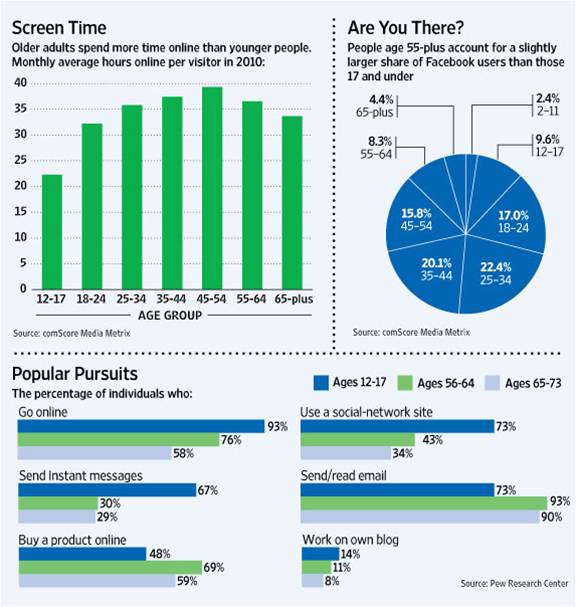
  • Email use by seniors increased by 28% from 2009-2010 while use by teens dropped 59% in. That same time.
  • The average business person sends 33 emails per day. [maybe on a day when I’m in meetings for 9 hours…that’s really low]
  • 89% of all emails sent are spam!
  • Only 8% of emails sent are business related.
  • In 2010, there were 107 trillion emails sent; 25 billion tweets; and 170 billion pieces of mail.

Pharmacy Kickoff At #RESULTS2011

I’m currently presenting at our client event (see twitter hashtag #results2011 for real-time comments). My presentation is an extension of my white paper on the future of the PBM / pharmacy industry along with a blend of data from our annual client survey and Silverlink Communications best practices with a focus on our work around medication adherence. It also builds on my thoughts from NCPDP that I shared late last year.

Here are a few of the points I touch on:

  • Avoiding being commoditized by adding value
  • Keys to success with a focus on:
    • Evidence-based approaches
    • Consumer engagement
    • Patient experience
    • Cross-channel coordination
  • Adherence and other priorities
  • How to use SMS to drive self-service
  • An approach to condition management in hypertension and diabetes
  • Focus on the “un-engaged” but don’t forget about the engaged consumers
  • Case studies and research around adherence
  • Timing and sequencing of direct mail, automated calls, and e-mail
  • Measuring “trust”

Here’s a teaser of some of the slides I’m presenting:

10 Things To Know About Engaging Patients

I just finished reading this publication by the Institute for Health Technology Transformation. Lots of quick nuggets of information summarized here. Let me share a few:

  • 88% of American adults with Internet acces research health information online; 60% say that the information they found influenced a decision (Pew)
  • Top sites (Alexa rankings) are NIH, WebMD, and medicinenet
  • 94% of patients say they at least sometimes forget important things they were told by their MD (Markle Foundation)
  • Only 3% of people have been harmed or know someone that’s been harmed by health information they found online (Pew)

They go on to provide some good usage statistics by age group; data around caregivers; data around who’s trusted and PHRs; and research from AARP and with Dr. Hibbard that shows the impact of engagement on outcomes.

PBM Mobile Applications – CVS, Humana, Medco, Express, Catalyst, Prescription Solutions

This week, Medco released their mobile application that they’ve been working with Verizon on.  Not a big secret in my mind since I’ve been hearing about it since last Fall.  I’ve talked about CVS Caremark’s application (CVS mobile), Humana’s application, and CatalystRx’s application.  So, this made me wonder why I hadn’t heard about one from Express Scripts.  It seems unlikely that they wouldn’t have one.

There doesn’t seem to have been a lot of fanfare, but they launched one in March.  Here’s a quick summary of it:

The new Express Rx mobile app works across multiple platforms, and is now available for a free download at both the Apple iPhone App Store and at the Android Market (simply search ‘Express Rx’).  In addition, members using a Blackberry or other smartphone device with web browsing capability can access our mobile optimized website at http://m.esrx.com.

With our new mobile app and mobile optimized website, Express Scripts members will be able to securely access the following functions:

  • Start Home Delivery – transfer available maintenance medications to the Express Scripts Pharmacy
  • Order Refills – select and schedule prescriptions to be refilled from the Express Scripts Pharmacy
  • Check Order Status – check to see if an Express Scripts Pharmacy order has shipped, the ship date and by what method
  • Find a Pharmacy – locate a nearby retail pharmacy using the GPS technology built into a smartphone
  • Drug Information – access Drug Digest database to look up drug information, common uses and possible side effects

The app consists of three features: My Rx Choices, which delivers on-demand, personalized out-of-pocket costs, interactions and other information for any prescription drug; My Medicine Cabinet, which allows patients to view the medications they’re on, including prescription and over-the-counter drugs, and set reminders for themselves; and Prescription ID Card, which allows convenient access to a member’s prescription drug card.

Of course, Walgreens also has a mobile application as does Walmart.  Neither of them are PBMs, but they are both critical players in the pharmacy space.
Next on my list to check out is Prescription Solutions.  They also have a mobile application which does:
  • Refill mail service pharmacy prescriptions
  • View your prescription history
  • Set up text message medication reminders
  • Check the status of and track orders
  • Locate a pharmacy by ZIP Code
  • Search your formulary by generic or brand name drug, status, or class
As one might expect, mobile web or mobile apps are quickly becoming the norm.  The key to look at is what is the functionality.  Is it simply putting their websites on a phone or are they developing other technologies that take advantage of the mobile environment (e.g., location based services or enhanced reality).  I’ll share some thoughts on those in another post.

CVS Caremark Pilots New ePA Technology

CVS Caremark announced earlier this week that they were launching a pilot to improve the prior authorization process. They are partnering with Navinet, Allscripts, and Surescripts to do this. This should be an interesting pilot to monitor. They plan to share the transactions and the results with the market to hopefully drive industry standards.

“CVS Caremark understands the opportunities that innovations such as electronic prior authorization provide to prescribers and patients looking to embrace a more efficient and effective way to share critical prescribing information,” said Troyen A. Brennan, M.D., M.P.H., chief medical officer of CVS Caremark. “The prior authorization process is currently evolving to keep pace as prescribers transition towards electronic prescribing and electronic patient records to better manage their patients’ pharmacy care. This pilot is an important step toward demonstrating how the industry can integrate ePA with e-prescribing to streamline and speed up processing of prior authorizations to ensure that members have quick access to care that is medically appropriate and cost-effective.”

Why Aren’t We More Focused On Rx-OTC Interactions?

The pharmacy system in the US does a good job of catching drug-drug interactions at the POS (point-of-sale) when the claims are all processed by a PBM or all the drugs are filled within the same pharmacy.  But, with 68% of adults taking both a prescription drug and either an OTC (over-the-counter) or dietary supplement (per JAMA Jan 2009), do we need a broader safety net to catch all those?

I was looking at an old Medco deck from last year.  It estimated that there are 30B combinations if you look at 80,000 prescription doses, 300,000 OTC products, and 75,000 dietary supplements. 

Of course, when you go to the pharmacy, you fill out some basic information.  You do the same at your physician.  But, how often are those updated?  Do you have an easy way to register new products you’re trying? 

On the flipside, the question is what percentage of these 30B combinations are important versus just noise?

There are some significant examples here…

For example, Proton Pump Inhibitors (PPIs) increase the risk of major cardiovascular events by more than 50% for patients taking Plavix, but you can now buy several PPIs over-the-counter.  How would the pharmacy or PBM know?

Your Refill Logic Has To Be Dynamic

I signed up for an auto-refill program recently.  It quickly made me realize how stockpiling happens.  (Stockpiling is where a patient ends up with a large supply of their medication over time…typically due to refilling too soon.)

Imagine the following:

  • I get a 90-day supply of a medication.
  • At day 75, I get a refill of the medication.  (I have 105 days left at this point.)
  • 75 days later, I get my next refill.  (I now have 120 days left at this point.)
  • 75 days later, I get my next refill.  (I now have 135 days left at this point.)
The problem here is what I would call “static refill logic”.  The auto-refill program is triggered to fill the drug 75 days after it was last filled.
What is needed is “dynamic refill logic” which calculated days supply on hand.  This isn’t easy, but it makes a lot of sense.  The risk (if I’m a mail pharmacy) is that without this, I get gaps-in-care and/or create a short-term retention issue.
Imagine the following:
  • You ask me to refill, but I have 30 days on hand so I say no.
  • Now I forget to refill on time and I have a choice – (a) skip my medication for a few days or (b) go back to retail.  Neither is ideal for the mail pharmacy.
BUT, all of this could have been fixed if the logic was dynamic and they called to confirm my refill when I had just a few weeks left (i.e., enough to be thinking about refilling but also enough to have time to get it shipped to me).

IVR: Beep or Barge-In

Here’s a common question in the voice services world – should I use a “chime” or beep, no sound, or let people barge-in?

What do I mean?  When you get an automated call or call into an IVR system, how do you know when to respond?  For example:

If the question is “Is this George Van Antwerp?  Please say yes or no.”

  • In the first instance, you would say “please say yes or no after the beep”.
  • In the second instance, you wouldn’t add anything but you couldn’t reply until the system is done talking and starts listening.
  • In the third instance, you would be able to respond as soon as you knew what to say (i.e., barge-in).

Of course, intuitively, you want the third scenario, but it creates a series of issues:

  • If there’s background noise, the system can be very clunky…you keep hearing “I’m sorry, but I don’t understand you.  Can you please say yes or no?”
  • You can get false positives
  • You can get people who respond too quickly missing some or all of the question

I personally prefer a window of time to respond where I left with some finite parameters in which to respond (i.e., no barge-in).

Interview With Dr. Victor Strecher (Founder of HealthMedia) From #WHCC11

While I didn’t get to meet Victor at the World Healthcare Congress in DC, I got a chance to do a phone interview with him last week. For those of you that don’t know who he is, here’s a quick bio:

Victor J. Strecher, PhD, MPH
Professor, Health Behavior & Health Education; Director, Health Media Research Laboratory; Director, Cancer Prevention and Control, University of Michigan School of Public Health;
Chairman & Founder, HealthMedia, Inc.
Dr. Victor J. Strecher graduated in 1983 with an M.P.H. and Ph.D. in Health Behavior & Health Education from the University of Michigan. After positions as Assistant and Associate Professor in the School of Public Health at the University of North Carolina, Dr. Strecher moved back to the University of Michigan, where he became Professor of Health Behavior & Health Education and Director of Cancer Prevention and Control in the University of Michigan’s Comprehensive Cancer Center.

Dr. Strecher also founded the University of Michigan’s Center for Health Communications Research (CHCR): a multidisciplinary team of behavioral scientists, physicians, computer engineers, instructional designers, graphic artists, and students from a wide variety of disciplines. For over a decade, Dr. Strecher’s center has conducted research studies and demonstration projects of computer-tailoring and interactive multimedia programs.

In 1998, Dr. Strecher founded HealthMedia, Inc.– a company designed to create interactive health communications solutions for medical care, employer, pharmaceutical, and government settings. The intention of HealthMedia, Inc. is to bring the highest quality science, operational capabilities and creativity to the marketplace.

My key takeaways from the conversation were:

  1. We have to focus on intrinsic motivators in healthcare.
  2. A little help at the right time is a lot better than a lot of help at the wrong time.
  3. Selecting physicians based on organic chemistry scores without weighing empathy may be a issue.
  4. You have to listen to the patient, assess their needs, and provide them with tailored information.
  5. Social media has to embrace “collaborative filtering”.
  6. Most behavior change companies are hitchhikers while some like PBMs are tollbooths. It’s better to be a tollbooth.
  7. Choice has to expand over time.

Intrigued? You should be. Dr. Strecher was a fascinating person to talk with (see some of his insights). We only spent 30 minutes together, but I could easily imagine sitting with him in at my alma mater (University of Michigan) and talking for hours about healthcare communications and how this can impact the country and our outcomes.

We started off by talking about the shift in focus to the consumer over the past decade and how even while this has happened we (healthcare companies) have been guilty of seeing the patient from our perspective not from their perspective. This took us down the path of talking about motivation and what gets people to take action. We focused on the fact that health (in and of itself) isn’t a big motivator, but being healthy to see your kids or grandkids certainly is. We talked about how financial rewards aren’t the right (or only answer) and how there is a need to really understand and articulate intrinsic motives (see write-up on Drive by Daniel Pink).

We talked about his company HealthMedia (owned by Johnson & Johnson) and what they do to collect information on motivation. We talked about the use of stories (a topic that keeps coming up) and providing the right amount of help at the right time. He talked about how HealthMedia monitors consumers, provides them with coaching, and continuously evaluates their goals. He also talked about how they use online technology and mobile technology to get the right connection at the right time.

This led us into a discussion about how important behavior is in health outcomes. He mentioned that 70% of cancers are related to behavior – scary. But, at the same time, we don’t chose candidates for medical school based on their abilities to engage patients or show empathy. We choose them based on their organic chemistry scores. (As a physician, he could say that while I’d probably get tomatoes thrown at me for that comment.)

At this point, I really wanted to understand what HealthMedia has learned to get people off the couch and engaged. It all sounded a little too theoretical to me. He talked about their core process:

  1. Listen to the issues. Assess the patient using branching technology and feedback to them.
  2. Try to figure out what they need using a software algorithm.
  3. Tailor information to them based on what you’ve learned (e.g., if they are concerned about gaining weight when quiting smoking, help them with that). And, I thought a key point here was to help them prioritize their actions rather than giving them a laundry list of things to do.

But, one of the keys in getting them to engage is to work through their intermediaries – employers and payers. For example, while you might encourage consumers to take an HRA for a financial reward, you may need a “health champion” at the employer site to really motivate people at a personal level. Or in another example, he talked about how Kaiser uses Epic and how HealthMedia integrates there. This creates an opportunity for “information therapy” which can be given to the consumer as a follow-up action from their encounter.

We went on to talk about social media which is one of those big topics in healthcare today. Obviously, there is lots of research that talks about the “peer pressure” effect on weight and smoking and other topics. (He mentioned the book Connected here.) But, how to you build trust (see recent post on this) and route consumers to the relevant information. He brought up a concept which was new to me called “collaborative filtering”. My interpretation of this is essentially having an expert monitor and guide consumers to relevant information within the social media realm. You want to find relevance in the data which means it has to be from “friends” who have experience with the topic.

I was asking him about the challenge of building trust given how many companies are out there and the amount of information which consumers are bombarded with. This is when he created the great visual of most companies as being hitchhikers in the behavior change world while others like PBMs are tollbooths. The tollbooths create a pause in the process which is triggered around an event. This event is an opportunity to get the consumer engaged. Of course, in general, these “golden moments” (my phrase) aren’t taken advantage of as much as they could be.

But, if they were, consumers would understand what they want and how a particular behavior maps to those desires. This would lead to improvements in adherence and other outcomes.

We wrapped up by talking about preference-based marketing and the impact of choice. He had some great points here which is an area of interest for me since there’s not much research. He pointed out that choice is instrumental since it appeals to autonomy. BUT, not everyone wants autonomy. Too much choice can be overwhelming. In summary, he suggested that less choice is best early on when the consumer is overwhelmed (e.g., newly diagnosed), but as they become more of an engaged patient over time, more choice is better.

QR Codes – The Ultimate Opt-In Tool

You probably are starting to see them more (those 2D barcode boxes).  They’re called QR codes.  Here’s a few articles about them:

I find this a fascinating area.  Imagine a few examples here:

  1. You want to get a member to opt-in to a program (e.g., auto-refill).  You can put a QR code on their invoice.
  2. You want to offer an educational video about a condition.  You can put a QR code on the Rx label.
  3. You want to get consumers to opt-in to a SMS program.  You can put a QR code on a mailing.
  4. You want to offer a physician access to the clinical studies about a drug.  You can fax them some information with QR codes on it. 
  5. You want a patient to learn more about a condition.  You could put up DTC materials in the provider’s office with QR codes. 

I think you get the point.  I expect this will grow rapidly especially as the smart phone market grows and more and more people have cameras in their phones (devices). 

One of the biggest uses right now in pharmacy is from Walgreens where they allow you to order a refill by scanning the QR code on their bottles using their mobile app.