Archive | Healthcare RSS feed for this section

Healthcare.gov Registration Process – My Experience…Not Good

I was up and ready to try the new healthcare exchanges at HealthCare.gov this morning.  While it started well with a nice GUI (graphic user interface), it went downhill from there.

Once I got in, it was busy so I had to hold.  

Then, when I tried to create a username and followed the directions, it wouldn’t accept my username.  

And, finally, when I got through it all, it wouldn’t accept who I was to let me proceed.  

If everyone else has a similar experience, this is either going to be a miserable failure or the call centers are going to be lit up with phone calls and huge waits.  I guess to answer the question that the CEO of BCBS of NC poised the other day…this won’t reflect badly on the plans because I can’t even get far enough into the process to see what plans participate.  

The one positive (other than the design) was that the terms and conditions were ridiculously simple!

Image

Image

Image


Image

Image

The Connected Pharmacy of 2020

At the conference last week, I was talking about the opportunity for retail pharmacy to play a broader role as the patient’s medical home.  As part of that discussion, I tried to create a vision of a digitally connected location.  Here’s my summary of that…

Imagine that the pill bottle you use is now a smart object (expanding on the RxVitality concept).  It now knows when you are running low on pills.  Since it’s connected to your WiFi signal and to your smart phone, as soon as you’re low, it does the following:

  • Send a new refill request to the pharmacy (or to your physician if you’re out of refills)
  • Puts a reminder in your phone for you to pick up the prescription (action item list, calendar) and updates that once it gets confirmation on time from the pharmacy

As you’re driving by the pharmacy, your smart phone reminds you to pick up the Rx as it knows where you are based on GPS.

When you enter the pharmacy, it has a system to capture information from your devices or phone about your sleeping habits, what you’ve been eating, and your exercise.  All of this information is important for them to actively manage your health.  Additionally, as you enter the pharmacy, they use a technology like FaceDeals to recognize you and do several things:

  • Alert the pharmacy that you’re in the store so they can pull your prescription
  • Pull up your CRM (customer relationship management) profile so they pharmacist and tech can great you by name and link back to other information (i.e., Hi George.  Are you here to pick up your prescription?  By the way, how did those crutches work out?)
  • Offer you a coupon on some new OTCs or medical supplies based on your chronic disease(s)

While you’re shopping (at a grocery or big box pharmacy), you’re linking your smart phone to the smart cart which is helping you navigate the store.  As it confirms your identify via fingerprint or facial recognition, it opens up a link to your medical data.  This allows the cart to help you navigate the store and scans everything you put into the cart to look for drug-food interactions (e.g., grapefruit juice).  It also helps to steer you to better food options (eat this not that) based on your diagnoses (i.e., for a diabetic, I would suggest this other cereal).  All of this is happening on your screen to protect your privacy.

By the time you get to the pharmacy, you stand in front of the register which has a scale embedded in the floor so they can instantly know your weight and compare that to your last measurement.  Since they are now tied into your medical data, the Point of Sale technology also gets relevant alerts that they can talk with you about (e.g., Did you know that your health coverage has changed?  Did you know that you have access to a health coach to discuss your condition?).

As you leave, all of the data they collected is integrated and pushed out to both your personal health record (PHR) along with the electronic medical record (EHR) that your physician uses.  Any new risks identified are also shared with your caregiver or others in your social circle that you’ve identified and opted-in to receive information.  This social connectivity helps to create the village necessary to drive change.

Scary or fascinating?  I prefer to think about this as a fascinating way of leveraging technology and data to make my experience better and improve my outcomes, but I know not everyone will feel that way.

I Thought I Got To Keep My Doctor In Health Reform

We all remember when President Obama pointed out that you wouldn’t have to change your doctor with health reform.  That’s probably true in the most expensive plans, but you can’t always eat your cake and keep it too.

We know healthcare prices vary from semi-rational to outrageous.  It would be hard to get any concessions if every physician had to be in the network.  So, like we’ve seen in pharmacy with some initial screaming but general acceptance, plans are going to reduce the size of their networks in return for some price concessions.

Should this be a surprise?  No…unless you actually believe politicians.

Will this lead to a different set of issues around monitoring out of network use?  Yes.  This is something plans historically don’t do very well.

What Will Really Happen October 1st For Health Reform?

10/1/13…That is the date that the healthcare exchanges will go-live (or at least are supposed to go live).  As of a week ago, the testing hadn’t even begun.  Will they actually get through all the testing and go-live in time?  It will be a huge failure if they don’t.

On the flipside, if they go live but the experience is horrible and pricing is wrong, will that reflect poorly on the exchanges or on the health insurance companies?  I know several of the large health insurance companies who are ready (or as ready as they can be) are worried about that.  

There are other issues to be sure:

  1. Do people even know that the exchanges exist?  (A recent survey said only 27% of young people did.)
  2. If people know, will they come to buy insurance?  Will they understand the exchanges and that they can get a subsidy?
  3. Will exchanges end up with only the sick or will there be a mix of healthy and sick?  (This will eventually be an issue, but plans will have to underwrite for 2015 exchange pricing before they really understand this.)

Image

Sorry…Put A Few Posts On The Wrong Blog

To those that get my blog posts e-mailed to them, sorry about any confusion.  I used to maintain a family history blog, and had a few requests to update it.  I posted a few things to the wrong site this morning.  

Retail Pharmacy As The Digital Medical Home

I’m excited to deliver my presentation on the topic about the retail pharmacy as the digital medical home tomorrow at the intersection of three CBI conferences – Point of Care Summit, Retail Strategy Summit, and Strategic Distribution Planning for Specialty Products.  As always, I’m sharing my slides below via SlideShare, and I’ll set up some tweets to give you the cliff note version.

The key here IMHO is that retailers are best positioned to take advantage of this, but the key points are:

  1. Why retail pharmacy?
    • Retail pharmacies have trust from consumers.
    • Easily accessible.
    • Pharmacy is the most used benefit.
  2. What’s the challenge?
    • Successfully engaging the consumer.
    • Integration with the provider so there are process oriented care gaps.
    • Data.
  3. What needs to happen?
    • Focus on the golden moments for engagement.
    • Systemic model for engagement – e.g., Prochaska.
    • Tools and skills to motivate the consumer – e.g., Motivational Interviewing, Incentives.

Is Wellness Really Just About ROI?

Al Lewis and Tom Emerick posted a great article on the HBR blog about the Danger of Wellness Programs.  It reminds me a lot of what my old boss published after she left Healthways, but as the old expression goes – don’t throw the baby out with the bathwater.

I’ve talked about this before in my post on why CVS asking for their employees weight was a good thing, but let me elaborate more.  While the HBR article makes some great points about ROI, the reality is that companies don’t just jump into wellness for the ROI.  It’s about creating a better workforce.  What Al Lewis and his partner ignore are other realities like:

In general, only 12% of people are fully health literate.  Most people are unengaged with their healthcare and overwhelmed with work and life.  That’s why programs like biometrics and health risk assessments are important.  They try to create teaching moments for us to pay attention to our health and realize our risks.

Interview With Authors of Anxious Kids, Anxious Parents

After getting a press release about their new book, I did an e-mail interview with the authors of the book “Anxious Kids, Anxious Parents: 7 Ways to Stop the Worry Cycle and Raise Courageous & Independent Children”.    

A quick bio on the authors Reid Wilson, PhD and Lynn Lyons, LICSW is below:

  • Reid Wilson, Ph.D. is the Clinical Associate Professor of Psychiatry at the University of North Carolina School of Medicine. He is author of Don’t Panic: Taking Control of Anxiety Attacks and the coauthor of Stop Obsessing! How to Overcome Your Obsessions and Compulsions.
  • Lynn Lyons, LICSW, is a licensed clinical social worker and psychotherapist in private practice and a sought-after speaker and consultant. She specializes in the treatment of anxiety disorders in adults and children, including generalized anxiety, phobias, social anxiety, obsessive compulsive disorder, and performance anxiety.

I didn’t get a chance to read the book, but from the teaser I received, I had a few questions which they answered for me.

What percentage of children have a diagnosable anxiety disorder today?  


Research estimates that one in five children and adolescents have a diagnosable anxiety disorder. This does not mean that all of these children receive treatment, but that they have symptoms of anxiety that meet the criteria for an anxiety disorder. 

How has the prevalence of anxiety increased over the years?  


Although we don’t have exact data on the increase of anxiety disorders in children, we do know that research and understanding of anxiety in children has increased dramatically over the last two decades. More children are diagnosed based on a much greater knowledge and awareness of anxiety disorders such as Obsessive Compulsive Disorder and Post Traumatic Stress Disorder. Anecdotally, adults report greater stress levels, and we know that parental stress, anxiety and depression impacts childhood anxiety. Anxiety is the leading reason that a parent seeks out mental health treatment for a child, and most clinicians who work with anxious children are very busy these days!  

Is there a test to know when someone is clinically anxious or just feels anxious?  (i.e., when should parents seek help?)

First, it’s important to remember that anxiety is normal. It happens to all of us and is very helpful when dealing with danger. The warning system and fight-or-flight reaction is an important part of survival, so should be respected and appreciated. There is no “test” for an anxiety disorder. We look at the symptoms and functioning of a child to determine the diagnosis. Anxiety becomes a disorder when the child spends significant time managing the anxiety, or remains highly distressed due to their fear, or significantly limits their participation in normal life activities. For example, a family might expend a lot of energy making sure that a child doesn’t “freak out,” so the distress might be minimal, but only because everyone is working so hard to avoid any triggers. Or a child may be unable to manage daily events, such as going to school or friends’ houses, sleeping alone, or participating in new activities. Anxious children can also be very rigid, demanding that adults follow anxiety’s rules. When a child cannot handle changes in routine without great distress, and when a family feels that anxiety is in charge of the family’s functioning, then help is needed.   

How does childhood anxiety show up in a kid’s behavior?


Avoidance is anxiety’s calling card. When a child consistently avoids, or becomes overly upset when avoidance isn’t possible, then anxiety is often the culprit. Other signs are when they become rigid about how things need to be done, when they have difficulty with new experiences or with uncertainty about how events are going to turn out, or when they begin skipping “fun” events because of fear or worry. Sometimes children are very good at expressing their fear, worries, or nervousness; again, this can be normal. If their worry prevents them from moving forward, and they tend to cry, throw a tantrum, or ask for excessive reassurance, then anxiety is probably in charge. 

How does someone treat childhood anxiety – counseling, medication, other?

One great thing about being in the anxiety business is that it is a very treatable problem. Once you know how it functions, it’s not all that mysterious. Therapy is highly effective when it focuses on teaching children and parents how anxiety operates and then gives them concrete skills to handle anxiety’s predictable tricks. We work with parents and children together to make sure that patterns of avoidance and overprotection are interrupted, and we give kids concrete strategies to deal with anxiety when it shows up. Therapy should be active and experiential, meaning that families should have homework assignments that give them the experience of moving into uncertainty and then handling it. 

Medication can help, but, if given the opportunity, we’d rather work with a family on learning new strategies first. Most kids and parents benefit greatly from psycho-education and skills. Even when medication is used, we don’t recommend it as the only course of treatment for children and teens. 

What are the other impacts of childhood anxiety as someone grows older?


Anxiety in childhood is a very strong predictor of both anxiety and depression in later life. The more episodes of anxiety a teen has, the less likely they are to complete college. Most adults with anxiety report that they began having symptoms as a child, so we know that anxiety just doesn’t go away in children if left untreated; it actually gets stronger and leads to other diagnoses and problems. As you can imagine, if avoidance is your best coping strategy, you miss out on many experiences in life. Anxiety impacts relationships, career, and the ability to live independently. Risk of substance abuse is also increased as anxious teens and young adults self-medicate their symptoms. 

What will the book teach parents and/or kids that will help them improve their level of anxiety?


Our book focuses on the importance of teaching children and teens how to handle uncertainty and discomfort. We normalize anxiety as a part of growing and developing, and we give parents concrete ways to support moving toward anxiety, rather than avoiding it. We help parents to understand that keeping their anxious child safe and comfortable actually makes anxiety stronger. We offer them a step-by-step plan to deal with anxiety when it (inevitably) shows up. Research tells us that anxious parents tend to have anxious kids. Our goal is to interrupt the transmission of anxiety from one generation to the next by helping parents react differently to their children’s worry and their own. And, actually, the skills we teach are preventative: handling uncertainty, being a problem solver, and knowing how to talk back to worry and move forward into life’s challenges are skills that all children should learn. 

Personal Example Of How Zip Code Affects Health

The Robert Woods Johnson Foundation has been talking about this issue for a while.  Yesterday, they released some great pictures of this within a few cities.

It got me thinking about how where you live influences your health.  Here’s a very personal example from the three houses I’ve lived in as an adult.

  • At my first house, all of my neighbors ran so I eventually started running with them leading up to me running three marathons.  
  • At my second house, all of my neighbors played poker 1-2 times per month which was a great social activity (although not so great on the calorie count those nights).
  • At our new home in Charlotte, I haven’t found a running club or a poker group or even a golf group, but I’ve been invited to play tennis with a group of guys that play “recreational” tennis weekly.  

Each of these are directly influencing several things – activity, diet, sleep, and social interactions.  

I’ll have to hold off judgement on the tennis group since it hasn’t started yet.  I had to ask my kids to start helping me since the last time I played an adult in tennis was in 9th grade with my dad.  I’ve played with my kids for a few years, but they generally play with their opposite hand to prevent beating me too badly.  (which either says something about me or them in terms of play)

World Suicide Prevention Day 2013

Today, September 10th is World Suicide Prevention Day.  For many people, this may just seem like another day that gets used to recognize a cause.  To others, this is a day to acknowledge some of the scary statistics around suicide including:

  • There is one suicide every 40 seconds worldwide.
  • For every “successful” suicide, there are 20 failed attempts.
  • Therefore, there is one attempted suicide every 2-3 seconds.

These are 2011 statistics which were projected to increase 50% by 2020.  

I think a lot of people mistakenly think of suicide as a teenage issue, but it’s not.  Many of you have probably seen articles in the US about suicides in the military which happen almost daily.  The suicide rate among middle-aged Americans has risen dramatically also.  A few years ago with several high profile suicides in the LGBT community there was a big focus on this with the It Gets Better Project.  

If you haven’t been touched by suicide in your life, you’re lucky.  I unfortunately can think of several people I know:

  • My friend from high school who killed himself.
  • My friend from grade school who’s brother killed himself.
  • A kid in my high school, that killed himself.
  • A friend’s ex-husband who just killed himself a few months ago.
  • A former co-worker who killed himself.

People who have attempted suicide usually aren’t very willing to talk about it based on the risk of being stigmatized, but this TED video is by one survivor speaking out.  


The key is for people to recognize the signs (when possible) and engage people.  The Cleveland Clinic and WebMD give some good information on the topic.  Here’s a list from the Cleveland Clinic site:

  • Excessive sadness or moodiness — Long-lasting sadness and mood swings can be symptoms of depression, a major risk factor for suicide.

  • Sudden calmness — Suddenly becoming calm after a period of depression or moodiness can be a sign that the person has made a decision to end his or her life.

  • Withdrawal — Choosing to be alone and avoiding friends or social activities also are possible symptoms of depression. This includes the loss of interest or pleasure in activities the person previously enjoyed.

  • Changes in personality and/or appearance — A person who is considering suicide might exhibit a change in attitude or behavior, such as speaking or moving with unusual speed or slowness. In addition, the person might suddenly become less concerned about his or her personal appearance.

  • Dangerous or self-harmful behavior — Potentially dangerous behavior, such as reckless driving, engaging in unsafe sex, and increased use of drugs and/or alcohol might indicate that the person no longer values his or her life.

  • Recent trauma or life crisis — A major life crisis might trigger a suicide attempt. Crises include the death of a loved one or pet, divorce or break-up of a relationship, diagnosis of a major illness, loss of a job, or serious financial problems.

  • Making preparations — Often, a person considering suicide will begin to put his or her personal business in order. This might include visiting friends and family members, giving away personal possessions, making a will, and cleaning up his or her room or home. Some people will write a note before committing suicide.

  • Threatening suicide — Not everyone who is considering suicide will say so, and not everyone who threatens suicide will follow through with it. However, every threat of suicide should be taken seriously.

The Mayo Clinic gives this list of things to do:

  • Encourage the person to seek treatment. Someone who is suicidal or has severe depression may not have the energy or motivation to find help. If your friend or loved one doesn’t want to consult a doctor or mental health provider, suggest finding help from a support group, crisis center, faith community, teacher or other trusted person. You can help by offering support and advice — but remember that it’s not your job to become a substitute for a mental health provider.

  • Offer to help the person take steps to get assistance and support. For example, you can research treatment options, make phone calls and review insurance benefit information, or even offer to go with the person to an appointment.

  • Encourage the person to communicate with you. Someone who’s suicidal may be tempted to bottle up feelings because he or she feels ashamed, guilty or embarrassed. Be supportive and understanding, and express your opinions without placing blame. Listen attentively and avoid interrupting.

  • Be respectful and acknowledge the person’s feelings. Don’t try to talk the person out of his or her feelings or express shock. Remember, even though someone who’s suicidal isn’t thinking logically, the emotions are real. Not respecting how the person feels can shut down communication.

  • Don’t be patronizing or judgmental. For example, don’t tell someone, “things could be worse” or “you have everything to live for.” Instead, ask questions such as, “What’s causing you to feel so bad?” “What would make you feel better?” or “How can I help?”

  • Never promise to keep someone’s suicidal feelings a secret. Be understanding, but explain that you may not be able to keep such a promise if you think the person’s life is in danger. At that point, you have to get help.

  • Offer reassurance that things will get better. When someone is suicidal, it seems as if nothing will make things better. Reassure the person that these feelings are temporary, and that with appropriate treatment, he or she will feel better about life again.

  • Encourage the person to avoid alcohol and drug use. Using drugs or alcohol may seem to ease the painful feelings, but ultimately it makes things worse — it can lead to reckless behavior or feeling more depressed. If the person can’t quit on his or her own, offer to help find treatment.

  • Remove potentially dangerous items from the person’s home, if possible. If you can, make sure the person doesn’t have items around that could be used to commit suicide — such as knives, razors, guns or drugs. If the person takes a medication that could be used for overdose, encourage him or her to have someone safeguard it and give it as prescribed.

Get SMAC’d (Social, Mobile, Analytics, and Cloud) and BYOD

I was reading the mHealth Trends and Strategies 2013 by netcentric strategies, and I thought I would share a few things from the report.  Of course, I like the acronym SMAC which I re-used in the title and in a recent presentation.  

  • Mobile phone use for health information reached 75M in 2012.
  • Tablet activity for healthcare reached 29M in 2012.
  • 50% of people will download mHealth applications (prediction).

“mHealth is not a separate industry, but rather it’s the future of a healthcare industry that’s evolving to care for patients differently, putting them first to deliver services better, faster, and less expensively.”  quote from David Levy, MD, Global Healthcare Leader at PwC

  • Only 27% of MD actively encourage patients to manage their own health through mHealth applications.  (problem)
  • 13% of MDs actively discourage mHealth participation.

There is a whole section on remote patient monitoring with some good points about the system and the financial case. There is another section on preventative technology talking about adherence and compliance.  It makes a key point which I believe is that technology will be welcomed by the 7M long-distance caregivers.  

And, if you haven’t heard the term yet – BYOD.  This stands for Bring Your Own Device which is about letting the user chose the device / interface that works for them but being flexible in terms of normalizing the data and using it within the workflow that you develop.  

It’s a good, quick read.  

The New Grade – A, B, C, D, Fat

We all know childhood obesity is a big issue and many parents don’t realize it.  But, I didn’t realize that for a few years now some schools have been changing the traditional report card to include new letters – BMI.

This is hot topic that I’ve highlighted in a few posts about boy scouts and obesity and in the new categorization of obesity as a disease.  We’ve also seen a huge rise in companies focused on biometrics like BMI.

So, is this movement at schools good or bad?

Here’s a few points to consider:

  • We learn early in life so helping kids to understand the importance of health early is important.
  • Most parents don’t know their kids are overweight and are often overweight themselves.
  • PCPs are encouraged to track BMI on an annual basis and report on it (but most don’t).

On the flipside:

  • Some people would argue that BMI’s not a good measure of health.
  • It doesn’t do much good to just tell people they’re overweight if you’re not going to provide a solution to help them manage their weight.
  • Schools already offer less physical activity and often may not have great food choices.

One other thing I think people overlook is that they assume just because their kids are active or play sports that they can eat whatever they want or that they’re actually getting enough exercise.

A New Approach To Care: Health Incentives In The Affordable Care Act (Guest Post)

Preventative Care is a key aspect of the Affordable Care Act that stands to benefit millions of Americans, in ways that you might not expect.

The term describes an array of services, programs, and incentives that are funded by the government in order to make people healthier. Contrary to what you might think, however, the funds are not limited to impacting care on the individual level.

Rather, the reforms will include everything from building public health centers to creating bike lanes and walking paths. Not to mention, free immunizations for individuals and families.

It’s important for consumers to understand what these changes could mean for them, in every respect. With this thought in mind, let’s explore the ways in which individuals, families, and communities will be impacted by these new reforms.

Individual and Family Health

Individuals and families will benefit tremendously from a host of preventative services that will be offered free of charge by insurance providers, regardless of pre-existing conditions.

Offered services will include: Breast cancer screenings, wellness checkups, domestic violence screenings, contraception, and breast-feeding supplies. Immunizations, counseling services, and depression screenings will also be made available as a result of the new legislation.

For many Americas, this change will mean first time access to potentially life-saving services that work in turn to promote further wellness among individuals, families, local and regional communities.

Public Health and Prevention

Without funding, reforms are simply laws on the books that don’t have any real-world import.

In 2010, The Prevention and Public Health Fund was created in order to ensure that care actually gets to the people who need it, through the development of programs that mobilize entire communities toward the goal of better health.

The fund’s initial budget has been compromised since 2010, but local governments have already received an estimated $290 million to put towards the development of healthy eating programs that are aimed at some of our nation’s deadliest health issues, such as child obesity and diabetes. Funding has also been put to work through infrastructure development to create sidewalks and bike paths, in an effort to encourage daily exercise.

Although the Prevention and Public Health Fund has met some opposition from congressional republicans, the potential for positive impact is clear.

Smoker’s Penalty: Two Sides Of The Same Coin

The Affordable Care Act takes a bold stance on smoking.

The Smoker’s Penalty, as it’s come to be known, has to do specifically with plans offered in the state health insurance marketplaces, which will open for business this October.

Under the ACA, insurance providers are allowed to charge smokers up to 50% more for their coverage than non-smokers, due to the associated health risks.

However a recent, highly publicized computer error has delayed this possibility. This is due to the fact that the computational system in place cannot differentiate between price inputs for smokers of differing ages. The glitch may take up to a year to fix.

Although this may seem like good news to smokers, no one knows how insurance companies will respond to the penalty issue come October.

Some view the smoker’s penalty as discriminatory, while others see the benefit in a hard-nosed incentive to get people to quit.

The good news is that the ACA will provide access to quitting services and products at no charge to consumers, and you can’t be denied coverage for having been a smoker.

All of these incentives, controversial or otherwise, are clear indicators of a much needed change in government thinking. Healthcare reform is doing more to help Americans avoid potential problems altogether. Let’s hope this is just the beginning.

Michael Cahill is the Editor of the Vista Health Solutions Blog. He writes about the health care system, health insurance industry and the Affordable Care Act. Follow him on Twitter @VistaHealth and @VistaHealthMike 

94% of Cancer Doctors Say Patients Affected by Drug Shortages

This seems like the type of headline you’d expect to see in a 3rd world country not the US.  But, we’ve been talking about drug shortages for years, and while it may be better in a few areas, cancer isn’t one of them.

I was recently reminded of this in an AJMC article which was discussed at ASCO and had this data point about 94% of oncologists and hematologists from a University of Pennsylvania study.  

Looking back a few years, I think IMS did one of the best studies on this topic.  Here’s a few of the items they highlight from the study (with links to their charts).

It can be a little mind-boggling.

  • Is it an issue of planning and forecasting demand?
  • Is it an economic issue of not enough profit in these drugs?
  • Is it an issue of quality where these get shut down due to manufacturing issues?
  • Is it a structural issue of too few suppliers?
  • Is it a raw materials issue?

Diet Soda Versus Regular Soda – Ongoing Confusion

I view this as one more example of how the average consumer gets confused by all the information out there.

images

Should I focus on calories?

Should I focus on the ingredients?

Should I just drink water?  (of course)

Now, “new” research shows that the artificial sweeteners in the Diet drink can actually fool your body making it worse for you over time.  This isn’t completely new if you look at this blog from a few years ago.

But, we often wonder about why consumers don’t take responsibility for their actions and then get upset when more aggressive measures have to be taken.  (See the recent Penn State uproar.)

Consumers don’t know who or what to trust.

Should I drink alcohol?  Is it good for me in moderation?

How much exercise is needed?  New research shows that it can’t all be done at once.

Extreme Weather Isn’t Good For Our Health

After moving to Charlotte, it’s been raining and flooding here all summer.  It reminds me of 1993 when I moved to St. Louis, and they had their 100-year flood.

100yearflood-basic-1

All I ever hear from everyone is that this isn’t normal weather for Charlotte.  It begs the question of whether any weather is normal.  [I’ll avoid going down the global warming path here.]

So, I found it interesting that there was a recent article says that this will essentially be part of a new normal which will be more weather extremes.  Drought.  Flooding.  Hurricanes.  Extreme Heat.

So, what does this have to do with health?  A lot.

When these extreme weather scenarios come up, people are less likely to leave the house.  Kids don’t go outside and play.  And, as you can see on the CDC website, they’re focused on analyzing these trends to understand the impact.  On the NC HHS site, here’s what it says about this weather change.

“Some of the health impacts of climate change may include illness, injuries or deaths due to heat, air pollution, extreme weather, and water-borne pathogens.”

Weather has an impact.  Just look at SAD (Seasonal Affective Disorder).

Or, just think about childhood obesity.  Our kids are supposed to get 60 minutes of activity a day.  While we assume that happens with sports, it doesn’t always as I blogged about before.  With many of them over-scheduled to begin with and schools dropping recess, weather may be the last straw.  As recent research shows, a structured recess program is important for academic success.

Some days, I think our kids work harder then us parents.  Let’s look at a kid playing a serious sport.

  • 7:50-2:55 school for 5 days a week
  • 1-2 hours of homework per day
  • 2 hours of sports practice 5 days a week
  • Homework on the weekend
  • Games / tournaments on the weekend

Now, add a second sport which many kids do.  Or a part-time job as they get older.  (I know I’m getting off on a tangent, but it’s been so long since I’ve had time to blog…I need to get back into a pattern.)

Only 15% Of Workers Leave The Office Every Day

Have you noticed that you eat lunch more at your desk every day?  I certainly have.

With 7 hours of meetings (at least) every day plus 300+ emails every day, we’re busy.  I’d argue that most companies these days are busier than they were historically.  At the same time, everyone is focused on wellness and healthier choices.  When sleep, diet, exercise, and stress are all related to health, it’s hard to separate those from the workplace.

That being said, I wasn’t too surprised by this recent poll I saw which highlights this.

Exercise at work

Walgreens and Express Scripts Collaborate To Compete With CVS Caremark

The recent press from Walgreens and Express Scripts is interesting on several fronts:

  1. We worked for years even when I was there to try to figure out a win-win around 90-day with Walgreens.  It wasn’t easy.
  2. Walgreens and Express Scripts have a “colorful” past regarding working together.
  3. This is definitely in the best interest of the patient which we don’t always see everyday in healthcare.
  4. This is a definite recognition of the success of the Maintenance Choice program by CVS Caremark.

Here’s some language from the Walgreens’ press release.

Under the new option, plan sponsors that choose to include Walgreens as part of the Smart90 program for their pharmacy benefit will provide their members who have chronic conditions such as high cholesterol, high blood pressure and diabetes, the choice to receive 90-day supplies of maintenance medications through home delivery from Express Scripts or directly at a Walgreens retail pharmacy for the same copayment. Pending adoption by benefit plan sponsors, plan members could access Smart90 Walgreens as early as January 2014.

“Working together with Express Scripts, Smart90 Walgreens will offer more pharmacy locations and better member access coverage than any single retail chain 90-day maintenance medication solution in the nation,” said Kermit Crawford, President of Walgreens Pharmacy, Health and Wellness. “Through Smart90 Walgreens, our more than 8,000 Walgreens retail pharmacies will provide plan sponsors with cost savings and will offer their members safe, easy and convenient access to important in-person pharmacist consultations and a wide-range of health and wellness services that can further improve medication adherence and lower overall healthcare costs.”

“Members will be able to continue to receive the safety, convenience, cost savings and care offered from Express Scripts home delivery pharmacies,” said Glen Stettin, M.D., senior vice president of research and new solutions at Express Scripts. “Our data are clear: 90-day prescriptions delivered to a member’s home improve medication adherence and health outcomes, lower the cost of care and add convenience when compared to 30-day prescriptions. Over the past few years, our Smart90 program has driven more 90-day prescriptions for participating clients, and we’re pleased to now offer this additional option.”

Walgreens Clinic Rebranding Is More Than A Name Change

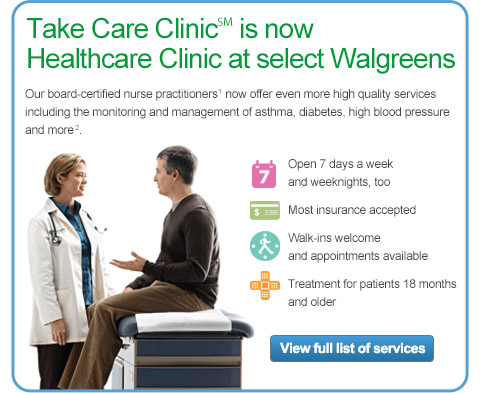
As I talked about in my post about Walgreens and innovation, Walgreens has renamed their TakeCare Clinics to Healthcare Clinics at some locations.  This is more than just a meaningless name change.  This is the beginning of a business model change.  This is the shift from acute care to ongoing chronic disease management.  This is a big move that changes their place in the healthcare value chain.

It’s part of the overall strategy that has pulled them into the ACO space.

It will be interesting to see if CVS Caremark and their MinuteClinics follow them.  CVS Caremark already announced a different strategy in terms of providing advocates.  If I were them, I would jump fully into the remote monitoring / mHealth space and provide chronic disease management from a remote basis.  I think this would be different and innovative.

Walgreens Healthcare Clinics

Who Do Consumers Expect To Help Them Navigate The Exchanges?

As part of Health Reform, we’re going to have millions of people who are new to healthcare and will need a lot of help in figuring out what to do.  With that, the government is creating thousands of navigators to help.

The question is who will these “navigators”, “assisters”, and “counselors” be.  Some will work for the government.  Some will work for non-profits, but I was surprised to see CVS Caremark jump into this space.  It makes a ton of sense.  Certainly, many of these people are going to pharmacies for OTCs or paying cash for some medications, and we certainly saw opportunities in the early Medicare Part D days where there were opportunities for the retail pharmacies to help consumers.

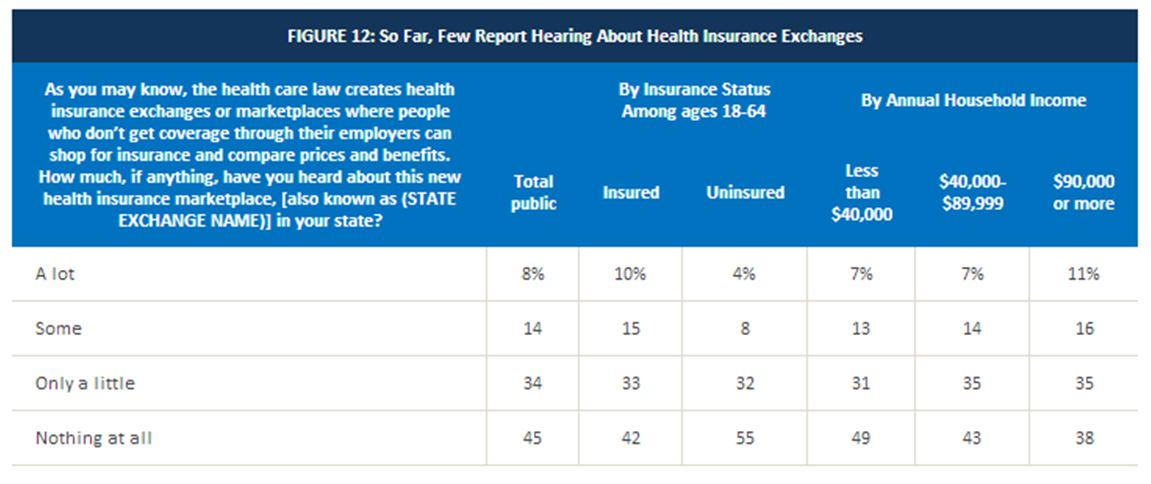
Their survey says 74% of people are familiar with the ACA (i.e., Health Reform).  While that might be true, the Kaiser Family Foundation research shows that only 12% of the uninsured know something (or more) about health exchanges.  That means there is a huge effort needed in a very short time frame.

KFF Health Reform

Treadmills Improve Medical Work

This is an interesting article talking about how accuracy improved while walking on a treadmill versus sitting or standing.  I think this is another great reason to sit less (in case the fact that sitting kills you wasn’t enough).  

Fidler and Levine’s 2008 paper documented that reviewers who walked while reading cross-sectional CT scans had a 99% rate of detecting lesions with significant clinical importance, compared to 88.9% for reviewers who sat.

The challenge of course is how to incorporate these treadmills into the workplace without causing any type of risk or having people misuse them.  I can see meeting rooms with a group of treadmills for walking meetings.  I’ve seen companies with several treadmill desks that people can use for conference calls or periods of time when they are focused on a task that can be conducted on a treadmill desk.

This will require some education about what activities can be done.  What speed to use the treadmills at without losing accuracy or getting all sweaty.  Perhaps with increased focus on wellness this will takeoff in more companies.  

53% Of Employers Plan To Use Disincentives

I found this really interesting in an article in Employee Benefits News (Employers take closer look at financial disincentives by Gililan Roberts – July 2013).  This stat is from an Aon Hewitt survey which showed that while only 5% of employers use disincentives today there are 53% which plan to begin doing so in the next 3-5 years.

This shouldn’t be a big incentives as I think most people now know that loss aversion is much more powerful than a general incentives (i.e., I’d rather not lose money, but I’m less motivated to get money.)  [See also an older study on financial incentives and weight loss.]

For example, in a recent program that I’m involved with, we’re seeing slower uptake then I’d like with $1,000 in incentives on the line.  My suggestion the other day was to send an e-mail to everyone saying “Thanks For Your $1,000 Donation To Our Corporate Budget”.  Somehow, I suspect a lot of people might open that e-mail and take action after realizing that they’re just giving $1,000 to the company by not taking any action.

There is often lots of discussion about using a carrot or a stick for incentives.  My favorite image is the frozen carrot as in there has to be some perceived incentives (positive reinforcement) but if no action is taken then there needs to be a downside (disincentive).

With the huge jump in wellness programs, incentives are going to be a popular topic.  Additionally, with Health Reform allowing for 30% of healthcare premiums to be tied to behaviors and outcomes, you’re going to see a lot of companies taking actions.

What was a surprise to me in this article was the strategy to use disincentives in the 3rd year of a program.  The article spoke several times about people getting used to the positive incentive and taking it for granted so that there was a need to nudge them to do more.

That reminds me of conversations I’ve had with employers talking about behavior change and incentives.  My suggestion was to look at a 3-year plan moving from:

  • Year One: Provide an incentive for taking an action (e.g., completing an HRA)
  • Year Two: Provide an incentive based on participation (e.g., talking to a disease management nurse or logging your steps)
  • Year Three: Provide an incentive tied to outcomes or behavior change (e.g., stopped smoking, averaged 10,000 steps a day, dropped BMI below 30)

It seems like I need to make Year Four into changing from incentive to penalty for not changing behavior or not doing something that’s recognized as critical to improving health, outcomes, and ultimately cost containment.

The other point that they brought up in the article is the transition from the employee to the spouse which could be another Year Four option.  The article quotes the VP of Product from HCSC saying that spouses often cost more than the employee to insure.

Cyndy Nayer, a value-based wellness consultant, is quoted in the story several times.  She says that “employers can get a 6%-10% and maybe even 18%-20% increase in engagement with incentives”.  For those of us focused on engagement, those are big numbers.

Did You Know? Chronic Kidney Disease (#CKD) From The National Kidney Foundation

I was reading a document from the National Kidney Foundation (NKF) the other day.  Some of the facts jumped out at me.  I thought I’d share them.

  • 83,000 people are on the waiting list for a kidney transplant
  • 1 person dies every 2 hours while waiting for a kidney transplant
  • 26M Americans (1 in 9 adults) have chronic kidney disease (CKD) and most don’t know it
  • 367,000 people depend on dialysis for survival

It also reinforced some things that many people may know:

  • Once kidneys fail, patients need a transplant of dialysis to survive
  • People with diabetes, high blood pressure, or a family history of these conditions are at risk for CKD
  • African Americans, Hispanics, Asians, Native Americans, and the elderly are at increased risk

You can also find more information about CKD from the CDC.

There was an article this week in the NY Times about this silent killer.  Here’s a paragraph from there.

Only 1 percent of participants with no lifestyle-related risk factors developed protein in their urine, an early indicator of kidney damage, while 13 percent of those with three unhealthy factors developed the condition, known medically as proteinuria. Obesity alone doubled a person’s risk of developing kidney disease; an unhealthy diet raised the risk even when weight and other lifestyle factors were taken into account.

Obese Scouts (And Leaders) Told To Stay Away

Did you catch the story the other day that kids and adults that had a BMI of over 40 were told they couldn’t come to the annual Boy Scout Jamboree? And those that had a BMI of between 32 and 39.9 had to submit documentation that they could attend.

What do you think about that?

If you look at the adult US statistics, this would represent about 30%+ of the population. (United HealthGroup report: “United States of Diabetes“)

This is one story where I’m sure there’s a lot that we’d want to know. In Time, they talk about the fact that they published the restrictions two years ago. This would have allowed people time to improve their BMI. But, jumping from 40 to 31 might be too big of a jump in two years for some people to do in a healthy way.

If I were developing this type of program for a company, I’d expect to answer these questions:

  • What did you do to support the scouts and leaders in losing weight? Did you give them a coach? A registered dietician?
  • Did you create a culture of health? What types of foods are at boy scout meetings?
  • Is there a reasonable alternative for the obese scouts to get a similar experience if clinically appropriate?

Obviously, this isn’t a work environment so the rules are different. On the one hand, congrats to them for being brave enough to take this topic on and try to encourage scouts and leaders to have a healthy weight. On the other hand, they need to make sure they do this in a way that doesn’t shame these people and need to make sure they support their weight loss.

But, don’t be fooled. The world is going to continue to move this way. Obesity is too big of a driver of healthcare costs and other presenteeism and absenteeism impacts.

Just look at Japan…(source)

Under a national law that came into effect two months ago, companies and local governments must now measure the waistlines of Japanese people between the ages of 40 and 74 as part of their annual checkups. That represents more than 56 million waistlines, or about 44 percent of the entire population.

Those exceeding government limits — 33.5 inches for men and 35.4 inches for women, which are identical to thresholds established in 2005 for Japan by the International Diabetes Federation as an easy guideline for identifying health risks — and having a weight-related ailment will be given dieting guidance if after three months they do not lose weight. If necessary, those people will be steered toward further re-education after six more months.

To reach its goals of shrinking the overweight population by 10 percent over the next four years and 25 percent over the next seven years, the government will impose financial penalties on companies and local governments that fail to meet specific targets. The country’s Ministry of Health argues that the campaign will keep the spread of diseases like diabetes and strokes in check.

CarePass, Another Aetna Innovation – What’s Your Healthy?

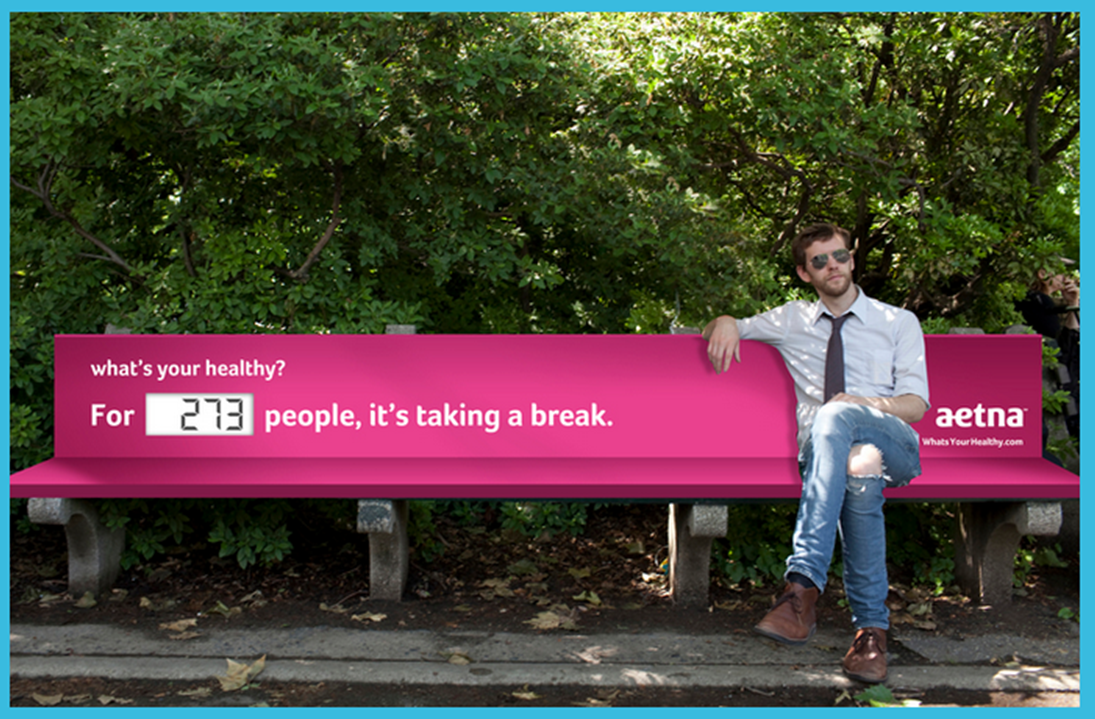
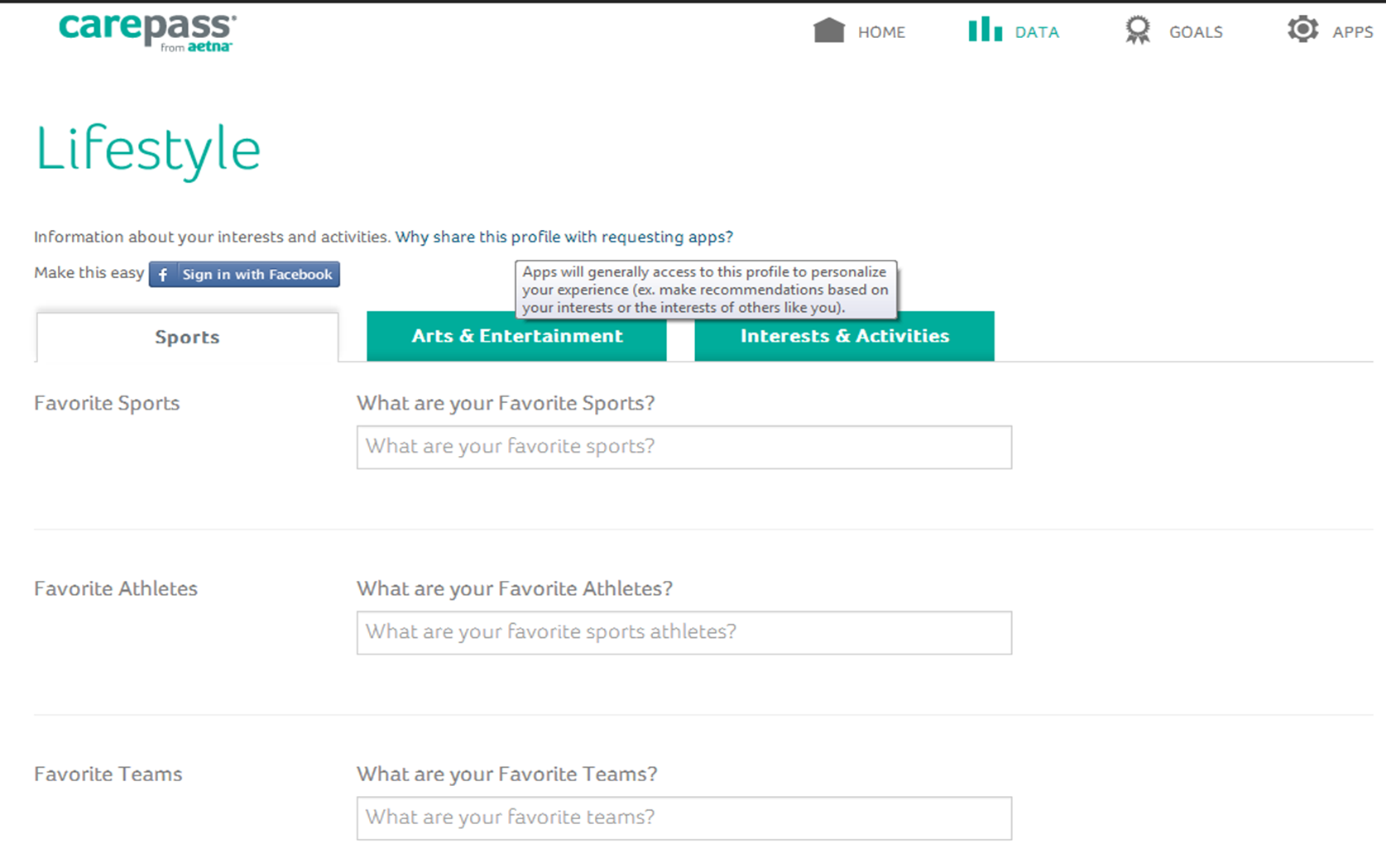
Have you seen the new “What’s Your Healthy?” campaign?  Here’s a few shots.

BTW – My healthy is keeping up with my kids in sports and moving down a belt notch.

Image

Image

As many of you know, I consider Walgreens and Aetna to be two of the most innovative healthcare companies today (out of the big, established players).  [And, full disclosure, I own stock in both.]  I’ve talked about Walgreens (see Walgreens post on innovation) several times along with Aetna (see Healthagen post).

That being said, the new campaign along with the press caught my attention.  I was glad that I was able to get some time with Martha Wofford who is the VP and head of CarePass.

“We want to make it easier for everyone to engage in their health and hopefully shift from thinking about health care to taking care of their health,” said Martha L. Wofford, vice president and head of CarePass from Aetna. “CarePass helps consumers connect different pieces of health data to create a fuller, more personalized picture of their health.”

I spent some time talking with Martha and team about their initiative.  Here’s some highlights that stuck out to me.

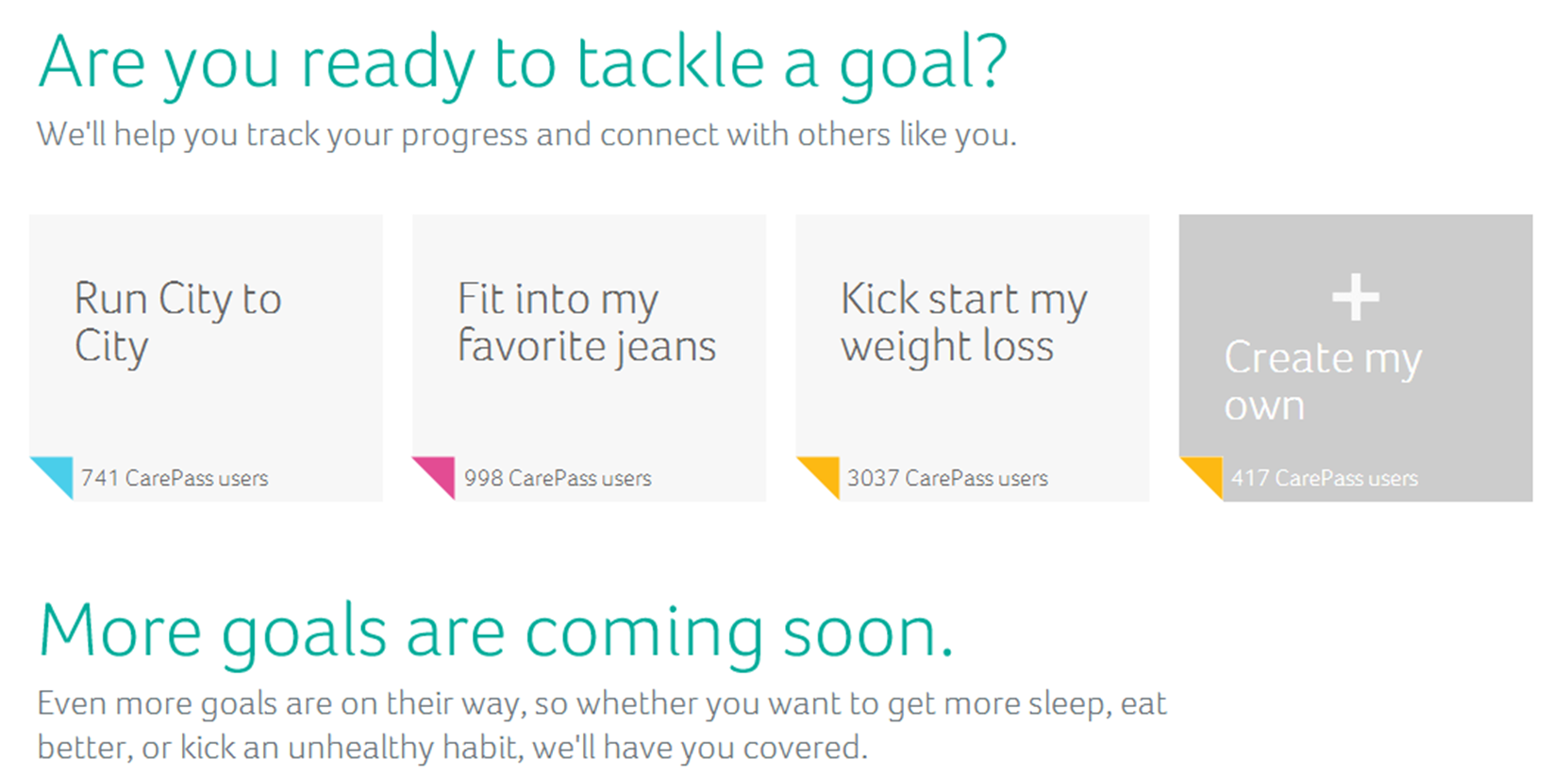
  • There use of goals was really easy and intuitive.  If you log-in to the CarePass site and get started, you have 3 options or you can create your own (see below).  We spent some time talking about the importance of making these relevant to the individual not focusing on “healthcare goals” like adherence or lowering you blood sugar.  Most of us don’t think that way.  As they described them, they picked “motivation centric goals”.
    Aetna Carepass goals
  • I was also really interested in how they picked which apps to recommend.  There are so many out there, and many of you know that I’ve been fascinated by the concept of curating apps or prescribing apps to people.  They had a nice, simple process:
    • Which apps are most popular?
    • Does the app have “breadth”?  (i.e., national applicability)
    • They also spent more time pre-screening apps which collect PHI to understand them before listing them on the site.
    • They’re using the consumers goals to recommend apps to them.
  • The other big question I had is why do this.  It certain helps build the Aetna brand over time, but there’s not direct path to revenue (that I see).  They described their efforts as “supporting the healthcare journey” through connected data.  Ultimately, it’s about making Aetna a preferred consumer brand which may be very relevant in the individual market and exchange world in the not too distant future.
  • I like the idea of companies being “app agnostic” as I call it.  Walgreens is doing this.  Aetna is doing this.  I plan on doing this in my day job.  This allows the consumer to pick the app that works for them and as long as the data is normalized (or can be normalized) and the app provides some type of open API (application programming interface) it’s much easier to integrate with.
  • We talked a little about what’s next.  Metabolic syndrome is something they brought up.  This is something that Aetna’s been talking about in several forums for a while now.  They launched a new offering earlier this year.  (I still hate the term metabolic syndrome from a consumer perspective, but it seems to be sticking in the healthcare community.)
  • We also talked about new goals to come around smoking cessation, medication, and stress.
  • Another discussion I have with lots of people is how this data gets used.  (see a good article about what’s next for QuantifiedSelf)  I personally really want to see my data pushed to the care management team to monitor and send me information.  (Eat this not that type of suggestions)  Martha talked about how the data belongs to the member and they have to choose to push it to the coach.  She also talked about how they’re integrating with their PHR (Personal Health Record) first and then looking at others.  (see old interview with ActiveHealth)

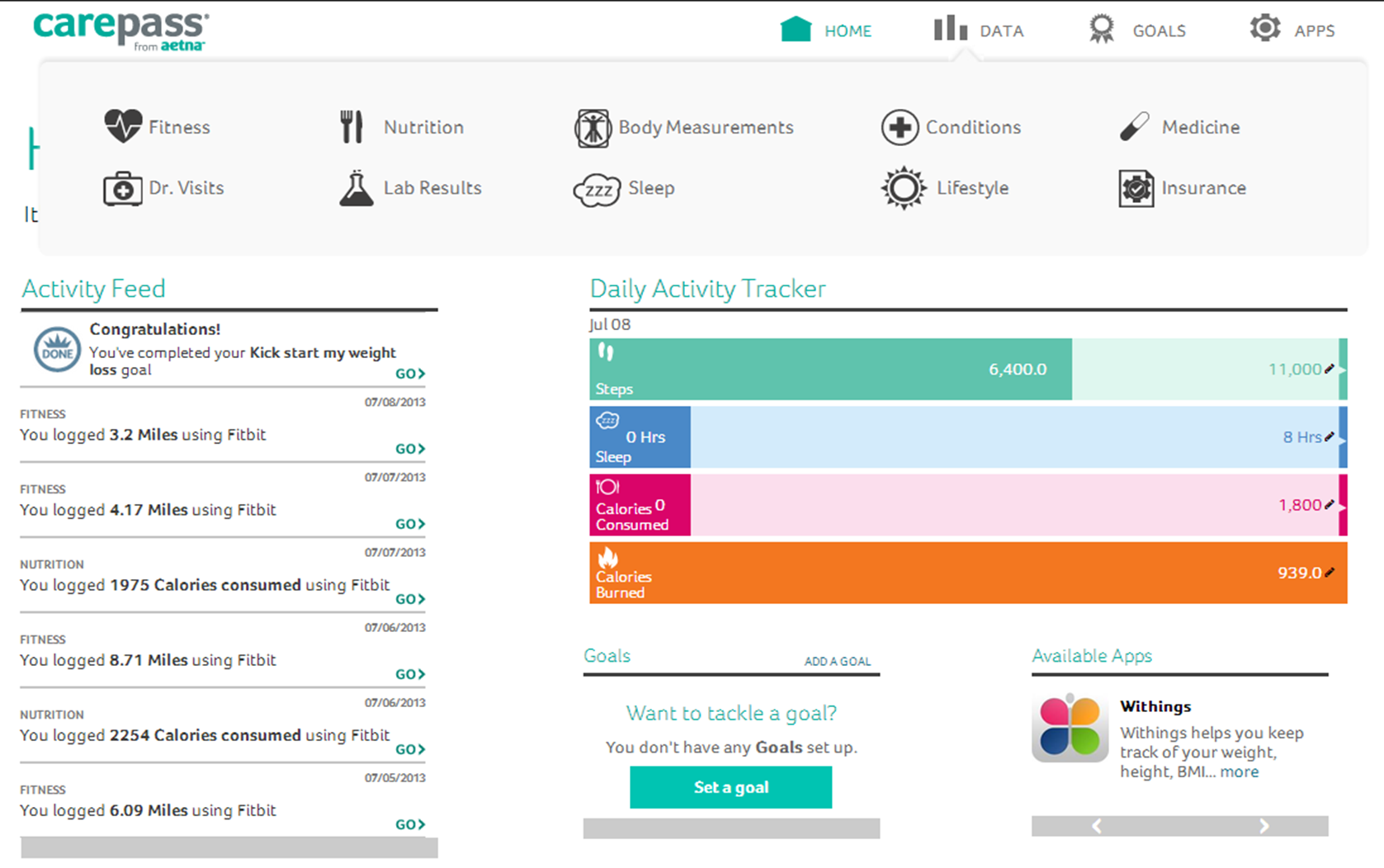
In summary, CarePass is a nice additional to your #QuantifiedSelf toolkit.  As you can see from the screenshots below, the GUI (graphic user interface) is simple.  It’s well designed.  Integration with your apps is easy.  It provides you with goals and motivation.  They help you navigate the app world.  And, it helps you bring together data from multiple sources.  Once it can pull in all my Rx, medical and lab data along with my HRA data and my device data, it will be really cool!  But, I know that I’m a minority in that effort.  I’m really intrigued by the lifestyle questions they ask and wonder how those will ultimately personalize my experience.

Carepass lifestyle questions Carepass dashboard

So, what apps do they share?  Here’s a screenshot, but you really should log-in and try the site and see the full list.  It’s simple and worth the effort.

Carepass apps

As an added bonus, I’m adding a presentation I gave with Aetna at the Care Continuum Alliance two years ago.  I was searching for my past interviews with Aetna people and found this online so I added it to SlideShare and put it here.

Prescribing An App vs. An Rx – Why Are People Surprised?

A staggering 90 percent of chronic patients in the US would accept a mobile app prescription from their physician, as opposed to only 66 percent willing to accept a prescription of medication, according to a recent survey from health communications firm Digitas Health.  (source)

Is this surprising to anyone?

I don’t think it should be…and here’s why:

  1. In general, most apps don’t cost anything while prescriptions generally do.
  2. I don’t know of any apps with side effects.
  3. It’s unlikely that your app will have a negative interaction with another app (like a drug-drug interaction).  It may give you conflicting information, but that’s about it.
  4. You don’t have to wait to get your app.  You can probably download it while you’re at the physician’s office.  A prescription can take time to get either waiting in line, waiting for it to get filled, or sending it in through the mail.
  5. You don’t have to refill your app.  You may have to update it every once in a while, but it tells you when and all you have to do is press a button.

Of course, most (all) apps won’t have the same likelihood as Rxs in improving your health.  Of course, Rxs only work if people take them…which they don’t.

Still surprised?

More CDHPs Are Coming – Is That A Good Thing?

I think we all see it coming.  It’s a tidal wave of responsibility being pushed from the employer to us the individual.  On paper, this seems like a great thing since 75%+ of healthcare costs are driven by personal behaviors.  On the other hand, this means we actually have to understand the healthcare system and how to make decisions.

Here’s the abstract from a recent Health Affairs article:

Consumer-directed health plans (CDHPs) are designed to make employees more cost- and health-conscious by exposing them more directly to the costs of their care, which should lower demand for care and, in turn, control premium growth. These features have made consumer-directed plans increasingly attractive to employers. We explored effects of consumer-directed health plans on health care and preventive care use, using data from two large employers—one that adopted a CDHP in 2007 and another with no CDHP. Our study had mixed results relative to expectations. After four years under the CDHP, there were 0.26 fewer physician office visits per enrollee per year and 0.85 fewer prescriptions filled, but there were 0.018 more emergency department visits. Also, the likelihood of receiving recommended cancer screenings was lower under the CDHP after one year and, even after recovering somewhat, still lower than baseline at the study’s conclusion. If CDHPs succeed in getting people to make more cost-sensitive decisions, plan sponsors will have to design plans to incentivize primary care and prevention and educate members about what the plan covers.

You can see some of the growth stats and concerns also in an American Medical News article.  But, as someone who’s live through it, there are a series of issues (all of which are addressable).

  1. Shifting first dollar payment to the individual also shifts a huge burden of time to the individual.  Which bills do I pay?  Which receipts do I send to the HSA?  Which to the HRA?  How much should I put in each account?  What’s the status of my payments?
  2. This only works if I understand my tradeoffs.  What should I be doing differently?  How could I have spent less money?
  3. It can create the wrong incentives.  My regular transactions like pharmacy seem to cost me a huge amount of money every month while my procedures seem very inexpensive.

My point here is that healthcare is like a balloon.  When you step on one area, it doesn’t eliminate the costs.  It simply shifts the costs.  Until we understand the macro-economic impacts of our short-term decisions, it’s unlikely that we’ll really change our path.  I see a huge shift happening and when the tidal wave pulls back it’s going to leave us with a huge Medicare bill in the future as people have put off preventative care only to have more issues in a decade.

Should You Care That Obesity Is Now A Disease?

The AMA has opened an interesting discussion in the past few days with their decision to recognize obesity as a disease.  On the one hand, we all know obesity is a problem that’s impacting our overall health and productivity across the world.  On the flip side, will this actually change anything?

Key discussion points:

  • What is a disease?
  • Is BMI a good metric to use?  If not, what should be used to measure obesity – waist?
  • How do you treat it?

Here’s a few quotes from some articles:

“Right now, physicians will treat high blood pressure, diabetes, give patients medications and say, ‘Oh you also need to lose weight,’” Khaitan told FoxNews.com. “I think (this) gives the physicians a little more credibility in pushing patients to address obesity and become healthier. It’s recognized as a disease…not just something that (because) you have poor lifestyle habits, this is your problem.”  (Fox News)

Obesity is not just a health risk but a disease. Estimates of the genetic contribution to weight gain in susceptible families range from 25—40% with a greater heritability for abdominal fat distribution of 50%1>2.  Obviously there is a major environmental effect but this genetic susceptibility alone removes this condition from a social stigma to the disease category.  (British Medical Bulletin 1997)

“The American Medical Association’s recognition that obesity is a disease carries a lot of clout,” says Samuel Klein, director of the Center for Human Nutrition at Washington University School of Medicine in St. Louis. “The most important aspect of the AMA decision is that the AMA is a respected representative of American medicine. Their opinion can influence policy makers who are in a position to do more to support interventions and research to prevent and treat obesity.”  (USA Today)

Telling all obese people that they have a disease could end up reducing their sense of control over their ability to change their diet and exercise patterns. As experience with addictions has shown, giving people the sense that they suffer from a disease that is out of their control can become self-defeating. So the disease label should be used sparingly: just as not all drinking is alcoholism, not all overeating is pathological. (Time)

Here’s a few facts from the Obesity Action Coalition:

  • In the United States, it is estimated that 93 million Americans are affected by obesity.
  • Individuals affected by obesity are at a higher risk for impaired mobility and experience a negative social stigma commonly associated with obesity.
  • Socioeconomic status plays a significant role in obesity. Low-income minority populations tend to experience obesity at higher rate and are more likely to be overweight.
  • In 2001, the states with the top five percentages for obesity were Mississippi, West Virginia, Michigan, Kentucky and Indiana.
  • Almost 112,000 annual deaths are attributable to obesity.
  • In the United States, 40 percent of adults do not participate in any leisure-time physical activity.

Here’s also a few things you might not realize about obesity from Yale:

  • Finding 1: Obesity can raise some cancer risks
  • Finding 2: Obesity is tied to heart attacks in younger adults
  • Finding 3: Obesity can ruin your day
  • Finding 4: Obesity speeds up girls’ puberty
  • Finding 5: Obesity is a cause of diabetes in kids
  • Finding 6: Obesity in middle age increases risk for dementia

Let me give my hypotheses on why this might matter:

  1. In theory, this is supposed to increase the likelihood that physician’s talk about obesity with their patients.  This would be great, but I think most research shows physician’s aren’t prepared or comfortable with this discussion.  Will the fact that it’s a disease make this easier?  Maybe.
  2. This may be a boon for the obesity Rx market (assuming any of them work and have minimal side effects).  Physician’s may be much more likely to write an Rx for a disease than a lifestyle issue.
  3. This may help get obesity Rxs and bariatric surgery to be covered by health insurance.  The downside of this is that more people may not actually change behavior (diet, exercise, sleep) but instead look for a “quick” fix through drugs and surgery.

In my mind, there is a best case scenario here:

  • Calling it a disease drives awareness among the healthcare community.
  • This increases investment in resources to treat obesity.
  • Treatment is viewed more like mental health to include drugs and behavioral therapy.
  • Physician’s get trained on the disease.
  • Pharma details physicians on the disease and creates CME programs.
  • Patients start to take this more seriously.
  • Plans cover obesity – insurers, employers, CMS.
  • Obesity becomes a broad program including diet, exercise, coaching, Rx, and bariatric surgery following a progressive approach to treatment tied to your starting point.
  • Companies link incentives to managing weight.
  • New metrics are designed that are better than obesity.

Of course, one of the more recent articles which was depressing on this topic was that exercising regularly may not overcome the impact of sitting the rest of the day.  That makes it very hard to increase caloric burn while having a job that requires lots of desk, computer, and meeting time.

Costs Of Obesity In America

Presentation – 2nd Annual Bio/Pharma Retail Summit – Discount

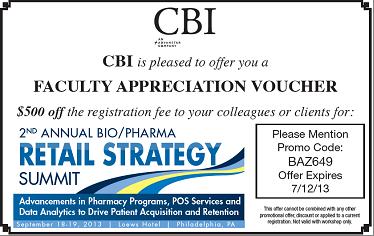
I’m excited to be presenting in the Fall with Adam Fein and lots of other great speakers at the 2nd Bio/Pharma Retail Strategy Summit to be held September 18-19 in Philadelphia, PA.  

I get to talk about one of my favorite topics which is how health reform is driving change in the industry and enabling new opportunities for the pharmacy / pharmacist.  

You get to listen to me for 90-minutes so I’m hoping to find some great examples, data, and insights to get you thinking hard about your business and the white space here.  I hope to see some of you there.  If interested, I’m passing on a discount code they offered to me as faculty.

Image

Why The Cigna PBM Deal With Catamaran Is Relevant?

Not a big shock to anyone, but Cigna announced yesterday that they were signing a 10-year deal with Catamaran (formerly SXC) to outsource the operations of their pharmacy (PBM) business.  (see WSJ article or the story on Adam Fein’s blog)

This PBM industry has been full of change over the past 5 years as I’ve discussed many times.  So, the question is why is this deal relevant or just another yawner.

Let me give a few reasons:

  1. This is the 3rd big managed care company (Aetna, Wellpoint, Cigna) to decide to create this type of long term relationship with one of the big PBMs.  They each picked a different one.  (Aetna/CVS, Wellpoint/Express, Cigna/Catamaran)  United brought their business in-house from Medco, and Humana has continued to expand their pharmacy business.  
  2. Eric Elliott (former head of Cigna’s PBM and now head of Prime Therapeutics PBM) and Dan Haron (current head of Cigna’s PBM) are both very smart executives who I believe saw lots of value in the integrated PBM story.

So, if I read between the lines here, I come to a few quick thoughts:

  1. Are they all structuring long term deals that get them through this reform period and minimize risk, but give them the chance to bring this back in house after this settles down?  
  2. Could this symbolize a further repositioning and commoditizing of the PBM industry that all of these companies want to retain marketing, engagement, strategy, and formulary but outsource call center, operations, contracting, network management, and other tasks?  Would this further accelerate a “race to the bottom” on price that I’ve talked about before?
  3. Does this have implications to specialty pharmacy?  Will that become split into two different businesses – operations versus clinical care?  (more on that later)
  4. I don’t know the bidding here, but scale used to matter a lot.  If CVS and Express Scripts didn’t aggressively bid for this contract, that might imply a point of diminishing returns in terms of scale.  (which I clearly believe exists)
  5. Under what circumstances does the integrated model work (i.e., what does Humana, United, and Kaiser see differently) or will all the payers look to outsource certain tasks to the big PBMs?

The interesting times in the industry continue.  It’s a head scratcher of what comes next!

Image