Archive | Managed Care RSS feed for this section

Will The Stars Align To Drive Adherence?

We all know that adherence to prescriptions is a problem.  People don’t start on their medications.  People don’t stay on their medications.  But, another problem also exists which is finding the ROI on adherence.  While the ROI is clear to the manufacturer or even to the pharmacy, it’s often less clear to the payer.

This is not true in every category.  Diabetes and several other conditions have been shown to have an ROI associated with intervention programs that improve adherence.  But what about all the others.

In the short-term, I expect you’ll see the CMS Star Ratings and bonus payments drive behavior in three critical categories that are now measured in the 2012 for MAPD and PDP plans.  (see technical notes on 2012 measures)

If you’re not familiar with the Star Ratings system, you should read this.  In 2012, there were three new adherence measures added.  Not only are they now part of the evaluation process, but they were weighted more heavily than some of the operational measures.  A  good indication of focus on quality of care.

Getting more Stars is important since it is linked to bonus dollars that the plans can get.  And, there aren’t many Five Star Plans.  Only 9 plans received 5-Star Ratings for 2012 (see article).  [Interestingly, I think one of the unique assets that Express Scripts is buying in the proposed Medco acquisition is one of the 4 Five-Star PDP plans.]

“The Medicare star quality rating system encourages health plans to improve care and service, leading to better patient experiences across the board,” Jed Weissberg, a senior vice president at Kaiser Permanente.  (from 5-star article above)

The adherence measures focus on diabetes, high cholesterol, and hypertension and use Proportion of Days Covered (PDC) rather than MPR for their measurement.  Certainly, one of the things we’re seeing at Silverlink with our Star Power program is that many of these Star Measures can be influenced by communications.  Adherence is certainly one of those big areas of opportunity for plans to focus on.

While the benefit is obvious to the plan in terms of reimbursement, the big question is whether consumers care about Star Ratings or just focus on lowest price point and access to pharmacies or specific medications.  A Kaiser study that was done seems to indicate that the answer is no.

Conducted by Harris Interactive, the survey showed that only 18 percent of Medicare-eligible seniors said that they are familiar with the government’s rating system. Of those that are familiar, less than one-third have used the system to select their health plan. Moreover, only 2 percent of respondents were aware of how their current plans rates. 

Since we’re in open enrollment for Medicare right now (see Medicare.gov to evaluate options), perhaps we’ll get some data in early 2012.  2012 will also be the first year for the 5-Star plans to be able to market all year round and not be limited to the OEP (open enrollment period).

But, one of the things I found interesting as I looked on the Medicare.gov site to “select” a plan in my area is that there is an option to “Select Plan Ratings” but even I wasn’t sure what that was.  It’s not intuitive to the consumer that this is a quality rating for them to pay attention to.  And, it appears that the default order of options which is presented to you is based on price.

Will Insurers Continue To Cover Avastin?

In case you haven’t seen the news about Genetech’s Avastin, here’s the quick summary:

This will be a hot topic.  While it only affects a relatively small group of patients (~17K), this is an emotional issue.  Many patients strongly believe in the drug.  I would expect companies to be getting lots of questions on the topic.
At the end of the day, if the panel and FDA agree that the drug is not effective, I find it hard to believe that many insurers will cover it or if they do, it will be tightly controlled with prior authorization.

Diabetes And Medicare Star Ratings

Do you know what the Medicare Star Ratings are?  If not, you might want to review the Kaiser Family Foundation brief from last year.

Basically, the star ratings provide individuals with a quality rating across numerous dimension on a Medicare plan.  And, they are helping to drive the pay-for-performance (P4P) focus across healthcare.  This year’s changes include several adherence metrics and have brought the total diabetes measures up to 7.  And, if you happen to be one of the few 5-star Medicare plans, you will be able to have open enrollment all year not simply during the AEP period from 10/15-12/7.

Here’s a quick summary of the seven (lots of opportunities to work with communications to improve ratings and outcomes):

Measure Summary
Cholesterol Screening Percentage of diabetics with an LDL  test
Eye Exam Percentage of diabetics with an eye exam
Kidney Disease Monitoring Percentage of diabetics with a kidney function test
Blood Sugar Controlled Percentage of diabetics with an A1c test showing their blood
sugar under control
Cholesterol Controlled Percentage of diabetics with an acceptable LDL value in their cholesterol test
Treatment Percentage of diabetics with both a diabetic medication and a hypertension medication that are getting an ACEI or an ARB
Adherence to Oral Rxs An average Proportion of Days Covered (PDC) greater than 80%

We all know the statistics on diabetes so hopefully this will help to improve outcomes.  If you’re interested in how Silverlink helps plans with Star Ratings – go here.

Do Medicare Participants Know Open Enrollment Period Has Changed? No.

A recent study showed that only 37% of Medicare participants knew that the AEP (Annual Enrollment Period) had changed. It now closes on 12/7 not 12/31. That could cost people money if they don’t review their ANOCs (Annual Notification of Changes) and take action.

Another article in US News & World report emphasizes that with some comments from Silverlink’s Chief Medical Officer (Dr. Jan Berger):

Berger breaks down the Medicare coverage decision into five steps, all of which are addressed in the annual statement:

1. What are the primary financial implications of your plan for 2012, including the premium, annual deductible, and co-pays?

2. How well does the plan accommodate your preferred medical providers? Are your doctors participating in the plan? Your preferred hospital?

3. What are the costs and availability of your medications in the plan?

4. How convenient is the plan in geographic terms? Are the participating doctors, medical facilities, and pharmacies nearby and easy for you to get to?

5. What is the star rating of your health plan, and how does it compare with other plans offered in your service area? Quality ratings of health plans ranging from one star (worst) to five stars (best) are relatively new. Medicare has been emphasizing them, and the health reform law has provisions that will penalize plans for substandard rankings. The current star rating process will go live on Medicare’s website on October 12, an agency spokesman says.

Here Come The Pharmacy Co-Branded MA/PDP Plans

In the past few days, I’ve seen two new announcements:

  1. Aetna partnering with CVS to launch a co-branded Medicare plan
  2. Coventry partnering with Walmart, Walgreens, and Target

I think we’re all familiar with the success that Humana has had in their Medicare offering with Walmart.

I think one could also say that the PBMs (i.e., mail order) getting into the Medicare business was also an effort to co-brand Medicare offerings between payers and pharmacies.

I wonder if we’ll see an NCPA offering.  I would think in certain regions that that would play well.


Sandwiches and Caregivers During AEP

October 1st marked the beginning of the Medicare marketing period leading into the enrollment period known at AEP (Annual Enrollment Period) which begins on 10/15. [For more on how Silverlink is helping clients with AEP – click here.] More to come on this topic, but for right now, I was just reading an article about the sandwich generation which made me think about this.

Traditionally, we think of sandwich generation as those that have young kids and parents to care for. Increasingly, that “young kids” age is getting stretched out as kids move back in post-college or even as they lose their jobs later in their career.

Perhaps, some of this will be good as we go through more integration of multiple generations into single households as other cultures experience, but it certainly is creating financial stress for the baby boomers. As you think about your marketing, this is just another wrinkle.

For example, according to Strategic Business Insights’ MacroMonitor, 39% of households headed by 60-64 year olds had primary mortgages compared with 22% in 1994. And, as we know, it’s often harder to get out of those houses these days as many people are unwater or can’t sell their homes.

How does this change our caregiver strategy as a healthcare provider? (assuming you even have a caregiver strategy)

On this caregiver point, here are some statistics from the National Family Caregivers Association:

More than 65 million people, 29% of the U.S. population, provide care for a chronically ill, disabled or aged family member or friend during any given year and spend an average of 20 hours per week providing care for their loved one.
Caregiving in the United States;
National Alliance for Caregiving in collaboration with AARP; November 2009
The value of the services family caregivers provide for “free,” when caring for older adults, is estimated to be $375 billion a year. That is almost twice as much as is actually spent on homecare and nursing home services combined ($158 billion).
Evercare Survey of the Economic Downturn and Its Impact on Family Caregiving;
National Alliance for Caregiving and Evercare. March 2009
The typical family caregiver is a 49-year-old woman caring for her widowed 69-year-old mother who does not live with her. She is married and employed. Approximately 66% of family caregivers are women. More than 37% have children or grandchildren under 18 years old living with them.
Caregiving in the United States;
National Alliance for Caregiving in collaboration with AARP. November 2009
1.4 million children ages 8 to 18 provide care for an adult relative; 72% are caring for a parent or grandparent; and 64% live in the same household as their care recipient. Fortunately, most are not the sole caregiver.
National Alliance for Caregiving and the United Hospital Fund, Young Caregivers in the U.S., 2005.
51% of care recipients live in their own home, 29% live with their family caregiver, and 4% live in nursing homes and assisted living.
Caregiving in the United States;
National Alliance for Caregiving in collaboration with AARP. November 2009
36% of family caregivers care for a parent and 7 out of 10 caregivers are caring for loved ones over 50 years old.
Caregiving in the United States;
National Alliance for Caregiving in collaboration with AARP. November 2009

Highlights From the Prime Therapeutics 2010 Drug Trend Report

I just finished reading the Prime Therapeutics Drug Trend Report. As I highlighted the other day, their overall drug trend was 2.9%. Like in the past few years, they have jumped up to offer a report comparable with the other big PBMs. And, as we saw with last year’s report, the new management team is aggressive in using this to highlight research, their competitive differentiation, and point out why they are a competitive force in the market.

More interesting that just their success in drug trend was their “adjusted drug trend” for the other PBMs. You don’t often see this in your face marketing in this space, but they clearly want to show not only that their trend was better but that their methodology is better. (I don’t have the time to compare methodologies at this point.)

Fortunately, they don’t stake the argument on trend since as I’ve pointed out before – trend can be misleading. Sometimes higher trend is good as when it indicates better Medication Possession Ratio or better success at reducing gaps-in-care. They focus on five things in the document:

  • Savings
  • Safety
  • Guidance
  • Satisfaction
  • Partnership

Their Generic Fill Rate (GFR) for 2010 was 69.2% which was lower than the 71% reported by Medco and the 71.5% reported by CVS Caremark. (I couldn’t find the Express Scripts numbers for whatever reason.)

The report focuses on some of the differences in the Prime model (client ownership, not public) and how that plays out in transparency and alignment.

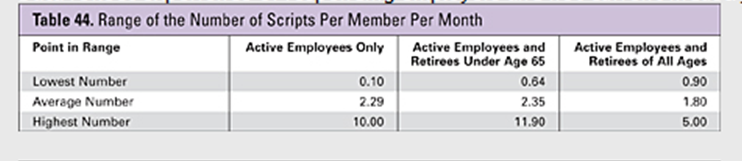
They are now at 12 Rxs PMPY which to me still seems a little low. (I’ve mentioned this is prior reviews, but I don’t understand why their population usage is different.) To validate my hypothesis, I looked at the PBMI report from last year which shows PMPM utilization ranges by respondents (not industry averages).

I do think their example around implementing a generics-formulary along with their new benefit plan guaranteeing cost at $47 per Rx are very interesting. They remind me of the GenericsWork product I launched at Express Scripts and should offer some clients a great way to save money. They key, as I learned, was really understanding how to manage member disruption and gain buy-in to the offering.  [Amazingly, a quick Google search led me to a cached image of the PDF from my product from 2004.]

They give some good MTM numbers:

  • $1.29 in return for every $1 spent
  • $86 in savings to the payer over a 10 year period per MTM encounter

They also announce a new offering for 2012 which they call the GuidedHealth care engine. There’s a little information in the document, but it sounds intriguing.

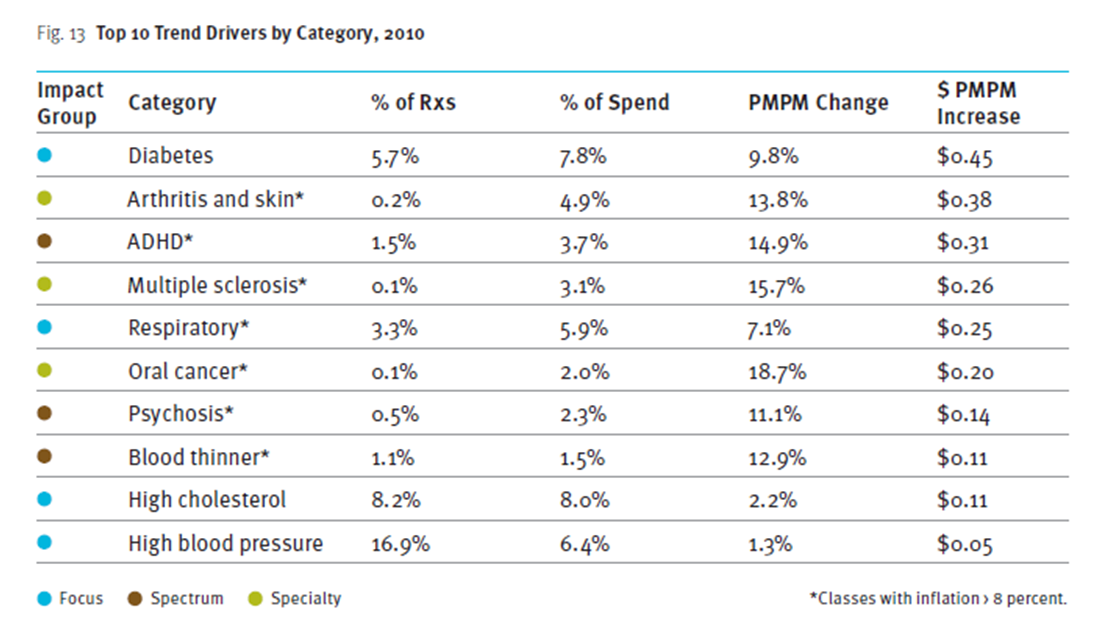
One of those typical charts that we all like to look at shows the drug classes that contributed most to driving trend.

I think their equation about overall cost…

Optimal cost = (medical cost + pharmacy cost) x health outcomes

One of my favorite charts is below which recognizes that there are two cost curves to focus on. The one for the relatively healthy which is often highly pharmacy focused cost versus the chronically ill that drive the majority of overall costs and is heavily medical and specialty medications.

Another study they share in here looks at the likelihood of hospitalization tied to adherence. Very interesting.

$7.60 PMPY savings for a limited network. Those are big numbers that they share from a case study around a client limiting their retail network by excluding one chain.

Their drug trend report looks at another hot topic – 90-day prescriptions. They share their results of a statin study looking at waste in 90-day retail and mail and 30-day retail and estimate the cost impact of the waste.

Another hot topic is the mix of specialty drug spend between medical and pharmacy. They share a chart looking at several of the large specialty drug classes.

At the end of the report, they give suggestions to clients on a spectrum of management (low to high). They also predict a few things in the next five years:

  1. A return to double digit trend increases after this generic wave;
  2. A generic fill rate in excess of 90%;
  3. Specialty drugs accounting for 40% of spend;
  4. Healthcare spending will increase 8-10% per year;
  5. The role of genetic testing will be validated; and
  6. Up to 25% of employers will drop benefit coverage.

25% of MDs Tell Un-vaccinated Kids To “Get Lost”

Unfortunately, the issue of kids not getting vaccinated is not going away.  While only 1% of infants don’t get any vaccines, there are still 30% of kids who don’t get all the recommended vaccines.

So, what should a pediatrician do about families that don’t get their vaccines?  Should they continue to treat them?  The number that say it’s time to find a new provider has jumped to 25% in 2011 (compared to 18% in 2005) according to research reported in a Time Magazine article.  I’d bet that number might jump further as physicians bear risk or have more money tied up in performance bonuses.

It begs the question of what adults do…For example, with flu shots, do adults get them?  Based on a Consumer Reports study, it’s only about 50% of adults that do.

I have a few older posts on this general topic.  It’s also a very interesting topic in the pharmacy world as retailers focus on vaccinations both as a revenue source and a value-added service.

I also found this infographic on the topic which I thought I would share.

Medical Coding Career Guide
Created by: Medical Coding Career Guide

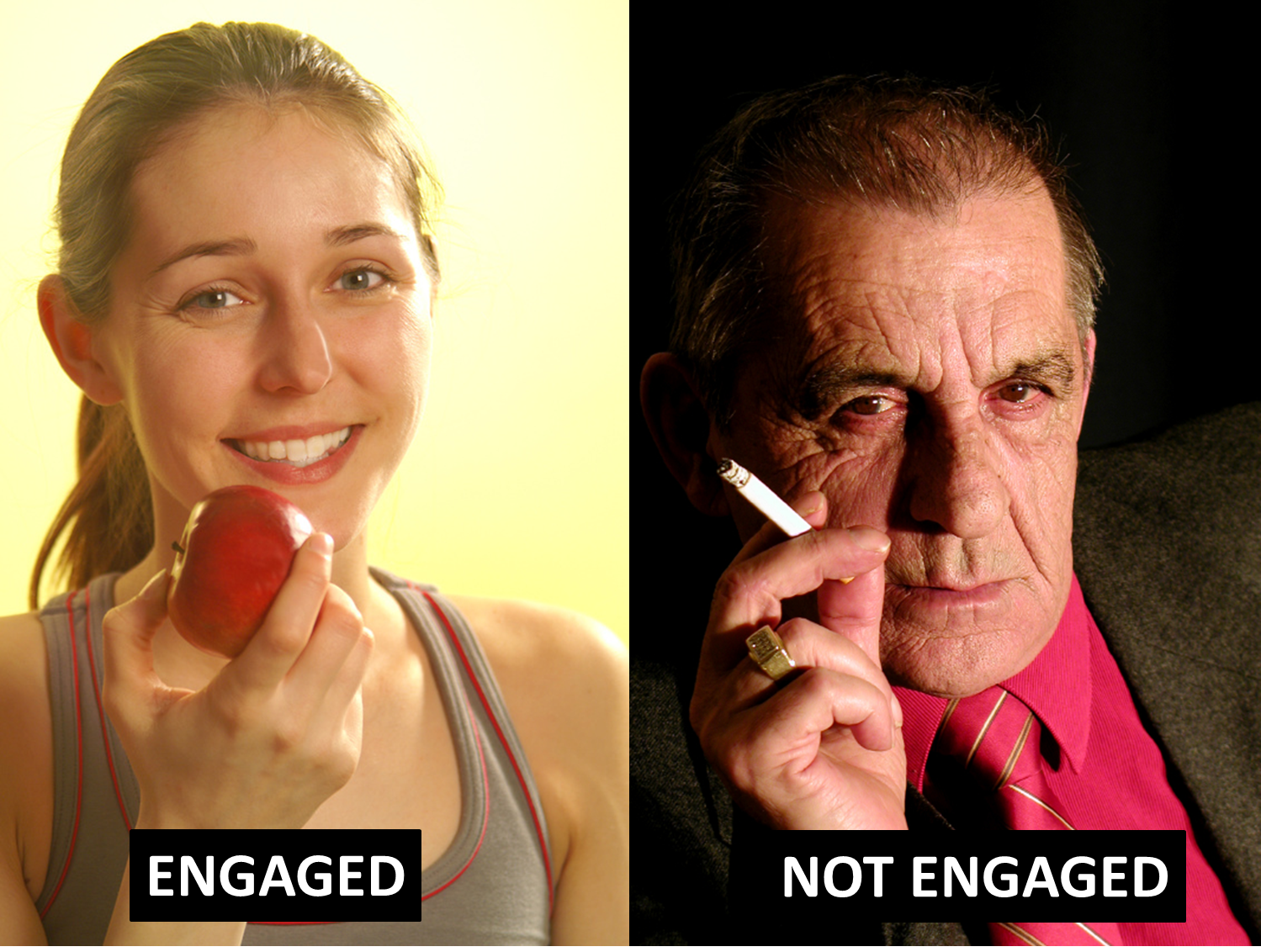
Engaging The Un-Engaged


One of the hot topics in a lot of healthcare conversations these days is engagement.  There’s the “easy” engagement for the e-patients that are actively involved in their healthcare.  Then there’s the much harder engagement of those that aren’t engaged.  And, finally, there’s the issue of chronic engagement.  I can easily get someone to engage a few times with an incentive or some other “trick”, but how do I get them to stay engaged over time.  It’s not easy.

This is one of the topics that will be discussed at the upcoming Forum 11 in San Francisco.  If you’re coming, look me up.  I’m presenting on Friday.

Storytelling Is A Part of P2P Healthcare

P2P (or peer-to-peer) is a popular topic in healthcare today.  It builds on both the social components of behavioral modification along with the social networking trends.

About one-third of Americans who go online to research their health currently use social networks to find fellow patients and discuss their conditions, and 36 percent of social network users evaluate and leverage other consumers’ knowledge before making health care decisions. Social networks hold considerable potential value for health care organizations because they can be used to reach stakeholders, aggregate information and leverage collaboration.  (from Deloitte study)

One of the biggest researchers out there in this space is Susannah Fox from the Pew Research Center.

Peer-to-peer healthcare acknowledges that patients and caregivers know things — about themselves, about each other, about treatments — and they want to share what they know to help other people. Technology helps to surface and organize that knowledge to make it useful for as many people as possible.  (from recent presentation from NIH – “Medicine: Mind the Gap”)

With that in mind, I found this study from a few months ago about storytelling very interesting.  Imagine the power of capturing stories in some form – DVD, YouTube, written – and sharing them with newly diagnosed patients across an expanded social network.  Imagine helping patients plug into a social network (ala – PatientsLikeMe).

Conclusion:  The storytelling intervention produced substantial and significant improvements in blood pressure for patients with baseline uncontrolled hypertension.

What has really surprised me is that I haven’t seen the large institutional healthcare organizations promoting the use of the social networks.  Maybe I’ve missed it, but I would think they would partner up with a few of these to encourage consumers to use them.  I understand on the one hand that that is “handing off” a patient to a different company, but rather than trying to build their own social networking application, I think they’re better served to leverage what exists.

Silverlink eBook: 13 Common Pitfalls In Consumer Health Engagement

After working on consumer communications in healthcare for most of the  past decade, I realized that there were some common pitfalls that happen.  Many of them are pretty straightforward, but when rushed, they may get forgotten.  I worked with Dr. Jan Berger (our Chief Medical Officer) to identify a short list of them, and then the Silverlink marketing team pulled them together in a beautiful eBook

Each of the pitfalls is set up with a quote and a great image:

Then, there is a brief description to explain the pitfall on the page across from it:

What are some of the pitfalls:

  • Not knowing how to declare success
  • Limiting design based on company constraints
  • Forgetting about health literacy
  • Not understanding the entire process
  • Thinking you represent the customer

To get a copy of the entire eBook, you can register online.  [Alternatively, you can e-mail me at gvanantwerp at mac dot com.]

$5.2B In Savings From OTC And Patient Self-Diagnosis?

This is an interesting piece with some good data in it.  It estimates that 10% of physician visits are for minor healthcare items where an OTC (over-the-counter) drug could be used.  It then estimates that if 50% of those unnecessary visits were eliminated we could save $5.2B.  It will certainly get some political attention (which it already has).

I have a lot of questions:

  1. How does the patient know that their “ailment” is something to self-diagnose?
  2. Does self-diagnosis lead to new issues?
  3. What are the restrictions around OTCs versus Rx products?  [Look at Prilosec OTC which has labeling limiting it’s long-term use versus the Rx product which could be viewed as a maintenance drug.]
  4. Were there other benefits to the patient and healthcare system of them visiting the physician?

On the other hand, if I were a clinic company (think MinuteClinic or TakeCare Clinic), this would be great.  It’s proposing to move 26M physician visits to another channel.  I think the research believes this all jumps to Dr. Google, but I think it’s more likely that this gets pushed to clinics (and hopefully not to ERs). 

$15 Compound Vs. $1,500 Injection – Price Gouging?

You don’t often get to see outrageous pricing examples like the one around KV Pharmaceutical’s Makena product.  Specialty pharmacies have been compounding and making a version called 17P for years.  17P sells for around $15 per shot and patients typically take 15-20 injections during pregnancy to help prevent pre-term birth. 

“As far as I know, most physicians are using the compounding pharmacies for 17P,” said Dr. George Saade, president of the Society for Maternal-Fetal Medicine. “If we feel there’s no extra advantage of a more costly treatment, then our obligation is to prescribe the less costly treatment … It’s not right to abuse the health care system by prescribing an astronomically more costly medicine when there’s no evidence that it’s better.”

KV Pharmaceuticals came out with a branded version of the compound to create easier access to the drug.  They initially priced it at $1,500 but had already dropped it to $590 per shot when an article with the above quote appeared at the beginning of May

For those of you less familiar with compounding, here’s a statement from an FDA study in 2006:

FDA regards traditional pharmacy compounding as the extemporaneous combining, mixing, or altering of ingredients by a pharmacist in response to a physician’s prescription to create a medication tailored to the specialized medical needs of an individual patient. Traditional compounding typically occurs when an FDA-approved drug is unavailable or a licensed health‑care provider decides that an FDA-approved drug is not appropriate for his or her patient’s medical needs.  By definition, pharmacy compounding involves making a new drug for which safety and efficacy have not been demonstrated with the kind of data that FDA requires to approve a new drug.  In virtually all cases, FDA regards compounded drugs as unapproved new drugs.

The unapproved status of compounded drugs notwithstanding, FDA has long recognized that traditional pharmacy compounding serves an important public health function.  FDA has historically exercised enforcement discretion and generally has not taken enforcement action against pharmacies engaged in traditional compounding.  Rather, FDA has directed its enforcement resources toward firms that manufacture large quantities of unapproved new drugs under the guise of traditional compounding, and whose compounding practices result in significant violations of the new drug, adulteration, or misbranding provisions of the FDCA.

Will managed care, managed medicaid, and PBMs aggressively limit the use of Makena or will they leave it to physicians?

Up To 200,000 MDs Require eRx Exemption From CMS

Electronic prescribing has been an effort for at least the past decade and significant progress has been made (see Surescripts latest report). That being said, we all know that changing behavior in the office setting is difficult. It has been the bane of many a technology vendor in the healthcare space.

On the one hand, I’m not surprised to see that lots of physicians might apply for an exemption from CMS around electronic prescribing.

BUT, I was surprised by several things in this article:

  1. Some physicians simply used electronic prescribing to write the 10 scripts required and then turned it off.
  2. The fact that there could be so many doctors that fit the approved exemptions.

The exemptions are for physicians who:

  1. Practice in an area with limited high speed Internet access.
  2. Work in an area where a limited number of pharmacies accept electronic prescriptions.
  3. Cannot prescribe enough drug orders electronically due to local, state, or federal laws (e.g., controlled substances).
  4. Have limited prescribing activity. [but yet still see a lot of Medicare members]
  5. Have insufficient opportunities to report the e-prescribing measures because of their patient type.

I didn’t think that could get you to 200,000 physicians (who were actively working with Medicare patients). The one that seems most feasible is for physician who register to participate in the Medicare or Medicaid EMR incentive program AND both adopt and use the technology by the 2011 deadline. They can also get exemptions.

Physicians care because they have to:

  • Prescribe electronically 10 times before June 30th to avoid a 1% penalty on all Medicare payments in 2012 or
  • Prescribe more than 25 times before Dec 31st to earn a 1% bonus in 2012.

Depending on your patient base, this seems like a pretty good business case to at least get a system in; write for 26 prescriptions; and collect your bonus.

Less Likely To Take Your Statin After Surgery

A recent study looked at people who were hospitalized for heart disease. It then tracked people’s use of statin medications (e.g., Lipitor) for the next year and looked at their adherence based on whether they had surgery or were simply discharged with a prescription.

SURPRISE – 70% of people who had surgery stayed on their statins for a year while 79% of those who didn’t have surgery stayed adherent. (thanks to Box Cutters for sharing this)

This begs a whole lot of questions:

  • How did they get the people to be so adherent in the first place? (this seems higher than the national statistics)
  • Did the surgery patients feel like they were “cured”? (see post on similar issue)
  • Was the statistical difference true at a location or prescriber level also? (i.e., was it simply that some locations or prescribers always wrote a script and talked about adherence or was it really a patient difference?)
  • Were the patients who had surgery sicker to begin with and therefore on more medications (which would reduce their likelihood of being adherent)?

On the other hand, this is perhaps another warning flag on the whole hospital readmissions issue where we have to address issues of health literacy, follow-up, discharge process, support network, and medication reconciliation.

Pharmacy Kickoff At #RESULTS2011

I’m currently presenting at our client event (see twitter hashtag #results2011 for real-time comments). My presentation is an extension of my white paper on the future of the PBM / pharmacy industry along with a blend of data from our annual client survey and Silverlink Communications best practices with a focus on our work around medication adherence. It also builds on my thoughts from NCPDP that I shared late last year.

Here are a few of the points I touch on:

  • Avoiding being commoditized by adding value
  • Keys to success with a focus on:
    • Evidence-based approaches
    • Consumer engagement
    • Patient experience
    • Cross-channel coordination
  • Adherence and other priorities
  • How to use SMS to drive self-service
  • An approach to condition management in hypertension and diabetes
  • Focus on the “un-engaged” but don’t forget about the engaged consumers
  • Case studies and research around adherence
  • Timing and sequencing of direct mail, automated calls, and e-mail
  • Measuring “trust”

Here’s a teaser of some of the slides I’m presenting:

Walmart: Good or Bad for the PBMs

I think this is a question many of my PBM friends would like to know. Fortunately, a few of the Walmart people that read my blog and are part of their Health and Wellness group agreed to sit down and talk about their strategy.

Let’s start with setting some background:

  • Walmart was the first to introduce the concept of $4 generics which originally caught the market off guard and has created lower generic costs and free antibiotic programs at several pharmacies. [I would also argue that it highlighted the fact that generic copays were getting too high.]
  • Walmart was the first to work directly as a pharmacy to create a limited network contract direct with an employer (Caterpillar).
  • Walmart has partnered with Humana on a limited network offering for Medicare.
  • Walmart came out with a direct to consumer mail order pharmacy offering.

If you follow the industry, you know that all of these things were potential game changers (if they’ve worked).

This creates some tension:

  • Is Walmart simply a catalyst for change in the healthcare space?
  • Does Walmart (pharmacy) want to disintermediate the PBM?
  • Is Walmart able to make money where others can’t?
  • Does Walmart get more foot traffic such that pharmacy can be a loss leader?

Here is the Q&A [interpretive not literal] from my dialogue with Marcus Osborne (Sr. Director, Business Development, Healthcare, Walmart) and Tom Hill (Director, Health Services Development, Walmart).

What is Walmart’s Health & Wellness strategy?
Walmart wants to help consumers “save money and live better”. That is our DNA and our fundamental approach to the market. Pharmacy has presented a unique challenge since consumers often have the same copay regardless of which pharmacy they went to. Even when it’s a percentage copay, the savings differential might not be much to the consumer. Walmart was disconnected from the consumer in the traditional pharmacy pricing approach. That has driven us to look at unique ways that we can create savings.

How does Walmart decide what “offerings” to bring to market?
Walmart looks at ideas that focus on our EDLP (Everyday Low Price) concept and leverage our supply chain efficiencies. We are constantly looking at non-store operational opportunities to work directly with key companies. We currently have over 20 direct relationships with managed care companies and PBMs where we are working with them to drive down consumer costs in the pharmacy and broader healthcare area.

Obviously healthcare is bigger than pharmacy. What other things are you doing to drive healthy eating, management of critical conditions, or other programs? We’re constantly looking at what’s needed in the healthcare sector and where to invest. We focus on our two key advantages:

  • Willing to trade profit for volume
  • Value of the total “box” [store]

A good example is the work we’ve done around “Healthy Mom Healthy Baby” in Medicaid. We looked at the issues of high pre-term labor and the high rates of injury post-birth. We felt like we had a moral and cost imperative to take action. As part of this, we worked with several managed care groups to redefine the entire process and look at our unique assets. Our solution includes:

  • Free pregnancy tests
  • Free pre-natal vitamins
  • Rewards for free diapers and other supplies tied to physician visits and other health activities
  • Free car seats
  • Leveraging our physicians and clinics

[I was impressed…this was a broad solution that looked at a lot of their assets.] We’ve also created several diabetic specific solutions; a smoking cessation program with Healthways; weight management programs; and women’s and men’s health programs. The focus is on payers that are at risk for their healthcare spending with more to come from clinics.

Will Walmart become a PBM?
No. We’re not looking to go into the PBM market. We’re supply chain experts. We see value in the PBM model. [We talked a little about the fact that “you are what your profits say you are” meaning that the PBMs have painted themselves into a profit corner where their profit comes from generics at mail order so any threat to that is a challenge.]

If the Caterpillar model was so successful, why haven’t others adopted it?
The reality is that over 400 employers have contracted directly with Walmart for a limited network model similar to Caterpillar. They are all seeing significant savings.

Does Walmart see the market through “different glasses” than others?
No. We still want to have the pharmacy be a profit center. We’re not looking to bottom out the market, but we are willing to trade lower profits per transaction in return for more market share. At Walmart, it’s not about maximizing revenue/Rx or profit/Rx…it’s about total revenue and total profitability. [A very different strategy than other CFOs which would say you can’t expect volume to make up for lower profitability.] Obviously, we also have the opportunity to get non-pharmacy sales associated with food traffic. One thing that may be is different is the fact that we believe scale should drive down costs. In pharmacy, the biggest players are always trying to command a premium. We think it should be the other way around. We also have been able to get our cost-to-fill to be the same at retail and mail so we’ve become channel ambivalent.

Have these programs improved market share in any significant ways? You have to look at the programs separately, but overall we’ve seen our market share increase from 6% overall [when the $4 generic program launched] to 10% now. The network design strategy has had great success. We look at three types of programs:

  • Incentive based networks
    (Caterpillar 1.0) where all the pharmacies are in the network, but there is a lower copay to go to certain pharmacies. If only 15% of pharmacies are preferred, their market share doubles. If Walmart is the only preferred pharmacy, their market share goes up 4x.
  • Limited networks where some pharmacies are removed from the network. If you drop the network significantly, they’ve seen their share go up 2-3x.
  • Limited networks with preferred pharmacies where you some pharmacies are removed from the network, but within the remaining pharmacies, there are still incentives to go to certain stores (Caterpillar 2.0). In these cases, they’ve seen their share go up 10x.

The $4 generics program has helped increase market share by an estimated 150 basis points. In many cases, companies that initially jumped to offer similar programs have dropped them. They couldn’t sustain them.

The Medicare program with Humana has been very significant and successful [as demonstrated by Humana’s huge jump in Medicare lives].

The direct-to-consumer (DTC) programs for mail have been pretty limited and haven’t had a huge impact, but they’ve been offered in markets where we have no stores (e.g., Detroit and NY) and therefore almost no share to begin with so any share is a gain.

People complain about the pharmacy location within the store. Would you ever consider a direct access point to the pharmacy which didn’t involve going through the entire store? This is a very hot topic. We did a lot of research about store design and what goods should be located next to each other, but in the end, we’re considering moving the pharmacy closer to the front entrance. Right now, 25% of the stores have a drive-through pharmacy which gets utilized at a very high rate. But, this does lose the pharmacist face-to-face benefit. [At the end of the conversation, my take is that they are looking at lots of scenarios here and trying to figure out the balance of convenience to the pharmacy only consumer and how to optimize the entire footprint.]

The partnership with Humana really seemed to help them grow their Medicare lives this year. How did this come about? We both were looking for new solutions to leverage the fact that scale matters and how to operate within the CMS parameters. We felt like there was an opportunity to do something different and began speaking with plans about some limited network ideas. We know that Walmart is over-indexed in the 65+ category based on store visits per week. Based on that, we were looking at what we could do to offer them more value as compared with our traditional, core customer of 35-50 year old females. Through a series of conversations, the partnership was born. We’re very happy with the relationship and believe they are also.

Limited networks have been around for a long-time with limited adoption. Do you think their time has finally come? What has changed? They have been around, but historically the networks weren’t limited enough to create enough savings to overcome the “costs” of disruption to the payer. Based on our experience at Caterpillar, we believe that you will see a transitional period where companies first move to incentivized networks and then 1-2 years later move to limited networks. [Something I would compare to the transitions which have happened in formulary over time.] The one area where we do see limited networks happening more rapidly is in the area of Managed Medicaid. [This plays into the focus of PCMA and others on the PBM opportunity around Managed Medicaid.]

It was a great discussion. I learned a lot. They allowed me to ask them a lot of questions about their programs and approach that honestly had led to some skepticism in the past. It sounds like they’ve brought together a great team with a broad vision of what they can do in pharmacy and in health and wellness overall. It has gotten my mind thinking about ideas, and I look forward to learning more.

[BTW – You can sign up to get posts like this e-mailed to you whenever I write them.  A registration link is in the right hand column.]

Medicare Lives By Plan

Medicare has been a big area of focus for a lot of plans and subsequently for a lot of PBMs who manage the PDP plans.  The biggest area of discussion is around the STAR Ratings.  And, that’s important because if you look at data from the WilsonRx reports there is certainly a correlation between PBM satisfaction and health plan satisfaction. 

So, the question is who has the Medicare lives today and who are the big winners YTD (source – CMS and Citi Investment Research and Analysis – summarized by Carl McDonald and team at Citi):

For a detailed breakout of PDP lives and the huge win by Humana going into 2011, I would suggest reading Adam Fein’s post from a few months ago on DrugChannels

And…if you haven’t been following it, it looks like Medicaid is the green field that everyone is eyeing.  The savings from managed Medicaid are getting discussed in multiple states especially around pharmacy.  I just had a call today where the executive predicted that managed Medicaid would be the feather that finally broke the back to get limited networks more traction (interesting!).

Looking Forward To The Silverlink Client Event – RESULTS2011

One of my favorite events every year is the Silverlink Communications client event in May in Boston.  Our marketing team does a great job of pulling together a mix of clients and external speakers to really motivate and challenge the audience.  It’s not much of a sales event, but it does a great job of pushing a lot of key topics for discussion.  (See prior posts – last year’s event, notes from RESULTS2010, and notes from RESULTS2009.)

This event was one of the things that originally convinced me to join Silverlink back in 2007.  Sitting and talking with clients about their experiences with the company, their shared passion for results and outcomes, and their interest in collaborating to improve outcomes for consumers was motivating.

This year should be no different.  This year’s theme is – “Seeing Healthcare Through The Eyes Of The Consumer“.  There are presentations on sustaining engagement, obesity, diabetes, health literacy, social media in healthcare, adherence, loyalty and retention, health reform, STAR, HEDIS, and many other topics.

Some of the speakers include:

  1. Dr. Atul Gawande (Harvard, The New Yorker, Author)
  2. Thomas Goetz (WIRED Magazine)
  3. Dan Buettner (Author, The Blue Zones)
  4. Mark Merritt (PCMA)
  5. Dr. Will Shrank (Harvard)
  6. Jim Wilson (WilsonRx)
And many other executives from across healthcare.
It promises to be another banner event.  I’ll share some summarizes as time allows via Twitter and eventually after the event.
I guess with attendance maxed out and the hotel sold out it’s time for me to buckle down and work on my presentation!

Specialty Rx Offerings Not Rxs Only

I’ve spoken about this for a while, but I was pleasantly surprised to hear one of the Chief Medical Officers in the industry make this point to a large number of manufacturers. He was talking about lots of the changing dynamics in the industry from personalized medicine to new research. He talked about the challenge of adherence and how we needed to think differently. He even suggested that pharma should start talking with payers much earlier in the pipeline so that their research tracked metrics that the payers cared about.

At the end, one of his summary perspectives was that they should stop thinking about just bringing a drug to market and think about how they bring an offering for the condition to market which centers around a drug. This goes back to what the book BLUR presented years ago. You have to blend products and services to create offerings.

In the case of specialty, you have a very sick patient who often has a symptomatic condition that they are living with everyday that might affect their ability to live or potentially debilitate them. It affects their family. And, there may be additional co-morbidities associated with the condition.

Right now, there are solutions that try to engage these patients especially in clinical trials or when a drug is first launched, but over time, that “energy” decreases. It’s important to think about these specialty patients from an experience perspective.

  1. Diagnosis – What happens after they’re diagnosed? How much do they really remember from the physician encounter? Do they understand the drug they’ve been prescribed? Do they know where to go to find more information? Do they understand what resources are available to support them?
  2. First Fill – Do they understand the drug’s side effects? Do they believe that this is going to help them? Do they know how to get the prescription? Do they understand how to use the specialty pharmacy?
  3. Ongoing Therapy – Do they continue to refill the medication? What are their barriers (cost, convenience, literacy, beliefs, side effects)? Can they afford the medication? What support is there (financial, education, counseling) and how do they access it? Does their physician understand the disease? Have they gotten engaged with a community or support group?
  4. Changes In Condition – As they progress, what should they expect? How do you monitor these changes? Do these changes have an impact on the drug or strength? How does adherence affect this?

This creation of a solution blending services and pharmaceuticals creates some new ways for a manufacturer to differentiate themselves in the marketplace. Imagine the power of going to the physician, pharmacy, or PBM and telling them that you have a solution which does the following:

  • Provides a highly effective drug (cue traditional data)
  • Improves awareness and understanding of the condition for the patient
  • Decreases the likelihood of abandonment
  • Helps the patient with their out-of-pocket costs
  • Increases the patient’s likelihood of refilling
  • Helps the patient become an e-patient and engages their support system
  • Provides ongoing monitoring of changes in their condition

Interested? I have some ideas if you’re a brand manager.

The New Kaiser Center For Total Health (#WHCC11)

While I was at the World Healthcare Congress yesterday, I had the opportunity to go into DC to visit the new Kaiser Center for Total Health. This is their showcase in the East to facilitate discussions around improving healthcare. It’s not a replacement for the Garfield facility in CA, but it will create an more accessible forum for dialog with policymakers and international visitors. (NYTimes post about the opening)

It’s one of those fun places where you can go and interact with technology. It’s full of technology like telemedicine and telemonitoring. It provides you with demos of the world’s smallest ultrasound device and connected devices. It showcases Kaiser’s rich history and their MyHealthManager tool.

Their online tools have some great stats:

  • 3.3M members signed up
  • 25.8M test results viewed in 2010
  • 10.7M emails sent to MD’s in 2010

There are a lot of videos where you can hear employees, members, clinicians, and others talk about what they think “total health” is. And, they have a massive interactive mural about their walking initiative.

It seems like this type of interactive, high technology space is becoming an asset at several companies. We used to have this innovative, brainstorming space at E&Y years ago and clients loved it. I believe IDEO has this type of space.

I enjoy it. It’s interesting, inspiring, and creates a dynamic work environment. I look forward to see how this space gets used and what others think.

Interview With Dr. David Wennberg At #WHCC11

I had the opportunity to sit down with Dr. David Wennberg (Chief Science & Product Officer, Health Dialog) at the 8th Annual World Healthcare Congress (Twitter hashtag #WHCC11).  David is a fascinating and engaging speaker.  He has lots of publications, works with the Dartmouth Atlas, and leads the Health Dialog Analytic Solutions group. 

David and I began our time talking about “informed choice”.

In this environment, doctors need tools that identify patients lacking evidence-based care. They also need to ensure that patients undergoing surgery have been exposed to informed choice, not just informed consent, when there is more than one legitimate treatment path. With these resources in place, physician groups can ensure that they are in control of their own destiny when it comes to performance evaluations.  (source)

This is an important issue in healthcare.  Giving patients (1) complete information in (2) language that they can understand and helping them (3) frame their options relative to their preferences is at the core of this issue. 

Health Dialog calls this Shared Decision Making and focuses on how to engage targeted consumers and help them make their best decision.  Their customer support personnel go through a certification process and use decision aids to enable the process. 

This led us into a discussion about “trust” (see prior post) and then into a discussion about “embodied conversational agents“.  Obviously, if you’re going to help consumers make decisions, they need to trust you.  We talked about the need to have transparency, the need to for disclosure, and the importance of using clinicians in the engagement and discussion process.  In many cases, nurses and the empathy that they have are critical to this process.

But, I know from prior exposure to Health Dialog that they have figured out ways to blend technology and agents.  They do a lot with data and analytics to really understand the popluation.  They’ve worked hard to avoid the traps that “disease management” has fallen into over the years.  He shared with me some amazing engagement statistics. 

We talked about the value of peer-to-peer videos for people to understand their condition and talked about some recent studies around storytelling and distributing that information via DVD to patients (see more on study).  We went on to talk about how engaging the consumer in the decisions about their care increase success, but that many models have been a challenge to scale.  Health Dialog just published an article in the NEJM called A Randomized Trial of a Telephone Care-Management Strategy which demonstrated an ability to scale the solution and get results. 

At baseline, medical costs and resource utilization were similar in the two groups. After 12 months, 10.4% of the enhanced-support group and 3.7% of the usual-support group received the telephone intervention. The average monthly medical and pharmacy costs per person in the enhanced-support group were 3.6% ($7.96) lower than those in the usual-support group ($213.82 vs. $221.78, P=0.05); a 10.1% reduction in annual hospital admissions (P<0.001) accounted for the majority of savings. The cost of this intervention program was less than $2.00 per person per month.

Before I could even jump to my next question about ACOs, he made the natural transition to the fact that the new ACO regulations mention shared decision making 8 times.  I believe we both agreed that whatever actual form these new practice settings take that they will accelerate the importance of leveraging technology and things like shared decision making to engage the consumer.  The key is to leverage the PCP setting whether it’s the MD or someone on their staff as the foundation for engagement.

This led me to ask him about physician acceptance of technology as part of their practice (more on this later).  He felt that they had moved from resistance to understanding the technology and “guides” can enable them to practice better medicine.

Trust As The Foundation For Healthcare Communications

Trust improves medical outcomes. It is the number one predictor of loyalty to a physician’s practice. Patients who trust their doctors are more likely to follow treatment protocols and are more likely to succeed in their efforts to change behavior. (Introduction of The Trust Prescription)

I just finished reading The Trust Prescription For Healthcare by David Shore. I would recommend it. It definitely framed things in a differently light. I also had a chance to talk with David on the phone and pick his brain a little. He sounds like a great speaker, and I’m looking forward to his new book coming out around building trust as an intermediary (i.e., managed care company or PBM).

A few of my highlights from the book are:

  • Trust can be a differentiator.
  • Trust is good business.
  • The physician to patient relationship is where the baseline of trust exists today. Although he brings up the question of whether that trust erode as you get more and more time pressure.  [I don’t remember the book specifically addressing the pharmacist – patient trust relationship although one would assume it is a similar foundational element.]
  • Trust is critical in healthcare because you’re asking a vulnerable patient to believe you can help them.
  • Profits may be negatively correlated with trust in healthcare (but not in other industries).
  • He pointed out the fact that it’s ironic that while pharmaceutical companies do so much good they get such a bad rap.
  • It was the first time I had seen someone introduce the issue of how healthcare entities are portrayed in TV shows and how while this is generally neutral that managed care organizations in the early 2000’s were portrayed negatively (and probably still are).
  • He talks about the concept of “response shift” which I think it an important phenomenon about how our expectations change over time and the effect of expectations on trust.
  • He talks about how two things happen when trust erodes – government intervention and consumer activism. [Hey…that’s where we are today!]
  • He uses two examples many times which are very relevant:
    • Volvo is known for safety not specifically for making cars. They make sure this is consistent in their branding (e.g., not funding NASCAR races). It gets to the core of defining who you are. [This concept also made me think about the new Dawn campaign about saving wildlife.]
    • You can build trust equity like Johnson & Johnson did which helps you when you have issues. [The question is how long they can draw on this given their current issues.]
  • He holds out a few healthcare power brands but says there are very few – Mayo Clinic, Cleveland Clinic, BCBS, Kaiser, Massachusetts General.
  • He talked about the concept of a Brand Architecture which made me think about some of the recent rebranding efforts at United Healthcare.
  • He talks about how consumer understanding and communications are key to building trust.

Communication in healthcare typically runs into a series of obstacles related to listening, clarity, and confidence.

Some of the interesting research data was [noting that this was a book from 2005]:

  • 56% of consumers say they will pursue something simply because it was made by a company they trust. (Macrae and Uncles 1997)
  • About half of people agree that “doctors are not as thorough as they should be” and “doctors always treat patients with respect”. (National Opinion Research Center 1998)
  • Race was a highly significant variable in trust correlation even when researchers controlled for other variables. (Corbie-Smith, Thomas, and St. George 2002)
  • Patients are more likely to take a drug that they have requested than a drug with which they are unfamiliar. (Handlin et al 2003)

It book made me think of some interesting questions:

  • Does transparency build trust with consumers?
  • Does concierge medicine build trust overall?
  • Does the use of technology by physicians enable or erode trust? [I believe he said that a lot of physicians didn’t think so.]
  • Do non-profit systems have more consumer trust?
  • What does all the news about drug problems, medical errors, and other issues do to the overall trust of the system?
  • What are the trust queues for consumers by type of healthcare entity? (For example, a dirty bathroom at a hospital might make you worried. What’s true for insurers, PBMs, pharmacies, etc.?)

One key point to pull out that he makes is that

Without branding, healthcare becomes a retail industry, and in retail, as in residential real estate, the three most important factors are location, location, and location.

CMS Treatment Of Generic Samples Offers False Hope

It’s interesting but irrelevant that CMS is now proposing that Part D plans can treat generic samples similar to OTC drugs.  Who cares?

Why do I say that?

  1. Generics represent more that 80% of the non-specialty drugs dispensed in many cases.
  2. The technique doesn’t work.

At Express Scripts, I ran a program for a year.  We hired pharmaceutical representatives to detail doctors.  We bought generic drugs and repackaged them.  And, we tracked GFR (generic fill rate) in the six categories for a year. 

Guess what?

In most cases, the GFR for the doctors with the samples barely exceeded the GFR for the doctors without the samples.  In one category, it was even lower.  The GFR was going up too fast in the general market.  If you add in the costs, it was a money loser. 

We even compared our GFR in certain geographies to the published statistics from another company doing generic sampling…our clients GFR without samples was going up faster than their GFR with samples. 

If you want to give away free drugs as a “gift” to make your academic detailing program more effective, have at it, but lets keep reality in mind here.  This is not going to make a difference.  All it’s going to do is drive up administrative costs for PDP plans.