Archive | PBM / Pharmacy RSS feed for this section

FL Pharmacists to Fight Medicaid Mail Order

The Florida Pharmacy Association along with a local pharmacy in Florida have filed suit against the state for allowing Medicaid patients to use mail order.  This seems silly to me.  The mail order pharmacy ship has sailed a long time ago.  Approximately 13% of all prescriptions filled in the US are through mail order. 

While I would still disagree if it was mandatory mail, this isn’t.  The state is simply giving patients the option to get their drugs through mail order.  If the community pharmacies have an issue, they should match the mail order rates and dispense 90-day prescriptions and delivery them to the patient’s house at no cost. 

We’re in a budget crisis here as a country.  If we can save money in Medicaid and therefore in the state budgets, why wouldn’t we do it?

The lawsuit says that the change –  

 “at a minimum deprives the patients’ access to a provider having extensive knowledge of their medical conditions and unique clinical problems.”

Really?  I’d love to know how many of those Medicaid patients have a long standing relationship with their pharmacist, know them by name, and don’t use multiple pharmacies.  Maybe I’m wrong. 

It comes down to losing business BUT if the patients are so happy, won’t they stay with their local pharmacy.  This is a transient population so it’s always been hard for mail order.  It’s not easy to send them refill reminders.  There’s not always a consistent address to mail to.  Some of that is changing as text messaging becomes more normal as a communication medium, but that’s still a small percentage of companies. 


Compliance For Donations?

Would you be more compliance with your medications if you knew that every time you took a pill or refilled that a donation was made in your honor to a certain charity?  It’s an interesting hypothesis being put forth in this article – Leveraging Altruism To Improve Compliance… BUT I personally am fairly skeptical. 

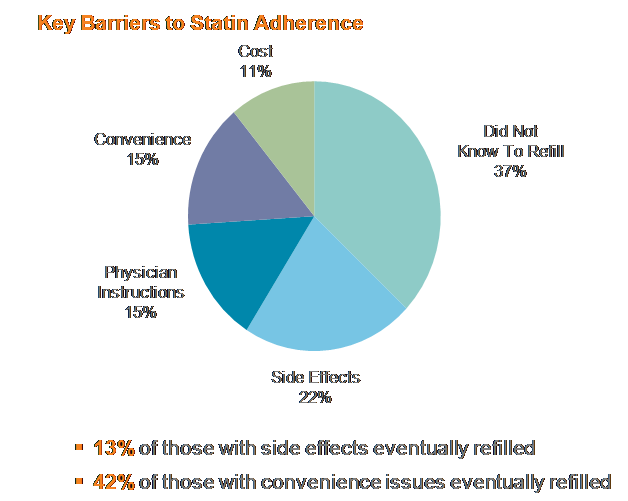
Let’s just look at the barriers identified in one recent barrier survey we did at Silverlink Communications for patients who had not refilled their statin medications. 

What do you see?

  1. Significant literacy issues.  People didn’t even know they were supposed to refill. 
  2. People don’t understand the medication and remember what the physician told them.
  3. Convenience…an easy to address opportunity.  These are key targets for a retail-to-mail or 90-day retail program.
  4. Side effects…this is harder to address but some of it can be managed by setting expectations up front.

Are those going to be addressed because a donation is being made?  I don’t think so.

Lipitor Going Generic

If you work in pharmacy, this has been on your radar since Zocor went generic years ago. Lipitor has been the biggest drug worldwide, and I believe the spend in the US is still almost $7B a year even with generic Zocor available. (See Consumer Reports on statins)

Now, it appears that generic Lipitor (atorvastatin) will be available 11/30/11 according to the Pfizer site. It looks like Ranbaxy who was first to file the ANDA will get the 180-day exclusivity (but I know several other generic manufacturers have challenged the patent).

So, what does this mean?

  1. Lipitor will likely move to the 3rd tier either immediately or at the next formulary update period once the generic is available on the market.
  2. Atorvastatin will become a part of statin step therapy programs.
  3. Pharmacies in states that have mandatory generic laws will begin auto-substitution of atorvastatin for Lipitor prescriptions unless there the script has a Dispense As Written (DAW) indication.
  4. Depending on the pricing of the generic, PBMs and pharmacies will be very aggressive about encouraging use of the generic version (as allowed with the AG settlements from years ago).

We’ve already seen Pfizer take some action which is to promote a $4 copay card (or 30-day sample) for patients. This is to protect market share, but it also makes me wonder if they won’t do something like Merck did by pricing the generic below the Ranbaxy price (see WSJ article).

Given that Pfizer owns a generic company (Greenstone), I have to imagine that they plan to sell atorvastatin thru that company. But, I think the big question that I would be focused on is whether there will be an “authorized generic” (look at the FTC interim report on this topic). This is a big topic in the industry. It allows the manufacturer who owns the patent to allow a generic manufacturer to make and produce a generic version outside of the ANDA process. Right now, it appears that Watson may get to bring an authorized generic of Lipitor to market.

Will you see the same energy around this as you did around Zocor? I remember having a whole “control room” that we developed at Express Scripts to encourage utilization of generic Zocor. It was built around several key things:

  1. What were all the channels that a patient communicated with the PBM and how did we educate them around the new generic? [And which could we do at what time so as not to limit the short term rebates that our clients were getting on brand Zocor which kept the prices down until the generic was available?]
    1. Member portal
    2. Mail order invoices / stuffers
    3. Inbound IVR messaging while on hold
    4. FAQs
    5. Training call center reps
    6. Formulary notification programs
  2. How did we inform physicians?
    1. Academic detailing – fax, letter, phone consultations, face-to-face visits
  3. What plan design changes did we encourage?
    1. Step therapy
  4. What could be done at the POS with the retail pharmacies?
  5. What could be done at mail?
  6. How would we track success?

Personally, as a PBM or pharmacy, I’d be trying to lock in a period of exclusivity with Watson or Pfizer to have the limited distribution of the generic Lipitor for a period of time. That would be a huge deal (if it could be pulled off).

Grand Rounds (volume 7: number 17): Engagement Is Multi-Faceted

The concept of “engagement” in healthcare is a difficult one. Traditionally, we’ve had a build it and they will come approach that didn’t encourage preventative care. It also didn’t openly acknowledge the challenges that consumers have in dealing with medication adherence and even understanding the system or their physician’s instructions.

In this week’s edition of Grand Rounds, I looked at submissions and recent posts from several angles on this issue.

One of the most engaging was from the healthAGEnda blog where Amy tells her personal story about being diagnosed with Stage IV inflammatory breast cancer and trying to work though the system. Her focus on patient-centered care and support for the Campaign for Better Care make you want to jump out of your seat and shake the physician she talks about.

“It doesn’t matter if care is cutting-edge and technologically advanced; if it doesn’t take the patient’s goals into account, it may not be worth doing.”

Another submission from the ACP Hospitalist blog tells a great story about how to use the “explanatory model” to engage the patient when it’s not apparent what the problem is. I think this focus on understanding that physician’s don’t always have the answer is an important one, and one that Joe Paduda talks about when he addresses guidelines as both an art and science. Dr. Pullen also talks about this from a different perspective by describing some examples of “Wicked Bad” medicine on his blog.

One of the common focus areas today from patient engagement is around adherence. Ryan from the ACP Internist blog talks about the recent CVS Caremark study which looks at how total healthcare costs are lowered with adherence. He goes on to point out the fact that understanding the reasons for non-adherence is important so that you can – simplify, explain, and involve.

Interestingly, my old boss from Express Scripts recently started her own blog and also talked about this same study but from a different perspective.

And, Dan Ariely briefly touched on this topic also when he shared a letter he got from a reader on getting their child to take their medications.

While I think a lot of us believe HIT might save the day, the Freakonomics blog mentions a few points about HIT to consider. And, Amy Tenderich (of DiabetesMine) who I think of as a great e-patient gives a more practical example when she talks about what diabetics need to do to stay prepared in the winter. (What’s the basic “survival kit” and where can you go to get one.) I think this has a lot of general applicability to how we plan our days and weeks and try to stay healthy. One physician I know who travels a lot always talks about the need to be prepared with healthy food on the road and at the airports.

On the flipside, we hear a lot about genomics and social networking as ways to engage the consumer and to understand their personal health decisions. To that affect, I liked Elizabeth Landau’s post on how your friend’s genes might affect you.

Of course, there are lots of other considerations. Louise from the Colorado Health Insurance Insider talks about the fact that we are so focused on health insurance reform rather than health care reform. She goes on to point out the lack of connectivity between the consumer and the true cost.

And, Henry from the InsureBlog points out a change in the NHS to look more like the US system and cut out one of the steps for cancer patients. Will it help?

But, at the end of the day, I think we have to address the systemic barriers while simultaneously figuring out how to better engage consumers. Julie Rosen at the Schwartz Center for Compassionate Healthcare talks about Patient and Family Advisor Councils. This was a new concept to me, but it makes a lot of sense that engaging the family in the patient’s care will lead to better outcomes and a better experience. I also heard from Will Meek from the Vancouver Counselor blog who talks about how dreams can be used as part of therapy, and Dr. Johnson who presents a story of woe about her challenges as a physician.

And, since many of us “experience” healthcare thru pharmacy and pharmacy thru DTC, I thought I would also include John Mack’s Pharmacy Marketing Highlights from 2010.

Next week’s Grand Rounds will be hosted by 33 charts.

Walgreens To Focus on 90-Day Rxs

I’m not sure I see this as new news since Walgreens has traditionally had more 90-day claims between retail and mail than anyone other than Medco (per data from a few years ago), but I think it’s a good supportive message for the general trend.  Walgreens has had 90-day networks for most of the past decade.  I remember them offering mail order pricing to us at Express Scripts years ago. 

“We think this is going to be one of the fastest-growing parts of the Walgreen’s pharmacy business for several years to come.”  comment by Colin Watts, Walgreen’s Chief Innovation Officer in article yesterday

The more interesting things to me in the article were:

  1. It says that filling 90-day Rxs is more profitable.  You certainly save on supplies, but I don’t think that savings would outweigh the additional margin on foot traffic.  They didn’t talk about central fill which would certainly be one way of saving by filling 90-day offiste and delivering them to the store.  That leaves me with the assumption that they view the cost of the script using only the variable cost of the pharmacist’s time.  (A perspective I see from both sides – direct cost versus the pharmacist as a fixed asset until you reach a certain volume of drugs per store per day.)
  2. It says that filling 90-day Rxs improves adherence which has certainly been the biggest push by the PBMs regarding mail order for the past 12-18 months.  No longer is the biggest advantage on saving money…it’s all about adherence.

The one interesting question I would have is what do they see as the theoretical maximum on 90-day utilization.  If they were close to 40% penetration a few years ago, do they believe they can get that to 45%, 50% … more?  Knowing that would create an interesting industry discussion about benchmarking and upside in this space for both 90-day retail and mail order. 

There’s a section about Walgreens90 in their 2010 Drug Trend Report (pg. 12) which talks about a 10% improvement in adherence and the savings they saw with 90-day prescriptions for diabetics.  This new press release certainly increases that improvement in adherence and also seems to apply broader. 

I think it’s the one time you can see all the industry focused on 90-day prescriptions.  The interesting thing will be how Medco and Express Scripts try to partner (or if they try to partner) with retail to offer a choice option like Maintenance Choice by CVS Caremark

The new Walgreen’s tagline is “Go 90″…”Get three refills in one, and for three months you’re done.”  Going back to their original press release, here’s a quote from Kermit Crawford (President of Pharmacy Services):

“The role of the pharmacist in the health care system has steadily evolved for some time, and it’s clear if people have questions or concerns about their medications, they want to be able to rely on the pharmacist they know, trust and are confident talking to about their health. We also know that an approximately 15 percent increase in adherence to medications occurs for consumers receiving a 90-day prescription versus those receiving a 30-day supply. So our Go 90 program can improve health outcomes and reduce overall costs to the health care system through better adherence while providing patients the choice they want.”

Compliance “Rapid Response” Team

In the future, will we have teams who rapidly engage patients who don’t take their medications as prescribed?  Will those be medical teams for patients who recently got a transplant and police teams for mentally ill patients with a history of violence?

Seem pretty farfetched?

Compliance with medication is such a hot topic today that you’re finally see the technology innovators jumping in.  You have solutions like the GlowCaps system that have been around for a few years and demonstrated their impact.  Now, you have technology going even further to attach itself to the pill and send data back. 

The LA Times had an article that talks about some of these technologies:

  • Camera pills
  • A device that you wear around your neck to monitor swallowing the pill using RFID
  • A device that detects when it encounters stomach acid

BUT, the kicker here is that the article estimates this will only improve adherence by 5-15%.  Remembering to take the pill isn’t the only reason people don’t take their pills!!!

Just look at this on the 11 Dimensions of Non-Adherence or this on the Predictors of Non-Adherence or some of the research coming out of CVS Caremark.

You have to address health literacy.  You have to address side effects.  You have to address beliefs.  And, many other issues.

These solutions are “cool” and will finally tell us if people take a pill, but I’m not sure that’s the silver bullet.  Plus, at what cost?  Get a 5-15% improvement in adherence isn’t that impressive.  We’ve done that multiple times at Silverlink with a quick remind to patients about taking their medications or asking patients about their barriers and addressing them. 

As with any solution, it’s about figuring out who it benefits most and getting it to them at the right time.

Pharmacy Customer Experience

When most people start to this about segmentation in the pharmacy space, it becomes quickly overwhelming:

  • Age
  • Gender
  • Plan design
  • Geography
  • Income
  • Condition
  • Drug
  • New to therapy or ongoing therapy
  • Co-morbidities
  • Depression
  • Physician relationship
  • Support system
  • Education
  • Literacy
  • Etc.

I want to spend some time over a few posts beginning to break this down.  Today, let’s look at the five logical customer types:

  1. New Nancy:
    • Newly diagnosed
    • Not very familiar with her condition, the medication, the pharmacy process, or the PBM
    • Needs lots of hand-holding and education
    • Need to address gaps in the physician-patient encounter
    • Need to help her build a routine
  2. Caring Carin:
    • Caregiver for either dependents or parents
    • Picking up prescriptions for them and responsible for translating (sharing) information with them
    • Important to educate, but not the patient
    • Likely to be the “e-patient” but also stressed out (see sandwich generation)
  3. Sporatic Sam:
    • Someone who gets some acute medications occassionally (e.g., antibiotic)
    • Understands the healthcare system somewhat but not overly interested or engaged in the semantics
  4. Forgetful Frank:
    • Chronic medication user
    • Likely to have or develop multiple conditions
    • Not great with adherence to therapy
    • Understands their condition, but not worried about it (even if they should be)
  5. Steady Suzy:
    • Chronic medication user
    • One or more conditions
    • Understands the value of medication
    • Feels better when taking her medications
    • Actively managing her health
    • Generally adherent
    • Engaged with MD and pharmacist

I guess I could add Corrupt Cindy to talk about patients that abuse the system (a pharmacist friend of mine was telling me about a patient they caught this weekend with 6 different names across different pharmacies and a fake prescription pad). 

From a basic segmentation framework, are there others without getting into demographic attributes?

DBN: 2011 Pharmacy Predictions

Drug Benefit News (which is a must read publication) just came out with a summary of opinions from people about the new year (DBN, 1/7/11).  Here are a few highlights:

  • Focus on clinical programs to help MCOs hit their MLR targets
  • PBM consolidation and need for smaller PBMs to innovate (as my whitepaper discusses)
  • Potential for generic only formularies as generic fill rate is in the 70-80% range
  • Focus on specialty drug costs including the claims processed under the medical benefit (Express Scripts big push right now)
  • Outcomes based contracting (i.e., Merck and Cigna)
  • Direct contracting (i.e., Caterpillar, Delta)
  • Continued pharma shift to niche markets as brand oral solids make up <20% of claims
  • Health reform fallout
  • Continued streamlining and focus on MA and PDP
  • Continued innovation (i.e., Wal-Mart and Humana model)
  • Limited or restricted networks take off (finally)
  • Cost plus pricing
  • Modernizing Medicaid management and controlling costs

I was one of the people interviewed for the article.  My comments from the article are:

The things that I’m monitoring and think will affect the industry include mobile health, behavioral science application, preference-based marketing, risk based contracting, and integration with home monitoring devices. Rising costs will push several things such as increased management of the specialty benefit, more focus on adherence, and an increased understanding of how consumers impact health outcomes and how to best engage them. In 2011, innovations and changes in benefit design could include limited networks, more and more utilization management especially step therapy and 90-day retail or mail.

The biggest area of discussion in Medicare Part D right now is the Star Ratings. There are questions for PBMs about how they support the MA metrics and there are now specific PDP metrics. Understanding what those are, how to track them, how to influence them, and how to improve them will be a major focus in 2011.

New Pharmacy Whitepaper: Innovate Or Be Commoditized

In early 2009, I published an initial whitepaper on the PBM industry.  With all the changes going on in the industry, it seemed relevant to put out a new whitepaper although the total impact of reform and the definition of MLR is still TBD.  As I did before, I’m putting a summary here, and I welcome your comments.

You can download the whitepaper by registering on the adherence site at Silverlink Communications.  Thanks.  [If you’re a regular reader but not a logical client, you can request the whitepaper by contacting me.]

I think a quote from Larry Marsh (Managing Director, Equity Research) at Barclay’s Capital does a good job of summarizing it:

“Innovation will be increasingly important in the PBM world, as these companies seek to solve a greater set of pharmaceutical cost issues for their customers over the next 10 years.”

[BTW – If you want to get updates e-mailed to you as I post them, you can sign up here.]

************************

Innovate Or Be Commoditized: The PBM and Pharmacy Challenge for 2011

Doing more with less; dealing with constant change; and having technology be a part of everything…  Those are things that the next generation will take for granted.  For the rest of us, those are dynamics that are changing our personal and professional lives.  We’re constantly bombarded with information and decisions to make.

While the pharmacy industry has generally avoided the collapse of the automotive industry and the radical change of the health insurance industry, we’ve seen unprecedented change in the past few years.

It’s almost impossible to go a few days now without seeing information about prescription drugs in the mainstream news.  You might hear a financial analyst talking about the lack of blockbuster drugs in the pipeline.  You might read about a drug recall in USA Today.  You might see a new report talking about the $290B cost of non-adherence[ii] to the country.  Or, it might simply be water cooler discussions around how more than 25% of kids[iii] now take a prescription medication or how non-adherence can lead to hospital readmissions[iv].

This has raised the average consumer’s awareness of the industry and continues to push the trend of consumerism with which the entire healthcare industry is dealing.  Most of us in the industry already knew that pharmacy was the most used benefit (12 Rxs PMPY for PPO members[v]) and believed that pharmacists were a critical part of the care continuum.

The challenge now is for the industry to demonstrate their value beyond simple trend management.  The growth in generics will slow down while specialty spending grows.  Pharmacy and pharmacists have to become critical path in the care continuum and demonstrate how they engage consumers to improve outcomes.  It will become increasingly important to link outcomes and reimbursement as CIGNA Pharmacy did in their diabetes deal with Merck[vi].


[i] “Still More Pharma Jobs Go By The Wayside”, Pharmalot blog, posted on Nov. 3, 2010, http://www.pharmalot.com/2010/11/still-more-pharma-jobs-go-by-the-wayside/

[iii] Berkrot, Bill, “Prescription Drug Use By Children On The Rise”, Reuters, accessed on 1/4/11, http://www.reuters.com/article/idUSN1924289520100519?type=marketsNews

[iv] Leventhal MJ, Riegel B, Carlson B, De GS., Negotiating compliance in heart failure: remaining issues and questions, Eur J Cardiovasc Nurs., 2005;4:298–307 (abstract online at http://www.escardiocontent.org/periodicals/ejcn/article/S1474-5151(05)00038-1/abstract)

[v] Managed Care Digest Series: Key Findings, last updated Nov. 2010, http://www.managedcaredigest.com/KeyFindings.aspx?Digest=HMO

[vi] “CIGNA and Merck Sign Performance-Based Agreement”, CIGNA Press Release from April 23, 2009, http://newsroom.CIGNA.com/article_display.cfm?article_id=1043

CVS Caremark: Causal Link Between Adherence And Overall Costs

I’ve argued many times that prescription costs should (in many cases) go up not down.  But, the evidence to support that has often been anecdotal or from studies that people have struggled to replicate. 

CVS Caremark just released the results of their study “Medication Adherence Leads to Lower Health Care Use and Costs Despite Increased Drug Spending” in the January issue of Health Affairs.

  • Looked at pharmacy and medical claims
  • 135,000 patients
  • Patients with with one of more of the following – congestive heart failure, diabetes, hypertension, and dyslipidemia

“There have been many studies through the years that suggest adherence can save on health care costs, but the issue has not been central to health care cost discussions because those studies did not establish a causal link. We took the research further and what we found is that although adherent patients spend more on medications – as much as $1,000 more annually – across the board they spend significantly less for their overall health care costs”  by Troyen A. Brennan, MD, MPH, EVP and Chief medical Officer of CVS Caremark (source)

The savings associated with being adherent were:

  • Congestive heart failure = $7,823
  • Diabetes = $3,756
  • Hypertension = $3,908
  • Dyslipidemia = $1,258

It will be interesting.  Will this replace the “Sokol study” that everyone has historically quoted?  Will this lead to a rush of adherence programs for key conditions such as those studied here?  Will others try to replicate this study? 

I for one hope this changes the conversation from “prove the ROI” to show me how to best improve adherence across categories and segments of the population.  (To learn more about how Silverlink works with clients on adherence, you can go to our microsite.)

CVS and Universal American – 2 Additional Facts

Well, two things I didn’t know yesterday came out as everyone returned from vacation and started analyzing the acquisition.

  1. Adam Fein pointed out the close relationship that NCPA has with UA’s PDP plan and the fact that that is different from their prior relationships with CVS Caremark.  Will that change anything?
  2. Carl Mercurio points out that this now makes CVS Caremark the second largest PDP plan after United.

PPI “Dangers”?

PPIs are Proton Pump Inhibitors – e.g., Nexium, Prevacid, Prilosec, and Protonix.

For a long time, they were the second highest category of prescription spend (after anti-cholesterol drugs), but several of them are now available OTC (over-the-counter). 

In November, there was an article in the Experience Life magazine (from Lifetime Fitness) that highlighted a few things:

  • A 2009 study in the American Journal of Medicine suggested that up to 60% of PPI Rxs for hospitalized patients were unnecessary.
  • A 2009 study in Gastroenterology suggested that extended use of PPIs may worsen the symptoms they are designed to treat.
  • A 2006 study in JAMA reported that people taking long-term, high dose PPIs are 2.65 times more likely to experience hip fractures.
  • Studies published in JAMA in 2004 and 2005 reported that patients on acid-suppressing drugs are nearly twice as likely as unmedicated subjects to develop pneumonia. 

So, why were they so widely used?  Did the cure outweigh the risks?  Did physicians not know about these issues?  Was there no alternative?  Did direct-to-consumer advertising work?  Were the studies not valid?

I don’t know the answer, but I think it would be an interesting case study.

CVS Buys Universal American PDP Plan

I guess everyone’s on vacation since I haven’t seen much talking about this deal that was announced at the end of last year – CVS buying Universal American’s PDP plan.  The one post I saw was from someone who didn’t seem to have a clue. 

The reality here is that this is a good deal (IMHO).  I’m not speaking specifically on the price since I haven’t looked the financials, but more from the business strategy.  CVS Caremark has been actively moving forward over the past few years with new management (Per Lofberg and others), organizational changes, big wins (Aetna), success with their plan design, and many other research studies supporting their value proposition. 

Doubling down in one of the big areas of growth from both a population and a reform perspective makes a tons of sense.  Why wouldn’t you?  And, with the Star Ratings creating bonus opportunities, this is the time to jump in and focus on improving your quality metrics to get the bonus. 

[Note: I both work with CVS Caremark and own their stock.]

Predictors of Non-Adherence

From the literature…(NEJM 353:5 August 4, 2005, page 491) with my comments about how to address them.

  • Predictor: Presence of psychological problems, particularly depression
    • Study: vanServelien et al., Ammassari et al., Stilley et al.
  • Predictor: Presence of cognitive impairment
    • Study: Stilley et al., Kino et al.
  • Predictor: Treatment of asymptomatic disease  [Need aggressive reminder system to initial create habit]
    • Study: Sewitch et al.
  • Predictor: Inadequate follow-up or discharge planning.  [Educational follow-up]
    • Study: Sewitch et al., Lacro et al.
  • Predictor: Side effects of medication  [MD or RPh education of patient]
    • Study: van Servellen et al.
  • Predictor: Patient’s lack of belief in benefit of treatment
    • Study: Okuno et al., Lacro et al.
  • Predictor: Patient’s lack of insight into the illness  [New to therapy educational content]
    • Study: Lacro et al., Perkins
  • Predictor: Poor provider-patient relationship  [Tips to patients on how to interact with MD]
    • Study: Okuno et al., Lacro et al.
  • Predictor: Presence of barriers to care or medications  [Barrier survey and personalized info to address barriers]
    • Study: van Servellen et al., Perkins
  • Predictor: Missed appointments  [Appointment reminders]
    • Study: Servellen et al., Farley et al.
  • Predictor: Complexity of treatment  [MTM type services]
    • Study: Ammassari et al
  • Predictor: Cost of medication, copayment, or both  [Value based plan design]
    • Study: Balkrishnan, Ellis et al.

Pharmacy Christmas List

In the spirit of the holiday, I thought I’d speculate on what might be on the list of a few constituents in the pharmacy world:

  1. Patients:
    • Less co-insurance [so I have a clue what I’m paying for my drugs]
  2. Pharmacists:
  3. Physicians:
    • More time, more pay, and less people and technology telling me what to do [even if it’s helpful much of the time]
  4. Retail Pharmacies:
    • Patients to actually appreciate our pharmacists, know their name, and stop switching for free things [coupons, drugs]
  5. Mail Order Pharmacies:
    • Client appreciation for the fact that mail is about more than money – adherence, therapeutic conversion
  6. Specialty Pharmacies:
    • More limited distribution drugs
  7. PBMs:
    • Consultants that look at more than the discount rate in spreadsheets AND
    • Clients that can tell the difference between us and are willing to be more aggressive about plan design
  8. Managed Care Pharmacy Teams:
    • An ability to blend medical, lab, and Rx data and demonstrate an impact of increased adherence on MLR
  9. Pharmaceutical Manufacturers:
    • A blockbuster drug OR a patent extension on my current drugs
    • BUT please no more recalls or black box warnings
  10. Generic Manufacturers:
    • An authorized generic deal where I make more money by doing nothing

Would Anyone Care If Pharmacy Support Was Offshore?

We’ve all had our bad experiences with an offshore call center, and I’d bet many of us have also had times when we didn’t even realize that we were talking to someone offshore.  Being offshore no longer means building a call center in India (which is now so cliche that they have a show about it – Outsourced).  It could be anywhere in the world.  Or, it could involve offshoring differing services – paper claims processing, clinical review, e-mail response, exception management, …

It certainly is less expensive per transaction although there are data integration costs, management costs, and other challenges.  The key question is whether the consumer cares.  I believe one PBM tried this years ago and got some backlash from their clients.  I’ve heard that another PBM is trying it again although I’m not sure it’s frontline customer support.

A lot of times people worry about data security, but that should be manageable.  (Plus there are enough data issues here in the US so keeping it onshore doesn’t seem to help.)

If the number on the back of your pharmacy card took you directly to an offshore call center, I believe some patients would care.

If the clinician reviewing your formulary exception or prior authorization request was offshore, I don’t think people would care.

If the people doing data entry and managing paper claims were offshore, I don’t think people would care.

Given that 50% of people misunderstand e-mails to begin with, I wonder if people would care that e-mail responses were from offshore (although they should be pretty generic since there’s no clinical information exchange happening).

Of course, there are economic times where sending anything offshore is frowned upon by the general public which views this as not supporting the US economy.

I’m just thinking out loud here.  Several people have brought it up to me, but I haven’t seen anything else about it.

(Note: This is different from outsourcing which is something that lots of companies do or centralizing the call center which some companies do.)

Adherence More Important Than Technology

This is a great quote:

“Increasing the effectiveness of adherence  interventions is likely to have a far greater impact on population health… 

  than any improvement in medical treatments, including highly promising advances in biomedical technology”.

–World Health Organization (WHO) report, Adherence to Long-Term Therapies: Evidence for Action. 2003

Alternative Pharmacy Network Whitepaper

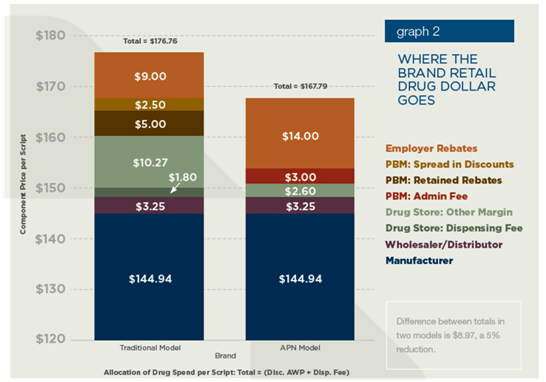
Milliman recently put out a whitepaper commissioned by ReStat on “Alternative Pharmacy Network” savings. My general opinion is that they use a lot of data and analysis mixed with some sensationalist statements to make the very obvious point that creating a limited or closed pharmacy network will save you money. (I hope they didn’t charge much for this.)

Net-Net: Limited or tier pharmacy networks are a great idea.  ReStat is building on their experience with Caterpillar which is a great program.  But, the whitepaper was flawed. 

Their conclusions were:

  • Potential Savings – The analysis shown in this report suggests that APN programs can offer a significant savings to employers relative to traditional networks. For an assumed range of consumer use of participating pharmacies, an employer with 10,000 lives could save $200,000 to $620,000 per year, depending on benefit design, without changing cost-sharing structures (see Table 3). Benefit design changes could increase or decrease the savings. A closed APN network (no coverage for non-APN pharmacies) would increase savings for a given benefit design.
  • Sources of Savings – In our analysis, the APN model can achieve lower cost because the PBM and retail pharmacy retain less revenue.
  • The Value of Limited Networks for Pharmacies -For medical benefits, health plans use network providers as part of overall quality and efficiency programs and are promoting network programs such as medical homes and pay-for-performance. Sponsors and PBMs can extend the advantages of networks to the pharmacy benefit. However, the ability to obtain value in a locale depends on the willingness of some pharmacies to participate as network members.
  • Plan Design Changes – Plan sponsors may need to change their plan designs to encourage use of the limited network. For example, the copays for limited network pharmacies may need to be decreased (from current levels) and/or the copays for non-network pharmacies may need to be increased to create a benefit differential between the network and non-network pharmacies. These plan design changes could reduce or increase the projected savings of a limited network, depending on the specific change.


My comments about their analysis:

  • They assumed that retail pharmacies would reduce their spread on generics by 44% (and brands by 78%) to be part of a limited network. That might be true for a large client with geographic concentration and for a retailer with low market share, but I think that’s a leap. (see chart below on brand pricing assumptions)


  • They say that spread for retail claims for PBMs can be 10-15% of AWP. I’ve seen plenty of deals that were negative (at least on brand drugs). In many cases, spread pricing doesn’t even exist.
  • They claim that PBM’s make money “(as part of a typically Drug Utilization Review program) actively encourages patients to switch to different medications as a core part of its business.” Really. That went out with the AG settlements back around 2004. Chemical substitution to generic equivalents certainly happens, but using DUR to push therapeutic conversion. I don’t think so.
  • They claim that PBM’s will buy drugs and repackage them to get a higher reimbursement rate at mail. I’ve never seen it (but that doesn’t mean it’s not done).
  • MAC pricing at mail. Yes. PBMs do make most of their money on generics at mail, and I’ve talked about the need to align your MAC lists at retail and mail before.
  • They also say “While mail order presents the opportunity to save sponsors money, attempts to encourage mail order by reducing copays could increase sponsor cost if the benefit plan is poorly designed (e.g., copays are reduced too much), utilization increases, or generic dispensing decreases.” I’ve talked about why clients lose money at mail before, but I’m pretty sure that there have been plenty of studies that show adherence improves (not unnecessary utilization). Studies have also shown that if you adjust for acute medications at retail then the generic dispensing rates are very comparable at retail and mail (or explained thru population differences).
  • They claim that the PBM’s make 10-15% on specialty drugs that they dispense (which seems high to me) and then use $5,000 per month as a number when the average 30-day supply of a specialty drug is more like $1,500.
  • They claim “Different manufacturers offer different rebates, which may factor into a PBMs decision making.” I think if you read the P&T process documents you would see that decisions about in or out are made based on clinical decisions and then a formulary can be broad or narrow based on the net price to the plan sponsor which does (and should) evaluate rebate impact.
  • They quote a source saying that 35% of rebates are kept by PBMs. Again, that seems really high. In my experience, there was an administrative fee equal to several percent of the AWP of the drug that was kept but the rebate dollars were passed to the plan sponsor.


While I like the simplicity of the flat fee payment model (i.e., I pay my PBM $3.00 per claim), it certainly creates no incentive for them to do better year over year in improving their negotiating with pharma and retailers or to worry much about trend management.

They talk briefly and seem to encourage ReStat’s Align product which seems like a very logical approach (used by other PBMs also).

Restat configures custom retail networks and benefit designs that create incentives to encourage member use of alternative in-network pharmacies and allows consumers the ability to shop based on price as well as service. Non-network pharmacies are also available but at a higher copay or costs.

Press Hits in 2010 (and before)

2010 was a good year.  21 press hits.  (Thanks to a great press team at Silverlink that supports my ideas.)

This built on some success with the press in 2008 (2) and 2009 (15).

Just out of interest, I went to pull some older press hits from pre-Silverlink:

AND, I finally found a link to my first healthcare publication in the International Journal of Radiation Oncology Biology Physics on using activity based costing to compare different treatment options.

The 11 Dimensions Of Non-Adherence

I found this nice summary document on MAPS (Medication Adherence Profiling System) which was part of the Boehringer Ingelheim Pharmacy Satisfaction 2009 Medication Adherence Study.  Here are the dimensions and key issues:

  1. Reminder tools to address memory and confusion
  2. Enhance communications to address perceived ineffective communications
  3. Financial assistance to address monetary concerns
  4. Heighten transparency to address distrust of healthcare providers
  5. Promote regimen to address not taking medication as prescribed
  6. Practice discretion to address interpersonal discomfort and social barriers
  7. Empower the patient to address perceived negative consequences
  8. Confront avoidance to address denial and fear
  9. Demonstrate efficacy to address the perception that medication doesn’t work
  10. Allay concerns to address negative attributes of medication
  11. Continue touchpoints to address the lack of belief in the importance of ongoing therapy

The document goes on to give sample strategies and tactics for each dimension.

Express Scripts To Grow The “Select” Programs

It looks like the concept of “Select” Home Delivery which has been one of the products to come out of the Consumerology approach at Express Scripts is about to get some cousins such as Select Step Therapy, Select Networks, and Select Specialty.  Obviously, the concept of Active Choice has legs.  (I understand the networks and specialty, but I’m not sure what the step therapy product will look like.)

(Here’s a good article from the Brookings Institute on choice architecture for healthcare enrollment.)

The concept of choice has to do with the decision framework with which options are presented.  Making it active choice typically refers to the requirement of the consumer having to make a decision.  They can’t do nothing.  This doesn’t mean that the company can’t select a default recommendation, but it can’t implement that option without the consumer verifying it.  (See the book Nudge for more details on this concept.)

The example that is often used for choice architecture is enrollment into 401K plans.

The Not-So-Secret Handbook Of Pharmacy Facts

Adam Fein from Drug Channels just published his newest report – 2010-11 Economic Report On Retail And Specialty Pharmacies. If you’re going to spend money on a report, I would suggest you consider this one. You couldn’t Google the information and format it for the price.

He does a great job of aggregating data, looking at trends, creating great charts, and providing an informed perspective on the industry. Let me just pick out a few things to highlight from the report:

  1. He predicts four trends:
    1. Market growth and shift to specialty
    2. Boom-to-bust for generic drugs
    3. Cost-plus pharmacy reimbursement
    4. Preferred pharmacy networks
  2. He talks about the concentration of specialty pharmacies and the fact that 81% of health plans require their members to use 1-2 specialty pharmacies.
  3. He talks about the shifting market share among retail pharmacies and the fact that while only 31% of urban and suburban pharmacies are independents that number jumps to 65% in rural areas.
  4. He talks about the AWP discount that plan sponsors realize at retail compared to mail and how that gap has 58 basis points in 2010. (A key fact in understanding why you have to have the right plan design to save at mail.)
  5. And, one point that I often make (without the exact data) is that people paying cash for prescriptions pay too much. He shows that the gross margin for cash patients at independent pharmacies is a whopping 54% compared to 20% of less for other 3rd party and government reimbursed scripts.

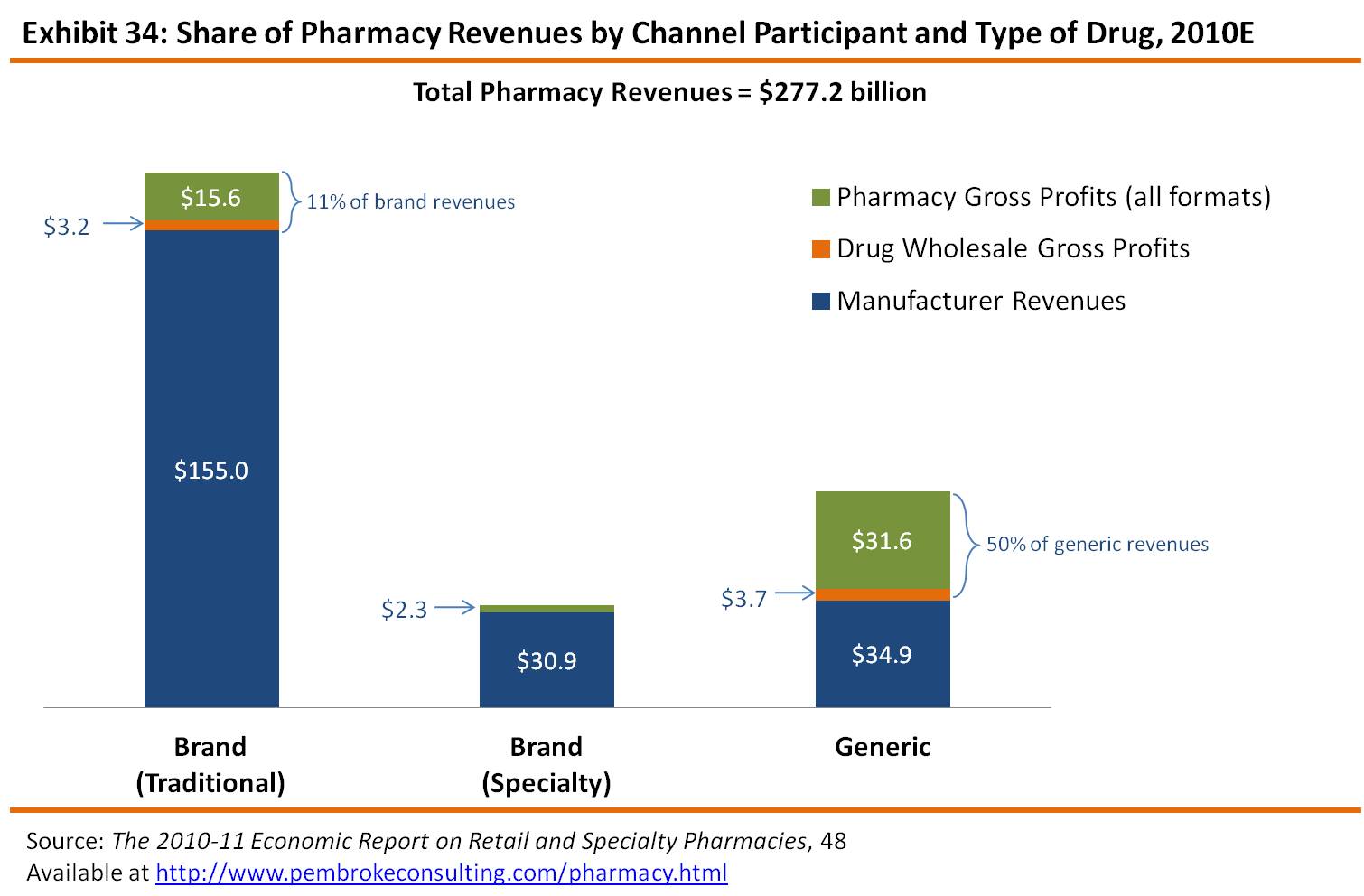
Here’s an example of one of his charts (exhibit 34).

My final commentary on the report is that this should be a read for people trying to work in the industry or new hires in the PBM or retail management. I’m pretty sure all the analysts on Wall Street already read it.

Enjoy!

Managed Care Digest – HMO PPO Rx Digest

A friend sent me a link to this earlier today (HMO PPO Rx Digest).  I haven’t read thru the whole report yet, but they have some slides you can download and see the graphs.  I downloaded them and posted them on Slideshare for others to easily view.  Here you go. 

Pharmacy 2011 – 11 Things To Consider

I pulled together (in Prezentation Zen style) 11 Things to Consider in the Pharmacy industry.  It’s certainly a matter of opinion, but it’s a point of view meant to cause you to think.  I spend a lot time with clients thinking about the industry, and I thought this was a fun way to put some of those thoughts out there. 

I divided these up into two areas:

The Consumer:

  1. Patient Centric approach is critical path. (i.e., create an experience)
  2. Be proactive not reactive. (think Obesity)
  3. Literacy and health disparities need to be addressed. (simple and direct)
  4. People are different…act appropriately. (mass customization)
  5. Genomics are fascinating…but can be confusing. (and healthcare in general is already very confusing)

Business Strategy:

  1. The pharmacist role has to change from refills to outcomes. (see prior post)
  2. Blend high touch and automation in specialty. (they have the same needs about information)
  3. Integrate your physician and consumer strategies. (the HIT focus will make this more pressing)
  4. You need a STAR strategy for your PDP. (hottest topic in Medicare right now)
  5. Mobile is here to stay. (but may not be a business model unto itself)
  6. Social media will change the conversation. (so what are you doing)

Leading Trends in Rx Plan Management (Medco)

It’s always nice when you get on the marketing distribution list from companies. I love to get the PR and marketing materials to review. Medco recently sent me this document called “9 Leading Trends in Rx Plan Management: Findings from a National Peer Study“.

The survey was across 380 organizations plus 100 consultants and brokers. And, the survey was conducted prior to health reform passing so that’s an important timeline to keep in mind. It’s a nice quick read with lots of stats and charts from the survey with comparisons to last year’s numbers.

Executive Summary:

  • Less than 40% said they were extremely or very concerned about economic conditions affecting their ability to offer the same level of prescription benefits over the next 2-3 years. (down from 60%)
  • Plan sponsors are increasingly eager to find cost control solutions:
    • 90% – promoting the use of formulary products (brand and generic)
    • 80% – encouraging the use of mail order
    • 83% – helping members make more effective healthcare choices
  • 76% of plan sponsors state that balancing costs with care is the key philosophy (which is a reversal from 5 years ago where it was providing broad coverage)
  • Respondents see pharmacy as representing 22% of their overall costs (a higher number than I’ve seen before so I’d like to see actual data here)
  • Surprisingly, plan sponsors were more concerned over DTC advertising and minimal attention to personal health than aging and use of specialty drugs
  • 72% EXPECT their PBM to help reduce overall healthcare costs (what I’ve been saying for a few years)
  • 79% say that specialty pharmacy is better managed by the PBM than the health plan

The 9 leading trends:

  1. A transformative shift in benefit philosophy continues
  2. Rising costs replace economic woes as key affordability issue
  3. Plan sponsors prefer targeted but limited government employment
  4. Use of integrated data is becoming standard practice
  5. CDH plans are struggling to gain momentum
  6. Specialty medication management programs are increasing sharply
  7. Generics and preferred drug programs moving from incentives to mandates
  8. Decisive move towards stronger mail incentive programs
  9. Plan sponsors look to PBMs to reduce overall healthcare costs

(The ones that surprised me here were #4 which I just haven’t seen significant movement on and #7 where I haven’t seen much in the way of mandates, but I’m on the outside looking in these days.)

#1: Transformative Shift in Benefit Philosophy

  • Only 6% are focused on limiting coverage
  • Honoring retiree commitments is still the #1 factor in guiding retiree benefits
  • 95% of benefit advisors agree

#2: Rising Costs as Key Affordability Issue

  • 72% blame physicians for complying with patient requests for more expensive branded medications
  • 52% believe that engaging members to make better health and cost related decisions is their number one priority (which is exactly what Silverlink does for clients!)
  • 95% of benefit advisors agree

#3: Targeted but Limited Government Involvement

  • 60% say the government should have minimal or no role in providing prescription benefits (only 15% preferred a private plan)
  • 71% want the government to help bring generic biologics to market faster
  • 42% believe the government should mandate e-prescribing initiatives
  • 75% of benefit advisors agree that government proposals will help lower Medicare Part D costs

#4: Use of Integrated Data

  • 64% use integrated data to improve health and financial outcomes (I would guess much of that is outsourced to 3rd parties. This also still doesn’t include lab values.)
    • 74% do it to improve case management
    • 70% do it for disease management
    • 68% do it to identify members at risk
  • 95% of benefit advisors agree on the likelihood of recommending data integration over the next 2 years to control drug costs

#5: CDH Plans are Struggling

  • 27% of respondents offer a consumer-directed health plan but 73% say their members are reluctant to join
  • It was virtual tie between those that thought CDH plans helped reduce Rx costs and those that didn’t…but the majority of people agreed that they help employees better understand the real costs of healthcare
  • 67% of benefit advisors agree on the likelihood of recommending a CDH plan over the next 2 years to help control costs (which seems out of line with the employer perspective)

#6: Specialty Medication Management Programs are Increasing

  • 83% of respondents plan to install clinical and cost-management programs to help contain the cost of specialty medications
  • 40% cite specialty as the key cost driver
  • Respondents believe that billing under the pharmacy benefit:
    • Provides more consistent pricing (79%)
    • Provides a better understanding of therapy management savings opportunities (77%)
    • Provides a more complete and accurate picture of specialty spending (80%)
  • The programs being used are:
    • Utilization management (64%)
    • Limit days supply (63%)
    • Preferred pharmacies (58%)
    • Step therapy (55%)
    • Move coverage from medical to pharmacy (41%)
    • Waive copayments to increase use of a preferred pharmacy (9%)
  • 76% of benefit advisors agree on the impact of UM programs controlling specialty drug costs

#7: Mandates Over Incentives For Formulary Agents

  • 58% are requiring the use of generics and preferred drugs (does this mean going back to closed formularies?)
  • 90% use programs that incent (i.e., lower copays I assume)
  • 94% are likely to increase member communications to encourage the use of generics
  • 63% of benefit advisors agree on mandating the use of generics to control costs

#8: Stronger Mail Incentive Programs

  • 58% have installed programs where the member pays more at retail after a set number of refills (I think this is a Medco anomaly…they’ve always had the highest mail utilization)
  • 85% have a cost-share strategy that favors mail
  • 38% waive one or more copays as an incentive to move to mail
  • 5% auto-enroll members in mail
  • 54% believe dispensing errors are less likely at mail (while 7% believe retail is better)
  • Mail order is seen as having a better chance to maximize generic use (by a 5:1 margin over retail)
  • 69% of benefit advisors agree that dispensing errors are less likely at mail than retail

#9: PBMs and Overall Healthcare Costs

  • Why use a PBM:
    • More focused and experienced at controlling drug costs (88%)
    • Most competitive drug prices (88%)
    • Provide detailed analysis and reporting to help explain cost drivers and identify savings opportunities (87%)
    • More innovative approaches to controlling costs (83%)
  • After cost control of Rx, what do they look for in a PBM:
    • More effective in promoting adherence (69%)
    • Helps control overall healthcare costs (72%)
    • Better medication counseling (70%)
  • Benefit advisors believe the following are the most critical priorities for plan sponsors:
    • Engaging members (39%)
    • Controlling specialty costs (24%)
  • Ensure the pharmacy benefit supports a broader health strategy (20%)

Interesting Data Points From Specialty Pharmaceuticals Report

One my flights over the holiday, I had a chance to read the 2010 Specialty Pharmaceuticals Facts, Figures and Trends. This is a publication put out by the Center For Healthcare Supply Chain Research. The data represents survey data from manufacturers and distributors from surveys sent out in March 2010. I pulled a handful of things that caught my eye into this post, but there is a lot more in the report that manufacturers and distributors would be interested in.

Overall Market:

  • Global market for specialty pharmaceuticals is $144B (7.5% growth).
  • US specialty pharmaceuticals market is $64B (4.9% growth).

Survey Data:

  • Anticipated 2010 growth rate is 8.4%.
  • Half of distributors specialize in specific disease states.
  • All distributors claim to specialize in oncology and 2/3rds in RA. The next big focus areas are Autoimmune (including HIV/AIDS) / Immune, CNS (including MS), and Hematology.
  • The biotech drugs in development by disease area (from PhRMA 2008 Report):
    • Cancer                     254
    • Infectious Disease            162
    • Respiratory                27
    • Cardiovascular                25
    • Blood Disorders            20
    • Diabetes and metabolic        19
  • Nearly 60% of distributor’s product sales are distributed to independent clinics owned or operated by physicians. Only just over 20% are distributed to specialty pharmacies. (This was a shocker to me.)
  • From a storage perspective (based on SKUs not volume):
    • 41% require refrigeration
    • 2% require a freezer
    • 6% have to be stored in a cage
    • 4% have to be stored in a vault
  • From the distributors:
    • Avg # of orders per day = 2,153
    • Avg dollar amount per order = $10,503
  • ¾ of distributors with revenue streams below $1B use refrigerated boxes while none of those with revenues > $1B do…but all of them regularly use ice packs and insulated boxes.
    • A temperature monitor is used on 47% of the shipments
    • A humidity monitor is used on 17% of shipments
  • Manufacturers buy insurance always in 38% of the responses and 13% of the distributor responses. 50% of the time, in both cases, insurance is never bought.
  • One question which I found very interesting was what services they provide (by % of manufacturers):
    • 38% offer disease management programs
    • 75% offer drug and disease education programs
    • 25% offer compliance management programs
    • 75% offer patient assistance / copay subsidy programs
    • 25% offer an Internet community
  • Now, from a distributor perspective, what services they offer:
    • 75% offer call centers (I thought this would be 100%)
    • 14% offer disease management
    • 50% offer loyalty / incentive programs (this seems high to me)
    • 38% offer MTM
    • 38% offer refill reminders (why wouldn’t this be 100%)
  • Distributors reported an average of 1.4% of specialty units returned.
  • Manufacturers reported an average of 1.6% of specialty unites returned.
    • 73% outdated
    • 22% short dated
    • 4% damaged
  • 38% of distributors collect HIPAA information and share it in a de-identified and aggregated manner with manufacturers (with 60% of that information being at the dispensing location level).
    • Adherence
    • Disease
    • Filling location
    • Dosing
    • Physician information
    • Treatment plan
    • Treatment facility
  • Oncology makes up 60% of the sales volume for the distributors.
    • 1.5M new cancer diagnoses will be made in 2010 (American Cancer Society)
    • New cancer incidence rates are higher in men than women
    • 1/3rd of women and ½ of men will be diagnosed with cancer (National Cancer Institute)
    • Nearly 8% of cancer survivors admit to putting off medical care and 11% skip taking their medications due to cost
  • One very interesting insight was that some physicians prescribe an IV-administered agent rather than an oral medication to allow the patient to be monitored. (I wonder what the cost / value tradeoff is here.)

Wal-Mart and Humana for Medicare Part D

Again, I’m a little late on this story (too much work), but I was thinking about it after the CMS news recently that they were going allow plans with a 5-star rating to have an open enrollment season all year round.  That’s a huge deal. 

(If you’re don’t know what the Star Ratings are about,  see the Kaiser Family Foundation piece on What’s In The Stars or if you’re working on improving your Star Ratings, you can see Silverlink’s Star Power solution.)

Humana Walmart-Preferred Rx Plan

If you missed it earlier this year, Humana announced that they were partnering with Wal-Mart to offer the lowest national plan premium for 2011 for standalone PDP plans (see details).  Consumers who select the plan will get a lower copayment when they use Wal-Mart pharmacies.  (I’ve talked about limited networks before so it will be interesting to see if this gets more to be offered in the marketplace.)

“The basics of the preferred network – tight formulary and a low premium – offer an affordable value proposition for patients.”  William Fleming, Vice President of Humana Pharmacy Solutions (from Drug Benefit News on 10/8/10)

This creates a network with 4,200 preferred pharmacies and 58,000 non-preferred pharmacies.  Personally, I’m still surprised more people haven’t gone to the $0 copay for prescriptions at mail which Humana offers in this plan (for tier-one and tier-two).  United Healthcare has recently rolled out a program called Pharmacy Saver which has some similar attributes to the Humana plan. 

So, has it made a difference?  We won’t know yet.  I would expect it would.  The economy is still tight.  Seniors are budget conscious.  Humana has good brand equity.  Wal-Mart, especially in certain geographies, is frequented heavily by this population.

Medicare open enrollment is from November 15th thru December 31st.  This certainly caught everyone’s attention when it launched.  (You can see some of Adam Fein’s comments when it first was announced and here’s a more recent AP article on the topic.)  In a few months, we will know a lot more.

2010 Rx Benefits Survey (KFF)

This came out a few months ago, and I’ve been carrying it around for a while. (Here’s the summary.)

I read section 9 which is about the prescription drug benefits. A few facts from the report:

  • Almost 3/4 of people have copays (i.e., flat dollar amount) versus co-insurance (i.e., percentage of cost).
  • The average copayments were:
    • $11 first-tier
    • $28 second-tier
    • $49 third-tier
  • For co-insurance, the payments were:
    • 17% first-tier
    • 25% second-tier
    • 38% third-tier
  • 13% of workers had a plan with four or more tiers
  • 5% of workers have plans were the cost sharing is the same regardless of drug chosen

One of the more interesting things I saw is that average copays on first and second tier drugs are going up while the average coinsurance is going down.  Not much but directionally interesting.