Archive | Technology RSS feed for this section

Real-Time PBM “Pricing” From Prescription Solutions

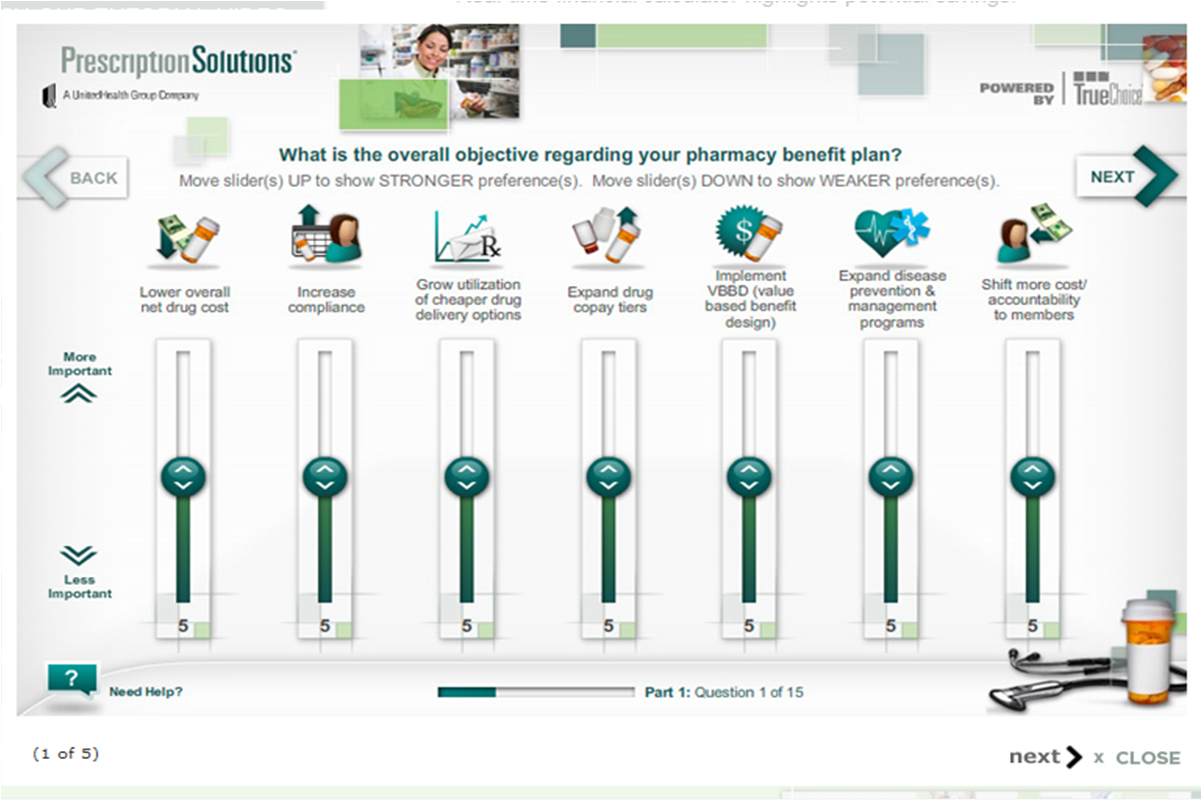
I don’t do a whole lot in the PBM pricing world these days, but I remember some of the process and the underwriting steps.  That being said, I was really impressed with the new Prescription Solutions online Pharmacy Benefit Advisor Tool (go to http://mybenefitpreferences.com). 

You go through a few basic steps to get an idea of how much you (payer) could save (with a very nice GUI). 

  1. Rank the features that matter to you – net cost, compliance, shifting cost to the consumer
  2. Rank the importance of different clinical programs
  3. Make some trade-offs in programs (A is more important than B)
  4. Enter some baseline data

Now, in reality, PBM pricing is never that simple, but what it effectively does is help articulate the savings that different decisions can create in a real-time setting.  It also forces some dialogue around issues – adhererence versus drug cost…which matters more to you?

I also think it could be a great way to help consumers understand the costs and savings associated with certain decisions.  I would also guess that the sales team at Prescription Solutions will find it helpful especially in the smaller, self-funded world.

Hosted IVR In Healthcare – Go To Silverlink

This is a term I’ve never used before when thinking about what we do at Silverlink Communications, but it seems relevant since people use it as a search term.

We talk about:

  • Speech recognition
  • Personalized communications
  • Preference-based marketing
  • Automated calls
  • Outbound IVR
  • Coordinated multi-channel communications
  • Data driven communications
  • Intelligent interactions
  • Smart calls
  • Interactive dialogues
  • Technology enabled disease management
  • Condition management
  • Campaign management
  • Rules-based communications

I could go on, but my point is that if you’re looking for a “hosted IVR” solution for healthcare you should call us at Silverlink.

[For my regular readers, sorry about the “advertising” but have to mix it in here once and a while.]

Increasing Specialty Drug Refill Rates

Adherence is one of the primary topics of discussion today both within pharmacy and (after reform) within other areas of healthcare.  Adherence drives costs.  Adherence impacts productivity.  And, with a few rare exceptions (CBO type budget analysis looking only at fiscal year returns), everyone’s interests are aligned on the value of improving adherence.

For now, let’s skip over the traditional pharmacy market which is rapidly becoming generic. Let’s look at specialty where the average cost is $1,800 per month and can run into the $10,000’s.

So, what if I told you there were simple solutions that could improve your monthly refill rate on your drugs by 20-40%?  What if that also reduced the gaps-in-care and improved patient awareness of their condition?  What if that also incorporated a feedback mechanism to the care team?

How much would that we worth?  What about all that for $2 / month per member?  Much less that copay waivers or many other solutions out there on the market.

Sound interesting…Go learn more at Silverlink.

How the application changes your experience? Flipboard and Twitter

I’ve found Twitter to be a great way to get news.  You follow a core group of people who talk about topics that you care about and can quickly sort through mainstream and other news and events. 

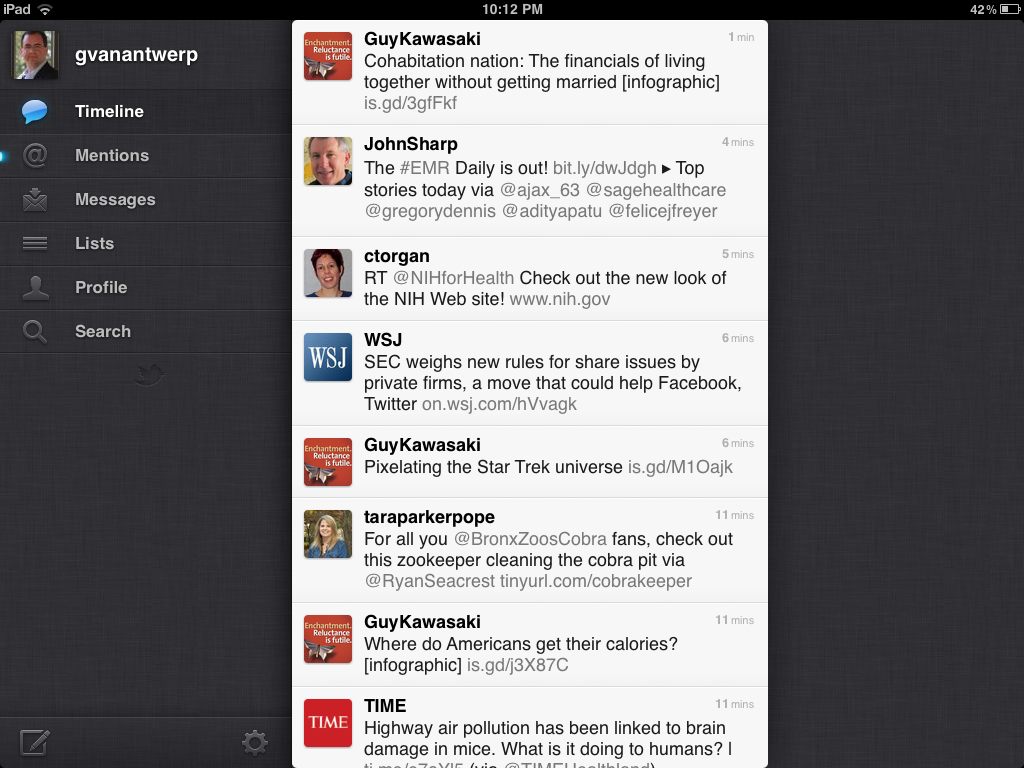
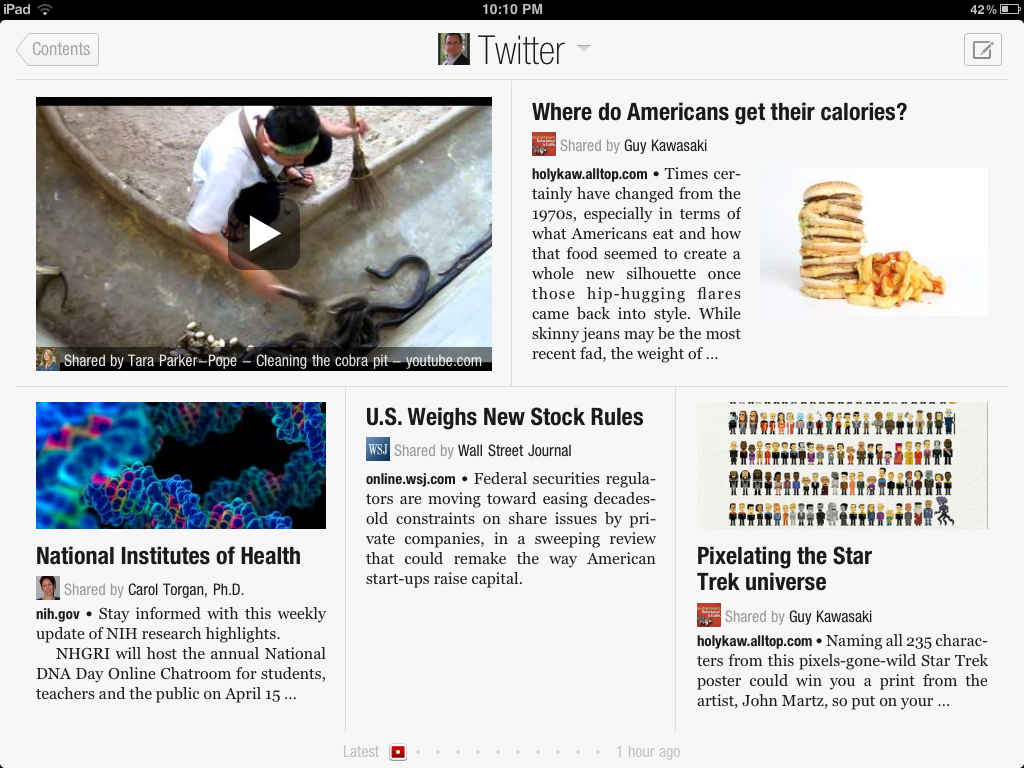
But, I was shocked to see the difference in experience moving from using Twitter in a standard format to using it within Flipboard.  Flipboard takes the links and activates them.  It pulls in images, and it makes it into a book.  See the two images here from my new iPad2.

The New Kaiser Center For Total Health (#WHCC11)

While I was at the World Healthcare Congress yesterday, I had the opportunity to go into DC to visit the new Kaiser Center for Total Health. This is their showcase in the East to facilitate discussions around improving healthcare. It’s not a replacement for the Garfield facility in CA, but it will create an more accessible forum for dialog with policymakers and international visitors. (NYTimes post about the opening)

It’s one of those fun places where you can go and interact with technology. It’s full of technology like telemedicine and telemonitoring. It provides you with demos of the world’s smallest ultrasound device and connected devices. It showcases Kaiser’s rich history and their MyHealthManager tool.

Their online tools have some great stats:

  • 3.3M members signed up
  • 25.8M test results viewed in 2010
  • 10.7M emails sent to MD’s in 2010

There are a lot of videos where you can hear employees, members, clinicians, and others talk about what they think “total health” is. And, they have a massive interactive mural about their walking initiative.

It seems like this type of interactive, high technology space is becoming an asset at several companies. We used to have this innovative, brainstorming space at E&Y years ago and clients loved it. I believe IDEO has this type of space.

I enjoy it. It’s interesting, inspiring, and creates a dynamic work environment. I look forward to see how this space gets used and what others think.

Interview With Dr. David Wennberg At #WHCC11

I had the opportunity to sit down with Dr. David Wennberg (Chief Science & Product Officer, Health Dialog) at the 8th Annual World Healthcare Congress (Twitter hashtag #WHCC11).  David is a fascinating and engaging speaker.  He has lots of publications, works with the Dartmouth Atlas, and leads the Health Dialog Analytic Solutions group. 

David and I began our time talking about “informed choice”.

In this environment, doctors need tools that identify patients lacking evidence-based care. They also need to ensure that patients undergoing surgery have been exposed to informed choice, not just informed consent, when there is more than one legitimate treatment path. With these resources in place, physician groups can ensure that they are in control of their own destiny when it comes to performance evaluations.  (source)

This is an important issue in healthcare.  Giving patients (1) complete information in (2) language that they can understand and helping them (3) frame their options relative to their preferences is at the core of this issue. 

Health Dialog calls this Shared Decision Making and focuses on how to engage targeted consumers and help them make their best decision.  Their customer support personnel go through a certification process and use decision aids to enable the process. 

This led us into a discussion about “trust” (see prior post) and then into a discussion about “embodied conversational agents“.  Obviously, if you’re going to help consumers make decisions, they need to trust you.  We talked about the need to have transparency, the need to for disclosure, and the importance of using clinicians in the engagement and discussion process.  In many cases, nurses and the empathy that they have are critical to this process.

But, I know from prior exposure to Health Dialog that they have figured out ways to blend technology and agents.  They do a lot with data and analytics to really understand the popluation.  They’ve worked hard to avoid the traps that “disease management” has fallen into over the years.  He shared with me some amazing engagement statistics. 

We talked about the value of peer-to-peer videos for people to understand their condition and talked about some recent studies around storytelling and distributing that information via DVD to patients (see more on study).  We went on to talk about how engaging the consumer in the decisions about their care increase success, but that many models have been a challenge to scale.  Health Dialog just published an article in the NEJM called A Randomized Trial of a Telephone Care-Management Strategy which demonstrated an ability to scale the solution and get results. 

At baseline, medical costs and resource utilization were similar in the two groups. After 12 months, 10.4% of the enhanced-support group and 3.7% of the usual-support group received the telephone intervention. The average monthly medical and pharmacy costs per person in the enhanced-support group were 3.6% ($7.96) lower than those in the usual-support group ($213.82 vs. $221.78, P=0.05); a 10.1% reduction in annual hospital admissions (P<0.001) accounted for the majority of savings. The cost of this intervention program was less than $2.00 per person per month.

Before I could even jump to my next question about ACOs, he made the natural transition to the fact that the new ACO regulations mention shared decision making 8 times.  I believe we both agreed that whatever actual form these new practice settings take that they will accelerate the importance of leveraging technology and things like shared decision making to engage the consumer.  The key is to leverage the PCP setting whether it’s the MD or someone on their staff as the foundation for engagement.

This led me to ask him about physician acceptance of technology as part of their practice (more on this later).  He felt that they had moved from resistance to understanding the technology and “guides” can enable them to practice better medicine.

Data: Should You Be Paranoid?

I think we all know or are quickly realizing that everything we do leaves a trail of breadcrumbs.  That trail is a series of data points which now can be aggregated to create a record of you.  What you do?  What you buy?  What ads you respond to?  Who your friends are?  The list goes on. 

The question of course is whether you should be paranoid and worried about it. This video below shows you the extreme scenario of how data could be abused.

In a more balanced view, Time Magazine had an article call Your Data, Yourself which just appeared on March 21, 2011.

Oddly, the more I learned about data mining, the less concerned I was. (Joel Stein, author of article)

The article talks about a variety of companies that collect and sell data:

  • Google Ad Preferences
  • Yahoo!
  • Alliance Data
  • EXelate
  • BlueKai
  • RapLeaf
  • Intellidyn

The author makes a key point…a lot of the things we get for free are free because people collect and sell our data.  Otherwise, these “free” business models wouldn’t exist.  Would you pay for all the content and other things you get today or do you just want to understand what happens to your data?

On the other hand, the author shows you how data put together adhoc can paint erroneous pictures of you.  Should you care?  Do you want to fix this?  Can you control it?

This is all important since there is some do-not-track legislation being discussed.  (See Joe Manna’s post on this for some additional perspective)  Several people bring up the good question…

While we say that we don’t like to know that our data is being used to target ads at us, do we really want to have to sort through all the irrelevant advertisements?

Of course, we all become a lot more sensitive around healthcare data.  But, somehow, I doubt many of us think about what happens when we use our work PC to research a condition (see article on 10 ways to monitor your employees).

The article also suggests some sites for protecting yourself:

Don’t expect this one to go away.  With issues like the data breach at Epsilon, people are concerned.  Additionally, as data gets co-mingled and your credit score is used to determine health programs (for example), there may be limits about what and how information is used.

Only 56% Want To Set MD Appointments Online – Why Not?

To me, this survey has three major themes:

  1. People are still hesitant to communicate with their MDs using social media [not that surprising].
  2. People are slow to use the web even for administrative functions [why].
  3. Hispanics are much more willing to use technology to engage their provider [why].

Some of the data:

  • 85% would not use social media or instant messaging channels for medical communication if their doctors offered it.
  • Only 11% of respondents said they would take advantage of social media such as Twitter or Facebook to communicate with their doctor.
  • Only 20% said they would use chat or instant message.
  • 52% said they would confer via e-mail.  (versus 89% of Hispanics)
  • Only 48% said they would pay their physician bills online. 
  • 72% would take advantage of a nurse line if it was offered by their doctor.

Should Drug Makers Take Action Off Social Media Comments?

I think it’s a fascinating question that was raised around Actos. Here’s the text about a wool.labs report:

In this month’s report on social media’s influence in the world of diabetes, wool.labs presents an analysis of social media conversations beginning as far back as 2002 and continuing to the present, noting a significant shift in patient attitude toward the drug.

Early on, the presenting side effects such as weight gain and edema drew concerns and warnings from some patients. Some questioned whether the drug should be used in combination with insulin. But even while the debate raged on, wool.labs’ analysis showed the conversation could have been shifted had drugmaker Takeda meaningfully interceded before 2006 when comments about the drug began to turn sarcastic, and before long, angry and hostile.

There are enough tools and companies out there that IMHO companies (and brands) should be able to actively manage social media sites to understand what consumers think.  I don’t know this case specifically so I won’t comment on it, but certainly, companies need to have a robust Voice of the Customer process by which they understand what consumers think of them.  And, if it avoids future litigation, leads to add-on products, or even helps re-position a current product, this mechanism can be very valuable.

Improving Your Call Center Without Just Adding People

In today’s economy, the last thing we want to do is scale up a company by simply adding people. Technology has to play a central role in allowing you to grow your company more efficiently.

At the same time, you want to grow without dropping your level of service. You want to improve the consumer experience.

And, to further complicate matters, you have to manage quality both to make sure that you comply with regulatory oversight and achieve goals around first call resolution. With our rapidly changing healthcare environment and legacy systems in many places, finding, training, and retaining good staff that can continue to keep up with the changes and understand the semantics between plan designs isn’t easy.

So, how do you do that? You’re in a balancing act between cost, quality, and experience.

This is one of the big areas where I’ve seen Silverlink Communications play a role. (Note: There are certainly other efforts which you can undertake in terms of single desktop and process reengineering, but I usually refer in some people I trust for those projects.)

Some people call our technology a “smart dialer”, but there is a difference. If you ever get a call at home from a call center using a dialer, you hear that silence after you say “hello”. The technology is looking for an agent to connect you with. On the flipside, if you’re an agent, you’re being connected with someone or even an answering machine that might not be the right person. That’s what a dialer does.

In our case, Silverlink is using mass personalization, voice detection technology, and speech recognition technology to screen the recipient for the call center. You hear the message right after you pick up the phone. It’s a message that has been carefully crafted using behavioral sciences and health literacy. It asks for you by name and identifies who’s calling for you. It then confirms your identity, and depending on what information is being used in the call, it may have to use multiple forms of authentication to verify who you are. Once we’ve assessed who you are (based on your responses), we’re able to deliver a personalized message to you about your healthcare. That personalized message is scripted in such a way to engage you in a conversation. During that conversation, we can then determine:

  • Are you interested in learning more?
  • Is this a good time for you to talk?
  • Would you like to talk to an agent or hear more now?
  • Would you like us to send you information in an e-mail, SMS, or snail mail?
  • Would you like a URL to go to for more information?

Occasionally, people ask about authentication. When you send a piece of direct mail, it’s a federal offense to open it if you’re not the intended recipient, but you have no proof that they did that unless your “nanny cam” picks it up. When you call someone, you have a record of when the call was made and what they person who picked up the phone said to authenticate themselves. This certainly seems better to me than any other channel.

Of course, this begs the question of recording all the calls. I’ve heard a few people tell me that they do this with other companies. I find that hard to believe since 12 states have consent laws which would require people to consent to being recorded when they were called. That would limit the effectiveness of the program, or if you didn’t do it, it would open you up to a big lawsuit.

So, how does Silverlink add value to a call center:

  1. Improving agent productivity. Automating standard questions. Connecting with the right person at the right time.
  2. Improving consumer engagement. Using behavioral sciences and health literacy to engage people and route them to the right agent based on skill set.
  3. Improving quality and consistency of experience. Personalizing the experience to engage the consumer but doing it in a way that addresses the clinical guidelines, regulatory requirements, and custom client requests in a consistent manner.
  4. Improving agent satisfaction. Your agents would rather talk to pre-qualified people or people who have an issue.
  5. Learning new information. In some cases, patients feel judged when people ask them questions (why aren’t you taking your medications). They may reveal more or other information in an automated environment.

Of course, automated calls aren’t the answer for everyone (although they work better than any other mode other than people…and sometimes beat them also). But, multi-channel coordination is a post for another day.

Rules Based Communications

After working with data warehouses, configuration engines, and workflow management systems, I’m a big believer in embedding rules into a process. Communications is no different.

Let’s look at a few rules:

  • Don’t communicate with someone more than X times per week.
  • Don’t call these people.
  • Use Spanish for people with that language preference.
  • Send a text message to people who have provided their mobile number and opted in to the program.
  • When applicable, use a preferred method of communication for reaching out to someone.
  • If a caregiver is identified and permission is on file, send the caregiver a copy of all communications to the patient.
  • Call the patient if the amount being billed for their prescription is greater than $75.
  • For patients between these ages, use the following messaging.
  • If the patient hasn’t opened the e-mail after 48 hours, then call them.
  • For clinical information, use this channel of communications.
  • For John Smith, only call them on Tuesdays between 5-6 pm ET.
  • For Medicare recipients, use this font in all letters.
  • For Hispanic consumers, use this particular voice in all call programs.
  • If the patient doesn’t respond after two attempts, send a fax to their physician.
  • For patients with an e-mail on file, send them an e-mail after you leave them a voicemail.
  • For patients who are supported by Nurse Smith, only call them when she is on duty and use her name in the caller ID.

I could go on. But, the point is that communications, like healthcare, is a personalized experience. We have to use data to become smarter (historical behavior, segmentation, preferences). We have to use customization to create the right experience. AND, probably the most difficult thing for lots of companies, we have to coordinate communications across modes (i.e., e-mail, direct mail, SMS, automated call, call center, web).

Ultimately, I believe consumers will get to a point where they can help set these rules themselves to create a personalized profile for what they want to know, how they want it delivered, and ultimately provide some perspective on how to frame information to best capture their attention.

To learn more, you should reach out to us at Silverlink Communications.

Can We Use Technology To Address Gaps In Resources – YES!

Dr. Joseph Kvedar writes a great piece about the psychology of persuasion and the possibility of using technology to engage consumers and drive behavior change.  This is an important topic as we look at addressing healthcare as a country.  Since behavior and consumer choice drive a significant portion of our healthcare costs, we have to think more about how to engage patients – what is the right message?  what is the right channel?  what is the right time to deliver the message?

We can deploy technology in smarter to ways to engage consumers in new ways that leverage our limited resources in better ways – i.e., get good and scalable outcomes without increasing costs.  That is what we do everyday at Silverlink Communications with our clients whether it’s around HEDIS, adherence, condition management, or many other programs. Recently, there was an article in Time Magazine that talked about some work we did with a Medicare population for Aetna.

I also think you can look at the research Stanford has published on the topic over the past decade.  You can also look at some of the data from the CVS Caremark Pharmacy Advisor program. While it certainly showed the value of having pharmacists involved, it also showed some positive results from automation.

The reality is that combining automation and live resources can be very powerful. Technology can screen and triage people to connect the at risk population with critical resources. This can allow resources to support as many as 4x as many consumers.

CatalystRx Engaging Patients With Avatars

Last week, I got to see one of the more interesting presentations I’ve seen in a while. CatalystRx presented on some of the work they are doing with a mobile application to be released later this year. The application uses an avatar (well technically an “embodied conversational agent“) to engage with the consumer. I’m not sure how well that will work with a senior population, but the technology (shown in a video demo) was very cool.

The application is based on lots of research (and designed by the people who made Happy Feet). For example, they talked about:

  •  
    •  
      • The importance of finding the right balance between too cartoonish and too human. They referenced some Disney research about size of the eyes versus the size of the head which creates a positive memory trigger due to similarities to baby’s faces.
      • Creating a “trusted advisor” for the patient (using David Shore’s book – Trust Crisis in Healthcare).
      • The importance of the face and how it shows emotion (both human and avatar).
      • How small talk engaged the consumer and builds trust even when it’s an avatar telling first person stories.

Some of the research comes from Chris Creed and Russell Beale’s work.

Recent research has suggested that affective embodied agents that can effectively express simulated emotion have the potential to build and maintain long-term relationships with users. We present our experiences in this space and detail the wide array of design and evaluation issues we had to take into consideration when building an affective embodied agent that assists users with improving poor dietary habits. An overview of our experimental progress is also provided.

The application helps patients to:

  • Make decisions
  • Identify pharmacies
  • See prescription history
  • Get reminded about refills
  • Get information about generics and formulary compliance
  • Receive personalized interventions

Obviously, mobile solutions as a way to engage patients using a secure environment for delivering PHI is a holy grail (for those that download and stay engaged). This was an interesting and promising variation on some of the solutions out there. I look forward to learning more and seeing it once it’s fully available.

Social Networking For Pharmacists

Drug Store News has partnered up with Skipta to form a pharmacists social networking site.  Interesting.

1. Why Skipta versus some other forum?  [Personally I prefer less places to log in not another one]

2. Will pharmacists use it?  [TBD]

3. Is it good to have a private social networking location?  [Probably if used appropriately]

4. Wouldn’t it be great to use this to facilitate pharmacist and MD dialogue on key topics – adherence?

I’m not sure what else to say on this yet.  Obviously, pharmacists have the same issues as doctors – do you friend your patients, what liability do you have for what you say in these channels, is it considered medical advice, etc.

Medical Data From Thomas Goetz

Here is a video of Thomas Goetz (Wired magazine) from TEDMED…

He talks about redesigning medical data and how to present it for people to understand.

He talks about a key notion of helping people see their way to better health.

He talks about the feedback loop of Personalized Data – Relevance – Choices – Options.

He talks about how Captain Crunch can inspire information delivery for prescription drugs.

And, then he shared the Wired article on redesigning information.

Wireless Healthcare Quote

This is from a Qualcomm marketing piece so take it in context, but I thought it was a good quote by Dr. Paul Jacobs (Chairman and CEO):

Consumers have already adopted a wireless lifestyle and the phone in their pocket is not just for voice communications anymore – it’s also becoming the most personal device for information access.  Since the mobile phone is always on and always with you, it is the most logical platform for monitoring and maintaining personal health.  And new types of mobile devices and services have tremendous potential to improve productivity for medical professionals and help consumers manage their own health.  Mobile technology has the potential to improve public health overall and ultimately to make health care more accessible and affordable for all of us. 

Presto: E-mail Into Newsletters

I’ve seen several ideas over the years to try to figure out how to connect those of us that live and die by our electronic tether (e-mail, SMS, Facebook) to loved ones who don’t use a computer or in other countries where they don’t have computers (e.g., rural India several years ago).

Now there’s a new service called Presto (www.presto.com).  You set up a “printer” in their home which connects to an analog phone line.  You can then send them e-mails which get re-formated into a newsletter with the attachments printed.  You can tag photos in facebook for them to get printed.  You can schedule reminders for them that get triggered and printed at a fixed time. 

Sounds pretty cool to me.  In general, the older population (65-80) are pretty responsive to phone based solutions (like we do at Silverlink), but you do see a drop off after 80.  If this solution ever were to take off and the caregivers could opt-in their parents to accept reminders (e.g., adherence, medical appointment) from health plans, PBMs, ACOs, and other organizations, this would be an interesting new channel for reach.

Get Wellness Article in Time – Silverlink, Aetna, Hypertension

The recent issue of Time magazine includes an article called “Get Wellness” about wellness.  It talks about having MDs “prescribe” wellness (think Information Therapy or Ix) and the fact that Medicare enrollees will be eligible for wellness visits begining 1/1/11. 

The new wellness benefit tasks doctors with creating “personalized prevention plans,” which ideally will be tailored to each patient’s daily routine, psyche and family life. And if that sounds more like a nanny-state mandate than medicine, consider that some 75% of the $2.47 trillion in annual U.S. health care costs stems from chronic diseases, many of which can be prevented or delayed by lifestyle choices.
The article goes on to talk about the challenge this may create for physicians.  Can they act as nutritionists?  Can they change behavior? 
 
Of course, MDs won’t be the only one’s focusing here (although some of that could change with ACOs and PCMHs).  Disease management companies and managed care companies have focused here for a long time.  The focus in many ways these days is how to reduce costs in these traditionally nurse-centric programs with technology but without impacting outcomes and participation.  There is one example in the article from some work we are doing at Silverlink around hypertension
 
Some firms, in trying to bring down health care costs, have hired health coaches to reach out to the sedentary or overweight to get them moving more. Others use interactive voice-response systems to keep tabs on participants’ progress. In a study, Aetna set out to see whether it could reduce hypertension — and the attendant risks of stroke, heart attack and kidney failure — among its Medicare Advantage members. More than 1,100 participants were given automated blood-pressure cuffs and told to call in with readings at least monthly. They also got quarterly reminders to dial in. When they did so, an automated system run by Silverlink Communications provided immediate feedback, explaining what the readings meant and where to call for further advice. Alerts were also sent to nurse managers when readings were dangerously high. The result: of the 217 people who started out with uncontrolled hypertension and stuck with the program for a year or so, nearly 57% got their blood pressure under control.

Compliance “Rapid Response” Team

In the future, will we have teams who rapidly engage patients who don’t take their medications as prescribed?  Will those be medical teams for patients who recently got a transplant and police teams for mentally ill patients with a history of violence?

Seem pretty farfetched?

Compliance with medication is such a hot topic today that you’re finally see the technology innovators jumping in.  You have solutions like the GlowCaps system that have been around for a few years and demonstrated their impact.  Now, you have technology going even further to attach itself to the pill and send data back. 

The LA Times had an article that talks about some of these technologies:

  • Camera pills
  • A device that you wear around your neck to monitor swallowing the pill using RFID
  • A device that detects when it encounters stomach acid

BUT, the kicker here is that the article estimates this will only improve adherence by 5-15%.  Remembering to take the pill isn’t the only reason people don’t take their pills!!!

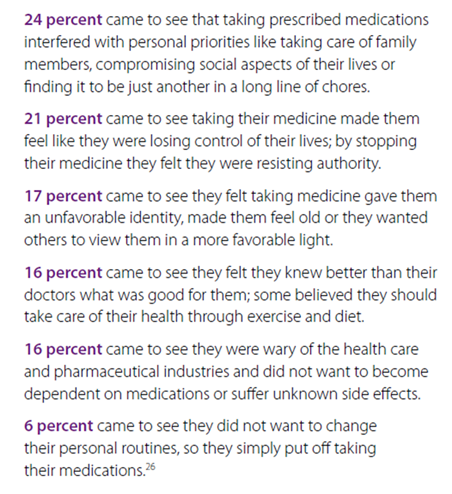
Just look at this on the 11 Dimensions of Non-Adherence or this on the Predictors of Non-Adherence or some of the research coming out of CVS Caremark.

You have to address health literacy.  You have to address side effects.  You have to address beliefs.  And, many other issues.

These solutions are “cool” and will finally tell us if people take a pill, but I’m not sure that’s the silver bullet.  Plus, at what cost?  Get a 5-15% improvement in adherence isn’t that impressive.  We’ve done that multiple times at Silverlink with a quick remind to patients about taking their medications or asking patients about their barriers and addressing them. 

As with any solution, it’s about figuring out who it benefits most and getting it to them at the right time.

New Pharmacy Whitepaper: Innovate Or Be Commoditized

In early 2009, I published an initial whitepaper on the PBM industry.  With all the changes going on in the industry, it seemed relevant to put out a new whitepaper although the total impact of reform and the definition of MLR is still TBD.  As I did before, I’m putting a summary here, and I welcome your comments.

You can download the whitepaper by registering on the adherence site at Silverlink Communications.  Thanks.  [If you’re a regular reader but not a logical client, you can request the whitepaper by contacting me.]

I think a quote from Larry Marsh (Managing Director, Equity Research) at Barclay’s Capital does a good job of summarizing it:

“Innovation will be increasingly important in the PBM world, as these companies seek to solve a greater set of pharmaceutical cost issues for their customers over the next 10 years.”

[BTW – If you want to get updates e-mailed to you as I post them, you can sign up here.]

************************

Innovate Or Be Commoditized: The PBM and Pharmacy Challenge for 2011

Doing more with less; dealing with constant change; and having technology be a part of everything…  Those are things that the next generation will take for granted.  For the rest of us, those are dynamics that are changing our personal and professional lives.  We’re constantly bombarded with information and decisions to make.

While the pharmacy industry has generally avoided the collapse of the automotive industry and the radical change of the health insurance industry, we’ve seen unprecedented change in the past few years.

It’s almost impossible to go a few days now without seeing information about prescription drugs in the mainstream news.  You might hear a financial analyst talking about the lack of blockbuster drugs in the pipeline.  You might read about a drug recall in USA Today.  You might see a new report talking about the $290B cost of non-adherence[ii] to the country.  Or, it might simply be water cooler discussions around how more than 25% of kids[iii] now take a prescription medication or how non-adherence can lead to hospital readmissions[iv].

This has raised the average consumer’s awareness of the industry and continues to push the trend of consumerism with which the entire healthcare industry is dealing.  Most of us in the industry already knew that pharmacy was the most used benefit (12 Rxs PMPY for PPO members[v]) and believed that pharmacists were a critical part of the care continuum.

The challenge now is for the industry to demonstrate their value beyond simple trend management.  The growth in generics will slow down while specialty spending grows.  Pharmacy and pharmacists have to become critical path in the care continuum and demonstrate how they engage consumers to improve outcomes.  It will become increasingly important to link outcomes and reimbursement as CIGNA Pharmacy did in their diabetes deal with Merck[vi].


[i] “Still More Pharma Jobs Go By The Wayside”, Pharmalot blog, posted on Nov. 3, 2010, http://www.pharmalot.com/2010/11/still-more-pharma-jobs-go-by-the-wayside/

[iii] Berkrot, Bill, “Prescription Drug Use By Children On The Rise”, Reuters, accessed on 1/4/11, http://www.reuters.com/article/idUSN1924289520100519?type=marketsNews

[iv] Leventhal MJ, Riegel B, Carlson B, De GS., Negotiating compliance in heart failure: remaining issues and questions, Eur J Cardiovasc Nurs., 2005;4:298–307 (abstract online at http://www.escardiocontent.org/periodicals/ejcn/article/S1474-5151(05)00038-1/abstract)

[v] Managed Care Digest Series: Key Findings, last updated Nov. 2010, http://www.managedcaredigest.com/KeyFindings.aspx?Digest=HMO

[vi] “CIGNA and Merck Sign Performance-Based Agreement”, CIGNA Press Release from April 23, 2009, http://newsroom.CIGNA.com/article_display.cfm?article_id=1043

Blog Tags via Tagxedo

A PR agency used Tagxedo in their holiday card.  I thought it was pretty cool.  You could comment about something with a hashtag in Twitter, and it would update the image.

There are lots of other things you can do.  I created two simple images – one for the blog and the other for my Twitter feed. 

How Donald Trump Would Evaluate Vendors?

I often get asked the question of how to best evaluate two vendors especially when I am out in a sales role for Silverlink.  People often see so many marketing pitches that they start to look the same.  Some people just want to do an RFP which often ends up just focusing on the cost lever.  Others get so focused on “cute” demonstrations.  What really matters is how they perform in a real scenario and what results they achieve.

I’ve talked about this for years after a client of mine did this with two vendors years ago (see old post from 2008), but after watching the Apprentice the other night, it helped me frame this.  Donald Trump has this great way of sorting thru lots of smart people.  It’s not perfect since I know as an INTJ that it probably wouldn’t be the best forum for me, but it’s a great analogy.

The resume is the marketing pitch.

The interview is the demonstration.

You can hit both of those out of the park, but it still may not be the right fit.  The question is how does the candidate work with others.  How does the candidate perform under pressure?  What are the end results?  How do they perform over time?

It’s obviously hard to duplicate that in a corporate world, but I always encourage our clients to put us head-to-head with the competition.

  1. Identify a challenge (e.g., increase use of mail order pharmacy).
  2. Ask each company to design their best solution.  (Focus on what questions they come back to you with…that tells you a lot.)
  3. Pull your target population and randomize them into one group for each competitor plus a control group.
  4. Make a few last minute changes to your program (which is reality) to see how the company deals with that.
  5. Have the company implement the solution.
  6. Look at their execution process.
  7. Look at their reporting.
  8. Compare their outcomes with the competition and against a control group.
  9. Ask them for recommendations on how to improve the program.

Now you’re at a point to make an informed decision.  You’ve seen how their team works.  You understand their process.  You’ve seen actual results.  You’ve seen how they think.

The money spent to get this decision right and the learnings you will have will pay for itself in the long term.  Everyone is always short staffed, but it’s worth it.

At the end of the day (IMHO), you want to find partners not vendors.  A few key partners that understand your business, challenge your assumptions, and improve your outcomes is always better than a lowest cost player.  Focus on substance not glitz!

(And another hint I often tell people is to do reference checks with people who work with the company on a day-to-day basis not the executives who may be removed from the first hand experience.)

Pharmacy 2011 – 11 Things To Consider

I pulled together (in Prezentation Zen style) 11 Things to Consider in the Pharmacy industry.  It’s certainly a matter of opinion, but it’s a point of view meant to cause you to think.  I spend a lot time with clients thinking about the industry, and I thought this was a fun way to put some of those thoughts out there. 

I divided these up into two areas:

The Consumer:

  1. Patient Centric approach is critical path. (i.e., create an experience)
  2. Be proactive not reactive. (think Obesity)
  3. Literacy and health disparities need to be addressed. (simple and direct)
  4. People are different…act appropriately. (mass customization)
  5. Genomics are fascinating…but can be confusing. (and healthcare in general is already very confusing)

Business Strategy:

  1. The pharmacist role has to change from refills to outcomes. (see prior post)
  2. Blend high touch and automation in specialty. (they have the same needs about information)
  3. Integrate your physician and consumer strategies. (the HIT focus will make this more pressing)
  4. You need a STAR strategy for your PDP. (hottest topic in Medicare right now)
  5. Mobile is here to stay. (but may not be a business model unto itself)
  6. Social media will change the conversation. (so what are you doing)

Legitimate Online Prescribers

From an article in USA Today, it sounds like tele-prescribing or virtual prescribing is making some steps forward.  It’s no longer a scam business set up to allow people to skirt the system but a legitimate set of online companies leveraging technology to make it easier for patients.  It will be interesting to see how this plays out.

With big companies and start-ups working in this space, it will likely take the same route as the clinics have taken in getting physician support although most of these described in the article seem to have physician involvement.  Will they protest their peers?

Eventually, this won’t even be a debate as we can use home monitoring devices that plug into our computer or smartphone or iPad app to tell temperature, blood pressure, and other key statistics.  I can see some cool scenarios being explored about how to allow the physician to do a virtual physical exam to complement the patient reported data.  I can also believe that an online record of the patient’s symptoms will be easier to pull into an EMR / PHR than the physician’s notes.

The one thing the article doesn’t bring up is why the physician isn’t accessing a PHR (personal health record) to conduct the exam.  I would think that should be a requirement for patients to use this.  Make them go thru the step of pulling their history into an online tool and adding data about OTCs and allergies.  Then, the virtual consultation would have a physician with all (most) of the data readily available.

You match that with some specific symptoms, some realtime data, and you have a recipe for improved care.

The three companies that the article mentions are:


CVS Caremark Insights 2010

I’m catching up on a few things this week. One of those is sharing my notes from the CVS Caremark Insights 2010 publication (their drug trend report). While this year’s report outlines all of the traditional things you would expect – trend, spend by condition, market conditions, generic pipeline, I really thought the exciting information was at the end where they really begin to stitch together the retail / PBM model. I’ve talked about why I believe in this model so strongly in the past (you can also see some of their executive’s comments here). And, I think my perceptions about the future of pharmacists create lots of opportunity for a combined entity. I also think they hint at some of the insights they gained from research around non-adherence and around abandonment which is important and creates a foundation for them around predictive modeling and focused interventions.

  • I like that this year’s publication starts with a letter from Per Lofberg (the new President). He has brought them a renewed perspective on the PBM within the overall CVS Caremark enterprise which I think has been very helpful for them in this year’s sales cycle. [I personally haven’t met him yet, but I’ve heard a lot of good things about him.]
  • This introduction talks about:
    • Generics, specialty, and genetic testing as key trends
    • Controlling costs thru – plan design, clinical strategies, and negotiations with the manufacturers and retailers
    • Executing flawlessly
    • Improving outcomes
  • I like the fact that they introduce the outcomes focus early on. I think that linking themselves to outcomes given their unique footprint (retail, PBM, clinic) is critical for long-term differentiation.
  • Much like I see at Prime, CVS Caremark is a company that is blending its long-term team with some new leadership from outside the company and from the retail side of the business to drive innovation and change. I believe the clients and market has seen some of those changes already.
  • A quarter of their clients maintained a gross trend of less than 3%.
  • I found it interesting at the beginning of the document where they talk about the recession and macro-economy where they mention the effect that the COBRA subsidy had on health consumption.
  • They say that their member contribution is 15.7% which seems really low to me, but that is pulled down by the Medicare average.
  • As everyone has talked about, one of the big drivers of cost this past year was significant price inflation (9.7%) for brand drugs.
  • Their generic dispensing rate (GDR) in Q1-2010 was 70.4%.
  • Their average specialty trend was 11% with a best-in-class trend of 7.3% which seems really low.
  • Not a big surprise, the top classes are similar to other PBMs with large commercial populations. Here’s the list of the top 10 categories:
  • They mention later on their managed Medicaid lives (which I didn’t even know that they had). I think this should be a good growth area along with their Medicare Part D (PDP) lives.
  • They introduce a new methodology which I like which looks at trend by group – employers, health plans, TPA, and Medicare. There are differences in each so being able to compare to a relevant peer group is valuable.
  • They also talk about another change which is looking at book-of-business (BOB) which represent their top clients which represent 65% of total drug spend.
  • Their average gross trend was 3.4% (or 2.4% if you exclude specialty).
  • Digging into the best-in-class numbers is interesting. For example, for employers, 78.6% of their days supply was filled at preferred channel pricing (mail order or 90-day retail). I assume this is essentially for just maintenance drugs, but it seems really high (which is good) and is a new metric for me to think about.
  • They talk about 77.7% of hypertensives (in employers) being optimally adherent (which I assumes means having and MPR > 80%). This seems pretty good, but I don’t have an industry number to compare to.

“With overall goals of reducing health care cost and improving member outcomes, health plan respondents in our 2010 benefit planning survey placed high value on proactive member outreach (93 percent), multi-channel access for members (87 percent) and opportunities for face-to-face consultation (73 percent)—all factors that can help keep members on prescribed therapies and satisfied.” (page 14)

  • For each segment, they give the distribution of trend numbers. Here’s the one for health plans:
  • The best-in-class Medicare and Medicaid number for Generic Dispensing Rate are high and set a high goal:
    • 78.2% Medicare Part D
    • 86.8% Medicaid

Member retention is critical and involves a balance of copay levels, premiums and drug coverage as well as less tangible factors. Member satisfaction plays a significant role in loyalty and re-enrollment. High-performing plans focus on effective member communication and outreach as well as added-value services such as the CVS ExtraCare Health card.

  • They talk about using a split generic tier design for Medicare to allow for different member copays for higher priced generics. I think this makes a lot of sense, but I don’t know all the details or member data and feedback to really understand how it plays out.
  • I’ve never spent much time on Managed Medicaid, but they give a few numbers here:
    • Their average age is 17.6.
    • The average PMPY spend is $288.
  • Several times they use the term “evidence-based” which I really like. I recently was using that term to refer to communications and talking about how to leverage data to create “evidence-based” communications to consumers.
  • They provide a nice 2-page summary of reform.
  • They put out a short list of recommendations:
    • Prepare to take advantage of pending new generics; evaluate plan design and communication strategies for quick mobilization when new launches are pending. (This will be a big year for this with Lipitor.)
    • Many specialty pipeline products are for orphan diseases and will have narrow indications; have plans in place to ensure appropriate utilization. (This will continue to be a bigger and bigger issue.)
    • If you haven’t already done so, investigate the use of genetic testing to help guide treatment decisions. (Given their relationship with Generation Health this is an area that I expect to hear a lot more about in future Insights publications.)
    • Newer, more expensive pharmaceuticals may offer little advantage over existing products in the class; consider step therapy or preferred product strategies. (I think Utilization Management (UM) activities like Step Therapy (ST) will be a continued focus for the next few years especially as biologics allow these “traditional” techniques to be applied to specialty.)
    • Use wellness and preventive programs to identify people at high risk for chronic disease and help them lower their risk profile. (This is an area that I would have liked them to talk more about. As I’ve said many times, this is an opportunity for them to shine and differentiate.)
    • Members with chronic disease who are non-adherent tend to have higher health care costs; evaluate your population’s adherence levels and the support you provide to help people stay adherent. (Differentiation in this area is a huge opportunity. I think they are doing some interesting work in this area as they’ve talked about in some recent press releases – Rx abandonment, barriers to diabetes care, US Airways program, and behavioral research.)
  • They provide a forecast on trend for overall, non-specialty, and specialty. Here’s their forecast for the overall trend.

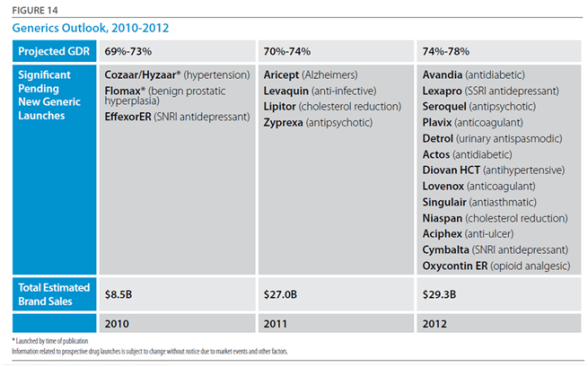
  • They give a clear chart on the generic opportunity and likely impact on overall generic fill rates for 2010-2012.

  • They go on to talk about specialty drugs which could be as much as 50% of the total spend by 2013…a scary prospect.
  • They have a good “state of the union” for specialty in the deck:
    • As of January 2010, 57 percent of all late-stage pipeline drugs fell into the specialty area.
    • 71 percent of applications for supplemental indications are for specialty products.
    • The number of new specialty drugs approved in 2009 was more than double the number of 2008.
    • Provenge, the first therapeutic vaccine—which utilizes the patient’s own DNA and stimulates the immune system to fight prostate cancer—was approved early in 2010.
    • Potential approvals 2010-2012 include four new products for multiple sclerosis (all oral), three for hepatitis C, and three for cystic fibrosis.
    • 18 of the products pending approval in 2010 target orphan diseases, which currently have few or no treatments.
    • While health care reform legislation provides for a pathway for approval of biosimilars, it also mandates a 12-year minimum exclusivity period for brand innovators with the possibility of additional exclusivity in 12-year increments for the development of new uses.
  • They then talk a little about pharmacogenomics (PGx). Again, I expect this to be a much bigger area in the future. It’s interesting. It’s changing rapidly. BUT, there is a huge education mountain for patients and MDs.

For a 1M member population, ~$12M is spent each year on 18 drugs that are administered to patients who do not respond and/or who are more likely to experience drug-induced medical complications.

  • I think some of the hidden gems begin on page 27 where they talk about their study on electronic prescribing:
    • 22.1% never filled their first claim. (why – samples?)
    • They found that those who had an eRx were most likely to fill than those with a paper Rx. (I personally would have bet on the other…i.e., that I have something physical in my hand that it would serve to remind me to go to the pharmacy.)
  • Another study towards the end was on abandonment (which they recently released more information on). It showed that copay, income, and whether it was an NRx (new start on Rx) were predictors of abandonment.
  • They also share work done around adherence focused on complexity of therapy – number of Rxs, number of MDs, number of pharmacies, and synchronization of refills. They talk about using this to score patients and predict risk of non-adherence. (I look forward to seeing more here since this seems very interesting especially in terms of focusing resources and developing a triage model.)
  • They shared the results of a deep dive on reasons for abandonment of prescriptions. Being able to respond and position messaging around these reasons is important.
  • They share some of the work from their Pharmacy Advisor program:
    • IVR messaging improved the odds of refills by up to 70.6% when members answered the phone.
    • Early IVR refill reminders were 2x as effective for first fill persistency rates at mail as compared to reminders after refill due dates.
    • Physician directed fax alerts about gaps in care nearly doubled gap closure rates.
    • Pharmacist interventions were most effective at improving adherence.
    • Members in VBID (value based insurance design) in which copays were lowered or eliminated were more likely to initiate therapy, less likely to discontinue therapy, and had better adherence.

“Diabetes is one of the most prevalent and expensive chronic diseases in the nation, costing the U.S. an estimated $174 billion a year,” said Troyen Brennan, MD, MPH, EVP and Chief Medical Officer of CVS Caremark. “The Pharmacy Advisor program improves clinical care because we are able to identify and address pharmacy-related care issues that if left unattended could result in disease progression and increased health care costs. We are also better able to engage the member in their care through multiple contact points, providing counsel that can improve adherence and help members optimize their pharmacy benefit and find the most cost effective options.” (quote from press release)

  • They talk about a pilot program they did in Polk County were patients signed a contract for care and was focused on diabetes care. It had some great results:
    • Reduction in blood glucose levels from 52% under or equal 7% at the beginning to 72% after one year.
    • 30% reduction in hospitalizations.
    • 24% reduction in ER visits.
    • Only 3.4% of enrolled members had poorly controlled diabetes (compared to national average of 29.4%).
    • Improved patient care – identification of potential adverse events, streamlined medication regimens, and formulary support.
    • (I personally would think this would get other plans (or PBMs) to partner with them on regional strategies where they have a strong retail presence.)
  • This also coincided with their announcements about their Pharmacy Advisor program which officially launches in January 2011. I’m very interested to see the uptake here which I would imagine will parallel the success of Maintenance Choice. This is a program which leverages their Consumer Engagement Engine (see image from last year’s report) and their retail presence to engage consumers.

Overall, it was an easy read without a lot of fluff. It cuts to the chase and gives you a good perspective on how they think. You begin to get a feel for what they are doing differently, but I imagine that you’ll continue to see a lot more research and case studies come out in the next year about some of the work they are doing.

(Note: In the sense of disclosure, CVS Caremark is a stock that I own.)

Todd Park (HHS CTO) On Unlocking Innovation Mojo (#mhs10)

I came out to the Mobile Health Summit (Twitter hashtag #mhs10) in DC today, and I had the opportunity to interview Todd Park who is the Chief Technology Officer (CTO) for the US Department of Health & Human Services (HHS). Todd is a great resource for the country and perhaps a surprising bureaucrat (in the nicest sense of the word) given his background as a consultant and then co-founder of athenahealth.

It was an interesting discussion starting around what his role is. The CTO role is a new role in the US government which he describes as an internal change agent who is responsible for working with HHS leadership. He described his objective as forming virtual start-ups to advance new solutions. [A radical departure for those of us that view government as a monolithic organization which is slow to change and full of red tape.]

He said that one of the first questions people ask when they see the new initiatives such as HealthCare.gov is who were the consultants he brought in from Silicon Valley to do the work. He says that it was all internal people. We talked about that being a cultural change which he described as “creating the right vision” and a “work pathway”. That sounds exactly like what one might see a change agent being responsible for – better leveraging internal assets by changing the framework for service delivery.

We talked about several of the initiatives that HHS has worked on lately:

  1. HealthCare.gov which is a focused on helping consumers find public and private options for healthcare. He said this was a 90-day implementation. I think if you go to the site you’ll see a few things:
    1. Easy navigation
    2. Content for multiple personas
    3. Links to social media
    4. Videos, widgets, blog postings, iPhone app, etc.

    This is much like what you would expect from a direct-to-consumer company or your health plan.

  2. The Open Health Data Initiative which is focused on taking data which HHS has and making it available for use by companies for FREE. The idea is to stimulate an eco-system around the data and enable better health thru better decisions. He uses the NOAA framework as an example for how they share data to sites like weather.com. He then mentioned that they had done a brainstorming session earlier this year to think about what could be done with this data (some of which was new to everyone). You can learn more and see the 2-hour YouTube video here, but a talk by Todd Park at another event is below.


  3. The Blue Button Initiative which was launched in October and focuses on getting Medicare members and veterans to get a copy of their own data to print, download, share, upload, etc. Already more than 100,000 have downloaded their data. This should certainly be an enabler for PHR adoption.

We then went on to talk about HHS as a “reservoir of innovation mojo” which needs to collaborate with the public sector. In Todd’s words, he sees government as needing to be a catalyst and enabler. When he joined, his idea was not to fly in like aliens and change HHS, but to come in and find ways to unlock the mojo which already existed.

I asked him if he sees this as being a model for the private sector. Obviously, one of the challenges we have everywhere is figuring out the right way to balance co-opetition and competition. If we’re going to “solve” our obesity epidemic, we need to have some collective knowledge and insights rather than constantly re-creating learnings in a microcosm. On the flipside, companies want to create intellectual property and sustainable differentiation. It’s not easy to balance.

But, Todd mentions that several companies are already following in the “blue button” model such as Gallup / Healthways which is making their Well Being Survey data available publicly (for FREE) for the top 200 cities.

Of course, there is a lot of work to do here. I asked him about what the government was doing to address some things at a national level (e.g., obesity) where in my mind we almost need a reframing such as that which happened with littering, smoking, or wearing our seat belts. He brought up three things that were happening:

  1. National Quality Initiatives
  2. HealthyPeople 2020
  3. Community Level Dialogues

One of the other things that we talked about was the challenge of making changes to health outcomes with the health literacy levels in the US. I suggested that we need to address this systemically as I believe we need to address financial literacy…beginning in the schools and the home. He talked about needing to making learning fun through educational games. He mentioned that the First Lady had been promoting the creation of apps to accomplish this as part of a competition. (This made me think of the iTots article in today’s USA Today.)

We closed with a quick discussion on other things that he’s monitoring that will drive healthcare innovation. He talked a lot about improvements in the provider payment system – think Accountable Care Organizations (ACOs) and Patient Centered Medical Homes (PCMH). The goal with these is the change from “pay for volume to pay for value”.

Talking to Todd gives you a positive view on what government can do. I can see him motivating his team and his prior teams to follow his vision and embrace change.  I’d have to agree with Matthew Holt’s article on Todd Park from earlier this year.

Technology Challenges (and Opportunities) For Pharmacy

Here’s the presentation that I’m going to deliver tomorrow (11/2/10) at the NCPDP education event in Portland.  The question posed was what are the busines models needed to survive and thrive in the new economy.  My mind immediately jumped to what are the challenges in the industry, what are the trends that got us to where we are, and how can pharmacies (or PBMs) think about turning these challenges into opportunities.

At the end of the day, I think there is still lots of white space for pharmacies to leverage technology to build relationships with their clients (consumers / customers / patients).  I think technology makes that scalable. 

One bias that I also have long-term is that (with the right economic model) retail pharmacies should focus on the acute drugs and new prescriptions and get compensated for the initial education and titration with the patient and the physician.  After that, maintenance drugs which are essentially just refills should be handled by the lowest cost option – kiosks, central fill, mail order.  I think that would encourage a different payment model centered around cognitive services and encourage greater collaboration between retail and the mail order pharmacies.