Archive | Innovation RSS feed for this section

The Information Blanket: Design Meets Health Literacy

Another story from Fast Company June 2011 that I found really interesting was about the Information Blanket. This is a tool being used in Uganda to address their infant mortality rate.

It includes information on:

  • Vaccinations
  • Breast feeding
  • Doctor’s appointments
  • Fever
  • Growth rates
  • Symptoms to monitor

I think this is a few cool and creative solution.

Pharmacy Kickoff At #RESULTS2011

I’m currently presenting at our client event (see twitter hashtag #results2011 for real-time comments). My presentation is an extension of my white paper on the future of the PBM / pharmacy industry along with a blend of data from our annual client survey and Silverlink Communications best practices with a focus on our work around medication adherence. It also builds on my thoughts from NCPDP that I shared late last year.

Here are a few of the points I touch on:

  • Avoiding being commoditized by adding value
  • Keys to success with a focus on:
    • Evidence-based approaches
    • Consumer engagement
    • Patient experience
    • Cross-channel coordination
  • Adherence and other priorities
  • How to use SMS to drive self-service
  • An approach to condition management in hypertension and diabetes
  • Focus on the “un-engaged” but don’t forget about the engaged consumers
  • Case studies and research around adherence
  • Timing and sequencing of direct mail, automated calls, and e-mail
  • Measuring “trust”

Here’s a teaser of some of the slides I’m presenting:

Walmart: Good or Bad for the PBMs

I think this is a question many of my PBM friends would like to know. Fortunately, a few of the Walmart people that read my blog and are part of their Health and Wellness group agreed to sit down and talk about their strategy.

Let’s start with setting some background:

  • Walmart was the first to introduce the concept of $4 generics which originally caught the market off guard and has created lower generic costs and free antibiotic programs at several pharmacies. [I would also argue that it highlighted the fact that generic copays were getting too high.]
  • Walmart was the first to work directly as a pharmacy to create a limited network contract direct with an employer (Caterpillar).
  • Walmart has partnered with Humana on a limited network offering for Medicare.
  • Walmart came out with a direct to consumer mail order pharmacy offering.

If you follow the industry, you know that all of these things were potential game changers (if they’ve worked).

This creates some tension:

  • Is Walmart simply a catalyst for change in the healthcare space?
  • Does Walmart (pharmacy) want to disintermediate the PBM?
  • Is Walmart able to make money where others can’t?
  • Does Walmart get more foot traffic such that pharmacy can be a loss leader?

Here is the Q&A [interpretive not literal] from my dialogue with Marcus Osborne (Sr. Director, Business Development, Healthcare, Walmart) and Tom Hill (Director, Health Services Development, Walmart).

What is Walmart’s Health & Wellness strategy?
Walmart wants to help consumers “save money and live better”. That is our DNA and our fundamental approach to the market. Pharmacy has presented a unique challenge since consumers often have the same copay regardless of which pharmacy they went to. Even when it’s a percentage copay, the savings differential might not be much to the consumer. Walmart was disconnected from the consumer in the traditional pharmacy pricing approach. That has driven us to look at unique ways that we can create savings.

How does Walmart decide what “offerings” to bring to market?
Walmart looks at ideas that focus on our EDLP (Everyday Low Price) concept and leverage our supply chain efficiencies. We are constantly looking at non-store operational opportunities to work directly with key companies. We currently have over 20 direct relationships with managed care companies and PBMs where we are working with them to drive down consumer costs in the pharmacy and broader healthcare area.

Obviously healthcare is bigger than pharmacy. What other things are you doing to drive healthy eating, management of critical conditions, or other programs? We’re constantly looking at what’s needed in the healthcare sector and where to invest. We focus on our two key advantages:

  • Willing to trade profit for volume
  • Value of the total “box” [store]

A good example is the work we’ve done around “Healthy Mom Healthy Baby” in Medicaid. We looked at the issues of high pre-term labor and the high rates of injury post-birth. We felt like we had a moral and cost imperative to take action. As part of this, we worked with several managed care groups to redefine the entire process and look at our unique assets. Our solution includes:

  • Free pregnancy tests
  • Free pre-natal vitamins
  • Rewards for free diapers and other supplies tied to physician visits and other health activities
  • Free car seats
  • Leveraging our physicians and clinics

[I was impressed…this was a broad solution that looked at a lot of their assets.] We’ve also created several diabetic specific solutions; a smoking cessation program with Healthways; weight management programs; and women’s and men’s health programs. The focus is on payers that are at risk for their healthcare spending with more to come from clinics.

Will Walmart become a PBM?
No. We’re not looking to go into the PBM market. We’re supply chain experts. We see value in the PBM model. [We talked a little about the fact that “you are what your profits say you are” meaning that the PBMs have painted themselves into a profit corner where their profit comes from generics at mail order so any threat to that is a challenge.]

If the Caterpillar model was so successful, why haven’t others adopted it?
The reality is that over 400 employers have contracted directly with Walmart for a limited network model similar to Caterpillar. They are all seeing significant savings.

Does Walmart see the market through “different glasses” than others?
No. We still want to have the pharmacy be a profit center. We’re not looking to bottom out the market, but we are willing to trade lower profits per transaction in return for more market share. At Walmart, it’s not about maximizing revenue/Rx or profit/Rx…it’s about total revenue and total profitability. [A very different strategy than other CFOs which would say you can’t expect volume to make up for lower profitability.] Obviously, we also have the opportunity to get non-pharmacy sales associated with food traffic. One thing that may be is different is the fact that we believe scale should drive down costs. In pharmacy, the biggest players are always trying to command a premium. We think it should be the other way around. We also have been able to get our cost-to-fill to be the same at retail and mail so we’ve become channel ambivalent.

Have these programs improved market share in any significant ways? You have to look at the programs separately, but overall we’ve seen our market share increase from 6% overall [when the $4 generic program launched] to 10% now. The network design strategy has had great success. We look at three types of programs:

  • Incentive based networks
    (Caterpillar 1.0) where all the pharmacies are in the network, but there is a lower copay to go to certain pharmacies. If only 15% of pharmacies are preferred, their market share doubles. If Walmart is the only preferred pharmacy, their market share goes up 4x.
  • Limited networks where some pharmacies are removed from the network. If you drop the network significantly, they’ve seen their share go up 2-3x.
  • Limited networks with preferred pharmacies where you some pharmacies are removed from the network, but within the remaining pharmacies, there are still incentives to go to certain stores (Caterpillar 2.0). In these cases, they’ve seen their share go up 10x.

The $4 generics program has helped increase market share by an estimated 150 basis points. In many cases, companies that initially jumped to offer similar programs have dropped them. They couldn’t sustain them.

The Medicare program with Humana has been very significant and successful [as demonstrated by Humana’s huge jump in Medicare lives].

The direct-to-consumer (DTC) programs for mail have been pretty limited and haven’t had a huge impact, but they’ve been offered in markets where we have no stores (e.g., Detroit and NY) and therefore almost no share to begin with so any share is a gain.

People complain about the pharmacy location within the store. Would you ever consider a direct access point to the pharmacy which didn’t involve going through the entire store? This is a very hot topic. We did a lot of research about store design and what goods should be located next to each other, but in the end, we’re considering moving the pharmacy closer to the front entrance. Right now, 25% of the stores have a drive-through pharmacy which gets utilized at a very high rate. But, this does lose the pharmacist face-to-face benefit. [At the end of the conversation, my take is that they are looking at lots of scenarios here and trying to figure out the balance of convenience to the pharmacy only consumer and how to optimize the entire footprint.]

The partnership with Humana really seemed to help them grow their Medicare lives this year. How did this come about? We both were looking for new solutions to leverage the fact that scale matters and how to operate within the CMS parameters. We felt like there was an opportunity to do something different and began speaking with plans about some limited network ideas. We know that Walmart is over-indexed in the 65+ category based on store visits per week. Based on that, we were looking at what we could do to offer them more value as compared with our traditional, core customer of 35-50 year old females. Through a series of conversations, the partnership was born. We’re very happy with the relationship and believe they are also.

Limited networks have been around for a long-time with limited adoption. Do you think their time has finally come? What has changed? They have been around, but historically the networks weren’t limited enough to create enough savings to overcome the “costs” of disruption to the payer. Based on our experience at Caterpillar, we believe that you will see a transitional period where companies first move to incentivized networks and then 1-2 years later move to limited networks. [Something I would compare to the transitions which have happened in formulary over time.] The one area where we do see limited networks happening more rapidly is in the area of Managed Medicaid. [This plays into the focus of PCMA and others on the PBM opportunity around Managed Medicaid.]

It was a great discussion. I learned a lot. They allowed me to ask them a lot of questions about their programs and approach that honestly had led to some skepticism in the past. It sounds like they’ve brought together a great team with a broad vision of what they can do in pharmacy and in health and wellness overall. It has gotten my mind thinking about ideas, and I look forward to learning more.

[BTW – You can sign up to get posts like this e-mailed to you whenever I write them.  A registration link is in the right hand column.]

PBM Mobile Applications – CVS, Humana, Medco, Express, Catalyst, Prescription Solutions

This week, Medco released their mobile application that they’ve been working with Verizon on.  Not a big secret in my mind since I’ve been hearing about it since last Fall.  I’ve talked about CVS Caremark’s application (CVS mobile), Humana’s application, and CatalystRx’s application.  So, this made me wonder why I hadn’t heard about one from Express Scripts.  It seems unlikely that they wouldn’t have one.

There doesn’t seem to have been a lot of fanfare, but they launched one in March.  Here’s a quick summary of it:

The new Express Rx mobile app works across multiple platforms, and is now available for a free download at both the Apple iPhone App Store and at the Android Market (simply search ‘Express Rx’).  In addition, members using a Blackberry or other smartphone device with web browsing capability can access our mobile optimized website at http://m.esrx.com.

With our new mobile app and mobile optimized website, Express Scripts members will be able to securely access the following functions:

  • Start Home Delivery – transfer available maintenance medications to the Express Scripts Pharmacy
  • Order Refills – select and schedule prescriptions to be refilled from the Express Scripts Pharmacy
  • Check Order Status – check to see if an Express Scripts Pharmacy order has shipped, the ship date and by what method
  • Find a Pharmacy – locate a nearby retail pharmacy using the GPS technology built into a smartphone
  • Drug Information – access Drug Digest database to look up drug information, common uses and possible side effects

The app consists of three features: My Rx Choices, which delivers on-demand, personalized out-of-pocket costs, interactions and other information for any prescription drug; My Medicine Cabinet, which allows patients to view the medications they’re on, including prescription and over-the-counter drugs, and set reminders for themselves; and Prescription ID Card, which allows convenient access to a member’s prescription drug card.

Of course, Walgreens also has a mobile application as does Walmart.  Neither of them are PBMs, but they are both critical players in the pharmacy space.
Next on my list to check out is Prescription Solutions.  They also have a mobile application which does:
  • Refill mail service pharmacy prescriptions
  • View your prescription history
  • Set up text message medication reminders
  • Check the status of and track orders
  • Locate a pharmacy by ZIP Code
  • Search your formulary by generic or brand name drug, status, or class
As one might expect, mobile web or mobile apps are quickly becoming the norm.  The key to look at is what is the functionality.  Is it simply putting their websites on a phone or are they developing other technologies that take advantage of the mobile environment (e.g., location based services or enhanced reality).  I’ll share some thoughts on those in another post.

CVS Caremark Pilots New ePA Technology

CVS Caremark announced earlier this week that they were launching a pilot to improve the prior authorization process. They are partnering with Navinet, Allscripts, and Surescripts to do this. This should be an interesting pilot to monitor. They plan to share the transactions and the results with the market to hopefully drive industry standards.

“CVS Caremark understands the opportunities that innovations such as electronic prior authorization provide to prescribers and patients looking to embrace a more efficient and effective way to share critical prescribing information,” said Troyen A. Brennan, M.D., M.P.H., chief medical officer of CVS Caremark. “The prior authorization process is currently evolving to keep pace as prescribers transition towards electronic prescribing and electronic patient records to better manage their patients’ pharmacy care. This pilot is an important step toward demonstrating how the industry can integrate ePA with e-prescribing to streamline and speed up processing of prior authorizations to ensure that members have quick access to care that is medically appropriate and cost-effective.”

Summary Of Big 3 PBM Drug Trend Numbers

All of the big 3 PBMs have now reported their drug trend for 2010.  How do they compare?  [acknowledging that methodologies are different]

  1. CVS Caremark = 2.4% (0.8% without specialty)
  2. Express Scripts = 3.6% (1.4% without specialty)
  3. Medco = 3.7% (1.1% without specialty)

Now, I’ll reiterate my points from the past which are:

15 Things You Should Know About Prescription Non-Adherence

One question I frequently get is “what should I know about adherence”. This is then followed by “so what should I do about it”.

Here’s my starter list of what you need to understand about medication adherence.

  1. It’s a $290B problem.
  2. Patients fall off therapy quickly.
  3. There are a lot of reasons for non-adherence…it’s not just about reducing out of pocket spend. AND, to make it more complex, there are variations by gender, culture, medication, condition, trust, copay levels, etc.
  4. There are lots of predictors of non-adherence (old study, Express Scripts, Merck tool), but generally the best predictor is past behavior.
  5. Interventions can improve adherence (CVS Caremark study, Express Scripts study, Silverlink data). BUT, physicians generally don’t see non-adherence as an issue they can address. (see also White Coat adherence)
  6. Patients don’t think they’re non-adherent (see “Rx Adherence Hits The Ignorance Wall” by Forrester that says only 8% of people think they are regularly non-adherent).
  7. Adherence reduces total healthcare costs (CVS Caremark study, Sokol study).
  8. Communications matter (misperceptions, physician-patient gap, health literacy, what physicians tell patients).
  9. There are lots of cool technologies that will work for different people (talking bottles, monitoring devices, iPhone reminders, websites, pill boxes). BUT, improved labeling and bottle design may not be the answer (analysis of Target improvements).
  10. Starting on generics (or lower cost drugs) improves the probability of adherence.
  11. Pharmacist involvement is key and impactful (CVS Caremark study, Ashville).
  12. 90-day prescriptions lead to better medication possession ratio (Walgreens study, CVS Caremark study, Kaiser study, Express Scripts study).
  13. Complexity of therapy (e.g., number of prescriptions) increases the likelihood for non-adherence.
  14. Electronic prescribing gives us new visibility into primary adherence and should also create opportunities to improve this issue.
  15. It’s an area where everyone wins and there’s lots of research…but there’s no silver bullet.

QR Codes – The Ultimate Opt-In Tool

You probably are starting to see them more (those 2D barcode boxes).  They’re called QR codes.  Here’s a few articles about them:

I find this a fascinating area.  Imagine a few examples here:

  1. You want to get a member to opt-in to a program (e.g., auto-refill).  You can put a QR code on their invoice.
  2. You want to offer an educational video about a condition.  You can put a QR code on the Rx label.
  3. You want to get consumers to opt-in to a SMS program.  You can put a QR code on a mailing.
  4. You want to offer a physician access to the clinical studies about a drug.  You can fax them some information with QR codes on it. 
  5. You want a patient to learn more about a condition.  You could put up DTC materials in the provider’s office with QR codes. 

I think you get the point.  I expect this will grow rapidly especially as the smart phone market grows and more and more people have cameras in their phones (devices). 

One of the biggest uses right now in pharmacy is from Walgreens where they allow you to order a refill by scanning the QR code on their bottles using their mobile app.

Real-Time PBM “Pricing” From Prescription Solutions

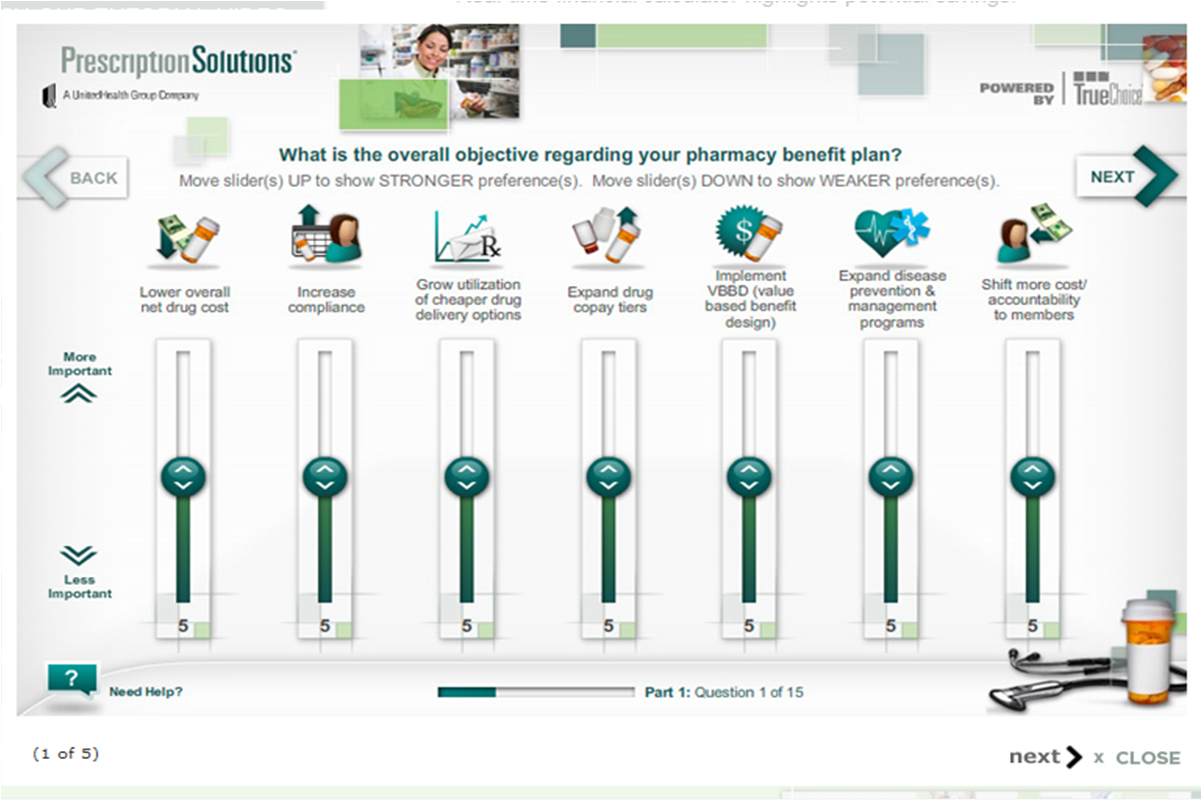
I don’t do a whole lot in the PBM pricing world these days, but I remember some of the process and the underwriting steps.  That being said, I was really impressed with the new Prescription Solutions online Pharmacy Benefit Advisor Tool (go to http://mybenefitpreferences.com). 

You go through a few basic steps to get an idea of how much you (payer) could save (with a very nice GUI). 

  1. Rank the features that matter to you – net cost, compliance, shifting cost to the consumer
  2. Rank the importance of different clinical programs
  3. Make some trade-offs in programs (A is more important than B)
  4. Enter some baseline data

Now, in reality, PBM pricing is never that simple, but what it effectively does is help articulate the savings that different decisions can create in a real-time setting.  It also forces some dialogue around issues – adhererence versus drug cost…which matters more to you?

I also think it could be a great way to help consumers understand the costs and savings associated with certain decisions.  I would also guess that the sales team at Prescription Solutions will find it helpful especially in the smaller, self-funded world.

How the application changes your experience? Flipboard and Twitter

I’ve found Twitter to be a great way to get news.  You follow a core group of people who talk about topics that you care about and can quickly sort through mainstream and other news and events. 

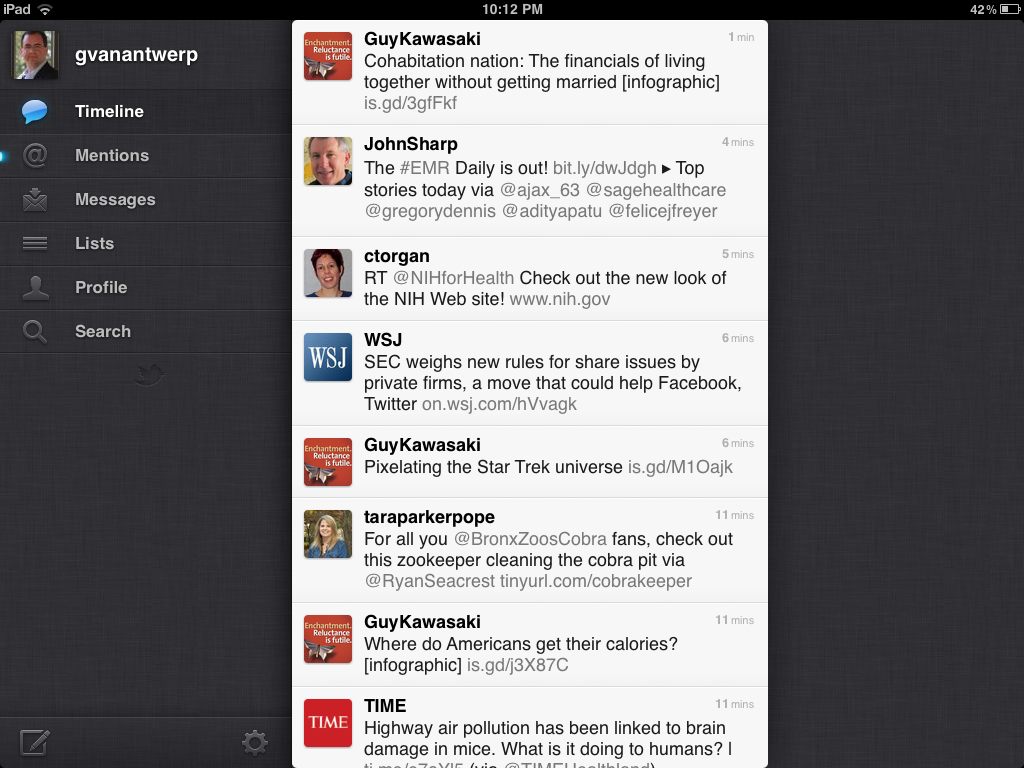
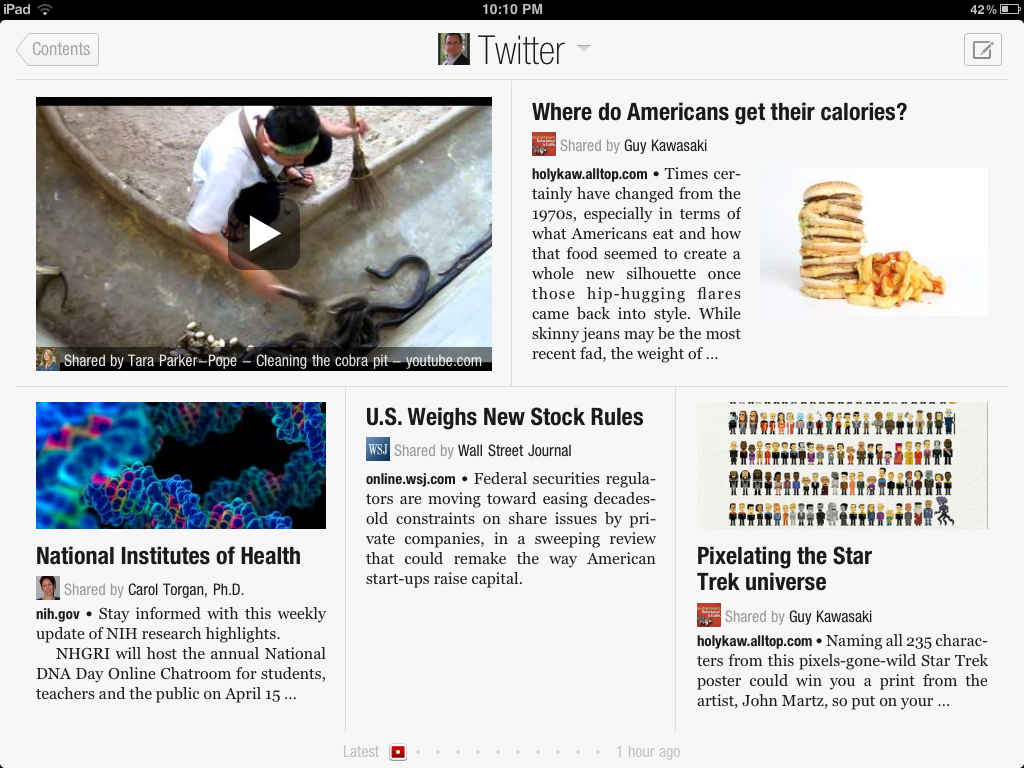
But, I was shocked to see the difference in experience moving from using Twitter in a standard format to using it within Flipboard.  Flipboard takes the links and activates them.  It pulls in images, and it makes it into a book.  See the two images here from my new iPad2.

The New Kaiser Center For Total Health (#WHCC11)

While I was at the World Healthcare Congress yesterday, I had the opportunity to go into DC to visit the new Kaiser Center for Total Health. This is their showcase in the East to facilitate discussions around improving healthcare. It’s not a replacement for the Garfield facility in CA, but it will create an more accessible forum for dialog with policymakers and international visitors. (NYTimes post about the opening)

It’s one of those fun places where you can go and interact with technology. It’s full of technology like telemedicine and telemonitoring. It provides you with demos of the world’s smallest ultrasound device and connected devices. It showcases Kaiser’s rich history and their MyHealthManager tool.

Their online tools have some great stats:

  • 3.3M members signed up
  • 25.8M test results viewed in 2010
  • 10.7M emails sent to MD’s in 2010

There are a lot of videos where you can hear employees, members, clinicians, and others talk about what they think “total health” is. And, they have a massive interactive mural about their walking initiative.

It seems like this type of interactive, high technology space is becoming an asset at several companies. We used to have this innovative, brainstorming space at E&Y years ago and clients loved it. I believe IDEO has this type of space.

I enjoy it. It’s interesting, inspiring, and creates a dynamic work environment. I look forward to see how this space gets used and what others think.

Interview With Dr. David Wennberg At #WHCC11

I had the opportunity to sit down with Dr. David Wennberg (Chief Science & Product Officer, Health Dialog) at the 8th Annual World Healthcare Congress (Twitter hashtag #WHCC11).  David is a fascinating and engaging speaker.  He has lots of publications, works with the Dartmouth Atlas, and leads the Health Dialog Analytic Solutions group. 

David and I began our time talking about “informed choice”.

In this environment, doctors need tools that identify patients lacking evidence-based care. They also need to ensure that patients undergoing surgery have been exposed to informed choice, not just informed consent, when there is more than one legitimate treatment path. With these resources in place, physician groups can ensure that they are in control of their own destiny when it comes to performance evaluations.  (source)

This is an important issue in healthcare.  Giving patients (1) complete information in (2) language that they can understand and helping them (3) frame their options relative to their preferences is at the core of this issue. 

Health Dialog calls this Shared Decision Making and focuses on how to engage targeted consumers and help them make their best decision.  Their customer support personnel go through a certification process and use decision aids to enable the process. 

This led us into a discussion about “trust” (see prior post) and then into a discussion about “embodied conversational agents“.  Obviously, if you’re going to help consumers make decisions, they need to trust you.  We talked about the need to have transparency, the need to for disclosure, and the importance of using clinicians in the engagement and discussion process.  In many cases, nurses and the empathy that they have are critical to this process.

But, I know from prior exposure to Health Dialog that they have figured out ways to blend technology and agents.  They do a lot with data and analytics to really understand the popluation.  They’ve worked hard to avoid the traps that “disease management” has fallen into over the years.  He shared with me some amazing engagement statistics. 

We talked about the value of peer-to-peer videos for people to understand their condition and talked about some recent studies around storytelling and distributing that information via DVD to patients (see more on study).  We went on to talk about how engaging the consumer in the decisions about their care increase success, but that many models have been a challenge to scale.  Health Dialog just published an article in the NEJM called A Randomized Trial of a Telephone Care-Management Strategy which demonstrated an ability to scale the solution and get results. 

At baseline, medical costs and resource utilization were similar in the two groups. After 12 months, 10.4% of the enhanced-support group and 3.7% of the usual-support group received the telephone intervention. The average monthly medical and pharmacy costs per person in the enhanced-support group were 3.6% ($7.96) lower than those in the usual-support group ($213.82 vs. $221.78, P=0.05); a 10.1% reduction in annual hospital admissions (P<0.001) accounted for the majority of savings. The cost of this intervention program was less than $2.00 per person per month.

Before I could even jump to my next question about ACOs, he made the natural transition to the fact that the new ACO regulations mention shared decision making 8 times.  I believe we both agreed that whatever actual form these new practice settings take that they will accelerate the importance of leveraging technology and things like shared decision making to engage the consumer.  The key is to leverage the PCP setting whether it’s the MD or someone on their staff as the foundation for engagement.

This led me to ask him about physician acceptance of technology as part of their practice (more on this later).  He felt that they had moved from resistance to understanding the technology and “guides” can enable them to practice better medicine.

The Changing Pharmacy Marketplace

I had the opportunity to listen to a few executives talk about how the marketplace is changing.  While I don’t think any of it was surprising, it did bring up some interesting discussion points.

The discussion focused on five themes:

  • The fact that the small molecule market is essentially going generic and will be a low cost market.
  • The fact that biologics is the focus and is where innovation and the spend will be.
  • The challenge of wiring healthcare to get that last mile to the physician.
  • The unknown implications of health reform and exchanges.
  • The continued focus on the consumer as central to healthcare.

I thought it was very interesting that several people talked about this evolution from brand to generic to biologics as the “circle of life” where there was a natural redistribution of cost.

I thought the discussion around personalized medicine was interesting especially as it dealt with the non-biologics and looking at where there were still opportunities to differentiate in the small molecule world.

One of the more interesting discussions was on whether bio-similars were really a “generic” type strategy or a new type of innovation.  Given the clinical work and other hurdles that are imagined for bringing bio-similars to the market, it isn’t expected that you’re going to see massive price drops.  And, if they aren’t therapeutically equivalent, then they become another option within the category.  As one person pointed out, the likely scenario is more of a step therapy strategy where if the bio-similars (or bio-betters as one person called them) are less expensive that the original biologic AND there is no difference in likelihood of success with an initial patient then you would simply require patients to start with the bio-similar.

There was some interesting discussion on the use of biologics from a prevention perspective which was only touched on.

One person talked about the blurring of the brand and generic manufacturer demarkations, but I think Teva’s already done that over the past few years. 

There was some discussion of current state tactics around copay cards and how they are used.  The question being whether this is to drive lower consumer costs, avoid switching, or avoid generic substitution.  This led to the classic debate of patient – physician versus payer. 

The biggest thing that scared me was some of the discussion around how DC and politics can play a role in determining care versus allowing for evidence-based standards of care to drive decisions.  As I was taught in consulting, you should make your decisions based on facts not on opinions.

Rules Based Communications

After working with data warehouses, configuration engines, and workflow management systems, I’m a big believer in embedding rules into a process. Communications is no different.

Let’s look at a few rules:

  • Don’t communicate with someone more than X times per week.
  • Don’t call these people.
  • Use Spanish for people with that language preference.
  • Send a text message to people who have provided their mobile number and opted in to the program.
  • When applicable, use a preferred method of communication for reaching out to someone.
  • If a caregiver is identified and permission is on file, send the caregiver a copy of all communications to the patient.
  • Call the patient if the amount being billed for their prescription is greater than $75.
  • For patients between these ages, use the following messaging.
  • If the patient hasn’t opened the e-mail after 48 hours, then call them.
  • For clinical information, use this channel of communications.
  • For John Smith, only call them on Tuesdays between 5-6 pm ET.
  • For Medicare recipients, use this font in all letters.
  • For Hispanic consumers, use this particular voice in all call programs.
  • If the patient doesn’t respond after two attempts, send a fax to their physician.
  • For patients with an e-mail on file, send them an e-mail after you leave them a voicemail.
  • For patients who are supported by Nurse Smith, only call them when she is on duty and use her name in the caller ID.

I could go on. But, the point is that communications, like healthcare, is a personalized experience. We have to use data to become smarter (historical behavior, segmentation, preferences). We have to use customization to create the right experience. AND, probably the most difficult thing for lots of companies, we have to coordinate communications across modes (i.e., e-mail, direct mail, SMS, automated call, call center, web).

Ultimately, I believe consumers will get to a point where they can help set these rules themselves to create a personalized profile for what they want to know, how they want it delivered, and ultimately provide some perspective on how to frame information to best capture their attention.

To learn more, you should reach out to us at Silverlink Communications.

Peptides, Wnts, and Volume Rendering

It’s always interesting to see information on future developments that are underway (all from Spirit magazine):

  1. Using a peptide to help you lose weight.  Based on research at Indiana University with mice this might be possible. 
  2. Using “Wnts” to heal broken bones faster.  Based on work at Stanford University where the stem cells in the bone tissue are stimulated.
  3. Using volume rendering (ala 3-D movies) to provide images of people innards to help with surgery and diagnosis.
  4. Using probiotics in smoothies to administer vaccines.  Based on research being done at Northwestern University. 

Interesting.

Can We Use Technology To Address Gaps In Resources – YES!

Dr. Joseph Kvedar writes a great piece about the psychology of persuasion and the possibility of using technology to engage consumers and drive behavior change.  This is an important topic as we look at addressing healthcare as a country.  Since behavior and consumer choice drive a significant portion of our healthcare costs, we have to think more about how to engage patients – what is the right message?  what is the right channel?  what is the right time to deliver the message?

We can deploy technology in smarter to ways to engage consumers in new ways that leverage our limited resources in better ways – i.e., get good and scalable outcomes without increasing costs.  That is what we do everyday at Silverlink Communications with our clients whether it’s around HEDIS, adherence, condition management, or many other programs. Recently, there was an article in Time Magazine that talked about some work we did with a Medicare population for Aetna.

I also think you can look at the research Stanford has published on the topic over the past decade.  You can also look at some of the data from the CVS Caremark Pharmacy Advisor program. While it certainly showed the value of having pharmacists involved, it also showed some positive results from automation.

The reality is that combining automation and live resources can be very powerful. Technology can screen and triage people to connect the at risk population with critical resources. This can allow resources to support as many as 4x as many consumers.

CatalystRx Engaging Patients With Avatars

Last week, I got to see one of the more interesting presentations I’ve seen in a while. CatalystRx presented on some of the work they are doing with a mobile application to be released later this year. The application uses an avatar (well technically an “embodied conversational agent“) to engage with the consumer. I’m not sure how well that will work with a senior population, but the technology (shown in a video demo) was very cool.

The application is based on lots of research (and designed by the people who made Happy Feet). For example, they talked about:

  •  
    •  
      • The importance of finding the right balance between too cartoonish and too human. They referenced some Disney research about size of the eyes versus the size of the head which creates a positive memory trigger due to similarities to baby’s faces.
      • Creating a “trusted advisor” for the patient (using David Shore’s book – Trust Crisis in Healthcare).
      • The importance of the face and how it shows emotion (both human and avatar).
      • How small talk engaged the consumer and builds trust even when it’s an avatar telling first person stories.

Some of the research comes from Chris Creed and Russell Beale’s work.

Recent research has suggested that affective embodied agents that can effectively express simulated emotion have the potential to build and maintain long-term relationships with users. We present our experiences in this space and detail the wide array of design and evaluation issues we had to take into consideration when building an affective embodied agent that assists users with improving poor dietary habits. An overview of our experimental progress is also provided.

The application helps patients to:

  • Make decisions
  • Identify pharmacies
  • See prescription history
  • Get reminded about refills
  • Get information about generics and formulary compliance
  • Receive personalized interventions

Obviously, mobile solutions as a way to engage patients using a secure environment for delivering PHI is a holy grail (for those that download and stay engaged). This was an interesting and promising variation on some of the solutions out there. I look forward to learning more and seeing it once it’s fully available.

Medical Data From Thomas Goetz

Here is a video of Thomas Goetz (Wired magazine) from TEDMED…

He talks about redesigning medical data and how to present it for people to understand.

He talks about a key notion of helping people see their way to better health.

He talks about the feedback loop of Personalized Data – Relevance – Choices – Options.

He talks about how Captain Crunch can inspire information delivery for prescription drugs.

And, then he shared the Wired article on redesigning information.

Presto: E-mail Into Newsletters

I’ve seen several ideas over the years to try to figure out how to connect those of us that live and die by our electronic tether (e-mail, SMS, Facebook) to loved ones who don’t use a computer or in other countries where they don’t have computers (e.g., rural India several years ago).

Now there’s a new service called Presto (www.presto.com).  You set up a “printer” in their home which connects to an analog phone line.  You can then send them e-mails which get re-formated into a newsletter with the attachments printed.  You can tag photos in facebook for them to get printed.  You can schedule reminders for them that get triggered and printed at a fixed time. 

Sounds pretty cool to me.  In general, the older population (65-80) are pretty responsive to phone based solutions (like we do at Silverlink), but you do see a drop off after 80.  If this solution ever were to take off and the caregivers could opt-in their parents to accept reminders (e.g., adherence, medical appointment) from health plans, PBMs, ACOs, and other organizations, this would be an interesting new channel for reach.

Get Wellness Article in Time – Silverlink, Aetna, Hypertension

The recent issue of Time magazine includes an article called “Get Wellness” about wellness.  It talks about having MDs “prescribe” wellness (think Information Therapy or Ix) and the fact that Medicare enrollees will be eligible for wellness visits begining 1/1/11. 

The new wellness benefit tasks doctors with creating “personalized prevention plans,” which ideally will be tailored to each patient’s daily routine, psyche and family life. And if that sounds more like a nanny-state mandate than medicine, consider that some 75% of the $2.47 trillion in annual U.S. health care costs stems from chronic diseases, many of which can be prevented or delayed by lifestyle choices.
The article goes on to talk about the challenge this may create for physicians.  Can they act as nutritionists?  Can they change behavior? 
 
Of course, MDs won’t be the only one’s focusing here (although some of that could change with ACOs and PCMHs).  Disease management companies and managed care companies have focused here for a long time.  The focus in many ways these days is how to reduce costs in these traditionally nurse-centric programs with technology but without impacting outcomes and participation.  There is one example in the article from some work we are doing at Silverlink around hypertension
 
Some firms, in trying to bring down health care costs, have hired health coaches to reach out to the sedentary or overweight to get them moving more. Others use interactive voice-response systems to keep tabs on participants’ progress. In a study, Aetna set out to see whether it could reduce hypertension — and the attendant risks of stroke, heart attack and kidney failure — among its Medicare Advantage members. More than 1,100 participants were given automated blood-pressure cuffs and told to call in with readings at least monthly. They also got quarterly reminders to dial in. When they did so, an automated system run by Silverlink Communications provided immediate feedback, explaining what the readings meant and where to call for further advice. Alerts were also sent to nurse managers when readings were dangerously high. The result: of the 217 people who started out with uncontrolled hypertension and stuck with the program for a year or so, nearly 57% got their blood pressure under control.

Compliance “Rapid Response” Team

In the future, will we have teams who rapidly engage patients who don’t take their medications as prescribed?  Will those be medical teams for patients who recently got a transplant and police teams for mentally ill patients with a history of violence?

Seem pretty farfetched?

Compliance with medication is such a hot topic today that you’re finally see the technology innovators jumping in.  You have solutions like the GlowCaps system that have been around for a few years and demonstrated their impact.  Now, you have technology going even further to attach itself to the pill and send data back. 

The LA Times had an article that talks about some of these technologies:

  • Camera pills
  • A device that you wear around your neck to monitor swallowing the pill using RFID
  • A device that detects when it encounters stomach acid

BUT, the kicker here is that the article estimates this will only improve adherence by 5-15%.  Remembering to take the pill isn’t the only reason people don’t take their pills!!!

Just look at this on the 11 Dimensions of Non-Adherence or this on the Predictors of Non-Adherence or some of the research coming out of CVS Caremark.

You have to address health literacy.  You have to address side effects.  You have to address beliefs.  And, many other issues.

These solutions are “cool” and will finally tell us if people take a pill, but I’m not sure that’s the silver bullet.  Plus, at what cost?  Get a 5-15% improvement in adherence isn’t that impressive.  We’ve done that multiple times at Silverlink with a quick remind to patients about taking their medications or asking patients about their barriers and addressing them. 

As with any solution, it’s about figuring out who it benefits most and getting it to them at the right time.

New Pharmacy Whitepaper: Innovate Or Be Commoditized

In early 2009, I published an initial whitepaper on the PBM industry.  With all the changes going on in the industry, it seemed relevant to put out a new whitepaper although the total impact of reform and the definition of MLR is still TBD.  As I did before, I’m putting a summary here, and I welcome your comments.

You can download the whitepaper by registering on the adherence site at Silverlink Communications.  Thanks.  [If you’re a regular reader but not a logical client, you can request the whitepaper by contacting me.]

I think a quote from Larry Marsh (Managing Director, Equity Research) at Barclay’s Capital does a good job of summarizing it:

“Innovation will be increasingly important in the PBM world, as these companies seek to solve a greater set of pharmaceutical cost issues for their customers over the next 10 years.”

[BTW – If you want to get updates e-mailed to you as I post them, you can sign up here.]

************************

Innovate Or Be Commoditized: The PBM and Pharmacy Challenge for 2011

Doing more with less; dealing with constant change; and having technology be a part of everything…  Those are things that the next generation will take for granted.  For the rest of us, those are dynamics that are changing our personal and professional lives.  We’re constantly bombarded with information and decisions to make.

While the pharmacy industry has generally avoided the collapse of the automotive industry and the radical change of the health insurance industry, we’ve seen unprecedented change in the past few years.

It’s almost impossible to go a few days now without seeing information about prescription drugs in the mainstream news.  You might hear a financial analyst talking about the lack of blockbuster drugs in the pipeline.  You might read about a drug recall in USA Today.  You might see a new report talking about the $290B cost of non-adherence[ii] to the country.  Or, it might simply be water cooler discussions around how more than 25% of kids[iii] now take a prescription medication or how non-adherence can lead to hospital readmissions[iv].

This has raised the average consumer’s awareness of the industry and continues to push the trend of consumerism with which the entire healthcare industry is dealing.  Most of us in the industry already knew that pharmacy was the most used benefit (12 Rxs PMPY for PPO members[v]) and believed that pharmacists were a critical part of the care continuum.

The challenge now is for the industry to demonstrate their value beyond simple trend management.  The growth in generics will slow down while specialty spending grows.  Pharmacy and pharmacists have to become critical path in the care continuum and demonstrate how they engage consumers to improve outcomes.  It will become increasingly important to link outcomes and reimbursement as CIGNA Pharmacy did in their diabetes deal with Merck[vi].


[i] “Still More Pharma Jobs Go By The Wayside”, Pharmalot blog, posted on Nov. 3, 2010, http://www.pharmalot.com/2010/11/still-more-pharma-jobs-go-by-the-wayside/

[iii] Berkrot, Bill, “Prescription Drug Use By Children On The Rise”, Reuters, accessed on 1/4/11, http://www.reuters.com/article/idUSN1924289520100519?type=marketsNews

[iv] Leventhal MJ, Riegel B, Carlson B, De GS., Negotiating compliance in heart failure: remaining issues and questions, Eur J Cardiovasc Nurs., 2005;4:298–307 (abstract online at http://www.escardiocontent.org/periodicals/ejcn/article/S1474-5151(05)00038-1/abstract)

[v] Managed Care Digest Series: Key Findings, last updated Nov. 2010, http://www.managedcaredigest.com/KeyFindings.aspx?Digest=HMO

[vi] “CIGNA and Merck Sign Performance-Based Agreement”, CIGNA Press Release from April 23, 2009, http://newsroom.CIGNA.com/article_display.cfm?article_id=1043

Alternative Pharmacy Network Whitepaper

Milliman recently put out a whitepaper commissioned by ReStat on “Alternative Pharmacy Network” savings. My general opinion is that they use a lot of data and analysis mixed with some sensationalist statements to make the very obvious point that creating a limited or closed pharmacy network will save you money. (I hope they didn’t charge much for this.)

Net-Net: Limited or tier pharmacy networks are a great idea.  ReStat is building on their experience with Caterpillar which is a great program.  But, the whitepaper was flawed. 

Their conclusions were:

  • Potential Savings – The analysis shown in this report suggests that APN programs can offer a significant savings to employers relative to traditional networks. For an assumed range of consumer use of participating pharmacies, an employer with 10,000 lives could save $200,000 to $620,000 per year, depending on benefit design, without changing cost-sharing structures (see Table 3). Benefit design changes could increase or decrease the savings. A closed APN network (no coverage for non-APN pharmacies) would increase savings for a given benefit design.
  • Sources of Savings – In our analysis, the APN model can achieve lower cost because the PBM and retail pharmacy retain less revenue.
  • The Value of Limited Networks for Pharmacies -For medical benefits, health plans use network providers as part of overall quality and efficiency programs and are promoting network programs such as medical homes and pay-for-performance. Sponsors and PBMs can extend the advantages of networks to the pharmacy benefit. However, the ability to obtain value in a locale depends on the willingness of some pharmacies to participate as network members.
  • Plan Design Changes – Plan sponsors may need to change their plan designs to encourage use of the limited network. For example, the copays for limited network pharmacies may need to be decreased (from current levels) and/or the copays for non-network pharmacies may need to be increased to create a benefit differential between the network and non-network pharmacies. These plan design changes could reduce or increase the projected savings of a limited network, depending on the specific change.


My comments about their analysis:

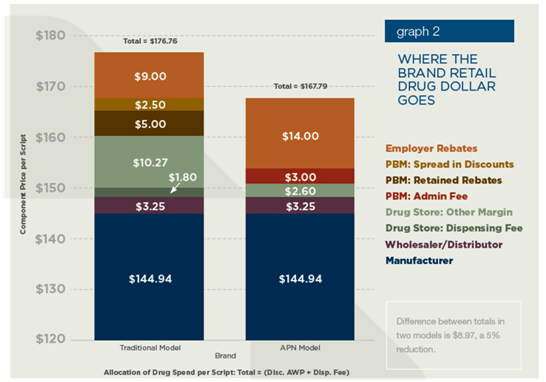
  • They assumed that retail pharmacies would reduce their spread on generics by 44% (and brands by 78%) to be part of a limited network. That might be true for a large client with geographic concentration and for a retailer with low market share, but I think that’s a leap. (see chart below on brand pricing assumptions)


  • They say that spread for retail claims for PBMs can be 10-15% of AWP. I’ve seen plenty of deals that were negative (at least on brand drugs). In many cases, spread pricing doesn’t even exist.
  • They claim that PBM’s make money “(as part of a typically Drug Utilization Review program) actively encourages patients to switch to different medications as a core part of its business.” Really. That went out with the AG settlements back around 2004. Chemical substitution to generic equivalents certainly happens, but using DUR to push therapeutic conversion. I don’t think so.
  • They claim that PBM’s will buy drugs and repackage them to get a higher reimbursement rate at mail. I’ve never seen it (but that doesn’t mean it’s not done).
  • MAC pricing at mail. Yes. PBMs do make most of their money on generics at mail, and I’ve talked about the need to align your MAC lists at retail and mail before.
  • They also say “While mail order presents the opportunity to save sponsors money, attempts to encourage mail order by reducing copays could increase sponsor cost if the benefit plan is poorly designed (e.g., copays are reduced too much), utilization increases, or generic dispensing decreases.” I’ve talked about why clients lose money at mail before, but I’m pretty sure that there have been plenty of studies that show adherence improves (not unnecessary utilization). Studies have also shown that if you adjust for acute medications at retail then the generic dispensing rates are very comparable at retail and mail (or explained thru population differences).
  • They claim that the PBM’s make 10-15% on specialty drugs that they dispense (which seems high to me) and then use $5,000 per month as a number when the average 30-day supply of a specialty drug is more like $1,500.
  • They claim “Different manufacturers offer different rebates, which may factor into a PBMs decision making.” I think if you read the P&T process documents you would see that decisions about in or out are made based on clinical decisions and then a formulary can be broad or narrow based on the net price to the plan sponsor which does (and should) evaluate rebate impact.
  • They quote a source saying that 35% of rebates are kept by PBMs. Again, that seems really high. In my experience, there was an administrative fee equal to several percent of the AWP of the drug that was kept but the rebate dollars were passed to the plan sponsor.


While I like the simplicity of the flat fee payment model (i.e., I pay my PBM $3.00 per claim), it certainly creates no incentive for them to do better year over year in improving their negotiating with pharma and retailers or to worry much about trend management.

They talk briefly and seem to encourage ReStat’s Align product which seems like a very logical approach (used by other PBMs also).

Restat configures custom retail networks and benefit designs that create incentives to encourage member use of alternative in-network pharmacies and allows consumers the ability to shop based on price as well as service. Non-network pharmacies are also available but at a higher copay or costs.

Wal-Mart and Humana for Medicare Part D

Again, I’m a little late on this story (too much work), but I was thinking about it after the CMS news recently that they were going allow plans with a 5-star rating to have an open enrollment season all year round.  That’s a huge deal. 

(If you’re don’t know what the Star Ratings are about,  see the Kaiser Family Foundation piece on What’s In The Stars or if you’re working on improving your Star Ratings, you can see Silverlink’s Star Power solution.)

Humana Walmart-Preferred Rx Plan

If you missed it earlier this year, Humana announced that they were partnering with Wal-Mart to offer the lowest national plan premium for 2011 for standalone PDP plans (see details).  Consumers who select the plan will get a lower copayment when they use Wal-Mart pharmacies.  (I’ve talked about limited networks before so it will be interesting to see if this gets more to be offered in the marketplace.)

“The basics of the preferred network – tight formulary and a low premium – offer an affordable value proposition for patients.”  William Fleming, Vice President of Humana Pharmacy Solutions (from Drug Benefit News on 10/8/10)

This creates a network with 4,200 preferred pharmacies and 58,000 non-preferred pharmacies.  Personally, I’m still surprised more people haven’t gone to the $0 copay for prescriptions at mail which Humana offers in this plan (for tier-one and tier-two).  United Healthcare has recently rolled out a program called Pharmacy Saver which has some similar attributes to the Humana plan. 

So, has it made a difference?  We won’t know yet.  I would expect it would.  The economy is still tight.  Seniors are budget conscious.  Humana has good brand equity.  Wal-Mart, especially in certain geographies, is frequented heavily by this population.

Medicare open enrollment is from November 15th thru December 31st.  This certainly caught everyone’s attention when it launched.  (You can see some of Adam Fein’s comments when it first was announced and here’s a more recent AP article on the topic.)  In a few months, we will know a lot more.

Legitimate Online Prescribers

From an article in USA Today, it sounds like tele-prescribing or virtual prescribing is making some steps forward.  It’s no longer a scam business set up to allow people to skirt the system but a legitimate set of online companies leveraging technology to make it easier for patients.  It will be interesting to see how this plays out.

With big companies and start-ups working in this space, it will likely take the same route as the clinics have taken in getting physician support although most of these described in the article seem to have physician involvement.  Will they protest their peers?

Eventually, this won’t even be a debate as we can use home monitoring devices that plug into our computer or smartphone or iPad app to tell temperature, blood pressure, and other key statistics.  I can see some cool scenarios being explored about how to allow the physician to do a virtual physical exam to complement the patient reported data.  I can also believe that an online record of the patient’s symptoms will be easier to pull into an EMR / PHR than the physician’s notes.

The one thing the article doesn’t bring up is why the physician isn’t accessing a PHR (personal health record) to conduct the exam.  I would think that should be a requirement for patients to use this.  Make them go thru the step of pulling their history into an online tool and adding data about OTCs and allergies.  Then, the virtual consultation would have a physician with all (most) of the data readily available.

You match that with some specific symptoms, some realtime data, and you have a recipe for improved care.

The three companies that the article mentions are:


CVS Caremark Insights 2010

I’m catching up on a few things this week. One of those is sharing my notes from the CVS Caremark Insights 2010 publication (their drug trend report). While this year’s report outlines all of the traditional things you would expect – trend, spend by condition, market conditions, generic pipeline, I really thought the exciting information was at the end where they really begin to stitch together the retail / PBM model. I’ve talked about why I believe in this model so strongly in the past (you can also see some of their executive’s comments here). And, I think my perceptions about the future of pharmacists create lots of opportunity for a combined entity. I also think they hint at some of the insights they gained from research around non-adherence and around abandonment which is important and creates a foundation for them around predictive modeling and focused interventions.

  • I like that this year’s publication starts with a letter from Per Lofberg (the new President). He has brought them a renewed perspective on the PBM within the overall CVS Caremark enterprise which I think has been very helpful for them in this year’s sales cycle. [I personally haven’t met him yet, but I’ve heard a lot of good things about him.]
  • This introduction talks about:
    • Generics, specialty, and genetic testing as key trends
    • Controlling costs thru – plan design, clinical strategies, and negotiations with the manufacturers and retailers
    • Executing flawlessly
    • Improving outcomes
  • I like the fact that they introduce the outcomes focus early on. I think that linking themselves to outcomes given their unique footprint (retail, PBM, clinic) is critical for long-term differentiation.
  • Much like I see at Prime, CVS Caremark is a company that is blending its long-term team with some new leadership from outside the company and from the retail side of the business to drive innovation and change. I believe the clients and market has seen some of those changes already.
  • A quarter of their clients maintained a gross trend of less than 3%.
  • I found it interesting at the beginning of the document where they talk about the recession and macro-economy where they mention the effect that the COBRA subsidy had on health consumption.
  • They say that their member contribution is 15.7% which seems really low to me, but that is pulled down by the Medicare average.
  • As everyone has talked about, one of the big drivers of cost this past year was significant price inflation (9.7%) for brand drugs.
  • Their generic dispensing rate (GDR) in Q1-2010 was 70.4%.
  • Their average specialty trend was 11% with a best-in-class trend of 7.3% which seems really low.
  • Not a big surprise, the top classes are similar to other PBMs with large commercial populations. Here’s the list of the top 10 categories:
  • They mention later on their managed Medicaid lives (which I didn’t even know that they had). I think this should be a good growth area along with their Medicare Part D (PDP) lives.
  • They introduce a new methodology which I like which looks at trend by group – employers, health plans, TPA, and Medicare. There are differences in each so being able to compare to a relevant peer group is valuable.
  • They also talk about another change which is looking at book-of-business (BOB) which represent their top clients which represent 65% of total drug spend.
  • Their average gross trend was 3.4% (or 2.4% if you exclude specialty).
  • Digging into the best-in-class numbers is interesting. For example, for employers, 78.6% of their days supply was filled at preferred channel pricing (mail order or 90-day retail). I assume this is essentially for just maintenance drugs, but it seems really high (which is good) and is a new metric for me to think about.
  • They talk about 77.7% of hypertensives (in employers) being optimally adherent (which I assumes means having and MPR > 80%). This seems pretty good, but I don’t have an industry number to compare to.

“With overall goals of reducing health care cost and improving member outcomes, health plan respondents in our 2010 benefit planning survey placed high value on proactive member outreach (93 percent), multi-channel access for members (87 percent) and opportunities for face-to-face consultation (73 percent)—all factors that can help keep members on prescribed therapies and satisfied.” (page 14)

  • For each segment, they give the distribution of trend numbers. Here’s the one for health plans:
  • The best-in-class Medicare and Medicaid number for Generic Dispensing Rate are high and set a high goal:
    • 78.2% Medicare Part D
    • 86.8% Medicaid

Member retention is critical and involves a balance of copay levels, premiums and drug coverage as well as less tangible factors. Member satisfaction plays a significant role in loyalty and re-enrollment. High-performing plans focus on effective member communication and outreach as well as added-value services such as the CVS ExtraCare Health card.

  • They talk about using a split generic tier design for Medicare to allow for different member copays for higher priced generics. I think this makes a lot of sense, but I don’t know all the details or member data and feedback to really understand how it plays out.
  • I’ve never spent much time on Managed Medicaid, but they give a few numbers here:
    • Their average age is 17.6.
    • The average PMPY spend is $288.
  • Several times they use the term “evidence-based” which I really like. I recently was using that term to refer to communications and talking about how to leverage data to create “evidence-based” communications to consumers.
  • They provide a nice 2-page summary of reform.
  • They put out a short list of recommendations:
    • Prepare to take advantage of pending new generics; evaluate plan design and communication strategies for quick mobilization when new launches are pending. (This will be a big year for this with Lipitor.)
    • Many specialty pipeline products are for orphan diseases and will have narrow indications; have plans in place to ensure appropriate utilization. (This will continue to be a bigger and bigger issue.)
    • If you haven’t already done so, investigate the use of genetic testing to help guide treatment decisions. (Given their relationship with Generation Health this is an area that I expect to hear a lot more about in future Insights publications.)
    • Newer, more expensive pharmaceuticals may offer little advantage over existing products in the class; consider step therapy or preferred product strategies. (I think Utilization Management (UM) activities like Step Therapy (ST) will be a continued focus for the next few years especially as biologics allow these “traditional” techniques to be applied to specialty.)
    • Use wellness and preventive programs to identify people at high risk for chronic disease and help them lower their risk profile. (This is an area that I would have liked them to talk more about. As I’ve said many times, this is an opportunity for them to shine and differentiate.)
    • Members with chronic disease who are non-adherent tend to have higher health care costs; evaluate your population’s adherence levels and the support you provide to help people stay adherent. (Differentiation in this area is a huge opportunity. I think they are doing some interesting work in this area as they’ve talked about in some recent press releases – Rx abandonment, barriers to diabetes care, US Airways program, and behavioral research.)
  • They provide a forecast on trend for overall, non-specialty, and specialty. Here’s their forecast for the overall trend.

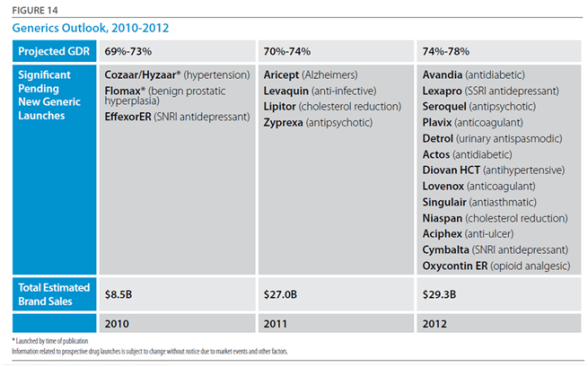
  • They give a clear chart on the generic opportunity and likely impact on overall generic fill rates for 2010-2012.

  • They go on to talk about specialty drugs which could be as much as 50% of the total spend by 2013…a scary prospect.
  • They have a good “state of the union” for specialty in the deck:
    • As of January 2010, 57 percent of all late-stage pipeline drugs fell into the specialty area.
    • 71 percent of applications for supplemental indications are for specialty products.
    • The number of new specialty drugs approved in 2009 was more than double the number of 2008.
    • Provenge, the first therapeutic vaccine—which utilizes the patient’s own DNA and stimulates the immune system to fight prostate cancer—was approved early in 2010.
    • Potential approvals 2010-2012 include four new products for multiple sclerosis (all oral), three for hepatitis C, and three for cystic fibrosis.
    • 18 of the products pending approval in 2010 target orphan diseases, which currently have few or no treatments.
    • While health care reform legislation provides for a pathway for approval of biosimilars, it also mandates a 12-year minimum exclusivity period for brand innovators with the possibility of additional exclusivity in 12-year increments for the development of new uses.
  • They then talk a little about pharmacogenomics (PGx). Again, I expect this to be a much bigger area in the future. It’s interesting. It’s changing rapidly. BUT, there is a huge education mountain for patients and MDs.

For a 1M member population, ~$12M is spent each year on 18 drugs that are administered to patients who do not respond and/or who are more likely to experience drug-induced medical complications.

  • I think some of the hidden gems begin on page 27 where they talk about their study on electronic prescribing:
    • 22.1% never filled their first claim. (why – samples?)
    • They found that those who had an eRx were most likely to fill than those with a paper Rx. (I personally would have bet on the other…i.e., that I have something physical in my hand that it would serve to remind me to go to the pharmacy.)
  • Another study towards the end was on abandonment (which they recently released more information on). It showed that copay, income, and whether it was an NRx (new start on Rx) were predictors of abandonment.
  • They also share work done around adherence focused on complexity of therapy – number of Rxs, number of MDs, number of pharmacies, and synchronization of refills. They talk about using this to score patients and predict risk of non-adherence. (I look forward to seeing more here since this seems very interesting especially in terms of focusing resources and developing a triage model.)
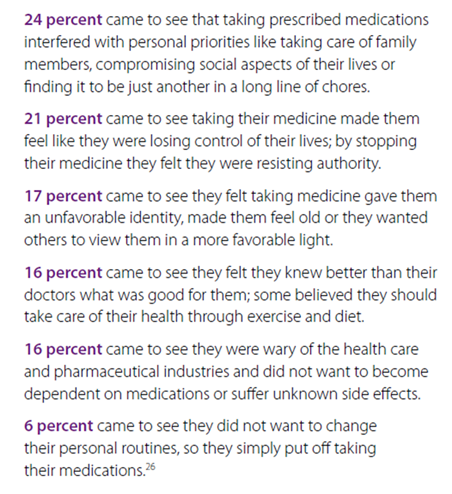
  • They shared the results of a deep dive on reasons for abandonment of prescriptions. Being able to respond and position messaging around these reasons is important.
  • They share some of the work from their Pharmacy Advisor program:
    • IVR messaging improved the odds of refills by up to 70.6% when members answered the phone.
    • Early IVR refill reminders were 2x as effective for first fill persistency rates at mail as compared to reminders after refill due dates.
    • Physician directed fax alerts about gaps in care nearly doubled gap closure rates.
    • Pharmacist interventions were most effective at improving adherence.
    • Members in VBID (value based insurance design) in which copays were lowered or eliminated were more likely to initiate therapy, less likely to discontinue therapy, and had better adherence.

“Diabetes is one of the most prevalent and expensive chronic diseases in the nation, costing the U.S. an estimated $174 billion a year,” said Troyen Brennan, MD, MPH, EVP and Chief Medical Officer of CVS Caremark. “The Pharmacy Advisor program improves clinical care because we are able to identify and address pharmacy-related care issues that if left unattended could result in disease progression and increased health care costs. We are also better able to engage the member in their care through multiple contact points, providing counsel that can improve adherence and help members optimize their pharmacy benefit and find the most cost effective options.” (quote from press release)

  • They talk about a pilot program they did in Polk County were patients signed a contract for care and was focused on diabetes care. It had some great results:
    • Reduction in blood glucose levels from 52% under or equal 7% at the beginning to 72% after one year.
    • 30% reduction in hospitalizations.
    • 24% reduction in ER visits.
    • Only 3.4% of enrolled members had poorly controlled diabetes (compared to national average of 29.4%).
    • Improved patient care – identification of potential adverse events, streamlined medication regimens, and formulary support.
    • (I personally would think this would get other plans (or PBMs) to partner with them on regional strategies where they have a strong retail presence.)
  • This also coincided with their announcements about their Pharmacy Advisor program which officially launches in January 2011. I’m very interested to see the uptake here which I would imagine will parallel the success of Maintenance Choice. This is a program which leverages their Consumer Engagement Engine (see image from last year’s report) and their retail presence to engage consumers.

Overall, it was an easy read without a lot of fluff. It cuts to the chase and gives you a good perspective on how they think. You begin to get a feel for what they are doing differently, but I imagine that you’ll continue to see a lot more research and case studies come out in the next year about some of the work they are doing.

(Note: In the sense of disclosure, CVS Caremark is a stock that I own.)

Todd Park (HHS CTO) On Unlocking Innovation Mojo (#mhs10)

I came out to the Mobile Health Summit (Twitter hashtag #mhs10) in DC today, and I had the opportunity to interview Todd Park who is the Chief Technology Officer (CTO) for the US Department of Health & Human Services (HHS). Todd is a great resource for the country and perhaps a surprising bureaucrat (in the nicest sense of the word) given his background as a consultant and then co-founder of athenahealth.

It was an interesting discussion starting around what his role is. The CTO role is a new role in the US government which he describes as an internal change agent who is responsible for working with HHS leadership. He described his objective as forming virtual start-ups to advance new solutions. [A radical departure for those of us that view government as a monolithic organization which is slow to change and full of red tape.]

He said that one of the first questions people ask when they see the new initiatives such as HealthCare.gov is who were the consultants he brought in from Silicon Valley to do the work. He says that it was all internal people. We talked about that being a cultural change which he described as “creating the right vision” and a “work pathway”. That sounds exactly like what one might see a change agent being responsible for – better leveraging internal assets by changing the framework for service delivery.

We talked about several of the initiatives that HHS has worked on lately:

  1. HealthCare.gov which is a focused on helping consumers find public and private options for healthcare. He said this was a 90-day implementation. I think if you go to the site you’ll see a few things:
    1. Easy navigation
    2. Content for multiple personas
    3. Links to social media
    4. Videos, widgets, blog postings, iPhone app, etc.

    This is much like what you would expect from a direct-to-consumer company or your health plan.

  2. The Open Health Data Initiative which is focused on taking data which HHS has and making it available for use by companies for FREE. The idea is to stimulate an eco-system around the data and enable better health thru better decisions. He uses the NOAA framework as an example for how they share data to sites like weather.com. He then mentioned that they had done a brainstorming session earlier this year to think about what could be done with this data (some of which was new to everyone). You can learn more and see the 2-hour YouTube video here, but a talk by Todd Park at another event is below.


  3. The Blue Button Initiative which was launched in October and focuses on getting Medicare members and veterans to get a copy of their own data to print, download, share, upload, etc. Already more than 100,000 have downloaded their data. This should certainly be an enabler for PHR adoption.

We then went on to talk about HHS as a “reservoir of innovation mojo” which needs to collaborate with the public sector. In Todd’s words, he sees government as needing to be a catalyst and enabler. When he joined, his idea was not to fly in like aliens and change HHS, but to come in and find ways to unlock the mojo which already existed.

I asked him if he sees this as being a model for the private sector. Obviously, one of the challenges we have everywhere is figuring out the right way to balance co-opetition and competition. If we’re going to “solve” our obesity epidemic, we need to have some collective knowledge and insights rather than constantly re-creating learnings in a microcosm. On the flipside, companies want to create intellectual property and sustainable differentiation. It’s not easy to balance.

But, Todd mentions that several companies are already following in the “blue button” model such as Gallup / Healthways which is making their Well Being Survey data available publicly (for FREE) for the top 200 cities.

Of course, there is a lot of work to do here. I asked him about what the government was doing to address some things at a national level (e.g., obesity) where in my mind we almost need a reframing such as that which happened with littering, smoking, or wearing our seat belts. He brought up three things that were happening:

  1. National Quality Initiatives
  2. HealthyPeople 2020
  3. Community Level Dialogues

One of the other things that we talked about was the challenge of making changes to health outcomes with the health literacy levels in the US. I suggested that we need to address this systemically as I believe we need to address financial literacy…beginning in the schools and the home. He talked about needing to making learning fun through educational games. He mentioned that the First Lady had been promoting the creation of apps to accomplish this as part of a competition. (This made me think of the iTots article in today’s USA Today.)

We closed with a quick discussion on other things that he’s monitoring that will drive healthcare innovation. He talked a lot about improvements in the provider payment system – think Accountable Care Organizations (ACOs) and Patient Centered Medical Homes (PCMH). The goal with these is the change from “pay for volume to pay for value”.

Talking to Todd gives you a positive view on what government can do. I can see him motivating his team and his prior teams to follow his vision and embrace change.  I’d have to agree with Matthew Holt’s article on Todd Park from earlier this year.

Express Scripts Model – DBN Article

I was quoted in yesterday’s Drug Benefit News with one of my favorite people – Dr. Steve Miller from Express Scripts.  This was a follow-up to talk about their predictive model for adherence.  Steve confirmed what had previously been reported that it is 85% accurate in predicting the 10% of people least likely to be adherent.  He says that the model takes into account past behavior, demographics, condition, and the drug.  Those sound like a lot of the right variables.

The article teases us with information that CVS Caremark is planning to publish a study in the upcoming months on their model.  Medco Health Solutions comes across as more of a skeptic in the article talking about efforts from 20 years ago that were difficult and expensive to execute. 

My quotes were very consistent with what I’ve shared on the blog – fascinating, somewhat skeptical, more concerned about the group that is somewhat adherent than those that are the bottom 10%, implementation of behavior change is more important that the model. 

“Everybody’s trying similar efforts in terms of how to predict adherence…but there hasn’t been a model that has proven itself as being a good predictor.  Maybe Express Scripts has cracked the code…I would assume that if you can accurately predict who is going to be adherent that will be a good tool.”

However, attempting to change behavior in the top 10% of patients likely to be nonadherent will be tough, Van Antwerp contends. “The industry is still waiting for that proof,” he maintains. “If we can predict that patients are adherent but can’t change behavior, then the model doesn’t do us much good.”