Archive | Research RSS feed for this section

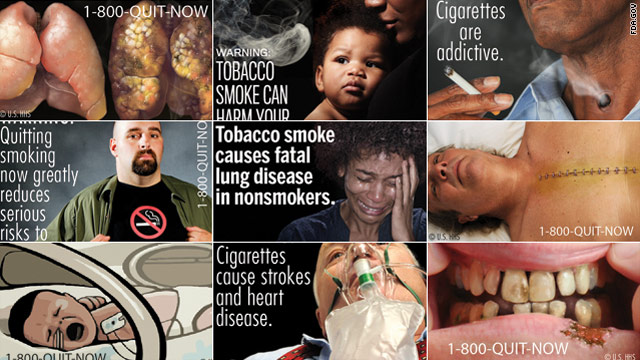
Prior fMRI Research Would Say That New Smoking Labels Won’t Work

I talked about this briefly in my review of the book Buyology, but in the book, the author talks about an fMRI study that showed exactly the opposite.  Warning labels don’t discourage smoking.  Of course, the logical question is whether graphics have a different impact than words.  It would be interesting to test, but I wonder if the FDA even considered this study in their analysis.  And, if they did, did they not believe it?

Here’s the labels which definitely get your attention but is it like believing you’ll win the lottery…it won’t happen to me; I won’t get addicted; I’ll only smoke socially.

BTW – A quick search tells me that I’m not the only one skeptical of the labels.  Discovery magazine has a more thorough story on this.

$5.2B In Savings From OTC And Patient Self-Diagnosis?

This is an interesting piece with some good data in it.  It estimates that 10% of physician visits are for minor healthcare items where an OTC (over-the-counter) drug could be used.  It then estimates that if 50% of those unnecessary visits were eliminated we could save $5.2B.  It will certainly get some political attention (which it already has).

I have a lot of questions:

  1. How does the patient know that their “ailment” is something to self-diagnose?
  2. Does self-diagnosis lead to new issues?
  3. What are the restrictions around OTCs versus Rx products?  [Look at Prilosec OTC which has labeling limiting it’s long-term use versus the Rx product which could be viewed as a maintenance drug.]
  4. Were there other benefits to the patient and healthcare system of them visiting the physician?

On the other hand, if I were a clinic company (think MinuteClinic or TakeCare Clinic), this would be great.  It’s proposing to move 26M physician visits to another channel.  I think the research believes this all jumps to Dr. Google, but I think it’s more likely that this gets pushed to clinics (and hopefully not to ERs). 

Sleepiest States And More On Sleep Impact

The impact of sleep on health is an important topic. 

Let’s begin with a list of the sleepiest states from CDC/WebMD which I came across.  It reports the percentage of adults who report not getting enough sleep:

  • West Virginia – 19.3%
  • Tennessee – 14.8%
  • Kentucky – 14.4%
  • Oklahoma – 14.3%
  • Florida – 13.5%

Some of the facts that I took from the other article I was reading in Experience Life magazine (Dec 2010) were:

  • People between the age of 32-59 who only slept four hours were 73% more likely to be obese than those sleeping 7-9 hours…and those that slept only 6 hours were 23 more likely to become obese than those sleeping 6 hours.  (Columbia University)
  • The average sleep of Americans has fallen from almost 9 hours in 1960 to just over 6.5 hours in 2009.  (National Sleep Foundation)
  • Nearly 1/3 of the population gets less than 6 hours of sleep per night.

Sleep impacts weight because leptin decreases and ghrelin increases when you don’t have enough sleep (2004 study in the Annals of Internal Medicine).  These are both hormones that control hunger.  Leptin tells the brain when the body has had enough food and ghrelin indicates that our energy reserves are running low. 


The Implication Of Personal Decisions On Health

I was reading Ralph Keeney’s article “Personal Decisions Are the Leading Cause of Death” over the weekend. It’s very interesting. He attributes 1M of the 2.4M deaths in 2000 in the US to personal decisions that we make. And, unfortunately, he says that retrospective analysis would suggest we’re on a bad trend line of increasingly being responsible for a greater percentage of our deaths.

The article points out that the fact that these are personal decisions makes this a manageable issue.

  1. We can engage consumers to take more responsibility for their healthcare.
  2. Improving decision making is less expensive and in some cases more effective than other options.

“A personal decision is a situation where an individual can make a choice between two or more alternatives.”

“A premature death resulting from a personal decision is defined to be one where an individual dies sooner than would have been the case if a different choice had been made.”

The premature deaths attributed to personal decisions in the article are:

  • Smoking
  • Weight
  • Alcoholic diseases
  • Accidents
  • Suicide
  • Unprotected sex
  • Homicide
  • Illicit drugs

If you go read the paper, you can see how he breaks down each of these areas.

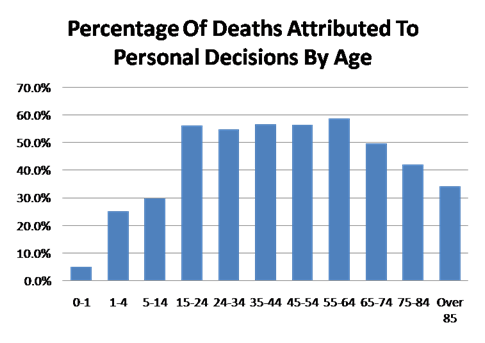
What I also found very interesting was the breakdown of the percentage of deaths by age group that are attributable to personal decisions. [I honestly expected it to peak earlier, but I think the fact that 80% of the impact is from smoking and weight that it takes time to see that impact.]

“Take control of your own health. Studies show that at least two-thirds of cancer deaths can be prevented by not using tobacco products, maintaining a healthy weight, getting plenty of physical activity, eating health foods, and avoiding the midday sun and protecting the skin with a hat, shirt, and sunscreen.” (Quote from the American Cancer Association)

A key question is whether people feel responsible for their own health. A 2009 survey by Thomson Reuters showed that those with a higher education level had a much stronger sense of that ownership (71.2% for those with a college degree versus 47.5% for those with less than a high school education).

The article made me think of a few things:

Much like Silverlink Communications, many healthcare companies are very focused on consumer engagement. As this article points out, getting consumers to understand the impact of their decisions on their health may be a very effective way of reducing premature deaths. That should also reduce the burden of chronic conditions on our economy.

“Seven chronic diseases…have a total impact on the economy of $1.3 trillion annually. Of this amount, $1.1 trillion represents the cost of lost productivity.” (Milken Institute)

While we typically focus on throwing money or incentives at the issue, this may not always be the answer (see post on the book – Drive). There are many simple interventions to help address health literacy and help consumers understand the need to take action (see post on cured after the first fill). Creating personalized communications that address people’s barriers is a critical success factor for healthcare organizations. There are several critical success factors to consider:

  • Help consumers understand the need for the action (WIIFM)
  • Make it simple so they can fit it into their busy schedules
  • Coordinate with the physician
  • Address their fears
  • AND, be cognizant of cost and the burdens this can cause (see recent article on OOP spend for people with cancer)

A Few Emergency Department Facts

I found this quick list of facts in HealthLeaders (May 2011) which I thought was worth sharing:

  • In 2008, 124.9M people visited an ER in the US.
  • More than 9 out of 10 ED visits were related to acute conditions.
  • Injuries comprised 1 in 4 ED visits for adults.
  • ED visits for people ages 65-74 have increased the most over the past decade and are projected to double from 2005 to 2013.
  • In 2007, 10% of the population under age 65 visited the ED for reasons that were considered non-urgent.
  • ED visits increased by nearly 22M between 1997-2007 (23% faster than the US population grew).

So, what’s the issue here:

  • Lack of access to care
  • Difficulty getting into a PCP or clinic during regular hours
  • A lack of understanding of how and when to use the ER
  • Increased anxiety about conditions
  • Putting off care until the last minute

Or, I guess the flipside of the coin is that this is ok. My impression has always been that the ER is overused and has lots of inappropriate use.

Forrester On Automated Customer Service

I was reading a report that Nuance commissioned a few years ago with Forrester Consulting about using automation for customer service. It’s worth a read (and publicly available here) if you work in the customer service space and get questions from your clients about automation versus agents. Here are a few things that caught my eye:

  • Consumers who use cell phones to call into customer service are relatively more interested in using automated telephone systems for customer service interactions. (Hint: You could probably reverse that logic also to say that they are most receptive to outbound IVR also.)
  • Consumers rate automated customer service higher than live agents for certain straightforward interactions (including Rx refills).
  • Once they engage with automation, 74% of consumers typically stick with the process.
  • 12% liked automation because of privacy and not having to divulge information to a person. (Something we’ve seen at Silverlink in multiple healthcare scenarios.)
  • 81% of people surveyed were interested in proactive notifications around healthcare via automation (e-mail, voice, SMS).
  • People prefer being steered to answers versus just being able to respond and have the system understand them. (i.e., give me a list of options)

Very interesting. It maps well to a lot of our best practices and how we consult with our clients in designing healthcare engagement strategies. (Of course, you have to make sure you use create engaging, personalized messaging in these channels to optimize success. Van Antwerp household is the same as Dear Resident to me…and if I have 5 drugs and 3 conditions, a generalized call to action won’t get much response.)

What I Learned In PharmaVOICE

I’ve been reading the magazine PharmaVOICE for the past year or so. I really enjoy it. I occasionally pull a few articles out.

I was reading the March 2011 version on the plane and found a ton of interesting information. I thought I would share some of the nuggets from it:

  • In 2010, 112M people (48% of US adults) were e-pharma consumers (individuals who went online to find pharma information). (Manhattan Research)
  • Fewer than 20% of consumers who go online for pharma information mistrust pharma websites (branded and unbranded).

“We found the degree to which consumers are open to online content from manufacturers surprising, considering the common perception that consumers are generally critical of pharma generated information.” (Manhattan Research Healthcare Marketing Analyst Maureen Malloy)

  • Top Prescribing-Driving Sites (Manhattan Research):
    • Levitra
    • Chantix
    • Cialis
    • Nexium
    • Yaz
    • Lyrica
    • NuvaRing
    • Symbicort
    • Viagra
    • Lunesta
  • Talk about how research is now “peer reviewed” via social media – original article.
  • Talk about the Sanofi-Aventis blog – Discuss Diabetes – which enables two-way conversations with patients in public.
  • Talk about how Merck is helping patients engage with consumers using online videos and checklists.
  • Talk about a text messaging service focused at teens and young adults for adherence – www.ireminder.com.
  • An interesting article by Ogilvy about 8 Health Engagement Zones and 7 things to keep in mind about public and individual communications:
    • Technology is not a panacea…it has to be adopted and incorporated into everyday behavior.
    • Information must be communicated and interpreted effectively to change behavior.
    • To cut through the “clutter”, information will increasingly be communicated via story-telling and visualization.
    • Technology will allow us to create the right message with the right tone in the right place at the right time. [or already does allow for this with the Silverlink Platform]
    • Health messaging will become personalized. [already happening]
    • Highly targeted, persistent, positive messaging will be needed to help overcome fear and embarrassment.
    • Although health is a serious matter, we don’t always have to take ourselves seriously when it comes to health communications. (e.g., gaming)
  • In the year ending Oct. 2010, $4.4B was spent on DTC advertising around pharmaceuticals.
    • Pharma 3.0 success will be “based not on how many drug units are sold, but on how well pharma’s market offerings improve health outcomes, putting patients and payers at the center of the model”.
    • Pharma investments in condition support tools – smartphone apps, websites, devices, and social media – was up 78%.
  • In a recent Harris poll, only 11% of respondents perceived the pharmaceutical industry as generally honest and trustworthy.
  • According to SDI, there’s been a shift in spending from 2007-2009:
    • 30% decrease in print
    • 32% increase in online activities targeting physicians
    • 29% decrease in magazine DTC advertising
    • 300% increase in internet advertising
  • Learned about a physician “hotlink” (my name) by AstraZeneca where they can connect with the AZ medical affairs team by a feature on their iPhone – formulary status, adverse event reporting, request samples, …
  • Similarly, learned about an “Ask Pfizer” button in Sermo.
  • According to the Manhattan Research’s ePharma Consumer v10.0 study – almost 3/4th of the people visiting pharma websites take a product related action afterwards. (That’s amazing!)

“When pharma is thought of as a health-services industry, the possibilities for growth in revenue, engagement, personalization, and freedom from pipeline dependency are almost endless.” (Paul Simms, eyeforpharma)

  • A list of manufacturers and what percentage of their portfolio is at risk in the next 3 years for patent expiration:
    • #1 Pfizer with $53.6B and 68% of their portfolio
    • #2 Lilly with $20.8B and 66% of their portfolio

“The industry has to address the consumer population across multiple channels with information that is timely, easy to understand, accurate, and actionable.” (Deborah Schnell, Health Advice Networks)

  • There was an article discussing a great question about whether “brand equity” exists after patent expiration.
  • There was talk about the shifting “customer” of pharma from the physician to the consumer and the formulary committee.
  • There were some statistics from a Tufts study on REMS where 75% of people thought the program needed a major overhaul.

I shared a lot here to make a point…this is a monthly magazine packed with interesting content. If you’re in this space, you should be reading it.

DAW Rxs Impacts Adherence

5% of the prescriptions analyzed by CVS Caremark in a study were DAW (or Dispense As Written).  Obviously, for SSBs (single-source brands) this doesn’t matter since there isn’t a chemically equivalent generic drug.  But, for MSBs (multi-source brands) this can make a difference since the patient is often required to pay significantly more based on either (a) the drug being on the 3rd tier or (b) the plan design requiring the patient to pay more for “chosing” the brand over the chemically equivalent generic.

I guess one easy answer would be to get rid of DAW, but there are NTI (narrow therapeutic index) drugs where DAW is much more  relevant or the rare consumer who has some allergy to the fillers in the generic. 

So, why does it matter?  It mattes because the researchers found that

“chronically ill patients just starting critical therapies were 50% to 60% less likely to fill prescriptions for expensive brand name drugs” (Drug Benefit News, 4/1/11)

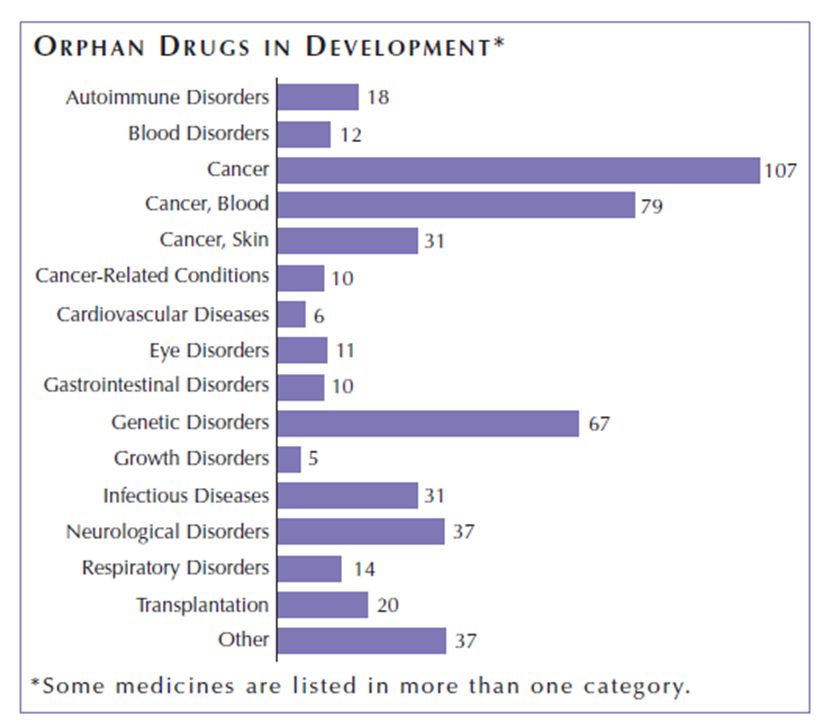
400 Orphan Drugs In Development

A report from PhRMA looks at rare diseases and orphan drugs.

An orphan drug is a pharmaceutical agent developed to treat a disease that affects less than 200,000 people in the US.

While individually this may not seem like a big market, it is estimated that 25-30M Americans suffer from a rare disease.  And, developing therapies for these unique conditions can allow for price premiums. 

At the end of the document, they have some FAQs and suggest some websites.  Here’s one FAQ:

How can you find out about clinical research on rare diseases?

There’s a web site that was just set up a few years ago by the federal government. It’s called www.clinicaltrials.govIt’s important to remember “.gov” because there are some commercial sites that have similar names. Every research project receiving any money from the U.S. government must be listed on this site. It’s a requirement. You can type in the disease name and find all sorts of information about the studies, where they’re being conducted, what is needed to be eligible, and who to contact to learn more about participating. If you don’t have a computer, ask your local librarian to help you search on that web site.

Medco Follow-up On Questions RE: 2011 Drug Trend Report

In my post a few weeks ago, I had four questions which my initial read of Medco’s Drug Trend Report had generated. I just got the answers to them…

Q: ADHD trend continues to increase.  With the new DSM-5 proposal, it looks like there will be more teens and adults diagnosed with adult ADD.  Do you see this accelerating the trend in this category even more? 

A: The proposed changes to the diagnostic criteria for ADHD / ADD in the DSM-V include changing the age of onset limit (on or before age 12, instead of age 7) and lowering the required number of symptoms which effectively will “loosen” the criteria and permit doctors to more easily diagnose the condition. If this indeed takes place, we would expect some further acceleration of the ongoing upward trend in ADHD drug use.

Q: As generics get closer to 80%, the remaining brand drugs will have to try new strategies to sustain utilization.  One of the growing tactics is copay coupons or cards.  Do you see this as an issue?  Are there tactics that you intend to use to address these through POS programs or other programs?  

A: Medco believes the best way to manage costs for both patients and payors is through the use of clinical and managed care programs that incentify the use of lower cost alternatives when clinically appropriate.  

Q: You talk about clients spending less PMPM on members age 0-18 which seems to run counter to the focus from last year on more, younger patients using maintenance drugs.  What do you attribute that drop in spending to? 

A: Because the prevalence in the pediatric category is so much lower than that of the adult population utilization/prevalence can trend higher than adults, but spend could be down, especially since there is much heavier use of specialty medications in the adult population. It’s a trend versus spend look.

Q: You bring up biologics.  It’s unlikely that biologics will generate large price drops as we’ve seen from generics.  What do you estimate will be the savings associated with biologics and will we see therapeutic interchange programs or will you manage the biologics more like a step therapy program? 

A: The industry is awaiting the final FDA guidance for approval and possible interchangeability of biosimilars. The estimates are that biosimilar will be priced in the range of 15% to 30% of branded product pricing. And as with generics, it is anticipated as biosimilars become increasing more accepted and completion begins within the biosimilar market itself, saving may increase overtime. 

Up To 200,000 MDs Require eRx Exemption From CMS

Electronic prescribing has been an effort for at least the past decade and significant progress has been made (see Surescripts latest report). That being said, we all know that changing behavior in the office setting is difficult. It has been the bane of many a technology vendor in the healthcare space.

On the one hand, I’m not surprised to see that lots of physicians might apply for an exemption from CMS around electronic prescribing.

BUT, I was surprised by several things in this article:

  1. Some physicians simply used electronic prescribing to write the 10 scripts required and then turned it off.
  2. The fact that there could be so many doctors that fit the approved exemptions.

The exemptions are for physicians who:

  1. Practice in an area with limited high speed Internet access.
  2. Work in an area where a limited number of pharmacies accept electronic prescriptions.
  3. Cannot prescribe enough drug orders electronically due to local, state, or federal laws (e.g., controlled substances).
  4. Have limited prescribing activity. [but yet still see a lot of Medicare members]
  5. Have insufficient opportunities to report the e-prescribing measures because of their patient type.

I didn’t think that could get you to 200,000 physicians (who were actively working with Medicare patients). The one that seems most feasible is for physician who register to participate in the Medicare or Medicaid EMR incentive program AND both adopt and use the technology by the 2011 deadline. They can also get exemptions.

Physicians care because they have to:

  • Prescribe electronically 10 times before June 30th to avoid a 1% penalty on all Medicare payments in 2012 or
  • Prescribe more than 25 times before Dec 31st to earn a 1% bonus in 2012.

Depending on your patient base, this seems like a pretty good business case to at least get a system in; write for 26 prescriptions; and collect your bonus.

Less Likely To Take Your Statin After Surgery

A recent study looked at people who were hospitalized for heart disease. It then tracked people’s use of statin medications (e.g., Lipitor) for the next year and looked at their adherence based on whether they had surgery or were simply discharged with a prescription.

SURPRISE – 70% of people who had surgery stayed on their statins for a year while 79% of those who didn’t have surgery stayed adherent. (thanks to Box Cutters for sharing this)

This begs a whole lot of questions:

  • How did they get the people to be so adherent in the first place? (this seems higher than the national statistics)
  • Did the surgery patients feel like they were “cured”? (see post on similar issue)
  • Was the statistical difference true at a location or prescriber level also? (i.e., was it simply that some locations or prescribers always wrote a script and talked about adherence or was it really a patient difference?)
  • Were the patients who had surgery sicker to begin with and therefore on more medications (which would reduce their likelihood of being adherent)?

On the other hand, this is perhaps another warning flag on the whole hospital readmissions issue where we have to address issues of health literacy, follow-up, discharge process, support network, and medication reconciliation.

The Customer Experience Matters Healthcare Nuggets

Are you focused on the customer experience?  If yes, then you should know who Bruce Temkin is and look at his research.

I follow his research mostly through his blog, and you can find teasers of information on healthcare by what he posts.  I thought I’d pull together a few of those things here:

1. In his loyalty ratings, Walgreens was one of the top 20 companies recommended to friends while Cigna, Aetna, Humana, Anthem, and BS of CA were all in the bottom 20.  [I’m not sure this should surprise us.  I would expect CVS was close to the top with Walgreens.  I’d assume many people don’t “recommend” their insurance companies in general.  I’ll have to try to find out if the PBMs appear on here.]

2. In his forgiveness rankings, retailers like CVS, Walgreens, Walmart, and RiteAid scored well.  TriCare scored very well.  Medicare and Medicaid had good scores, and Kaiser was the only health plan in the top 70.  [This is a key issue for retention and important in the retailization of healthcare…you will make mistakes so the question is how much good will you have to overcome those mistakes.]

3. In his loyalty rankings, you find out that African Americans are much more loyal to their health plans than Hispanics or Caucasians.  [How does this change your engagement strategy?]

4. Bruce even goes on to quantify the value for different industries.  For healthcare, he estimates that a $1B company could improve it’s topline by $179M / year by improving its customer experience.

5. In his experience ratings, he shares some specifics on health plans (see below):

And, I suggest you read some of his thoughts on changing how we analyze data.  I think his points about “contextual insights” make a lot of sense.

The Cost Of Being Fat

With over 60% of Americans overweight or obese, this is a real issue for us as a nation.  You see more and more focus on it on TV, in our schools, and in the overall healthcare system.  So, what are the costs of being overweight:

I could go on about linking depression and obesity and to talk about genetics, but I think you get the point.  While it’s not easy (from personal experience), it’s an important topic for us all to continue to focus on.  For us to fix healthcare in the US, we have to think outside the system itself.

Pharmacy Reimbursement Needs To Be Re-Aligned With Effort

I know this is not a popular topic, but I really believe that reimbursement on a per Rx basis in misaligned.  Today, a pharmacy (retail, mail, specialty) is paid based on either a discount off a standard price (e.g., AWP) or based on a MAC (maximum allowable cost) list.  They may also receive a dispensing fee.  According to the latest PBMI Benefit Design Report, those dispensing fees are:

  • $1.62 retail
  • $2.33 mail (noting that only 21% of their surveyed employers pay dispensing fees at mail)
  • $3.26 specialty

And, the reimbursement rate is the same whether it’s a new Rx or a refill.  Does anyone out there believe that the amount of effort to fill a new Rx and a refill is the same?  Why not pay differently?

An industry number that has held up anecdotally when I’ve talked to lots of people is that 40% of new Rxs require some type of work to become a “clean Rx”.  That might mean that they are subject to a utilization management program (step therapy, prior authorization, quantity level limit).  It might mean that there is a DUR issue such as a drug / drug interaction which has to be addressed.  It might mean that the drug isn’t covered.  It might mean that the cost is too much based on formulary tier.

Additionally, the first few times a patient fills a drug is when they have questions.  When do I take the drug?  Are there any side effects?  Should I avoid any foods?  Should I eat with my meal?  Are there alternatives?

Once the patient has titrated to the right strength and is taking their medication on a regular basis, the job is pretty much to count the pills and get them to the patient in a timely manner.  It has been my argument for a while that if we could fix this reimbursement misalignment then you would see a better coordination between retail and mail order.

The right model in my mind shifts reimbursement dollars through dispensing fees or some other payment structure to compensate for these cognitive services on the initial fill and acknowledge where the effort is.  I believe this would allow for a “mail at retail” type model of central fill or a kiosk model at the store or encourage retailers to better support mail order efforts when appropriate.

Everyone is aligned (at some level) with getting patients to:

  1. Start on the appropriate medication
  2. Understand their medication and their condition
  3. Make appropriate choices that lower overall costs to the payers
  4. Stay on their medications
With that said, it seems like there is an opportunity here.  It won’t be easy, and I don’t hear anyone talking about it…but I’ll continue on my soapbox for now.

Short Survey On Copay Cards

Are they good?  Are they bad?  Are there times when they should be used?  Will they replace rebates?  When are they used?  Do they work?

AIS (Drug Benefit News) has asked me to do a webinar on copay cards in early July.  This is a hot topic area with limited information out there.  Rather than simply offer my opinion, I thought I would reach out to those of you that work in pharma, PBMs, retail pharmacies, and health plans to capture your opinions.  I put together two brief (<10 question) surveys, but I’m also happy to talk live if you’d prefer. 

 If you don’t feel like you’re the right person or you feel like you know others that would respond, please feel free to forward this to others.  I’m happy to share the results back with those of you that participate.  Thanks.   

 The survey for physicians and manufacturers is here – http://www.surveymonkey.com/s/ZQVM7DK.

 The survey for pharmacists, PBMs, and payers is here – http://www.surveymonkey.com/s/ZSBS32Y.

 Have a great holiday weekend!

Highlights From The CVS Caremark Insights Report 2011

CVS Caremark has been on a roll lately releasing lots of research especially in the adherence area. They just released another study this week that said:

In a study published online this week in the Journal of the American Pharmacists Association (JAPhA) the researchers said,”Approximately one-half of caregivers reported they are more likely to forgo their own medications than the medication needs of their caregivees, especially if cost was a problem, and that caring for their family members was more important than caring for themselves.” The researchers added, “Our findings indicate care-giving status may be an important characteristic for providers to identify and that caregivers may represent a fertile target for adherence interventions to improve chronic disease management and prevent chronic disease.”

But, today, I want to focus on their drug trend report called Insights which was released a few weeks ago. The report begins with a focus on change pointing out a few facts which will change our healthcare experience. Here’s part of the introductory letter by Per Lofberg, the President of Caremark Pharmacy Services.

We all know change is a constant, in this industry and in life, but the change we face over the next several years is monumental and unprecedented. The sweeping nature of the health care reform legislation makes it difficult, as even the government admits, to predict how the system and its stakeholders will respond. Regardless of how much is unknown and “still to be determined” about reform, all of us continue to face the urgent, ongoing need to reduce health care spending and simultaneously improve health outcomes.

They take a different approach than Express Scripts (see review of this year’s drug trend report) and Medco in their drug trend reports which are more encyclopedic in their breakdown of class by class. CVS Caremark poses questions by group and then presents data to address those questions.  They focus on health reform and overall changes to the market dynamic.  [Both Adam Fein and I review most/all of these reports every year so I’d encourage you to look at both of our blogs if you want historical facts or comments about comparing the drug trend reports.]

  • Employer: Benefit costs are hurting our profitability. Something’s got to change.
    • Only 6% of employers believe their company will be better off as a result of healthcare reform.
  • Health Plan: How do I compete, comply, and control costs in this new world?
    • 120M members will be seeking or changing coverage between 2012-2016.
  • Physician: My practice is already stretched to the limit.
    • The US will have about 159,000 fewer doctors than it needs by 2025.
  • Consumer: Where do we go from here?
    • In 2010, 1 in 4 households reported having trouble paying medical bills.

Key Statistics:

  • Overall trend = 2.4%
  • Non-specialty trend = 0.8%
  • GDR for 2010 was 71.5%
  • Specialty trend = 13.7%

Specialty now makes up 14.2% of their BOB (book of business) overall spending…[something that some people are predicting will be close to 40% in under 5 years].

I really like how they breakout the charts by type of client (employer, health plan, and TPAs) since they have different approaches to trend management. Here’s the health plan one:

They talk about some of the future trend influencers:

  1. Economy
  2. Aging population
  3. Chronic condition prevalence
  4. Changing condition guidelines
  5. Health care reform
  6. Adherence
  7. Generic launches
  8. Specialty growth
  9. Brand price increases
  10. Less predictable events – weather, flu impact

Like others…they are saying that GDRs (generic dispensing rates) of 80% are now possible by 2012! Talk about a change in the past decade and why there is so much pressure on the manufacturers.

They mention it in the publication, but they’ve also issued some press about their effort to target the specialty spend that happens under the medical benefit. They estimate that 80% of the drug spend in the medical benefit is from specialty drugs with cancer representing 46% and three other categories representing more than 2%:

  • Anemia and neutropenia
  • Osteoarthritis and RA
  • Immune disorders

Given their broad footprint, they pose an answer rather than a question from the next constituent – the pharmacist:

I know I can make a real difference for people.

One of the big areas of focus for leveraging that F2F relationship is adherence:

They provide an updated statistic on average Rxs PMPY of 12.6.

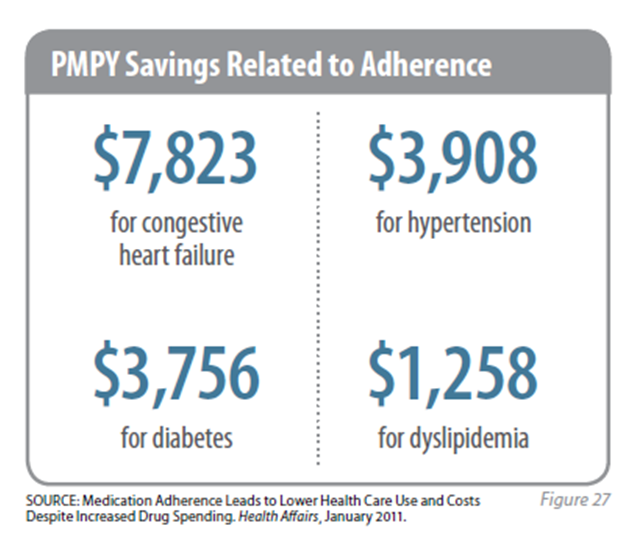
One of their big studies from the year was the one that was published around savings related to adherence:

I’ll end with a statement they highlight at the end:

“Every member interaction is an opportunity to improve outcomes for the plan and the member.”

A Few E-mail Facts

Fast Company had an article the other day with some great stats on email:

  • There are 3B email accounts worldwide.
  • Email use by seniors increased by 28% from 2009-2010 while use by teens dropped 59% in. That same time.
  • The average business person sends 33 emails per day. [maybe on a day when I’m in meetings for 9 hours…that’s really low]
  • 89% of all emails sent are spam!
  • Only 8% of emails sent are business related.
  • In 2010, there were 107 trillion emails sent; 25 billion tweets; and 170 billion pieces of mail.

Pharmacy Kickoff At #RESULTS2011

I’m currently presenting at our client event (see twitter hashtag #results2011 for real-time comments). My presentation is an extension of my white paper on the future of the PBM / pharmacy industry along with a blend of data from our annual client survey and Silverlink Communications best practices with a focus on our work around medication adherence. It also builds on my thoughts from NCPDP that I shared late last year.

Here are a few of the points I touch on:

  • Avoiding being commoditized by adding value
  • Keys to success with a focus on:
    • Evidence-based approaches
    • Consumer engagement
    • Patient experience
    • Cross-channel coordination
  • Adherence and other priorities
  • How to use SMS to drive self-service
  • An approach to condition management in hypertension and diabetes
  • Focus on the “un-engaged” but don’t forget about the engaged consumers
  • Case studies and research around adherence
  • Timing and sequencing of direct mail, automated calls, and e-mail
  • Measuring “trust”

Here’s a teaser of some of the slides I’m presenting:

Walmart: Good or Bad for the PBMs

I think this is a question many of my PBM friends would like to know. Fortunately, a few of the Walmart people that read my blog and are part of their Health and Wellness group agreed to sit down and talk about their strategy.

Let’s start with setting some background:

  • Walmart was the first to introduce the concept of $4 generics which originally caught the market off guard and has created lower generic costs and free antibiotic programs at several pharmacies. [I would also argue that it highlighted the fact that generic copays were getting too high.]
  • Walmart was the first to work directly as a pharmacy to create a limited network contract direct with an employer (Caterpillar).
  • Walmart has partnered with Humana on a limited network offering for Medicare.
  • Walmart came out with a direct to consumer mail order pharmacy offering.

If you follow the industry, you know that all of these things were potential game changers (if they’ve worked).

This creates some tension:

  • Is Walmart simply a catalyst for change in the healthcare space?
  • Does Walmart (pharmacy) want to disintermediate the PBM?
  • Is Walmart able to make money where others can’t?
  • Does Walmart get more foot traffic such that pharmacy can be a loss leader?

Here is the Q&A [interpretive not literal] from my dialogue with Marcus Osborne (Sr. Director, Business Development, Healthcare, Walmart) and Tom Hill (Director, Health Services Development, Walmart).

What is Walmart’s Health & Wellness strategy?
Walmart wants to help consumers “save money and live better”. That is our DNA and our fundamental approach to the market. Pharmacy has presented a unique challenge since consumers often have the same copay regardless of which pharmacy they went to. Even when it’s a percentage copay, the savings differential might not be much to the consumer. Walmart was disconnected from the consumer in the traditional pharmacy pricing approach. That has driven us to look at unique ways that we can create savings.

How does Walmart decide what “offerings” to bring to market?
Walmart looks at ideas that focus on our EDLP (Everyday Low Price) concept and leverage our supply chain efficiencies. We are constantly looking at non-store operational opportunities to work directly with key companies. We currently have over 20 direct relationships with managed care companies and PBMs where we are working with them to drive down consumer costs in the pharmacy and broader healthcare area.

Obviously healthcare is bigger than pharmacy. What other things are you doing to drive healthy eating, management of critical conditions, or other programs? We’re constantly looking at what’s needed in the healthcare sector and where to invest. We focus on our two key advantages:

  • Willing to trade profit for volume
  • Value of the total “box” [store]

A good example is the work we’ve done around “Healthy Mom Healthy Baby” in Medicaid. We looked at the issues of high pre-term labor and the high rates of injury post-birth. We felt like we had a moral and cost imperative to take action. As part of this, we worked with several managed care groups to redefine the entire process and look at our unique assets. Our solution includes:

  • Free pregnancy tests
  • Free pre-natal vitamins
  • Rewards for free diapers and other supplies tied to physician visits and other health activities
  • Free car seats
  • Leveraging our physicians and clinics

[I was impressed…this was a broad solution that looked at a lot of their assets.] We’ve also created several diabetic specific solutions; a smoking cessation program with Healthways; weight management programs; and women’s and men’s health programs. The focus is on payers that are at risk for their healthcare spending with more to come from clinics.

Will Walmart become a PBM?
No. We’re not looking to go into the PBM market. We’re supply chain experts. We see value in the PBM model. [We talked a little about the fact that “you are what your profits say you are” meaning that the PBMs have painted themselves into a profit corner where their profit comes from generics at mail order so any threat to that is a challenge.]

If the Caterpillar model was so successful, why haven’t others adopted it?
The reality is that over 400 employers have contracted directly with Walmart for a limited network model similar to Caterpillar. They are all seeing significant savings.

Does Walmart see the market through “different glasses” than others?
No. We still want to have the pharmacy be a profit center. We’re not looking to bottom out the market, but we are willing to trade lower profits per transaction in return for more market share. At Walmart, it’s not about maximizing revenue/Rx or profit/Rx…it’s about total revenue and total profitability. [A very different strategy than other CFOs which would say you can’t expect volume to make up for lower profitability.] Obviously, we also have the opportunity to get non-pharmacy sales associated with food traffic. One thing that may be is different is the fact that we believe scale should drive down costs. In pharmacy, the biggest players are always trying to command a premium. We think it should be the other way around. We also have been able to get our cost-to-fill to be the same at retail and mail so we’ve become channel ambivalent.

Have these programs improved market share in any significant ways? You have to look at the programs separately, but overall we’ve seen our market share increase from 6% overall [when the $4 generic program launched] to 10% now. The network design strategy has had great success. We look at three types of programs:

  • Incentive based networks
    (Caterpillar 1.0) where all the pharmacies are in the network, but there is a lower copay to go to certain pharmacies. If only 15% of pharmacies are preferred, their market share doubles. If Walmart is the only preferred pharmacy, their market share goes up 4x.
  • Limited networks where some pharmacies are removed from the network. If you drop the network significantly, they’ve seen their share go up 2-3x.
  • Limited networks with preferred pharmacies where you some pharmacies are removed from the network, but within the remaining pharmacies, there are still incentives to go to certain stores (Caterpillar 2.0). In these cases, they’ve seen their share go up 10x.

The $4 generics program has helped increase market share by an estimated 150 basis points. In many cases, companies that initially jumped to offer similar programs have dropped them. They couldn’t sustain them.

The Medicare program with Humana has been very significant and successful [as demonstrated by Humana’s huge jump in Medicare lives].

The direct-to-consumer (DTC) programs for mail have been pretty limited and haven’t had a huge impact, but they’ve been offered in markets where we have no stores (e.g., Detroit and NY) and therefore almost no share to begin with so any share is a gain.

People complain about the pharmacy location within the store. Would you ever consider a direct access point to the pharmacy which didn’t involve going through the entire store? This is a very hot topic. We did a lot of research about store design and what goods should be located next to each other, but in the end, we’re considering moving the pharmacy closer to the front entrance. Right now, 25% of the stores have a drive-through pharmacy which gets utilized at a very high rate. But, this does lose the pharmacist face-to-face benefit. [At the end of the conversation, my take is that they are looking at lots of scenarios here and trying to figure out the balance of convenience to the pharmacy only consumer and how to optimize the entire footprint.]

The partnership with Humana really seemed to help them grow their Medicare lives this year. How did this come about? We both were looking for new solutions to leverage the fact that scale matters and how to operate within the CMS parameters. We felt like there was an opportunity to do something different and began speaking with plans about some limited network ideas. We know that Walmart is over-indexed in the 65+ category based on store visits per week. Based on that, we were looking at what we could do to offer them more value as compared with our traditional, core customer of 35-50 year old females. Through a series of conversations, the partnership was born. We’re very happy with the relationship and believe they are also.

Limited networks have been around for a long-time with limited adoption. Do you think their time has finally come? What has changed? They have been around, but historically the networks weren’t limited enough to create enough savings to overcome the “costs” of disruption to the payer. Based on our experience at Caterpillar, we believe that you will see a transitional period where companies first move to incentivized networks and then 1-2 years later move to limited networks. [Something I would compare to the transitions which have happened in formulary over time.] The one area where we do see limited networks happening more rapidly is in the area of Managed Medicaid. [This plays into the focus of PCMA and others on the PBM opportunity around Managed Medicaid.]

It was a great discussion. I learned a lot. They allowed me to ask them a lot of questions about their programs and approach that honestly had led to some skepticism in the past. It sounds like they’ve brought together a great team with a broad vision of what they can do in pharmacy and in health and wellness overall. It has gotten my mind thinking about ideas, and I look forward to learning more.

[BTW – You can sign up to get posts like this e-mailed to you whenever I write them.  A registration link is in the right hand column.]

10 Things To Know About Engaging Patients

I just finished reading this publication by the Institute for Health Technology Transformation. Lots of quick nuggets of information summarized here. Let me share a few:

  • 88% of American adults with Internet acces research health information online; 60% say that the information they found influenced a decision (Pew)
  • Top sites (Alexa rankings) are NIH, WebMD, and medicinenet
  • 94% of patients say they at least sometimes forget important things they were told by their MD (Markle Foundation)
  • Only 3% of people have been harmed or know someone that’s been harmed by health information they found online (Pew)

They go on to provide some good usage statistics by age group; data around caregivers; data around who’s trusted and PHRs; and research from AARP and with Dr. Hibbard that shows the impact of engagement on outcomes.

Medicare Lives By Plan

Medicare has been a big area of focus for a lot of plans and subsequently for a lot of PBMs who manage the PDP plans.  The biggest area of discussion is around the STAR Ratings.  And, that’s important because if you look at data from the WilsonRx reports there is certainly a correlation between PBM satisfaction and health plan satisfaction. 

So, the question is who has the Medicare lives today and who are the big winners YTD (source – CMS and Citi Investment Research and Analysis – summarized by Carl McDonald and team at Citi):

For a detailed breakout of PDP lives and the huge win by Humana going into 2011, I would suggest reading Adam Fein’s post from a few months ago on DrugChannels

And…if you haven’t been following it, it looks like Medicaid is the green field that everyone is eyeing.  The savings from managed Medicaid are getting discussed in multiple states especially around pharmacy.  I just had a call today where the executive predicted that managed Medicaid would be the feather that finally broke the back to get limited networks more traction (interesting!).

Summary Of Big 3 PBM Drug Trend Numbers

All of the big 3 PBMs have now reported their drug trend for 2010.  How do they compare?  [acknowledging that methodologies are different]

  1. CVS Caremark = 2.4% (0.8% without specialty)
  2. Express Scripts = 3.6% (1.4% without specialty)
  3. Medco = 3.7% (1.1% without specialty)

Now, I’ll reiterate my points from the past which are:

The Medco Drug Trend Report Is Out

Medco just released their Drug Trend Report this morning. For the second year, I got invited to their press call, but unfortunately, I had to miss the call. I sent in four questions:

  1. ADHD trend continues to increase.  With the new DSM-5 proposal, it looks like there will be more teens and adults diagnosed with adult ADD.  Do you see this accelerating the trend in this category even more?
  2. As generics get closer to 80%, the remaining brand drugs will have to try new strategies to sustain utilization.  One of the growing tactics is copay coupons or cards.  Do you see this as an issue?  Are there tactics that you intend to use to address these through POS programs or other programs?
  3. You talk about clients spending less PMPM on members age 0-18 which seems to run counter to the focus from last year on more, younger patients using maintenance drugs.  What do you attribute that drop in spending to?
  4. You bring up biologics.  It’s unlikely that biologics will generate large price drops as we’ve seen from generics.  What do you estimate will be the savings associated with biologics and will we see therapeutic interchange programs or will you manage the biologics more like a step therapy program?


Here are a few of the key highlights from the report:

  • Overall drug trend in 2010 remained low at 3.7%.
  • 2010 spending on specialty drugs accounted for 16.3% of plan costs but was responsible for a remarkable 70.1% of drug trend.
  • At 16.7%, diabetes was the therapeutic category that contributed most to trend.
  • The cost of cancer care is projected to rise from $124.6 billion to as much as $207 billion by 2020.

The report has a large focus on specialty which is really where the industry is going. I’ll dig into the report when I have some additional time.

Multi-Tasking Limits Self-Control

What a scary thought!  Essentially, the research is implying that we have finite self-control and can use it up on things like multi-tasking (which is pretty much a daily reality for most people I know).  And, since self-control is important for dieting, exercise, endurance, or concentration, this could be a real problem. 

This really creates an interesting issue around consumer engagement.  Are you better engaging them earlier in the day when they have more self-control to concentrate and evaluate information?  Or, are you better engaging them later at night when they’re relaxed and not multi-tasking?  Or, on the flip-side, should consumers think differently about how and when they engage based on their ability to evaluate complex decisions or options especially around something like healthcare? 

The human psyche is equipped with the capacity to solve problems using different mental states or mindsets.  Different mindsets can lead to different judgment and decision making styles, each associated with its own perspective and biases. To change perspective, people can, and often do, switch mindsets. We argue, however, that mindset switching can be costly for subsequent decisions. We propose that mindset switching is an executive function that relies on the same psychological resource that governs other acts of executive functioning, including self-regulation. This implies that there are psychic costs to switching mindsets that are borne out in depleted executive resources. One implication of this framework is that switching mindsets should render people more likely to fail at subsequent self-regulation than they would if maintaining a consistent mindset. The findings from experiments that manipulated mindset switching in five domains support this model. (abstract from paper Being of Two Minds: Switching Mindsets Exhausts Self-Regulatory Resources by Ryan Hamilton, Kathleen Vohs, Anne-Laure Sellier, and Tom Meyvis)

Are Limited Distribution Deals Good For Patients?

People with complex conditions such as RA, cancer, hemophilia, MS, HepC, and other diseases that are treated with specialty drugs (often injectibles) are subject to several unique complexities in filling their prescriptions:

  • Potentially significant cost burdens
  • Limited locations at which to fill their medications
  • Prior authorization requirements
  • Scheduling complexities for delivery or home infusion or coordination with their physician’s office
But, there can also be another complexity called “limited distribution” which is where the manufacturer has only allowed the drug to be filled by a select list of pharmacies.  So, imagine the following situation:
  • You are a patient with multiple co-morbidities.
  • You have several chronic oral medications along with several specialty drugs that you have to fill.
  • You fill one of your chronic medications at retail since you forgot to refill it in time one month at mail and just haven’t gone back since the saving is minimal (as it’s a generic).
  • You have two other oral, chronic medications that you fill at mail order.
  • You fill two of your specialty medications at the preferred specialty pharmacy under your benefit (i.e., limited network).
  • You fill your last two specialty medications at two other specialty pharmacies since both of them are limited distribution products neither of which have contracts with the preferred specialty pharmacy in your network.
You now have to coordinate between five pharmacies.  What ever happened to people worrying about poly-pharmacy?  Is it an issue?
Now, this is important since complexity of therapy (# of drugs and # of pharmacies) appears to be a key factor influencing likelihood of adherence, but I never hear anyone worry about it anymore.
So, I ask…are the limited distribution deals which limit access to a specific specialty drug an undo burden on the patient or is the value of specialized care and monitoring more valuable to the patient?