Archive | Healthcare RSS feed for this section

How Close Should Your Pharmacy Be?

The question of limited networks continues to be a hot topic with mandatory mail, Maintenance Choice, Restat’s Align, Humana / Walmart, and OptumRx’s new Value Network.  So, the core question is what are reasonable expectations for access. 

Most people look to the “TRICARE access standard” which the Department of Defense uses:

  • 90% of the members in an urban area must live within 2 miles of a pharmacy
  • 90% of members in a suburban area must live within 5 miles of a pharmacy
  • 70% of members in a rural area must live within 15 miles of a pharmacy

DAW Rxs Impacts Adherence

5% of the prescriptions analyzed by CVS Caremark in a study were DAW (or Dispense As Written).  Obviously, for SSBs (single-source brands) this doesn’t matter since there isn’t a chemically equivalent generic drug.  But, for MSBs (multi-source brands) this can make a difference since the patient is often required to pay significantly more based on either (a) the drug being on the 3rd tier or (b) the plan design requiring the patient to pay more for “chosing” the brand over the chemically equivalent generic.

I guess one easy answer would be to get rid of DAW, but there are NTI (narrow therapeutic index) drugs where DAW is much more  relevant or the rare consumer who has some allergy to the fillers in the generic. 

So, why does it matter?  It mattes because the researchers found that

“chronically ill patients just starting critical therapies were 50% to 60% less likely to fill prescriptions for expensive brand name drugs” (Drug Benefit News, 4/1/11)

Which PBMs Have Highest Mail Penetration? 2010 data

For the companies in the AIS Pharmacy Benefits Survey, the mail order penetration in Q1-2010 was 22.76%.  The top mail order pharmacies (based on percentage of overall adjusted Rxs) were:

  • Pequot Pharmaceutical Network at 76.79%
  • Maxor National Pharmacy Services Corporation at 48.40%
  • 4D Pharmacy Management Systems at 39.60%
  • Medco at 34.34%

If you look based on number of mail order Rxs:

  • Medco
  • Express Scripts
  • CVS Caremark
  • ACS

Overall, mail order usage has continued to decrease from its peak in 2006 of 18.83% of Rxs to 16.80% at the time of this survey last year.

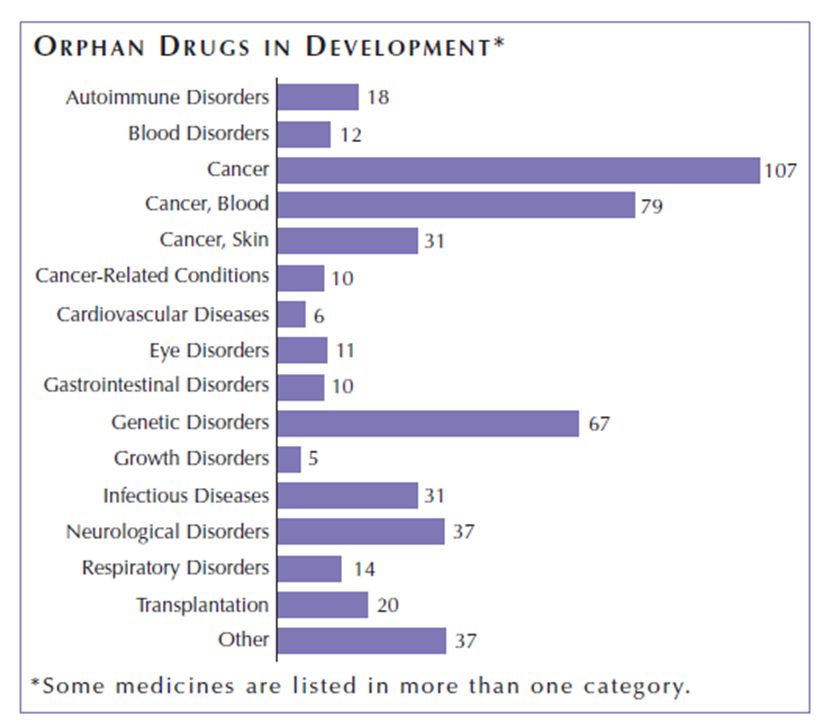
400 Orphan Drugs In Development

A report from PhRMA looks at rare diseases and orphan drugs.

An orphan drug is a pharmaceutical agent developed to treat a disease that affects less than 200,000 people in the US.

While individually this may not seem like a big market, it is estimated that 25-30M Americans suffer from a rare disease.  And, developing therapies for these unique conditions can allow for price premiums. 

At the end of the document, they have some FAQs and suggest some websites.  Here’s one FAQ:

How can you find out about clinical research on rare diseases?

There’s a web site that was just set up a few years ago by the federal government. It’s called www.clinicaltrials.govIt’s important to remember “.gov” because there are some commercial sites that have similar names. Every research project receiving any money from the U.S. government must be listed on this site. It’s a requirement. You can type in the disease name and find all sorts of information about the studies, where they’re being conducted, what is needed to be eligible, and who to contact to learn more about participating. If you don’t have a computer, ask your local librarian to help you search on that web site.

$15 Compound Vs. $1,500 Injection – Price Gouging?

You don’t often get to see outrageous pricing examples like the one around KV Pharmaceutical’s Makena product.  Specialty pharmacies have been compounding and making a version called 17P for years.  17P sells for around $15 per shot and patients typically take 15-20 injections during pregnancy to help prevent pre-term birth. 

“As far as I know, most physicians are using the compounding pharmacies for 17P,” said Dr. George Saade, president of the Society for Maternal-Fetal Medicine. “If we feel there’s no extra advantage of a more costly treatment, then our obligation is to prescribe the less costly treatment … It’s not right to abuse the health care system by prescribing an astronomically more costly medicine when there’s no evidence that it’s better.”

KV Pharmaceuticals came out with a branded version of the compound to create easier access to the drug.  They initially priced it at $1,500 but had already dropped it to $590 per shot when an article with the above quote appeared at the beginning of May

For those of you less familiar with compounding, here’s a statement from an FDA study in 2006:

FDA regards traditional pharmacy compounding as the extemporaneous combining, mixing, or altering of ingredients by a pharmacist in response to a physician’s prescription to create a medication tailored to the specialized medical needs of an individual patient. Traditional compounding typically occurs when an FDA-approved drug is unavailable or a licensed health‑care provider decides that an FDA-approved drug is not appropriate for his or her patient’s medical needs.  By definition, pharmacy compounding involves making a new drug for which safety and efficacy have not been demonstrated with the kind of data that FDA requires to approve a new drug.  In virtually all cases, FDA regards compounded drugs as unapproved new drugs.

The unapproved status of compounded drugs notwithstanding, FDA has long recognized that traditional pharmacy compounding serves an important public health function.  FDA has historically exercised enforcement discretion and generally has not taken enforcement action against pharmacies engaged in traditional compounding.  Rather, FDA has directed its enforcement resources toward firms that manufacture large quantities of unapproved new drugs under the guise of traditional compounding, and whose compounding practices result in significant violations of the new drug, adulteration, or misbranding provisions of the FDCA.

Will managed care, managed medicaid, and PBMs aggressively limit the use of Makena or will they leave it to physicians?

Healthcare Lessons From Car Shopping

Someone in the past month used a car analogy for healthcare reform. They were pointing out that you can’t have it all. You’re not going to find the most comfortable car with the best radio that gets great gas mileage and is reasonably priced. Their point was that that is what we’re looking for in healthcare reform.

Then, Ford came out with its press release around working with Welldoc to develop an allergy and diabetes solution that integrates with its SYNC platform in the car. It’s definitely intriguing. I get the allergy part, but I’m not sure I see monitoring diabetes while driving. It will be interesting to see where this goes.

Now, I’ve been out car shopping and learned a few things. First, it’s important to say that I’ve never really car shopped. We’ve bought Ford cars from the same dealer for the past 20 years. After the first time, I simply faxed him a request and told him to call me when it was on the lot for me to drive. Since we buy under the employee plan, there’s no negotiating.

My guy retired so I decided this was a good time for me to shop around (as my car just passed 100,000 miles). It’s been an experience which (as always) I can translate to healthcare.

  1. Overwhelming – At one place, the sales person talked the entire time and just kept showing me options. The technology was too overwhelming and distracting while I drove. To me, this is how I am sure many patients feel when presented with too much data to make a decision.
  2. Focusing on the wrong information – At almost every dealership (5 so far), no one has asked me what matters to me and how I will make a decision. They want to talk to me about their features. One guy actually showed me how clean the repair garage was as if that was a reason to buy a car from them. Again, I am sure many patients want different information then they receive in the process. Ideally, we would understand how they evaluate information and present it in that way.
  3. Not taking you seriously – At another dealership, they passed me off on the 22-year old kid in the corner as a lead. He knew very little about the car that I was interested in. He couldn’t even pronounce the car color. I know sometimes people write off the obese patient as someone that won’t ever change which is something we have to be careful of as part of the care team. It also reinforced the point of trying to match providers and patients which is a difficult and whole other discussion.
  4. Not considering the entire family – At another dealership, the salesperson almost yelled at my son when he touched the electronics and again when he sat on the edge of the seat. I immediately wondered how the car would hold up over time if it was going to break in 5 minutes of him touching it. This reminded me of going to a provider’s office or hospital and the importance of the staff and how they engage the patient and family.
  5. Not giving you time to evaluate options – At another dealership, the guy actually asked what it would take for me to buy the car today. I was immediately put off. Everyone else wanted me to come back and drive it again or encouraged me to do some research. When we present information to consumers, are we giving them enough information and opportunities to weigh their options?

Why do I tell this story? Because I think the consumer experience in healthcare is complex. We need to think about where it breaks down. We need to think about the entire family. We need to think about the physical facilities. We need to think about how information is presented and consumed. This car shopping process has reinforced that for me.

Domestic Medical Tourism and Telemedicine

The idea that local healthcare in a physical setting doesn’t work seems to be the crux of many solutions for leveraging limited resources (MDs) and addressing the geographical pricing differences which exist.  Given what we know about engagement and the value of the physical and personal relationship, there should be a better way.

BUT, without trying to solve for that…I thought I would share a few things that I recently saw.

BridgeHealth Medical is a Colorado based company that is focused on domestic medial tourism.  We’ve all heard about international medical tourism (i.e., flying someone to India for a surgery) and the savings there.  The key (and interesting) question is whether there is some middle ground within the US. 

At least according to the brief story I read in Inc. Magazine, they are getting some traction:

  • 40% savings on a total knee replacement
  • 22% savings on a spinal fusion surgery
  • 13% savings on a prostate surgery

I was amazed that the article said that Americans spend $2.1B outside the US today.  Will this replace that or will it be a new category of spend to track?

And, it will be interesting to track outcomes here and see whether savings translates to better survival rates or improved quality of life.  There will be challenges to the model as I’m sure there have been for international medical tourism.

Cisco on the other hand has rolled out their telemedicine initiative called HealthPresence which uses videoconferencing and high-tech medical equipment to share data.  Obviously, telemedicine has been a tool that’s been tried several times over the years with varying levels of success.  Can Cisco’s efforts and model finally push this from a fringe technology approach to mainstream? 

It’s certainly possible.  Timing may be right.  We’ve seen some success with AmericanWell’s efforts.  The question is how will the consumer respond.  Will they appreciate the easier access?  Will it impact the caregiver / patient relationship? 

Who knows…there is still a lot to learn especially in a country where we’ve been traditionally over-served with our access to healthcare.

Medco Follow-up On Questions RE: 2011 Drug Trend Report

In my post a few weeks ago, I had four questions which my initial read of Medco’s Drug Trend Report had generated. I just got the answers to them…

Q: ADHD trend continues to increase.  With the new DSM-5 proposal, it looks like there will be more teens and adults diagnosed with adult ADD.  Do you see this accelerating the trend in this category even more? 

A: The proposed changes to the diagnostic criteria for ADHD / ADD in the DSM-V include changing the age of onset limit (on or before age 12, instead of age 7) and lowering the required number of symptoms which effectively will “loosen” the criteria and permit doctors to more easily diagnose the condition. If this indeed takes place, we would expect some further acceleration of the ongoing upward trend in ADHD drug use.

Q: As generics get closer to 80%, the remaining brand drugs will have to try new strategies to sustain utilization.  One of the growing tactics is copay coupons or cards.  Do you see this as an issue?  Are there tactics that you intend to use to address these through POS programs or other programs?  

A: Medco believes the best way to manage costs for both patients and payors is through the use of clinical and managed care programs that incentify the use of lower cost alternatives when clinically appropriate.  

Q: You talk about clients spending less PMPM on members age 0-18 which seems to run counter to the focus from last year on more, younger patients using maintenance drugs.  What do you attribute that drop in spending to? 

A: Because the prevalence in the pediatric category is so much lower than that of the adult population utilization/prevalence can trend higher than adults, but spend could be down, especially since there is much heavier use of specialty medications in the adult population. It’s a trend versus spend look.

Q: You bring up biologics.  It’s unlikely that biologics will generate large price drops as we’ve seen from generics.  What do you estimate will be the savings associated with biologics and will we see therapeutic interchange programs or will you manage the biologics more like a step therapy program? 

A: The industry is awaiting the final FDA guidance for approval and possible interchangeability of biosimilars. The estimates are that biosimilar will be priced in the range of 15% to 30% of branded product pricing. And as with generics, it is anticipated as biosimilars become increasing more accepted and completion begins within the biosimilar market itself, saving may increase overtime. 

Up To 200,000 MDs Require eRx Exemption From CMS

Electronic prescribing has been an effort for at least the past decade and significant progress has been made (see Surescripts latest report). That being said, we all know that changing behavior in the office setting is difficult. It has been the bane of many a technology vendor in the healthcare space.

On the one hand, I’m not surprised to see that lots of physicians might apply for an exemption from CMS around electronic prescribing.

BUT, I was surprised by several things in this article:

  1. Some physicians simply used electronic prescribing to write the 10 scripts required and then turned it off.
  2. The fact that there could be so many doctors that fit the approved exemptions.

The exemptions are for physicians who:

  1. Practice in an area with limited high speed Internet access.
  2. Work in an area where a limited number of pharmacies accept electronic prescriptions.
  3. Cannot prescribe enough drug orders electronically due to local, state, or federal laws (e.g., controlled substances).
  4. Have limited prescribing activity. [but yet still see a lot of Medicare members]
  5. Have insufficient opportunities to report the e-prescribing measures because of their patient type.

I didn’t think that could get you to 200,000 physicians (who were actively working with Medicare patients). The one that seems most feasible is for physician who register to participate in the Medicare or Medicaid EMR incentive program AND both adopt and use the technology by the 2011 deadline. They can also get exemptions.

Physicians care because they have to:

  • Prescribe electronically 10 times before June 30th to avoid a 1% penalty on all Medicare payments in 2012 or
  • Prescribe more than 25 times before Dec 31st to earn a 1% bonus in 2012.

Depending on your patient base, this seems like a pretty good business case to at least get a system in; write for 26 prescriptions; and collect your bonus.

Less Likely To Take Your Statin After Surgery

A recent study looked at people who were hospitalized for heart disease. It then tracked people’s use of statin medications (e.g., Lipitor) for the next year and looked at their adherence based on whether they had surgery or were simply discharged with a prescription.

SURPRISE – 70% of people who had surgery stayed on their statins for a year while 79% of those who didn’t have surgery stayed adherent. (thanks to Box Cutters for sharing this)

This begs a whole lot of questions:

  • How did they get the people to be so adherent in the first place? (this seems higher than the national statistics)
  • Did the surgery patients feel like they were “cured”? (see post on similar issue)
  • Was the statistical difference true at a location or prescriber level also? (i.e., was it simply that some locations or prescribers always wrote a script and talked about adherence or was it really a patient difference?)
  • Were the patients who had surgery sicker to begin with and therefore on more medications (which would reduce their likelihood of being adherent)?

On the other hand, this is perhaps another warning flag on the whole hospital readmissions issue where we have to address issues of health literacy, follow-up, discharge process, support network, and medication reconciliation.

New Moran Bill Uses Legislation As Business Model

The Moran bill in Kansas is another example of localized politics for independent pharmacies trying to legislate competition rather than find ways to differentiate their business.  I’ve talked about this before in:

This is focused (I believe) on the whole issue of limited networks and preferred networks as you can see from the NCPA letter about Maintenance Choice.  They throw everything but the kitchen sink at this model…why?  Because it works.  Maintenance Choice is saving consumers money and payers money.  And, it’s moving market share to CVS stores

This is the future.  This is what Walmart is focused on.  This is what Restat is focused on.  OptumRx (Prescription Solutions) just launched their limited network.  Humana is leveraging this in Medicare with Walmart

At the end of the day, isn’t it the payer’s option to decide how to design a benefit plan to offers a clinically effective solution at the lowest cost posible? 

Given that there are way too many pharmacies in the US today, someone (unfortunately) has to lose.  That is reality.  Based on the fact that there are more than 5x as many pharmacies as McDonalds in the US, we’re saturated.

10,000 Steps, 5 miles, 30 minutes of Exercise, Diet…

First off, whoever framed this idea of 10,000 steps per day was a genius.  It’s a much simpler metric to tell people.  Since I run (on my good days) a few miles, I had to translate that to miles to understand what I needed to do.  10,000 steps is 5 miles.  If companies were going around telling everyone they had to walk (or run) 5 miles a day, they would lose people quickly.  [One likely question here is whether running and walking burn the same calories.]

It seems like everyone is pushing 10,000 steps per day right now – Here’s Kaiser’s Program.

Of course, on the flipside, this can be confusing since you have this program.  You have the government’s recommendation of 30 minutes of exercise a day (which isn’t 5 miles for most people).  You have advertisements for supplements.  You have workout commercials.  You have diet information.  What works?

(In searching for 10,000 steps information, I found this Dr. Oz video which I’ll share on weight loss tips.)

As an interesting side note, I was wearing my pedometer the other day talking with a physician.  He asked what it was.  When I told him it was a pedometer, he asked why I wore it.  I talked to him about measuring my steps to get to 10,000 a day.  He’d never heard of the concept.

The Customer Experience Matters Healthcare Nuggets

Are you focused on the customer experience?  If yes, then you should know who Bruce Temkin is and look at his research.

I follow his research mostly through his blog, and you can find teasers of information on healthcare by what he posts.  I thought I’d pull together a few of those things here:

1. In his loyalty ratings, Walgreens was one of the top 20 companies recommended to friends while Cigna, Aetna, Humana, Anthem, and BS of CA were all in the bottom 20.  [I’m not sure this should surprise us.  I would expect CVS was close to the top with Walgreens.  I’d assume many people don’t “recommend” their insurance companies in general.  I’ll have to try to find out if the PBMs appear on here.]

2. In his forgiveness rankings, retailers like CVS, Walgreens, Walmart, and RiteAid scored well.  TriCare scored very well.  Medicare and Medicaid had good scores, and Kaiser was the only health plan in the top 70.  [This is a key issue for retention and important in the retailization of healthcare…you will make mistakes so the question is how much good will you have to overcome those mistakes.]

3. In his loyalty rankings, you find out that African Americans are much more loyal to their health plans than Hispanics or Caucasians.  [How does this change your engagement strategy?]

4. Bruce even goes on to quantify the value for different industries.  For healthcare, he estimates that a $1B company could improve it’s topline by $179M / year by improving its customer experience.

5. In his experience ratings, he shares some specifics on health plans (see below):

And, I suggest you read some of his thoughts on changing how we analyze data.  I think his points about “contextual insights” make a lot of sense.

Diabetes SMS Program AND Key Measures Of Success

Aetna recently announced that they were launching an SMS (text messaging) program targeting diabetics. I’m excited about the program not only because Silverlink is partnering with them on it, but because they’ve laid out some key metrics to focus on.

In a lot of SMS pilots, the size of the program has been small (<1,000) or the metrics haven’t been clear. I’m hoping this will be very different. Here are the metrics they laid out:

  • Received regular A1C screenings which measures blood glucose levels
  • Received an annual LDL screening which shows the level of bad cholesterol and cardiovascular risk
  • Followed instructions for taking medications
  • Enrolled in a disease management, nurse and health coaching program

Finding out who participates, which messages are effective, and how they respond is going to be a great study. Stay tuned for more.

The Cost Of Being Fat

With over 60% of Americans overweight or obese, this is a real issue for us as a nation.  You see more and more focus on it on TV, in our schools, and in the overall healthcare system.  So, what are the costs of being overweight:

I could go on about linking depression and obesity and to talk about genetics, but I think you get the point.  While it’s not easy (from personal experience), it’s an important topic for us all to continue to focus on.  For us to fix healthcare in the US, we have to think outside the system itself.

Pharmacy Reimbursement Needs To Be Re-Aligned With Effort

I know this is not a popular topic, but I really believe that reimbursement on a per Rx basis in misaligned.  Today, a pharmacy (retail, mail, specialty) is paid based on either a discount off a standard price (e.g., AWP) or based on a MAC (maximum allowable cost) list.  They may also receive a dispensing fee.  According to the latest PBMI Benefit Design Report, those dispensing fees are:

  • $1.62 retail
  • $2.33 mail (noting that only 21% of their surveyed employers pay dispensing fees at mail)
  • $3.26 specialty

And, the reimbursement rate is the same whether it’s a new Rx or a refill.  Does anyone out there believe that the amount of effort to fill a new Rx and a refill is the same?  Why not pay differently?

An industry number that has held up anecdotally when I’ve talked to lots of people is that 40% of new Rxs require some type of work to become a “clean Rx”.  That might mean that they are subject to a utilization management program (step therapy, prior authorization, quantity level limit).  It might mean that there is a DUR issue such as a drug / drug interaction which has to be addressed.  It might mean that the drug isn’t covered.  It might mean that the cost is too much based on formulary tier.

Additionally, the first few times a patient fills a drug is when they have questions.  When do I take the drug?  Are there any side effects?  Should I avoid any foods?  Should I eat with my meal?  Are there alternatives?

Once the patient has titrated to the right strength and is taking their medication on a regular basis, the job is pretty much to count the pills and get them to the patient in a timely manner.  It has been my argument for a while that if we could fix this reimbursement misalignment then you would see a better coordination between retail and mail order.

The right model in my mind shifts reimbursement dollars through dispensing fees or some other payment structure to compensate for these cognitive services on the initial fill and acknowledge where the effort is.  I believe this would allow for a “mail at retail” type model of central fill or a kiosk model at the store or encourage retailers to better support mail order efforts when appropriate.

Everyone is aligned (at some level) with getting patients to:

  1. Start on the appropriate medication
  2. Understand their medication and their condition
  3. Make appropriate choices that lower overall costs to the payers
  4. Stay on their medications
With that said, it seems like there is an opportunity here.  It won’t be easy, and I don’t hear anyone talking about it…but I’ll continue on my soapbox for now.

Short Survey On Copay Cards

Are they good?  Are they bad?  Are there times when they should be used?  Will they replace rebates?  When are they used?  Do they work?

AIS (Drug Benefit News) has asked me to do a webinar on copay cards in early July.  This is a hot topic area with limited information out there.  Rather than simply offer my opinion, I thought I would reach out to those of you that work in pharma, PBMs, retail pharmacies, and health plans to capture your opinions.  I put together two brief (<10 question) surveys, but I’m also happy to talk live if you’d prefer. 

 If you don’t feel like you’re the right person or you feel like you know others that would respond, please feel free to forward this to others.  I’m happy to share the results back with those of you that participate.  Thanks.   

 The survey for physicians and manufacturers is here – http://www.surveymonkey.com/s/ZQVM7DK.

 The survey for pharmacists, PBMs, and payers is here – http://www.surveymonkey.com/s/ZSBS32Y.

 Have a great holiday weekend!

Highlights From The CVS Caremark Insights Report 2011

CVS Caremark has been on a roll lately releasing lots of research especially in the adherence area. They just released another study this week that said:

In a study published online this week in the Journal of the American Pharmacists Association (JAPhA) the researchers said,”Approximately one-half of caregivers reported they are more likely to forgo their own medications than the medication needs of their caregivees, especially if cost was a problem, and that caring for their family members was more important than caring for themselves.” The researchers added, “Our findings indicate care-giving status may be an important characteristic for providers to identify and that caregivers may represent a fertile target for adherence interventions to improve chronic disease management and prevent chronic disease.”

But, today, I want to focus on their drug trend report called Insights which was released a few weeks ago. The report begins with a focus on change pointing out a few facts which will change our healthcare experience. Here’s part of the introductory letter by Per Lofberg, the President of Caremark Pharmacy Services.

We all know change is a constant, in this industry and in life, but the change we face over the next several years is monumental and unprecedented. The sweeping nature of the health care reform legislation makes it difficult, as even the government admits, to predict how the system and its stakeholders will respond. Regardless of how much is unknown and “still to be determined” about reform, all of us continue to face the urgent, ongoing need to reduce health care spending and simultaneously improve health outcomes.

They take a different approach than Express Scripts (see review of this year’s drug trend report) and Medco in their drug trend reports which are more encyclopedic in their breakdown of class by class. CVS Caremark poses questions by group and then presents data to address those questions.  They focus on health reform and overall changes to the market dynamic.  [Both Adam Fein and I review most/all of these reports every year so I’d encourage you to look at both of our blogs if you want historical facts or comments about comparing the drug trend reports.]

  • Employer: Benefit costs are hurting our profitability. Something’s got to change.
    • Only 6% of employers believe their company will be better off as a result of healthcare reform.
  • Health Plan: How do I compete, comply, and control costs in this new world?
    • 120M members will be seeking or changing coverage between 2012-2016.
  • Physician: My practice is already stretched to the limit.
    • The US will have about 159,000 fewer doctors than it needs by 2025.
  • Consumer: Where do we go from here?
    • In 2010, 1 in 4 households reported having trouble paying medical bills.

Key Statistics:

  • Overall trend = 2.4%
  • Non-specialty trend = 0.8%
  • GDR for 2010 was 71.5%
  • Specialty trend = 13.7%

Specialty now makes up 14.2% of their BOB (book of business) overall spending…[something that some people are predicting will be close to 40% in under 5 years].

I really like how they breakout the charts by type of client (employer, health plan, and TPAs) since they have different approaches to trend management. Here’s the health plan one:

They talk about some of the future trend influencers:

  1. Economy
  2. Aging population
  3. Chronic condition prevalence
  4. Changing condition guidelines
  5. Health care reform
  6. Adherence
  7. Generic launches
  8. Specialty growth
  9. Brand price increases
  10. Less predictable events – weather, flu impact

Like others…they are saying that GDRs (generic dispensing rates) of 80% are now possible by 2012! Talk about a change in the past decade and why there is so much pressure on the manufacturers.

They mention it in the publication, but they’ve also issued some press about their effort to target the specialty spend that happens under the medical benefit. They estimate that 80% of the drug spend in the medical benefit is from specialty drugs with cancer representing 46% and three other categories representing more than 2%:

  • Anemia and neutropenia
  • Osteoarthritis and RA
  • Immune disorders

Given their broad footprint, they pose an answer rather than a question from the next constituent – the pharmacist:

I know I can make a real difference for people.

One of the big areas of focus for leveraging that F2F relationship is adherence:

They provide an updated statistic on average Rxs PMPY of 12.6.

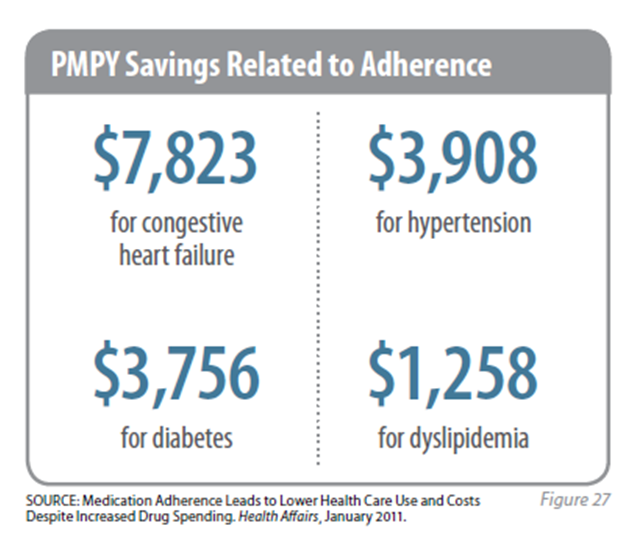
One of their big studies from the year was the one that was published around savings related to adherence:

I’ll end with a statement they highlight at the end:

“Every member interaction is an opportunity to improve outcomes for the plan and the member.”

The Information Blanket: Design Meets Health Literacy

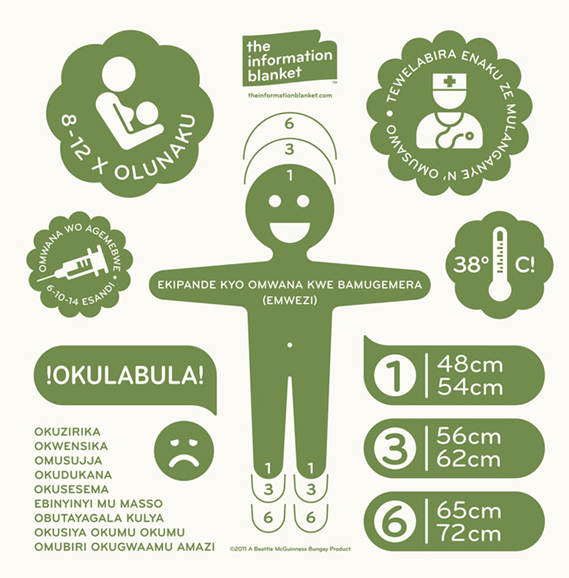
Another story from Fast Company June 2011 that I found really interesting was about the Information Blanket. This is a tool being used in Uganda to address their infant mortality rate.

It includes information on:

  • Vaccinations
  • Breast feeding
  • Doctor’s appointments
  • Fever
  • Growth rates
  • Symptoms to monitor

I think this is a few cool and creative solution.

AIS Webinar Regarding Drug Coupons

Health Plans vs. Drug Coupons:

Tactics to Combat Brand-Name Drug Promotions

AIS Webinar: Wednesday, July 13, 2011

When faced with the loss of patent protection, brand-name drug manufacturers are increasingly launching promotional programs to maintain market share of their blockbuster drugs and improve brand loyalty. These promotions, including copay coupons, discount cards and rebates, can pose headaches for PBMs and health plans. But there are strategies plans can adopt — including zero-dollar copays, over-the-counter initiatives and utilization management strategies — to reduce the impact on utilization and move more enrollees to low-cost generic alternatives. Discover the pros and cons of various strategies.

Pharmacy Kickoff At #RESULTS2011

I’m currently presenting at our client event (see twitter hashtag #results2011 for real-time comments). My presentation is an extension of my white paper on the future of the PBM / pharmacy industry along with a blend of data from our annual client survey and Silverlink Communications best practices with a focus on our work around medication adherence. It also builds on my thoughts from NCPDP that I shared late last year.

Here are a few of the points I touch on:

  • Avoiding being commoditized by adding value
  • Keys to success with a focus on:
    • Evidence-based approaches
    • Consumer engagement
    • Patient experience
    • Cross-channel coordination
  • Adherence and other priorities
  • How to use SMS to drive self-service
  • An approach to condition management in hypertension and diabetes
  • Focus on the “un-engaged” but don’t forget about the engaged consumers
  • Case studies and research around adherence
  • Timing and sequencing of direct mail, automated calls, and e-mail
  • Measuring “trust”

Here’s a teaser of some of the slides I’m presenting:

Walmart: Good or Bad for the PBMs

I think this is a question many of my PBM friends would like to know. Fortunately, a few of the Walmart people that read my blog and are part of their Health and Wellness group agreed to sit down and talk about their strategy.

Let’s start with setting some background:

  • Walmart was the first to introduce the concept of $4 generics which originally caught the market off guard and has created lower generic costs and free antibiotic programs at several pharmacies. [I would also argue that it highlighted the fact that generic copays were getting too high.]
  • Walmart was the first to work directly as a pharmacy to create a limited network contract direct with an employer (Caterpillar).
  • Walmart has partnered with Humana on a limited network offering for Medicare.
  • Walmart came out with a direct to consumer mail order pharmacy offering.

If you follow the industry, you know that all of these things were potential game changers (if they’ve worked).

This creates some tension:

  • Is Walmart simply a catalyst for change in the healthcare space?
  • Does Walmart (pharmacy) want to disintermediate the PBM?
  • Is Walmart able to make money where others can’t?
  • Does Walmart get more foot traffic such that pharmacy can be a loss leader?

Here is the Q&A [interpretive not literal] from my dialogue with Marcus Osborne (Sr. Director, Business Development, Healthcare, Walmart) and Tom Hill (Director, Health Services Development, Walmart).

What is Walmart’s Health & Wellness strategy?
Walmart wants to help consumers “save money and live better”. That is our DNA and our fundamental approach to the market. Pharmacy has presented a unique challenge since consumers often have the same copay regardless of which pharmacy they went to. Even when it’s a percentage copay, the savings differential might not be much to the consumer. Walmart was disconnected from the consumer in the traditional pharmacy pricing approach. That has driven us to look at unique ways that we can create savings.

How does Walmart decide what “offerings” to bring to market?
Walmart looks at ideas that focus on our EDLP (Everyday Low Price) concept and leverage our supply chain efficiencies. We are constantly looking at non-store operational opportunities to work directly with key companies. We currently have over 20 direct relationships with managed care companies and PBMs where we are working with them to drive down consumer costs in the pharmacy and broader healthcare area.

Obviously healthcare is bigger than pharmacy. What other things are you doing to drive healthy eating, management of critical conditions, or other programs? We’re constantly looking at what’s needed in the healthcare sector and where to invest. We focus on our two key advantages:

  • Willing to trade profit for volume
  • Value of the total “box” [store]

A good example is the work we’ve done around “Healthy Mom Healthy Baby” in Medicaid. We looked at the issues of high pre-term labor and the high rates of injury post-birth. We felt like we had a moral and cost imperative to take action. As part of this, we worked with several managed care groups to redefine the entire process and look at our unique assets. Our solution includes:

  • Free pregnancy tests
  • Free pre-natal vitamins
  • Rewards for free diapers and other supplies tied to physician visits and other health activities
  • Free car seats
  • Leveraging our physicians and clinics

[I was impressed…this was a broad solution that looked at a lot of their assets.] We’ve also created several diabetic specific solutions; a smoking cessation program with Healthways; weight management programs; and women’s and men’s health programs. The focus is on payers that are at risk for their healthcare spending with more to come from clinics.

Will Walmart become a PBM?
No. We’re not looking to go into the PBM market. We’re supply chain experts. We see value in the PBM model. [We talked a little about the fact that “you are what your profits say you are” meaning that the PBMs have painted themselves into a profit corner where their profit comes from generics at mail order so any threat to that is a challenge.]

If the Caterpillar model was so successful, why haven’t others adopted it?
The reality is that over 400 employers have contracted directly with Walmart for a limited network model similar to Caterpillar. They are all seeing significant savings.

Does Walmart see the market through “different glasses” than others?
No. We still want to have the pharmacy be a profit center. We’re not looking to bottom out the market, but we are willing to trade lower profits per transaction in return for more market share. At Walmart, it’s not about maximizing revenue/Rx or profit/Rx…it’s about total revenue and total profitability. [A very different strategy than other CFOs which would say you can’t expect volume to make up for lower profitability.] Obviously, we also have the opportunity to get non-pharmacy sales associated with food traffic. One thing that may be is different is the fact that we believe scale should drive down costs. In pharmacy, the biggest players are always trying to command a premium. We think it should be the other way around. We also have been able to get our cost-to-fill to be the same at retail and mail so we’ve become channel ambivalent.

Have these programs improved market share in any significant ways? You have to look at the programs separately, but overall we’ve seen our market share increase from 6% overall [when the $4 generic program launched] to 10% now. The network design strategy has had great success. We look at three types of programs:

  • Incentive based networks
    (Caterpillar 1.0) where all the pharmacies are in the network, but there is a lower copay to go to certain pharmacies. If only 15% of pharmacies are preferred, their market share doubles. If Walmart is the only preferred pharmacy, their market share goes up 4x.
  • Limited networks where some pharmacies are removed from the network. If you drop the network significantly, they’ve seen their share go up 2-3x.
  • Limited networks with preferred pharmacies where you some pharmacies are removed from the network, but within the remaining pharmacies, there are still incentives to go to certain stores (Caterpillar 2.0). In these cases, they’ve seen their share go up 10x.

The $4 generics program has helped increase market share by an estimated 150 basis points. In many cases, companies that initially jumped to offer similar programs have dropped them. They couldn’t sustain them.

The Medicare program with Humana has been very significant and successful [as demonstrated by Humana’s huge jump in Medicare lives].

The direct-to-consumer (DTC) programs for mail have been pretty limited and haven’t had a huge impact, but they’ve been offered in markets where we have no stores (e.g., Detroit and NY) and therefore almost no share to begin with so any share is a gain.

People complain about the pharmacy location within the store. Would you ever consider a direct access point to the pharmacy which didn’t involve going through the entire store? This is a very hot topic. We did a lot of research about store design and what goods should be located next to each other, but in the end, we’re considering moving the pharmacy closer to the front entrance. Right now, 25% of the stores have a drive-through pharmacy which gets utilized at a very high rate. But, this does lose the pharmacist face-to-face benefit. [At the end of the conversation, my take is that they are looking at lots of scenarios here and trying to figure out the balance of convenience to the pharmacy only consumer and how to optimize the entire footprint.]

The partnership with Humana really seemed to help them grow their Medicare lives this year. How did this come about? We both were looking for new solutions to leverage the fact that scale matters and how to operate within the CMS parameters. We felt like there was an opportunity to do something different and began speaking with plans about some limited network ideas. We know that Walmart is over-indexed in the 65+ category based on store visits per week. Based on that, we were looking at what we could do to offer them more value as compared with our traditional, core customer of 35-50 year old females. Through a series of conversations, the partnership was born. We’re very happy with the relationship and believe they are also.

Limited networks have been around for a long-time with limited adoption. Do you think their time has finally come? What has changed? They have been around, but historically the networks weren’t limited enough to create enough savings to overcome the “costs” of disruption to the payer. Based on our experience at Caterpillar, we believe that you will see a transitional period where companies first move to incentivized networks and then 1-2 years later move to limited networks. [Something I would compare to the transitions which have happened in formulary over time.] The one area where we do see limited networks happening more rapidly is in the area of Managed Medicaid. [This plays into the focus of PCMA and others on the PBM opportunity around Managed Medicaid.]

It was a great discussion. I learned a lot. They allowed me to ask them a lot of questions about their programs and approach that honestly had led to some skepticism in the past. It sounds like they’ve brought together a great team with a broad vision of what they can do in pharmacy and in health and wellness overall. It has gotten my mind thinking about ideas, and I look forward to learning more.

[BTW – You can sign up to get posts like this e-mailed to you whenever I write them.  A registration link is in the right hand column.]

10 Things To Know About Engaging Patients

I just finished reading this publication by the Institute for Health Technology Transformation. Lots of quick nuggets of information summarized here. Let me share a few:

  • 88% of American adults with Internet acces research health information online; 60% say that the information they found influenced a decision (Pew)
  • Top sites (Alexa rankings) are NIH, WebMD, and medicinenet
  • 94% of patients say they at least sometimes forget important things they were told by their MD (Markle Foundation)
  • Only 3% of people have been harmed or know someone that’s been harmed by health information they found online (Pew)

They go on to provide some good usage statistics by age group; data around caregivers; data around who’s trusted and PHRs; and research from AARP and with Dr. Hibbard that shows the impact of engagement on outcomes.

PBM Mobile Applications – CVS, Humana, Medco, Express, Catalyst, Prescription Solutions

This week, Medco released their mobile application that they’ve been working with Verizon on.  Not a big secret in my mind since I’ve been hearing about it since last Fall.  I’ve talked about CVS Caremark’s application (CVS mobile), Humana’s application, and CatalystRx’s application.  So, this made me wonder why I hadn’t heard about one from Express Scripts.  It seems unlikely that they wouldn’t have one.

There doesn’t seem to have been a lot of fanfare, but they launched one in March.  Here’s a quick summary of it:

The new Express Rx mobile app works across multiple platforms, and is now available for a free download at both the Apple iPhone App Store and at the Android Market (simply search ‘Express Rx’).  In addition, members using a Blackberry or other smartphone device with web browsing capability can access our mobile optimized website at http://m.esrx.com.

With our new mobile app and mobile optimized website, Express Scripts members will be able to securely access the following functions:

  • Start Home Delivery – transfer available maintenance medications to the Express Scripts Pharmacy
  • Order Refills – select and schedule prescriptions to be refilled from the Express Scripts Pharmacy
  • Check Order Status – check to see if an Express Scripts Pharmacy order has shipped, the ship date and by what method
  • Find a Pharmacy – locate a nearby retail pharmacy using the GPS technology built into a smartphone
  • Drug Information – access Drug Digest database to look up drug information, common uses and possible side effects

The app consists of three features: My Rx Choices, which delivers on-demand, personalized out-of-pocket costs, interactions and other information for any prescription drug; My Medicine Cabinet, which allows patients to view the medications they’re on, including prescription and over-the-counter drugs, and set reminders for themselves; and Prescription ID Card, which allows convenient access to a member’s prescription drug card.

Of course, Walgreens also has a mobile application as does Walmart.  Neither of them are PBMs, but they are both critical players in the pharmacy space.
Next on my list to check out is Prescription Solutions.  They also have a mobile application which does:
  • Refill mail service pharmacy prescriptions
  • View your prescription history
  • Set up text message medication reminders
  • Check the status of and track orders
  • Locate a pharmacy by ZIP Code
  • Search your formulary by generic or brand name drug, status, or class
As one might expect, mobile web or mobile apps are quickly becoming the norm.  The key to look at is what is the functionality.  Is it simply putting their websites on a phone or are they developing other technologies that take advantage of the mobile environment (e.g., location based services or enhanced reality).  I’ll share some thoughts on those in another post.

Medicare Lives By Plan

Medicare has been a big area of focus for a lot of plans and subsequently for a lot of PBMs who manage the PDP plans.  The biggest area of discussion is around the STAR Ratings.  And, that’s important because if you look at data from the WilsonRx reports there is certainly a correlation between PBM satisfaction and health plan satisfaction. 

So, the question is who has the Medicare lives today and who are the big winners YTD (source – CMS and Citi Investment Research and Analysis – summarized by Carl McDonald and team at Citi):

For a detailed breakout of PDP lives and the huge win by Humana going into 2011, I would suggest reading Adam Fein’s post from a few months ago on DrugChannels

And…if you haven’t been following it, it looks like Medicaid is the green field that everyone is eyeing.  The savings from managed Medicaid are getting discussed in multiple states especially around pharmacy.  I just had a call today where the executive predicted that managed Medicaid would be the feather that finally broke the back to get limited networks more traction (interesting!).

MD Adherence Campaign – Uphill Battle

Based on the feedback I got on my post on KevinMD about paying MDs for adherence and other research out there, it would seem that this new campaign called Script Your Future is facing a significant uphill battle.  While I completely agree with the concept of pushing adherence discussions to the point-of-prescribing, the question is whether this will happen during the physician encounter.  The other challenge is whether patients realize that they are non-adherence.  Prior studies have indicated a lack of awareness around how non-adherent they are.

CVS Caremark Pilots New ePA Technology

CVS Caremark announced earlier this week that they were launching a pilot to improve the prior authorization process. They are partnering with Navinet, Allscripts, and Surescripts to do this. This should be an interesting pilot to monitor. They plan to share the transactions and the results with the market to hopefully drive industry standards.

“CVS Caremark understands the opportunities that innovations such as electronic prior authorization provide to prescribers and patients looking to embrace a more efficient and effective way to share critical prescribing information,” said Troyen A. Brennan, M.D., M.P.H., chief medical officer of CVS Caremark. “The prior authorization process is currently evolving to keep pace as prescribers transition towards electronic prescribing and electronic patient records to better manage their patients’ pharmacy care. This pilot is an important step toward demonstrating how the industry can integrate ePA with e-prescribing to streamline and speed up processing of prior authorizations to ensure that members have quick access to care that is medically appropriate and cost-effective.”