Archive | Leadership RSS feed for this section

$47 Per Rx Guarantee From Prime Therapeutics

I think this is a good, bold move.  Prime Therapeutics has launched four new programs.  The most aggressive is called Reliance and guarantees your net spend per Rx at $47.  The easy way to do this would be to exclude specialty drugs and basically offer a generics-only formulary.  My quick read from their drug trend report and press release is that it includes specialty drugs.  It also includes a lot of utilization management programs, suggestions on plan design, encouragement for mail order, and other features.  I’ll be interested to see the adoption of the program or whether it’s just a great program to encourage clients to consider new, more aggressive plan designs.

“Our Reliance plan keeps costs predictable for plan sponsors,” said Michael Showalter, Prime Chief Marketing Officer. “The goal is to make pharmacy benefits easy, understandable and affordable. Through Reliance, there will be no surprises, allowing organizations to better plan for and manage their pharmacy costs and reduce overall health care costs, while providing excellent benefits. We provide a single number demonstrating the true cost of care – $47. We are the only PBM to back that up with a price guarantee and complete price transparency.”

Increasing Preferred Pharmacy Usage (3 of 3)

This is the third of three posts on new ideas for increasing usage:
  1. Driving preferred pharmacy usage from the employer site
  2. Using social media
  3. Borrowing from other industries

The idea in all of these was to look at new ways that builds on the standard approach that we work with many clients on today.  And, if you believe that the Express Scripts / Walgreens dispute won’t get resolved, we’re going to see a lot of people using limited or preferred networks very soon.  This is also something that Adam Fein talked about in highlighting some of the progress Wal-Mart is making in this area.

So what are some examples of things we could borrow from other industries?

Referral Program:  Why not offer incentives for people who refer their friends and family into the pharmacy? Wouldn’t this play into the social network or peer-to-peer trends out there?

Satisfaction Surveys:  Why isn’t there more monitoring of the customer satisfaction to look for improvement opportunities?  [Note: I know there is some, but I think it’s under-utilized as a tool.]

Tiered Service Levels:  Frequent travelers get different levels of customer service.  Why don’t high utilizers with lots of co-morbidities and Rxs get a better level of service?

Points:  Why aren’t there more incentive systems and “points” that are used to reward consumers based on share-of-wallet or other metrics?  [I think there may be some legal issues here.]

Online Order Tracking:  Why can’t I watch my prescription being filled and track it around the system online?

Pharmacy Ratings:  Why isn’t there a consumer and business system that ranks pharmacies based on wait time, friendliness of staff, error rates, generic fill rates, overall satisfaction, or other metrics that can then be pushed to the consumers?

Incentives / Coupons: Certainly these have been tried and there are limits here especially in government funded benefits, but it’s still few and far between.

MD Programs: Physicians can certainly influence this decision.  Why isn’t there more effort to differentiate a pharmacy (mail, retail, specialty) by building relationships with high prescribers?

Check-in / Preferences: Why don’t the forms in the physician’s office (or applications) have you select a preferred pharmacy or have a pop-up with a preferred pharmacy in it to drive you there?

Credit: For some people, it’s an issue to front the money for the 90-day supply.  Why haven’t the mail order pharmacies partnered with a credit card company to allow for installment payment?

If you’re going to “win” at this game, you have to think differently.  You have to test and learn.  You have to capture insights from your customers and translate them into product offerings.  It’s not easy.

Why Do We Have Shortages Of Drugs?

The fact that more and more drugs (180 so far in 2011) are out-of-stock or have limited supply should seem crazy to most of us.  We all feel like we pay so much for healthcare and medication and the system is so intelligent that it should be able to estimate supply in a profitable way.

Obviously, something is broken.  (Here’s a good NYTimes article on the situation.)  And, if you need to be more offended yet capitalistically intrigued, you can read about people price gouging on these drugs when they do find them.  (You only hope that people didn’t buy up large supplies to create false shortages to then create high prices.)

While 1/2 the problems are from issues found during the inspection process, the other 1/2 appear to be from business model problems where there isn’t interest (read money) in producing the drug or not enough supply is produced (perhaps due to constant changing of suppliers or the race to the bottom in generics).

So, what will happen?

  • Will the government step in and do something?  [probably]
  • Will the government stockpile drugs?  [maybe]
  • Will the government require early notification of shortages?  [probably]
  • Will anyone address the business model problem?  [maybe but unlikely]
This isn’t different than some of the issues around vaccines.  As it became ultra-competitive and demand was unpredictable, it wasn’t worth being in the business.  (See 2002 report from the Manhattan Institute.)
To understand some of the regulatory reasons for the shortages, I think Alex Tabarrok does a good job here. Separately, you can read the FDA’s perspective on drug shortages here.  Another link is to ASHP where they track the current shortages.
It would be one thing if the shortages were happening around traditional drugs for chronic medications like high cholesterol where it’s easier to find an alternative, but a lot of the shortages are around oncology drugs which are harder to substitute.  And, at least one article I read on the topic talked about people finding difficulty getting the alternative covered.  IMHO – There should be a process by which an override occurs when a drug hits some national list for shortage so people can take an alternative and only have to worry about clinical outcomes or side effects not coverage issues also.

Engaging The Un-Engaged


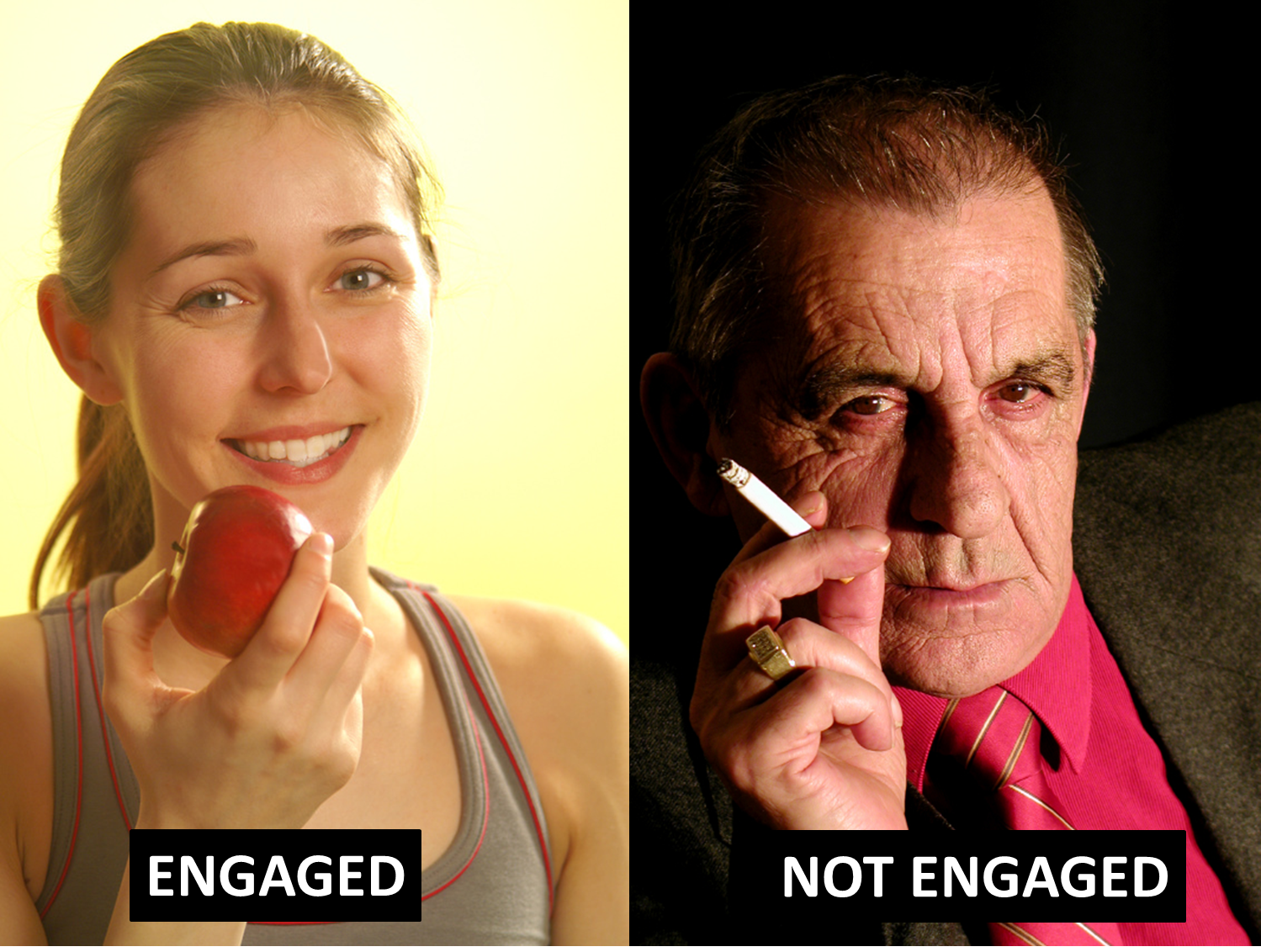
One of the hot topics in a lot of healthcare conversations these days is engagement.  There’s the “easy” engagement for the e-patients that are actively involved in their healthcare.  Then there’s the much harder engagement of those that aren’t engaged.  And, finally, there’s the issue of chronic engagement.  I can easily get someone to engage a few times with an incentive or some other “trick”, but how do I get them to stay engaged over time.  It’s not easy.

This is one of the topics that will be discussed at the upcoming Forum 11 in San Francisco.  If you’re coming, look me up.  I’m presenting on Friday.

Storytelling Is A Part of P2P Healthcare

P2P (or peer-to-peer) is a popular topic in healthcare today.  It builds on both the social components of behavioral modification along with the social networking trends.

About one-third of Americans who go online to research their health currently use social networks to find fellow patients and discuss their conditions, and 36 percent of social network users evaluate and leverage other consumers’ knowledge before making health care decisions. Social networks hold considerable potential value for health care organizations because they can be used to reach stakeholders, aggregate information and leverage collaboration.  (from Deloitte study)

One of the biggest researchers out there in this space is Susannah Fox from the Pew Research Center.

Peer-to-peer healthcare acknowledges that patients and caregivers know things — about themselves, about each other, about treatments — and they want to share what they know to help other people. Technology helps to surface and organize that knowledge to make it useful for as many people as possible.  (from recent presentation from NIH – “Medicine: Mind the Gap”)

With that in mind, I found this study from a few months ago about storytelling very interesting.  Imagine the power of capturing stories in some form – DVD, YouTube, written – and sharing them with newly diagnosed patients across an expanded social network.  Imagine helping patients plug into a social network (ala – PatientsLikeMe).

Conclusion:  The storytelling intervention produced substantial and significant improvements in blood pressure for patients with baseline uncontrolled hypertension.

What has really surprised me is that I haven’t seen the large institutional healthcare organizations promoting the use of the social networks.  Maybe I’ve missed it, but I would think they would partner up with a few of these to encourage consumers to use them.  I understand on the one hand that that is “handing off” a patient to a different company, but rather than trying to build their own social networking application, I think they’re better served to leverage what exists.

Should You Be Fair Or Powerful In Your Communications

I’ve always found the discussion of why people with certain characteristics are more likely to get ahead very interesting.  This recent article from Harvard Business Review talks about the fact that managers see respect and power as mutually exclusive.  I think most of us would agree that this is unfortunate from a leadership perspective.

So the question I would ask is whether consumers think the same thing in terms of physicians, pharmacists, and their health plans.  Are those that are respectful of the consumer seen as less powerful and therefore less likely to get their patients to be be compliant?

On the flipside, would consumers tolerate direct sometimes abrasive messaging that was clear with them about the risks?

5 Indicators Of Pharmacies Crossing The Chasm

I’ve talked about this several times before in my post about The Future Of Pharmacists and in my whitepaper “Innovate Or Be Commoditized“, but I continue to believe that pharmacists can play a bigger role in healthcare (see also Pharmacists to Prescribe).

I know that people sometimes perceive my support for mail order and/or PBMs as anti-pharmacist, but they’re not. Even my criticism of independent pharmacies isn’t on the great work they do with patients but is focused on the tactics used to try to even the playing field.

But, one of the things I’ve been watching for is what are some early indicators of how pharmacists are crossing the chasm from being dispensing-focused to being core members of the care team.

I’ve seen several:

  • A more outspoken push for pharmacist involvement in ACOs.

“I really think that CMS was remiss in not explicitly including the drug benefit in the Shared Savings model. Because the industry recognizes that it’s important, what we are seeing is that the people who are planning on participating in the ACOs are already reaching out to the PBMs to lean on them to develop programs. So by default, we will end up being participants in it indirectly versus directly…. It’s the most frequently used benefit. It’s hard to imagine that you’ll be able to have a successful ACO model without considering the effects of somebody involved in health outcomes.”  Brit Pim, VP and general manager of the Medicare/Medicaid division of Express Scripts, Inc. (from Drug Benefit News)

  • MTM moving from a required program in Medicare to an optional program for commercial populations.

The Academy of Managed Care Pharmacy (AMCP) recently conducted a survey of its members to get an update on current MTM programs being offered by payers. Out of 57 respondents — which included 43 health plans, six PBMs, five integrated delivery systems and three other organizations — only six reported using MTM programs for their commercial populations alone. Another 17 said they use MTM programs for both Medicare and commercial populations. (from Drug Benefit News)

  • Continued focus on pharmacists and distribution of vaccines.

Immunizations are crucial to protecting patients from developing and dying from vaccine-preventable diseases, and in order to be successful, a team effort is required for all health care professionals to increase immunizations.29 Pharmacists are in a pivotal position to increase awareness about the importance of vaccinations and identify those patients who may benefit from specific vaccinations. By continually increasing awareness about the availability and importance of vaccinations, patients can make informed decisions to protect themselves and their family members. (Pharmacy Times article)

Up to 50 percent of chronically ill people stop taking their medication within the first year. Pharmacists understand many of the contributing factors, which range from cost and side effects to the inherent challenges of taking multiple medications, and can help address them. In fact, CVS Caremark research shows a pharmacist in a face-to-face setting is the most effective healthcare professional at encouraging patients to take medications as prescribed. (CVS Caremark press release)

Can Demographics Predict Adherence – FICO?

Several people have asked me about the FICO adherence scoring tool.  I (like many of you in the adherence business) am fascinated by the concept on using data to predict adherence and subsequently customize programs around that.  On the flip side, consumers may be a little paranoid about this based on comments on the NY Times article.

Ultimately, there are a few questions:

  1. Can you predict adherence?
  2. What data do you need access to?
  3. How accurate is the prediction?
  4. Does the prediction change based on drug type, duration on therapy, health literacy, etc.?
  5. What can you do with the prediction to influence it?
Traditionally, a demographic centric model has shown some attributes such as acknowledging that females are less adherent than males.  But, most of the attributes that I’m familiar with as predicting adherence fall into two buckets:
  1. Healthcare centric data – number of prescriptions, copay amount, formulary status
  2. Consumer provided information – PAM score, Merck Adherence Estimator

I highlighted some of these things in my 15 Things You Should Know About Prescription Non-Adherence post.  The one item that seems to fall across both healthcare and non-healthcare data is past behavior.  This could certainly play into a credit score or even some type of preventative health score.  Do you get your screenings done?  Have you filled other medications on a regular basis?  Do you have and use a PHR? 

Lots more to come on this topic over time, but this is certainly an area with many eyes on it.

How I Would Use Generic Lipitor To Improve Mail Order Utilization

The fact that Lipitor is scheduled to go generic towards the end of 2011 is the big news many have been waiting for.  The key question of course is whether payers see immediate savings in pricing or whether the price drop is only minor until there are more manufacturers providing the generic. 

I keep thinking about how to leverage this event in other efforts as a PBM or a pharmacy.  This seems like a great chance to drive to a preferred pharmacy (retail or mail).  If it was me making decisions (and I had my pricing and copays aligned correctly), I would do something like the following:

  • Reach out to all brand Lipitor users before their September / October refill.
  • Offer to refill their medication at no out-of-pocket cost to them (i.e., copay waiver) if they move to mail order (or a preferred pharmacy).
  • Provide them with a conceirge service (i.e., fax their physician to get the new Rx) to make it easy to do.
  • Convert them to the generic when available. 

Yes.  This will cost some money, but the 12-months savings (payer) or increased profit (pharmacy/PBM) should outweigh the costs.  It’s a great opportunity to co-mingle your messages and leverage a market event to everyone’s benefit. 

Of course, this should be only part of your broader strategy around the world’s biggest drug.  Your going to want something that addresses:

  • Inbound IVR messaging
  • Web messaging
  • Mobile application messaging
  • MD communications
  • Messaging integrated into outbound communications (print, call, pharmacy inserts)

This is similar to the control room concept my team designed at Express Scripts years ago around Zocor.

Silverlink eBook: 13 Common Pitfalls In Consumer Health Engagement

After working on consumer communications in healthcare for most of the  past decade, I realized that there were some common pitfalls that happen.  Many of them are pretty straightforward, but when rushed, they may get forgotten.  I worked with Dr. Jan Berger (our Chief Medical Officer) to identify a short list of them, and then the Silverlink marketing team pulled them together in a beautiful eBook

Each of the pitfalls is set up with a quote and a great image:

Then, there is a brief description to explain the pitfall on the page across from it:

What are some of the pitfalls:

  • Not knowing how to declare success
  • Limiting design based on company constraints
  • Forgetting about health literacy
  • Not understanding the entire process
  • Thinking you represent the customer

To get a copy of the entire eBook, you can register online.  [Alternatively, you can e-mail me at gvanantwerp at mac dot com.]

mHealth, Mexico, and HIV

I can tell I’m finally getting through my pile of interesting articles when I pick up an article from February 2010 in HealthAffairs, but it’s a good case study about Mexico’s use of cell phones and mobile technology.

The focus of the story is on VidaNET which is a cell-phone based system that sends text messages and e-mail to patients reminding them to take their medications, keep their physician’s appointments, and stay up to date on their lab tests.  The VidaNET program is for HIV patients and also provides them with other related health information.

“VidaNET is a technology platform that helps you self-manage your health.”

This solution is a partnership between the leading Mexican cellular company (Telcel) and the Carso Health Institute.  It built on their initial program called CardioNET which was focused on obesity related illnesses.  CardioNet featured a risk assessment tool that then drove the consumer to health related resources and provided them with facts to lead a healthier lifestyle.

Although a few of the statistics are now a year old, they are good on the access of the mobile channel:

  • 55% of the world’s citizens have mobile phones
  • It’s projected that by 2018 that there will be one cell phone per person in the world.
  • 80% of Mexicans own a cell phone and the country has more cell phones than people.
I also learned some interesting things about the Mexican healthcare system:
  • Patients don’t have access to their medical records (by law).
  • Doctors are often too busy to explain information to patients.
It clearly is a “physician as God” type of relationship where information is handed down for the patient to follow blindly.  That makes their use of telehealth even more radical by empowering the patient.
The article references two other studies on text messaging:
  • A Vodafone study that found that text messaging appointment reminders to patients in the UK reduced missed physician appointments by 33-50 percent.
  • A review of 14 studies in the American Journal of Preventative Medicine that found that text-messaging interventions produced positive behavior change in 93% of the cases.
I thought the article also did a good job of talking about why adherence is an issue for HIV patients and its importance:
  • Multiple doses of multiple drugs
  • Unpleasant side effects
  • Work only if drugs are taken at least 95% of the time
  • If patients go off their medications, it can lead to the growth of resistant strains of HIV
To some degree, the system is essentially sending you messages based on data you input which seems like a short-coming.  It’s not looking for refill data, planned appointments, and other information which might be electronically accessible.  You input data to set up your profile which then triggers reminders.
One of the cool features is a “stoplight” which tells you quickly your MPR (medication possession ratio).  If you miss your medications twice, you get a red light with the following:
“Don’t let the virus continue replicating.  LOOK FOR SUPPORT AND VISIT YOUR DOCTOR.”
At the time of the article, they were just working on DiabeDiario which is basically a Diabetes Diary.

Pharma Virtual Trial (like Remote Monitoring)

I think one of the most exciting things in pharma in the past few months has been the approval that Pfizer received to allow them to do a virtual trial.  This appears to build on a lot of the momentum around remote monitoring, mobile health, telemedicine, and other trends.  The key is that this opens up a gateway for broader trials at potentially lower cost.

But, I think the key with any solution like this is the blend of active and passive monitoring.  In passive monitoring, you wait for the patient to not provide data and then intervene.  In active monitoring, you are prompting them to provide data proactively.  Different patients will respond differently, and probably, like adherence programs, you need a mix of both.

Enchantment Infographics (by Guy Kawasaki)

I’ve had the privilege to hear Guy Kawasaki speak and have read a lot of the stuff he’s written over the years.  I haven’t read the new book Enchantment, but these infographics might get me to go out and do that.

I’d love to think about similar graphics which blend his work and the work of David Shore on trust in healthcare…how to you engage and build trust as a healthcare entity!

The Implication Of Personal Decisions On Health

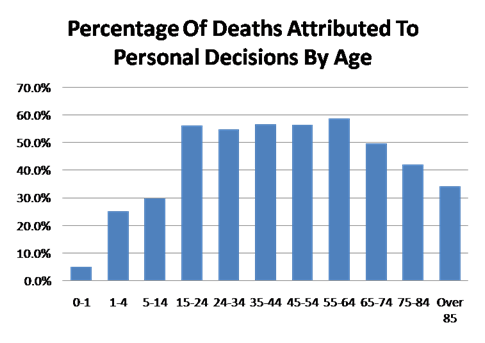
I was reading Ralph Keeney’s article “Personal Decisions Are the Leading Cause of Death” over the weekend. It’s very interesting. He attributes 1M of the 2.4M deaths in 2000 in the US to personal decisions that we make. And, unfortunately, he says that retrospective analysis would suggest we’re on a bad trend line of increasingly being responsible for a greater percentage of our deaths.

The article points out that the fact that these are personal decisions makes this a manageable issue.

  1. We can engage consumers to take more responsibility for their healthcare.
  2. Improving decision making is less expensive and in some cases more effective than other options.

“A personal decision is a situation where an individual can make a choice between two or more alternatives.”

“A premature death resulting from a personal decision is defined to be one where an individual dies sooner than would have been the case if a different choice had been made.”

The premature deaths attributed to personal decisions in the article are:

  • Smoking
  • Weight
  • Alcoholic diseases
  • Accidents
  • Suicide
  • Unprotected sex
  • Homicide
  • Illicit drugs

If you go read the paper, you can see how he breaks down each of these areas.

What I also found very interesting was the breakdown of the percentage of deaths by age group that are attributable to personal decisions. [I honestly expected it to peak earlier, but I think the fact that 80% of the impact is from smoking and weight that it takes time to see that impact.]

“Take control of your own health. Studies show that at least two-thirds of cancer deaths can be prevented by not using tobacco products, maintaining a healthy weight, getting plenty of physical activity, eating health foods, and avoiding the midday sun and protecting the skin with a hat, shirt, and sunscreen.” (Quote from the American Cancer Association)

A key question is whether people feel responsible for their own health. A 2009 survey by Thomson Reuters showed that those with a higher education level had a much stronger sense of that ownership (71.2% for those with a college degree versus 47.5% for those with less than a high school education).

The article made me think of a few things:

Much like Silverlink Communications, many healthcare companies are very focused on consumer engagement. As this article points out, getting consumers to understand the impact of their decisions on their health may be a very effective way of reducing premature deaths. That should also reduce the burden of chronic conditions on our economy.

“Seven chronic diseases…have a total impact on the economy of $1.3 trillion annually. Of this amount, $1.1 trillion represents the cost of lost productivity.” (Milken Institute)

While we typically focus on throwing money or incentives at the issue, this may not always be the answer (see post on the book – Drive). There are many simple interventions to help address health literacy and help consumers understand the need to take action (see post on cured after the first fill). Creating personalized communications that address people’s barriers is a critical success factor for healthcare organizations. There are several critical success factors to consider:

  • Help consumers understand the need for the action (WIIFM)
  • Make it simple so they can fit it into their busy schedules
  • Coordinate with the physician
  • Address their fears
  • AND, be cognizant of cost and the burdens this can cause (see recent article on OOP spend for people with cancer)

What I Learned In PharmaVOICE

I’ve been reading the magazine PharmaVOICE for the past year or so. I really enjoy it. I occasionally pull a few articles out.

I was reading the March 2011 version on the plane and found a ton of interesting information. I thought I would share some of the nuggets from it:

  • In 2010, 112M people (48% of US adults) were e-pharma consumers (individuals who went online to find pharma information). (Manhattan Research)
  • Fewer than 20% of consumers who go online for pharma information mistrust pharma websites (branded and unbranded).

“We found the degree to which consumers are open to online content from manufacturers surprising, considering the common perception that consumers are generally critical of pharma generated information.” (Manhattan Research Healthcare Marketing Analyst Maureen Malloy)

  • Top Prescribing-Driving Sites (Manhattan Research):
    • Levitra
    • Chantix
    • Cialis
    • Nexium
    • Yaz
    • Lyrica
    • NuvaRing
    • Symbicort
    • Viagra
    • Lunesta
  • Talk about how research is now “peer reviewed” via social media – original article.
  • Talk about the Sanofi-Aventis blog – Discuss Diabetes – which enables two-way conversations with patients in public.
  • Talk about how Merck is helping patients engage with consumers using online videos and checklists.
  • Talk about a text messaging service focused at teens and young adults for adherence – www.ireminder.com.
  • An interesting article by Ogilvy about 8 Health Engagement Zones and 7 things to keep in mind about public and individual communications:
    • Technology is not a panacea…it has to be adopted and incorporated into everyday behavior.
    • Information must be communicated and interpreted effectively to change behavior.
    • To cut through the “clutter”, information will increasingly be communicated via story-telling and visualization.
    • Technology will allow us to create the right message with the right tone in the right place at the right time. [or already does allow for this with the Silverlink Platform]
    • Health messaging will become personalized. [already happening]
    • Highly targeted, persistent, positive messaging will be needed to help overcome fear and embarrassment.
    • Although health is a serious matter, we don’t always have to take ourselves seriously when it comes to health communications. (e.g., gaming)
  • In the year ending Oct. 2010, $4.4B was spent on DTC advertising around pharmaceuticals.
    • Pharma 3.0 success will be “based not on how many drug units are sold, but on how well pharma’s market offerings improve health outcomes, putting patients and payers at the center of the model”.
    • Pharma investments in condition support tools – smartphone apps, websites, devices, and social media – was up 78%.
  • In a recent Harris poll, only 11% of respondents perceived the pharmaceutical industry as generally honest and trustworthy.
  • According to SDI, there’s been a shift in spending from 2007-2009:
    • 30% decrease in print
    • 32% increase in online activities targeting physicians
    • 29% decrease in magazine DTC advertising
    • 300% increase in internet advertising
  • Learned about a physician “hotlink” (my name) by AstraZeneca where they can connect with the AZ medical affairs team by a feature on their iPhone – formulary status, adverse event reporting, request samples, …
  • Similarly, learned about an “Ask Pfizer” button in Sermo.
  • According to the Manhattan Research’s ePharma Consumer v10.0 study – almost 3/4th of the people visiting pharma websites take a product related action afterwards. (That’s amazing!)

“When pharma is thought of as a health-services industry, the possibilities for growth in revenue, engagement, personalization, and freedom from pipeline dependency are almost endless.” (Paul Simms, eyeforpharma)

  • A list of manufacturers and what percentage of their portfolio is at risk in the next 3 years for patent expiration:
    • #1 Pfizer with $53.6B and 68% of their portfolio
    • #2 Lilly with $20.8B and 66% of their portfolio

“The industry has to address the consumer population across multiple channels with information that is timely, easy to understand, accurate, and actionable.” (Deborah Schnell, Health Advice Networks)

  • There was an article discussing a great question about whether “brand equity” exists after patent expiration.
  • There was talk about the shifting “customer” of pharma from the physician to the consumer and the formulary committee.
  • There were some statistics from a Tufts study on REMS where 75% of people thought the program needed a major overhaul.

I shared a lot here to make a point…this is a monthly magazine packed with interesting content. If you’re in this space, you should be reading it.

Domestic Medical Tourism and Telemedicine

The idea that local healthcare in a physical setting doesn’t work seems to be the crux of many solutions for leveraging limited resources (MDs) and addressing the geographical pricing differences which exist.  Given what we know about engagement and the value of the physical and personal relationship, there should be a better way.

BUT, without trying to solve for that…I thought I would share a few things that I recently saw.

BridgeHealth Medical is a Colorado based company that is focused on domestic medial tourism.  We’ve all heard about international medical tourism (i.e., flying someone to India for a surgery) and the savings there.  The key (and interesting) question is whether there is some middle ground within the US. 

At least according to the brief story I read in Inc. Magazine, they are getting some traction:

  • 40% savings on a total knee replacement
  • 22% savings on a spinal fusion surgery
  • 13% savings on a prostate surgery

I was amazed that the article said that Americans spend $2.1B outside the US today.  Will this replace that or will it be a new category of spend to track?

And, it will be interesting to track outcomes here and see whether savings translates to better survival rates or improved quality of life.  There will be challenges to the model as I’m sure there have been for international medical tourism.

Cisco on the other hand has rolled out their telemedicine initiative called HealthPresence which uses videoconferencing and high-tech medical equipment to share data.  Obviously, telemedicine has been a tool that’s been tried several times over the years with varying levels of success.  Can Cisco’s efforts and model finally push this from a fringe technology approach to mainstream? 

It’s certainly possible.  Timing may be right.  We’ve seen some success with AmericanWell’s efforts.  The question is how will the consumer respond.  Will they appreciate the easier access?  Will it impact the caregiver / patient relationship? 

Who knows…there is still a lot to learn especially in a country where we’ve been traditionally over-served with our access to healthcare.

Pharmacy Reimbursement Needs To Be Re-Aligned With Effort

I know this is not a popular topic, but I really believe that reimbursement on a per Rx basis in misaligned.  Today, a pharmacy (retail, mail, specialty) is paid based on either a discount off a standard price (e.g., AWP) or based on a MAC (maximum allowable cost) list.  They may also receive a dispensing fee.  According to the latest PBMI Benefit Design Report, those dispensing fees are:

  • $1.62 retail
  • $2.33 mail (noting that only 21% of their surveyed employers pay dispensing fees at mail)
  • $3.26 specialty

And, the reimbursement rate is the same whether it’s a new Rx or a refill.  Does anyone out there believe that the amount of effort to fill a new Rx and a refill is the same?  Why not pay differently?

An industry number that has held up anecdotally when I’ve talked to lots of people is that 40% of new Rxs require some type of work to become a “clean Rx”.  That might mean that they are subject to a utilization management program (step therapy, prior authorization, quantity level limit).  It might mean that there is a DUR issue such as a drug / drug interaction which has to be addressed.  It might mean that the drug isn’t covered.  It might mean that the cost is too much based on formulary tier.

Additionally, the first few times a patient fills a drug is when they have questions.  When do I take the drug?  Are there any side effects?  Should I avoid any foods?  Should I eat with my meal?  Are there alternatives?

Once the patient has titrated to the right strength and is taking their medication on a regular basis, the job is pretty much to count the pills and get them to the patient in a timely manner.  It has been my argument for a while that if we could fix this reimbursement misalignment then you would see a better coordination between retail and mail order.

The right model in my mind shifts reimbursement dollars through dispensing fees or some other payment structure to compensate for these cognitive services on the initial fill and acknowledge where the effort is.  I believe this would allow for a “mail at retail” type model of central fill or a kiosk model at the store or encourage retailers to better support mail order efforts when appropriate.

Everyone is aligned (at some level) with getting patients to:

  1. Start on the appropriate medication
  2. Understand their medication and their condition
  3. Make appropriate choices that lower overall costs to the payers
  4. Stay on their medications
With that said, it seems like there is an opportunity here.  It won’t be easy, and I don’t hear anyone talking about it…but I’ll continue on my soapbox for now.

Highlights From The CVS Caremark Insights Report 2011

CVS Caremark has been on a roll lately releasing lots of research especially in the adherence area. They just released another study this week that said:

In a study published online this week in the Journal of the American Pharmacists Association (JAPhA) the researchers said,”Approximately one-half of caregivers reported they are more likely to forgo their own medications than the medication needs of their caregivees, especially if cost was a problem, and that caring for their family members was more important than caring for themselves.” The researchers added, “Our findings indicate care-giving status may be an important characteristic for providers to identify and that caregivers may represent a fertile target for adherence interventions to improve chronic disease management and prevent chronic disease.”

But, today, I want to focus on their drug trend report called Insights which was released a few weeks ago. The report begins with a focus on change pointing out a few facts which will change our healthcare experience. Here’s part of the introductory letter by Per Lofberg, the President of Caremark Pharmacy Services.

We all know change is a constant, in this industry and in life, but the change we face over the next several years is monumental and unprecedented. The sweeping nature of the health care reform legislation makes it difficult, as even the government admits, to predict how the system and its stakeholders will respond. Regardless of how much is unknown and “still to be determined” about reform, all of us continue to face the urgent, ongoing need to reduce health care spending and simultaneously improve health outcomes.

They take a different approach than Express Scripts (see review of this year’s drug trend report) and Medco in their drug trend reports which are more encyclopedic in their breakdown of class by class. CVS Caremark poses questions by group and then presents data to address those questions.  They focus on health reform and overall changes to the market dynamic.  [Both Adam Fein and I review most/all of these reports every year so I’d encourage you to look at both of our blogs if you want historical facts or comments about comparing the drug trend reports.]

  • Employer: Benefit costs are hurting our profitability. Something’s got to change.
    • Only 6% of employers believe their company will be better off as a result of healthcare reform.
  • Health Plan: How do I compete, comply, and control costs in this new world?
    • 120M members will be seeking or changing coverage between 2012-2016.
  • Physician: My practice is already stretched to the limit.
    • The US will have about 159,000 fewer doctors than it needs by 2025.
  • Consumer: Where do we go from here?
    • In 2010, 1 in 4 households reported having trouble paying medical bills.

Key Statistics:

  • Overall trend = 2.4%
  • Non-specialty trend = 0.8%
  • GDR for 2010 was 71.5%
  • Specialty trend = 13.7%

Specialty now makes up 14.2% of their BOB (book of business) overall spending…[something that some people are predicting will be close to 40% in under 5 years].

I really like how they breakout the charts by type of client (employer, health plan, and TPAs) since they have different approaches to trend management. Here’s the health plan one:

They talk about some of the future trend influencers:

  1. Economy
  2. Aging population
  3. Chronic condition prevalence
  4. Changing condition guidelines
  5. Health care reform
  6. Adherence
  7. Generic launches
  8. Specialty growth
  9. Brand price increases
  10. Less predictable events – weather, flu impact

Like others…they are saying that GDRs (generic dispensing rates) of 80% are now possible by 2012! Talk about a change in the past decade and why there is so much pressure on the manufacturers.

They mention it in the publication, but they’ve also issued some press about their effort to target the specialty spend that happens under the medical benefit. They estimate that 80% of the drug spend in the medical benefit is from specialty drugs with cancer representing 46% and three other categories representing more than 2%:

  • Anemia and neutropenia
  • Osteoarthritis and RA
  • Immune disorders

Given their broad footprint, they pose an answer rather than a question from the next constituent – the pharmacist:

I know I can make a real difference for people.

One of the big areas of focus for leveraging that F2F relationship is adherence:

They provide an updated statistic on average Rxs PMPY of 12.6.

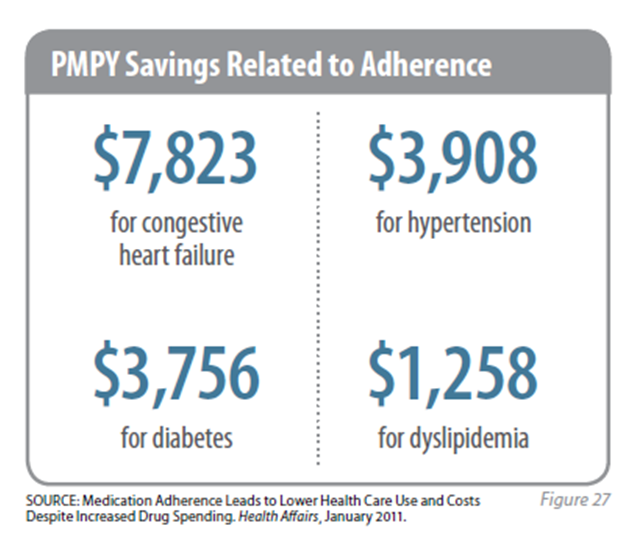
One of their big studies from the year was the one that was published around savings related to adherence:

I’ll end with a statement they highlight at the end:

“Every member interaction is an opportunity to improve outcomes for the plan and the member.”

The Information Blanket: Design Meets Health Literacy

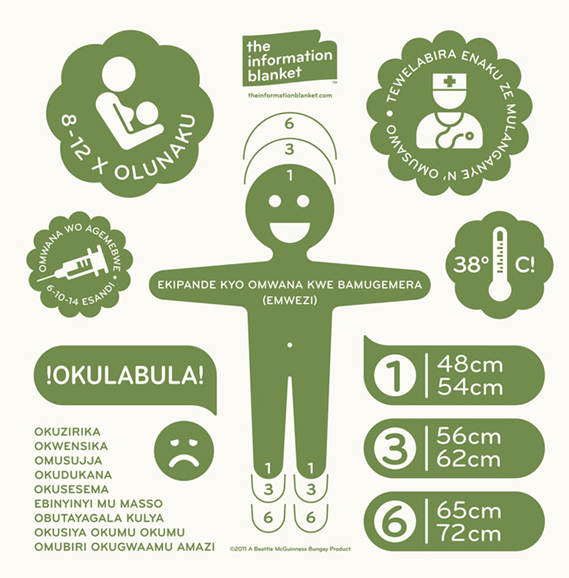
Another story from Fast Company June 2011 that I found really interesting was about the Information Blanket. This is a tool being used in Uganda to address their infant mortality rate.

It includes information on:

  • Vaccinations
  • Breast feeding
  • Doctor’s appointments
  • Fever
  • Growth rates
  • Symptoms to monitor

I think this is a few cool and creative solution.

Pharmacy Kickoff At #RESULTS2011

I’m currently presenting at our client event (see twitter hashtag #results2011 for real-time comments). My presentation is an extension of my white paper on the future of the PBM / pharmacy industry along with a blend of data from our annual client survey and Silverlink Communications best practices with a focus on our work around medication adherence. It also builds on my thoughts from NCPDP that I shared late last year.

Here are a few of the points I touch on:

  • Avoiding being commoditized by adding value
  • Keys to success with a focus on:
    • Evidence-based approaches
    • Consumer engagement
    • Patient experience
    • Cross-channel coordination
  • Adherence and other priorities
  • How to use SMS to drive self-service
  • An approach to condition management in hypertension and diabetes
  • Focus on the “un-engaged” but don’t forget about the engaged consumers
  • Case studies and research around adherence
  • Timing and sequencing of direct mail, automated calls, and e-mail
  • Measuring “trust”

Here’s a teaser of some of the slides I’m presenting:

Walmart: Good or Bad for the PBMs

I think this is a question many of my PBM friends would like to know. Fortunately, a few of the Walmart people that read my blog and are part of their Health and Wellness group agreed to sit down and talk about their strategy.

Let’s start with setting some background:

  • Walmart was the first to introduce the concept of $4 generics which originally caught the market off guard and has created lower generic costs and free antibiotic programs at several pharmacies. [I would also argue that it highlighted the fact that generic copays were getting too high.]
  • Walmart was the first to work directly as a pharmacy to create a limited network contract direct with an employer (Caterpillar).
  • Walmart has partnered with Humana on a limited network offering for Medicare.
  • Walmart came out with a direct to consumer mail order pharmacy offering.

If you follow the industry, you know that all of these things were potential game changers (if they’ve worked).

This creates some tension:

  • Is Walmart simply a catalyst for change in the healthcare space?
  • Does Walmart (pharmacy) want to disintermediate the PBM?
  • Is Walmart able to make money where others can’t?
  • Does Walmart get more foot traffic such that pharmacy can be a loss leader?

Here is the Q&A [interpretive not literal] from my dialogue with Marcus Osborne (Sr. Director, Business Development, Healthcare, Walmart) and Tom Hill (Director, Health Services Development, Walmart).

What is Walmart’s Health & Wellness strategy?
Walmart wants to help consumers “save money and live better”. That is our DNA and our fundamental approach to the market. Pharmacy has presented a unique challenge since consumers often have the same copay regardless of which pharmacy they went to. Even when it’s a percentage copay, the savings differential might not be much to the consumer. Walmart was disconnected from the consumer in the traditional pharmacy pricing approach. That has driven us to look at unique ways that we can create savings.

How does Walmart decide what “offerings” to bring to market?
Walmart looks at ideas that focus on our EDLP (Everyday Low Price) concept and leverage our supply chain efficiencies. We are constantly looking at non-store operational opportunities to work directly with key companies. We currently have over 20 direct relationships with managed care companies and PBMs where we are working with them to drive down consumer costs in the pharmacy and broader healthcare area.

Obviously healthcare is bigger than pharmacy. What other things are you doing to drive healthy eating, management of critical conditions, or other programs? We’re constantly looking at what’s needed in the healthcare sector and where to invest. We focus on our two key advantages:

  • Willing to trade profit for volume
  • Value of the total “box” [store]

A good example is the work we’ve done around “Healthy Mom Healthy Baby” in Medicaid. We looked at the issues of high pre-term labor and the high rates of injury post-birth. We felt like we had a moral and cost imperative to take action. As part of this, we worked with several managed care groups to redefine the entire process and look at our unique assets. Our solution includes:

  • Free pregnancy tests
  • Free pre-natal vitamins
  • Rewards for free diapers and other supplies tied to physician visits and other health activities
  • Free car seats
  • Leveraging our physicians and clinics

[I was impressed…this was a broad solution that looked at a lot of their assets.] We’ve also created several diabetic specific solutions; a smoking cessation program with Healthways; weight management programs; and women’s and men’s health programs. The focus is on payers that are at risk for their healthcare spending with more to come from clinics.

Will Walmart become a PBM?
No. We’re not looking to go into the PBM market. We’re supply chain experts. We see value in the PBM model. [We talked a little about the fact that “you are what your profits say you are” meaning that the PBMs have painted themselves into a profit corner where their profit comes from generics at mail order so any threat to that is a challenge.]

If the Caterpillar model was so successful, why haven’t others adopted it?
The reality is that over 400 employers have contracted directly with Walmart for a limited network model similar to Caterpillar. They are all seeing significant savings.

Does Walmart see the market through “different glasses” than others?
No. We still want to have the pharmacy be a profit center. We’re not looking to bottom out the market, but we are willing to trade lower profits per transaction in return for more market share. At Walmart, it’s not about maximizing revenue/Rx or profit/Rx…it’s about total revenue and total profitability. [A very different strategy than other CFOs which would say you can’t expect volume to make up for lower profitability.] Obviously, we also have the opportunity to get non-pharmacy sales associated with food traffic. One thing that may be is different is the fact that we believe scale should drive down costs. In pharmacy, the biggest players are always trying to command a premium. We think it should be the other way around. We also have been able to get our cost-to-fill to be the same at retail and mail so we’ve become channel ambivalent.

Have these programs improved market share in any significant ways? You have to look at the programs separately, but overall we’ve seen our market share increase from 6% overall [when the $4 generic program launched] to 10% now. The network design strategy has had great success. We look at three types of programs:

  • Incentive based networks
    (Caterpillar 1.0) where all the pharmacies are in the network, but there is a lower copay to go to certain pharmacies. If only 15% of pharmacies are preferred, their market share doubles. If Walmart is the only preferred pharmacy, their market share goes up 4x.
  • Limited networks where some pharmacies are removed from the network. If you drop the network significantly, they’ve seen their share go up 2-3x.
  • Limited networks with preferred pharmacies where you some pharmacies are removed from the network, but within the remaining pharmacies, there are still incentives to go to certain stores (Caterpillar 2.0). In these cases, they’ve seen their share go up 10x.

The $4 generics program has helped increase market share by an estimated 150 basis points. In many cases, companies that initially jumped to offer similar programs have dropped them. They couldn’t sustain them.

The Medicare program with Humana has been very significant and successful [as demonstrated by Humana’s huge jump in Medicare lives].

The direct-to-consumer (DTC) programs for mail have been pretty limited and haven’t had a huge impact, but they’ve been offered in markets where we have no stores (e.g., Detroit and NY) and therefore almost no share to begin with so any share is a gain.

People complain about the pharmacy location within the store. Would you ever consider a direct access point to the pharmacy which didn’t involve going through the entire store? This is a very hot topic. We did a lot of research about store design and what goods should be located next to each other, but in the end, we’re considering moving the pharmacy closer to the front entrance. Right now, 25% of the stores have a drive-through pharmacy which gets utilized at a very high rate. But, this does lose the pharmacist face-to-face benefit. [At the end of the conversation, my take is that they are looking at lots of scenarios here and trying to figure out the balance of convenience to the pharmacy only consumer and how to optimize the entire footprint.]

The partnership with Humana really seemed to help them grow their Medicare lives this year. How did this come about? We both were looking for new solutions to leverage the fact that scale matters and how to operate within the CMS parameters. We felt like there was an opportunity to do something different and began speaking with plans about some limited network ideas. We know that Walmart is over-indexed in the 65+ category based on store visits per week. Based on that, we were looking at what we could do to offer them more value as compared with our traditional, core customer of 35-50 year old females. Through a series of conversations, the partnership was born. We’re very happy with the relationship and believe they are also.

Limited networks have been around for a long-time with limited adoption. Do you think their time has finally come? What has changed? They have been around, but historically the networks weren’t limited enough to create enough savings to overcome the “costs” of disruption to the payer. Based on our experience at Caterpillar, we believe that you will see a transitional period where companies first move to incentivized networks and then 1-2 years later move to limited networks. [Something I would compare to the transitions which have happened in formulary over time.] The one area where we do see limited networks happening more rapidly is in the area of Managed Medicaid. [This plays into the focus of PCMA and others on the PBM opportunity around Managed Medicaid.]

It was a great discussion. I learned a lot. They allowed me to ask them a lot of questions about their programs and approach that honestly had led to some skepticism in the past. It sounds like they’ve brought together a great team with a broad vision of what they can do in pharmacy and in health and wellness overall. It has gotten my mind thinking about ideas, and I look forward to learning more.

[BTW – You can sign up to get posts like this e-mailed to you whenever I write them.  A registration link is in the right hand column.]

PBM Mobile Applications – CVS, Humana, Medco, Express, Catalyst, Prescription Solutions

This week, Medco released their mobile application that they’ve been working with Verizon on.  Not a big secret in my mind since I’ve been hearing about it since last Fall.  I’ve talked about CVS Caremark’s application (CVS mobile), Humana’s application, and CatalystRx’s application.  So, this made me wonder why I hadn’t heard about one from Express Scripts.  It seems unlikely that they wouldn’t have one.

There doesn’t seem to have been a lot of fanfare, but they launched one in March.  Here’s a quick summary of it:

The new Express Rx mobile app works across multiple platforms, and is now available for a free download at both the Apple iPhone App Store and at the Android Market (simply search ‘Express Rx’).  In addition, members using a Blackberry or other smartphone device with web browsing capability can access our mobile optimized website at http://m.esrx.com.

With our new mobile app and mobile optimized website, Express Scripts members will be able to securely access the following functions:

  • Start Home Delivery – transfer available maintenance medications to the Express Scripts Pharmacy
  • Order Refills – select and schedule prescriptions to be refilled from the Express Scripts Pharmacy
  • Check Order Status – check to see if an Express Scripts Pharmacy order has shipped, the ship date and by what method
  • Find a Pharmacy – locate a nearby retail pharmacy using the GPS technology built into a smartphone
  • Drug Information – access Drug Digest database to look up drug information, common uses and possible side effects

The app consists of three features: My Rx Choices, which delivers on-demand, personalized out-of-pocket costs, interactions and other information for any prescription drug; My Medicine Cabinet, which allows patients to view the medications they’re on, including prescription and over-the-counter drugs, and set reminders for themselves; and Prescription ID Card, which allows convenient access to a member’s prescription drug card.

Of course, Walgreens also has a mobile application as does Walmart.  Neither of them are PBMs, but they are both critical players in the pharmacy space.
Next on my list to check out is Prescription Solutions.  They also have a mobile application which does:
  • Refill mail service pharmacy prescriptions
  • View your prescription history
  • Set up text message medication reminders
  • Check the status of and track orders
  • Locate a pharmacy by ZIP Code
  • Search your formulary by generic or brand name drug, status, or class
As one might expect, mobile web or mobile apps are quickly becoming the norm.  The key to look at is what is the functionality.  Is it simply putting their websites on a phone or are they developing other technologies that take advantage of the mobile environment (e.g., location based services or enhanced reality).  I’ll share some thoughts on those in another post.

No Plans To Split Up CVS Caremark

I’m glad to see Larry Merlo come out in the CVS Caremark earnings call and talk about them not splitting up the company (see Adam Fein’s post).  I’ve been talking about this for a while (see old post).  I think that they have the right combination of assets to do something really significant. 

They followed that up with a press release this morning:

Speaking at the Annual Meeting of Stockholders for the first time as CVS Caremark CEO, Merlo said, “The fact is no one else can match our combination of assets — a leading PBM, one of the largest retail pharmacy chains, a leading specialty pharmacy, a growing Medicare Part D business, and the largest and fastest-growing network of retail health clinics. CVS Caremark is using these combined assets to develop and implement innovative programs and offerings, such as Pharmacy Advisor and Maintenance Choice, which should drive long term value for shareholders.”

The rumors and stories of increased value of splitting the company up were getting to be too much noise.  Employees, clients, customers, investors, and everyone else needed them to come out and set the record straight.  Of course, anything can be debated and changed over time, but you need a clear direction.  I’m glad to see them stand up and reiterate their strategy and vision around creating a unique set of assets to derive unique value. 

[Disclosure: As I’ve shared before, CVS Caremark stock is one of a few individual stocks that I own.]

Looking Forward To The Silverlink Client Event – RESULTS2011

One of my favorite events every year is the Silverlink Communications client event in May in Boston.  Our marketing team does a great job of pulling together a mix of clients and external speakers to really motivate and challenge the audience.  It’s not much of a sales event, but it does a great job of pushing a lot of key topics for discussion.  (See prior posts – last year’s event, notes from RESULTS2010, and notes from RESULTS2009.)

This event was one of the things that originally convinced me to join Silverlink back in 2007.  Sitting and talking with clients about their experiences with the company, their shared passion for results and outcomes, and their interest in collaborating to improve outcomes for consumers was motivating.

This year should be no different.  This year’s theme is – “Seeing Healthcare Through The Eyes Of The Consumer“.  There are presentations on sustaining engagement, obesity, diabetes, health literacy, social media in healthcare, adherence, loyalty and retention, health reform, STAR, HEDIS, and many other topics.

Some of the speakers include:

  1. Dr. Atul Gawande (Harvard, The New Yorker, Author)
  2. Thomas Goetz (WIRED Magazine)
  3. Dan Buettner (Author, The Blue Zones)
  4. Mark Merritt (PCMA)
  5. Dr. Will Shrank (Harvard)
  6. Jim Wilson (WilsonRx)
And many other executives from across healthcare.
It promises to be another banner event.  I’ll share some summarizes as time allows via Twitter and eventually after the event.
I guess with attendance maxed out and the hotel sold out it’s time for me to buckle down and work on my presentation!

The Royal Wedding Symbolism For Healthcare

This is a day most of us will remember.  I still remember the wedding of Princess Diana.  Regardless of how you feel about the monarchy, it is a joyous celebration of life.

It made me think of several words that are key to healthcare – trust, passion, and engagement.  (Another great example here is the real Patch Adams.)

Let’s start with trust.  You have to trust your physician.  You have to trust that the course of treatment will work.  You have to trust that your actions can make a difference.  Those are fundamentals to getting better. 

Passion is another critical element (even if the royal couple was light on the PDA).  Healthcare runs the risk of becoming a “hot industry” with sustainable business which draws people towards it to be employed and get paid well.  That’s very different from the traditional people who were in healthcare because they felt passion for curing people.  I talked with one researcher recently that mentioned one of his client had to increase their staffing by over 10% to get the same jobs done.  They attributed that to a lack of passion for the job.  (On the flipside, healthcare needs those from outside the industry to help reform ourselves.  Change has to be a mix of internal and external.)

Engagement is a word I use often.  The idea here of the long-term engagement process, transition into being a royal, and the commitment the royal couple feels is very different than the quick engagement and wedding of Princess Diana.  I see that as very similar to the need for long-term solutions that engagement people around intrinsic motivators not the short-term boosts we see from things like financial rewards or quick diets.  Healthcare is a change.  Engagement is a process NOT an event.

The people over at Seduce Health pulled out a few other lessons from the wedding which I agree with. 

So…engage your employees, your family, your members, and your patients.  Build up their passion for life and health and help them believe that they can be successful.

Interview With Dr. Victor Strecher (Founder of HealthMedia) From #WHCC11

While I didn’t get to meet Victor at the World Healthcare Congress in DC, I got a chance to do a phone interview with him last week. For those of you that don’t know who he is, here’s a quick bio:

Victor J. Strecher, PhD, MPH
Professor, Health Behavior & Health Education; Director, Health Media Research Laboratory; Director, Cancer Prevention and Control, University of Michigan School of Public Health;
Chairman & Founder, HealthMedia, Inc.
Dr. Victor J. Strecher graduated in 1983 with an M.P.H. and Ph.D. in Health Behavior & Health Education from the University of Michigan. After positions as Assistant and Associate Professor in the School of Public Health at the University of North Carolina, Dr. Strecher moved back to the University of Michigan, where he became Professor of Health Behavior & Health Education and Director of Cancer Prevention and Control in the University of Michigan’s Comprehensive Cancer Center.

Dr. Strecher also founded the University of Michigan’s Center for Health Communications Research (CHCR): a multidisciplinary team of behavioral scientists, physicians, computer engineers, instructional designers, graphic artists, and students from a wide variety of disciplines. For over a decade, Dr. Strecher’s center has conducted research studies and demonstration projects of computer-tailoring and interactive multimedia programs.

In 1998, Dr. Strecher founded HealthMedia, Inc.– a company designed to create interactive health communications solutions for medical care, employer, pharmaceutical, and government settings. The intention of HealthMedia, Inc. is to bring the highest quality science, operational capabilities and creativity to the marketplace.

My key takeaways from the conversation were:

  1. We have to focus on intrinsic motivators in healthcare.
  2. A little help at the right time is a lot better than a lot of help at the wrong time.
  3. Selecting physicians based on organic chemistry scores without weighing empathy may be a issue.
  4. You have to listen to the patient, assess their needs, and provide them with tailored information.
  5. Social media has to embrace “collaborative filtering”.
  6. Most behavior change companies are hitchhikers while some like PBMs are tollbooths. It’s better to be a tollbooth.
  7. Choice has to expand over time.

Intrigued? You should be. Dr. Strecher was a fascinating person to talk with (see some of his insights). We only spent 30 minutes together, but I could easily imagine sitting with him in at my alma mater (University of Michigan) and talking for hours about healthcare communications and how this can impact the country and our outcomes.

We started off by talking about the shift in focus to the consumer over the past decade and how even while this has happened we (healthcare companies) have been guilty of seeing the patient from our perspective not from their perspective. This took us down the path of talking about motivation and what gets people to take action. We focused on the fact that health (in and of itself) isn’t a big motivator, but being healthy to see your kids or grandkids certainly is. We talked about how financial rewards aren’t the right (or only answer) and how there is a need to really understand and articulate intrinsic motives (see write-up on Drive by Daniel Pink).

We talked about his company HealthMedia (owned by Johnson & Johnson) and what they do to collect information on motivation. We talked about the use of stories (a topic that keeps coming up) and providing the right amount of help at the right time. He talked about how HealthMedia monitors consumers, provides them with coaching, and continuously evaluates their goals. He also talked about how they use online technology and mobile technology to get the right connection at the right time.

This led us into a discussion about how important behavior is in health outcomes. He mentioned that 70% of cancers are related to behavior – scary. But, at the same time, we don’t chose candidates for medical school based on their abilities to engage patients or show empathy. We choose them based on their organic chemistry scores. (As a physician, he could say that while I’d probably get tomatoes thrown at me for that comment.)

At this point, I really wanted to understand what HealthMedia has learned to get people off the couch and engaged. It all sounded a little too theoretical to me. He talked about their core process:

  1. Listen to the issues. Assess the patient using branching technology and feedback to them.
  2. Try to figure out what they need using a software algorithm.
  3. Tailor information to them based on what you’ve learned (e.g., if they are concerned about gaining weight when quiting smoking, help them with that). And, I thought a key point here was to help them prioritize their actions rather than giving them a laundry list of things to do.

But, one of the keys in getting them to engage is to work through their intermediaries – employers and payers. For example, while you might encourage consumers to take an HRA for a financial reward, you may need a “health champion” at the employer site to really motivate people at a personal level. Or in another example, he talked about how Kaiser uses Epic and how HealthMedia integrates there. This creates an opportunity for “information therapy” which can be given to the consumer as a follow-up action from their encounter.

We went on to talk about social media which is one of those big topics in healthcare today. Obviously, there is lots of research that talks about the “peer pressure” effect on weight and smoking and other topics. (He mentioned the book Connected here.) But, how to you build trust (see recent post on this) and route consumers to the relevant information. He brought up a concept which was new to me called “collaborative filtering”. My interpretation of this is essentially having an expert monitor and guide consumers to relevant information within the social media realm. You want to find relevance in the data which means it has to be from “friends” who have experience with the topic.

I was asking him about the challenge of building trust given how many companies are out there and the amount of information which consumers are bombarded with. This is when he created the great visual of most companies as being hitchhikers in the behavior change world while others like PBMs are tollbooths. The tollbooths create a pause in the process which is triggered around an event. This event is an opportunity to get the consumer engaged. Of course, in general, these “golden moments” (my phrase) aren’t taken advantage of as much as they could be.

But, if they were, consumers would understand what they want and how a particular behavior maps to those desires. This would lead to improvements in adherence and other outcomes.

We wrapped up by talking about preference-based marketing and the impact of choice. He had some great points here which is an area of interest for me since there’s not much research. He pointed out that choice is instrumental since it appeals to autonomy. BUT, not everyone wants autonomy. Too much choice can be overwhelming. In summary, he suggested that less choice is best early on when the consumer is overwhelmed (e.g., newly diagnosed), but as they become more of an engaged patient over time, more choice is better.

The Express Scripts 2010 Drug Trend Report – Waste and Intent Focused

As I’ve talked about in the past, after working on the Express Scripts Drug Trend Report (recent copy here), I really enjoy getting the chance to read through them every year (see 2009 review or 2008 review). Over time, they’ve become less about the clinical side of the business and more about the programs used to engage the consumer with consolidated class specific data still included.

This year’s report is similar, but it is built around a new study that Express Scripts just completed with Harris Interactive. It comes to a rather surprising but interesting conclusion –

We discovered that the majority of people want to engage in the same behaviors plan sponsors seek to promote, but these desires often remain dormant. That is, there is a persistent intent–behavior gap. The key is structuring interventions that close the gap between what patients already want and what they actually do.

What’s the key point here? The point is that this says that consumers really want to move to generics and move to mail order, but they don’t do it. Is it that simple? I’d love to think so. And, for generics and mail order, I’m more likely to believe that inertia is a large factor. BUT, as I’ve talked about before, adherence has lots of complicating dimensions.

They focus on the gap between the physician and the optimal outcomes. This is certainly a major factor, but beyond consumer intent, there are issues of health literacy and physician beliefs that have to be addressed. Regardless, the point is correct…how do we engage and motivate consumers to change behavior especially if they are pre-disposed to change (when presented with the right facts).

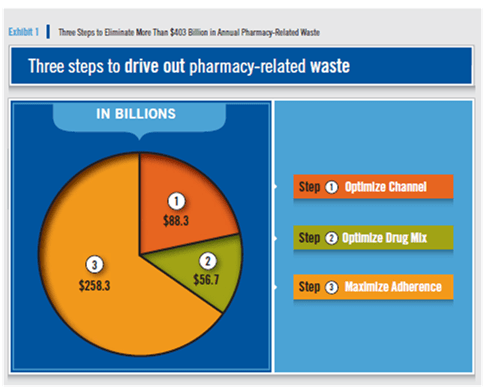
They did continue to build on last year’s focus on WASTE. They estimate that the waste in 2010 was over $403B as broken down below:

As adherence is a key issue here, they highlight the difference in adherence rates between retail pharmacy and mail pharmacy.

The focus of the report and the early press I’ve seen has been on the following chart. What it shows is some of the data from the Harris study saying that 82% of people would chose a generic (that are on a brand) and (depending on copay savings) 55-71% would chose retail.

One topic that I was glad was in the survey was limited networks. This is a topic everyone’s talking about from ReStat to Wal-Mart to Walgreens to CVS. Here’s what the research said with some explanation for what it means:

Of note is that about 40% said they would be willing to switch retail pharmacies to save their plan (or employer, or country) money. This fi gure is not as low as it fi rst appears because before a plan implements a more narrow retail network, a large fraction of members already use these pharmacies and therefore don’t have to switch pharmacies. It is not unusual, for example, for a client using a broad network to have 70% of prescriptions processed through pharmacies that are in the narrow network; members currently using these pharmacies do not have to make any changes. When a narrow network is implemented, if 40% of the users of the remaining 30% of prescriptions would willingly move to a lower-cost network pharmacy (as suggested by the survey), we estimate that the resulting overall market share within the narrow network would rise to 82% {70 % + (30% x 40%)}. (page 14 of the DTR)

All of this tees up their family of “Select” offerings (see Consumerology page) which builds on the success of Select Home Delivery and applies the concept of “Choice Architecture” from the book Nudge.

They talk about some of their work with adherence and their Adherence IndexSM. This metric is certainly one that has the industry’s attention as people wonder about the predictive value, how this is used, and how to craft solutions around such an index. My perception has been looking at studies like this one by Shrank and colleagues that past behavior remains the best predictor of future behavior, but I’m happy to be wrong.

So…what were the trend numbers?

  • 1.4% in the traditional (non-specialty drugs)
  • 19.6% in specialty
  • 3.6% overall

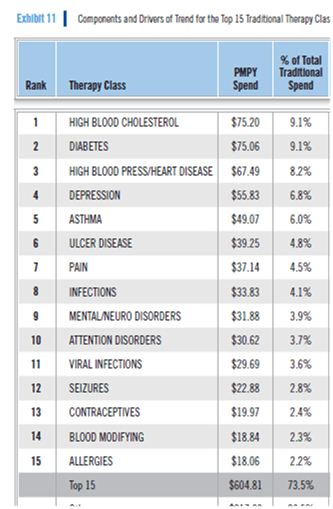
One of the other lists that I always find helpful to have is what are the top 15 drug classes and the PMPY spend.

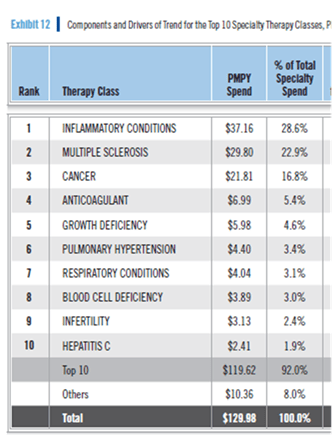
Of course, in today’s world, you really want to know this for specialty medications:

So, as always, I would recommend you read the report. Lots of great information in here. Interesting research. Good thoughts on consumer behavior and how to change it.

I think this week is their Outcomes conference which was always a good event.

Save Lennox Campaign Points To Two Health Issues

Have you heard about the Save Lennox campaign?  It’s a sad story of a little girl’s dog in Ireland that’s been incarcerated.  The girl is disabled and the dog is her service dog.  I had the chance to hear Victoria Stillwell from It’s Me or The Dog (TV show) talk about this last night.

What struck me (beyond the story) were two things:

  1. The importance of service dogs within healthcare.  They now do a lot of things beyond simply help the blind.
  2. The rising issue of dog bites and the fact that breed specific legislation (BSL) doesn’t work.  Dog bites have gone up in areas where pit bulls have been banned.


Interview With Dr. Olivier Raynaud At #WHCC11

I had an opportunity to sit down with Dr. Olivier Raynaud from the World Economic Forum while I was at the 8th Annual World Healthcare Congress in DC. If you don’t know them, they put on DAVOS.

It was a great discussion as Dr. Raynaud brings a wonderful macro-economic view of the healthcare problem with lots of global experience. Let’s start by talking about three areas of focus:

  1. Better health from better data
  2. Creating the right health ecosystem connecting different players
  3. Building leadership

These all sound so simple – right?

The first one – data. This is critical and something that the World Economic Forum worked on to create a data charter for healthcare. Getting multiple constituents to agree even conceptually would be a battle (in my assessment).

The second one – ecosystem. His prospective was so much broader that the typical – patient, provider, pharmacist, payer. For example, he talked about the city mayor as critical. He talked about how addressing smoking, exercise, and food choices was systemic and had a profound impact on our work, our lives, and ultimately our taxes. He talked about employers and how 54% of the world’s population is an employee.

We talked about how employers or cities are more likely to take a long-term view of health than an entity that has to show Fiscal Year results. We talked about the impact on productivity, reputation, and loyalty that health can have for a company and how those things impact costs like recruiting costs.

The third topic – leadership. Here we talked about the need to think differently and create global efforts. We spent a lot of time talking about starting Electronic Health Records during pregnancy since there are certain behaviors (smoking, drugs, eating) that can impact the child and ultimately their health. This framework is just starting to be discussed by people and is becoming easier with the proliferation of technology and low-cost of data.

We talked about the fact that 60% of costs are preventable. He suggested that the history of how AIDS has been addressed offers some great lessons learned around Access, Awareness, and Education. Just getting people to get tested has had a big impact.

[Meanwhile, someone else at the conference talked about the general failure of health programs across the world and the percentage of spend that doesn’t contribute to improved outcomes…a complicating factor.] The World Economic Forum has an opportunity to identify and spread best practices by getting all the constituents together and aligned.

We then finished up talking about engagement and trust. He had a great perspective about different search algorithms. For example, if you search for vaccines in the US, the CDC has most of the top placements. But, that’s not true outside the US. You might see lots more about fear of vaccines. There is a need ultimately for some type of “trust certification”. But, that has to meet the academic’s and clinician’s needs but be useable by the general public and take into account peer-to-peer and other data that is now appearing.

It was an interesting discussion that just helped open my eyes to a broader perspective. I wish them a lot of luck in pulling these groups together to expand the ecosystem and create leaders that know how to use data to make a difference.