Archive | Silverlink RSS feed for this section

Is Your Adherence Program Leveraging Segmentation?

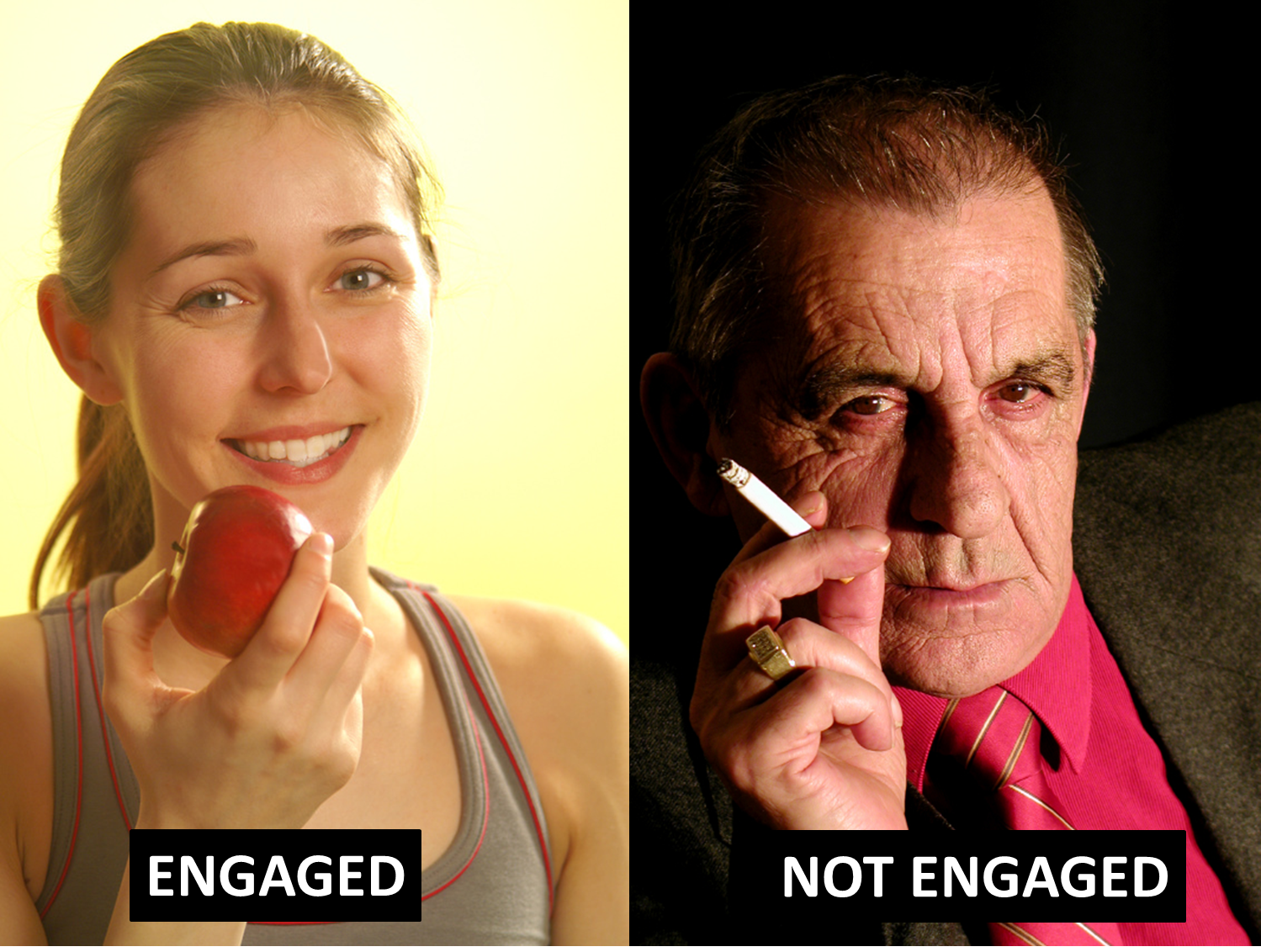
I was just finalizing a new marketing piece with our marketing team on Silverlink’s adherence services.  I love this picture because it drives home the point of understanding the consumer.

If you don’t understand the factors that drive behavior and leverage those attributes in segmentation and personalization of your adherence program, you may be leaving opportunities on the table.

Primary Adherence – Technology, Kaiser Study, and EHRs

I think we all know that primary adherence is a real issue.  Depending on what you read, you see that anywhere from 20-30% (or more) of patients don’t start therapy.  They are prescribed a drug, but they never fill it.  This is due to lots of reasons:

  • They get a sample.
  • The drug costs too much leading to abandonment.
  • They don’t feel like they need the prescription.
  • They feel better.
  • The doctor tells them only to fill it if something else doesn’t work.

These issues vary based on whether it’s an acute drug or a maintenance drug.  It also varys by drug class. 

I’ve always been surprised that pharmaceutical manufacturers focus so much on ongoing refills leading to improved MPR rather than focusing on primary adherence which would grow their market significantly.  One of the big reasons for this has been visibility.  Without electronic prescriptions and mapping those to claims data, it was hard to identify who had a prescription and didn’t fill it.  You could do something with data out of the PPMS (Physician Practice Management System) or through more complicated processes to get data out of their notes, but it wasn’t easy. 

So, this new study by Kaiser caught my attention. 

If you are a diabetic, have high cholesterol, or high blood pressure and you receive medical care at an integrated healthcare system that has electronic health records (EHRs) linked to its own pharmacy, then you are more likely to collect your new prescriptions than people who receive care in a non-integrated system, a Kaiser Permanente study shows.

That’s a strong sell for an integrated model, but perhaps more realistically for the use of EHRs.  You can also see some of the data from Surescripts around this topic of electronic prescriptions and adherence

This creates a great opportunity for pharmacies, PBMs, payers, and pharmaceutical manufacturers to leverage technology to improve primary adherence.  By identifying people who don’t fill a prescription they receive, companies can help determine which of those are intentional and which of those should be addressed.  This should help address the overall costs attributed to non-adherence and be a business driver for all these entities. 

[Note: If you’re interested in working on primary adherence, let me know.  We have several approaches for this at Silverlink.]

Pharmacy Satisfaction Report

If you haven’t read through the Pharmacy Satisfaction Pulse Report, you’re missing some great information.  There’s not a lot out there about consumer level expectations for pharmacies but this is a good start.  (Full site with other data)

Here’s four charts I pulled out of the report to get you started…These should help you frame messaging around retail-to-mail, 90-day, and pharmacy adherence programs.


25% of MDs Tell Un-vaccinated Kids To “Get Lost”

Unfortunately, the issue of kids not getting vaccinated is not going away.  While only 1% of infants don’t get any vaccines, there are still 30% of kids who don’t get all the recommended vaccines.

So, what should a pediatrician do about families that don’t get their vaccines?  Should they continue to treat them?  The number that say it’s time to find a new provider has jumped to 25% in 2011 (compared to 18% in 2005) according to research reported in a Time Magazine article.  I’d bet that number might jump further as physicians bear risk or have more money tied up in performance bonuses.

It begs the question of what adults do…For example, with flu shots, do adults get them?  Based on a Consumer Reports study, it’s only about 50% of adults that do.

I have a few older posts on this general topic.  It’s also a very interesting topic in the pharmacy world as retailers focus on vaccinations both as a revenue source and a value-added service.

I also found this infographic on the topic which I thought I would share.

Medical Coding Career Guide
Created by: Medical Coding Career Guide

Engaging The Un-Engaged


One of the hot topics in a lot of healthcare conversations these days is engagement.  There’s the “easy” engagement for the e-patients that are actively involved in their healthcare.  Then there’s the much harder engagement of those that aren’t engaged.  And, finally, there’s the issue of chronic engagement.  I can easily get someone to engage a few times with an incentive or some other “trick”, but how do I get them to stay engaged over time.  It’s not easy.

This is one of the topics that will be discussed at the upcoming Forum 11 in San Francisco.  If you’re coming, look me up.  I’m presenting on Friday.

Press Hits, Presentations, Writing YTD

I wanted to put together a quick summary of brand awareness so far in 2011.  It’s been a banner year already exceeding 2010 press hits (21).

  1. Drug Benefit News article in January around predictions for the industry
  2. Whitepaper on the future of the PBM/pharmacy industry
  3. Mention of my whitepaper in Adam Fein’s blog
  4. Barclays PBM Expert Call on 2/8/11
  5. Drug Benefit News article on Lipitor in February
  6. Managed Care Magazine on Lipitor
  7. Drug Benefit News article on coalition in February
  8. Drug Benefit News article on Walgreens PBM sale in March
  9. AIS Webinar on Copay Cards
  10. Drug Benefit News on Copay Cards
  11. Pharmacy Times on Mail Order
  12. Silverlink eBook we put out on healthcare communications
  13. AJPB July/August 2011 From the Editor
  14. Health Plan Weekly (8/1/11) on OptumRx moving away from Medco
  15. Pharmacy Technology Podcast in July
  16. Ten different appearances in the PCMA SmartBrief
  17. Five references on RxRoundtable.org
  18. A blog citation about extreme couponing
  19. Some discussion of my AIS webinar by David Williams
  20. A guest post on KevinMD about paying physicians for adherence
  21. Grand Rounds
  22. Drug Channels News Roundup
  23. A mention in DigiPharm
  24. HealthLeaders on Medco sale to Express Scripts
  25. HR Online about limited networks
  26. Drug Channels review of the Express Scripts Drug Trend Report

And, I have 5 things that I’ve actively provided comment and content to including my upcoming presentation at the Care Continuum Alliance on engaging the hard to engage with one of our clients – Aetna.

Storytelling Is A Part of P2P Healthcare

P2P (or peer-to-peer) is a popular topic in healthcare today.  It builds on both the social components of behavioral modification along with the social networking trends.

About one-third of Americans who go online to research their health currently use social networks to find fellow patients and discuss their conditions, and 36 percent of social network users evaluate and leverage other consumers’ knowledge before making health care decisions. Social networks hold considerable potential value for health care organizations because they can be used to reach stakeholders, aggregate information and leverage collaboration.  (from Deloitte study)

One of the biggest researchers out there in this space is Susannah Fox from the Pew Research Center.

Peer-to-peer healthcare acknowledges that patients and caregivers know things — about themselves, about each other, about treatments — and they want to share what they know to help other people. Technology helps to surface and organize that knowledge to make it useful for as many people as possible.  (from recent presentation from NIH – “Medicine: Mind the Gap”)

With that in mind, I found this study from a few months ago about storytelling very interesting.  Imagine the power of capturing stories in some form – DVD, YouTube, written – and sharing them with newly diagnosed patients across an expanded social network.  Imagine helping patients plug into a social network (ala – PatientsLikeMe).

Conclusion:  The storytelling intervention produced substantial and significant improvements in blood pressure for patients with baseline uncontrolled hypertension.

What has really surprised me is that I haven’t seen the large institutional healthcare organizations promoting the use of the social networks.  Maybe I’ve missed it, but I would think they would partner up with a few of these to encourage consumers to use them.  I understand on the one hand that that is “handing off” a patient to a different company, but rather than trying to build their own social networking application, I think they’re better served to leverage what exists.

Newly Diagnosed Diabetics

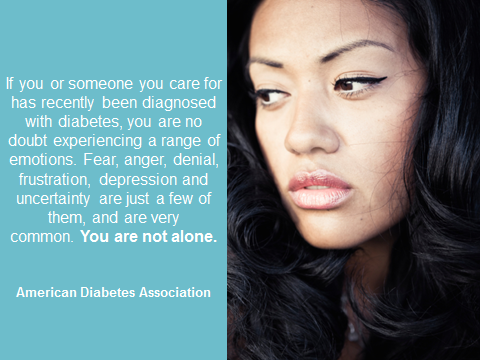
I was giving a presentation today on diabetes and used this quote from the American Diabetes Association.  I thought I would share it.  To me, this is why it’s so important for pharmacies, PBMs, MDs, payers, employers, etc. to focus on the consumer experience and help address what consumers are feeling when they’re newly diagnosed with diabetes, cancer, or some other condition.

Can Demographics Predict Adherence – FICO?

Several people have asked me about the FICO adherence scoring tool.  I (like many of you in the adherence business) am fascinated by the concept on using data to predict adherence and subsequently customize programs around that.  On the flip side, consumers may be a little paranoid about this based on comments on the NY Times article.

Ultimately, there are a few questions:

  1. Can you predict adherence?
  2. What data do you need access to?
  3. How accurate is the prediction?
  4. Does the prediction change based on drug type, duration on therapy, health literacy, etc.?
  5. What can you do with the prediction to influence it?
Traditionally, a demographic centric model has shown some attributes such as acknowledging that females are less adherent than males.  But, most of the attributes that I’m familiar with as predicting adherence fall into two buckets:
  1. Healthcare centric data – number of prescriptions, copay amount, formulary status
  2. Consumer provided information – PAM score, Merck Adherence Estimator

I highlighted some of these things in my 15 Things You Should Know About Prescription Non-Adherence post.  The one item that seems to fall across both healthcare and non-healthcare data is past behavior.  This could certainly play into a credit score or even some type of preventative health score.  Do you get your screenings done?  Have you filled other medications on a regular basis?  Do you have and use a PHR? 

Lots more to come on this topic over time, but this is certainly an area with many eyes on it.

Copay Cards: Don’t Throw The Baby Out With The Bathwater

Prescription Copay Cards continues to be a hot topic (see list of articles at the end here), but I see a lot of FUD (fear, uncertainty, and doubt) versus a lot of facts. At the end of the day, there are certainly a few stories about cases where costs have jumped up due to copay cards overcoming formulary positioning.

But, no one knows the total market impact. I’ve spoken with six different organizations that would be well positioned to know, but they don’t. It’s not tracked or easily available in the data. Reasonable estimates from Dr. Adam Fein over at DrugChannels put the market at about 100-125M Rxs which is about 3% of the total Rx market (assuming 3.3B Rxs/year) or 12% of the total brand market (assuming 75% GFR). [I validated those numbers with a specialty pharmacy that shared that they were seeing 13% of their claims come in with a copay card.] Certainly, the market has grown as IMS estimated in one recent article.

The question of course is whether these are good or bad and whether their use is malicious or not. My conclusions are based on talking with about 30 people in preparation for my AIS webinar on this topic today. What I concluded was:

  1. There is a win-win. Copay cards can improve adherence. Adherence can reduce total healthcare costs. There is a point at which the increased cost curve crosses the savings curve and is something to be considered.
  2. Today’s approach is a shotgun approach by which cards are available online (e.g., www.internetdrugcoupons.com) and by physicians. They’re not focused on patients with need or on patients with adherence barriers. They play into the misperception that cost is the primary barrier to adherence WHICH IT IS NOT. [Cost is an issue in <20% of the cases according to multiple barrier surveys.]
  3. Copay cards are really a CRM Trojan Horse for pharma to build a 1:1 patient relationship (or should be if they’re not thinking that way). Due to HIPAA, pharma doesn’t typically know who uses their drugs. If I were a brand manager, I would gladly trade some copay relief in return for increased adherence and the contact information for my patients.

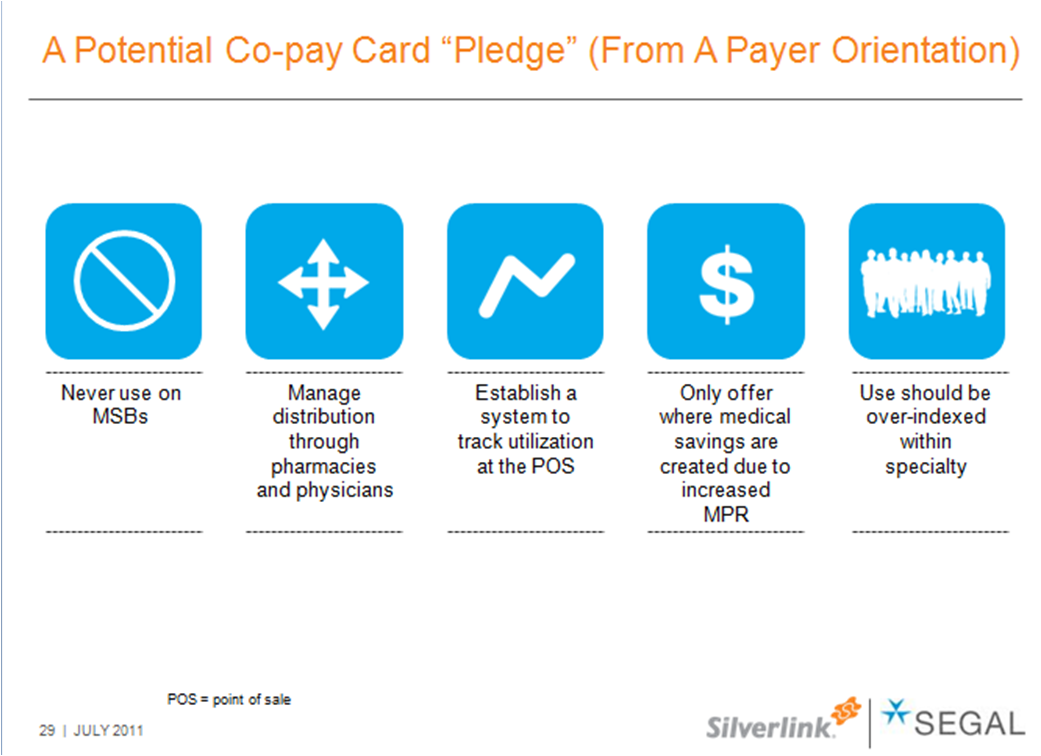
I think there are several ways that industry (especially pharmacies) should collaborate with pharma on how to leverage these copay cards at the POS with patients [call me to discuss]. But, to do that, I think the broader industry is going to require some type of rules which I am sharing shortly as a proposed “pledge”.


The other thing longer-term to watch is will this further change the PBM-Pharma relationship.  I think yes.  If the PBMs push for legislation on this marketing tactic or the manufacturers figure out that this is a better use of their spend than rebates, this will change the relationship. 

Additional Reading:

  1. Prescription Drug Coupons Bad for Patients
  2. Drug Firms Providing Kickbacks For Copays and Coinsurance
  3. DBN article – As Competitors Encroach, Pfizer Seizes A Few More Glory Days With Lipitor Promo
  4. Adam Fein blog posts
  5. Copayment Subsidies
  6. Coupons For Patients, But Higher Bills For Insurers

How I Would Use Generic Lipitor To Improve Mail Order Utilization

The fact that Lipitor is scheduled to go generic towards the end of 2011 is the big news many have been waiting for.  The key question of course is whether payers see immediate savings in pricing or whether the price drop is only minor until there are more manufacturers providing the generic. 

I keep thinking about how to leverage this event in other efforts as a PBM or a pharmacy.  This seems like a great chance to drive to a preferred pharmacy (retail or mail).  If it was me making decisions (and I had my pricing and copays aligned correctly), I would do something like the following:

  • Reach out to all brand Lipitor users before their September / October refill.
  • Offer to refill their medication at no out-of-pocket cost to them (i.e., copay waiver) if they move to mail order (or a preferred pharmacy).
  • Provide them with a conceirge service (i.e., fax their physician to get the new Rx) to make it easy to do.
  • Convert them to the generic when available. 

Yes.  This will cost some money, but the 12-months savings (payer) or increased profit (pharmacy/PBM) should outweigh the costs.  It’s a great opportunity to co-mingle your messages and leverage a market event to everyone’s benefit. 

Of course, this should be only part of your broader strategy around the world’s biggest drug.  Your going to want something that addresses:

  • Inbound IVR messaging
  • Web messaging
  • Mobile application messaging
  • MD communications
  • Messaging integrated into outbound communications (print, call, pharmacy inserts)

This is similar to the control room concept my team designed at Express Scripts years ago around Zocor.

Silverlink eBook: 13 Common Pitfalls In Consumer Health Engagement

After working on consumer communications in healthcare for most of the  past decade, I realized that there were some common pitfalls that happen.  Many of them are pretty straightforward, but when rushed, they may get forgotten.  I worked with Dr. Jan Berger (our Chief Medical Officer) to identify a short list of them, and then the Silverlink marketing team pulled them together in a beautiful eBook

Each of the pitfalls is set up with a quote and a great image:

Then, there is a brief description to explain the pitfall on the page across from it:

What are some of the pitfalls:

  • Not knowing how to declare success
  • Limiting design based on company constraints
  • Forgetting about health literacy
  • Not understanding the entire process
  • Thinking you represent the customer

To get a copy of the entire eBook, you can register online.  [Alternatively, you can e-mail me at gvanantwerp at mac dot com.]

Forrester On Automated Customer Service

I was reading a report that Nuance commissioned a few years ago with Forrester Consulting about using automation for customer service. It’s worth a read (and publicly available here) if you work in the customer service space and get questions from your clients about automation versus agents. Here are a few things that caught my eye:

  • Consumers who use cell phones to call into customer service are relatively more interested in using automated telephone systems for customer service interactions. (Hint: You could probably reverse that logic also to say that they are most receptive to outbound IVR also.)
  • Consumers rate automated customer service higher than live agents for certain straightforward interactions (including Rx refills).
  • Once they engage with automation, 74% of consumers typically stick with the process.
  • 12% liked automation because of privacy and not having to divulge information to a person. (Something we’ve seen at Silverlink in multiple healthcare scenarios.)
  • 81% of people surveyed were interested in proactive notifications around healthcare via automation (e-mail, voice, SMS).
  • People prefer being steered to answers versus just being able to respond and have the system understand them. (i.e., give me a list of options)

Very interesting. It maps well to a lot of our best practices and how we consult with our clients in designing healthcare engagement strategies. (Of course, you have to make sure you use create engaging, personalized messaging in these channels to optimize success. Van Antwerp household is the same as Dear Resident to me…and if I have 5 drugs and 3 conditions, a generalized call to action won’t get much response.)

Less Likely To Take Your Statin After Surgery

A recent study looked at people who were hospitalized for heart disease. It then tracked people’s use of statin medications (e.g., Lipitor) for the next year and looked at their adherence based on whether they had surgery or were simply discharged with a prescription.

SURPRISE – 70% of people who had surgery stayed on their statins for a year while 79% of those who didn’t have surgery stayed adherent. (thanks to Box Cutters for sharing this)

This begs a whole lot of questions:

  • How did they get the people to be so adherent in the first place? (this seems higher than the national statistics)
  • Did the surgery patients feel like they were “cured”? (see post on similar issue)
  • Was the statistical difference true at a location or prescriber level also? (i.e., was it simply that some locations or prescribers always wrote a script and talked about adherence or was it really a patient difference?)
  • Were the patients who had surgery sicker to begin with and therefore on more medications (which would reduce their likelihood of being adherent)?

On the other hand, this is perhaps another warning flag on the whole hospital readmissions issue where we have to address issues of health literacy, follow-up, discharge process, support network, and medication reconciliation.

Short Survey On Copay Cards

Are they good?  Are they bad?  Are there times when they should be used?  Will they replace rebates?  When are they used?  Do they work?

AIS (Drug Benefit News) has asked me to do a webinar on copay cards in early July.  This is a hot topic area with limited information out there.  Rather than simply offer my opinion, I thought I would reach out to those of you that work in pharma, PBMs, retail pharmacies, and health plans to capture your opinions.  I put together two brief (<10 question) surveys, but I’m also happy to talk live if you’d prefer. 

 If you don’t feel like you’re the right person or you feel like you know others that would respond, please feel free to forward this to others.  I’m happy to share the results back with those of you that participate.  Thanks.   

 The survey for physicians and manufacturers is here – http://www.surveymonkey.com/s/ZQVM7DK.

 The survey for pharmacists, PBMs, and payers is here – http://www.surveymonkey.com/s/ZSBS32Y.

 Have a great holiday weekend!

AIS Webinar Regarding Drug Coupons

Health Plans vs. Drug Coupons:

Tactics to Combat Brand-Name Drug Promotions

AIS Webinar: Wednesday, July 13, 2011

When faced with the loss of patent protection, brand-name drug manufacturers are increasingly launching promotional programs to maintain market share of their blockbuster drugs and improve brand loyalty. These promotions, including copay coupons, discount cards and rebates, can pose headaches for PBMs and health plans. But there are strategies plans can adopt — including zero-dollar copays, over-the-counter initiatives and utilization management strategies — to reduce the impact on utilization and move more enrollees to low-cost generic alternatives. Discover the pros and cons of various strategies.

Pharmacy Kickoff At #RESULTS2011

I’m currently presenting at our client event (see twitter hashtag #results2011 for real-time comments). My presentation is an extension of my white paper on the future of the PBM / pharmacy industry along with a blend of data from our annual client survey and Silverlink Communications best practices with a focus on our work around medication adherence. It also builds on my thoughts from NCPDP that I shared late last year.

Here are a few of the points I touch on:

  • Avoiding being commoditized by adding value
  • Keys to success with a focus on:
    • Evidence-based approaches
    • Consumer engagement
    • Patient experience
    • Cross-channel coordination
  • Adherence and other priorities
  • How to use SMS to drive self-service
  • An approach to condition management in hypertension and diabetes
  • Focus on the “un-engaged” but don’t forget about the engaged consumers
  • Case studies and research around adherence
  • Timing and sequencing of direct mail, automated calls, and e-mail
  • Measuring “trust”

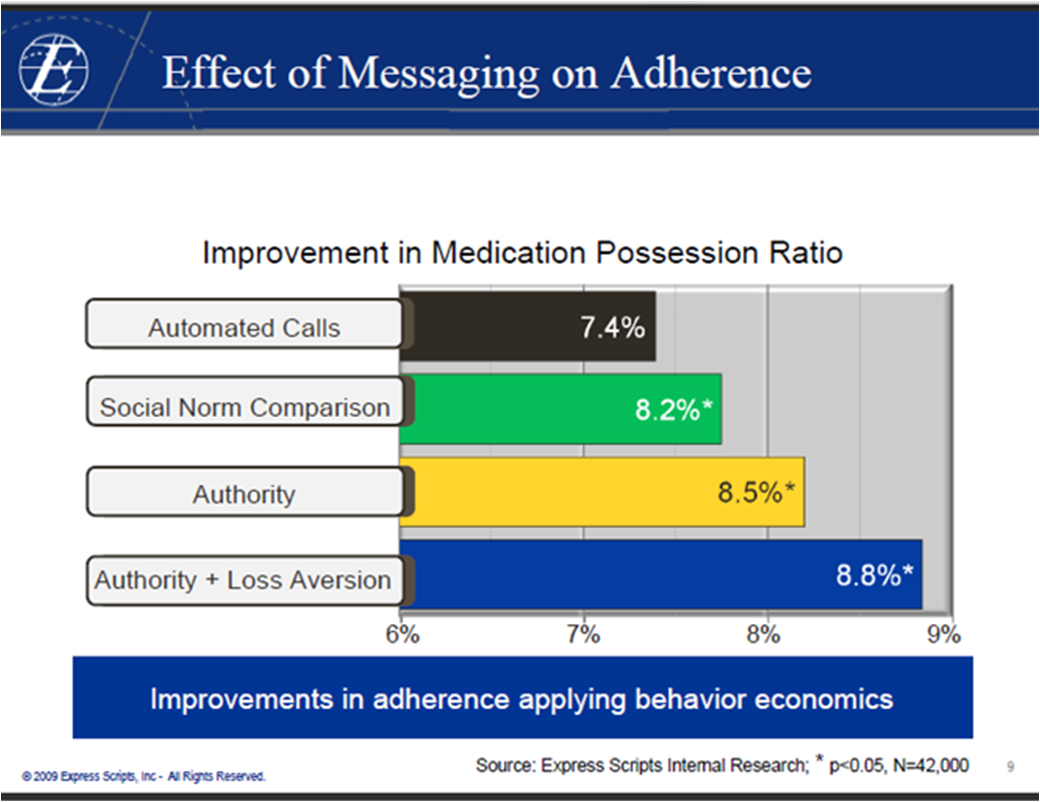
Here’s a teaser of some of the slides I’m presenting:

How To Improve Use Of A Preferred Pharmacy

One of the key questions from PBMs, pharmacies, specialty pharmacies, and payers is…
 

How can we drive utilization of a preferred channel (retail, mail order, specialty)?

 
I’ve worked on 15+ different “retail-to-mail” type programs (or even just 30-day to 90-day).  They typically follow a pretty standard profile:
  • Identify who to target
    • Plan design (does the member save?  the payer?)
    • Maintenance drugs
    • Categories (is titration an issue?)
  • Score individuals for prioritized outreach
    • Likelihood to convert (drug, prior experience, costs)
  • Create personalized messaging
    • What’s In It For Me (WIIFM) – cost, convenience
  • Create business rules
    • What’s the best channel?
    • What’s the best time to call or e-mail? 
  • Engage people and quickly transfer them to an agent who can answer their questions
    • How do I get started?
    • How much will I save?
    • Why should I do this?
    • Who are you?
  • Make the process easy…call or fax their provider and get a new prescription for the new pharmacy
  • Implement a process of continuous improvement
    • What works?
    • What could be better?
    • Are their differences within certain sub-segments?
    • How can I test and validate my assumptions?

At the end of the day, this approach can also be used for formulary support and many other programs.  The important things are:

  1. Engage the consumer in a dialogue about their options
  2. Be clear about the value of change
  3. Make the process easy
  4. Answer their questions

15 Things You Should Know About Prescription Non-Adherence

One question I frequently get is “what should I know about adherence”. This is then followed by “so what should I do about it”.

Here’s my starter list of what you need to understand about medication adherence.

  1. It’s a $290B problem.
  2. Patients fall off therapy quickly.
  3. There are a lot of reasons for non-adherence…it’s not just about reducing out of pocket spend. AND, to make it more complex, there are variations by gender, culture, medication, condition, trust, copay levels, etc.
  4. There are lots of predictors of non-adherence (old study, Express Scripts, Merck tool), but generally the best predictor is past behavior.
  5. Interventions can improve adherence (CVS Caremark study, Express Scripts study, Silverlink data). BUT, physicians generally don’t see non-adherence as an issue they can address. (see also White Coat adherence)
  6. Patients don’t think they’re non-adherent (see “Rx Adherence Hits The Ignorance Wall” by Forrester that says only 8% of people think they are regularly non-adherent).
  7. Adherence reduces total healthcare costs (CVS Caremark study, Sokol study).
  8. Communications matter (misperceptions, physician-patient gap, health literacy, what physicians tell patients).
  9. There are lots of cool technologies that will work for different people (talking bottles, monitoring devices, iPhone reminders, websites, pill boxes). BUT, improved labeling and bottle design may not be the answer (analysis of Target improvements).
  10. Starting on generics (or lower cost drugs) improves the probability of adherence.
  11. Pharmacist involvement is key and impactful (CVS Caremark study, Ashville).
  12. 90-day prescriptions lead to better medication possession ratio (Walgreens study, CVS Caremark study, Kaiser study, Express Scripts study).
  13. Complexity of therapy (e.g., number of prescriptions) increases the likelihood for non-adherence.
  14. Electronic prescribing gives us new visibility into primary adherence and should also create opportunities to improve this issue.
  15. It’s an area where everyone wins and there’s lots of research…but there’s no silver bullet.

Looking Forward To The Silverlink Client Event – RESULTS2011

One of my favorite events every year is the Silverlink Communications client event in May in Boston.  Our marketing team does a great job of pulling together a mix of clients and external speakers to really motivate and challenge the audience.  It’s not much of a sales event, but it does a great job of pushing a lot of key topics for discussion.  (See prior posts – last year’s event, notes from RESULTS2010, and notes from RESULTS2009.)

This event was one of the things that originally convinced me to join Silverlink back in 2007.  Sitting and talking with clients about their experiences with the company, their shared passion for results and outcomes, and their interest in collaborating to improve outcomes for consumers was motivating.

This year should be no different.  This year’s theme is – “Seeing Healthcare Through The Eyes Of The Consumer“.  There are presentations on sustaining engagement, obesity, diabetes, health literacy, social media in healthcare, adherence, loyalty and retention, health reform, STAR, HEDIS, and many other topics.

Some of the speakers include:

  1. Dr. Atul Gawande (Harvard, The New Yorker, Author)
  2. Thomas Goetz (WIRED Magazine)
  3. Dan Buettner (Author, The Blue Zones)
  4. Mark Merritt (PCMA)
  5. Dr. Will Shrank (Harvard)
  6. Jim Wilson (WilsonRx)
And many other executives from across healthcare.
It promises to be another banner event.  I’ll share some summarizes as time allows via Twitter and eventually after the event.
I guess with attendance maxed out and the hotel sold out it’s time for me to buckle down and work on my presentation!

IVR: Beep or Barge-In

Here’s a common question in the voice services world – should I use a “chime” or beep, no sound, or let people barge-in?

What do I mean?  When you get an automated call or call into an IVR system, how do you know when to respond?  For example:

If the question is “Is this George Van Antwerp?  Please say yes or no.”

  • In the first instance, you would say “please say yes or no after the beep”.
  • In the second instance, you wouldn’t add anything but you couldn’t reply until the system is done talking and starts listening.
  • In the third instance, you would be able to respond as soon as you knew what to say (i.e., barge-in).

Of course, intuitively, you want the third scenario, but it creates a series of issues:

  • If there’s background noise, the system can be very clunky…you keep hearing “I’m sorry, but I don’t understand you.  Can you please say yes or no?”
  • You can get false positives
  • You can get people who respond too quickly missing some or all of the question

I personally prefer a window of time to respond where I left with some finite parameters in which to respond (i.e., no barge-in).

Hosted IVR In Healthcare – Go To Silverlink

This is a term I’ve never used before when thinking about what we do at Silverlink Communications, but it seems relevant since people use it as a search term.

We talk about:

  • Speech recognition
  • Personalized communications
  • Preference-based marketing
  • Automated calls
  • Outbound IVR
  • Coordinated multi-channel communications
  • Data driven communications
  • Intelligent interactions
  • Smart calls
  • Interactive dialogues
  • Technology enabled disease management
  • Condition management
  • Campaign management
  • Rules-based communications

I could go on, but my point is that if you’re looking for a “hosted IVR” solution for healthcare you should call us at Silverlink.

[For my regular readers, sorry about the “advertising” but have to mix it in here once and a while.]

Increasing Specialty Drug Refill Rates

Adherence is one of the primary topics of discussion today both within pharmacy and (after reform) within other areas of healthcare.  Adherence drives costs.  Adherence impacts productivity.  And, with a few rare exceptions (CBO type budget analysis looking only at fiscal year returns), everyone’s interests are aligned on the value of improving adherence.

For now, let’s skip over the traditional pharmacy market which is rapidly becoming generic. Let’s look at specialty where the average cost is $1,800 per month and can run into the $10,000’s.

So, what if I told you there were simple solutions that could improve your monthly refill rate on your drugs by 20-40%?  What if that also reduced the gaps-in-care and improved patient awareness of their condition?  What if that also incorporated a feedback mechanism to the care team?

How much would that we worth?  What about all that for $2 / month per member?  Much less that copay waivers or many other solutions out there on the market.

Sound interesting…Go learn more at Silverlink.

Specialty Rx Offerings Not Rxs Only

I’ve spoken about this for a while, but I was pleasantly surprised to hear one of the Chief Medical Officers in the industry make this point to a large number of manufacturers. He was talking about lots of the changing dynamics in the industry from personalized medicine to new research. He talked about the challenge of adherence and how we needed to think differently. He even suggested that pharma should start talking with payers much earlier in the pipeline so that their research tracked metrics that the payers cared about.

At the end, one of his summary perspectives was that they should stop thinking about just bringing a drug to market and think about how they bring an offering for the condition to market which centers around a drug. This goes back to what the book BLUR presented years ago. You have to blend products and services to create offerings.

In the case of specialty, you have a very sick patient who often has a symptomatic condition that they are living with everyday that might affect their ability to live or potentially debilitate them. It affects their family. And, there may be additional co-morbidities associated with the condition.

Right now, there are solutions that try to engage these patients especially in clinical trials or when a drug is first launched, but over time, that “energy” decreases. It’s important to think about these specialty patients from an experience perspective.

  1. Diagnosis – What happens after they’re diagnosed? How much do they really remember from the physician encounter? Do they understand the drug they’ve been prescribed? Do they know where to go to find more information? Do they understand what resources are available to support them?
  2. First Fill – Do they understand the drug’s side effects? Do they believe that this is going to help them? Do they know how to get the prescription? Do they understand how to use the specialty pharmacy?
  3. Ongoing Therapy – Do they continue to refill the medication? What are their barriers (cost, convenience, literacy, beliefs, side effects)? Can they afford the medication? What support is there (financial, education, counseling) and how do they access it? Does their physician understand the disease? Have they gotten engaged with a community or support group?
  4. Changes In Condition – As they progress, what should they expect? How do you monitor these changes? Do these changes have an impact on the drug or strength? How does adherence affect this?

This creation of a solution blending services and pharmaceuticals creates some new ways for a manufacturer to differentiate themselves in the marketplace. Imagine the power of going to the physician, pharmacy, or PBM and telling them that you have a solution which does the following:

  • Provides a highly effective drug (cue traditional data)
  • Improves awareness and understanding of the condition for the patient
  • Decreases the likelihood of abandonment
  • Helps the patient with their out-of-pocket costs
  • Increases the patient’s likelihood of refilling
  • Helps the patient become an e-patient and engages their support system
  • Provides ongoing monitoring of changes in their condition

Interested? I have some ideas if you’re a brand manager.

Cured After The First Fill!

I was at a presentation recently where a Chief Medical Officer from one of the PBMs was talking about a survey they did on statin users and why they didn’t refill.  Amazingly, he said that 21% of people said they thought they were cured after the first fill.  Talk about a problem.

This data reminds me of a barrier survey from a statin adherence program that we did where 37% said they didn’t know they were supposed to refill their medication. 

This topic then reminded me of a study that was published in the Archives of Internal Medicine in 2006 which looked at the frequency with which physicians did certain things when talking with patients.  So, how often did they explain the duration of therapy to the patients – 34%!

Sometimes, we spend so much time trying to solve the complexities of adherence when there are baseline activities which can make a huge difference.

You Need An Experience Architect

I’m often asked how my 6 years of architecture school plays into what I do right now.  I have a variety of things that I believe I learned in architecture that help me, but it wasn’t until the other day that it really clicked.  I was reading an interview about a CEO who had been trained as an architect.  She described architecture as building experiences.

All of sudden it hit me…that’s what I do.  I help companies look at an objective and architect the consumer experience to get to that objective.  And, it’s a lot of fun!

So, what are the parallels between healthcare communications and physical architecture?

  • There is no one answer.
  • You have to listen.
  • There is lots of data.
  • You have to use lots of materials. (print, e-mail, web, automated call versus concrete, glass, steel)
  • Each person’s experience is different.
  • Compliance matters. (building codes versus CMS)

Now, unfortunately, I can’t coin the term “experience architect”.  It’s been used by others.  For example, Tom Kelley from IDEO used it as one of his Ten Faces of Innovation.  He says an experience architect is one who:

Is that person relentlessly focused on creating remarkable individual experiences. This person facilitates positive encounters with your organization through products, services, digital interactions, spaces, or events. Whether an architect or a sushi chef, the Experience Architect maps out how to turn something ordinary into something distinctive—even delightful—every chance they get.

Fast Company talks about the Experience Architect in an article from 2005.  More commonly you’ll find articles or references to user experience architect. 

The point is that you need to think about things in this light, and I think the architectural paradigm is helpful in how you construct and embrace the creation of an experience for the consumer whether it’s around shopping, adherence, or managing diabetes.

Using the “Placebo Effect” in New to Therapy Situations

I was reading a book about trust which pointed out the concept of “remembered wellness“.  This concept is similar to the “placebo effect” in that it shows that patients who trust their physicians and their course of therapy are more likely to have better outcomes (e.g., HIV study).  WOW!!

I’ve talked before about the gap that exists when patients leave their physician’s office with a new diagnosis and we all know that health literacy is a big issue.

So…what are you doing to address this?  I’ve been talking a lot lately about “primary adherence” (i.e., getting people to start therapy) and about engaging patients when they first get a new prescription or a new diagnosis.  This concept of trust only makes this a more pressing issue.

Here’s your worse case scenario:

  • Patient is newly diagnosed with a chronic condition and given a new prescription.
  • They don’t have a great relationship with the physician and/or have limited understanding of the condition (due to literacy, fear, or other issues).
  • They fill the prescription once and stop taking the medication after a few days.

How can you step in here?

  • You can trigger an outreach based on diagnosis code.
  • You can assess their understanding of the condition and help them learn more by addressing their barriers.
  • You can engage them when they fill their first script.
  • You can follow-up with them after the first few days to make sure they stay on therapy.
  • You can enroll them in an adherence program.
  • You can enroll them in a condition management program.

But, the point here is that you need to be doing something that reinforces the decision to manage the therapy and help them to understand and believe in that course of treatment.  If they don’t believe and have trust, they are less likely to get to a successful outcome.

JD Power Customer Service Leaders – Pharmacy

Understanding how top performers achieve excellence is the first step to becoming a Customer Service Champion. The rest is up to you.

This is the statement by Gary Tucker, SVP, J.D. Power & Associates at the beginning of their publication Achieving Excellence in Customer Service from February 2011. 

If you’ve never read their reports, you should understand that they look at five areas – people, presentation, price, product, and process.  Interestingly, they use several examples from pharmacy to make their points about these five categories:

  • Proactive communications
  • Private space for consultation
  • Clear information about how to save money
  • Auto-refill

Another interesting thing they look at is whether the gap between high performing and low performing company has increased or decreased over time.  In the product industries, the gap has decreased due in many ways to quality improvements.  In the service industries, the gap has increased…WHY?

First, advances in technology have created new expectations among customers, resulting in new challenges for services. For instance, customers expect multi-channel service delivery and expect to choose whether to interact with their service provider in person, via the phone or e-mail, through online chat, or via Web-based self-service, among others. More challenging is that they expect the same level of service across communication channels. With ever-improving technology, it has been difficult for companies to keep all systems up to date and to remain equally effective in each.

They are preaching to the choir here.  This is exactly what I tell clients all the time. 

One of their examples that I’ve used for years is around the power of communications.  They show satisfaction with auto insurance based on whether your premium stayed the same or increased.  For those that it increased, they look at whether you were pro-actively informed and whether you had the option to discuss it.  What group do you think had the highest satisfaction?

  • Decreased premium
  • Increased premium, pro-active notification, and chance to discuss
  • No change
  • Increased premium, pro-active notification
  • Increased premium, no notification

Worried about satisfaction or churn?  Have lots of changes to plan design?  Here’s why you communicate.

In this report, they call out 40 companies as exceptional out of the 800 that were ranked.  7 of those 40 were pharmacies:

  • Good Neighbor
  • Health Mart
  • Kaiser Permanente
  • Publix
  • Veteran’s Administration Mail Order
  • Wegmans
  • Winn-Dixie